SEARCH RESULTS FOR: 2025

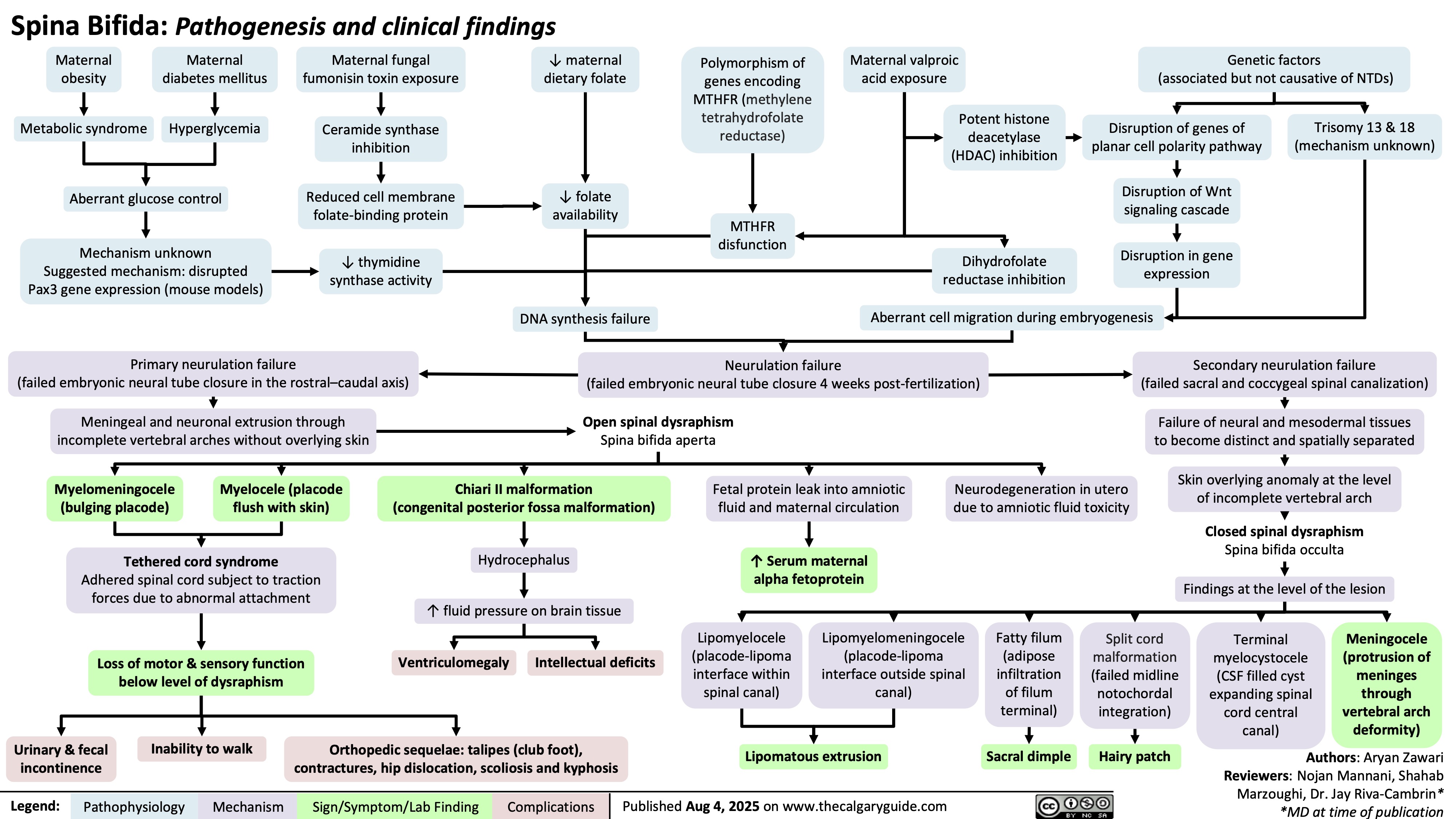
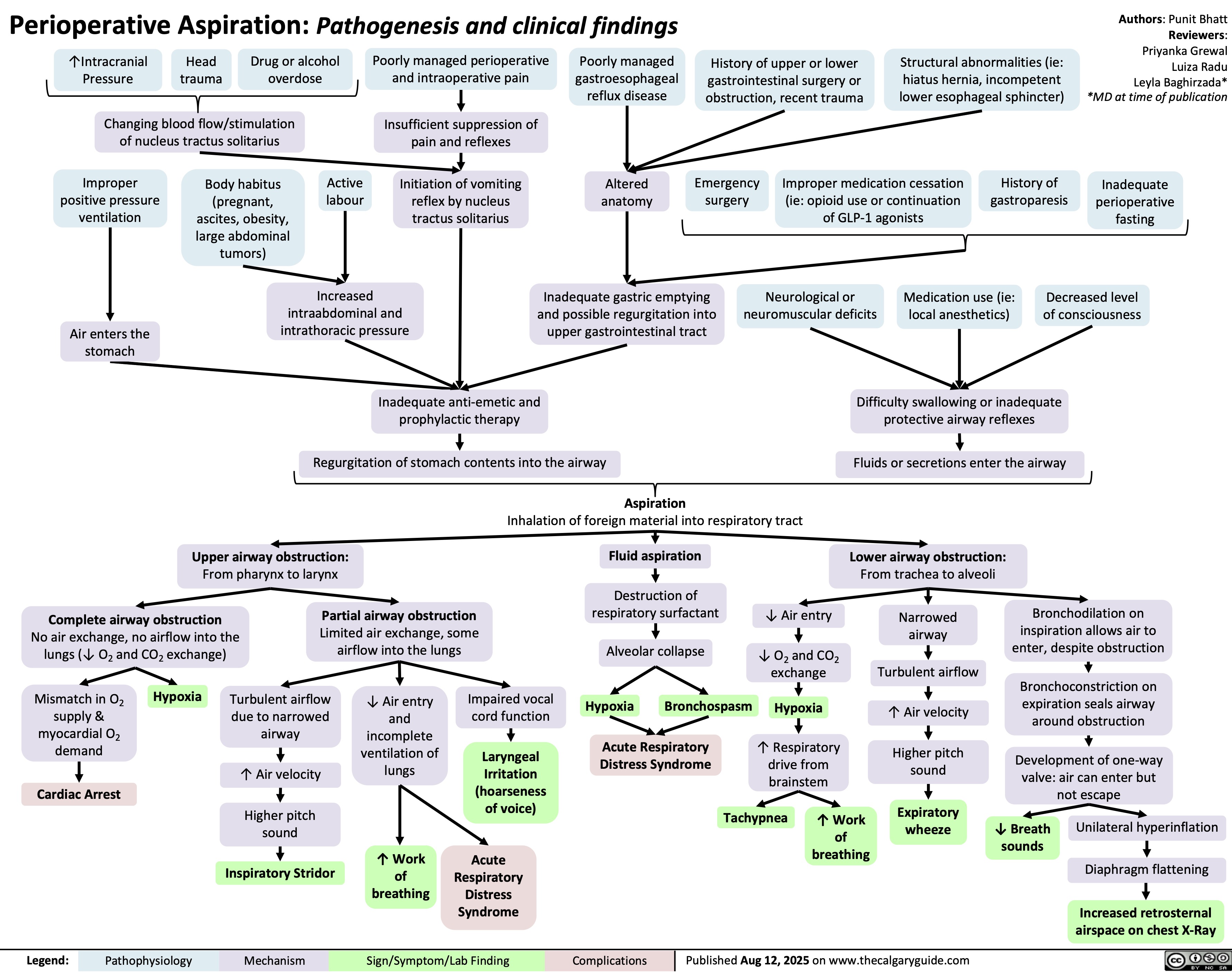
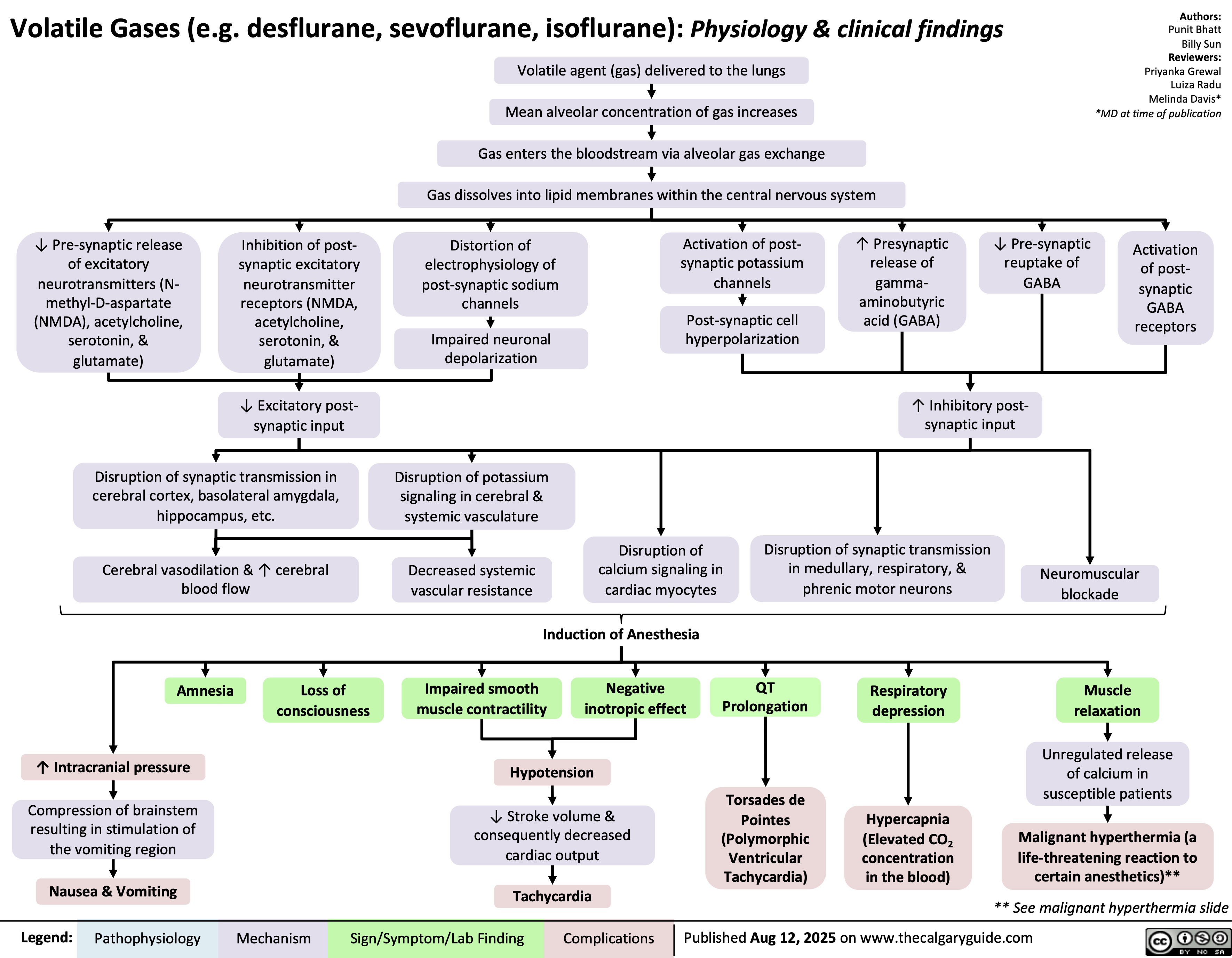
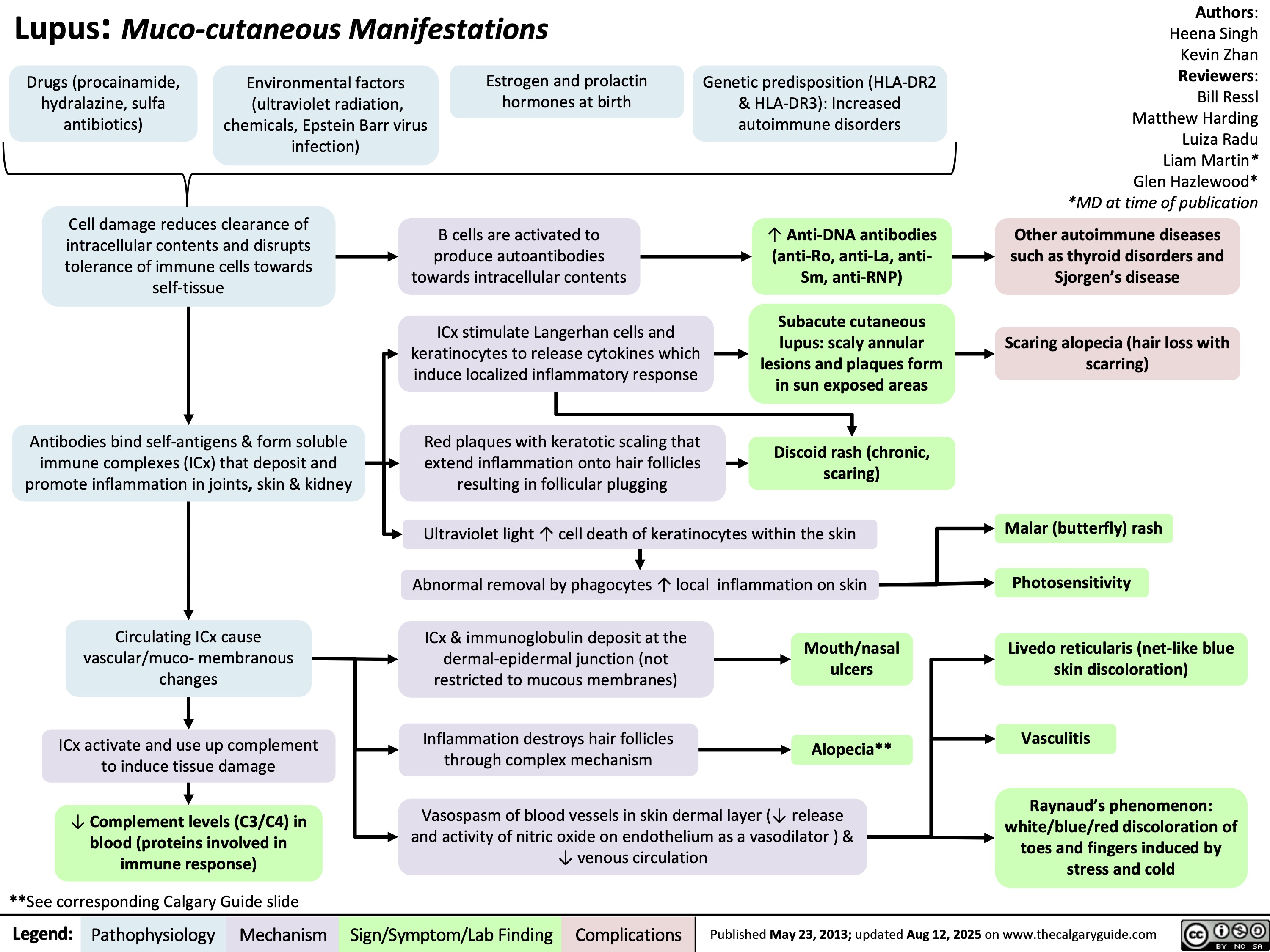
Salter Harris Fracture
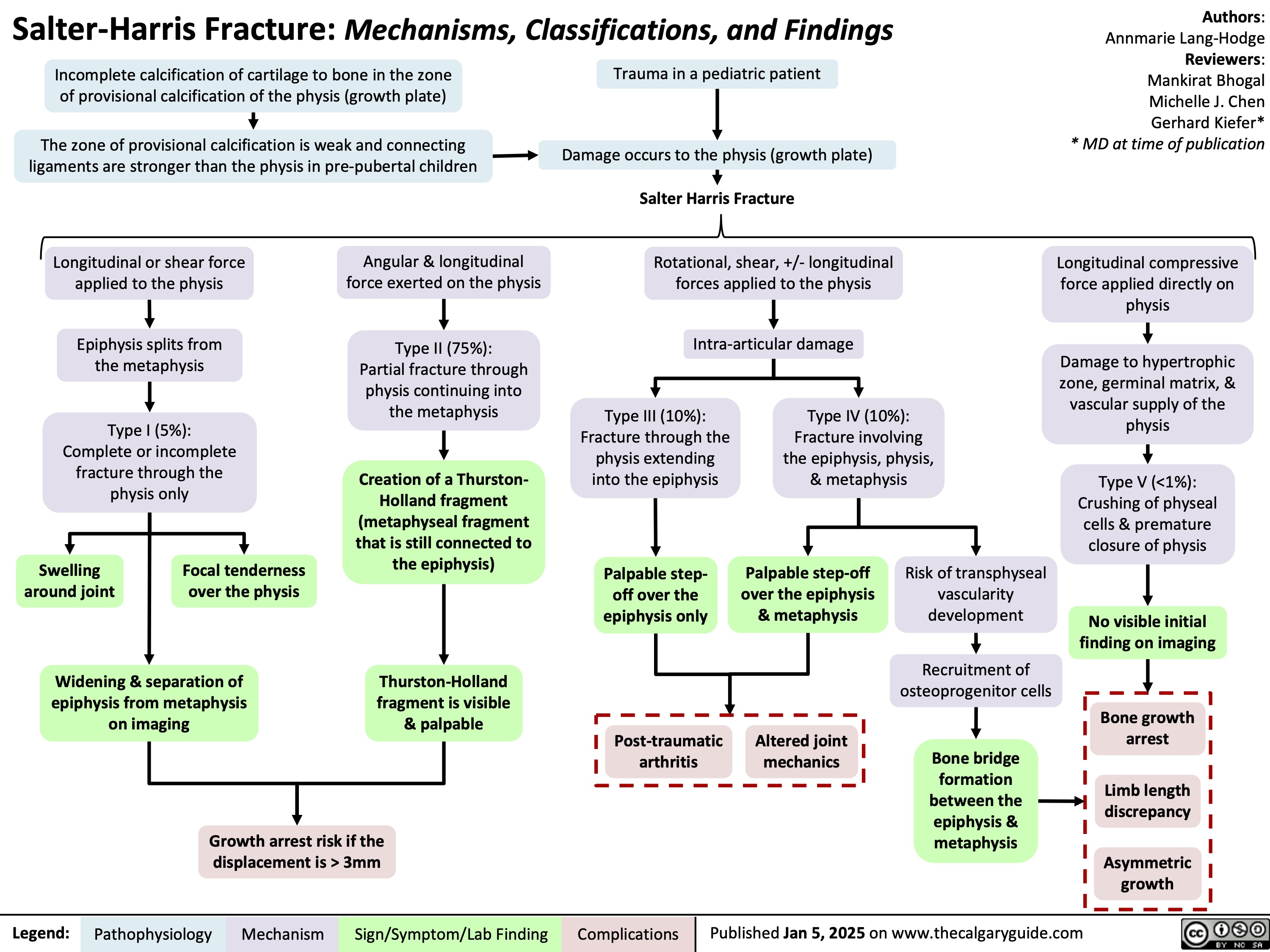
Salter-Harris Fracture: Mechanisms, Classifications, and Findings
Authors: Annmarie Lang-Hodge Reviewers: Mankirat Bhogal Michelle J. Chen Gerhard Kiefer* * MD at time of publication
Longitudinal compressive force applied directly on physis
Damage to hypertrophic zone, germinal matrix, & vascular supply of the physis
Type V (<1%): Crushing of physeal cells & premature closure of physis
No visible initial finding on imaging
  Incomplete calcification of cartilage to bone in the zone of provisional calcification of the physis (growth plate)
The zone of provisional calcification is weak and connecting ligaments are stronger than the physis in pre-pubertal children
Trauma in a pediatric patient Damage occurs to the physis (growth plate)
Salter Harris Fracture
Rotational, shear, +/- longitudinal forces applied to the physis
Intra-articular damage
        Longitudinal or shear force applied to the physis
Epiphysis splits from the metaphysis
Type I (5%): Complete or incomplete fracture through the physis only
Angular & longitudinal force exerted on the physis
Type II (75%): Partial fracture through physis continuing into the metaphysis
Creation of a Thurston- Holland fragment (metaphyseal fragment that is still connected to the epiphysis)
Thurston-Holland fragment is visible & palpable
Type III (10%): Fracture through the physis extending into the epiphysis
Palpable step- off over the epiphysis only
Type IV (10%): Fracture involving the epiphysis, physis, & metaphysis
                   Swelling around joint
Focal tenderness over the physis
Palpable step-off over the epiphysis & metaphysis
Risk of transphyseal vascularity development
Recruitment of osteoprogenitor cells
Bone bridge formation between the epiphysis & metaphysis
      Widening & separation of epiphysis from metaphysis on imaging
  Bone growth arrest
Limb length discrepancy
Asymmetric growth
   Post-traumatic Altered joint arthritis mechanics
    Growth arrest risk if the displacement is > 3mm
     Legend:
Pathophysiology
Mechanism
Sign/Symptom/Lab Finding
Complications
Published Jan 5, 2025 on www.thecalgaryguide.com

Pituitary Tumour Classification and Clinical Outcomes
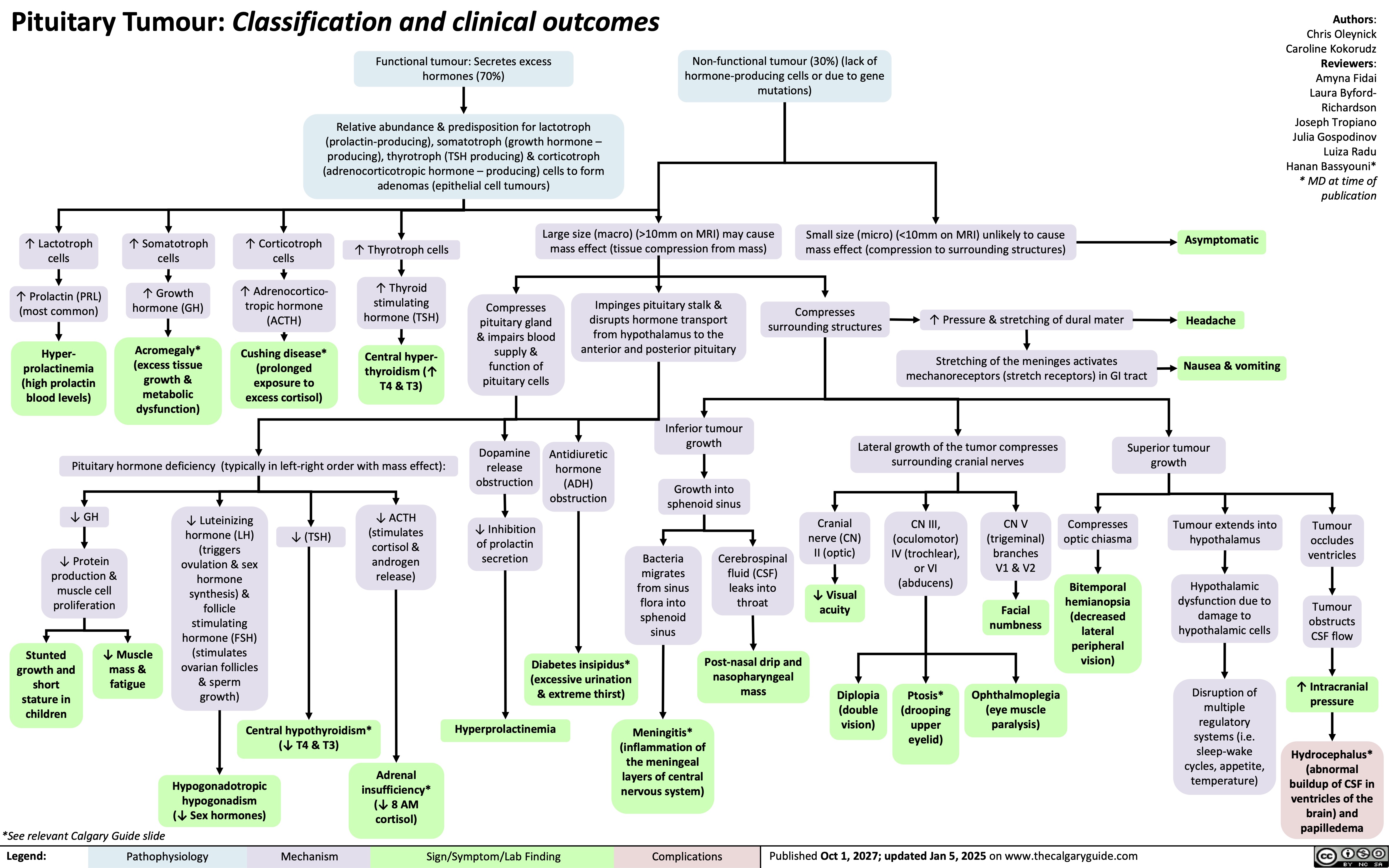
Pituitary Tumour: Classification and clinical outcomes Functional tumour: Secretes excess
Non-functional tumour (30%) (lack of hormone-producing cells or due to gene mutations)
Authors: Chris Oleynick Caroline Kokorudz Reviewers: Amyna Fidai Laura Byford- Richardson Joseph Tropiano Julia Gospodinov Luiza Radu Hanan Bassyouni* * MD at time of publication
  hormones (70%)
Relative abundance & predisposition for lactotroph (prolactin-producing), somatotroph (growth hormone – producing), thyrotroph (TSH producing) & corticotroph (adrenocorticotropic hormone – producing) cells to form adenomas (epithelial cell tumours)
            ↑ Lactotroph cells
↑ Prolactin (PRL) (most common)
Hyper- prolactinemia (high prolactin blood levels)
↑ Somatotroph cells
↑ Growth hormone (GH)
Acromegaly* (excess tissue growth & metabolic dysfunction)
↑ Corticotroph cells
↑ Adrenocortico- tropic hormone (ACTH)
Cushing disease* (prolonged exposure to excess cortisol)
↑ Thyrotroph cells
↑ Thyroid stimulating hormone (TSH)
Central hyper- thyroidism (↑ T4 & T3)
Large size (macro) (>10mm on MRI) may cause mass effect (tissue compression from mass)
Small size (micro) (<10mm on MRI) unlikely to cause mass effect (compression to surrounding structures)
Asymptomatic
Headache
Nausea & vomiting
          Compresses pituitary gland & impairs blood supply & function of pituitary cells
Impinges pituitary stalk & disrupts hormone transport from hypothalamus to the anterior and posterior pituitary
Compresses surrounding structures
↑ Pressure & stretching of dural mater
Stretching of the meninges activates mechanoreceptors (stretch receptors) in GI tract
                Pituitary hormone deficiency (typically in left-right order with mass effect):
Dopamine release obstruction
↓ Inhibition of prolactin secretion
Antidiuretic hormone (ADH) obstruction
Inferior tumour growth
Growth into sphenoid sinus
Lateral growth of the tumor compresses surrounding cranial nerves
Superior tumour growth
        ↓ GH
↓ Protein production & muscle cell proliferation
↓ Luteinizing hormone (LH) (triggers ovulation & sex hormone synthesis) & follicle stimulating hormone (FSH) (stimulates ovarian follicles & sperm growth)
↓ (TSH)
↓ ACTH (stimulates cortisol & androgen release)
Cranial nerve (CN) II (optic)
↓ Visual acuity
Diplopia (double vision)
CN III, (oculomotor) IV (trochlear), or VI (abducens)
Ptosis* (drooping upper eyelid)
CN V (trigeminal) branches V1 & V2
Facial numbness
Ophthalmoplegia (eye muscle paralysis)
Compresses optic chiasma
Bitemporal hemianopsia (decreased lateral peripheral vision)
Tumour extends into hypothalamus
Hypothalamic dysfunction due to damage to hypothalamic cells
Disruption of multiple regulatory systems (i.e. sleep-wake cycles, appetite, temperature)
Tumour occludes ventricles
Tumour obstructs CSF flow
↑ Intracranial pressure
Hydrocephalus* (abnormal buildup of CSF in ventricles of the brain) and papilledema
           Bacteria migrates from sinus flora into sphenoid sinus
Cerebrospinal fluid (CSF) leaks into throat
Post-nasal drip and nasopharyngeal mass
          Stunted growth and short stature in children
↓ Muscle mass & fatigue
Diabetes insipidus* (excessive urination & extreme thirst)
           Central hypothyroidism* (↓ T4 & T3)
Hyperprolactinemia
Meningitis* (inflammation of the meningeal layers of central nervous system)
   *See relevant Calgary Guide slide
Hypogonadotropic hypogonadism (↓ Sex hormones)
Adrenal insufficiency* (↓ 8 AM cortisol)
 Legend:
 Pathophysiology
 Mechanism
 Sign/Symptom/Lab Finding
 Complications
 Published Oct 1, 2027; updated Jan 5, 2025 on www.thecalgaryguide.com

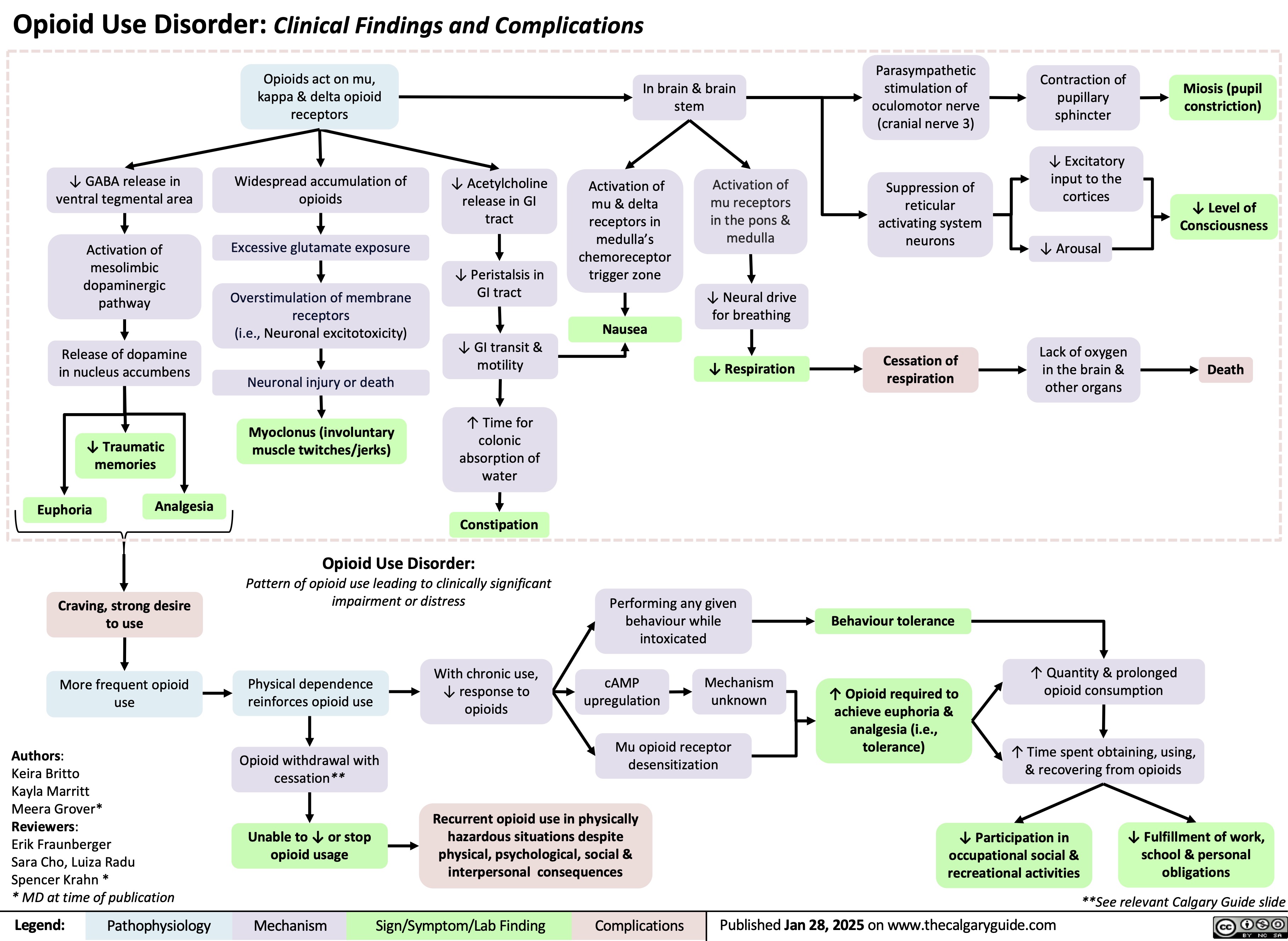
Opioid Use Disorder

Opioid Use Disorder: Clinical Findings and Complications
    Opioids act on mu, kappa & delta opioid receptors
Widespread accumulation of opioids
Excessive glutamate exposure
Overstimulation of membrane receptors
(i.e., Neuronal excitotoxicity)
Neuronal injury or death
Myoclonus (involuntary muscle twitches/jerks)
In brain & brain stem
Parasympathetic stimulation of oculomotor nerve (cranial nerve 3)
Suppression of reticular activating system neurons
Cessation of respiration
Contraction of pupillary sphincter
↓ Excitatory input to the cortices
↓ Arousal
Lack of oxygen in the brain & other organs
Miosis (pupil constriction)
↓ Level of Consciousness
Death
             ↓ GABA release in ventral tegmental area
Activation of mesolimbic dopaminergic pathway
Release of dopamine in nucleus accumbens
↓ Traumatic memories
↓ Acetylcholine release in GI tract
↓ Peristalsis in GI tract
↓ GI transit & motility
↑ Time for colonic absorption of water
Constipation
Activation of mu & delta receptors in medulla’s chemoreceptor trigger zone
Nausea
Activation of mu receptors in the pons & medulla
↓ Neural drive for breathing
↓ Respiration
                      Euphoria
Analgesia
   Craving, strong desire to use
More frequent opioid use
Authors:
Keira Britto
Kayla Marritt
Meera Grover*
Reviewers:
Erik Fraunberger
Sara Cho, Luiza Radu Spencer Krahn *
* MD at time of publication
Opioid Use Disorder:
Pattern of opioid use leading to clinically significant impairment or distress
Performing any given behaviour while intoxicated
cAMP Mechanism upregulation unknown
Mu opioid receptor desensitization
        Physical dependence reinforces opioid use
Opioid withdrawal with cessation**
Unable to ↓ or stop opioid usage
With chronic use, ↓ response to opioids
Behaviour tolerance
↑ Opioid required to achieve euphoria & analgesia (i.e., tolerance)
↑ Quantity & prolonged opioid consumption
↑ Time spent obtaining, using, & recovering from opioids
       Recurrent opioid use in physically hazardous situations despite physical, psychological, social & interpersonal consequences
↓ Participation in occupational social & recreational activities
↓ Fulfillment of work, school & personal obligations
**See relevant Calgary Guide slide
    Legend:
 Pathophysiology
 Mechanism
 Sign/Symptom/Lab Finding
 Complications
Published Jan 28, 2025 on www.thecalgaryguide.com

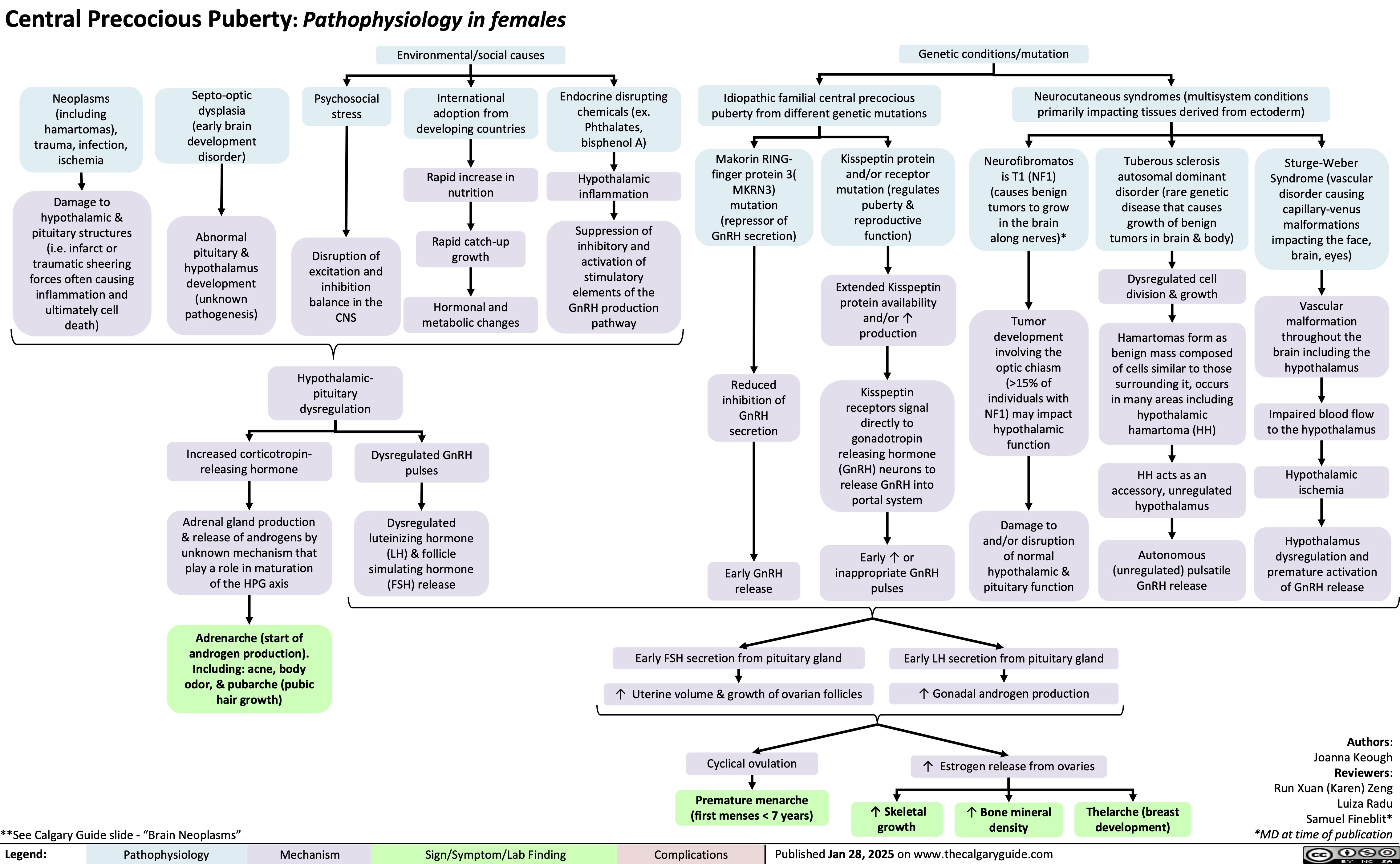
Central Precocious Puberty

Central Precocious Puberty: Pathophysiology in females Environmental/social causes
Genetic conditions/mutation
Neurocutaneous syndromes (multisystem conditions
          Neoplasms (including hamartomas), trauma, infection, ischemia
Damage to hypothalamic & pituitary structures (i.e. infarct or traumatic sheering forces often causing inflammation and ultimately cell death)
Septo-optic dysplasia (early brain development disorder)
Abnormal pituitary & hypothalamus development (unknown pathogenesis)
Psychosocial stress
International adoption from developing countries
Rapid increase in nutrition
Rapid catch-up growth
Hormonal and metabolic changes
Endocrine disrupting chemicals (ex. Phthalates, bisphenol A)
Hypothalamic inflammation
Suppression of inhibitory and activation of stimulatory elements of the GnRH production pathway
Idiopathic familial central precocious puberty from different genetic mutations
primarily impacting tissues derived from ectoderm)
        Makorin RING- finger protein 3( MKRN3) mutation (repressor of GnRH secretion)
Kisspeptin protein and/or receptor mutation (regulates puberty & reproductive function)
Extended Kisspeptin protein availability and/or ↑ production
Kisspeptin receptors signal directly to gonadotropin releasing hormone (GnRH) neurons to release GnRH into portal system
Early ↑ or inappropriate GnRH pulses
Neurofibromatos is T1 (NF1) (causes benign tumors to grow in the brain along nerves)*
Tumor development involving the optic chiasm (>15% of individuals with NF1) may impact hypothalamic function
Damage to and/or disruption of normal hypothalamic & pituitary function
Tuberous sclerosis autosomal dominant disorder (rare genetic disease that causes growth of benign tumors in brain & body)
Dysregulated cell division & growth
Hamartomas form as benign mass composed of cells similar to those surrounding it, occurs in many areas including hypothalamic hamartoma (HH)
HH acts as an accessory, unregulated hypothalamus
Autonomous (unregulated) pulsatile GnRH release
Sturge-Weber Syndrome (vascular disorder causing capillary-venus malformations impacting the face, brain, eyes)
Vascular malformation throughout the brain including the hypothalamus
Impaired blood flow to the hypothalamus
Hypothalamic ischemia
Hypothalamus dysregulation and premature activation of GnRH release
         Disruption of excitation and inhibition balance in the CNS
Hypothalamic- pituitary dysregulation
Reduced inhibition of GnRH secretion
                Increased corticotropin- releasing hormone
Adrenal gland production & release of androgens by unknown mechanism that play a role in maturation of the HPG axis
Adrenarche (start of androgen production). Including: acne, body odor, & pubarche (pubic hair growth)
Dysregulated GnRH pulses
Dysregulated luteinizing hormone (LH) & follicle simulating hormone (FSH) release
Early GnRH release
               Early FSH secretion from pituitary gland
↑ Uterine volume & growth of ovarian follicles
Cyclical ovulation
Premature menarche (first menses < 7 years)
Early LH secretion from pituitary
↑ Gonadal androgen production
↑ Estrogen release from ovaries
gland
           **See Calgary Guide slide - “Brain Neoplasms”
↑ Skeletal growth
↑ Bone mineral density
Thelarche (breast development)
Authors: Joanna Keough Reviewers: Run Xuan (Karen) Zeng Luiza Radu Samuel Fineblit* *MD at time of publication
 Legend:
 Pathophysiology
Mechanism
Sign/Symptom/Lab Finding
 Complications
Published Jan 28, 2025 on www.thecalgaryguide.com

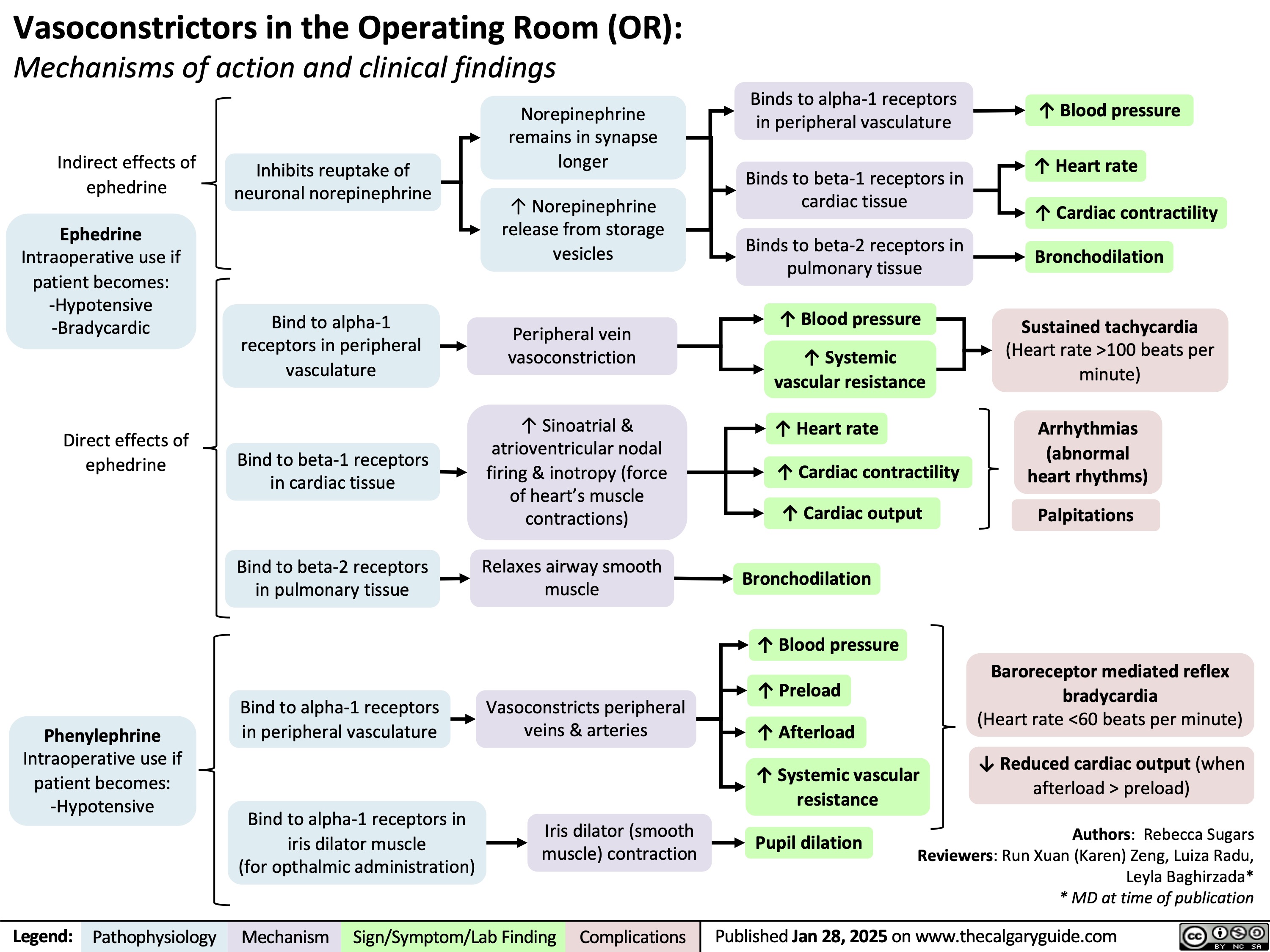
Vasoconstrictors in the OR

Vasoconstrictors in the Operating Room (OR):
Mechanisms of action and clinical findings
       Indirect effects of ephedrine
Ephedrine
Intraoperative use if patient becomes: -Hypotensive -Bradycardic
Inhibits reuptake of neuronal norepinephrine
Bind to alpha-1 receptors in peripheral vasculature
Bind to beta-1 receptors in cardiac tissue
Bind to beta-2 receptors in pulmonary tissue
Bind to alpha-1 receptors in peripheral vasculature
Bind to alpha-1 receptors in iris dilator muscle
(for opthalmic administration)
Norepinephrine remains in synapse longer
↑ Norepinephrine release from storage vesicles
Peripheral vein vasoconstriction
↑ Sinoatrial & atrioventricular nodal firing & inotropy (force of heart’s muscle contractions)
Relaxes airway smooth muscle
Vasoconstricts peripheral veins & arteries
Iris dilator (smooth muscle) contraction
Binds to alpha-1 receptors in peripheral vasculature
Binds to beta-1 receptors in cardiac tissue
Binds to beta-2 receptors in pulmonary tissue
↑ Blood pressure
↑ Systemic vascular resistance
↑ Heart rate
↑ Cardiac contractility
↑ Cardiac output Bronchodilation
↑ Blood pressure
↑ Preload
↑ Afterload
↑ Systemic vascular
↑ Blood pressure
↑ Heart rate
↑ Cardiac contractility Bronchodilation
Sustained tachycardia
(Heart rate >100 beats per minute)
Arrhythmias (abnormal heart rhythms)
Palpitations
Baroreceptor mediated reflex bradycardia
(Heart rate <60 beats per minute)
↓ Reduced cardiac output (when afterload > preload)
                     Direct effects ephedrine
of
                Phenylephrine
Intraoperative use patient becomes:
-Hypotensive
if
  resistance Pupil dilation
Authors: Rebecca Sugars Reviewers: Run Xuan (Karen) Zeng, Luiza Radu, Leyla Baghirzada* * MD at time of publication
    Legend:
 Pathophysiology
Mechanism
Sign/Symptom/Lab Finding
 Complications
 Published Jan 28, 2025 on www.thecalgaryguide.com

Dopamine Antagonists Metoclopramide & Domperidone
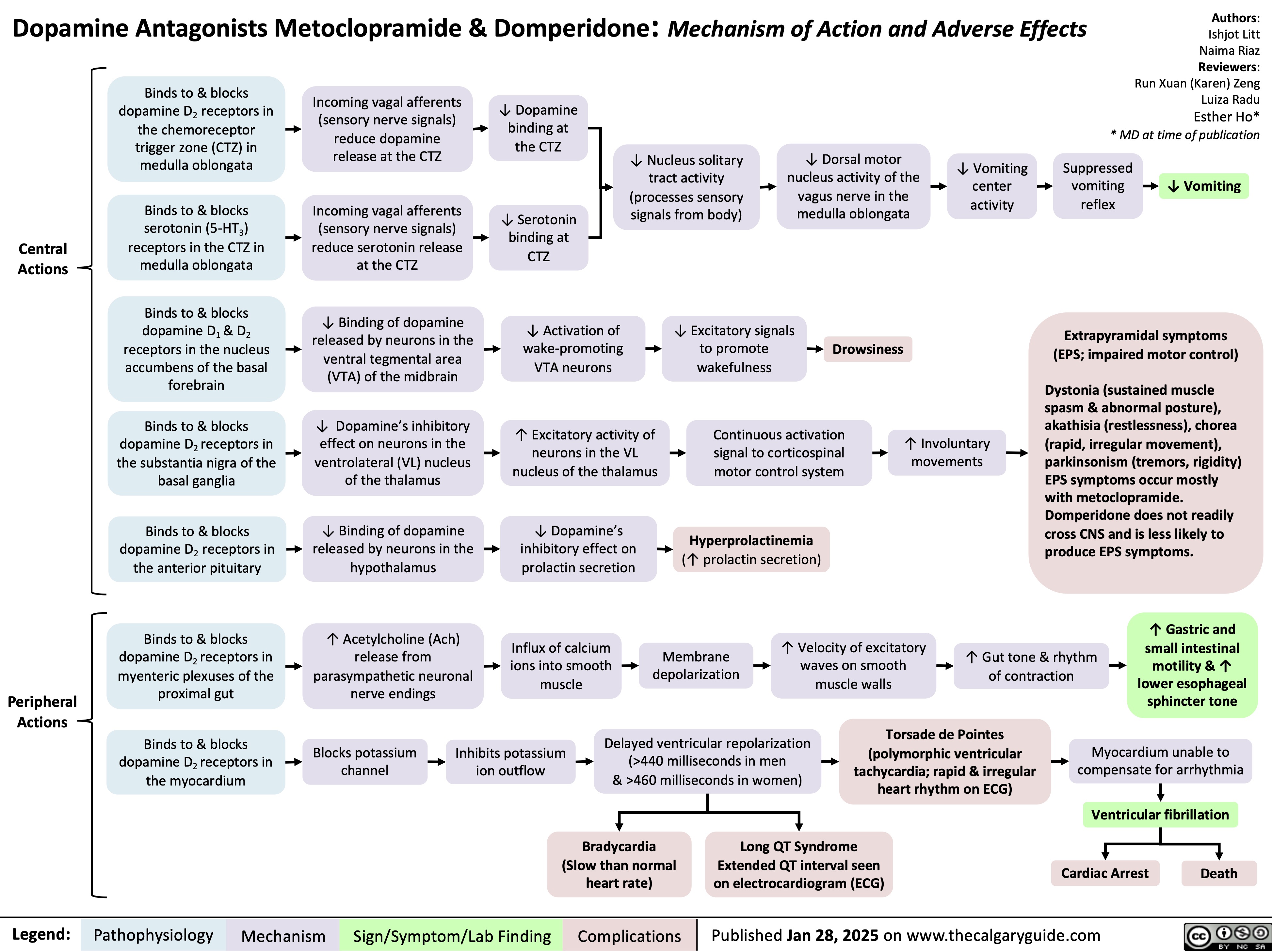
Dopamine Antagonists Metoclopramide & Domperidone: Mechanism of Action and Adverse Effects
Authors: Ishjot Litt Naima Riaz Reviewers: Run Xuan (Karen) Zeng Luiza Radu Esther Ho* * MD at time of publication
  Binds to & blocks dopamine D2 receptors in the chemoreceptor trigger zone (CTZ) in medulla oblongata
Binds to & blocks
serotonin (5-HT3) receptors in the CTZ in medulla oblongata
Binds to & blocks dopamine D1 & D2 receptors in the nucleus accumbens of the basal forebrain
Binds to & blocks dopamine D2 receptors in the substantia nigra of the basal ganglia
Binds to & blocks dopamine D2 receptors in the anterior pituitary
Binds to & blocks dopamine D2 receptors in myenteric plexuses of the proximal gut
Binds to & blocks dopamine D2 receptors in the myocardium
Incoming vagal afferents (sensory nerve signals) reduce dopamine release at the CTZ
Incoming vagal afferents (sensory nerve signals) reduce serotonin release at the CTZ
↓ Binding of dopamine released by neurons in the ventral tegmental area (VTA) of the midbrain
↓ Dopamine’s inhibitory effect on neurons in the ventrolateral (VL) nucleus of the thalamus
↓ Binding of dopamine released by neurons in the hypothalamus
↑ Acetylcholine (Ach) release from parasympathetic neuronal nerve endings
↓ Dopamine binding at the CTZ
↓ Serotonin binding at CTZ
↓ Activation of wake-promoting VTA neurons
↑ Excitatory activity of neurons in the VL nucleus of the thalamus
↓ Dopamine’s inhibitory effect on prolactin secretion
Influx of calcium ions into smooth muscle
↓ Dorsal motor nucleus activity of the vagus nerve in the medulla oblongata
     ↓ Nucleus solitary tract activity (processes sensory signals from body)
↓ Vomiting center activity
Suppressed vomiting reflex
↓ Vomiting
      Central Actions
     ↓ Excitatory signals to promote wakefulness
Drowsiness
Extrapyramidal symptoms (EPS; impaired motor control)
Dystonia (sustained muscle spasm & abnormal posture), akathisia (restlessness), chorea (rapid, irregular movement), parkinsonism (tremors, rigidity) EPS symptoms occur mostly with metoclopramide. Domperidone does not readily cross CNS and is less likely to produce EPS symptoms.
     Continuous activation signal to corticospinal motor control system
Hyperprolactinemia
(↑ prolactin secretion)
↑ Involuntary movements
             Peripheral Actions
Torsade de Pointes (polymorphic ventricular
tachycardia; rapid & irregular heart rhythm on ECG)
Membrane depolarization
↑ Velocity of excitatory waves on smooth muscle walls
↑ Gut tone & rhythm of contraction
↑ Gastric and small intestinal motility & ↑ lower esophageal sphincter tone
      Blocks potassium channel
Inhibits potassium ion outflow
Delayed ventricular repolarization (>440 milliseconds in men
& >460 milliseconds in women)
Myocardium unable to compensate for arrhythmia
Ventricular fibrillation Cardiac Arrest Death
     Bradycardia (Slow than normal heart rate)
Long QT Syndrome Extended QT interval seen on electrocardiogram (ECG)
   Legend:
 Pathophysiology
 Mechanism
 Sign/Symptom/Lab Finding
 Complications
 Published Jan 28, 2025 on www.thecalgaryguide.com

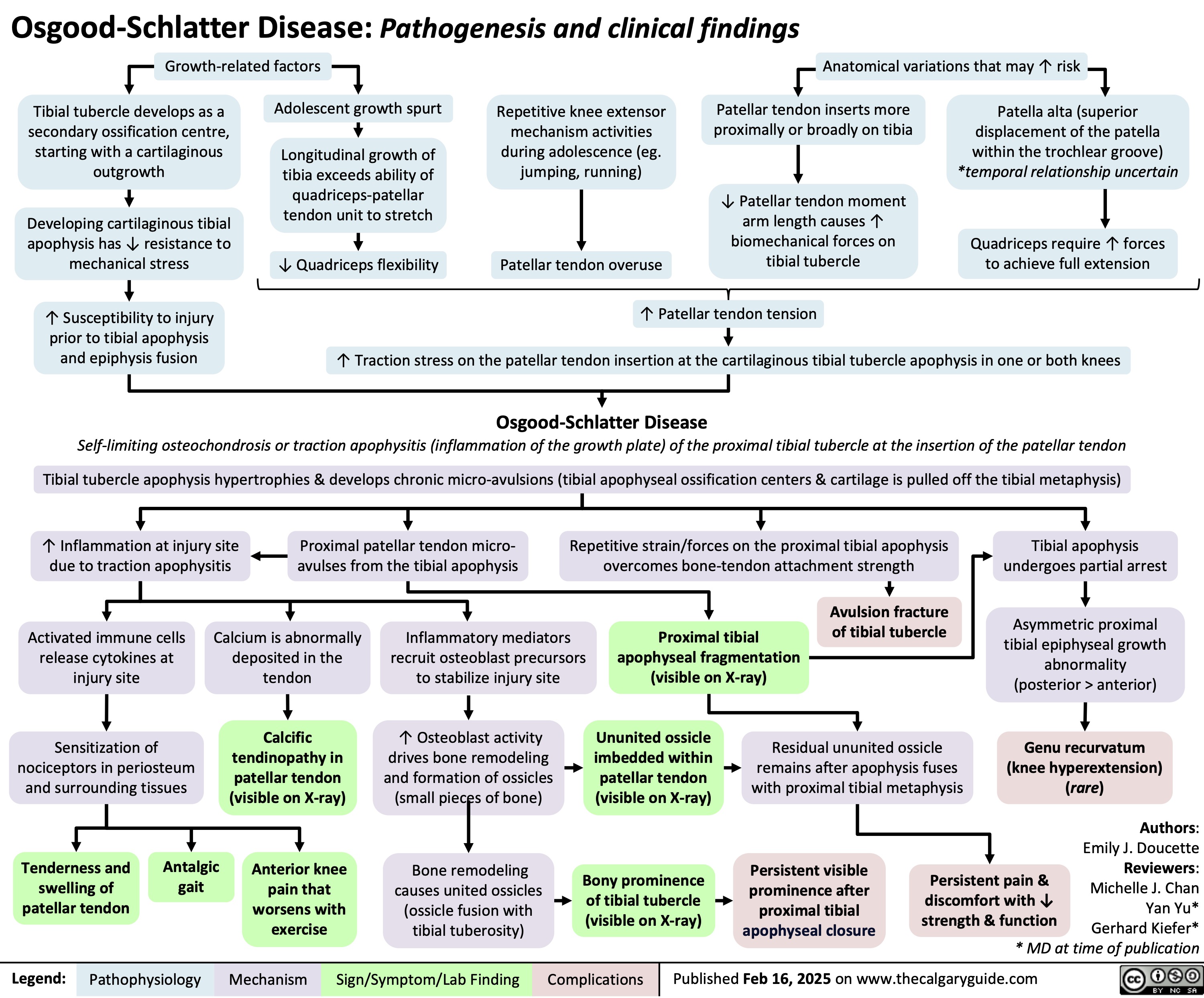
Osgood Schlatter Disease

Osgood-Schlatter Disease: Pathogenesis and clinical findings Growth-related factors
Anatomical variations that may ↑ risk
       Tibial tubercle develops as a secondary ossification centre, starting with a cartilaginous outgrowth
Developing cartilaginous tibial apophysis has ↓ resistance to mechanical stress
↑ Susceptibility to injury prior to tibial apophysis and epiphysis fusion
Adolescent growth spurt
Longitudinal growth of tibia exceeds ability of quadriceps-patellar tendon unit to stretch
↓ Quadriceps flexibility
Repetitive knee extensor mechanism activities during adolescence (eg. jumping, running)
Patellar tendon inserts more proximally or broadly on tibia
↓ Patellar tendon moment arm length causes ↑ biomechanical forces on tibial tubercle
Patella alta (superior displacement of the patella within the trochlear groove) *temporal relationship uncertain
Quadriceps require ↑ forces to achieve full extension
       Patellar tendon overuse
↑ Patellar tendon tension
    ↑ Traction stress on the patellar tendon insertion at the cartilaginous tibial tubercle apophysis in one or both knees
Osgood-Schlatter Disease
 Self-limiting osteochondrosis or traction apophysitis (inflammation of the growth plate) of the proximal tibial tubercle at the insertion of the patellar tendon
Tibial tubercle apophysis hypertrophies & develops chronic micro-avulsions (tibial apophyseal ossification centers & cartilage is pulled off the tibial metaphysis)
       ↑ Inflammation at injury site Proximal patellar tendon micro- Repetitive strain/forces on the proximal tibial apophysis
Tibial apophysis undergoes partial arrest
Asymmetric proximal tibial epiphyseal growth abnormality (posterior > anterior)
Genu recurvatum (knee hyperextension) (rare)
 due to traction apophysitis avulses from the tibial apophysis
overcomes bone-tendon attachment strength
        Activated immune cells release cytokines at injury site
Sensitization of nociceptors in periosteum and surrounding tissues
Tenderness and Antalgic swelling of gait
patellar tendon
Proximal tibial apophyseal fragmentation (visible on X-ray)
Avulsion fracture of tibial tubercle
Calcium is abnormally deposited in the tendon
Calcific tendinopathy in patellar tendon (visible on X-ray)
Anterior knee pain that worsens with exercise
Inflammatory mediators recruit osteoblast precursors to stabilize injury site
↑ Osteoblast activity drives bone remodeling and formation of ossicles (small pieces of bone)
Bone remodeling causes united ossicles (ossicle fusion with tibial tuberosity)
    Ununited ossicle imbedded within patellar tendon (visible on X-ray)
Bony prominence of tibial tubercle (visible on X-ray)
Residual ununited ossicle remains after apophysis fuses with proximal tibial metaphysis
Persistent visible prominence after proximal tibial apophyseal closure
Authors: Emily J. Doucette Reviewers: Michelle J. Chan Yan Yu* Gerhard Kiefer* * MD at time of publication
             Persistent pain & discomfort with ↓ strength & function
 Legend:
 Pathophysiology
Mechanism
Sign/Symptom/Lab Finding
 Complications
 Published Feb 16, 2025 on www.thecalgaryguide.com

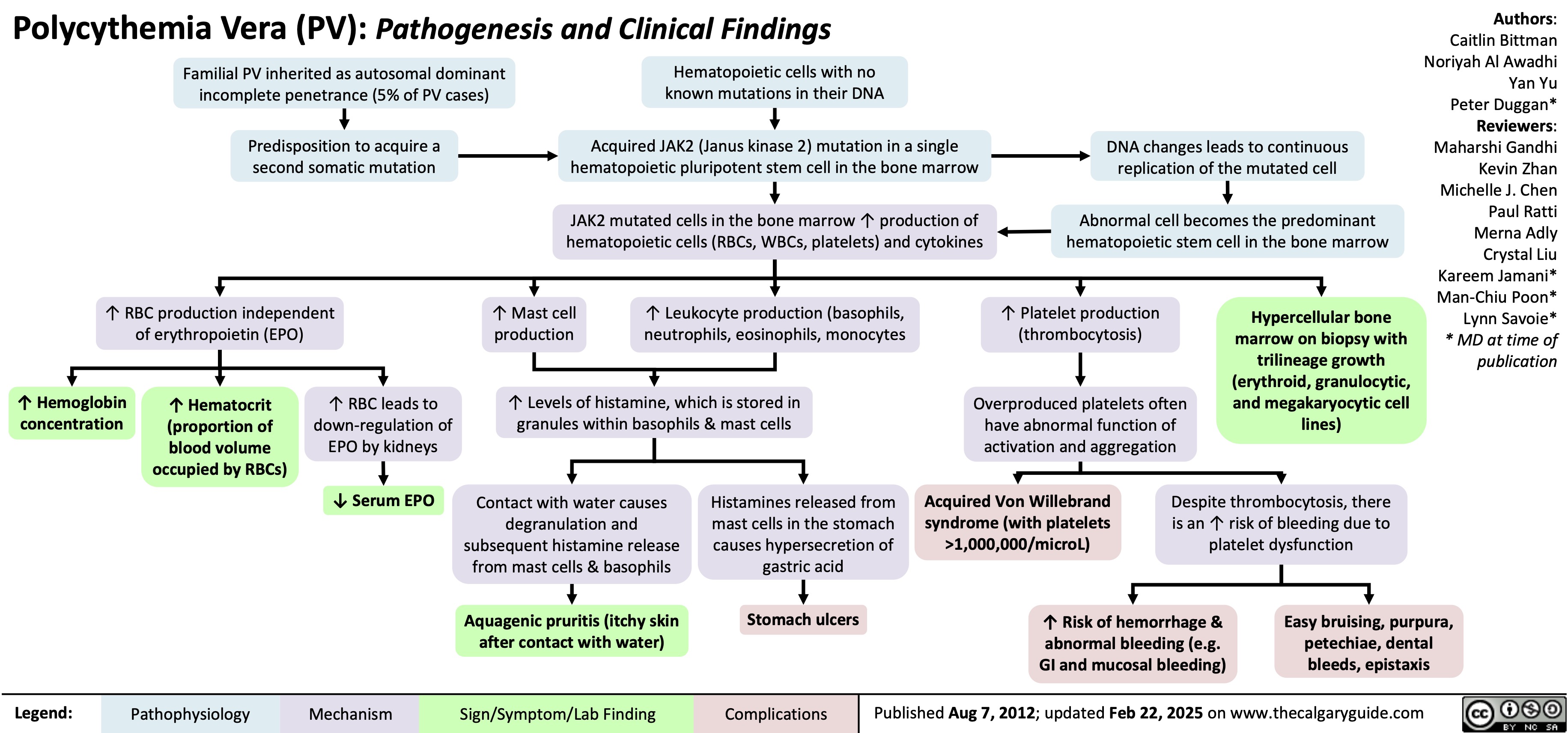
Polycythemia Vera Pathogenesis

Polycythemia Vera (PV): Pathogenesis and Clinical Findings
Authors: Caitlin Bittman Noriyah Al Awadhi Yan Yu Peter Duggan* Reviewers: Maharshi Gandhi Kevin Zhan Michelle J. Chen Paul Ratti Merna Adly Crystal Liu Kareem Jamani* Man-Chiu Poon* Lynn Savoie* * MD at time of publication
  Familial PV inherited as autosomal dominant incomplete penetrance (5% of PV cases)
Predisposition to acquire a second somatic mutation
Hematopoietic cells with no known mutations in their DNA
Acquired JAK2 (Janus kinase 2) mutation in a single hematopoietic pluripotent stem cell in the bone marrow
JAK2 mutated cells in the bone marrow ↑ production of hematopoietic cells (RBCs, WBCs, platelets) and cytokines
DNA changes leads to continuous replication of the mutated cell
Abnormal cell becomes the predominant hematopoietic stem cell in the bone marrow
                 ↑ RBC production independent of erythropoietin (EPO)
↑ Mast cell production
↑ Leukocyte production (basophils, neutrophils, eosinophils, monocytes
↑ Platelet production (thrombocytosis)
Overproduced platelets often have abnormal function of activation and aggregation
Hypercellular bone marrow on biopsy with trilineage growth (erythroid, granulocytic, and megakaryocytic cell lines)
       ↑ Hemoglobin concentration
↑ Hematocrit (proportion of blood volume occupied by RBCs)
↑ RBC leads to down-regulation of EPO by kidneys
↓ Serum EPO
↑ Levels of histamine, which is stored in granules within basophils & mast cells
       Contact with water causes degranulation and subsequent histamine release from mast cells & basophils
Aquagenic pruritis (itchy skin after contact with water)
Histamines released from mast cells in the stomach causes hypersecretion of gastric acid
Stomach ulcers
Acquired Von Willebrand syndrome (with platelets >1,000,000/microL)
Despite thrombocytosis, there is an ↑ risk of bleeding due to platelet dysfunction
     ↑ Risk of hemorrhage & abnormal bleeding (e.g. GI and mucosal bleeding)
Easy bruising, purpura, petechiae, dental bleeds, epistaxis
 Legend:
 Pathophysiology
Mechanism
Sign/Symptom/Lab Finding
  Complications
 Published Aug 7, 2012; updated Feb 22, 2025 on www.thecalgaryguide.com

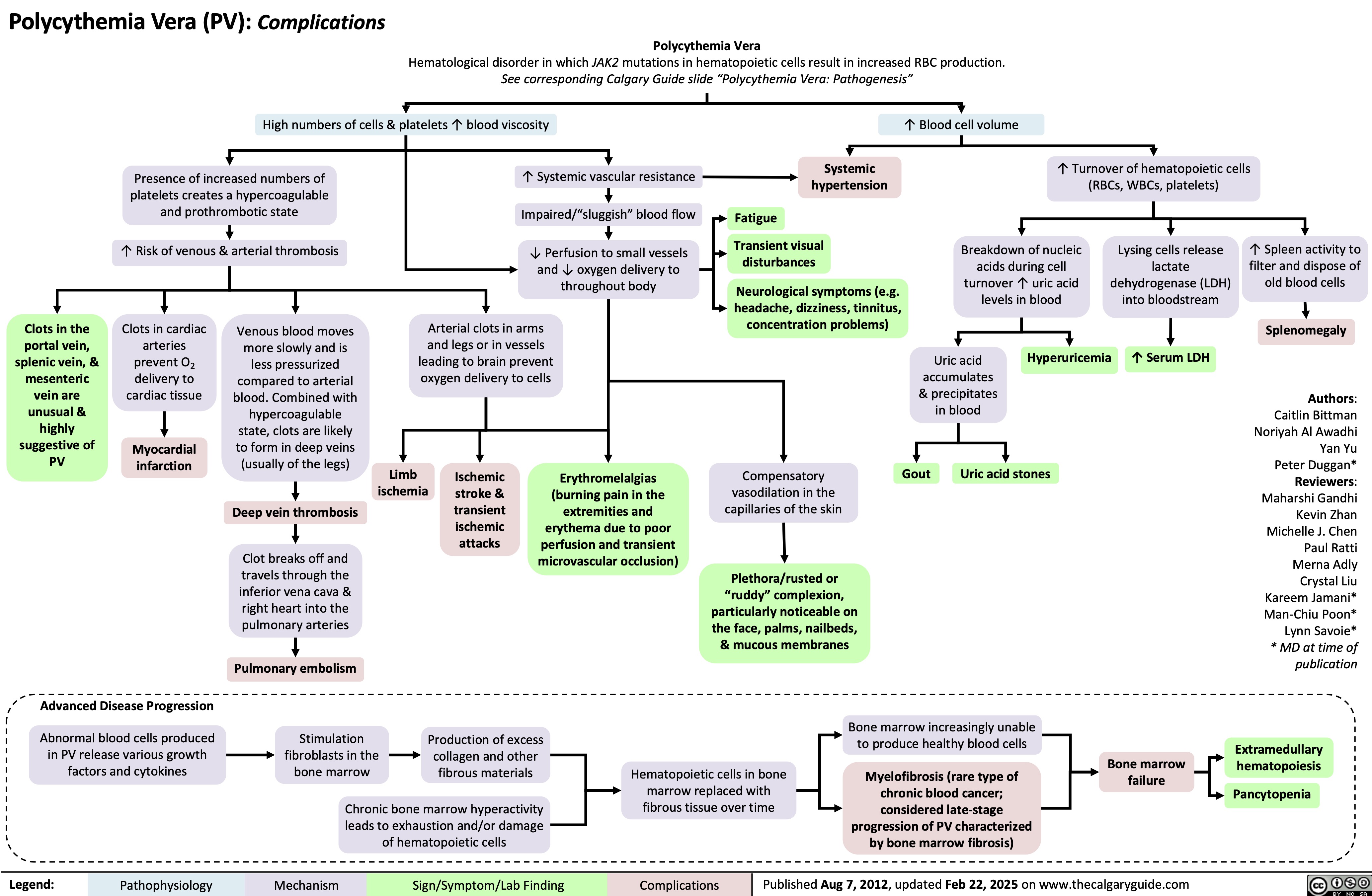
Polycythemia Vera Complications

Polycythemia Vera (PV): Complications
High numbers of cells & platelets ↑ blood viscosity
Polycythemia Vera
Hematological disorder in which JAK2 mutations in hematopoietic cells result in increased RBC production. See corresponding Calgary Guide slide “Polycythemia Vera: Pathogenesis”
    ↑ Blood cell volume
       Presence of increased numbers of platelets creates a hypercoagulable and prothrombotic state
↑ Risk of venous & arterial thrombosis
↑ Systemic vascular resistance Impaired/“sluggish” blood flow
↓ Perfusion to small vessels and ↓ oxygen delivery to throughout body
Arterial clots in arms
and legs or in vessels leading to brain prevent oxygen delivery to cells
Systemic hypertension
↑ Turnover of hematopoietic cells (RBCs, WBCs, platelets)
   Fatigue
     Transient visual disturbances
Neurological symptoms (e.g. headache, dizziness, tinnitus, concentration problems)
Breakdown of nucleic acids during cell turnover ↑ uric acid levels in blood
Lysing cells release lactate dehydrogenase (LDH) into bloodstream
↑ Spleen activity to filter and dispose of old blood cells
Splenomegaly
Authors: Caitlin Bittman Noriyah Al Awadhi Yan Yu Peter Duggan* Reviewers: Maharshi Gandhi Kevin Zhan Michelle J. Chen Paul Ratti Merna Adly Crystal Liu Kareem Jamani* Man-Chiu Poon* Lynn Savoie* * MD at time of publication
Extramedullary hematopoiesis
Pancytopenia
            Clots in the
portal vein, splenic vein, & mesenteric vein are unusual & highly suggestive of PV
Clots in cardiac arteries prevent O2 delivery to cardiac tissue
Myocardial infarction
Venous blood moves more slowly and is less pressurized compared to arterial blood. Combined with hypercoagulable state, clots are likely to form in deep veins (usually of the legs)
Deep vein thrombosis
Clot breaks off and
travels through the inferior vena cava & right heart into the pulmonary arteries
Pulmonary embolism
Stimulation fibroblasts in the bone marrow
Uric acid accumulates & precipitates in blood
Hyperuricemia
↑ Serum LDH
         Limb ischemia
Ischemic stroke & transient ischemic attacks
Erythromelalgias (burning pain in the extremities and erythema due to poor perfusion and transient microvascular occlusion)
Compensatory vasodilation in the capillaries of the skin
Plethora/rusted or “ruddy” complexion, particularly noticeable on the face, palms, nailbeds, & mucous membranes
Gout
Uric acid stones
     Advanced Disease Progression
Abnormal blood cells produced in PV release various growth factors and cytokines
Production of excess collagen and other fibrous materials
Hematopoietic cells in bone marrow replaced with fibrous tissue over time
Bone marrow increasingly unable to produce healthy blood cells
Myelofibrosis (rare type of chronic blood cancer; considered late-stage progression of PV characterized by bone marrow fibrosis)
Bone marrow failure
            Chronic bone marrow hyperactivity leads to exhaustion and/or damage of hematopoietic cells
 Legend:
 Pathophysiology
Mechanism
Sign/Symptom/Lab Finding
 Complications
 Published Aug 7, 2012, updated Feb 22, 2025 on www.thecalgaryguide.com

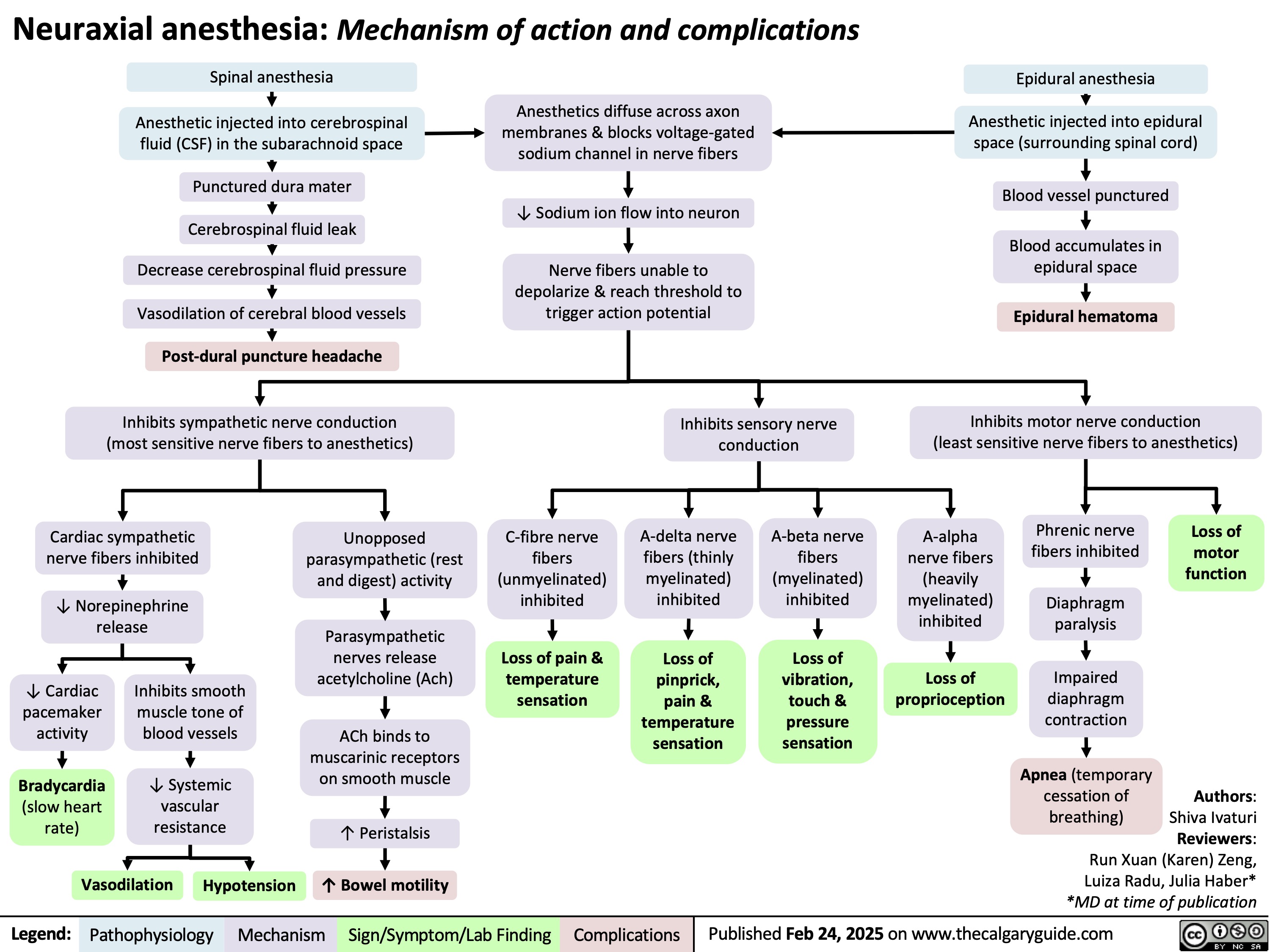
Neuraxial anesthesia

Neuraxial anesthesia: Mechanism of action and complications Spinal anesthesia
Epidural anesthesia
Anesthetic injected into epidural space (surrounding spinal cord)
Blood vessel punctured
Blood accumulates in epidural space
Epidural hematoma
Inhibits motor nerve conduction (least sensitive nerve fibers to anesthetics)
     Anesthetic injected into cerebrospinal fluid (CSF) in the subarachnoid space
Punctured dura mater Cerebrospinal fluid leak Decrease cerebrospinal fluid pressure Vasodilation of cerebral blood vessels Post-dural puncture headache
Inhibits sympathetic nerve conduction (most sensitive nerve fibers to anesthetics)
Anesthetics diffuse across axon membranes & blocks voltage-gated sodium channel in nerve fibers
↓ Sodium ion flow into neuron
Nerve fibers unable to depolarize & reach threshold to trigger action potential
                 Inhibits sensory nerve conduction
              Cardiac sympathetic nerve fibers inhibited
↓ Norepinephrine release
Unopposed parasympathetic (rest and digest) activity
Parasympathetic nerves release acetylcholine (Ach)
ACh binds to muscarinic receptors on smooth muscle
↑ Peristalsis
↑ Bowel motility
C-fibre nerve fibers (unmyelinated) inhibited
Loss of pain & temperature sensation
A-delta nerve fibers (thinly myelinated) inhibited
Loss of pinprick, pain & temperature sensation
A-beta nerve fibers (myelinated) inhibited
Loss of vibration, touch & pressure sensation
A-alpha nerve fibers (heavily myelinated) inhibited
Loss of proprioception
Phrenic nerve fibers inhibited
Diaphragm paralysis
Impaired diaphragm contraction
Apnea (temporary cessation of breathing)
Loss of motor function
           ↓ Cardiac pacemaker activity
Bradycardia
(slow heart rate)
Inhibits smooth muscle tone of blood vessels
↓ Systemic vascular resistance
Authors: Shiva Ivaturi Reviewers: Run Xuan (Karen) Zeng, Luiza Radu, Julia Haber* *MD at time of publication
         Vasodilation
Hypotension
 Legend:
 Pathophysiology
 Mechanism
Sign/Symptom/Lab Finding
 Complications
 Published Feb 24, 2025 on www.thecalgaryguide.com

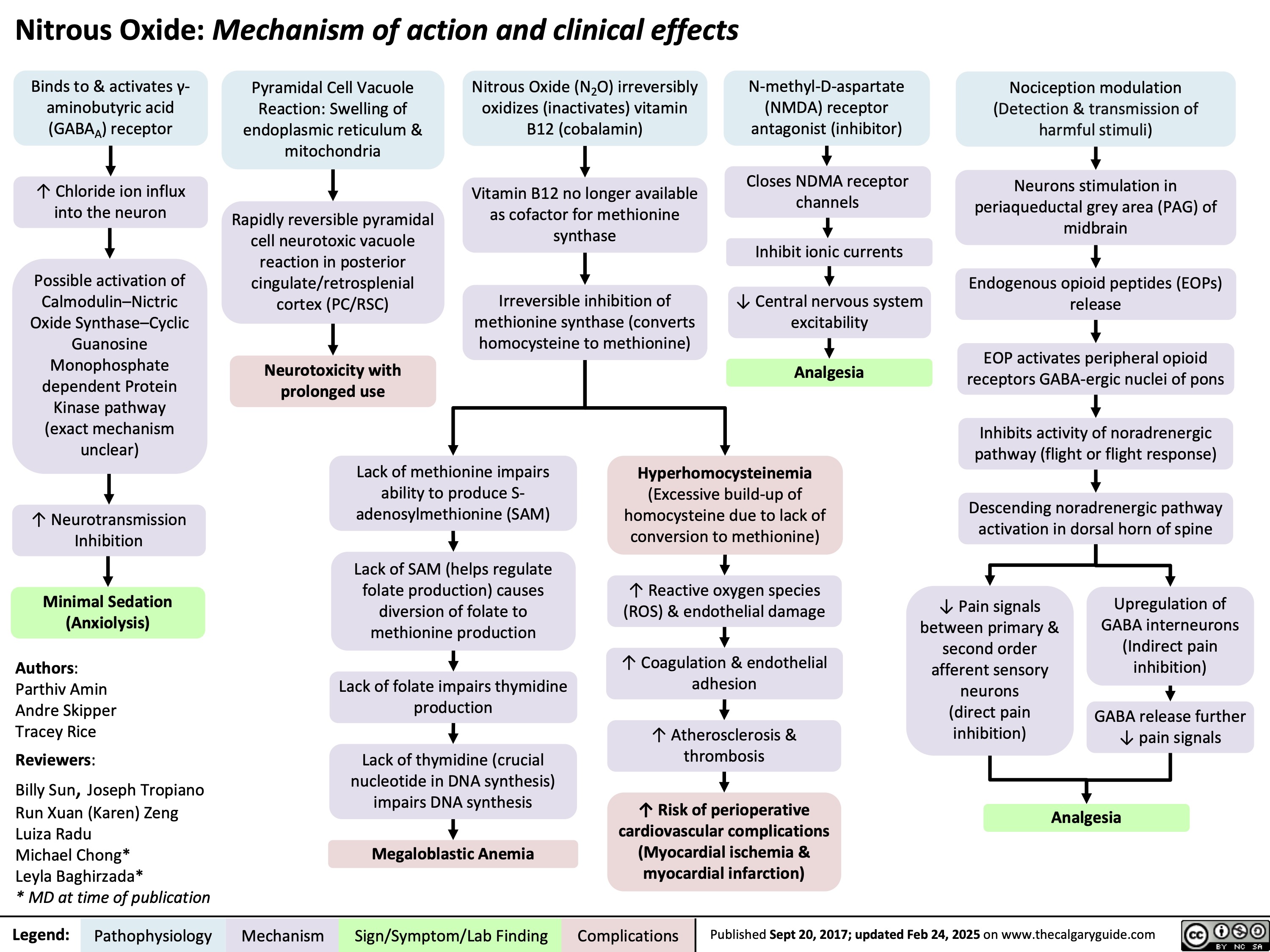
Nitrous Oxide

Nitrous Oxide: Mechanism of action and clinical effects
     Binds to & activates γ- aminobutyric acid (GABAA) receptor
↑ Chloride ion influx into the neuron
Possible activation of Calmodulin–Nictric Oxide Synthase–Cyclic Guanosine Monophosphate dependent Protein Kinase pathway (exact mechanism unclear)
↑ Neurotransmission Inhibition
Minimal Sedation (Anxiolysis)
Authors: Parthiv Amin Andre Skipper Tracey Rice
Reviewers:
Billy Sun, Joseph Tropiano
Run Xuan (Karen) Zeng Luiza Radu
Michael Chong*
Leyla Baghirzada*
* MD at time of publication
N-methyl-D-aspartate (NMDA) receptor antagonist (inhibitor)
Closes NDMA receptor channels
Inhibit ionic currents
↓ Central nervous system excitability
Analgesia
Hyperhomocysteinemia
(Excessive build-up of homocysteine due to lack of conversion to methionine)
↑ Reactive oxygen species (ROS) & endothelial damage
↑ Coagulation & endothelial adhesion
↑ Atherosclerosis & thrombosis
↑ Risk of perioperative cardiovascular complications (Myocardial ischemia & myocardial infarction)
Pyramidal Cell Vacuole Reaction: Swelling of endoplasmic reticulum & mitochondria
Rapidly reversible pyramidal cell neurotoxic vacuole reaction in posterior cingulate/retrosplenial cortex (PC/RSC)
Neurotoxicity with prolonged use
Lack of methionine impairs ability to produce S- adenosylmethionine (SAM)
Lack of SAM (helps regulate folate production) causes diversion of folate to methionine production
Lack of folate impairs thymidine production
Lack of thymidine (crucial nucleotide in DNA synthesis) impairs DNA synthesis
Megaloblastic Anemia
Nociception modulation (Detection & transmission of harmful stimuli)
Neurons stimulation in periaqueductal grey area (PAG) of midbrain
Endogenous opioid peptides (EOPs) release
EOP activates peripheral opioid receptors GABA-ergic nuclei of pons
Inhibits activity of noradrenergic pathway (flight or flight response)
Descending noradrenergic pathway activation in dorsal horn of spine
Nitrous Oxide (N2O) irreversibly oxidizes (inactivates) vitamin B12 (cobalamin)
Vitamin B12 no longer available as cofactor for methionine synthase
Irreversible inhibition of methionine synthase (converts homocysteine to methionine)
                         ↓ Pain signals between primary & second order afferent sensory neurons (direct pain inhibition)
Upregulation of GABA interneurons (Indirect pain inhibition)
GABA release further ↓ pain signals
        Analgesia
  Legend:
 Pathophysiology
Mechanism
Sign/Symptom/Lab Finding
 Complications
 Published Sept 20, 2017; updated Feb 24, 2025 on www.thecalgaryguide.com

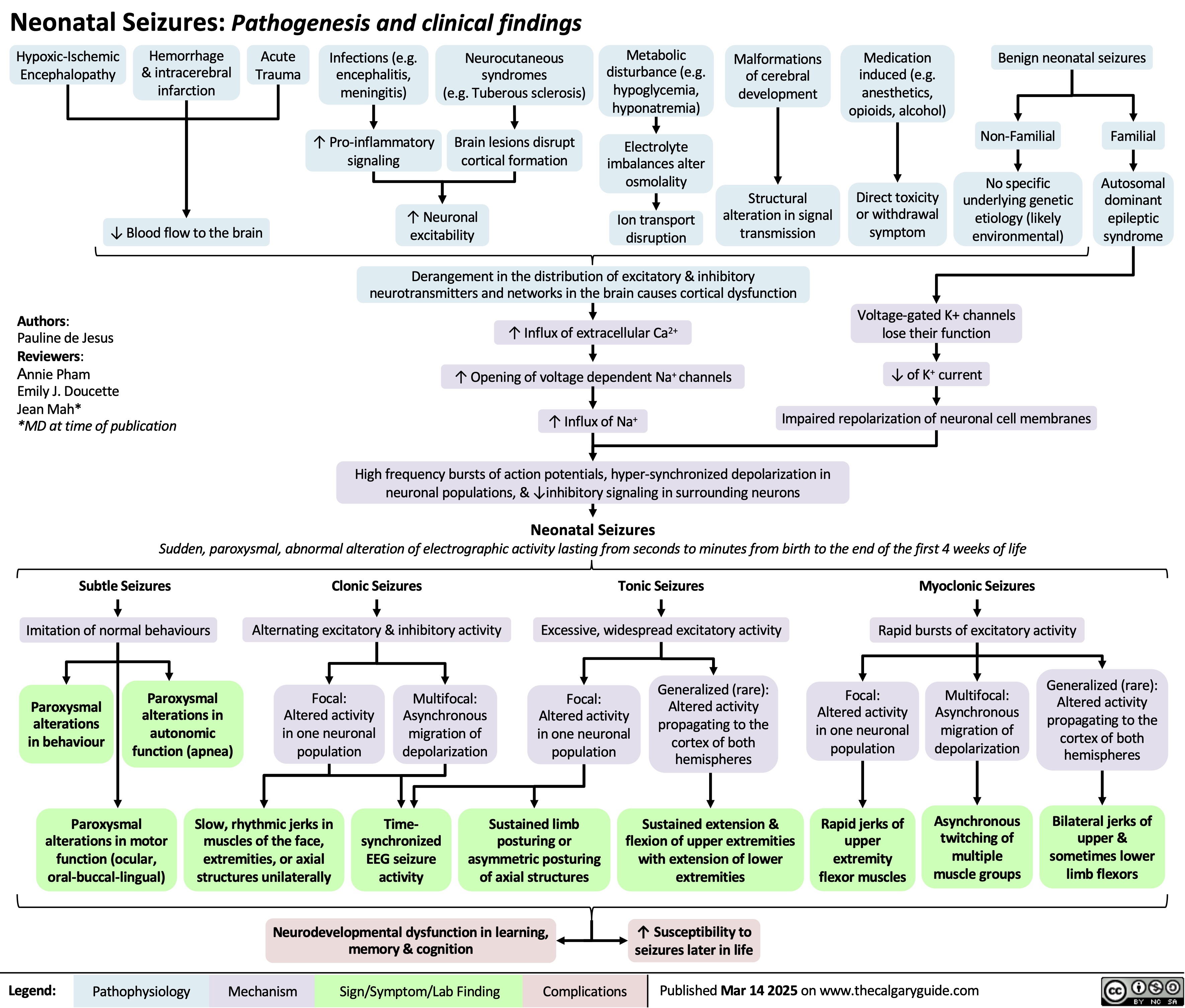
Neonatal Seizures

Neonatal Seizures: Pathogenesis and clinical findings
         Hypoxic-Ischemic Encephalopathy
Hemorrhage & intracerebral infarction
Acute Trauma
Infections (e.g. encephalitis, meningitis)
↑ Pro-inflammatory signaling
Neurocutaneous syndromes
(e.g. Tuberous sclerosis)
Brain lesions disrupt cortical formation
Metabolic disturbance (e.g. hypoglycemia, hyponatremia)
Electrolyte imbalances alter osmolality
Ion transport disruption
Malformations of cerebral development
Structural alteration in signal transmission
Medication induced (e.g. anesthetics, opioids, alcohol)
Direct toxicity or withdrawal symptom
Benign neonatal seizures
                 ↓ Blood flow to the brain
Authors:
Pauline de Jesus Reviewers:
Annie Pham
Emily J. Doucette
Jean Mah*
*MD at time of publication
↑ Neuronal excitability
Non-Familial
No specific underlying genetic etiology (likely environmental)
Familial
Autosomal dominant epileptic syndrome
   Derangement in the distribution of excitatory & inhibitory neurotransmitters and networks in the brain causes cortical dysfunction
  ↑ Influx of extracellular Ca2+
↑ Opening of voltage dependent Na+ channels ↑ Influx of Na+
Voltage-gated K+ channels lose their function
↓ of K+ current
Impaired repolarization of neuronal cell membranes
      Subtle Seizures
Imitation of normal behaviours
Clonic Seizures
Alternating excitatory & inhibitory activity
Tonic Seizures
Excessive, widespread excitatory activity
Myoclonic Seizures
Rapid bursts of excitatory activity
High frequency bursts of action potentials, hyper-synchronized depolarization in neuronal populations, & ↓inhibitory signaling in surrounding neurons
Neonatal Seizures
Sudden, paroxysmal, abnormal alteration of electrographic activity lasting from seconds to minutes from birth to the end of the first 4 weeks of life
                  Paroxysmal alterations in behaviour
Paroxysmal alterations in autonomic function (apnea)
Focal: Altered activity in one neuronal population
Multifocal: Asynchronous migration of depolarization
Focal: Altered activity in one neuronal population
Generalized (rare): Altered activity propagating to the cortex of both hemispheres
Focal: Altered activity in one neuronal population
Rapid jerks of upper extremity flexor muscles
Multifocal: Asynchronous migration of depolarization
Asynchronous twitching of multiple muscle groups
Generalized (rare): Altered activity propagating to the cortex of both hemispheres
Bilateral jerks of upper & sometimes lower limb flexors
          Paroxysmal alterations in motor function (ocular, oral-buccal-lingual)
Slow, rhythmic jerks in muscles of the face, extremities, or axial structures unilaterally
Time- synchronized EEG seizure activity
Sustained limb posturing or asymmetric posturing of axial structures
Sustained extension & flexion of upper extremities with extension of lower extremities
↑ Susceptibility to seizures later in life
   Neurodevelopmental dysfunction in learning, memory & cognition
 Legend:
 Pathophysiology
Mechanism
 Sign/Symptom/Lab Finding
 Complications
 Published Mar 14 2025 on www.thecalgaryguide.com

Tonsillitis Pathogenesis and clinical findings
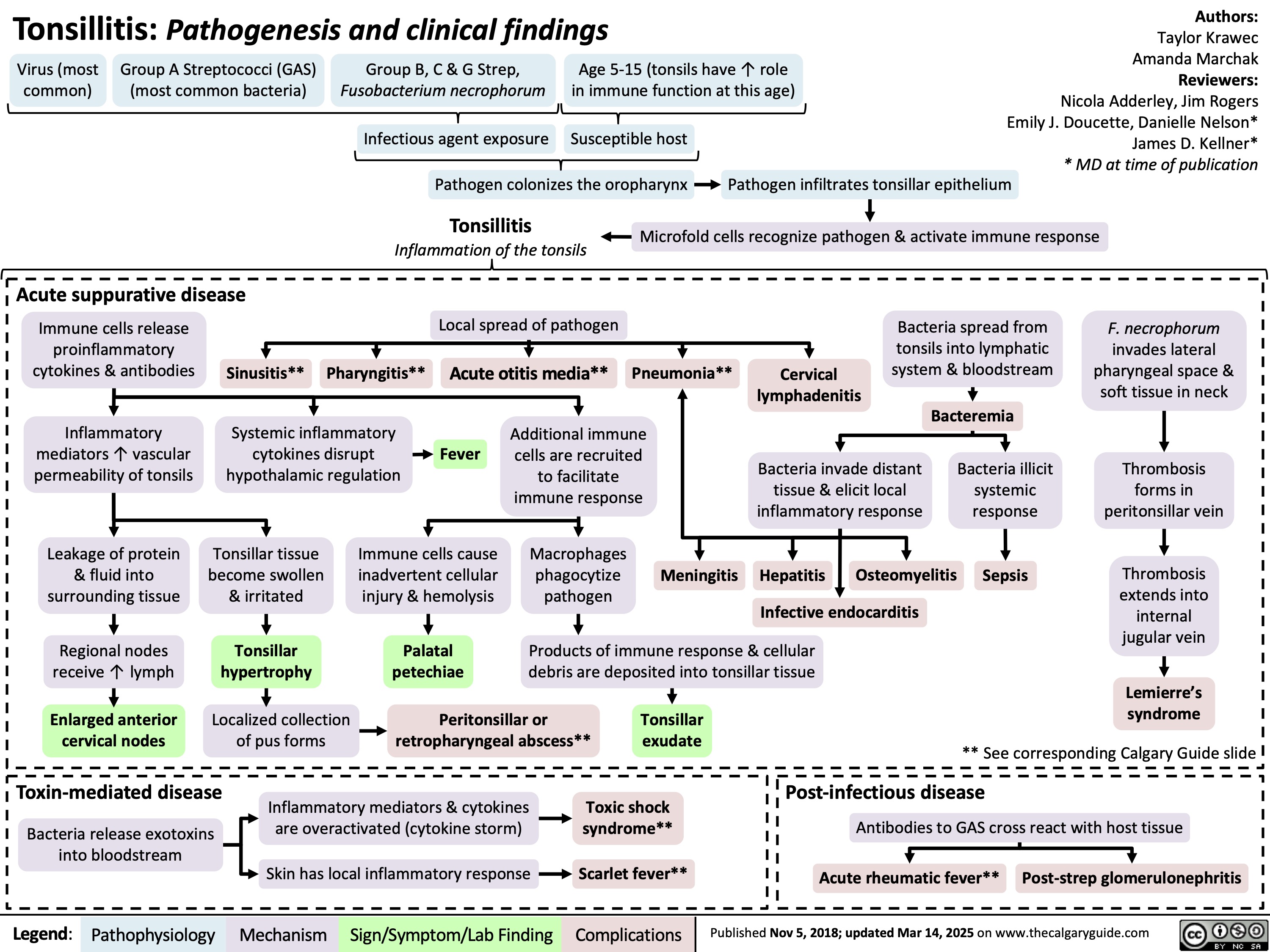
Tonsillitis: Pathogenesis and clinical findings
Authors:
Taylor Krawec Amanda Marchak Reviewers: Nicola Adderley, Jim Rogers Emily J. Doucette, Danielle Nelson* James D. Kellner* * MD at time of publication
Pathogen infiltrates tonsillar epithelium
Microfold cells recognize pathogen & activate immune response
    Virus (most common)
Group A Streptococci (GAS) (most common bacteria)
Group B, C & G Strep,
Fusobacterium necrophorum
Age 5-15 (tonsils have ↑ role in immune function at this age)
Tonsillitis
Inflammation of the tonsils
    Infectious agent exposure
Susceptible host Pathogen colonizes the oropharynx
     Acute suppurative disease
    Immune cells release proinflammatory cytokines & antibodies
Inflammatory mediators ↑ vascular permeability of tonsils
Leakage of protein & fluid into surrounding tissue
Regional nodes receive ↑ lymph
Enlarged anterior cervical nodes
Sinusitis**
Pharyngitis**
Local spread of pathogen
Acute otitis media**
Pneumonia**
Cervical lymphadenitis
Bacteria spread from
tonsils into lymphatic system & bloodstream
Bacteremia
F. necrophorum
invades lateral pharyngeal space & soft tissue in neck
Thrombosis forms in peritonsillar vein
Thrombosis extends into internal jugular vein
Lemierre’s syndrome
               Systemic inflammatory cytokines disrupt hypothalamic regulation
Fever
Additional immune cells are recruited to facilitate immune response
Macrophages phagocytize pathogen
Bacteria invade distant tissue & elicit local inflammatory response
Hepatitis Osteomyelitis
Infective endocarditis
Bacteria illicit systemic response
Sepsis
           Tonsillar tissue become swollen & irritated
Tonsillar hypertrophy
Localized collection of pus forms
Immune cells cause inadvertent cellular injury & hemolysis
Palatal petechiae
Meningitis
        Products of immune response & cellular debris are deposited into tonsillar tissue
     Peritonsillar or Tonsillar retropharyngeal abscess** exudate
** See corresponding Calgary Guide slide
 Toxin-mediated disease
Bacteria release exotoxins into bloodstream
Inflammatory mediators & cytokines are overactivated (cytokine storm)
Skin has local inflammatory response
Toxic shock syndrome**
     Scarlet fever**
 Post-infectious disease
Antibodies to GAS cross react with host tissue
     Acute rheumatic fever** Post-strep glomerulonephritis
Legend:
 Pathophysiology
 Mechanism
Sign/Symptom/Lab Finding
 Complications
 Published Nov 5, 2018; updated Mar 14, 2025 on www.thecalgaryguide.com

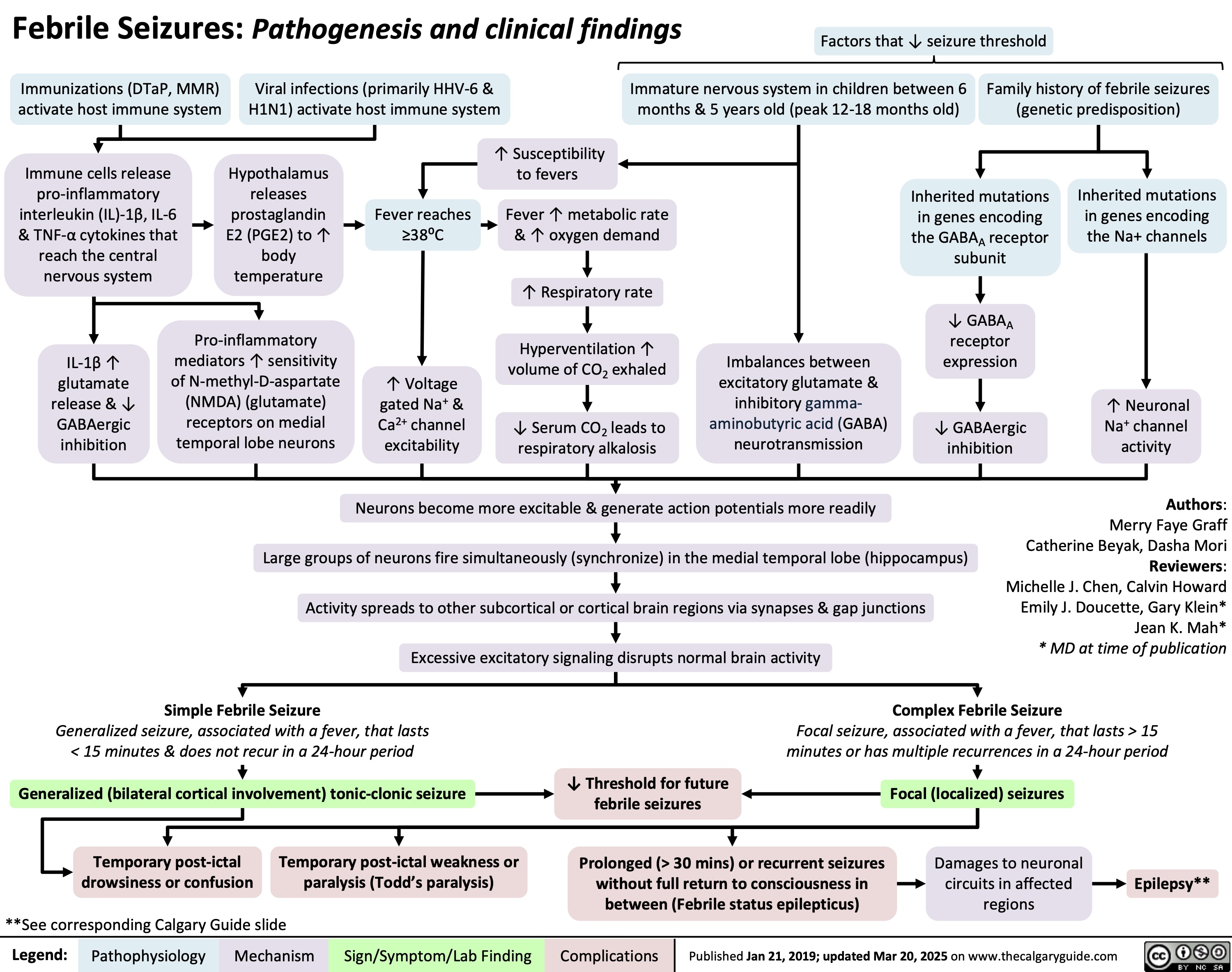
Febrile Seizures

Febrile Seizures: Pathogenesis and clinical findings
Factors that ↓ seizure threshold
      Immunizations (DTaP, MMR) activate host immune system
Immune cells release pro-inflammatory interleukin (IL)-1β, IL-6 & TNF-α cytokines that reach the central nervous system
Viral infections (primarily HHV-6 & H1N1) activate host immune system
Immature nervous system in children between 6 Family history of febrile seizures months & 5 years old (peak 12-18 months old) (genetic predisposition)
       Hypothalamus releases prostaglandin E2 (PGE2) to ↑ body temperature
Fever reaches ≥380C
↑ Voltage gated Na+ & Ca2+ channel excitability
↑ Susceptibility to fevers
Fever ↑ metabolic rate & ↑ oxygen demand
↑ Respiratory rate
Hyperventilation ↑ volume of CO2 exhaled
↓ Serum CO2 leads to respiratory alkalosis
Inherited mutations in genes encoding the GABAA receptor subunit
↓ GABAA receptor expression
↓ GABAergic inhibition
Inherited mutations in genes encoding the Na+ channels
             IL-1β ↑ glutamate release & ↓ GABAergic inhibition
Pro-inflammatory mediators ↑ sensitivity of N-methyl-D-aspartate (NMDA) (glutamate) receptors on medial temporal lobe neurons
Imbalances between excitatory glutamate & inhibitory gamma- aminobutyric acid (GABA) neurotransmission
↑ Neuronal Na+ channel activity
      Neurons become more excitable & generate action potentials more readily
Large groups of neurons fire simultaneously (synchronize) in the medial temporal lobe (hippocampus) Activity spreads to other subcortical or cortical brain regions via synapses & gap junctions Excessive excitatory signaling disrupts normal brain activity
Authors: Merry Faye Graff Catherine Beyak, Dasha Mori Reviewers: Michelle J. Chen, Calvin Howard Emily J. Doucette, Gary Klein* Jean K. Mah* * MD at time of publication
     Simple Febrile Seizure
Complex Febrile Seizure
Focal seizure, associated with a fever, that lasts > 15 minutes or has multiple recurrences in a 24-hour period
Generalized seizure, associated with a fever, that lasts < 15 minutes & does not recur in a 24-hour period
Generalized (bilateral cortical involvement) tonic-clonic seizure
Temporary post-ictal Temporary post-ictal weakness or
↓ Threshold for future febrile seizures
Prolonged (> 30 mins) or recurrent seizures without full return to consciousness in between (Febrile status epilepticus)
Focal (localized) seizures
Damages to neuronal circuits in affected regions
             drowsiness or confusion
**See corresponding Calgary Guide slide
paralysis (Todd’s paralysis)
Epilepsy**
 Legend:
 Pathophysiology
Mechanism
Sign/Symptom/Lab Finding
 Complications
 Published Jan 21, 2019; updated Mar 20, 2025 on www.thecalgaryguide.com

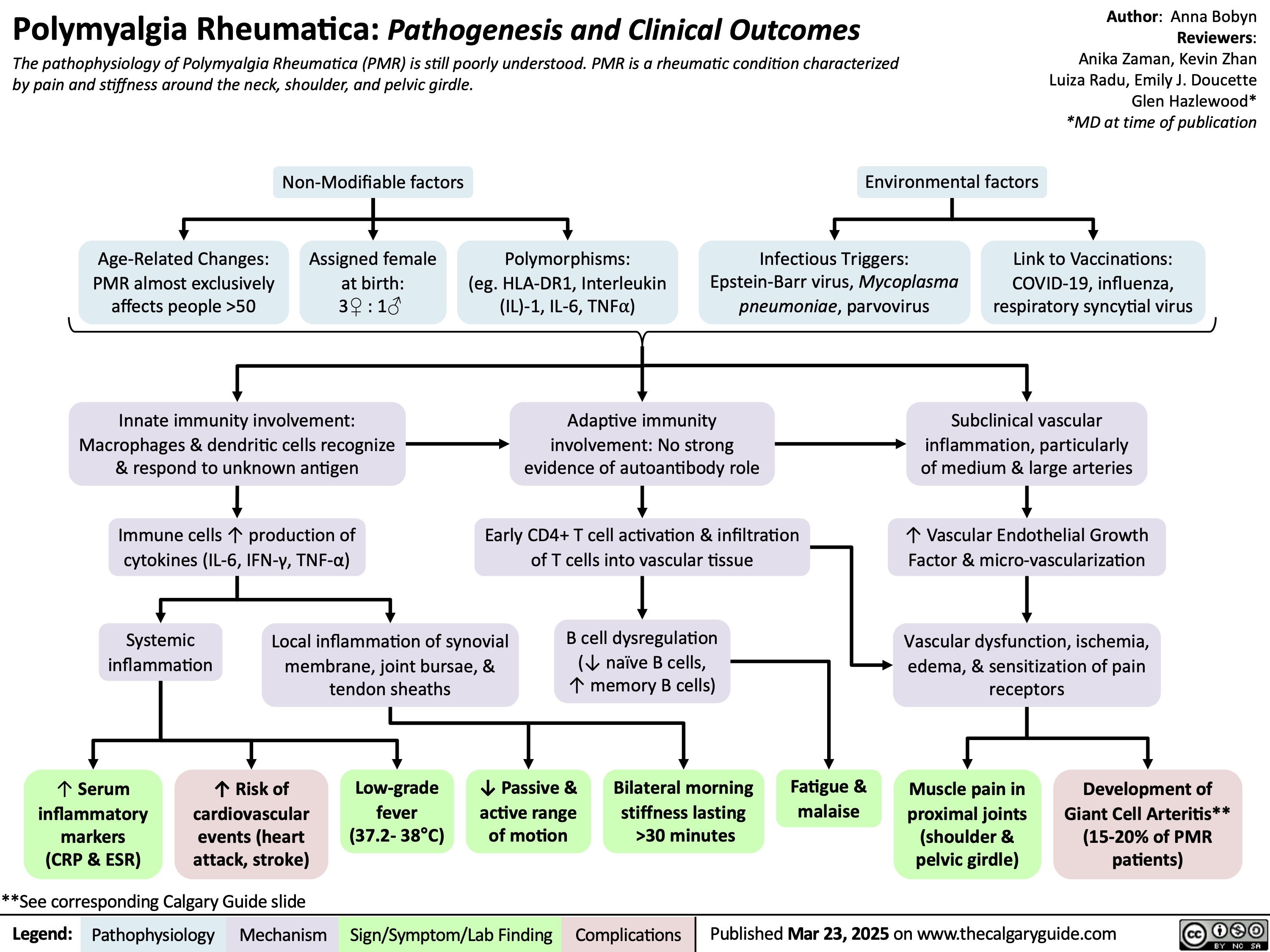
Polymyalgia Rheumatica

Polymyalgia Rheuma>ca: Pathogenesis and Clinical Outcomes
The pathophysiology of Polymyalgia Rheuma9ca (PMR) is s9ll poorly understood. PMR is a rheuma9c condi9on characterized
Author: Anna Bobyn Reviewers: Anika Zaman, Kevin Zhan Luiza Radu, Emily J. Doucette Glen Hazlewood* *MD at time of publication
by pain and s9ffness around the neck, shoulder, and pelvic girdle.
  Non-Modifiable factors
Assigned female at birth:
3♀ : 1♂
Environmental factors
       Age-Related Changes: PMR almost exclusively affects people >50
Polymorphisms:
(eg. HLA-DR1, Interleukin (IL)-1, IL-6, TNF⍺)
Infectious Triggers: Epstein-Barr virus, Mycoplasma pneumoniae, parvovirus
Link to Vaccina=ons:
COVID-19, influenza, respiratory syncy=al virus
      Innate immunity involvement: Macrophages & dendri=c cells recognize & respond to unknown an=gen
Immune cells ↑ production of cytokines (IL-6, IFN-γ, TNF-α)
Adap=ve immunity involvement: No strong evidence of autoan=body role
Early CD4+ T cell ac=va=on & infiltra=on of T cells into vascular =ssue
Subclinical vascular inflammation, particularly of medium & large arteries
↑ Vascular Endothelial Growth Factor & micro-vasculariza=on
Vascular dysfunction, ischemia, edema, & sensitization of pain receptors
           Systemic inflamma=on
Local inflamma=on of synovial membrane, joint bursae, & tendon sheaths
B cell dysregula=on (↓ naïve B cells, ↑ memory B cells)
           ↑ Serum inflammatory
markers (CRP & ESR)
↑ Risk of cardiovascular
events (heart attack, stroke)
Low-grade fever (37.2- 38°C)
↓ Passive & ac>ve range of mo>on
Bilateral morning stiffness lasting >30 minutes
Fa>gue & malaise
Muscle pain in proximal joints
(shoulder & pelvic girdle)
Development of Giant Cell Arteri>s**
(15-20% of PMR pa>ents)
**See corresponding Calgary Guide slide
 Legend:
 Pathophysiology
 Mechanism
Sign/Symptom/Lab Finding
 Complica=ons
 Published Mar 23, 2025 on www.thecalgaryguide.com

HIV Pathogenesis and Clinical Findings
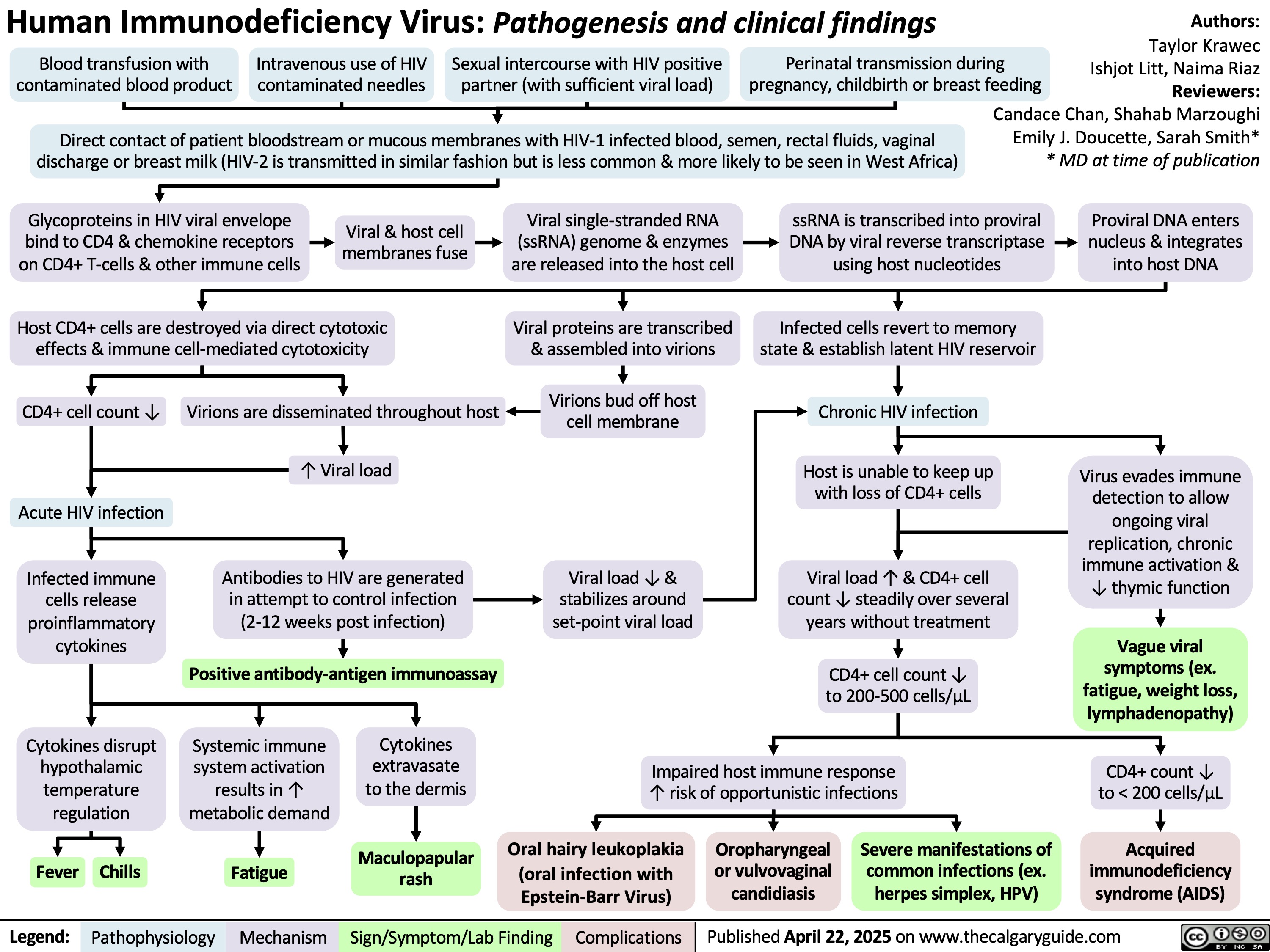
Human Immunodeficiency Virus: Pathogenesis and clinical findings
Blood transfusion with
contaminated blood product
Intravenous use of HIV
contaminated needles
Sexual intercourse with HIV positive
partner (with sufficient viral load)
Perinatal transmission during
pregnancy, childbirth or breast feeding
Direct contact of patient bloodstream or mucous membranes with HIV-1 infected blood, semen, rectal fluids, vaginal
discharge or breast milk (HIV-2 is transmitted in similar fashion but is less common & more likely to be seen in West Africa)
Authors:
Taylor Krawec
Ishjot Litt, Naima Riaz
Reviewers:
Candace Chan, Shahab Marzoughi
Emily J. Doucette, Sarah Smith*
* MD at time of publication
Glycoproteins in HIV viral envelope
bind to CD4 & chemokine receptors
on CD4+ T-cells & other immune cells
Viral & host cell
membranes fuse
Viral single-stranded RNA
(ssRNA) genome & enzymes
are released into the host cell
Host CD4+ cells are destroyed via direct cytotoxic
effects & immune cell-mediated cytotoxicity
CD4+ cell count ↓
Virions are disseminated throughout host
↑ Viral load
Viral proteins are transcribed
& assembled into virions
Virions bud off host
cell membrane
ssRNA is transcribed into proviral
DNA by viral reverse transcriptase
using host nucleotides
Infected cells revert to memory
state & establish latent HIV reservoir
Chronic HIV infection
Host is unable to keep up
with loss of CD4+ cells
Proviral DNA enters
nucleus & integrates
into host DNA
Acute HIV infection
Infected immune
cells release
proinflammatory
cytokines
Antibodies to HIV are generated
in attempt to control infection
(2-12 weeks post infection)
Positive antibody-antigen immunoassay
Cytokines disrupt
hypothalamic
temperature
regulation
Systemic immune
system activation
results in ↑
metabolic demand
Cytokines
extravasate
to the dermis
Fever Maculopapular
Chills
Fatigue
rash
Legend: Pathophysiology Mechanism
Sign/Symptom/Lab Finding Viral load ↓ &
stabilizes around
set-point viral load
Oral hairy leukoplakia
(oral infection with
Epstein-Barr Virus)
Complications
Viral load ↑ & CD4+ cell
count ↓ steadily over several
years without treatment
CD4+ cell count ↓
to 200-500 cells/μL
Impaired host immune response
↑ risk of opportunistic infections
Oropharyngeal
or vulvovaginal
candidiasis
Severe manifestations of
common infections (ex.
herpes simplex, HPV)
Published April 22, 2025 on www.thecalgaryguide.com
Virus evades immune
detection to allow
ongoing viral
replication, chronic
immune activation &
↓ thymic function
Vague viral
symptoms (ex.
fatigue, weight loss,
lymphadenopathy)
CD4+ count ↓
to < 200 cells/μL
Acquired
immunodeficiency
syndrome (AIDS)

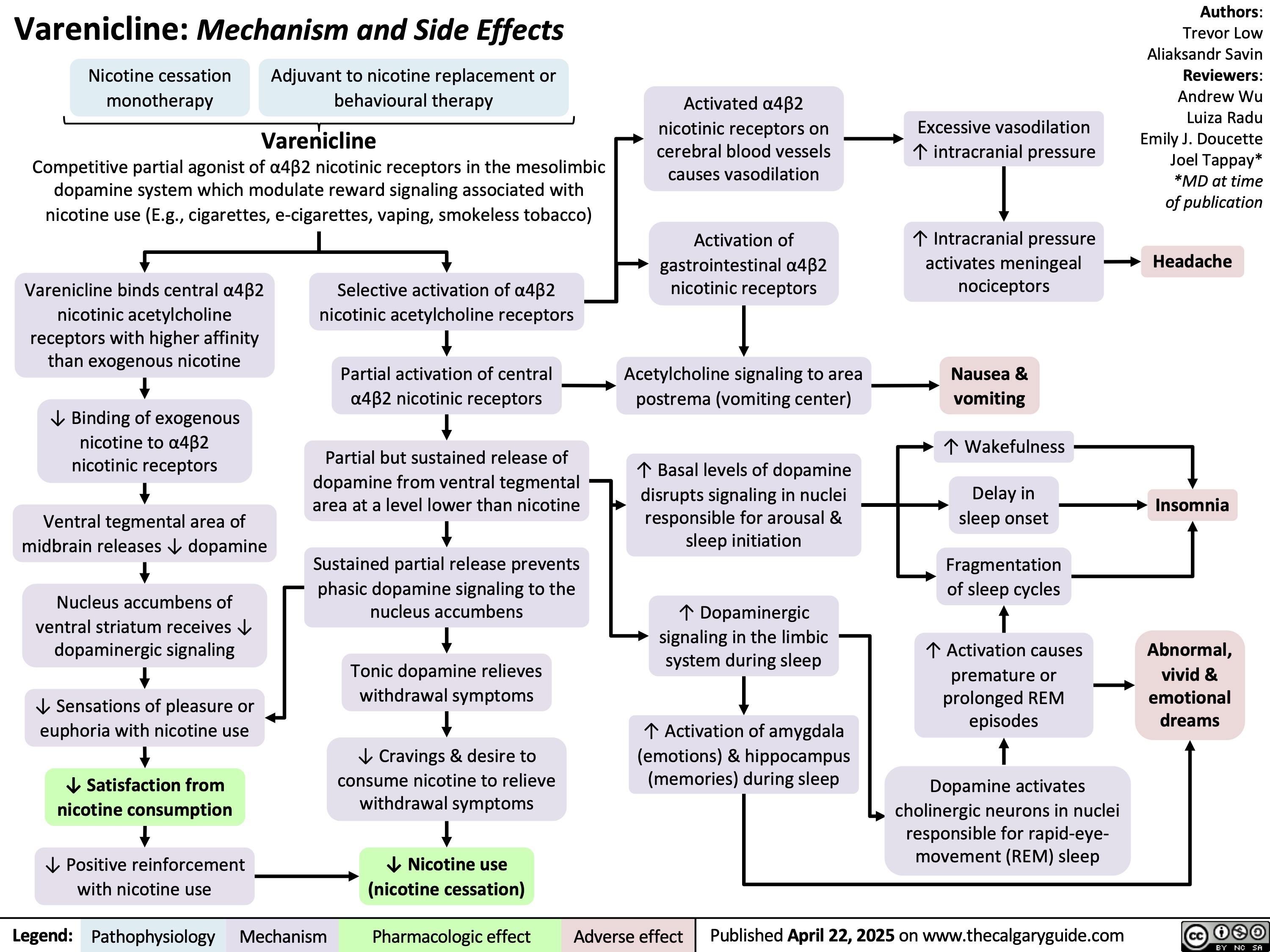
Varenicline

Varenicline: Mechanism and Side Effects
Nicotine cessation
monotherapy
Adjuvant to nicotine replacement or
behavioural therapy
Varenicline
Competitive partial agonist of α4β2 nicotinic receptors in the mesolimbic
dopamine system which modulate reward signaling associated with
nicotine use (E.g., cigarettes, e-cigarettes, vaping, smokeless tobacco)
Activated α4β2
nicotinic receptors on
cerebral blood vessels
causes vasodilation
Activation of
gastrointestinal α4β2
nicotinic receptors
Excessive vasodilation
↑ intracranial pressure
Authors:
Trevor Low
Aliaksandr Savin
Reviewers:
Andrew Wu
Luiza Radu
Emily J. Doucette
Joel Tappay*
*MD at time
of publication
Headache
Varenicline binds central α4β2
nicotinic acetylcholine
receptors with higher affinity
than exogenous nicotine
↓ Binding of exogenous
nicotine to α4β2
nicotinic receptors
Ventral tegmental area of
midbrain releases ↓ dopamine
Nucleus accumbens of
ventral striatum receives ↓
dopaminergic signaling
↓ Sensations of pleasure or
euphoria with nicotine use
↓ Satisfaction from
nicotine consumption
↓ Positive reinforcement
with nicotine use
Legend: Selective activation of α4β2
nicotinic acetylcholine receptors
Partial activation of central
α4β2 nicotinic receptors
Partial but sustained release of
dopamine from ventral tegmental
area at a level lower than nicotine
Sustained partial release prevents
phasic dopamine signaling to the
nucleus accumbens
Tonic dopamine relieves
withdrawal symptoms
↓ Cravings & desire to
consume nicotine to relieve
withdrawal symptoms
↓ Nicotine use
(nicotine cessation)
Acetylcholine signaling to area
postrema (vomiting center)
↑ Basal levels of dopamine
disrupts signaling in nuclei
responsible for arousal &
sleep initiation
↑ Dopaminergic
signaling in the limbic
system during sleep
↑ Activation of amygdala
(emotions) & hippocampus
(memories) during sleep
↑ Intracranial pressure
activates meningeal
nociceptors
Nausea &
vomiting
↑ Wakefulness
Delay in
sleep onset
Fragmentation
of sleep cycles
↑ Activation causes
premature or
prolonged REM
episodes
Dopamine activates
cholinergic neurons in nuclei
responsible for rapid-eye-
movement (REM) sleep
Insomnia
Abnormal,
vivid &
emotional
dreams
Pathophysiology Mechanism
Pharmacologic effect Adverse effect
Published April 22, 2025 on www.thecalgaryguide.com

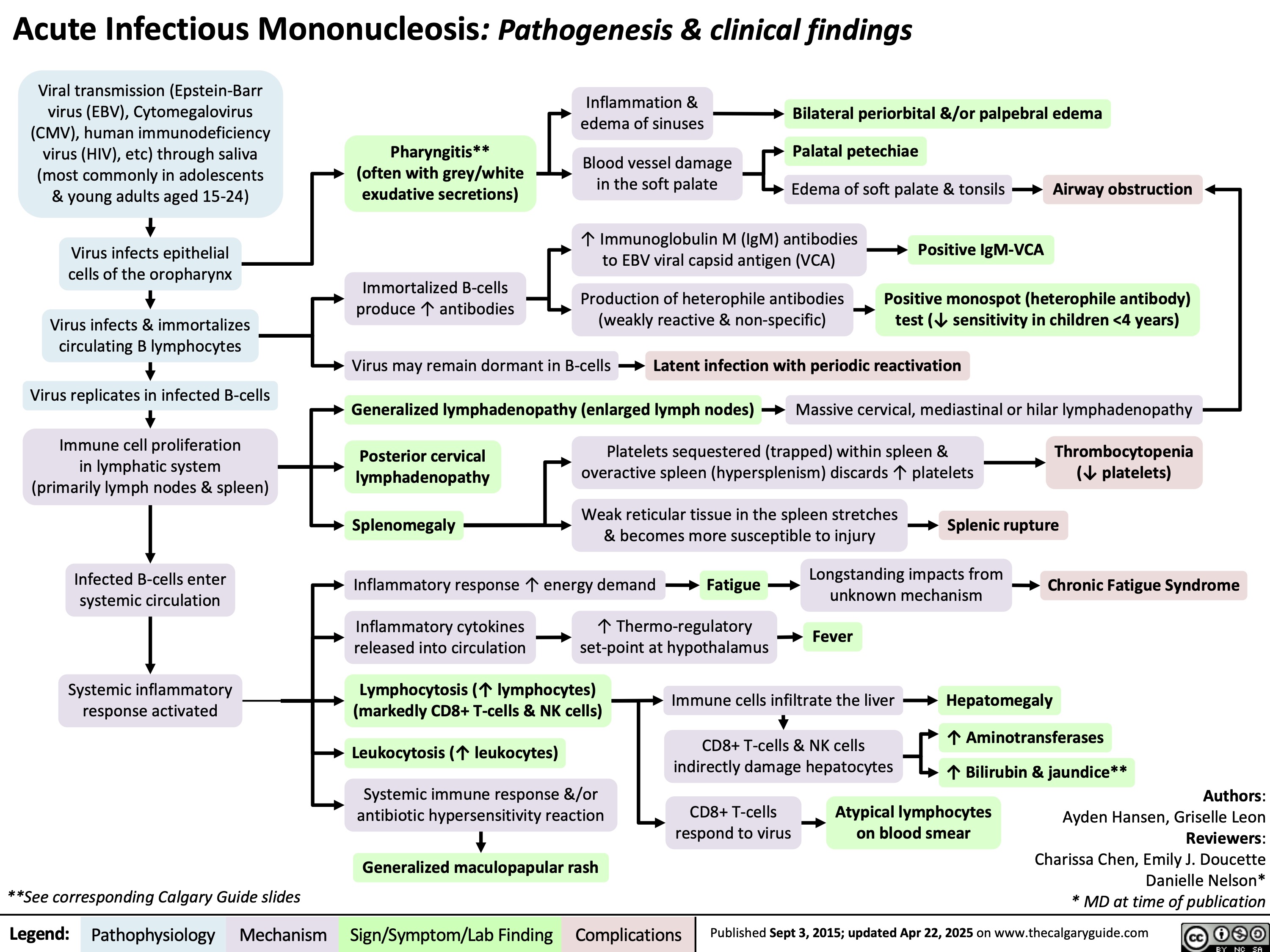
Acute Infectious Mononucleosis

**See corresponding Calgary Guide slides
Legend: Acute Infectious Mononucleosis: Pathogenesis & clinical findings
Viral transmission (Epstein-Barr
virus (EBV), Cytomegalovirus
(CMV), human immunodeficiency
virus (HIV), etc) through saliva
(most commonly in adolescents
& young adults aged 15-24)
Virus infects epithelial
cells of the oropharynx
Virus infects & immortalizes
circulating B lymphocytes
Virus replicates in infected B-cells
Immune cell proliferation
in lymphatic system
(primarily lymph nodes & spleen)
Infected B-cells enter
systemic circulation
Systemic inflammatory
response activated
Inflammation &
edema of sinuses
Bilateral periorbital &/or palpebral edema
Pharyngitis**
(often with grey/white
exudative secretions)
Palatal petechiae
Blood vessel damage
in the soft palate
Edema of soft palate & tonsils
Airway obstruction
↑ Immunoglobulin M (IgM) antibodies
to EBV viral capsid antigen (VCA) Positive IgM-VCA
Immortalized B-cells
produce ↑ antibodies
Production of heterophile antibodies
(weakly reactive & non-specific)
Positive monospot (heterophile antibody)
test (↓ sensitivity in children <4 years)
Virus may remain dormant in B-cells
Latent infection with periodic reactivation
Generalized lymphadenopathy (enlarged lymph nodes)
Massive cervical, mediastinal or hilar lymphadenopathy
Posterior cervical
lymphadenopathy
Platelets sequestered (trapped) within spleen &
overactive spleen (hypersplenism) discards ↑ platelets
Thrombocytopenia
(↓ platelets)
Weak reticular tissue in the spleen stretches
Splenomegaly Splenic rupture
& becomes more susceptible to injury
Inflammatory response ↑ energy demand
Fatigue
Longstanding impacts from
unknown mechanism Chronic Fatigue Syndrome
Inflammatory cytokines
released into circulation
↑ Thermo-regulatory
set-point at hypothalamus Fever
Lymphocytosis (↑ lymphocytes)
(markedly CD8+ T-cells & NK cells) Immune cells infiltrate the liver Hepatomegaly
↑ Aminotransferases
Leukocytosis (↑ leukocytes)
CD8+ T-cells & NK cells
indirectly damage hepatocytes
↑ Bilirubin & jaundice**
Systemic immune response &/or
antibiotic hypersensitivity reaction
CD8+ T-cells
respond to virus
Atypical lymphocytes
on blood smear
Generalized maculopapular rash
Authors:
Ayden Hansen, Griselle Leon
Reviewers:
Charissa Chen, Emily J. Doucette
Danielle Nelson*
* MD at time of publication
Published Sept 3, 2015; updated Apr 22, 2025 on www.thecalgaryguide.com
Pathophysiology Mechanism
Sign/Symptom/Lab Finding Complications

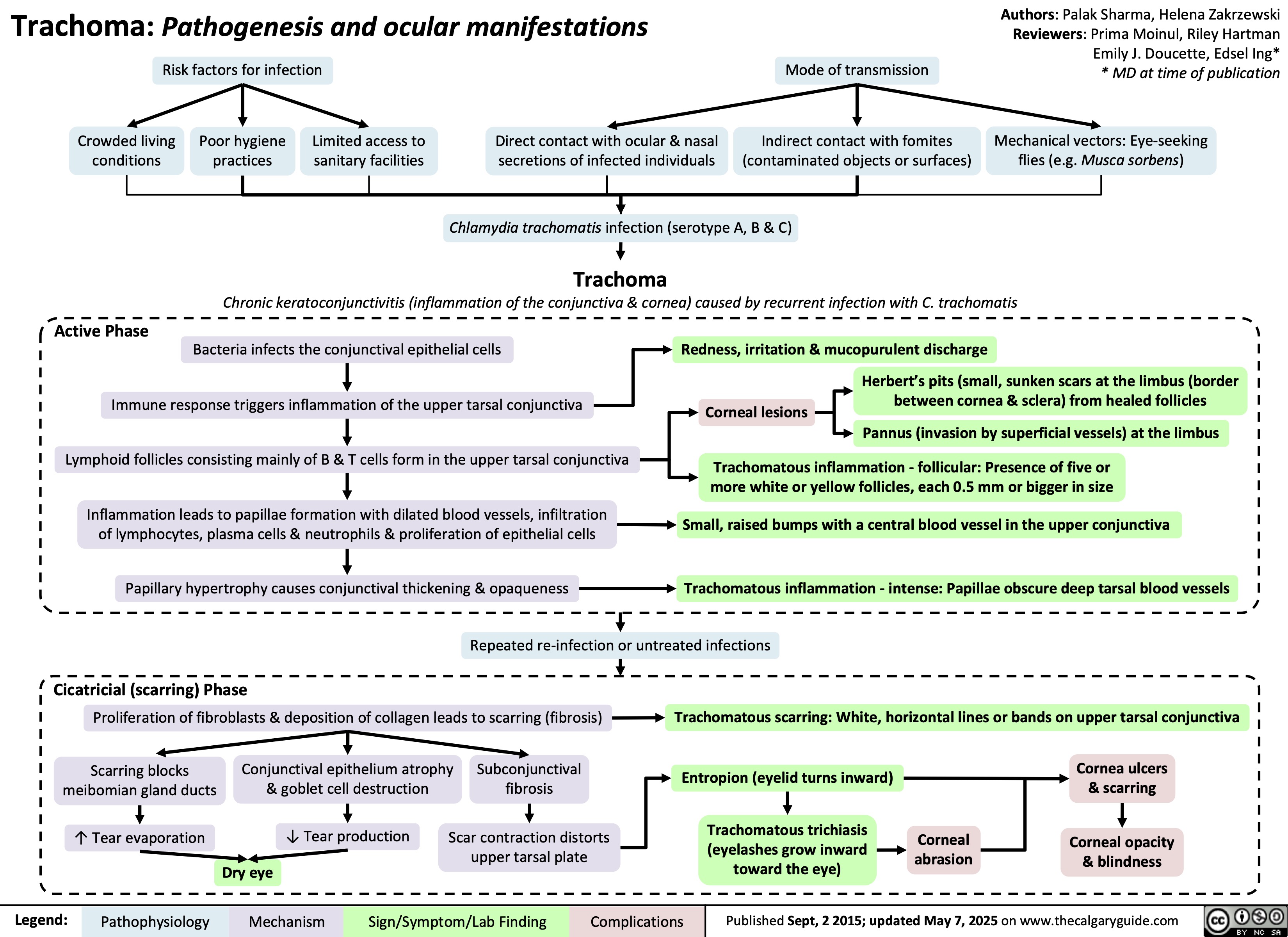
Trachoma

Trachoma: Pathogenesis and ocular manifestations
Risk factors for infection Mode of transmission
Authors: Palak Sharma, Helena Zakrzewski
Reviewers: Prima Moinul, Riley Hartman
Emily J. Doucette, Edsel Ing*
* MD at time of publication
Crowded living
conditions
Poor hygiene
practices
Limited access to
sanitary facilities
Direct contact with ocular & nasal
secretions of infected individuals
Indirect contact with fomites
(contaminated objects or surfaces)
Mechanical vectors: Eye-seeking
flies (e.g. Musca sorbens)
Chlamydia trachomatis infection (serotype A, B & C)
Trachoma
Chronic keratoconjunctivitis (inflammation of the conjunctiva & cornea) caused by recurrent infection with C. trachomatis
Active Phase
Bacteria infects the conjunctival epithelial cells
Redness, irritation & mucopurulent discharge
Immune response triggers inflammation of the upper tarsal conjunctiva
Herbert’s pits (small, sunken scars at the limbus (border
between cornea & sclera) from healed follicles
Corneal lesions
Pannus (invasion by superficial vessels) at the limbus
Lymphoid follicles consisting mainly of B & T cells form in the upper tarsal conjunctiva
Trachomatous inflammation - follicular: Presence of five or
more white or yellow follicles, each 0.5 mm or bigger in size
Inflammation leads to papillae formation with dilated blood vessels, infiltration
of lymphocytes, plasma cells & neutrophils & proliferation of epithelial cells
Small, raised bumps with a central blood vessel in the upper conjunctiva
Papillary hypertrophy causes conjunctival thickening & opaqueness Trachomatous inflammation - intense: Papillae obscure deep tarsal blood vessels
Repeated re-infection or untreated infections
Cicatricial (scarring) Phase
Proliferation of fibroblasts & deposition of collagen leads to scarring (fibrosis)
Trachomatous scarring: White, horizontal lines or bands on upper tarsal conjunctiva
Scarring blocks
meibomian gland ducts
Conjunctival epithelium atrophy
& goblet cell destruction Subconjunctival
fibrosis
Entropion (eyelid turns inward)
Cornea ulcers
& scarring
↑ Tear evaporation
↓ Tear production
Scar contraction distorts
upper tarsal plate
Dry eye
Trachomatous trichiasis
(eyelashes grow inward
toward the eye)
Corneal
abrasion
Corneal opacity
& blindness
Published Sept, 2 2015; updated May 7, 2025 on www.thecalgaryguide.com
Legend: Pathophysiology Mechanism
Sign/Symptom/Lab Finding Complications

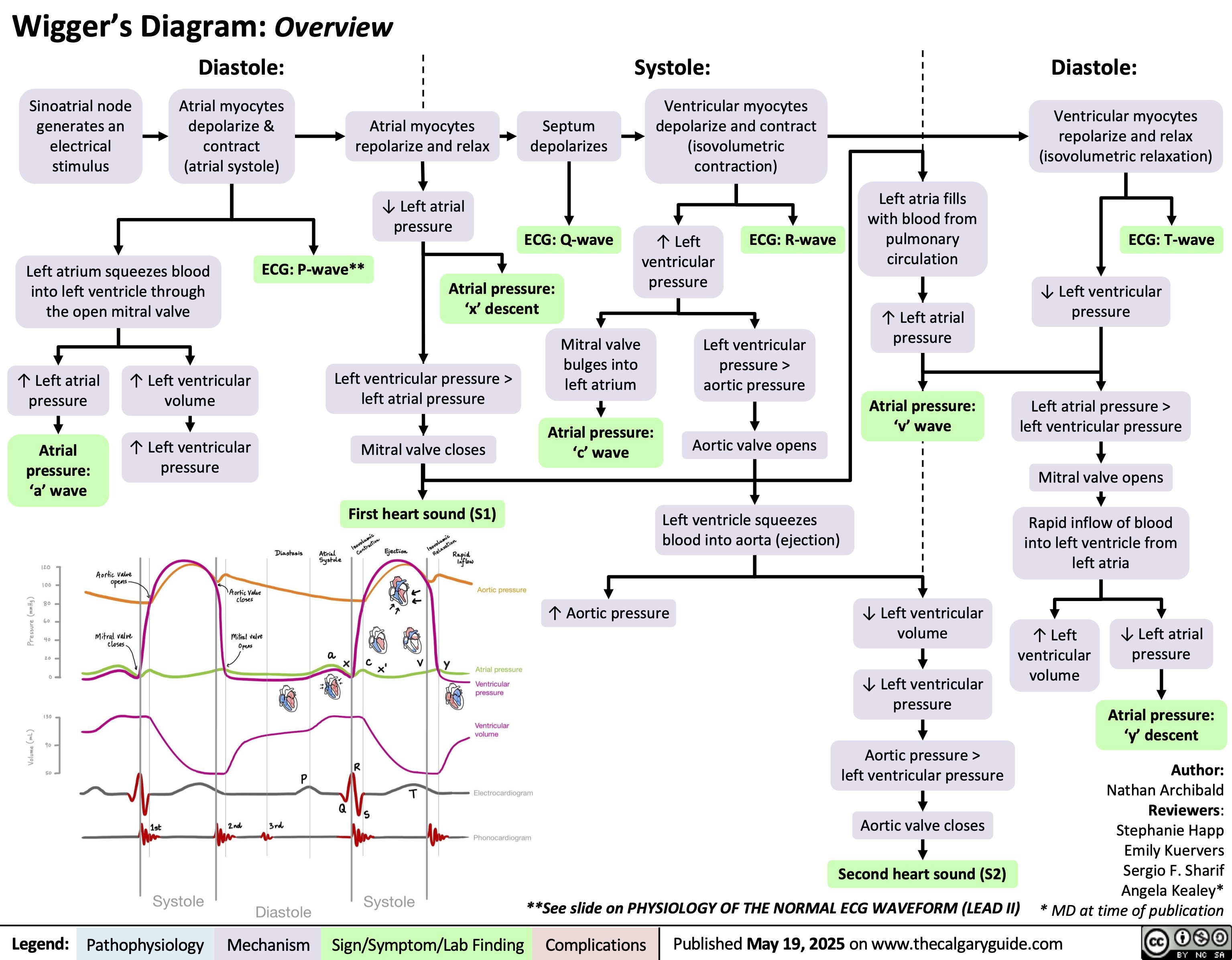
Wigger's Diagram

Wigger’s Diagram: Overview
Diastole: Systole:
Diastole:
Sinoatrial node
generates an
electrical
stimulus
Atrial myocytes
depolarize &
contract
(atrial systole)
Atrial myocytes
repolarize and relax
Septum
depolarizes
Ventricular myocytes
depolarize and contract
(isovolumetric
contraction)
Ventricular myocytes
repolarize and relax
(isovolumetric relaxation)
↓ Left atrial
pressure
Left atrium squeezes blood
into left ventricle through
the open mitral valve
ECG: P-wave**
Left atria fills
with blood from
ECG: Q-wave ECG: R-wave ECG: T-wave
↑ Left
pulmonary
ventricular
circulation
pressure
Atrial pressure:
‘x’ descent
↓ Left ventricular
pressure
↑ Left atrial
pressure
↑ Left atrial
pressure
↑ Left ventricular
volume
Left ventricular pressure >
left atrial pressure
Mitral valve
bulges into
left atrium
Left ventricular
pressure >
aortic pressure
Atrial pressure:
‘v’ wave
Atrial
pressure:
‘a’ wave
↑ Left ventricular
pressure
Mitral valve closes
Atrial pressure:
‘c’ wave
Aortic valve opens
First heart sound (S1)
Left ventricle squeezes
blood into aorta (ejection)
↑ Aortic pressure Legend: Pathophysiology Mechanism
Left atrial pressure >
left ventricular pressure
Mitral valve opens
Rapid inflow of blood
into left ventricle from
left atria
↓ Left ventricular
volume
↑ Left
ventricular
volume
↓ Left atrial
pressure
↓ Left ventricular
pressure
Atrial pressure:
‘y’ descent
Aortic pressure >
left ventricular pressure
Aortic valve closes
Second heart sound (S2)
**See slide on PHYSIOLOGY OF THE NORMAL ECG WAVEFORM (LEAD II)
Author:
Nathan Archibald
Reviewers:
Stephanie Happ
Emily Kuervers
Sergio F. Sharif
Angela Kealey*
* MD at time of publication
Sign/Symptom/Lab Finding Complications
Published May 19, 2025 on www.thecalgaryguide.com

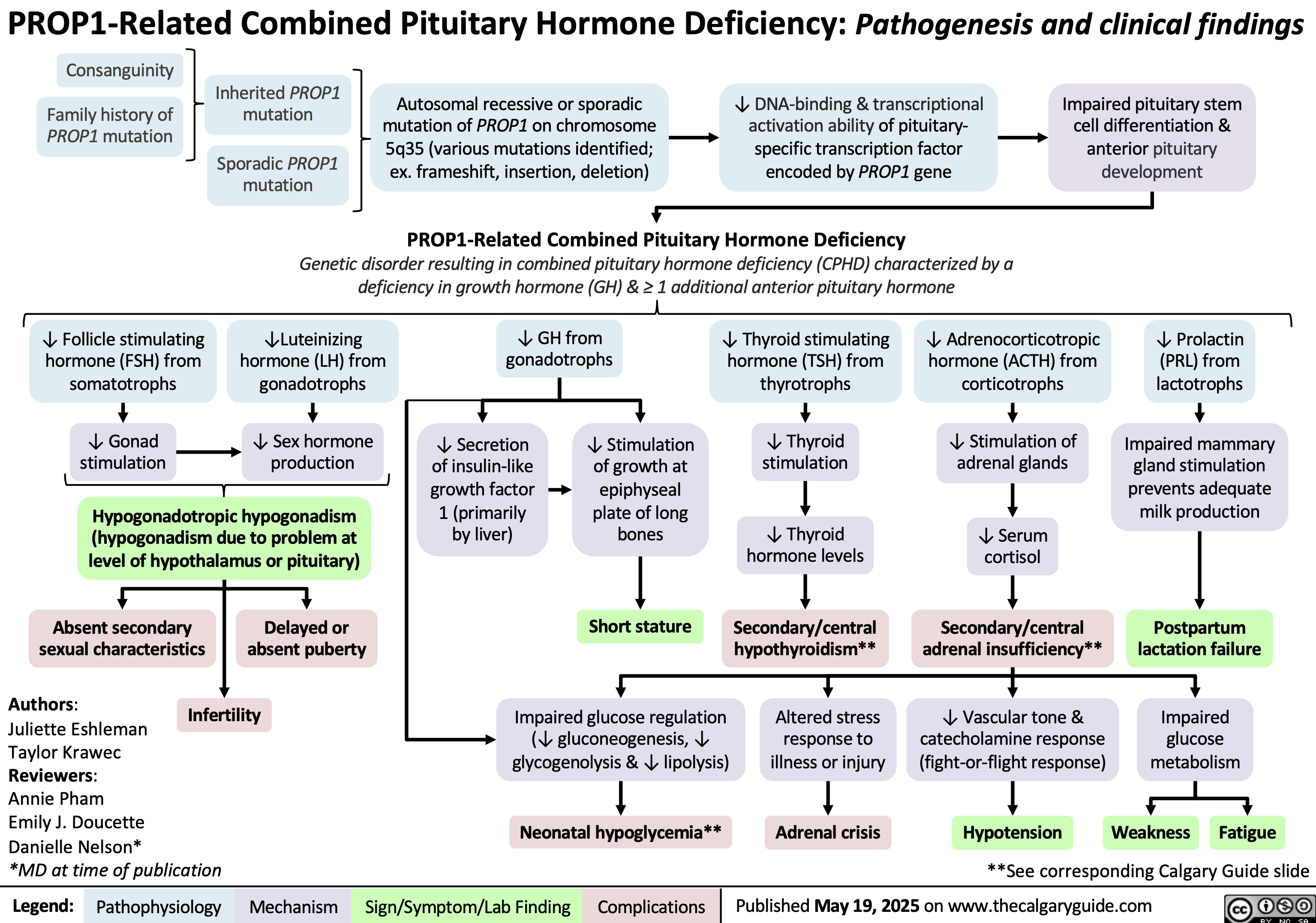
PROP1-Related Combined Pituitary Hormone Deficiency
↓ DNA-binding & transcriptional
Impaired pituitary stem
cell differentiation &
anterior pituitary
development
↓ Prolactin
(PRL) from
lactotrophs
Impaired mammary
gland stimulation
prevents adequate
milk production
PROP1-Related Combined Pituitary Hormone Deficiency: Pathogenesis and clinical findings
Consanguinity
Inherited PROP1
mutation
Family history of
PROP1 mutation
Sporadic PROP1
mutation
Autosomal recessive or sporadic
mutation of PROP1 on chromosome
5q35 (various mutations identified;
ex. frameshift, insertion, deletion)
activation ability of pituitary-
specific transcription factor
encoded by PROP1 gene
PROP1-Related Combined Pituitary Hormone Deficiency
Genetic disorder resulting in combined pituitary hormone deficiency (CPHD) characterized by a
deficiency in growth hormone (GH) & ≥ 1 additional anterior pituitary hormone
↓ Follicle stimulating
hormone (FSH) from
somatotrophs
↓Luteinizing
hormone (LH) from
gonadotrophs
↓ GH from
gonadotrophs
↓ Thyroid stimulating
hormone (TSH) from
thyrotrophs
↓ Adrenocorticotropic
hormone (ACTH) from
corticotrophs
↓ Gonad
stimulation
↓ Sex hormone
production
Hypogonadotropic hypogonadism
(hypogonadism due to problem at
level of hypothalamus or pituitary)
↓ Secretion
of insulin-like
growth factor
1 (primarily
↓ Stimulation
of growth at
↓ Thyroid
stimulation
↓ Stimulation of
adrenal glands
epiphyseal
plate of long
bones
↓ Thyroid
by liver) ↓ Serum
hormone levels
cortisol
Absent secondary
sexual characteristics
Delayed or
absent puberty
Short stature
Secondary/central
hypothyroidism**
Secondary/central
adrenal insufficiency**
Postpartum
lactation failure
Authors:
Juliette Eshleman
Taylor Krawec
Reviewers:
Annie Pham
Emily J. Doucette
Danielle Nelson*
*MD at time of publication
Impaired glucose regulation
(↓ gluconeogenesis, ↓
glycogenolysis & ↓ lipolysis)
Altered stress
response to
illness or injury
↓ Vascular tone &
catecholamine response
(fight-or-flight response)
Impaired
glucose
metabolism
Neonatal hypoglycemia**
Adrenal crisis
Hypotension
Weakness
Fatigue
**See corresponding Calgary Guide slide
Legend: Pathophysiology Published May 19, 2025 on www.thecalgaryguide.com
Infertility
Mechanism
Sign/Symptom/Lab Finding Complications

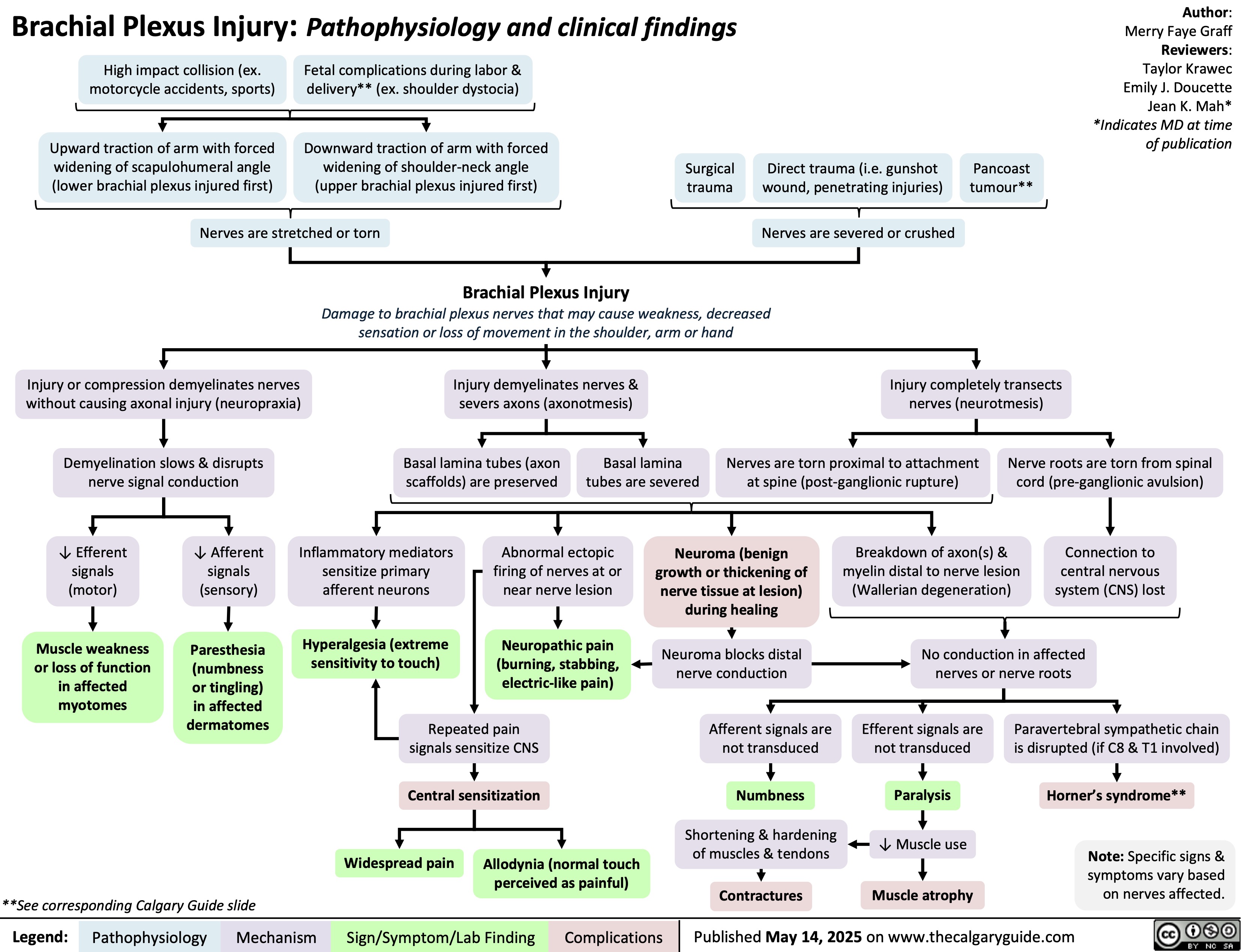
Brachial Plexus Injury

**See corresponding Calgary Guide slide
Legend: Brachial Plexus Injury: Pathophysiology and clinical findings
High impact collision (ex.
motorcycle accidents, sports)
Fetal complications during labor &
delivery** (ex. shoulder dystocia)
Author:
Merry Faye Graff
Reviewers:
Taylor Krawec
Emily J. Doucette
Jean K. Mah*
*Indicates MD at time
of publication
Upward traction of arm with forced
widening of scapulohumeral angle
(lower brachial plexus injured first)
Downward traction of arm with forced
widening of shoulder-neck angle
(upper brachial plexus injured first)
Surgical
trauma
Direct trauma (i.e. gunshot
wound, penetrating injuries)
Pancoast
tumour**
Nerves are stretched or torn
Nerves are severed or crushed
Brachial Plexus Injury
Damage to brachial plexus nerves that may cause weakness, decreased
sensation or loss of movement in the shoulder, arm or hand
Injury or compression demyelinates nerves
without causing axonal injury (neuropraxia)
Injury demyelinates nerves &
severs axons (axonotmesis)
Injury completely transects
nerves (neurotmesis)
Demyelination slows & disrupts
nerve signal conduction
Basal lamina tubes (axon
scaffolds) are preserved
Basal lamina
tubes are severed
Nerves are torn proximal to attachment
at spine (post-ganglionic rupture)
Nerve roots are torn from spinal
cord (pre-ganglionic avulsion)
↓ Efferent
signals
(motor)
↓ Afferent
signals
(sensory)
Inflammatory mediators
sensitize primary
afferent neurons
Abnormal ectopic
firing of nerves at or
near nerve lesion
Neuroma (benign
growth or thickening of
nerve tissue at lesion)
during healing
Breakdown of axon(s) &
myelin distal to nerve lesion
(Wallerian degeneration)
Connection to
central nervous
system (CNS) lost
Muscle weakness
or loss of function
in affected
myotomes
Paresthesia
(numbness
or tingling)
in affected
dermatomes
Hyperalgesia (extreme
sensitivity to touch)
Neuropathic pain
(burning, stabbing,
electric-like pain)
Neuroma blocks distal
nerve conduction
No conduction in affected
nerves or nerve roots
Repeated pain
signals sensitize CNS
Afferent signals are
not transduced
Efferent signals are
not transduced
Paravertebral sympathetic chain
is disrupted (if C8 & T1 involved)
Central sensitization
Numbness
Paralysis
Horner’s syndrome**
Shortening & hardening
of muscles & tendons
↓ Muscle use
Widespread pain
Allodynia (normal touch
perceived as painful)
Contractures
Muscle atrophy
Note: Specific signs &
symptoms vary based
on nerves affected.
Complications
Published May 14, 2025 on www.thecalgaryguide.com
Pathophysiology Mechanism
Sign/Symptom/Lab Finding

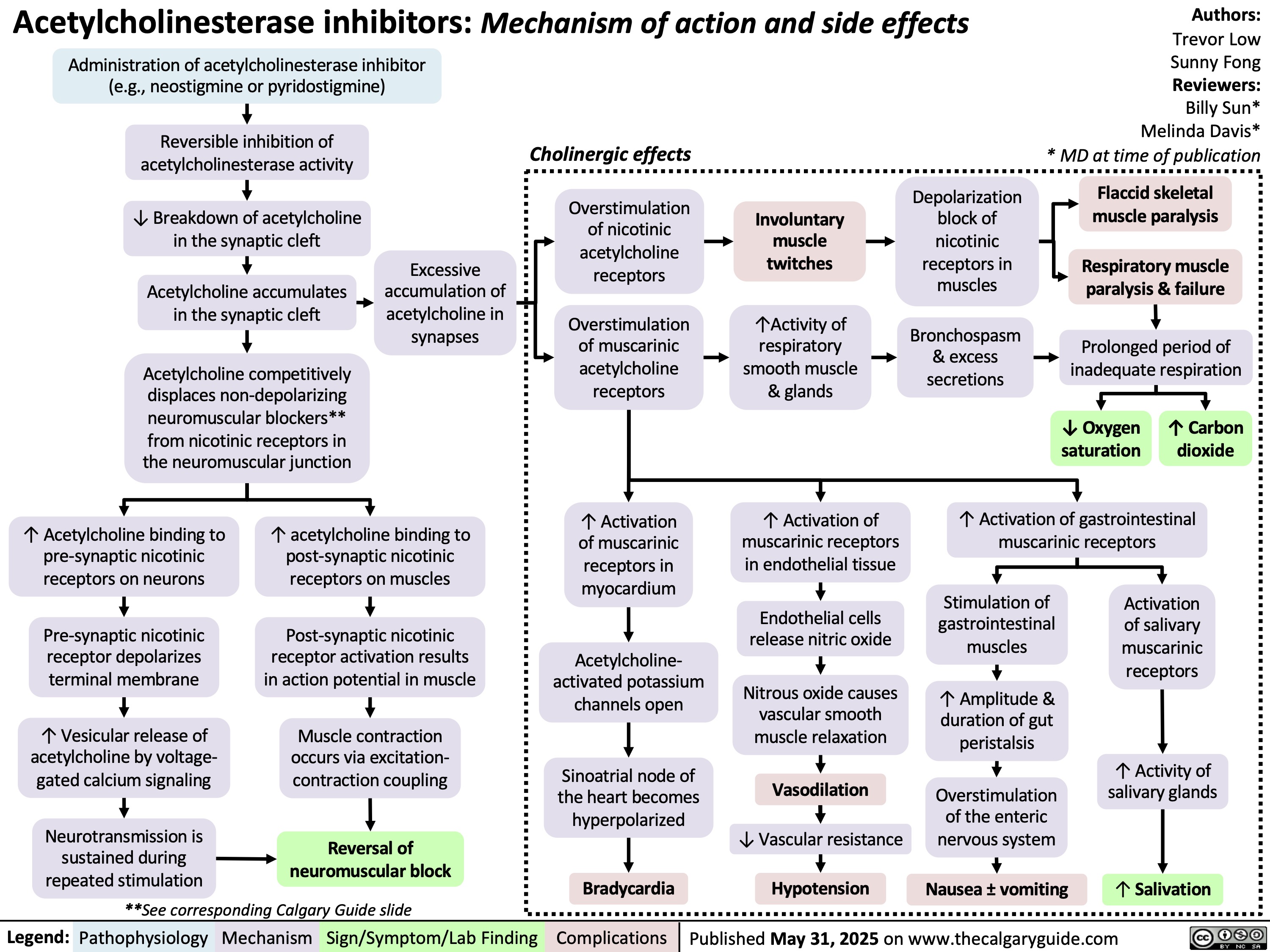
Acetylcholinesterase inhibitors

Authors:
Trevor Low
Sunny Fong
Reviewers:
Billy Sun*
Melinda Davis*
* MD at time of publication
Overstimulation
of nicotinic
acetylcholine
receptors
Overstimulation
of muscarinic
acetylcholine
receptors
Involuntary
muscle
twitches
↑Activity of
respiratory
smooth muscle
& glands
Acetylcholinesterase inhibitors: Mechanism of action and side effects
Administration of acetylcholinesterase inhibitor
(e.g., neostigmine or pyridostigmine)
Reversible inhibition of
acetylcholinesterase activity
Cholinergic effects
↓ Breakdown of acetylcholine
in the synaptic cleft
Acetylcholine accumulates
in the synaptic cleft
Excessive
accumulation of
acetylcholine in
synapses
Acetylcholine competitively
displaces non-depolarizing
neuromuscular blockers**
from nicotinic receptors in
the neuromuscular junction
↑ Acetylcholine binding to
pre-synaptic nicotinic
receptors on neurons
↑ acetylcholine binding to
post-synaptic nicotinic
receptors on muscles
Pre-synaptic nicotinic
receptor depolarizes
terminal membrane
Post-synaptic nicotinic
receptor activation results
in action potential in muscle
↑ Vesicular release of
acetylcholine by voltage-
gated calcium signaling
Muscle contraction
occurs via excitation-
contraction coupling
Legend: Neurotransmission is
sustained during
Reversal of
neuromuscular block
repeated stimulation
**See corresponding Calgary Guide slide
Mechanism
↑ Activation
of muscarinic
receptors in
myocardium
↑ Activation of
muscarinic receptors
in endothelial tissue
Endothelial cells
release nitric oxide
Acetylcholine-
activated potassium
channels open Nitrous oxide causes
vascular smooth
muscle relaxation
Sinoatrial node of
the heart becomes
hyperpolarized
Vasodilation
↓ Vascular resistance
Bradycardia
Hypotension
Depolarization
block of
nicotinic
receptors in
muscles
Flaccid skeletal
muscle paralysis
Respiratory muscle
paralysis & failure
Bronchospasm
& excess
secretions
Prolonged period of
inadequate respiration
↓ Oxygen
saturation
↑ Carbon
dioxide
↑ Activation of gastrointestinal
muscarinic receptors
Stimulation of
gastrointestinal
muscles
Activation
of salivary
muscarinic
receptors
↑ Amplitude &
duration of gut
peristalsis
↑ Activity of
salivary glands
Overstimulation
of the enteric
nervous system
Nausea ± vomiting
↑ Salivation
Pathophysiology Sign/Symptom/Lab Finding Complications
Published May 31, 2025 on www.thecalgaryguide.com

Meckels Diverticulum

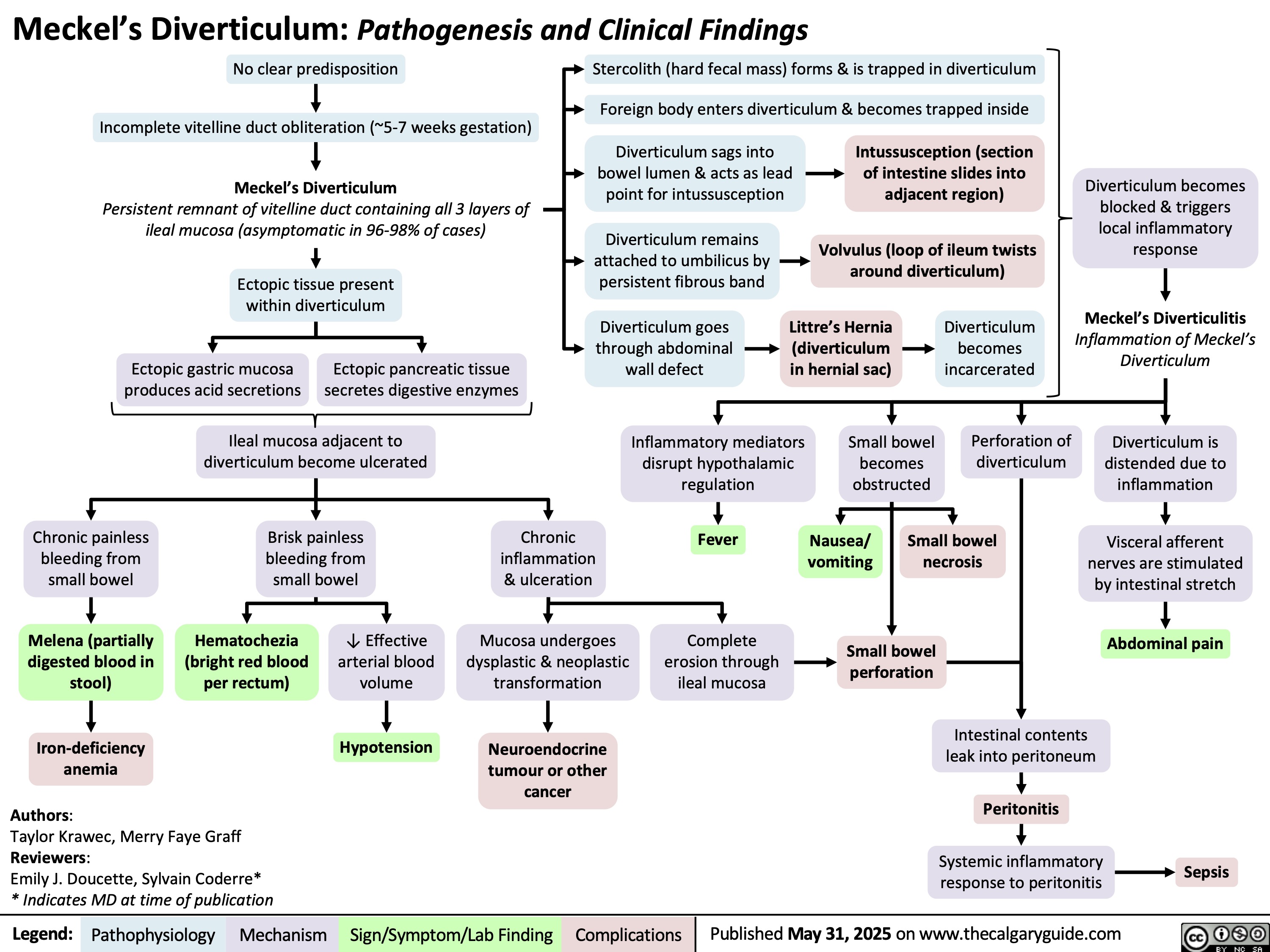
Meckel’s Diverticulum: Pathogenesis and Clinical Findings
No clear predisposition
Stercolith (hard fecal mass) forms & is trapped in diverticulum
Foreign body enters diverticulum & becomes trapped inside
Incomplete vitelline duct obliteration (~5-7 weeks gestation)
Diverticulum sags into
Intussusception (section
bowel lumen & acts as lead
of intestine slides into
Meckel’s Diverticulum
point for intussusception
adjacent region)
Persistent remnant of vitelline duct containing all 3 layers of
ileal mucosa (asymptomatic in 96-98% of cases)
Diverticulum remains
attached to umbilicus by
persistent fibrous band
Volvulus (loop of ileum twists
around diverticulum)
Ectopic tissue present
within diverticulum
Diverticulum goes
through abdominal
wall defect
Littre’s Hernia
(diverticulum
in hernial sac)
Diverticulum
becomes
incarcerated
Ectopic gastric mucosa
produces acid secretions
Ectopic pancreatic tissue
secretes digestive enzymes
Ileal mucosa adjacent to
diverticulum become ulcerated
Inflammatory mediators
disrupt hypothalamic
regulation
Small bowel
becomes
obstructed
Perforation of
diverticulum
Brisk painless
bleeding from
small bowel
Chronic
inflammation
& ulceration
Fever
Nausea/
vomiting
Small bowel
necrosis
Hematochezia
(bright red blood
per rectum)
↓ Effective
arterial blood
volume
Mucosa undergoes
dysplastic & neoplastic
transformation
Complete
erosion through
ileal mucosa
Small bowel
perforation
Hypotension
Neuroendocrine
tumour or other
cancer
Diverticulum becomes
blocked & triggers
local inflammatory
response
Meckel’s Diverticulitis
Inflammation of Meckel’s
Diverticulum
Diverticulum is
distended due to
inflammation
Visceral afferent
nerves are stimulated
by intestinal stretch
Abdominal pain
Chronic painless
bleeding from
small bowel
Melena (partially
digested blood in
stool)
Iron-deficiency
anemia
Authors:
Taylor Krawec, Merry Faye Graff
Reviewers:
Emily J. Doucette, Sylvain Coderre*
* Indicates MD at time of publication
Legend: Pathophysiology Mechanism
Sign/Symptom/Lab Finding Complications
Intestinal contents
leak into peritoneum
Peritonitis
Systemic inflammatory
response to peritonitis
Published May 31, 2025 on www.thecalgaryguide.com
Sepsis

Vaccine Mediated Immunity Comparing Vaccine Subtypes
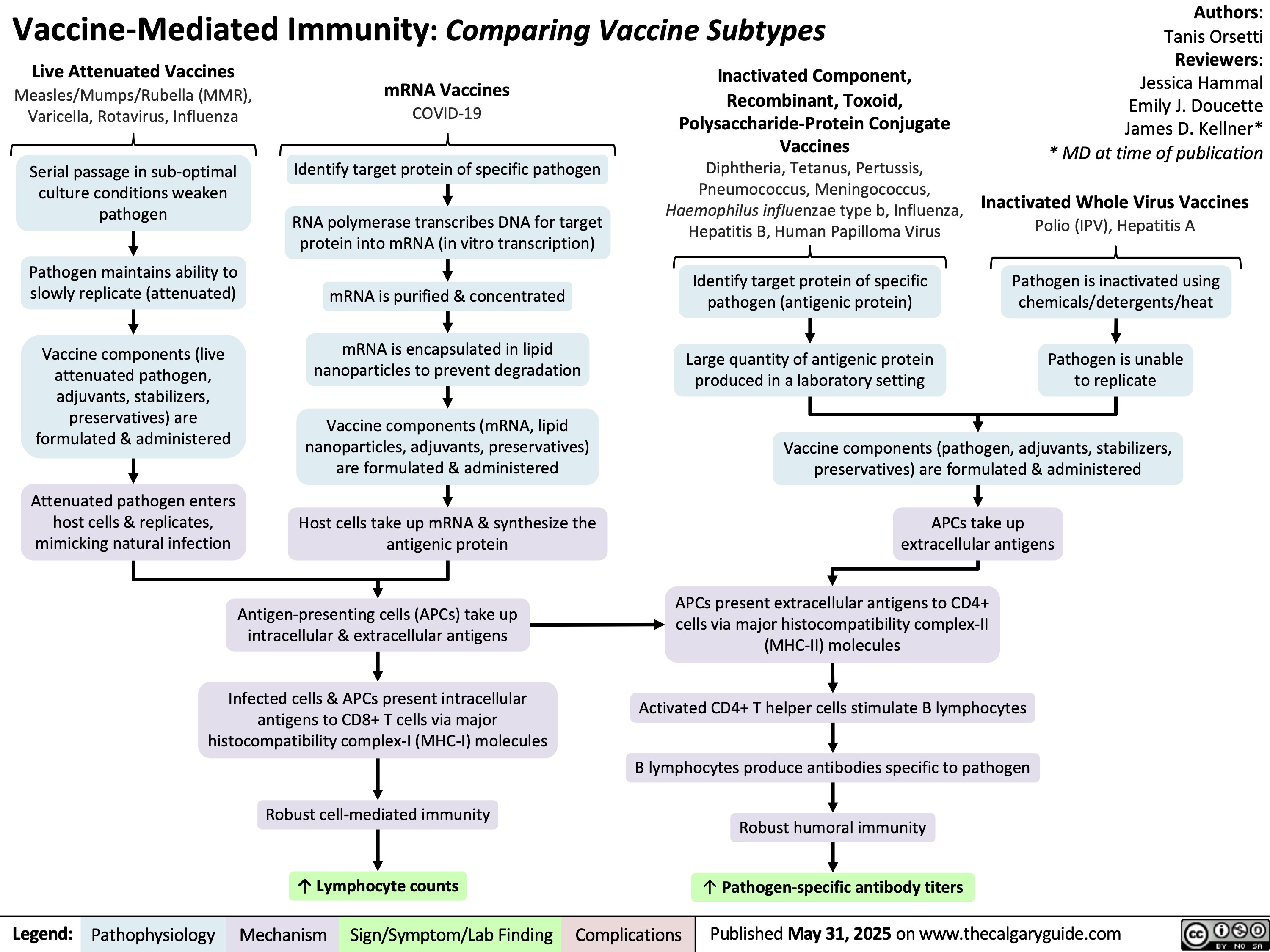
Vaccine-Mediated Immunity: Comparing Vaccine Subtypes
Live Attenuated Vaccines
mRNA Vaccines
Inactivated Component,
Recombinant, Toxoid,
Polysaccharide-Protein Conjugate
Vaccines
Measles/Mumps/Rubella (MMR),
Varicella, Rotavirus, Influenza
COVID-19
Serial passage in sub-optimal
culture conditions weaken
pathogen
Pathogen maintains ability to
slowly replicate (attenuated)
Vaccine components (live
attenuated pathogen,
adjuvants, stabilizers,
preservatives) are
formulated & administered
Attenuated pathogen enters
host cells & replicates,
mimicking natural infection
Identify target protein of specific pathogen
RNA polymerase transcribes DNA for target
protein into mRNA (in vitro transcription)
mRNA is purified & concentrated
mRNA is encapsulated in lipid
nanoparticles to prevent degradation
Vaccine components (mRNA, lipid
nanoparticles, adjuvants, preservatives)
are formulated & administered
Host cells take up mRNA & synthesize the
antigenic protein
Diphtheria, Tetanus, Pertussis,
Pneumococcus, Meningococcus,
Haemophilus influenzae type b, Influenza,
Hepatitis B, Human Papilloma Virus
Polio (IPV), Hepatitis A
Antigen-presenting cells (APCs) take up
intracellular & extracellular antigens
Infected cells & APCs present intracellular
antigens to CD8+ T cells via major
histocompatibility complex-I (MHC-I) molecules
Robust cell-mediated immunity
↑ Lymphocyte counts
Legend: Pathophysiology Mechanism
Sign/Symptom/Lab Finding Complications
Authors:
Tanis Orsetti
Reviewers:
Jessica Hammal
Emily J. Doucette
James D. Kellner*
* MD at time of publication
Inactivated Whole Virus Vaccines
Identify target protein of specific
pathogen (antigenic protein)
Pathogen is inactivated using
chemicals/detergents/heat
Large quantity of antigenic protein
produced in a laboratory setting
Pathogen is unable
to replicate
Vaccine components (pathogen, adjuvants, stabilizers,
preservatives) are formulated & administered
APCs take up
extracellular antigens
APCs present extracellular antigens to CD4+
cells via major histocompatibility complex-II
(MHC-II) molecules
Activated CD4+ T helper cells stimulate B lymphocytes
B lymphocytes produce antibodies specific to pathogen
Robust humoral immunity
↑ Pathogen-specific antibody titers
Published May 31, 2025 on www.thecalgaryguide.com

Chronic Mesenteric Ischemia

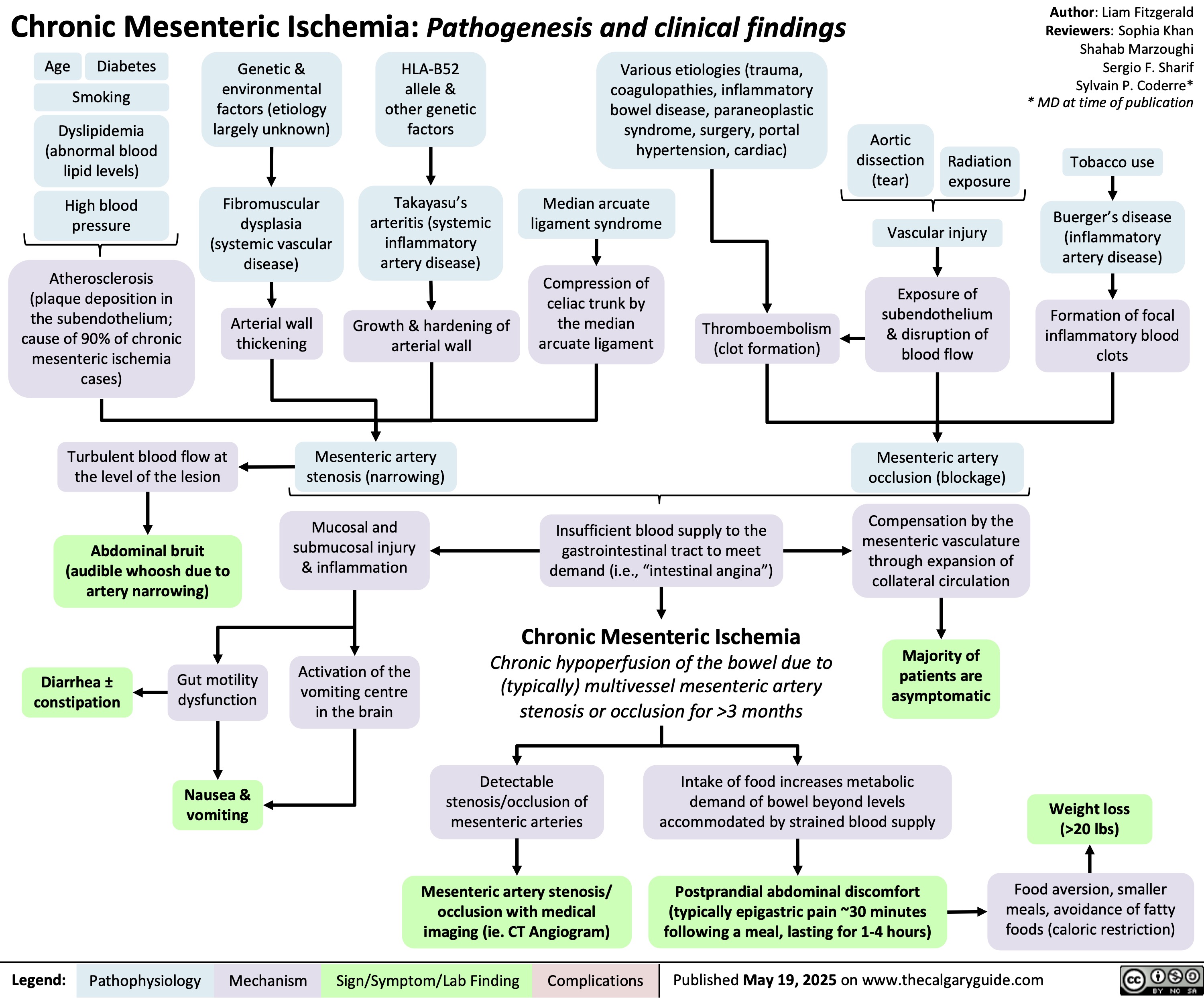
Chronic Mesenteric Ischemia: Pathogenesis and clinical findings
Age
Diabetes
Smoking
Genetic &
environmental
factors (etiology
largely unknown)
HLA-B52
allele &
other genetic
factors
Dyslipidemia
(abnormal blood
lipid levels)
Various etiologies (trauma,
coagulopathies, inflammatory
bowel disease, paraneoplastic
syndrome, surgery, portal
hypertension, cardiac)
High blood
pressure
Fibromuscular
dysplasia
(systemic vascular
disease)
Takayasu’s
arteritis (systemic
inflammatory
artery disease)
Median arcuate
ligament syndrome
Atherosclerosis
(plaque deposition in
the subendothelium;
cause of 90% of chronic
mesenteric ischemia
cases)
Arterial wall
thickening
Growth & hardening of
arterial wall
Compression of
celiac trunk by
the median
arcuate ligament
Thromboembolism
(clot formation)
Turbulent blood flow at
the level of the lesion
Mesenteric artery
stenosis (narrowing)
Abdominal bruit
(audible whoosh due to
artery narrowing)
Mucosal and
submucosal injury
& inflammation
Insufficient blood supply to the
gastrointestinal tract to meet
demand (i.e., “intestinal angina”)
Diarrhea ±
constipation
Gut motility
dysfunction
Activation of the
vomiting centre
in the brain
Chronic Mesenteric Ischemia
Chronic hypoperfusion of the bowel due to
(typically) multivessel mesenteric artery
stenosis or occlusion for >3 months
Aortic
dissection
(tear)
Radiation
exposure
Vascular injury
Exposure of
subendothelium
& disruption of
blood flow
Mesenteric artery
occlusion (blockage)
Compensation by the
mesenteric vasculature
through expansion of
collateral circulation
Majority of
patients are
asymptomatic
Nausea &
vomiting
Detectable
stenosis/occlusion of
mesenteric arteries
Intake of food increases metabolic
demand of bowel beyond levels
accommodated by strained blood supply
Mesenteric artery stenosis/
occlusion with medical
imaging (ie. CT Angiogram)
Postprandial abdominal discomfort
(typically epigastric pain ~30 minutes
following a meal, lasting for 1-4 hours)
Published May 19, 2025 on www.thecalgaryguide.com
Author: Liam Fitzgerald
Reviewers: Sophia Khan
Shahab Marzoughi
Sergio F. Sharif
Sylvain P. Coderre*
* MD at time of publication
Tobacco use
Buerger’s disease
(inflammatory
artery disease)
Formation of focal
inflammatory blood
clots
Weight loss
(>20 lbs)
Food aversion, smaller
meals, avoidance of fatty
foods (caloric restriction)
Legend: Pathophysiology Mechanism
Sign/Symptom/Lab Finding Complications

Tetralogy of Fallot

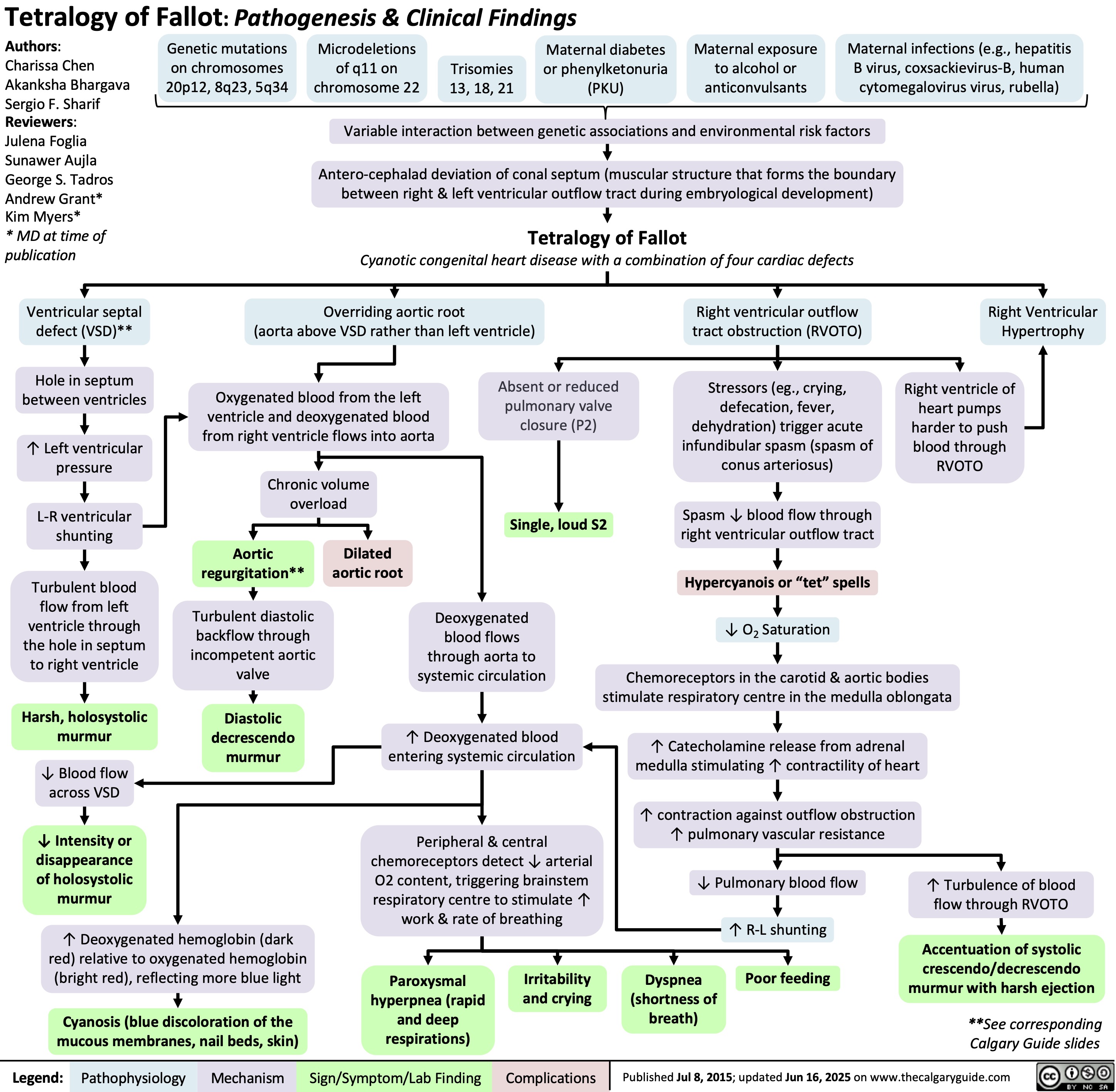
Tetralogy of Fallot: Pathogenesis & Clinical Findings
Authors:
Genetic mutations
Microdeletions
Charissa Chen
on chromosomes
of q11 on
Trisomies
Akanksha Bhargava
20p12, 8q23, 5q34
chromosome 22
13, 18, 21
Sergio F. Sharif
Reviewers:
Julena Foglia
Sunawer Aujla
George S. Tadros
Andrew Grant*
Kim Myers*
* MD at time of
publication
Maternal diabetes
or phenylketonuria
(PKU)
Maternal exposure
to alcohol or
anticonvulsants
Maternal infections (e.g., hepatitis
B virus, coxsackievirus-B, human
cytomegalovirus virus, rubella)
Variable interaction between genetic associations and environmental risk factors
Antero-cephalad deviation of conal septum (muscular structure that forms the boundary
between right & left ventricular outflow tract during embryological development)
Tetralogy of Fallot
Cyanotic congenital heart disease with a combination of four cardiac defects
Ventricular septal
defect (VSD)**
Overriding aortic root
(aorta above VSD rather than left ventricle)
Right ventricular outflow
tract obstruction (RVOTO)
Right Ventricular
Hypertrophy
Hole in septum
Absent or reduced
Stressors (eg., crying,
between ventricles Right ventricle of
Oxygenated blood from the left
pulmonary valve
defecation, fever,
heart pumps
ventricle and deoxygenated blood
closure (P2)
dehydration) trigger acute
harder to push
from right ventricle flows into aorta
↑ Left ventricular
pressure
infundibular spasm (spasm of
blood through
conus arteriosus)
RVOTO
Chronic volume
overload
L-R ventricular
shunting
Single, loud S2
Spasm ↓ blood flow through
right ventricular outflow tract
Aortic
Dilated
aortic root
regurgitation** Hypercyanois or “tet” spells
Turbulent blood
flow from left
ventricle through
the hole in septum
to right ventricle
Turbulent diastolic
backflow through
incompetent aortic
valve
Deoxygenated
blood flows
through aorta to
systemic circulation
↓ O2 Saturation
Chemoreceptors in the carotid & aortic bodies
stimulate respiratory centre in the medulla oblongata
Harsh, holosystolic
murmur
Diastolic
decrescendo
murmur
↑ Deoxygenated blood
entering systemic circulation
↑ Catecholamine release from adrenal
medulla stimulating ↑ contractility of heart
↓ Blood flow
across VSD
↑ contraction against outflow obstruction
↑ pulmonary vascular resistance
↓ Intensity or
disappearance
of holosystolic
murmur
Peripheral & central
chemoreceptors detect ↓ arterial
O2 content, triggering brainstem
respiratory centre to stimulate ↑
work & rate of breathing
↓ Pulmonary blood flow
↑ Turbulence of blood
flow through RVOTO
↑ R-L shunting
↑ Deoxygenated hemoglobin (dark
red) relative to oxygenated hemoglobin
(bright red), reflecting more blue light
Cyanosis (blue discoloration of the
mucous membranes, nail beds, skin)
Paroxysmal
hyperpnea (rapid
and deep
respirations)
Irritability
and crying
Dyspnea
(shortness of
breath)
Poor feeding
Accentuation of systolic
crescendo/decrescendo
murmur with harsh ejection
**See corresponding
Calgary Guide slides
Legend: Mechanism
Published Jul 8, 2015; updated Jun 16, 2025 on www.thecalgaryguide.com
Pathophysiology Sign/Symptom/Lab Finding Complications

Heparin-Induced Thrombocytopenia

Non-Immune Mediated:
Type 1 (within two days of
heparin administration)
Platelets aggregate
within the bloodstream
↓ Free unbound
platelets in bloodstream
Mild Thrombocytopenia:
platelet count between
100 x 109/L - 150 x 109/L
Fewer platelets
available for thrombosis
(formation of a
pathological blood clot)
Self limiting with
no thrombotic risk
Legend: Heparin-Induced Thrombocytopenia (HIT): Pathogenesis and clinical findings
Obesity Hypertension Macrovascular disease Hyperlipidemia
Heparin (often unfractionated)
complexes with platelet factor 4 (PF4)
on the platelet surface, due to
heparin’s negative charge & PF4’s
affinity for long-chain polysaccharides
Immune-Mediated:
Type 2 (within 5-15 days
of heparin administration)
Anti-heparin/PF4
Immunoglobulin G
antibodies binds to
the heparin-PF4
complex in the blood
Splenic macrophages
remove platelet-
immunoglobulin G
complexes in the spleen
Thrombocytopenia:
Platelet count < 100 x
109/L (though < 20 x
109/L should prompt
consideration of
other diagnoses)
↑ Vascular inflammation & endothelial
dysfunction activate platelets
Authors:
Kelle Edgar, Hadi Hassan
Sergio F. Sharif
Reviewers:
Haotian Wang, Jessica Asgarpour
Yan Yu*, Lynn Savoie*
Kareem Jamani*
* MD at time of publication
Activated platelets
release PF4
Anti-heparin/PF4
antibodies activate
adjacent platelets
Activated
platelets release
inflammatory
mediators
Circulating anti-
heparin/PF4 antibodies
bind adjacent cellular
targets
Anti-heparin/PF4
antibodies bind
endogenous heparan
sulfate on endothelium
Activated
endothelium
releases
procoagulants
thrombin &
tissue factor
Activated
platelets release
procoagulants
(factors
promoting blood
clotting)
Free platelets are
consumed from
formation of thrombi
Hypercoagulable state
(↑ risk of thrombosis)
↓ Platelets available
to clot at different
area of the body
Thrombosis in
coronary, peripheral
or cerebral arteries
Bleeding (rare)
Myocardial
infarction
Acute
ischemia
Stroke
Inflammatory
mediators disrupt
hypothalamic body
thermoregulation
Fever/
chills
Inflammatory mediators
promote vasodilation of
arterioles under the skin
↑ Blood to
surface of skin
Flushing of skin
Venous thrombosis
in lower leg or lung
Deep vein
thrombosis
Pulmonary
embolism
Microthrombi occlude
vessels surrounding
injection site, limiting
nutrient supply
Necrosis (tissue death)
at heparin injection site
Published Aug 29, 2014; updated Jun 16, 2025 on www.thecalgaryguide.com
Pathophysiology Mechanism
Sign/Symptom/Lab Finding Complications

Obesity Hypoventilation Syndrome

Obesity Hypoventilation Syndrome: Pathogenesis and clinical findings
Obesity (BMI ≥ 30 kg/m2) risk factors: Poor eating patterns, sedentary lifestyle, genetic predisposition,
hypothyroidism, Cushing’s syndrome, socio-economic factors, age
Sleep-disordered breathing risk factors: Family history, tonsillar or adenoidal
hypertrophy, ↑ neck circumference, type 2 diabetes, HTN
Authors: Mohammad Omer
Mujtaba Siddique
Reviewers:
Ali Babwani
Luiza Radu
Jonathan Liu*
MD at time of publication*
↑ Adipose deposition
in abdomen
Abdominal fat pushes
against diaphragm
↑ Diaphragmatic
displacement
↑ Resistance to chest
wall expansion
↑Leptin resistance
High pressure
Pharyngeal
on upper airway
dilations unable
Secondary depression
↓ Chest wall
↓ Leptins ability to stimulate
↑ lung
to compensate
Narrowing of
(compromised function) of
Poor ventilation to
expansion
ventilation (mechanism unknown)
collapsibility
for weight
upper airways
respiratory system
lower lobes of lungs
↓ Tidal volume (air
that moves in/out of
lungs in a respiratory
cycle)
↑ Respiratory rate
↑ Chest wall thickness ↑ Leptin (a hormone released by
adipose tissues that controls hunger by
signaling fullness)
↑ Adipose
deposition near
upper airways
↑ Buildup of
edema in lower
extremities
↑ Respiratory
workload
↓ Chest wall
compliance (ability to
stretch)
↓ Leptin receptor
expression
↓ Leptin through
blood-brain barrier
↓ Pharyngeal space
Respiratory system is
unable to compensate to ↑
Fluid shifts from
demands
legs to neck during
sleep
Hypoventilation in sleep
↓ Ventilation (air exchange in lungs)
↑ PaCO₂ (partial pressure of arterial carbon
dioxide)
↑ Serum [H+]
↑ Serum [HCO3
-] by renal
reabsorption buffers [H+] rise
↓ PaO₂
(partial pressure of arterial oxygen)
Hypoxia (low
O₂ in tissue)
Higher PaCO₂ required to
reduce pH
↓ O₂ levels in alveoli triggers pulmonary
vessel vasoconstriction
PaCO₂ > 45
mmHG
Respiratory
acidosis
↓ response to CO₂ in central
chemoreceptors in brain
Pulmonary hypertension (high pressure in
pulmonary arteries)
↓ Neural drive
↓ Ventilatory responsiveness
) Right heart pumps against higher
pulmonary pressure leading to
cardiomyocyte hypertrophy
Cor pulmonale
(right-sided heart
failure)
Fatigue
Chronic hypercapnia
(↑ CO2 retention)
Pathophysiology Legend: Mechanism
Sign/Symptom/Lab Finding Complications
Morning headaches
Daytime lethargy
Published Jun 16, 2025 on www.thecalgaryguide.com

Varicella Zoster Virus

Varicella Zoster Virus (VZV) - Chicken Pox: Pathogenesis and clinical findings Exposure to
individual with
VZV infection
VZV enters
respiratory tract
& conjunctiva
VZV enters
dendritic
cells (DC)
DCs travel to
regional
lymph nodes
Primary viremia
Authors:
Morgan Garland,
Sean Spence
VZV replicates
VZV proteins ↑ major
↓ MHCI
Reviewers:
in nasopharynx
histocompatibility
expression
Yan Yu, Danny Guo,
& CD4+ T cells
complex class I
on CD4+ T
Emily J. Doucette,
(MHCI) degradation
cell surface
Laurie Parsons*,
James D. Kellner*
*MD at time of publication
Acute phase
VZV evades the immune system
VZV travels through the blood in CD4+ T cells
Immune cells release
cytokines to fight the
virus (stronger in adults)
Fluid & cellular debris
accumulate between
epidermal layers
Generalized pruritic (itchy) vesicular
rash at different stages of development
(macule, papule, vesicle)
Immune system activates
& releases inflammatory
compounds
VZV replicates in liver,
spleen & lymph nodes
Erythema
(redness) & pain
Scratching lesions
introduces bacteria
Fibroblasts lay down
collagen to heal skin lesions
Resets thermostat
in hypothalamus
Systemic
response
Tissue damage
in oropharynx
Direct
inflammation in
neural tissues
Cerebellar ataxia
(more common
in children)
Bacterial superinfection from S.
aureus & Streptococcus pyogenes
(more common in children)
Scarring
Fever
(prodromal)
Malaise
(prodromal)
Sore throat
(prodromal)
Encephalitis (more
common in adults)
Abscess
Cellulitis
Toxic shock syndrome (TSS)
Secondary viremia
Immune cells release cytokines to
fight infection (stronger in adults)
Inflammation & fluid
build up in lungs
VZV travels through the blood in CD4+ T
cells expressing skin homing receptors
Fluid & cellular
debris accumulate
in damaged alveoli Lungs more susceptible to
secondary bacterial infection
Pneumonia** (more
common in adults)
VZV colonizes
keratinocytes
over several days
VZV colonizes
neurons & glial
cells in the brain
VZV colonizes
alveolar
epithelial cells
Resolution & latency
VZV tracks along
neurons from sites of
infection to dorsal root
ganglia & cranial nerves
↓ MHCI expression
in sensory ganglia
Adaptive
immune system
controls viremia
↓ Viral gene expression
Resolution of VZV
infection &
development of
lifelong immunity
Direct viral toxicity (DNA damage, mitochondrial
dysfunction, & protein misfolds in infected cells)
Apoptosis & dysfunction of infected cells
Latent
infection
Stress or immune suppression may
precipitate reactivation of VZV later in life Shingles**
**See corresponding Calgary Guide slide
Pathophysiology Mechanism
Published Nov 12, 2012; updated Jun 22, 2025 on www.thecalgaryguide.com
Legend: Sign/Symptom/Lab Finding Complications

Fluoroquinolones

Inhibition of cardiac
voltage-gated
potassium channels
Delayed cardiac
repolarization
Fluoroquinolones: Mechanism of action & side effects
Fluoroquinolones (FQs)
Bactericidal antibiotics that inhibit bacterial DNA synthesis. Coverage depends on specific agent but includes gram-negatives
(e.g., E. coli, H. influenzae), atypicals (e.g., Legionella, Mycoplasma), anaerobes & selected gram-positives (e.g., Streptococcus)
High affinity for
connective tissue
FQ metabolism forms
toxic metabolites &
free radicals
↑ Concentration
of FQ in tendons &
connective tissue
Toxic metabolites &
free radicals
accumulate in nerve
tissue (mechanism
poorly understood)
↑ Metalloprotease
(MMP) activity &
magnesium chelation
(mechanism poorly
understood)
↑ Inflammation
& oxidative
stress causes
neuronal
dysfunction &
cell death
Tendinopathy &
tendon rupture
Peripheral neuropathy
(pain, numbness,
weakness, tingling)
Fluoroquinolones
can cross placental
membrane
Collagenolytic effect of ↑
MMP-9 & MMP-2 disrupts
aortic wall (mechanism
poorly understood)
Cartilage & bone
toxicity in fetus
Aortic dissection** &
aortic aneurysm**
**See corresponding Calgary Guide slide
Pathophysiology FQ targets bacterial
enzymes DNA gyrase
& topoisomerase IV
Structural similarity to
gamma-aminobutyric
acid (GABA)
Broad-spectrum
antibiotic
FQ-DNA-enzyme
complexes form &
become
irreversibly bound
DNA replication
fork movement
is blocked
causing DNA
strand breakage
DNA replication
inhibition &
bacterial cell
death
Bacterial clearance on
microbiological culture
Legend: Possible GABA
antagonist
(mechanism
unclear)
GABA binds less
effectively to
neurons in
central nervous
system (CNS) &
exerts a weaker
inhibitory effect
↑ Neuronal
excitability & CNS
stimulation
↓ Microbiome
diversity
↑ Antibiotic-
resistant strains
↑ Pathogenic
& ↓ protective
bacteria (gut
dysbiosis)
Gastritis
(inflammation
of the stomach
lining)
Clostridium
difficile
overgrowth
& infection
↓ Seizure threshold
Headache
Insomnia
Confusion
Mechanism
Sign/Symptom/Lab Finding Published Jun 22, 2025 on www.thecalgaryguide.com
QT interval
prolongation
Torsades de
Pointes**
Blockage of ATP-
sensitive potassium
channels in
pancreatic β cells
↑ β-cell
membrane
depolarization
↑ Insulin
secretion
Hypoglycemia**
Authors:
Ben Jackson
Reviewers:
Rafael Sanguinetti
Luiza Radu
Emily J. Doucette
Meagan Deviaene*
* MD at time of publication
Complications

Unconjugated Hyperbilirubinemia

Pre-hepatic causes
of ↑ bilirubin
production
Pathologic Unconjugated Neonatal Hyperbilirubinemia: Pathogenesis and clinical findings
Hemolytic disease of the newborn**
Isoimmune-
mediated
hemolysis
Rhesus (Rh) factor
incompatibility
Maternal sensitization
against Rh-positive fetal cells
Maternal antibodies against Rh
factor attack fetal RBCs
ABO incompatibility
Native maternal antibodies against non-
native blood types attack fetal RBCs
Sepsis** Widespread systemic inflammation Cytokines & complement factors damage RBC membranes
Disseminated intravascular
coagulation** (clotting
proteins become overactive)
Clots form in
systemic circulation
Small clots shear & damage
RBCs in circulation
Red blood cell
(RBC) enzyme
defects
Glucose-6 phosphatase
dehydrogenase (G6PD)
deficiency**
G6PD protects RBCs against
oxidative damage
↑ RBC sensitivity to oxidative
stress (during acute stressors)
Pyruvate kinase
deficiency (PKD)
Abnormal glycolysis & cellular
energy production
↓ RBCs life spans
RBC membrane
defects
Hereditary spherocytosis
RBCs are abnormally round (spherocytes)
RBC
membranes
easily damaged
in circulation
Bilverdin reductase
Hereditary elliptocytosis
RBCs are abnormally elongated or oval
converts bilverdin to
Sickle cell
Abnormal hemoglobin (HbS)
RBCs become abnormally
unconjugated bilirubin
disease**
polymerizes under ↓ O2
sickle shaped
Hemoglobinopathies
Thalassemia's**
Defective hemoglobin
chains in RBCs
Irregularly
shaped RBCs
trapped in
spleen
RBC
sequestration
↑ Production of RBCs (Polycythemia**)
Accumulation of blood (i.e.
Cephalohematoma, hemorrhage)
↑ RBC load &
turnover
Causes of ↓
hepatocellular
bilirubin clearance
Genetic defects in
uridine diphosphate
glucuronosyltransfe
rase (UGT) enzyme
(conjugates
bilirubin in liver)
Gilbert syndrome
Unconjugated bilirubin
↓ UGT production
remains insoluble & cannot
Crigler–Najjar
be excreted in bile
syndrome Type II
Crigler–Najjar
syndrome Type I
No UGT production
Breast milk jaundice Breast milk contains β-glucuronidase
Causes of ↑
entero-hepatic
bilirubin circulation
Intestinal obstruction
Obstruction blocks bile flow from liver to intestines Breastfeeding
jaundice
Inadequate milk intake (volume
depletion/dehydration)
↑ Reabsorption of bilirubin
in the intestines
**See corresponding Calgary Guide slide
Legend: Macrophages engulf
old or damaged RBCs
in spleen & liver
↑ Hemolysis (RBC
breakdown)
RBCs release cellular
contents including heme
(from hemoglobin)
Heme oxygenase
converts heme to
bilverdin
↑ Unconjugated
(indirect) bilirubin
accumulation in blood
↑ Total serum
bilirubin levels
Excess bilirubin
deposition into elastin-
rich tissues (eg. skin,
sclera) due to ↑
affinity for elastin
Pathologic neonatal jaundice
(yellow discoloration of skin
within first 24 hours of life)
Pathophysiology Mechanism
Sign/Symptom/Lab Finding Complications
Published July 13, 2025 on www.thecalgaryguide.com
Authors:
Merry Faye Graff
Khushi Arora
Reviewers:
Annie Pham
Emily J. Doucette
Danielle Nelson*
* MD at time of publication
Hemolytic
anemia**
↓ Bilirubin
conjugation
β-glucuronidase deconjugates bilirubin
Bilirubin builds up
in hepatic system
Unconjugated
bilirubin crosses
blood-brain barrier
Bilirubin-induced
neurologic
dysfunction (BIND)
Kernicterus (bilirubin-
induced neurological
damage)
Scleral icterus
(yellowing of
sclera in eyes)

Neuroanatomy and Physiology of Fear

Neuroanatomy and Physiology of Fear
Sensory receptors detect an environmental stimulus (e.g., photoreceptors detect a snake-like image)
Olfaction: olfactory bulb sends direct input
to subcortical & cortical pathways
Sight, sound, touch, & taste: thalamus† pre-processes &
relays sensory information to subcortical & cortical pathways
Authors:
Taryn Stokowski
Andrea Moir
Reviewers:
Erika Russell
Usama Malik
Emily J. Doucette
Brienne McLane*
* MD at time of publication
Subcortical pathway (12 ms) Amygdala† initiates defensive response
Nucleus accumbens (ventral basal ganglia) integrates input to bias selection
of active (fight/flight) or passive (freeze) responses via ventral pallidum
Periaqueductal gray
(PAG) coordinates
motor response
Hypothalamus† coordinates the corresponding
autonomic & hormonal responses
Somatic motor system
Medulla oblongata
relays stimulation
Endocrine system
PAG activates
brainstem motor
nuclei
& spinal cord
Autonomic system
Active only:
hypothalamus†
secretes corticotropin-
releasing hormone
Pituitary gland
If active or
releases
If active
early passive
If passive
adrenocorticotropic
(dorsal
If passive
(sympathetic):
(para-
hormone**
PAG):
(ventral
adrenal gland
sympathetic):
rapid,
PAG):
releases
vagus nerve
muscle
whole-
adrenaline
releases
Adrenal cortex
releases cortisol
activation
body
acetylcholine
muscle
tension
Energy sustained
(e.g, ↑ blood glucose)
Defensive movement
(e.g, startle or flee)
Systemic
physical response
(e.g, ↑ heart rate)
Cortical pathway (300 ms)
Sensory cortices analyze the stimulus in detail
(e.g., visual cortex determines that a coiled object is in view)
Association areas in the parietal, temporal, and frontal
lobes categorize the object based on previous knowledge
(e.g., could this be a garden snake?)
Insular cortex detects
interoceptive information
(e.g., awareness of racing
heart)
Hippocampus† uses memory
to assign contextual meaning
(e.g., has this type of snake
harmed me before?)
Prefrontal cortex (PFC) integrates
interoceptive, sensory, & memory
information to respond to stimulus
Ventromedial PFC &
anterior cingulate cortex†
assess emotional salience
& modulate subcortical
response (e.g., ↓ arousal)
Subjective experience of fear
(e.g., I feel scared by that
garden snake!)
Emotion is regulated
(e.g., body relaxes)
†Part of the Limbic System
**See corresponding Calgary Guide slide
Note: This slide is based on the Two-System Framework by LeDoux & Pine (2016)
Legend: Complications
Published July 19, 2025 on www.thecalgaryguide.com
Pathophysiology Mechanism
Sign/Symptom/Lab Finding

Bilirubin Metabolism

Bilirubin Metabolism: Physiology
Pre-Hepatic
Macrophages in bloodstream & spleen phagocytize
aging & damaged red blood cells (RBCs)
Hemoglobin (Hb) is separated from RBC during
phagocytosis & released into cytoplasm of macrophage
Hb is broken down into heme & globin
Circulating macrophages break
down heme-containing proteins
present in bloodstream (eg.
myoglobin, cytochrome enzymes)
Heme-oxygenase enzyme cleaves heme
into biliverdin, Fe²⁺ & carbon monoxide
Biliverdin reductase converts biliverdin to hydrophobic unconjugated bilirubin (UCB)
Hepatic
Albumin binds UCB in bloodstream & transports it to liver sinusoids (leaky
capillaries allow for exchange of substances between blood & liver)
UGT1A1 enzyme facilitates conjugation of UCB with glucuronic acid
Conjugated bilirubin (CB) is water soluble & becomes component of bile
A portion of urobilinogen returns to
liver & becomes component of bile
Bile is stored in gallbladder or secreted into small intestine through common bile duct
Post-Hepatic
Gut bacteria proteases process CB into urobilinogen
~20% of urobilinogen is absorbed &
transported back to liver via portal system
~80% of urobilinogen is processed into
urobilin & stercobilin by gut bacteria
A portion of re-absorbed urobilinogen
bypasses liver & enters systemic circulation
Urobilin & stercobilin
is excreted in feces
Authors:
Ethan Pichlyk*
Taylor Krawec
Reviewers:
Annie Pham
Emily J. Doucette
Sarah Smith*
*MD at time of publication
Legend: Pathophysiology Urobilinogen is oxidized into urobilin in the kidneys
Urobilin is excreted in urine
Yellow urine
Brown stool
Mechanism
Sign/Symptom/Lab Finding Complications
Published July 24, 2025 on www.thecalgaryguide.com

Retropharyngeal Abscess

Retropharyngeal Abscess: Pathogenesis and clinical findings
Viral upper respiratory
tract infection (URTI)
Secondary
bacterial infection
Bacterial
URTI
Dental
infection
Spinal discitis or
osteomyelitis
Retropharyngeal lymph nodes drain bacteria & debris from nasopharynx, adenoids,
posterior paranasal sinuses & middle ear (these lymph nodes involute before puberty)
Direct expansion into
retropharyngeal space
Microorganisms (classically polymicrobial), leukocytes & tissue debris
secondary to infection accumulate in retropharyngeal space
Retropharyngeal Abscess
Collection of pus that develops in the retropharyngeal space between the
buccopharyngeal fascia (anterior) & alar fascia (posterior)
Inflammatory
response
Local tissue
edema
Worsening of
mass effect
Mass effect of abscess results in displacement
or compression of trachea, esophagus or larynx
Anterior & posterior
cervical lymph nodes
become inflamed
Cervical
lymphadenopathy
Narrowing of
airway lumen
Compression of
larynx &/or
laryngeal nerves
Neck swelling
Neck extensor muscles
become inflamed
Partial
Complete
Pain with neck
obstruction
obstruction
extension
Dysphonia
(hoarseness)
Systemic cytokine release
disrupts hypothalamic
thermoregulation
Asphyxiation
Fever
Narrowing of esophageal lumen
Turbulent
airflow through
narrowed upper
respiratory tract
Insufficient tissue
perfusion promotes
compensatory ↑
respiratory rate
↓ Intrathoracic
pressure
Dysphagia (difficulty
swallowing)
Odynophagia (pain
with swallowing)
Difficulty swallowing oral secretions
Stridor
Tachypnea
Intercostal
retractions
Drooling
Legend: Oropharyngeal
trauma
Retropharyngeal space is inoculated
with bacteria during traumatic injury
Author:
Stephanie de Waal*
Reviewers:
Annie Pham
Taylor Krawec
Michelle J. Chen
Emily J. Doucette
Danielle Nelson*
*MD at time of
publication
Pathophysiology Mechanism
Sign/Symptom/Lab Finding Complications
Disruption of abscess
results in rupture
Mass effect
partially relieved
positionally
Bacteria
enters
bloodstream
Abscess contents
drain into lower
respiratory tract
Sniffing position
Sepsis
(leaning forwards
Aspiration
pneumonia
with slight neck
extension) Spread of infection through
alar fascia into “danger
space” (region posterior to
retropharyngeal space
connecting to mediastinum)
Spread of infection
into mediastinum
Descending necrotizing
mediastinitis
Published Aug 4, 2025 on www.thecalgaryguide.com

Autonomic Nervous System Overview

Autonomic Nervous System: Sympathetic vs Parasympathetic Physiology
Sympathetic Nervous System (SNS) Parasympathetic Nervous System (PNS)
Short preganglionic SNS neurons originate
in thoracolumbar spinal cord (T1-L2)
Long preganglionic PNS neurons originate
in brainstem & sacral spinal cord (S2-S4)
Authors:
Aradhana Jacob
Reviewers
Allesha Eman
Emily J. Doucette
Jean Mah*
* MD at time of publication
Preganglionic neurons release excitatory neurotransmitter Acetylcholine (ACh)
ACh binds nicotinic receptors on long postganglionic SNS neurons at the
prevertebral ganglia (midline) or paravertebral ganglia (sympathetic chain)
Postganglionic SNS neurons
release norepinephrine (NE)
NE binds α1- & β-adrenergic
receptors in target organs
NE binds α1 receptors on apocrine sweat glands Emotional sweating
NE binds α1 receptors on
radial muscle of the iris
Contraction of radial
muscle (dilator pupillae)
Mydriasis
(pupil dilation)
NE binds α1 & β receptors
on salivary gland acinar cells
↓ Saliva volume &
↑ protein content
Xerostomia
(dry mouth)
NE binds β2 receptors on
bronchial smooth muscle
Inhibition of smooth
muscle contraction
Bronchodilation
NE binds α1 & β2 receptors
on hepatocytes
↑ Gluconeogenesis &
↑ glycogenolysis
↑ Blood glucose
NE binds β1 receptors on the
sinoatrial node in the heart
↑ Action potential
frequency
↑ Heart rate
NE binds α1 receptors on
vascular smooth muscle
Vascular smooth
muscle contraction
Vasoconstriction
NE binds α1 receptors on smooth
muscle of vas deferens, seminal vesicles,
prostate, & internal urethral sphincter
Smooth muscle
contraction
Seminal emission
NE binds β2 receptors
on GI smooth muscle
GI smooth muscle
relaxation ↓ GI motility
ACh binds nicotinic receptors on short postganglionic
PNS neurons located near or within target organs
Postganglionic PNS neurons release ACh
ACh binds muscarinic
receptors in target organs
ACh binds M3 receptors on
sphincter pupillae muscle of iris
Contraction of
iris sphincter
Myosis (pupil
constriction)
ACh binds M3 receptors on
salivary gland acinar cells
↑ Saliva volume &
↑ salivary amylase
↑ Watery saliva
ACh binds M3 receptors on
Activation of smooth
bronchial smooth muscle Bronchoconstriction
muscle contraction
ACh binds M3 receptors
on Pancreatic β-cells ↑ Insulin secretion
↓ Blood glucose
ACh binds M2 muscarinic receptors
on the sinoatrial node in the heart
↓ Action potential
frequency
↓ Heart rate
ACh binds endothelial M3
receptors on blood vessels
Vascular smooth
muscle relaxation
Vasodilation
↑ Nitric oxide
production
Smooth muscle relaxation
in corpora cavernosa &
vasodilation penile arteries
Tumescence
(penile erection)
ACh binds M3 receptors on
GI smooth muscle & glands
↑ Peristalsis (wave-like
smooth muscle contractions)
↑GI motility
Legend: Complications
Published Aug 4, 2025 on www.thecalgaryguide.com
Pathophysiology Mechanism
Sign/Symptom/Lab Finding

Spina Bifida

↓ maternal
dietary folate
Spina Bifida: Pathogenesis and clinical findings
Maternal
obesity
Maternal
diabetes mellitus
Maternal fungal
fumonisin toxin exposure
Metabolic syndrome
Hyperglycemia
Ceramide synthase
inhibition
Polymorphism of
genes encoding
MTHFR (methylene
tetrahydrofolate
reductase)
Maternal valproic
acid exposure
Genetic factors
(associated but not causative of NTDs)
Potent histone
deacetylase
(HDAC) inhibition
Disruption of genes of
planar cell polarity pathway
Trisomy 13 & 18
(mechanism unknown)
Aberrant glucose control
Reduced cell membrane
folate-binding protein
↓ folate
availability
Disruption of Wnt
signaling cascade
MTHFR
disfunction
Mechanism unknown
Suggested mechanism: disrupted
Pax3 gene expression (mouse models)
↓ thymidine
synthase activity
Dihydrofolate
reductase inhibition
Disruption in gene
expression
DNA synthesis failure
Aberrant cell migration during embryogenesis
Primary neurulation failure
(failed embryonic neural tube closure in the rostral–caudal axis)
Neurulation failure
(failed embryonic neural tube closure 4 weeks post-fertilization)
Secondary neurulation failure
(failed sacral and coccygeal spinal canalization)
Meningeal and neuronal extrusion through
incomplete vertebral arches without overlying skin
Open spinal dysraphism
Spina bifida aperta
Failure of neural and mesodermal tissues
to become distinct and spatially separated
Myelomeningocele
(bulging placode)
Myelocele (placode
flush with skin)
Chiari II malformation
(congenital posterior fossa malformation)
Fetal protein leak into amniotic
fluid and maternal circulation
Neurodegeneration in utero
due to amniotic fluid toxicity
Skin overlying anomaly at the level
of incomplete vertebral arch
Closed spinal dysraphism
Spina bifida occulta
Tethered cord syndrome
Adhered spinal cord subject to traction
forces due to abnormal attachment Hydrocephalus
↑ Serum maternal
alpha fetoprotein
Findings at the level of the lesion
↑ fluid pressure on brain tissue
Loss of motor & sensory function
below level of dysraphism
Ventriculomegaly
Intellectual deficits
Lipomyelocele
(placode-lipoma
interface within
spinal canal)
Lipomyelomeningocele
(placode-lipoma
interface outside spinal
canal)
Fatty filum
(adipose
infiltration
of filum
terminal)
Split cord
malformation
(failed midline
notochordal
integration)
Terminal
myelocystocele
(CSF filled cyst
expanding spinal
cord central
canal)
Meningocele
(protrusion of
meninges
through
vertebral arch
deformity)
Urinary & fecal
Inability to walk
incontinence
Orthopedic sequelae: talipes (club foot),
contractures, hip dislocation, scoliosis and kyphosis
Lipomatous extrusion
Sacral dimple
Hairy patch
Legend: Pathophysiology Mechanism
Sign/Symptom/Lab Finding Complications
Published Aug 4, 2025 on www.thecalgaryguide.com
Authors: Aryan Zawari
Reviewers: Nojan Mannani, Shahab
Marzoughi, Dr. Jay Riva-Cambrin*
*MD at time of publication

Perioperative Aspiration Syndrome

Perioperative Aspiration: Pathogenesis and clinical findings
↑Intracranial
Pressure
Head
trauma
Drug or alcohol
overdose
Poorly managed perioperative
and intraoperative pain
Poorly managed
gastroesophageal
reflux disease
History of upper or lower
gastrointestinal surgery or
obstruction, recent trauma
Structural abnormalities (ie:
hiatus hernia, incompetent
lower esophageal sphincter)
Authors: Punit Bhatt
Reviewers:
Priyanka Grewal
Luiza Radu
Leyla Baghirzada*
*MD at time of publication
Changing blood flow/stimulation
of nucleus tractus solitarius
Insufficient suppression of
pain and reflexes
Improper
positive pressure
ventilation
Body habitus
(pregnant,
ascites, obesity,
large abdominal
tumors)
Active
labour
Initiation of vomiting
reflex by nucleus
tractus solitarius
Altered
anatomy
Emergency
surgery
Improper medication cessation
(ie: opioid use or continuation
of GLP-1 agonists
History of
gastroparesis
Inadequate
perioperative
fasting
Increased
intraabdominal and
intrathoracic pressure
Inadequate gastric emptying
and possible regurgitation into
upper gastrointestinal tract
Neurological or
neuromuscular deficits
Medication use (ie:
local anesthetics)
Decreased level
of consciousness
Air enters the
stomach
Inadequate anti-emetic and
prophylactic therapy
Difficulty swallowing or inadequate
protective airway reflexes
Regurgitation of stomach contents into the airway
Fluids or secretions enter the airway
Aspiration
Inhalation of foreign material into respiratory tract
Upper airway obstruction:
From pharynx to larynx
Fluid aspiration
Lower airway obstruction:
From trachea to alveoli
Destruction of
respiratory surfactant
Complete airway obstruction
No air exchange, no airflow into the
lungs (↓ O2 and CO2 exchange)
Partial airway obstruction
Limited air exchange, some
airflow into the lungs
↓ Air entry
Narrowed
airway
Alveolar collapse
Bronchodilation on
inspiration allows air to
enter, despite obstruction
↓ O2 and CO2
exchange
Turbulent airflow
Mismatch in O2
Hypoxia
Turbulent airflow
supply &
due to narrowed
myocardial O2
airway
demand
Cardiac Arrest
Laryngeal
Irritation
(hoarseness
of voice)
Acute Respiratory
Distress Syndrome
↑ Respiratory
drive from
brainstem
Higher pitch
sound
↑ Air velocity
↓ Air entry
and
incomplete
ventilation of
lungs
Impaired vocal
cord function
Hypoxia Bronchospasm
Hypoxia ↑ Air velocity
Bronchoconstriction on
expiration seals airway
around obstruction
Development of one-way
valve: air can enter but
not escape
Higher pitch
sound
Tachypnea ↑ Work
of
breathing
Expiratory
wheeze
↓ Breath
sounds
Unilateral hyperinflation
Inspiratory Stridor
↑ Work
of
breathing
Acute
Respiratory
Distress
Syndrome
Diaphragm flattening
Increased retrosternal
airspace on chest X-Ray
Legend: Pathophysiology Mechanism
Sign/Symptom/Lab Finding Complications
Published Aug 12, 2025 on www.thecalgaryguide.com

Volatile Gases

Volatile Gases (e.g. desflurane, sevoflurane, isoflurane): Physiology & clinical findings
Volatile agent (gas) delivered to the lungs
Mean alveolar concentration of gas increases
Gas enters the bloodstream via alveolar gas exchange
Gas dissolves into lipid membranes within the central nervous system
↓ Pre-synaptic release
of excitatory
neurotransmitters (N-
methyl-D-aspartate
(NMDA), acetylcholine,
serotonin, &
glutamate)
Inhibition of post-
synaptic excitatory
neurotransmitter
receptors (NMDA,
acetylcholine,
serotonin, &
glutamate)
Distortion of
electrophysiology of
post-synaptic sodium
channels
Activation of post-
synaptic potassium
channels
↑ Presynaptic
release of
gamma-
aminobutyric
Post-synaptic cell
acid (GABA)
hyperpolarization
Impaired neuronal
depolarization
↓ Excitatory post-
synaptic input
↑ Inhibitory post-
synaptic input
Disruption of synaptic transmission in
cerebral cortex, basolateral amygdala,
hippocampus, etc.
Cerebral vasodilation & ↑ cerebral
blood flow
Authors:
Punit Bhatt
Billy Sun
Reviewers:
Priyanka Grewal
Luiza Radu
Melinda Davis*
*MD at time of publication
↓ Pre-synaptic
reuptake of
GABA
Activation
of post-
synaptic
GABA
receptors
Amnesia Loss of
consciousness
↑ Intracranial pressure
Compression of brainstem
resulting in stimulation of
the vomiting region
Nausea & Vomiting
Legend: Disruption of potassium
signaling in cerebral &
systemic vasculature
Decreased systemic
vascular resistance
Disruption of
calcium signaling in
cardiac myocytes
Induction of Anesthesia
Impaired smooth
muscle contractility
Negative
inotropic effect
Hypotension
↓ Stroke volume &
consequently decreased
cardiac output
Tachycardia
Pathophysiology Mechanism
Sign/Symptom/Lab Finding Complications
Disruption of synaptic transmission
in medullary, respiratory, &
phrenic motor neurons
Neuromuscular
blockade
QT
Prolongation
Torsades de
Pointes
(Polymorphic
Ventricular
Tachycardia)
Respiratory
depression
Hypercapnia
(Elevated CO2
concentration
in the blood)
Muscle
relaxation
Unregulated release
of calcium in
susceptible patients
Malignant hyperthermia (a
life-threatening reaction to
certain anesthetics)**
** See malignant hyperthermia slide
Published Aug 12, 2025 on www.thecalgaryguide.com

Lupus Muco-cutaneous Manifestations

Lupus: Muco-cutaneous Manifestations
Drugs (procainamide,
hydralazine, sulfa
antibiotics)
Environmental factors
(ultraviolet radiation,
chemicals, Epstein Barr virus
infection)
Estrogen and prolactin
hormones at birth
Cell damage reduces clearance of
intracellular contents and disrupts
tolerance of immune cells towards
self-tissue
Genetic predisposition (HLA-DR2
& HLA-DR3): Increased
autoimmune disorders
Authors:
Heena Singh
Kevin Zhan
Reviewers:
Bill Ressl
Matthew Harding
Luiza Radu
Liam Martin*
Glen Hazlewood*
*MD at time of publication
Other autoimmune diseases
such as thyroid disorders and
Sjorgen’s disease
Scaring alopecia (hair loss with
scarring)
Antibodies bind self-antigens & form soluble
immune complexes (ICx) that deposit and
promote inflammation in joints, skin & kidney
Circulating ICx cause
vascular/muco- membranous
changes
ICx activate and use up complement
to induce tissue damage
↓ Complement levels (C3/C4) in
blood (proteins involved in
immune response)
**See corresponding Calgary Guide slide
Legend: Mechanism
B cells are activated to
produce autoantibodies
towards intracellular contents
↑ Anti-DNA antibodies
(anti-Ro, anti-La, anti-
Sm, anti-RNP)
ICx stimulate Langerhan cells and
keratinocytes to release cytokines which
induce localized inflammatory response
Subacute cutaneous
lupus: scaly annular
lesions and plaques form
in sun exposed areas
Red plaques with keratotic scaling that
extend inflammation onto hair follicles
resulting in follicular plugging
Discoid rash (chronic,
scaring)
Ultraviolet light ↑ cell death of keratinocytes within the skin
Abnormal removal by phagocytes ↑ local inflammation on skin
ICx & immunoglobulin deposit at the
dermal-epidermal junction (not
restricted to mucous membranes)
Mouth/nasal
ulcers
Inflammation destroys hair follicles
through complex mechanism
Alopecia**
Vasospasm of blood vessels in skin dermal layer (↓ release
and activity of nitric oxide on endothelium as a vasodilator ) &
↓ venous circulation
Malar (butterfly) rash
Photosensitivity
Livedo reticularis (net-like blue
skin discoloration)
Vasculitis
Raynaud’s phenomenon:
white/blue/red discoloration of
toes and fingers induced by
stress and cold
Pathophysiology Sign/Symptom/Lab Finding Complications
Published May 23, 2013; updated Aug 12, 2025 on www.thecalgaryguide.com

Chronic Thromboembolic Pulmonary Hypertension CTEPH Pathogenesis
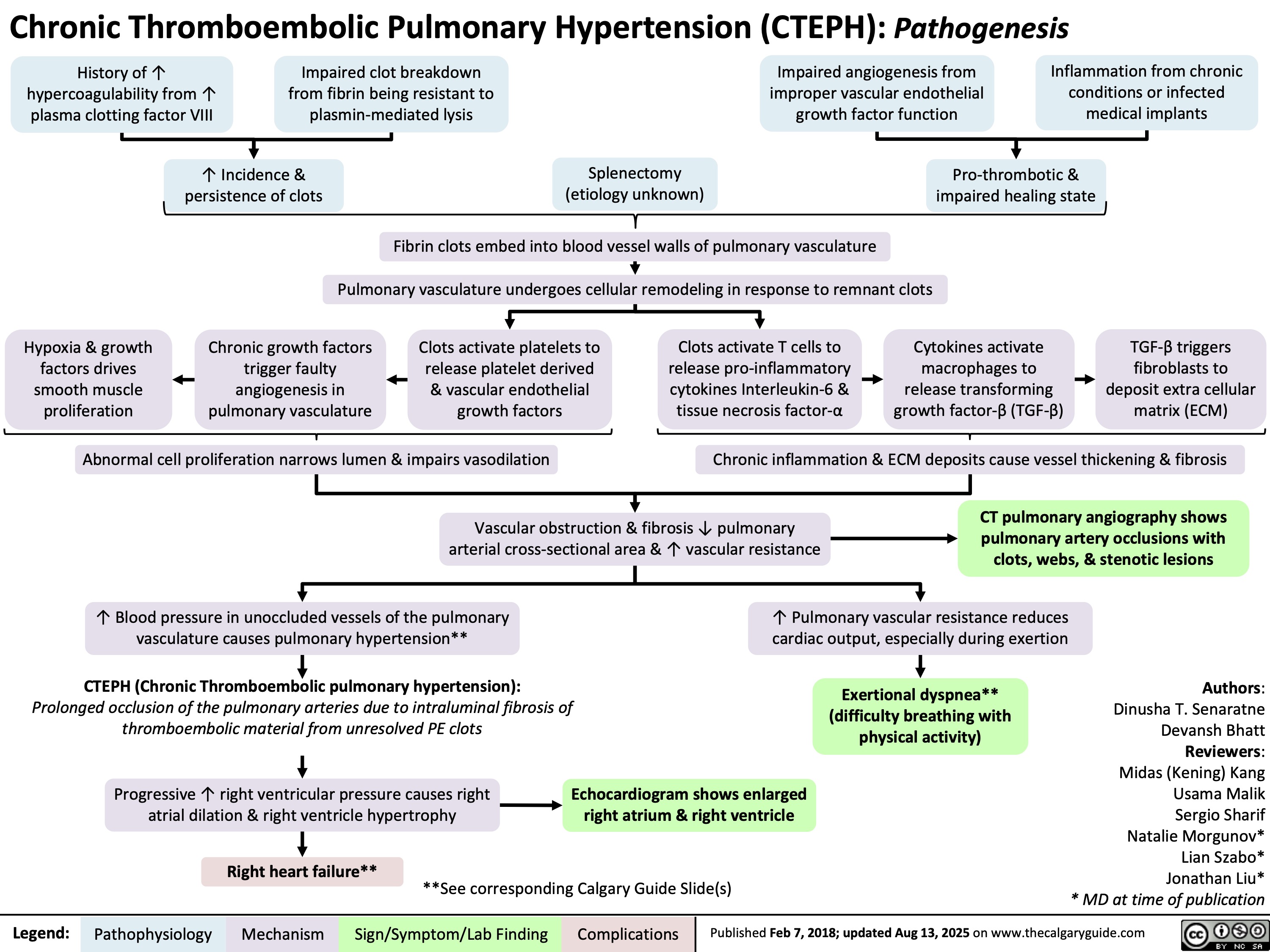
Chronic Thromboembolic Pulmonary Hypertension (CTEPH): Pathogenesis
History of ↑
hypercoagulability from ↑
plasma clotting factor VIII
Impaired clot breakdown
from fibrin being resistant to
plasmin-mediated lysis
Impaired angiogenesis from
improper vascular endothelial
growth factor function
Inflammation from chronic
conditions or infected
medical implants
Legend: ↑ Incidence &
persistence of clots
Splenectomy
(etiology unknown)
Pro-thrombotic &
impaired healing state
Fibrin clots embed into blood vessel walls of pulmonary vasculature
Pulmonary vasculature undergoes cellular remodeling in response to remnant clots
Hypoxia & growth
factors drives
smooth muscle
proliferation
Chronic growth factors
trigger faulty
angiogenesis in
pulmonary vasculature
Clots activate platelets to
release platelet derived
& vascular endothelial
growth factors
Clots activate T cells to
release pro-inflammatory
cytokines Interleukin-6 &
tissue necrosis factor-α
Cytokines activate
macrophages to
release transforming
growth factor-β (TGF-β)
TGF-β triggers
fibroblasts to
deposit extra cellular
matrix (ECM)
Abnormal cell proliferation narrows lumen & impairs vasodilation Chronic inflammation & ECM deposits cause vessel thickening & fibrosis
Vascular obstruction & fibrosis ↓ pulmonary
arterial cross-sectional area & ↑ vascular resistance
CT pulmonary angiography shows
pulmonary artery occlusions with
clots, webs, & stenotic lesions
↑ Blood pressure in unoccluded vessels of the pulmonary
vasculature causes pulmonary hypertension**
↑ Pulmonary vascular resistance reduces
cardiac output, especially during exertion
CTEPH (Chronic Thromboembolic pulmonary hypertension):
Prolonged occlusion of the pulmonary arteries due to intraluminal fibrosis of
thromboembolic material from unresolved PE clots
Exertional dyspnea**
(difficulty breathing with
physical activity)
Progressive ↑ right ventricular pressure causes right
atrial dilation & right ventricle hypertrophy
Echocardiogram shows enlarged
right atrium & right ventricle
Right heart failure**
**See corresponding Calgary Guide Slide(s)
Authors:
Dinusha T. Senaratne
Devansh Bhatt
Reviewers:
Midas (Kening) Kang
Usama Malik
Sergio Sharif
Natalie Morgunov*
Lian Szabo*
Jonathan Liu*
* MD at time of publication
Published Feb 7, 2018; updated Aug 13, 2025 on www.thecalgaryguide.com
Pathophysiology Mechanism
Sign/Symptom/Lab Finding Complications

Osteogenesis Imperfecta

Osteogenesis Imperfecta (OI): Pathogenesis and clinical findings
Autosomal dominant (or less commonly autosomal recessive or de novo)
mutation in COL1A1 or COL1A2 genes (collagen, type I, alpha 1 or 2)
Loss of function of one copy of
COL1A1 (collagen, type 1, alpha 1)
OI Type I (mildest form)
Osteogenesis Imperfecta
Group of genetic disorders in which mutations impair
the production or structure of type I collagen
↓ Synthesis of structurally
normal type I collagen
Mildly short
stature
↓ Collagen in
sclera of eyes
Thin & translucent sclera
Blue-colored choroid
layer underneath the
sclera is more visible
↑ Risk of
scleral
rupture
Blue sclerae
↑ Bone fragility
Fractures in infancy
& adulthood
Ossicles are brittle
& misshapen
Cubitus varus
(elbow bends in
towards body)
Conductive hearing
impairment
Legend: Abnormal dentin (layer underneath
enamel) development
Dentinogenesis
imperfecta
(opalescent teeth)
↑ Tooth
fractures &
dental caries
Extremely fragile & weak
bones & connective tissue
Progressive
fracturing of ribs &
underdevelopment
of thoracic cavity
(pectus deformities)
Bowing &/or
angulation
deformities of
long bones in-
utero
Heterozygous glycine substitution
mutation in COL1A1 or COL1A2
OI Type II
Synthesis of abnormal quality &
↓ quantity of type I collagen
Improper bone mineralization
Minimal calvarial (bones
of skull) mineralization
Multiple
prenatal
fractures
Translucent skull
on prenatal
ultrasound
Degeneration of
cochlear structures
Sensorineural
hearing impairment
Restricted lung growth
Inadequate alveolar development
& impaired gas exchange
Severe respiratory
insufficiency
Beaded appearance
of ribs on prenatal
imaging
Pathophysiology Mechanism
Sign/Symptom/Lab Finding Complications
Perinatal death or death
by 4 weeks of age (90%)
Authors:
Berna Ilchi
Reviewers:
Annie Pham
Emily J. Doucette
Taylor Krawec
Danielle Nelson*
* MD at time of publication
Published Aug 16 2025 on www.thecalgaryguide.com

Cystic Fibrosis

Authors:
Navdeep Goraya, Spencer Montgomery
Reviewers:
Yan Yu, Kayla Nelson, Emily J. Doucette,
Mark Montgomery*, Danielle Nelson*
*MD at time of publication
Reproductive Manifestations
Incomplete development of Wolffian
duct derivatives (vas deferens,
epididymis, & seminal vesicles)
Cystic Fibrosis (CF): Pathogenesis, clinical findings, and complications
Cystic Fibrosis Transmembrane Regulator (CFTR) autosomal recessive gene mutation on chromosome 7
CFTR protein (transmembrane chloride ion
channel found in exocrine tissue) dysfunction
Mutated CFTR
proteins prevent
Cl- reabsorption
in sweat glands
↑ Secretion of
Cl- into sweat
↑ Sweat Cl-
concentration
Mutated CFTR proteins in duct epithelial
tissue of other parts of the body prevent
diffusion of Cl- into secretions
↓ Cl- diffusion into peri-ciliary fluid
↓ Water composition of peri-ciliary fluid
↓ Clearance of mucociliary secretions
Secretions accumulate in secretory
passages throughout the body
Inhibition of sperm transport
(obstructive azoospermia)
Male
infertility
Upper Respiratory Tract Manifestations
Retained secretions
in sinuses
Failure to clear
bacteria in sinuses
Persistent neutrophilic inflammation triggers
tissue remodeling & mucosal overgrowth
Bacterial
proliferation
Nasal
polyps
Chronic
sinusitis
Pancreatic Manifestations
Trapped digestive
enzymes degrade
pancreatic tissue
Pancreatic tissue
damage triggers
inflammation,
scarring & fatty
tissue replacement
Islet cell damage
& destruction
Cystic-fibrosis related
diabetes (CFRD)
Lower Respiratory Tract Manifestations
Retained secretions
in airways
Bacterial proliferation
in lower airway
Airway infection
& inflammation
Chronic
productive cough
Signs of obstructive lung disease (lung hyperinflation
on x-ray & abnormal pulmonary function tests)
Bronchitis ±
bronchiectasis**
↓ Production & secretion of
pancreatic enzymes into GI
tract (pancreatic insufficiency)
Fat & protein malabsorption
Failure to
thrive
↓ Absorption of
fat-soluble vitamins
Steatorrhea
(↑ fat in stool)
Vitamin D
deficiency
Vitamin K
deficiency**
Rickets**
Osteoporosis**
Coagulopathies
Hepatic Manifestations
Delayed passage of bile
through biliary tree
↑ Loss of bile acids in stool
Inflammatory hepatic
response
↑ Production of lithogenic bile (bile
supersaturated with cholesterol)
Biliary cirrhosis with
portal hypertension
Cholelithiasis**
Gastrointestinal (GI) Manifestations
↓ Movement of
intestinal contents
In newborns:
Meconium ileus
In children/adults: Distal ileal
obstruction syndrome (DIOS)
↑ Retention
of meconium
↑ Reabsorption
of bilirubin
Prolonged jaundice
in neonates
**See corresponding Calgary Guide slide
Legend: Sign/Symptom/Lab Finding Complications
Pathophysiology Mechanism
Published Jan 21, 2013; updated Aug 20, 2025 on www.thecalgaryguide.com
Reproductive Manifestations
Degeneration of Wolffian duct derivatives
(vas deferens, epididymis, & seminal vesicles)
Inhibition of sperm transport
(obstructive azoospermia)
Male
infertility
Cystic Fibrosis (CF): Pathogenesis, clinical findings, and complications
Cystic Fibrosis Transmembrane Regulator (CFTR) autosomal recessive gene mutation on chromosome 7
CFTR protein (a transmembrane chloride ion
channel that is found in exocrine tissue) dysfunction
Authors:
Navdeep Goraya, Spencer Montgomery
Reviewers:
Yan Yu, Kayla Nelson, Emily J. Doucette,
Mark Montgomery*, Danielle Nelson*
*MD at time of publication
Mutated CFTR
proteins prevent
Cl- reabsorption
in sweat glands
↑ Secretion of
Cl- into sweat
↑ Sweat Cl-
concentration
Mutated CFTR proteins in duct epithelial
tissue of other parts of the body prevent
diffusion of Cl- into secretions
↓ Cl- diffusion into peri-ciliary fluid
↓ Water composition of peri-ciliary fluid
↓ Clearance of
mucociliary secretions
Secretions accumulate in secretory
passages throughout the body
Upper Respiratory Tract Manifestations
Retained secretions
in sinuses
Failure to clear
bacteria in sinuses
Persistent neutrophilic inflammation triggers
tissue remodeling & mucosal overgrowth
Bacterial
proliferation
Nasal
polyps
Chronic
sinusitis
Lower Respiratory Tract Manifestations
Retained secretions
in airways
Bacterial proliferation
in lower airway
Airway infection
& inflammation
Chronic
productive cough
Signs of obstructive lung disease (lung hyperinflation
on x-ray & abnormal pulmonary function tests)
Bronchitis ±
bronchiectasis**
Pancreatic Manifestations
Pancreas unable to
secrete digestive enzymes
into GI tract (pancreatic
insufficiency)
Fat & protein
malabsorption
↓ Absorption of
fat-soluble vitamins
Failure to
thrive
↓ Serum Vitamin D
Osteoporosis**
Trapped digestive
enzymes degrade
pancreatic tissue
Tissue damage
triggers inflammation,
scarring & fatty tissue
replacement
Islet cell
destruction
Cystic-fibrosis related
diabetes (CFRD)
Hepatic Manifestations
Delayed passage of bile
through biliary tree
Inflammatory hepatic
response
Cirrhosis** & portal
hypertension
Gastrointestinal Manifestations
↓ Movement of
intestinal contents
In newborns:
Meconium ileus
In children/adults: Distal ileal
obstruction syndrome (DIOS)
↑ Retention
of meconium
↑ Reabsorption
of bilirubin
Prolonged jaundice
in neonates
Legend: Pathophysiology Mechanism
Sign/Symptom/Lab Finding Complications
**See corresponding Calgary Guide slide
Published January 21, 2013 on www.thecalgaryguide.com
Please only review slide 1 – slides 3-7 are previous draft
versions.
Thank you!
Authors:
Spencer Montgomery, Navdeep Goraya
Reviewers:
Yan Yu, Kayla Nelson, Emily J. Doucette,
Mark Montgomery*, Name Name*
*MD at time of publication
In the vas deferens
in utero
Cystic Fibrosis: Pathogenesis, clinical findings, and complications
Cystic Fibrosis Transmembrane Regulator (CFTR) autosomal recessive gene mutation on chromosome 7
CFTR protein (a transmembrane chloride ion
channel that is found in exocrine tissue) dysfunction
Mutated CFTR
proteins prevent
Cl- reabsorption
in sweat glands
↑ Secretion of
Cl- into sweat
↑ Sweat Cl-
concentration
Mutated CFTR proteins in duct epithelial
tissue of other parts of the body prevent
diffusion of Cl- into secretions
↓ Cl- diffusion into peri-ciliary fluid
↓ Water composition of peri-ciliary fluid
↓ Clearance of
mucociliary secretions
Secretions accumulate in secretory
passages throughout the body
Degeneration of vas deferens, Wolffian
ducts & associated structures
Infertility in
affected males
In upper
respiratory
tract
Retained
secretions
in sinuses
Failure to clear
bacteria in
airways
Persistent neutrophilic inflammation triggers
tissue remodeling & mucosal overgrowth
Bacterial
proliferation
Chronic
sinusitis
Nasal polyps
In lower
respiratory
tract
Chronic
productive cough
Retained
secretions in
airways
Bacterial
proliferation
Airway
infection &
inflammation
Signs of obstructive lung disease (lung hyperinflation
on x-ray & abnormal pulmonary function tests)
Bronchitis ±
bronchiectasis**
In pancreas
Pancreas unable to secrete
digestive enzymes into GI tract
(pancreatic insufficiency)
Fat & protein
malabsorption
↓ Absorption of fat-
soluble vitamins
Failure to
thrive
↓ Serum Vitamin D
Osteoporosis**
Trapped digestive
enzymes degrade
pancreatic tissue
Tissue damage triggers
inflammation, scarring
& fatty tissue
replacement
Islet cell
destruction
Cystic-fibrosis related
diabetes (CFRD)
In biliary tree
Delayed
passage of bile
Inflammatory hepatic
response
Cirrhosis** &
portal
hypertension
In GI tract
↓ Movement
of intestinal
contents
In children/adults: Distal ileal
obstruction syndrome (DIOS)
In newborns:
Meconium
ileus
↑ Retention
of meconium
↑ Reabsorption
of bilirubin
Prolonged
jaundice in
neonates
Legend: Pathophysiology Mechanism
Sign/Symptom/Lab Finding Complications
Published January 21, 2013 on www.thecalgaryguide.com
Authors:
Spencer Montgomery, Navdeep Goraya
Reviewers:
Yan Yu, Kayla Nelson, Emily J. Doucette,
Mark Montgomery*, Name Name*
*MD at time of publication
In the vas deferens
in utero
Cystic Fibrosis: Pathogenesis, clinical findings, and complications
Cystic Fibrosis Transmembrane Regulator (CFTR) autosomal recessive gene mutation on chromosome 7
CFTR protein (a transmembrane chloride ion
channel that is found in exocrine tissue) dysfunction
Mutated CFTR
proteins prevent
Cl- reabsorption
in sweat glands
↑ Secretion of
Cl- into sweat
↑ Sweat Cl-
concentration
Mutated CFTR proteins in duct epithelial
tissue of other parts of the body prevent
diffusion of Cl- into secretions
↓ Cl- diffusion into peri-ciliary fluid
↓ Water composition of peri-ciliary fluid
↓ Clearance of
mucociliary secretions
Secretions accumulate in secretory
passages throughout the body
Degeneration of vas deferens, Wolffian
ducts & associated structures
Infertility in
affected males
In upper
respiratory
tract
Retained
secretions
in sinuses
Failure to clear
bacteria in
airways
Persistent neutrophilic inflammation triggers
tissue remodeling & mucosal overgrowth
Bacterial
proliferation
Chronic
sinusitis
Nasal polyps
In lower
respiratory
tract
Chronic
productive cough
Retained
secretions in
airways
Bacterial
proliferation
Airway
infection &
inflammation
Signs of obstructive lung disease (lung hyperinflation
on x-ray & abnormal pulmonary function tests)
Bronchitis ±
bronchiectasis**
Trapped digestive
enzymes degrade
pancreatic tissue
Inflammation
Scarring & fatty
tissue infiltration
Islet cell
destruction
Type II Diabetes
Mellitus**
In pancreas
Pancreas unable to secrete
digestive enzymes into GI tract
(pancreatic insufficiency)
Fat & protein
malabsorption
↓ Absorption of fat-
soluble vitamins
Failure to
thrive
↓ Serum Vitamin D
Osteoporosis**
In biliary tree
Delayed
passage of bile
Inflammatory hepatic
response
Cirrhosis** &
portal
hypertension
In GI tract
↓ Movement
of intestinal
contents
In children/adults: Distal ileal
obstruction syndrome (DIOS)
In newborns:
Meconium
ileus
↑ Retention
of meconium
↑ Reabsorption
of bilirubin
Prolonged
jaundice in
neonates
Legend: Pathophysiology Mechanism
Sign/Symptom/Lab Finding Complications
Published January 21, 2013 on www.thecalgaryguide.com
In the vas deferens
in utero
Retained secretions
in sinuses
Cystic Fibrosis: Pathogenesis, clinical findings, and complications
Cystic Fibrosis Transmembrane Regulator (CFTR) autosomal recessive gene mutation on chromosome 7
CFTR protein (a transmembrane chloride ion
channel that is found in exocrine tissue) dysfunction
Mutated CFTR
proteins prevent
Cl- reabsorption
in sweat glands
↑ Secretion of
Cl- into sweat
↑ Sweat Cl-
concentration
Mutated CFTR proteins in duct epithelial
tissue of other parts of the body prevent
diffusion of Cl- into secretions
↓ Cl- diffusion into peri-ciliary fluid
↓ Water composition of peri-ciliary fluid
↓ Clearance of
mucociliary secretions
Accumulation of secretions in
secretory passages throughout the
body obstructing these passages
Authors:
Spencer Montgomery, Navdeep Goraya
Reviewers:
Yan Yu, Kayla Nelson,
Emily J. Doucette, Mark Montgomery*
*MD at time of publication
Degeneration of vas deferens, Wolffian
ducts & associated structures
Infertility in
affected males
In upper
respiratory
tract
Failure to clear
bacteria in
airways
Bacterial
proliferation
Chronic
sinusitis
Nasal polyps
In lower
respiratory
tract
Chronic
productive
cough
Retained
secretions in
airways
Bacterial
proliferation
Airway
infection &
inflammation
Signs of obstructive lung disease i.e. lung
hyperinflation on x-ray & abnormal pulmonary
function tests
Bronchitis ±
bronchiectasis
Trapped digestive
enzymes degrade
pancreatic tissue
Inflammation
Scarring & fatty
tissue infiltration
Islet cell
destruction
Type II Diabetes
Mellitus
In pancreas
Pancreas unable to secrete
digestive enzymes into GI tract
(pancreatic insufficiency)
Fat and protein
malabsorption
↓ Absorption of fat-
soluble vitamins
Failure to
thrive
↓Serum Vitamin D
Osteoporosis
In biliary tree
Delayed
passage
of bile
Inflammatory hepatic
response
Cirrhosis & portal
hypertension
In GI tract
↓ Movement
of intestinal
contents
In children/adults: Distal ileal
obstruction syndrome (DIOS)
In newborns:
Meconium
ileus
↑ Retention
of meconium
↑ Reabsorption
of bilirubin
Prolonged
jaundice in
neonates
Legend: Pathophysiology Mechanism
Sign/Symptom/Lab Finding Complications
Published January 21, 2013 on www.thecalgaryguide.com
In the vas
deferens
in utero
Cystic Fibrosis: Pathogenesis, clinical findings, and complications
Cystic Fibrosis Transmembrane Regulator (CFTR) autosomal recessive gene mutation on chromosome 7
CFTR protein (a transmembrane chloride ion channel that is found in
exocrine tissue) dysfunction
Chloride channel no longer allows Cl- transport
CFTR proteins in
sweat glands reabsorb
Cl-
CFTR proteins in duct epithelial tissue of
other parts of the body facilitate diffusion
of Cl- into secretions
↓Reabsorption
↓Cl- diffusion into peri-ciliary fluid
↓Water composition of peri-ciliary fluid
↑Secretion of Cl-
into sweat
↓Clearance of mucociliary secretions
↑Sweat Cl-
concentration
Accumulation of secretions in secretory
passages throughout the body obstructing
these passages
Degeneration of vas deferens, Wolffian
ducts & associated structures
Authors:
Spencer Montgomery, Navdeep Goraya
Reviewers:
Yan Yu, Kayla Nelson,
Emily J. Doucette, Mark Montgomery*
*MD at time of publication
Infertility in
affected males
In upper
respiratory
tract
Retained secretions
in sinuses
Nasal polyps
Bacterial
proliferation
Chronic
sinusitis
In lower
respiratory
tract
Chronic
productive
cough
Retained
secretions in
airways
Bacterial
proliferation
Signs of obstructive lung disease
i.e. lung hyperinflation on x-ray &
abnormal pulmonary function
tests
Airway
infection &
inflammation
Bronchitis ±
bronchiectasis
Trapped digestive
enzymes degrade
pancreatic tissue
Inflammation
Scarring & fatty
tissue infiltration
Islet cell
destruction
Type II Diabetes
Mellitus
In pancreas
Pancreas unable to secrete
digestive enzymes into GI tract
(pancreatic insufficiency)
Fat and protein
malabsorption
↓Absorption of fat-
soluble vitamins
Failure to
thrive
↓Serum Vitamin D
Osteoporosis
In biliary tree
Delayed
passage
of bile
Inflammatory hepatic
response
Cirrhosis & portal
hypertension
In GI tract
↓Movement
of intestinal
contents
In children/adults: Distal ileal obstruction
syndrome (DIOS)
In
newborns:
Meconium
ileus
↑Retention
of meconium
↑Reabsorption
of bilirubin
Prolonged
jaundice
in
neonates
Legend: Pathophysiology Mechanism
Sign/Symptom/Lab Finding Complications
Published January 21, 2013 on www.thecalgaryguide.com
In the vas
deferens
in utero
Degeneration of
vas deferens,
Wolffian ducts
and associated
structures
Infertility in
affected males
Legend: Cystic Fibrosis: Pathogenesis, clinical findings, and complications
Mutation of Cystic Fibrosis Transmembrane Regulator (CFTR) gene on chromosome 7 à
Dysfunction of the CFTR protein (a transmembrane chloride ion channel that is found in exocrine tissue)
Author: Spencer Montgomery
Reviewers: Yan Yu, Kayla
Nelson, Mark Montgomery*
* MD at time of publication
Chloride channel no longer allows Cl- transport
In sweat glands, CFTR
proteins are
responsible for the
reabsorption of Cl-
In duct epithelial tissue of other parts of
the body, CFTR proteins facilitate diffusion
of Cl- into secretions
Notes:
• The CFTR mutation exhibits an autosomal recessive inheritance pattern
• > 1700 different CFTR gene mutations are identified, ∆F508 mutation accounts for
~67% of cases in Caucasians.
• Cystic fibrosis is diagnosed based presence of ↑ sweat chloride concentration,
disease causing CFTR mutations, & symptoms of ≥ 1 associated organ system
↓ Cl- diffusion into peri-ciliary fluid →
↓water composition of peri-ciliary fluid
In children/adults: Distal ileal
obstruction syndrome (DIOS)
↓ reabsorption =
↑secretion of Cl-
into sweat
In GI
tract
↓movement
of intestinal
contents
↓ clearance of mucociliary secretions
In
newborns:
Meconium
ileus
↑ retention of
meconium → ↑
reabsorption of
bilirubin
Prolonged
jaundice in
neonates
↑ Sweat chloride
concentration
Accumulation of secretions in secretory
passages throughout the body,
obstructing these passages
In biliary
tree
Delayed passage of bile →
inflammatory hepatic response
Cirrhosis & portal
hypertension
In upper respiratory tract
In pancreas
Trapped digestive
enzymes degrade
pancreatic tissue
Nasal
polyps
Retained
secretions in
sinuses →
bacterial
proliferation
Pancreas unable to secrete
digestive enzymes into GI tract
(pancreatic insufficiency)
Fat and
protein mal-
absorption
↓ absorption of fat
soluble vitamins
Inflammation →
scarring & fatty
tissue infiltration
→ islet cell
destruction
Chronic
sinusitis
↓ serum Vit. D
Type II Diabetes
Mellitus
Failure to
thrive
Osteoporosis
Published January 21, 2013 on www.thecalgaryguide.com
In lower respiratory tract
Chronic
productive
cough
Retained secretions in airways → bacterial proliferation
à Airway infection & inflammation
Persistent respiratory tract infections
Can progress to chronic bronchitis ± bronchiectasis
(This is the biggest cause of death in CF)
Pathophysiology Signs of obstructive lung dx: i.e.
Lung hyperinflation (on x-ray),
Abnormal pulmonary function
tests
Mechanism
Sign/Symptom/Lab Finding Complications

Propofol

Propofol: Mechanism of Action & Side Effects
Primary Process
↑ Allosteric binding affinity (binds to
a site other than the active site on
the receptor to induce
conformational changes) of Gamma-
aminobutyric acid (GABA) to GABAA
receptor in brain (ionotropic
receptor)
GABA remains bound to
GABAA receptor
Prolonged
opening of
chloride channels
in neuronal cell
membrane
Influx of
negatively
charged
chloride into
neuron
Hyper-
polarization of
nerve cell
membrane
↑ Difficulty
reaching
threshold for
action potential
↓ Number of
successful
action
potentials
Inhibition of
central nervous
system
Central Nervous System
↓ Neuronal activity
↓ Level of
consciousness,
achieving sedation or
general anesthesia
(dose-dependent effect)
↓ Cerebral metabolic activity
↓ Cerebral blood flow
↓ Intracranial pressure
Respiratory System
Inhibition of central respiratory
centers in brainstem
Relaxation of upper
airway muscles
↓ Hypercapnic & hypoxic
ventilatory drive
Airway obstruction
↓ Respiratory rate ↓ Tidal volume
Hypoxemia
Hypercapnia
Apnea
Cardiovascular System
Inhibition of
sympathetic
cardiovascular activity
Inhibition of cardiac
smooth & striated
muscle activity
↓ Baroreceptor
response to
decrease in
blood pressure
Vasodilation
↓ Myocardial
contractility
↓ Systemic
(minor effect)
vascular
resistance
Diminished
reflex
tachycardia
Diminished
vasoconstrictor
response
Hypotension
Authors:
Caitlin Bittman
Ryden Armstrong
Reviewers:
Billy Sun, Joseph Tropiano
Priyanka Grewal
Luiza Radu
Melinda Davis*
* MD at time of publication
Secondary Process
Direct interaction
with α1 subunit
of L-type calcium
channels
Alteration of
calcium
channel
conformation
Inhibition of
voltage-gated
calcium channels
↓ Response to
depolarization
signals
Smooth &
striated muscle
relaxation
throughout
body
↓ Calcium ion
influx into
smooth &
striated muscle
cells, & ↓ cell
depolarization
Legend: Pathophysiology Mechanism
Sign/Symptom/Lab Finding Complications
Published Mar 3, 2018; updated Aug 28, 2025 on www.thecalgaryguide.com

Genital Prolapse

Instrument-assisted
vaginal deliveries
(especially forceps)
↑ risk of levator
muscle avulsion
Pelvis widens during
Valsalva maneuver
(straining downwards
to ↑ intra-abdominal
pressure)
↑ Support needed
to hold pelvic
organs, which may
eventually fail
Genital Prolapse: Pathogenesis, clinical findings, & complications
Pregnancy
Levator ani muscle is injured or
denervated due to overstretching
& or compression during labour
Levator ani muscle loses tone
Genital hiatus opening enlarges
Pelvic diaphragm descends
& forms a funnel shape
Ligamentous & connective tissue (e.g., arcus tendineus
fascia pelvis, arcus tendineus levator ani, uterosacral
ligaments) bear the ↑ abdominal pressure load
Ligamentous & connective
tissue stretch & may
eventually fail with time
↑ Internal pressure from pelvic organ
tissues pushes against pelvic muscles Hysterectomy
Disruption to pelvic
structural supports
(particularly uterosacral
ligament), pelvic blood
supply, & or innervation
during operation
↓ Pelvic organ support,
which may fail with time
Authors:
Sara Cho
Reviewers:
Michelle J. Chen
Jessica Revington
Rachel Wang*
* MD at time of publication
Unclear mechanism
Pelvic & or low back pain Dyspareunia (pain during intercourse)
Legend: Pathophysiology Mechanism
Conditions with impaired
collagen quality (e.g.
Ehlers-Danlos syndrome,
Marfan syndrome)
Alterations in collagen
& elastin synthesis
Dysfunction of pelvic
connective tissue
Aging/menopause
↓ Systemic
estrogen
concentrations
↓ Smooth muscle cell
proliferation & collagen
synthesis in tissues
with estrogen
receptors (e.g.,
endopelvic fascia, arcus
tendineus, levator ani,
uterosacral ligament)
Chronic cough
Frequent
contraction of
abdominal &
pelvic muscles
Chronic
constipation
Patient constantly
bears down,
contracting
abdominal &
pelvic muscles
Genetic factors
(e.g., family
history of
prolapse, urinary
incontinence,
abdominal or
inguinal hernia)
Obesity
Surrounding
adipose tissue ↑
intra-abdominal
pressure
↑ Stress on pelvic
supporting structures
Repeated ↑ in intra-
abdominal pressure
Combination of risk factors that contribute to,
predispose, promote, or worsen prolapse
Sign/Symptom/Lab Finding ↓ Pelvic organ support,
which may fail with time
Genital Prolapse
Vaginal or uterine descent through the introitus (genital opening)
Rectum pushes against the vaginal wall & widens the
anorectal angle (angle between anal canal & rectum)
Fecal incontinence
Published Aug 25, 2025 on www.thecalgaryguide.com
Weakened pelvic floor muscles provide
↓ structural support & ↑ hypermobility
of the urethra & bladder neck
Urinary incontinence
Complications

Hypocalcemia Physiology

Hypocalcemia: Physiology
Hypomagnesemia**
Pseudohypoparathyroidism
(genetic resistance to PTH)
Sepsis** or severe illness
Authors:
Serra Thai,
Ryan Dion
Reviewers:
Jessica Hammal,
Michelle J. Chen,
Emily J. Doucette,
Hanan Bassyouni*
* MD at time of
publication
Parathyroid gland hypofunction
from surgical removal,
autoimmune disease, or congenital
disease (e.g. DiGeorge Syndrome)
Impaired Mg-dependent
generation of cyclic
adenosine monophosphate
↑ Systemic
inflammation
↑ Calcium
sequestration into
cells (mechanism of
action unknown)
↓ Liver function &
albumin synthesis
↓ Or inappropriately normal
parathyroid hormone (PTH)
in circulation
↓ PTH receptor (PTHR) sensitivity
↓ Albumin-bound
calcium in blood
↓ PTHR signaling in kidneys
↓ PTHR signaling in
osteoblastic lineage
Vitamin D deficiency** (e.g.
cells within bones
↓ intake, malabsorption)
False hypocalcemia (↓
total serum calcium with
normal Ca2+ levels)
Acute pancreatitis**
↓ Sodium-hydrogen
exchanger 3 (NHE3)
activity & expression
in proximal tubule
Chronic
kidney
disease
(CKD)**
↓ 1-⍺ hydroxylase
enzyme (converts
inactive vitamin D to
active form) activity
in kidneys
↑ Claudin14 (tight
junction membrane
proteins) expression in
thick ascending limb (TAL)
of the loop of Henle
↓ Transcription of
calcium
transporter genes
(TRPV5, calbindin
D28K, NCX) in
distal convoluted
tubule
↓ Nuclear factor
kappa B ligand
(RANKL) expression
& binding to
receptors on
osteoclast
precursor cells
Pancreatic enzymes are
prematurely activated
↓ Sodium
reabsorption
triggers
electrochemical
gradient
changes
↓ Glomerular
filtration due
to ↓ kidney
function
↓ Activated
vitamin D
(calcitriol)
synthesis
Claudin14 binds cation
channels composed of
Claudin16 & 19 in TAL
tight junctions
Lipase released from
pancreatic
autodigestion breaks
down peripancreatic fat
↓ Renal phosphate
filtration from
blood
↓ Binding of vitamin
D regulated calcium
transporters in
duodenum & jejunum
Binding blocks
paracellular Ca & Mg
transport from tubule
into vasculature
through tight junctions
↓ Probability
of calcium
transport
channels
opening
↓ Osteoclast
differentiation
(responsible
for breaking
down bone)
Free fatty acids bind
ionized Ca2+ to form
insoluble calcium
soaps (saponification)
↓ Circulating ionized
calcium in blood
↑ Phosphate-calcium
crystal formation
↓ Gastrointestinal
↓ Renal reabsorption
↓ Bone resorption
of calcium
of calcium
reabsorption of calcium Hypocalcemia**
(serum [Ca2+]
<2.1mmol/L+)
**See corresponding Calgary Guide slide
Legend: Pathophysiology Mechanism
Sign/Symptom/Lab Finding Complications
Published Aug 23, 2025 on www.thecalgaryguide.com
Hypocalcemia: Physiology
Authors:
Serra Thai
Ryan Dion
Reviewers:
Jessica Hammal
Michelle J. Chen
Emily J. Doucette
Hanan Bassyouni*
* MD at time of
publication
Parathyroid gland dysfunction
from surgical removal,
autoimmune disease, or
congenital disease (e.g. DiGeorge)
↓ Parathyroid hormone (PTH) in circulation
↓ PTHR signaling in kidneys
Chronic kidney
disease (CKD)
↓ Renal
blood flow
↓ Glomerular
filtration
↓ Sodium-hydrogen
exchanger 3 (NHE3)
activity & expression
in proximal tubule
↓ Sodium
reabsorption
Electrochemical
gradient changes
↓ Phosphate
excretion
↑ Phosphate-calcium
complex formation
**See corresponding Calgary Guide slide
Legend: Pathophysiology Mechanism
Hypomagnesemia**
Pseudohypoparathyroidism
(genetic resistance to PTH)
Sepsis** or severe illness
Impaired Mg-dependent
generation of cyclic
adenosine monophosphate
↑ Inflammation
↓ PTH receptor (PTHR) sensitivity
↑ Calcium
sequestration
into cells
(unknown
mechanism of
action)
↓ Liver
function
Vitamin D deficiency (e.g.
↓ intake, malabsorption)
↓ 1-⍺ hydroxylase
enzyme (converts
inactive vitamin D to
active form) activity in
kidneys
↑ Claudin14 (tight
junction membrane
protein) proteins
are expressed in
the thick ascending
loop of Henle
↓ Transcription of
calcium transporter
genes (TRPV5,
calbindin D28K,
NCX) in the distal
convoluted tubule
↓ Synthesis of activated
vitamin D (calcitriol)
Claudin14 binds to
cation channels
composed of
Claudin16 & 19 found
↓ Binding of vitamin D
in TAL tight junctions
regulated calcium
transporters (TRPV6,
calbindin9k, PMCa2B,
NCX2) in the duodenum
& jejunum
Binding blocks paracellular
Ca & Mg transport from
tubule into vasculature
through tight junctions
between cells
↓ Probability
of calcium
transport
channels
opening
↓ Gastrointestinal
reabsorption of Ca
↓ Renal reabsorption of calcium
↓ Synthesis
of albumin
↓ PTHR signaling in
osteoblastic lineage
cells in bones
↓ Nuclear factor kappa
B ligand (RANKL)
expression & binding to
receptors on osteoclast
precursor cells
↓ Osteoclast
differentiation
(responsible for
breaking down bone)
↓ Bone resorption
↓ Albumin-
bound calcium
with normal free
(biologically
active) Ca levels
False
hypocalcemia
Acute pancreatitis
↓ Lipase secretion
from pancreas
↑ Undigested fats in
small intestine
Free fatty acids
percipitate calcium
Hypocalcemia**
(serum [Ca2+]
<2.1mmol/L+)
Published MONTH, DAY, YEAR on www.thecalgaryguide.com
Sign/Symptom/Lab Finding Complications
Hypomagnesemia*
Impaired magnesium-
dependent generation
of cyclic adenosine
monophosphate
↓ PTH receptor (PTHR) sensitivity
Hypocalcemia: Physiology
Authors:
Serra Thai
Ryan Dion
Reviewers:
Jessica Hammal
Michelle J. Chen
* MD at time of publication
Parathyroid gland dysfunction
from surgical removal,
autoimmune disease, or
congenital disease (e.g. DiGeorge)
Pseudohypoparathyroidism
(genetic resistance to PTH)
Sepsis or severe illness
↓ Parathyroid hormone (PTH) in circulation
↓ PTHR signaling in kidneys
Vitamin D deficiency (e.g.
↓ intake, malabsorption)
↓ Sodium-hydrogen
exchanger 3 (NHE3)
activity & expression in
proximal tubule
↓ 1-⍺ hydroxylase
enzyme (converts
inactive vitamin D to its
active form) activity in
the kidneys
↑ Claudin14 (tight
junction membrane
protein) proteins
are expressed in
the thick ascending
loop of Henle
↓ Transcription of
calcium transporter
genes (TRPV5,
calbindin D28K,
NCX) in the distal
convoluted tubule
Chronic kidney
disease
↓ Sodium
reabsorption
↓ Synthesis of activated
vitamin D (calcitriol)
↓ Renal
blood flow
Electrochemical
gradient changes
Claudin14 binds to
cation channels
composed of
Claudin16 & 19 found
in TAL tight junctions
↓ Glomerular
filtration
↓ Phosphate
excretion
↓ Binding of vitamin D
regulated calcium
transporters (TRPV6,
calbindin9k, PMCa2B,
NCX2) in the duodenum
& jejunum
Binding blocks paracellular
Ca (and Mg) transport
from the tubule into
vasculature through tight
junctions between cells
↓ Probability
of calcium
transport
channels
opening
↑ Phosphate-calcium
complex formation
↓ Gastrointestinal
reabsorption of Ca
↓ Renal reabsorption of calcium
*See corresponding Calgary Guide slide: “Hypomagnesemia: Physiology”
** See corresponding Calgary Guide slide: “Hypoca;cemia: Clinical Findings”
Legend: ↑ Inflammation
↑ Ca
sequestration
into cells
(unknown
mechanism of
action)
↓ Liver
function
↓ Synthesis
of albumin
↓ PTHR signaling in
osteoblastic lineage
cells in bones
↓ Nuclear factor kappa
B ligand (RANKL)
expression and binding
to its receptors on
osteoclast precursor
cells
↓ Differentiation of
osteoclasts which are
responsible for
breaking down
(resorbing) bone
↓ Bone resorption
↓ Albumin-
bound calcium
with normal
free
(biologically
active) Ca
levels
False
hypocalcemia
Acute pancreatitis
↓ Lipase secretion
from pancreas
↑ Undigested fats in
small intestine
Free fatty acids
percipitate calcium
Hypocalcemia**
(serum [Ca2+]
<2.1mmol/L+)
Complications
Published MONTH, DAY, YEAR on www.thecalgaryguide.com
Pathophysiology Mechanism
Sign/Symptom/Lab Finding 
Hypocalcemia: Physiology
Authors:
Serra Thai
Reviewers:
Jessica Hammal
Michelle J. Chen
* MD at time of publication
Parathyroid gland dysfunction
from surgical removal,
autoimmune disease, or
congenital disease (e.g. DiGeorge)
Hypomagnesemia**
Pseudohypoparathyroidism
(genetic resistance to PTH)
Sepsis or severe illness
Impaired magnesium-
dependent generation
of cyclic adenosine
monophosphate
↑ Inflammation
↓ Parathyroid hormone (PTH) in circulation
↓ PTH receptor (PTHR) sensitivity
↑ Ca
sequestration
into cells
(unknown
mechanism of
action)
↓ Liver
function
↓ Synthesis
of albumin
↓ PTHR signaling in kidneys
Vitamin D deficiency (e.g.
↓ intake, malabsorption)
↓ Sodium-hydrogen
exchanger 3 (NHE3)
activity & expression in
proximal tubule
↓ 1-⍺ hydroxylase
enzyme (converts
inactive vitamin D to its
active form) activity in
the kidneys
↑ Claudin14 (tight
junction membrane
protein) proteins
are expressed in
the thick ascending
loop of Henle
↓ Transcription of
calcium transporter
genes (TRPV5,
calbindin D28K,
NCX) in the distal
convoluted tubule
Chronic kidney
disease
↓ Sodium
reabsorption
↓ Synthesis of activated
vitamin D (calcitriol)
↓ Renal
blood flow
Electrochemical
gradient changes
Claudin14 binds to
cation channels
composed of
Claudin16 & 19 found
in TAL tight junctions
↓ Glomerular
filtration
↓ Phosphate
excretion
↓ Binding of vitamin D
regulated calcium
transporters (TRPV6,
calbindin9k, PMCa2B,
NCX2) in the duodenum
& jejunum
Binding blocks paracellular
Ca (and Mg) transport
from the tubule into
vasculature through tight
junctions between cells
↓ Probability
of calcium
transport
channels
opening
↑ Phosphate-calcium
complex formation
↓ Gastrointestinal
reabsorption of Ca
↓ Renal reabsorption of calcium
↓ PTHR signaling in
osteoblastic lineage
cells in bones
↓ Nuclear factor kappa
B ligand (RANKL)
expression and binding
to its receptors on
osteoclast precursor
cells
↓ Differentiation of
osteoclasts which are
responsible for
breaking down
(resorbing) bone
↓ Bone resorption
↓ Albumin-
bound calcium
with normal
free Ca levels
due to
homeostatic
mechanisms
False
hypocalcemia
Acute pancreatitis
↓ Lipase secretion
from pancreas
↑ Undigested fats in
small intestine
Free fatty acids
percipitate calcium
Hypocalcemia**
(serum [Ca2+]
<2.1mmol/L+)
Published MONTH, DAY, YEAR on www.thecalgaryguide.com
**See corresponding Calgary Guide slide: “Hypomagnesemia: Physiology”
Legend: Pathophysiology Mechanism
Sign/Symptom/Lab Finding Complications
Hypocalcemia: Physiology
Hypomagnesemia**
Authors:
Serra Thai
Reviewers:
Jessica Hammal
* MD at time of publication
Parathyroid gland
dysfunction: removal,
autoimmune,
congenital (DiGeorge)
Vitamin D
deficiency:
↓intake,
malabsorption
Pseudohypoparathyroidism
Sepsis/severe illness
↓PTHR
activation in
kidneys
CKD
↓ Renal
blood flow
↓ Glomerular
filtration
↓ Sodium-
hydrogen
exchanger 3
(NHE3) activity &
expression in
proximal tubule
↓ Sodium
reabsorption
Electrochemical
gradient changes
↓ Phosphate
excretion
↑ Phosphate calcium
complex formation
**See corresponding Calgary Guide slide(s)
Legend: ↓ 1-alpha
hydroxylase
enzyme activity
↓ Synthesis of
activated vitamin
D (calcitriol)
↓ Binding of vitamin
D regulated calcium
transporters (TRPV6,
calbindin9k, PMCa2B,
NCX2) in the
duodenum & jejunum
↓ Gastrointestinal
reabsorption of
calcium
Pathophysiology Mechanism
Sign/Symptom/Lab Finding Impaired magnesium
dependent generation
of cyclic adenosine
monophosphate ↑ Inflammation
↓ Parathyroid
hormone (PTH)
↑ Claudin14 (tight
junction membrane
protein) activity in
the thick ascending
loop of Henle
↑ Binding of
claudin14 to
claudin16
Inhibition of claudin
16 & 19 from
forming cation
permeable pores in
the tight junctions
↑ Calcium
sequestration
↓ Liver
function
into cells
(mechanism
of action
↓ Synthesis
of albumin
↓ PTH receptor
remains
(PTHR) sensitivity ↓ Albumin-
unknown)
bound calcium
with normal
↓ PTHR
activation in
bones
free Ca levels
due to
homeostatic
mechanisms
↓ Transcription
of calcium
transporter
genes (TRPV5,
calbindin D28K,
NCX) in the distal
convoluted
tubule
↓ Probability
of calcium
transport
channels
opening
↓ Renal reabsorption
of calcium
↓ Osteoblast
stimulation
↓ Nuclear factor
kappa b ligand
(RANKL) secretion
↓ Nuclear factor
kappa b receptor
(RANK) binding on
osteoclast
precursors cells
↓Osteoclast
production
↓ Bone
resorption
False
Hypocalcemia
Acute pancreatitis
↓ Lipase secretion
from pancreas
↑ Undigested fats in
small intestine
Free fatty acids
percipitate calcium
Hypocalcemia**
(serum [Ca2
<2.1mmol/L+])
Published MONTH, DAY, YEAR on www.thecalgaryguide.com
Complications
Hypocalcemia: Physiology
Hypomagnesemia**
Authors:
Serra Thai
Pseudohypoparathyroidism
Reviewers:
Jessica Hammal
* MD at time of publication
Vitamin D
deficiency: ↓
intake,
malabsorption
↓ 1-alpha
hydroxylase
enzyme activity
↓ Synthesis of
activated vitamin
D (calcitriol)
↓ Binding of
vitamin D regulated
calcium transporters
(TRPV6, calbindin9k,
PMCa2B, NCX2) in
the duodenum &
jejunum
↓ Gastrointestinal
reabsorption of
calcium
Parathyroid gland
dysfunction: removal,
autoimmune,
congenital (DiGeorge)
CKD
↓ Renal
blood flow
↓ Glomerular
filtration
**See corresponding Calgary Guide slide(s)
Legend: Sepsis/severe illness
Impaired magnesium
dependent generation of cyclic
adenosine monophosphate ↑ Inflammation
↓ Signaling proteins
↓ Parathyroid
hormone (PTH)
↓ PTH receptor
(PTHR) sensitivity
↑ Calcium
sequestration
into cells
(mechanism
of action
remains
unknown)
Pathophysiology Mechanism
↓PTHR1 activation
in kidneys
↓ Activation of G-
coupled protein
signaling pathways
↑ Expression of
sodium-phosphate
co-transporters
(NaPiIIa & NaPIIc)
in proximal tubule
↓ Expression &
phosphorylation of
transient receptor
potential vanilloid
(TRPV5, calcium
transporter channel) in
distal convoluted tubule
↓ PTHR1 activation
in bones
↓ Osteoblast
↑ Claudin14 (tight
stimulation
junction membrane
protein) activity in
the thick ascending
loop of Henle
↓ Nuclear
factor kappa b
ligand (RANKL)
secretion
↑ Binding of
claudin14 to
claudin16
↓ Nuclear
factor kappa b
receptor
Inhibition of
(RANK) binding
on osteoclast
↓ Phosphate
excretion
Electrochemical
↓ Amount of
claudin 16 & 19
gradient
TRPV5 & ↓
from forming
precursors cells
changes
probability of
cation-permeable
channels
pores in the tight
↑ Phosphate
opening
junctions
calcium
↓Osteoclast
production
complex
formation
↓ Paracellular
transport of
calcium ↓ Renal reabsorption
of calcium
↓ Bone
resorption
Published MONTH, DAY, YEAR on www.thecalgaryguide.com
↓ Liver
function
↓ Synthesis
of albumin
↓ Albumin-
bound calcium
with normal
free calcium
levels due to
homeostatic
mechanisms
False
Hypocalcemia
Acute
pancreatitis
↓ Lipase
secretion
from pancreas
↑ Undigested
fats in small
intestine
Free fatty acids
percipitate
calcium
Hypocalcemia**
(serum [Ca2
<2.1mmol/L+])
Sign/Symptom/Lab Finding Complications
Hypocalcemia: Physiology
Parathyroid gland
dysfunction: removal,
autoimmune,
congenital (DiGeorge)
Hypomagnesemia**
Impaired magnesium
dependent generation
of cyclic adenosine
monophosphate
↓ Parathyroid
hormone (PTH)
↓ PTH
sensitivity
Vitamin D
deficiency:
↓intake,
malabsorption
↓ Enzyme 1-alpha
hydroxylase activity
↓ Synthesis of
activated vitamin
D (calcitriol)
↓ Binding of
vitamin D
regulated calcium
transporters in
the duodenum &
jejunum
↓ Gastrointestinal
reabsorption of
calcium
Legend: ↓PTH receptor
activation in
kidneys
↑ Claudin14
activity in the
thick ascending
loop of Henle
Inhibition of
claudin 16 & 19
from forming
cation permeable
pores in the tight
junctions
↓ Transcription
of calcium
transporter
genes in the
distal
convoluted
tubule
↓ Probability
of calcium
transport
channels
opening
↓ Renal reabsorption
of calcium
↓ Sodium-hydrogen
exchanger 3 (NHE3)
activity & expression in
proximal tubule
↓ Sodium
reabsorption
Electrochemical
gradient changes
↓ Phosphate excretion
↑ Phosphate calcium
complex formation
Pathophysiology Mechanism
Sign/Symptom/Lab Finding Complications
↑ Inflammation
Authors:
Serra Thai
Reviewers:
Jessica Hammal
* MD at time of publication
Sepsis/severe illness
↑ Calcium
sequestration
into cells
↓ Liver
synthesis of
albumin
↓ Albumin-
calcium
binding
False
Hypocalcemia
Acute pancreatitis
↓ Lipase
secretion from
pancreas
↑ Levels of
undigested
fats in small
intestine
Free fatty
acids
percipitate
calcium
↓ PTH receptor
activation in
bones
↓ Osteoblast
stimulation
↓ RANKL
ligand
secretion
↓ RAANK
receptor
binding
↓Osteoclast
production
↓ Bone
resorption
Hypocalcemia
(serum [Ca2+]
<2.1mmol/L)
Published MONTH, DAY, YEAR on www.thecalgaryguide.com
Hypocalcemia: Physiology
Vitamin D
deficiency:
↓intake,
malabsorption
Parathyroid gland
dysfunction: removal,
autoimmune,
congenital (DiGeorge)
Hypomagnesemia**
Impaired magnesium
dependent generation
of cyclic adenosine
monophosphate
↓ Parathyroid
hormone (PTH)
↓ PTH
sensitivity
↓ Enzyme 1-alpha
hydroxylase activity
↓ Synthesis of
activated vitamin
D (calcitriol)
↓ Binding of
vitamin D
regulated calcium
transporters in
the duodenum &
jejunum
↓ Gastrointestinal
reabsorption of calcium
Legend: ↓PTH receptor
activation in
kidneys
↑ Claudin14
activity in the
thick ascending
loop of Henle
Inhibition of
claudin 16 & 19
from forming
cation permeable
pores in the tight
junctions
↓ Transcription
of calcium
transporter
genes in the
distal
convoluted
tubule
↓ Probability
of calcium
transport
channels
opening
↓ Renal reabsorption
of calcium
↓ Sodium-hydrogen
exchanger 3 (NHE3)
activity & expression in
proximal tubule
↓ Sodium
reabsorption
Electrochemical
gradient changes
↓ Phosphate excretion
↑ Phosphate calcium
complex formation
Pathophysiology Mechanism
Sign/Symptom/Lab Finding Complications
↑ Inflammation
Sepsis/severe illness
↑ Calcium
sequestration
into cells
↓ Liver
synthesis of
albumin
↓ Albumin-
calcium
binding
False
Hypocalcemia
Acute pancreatitis
↓ Lipase
secretion from
pancreas
↑ Levels of
undigested
fats in small
intestine
Free fatty
acids
percipitate
calcium
↓ PTH receptor
activation in
bones
↓ Osteoblast
stimulation
↓ RANKL
ligand
secretion
↓ RAANK
receptor
binding
↓Osteoclast
production
↓ Bone
resorption
Hypocalcemia
(serum [Ca2+] <2.1mmol/L)
Authors:
Name Name
Name Name*
Reviewers:
Name Name
Name Name*
* MD at time of publication
Published MONTH, DAY, YEAR on www.thecalgaryguide.com
Hypocalcemia: Physiology
Chronic kidney
disease
↓ Renal
blood flow
↓ Glomerular
filtration
Parathyroid gland
dysfunction: removal,
autoimmune,
congenital (DiGeorge)
Vitamin D deficiency:
↓intake, malabsorption
Sepsis/severe illness
↓ NHE3 activity and
expression in
proximal tubule
↓PTH receptor
activation in
kidneys
↑ Claudin14
activity in the
thick ascending
loop of Henle
↓ Parathyroid
hormone (PTH)
↓ Transcription of
calcium transporter
genes (TRPV5, calbindin
D28K, NCX) in the distal
convoluted tubule
↓ Enzyme 1-alpha
hydroxylase activity
↓ PTH receptor
activation in
bones
↓ osteoblast
stimulation
↓ RANKL ligand
secretion
↑ Inflammation ↓ PTH sensitivity
↓ Glomerular
filtration
↓ Liver
synthesis of
serum albumin
False
Hypocalcemia
↑ Calcium
sequestration
into cells**
↓ Lipase secretion
from pancreas
Acute pancreatitis
Legend: Pathophysiology Mechanism
Sign/Symptom/Lab Finding ↓ Albumin-
bound calcium
Current mechanism
is unknown
↑ levels of undigested
fats in small intestine
Complications
Hypomagnesemia Multiple blood
transfusions
↓ Sodium
reabsorption
Electrochemical
gradient changes
↓ Phosphate
excretion
↑ Phosphate
calcium complex
formation
Inhibits claudin16 and 19
from forming cation
permeable pores in the
tight junctions
↓Probability of
calcium transport
channels opening
↓ Synthesis of activated
vitamin D (calcitriol)
↓ RAANK
receptor
binding
↓ Calcium
reabsorption
↓ Binding of vitamin D
regulated calcium
transporters (TRPV6,
calbindin9K, PMCa2B,
NCX2) in the duodenum
and jejunum
↓osteoclast
production
↓ Bone
resorption
↓ Serum calcium
Hypocalcemia
<2.1 mmol/L
↑ Precipitation of calcium
by free fatty acids
Authors:
Name Name
Name Name*
Reviewers:
Name Name
Name Name*
* MD at time of publication
Published MONTH, DAY, YEAR on www.thecalgaryguide.com
https://journals.physiology.org/doi/full/10.1152/physrev.00003.2004?rfr_dat=cr_pub++0pubmed&url_ver=Z39.88-
2003&rfr_id=ori%3Arid%3Acrossref.org – Calcium Absoprtion across Epithelia
https://academic.oup.com/endo/article-abstract/137/1/13/2498579 - PTH and Calcium Signaling Pathways
https://www.pnas.org/doi/10.1073/pnas.1616733114 - Information on Claudin 14
https://onlinelibrary-wiley-com.ezproxy.lib.ucalgary.ca/doi/full/10.1111/apha.13959 - effects of PTH on renal calcium and
phosphate handling
https://www.ncbi.nlm.nih.gov/books/NBK430912/ - Hypocalcemia overview + causes + pathophys
https://www.orthobullets.com/basic-science/9010/bone-signaling-and-rankl - information about bone signaling
https://www.sciencedirect.com/science/article/abs/pii/S0889852921000682?via%3Dihub – Calcium homeostasis article
https://pubmed.ncbi.nlm.nih.gov/3012979/#:~:text=Abstract,intestine%2C%20require%20the%20parathyroid%20hormone.
vitamin D metabolism and function
–
https://pmc.ncbi.nlm.nih.gov/articles/PMC2669834/#:~:text=Calcium%20is%20actively%20absorbed%20from,for%20proper
%20mineralization%20of%20bone.
– more vitamin D metabolism and specific receptors
https://jidc.org/index.php/journal/article/view/32903236/2331 - sepsis + hypocalcemia

Anemia of Prematurity

Anemia of Prematurity: Pathogenesis and clinical findings
Premature infants grow rapidly after birth
to compensate for shortened gestation
Neonatal
erythropoietin (EPO) is
produced in liver
(rather than kidneys
after neonatal period)
Premature birth
shortens 3rd
trimester duration
↑ Red blood cell (RBC)
demand consumes
available iron
Blood volume
rapidly ↑
↑ Risk of
complications in
preterm infants
Immature liver has ↓
response to hypoxia
↓ Placental iron
transfer to fetus
↓ Available
iron stores
Repeated blood
draws for monitoring
↓ Plasma EPO
↓ RBC production Hemodilution
↑ Relative blood loss Anemia of Prematurity
Hemoglobin nadir (lowest point) of 70-80g/L in preterm
infants <32 weeks gestation at 4-6 weeks of age
↓ Hgb available for
O2 transport to tissues
Compensatory mechanisms triggered
in response to ↓ tissue perfusion
↓ Cerebral perfusion
↓ Function of
intestinal mucosa
↓ Metabolic
rate
↑ Cardiac output
to ↑ O2 delivery
Immature respiratory
centers in brainstem
have paradoxical
response to hypoxia
↓ Iron delivery
to cerebrum
↓ Nutrient
absorption
↑ Fatigue &
↓ endurance
↓ Neuronal metabolism,
neurotransmitter
production & myelination
Poor
growth
↓ Nutrient
consumption
Poor
feeding
Lethargy Tachycardia
Apnea of
prematurity**
Impaired
neurodevelopment
Legend: Authors:
Katelyn du Plessis
Reviewers:
Taylor Krawec
Emily J. Doucette
Lindsay Stockdale*
* MD at time of publication
Immature RBCs are
more susceptible to
oxidative injury
↑ Proportion of fetal
hemoglobin (Hgb)
compared to term infant
↓ RBC
life span
↑ RBC destruction
Pathophysiology Mechanism
Sign/Symptom/Lab Finding Complications
↓ Circulating
RBCs
Pallor
Destroyed RBCs release
Hgb into bloodstream
Liver converts
heme into bilirubin
↑ Unconjugated
bilirubin
Physiologic neonatal
jaundice**
**See corresponding Calgary Guide slide
Published Aug 28, 2025 on www.thecalgaryguide.com

Hemodynamic Changes in Pregnancy

Hemodynamic Changes in Pregnancy: Pathogenesis & clinical findings
Hormonal & physical changes in the body occur during pregnancy
↑ Estrogen & progesterone levels activate
the renin-angiotensin-aldosterone
system** to ↑ aldosterone levels
Aldosterone promotes sodium &
water retention to ↑ blood volume
Estrogen ↑ peripheral vasodilation
which ↓ vascular resistance
Baroreceptors detect a ↓ in blood
pressure & send sympathetic signals
to the heart to ↑ cardiac output
Blood pressure
↓ between 0-24
weeks gestation
Estrogen,
progesterone, &
relaxin circulate
systemically & ↓
systemic vascular
resistance
↑ Estrogen stimulates liver to ↑
fibrinogen production & clotting
factors I, II, VII, VIII, IX & XII
Estrogen inhibits
hepatic production of
antithrombotic factor
S & antithrombin to
↓ fibrinolysis
Blood becomes hypercoagulable &
↑ risk of thrombus (clot) formation
↑ Risk of
disseminated
intravascular
coagulation**
Thrombus forms in deep
vein of leg, calf, or pelvis
↑ Plasma
volume
↑ Hydrostatic pressure
in peripheral vessels
pushes fluid into
extravascular spaces
↑ Water in vessels
↓ red blood cell
(RBC) concentration
(↓ hematocrit)
↑ Risk of
blood loss
during
Peripheral edema
↑ Blood flow to uterus
delivery Mild tachycardia
to supply fetus with
oxygen & nutrients
Anemia early in
pregnancy (first
trimester)
Kidneys detect ↓ oxygen levels
from ↓ hematocrit & upregulate
erythropoietin production
Erythropoietin stimulates ↑ RBC
production in bone marrow
Gestational
hypertension
(new onset
hypertension
after 20 weeks
gestation)
↑ Hematocrit later in pregnancy
Deep vein
thrombosis**
Authors:
Orly Aziza
Alam Randhawa
Reviewers:
Riya Prajapati
Michelle J. Chen
Jessica Revington
Rachel Wang*
* MD at time of publication
** See corresponding Calgary Guide slide
Legend: Pathophysiology Mechanism
↑ Risk of developing preeclampsia**
Sign/Symptom/Lab Finding Complications
Pale or
Cold
Dizziness
clammy skin Fatigue
↑ Risk of shock
↑ Risk of
organ damage
↑ Risk of syncope
Published Aug 25, 2025 on www.thecalgaryguide.com
Thrombus travels
through venous
circulation to the
heart & into the
pulmonary arteries
Pulmonary
embolism

Hemophilia

Hemophilia A & B: Pathogenesis and clinical findings
X-Linked recessive
mode of inheritance
Sporadic mutation
Genetic defect on the X chromosome
Authors:
Julia Fox, Sean Spence
Reviewers:
Jennifer Au, Yan Yu,
Erin Stephenson, Emily J. Doucette
Lynn Savoie*, Dawn Goodyear*
* MD at time of publication
Defective factor VIII gene Defective factor IX gene
Deficiency of functional
factor VIII (Hemophilia A)
in blood (~85% cases)
Deficiency of functional
factor IX (Hemophilia B)
in blood (~15% cases)
5-40% factor levels
(mild disease)
1-5% factor levels
(moderate disease)
Hemophilia A & B
<1% factor levels
(severe disease)
Impaired intrinsic
clotting pathway**
Impaired thrombin generation
causes inadequate clot
formation when the body
faces a bleeding challenge
↑ Partial thromboplastin
time (PTT)
Prolonged &/or excessive
bleeding after trauma or surgery
Easy bruising
Epistaxis
Oropharyngeal bleeding
Hemarthrosis
(bleeding into joints)
Hematuria
Gastrointestinal
bleeds
Intracranial
hemorrhage
Intramuscular
hemorrhage
Extensive muscle
bleeding compromises
neurovascular structures
Recurrent bleeding
triggers inflammation
& synovial hypertrophy
Hemophilic
arthropathies
Blood accumulates in
muscle or soft tissue
compartments
Compartment syndrome
(↑ pressure in muscle
compartment)
Localized swelling,
bleeding, &/or nerve
compression
Legend: Pathophysiology Mechanism
Sign/Symptom/Lab Finding Complications
**See corresponding Calgary Guide slide on the Coagulation Cascade
Re-Published Aug 31, 2025 on www.thecalgaryguide.com

Malignant Renal Mass

Malignant Renal Mass: Pathogenesis & clinical findings
↑ Central
Chronic renal
adiposity Smoking Hypertension
failure
↑ Glomerular blood
flow in nephron of
↑ Insulin
Accumulation
Induction of
Formation of
kidney
↑ Adipokines
↑ Cytokines
↑ Oxidative state
resistance
of heavy metals
metabolic changes
renal cysts
↑ Availability of
insulin-like
growth factor
promotes
cellular
proliferation
Aberrant proliferation
causes mass effect
Mass
compresses
various
structures
Obstructs the collecting system of the
kidney (including ureter, ureteropelvic
junction, renal pelvis, renal calyces) &
prevents flow of urine
↑ Leptin & vasfatin promote
cellular metabolism to attempt to
meet energy demands of
proliferating cells ↑ IL-15 &
VEGF promote
inflammation
↑ VEGF in response to energy
demands causes ↑ angiogenesis
(blood vessel growth)
causing cellular
damage & ↑
angiogenesis
Cadmium & arsenic
in renal tissue
disrupt metal & ion
homeostasis causing
cell damage which
initiates injury-
repair cycle
Generation of
reactive oxygen
species causes
oxidative damage to
genes regulating cell
cycle
↓ Oxidative
phosphorylation
promotes glycolysis/
survival in hypoxic
conditions typical of
tumor
microenvironment
Altered amino
acid
metabolism in
cells enhances
biosynthetic
capabilities &
promotes cell
proliferation
↑ Pressure causes hypoxic
conditions as tubular
electrolyte load is ↑ &
↑ Atypical
energy demand on renal
epithelial cell
tubular cells is ↑
proliferation
promotes tumor
suppressor gene
mutations
Hypoxia stimulates VEGF
to ↑ angiogenesis
↑ Blood flow
damages
endothelial cells
& initiates the
injury-repair
cycle which ↑
the risk of cell
mutations
↑ Angiogenesis ↑ Cellular metabolism ↓ Fidelity of DNA repair mechanisms
↑ Cellular damage results in DNA mutations Altered metabolism promotes survival in tumor microenvironment
↑ Proliferation of cancer cells (typically from proximal tubular epithelial cells, as in clear cell renal cell carcinoma)
Malignant Renal Mass
Metastasis to distal sites (most
commonly bone, lungs, liver, brain)
Cancer cells release proteolytic
(protein degrading) enzymes
including MMPs, cathepsins, & uPA
Degradation of healthy renal tissue
& vasculature surrounding
collecting system of kidneys
impairing flow of urine and causing
blood loss into collecting system
Inactivation of VHL gene ↑
VEGF expression & causes
↑ angiogenesis
↑ Vascular permeability
due to uninhibited growth
↑ Muscle & fat
wasting from ↑
inflammatory
cytokines activates
JAK/STAT & NF-κB
pathways
Gain of function
mutations to
PI3K/AKT/mTOR
cause ↑ glucose
uptake & drive insulin
resistance without
hyperinsulinemia (↑
blood insulin
Cancer cells release of
adipose triglyceride
lipase & hormone-
sensitive lipase
Tumor-generated
↑Secretion of
Tumor-
cell death releases
parathyroid
generated cell
proinflammatory
hormone-
death ↑ IL-6
cytokines & ↓ renal
related protein
levels &
cell production of
(PTHrP)
initiates ↑
erythropoietin (EPO)
production of
↑ lipolysis & browning
(protein regulating
PTHrP is
thrombopoietin
of white adipose tissue
red blood cell
Weaker vessels form
(conversion to
homologous to
(protein
production)
Hydronephrosis
within the kidney
metabolically active
parathyroid
regulating
↑ Creatinine
(hydrostatic
collecting system &
state by ↑ UCP1
hormone (PTH)
platelet
dilation of the
subsequently rupture
expression)
& competes
production)
renal pelvis &
↓ Erythropoiesis (red
with PTH to
calyces)
blood cell production)
bind to PTH
from ↓ EPO
receptors
Thrombocytosis
(↑ platelets)
Compresses
posterior
abdominal
wall nerves
Imbalance of anabolic
& catabolic
metabolism, reducing
body mass due to ↑
catabolism
Brown adipose tissue
thermogenic properties
↑ body temperature
Flank
pain
Hematuria
(presence of
blood in
urine)
Anemia
Bleeding at site of metastasis
Weight loss Drenching night sweats
PTH receptor activation
promotes ↑ bone
resorption & renal Ca2+
reabsorption
↑ Ca2+
Published Aug 31, 2025 on www.thecalgaryguide.com
Familial Renal
Carcinoma Syndrome
Genetic mutations
conferred from birth
Authors:
Kaiden Jobin
Sergio F. Sharif
Reviewers:
Jessica Revington
Nimira Alimohamed*
*MD at time of publication
Gain of function
for proto-
oncogenes
Loss of function
for tumor
suppressor genes
Compresses
stomach/
esophagus
Compresses
bladder
Compresses
diaphragm
↑ Urinary
Early satiety Cough
frequency
Legend: Malignant
renal cells
produce ↑
EPO &
subsequently
↑
erythropoiesis
Polycythemia
(↑ red blood
cells)
Neoplastic
proximal
tubule
cells
secrete ↑
renin
Intrarenal
ischemia
(reduced
blood flow)
due to
tumor
growth
compressing
renal blood
supply
Hypertension
↑ Tumor cell
secretion of
hepatotoxins,
lysosomal enzymes,
& IL-6
Secreted products
hepatocellular injury,
releasing cell contents
IL-6 triggers immune
response against
hepatocellular cell
contents in response
to injury
↑ ALT ↑ AST ↑ ALP ↑ Prothrombin time ↑ Bilirubin
Pathophysiology Mechanism
Sign/Symptom/Lab Finding Complications

Apert Syndrome

Apert Syndrome:
Pathogenesis and clinical findings
Gain of function mutation in fibroblast growth factor 2 receptor (FGFR2) on chromosome 10q
Mutated FGFR2 protein has ↑ ligand binding & signalling activity
Osteoblasts undergo early differentiation & maturation in response to ↑ FGFR2
↑ Bone deposition & ossification
Osteoblast progenitors proliferate at ↑ rate
Abnormal mesenchymal differentiation
in response to ↑ FGFR2
Authors:
Merry Faye Graff,
Taylor Krawec
Reviewers:
Emily J. Doucette,
Ryan Frank*
* Indicates MD at time
of publication
Apert Syndrome (Acrocephalosyndactyly Type I)
A rare genetic disorder characterized by multisuture craniosynostosis, midface retrusion, & syndactyly of the hands & feet
Craniofacial Abnormalities
Premature differentiation of neural crest-derived mesenchyme in face
Underdevelopment of
midfacial bones (e.g.
maxilla, zygoma)
Orbit growth is
rotated outward
Extraocular muscles
insert anomalously
↓ Control of
eye movement
Mesenchymal
cells at palatal
shelf undergo
abnormal
differentiation
Palatal midline
epithelial
seam fails to
undergo
apoptosis
Premature osteoblast
maturation in suture
mesenchyme
Midface hypoplasia
Hypertelorism (widely
separated orbits)
V-pattern exotropia (“V”
shaped eye movement)
↓ Palatal shelf outgrowth
& misalignment
Bicoronal synostosis
(premature fusion of
coronal sutures)
Shallow orbits displace
globes forward
Depressed
nasal bridge
↓ Length of
hard palate
Abnormal eustachian
tube development
↓ Anteroposterior
growth of nasal cavity
Cleft palate**
Fusion of coronal sutures restricts
anteroposterior skull growth
Exorbitism
(protruding eyes)
Beaked nose
↓ Drainage of
middle ear
Choanal stenosis
(narrowed nasal passages)
Skull grows vertically
as brain develops
Cerebral spinal fluid
accumulates in ventricles
Incomplete eyelid
closure ↑ corneal
exposure & damage
Class III
malocclusion
(underbite)
V shaped
dental
arch
High
arched
palate
Recurrent
ear effusions
↑ Nasal canal
obstruction
Breathing
difficulty
Turribrachycephaly
(tower shaped skull)
Ventriculomegaly
(↑ ventricular size)
Corneal scarring
Exposure keratopathy
Impaired ossicle
function
Conductive
hearing loss
Brain growth
is restricted
Developmental
delay
Limb & Skeletal Abnormalities
Phalanges of fingers
&/or toes undergo
premature ossification
↑ Proliferation in apical
ectodermal ridge at distal limb bud
during embryonic development
↓ Regression of interdigital
mesenchyme allow persistence
of interdigital soft tissue bridges
Other Abnormalities
FGFR2 mutation leads to
sebaceous gland hyperplasia
& follicular keratinization
Excess sebum production
& follicular blockage
Osseus syndactyly
Legend: ↑ FGFR2 alters BMP &
SHH signaling balance
Pathophysiology Mechanism
Sign/Symptom/Lab Finding Cutaneous syndactyly
(may include nailbed)
Severe acne
Published Sept 16, 2025 on www.thecalgaryguide.com
Complications

Antibiotics Classes and Mechanisms

Antibiotics: Overview of classes and mechanisms of action
Nucleic acid
synthesis
inhibitors
Cell wall
synthesis
inhibitors
Protein
synthesis
inhibitors
Nitroimidazoles
(e.g. metronidazole)
Antibiotic is activated by bacterial
pyruvate:ferredoxin oxidoreductase
system (only active in anaerobic bacteria)
Fluoroquinolones**
(e.g. ciprofloxacin)
Drug binds & inhibits bacterial DNA
topoisomerases (enzymes that cut &
re-ligate DNA to stabilize helix)
β-lactam antibiotics
Penicillins (e.g. amoxicillin)
Cephalosporins (e.g cefazolin)
Carbapenems (e.g meropenem)
Drug binds & inhibits penicillin binding
proteins (enzymes involved in peptidoglycan
cross-linking & cell wall synthesis)
β-lactam with β-
lactamase inhibitor
(e.g. amoxicillin-
clavulanate)
β-lactamase inhibitor irreversibly binds bacterial
β-lactamases (enzymes that break β-lactam
rings & contribute to β-lactam resistance)
Glycopeptides
(e.g. vancomycin)
Drug binds to bacterial cell
wall peptidoglycan precursors,
interrupting cell wall synthesis
Aminoglycosides
(e.g. gentamicin)
Drug irreversibly
binds bacterial 30S
ribosomal subunit
Binding interferes with
proofreading process
in mRNA translation
Macrolides
(e.g. azithromycin)
Lincosamides
(e.g. clindamycin)
Tetracyclines
(e.g. doxycycline)
Sulfonamides
(e.g trimethoprim-
sulfamethoxazole)
Reactive nitrogen
free radicals
generated
Single- & double-
stranded DNA breaks
form without re-ligation
↓ Bacterial cell
wall cross-linkage
Free radicals interact
with and destroy
bacterial DNA
DNA fragments
released into cell
Autolysins weaken &
lyse bacterial cell wall
Author:
Steven Quan
Reviewers:
Julia Fox,
Emily J. Doucette,
Brandon Christensen*
*MD at time
of publication
Bactericidal
(bacterial
cell death)
β-lactamases are unable to
break β-lactam rings, allowing
for β-lactam function
Bacterial cell wall is
incomplete & weakened
Incorrect amino
acids accepted
into protein chain
Bacteria
undergoes lysis
Nonfunctional
proteins
produced
Metabolic
pathway
inhibitors
Legend: Pathophysiology Mechanism
Sign/Symptom/Lab Finding Drug reversibly binds bacterial
50S ribosomal subunit
Drug reversibly
binds bacterial 30s
ribosomal subunit
Drug binds & inhibits bacterial
dihydropteroate synthetases
(enzymes involved in folate synthesis)
Complications
Binding physically inhibits addition of amino acids,
preventing peptide elongation
Binding inhibits tRNA from adding
amino acids to protein chain
Bacteria cannot produce
folate (cofactor required
for nucleotide synthesis)
Protein synthesis
not completed
↓ Nucleotide
production
Bacteriostatic
(inhibition of
bacterial growth
& replication)
**See corresponding Calgary Guide slide
Published Sept 16, 2025 on www.thecalgaryguide.com

Tricyclic Antidepressants

Tricyclic Antidepressants: Mechanism of action and side effects
Tricyclic Antidepressants (TCAs)
-tryptylines (e.g. amitriptyline, nortriptyline), -pramines (e.g. clomipramine, imipramine), doxepin
Competitive inhibition of excitatory
muscarinic acetylcholine (ACh)
receptors (primary neurotransmitter
at neuromuscular junctions)
Blockage of sodium
channels in cardiac
muscle cells
↓ Cortical
neuronal firing
↓ Parasympathetic
activity
↓ Depolarization
of cardiac cells
Exact mechanism
unknown
↓ Smooth muscle
contractions
QT interval
prolongation
Arrythmias
↓ Bladder
contractions
Urinary retention
Competitive inhibition of
alpha-1 receptors on
vascular smooth muscle
throughout the body
Blockage of serotonin (5-HT) &
norepinephrine (NE) transporters
on presynaptic neurons
Competitive inhibition of histamine
(H1) receptors throughout the body,
especially in sleep-wake regions of
the CNS (eg. thalamus & cortex)
Exact mechanism
unknown
↓ Blood vessel
constriction
Orthostatic
hypotension
↓ Regulation
of sympathetic
activity
Transient cerebral
hypoperfusion
↑ Heart rate
& cardiac
contractility
Dizziness
↓ Gut motility
↓ Saliva
production
Constipation
Xerostomia
(dry mouth)
↑ Levels of 5-HT &
NE at synaptic cleft
↓ H1-induced
depolarization in
cerebral cortex
↓ Regulation of
food intake
(exact mechanism
unknown)
Diaphoresis
(excessive
sweating)
Sedation ↓ Satiety
signalling
↑ Neurotransmission
in mood-regulating
brain areas (e.g.,
limbic system)
↓ N-methyl-D-aspartate
(NMDA) receptor
depolarization of
cortical neurons
Weight gain
↑ Appetite
Antidepressant
effect (eg. ↑ mood
& ↑ self worthiness)
Author:
Emily Cox
Reviewers:
Sara Cho,
Luiza Radu,
Emily J. Doucette,
Susan Poon*
Confusion
* MD at time of publication
Published Sept 16, 2025 on www.thecalgaryguide.com
Legend: Exact mechanism
unknown
↓ Pupillary
dilation
Paradoxical
sweating
Blurred vision
Anticholinergic side effects
Pathophysiology Mechanism
Pharmacologic effect Adverse effect

Obstructive Shock

Obstructive Shock: Pathogenesis, complications & clinical findings
Cardiac tamponade**
↑ Pericardial cavity pressure
due to fluid filling potential space
Pericardial pressure exceeds
cardiac venous filling pressure
& compresses heart chambers
↓ Venous return to right
atrium & left atrium
Pulmonary embolism**
Obstruction of pulmonary blood flow
↑ Right ventricle afterload (pressure
the ventricle contracts against)
↓ Right ventricle stroke volume
(blood volume ejected per beat)
↓ Blood return to left atrium
Underfilled left ventricle
Obstructive shock
↓ systemic blood flow due to a physical
obstruction of the heart’s pumping function
Insufficient
organ
perfusion
Tension pneumothorax**
↑ Pressure in the pleural cavity
Intrathoracic pressure exceeds
venous filling pressures &
compresses heart chambers
↓ Venous return to right
atrium & left atrium
Author:
Ryan Dion
Sergio F. Sharif
Dean Percy
Reviewers:
Yan Yu
Tristan Jones
Jason Waechter*
* MD at time of publication
** See corresponding
Calgary Guide slides
↓ Preload (degree of left ventricular filling)
as left ventricle receives low levels of blood
↓ Cardiac output (volume of
blood ejected from the
↓ Blood pressure (BP)
heart/min)
Baroreceptors in carotid sinus & aortic
arch detect low blood pressure
Skin
Reflexive release of catecholamines
via sympathetic nervous system
Blood supply diverted
away from peripheral
tissues to vital organs
Tachycardia
Hypotension
Cold
extremities
Legend: Pathophysiology Mechanism
Sign/Symptom/Lab Finding Brain
↓ Cerebral blood
flow causes
cerebral hypoxia
Altered consciousness
Heart
↓ Coronary
artery
perfusion
Myocardial
ischemia**
Complications
Blood backs up into
venous system
Kidneys
↓ Blood flow
to kidneys
Prerenal acute kidney
injury **
↑ Pressure distends
veins
↑ Jugular
venous
pressure
Pressurized fluid leaks
out of veins into
tissue
Fluid enters
pulmonary
perivascular spaces
Fluid impedes normal gas
exchange in lungs
Tachypnea (↑
respiratory rate)
Dyspnea
Published July 7, 2013; updated Sept 28, 2025 on www.thecalgaryguide.com

Endometriosis

Endometriosis: Pathogenesis, clinical findings, & complications
Risk factors
Theories of endometrial tissue migration
Genetic causes (family
history & specific gene loci)
Transfer of endometrial tissue away
from the uterus during pelvic surgery,
vaginal delivery, or cesarean section
Sampson’s theory: Retrograde
flow of endometrial tissue
through fallopian tubes
Long menstrual flows
(↑ retrograde menstruation)
Coelomic metaplasia theory:
Undifferentiated mesothelial cells
from the peritoneal cavity
differentiate into endometrial cells
during fetal development. May also
occur in patients with testes
Implantation theory: Menstrual endometrium
implants onto pelvic structures
↓ Cellular antioxidant
capacity (↑ cell damage)
Alcohol use
(mechanism unclear)
Early menarche (↑
estrogen exposure)
Stem cell theory: Endometrial stem/
Embryonic rest theory: Residual
progenitor cells from menstrual
embryonic cells from Müllerian
Dissemination theory: Endometrial
blood or neonatal uterine bleeding
or Wolffian ducts are misplaced
tissue transported through bloodstream
implant in the pelvic cavity
during organogenesis
or lymphatics to extrauterine structures
(e.g., brain, pericardium)
Cells differentiate into endometrial-like tissue
Ovary releases estrogen
& progesterone
Endometriosis
Endometrial glands & stroma (structural support tissue) found outside the uterus
Ectopic endometrial-like
tissue on bladder
Ectopic endometrial-like tissue in posterior cul-de-sac
Monthly proliferation
(by estrogen) and
stabilization (by
progesterone) of
endometrial tissue
Chronic inflammation of surrounding tissues & fibrosis/adhesion formation
Tissue inflammation & fibrosis/adhesions push on & displace pelvic organs
Ectopic tissue
abnormally
activates
nerve signaling
pathways
responsible for
bladder
contraction
Bladder wall
contractions
activate
nociceptors
(pain
sensors)
Penetrative intercourse involving the
posterior vagina applies ↑ pressure to
tethered & immobile pelvic structures
Feces moves down colon into
rectum & applies pressure to
the tethered rectum
Monthly
progesterone
withdrawal
Dyspareunia (pain with
deep intercourse)
Dyschezia (pain with
bowel movements)
↑ Urinary
frequency &
urgency
Pain with
micturition
(urination)
Endometrial tissue sloughs
off from a basal tissue layer
(menstruation**)
Extra-uterine endometrial-
like tissue cannot evacuate
the implantation site
Retrograde menstruation in ovary ↑ the
presence of ectopic endometrial-like tissue
& blood (mechanism poorly understood)
Old blood fills
endometrial-like
tissue on ovary
Endometrioma
(chocolate cyst)
Chronic cyclical local
inflammation (release of
pro-inflammatory chemicals)
Nociceptors near ectopic
endometrial-like tissue activate
Pain signals & release of inflammatory
mediators subsides over time
Cyclic dysmenorrhea
(menstrual pain)
Repair of inflammation
Ectopic endometrial-like tissue
becomes fibrotic (scarred)
Significant ↑ scar tissue
Nodule formation
↓ Hormone levels
post-menopause
Accumulation of
inflammatory fluid
within scar tissue
↑ Risk of scar tissue obstructing
or kinking fallopian tubes
Endometrial tissue
stops proliferating
Hormone-dependent symptoms
(e.g., dysmenorrhea) cease
Cyst formation
Embryos unable to pass through
fallopian tube to uterus
Author:
Joshua Seto
Kayla Nelson
Reviewers:
Yan Yu
Sean Spence
Jessica Revington
Infertility
Colin Birch*, Rachel Wang*
* MD at time of publication
**See corresponding Calgary Guide slide
Legend: Published December 20, 2013, revised September 24,
2025 on www.thecalgaryguide.com
Pathophysiology Mechanism
Sign/Symptom/Lab Finding Complications

Hydrocephalus in pediatrics

Aqueduct
stenosis
(channel
between 3rd
& 4th ventricle
narrows)
Narrowing
blocks CSF
flow from 3rd
to 4th ventricle
Congenital anomalies blocking CSF flow
Atresia of
foramen of
Monro (channels
connecting
paired lateral
ventricles & 3rd
ventricle
narrow)
Narrowing
blocks CSF flow
from lateral
ventricles to 3rd
ventricle
Posterior fossa
malformations (4th
ventricle closure
failure) (e.g.
Dandy-Walker
Malformations)
Persistence of
Blake's pouch (cyst
in 4th ventricle)
obstructs CSF
outflow from 4th
ventricle
Brain mass/tumor
(e.g. medulloblastoma, pinealoma)
Obstructs the passage of CSF from
ventricles to subarachnoid space
Hydrocephalus in Pediatrics: Pathogenesis and complications
Intracranial or subarachnoid
hemorrhage (brain bleed)
Blood accumulates in ventricles
or subarachnoid space
Accumulated red blood cells
break down over time & release
hemoglobin, bilirubin, etc.
Blood clots form in
subarachnoid spaces &
around ventricular outlets
Developmental cysts
(CSF filled sacs
located between the
brain & arachnoid
Infection in brain
membrane – e.g.
tissue or meninges
Arachnoid Cysts)
(e.g., meningitis)
Breakdown products trigger
inflammation of ependymal
lining & arachnoid membranes
Immune cells respond to
infection & accumulate
Inflammation stimulates
transforming growth factor-
beta (TGF-β) & neutrophil
extracellular traps (NETs)
Exudate & pus form
in subarachnoid
spaces & around
ventricular outlets
TGF-β promotes
fibrosis in
subarachnoid space
NETs obstruct
meningeal
lymphatic vessels
Scarring & obliteration
of arachnoid villi
Obstruction impairs
cerebrospinal fluid
(CSF) drainage
through lymphatics
Choroid plexus tumors
Choroid plexus epithelial
cells are overactive
Sacs compress or
obstruct
interventricular
foramina, 3rd or 4th
ventricle, aqueduct
of Sylvius, etc.
(location dependent)
Congenital absence
of arachnoid villi
Impaired CSF
resorption
Normal flow of CSF is
physically blocked
Overactivity produces excessive CSF
Communicating hydrocephalus (CSF accumulation due to impaired
absorption or increased production in the subarachnoid spaces)
Obstructive hydrocephalus (CSF accumulation due to
structural blockage of CSF flow within the ventricular system)
Hydrocephalus
Active distension of the ventricles in the brain due to excessive accumulation of CSF
Pathophysiology Mechanism
Sign/Symptom/Lab Finding Complications
Published Sept 29, 2025 on www.thecalgaryguide.com
Chiari II
malformation
(downward
herniation of
cerebellum,
brainstem, & 4th
ventricle through
foramen magnum)
Herniated
structures block
CSF outflow to
spinal cord
Authors:
Abisola Adegbulugbe,
Lexyn Iliscupidez
Reviewers:
Annie Pham,
Merry Faye Graff,
Emily J. Doucette,
Jean Mah*
*MD at time of publication
Legend:

Sturge-Weber Syndrome

Sturge-Weber Syndrome (SWS): Pathogenesis, mechanisms & clinical findings
Somatic mosaic mutations
(embryonic development
mutations producing
multiple cell lines) occur in
the GNAQ gene
Abnormal regulation
of intracellular
signaling pathways
during early
embryogenesis
Mechanism unclear. Attributed to primary defect(s) in a subset of angioblasts (precursor embryonic
cells for the endothelial cells lining blood vessels) or in other cells supporting vascular function
Authors:
Dylan Hollman*
Reviewers:
Mina Youakim
Jessica Revington
Fatemeh Jafarian*
* MD at time of publication
**See corresponding Calgary Guide slide
Localized abnormal vasculogenesis (initial creation of blood
vessels during embryonic development) & vascular function
Facial vascular malformations Intracranial vascular malformations Ocular vascular malformations
Nevus flammeus (port-wine stain birthmark)
along skin in the distribution of the trigeminal
nerve (ophthalmic/maxillary branches)
Leptomeningeal capillary-venous malformation
(abnormal blood vessel cluster in the brain/spinal covering)
Heterochromia
(different
colored eyes)
Episcleral &
conjunctival VMs
(abnormal blood
vessels on the
eye surface)
Corresponding
overgrowth of cutaneous
(skin) vasculature
Corresponding overgrowth
of underlying soft tissues
& facial bones
Impaired venous drainage ↓ normal blood
flow in the brain & ↑ overall venous
pressure, causing venous hypertension
Mechanism unclear.
Associated with disruption of
the hypothalamic-pituitary axis
Choroidal
hemangioma
(benign
blood vessel
tumor in the
choroid layer
of the eye)
Growth
hormone
deficiency
Nodularity (nodule
growths on skin)
↑ Venous pressure & ↓ venous
blood flow cause venous stasis
(blood pooling in veins)
↑ Accumulation of
coagulation factors in the
veins contributes to an ↑ risk
of thrombosis (blood clots)
↑ Venous pressure in
the episclera (outer
layer of the eye)
contributes to ↑
intraocular pressure
Hypothyroidism**
↓ Venous blood flow
impairs overall circulation
& ↓ tissue oxygenation
(chronic tissue ischemia)
Thrombi (blood clots) travel
through vasculature & can
further ↓ or block blood flow
↑ Intraocular
pressure gradually
damages the optic
nerve & contributes
to vision loss
Stroke-like events
Glaucoma
Interruption of blood flow & oxygen delivery
to the brain damages key areas of brain
tissue & ↓ clearance of waste products
Hemiparesis
(weakness on one
side of the body)
Cerebral hemiatrophy
(loss of tissue or shrinkage
of one side of the brain)
↑ Risk of focal cortical dysplasia (abnormal
organization of brain cells in specific brain locations)
↑ Risk of
brain atrophy
↑ Intraparenchymal calcification
(calcium deposits in brain tissue)
Chronic damage to brain tissue & continued impairment of key neurological functions
Visual field defects
Seizures
Intellectual disability Behavioral problems
Pathophysiology Mechanism
Sign/Symptom/Lab Finding Complications
Published October 20, 2025 on www.thecalgaryguide.com
Gingival/palatal
angiomatosis
(abnormal blood
vessel growth in
gum tissue &
palate)
Gingival
hyperplasia
(overgrowth
of gum
tissue)
Legend: 
Sturge-Weber syndrome (SWS): Pathogenesis and clinical findings
Somatic mosaic mutations in the GNAQ gene
Authors:
Dylan Hollman*
Reviewers:
Mina Youakim
Fatemeh Jafarian*
* MD at time of publication
Abnormal regulation of intracellular signalling pathway in early embryogenesis
Unclear mechanism → Primary defect in subset of angioblasts or other vascular supporting cells
Facial vascular
malformations (VMs)
Localized abnormal vasculogenesis & vascular function
Ocular vascular
malformations (VMs)
Port-wine stain
(flat, red or purple birthmark caused by
dilated blood vessels) → commonly affects
trigeminal nerve (ophthalmic/maxillary)
Intracranial vascular
malformations (VMs)
Choroidal
Heterochromi
Episcleral &
hemangioma
a
conjunctival VMs
(benign tumor
(different
(abnormal blood
Leptomeningeal
of blood vessels
colored eyes)
vessels on the
capillary-venous
in the choroid
eye's surface)
Overgrowth of
Overgrowth of
malformation
layer of the eye)
underlying soft
cutaneous
(abnormal blood
tissue & bone
vasculature
vessel cluster in the
↑ episcleral
brain/spinal
(eye’s outer
Nodularity
Gingival/palatal
covering)
layer) venous
angiomatosis
pressure
(abnormal blood
Gingival
Glaucoma
vessel growth in
hyperplasia
Venous hypertension
gum tissue &
(overgrowth of gum
palate)
tissue)
Chronic tissue ischemia
Thrombosis
Hemiparesis
(weakness on one
side of body)
Venous
stasis
Unclear mechanism
→ disruption of
hypothalamic-pituitary axis
Focal cortical dysplasia
(abnormal brain tissue in
specific areas)
Intraparenchymal
calcification (calcium
deposits in brain tissue)
Stroke-like events
Hemiatrophy
(loss of tissue or
shrinkage on one
side of body) Hypothyroidism Growth hormone
deficiency
Seizures
Visual field defects
Intellectual disability Behavioral problems
Legend: Pathophysiology Mechanism
Sign/Symptom/Lab Finding Complications
Published MONTH, DAY, YEAR on www.thecalgaryguide.com
Brain
atrophy

Ventricular Fibrillation

Ventricular Fibrillation: Pathogenesis and clinical findings
Channelopathies
(diseases of ion
channels such as
Brugada syndrome)
Abnormalities in
ion channel (Na+
,
K+, Ca2+)
permeability &
channel
opening/closing
Impaired
cardiomyocyte
depolarization &
repolarization
Replacement of
cardiac tissue with
nonconductive
fibrous tissue
Structural damage
(cardiac surgery or
genetic conditions
like arrhythmogenic
dysplasia)
Authors:
Jared McCormick,
Shuvam Prasai,
Sergio F. Sharif
Reviewers:
Brett Edwards,
Dave Nicholl,
Angela Kealey*,
Jason Waechter*,
Vikas Kuriachan*
* MD at time of publication
Hypoglycemia
Impairment in ATP-
dependent
processes
Disruption in cardiomyocyte
action potential propagation
↓ Oxygen delivery &
ischemia
Cardiac
hypoperfusion
Drugs (antiarrhythmics,
QT prolonging
antipsychotics, etc.)
Direct alteration of
ion channel
function
Disruption in the
ion gradients of
cardiac cells
At-risk patient
(altered impulse
conduction)
Impairment &
damage to
cardiac tissue
↓metabolic activity &
blood flow
Hypothermia
Electrolyte
imbalances (K+
,
Mg2+, Ca2+ etc.)
Abnormal
extracellular ion
concentrations
↑ ectopic activity & self-sustaining conduction
loops further disrupt normal pathways
Major ischemia
& necrosis of
cardiac tissue
Myocardial infarction**
(one of the most common
causes of V-Fib)
Abnormal
rhythm
Impairment in ion
channel activation
& recovery
Ventricular fibers
contract erratically
instead of in unison
Atrial fibrillation** & rapid
conduction to ventricles
Accessory pathway (pathways
bypassing normal conduction
pathways in the heart)
ECG shows disorganized activity
without identifiable QRS/T waves
& obscured P waves*
Ventricular Fibrillation (V-fib)
Heart rhythm disorder where the ventricles
fibrillate (quiver) & fail to contract effectively
*Obscured P waves
No heart rate
↓ATP & disruption in
Na⁺/K⁺-ATPase Pump
Cerebral hypoxia
(ischemia driven
brain injury)
Uncoordinated contraction
& no cardiac output (V-fib
is non-perfusing)
No blood
pressure
↑ Creatinine kinase
indicating cell damage
Ion imbalances &
intracellular Ca2+ influx
Depolarization induced
glutamate release
Global hypoperfusion
(widespread ↓ in blood
flow to tissues & organs)
Ca2+ toxicity & widespread
neuronal cell damage & death
Death
Multi-system
organ failure
due to ↓
perfusion
Clinical
cardiac arrest
(cessation of
cardiac
activity)**
Inadequate
blood flow
&
widespread
ischemic
injury**
↑ Lactate dehydrogenase
indicating ischemia
**See corresponding Calgary Guide slides
↑ Troponin indicating
myocardial injury
Legend: Published Feb 10, 2014; updated Oct 19, 2025 on www.thecalgaryguide.com
Pathophysiology Mechanism
Sign/Symptom/Lab Finding Complications

Fecal Incontinence

Authors:
Britney Wong
Timothy Fu
Reviewers:
Shahab Marzoughi
Jake Thorsteinson
Jessica Revington
Yan Yu*
Erika Dempsey*
* MD at time of publication
**See corresponding Calgary Guide slide
Legend: Pathophysiology Mechanism
Fecal Incontinence: Pathogenesis, mechanisms, & complications
Chronic bowel straining
Complex
vaginal
delivery
Stretch injury of pudendal
nerve (innervates the
pelvic muscles & external
anal sphincter)
Rectal or
genital
prolapse**
Pelvic surgery
Local neuronal damage
Direct
impairment of
internal anal
sphincter
which controls
approximately
70% of anal
resting tone
Pelvic trauma
Impaired motor control
of pelvic muscles & the
external anal sphincter
Direct impairment of
external anal sphincter
↓ Resting tone in
internal anal sphincter
Voluntary external anal sphincter contraction
is no longer sufficient to close the anus
Continence (voluntary ability to control
release of stool) mechanisms are impaired
↓ Control over an essential bodily function
↑ Assistance required with
toileting & basic hygiene
Colon inflammation
(e.g., ulcerative colitis,
radiation proctitis)
↓ Stretch capacity of
rectal smooth muscle
↓ Stool storage
capacity in rectum
↑ Defecation
urgency
Internal anal sphincter
reflex relaxes
↑ Caretaker burden
↑ Perception of & exposure to
various social stigmas associated
with poor hygiene practices
↑ Feelings of shame or
significant embarrassment
↑ Stress &
anxiety
↓ Confidence &
sense of agency
↓ Engagement in social
activities or work
Complications
Sign/Symptom/Lab Finding Diarrhea-
predominant
irritable bowel
syndrome
Movement
disorders
(e.g., arthritis,
Parkinson’s)
Age-related ↓
in mobility
Sensory
neuropathy
(e.g., diabetic
neuropathy)
Conditions
altering mental
status (e.g.,
stroke, dementia)
Chronic
constipation
Chronic diarrhea
Solid & immobile
mass of stool builds
up in the rectum
Laxatives
↓ Mobility can impact
timely toileting access
& habits
Rectal hyposensitivity
(↓ perception of rectal distension)
↑ Stool volume
↑ Loose stools
Loose stool is more prone to
escape through the anal canal,
compared to solid stool
Failure to sense
rectal fullness
leads to voluntary
relaxation of the
external anal
sphincter
Loose stool can
flow around
impacted stool
mass & exit the
anal canal
(overflow
diarrhea)
Continence mechanisms are intact. Mechanisms
are subsequently overwhelmed or bypassed
Fecal Incontinence
Unintentional loss of solid or liquid stool
↑ Prolonged skin contact with an irritant (stool)
Prolonged skin exposure to digestive enzymes
(e.g., proteases, lipases) in stool
↑ Skin pH, repeated mechanical abrasion (wiping) & excessive
moisture degrade built-in protective barriers in the skin
↑ Skin inflammation
↑ Skin
erythema
(redness)
Incontinence-associated
dermatitis (degradation & loss of
protective skin layers)
↑ Pain & skin irritation
Bacteria from residual stool can
colonize eroded & damaged tissue
↑ Risk of skin infection
↓ Help-seeking
behaviours
↓ Access to &
pursuit of treatment
Published May 2, 2020; updated October 19, 2025 on www.thecalgaryguide.com

GLP-1 Receptor Agonists

Glucagon-like Peptide-1 (GLP-1) Receptor Agonists: Mechanism of action and side effects
Management of Type
2 Diabetes Mellitus**
Weight
management
Authors: Saania Tariq, Trevor Low
Reviewers: Rafael Sanguinetti
Luiza Radu, Emily J. Doucette
Activated GLP-1 receptors in
Activated GLP-1
Hanan Bassyouni*
* MD at time of publication
the myenteric plexus inhibit
receptors stimulate
gastric motor neurons
pancreatic islet cells
GLP-1 Receptor Agonists
Synthetic analogs (e.g., Semaglutide) of GLP-1 peptide hormone endogenously
produced by intestinal enteroendocrine L cells directly activate GLP-1 receptors
to modulate food intake & glucose metabolism
↓ Gastric
motility
↑ Pyloric sphincter
tone via disinhibition
↓ Glucagon release
from α-cells
↑ Regeneration,
↑ growth &
↓ apoptosis of β-cells
Slowed gastric emptying
Subcutaneous injection or oral ingestion
prolongs GLP-1 receptor activation
↑ β-cell function & glucose-
dependent insulin production
GLP-1 receptor activation on neurons in
the arcuate nucleus of the hypothalamus
modulates appetite & satiety
Activation of GLP-1 receptors
in the gastrointestinal system
regulates metabolism
Prolonged gastric
distension & stasis
activates
chemoreceptors &
mechanoreceptors
Delayed digestion of
gastric contents ↓
glucose spikes after
meals
↑ Glycogen synthesis &
glucose uptake in liver &
skeletal muscles
Neuropeptide Y &
agouti-related protein
expressing neurons are
hyperpolarized
Pro-opiomelanocortin
expressing neurons
become ↑ excitable
Activated GLP-1 receptors
signal to hypothalamus
via vagus nerve afferents
↑ Vagal afferent
signaling to area
postrema
(vomiting centre)
Nausea &
vomiting
↓ Release of
neuropeptide Y &
agouti-related protein
↑ Anorexigenic
signalling
↑ Parasympathetic
output via dorsal motor
nucleus of vagus nerve
GLP-1 agonists directly
activate receptors in
area postrema
↑ Satiety (feeling
of fullness)
↓ Adiposity
(weight loss)
↓ Orexigenic drive
↓ Inflammatory stress in
pancreatic β-cells
↑ β-cell function
improves insulin
secretion
↓ Appetite
↓ Caloric intake
↓ Inflammatory
cytokines & lipotoxicity
↓ Systemic
inflammation
↑ Insulin sensitivity in
skeletal muscle & liver
**See corresponding Calgary Guide slide
Legend: Sign/Symptom/Lab Finding Pathophysiology Mechanism
Complications
↓ Hepatic glucose
production
(glycogenolysis)
↓ Fasting & postprandial
blood glucose
↓ Red blood cell (RBC)
glycation (glucose
irreversibly binds to
hemoglobin in RBCs)
↓ Production
of glycated
proteins and
lipids
↓ % of glycated
RBCs over time
↓ Vascular
endothelial
damage and
atherosclerosis
↓ Endothelial
damage to
glomeruli
↓ Hemoglobin
A1c
↓ Risk of
cardiovascular
complications
↓ Risk of renal
complications
Published Jun 22, 2025 on www.thecalgaryguide.com

Triptans

Triptans: Mechanism of action and side effects
Triptans
Selective competitive agonists of trigeminovascular serotonin (5-HT) receptors that cause constriction of
cranial blood vessels & inhibition of trigeminal pain signaling to abort migraines & cluster headaches
Activation of 5-HT₁B
receptors on peripheral &
visceral blood vessels
↑ Vascular tone
Deformation of vessel walls
Activation of
mechano-
sensitive
nerve endings
in coronary
vessels
Activation of
mechano-
sensitive
nerve endings
in peripheral
vessels
Transmission of
signals via T1-
T4 sympathetic
fibres
Continued use
of triptans ↓
activation
threshold
Central
interpretation of
signals as painful
↑ Abnormal
signaling to CNS
Chest tightness
Paresthesias
Legend: Activation of 5-HT₁B
receptors on
meningeal artery
smooth muscle
↑ Vasoconstriction
of dilated
meningeal vessels
↓ Mechanical
distension
↓ Activation
of meningeal
nociceptors
↓ Throbbing
sensation
Activation of 5-HT₁D
receptors on V1
segment of the
trigeminal nerve
↓ Calcitonin gene-
related peptide (CGRP)
& other vasoactive
neuropeptides
↓ Vasodilation
↓ Neurogenic
inflammation
↓ Plasma leakage
into tissues
↓ 1st order neuron
signaling to trigeminal
nucleus caudalis &
thalamus
5-HT₁B/₁D (±₁F) receptor
agonism directly on
trigeminal nucleus
caudalis & brainstem
↓ Glutamatergic
signaling
Transient changes in
central excitability
Suppression of
excessive excitably
in thalamus
↓ Integration
of retinal &
cochlear inputs
↓ Photophobia
& phonophobia
Authors:
Sarah Johns
Reviewers:
Trevor Low
Emily J. Doucette
Jean Mah*
* MD at time of publication
Suppression
of excitably in
dorsal raphe
nucleus
↓ Arousal
Fatigue &
drowsiness
Pathophysiology Mechanism
Pharmacologic Effect Side Effects
↓ 2nd order
neuron firing
↓ Input to
vestibular nuclei
↓ Neuronal
activity in
nucleus tractus
solitarus
↓ Nausea
Published Oct 19, 2025 on www.thecalgaryguide.com
↓ Integration
of balance &
spatial
orientation
Dizziness &
unsteadiness

Rickets and Osteomalacia Pathogenesis and Clinical Findings
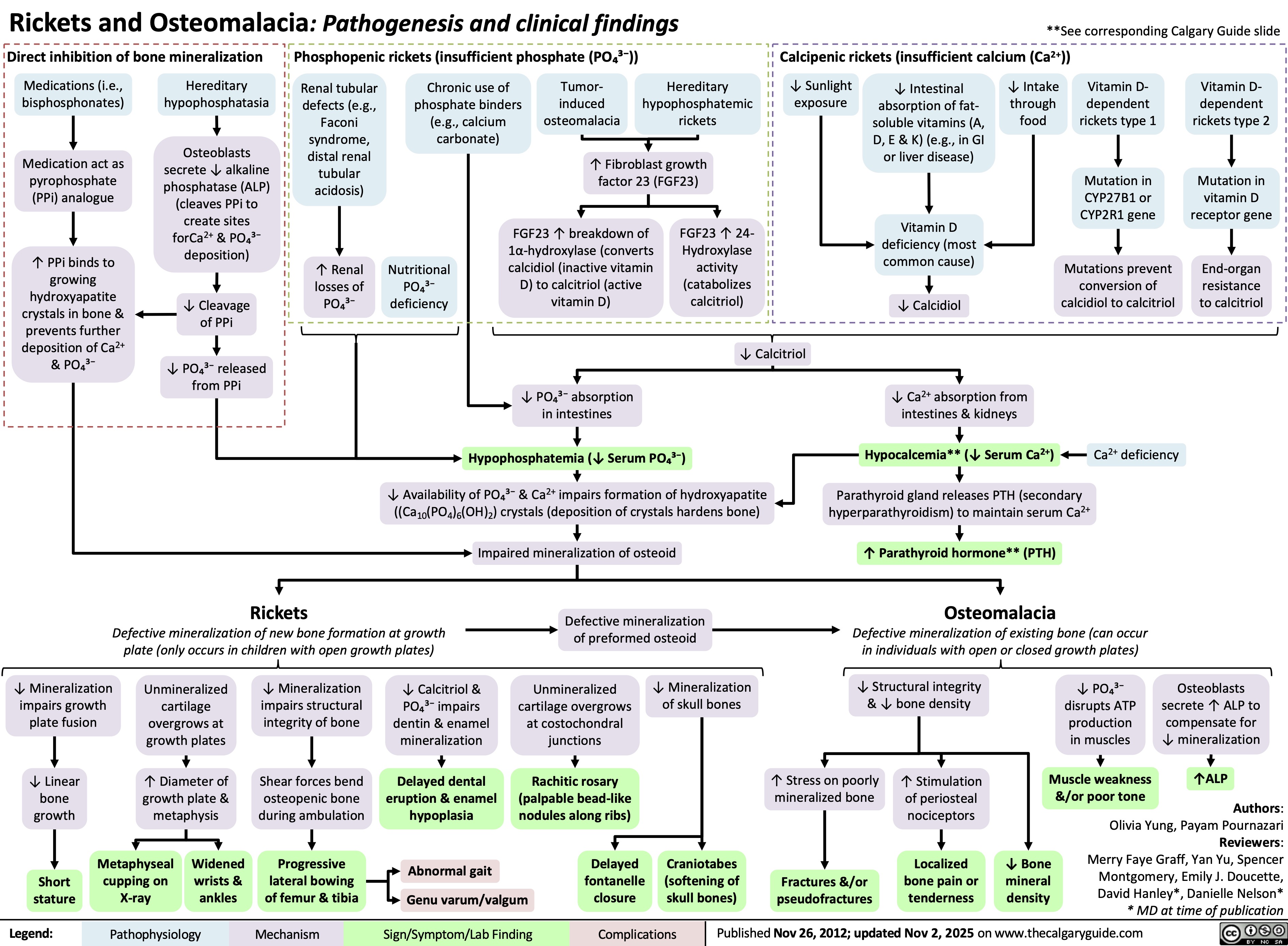
Nutritional
PO₄³⁻
deficiency
Rickets and Osteomalacia: Pathogenesis and clinical findings
**See corresponding Calgary Guide slide
Direct inhibition of bone mineralization
Phosphopenic rickets (insufficient phosphate (PO₄³⁻))
Medications (i.e.,
bisphosphonates)
Hereditary
hypophosphatasia
Medication act as
pyrophosphate
(PPi) analogue
Renal tubular
defects (e.g.,
Faconi
syndrome,
distal renal
tubular
acidosis)
Chronic use of
Tumor-
phosphate binders
induced
(e.g., calcium
osteomalacia
carbonate)
Hereditary
hypophosphatemic
rickets
Calcipenic rickets (insufficient calcium (Ca2+))
↓ Sunlight
exposure
↓ Intestinal
absorption of fat-
soluble vitamins (A,
D, E & K) (e.g., in GI
or liver disease)
↓ Intake
through
food
Vitamin D-
dependent
rickets type 1
Vitamin D-
dependent
rickets type 2
Osteoblasts
secrete ↓ alkaline
phosphatase (ALP)
(cleaves PPi to
create sites
forCa2+ & PO₄³⁻
deposition)
↑ Fibroblast growth
factor 23 (FGF23)
Mutation in
CYP27B1 or
CYP2R1 gene
Mutation in
vitamin D
receptor gene
↑ PPi binds to
growing
hydroxyapatite
crystals in bone &
prevents further
deposition of Ca2+
& PO₄³⁻
↑ Renal
losses of
PO₄³⁻
FGF23 ↑ breakdown of
FGF23 ↑ 24-
1α-hydroxylase (converts
Hydroxylase
Vitamin D
deficiency (most
common cause)
calcidiol (inactive vitamin
activity
D) to calcitriol (active
(catabolizes
calcitriol)
vitamin D) ↓ Calcidiol
Mutations prevent
conversion of
calcidiol to calcitriol
End-organ
resistance
to calcitriol
↓ Cleavage
of PPi
↓ Calcitriol
↓ PO₄³⁻ released
from PPi
↓ PO₄³⁻ absorption
in intestines
↓ Ca2+ absorption from
intestines & kidneys
Hypophosphatemia (↓ Serum PO₄³⁻)
Hypocalcemia** (↓ Serum Ca2+)
Ca2+ deficiency
↓ Availability of PO₄³⁻ & Ca2+ impairs formation of hydroxyapatite
((Ca10(PO4)6(OH)2) crystals (deposition of crystals hardens bone)
Parathyroid gland releases PTH (secondary
hyperparathyroidism) to maintain serum Ca2+
Impaired mineralization of osteoid
↑ Parathyroid hormone** (PTH)
Rickets
Defective mineralization of new bone formation at growth
plate (only occurs in children with open growth plates)
Defective mineralization
of preformed osteoid
Osteomalacia
Defective mineralization of existing bone (can occur
in individuals with open or closed growth plates)
Unmineralized
cartilage
overgrows at
growth plates
↓ Mineralization
impairs structural
integrity of bone
↓ Calcitriol &
PO₄³⁻ impairs
dentin & enamel
mineralization
Unmineralized
cartilage overgrows
at costochondral
junctions
↓ Mineralization
of skull bones
↓ Structural integrity
& ↓ bone density
↓ PO₄³⁻
disrupts ATP
production
in muscles
Osteoblasts
secrete ↑ ALP to
compensate for
↓ mineralization
↑ Diameter of
growth plate &
metaphysis
Shear forces bend
osteopenic bone
during ambulation
Delayed dental
eruption & enamel
hypoplasia
Rachitic rosary
(palpable bead-like
nodules along ribs)
↑ Stress on poorly
mineralized bone
↑ Stimulation
of periosteal
nociceptors
Muscle weakness
&/or poor tone
↑ALP
Metaphyseal
cupping on
X-ray
Widened
wrists &
ankles
Progressive
lateral bowing
of femur & tibia
Abnormal gait
Genu varum/valgum
Delayed
fontanelle
closure
Craniotabes
(softening of
skull bones)
Fractures &/or
pseudofractures
Localized
bone pain or
tenderness
↓ Bone
mineral
density
Authors:
Olivia Yung, Payam Pournazari
Reviewers:
Merry Faye Graff, Yan Yu, Spencer
Montgomery, Emily J. Doucette,
David Hanley*, Danielle Nelson*
* MD at time of publication
Sign/Symptom/Lab Finding Complications
Published Nov 26, 2012; updated Nov 2, 2025 on www.thecalgaryguide.com
↓ Mineralization
impairs growth
plate fusion
↓ Linear
bone
growth
Short
stature
Legend: Pathophysiology Mechanism

Brachial Plexus

Brachial Plexus: Anatomy and physiology Elevates, retracts &
inferiorly rotates scapula
Innervates
supraspinatus
& infraspinatus
Stabilizes, abducts
& laterally rotates
at glenohumeral
joint
Inferiorly rotates &
protracts scapula
Innervates rhomboids
& levator scapulae
Dorsal scapular nerve
Suprascapular
nerve
C5
Superior
C6
Nerve to
subclavius
Innervates
subclavius
Anchors &
depresses clavicle
Middle
C7
Long thoracic
nerve
Innervates
serratus anterior
Protracts scapula
C8
Inferior
T1
Innervates
pectoralis minor
Innervates acromioclavicular
& glenohumeral joints
Lateral
pectoral nerve
Lateral
Stabilizes &
medially rotates
at glenohumeral
joint
Extends, adducts
& medially rotates
at glenohumeral
joint
Innervates
subscapularis
Innervates
teres major
Superior
subscapular
nerve
Inferior
subscapular
nerve
Posterior
Thoracodorsal
nerve
Innervates
latissimus dorsi
Extends, adducts & medially
rotates at glenohumeral joint
Innervates skin of
inferior portion of
medial side of arm
Innervates skin of arm
overlying biceps brachii,
& medial side of forearm
Medial brachial
cutaneous nerve
Medial antebrachial
cutaneous nerve
Medial
Adducts & medially rotates
at glenohumeral joint,
inferiorly rotates, protracts
& draws scapula anteriorly
Innervates
pectoralis
major &
minor
Medial
pectoral
nerves
Innervates
adductor
pollicis
Innervates
interossei of hand
Adducts thumb
Abducts &
adducts digits 2-5
Legend: Pathophysiology Mechanism
Sign/Symptom/Lab Finding Complications
Author:
Merry Faye Graff
Reviewers:
Mitchell Chorney, Ryan Dion,
Emily J. Doucette, Jean Mah*
* MD at time of publication
Roots à Trunks à Anterior & Posterior Divisions à Cords à Terminal Branches
Innervates anterior
compartment of arm
Supinates at radioulnar joint,
flexes at elbow & flexes &
adducts at glenohumeral joint
Musculocutaneous
nerve
Lateral cutaneous
nerve of forearm
Innervates skin of lateral forearm
Innervates teres
minor & deltoid
Stabilizes, laterally & medially
rotates, adducts, abduct &
flexes at glenohumeral joint
Axillary nerve
Innervates skin of lateral shoulder
Innervates most of
anterior compartment
of forearm
Flexes, adducts & abducts
at wrist, flexes digits 1-5
& pronates forearm
Innervates thenar
compartment of hand
Opposes, abducts &
flexes the thumb
Median nerve
Innervates radial 2
lumbricals of hand
Flexes at MCP joints &
extends at IP joints
Innervates skin of radial ½ of palm, palmar aspect of
radial 3½ digits, dorsal aspect of radial 2½ fingertips
Innervates skin of posterior arm, forearm, &
dorsum of radial 2½ digits (excluding fingertips)
Radial nerve
Innervates posterior
compartment of arm Innervates posterior
compartment of forearm
Extends at elbow
Extends, abducts & adducts at
wrist, extends digits 2-5, &
supinates at radioulnar joint
Ulnar nerve
Innervates skin of ulnar ½ of palm & dorsum of hand, ulnar 1½ digits
Innervates hypothenar
compartment of hand
Innervates ulnar 2 lumbricals of hand
Innervates some of anterior
compartment of forearm
Abducts &
flexes 5th digit
Flexes at metacarpophalangeal
(MCP) joints & extends at
interphalangeal (IP) joints
Flexes & adducts at wrist,
flexes 4th & 5th digit
Published Nov 2, 2025 on www.thecalgaryguide.com

Lithium

Lithium: Mechanism of action and side effects
Bipolar (I & II)
Treatment-resistant
depression
Accumulated Li
inhibits adenylyl
cyclase
Suicidality
Schizoaffective Disorder
Li passively enters
cells in kidney,
thyroid, & area
postrema via
sodium channels
Li’s small
size
prevents
active
transport
out of cells
↓ cAMP
↓ PKA phosphorylation
Lithium (Li)
Magnesium (Mg²⁺) analog which inhibits
Mg²⁺-dependent enzymes such as
glycogen synthase kinase-3β (GSK-3β)
& inositol monophosphatase (IMPase).
This activity modulates neuroplasticity,
inflammation, & mood regulation.
↓ T3/T4 synthesis &
release from thyroid
Authors:
Rida Mahmood,
Hadi Hassan
Reviewers:
Taryn Stokowski,
Emily J. Doucette,
Rohit Ghate*
* MD at time of publication
↓ T3/T4
↑ TSH
↓ Aquaporin insertion in
principal cells of collecting
ducts of kidneys
↓ Water
reabsorption
Nephrogenic
diabetes insipidus**
Li carbonate (an
inorganic salt) irritates
gastric mucosa
Li stimulates chemoreceptor trigger zone
Subclinical
or overt
hypothyroidism
Li competes with Mg2+ at cofactor
site of IMPase & GSK-3β
Enterochromaffin cells
↑ serotonin release
↑ Gut motility & vagal
afferent nerve activation
Activation of vomiting center
in area postrema
Nausea &
vomiting**
↓ GSK-3β activity throughout brain
IMPase & inositol
polyphosphate phosphatase
(IPP) inhibition prevents
hydrolysis of inositol
monophosphate to free
inositol within neurons
Inhibited IRS &
↓ Phosphorylation of transcription factors,
PI3K/Akt signaling
signaling proteins, & metabolic enzymes
↓ GLUT4 translocation
& ↓ glucose uptake in
muscle & adipose tissue
↓ Systemic
insulin
sensitivity
Weight
gain
↓ Downstream dopamine release in mesolimbic,
mesocortical, & nigrostriatal pathways
↓ Conversion of inositol
into phosphatidylinositol
4,5-bisphosphate (PIP2)
↓ Pro-apoptotic
signaling
(Bax, p53, &
caspases) ↓
neural apoptosis
↑ Neurotrophic
signaling (Akt &
MAPK/ERK)
↓ D2 receptor stimulation in nucleus
accumbens, prefrontal cortex, & striatum
Sustained cAMP
Response Element-
Binding Protein
activity promotes
gene transcription
↑ Circadian clock
proteins &
transcription
factor (CLOCK,
BMAL1, CRY1, &
PER2) stabilization
in suprachiasmatic
nucleus
↓ PIP2 available for cleavage
into second messengers
inositol triphosphate (IP3) &
diacylglycerol (DAG) during G
Protein activation
↓ Dopaminergic
inhibition of
GABAergic
interneurons
↓ Availability of IP3 & DAG
↓ Reward
drive in
nucleus
accumbens ↓ Drive &
arousal in
prefrontal
cortex
Dopamine & acetylcholine
imbalance in striatum
↑ Circadian rhythm
stabilization
Thalamocortical
motor circuit
instability
↑ Brain-Derived
Neurotrophic Factor
expression in hippocampus
& prefrontal cortex
Improved sleep
timing & stability
↓ Impulsivity
Glutamatergic signalling
stabilizes (↓ release,
↑ reuptake, ↓ NMDA activity)
↓ Aggression
↑ Involuntary
rhythmic
muscle activity
↑ Neuronal survival,
synaptogenesis, &
dendritic growth
↓ Tau hyper-
phosphorylation
↑ GABAergic
inhibition
Excitatory–inhibitory
balance in cortical &
limbic regions normalizes
↓ Psychomotor
agitation
Upper
extremity
postural
tremor
↑ Gray matter volume &
prefrontal cortex–
hippocampus connectivity
Neuroprotection
& ↓ dementia risk
Prefrontal cortex exerts
better top-down control
↓ Amygdala hyper-responsivity ↑ Hippocampal regulation
of thought loops
Improved
↓ Irritability
↓ Mood lability
decision-making ↑ Working memory
↓ Distractibility
↓ Racing thoughts
Mood stabilization (↓ frequency & severity of manic & depressive episodes)
** See Corresponding Calgary Guide slides
Legend: Pathophysiology Mechanism
Pharmacologic Effect Side Effects
Published Nov 2, 2025 on www.thecalgaryguide.com

Systemic Juvenile Idiopathic Arthritis
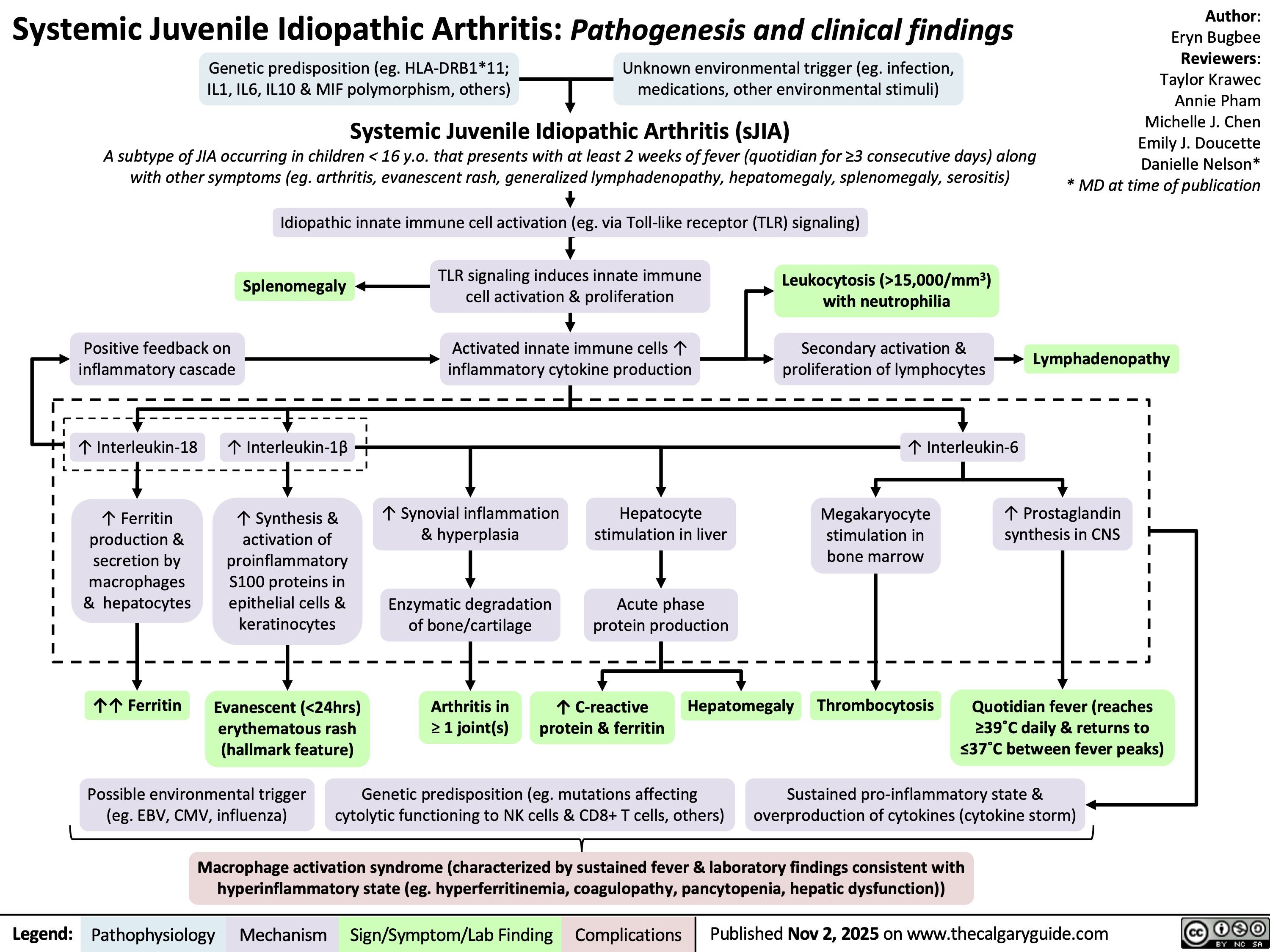
Systemic Juvenile Idiopathic Arthritis: Pathogenesis and clinical findings
Genetic predisposition (eg. HLA-DRB1*11;
IL1, IL6, IL10 & MIF polymorphism, others)
Unknown environmental trigger (eg. infection,
medications, other environmental stimuli)
Systemic Juvenile Idiopathic Arthritis (sJIA)
A subtype of JIA occurring in children < 16 y.o. that presents with at least 2 weeks of fever (quotidian for ≥3 consecutive days) along
with other symptoms (eg. arthritis, evanescent rash, generalized lymphadenopathy, hepatomegaly, splenomegaly, serositis)
Author:
Eryn Bugbee
Reviewers:
Taylor Krawec
Annie Pham
Michelle J. Chen
Emily J. Doucette
Danielle Nelson*
* MD at time of publication
Idiopathic innate immune cell activation (eg. via Toll-like receptor (TLR) signaling)
Splenomegaly
TLR signaling induces innate immune
cell activation & proliferation
Leukocytosis (>15,000/mm3)
with neutrophilia
Positive feedback on
inflammatory cascade
Activated innate immune cells ↑
inflammatory cytokine production
Secondary activation &
proliferation of lymphocytes
Lymphadenopathy
↑ Interleukin-18
↑ Interleukin-1β
↑ Interleukin-6
↑ Ferritin
production &
secretion by
macrophages
& hepatocytes
↑ Synthesis &
activation of
proinflammatory
S100 proteins in
epithelial cells &
keratinocytes
↑ Synovial inflammation
& hyperplasia
Megakaryocyte
stimulation in
bone marrow
↑ Prostaglandin
synthesis in CNS
Enzymatic degradation
of bone/cartilage
↑↑ Ferritin
Evanescent (<24hrs)
erythematous rash
(hallmark feature)
Arthritis in
≥ 1 joint(s)
↑ C-reactive
protein & ferritin
Thrombocytosis
Quotidian fever (reaches
≥39˚C daily & returns to
≤37˚C between fever peaks)
Possible environmental trigger
(eg. EBV, CMV, influenza)
Genetic predisposition (eg. mutations affecting
cytolytic functioning to NK cells & CD8+ T cells, others)
Sustained pro-inflammatory state &
overproduction of cytokines (cytokine storm)
Macrophage activation syndrome (characterized by sustained fever & laboratory findings consistent with
hyperinflammatory state (eg. hyperferritinemia, coagulopathy, pancytopenia, hepatic dysfunction))
Mechanism
Sign/Symptom/Lab Finding Complications
Published Nov 2, 2025 on www.thecalgaryguide.com
Hepatocyte
stimulation in liver
Acute phase
protein production
Hepatomegaly
Legend: Pathophysiology

Non-Depolarizing neuromuscular blocks ndnmbs
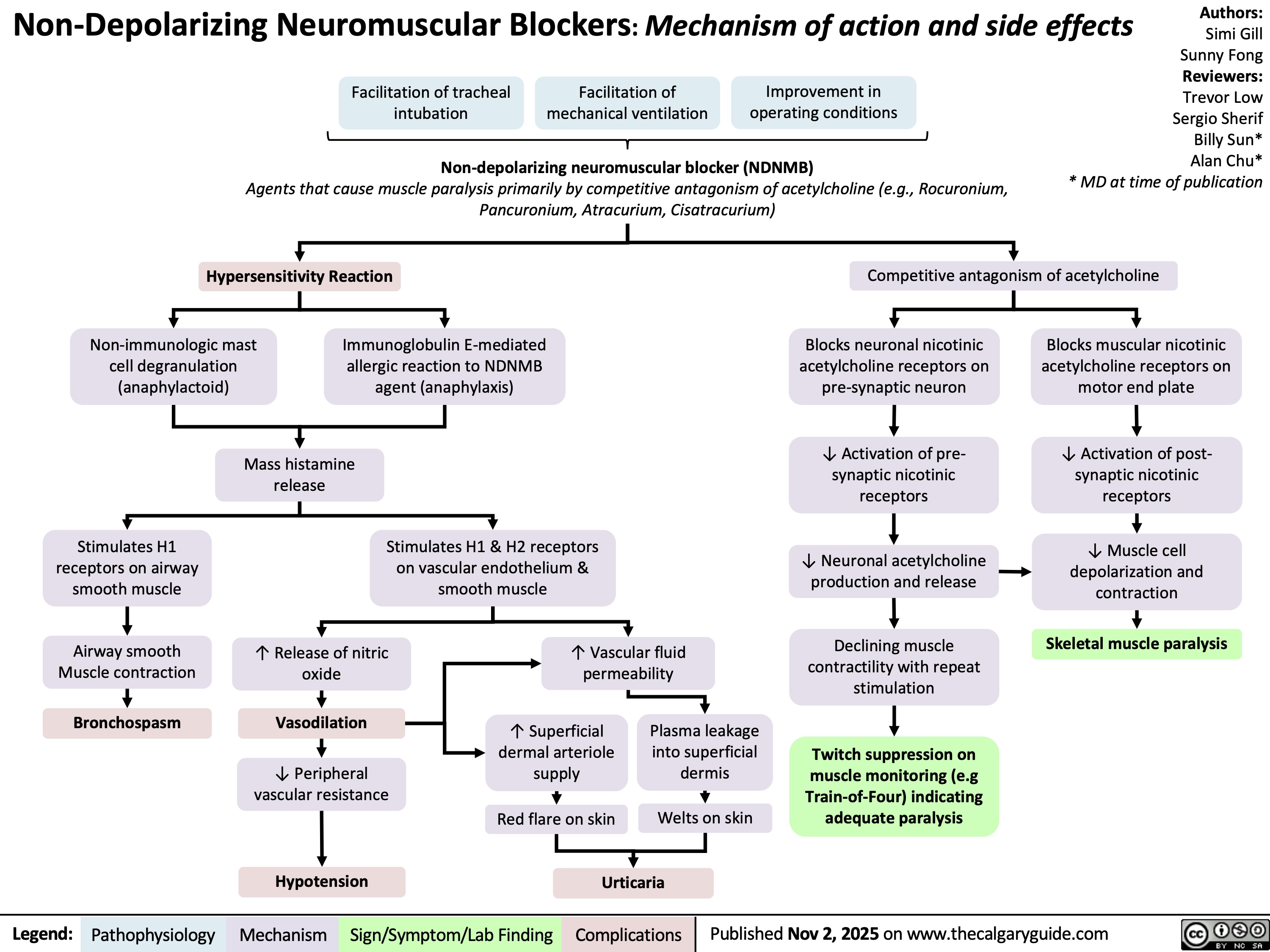
Non-Depolarizing Neuromuscular Blockers: Mechanism of action and side effects
Facilitation of tracheal
intubation
Facilitation of
mechanical ventilation
Improvement in
operating conditions
Non-depolarizing neuromuscular blocker (NDNMB)
Agents that cause muscle paralysis primarily by competitive antagonism of acetylcholine (e.g., Rocuronium,
Pancuronium, Atracurium, Cisatracurium)
Authors:
Simi Gill
Sunny Fong
Reviewers:
Trevor Low
Sergio Sherif
Billy Sun*
Alan Chu*
* MD at time of publication
Hypersensitivity Reaction
Non-immunologic mast
cell degranulation
(anaphylactoid)
Immunoglobulin E-mediated
allergic reaction to NDNMB
agent (anaphylaxis)
Mass histamine
release
Stimulates H1
receptors on airway
smooth muscle
Airway smooth
Muscle contraction
Bronchospasm
↑ Release of nitric
oxide
Vasodilation
↓ Peripheral
vascular resistance
Hypotension
Stimulates H1 & H2 receptors
on vascular endothelium &
smooth muscle
↑ Vascular fluid
permeability
↑ Superficial
dermal arteriole
supply
Plasma leakage
into superficial
dermis
Red flare on skin Welts on skin
Urticaria
Competitive antagonism of acetylcholine
Blocks neuronal nicotinic
acetylcholine receptors on
pre-synaptic neuron
↓ Activation of pre-
synaptic nicotinic
receptors
↓ Neuronal acetylcholine
production and release
Declining muscle
contractility with repeat
stimulation
Twitch suppression on
muscle monitoring (e.g
Train-of-Four) indicating
adequate paralysis
Blocks muscular nicotinic
acetylcholine receptors on
motor end plate
↓ Activation of post-
synaptic nicotinic
receptors
↓ Muscle cell
depolarization and
contraction
Skeletal muscle paralysis
Legend: Pathophysiology Mechanism
Sign/Symptom/Lab Finding Complications
Published Nov 2, 2025 on www.thecalgaryguide.com

Reactive infectious mucocutaneous eruption
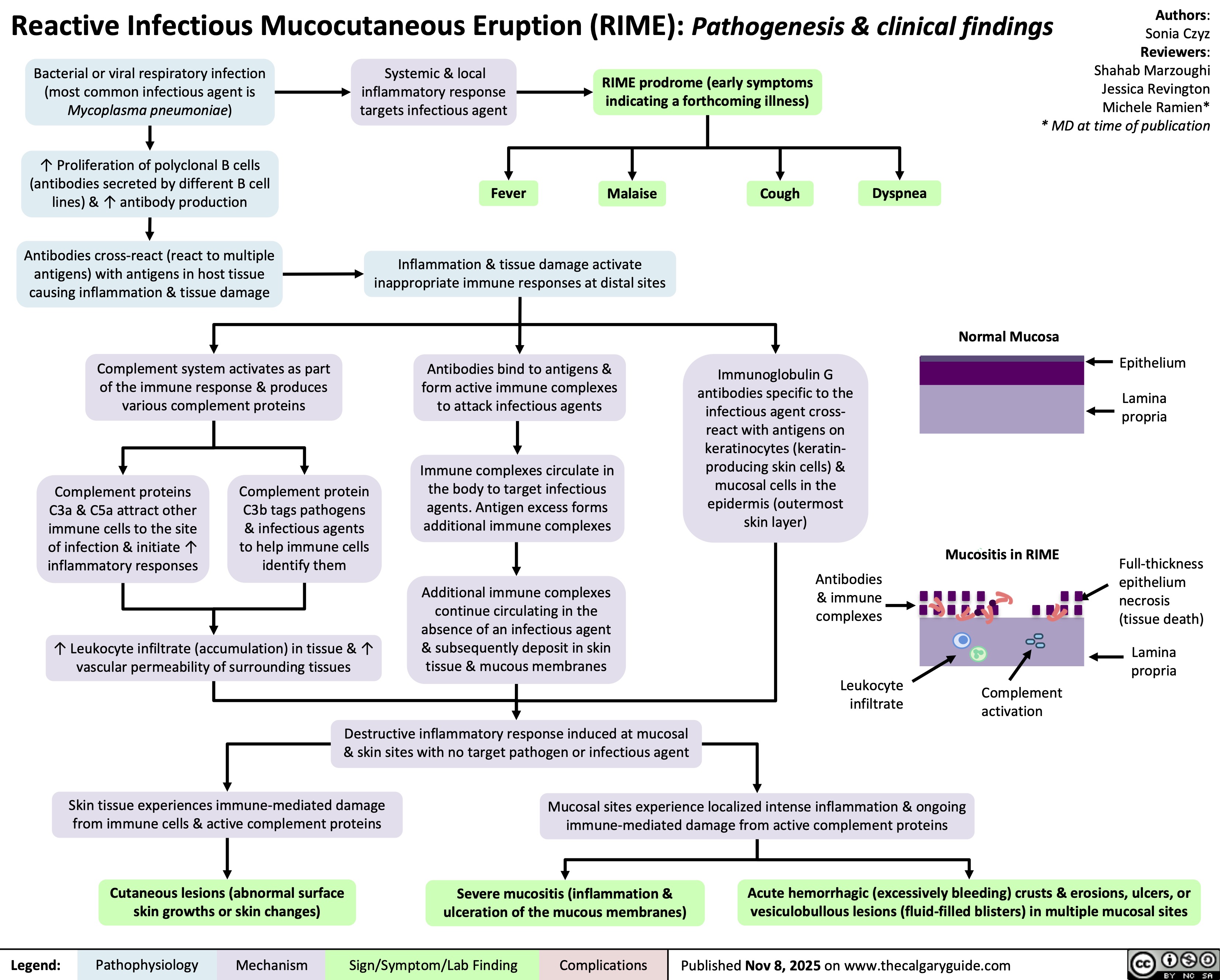
Reactive Infectious Mucocutaneous Eruption (RIME): Pathogenesis & clinical findings
Bacterial or viral respiratory infection
(most common infectious agent is
Mycoplasma pneumoniae)
↑ Proliferation of polyclonal B cells
(antibodies secreted by different B cell
lines) & ↑ antibody production
Antibodies cross-react (react to multiple
antigens) with antigens in host tissue
causing inflammation & tissue damage
Systemic & local
inflammatory response
targets infectious agent
RIME prodrome (early symptoms
indicating a forthcoming illness)
Fever
Malaise
Cough Dyspnea
Inflammation & tissue damage activate
inappropriate immune responses at distal sites
Authors:
Sonia Czyz
Reviewers:
Shahab Marzoughi
Jessica Revington
Michele Ramien*
* MD at time of publication
Normal Mucosa
Complement system activates as part
of the immune response & produces
various complement proteins
Epithelium
Lamina
propria
Complement proteins
C3a & C5a attract other
immune cells to the site
of infection & initiate ↑
inflammatory responses
Complement protein
C3b tags pathogens
& infectious agents
to help immune cells
identify them
↑ Leukocyte infiltrate (accumulation) in tissue & ↑
vascular permeability of surrounding tissues
Skin tissue experiences immune-mediated damage
from immune cells & active complement proteins
Cutaneous lesions (abnormal surface
skin growths or skin changes)
Mucositis in RIME
Legend: Pathophysiology Mechanism
Antibodies bind to antigens &
form active immune complexes
to attack infectious agents
Immune complexes circulate in
the body to target infectious
agents. Antigen excess forms
additional immune complexes
Immunoglobulin G
antibodies specific to the
infectious agent cross-
react with antigens on
keratinocytes (keratin-
producing skin cells) &
mucosal cells in the
epidermis (outermost
skin layer)
Additional immune complexes
continue circulating in the
absence of an infectious agent
& subsequently deposit in skin
tissue & mucous membranes
Antibodies
& immune
complexes
Leukocyte
infiltrate
Destructive inflammatory response induced at mucosal
& skin sites with no target pathogen or infectious agent
Complement
activation
Mucosal sites experience localized intense inflammation & ongoing
immune-mediated damage from active complement proteins
Severe mucositis (inflammation &
ulceration of the mucous membranes)
Acute hemorrhagic (excessively bleeding) crusts & erosions, ulcers, or
vesiculobullous lesions (fluid-filled blisters) in multiple mucosal sites
Published Nov 8, 2025 on www.thecalgaryguide.com
Full-thickness
epithelium
necrosis
(tissue death)
Lamina
propria
Sign/Symptom/Lab Finding Complications
Mucositis in RIME
Reactive Infectious Mucocutaneous Eruption (RIME): Pathogenesis and clinical findings
Normal Mucosa
Epithelium
Bacterial or viral respiratory infection; most
common infection is Mycoplasma
pneumoniae
Systemic and local
inflammatory response
towards invading microbe
Lamina
propria
Polyclonal B cell proliferation
and antibody production
Full-thickness
epithelium necrosis
Prodrome: cough, dyspnea, malaise, fever ~1
week prior to mucocutaneous eruption
The antibodies cross-react with host tissue
causing inflammation and tissue damage
Lamina
propria
Authors:
Sonia Czyz
Reviewers:
Shahab Marzoughi
* MD at time of publication
Inappropriate immune
responses at distal sites
Molecular
mimicry
Immune complex
activation
Complement
activation
I would remove all of this
Immunoglobulin G
antibodies specific for
invading microbe cross-
react with antigens on
keratinocytes and
mucosal cells in the
epidermis
Circulating immune
complexes form in
antigen excess
C3a, C5a, and C3b
produced
Deposition in
skin and mucous
membrane
↑ Leukocyte
infiltrate and
vascular
permeability
Severe mucositis
(inflammation and
ulceration of the
mucous
membranes
Destructive
inflammatory
response at mucosal
and skin sites
Antibodies
& immune
complexes
Leukocyte
infiltrate
Complement
activation
Acute occurrence of hemorrhagic
crusts and erosions, ulcers, or
vesiculobullous lesions in 2 or
more mucosal sites
Localized inflammation and
immune response activate
complement system which
damage mucosal tissues
Immune
response leads
to painful, red
nodules
typically on
the shins
Triggering localized, intense
inflammation and immune-
mediated damage in these
specific mucosal sites.
Legend: Widespread
systemic
immune
response
Erythema
nodosum
Urticaria
Immune response
results in hives or
itchy welts on the
skin.
Pathophysiology Mechanism
Sign/Symptom/Lab Finding Complications
Cutaneous
lesions
Published MONTH, DAY, YEAR on www.thecalgaryguide.com

Acute Tubular Necrosis

Acute Tubular Necrosis: Pathogenesis & clinical findings
Severe systemic volume depletion
(e.g., vomiting, diarrhea)
Septic shock** Cardiogenic shock**
Cholesterol embolization
syndrome (rare)
Severe hypotension
↓ Mean arterial pressure
reduces renal perfusion pressure
which ↓ renal blood flow
Renal vascular autoregulation
fails to maintain renal perfusion
Tubular cell hypoxia & depletion
of adenosine triphosphate (ATP)
(primary energy carrier in cells)
Cell ion pump failure, cell swelling,
& cell membrane disruption
Ischemic tubular necrosis (renal tubular
cell injury secondary to ↓ blood flow)
Myoglobinuria
Hemoglobinuria
Aminoglycosides
Ethylene glycol
Amphotericin
Cisplatin
↓ Efficiency of kidney reabsorption & excretion
Kidney removes ↓
potassium (K+) from
the blood volume
Hyperkalemia** (high K+
concentration in the blood)
↑ Serum K+ levels
induce abnormal
cardiac electrical
conduction patterns &
excessive cardiac
excitability
Fatal cardiac
dysrhythmia (irregular
heartbeat pattern)
Kidney removes
↓ urea from the
blood volume
Kidney removes ↓
creatinine from the
blood volume
Azotemia (↑ serum
urea & creatinine)
Uremic toxins
systemically
impair
neutrophil
function
Uremic toxins (indoxyl
sulfate or paracresyl
sulfate) induce oxidative
stress in the brain through
accumulation of reactive
oxygen species (ROS)
↑ Risk of infection
ROS damage neuronal membranes & ion channels &
induce dysfunctional mitochondria in the brain
Authors:
Adam Bubelenyi
Reviewers:
Britney Wong
Luiza Radu
Jessica Revington
Veronica Hammer*
Braden Manns*
* MD at time of publication
**See corresponding Calgary Guide slide
Dysfunctional brain mitochondria cannot
properly metabolize purines & urea
Brain cannot use any metabolic or cellular pathways requiring ATP
↓ Cerebral neuronal signaling
Legend: Pathophysiology Mechanism
Sign/Symptom/Lab Finding Intravenous (IV)
administration of
iodinated
contrast medium
Tumor lysis syndrome
Cancer cell apoptosis (cell death)
releases ↑ uric acid & phosphate
Heme-containing
pigments
Medications
Uric acid & calcium phosphate
crystals precipitate in renal tubules
Nephrotoxic substances damage renal tubular cells through unique mechanisms
Lipid peroxidation
(oxidative degradation) of
lipid bilayer weakens renal
tubular cell membranes
Damage to mitochondria in tubular
cells causes depletion of ATP
Formation of oxygen free
radicals in renal tubular cells
Impairment of ATP-
dependent processes
Activation of pro-inflammatory
cytokines & enzymes in the kidney ↑ Renal tubular cell
permeability
Disruption of protein synthesis &
enzyme function in renal tubular cells
Degradation of tubular cell
membrane lipids & proteins
Free radicals
oxidize tubular
cell proteins &
impair structure
& function
Toxic tubular necrosis (renal tubular injury due to nephrotoxic substances)
Acute Tubular Necrosis
Acute kidney injury via renal tubular cell damage & cell death
Denudation (removal of surface tissue layers) &
erosion of the tubular basement membrane
Kidney removes ↓
sodium (Na+) & water
from the blood volume
↓ Bicarbonate
reabsorption from
the proximal tubule
of the kidney
Necrotic tubular cells fall into tubular lumen
Ongoing tubule damage
↓ ability to concentrate
urine solutes
↓ Bicarbonate
neutralization of
acids in the blood
Necrotic
tubular cells
release
intracellular
contents
Obstruction of
tubular lumen
impedes
glomerular
filtration
↓ Urine osmolality
(low urine solute
concentration)
↑ Water in blood
volume dilutes
Na+ serum
concentration
Metabolic acidosis
(blood pH <7.35)
Muddy brown
granular casts
↓ Glomerular
filtration rate (GFR)
Hyponatremia** (low Na+
concentration in the blood)
↑ Na+ retention in
the circulatory blood
volume & ↓ Na+
excretion in the urine
↓ Urine output
Accumulation of ROS activates microglia
& releases pro-inflammatory cytokines
↑ Fluid retention in
the circulatory system
Aggressive IV fluid
rehydration in septic
shock or cardiogenic
shock patients
Cerebral inflammation ↑ oxidative
damage to neurons & glial cells
Fluid overload
Uremic encephalopathy
Pulmonary edema (excess
fluid accumulation in lung
alveoli & interstitium)
Published November 15, 2025 on www.thecalgaryguide.com
Complications
Disruption of
DNA & RNA
synthesis
within renal
tubular cells
Tubular epithelial
cells in urine
Epithelial cell
casts in urine
(cast composed
of epithelial
cells embedded
in a matrix)
↓ Ability to clear
bacteria in urine
↑ Risk of urinary
tract infection

Infection-Related Glomerulonephritis

Infection-Related Glomerulonephritis: Pathogenesis & clinical findings
Viral or bacterial infections (most commonly streptococcus & staphylococcus) trigger the inflammatory cascade
Common infection sites include pharyngitis (infection of the mucous membranes in the oropharynx) &
endocarditis (inflammation of the endocardium) but bacterial infections can originate anywhere in the body
In streptococcal infections, bacteria release nephritis (inflammation of the kidney) associated plasmin receptor antigens (NAPlr) & streptococcal
pyrogenic exotoxin B antigens (SPeB) into the systemic circulation from the infection site. Other bacterial infections may have different pathophysiology
Immune response generated against circulating NAPlr & SPeB antigens includes
↑ production of IgG antibodies (critical for immune response & memory)
IgG antibodies bind with self-antigens (molecules
recognized by the immune system as belonging to the
host) including plasmin & glomerular proteins (proteins
found in the kidney’s filtering unit, the glomerulus)
IgG antibodies activate plasmin
(enzyme responsible for breaking
down protein in the kidneys)
Plasmin degrades
protein in the kidneys
IgG antibodies bind to
glomerular proteins in
the kidney & form
immune complexes in
glomeruli basement
membrane & sub-
epithelial podocytes
(highly specialized
cells in the glomerular
filtration barrier)
Degradation of key
glomerulus components,
including the glomerular
basement membrane
(GBM) & mesangial matrix
Damage to key
glomerulus
components leads to
abnormal regulation
of blood filtration
↓ Selective
permeability of the
glomerular membrane
IgG antibodies bind with NAPIr & SPeB antigens &
form immune complexes (antibody & antigen
combinations involved in immune system signalling)
Immune complexes circulate & deposit in glomeruli
basement membrane & sub-epithelial podocytes
RBCs escape through
the glomerulus into
renal tubules &
progress into the urine
Dysmorphic
hematuria (blood
in the urine
characterized by
misshapen RBCs)
Author:
Joanna Keough
Reviewers:
Britney Wong
Luiza Radu
Jessica Revington
Veronica Hammer*
Louis Girard*
*MD at time of publication
**See corresponding Calgary Guide slide
Legend: Pathophysiology Mechanism
Immune complexes activate
complement (C3, oxidizing
agents, proteases)
Complement activation helps ↑
proliferation of glomerular mesangial
cells (cells with specialized proteins
capable of producing motile forces)
Mesangial cells produce
extracellular matrix in
the glomerulus
Excess
extracellular
matrix
blocks
glomerular
capillaries
Mesangial cells release chemoattractants
(signalling molecules) into the glomerulus
& attract various immune cells
Lymphocytes follow
chemoattractants to the
glomerulus & activate
Neutrophils follow chemoattractants to the
glomerulus & release lysosomal enzymes
Lymphocytes accumulate in the glomerulus
& obstruct glomerular capillaries
Impaired blood flow through glomerular capillaries
Capillary injury Podocyte injury or death
Infection-Related Glomerulonephritis
Glomerular kidney damage sustained after a bacterial or viral infection
↓ Glomerular
filtration rate (GFR)
Creatinine builds
up in the blood
↑ Glomerular membrane permeability allows
large molecules to pass through the membrane
(e.g., red blood cells (RBCs), protein)
↓ GFR impairs the kidney’s
ability to filter & excrete fluid
↓ Estimated GFR
Prolonged
(eGFR)
renal damage
Protein escapes into renal tubules
& progresses into the urine
Chronic kidney disease
Proteinuria (loss of
protein through the urine)
↑ Fluid retention
in systemic
circulation & ↓
renal blood flow
Impaired
potassium
excretion
↓ Urine
output
Impaired
acid waste
product
excretion
Urine contains ↑ large
proteins (e.g., albumin)
Activation of the
intrarenal renin-
angiotensin-aldosterone
system (RAAS)**
Hyperkalemia
(↑ serum
potassium)
Oliguria
(↓ urine
volume)
Metabolic
acidosis**
Albuminuria (loss of
albumin through the urine)
Intrarenal RAAS activation
leads to ↑ angiotensin II
(Ang II) production
↑ Sodium & water retention in systemic
circulation & ↓ excretion in urine (↓ GFR)
Hypertension**
Edema (swelling due to ↑ fluid in body tissues)
Circulating blood volume exerts ↑ pressure on blood vessels & forces the heart to pump harder
Left ventricle thickens & enlarges over time & demonstrates
progressive cardiac injury (e.g., fibrosis, loss of cardiac muscle cells)
Impaired cardiac output
Heart failure
Sign/Symptom/Lab Finding Complications
Published November 15, 2025 on www.thecalgaryguide.com

Pediatric Asthma Exacerbations

Pediatric Asthma Exacerbations: Pathogenesis and clinical findings
Non-allergic asthma (not triggered by allergens)
Allergic asthma (triggered by allergens)
(e.g., pollen, animal dander, dust mites)
Viral respiratory
tract infections
Extreme weather Physical exertion Pollutants (e.g.
cigarette smoke)
Allergen inhalation
activates IgE on mast cells
Virus invades epithelial
cells in airway
Inhalation of cold
↑ Minute ventilation
or dry air dries
↑ Air flow irritates & dries airway mucosa
airway mucosa Inhaled irritants
damage airway
Epithelial barrier breakdown
releases inflammatory mediators
epithelium & activate
immune cells
Immune system releases inflammatory mediators (e.g., histamine, leukotrienes, prostaglandins, cytokines) into airway
Histamine & leukotrienes stimulate smooth
muscle cells in the airway to constrict
Cytokines attract white blood cells (e.g.,
eosinophils, neutrophils, monocytes)
Inflammatory mediators
stimulate epithelial goblet cells
Inflammatory mediators ↑ vascular
permeability in airway mucosa
Bronchoconstriction
(bronchioles narrow)
Airway inflammation
persists & intensifies
Goblet cells produce excess mucus
plugs & obstruct small airways
Airway wall swells
(mucosal edema)
Asthma Exacerbation
Acute or sub-acute episode marked by a progressive ↑ in asthma symptoms & a measurable ↓ in lung function compared to patient’s baseline
Bronchial hyperresponsiveness (an exaggerated & easily
triggered constricting response of the airways to various stimuli)
Narrowed bronchioles mechanically
obstructs air flow & ↓ ventilation
↓ Ventilation impairs
elimination of carbon
dioxide (CO₂) from blood
More force is
required to
expel air
Turbulent airflow through
narrowed bronchioles
during expiration
Severe airflow obstruction
prevents airflow into distal
lung regions
↓ Ventilation
traps air in
alveoli
Prolonged
expiratory phase
Inflammatory
mediators & mucous
hypersecretion
sensitize afferent
nerves in airway
↑ Arterial partial
pressure of CO2 (PaCO2))
triggers hyperventilation
↑ Work of
breathing
Expiratory
wheeze
↓ Breath
sounds
Afferents activate
cough reflex via
Trapped air ↑ intra-
Air trapping
alveolar pressure
overinflates
vagus nerve
above pleural pressure
lungs
Cough
↓ PaCO2
↑ blood
pH
Tachypnea
(↑ respiratory
rate)
Exhaustion of
respiratory muscles
↓ strength &
respiratory rate
Air trapping limits oxygen
(O2) exchange in alveoli
↑ Pressure
ruptures alveoli
↓ Diaphragmatic
excursion
Hyperinflation
on chest X-ray
Pneumothorax (air collects in pleural space)
↓ Oxygenation of
blood (hypoxemia)
Respiratory
alkalosis
Normocapnia,
can progress
to hypercapnia
(↑ PaCO2)
Engagement
of accessory
respiratory
muscles
Respiratory
failure
↓ O2 delivery to
peripheral tissues
Legend: Authors:
Fares Senjar, Jody Platt
Hypoxemic hypoxia (SpO2 < 90% on room air)
Reviewers:
Merry Faye Graff, Emily J. Doucette,
Central cyanosis (bluish discoloration
of skin & mucous membranes)
Elizabeth De Klerk, Yan Yu,
Alexander Arnold, Naminder Sandhu*,
Jonathan Liu*
Tachycardia (↑ heart rate)
*MD at time of publication
Complications
Published Dec 2, 2013; updated Nov 15 2025 on www.thecalgaryguide.com
Pathophysiology Mechanism
Sign/Symptom/Lab Finding

Suppurative Tenosynovitis

Legend: Suppurative Tenosynovitis: Pathogenesis & clinical findings
Penetrating trauma involving the tendon sheath
(e.g., puncture wounds, human or animal bite,
intravenous drug use, other trauma sources)
Bacteria spread into the tendon sheath from a
nearby infected joint or deep space (less common)
Hematogenous spread (bacterial infection
travels through the bloodstream to other
parts of the body, rare)
Authors:
Stephen Langor
Reviewers:
Nojan Mannani
Mankirat Bhogal
Jessica Revington
Kate Elzinga*
* MD at time of publication
Bacterial infection of the tendon sheath (most commonly Staphylococcus aureus)
Bacterial infection of the tendon sheath
(e.g., Neisseria gonorrhoeae, mycobacteria)
Suppurative Tenosynovitis
Severe bacterial infection of the flexor tendon sheath
Bacterial infection causes an immune response & subsequently activates macrophages & neutrophils
Immune cells & mast cells release vasoactive cytokines
(molecules capable of dilating or constricting blood vessels)
Immune cells produce pyrogens (fever-
inducing substances) & inflammatory
cytokines (e.g.,IL-1, IL-6, TNF⍺)
↑ White blood cell count
Vasoactive cytokines ↑ vascular permeability during
capillary dilation & allow for the outflow of fluid,
immune cells, & plasma into surrounding tissues
Systemic cytokines (immune
messenger proteins) produce
↑ concentrations of non-
specific acute-phase reactants
(inflammatory markers)
Pyrogens stimulate
prostaglandin E2 production
in the hypothalamus
Fluid outflow reaches the synovial space
(a fluid-filled sac surrounding tendons).
The synovial space is between the visceral
epitenon layer (connective tissue sheath
immediately covering the tendon) &
outer parietal layer of the tendon
Infection & corresponding
immune response spread from
the thumb to the little finger (or
vice versa) through the radial &
ulnar bursae (fluid-filled sacs
surrounding hand flexor tendons)
↑ Serum C-
reactive protein
↑ Prostaglandin E2
production disrupts
thermoregulation in the
hypothalamus & forces body
temperature elevation
Chills (rare)
Fever (rare)
Exudate (fluid leaking from nearby blood
vessels) continues accumulating in the
flexor tendon sheath’s synovial space
Dead inflammatory cells also begin
accumulating & fill the synovial
space with purulent fluid (pus)
Fluid accumulation can ↑ pressure in the
synovial space & compromise blood flow to
the sheath, tendon, & adjacent structures
Erythema (redness),
swelling, & pain in both
the thumb & little finger
Tendon necrosis
(tissue death)
Tendon ischemia
(↓ blood flow)
Hand horseshoe abscess
Fluid leaks into the surrounding
tissue & causes swelling. Swelling is
more prominent on the ventral
(front) side of the affected digit(s)
↑ Synovial space content applies ↑
pressure on the visceral & parietal
layers of the tendon sheath
↑ Pressure disrupts tendon blood flow & nutrient supply
↑ Risk of tendon damage & scarring, which may ↑
fibrotic tissue deposition along the tendon
↑ Swelling & pressure cause passive
mechanical stretching of digit tissue.
Stretch is ↑ in the ventral direction ↑ Pressure activates
nociceptors (sensory receptors
detecting harmful stimuli)
Fibrotic tissue may cause tendon
adhesion, thicken joint capsules, &
damage the flexor pulley system
Fibrotic tissue is
stiff & may ↓
tendon elasticity
Symmetric enlargement
of affected digit(s)
Digit slightly flexed at rest
↑ Pain along the tendon
with passive extension
Kanavel Criteria
↑ Tenderness
along the
tendon sheath
↓ Range of motion
Chronic stiffness
Tendon rupture
Published November 20, 2025 on www.thecalgaryguide.com
Pathophysiology Mechanism
Sign/Symptom/Lab Finding Complications

Pyelonephritis

Acute Pyelonephritis: Pathogenesis and clinical findings
Female sex
Indwelling
Diabetes
(especially post-
urinary catheter
mellitus
menopausal due to
loss of protective
Lactobacillus species)
Obstruction of bladder outlet
(congenital/acquired)
High blood glucose damages
nerves controlling the bladder,
as well as blood vessels
supplying bladder nerves
Glycosuria (elevated levels
of glucose in urine) create
nutritive environment for
bacterial growth
Excessive urine buildup
increases pressure exerted
against the bladder, pushing
urine from bladder up to ureters
Authors:
Sergio F. Sharif
Reviewers:
Michelle J. Chen
Jessica Revington
Yan Yu*
Juliya Hemmett*
Brandon Christensen*
* MD at time of publication
Shorter urethra
allows for fecal
microbes to more
readily enter the
urinary tract
Catheter inoculates deep
urinary tract with bacteria
& facilitates organisms to
enter bladder
Neurogenic bladder (decreased
bladder control due to nerve damage)
is unable to appropriately release
urine, leading to urinary retention &
failure to clear residing bacteria
Bacteremia
(bacterial infection
in bloodstream)
Bacteria initially colonize the lower urinary tract, then migrate up the tract towards
one or both kidneys (most commonly Gram-negative rods, e.g., Escherichia coli)
Bacteria, such as
Staphylococcus species,
spread from another site
of infection to kidneys
via bloodstream
Acute Pyelonephritis
Inflammation of the kidney interstitium due to upper urinary tract infection, usually bacterial
Collective contribution of
mechanisms stated below, if severe
Sepsis**
Concurrent cystitis
irritates urinary
tract (see lower
UTI slide)**
Bacteria expressing virulence factors (e.g., P fimbriae in Escherichia coli) exploit
host susceptibility & infect upper urinary tract (ureters & kidneys)
Positive urine culture
Dysuria (pain & burning
while urinating)
Bacteria trigger IL-8 release by local
immune cells in the upper urinary tract,
triggering recruitment of neutrophils to
renal tubules & interstitium
Neutrophils degranulate in the infected
tissue, phagocytose bacteria & form
sacrificial neutrophil extracellular traps
(resulting in neutrophil death) in
attempt to clear infection
Neutrophil-mediated
immune response
damages surrounding
kidney tissue (tubular
injury)
Acute
kidney
injury**
Immune cells at the site of infection release cytokines
(e.g., IL-1, TNF), which disseminate systemically
Cytokines act in the brain in
concert with unclear
mechanisms relating to tissue
injury & inflammation
triggered by infection (see
Neurotransmitters &
Pharmacology behind Nausea
and Vomiting slide**)
Cytokines bind
receptors in the
anterior hypothalamus,
triggering pathways
ultimately leading to
heat-generating
responses (e.g.,
shivering)
Cytokines promote
the growth &
release of white
blood cells from
bone marrow into
bloodstream
Dead neutrophils collect
in renal tubules near
infection & attach to
assemblies of
mucoprotein (a renal
tubular epithelium protein
secreted into tubules)
Pyuria (WBCs in
urine)
Nausea/vomiting
Fever
Leukocytosis
(↑ WBCs)
Urine white blood cell
(WBC) casts (cylindrical
particles with WBCs
seen on microscopy)
Costovertebral
Flank pain CT KUB -
angle tenderness
findings may
include focal
or diffuse
involvement,
fat stranding,
gas formation,
&/or other
complications
including
renal scarring
**See corresponding
and abscesses
Calgary Guide slide(s)
Complications
Published November 23, 2025 on www.thecalgaryguide.com
Unclear mechanism
involving systemic
inflammation
worsens mental
status in susceptible
individuals
Altered level of
consciousness
(especially in elderly)
Legend: Pathophysiology Mechanism
Sign/Symptom/Lab Finding

Hypothyroidism

Hypothyroidism: Pathogenesis & Clinical Findings Hashimoto’s thyroiditis
Transient congenital
hypothyroidism
Congenital deficiency of
thyroid hormone (TH)
Iodine
deficiency
Infiltrative disease affecting
thyroid gland cells
Iatrogenic or medication-
related thyroid dysfunction
Hypothyroid phase of thyroiditis
(inflammation of the thyroid)
Pituitary gland dysfunction
(central hypothyroidism)
Progressive autoimmune
destruction of thyroid gland cells
↓ T3/T4 levels
activate the
hypothalamus-
pituitary-thyroid
axis & ↑ TSH
release by the
pituitary gland
Primary
hypothyroidism
(↑ TSH and ↓
T3/T4)
↓ T3/T4 levels
cause ↓ expression
of TH-dependent
myocardial enzymes
essential for cardiac
contractility
Cardiac myocytes
(cardiac muscle
cells) experience ↓
contractility
↓ Heart rate
↑ Bleeding
Impaired function of the thyroid gland & ↓ thyroid hormone (TH) secretion
Pituitary gland secretes ↓ levels of
thyroid stimulating hormone (TSH)
Hypothyroidism
Low or significantly ↓ secretion of triiodothyronine (T3) & thyroxine (T4) from the thyroid gland
↓ T3/T4 levels ↓
production of nitric oxide
(vasodilator) & cause
systemic vasoconstriction
of blood vessels
Systemic vaso-
constriction ↑
systemic
vascular
resistance
↑ Systemic vascular
resistance à ↑
intrarenal vascular
resistance & contributes
to ↓ renal perfusion
↓ T3/T4 levels reduce the rate of metabolic reactions in the body
including ↓ rates of carbohydrate, fat, & protein metabolism
↓ T3 levels allow fibroblasts
(connective tissue cells) to synthesize ↑
glycosaminoglycans (GAGs – structural
cell molecules capable of attracting
large amounts of water)
↓ Basal metabolic rate (base energy
required to sustain bodily functions)
↑ Diastolic blood pressure
(diastolic hypertension)
↓ Renal blood
flow à ↓
glomerular
filtration rate
(GFR)
↓ GFR
impairs renal
clearance of
excess GAGs
↑ GAG deposits
& water retention
in body tissues
↓ Energy to support physiological function
Narrowed pulse
pressure (↓
difference
between systolic
& diastolic blood
pressure)
Compensatory
mechanisms to
manage blood
volume &
circulation during
↓ T3/T4 levels
are overwhelmed
in the presence
of an infection or
systemic trauma
(e.g., heart
attack, stroke)
↓ GFR impairs
removal of excess free
water from the blood
volume by the kidneys
↑ GAG
deposits &
swelling in
skin tissue
↑ GAG deposits
in the larynx
swell & stiffen
vocal cords
↓ Skin gland
activity & ↓
sebum (oil) &
sweat
production
↑
Fatigue
↓ Motility of the
gastrointestinal
(GI) tract causes
↓ movement of
digested food &
↓ rate of waste
excretion
↓ TH levels & ↓
metabolic rate
impair neurologic
function (e.g.,
neurotransmitter
signaling & neuron
functioning)
Thickened skin
Hoarse speech
Dry skin
↑ Sodium (Na+) & water
retention in blood volume
↓ Perspiration
(sweating)
Constipation
Neurologic
symptoms (e.g.
depression,
somnolence)
Abnormally heavy menses
Excessive water retention
dilutes serum Na+ levels in
severe hypothyroidism
↓ Caloric expenditure at rest & with activity
↑ Risk of infertility
Myxedema coma**
(extreme manifestation
of hypothyroidism)
Hyponatremia
(↓ Na+)
↑ Fluid
retention in
body tissues
Weight gain
Musculoskeletal
symptoms (e.g.,
muscle cramps,
joint pain & ↓
muscle tone)
Published June 19, 2013, revised November 23, 2025 on www.thecalgaryguide.com
Normal or ↓
TSH levels
when T3/T4
levels are low
Authors:
Sophia Khan, Ayden Hansen, Jessica
Revington, Rupali Manek, Jaye
Platnich
Reviewers:
Shahab Marzoughi, Gurreet
Bhandal, Raafi Ali, Matthew
Harding, Mark Elliott, Hanan
Bassyouni*, Breanna McSweeney*
* MD at time of publication
**See corresponding Calgary Guide
slides
↓ T3 levels lead to
↓ lipoprotein lipase
(lipid metabolism
enzyme) activity
↑ Triglyceride
levels in blood
↓ TH levels & ↓
metabolic rate
impair cold
tolerance &
thermogenesis
(heat production)
mechanisms
Cold
extremities
(e.g. hands,
feet)
↓ Cold
tolerance
↓ Activation
of the T3-
mediated low-
density
lipoprotein
(LDL) receptor
gene
↓ LDL
receptor
expression
for LDL
clearance
↑ LDL
cholesterol
levels in
the blood
↓ T3/T4 levels ↓
coagulation factor
synthesis by the liver
↓ T3/T4 levels disrupt
the menstrual cycle &
cause anovulation
(absence of ovulation)
Legend: Hyperlipidemia
Pathophysiology Mechanism
Sign/Symptom/Lab Finding Complications

Diverticulosis and Angiodysplasia

Diverticulosis and Angiodysplasia: Pathogenesis and clinical features
Diverticulosis Angiodysplasia
Disturbances in enteric
nervous system regulation
leading to uncoordinated or
exaggerated peristaltic waves
Older age
Renal failure
Constipation from
low fiber diets
Parts of colon
susceptible to
obstruction
leading to
leading to
vessel
alterations in
weakening and
vascular blood
dilation
flow
Autoimmune
diseases cause
inflammatory
vascular damage
Abnormal
angiogenesis
(vessel formation)
from idiopathic
causes
von Willebrand
Deficiency (lack of
vWF) aggravates
bleeding tendency
Aging weakens the
circular muscles
strutting the colon
High intracolonic pressure
primarily in the sigmoid
colon (e.g., from peristalsis
pushing against colonic
waste that is low in fiber &
harder to move)
Muscular hypertrophy of the colon
in response to repeated high-
pressure contractions of the
smooth muscle as a compensatory
mechanism to move stool in high
resistance areas
Arterial-venous malformations (AVMs;
abnormal connections between
arteries & veins) bypass capillary beds
and rise to the mucosa of the lower GI
tract
Flat cherry-red vessels
originating from a central
artery as seen on upper GI
endoscopy or colonoscopy
Colon wall forms little
outpouchings (diverticuli) that
span around 3-10mm
Gradual & repetitive
expansion thins the
diverticular wall
Stretching of colonic
serosa stimulates somatic
sensory nerves innervating
the colon
Colonic diverticuli trap
feces
Venous rupture of
submucosal veins in the
High pressure arterial blood flows
colon
directly into veins, causing venous
dilation & weakening of vascular
walls
Overlap with other
vascular lesions such as
Dieulafoy’s
Capillaries within
diverticuli burst and
leak blood into the
colon lumen
Stretching of nociceptors
that are primarily sensitive to
mechanical stimuli such as
distension of the colonic wall
Bacteria have more
time to metabolize the
undigested materials,
producing gas
Irregular defecation
(constipation,
increased frequency)
GI tract lumen bleeding
due to irritation of these
malformations
Large
volume
blood loss
Iron
deficiency
anemia
Lower GI bleed
(usually stops by
itself)
Bloating & cramping
(most often painless)
Flatulence
(accumulation of gas)
Lower GI bleed
(occult, slow,
asymptomatic)
Author: Yan Yu
Ali Babwani
Reviewers:
Jason Baserman
Jennifer Au
Paige Sheleme
Tony Gu
Luiza Radu
Sergio F. Sharif
Kerri Novak*
Sylvain Coderre*
* MD at time of publication
Legend: Re-Published Aug 4, 2019 and Nov 23, 2025 on www.thecalgaryguide.com
Pathophysiology Mechanism
Sign/Symptom/Lab Finding Complications

Infectious Large Bowel Diarrhea

Infectious large bowel diarrhea: Pathogenesis and clinical findings
Bodily fluids,
organ
transplantation
(active in
immuno-
compromised
hosts)
Contaminated
food, water,
poor
sanitation
Eggs,
contaminated
Undercooked
poultry
Undercooked
pork
Contaminated
food, water
produce,
undercooked
poultry
Unpasteurized
milk
Undercooked
beef,
contaminated
vegetables
Antibiotic use,
healthcare
associated
infection
Cytomegalovirus
S. enteritidis, S.
Enteroinvasive
Enterohemorrhagic
typhimurium
E. histolytica Y. enterocolitica
E. coli (EIEC)
Shigella
E. coli (EHEC)
C. jejuni C. difficile
Individual ingests an adequate
amount of organism
Bacteria employ protective
mechanisms to survive gastric acid
Organism adheres to colonic wall &
colonizes the large bowel
Organism releases a toxin that
disrupts the colon (enterotoxin)
Invading organisms activate local immune surveillance
Toxins A & B (from C. diff) disrupt
tight junctions between colonocytes
Toxin enters bloodstream
Release of pro-inflammatory cytokines triggers colonic inflammation
Cytokines
Inflammation
&/or toxins
stimulates
act on
nerve endings
hypothalamus
in rectal wall
to trigger
temperature
change
(pyrogens)
Inflammation
dysregulates
enteric nervous
system
Inflammation
spreads to
visceral
peritoneum
Inflammation &
invading bacteria
breaks down
colonic mucosa
Triggers
apoptosis of
colonocytes
Massive
neutrophilic
infiltration
Toxin reaches the
chemoreceptor
trigger zone in
medulla
Shiga toxins
(from Shigella or
EHEC) bind to
Gb3 receptors
on endothelial
cells
Pseudomembranous colitis on endoscopy
Abnormal
peristalsis &
spasms
Diffuse abdominal
pain & cramping Nausea & vomiting
Toxin enters cells
via endocytosis
Fever
Colonic epithelium loses
Na⁺ resorptive channels
Colonic epithelial cells
secrete ↑ Cl⁻ into lumen
↑ Sense of urgency & incomplete
evacuation (Tenesmus)
Inflammation &
organisms disrupts
blood vessels & mucosa
develops ulcers
Intestine absorbs ↓
fluid from lumen
Intestine secretes ↑
fluid into lumen
Shiga toxin
activates
platelets
(mechanism
unclear)
Toxin inhibits
protein
synthesis &
induces
apoptosis
Authors: Merry Faye Graff, Noriyah Al
Awadhi, Yan Yu
Reviewers: Paul Ratti, Jason Baserman,
Sergio F. Sharif Kerri Novak*, Sylvain
Coderre*
*Indicates MD at time of publication
**See corresponding Calgary Guide slide
Small volume diarrhea
Ulcers bleed
into colonic
lumen
Volume depletion
Platelet activation & endothelial cell
damage promote microthrombi
formation within systemic vasculature
Dehydration
Hypotension
Bloody stool (can be
nocturnal)
Hemolytic uremic syndrome**
Legend: Pathophysiology Mechanism
Sign/Symptom/Lab Finding Complications
Published Aug 7, 2012; updated Nov 23, 2025 on www.thecalgaryguide.com

Heart Transplant Indications and Benefits
Failed existing transplant
Cardiogenic Shock**
Circulatory failure
secondary to ↓ CO
Untreatable Arrythmias**
Irregular heart rate or
rhythm
Ventricular Assist Devices
(VAD)
Used as bridge to transplant
Failure of treatment with
conventional heart failure
therapies
Cardiac transplant recommended
Major systemic diseases,
including cancer
Assess surgical readiness and
comorbidities with evaluation by
cardiac surgeon & cardiologist
Psychological Instability
Active or recent
substance abuse
Bridge to transplant with
inotropes or mechanical
circulatory support devices
(VAD, ECMO, IABP)
Cardiac Transplant
Surgery to replace dysfunctional
heart with a functional donor heart
**See corresponding Calgary Guide slide(s)
Legend: Pathophysiology Mechanism
Sign/Symptom/Lab Finding Complications
Heart Transplant: Indications & Benefits Indications
Kate Fougere
Authors:
Reviewers:
Emily Kuervers
Sergio F. Sharif
Dr. Robert Miller*
Severe cardiomyopathy
Myocardial dysfunction
* MD at time of publication
Disease of the cardiac
Pump Failure
↓ Stroke volume (SV),
muscle (Dilated,
↓ Forward flow,
↓ cardiac output (CO),
hypertrophic, restrictive
backup into lungs
↓ blood pressure (BP)
cardiomyopathies**)
Acyanotic heart
disease
Normal concentration
of oxygenated Hb
↓ Perfusion
of organs with
↑ pulmonary
congestion
Congenital Heart Disease**
Disruption of normal cardiac
formation that is
unsuccessfully treated with
surgical repair
Cyanotic heart disease
↑ Concentration of
deoxygenated
hemoglobin (Hb)
Cyanosis
(dusky, blue
skin
discoloration)
Cardiac Allograph
Vasculopathy (CAV)
Diffuse concentric narrowing
of coronary arteries
Antibody mediated graft rejection &
fibrosis
Symptoms of
heart failure **
Cardiovascular risk factors exacerbated
by immunosuppressive drugs
↓ BP
Reduced SV with
no response to
medical therapy
Pump Failure
↓ Forward flow,
backup into lungs
↓ Perfusion of organs
↓ Level of consciousness
End organ damage
Abnormal electrical activity does not respond to
pharmacological agents, cardiac ablation or
electrophysiological interventions (ICD)
Refractory arrythmias (ventricular
tachycardia, ventricular fibrillation) &
subsequent cardiac death
Device complications arise
while awaiting
transplantation
Device infection
Clotting or bleeding complications
(stroke or hemorrhage)
Abbreviations:
• ICD - Implantable cardioverter defibrillators
• ECMO- Extracorporeal membrane oxygenation
• IABP - Intra-aortic balloon pump
Low survival benefit from transplant
↓ Capacity to manage post transplant
requirements
Graft rejection
↑ Potential for relapse after transplant
↓ Symptoms of heart failure**
Restoration of cardiac output &
normalization of volume status
↑ Life expectancy
↑ Quality of life
Published Nov 23, 2025 on www.thecalgaryguide.com

Esophageal Atresia & Tracheoesophageal Fistula
Congenital Esophageal Atresia & Tracheoesophageal Fistula: Pathogenesis and clinical findings
Genetic risk factors Environmental risk factors
Aneuploidies (e.g.,
trisomy 13, 18 & 21**)
Associated syndromes (e.g., VACTERL,
CHARGE, Feingold, Anophthalmia-
Esophageal-Genital)
De novo mutations (e.g.,
10q25.3 duplications)
Teratogenic exposure (e.g.,
alcohol, methimazole,
mycophenolate)
Advanced maternal
age (>35 years)
First trimester
exposure to
maternal diabetes
Interaction between genetic & environmental risk factors disrupt signalling pathways
essential for embryonic development of esophagus & trachea (exact mechanism unclear)
Abnormal signalling pathways alter
recanalization & elongation of esophagus
Abnormal signalling disrupts septation (division) of the
single-lumen fetal foregut into esophagus & trachea
Abnormal epithelial-mesenchymal
signalling in the embryonic lung bud
Embryonic lung bud trifurcates
Incomplete separation of developing
esophagus from developing trachea
Middle branch of tracheal trifurcation continues
to grow caudally as an unbranched tube
Interrupted continuity
of esophagus
Abnormal connection forms
between esophagus & trachea
Abnormal branch grows caudally until
it fistulizes with esophagus or stomach
Esophageal Atresia
Congenital defect in which the esophagus fails to connect the
upper & lower segments, leaving the upper pouch ending blindly
Tracheoesophageal Fistula
Fistula (abnormal connection) between trachea & esophagus that
may be connected to proximal &/or distal esophageal segment
Blind-end esophagus prevents food
& secretions from reaching stomach
Abnormal gut motility &
altered esophageal length
Fetus fails to swallow
amniotic fluid
Gastric contents
reflux into trachea
Tracheal cartilage
is malformed
Air passes from
trachea to stomach
Gastroesophageal
reflux disease**
Aspiration
pneumonia**
Coughing
& choking
Difficulty
breathing
Abnormal
abdominal
distention
Free air under
diaphragm on
chest x-ray
Excessive
secretions
& foaming
at mouth
Feeding tube
cannot pass
through
esophagus
Dehydration
Regurgitation
Tracheomalacia
(abnormal
collapsing of
tracheal walls)
Drooling
Electrolyte imbalances (e.g.,
hyponatremia**, hypokalemia**)
Polyhydramnios
(accumulation
of amniotic
fluid in uterus)
Respiratory
distress
Author:
Skanda Kaushik
Reviewers:
Merry Faye Graff,
Emily J. Doucette,
Danielle Nelson*
* MD at time of publication
** See corresponding Calgary Guide slide
Published Nov 23, 2025 on www.thecalgaryguide.com
Inadequate
nutrition
Malnutrition
Legend: Pathophysiology Mechanism
Sign/Symptom/Lab Finding Complications

Peripheral Vestibular Dysfunction

Peripheral Vestibular Dysfunction: Pathogenesis, mechanisms, & clinical findings
Preceding viral illness or bacterial infection
Vestibular structure pathologies
Impaired resorption of endolymph (inner
ear fluid involved in hearing & balance) in
the membranous labyrinth (fluid-filled
chambers & ducts in the inner ear)
↑ Humoral & cellular immune
responses in the inner ear
cause nerve inflammation
Otoconia (calcium carbonate crystals
in the inner ear) dislodge & migrate
into the ear’s semicircular canals
Direct entry of
pathogens via oval or
round window
(membrane-covered
openings between the
middle & inner ear)
Hematogenous
(through blood)
or subarachnoid
space infection
↑ Accumulation of endolymph distends
the membranous labyrinth & produces ↑
pressure on inner ear structures
Dislodged otoconia cause differences
in endolymph flow & subsequent
asymmetric hair cell movement
Ménière’s disease
Endolymphatic hydrops
(abnormal endolymph
buildup in the inner ear)
Vestibular hyperactivity &
mismatched visual sensory input
activates the histaminergic neuronal
system in the hypothalamus
Histaminergic neurons
send activation signals to
histamine H1 receptors in
the brain’s vomiting centre
Activation of H1 receptors
stimulates the chemoreceptor
trigger zone in the vomiting centre
Nausea** Vomiting**
Legend: ↑ Cytokines (immune
chemical messengers)
ICAM-1 & IL-1β recruit
additional immune cells to
the inner ear & further ↑
immune responses
Activation of immune cells within inner ear
Benign paroxysmal positional vertigo**
Breakdown of the inner ear blood-labyrinth barrier
Autoimmune inner ear disease
(e.g., Cogan’s syndrome,
granulomatosis with polyangiitis,
systemic lupus erythematosus)
Systemic manifestations of
autoimmune disease (e.g., rash,
joint pain, eye inflammation)
Labyrinthitis (membranous
labyrinth inflammation)
Vestibular neuritis (inflammation
of the vestibular nerve)
Peripheral Vestibular Dysfunction
Pathology of the inner ear & vestibular portion of the vestibulocochlear nerve
Central nervous system
receives dysregulated
visual inputs, vestibular
inputs, & proprioceptive
(body positioning) inputs
↑ Damage to the hair
cells (sensory receptors)
in the inner ear
↑ Damage to the
vestibulocochlear nerve
Loss of nerve input from the
vestibulocochlear nerve causes
abnormal neuronal activity in
the auditory cortex
Asymmetric, mismatched,
or contradictory sensory
inputs cannot be properly
interpreted by the brain
Damaged hair cells cannot
convert sound or movement
into appropriate electrical
signals for vestibulocochlear
nerve transmission
Brainstem & auditory cortex
receive ↓ or no auditory
signal input from the
vestibulocochlear nerve
Abnormal neuronal activity
& nerve signals may be
misinterpreted by the
auditory cortex as sound
Sensorineural hearing loss
Dizziness
Vertigo (abnormal
sensation of spinning
or movement)
Subjective tinnitus**
(continuous or intermittent
perception of ringing or
buzzing without an acoustic
stimulus)
Published November 23, 2025 on www.thecalgaryguide.com
Vestibulocochlear nerve pathologies
NF2 gene encodes for
functional schwannomin (cell
structure protein involved in
suppressing tumour growth)
Point mutations & loss of
heterozygosity in the NF2
gene result in ↓ or
absent schwannomin
Schwann cells (cells
protecting nerve fibres) form
a protective myelin sheath on
the vestibulocochlear nerve
Schwann cells
malfunction in the
absence of schwannoma
& the myelin sheath is
compromised
Vestibular schwannomas (benign tumours on
the vestibulocochlear nerve) develop in the
absence of functional schwannomin
Asymmetric vestibular input disrupts the
nerve inputs sent to the oculomotor
nuclei (brainstem nerve cells responsible
for muscles involved in eye movement)
Triggers an abnormal vestibulo-ocular
reflex (normal reflex keeps vision
steady while the head moves)
Authors:
Nystagmus
(repetitive &
uncontrolled eye
movements)
Fariha Rahman
Farah Ali
Reviewers:
Vaneeza Moosa
Jessica Revington
Gabrielle Juliet French*
* MD at time of publication
**See corresponding Calgary Guide slide
Pathophysiology Mechanism
Sign/Symptom/Lab Finding Complications

Teen Brain Changes

Changes in the Teen Brain and their Behavioral Manifestations
Mesolimbic Dopamine Pathways (Reward & Motivation)
Sex hormones ↑
Early maturation of glutamatergic
dopaminergic signaling
(excitatory) pathways
↑ Dopamine receptor
density in ventral striatum
↑ Phasic dopamine release
by ventral tegmental area
Exaggerated response to novelty & reward
↑ Risk taking ↑ Impulsivity
↑ Novelty seeking
↑ Vulnerability to
substance use disorder
↑ Potential for unsafe behaviors
(e.g. unprotected sex) until
executive networks mature (later)
Frontolimbic Pathways
(Emotional Regulation & Impulse Control)
Late maturation of GABAergic
(inhibitory) pathways
Early maturation
of amygdala
↓ Top-down control over
amygdala by immature
prefrontal cortex (PFC)
Difficulty
regulating
stress
↓ Emotional
regulation &
impulse control
↑ Sensitivity
& excitability
of amygdala
↑ Response to emotional stimuli
(limbic > PFC control)
Mood swings
↑ Reactive decisions
↑ Sensitivity to
peer evaluation
↑ Memory of
emotional events
↑ Vulnerability to anxiety & mood disorders
Sleep-Wake Regulation Pathways
Suprachiasmatic nucleus
maturation shifts
circadian rhythm later
↓ Accumulation
of sleep pressure
Melatonin secretion
is ↓ & occurs later
in evening
Delayed sleep phase &
altered circadian rhythm
↑ Length of time
awake before
feeling tired
Evening chronotype (↑ evening
wakefulness & difficulty with early waking)
Conflict between early school
start & delayed sleep phase
Late
sleeping
↓ Sleep
Chronic sleep
deprivation
Irritability ↓ Concentration
Frontoparietal Pathways (Executive Function)
Grey matter
synaptic pruning
Androgens facilitate synthesis
of myelin in oligodendrocytes
Aberrant
pruning
Elimination of
excess or weak
connections
Myelination ↑ speed
& ↓ energy demand
for impulse conduction
↑ Vulnerability
to psychiatric
disorders
↑ Efficiency of neural circuits (occurs
“back-to front”; prefrontal cortex last)
↑ Learning capacity
for frequently
practiced activities
↑ Executive
functioning &
abstract thought
(later)
↑ Performance
with practice (eg.
sports, language,
instruments)
↑ Hypothetical
reasoning &
future planning
Author:
Katelyn du Plessis
Reviewers:
Taylor Krawec,
Trevor Low,
Emily J. Doucette,
Jean K. Mah*,
*MD at time of
publication
Legend: Default Mode Network
(Social Cognition)
↑ Time with peers
↑ Sensitivity to social
context & rewards
↑ Self-awareness
& reflection
↑ Drive for
peer acceptance
Medial prefrontal cortex
& posterior cingulate
connections mature
↑ Ability to mentalize
↑ Ability to take another’s
perspective (versus as a child)
↑ Ability to navigate
social situations
↑ Sense of identity
Hippocampus undergoes structural
refinement & ↑ integration with
prefrontal cortex & amygdala
↑ Encoding, retrieval & emotional
contextualization of experiences
↑ Autobiographical
memory
Development of
cohesive self narrative
Pathophysiology Mechanism
Behavioral Manifestations Consequences
Published Nov 26, 2025 on www.thecalgaryguide.com

Hypoxic Ischemic Encephalopathy

Authors:
Isabella Reis, Alam Randhawa
Reviewers:
Annie Pham, Taylor Krawec,
Emily J. Doucette, Danielle Nelson*
*MD at the time of publication
**See corresponding Calgary Guide slide
Legend: Pathophysiology Mechanism
Hypoxic Ischemic Encephalopathy: Pathogenesis and clinical findings
Intrauterine growth restriction** (most important)
↑ Maternal age
Gestational hypertension**
Chorioamnionitis** Oligohydramnios
Antepartum
risk factors
Intrapartum
risk factors
Antenatal trauma
Maternal illness Maternal thyroid disease
Gestational age > 41 weeks
Preeclampsia**
Hypoxic Ischemic Encephalopathy (HIE)
Brain injury resulting from disrupted cerebral
oxygen (hypoxia) & blood flow (ischemia)
before, during or shortly after birth
1. Primary Energy Failure
(within minutes to hours)
Insufficient cerebral perfusion
triggers anaerobic metabolism
2. Latent Phase
(within hours)
3. Secondary Energy Failure
(within days)
↑ Lactic acid
↓ ATP production
High
anion gap
metabolic
acidosis**
ATP-dependent pumps fail (i.e.,
Na+/K+
-ATPase, Ca2+
-ATPase) in
areas with ↑ demand
Return of O2
supply allows
transient
recovery of
oxidative
metabolism
Prolonged
reaction
to primary
insult
Intracellular
acidosis ↓
enzyme,
mitochondria
& membrane
function
↑ Na+ & Ca2+ influx & K+ efflux
Reperfusion
Ion imbalance
Widespread
of surviving
↓ Umbilical
drives H2O influx
depolarization
brain cells
cord blood gas
(pH ≤7.0 mEq/L,
base excess ≥-16
Cellular swelling
& edema
Glutamate
release
mEq/L)
Cell lysis ↑↑ Ca2+ influx
Early necrotic injury
Transient
improvement
after initial
event
Delayed
necrosis
Need for prolonged resuscitation
Diffuse
brain injury Diffuse neurological deficits
(e.g., coma, generalized seizure)
Focal brain
injury
Focal neurological deficits (e.g.,
focal seizure, hemiparesis)
Complications
Reperfusion
generates
reactive O2
species
Apoptotic
cascade is
activated
Shoulder dystocia**
Operative vaginal delivery
Uterine rupture
Placental abruption**
Prolonged ruptured membranes &/or active labour
Cord prolapse**
Prematurity
Nuchal cord
DNA, cell &
mitochondria
damage
4. Tertiary Energy Failure
(within weeks to months)
Persistent glial cell activation
Gliosis & glial
scar formation
Chronic
inflammation
Impaired
oligodendrocyte
maturation
↓ Neuronal
myelination by
oligodendrocytes
Impaired
synaptogenesis &
abnormal pruning
Motor &
sensory
deficits
Ongoing
synaptic
dysfunction
Ongoing
white
matter loss
Sign/Symptom/Lab Finding Global deficits
persist
Focal deficits
persist
Global/systemic complications (e.g., global
developmental delay, quadriplegic cerebral palsy)
Focal complications (e.g., focal epilepsy,
visual impairment, hemiplegic cerebral palsy)
Published Dec 7, 2025 on www.thecalgaryguide.com

Ventricular Septal Defect

Authors:
Merry Faye Graff,
Ryan Wilkie
Reviewers:
Julena Foglia,
Dave Nicholl,
Taylor Krawec,
Emily J. Doucette,
Andrew Grant*
Danielle Nelson*
* MD at time of publication
Legend: Ventricular Septal Defect (VSD): Pathogenesis and clinical findings
Variants in genes involved in
cardiac development (e.g., GATA4)
DiGeorge syndrome**
(deletion on chromosome 22q11)
Holt-Oram syndrome
(TBX5 mutations)
Down syndrome** (Trisomy
21) (more commonly AVSD)
CHARGE
syndrome
Infection
Medication (e.g.,
isoretinoin)
Uncontrolled metabolic
conditions (e.g., diabetes**)
Environmental
exposures (e.g.,
alcohol)
Genetic factors that
↑ susceptibility
Complex interplay between genetic
susceptibility & environmental factors
Maternal factors during
pregnancy that ↑ risk
Disruption in formation of interventricular septum during fetal heart development
Ventricular Septal Defect (VSD)
Defect in interventricular septum that allows blood to shunt from the left ventricle (LV) to the right ventricle (RV)
LV pumps against high systemic vascular resistance (SVR) & RV pumps against lower pulmonary vascular resistance (↓ after birth)
Blood flows through VSD from LV to RV during systole (left-to-right shunt)
Small defect (<4 mm)
between ventricles
Moderate (4-6 mm) to large defect
(>6 mm) between ventricles
Narrow (restrictive) defect
between ventricles provides
intrinsic resistance to flow
Wide (unrestrictive) defect between ventricles offers little resistance to blood flow
↑ Volume of blood in pulmonary circulation
↑ Turbulent blood flow
through small defect
↓ Turbulent blood
through large defect
Pulmonary arterial hypertension (PAH)**
↑ Pulmonary venous return to left heart
Grade 3 to 5/6 harsh
holosystolic murmur
Grade 1 to 2/6, mid-frequency,
holosystolic murmur
Loud pulmonic S2
on auscultation
↑ Pulmonary vascular
markings on x-ray
LV undergoes eccentric hypertrophy
to accommodate chronic ↑ volume
↑ Left atrial
pressure
Dilation of
tricuspid annulus
LV dilation & myocardial stretch
impairs contractile function
Lateral displacement of
cardiac apex on x-ray
Mitral regurgitation
Impaired ejection (systolic
dysfunction) results in ↓ stroke
volume & ejection fraction
↑ LV end-diastolic
pressure
↑ Pulmonary
venous pressure
Mid-diastolic
murmur
↓ Cardiac output (CO) Left heart failure**
Pulmonary edema (fluid
accumulation in pulmonary
interstitium & alveoli)
Sympathetic nervous
system is activated
Systemic venous
congestion
Renin-angiotensin aldosterone
system** is activated
↑ Work of breathing
Diaphoresis
Pallor ↑ Heart
(excessive
rate
sweating)
Peripheral
edema
Hepatomegaly
Na+ & fluid
retention
Shortness
of breath
↑ Respiratory
rate
**See corresponding Calgary Guide slide
Complications
Published Oct 17, 2015; updated Dec 7, 2025 on www.thecalgaryguide.com
Prolonged PAH drives reactive constriction &
permanent remodeling of pulmonary vessels
Chronic ↑ RV afterload
Irreversible PAH
RV hypertrophy & dilation
to overcome ↑ afterload
Dilation ↑ RV wall stress
↑ RV stretch impairs
ability to eject blood
↑ RV end-diastolic pressure
RV pressure > LV pressure
Right heart
failure**
Eisenmenger syndrome** (shunt
reversal, right-to-left shunt)
Pathophysiology Mechanism
Sign/Symptom/Lab Finding

Vancomycin

Vancomycin: Mechanism of action and side effects
Vancomycin
Glycopeptide antibiotic that inhibits bacterial cell wall synthesis. Active against gram-positive organisms, such as Staphylococcus
aureus (including MRSA), coagulase-negative Staphylococcus spp., Streptococcus spp., Enterococcus spp. (including E. faecium),
& Clostridium difficile (when given orally). Often requires therapeutic drug monitoring due to risk of toxicity.
Blocks cross-linking of
peptidoglycan strands
Drug binds to D-alanyl-D-
alanine (D-Ala-D-Ala) terminal
of peptidoglycan precursors
Acquisition
of van gene
clusters
(vanA/vanB)
Transglycosylation
& transpeptidation
reactions are
inhibited
Target site changes
from D-Ala-D-Ala to
D-Ala-D-Lac or
D-Ala-D-Ser
Bacterial cell
wall becomes
osmotically
unstable
↓ Binding affinity
of drug to bacteria
Bacterial
cell lysis
Development
of vancomycin
resistance
Bacterial
clearance on
microbiological
culture
Legend: Primarily eliminated by
glomerular filtration
Presence of renal
dysfunction impairs
drug clearance
↑ Serum drug levels
Oxidative stress
& mitochondrial
dysfunction of
proximal tubular
epithelium
Direct proximal
tubular cell injury
Acute tubular
necrosis** or acute
interstitial nephritis
↓ Kidney function
↑ Serum creatinine
& ↓ glomerular
filtration rate (GFR)
Prolonged therapy
or prior exposure
Rapid infusion, high dose or co-
administration with anesthetics
Possible direct
damage to
auditory branch of
cranial nerve VIII
(mechanism not
well understood)
Sensorineural
hearing loss,
tinnitus**,
&/or balance
disturbance
Vancomycin-
dependent
antibodies are
produced
Antibodies bind
to platelets &/or
neutrophils
Reversible
cytopenia +/-
bleeding
Platelet &/or
neutrophil
destruction
↓ Platelets &/or
↓ neutrophils
Activation of mast
cells & basophils
(non-IgE)
Self-limited
infusion reaction
(not an allergy)
Mast cell degranulation
releases histamine & other
vasoactive mediators
Erythema of
face, neck &
torso
↓ Blood
pressure
Pruritus
(itching)
Author:
Oleksandr Baran
Reviewers:
Trevor Low,
Emily J. Doucette,
Brandon Christensen*
*MD at time of publication
**See corresponding Calgary Guide slide
Published Dec 7, 2025 on www.thecalgaryguide.com
Pathophysiology Mechanism
Pharmacologic Effects Side Effects

Kawasaki Disease

Kawasaki Disease: Pathogenesis and clinical findings
Mutations that ↑ genetic susceptibility
(e.g., FCGR2A, CASP3)
External trigger such as infection or environmental factor
(particulate matter, seasonal airborne antigenic triggers possible)
Kawasaki Disease (KD)
Acute systemic, inflammatory illness affecting medium-sized arteries (especially coronary arteries), diagnosed clinically with
presence of fever & 4/5 of: conjunctivitis, polymorphous rash, cervical lymphadenopathy, mucosal involvement,
edema/erythema on hands/feet. KD is the most common cause of acquired heart disease in children in developed countries.
Authors:
Taylor Krawec, Sunni Ho,
Zarrukh Baig, Nissi Wei
Reviewers:
Merry Faye Graff, Emily J. Doucette,
Zaini Sarwar, Mandy Ang,
Charissa Chen, Taj Jadavji*,
Susanne Benseler*,
Danielle Nelson*
* MD at time of publication
Acute Phase
Cytokines disrupt hypothalamic
thermoregulation
Fever
Innate immune
cells around
medium-sized
vessels (especially
coronary arteries)
are inappropriately
activated
Neutrophils
infiltrate
tunica
adventitia
(outer
vessel wall)
Coronary
arteritis
Cytokines enter
circulation &
mediate systemic
inflammation
Cervical lymphadenopathy
Immune cells infiltrate additional tissue
(e.g., lymph nodes, myocardium, pericardium)
Myocarditis Pericarditis
Local
cytokine
release
Inflammation of
tunica media &
intima (middle &
inner vessel walls)
Endothelial activation
in small vessels ↑
vasodilation & vessel
permeability
↑ Blood flow,
plasma leakage
& perivascular
infiltration of
skin & mucosa
Strawberry tongue
Cracked lips
Edema & erythema of hands/feet
Bilateral non-exudative conjunctivitis
Non-vesicular rash
Uveitis
Patchy destruction all 3 vessel layers (necrotizing
arteritis) but with vessel wall remaining intact
Early coronary changes on echocardiogram
Subacute Phase / Chronic Vasculitis
Vessel walls lose
structural integrity
Coronary artery aneurysm
(rarely other aneurysms)
Extensive adaptive immune-mediated destruction
of intima, media, elastic lamina & smooth muscle
Adaptive immune cells
(e.g., eosinophils, plasma
cells, lymphocytes) drive
ongoing inflammation
Damaged vessels disrupt blood flow
Thrombus
formation
Acute
myocardial
infarction**
Systemic inflammation stimulates
megakaryocyte proliferation in bone marrow ↑ Platelet production Thrombocytosis
Inflammation damages dermis & epidermis
Gradual resolution of edema from acute
phase & initiation of dermal/epidermal repair
Periungal desquamation
(peeling of skin around nails)
Luminal Myofibroblast Infiltration
↓ Baseline
coronary perfusion
Coronary flow cannot ↑ to match myocardial
O2 demand when needed (demand ischemia)
Exertional chest
pain or dyspnea
Myofibroblasts replace
inflammatory infiltrates
in vessel walls during
chronic healing phase
Myofibroblast
proliferation
thickens intima
Affected arteries
become narrowed
(coronary arteries
most common)
Exercise intolerance
Ischemic myocardium
Coronary artery stenosis Arrhythmias
is electrically unstable
Legend: Pathophysiology Mechanism
Sign/Symptom/Lab Finding Complications
Published Oct 10, 2014; updated Dec 12 2025 on www.thecalgaryguide.com

Hereditary Spherocytosis

Hereditary Spherocytosis: Pathogenesis and clinical findings
Gene mutation of SLC4A1
(Band 3: Transmembrane
anchor protein)
Gene mutation of ANK1
(Ankyrin-1: Adaptor protein binding
a & b Spectrin to cell membrane)
Gene mutation of
SPTB (b Spectrin:
Scaffold protein)
Gene mutation of
SPTA1 (a Spectrin:
Scaffold protein)
Gene mutation of EPB42
(Protein 4.2: Band 3 &
Ankyrin linker protein)
Authors:
Catherine R Jarvis
Reviewers:
Sergio Sharif, Yan Yu*,
Kareem Jamani*
* MD at time of publication
Mutation is inherited via autosomal dominant
pattern (inherits 1 copy from an affected parent)
Mutation is inherited via autosomal recessive pattern
(inherits 1 copy from both affected or carrier parents)
Gene mutation limits adequate production of associated RBC (red blood cell) structural protein
Structural protein deficiency hinders RBC from maintaining good adherence between outer bilipid cell membrane & spectrin cytoskeleton (inner scaffolding)
↓ RBC membrane stability results in cell losing portions of its cell membrane in circulation à ↓ RBC surface area in relation to its volume
Normally discoid-shaped RBCs become non-flexible, smaller than usual spherically shaped cells (spherocytes)
Hereditary Spherocytosis
Rigid spherocytes cannot adequately deform to pass through spleen microcirculation for clearance (removal)
Splenic red pulp macrophages phagocytose & intracellularly hemolyze (breakdown) trapped spherocytes
Hemolyzed spherocytes release hemoglobin inside macrophages
↓ Circulating number of RBCs
Spleen cannot clear spherocytes with sufficient speed
Routine cellular processes convert the heme
group inside hemoglobin molecules into
bilirubin, which is then released into circulation
Hemolytic anemia
(↓ hemoglobin from hemolysis)
Spherocyte overload physically expands size of spleen
Splenomegaly (enlarged spleen)
↓ ability to carry O2
(oxygen) in circulation
Liver normally conjugates bilirubin for
excretion. ↑ Bilirubin levels in circulation
overwhelm the liver’s ability to conjugate
all available bilirubin molecules
Kidneys sense ↓ O2
Kidneys release
erythropoietin (EPO)
↑ Unconjugated
bilirubin in circulation ↑ Unconjugated
bilirubin in bile
Bilirubin deposits in skin & eyes
EPO stimulates bone
marrow to ↑ reticulocytes
Jaundice (yellow skin & eyes)
Cholelithiasis
(gallstones)**
Reticulocytosis (>2.5%)
Legend: Pathophysiology Mechanism
Sign/Symptom/Lab Finding Complications
Body cannot efficiently carry out cellular respiration
Fatigue
Body restricts blood flow to less critical areas like skin
Pallor (pale skin)
Chemoreceptors detecting low
oxygen trigger sympathetic
nervous system
Tachycardia (fast heart rate)
Tachypnea (fast breathing rate)
**See corresponding Calgary Guide slide(s)
Published Dec 17, 2025 on www.thecalgaryguide.com

Diphtheria

Diphtheria: Pathogenesis and clinical findings
Travel to
endemic areas
Immunity (primarily acquired
through vaccination) is
incomplete, absent, or waning
Poor hygiene
environments
Exposure to respiratory droplets or
direct contact with infected surface
Colonization of the pharynx or cutaneous sites
with corynebacterium diphtheriae (C. diphtheriae)
C. diphtheriae proliferate locally
& secrete diphtheria exotoxin
Exotoxin enters nearby host cells &
inhibits host cell protein synthesis
Local epithelial tissue necrosis &
activation of inflammatory response
Accumulation of dead
cells, fibrin, bacteria
& inflammatory cells
Lymphatic & hematogenous spread of exotoxin to distant
tissues (preferentially tissues with ↑ metabolic activity)
Author: Julia Fox
Reviewers:
Steven Quan,
Emily J. Doucette,
James D. Kellner*
*MD at time of publication
**See corresponding Calgary Guide slide
Cutaneous Diphtheria
Cutaneous skin
breakdown
Vesicle/pustule
formation
Superficial, non-healing ulcers
with grey pseudomembrane
Respiratory Diphtheria
Presence of inflammatory
mediators in the pharynx
Mucosal edema
& sensitization
of nociceptors
Dense necrotic pseudomembrane forms &
adheres to larynx, pharynx, or tonsils
Pseudomembrane dislodgment
or extension into the airway
Diphtheria antigens drain
to cervical lymph nodes
Cervical lymphadenitis
Pain & inflammatory
response at infection
site (eg. pharyngitis,
tonsillitis, etc.)
Diphtheritic membrane
(grey mucous membranes)
Localized airway obstruction
(severe laryngeal cases)
Bull neck
appearance
Systemic Manifestations
Protein synthesis inhibition
in myocardial cells
Protein synthesis inhibition in
neurons & Schwann cells
Focal myocardiocyte necrosis,
inflammation, & fibrosis
Demyelination, ↓ myelin
regeneration, & axonal injury
Myocarditis**
Damaged myocardium
disrupts conduction
pathways & contractility
Cranial nerve conduction impaired first (especially
CN IX, X, III) due to ↓ length, ↑ metabolic activity
& proximity to mucosal infection sites
ECG changes (arrhythmias
& heart block)
Palatal &
pharyngeal paralysis
Oculomotor
palsy
Dysphonia, dysphagia,
& loss of gag reflex
Protein synthesis inhibition in glomeruli
& renal tubular epithelial cells
Tubular necrosis &
interstitial inflammation
Renal failure
Endothelial injury ↑
glomerular permeability
Long peripheral nerve conduction
impaired later (2-6 weeks after
initial infection)
Ascending
muscle weakness
Paresthesia
& numbness
Acute
tubular
necrosis
Granular
casts in urine
Proteinuria
Microscopic
hematuria
Legend: Pathophysiology Mechanism
Sign/Symptom/Lab Finding Complications
Published Dec 18, 2025 on www.thecalgaryguide.com

Childhood Immunization Schedule

Alberta Health Services Childhood Immunization Schedule: Why we immunize
Diphtheria** toxin
Bacteria colonize upper
respiratory epithelium & secrete
exotoxin that enters local cells
Sore throat, low grade fever,
lymphadenopathy, stridor or wheeze,
gray pseudomembrane in the airway
↑ Mortality from
CNS, respiratory
& cardiac disease
Tetanus** toxin
Pertussis**
metabolites
Polio virus
Haemophilus
influenzae type B
Hepatitis B virus
Streptococcus
pneumoniae
Rotavirus
Neisseria
meningitidis
Measles** virus
Mumps virus
Rubella virus
Varicella zoster
virus**
Human
papillomavirus (HPV)
Spores enter contaminated wounds &
bacteria produce tetanospasmin to
invade central nervous system (CNS)
Muscle rigidity spasms,
hyperreflexia, autonomic
dysfunction, laryngeal spasms
↑ Mortality from
respiratory
obstruction & failure
Bacteria attach to ciliated
respiratory epithelial cells &
release toxins
Prolonged paroxysmal cough,
inspiratory “whoop” sound, emesis,
apnea, cyanosis, leukocytosis
↑ Risk of
pneumonia, seizures
& encephalopathy
Virus invades oropharynx/GI tract &
replicates in lymphoid tissue before
hematogenous spread to motor neurons
↑ Risk of paralytic
poliomyelitis &
respiratory failure
Bacteria colonize the
nasopharynx & invade
the bloodstream & CNS
Virus invades hepatocytes
via specific receptors &
replicates within liver cells
Bacteria colonize the
nasopharynx & may invade the
lungs, bloodstream, or meninges
Virus invades mature
enterocytes in the
small intestine
Bacteria colonize the nasopharynx
& enter the bloodstream to cross
the blood–brain barrier
Virus invades respiratory
epithelium & spreads to regional
lymphoid tissue & bloodstream
Virus infects upper respiratory tract
(URT) & disseminates via viremia to
salivary glands & other organs
Virus invades URT &
enters the bloodstream &
regional lymphoid tissue
Virus infects URT &
lymphoid tissue before
invading neural tissue
Virus infects anogenital
& oropharyngeal basal
layer epithelium tissue
Influenza virus
Virus invades upper
& lower respiratory
epithelium
Severe acute respiratory
syndrome coronavirus 2
(SARS-CoV-2)**
Viral invasion of mucous
membranes & may invade
extrapulmonary tissues
Legend: Muscle weakness,
asymmetric reduction
in tone, quadriplegia
Fever, fatigue, shortness of breath,
nausea, emesis, headache, stiff neck,
altered mental status, otitis media**
Fatigue, anorexia, nausea,
jaundice, arthralgia, right
upper quadrant pain
Otitis media**, sinusitis,
pneumonia**, meningitis**,
bacteremia
Gastroenteritis with
emesis, fever, diarrhea,
malaise & dehydration
Fever, headache, neck
stiffness, altered level of
consciousness, purpuric rash
Koplik spots, conjunctivitis, fever,
rhinorrhea, cough, diarrhea, otitis
media, pneumonia
Parotitis, headache, fever, malaise,
sensorineural hearing loss, orchitis,
mastitis, oophoritis, pancreatitis
Fever, lymphadenopathy, rash,
congenital anomalies such as hearing
loss, cataracts & cardiac defects
↑ Mortality from
meningitis,
pneumonia & sepsis
↑ Risk of cirrhosis,
hepatic malignancy,
& liver failure
↑ Mortality from
respiratory, CNS &
cardiac dysfunction
↑ Mortality from
hypovolemic shock
& CNS infection
↑ Mortality from
sepsis, multiorgan
failure & necrosis
↑ Mortality from
pneumonia &
encephalitis
↑ Mortality
from meningitis
& encephalitis
↑ Mortality
from congenital
rubella
Vesicular & pruritic rash,
fever, malaise, pneumonia,
encephalitis, cellulitis
↑ Morbidity from necrotizing
fasciitis, CNS, soft tissue &
respiratory infections
Often asymptomatic, or
may present with painless
anogenital warts
↑ Risk of anogenital
& head & neck
malignancy
Fever, cough, myalgia, malaise,
cough, headache, emesis, diarrhea,
abdominal pain, febrile seizures
↑ Mortality from
widespread
multiorgan infection
Fever, cough, fatigue, shortness of
breath, anosmia, ageusia,
pneumonia, multiorgan dysfunction
↑ Mortality from
respiratory distress
& multiorgan failure
DTaP-IPV-Hib-HB vaccine
Given at 2, 4 & 6 months old
Protects against
diphtheria, Tetanus,
Pertussis, Polio,
Haemophilus influenzae
type B, & Hepatitis B
DTaP-IPV-Hib vaccine
Given at 18 months old
Protects against
diphtheria, Tetanus,
Pertussis, Polio, &
Haemophilus
influenzae type B
Pneumococcal conjugate vaccine
Given at 2, 4 & 12 months old (additional 4th dose given at
6 months if at ↑ risk of invasive pneumococcal disease)
Authors:
McKayla Kirkpatrick, Stacey Holbrook
Reviewers:
Merry Faye Graff, Emily J. Doucette, Charissa
Chen, Amanda Ang, Danielle Nelson*
* MD at time of publication
Tdap-IPV vaccine
Given at 4 years old
Tdap vaccine
Given in Grade 9
Protects against
diphtheria, Tetanus,
Pertussis, & Polio
Protects against
diphtheria, Tetanus,
& Pertussis
HB vaccine
Given in Grade 6
Protects against
Hepatitis B virus
Protects against
Streptococcus pneumoniae
Rotavirus vaccine
Given at 2 & 4 months old
Protects against rotavirus
Meningococcal conjugate (MenconC)
Given at 4 & 12 months old
MenC-ACYW
(Meningococcal type A,
C, Y, W-135) in Grade 9
Protects against
Neisseria meningitidis
MMR-Var vaccine (e.g., Priorix-Tetra)
Given at 12 & 18 months old
Protects against measles,
mumps, rubella & varicella
Pathophysiology Mechanism
Sign/Symptom/Lab Finding Complications
HPV vaccine
Given in Grade 6 (2-3 doses over 6 months)
Seasonal influenza vaccine
Given annually starting at 6 months or older
COVID-19 vaccine
Given at 6 months or older Published Aug 19, 2015; updated Dec 31, 2025 on www.thecalgaryguide.com
Protects against HPV
Protects against influenza viruses
predicted to circulate each fall & winter
Protects against SARS-CoV2