• Content
  • Collaboration
  • About Us
  • Contact Us

SEARCH RESULTS FOR: Pyelonephritis

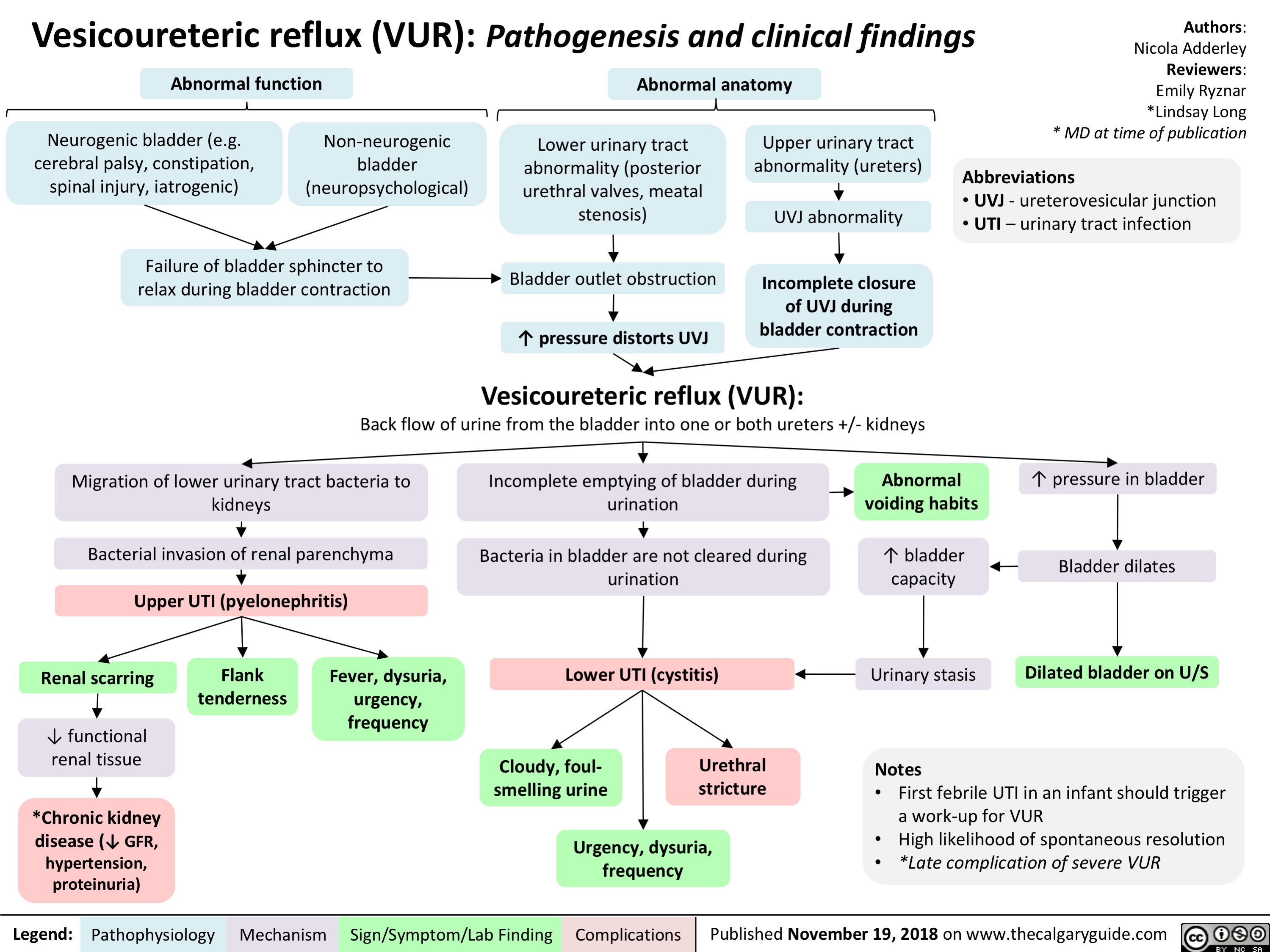
Vesicoureteric reflux (VUR): Pathogenesis and clinical findings

Vesicoureteric reflux (VUR): Pathogenesis and clinical findings
Authors: Nicola Adderley Reviewers: Emily Ryznar *Lindsay Long * MD at time of publication
  Abnormal function
Abnormal anatomy
      Neurogenic bladder (e.g. cerebral palsy, constipation, spinal injury, iatrogenic)
Non-neurogenic bladder (neuropsychological)
Lower urinary tract abnormality (posterior urethral valves, meatal stenosis)
Bladder outlet obstruction
↑ pressure distorts UVJ
Upper urinary tract abnormality (ureters)
UVJ abnormality
Incomplete closure of UVJ during bladder contraction
Abbreviations
• UVJ - ureterovesicular junction • UTI – urinary tract infection
        Failure of bladder sphincter to relax during bladder contraction
        Vesicoureteric reflux (VUR):
Back flow of urine from the bladder into one or both ureters +/- kidneys
      Migration of lower urinary tract bacteria to kidneys
Bacterial invasion of renal parenchyma
Upper UTI (pyelonephritis)
Incomplete emptying of bladder during     Abnormal
↑ pressure in bladder
Bladder dilates
Dilated bladder on U/S
urination
Bacteria in bladder are not cleared during urination
voiding habits
↑ bladder capacity
                   Renal scarring
↓ functional renal tissue
*Chronic kidney disease (↓ GFR,
hypertension, proteinuria)
Flank tenderness
Fever, dysuria, urgency, frequency
Lower UTI (cystitis)       Urinary stasis
      Cloudy, foul- smelling urine
Urethral stricture
Notes
   Urgency, dysuria, frequency
• First febrile UTI in an infant should trigger a work-up for VUR
• High likelihood of spontaneous resolution • *Late complication of severe VUR
 Legend:
 Pathophysiology
 Mechanism
Sign/Symptom/Lab Finding
  Complications
Published November 19, 2018 on www.thecalgaryguide.com

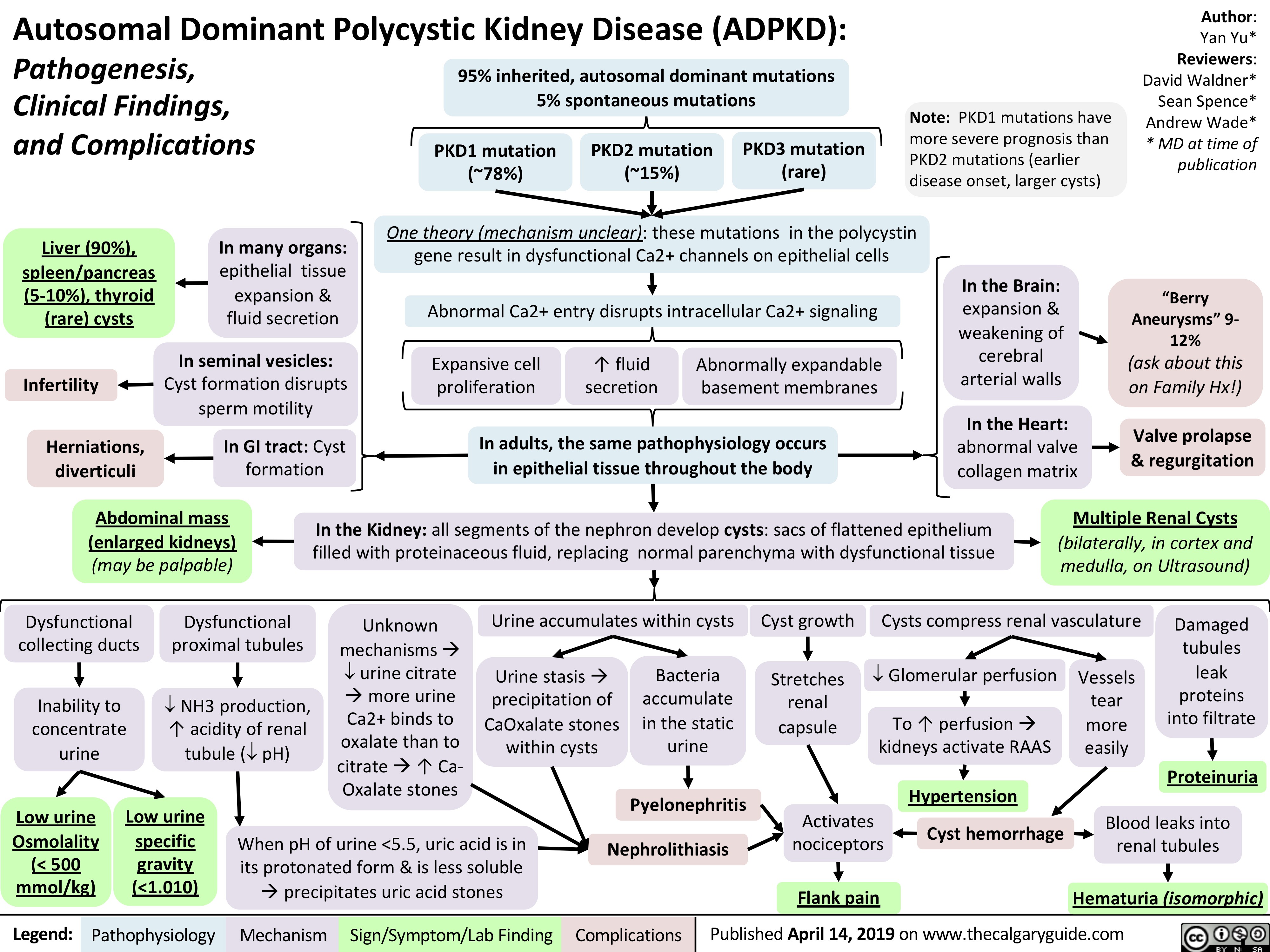
autosomal-dominant-polycystic-kidney-disease-adpkd

Autosomal Dominant Polycystic Kidney Disease (ADPKD):
Pathogenesis,
Clinical Findings,
and Complications
Author:
Yan Yu*
Reviewers:
David Waldner*
Sean Spence*
Andrew Wade*
* MD at time of
publication
Legend: Published April 14, 2019 on www.Pathophysiology Mechanism Sign/Symptom/Lab Finding Complications thecalgaryguide.com
One theory (mechanism unclear): these mutations in the polycystin
gene result in dysfunctional Ca2+ channels on epithelial cells
PKD1 mutation
(~78%)
Abnormal Ca2+ entry disrupts intracellular Ca2+ signaling
In the Kidney: all segments of the nephron develop cysts: sacs of flattened epithelium
filled with proteinaceous fluid, replacing normal parenchyma with dysfunctional tissue
PKD2 mutation
(~15%)
Expansive cell
proliferation
Low urine
Osmolality
(< 500
mmol/kg)
Abnormally expandable
basement membranes
PKD3 mutation
(rare)
↑ fluid
secretion
95% inherited, autosomal dominant mutations
5% spontaneous mutations
In adults, the same pathophysiology occurs
in epithelial tissue throughout the body
When pH of urine <5.5, uric acid is in
its protonated form & is less soluble
àprecipitates uric acid stones
Nephrolithiasis
Urine accumulates within cysts Cyst growth
Pyelonephritis
Damaged
tubules
leak
proteins
into filtrate
Proteinuria
Flank pain
Inability to
concentrate
urine
Low urine
specific
gravity
(<1.010)
¯ NH3 production,
↑ acidity of renal
tubule (¯ pH)
Activates
nociceptors Cyst hemorrhage
Urine stasis à
precipitation of
CaOxalate stones
within cysts
Multiple Renal Cysts
(bilaterally, in cortex and
medulla, on Ultrasound)
In the Brain:
expansion &
weakening of
cerebral
arterial walls
“Berry
Aneurysms” 9-
12%
(ask about this
on Family Hx!)
In many organs:
epithelial tissue
expansion &
fluid secretion
In the Heart:
abnormal valve
collagen matrix
Valve prolapse
& regurgitation
Liver (90%),
spleen/pancreas
(5-10%), thyroid
(rare) cysts
In seminal vesicles:
Cyst formation disrupts
sperm motility
Infertility
In GI tract: Cyst
formation
Herniations,
diverticuli
Dysfunctional
collecting ducts
Abdominal mass
(enlarged kidneys)
(may be palpable)
Blood leaks into
renal tubules
Hematuria (isomorphic)
Bacteria
accumulate
in the static
urine
Dysfunctional
proximal tubules
Unknown
mechanisms à
¯ urine citrate
àmore urine
Ca2+ binds to
oxalate than to
citrate à↑ Ca-
Oxalate stones
Note: PKD1 mutations have
more severe prognosis than
PKD2 mutations (earlier
disease onset, larger cysts)
Vessels
tear
more
easily
Stretches
renal
capsule
Cysts compress renal vasculature
¯ Glomerular perfusion
To ↑ perfusion à
kidneys activate RAAS
Hypertension

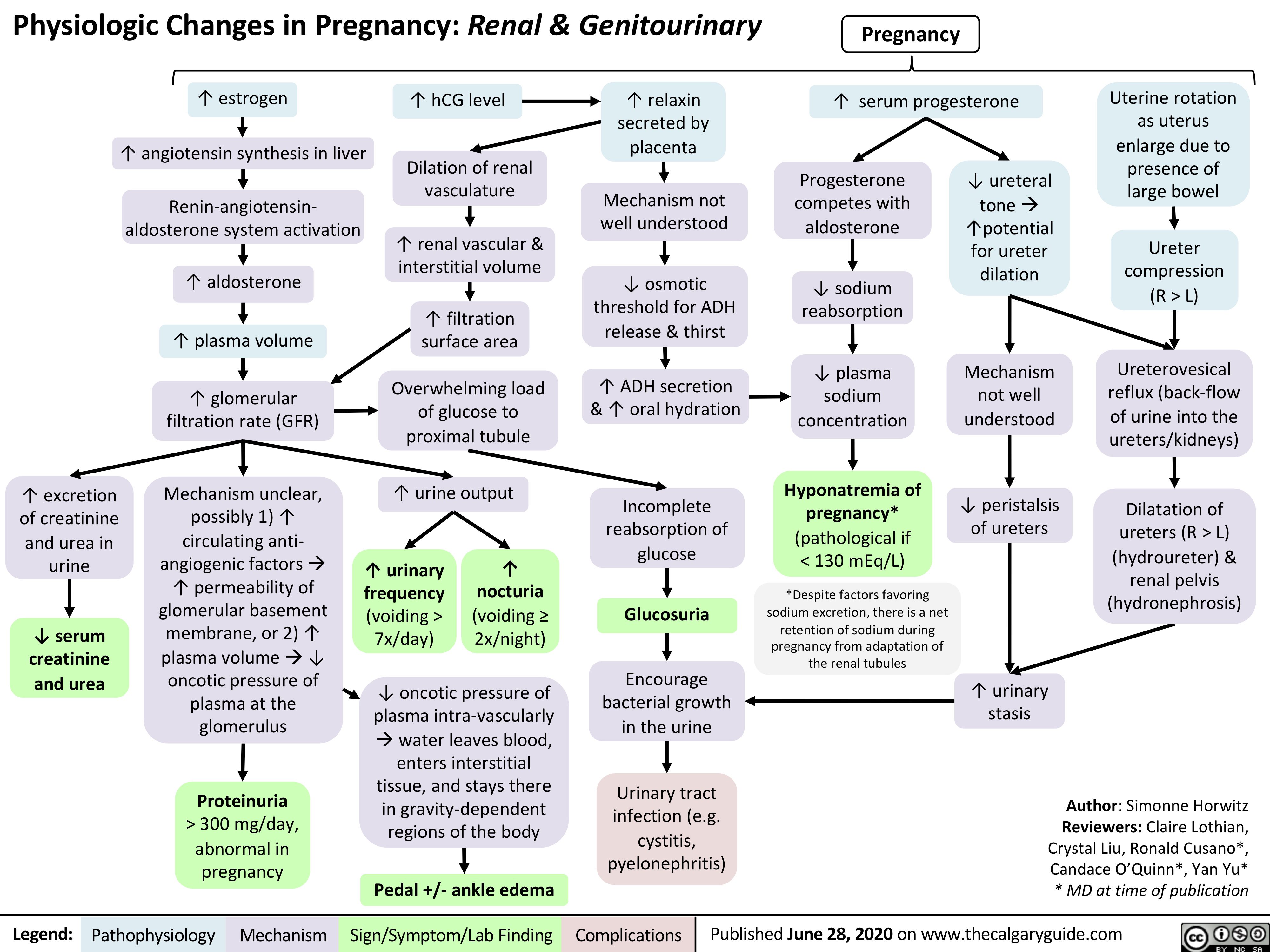
GU-changes-in-pregnancy

Physiologic Changes in Pregnancy: Renal & Genitourinary
Pregnancy
       ↑ estrogen
↑ angiotensin synthesis in liver
Renin-angiotensin- aldosterone system activation
↑ aldosterone ↑ plasma volume
↑ glomerular filtration rate (GFR)
Mechanism unclear, possibly 1) ↑ circulating anti- angiogenic factorsà ↑ permeability of glomerular basement membrane, or 2) ↑ plasma volumeà↓ oncotic pressure of plasma at the glomerulus
Proteinuria
> 300 mg/day, abnormal in pregnancy
↑ hCG level
Dilation of renal vasculature
↑ renal vascular & interstitial volume
↑ filtration surface area
Overwhelming load of glucose to proximal tubule
↑ urine output
↑ relaxin secreted by placenta
Mechanism not well understood
↓ osmotic threshold for ADH release & thirst
↑ ADH secretion & ↑ oral hydration
Incomplete reabsorption of glucose
Glucosuria
Encourage bacterial growth in the urine
Urinary tract infection (e.g. cystitis, pyelonephritis)
↑ serum progesterone
Uterine rotation as uterus enlarge due to presence of large bowel
Ureter compression (R > L)
Ureterovesical reflux (back-flow of urine into the ureters/kidneys)
Dilatation of ureters (R > L) (hydroureter) & renal pelvis (hydronephrosis)
          Progesterone competes with aldosterone
↓ sodium reabsorption
↓ plasma sodium concentration
Hyponatremia of pregnancy* (pathological if < 130 mEq/L)
*Despite factors favoring sodium excretion, there is a net retention of sodium during pregnancy from adaptation of the renal tubules
↑ urinary stasis
                                           ↑ excretion of creatinine and urea in urine
↓ serum creatinine and urea
↓ ureteral toneà ↑potential for ureter dilation
Mechanism not well understood
↓ peristalsis of ureters
        ↑ urinary frequency (voiding > 7x/day)
↑ nocturia (voiding ≥ 2x/night)
          ↓ oncotic pressure of plasma intra-vascularly àwater leaves blood, enters interstitial tissue, and stays there in gravity-dependent regions of the body
Pedal +/- ankle edema
Author: Simonne Horwitz Reviewers: Claire Lothian, Crystal Liu, Ronald Cusano*, Candace O’Quinn*, Yan Yu* * MD at time of publication
         Legend:
 Pathophysiology
 Mechanism
Sign/Symptom/Lab Finding
  Complications
Published June 28, 2020 on www.thecalgaryguide.com

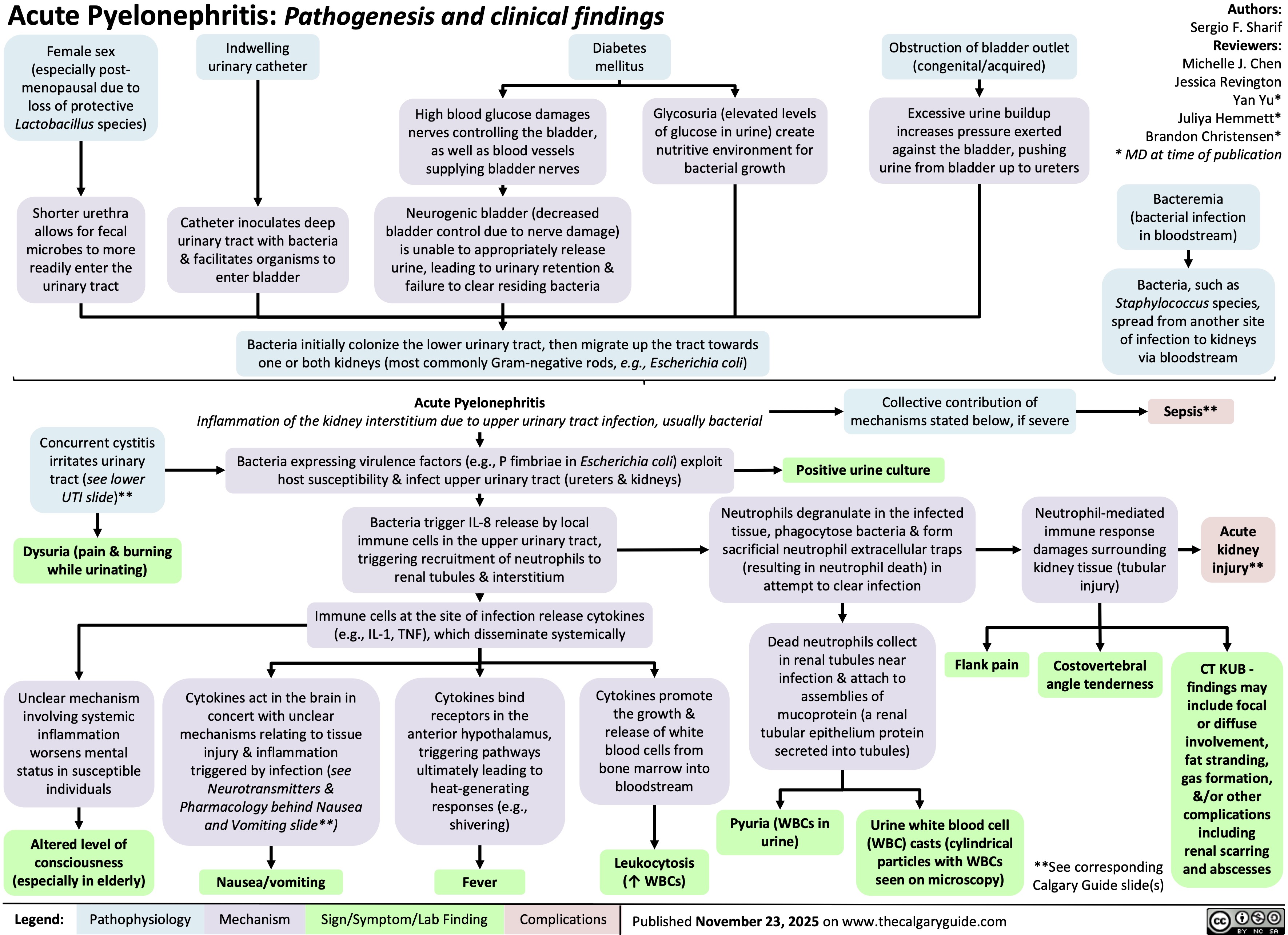
Pyelonephritis

Acute Pyelonephritis: Pathogenesis and clinical findings
Female sex
Indwelling
Diabetes
(especially post-
urinary catheter
mellitus
menopausal due to
loss of protective
Lactobacillus species)
Obstruction of bladder outlet
(congenital/acquired)
High blood glucose damages
nerves controlling the bladder,
as well as blood vessels
supplying bladder nerves
Glycosuria (elevated levels
of glucose in urine) create
nutritive environment for
bacterial growth
Excessive urine buildup
increases pressure exerted
against the bladder, pushing
urine from bladder up to ureters
Authors:
Sergio F. Sharif
Reviewers:
Michelle J. Chen
Jessica Revington
Yan Yu*
Juliya Hemmett*
Brandon Christensen*
* MD at time of publication
Shorter urethra
allows for fecal
microbes to more
readily enter the
urinary tract
Catheter inoculates deep
urinary tract with bacteria
& facilitates organisms to
enter bladder
Neurogenic bladder (decreased
bladder control due to nerve damage)
is unable to appropriately release
urine, leading to urinary retention &
failure to clear residing bacteria
Bacteremia
(bacterial infection
in bloodstream)
Bacteria initially colonize the lower urinary tract, then migrate up the tract towards
one or both kidneys (most commonly Gram-negative rods, e.g., Escherichia coli)
Bacteria, such as
Staphylococcus species,
spread from another site
of infection to kidneys
via bloodstream
Acute Pyelonephritis
Inflammation of the kidney interstitium due to upper urinary tract infection, usually bacterial
Collective contribution of
mechanisms stated below, if severe
Sepsis**
Concurrent cystitis
irritates urinary
tract (see lower
UTI slide)**
Bacteria expressing virulence factors (e.g., P fimbriae in Escherichia coli) exploit
host susceptibility & infect upper urinary tract (ureters & kidneys)
Positive urine culture
Dysuria (pain & burning
while urinating)
Bacteria trigger IL-8 release by local
immune cells in the upper urinary tract,
triggering recruitment of neutrophils to
renal tubules & interstitium
Neutrophils degranulate in the infected
tissue, phagocytose bacteria & form
sacrificial neutrophil extracellular traps
(resulting in neutrophil death) in
attempt to clear infection
Neutrophil-mediated
immune response
damages surrounding
kidney tissue (tubular
injury)
Acute
kidney
injury**
Immune cells at the site of infection release cytokines
(e.g., IL-1, TNF), which disseminate systemically
Cytokines act in the brain in
concert with unclear
mechanisms relating to tissue
injury & inflammation
triggered by infection (see
Neurotransmitters &
Pharmacology behind Nausea
and Vomiting slide**)
Cytokines bind
receptors in the
anterior hypothalamus,
triggering pathways
ultimately leading to
heat-generating
responses (e.g.,
shivering)
Cytokines promote
the growth &
release of white
blood cells from
bone marrow into
bloodstream
Dead neutrophils collect
in renal tubules near
infection & attach to
assemblies of
mucoprotein (a renal
tubular epithelium protein
secreted into tubules)
Pyuria (WBCs in
urine)
Nausea/vomiting
Fever
Leukocytosis
(↑ WBCs)
Urine white blood cell
(WBC) casts (cylindrical
particles with WBCs
seen on microscopy)
Costovertebral
Flank pain CT KUB -
angle tenderness
findings may
include focal
or diffuse
involvement,
fat stranding,
gas formation,
&/or other
complications
including
renal scarring
**See corresponding
and abscesses
Calgary Guide slide(s)
Complications
Published November 23, 2025 on www.thecalgaryguide.com
Unclear mechanism
involving systemic
inflammation
worsens mental
status in susceptible
individuals
Altered level of
consciousness
(especially in elderly)
Legend: Pathophysiology Mechanism
Sign/Symptom/Lab Finding

© 2025 - The Calgary Guide to Understanding Disease

Disclaimer