SEARCH RESULTS FOR: Infection-Related-Glomerulonephritis

Infection-Related Glomerulonephritis
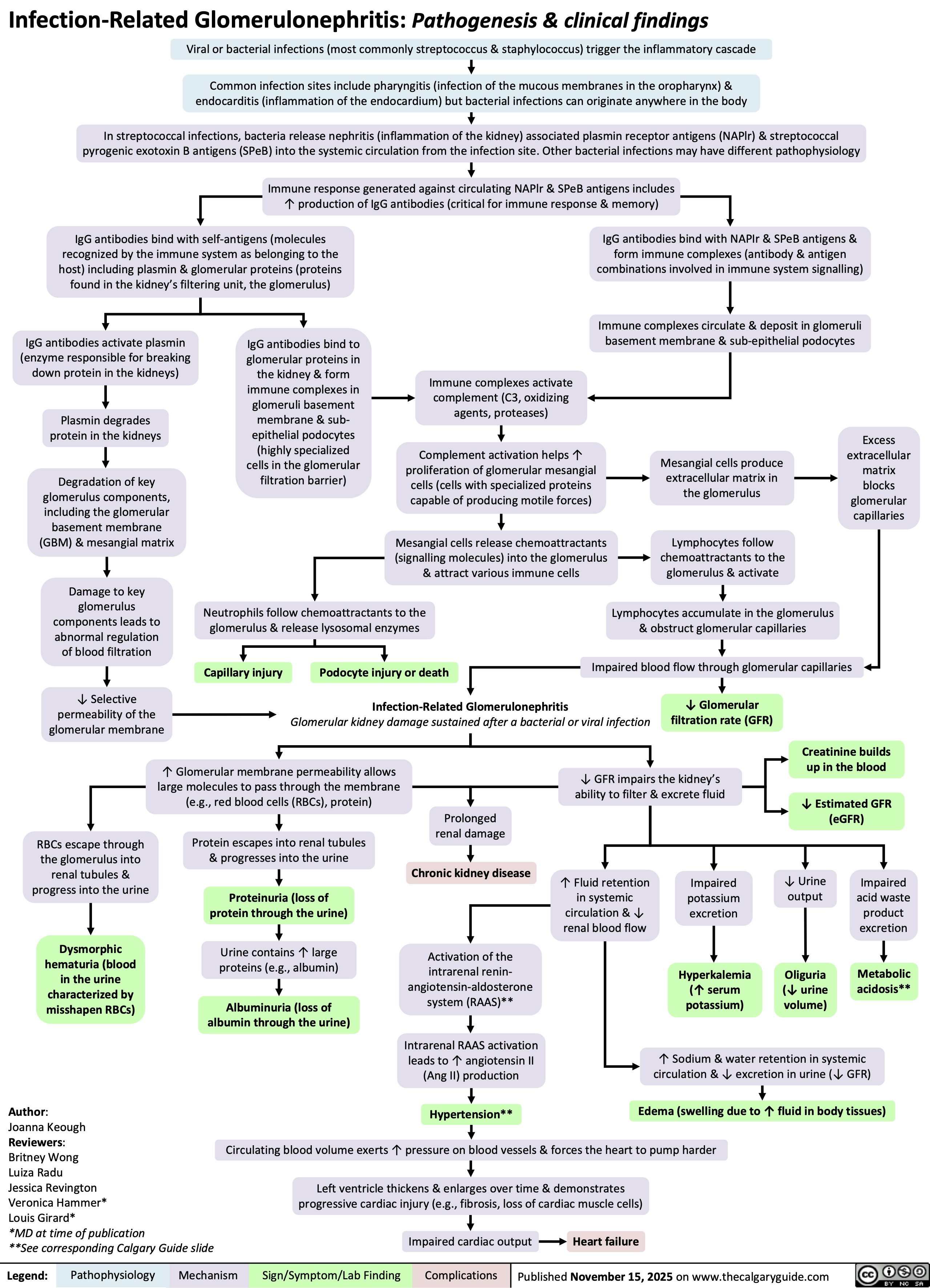
Infection-Related Glomerulonephritis: Pathogenesis & clinical findings
Viral or bacterial infections (most commonly streptococcus & staphylococcus) trigger the inflammatory cascade
Common infection sites include pharyngitis (infection of the mucous membranes in the oropharynx) &
endocarditis (inflammation of the endocardium) but bacterial infections can originate anywhere in the body
In streptococcal infections, bacteria release nephritis (inflammation of the kidney) associated plasmin receptor antigens (NAPlr) & streptococcal
pyrogenic exotoxin B antigens (SPeB) into the systemic circulation from the infection site. Other bacterial infections may have different pathophysiology
Immune response generated against circulating NAPlr & SPeB antigens includes
↑ production of IgG antibodies (critical for immune response & memory)
IgG antibodies bind with self-antigens (molecules
recognized by the immune system as belonging to the
host) including plasmin & glomerular proteins (proteins
found in the kidney’s filtering unit, the glomerulus)
IgG antibodies activate plasmin
(enzyme responsible for breaking
down protein in the kidneys)
Plasmin degrades
protein in the kidneys
IgG antibodies bind to
glomerular proteins in
the kidney & form
immune complexes in
glomeruli basement
membrane & sub-
epithelial podocytes
(highly specialized
cells in the glomerular
filtration barrier)
Degradation of key
glomerulus components,
including the glomerular
basement membrane
(GBM) & mesangial matrix
Damage to key
glomerulus
components leads to
abnormal regulation
of blood filtration
↓ Selective
permeability of the
glomerular membrane
IgG antibodies bind with NAPIr & SPeB antigens &
form immune complexes (antibody & antigen
combinations involved in immune system signalling)
Immune complexes circulate & deposit in glomeruli
basement membrane & sub-epithelial podocytes
RBCs escape through
the glomerulus into
renal tubules &
progress into the urine
Dysmorphic
hematuria (blood
in the urine
characterized by
misshapen RBCs)
Author:
Joanna Keough
Reviewers:
Britney Wong
Luiza Radu
Jessica Revington
Veronica Hammer*
Louis Girard*
*MD at time of publication
**See corresponding Calgary Guide slide
Legend: Pathophysiology Mechanism
Immune complexes activate
complement (C3, oxidizing
agents, proteases)
Complement activation helps ↑
proliferation of glomerular mesangial
cells (cells with specialized proteins
capable of producing motile forces)
Mesangial cells produce
extracellular matrix in
the glomerulus
Excess
extracellular
matrix
blocks
glomerular
capillaries
Mesangial cells release chemoattractants
(signalling molecules) into the glomerulus
& attract various immune cells
Lymphocytes follow
chemoattractants to the
glomerulus & activate
Neutrophils follow chemoattractants to the
glomerulus & release lysosomal enzymes
Lymphocytes accumulate in the glomerulus
& obstruct glomerular capillaries
Impaired blood flow through glomerular capillaries
Capillary injury Podocyte injury or death
Infection-Related Glomerulonephritis
Glomerular kidney damage sustained after a bacterial or viral infection
↓ Glomerular
filtration rate (GFR)
Creatinine builds
up in the blood
↑ Glomerular membrane permeability allows
large molecules to pass through the membrane
(e.g., red blood cells (RBCs), protein)
↓ GFR impairs the kidney’s
ability to filter & excrete fluid
↓ Estimated GFR
Prolonged
(eGFR)
renal damage
Protein escapes into renal tubules
& progresses into the urine
Chronic kidney disease
Proteinuria (loss of
protein through the urine)
↑ Fluid retention
in systemic
circulation & ↓
renal blood flow
Impaired
potassium
excretion
↓ Urine
output
Impaired
acid waste
product
excretion
Urine contains ↑ large
proteins (e.g., albumin)
Activation of the
intrarenal renin-
angiotensin-aldosterone
system (RAAS)**
Hyperkalemia
(↑ serum
potassium)
Oliguria
(↓ urine
volume)
Metabolic
acidosis**
Albuminuria (loss of
albumin through the urine)
Intrarenal RAAS activation
leads to ↑ angiotensin II
(Ang II) production
↑ Sodium & water retention in systemic
circulation & ↓ excretion in urine (↓ GFR)
Hypertension**
Edema (swelling due to ↑ fluid in body tissues)
Circulating blood volume exerts ↑ pressure on blood vessels & forces the heart to pump harder
Left ventricle thickens & enlarges over time & demonstrates
progressive cardiac injury (e.g., fibrosis, loss of cardiac muscle cells)
Impaired cardiac output
Heart failure
Sign/Symptom/Lab Finding Complications
Published November 15, 2025 on www.thecalgaryguide.com