SEARCH RESULTS FOR: Peripheral-Vestibular-Dysfunction

Peripheral Vestibular Dysfunction
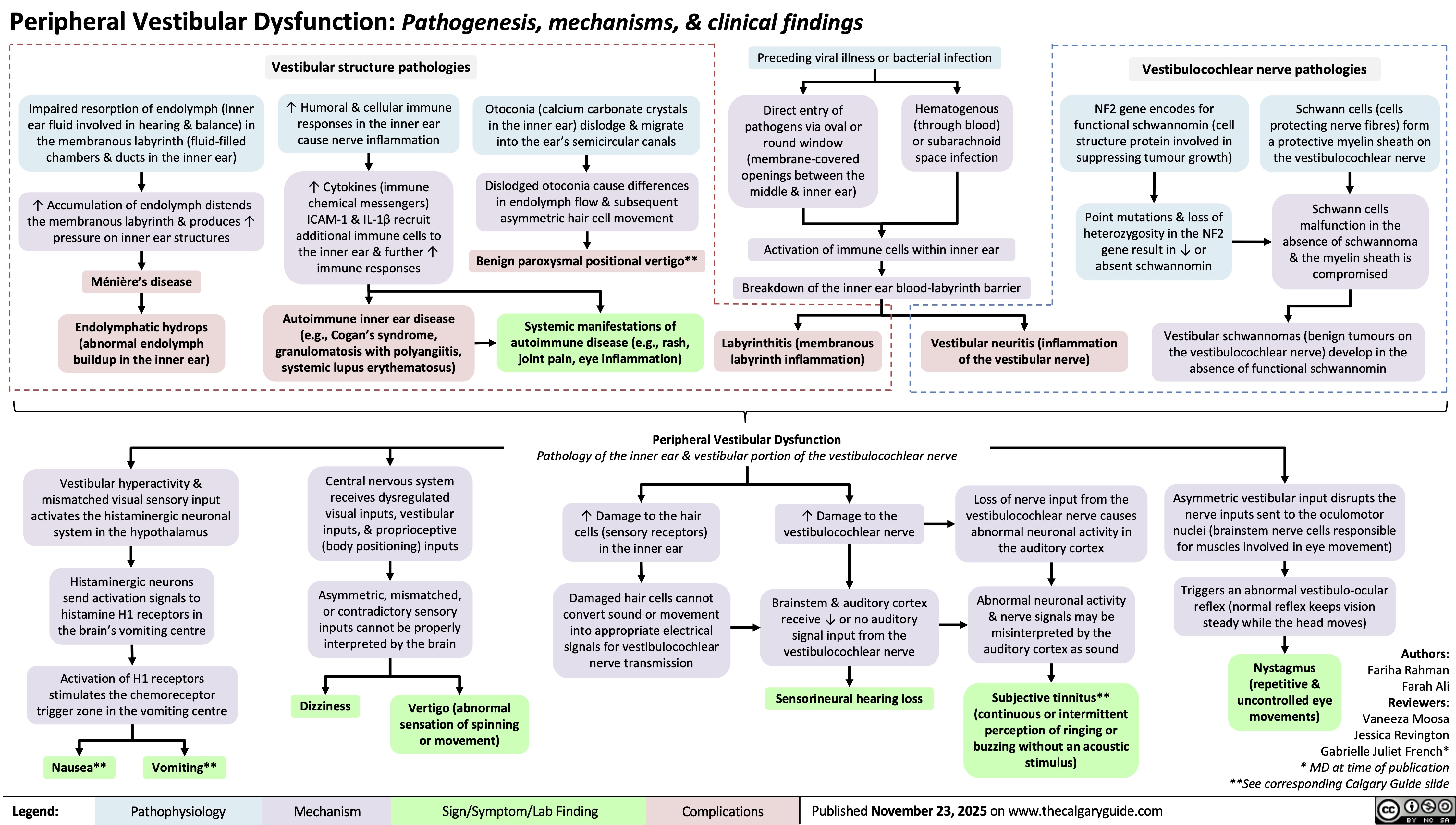
Peripheral Vestibular Dysfunction: Pathogenesis, mechanisms, & clinical findings
Preceding viral illness or bacterial infection
Vestibular structure pathologies
Impaired resorption of endolymph (inner
ear fluid involved in hearing & balance) in
the membranous labyrinth (fluid-filled
chambers & ducts in the inner ear)
↑ Humoral & cellular immune
responses in the inner ear
cause nerve inflammation
Otoconia (calcium carbonate crystals
in the inner ear) dislodge & migrate
into the ear’s semicircular canals
Direct entry of
pathogens via oval or
round window
(membrane-covered
openings between the
middle & inner ear)
Hematogenous
(through blood)
or subarachnoid
space infection
↑ Accumulation of endolymph distends
the membranous labyrinth & produces ↑
pressure on inner ear structures
Dislodged otoconia cause differences
in endolymph flow & subsequent
asymmetric hair cell movement
Ménière’s disease
Endolymphatic hydrops
(abnormal endolymph
buildup in the inner ear)
Vestibular hyperactivity &
mismatched visual sensory input
activates the histaminergic neuronal
system in the hypothalamus
Histaminergic neurons
send activation signals to
histamine H1 receptors in
the brain’s vomiting centre
Activation of H1 receptors
stimulates the chemoreceptor
trigger zone in the vomiting centre
Nausea** Vomiting**
Legend: ↑ Cytokines (immune
chemical messengers)
ICAM-1 & IL-1β recruit
additional immune cells to
the inner ear & further ↑
immune responses
Activation of immune cells within inner ear
Benign paroxysmal positional vertigo**
Breakdown of the inner ear blood-labyrinth barrier
Autoimmune inner ear disease
(e.g., Cogan’s syndrome,
granulomatosis with polyangiitis,
systemic lupus erythematosus)
Systemic manifestations of
autoimmune disease (e.g., rash,
joint pain, eye inflammation)
Labyrinthitis (membranous
labyrinth inflammation)
Vestibular neuritis (inflammation
of the vestibular nerve)
Peripheral Vestibular Dysfunction
Pathology of the inner ear & vestibular portion of the vestibulocochlear nerve
Central nervous system
receives dysregulated
visual inputs, vestibular
inputs, & proprioceptive
(body positioning) inputs
↑ Damage to the hair
cells (sensory receptors)
in the inner ear
↑ Damage to the
vestibulocochlear nerve
Loss of nerve input from the
vestibulocochlear nerve causes
abnormal neuronal activity in
the auditory cortex
Asymmetric, mismatched,
or contradictory sensory
inputs cannot be properly
interpreted by the brain
Damaged hair cells cannot
convert sound or movement
into appropriate electrical
signals for vestibulocochlear
nerve transmission
Brainstem & auditory cortex
receive ↓ or no auditory
signal input from the
vestibulocochlear nerve
Abnormal neuronal activity
& nerve signals may be
misinterpreted by the
auditory cortex as sound
Sensorineural hearing loss
Dizziness
Vertigo (abnormal
sensation of spinning
or movement)
Subjective tinnitus**
(continuous or intermittent
perception of ringing or
buzzing without an acoustic
stimulus)
Published November 23, 2025 on www.thecalgaryguide.com
Vestibulocochlear nerve pathologies
NF2 gene encodes for
functional schwannomin (cell
structure protein involved in
suppressing tumour growth)
Point mutations & loss of
heterozygosity in the NF2
gene result in ↓ or
absent schwannomin
Schwann cells (cells
protecting nerve fibres) form
a protective myelin sheath on
the vestibulocochlear nerve
Schwann cells
malfunction in the
absence of schwannoma
& the myelin sheath is
compromised
Vestibular schwannomas (benign tumours on
the vestibulocochlear nerve) develop in the
absence of functional schwannomin
Asymmetric vestibular input disrupts the
nerve inputs sent to the oculomotor
nuclei (brainstem nerve cells responsible
for muscles involved in eye movement)
Triggers an abnormal vestibulo-ocular
reflex (normal reflex keeps vision
steady while the head moves)
Authors:
Nystagmus
(repetitive &
uncontrolled eye
movements)
Fariha Rahman
Farah Ali
Reviewers:
Vaneeza Moosa
Jessica Revington
Gabrielle Juliet French*
* MD at time of publication
**See corresponding Calgary Guide slide
Pathophysiology Mechanism
Sign/Symptom/Lab Finding Complications