SEARCH RESULTS FOR: Neonatal-Seizures

Neonatal Seizures
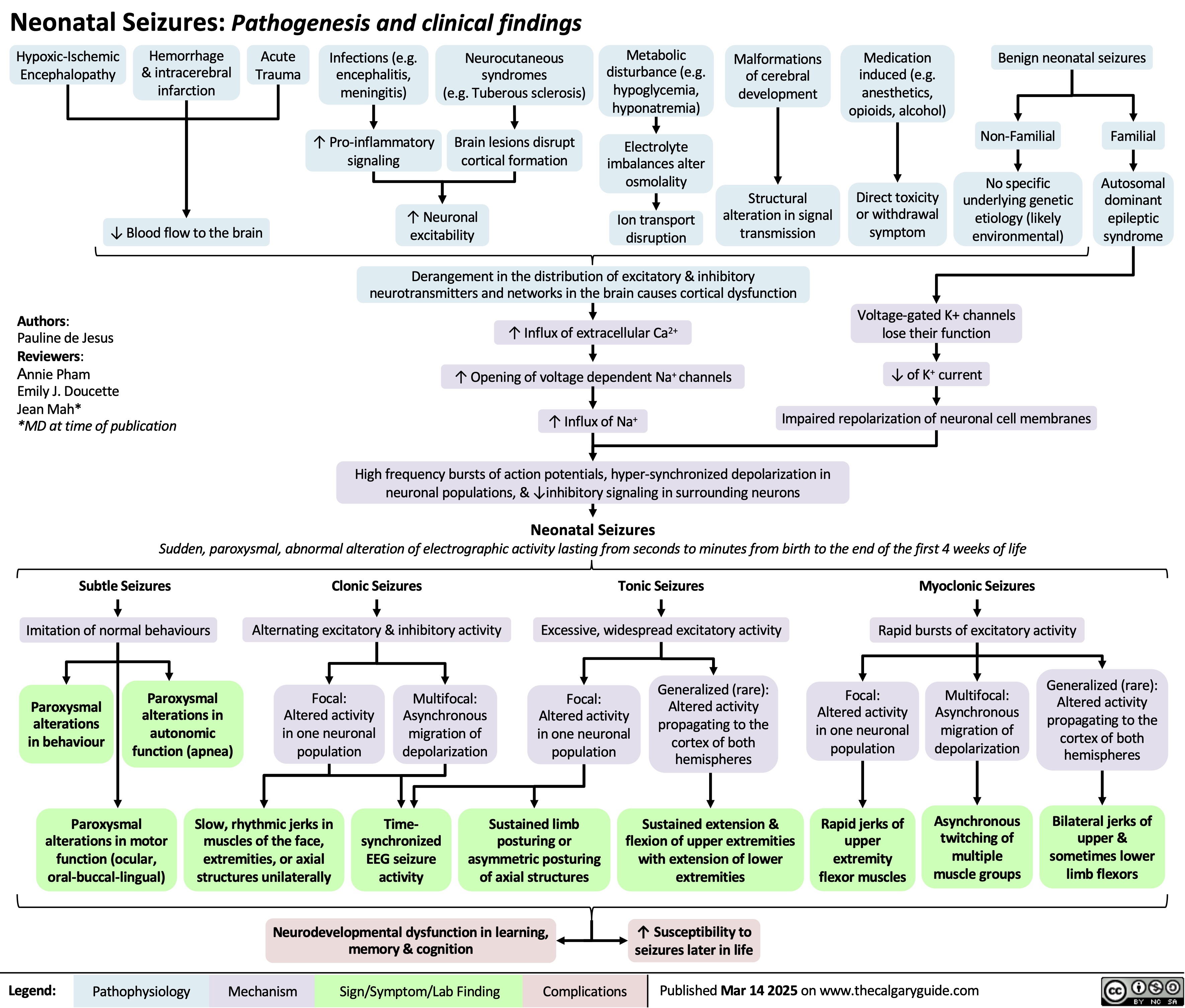
Neonatal Seizures: Pathogenesis and clinical findings
         Hypoxic-Ischemic Encephalopathy
Hemorrhage & intracerebral infarction
Acute Trauma
Infections (e.g. encephalitis, meningitis)
↑ Pro-inflammatory signaling
Neurocutaneous syndromes
(e.g. Tuberous sclerosis)
Brain lesions disrupt cortical formation
Metabolic disturbance (e.g. hypoglycemia, hyponatremia)
Electrolyte imbalances alter osmolality
Ion transport disruption
Malformations of cerebral development
Structural alteration in signal transmission
Medication induced (e.g. anesthetics, opioids, alcohol)
Direct toxicity or withdrawal symptom
Benign neonatal seizures
                 ↓ Blood flow to the brain
Authors:
Pauline de Jesus Reviewers:
Annie Pham
Emily J. Doucette
Jean Mah*
*MD at time of publication
↑ Neuronal excitability
Non-Familial
No specific underlying genetic etiology (likely environmental)
Familial
Autosomal dominant epileptic syndrome
   Derangement in the distribution of excitatory & inhibitory neurotransmitters and networks in the brain causes cortical dysfunction
  ↑ Influx of extracellular Ca2+
↑ Opening of voltage dependent Na+ channels ↑ Influx of Na+
Voltage-gated K+ channels lose their function
↓ of K+ current
Impaired repolarization of neuronal cell membranes
      Subtle Seizures
Imitation of normal behaviours
Clonic Seizures
Alternating excitatory & inhibitory activity
Tonic Seizures
Excessive, widespread excitatory activity
Myoclonic Seizures
Rapid bursts of excitatory activity
High frequency bursts of action potentials, hyper-synchronized depolarization in neuronal populations, & ↓inhibitory signaling in surrounding neurons
Neonatal Seizures
Sudden, paroxysmal, abnormal alteration of electrographic activity lasting from seconds to minutes from birth to the end of the first 4 weeks of life
                  Paroxysmal alterations in behaviour
Paroxysmal alterations in autonomic function (apnea)
Focal: Altered activity in one neuronal population
Multifocal: Asynchronous migration of depolarization
Focal: Altered activity in one neuronal population
Generalized (rare): Altered activity propagating to the cortex of both hemispheres
Focal: Altered activity in one neuronal population
Rapid jerks of upper extremity flexor muscles
Multifocal: Asynchronous migration of depolarization
Asynchronous twitching of multiple muscle groups
Generalized (rare): Altered activity propagating to the cortex of both hemispheres
Bilateral jerks of upper & sometimes lower limb flexors
          Paroxysmal alterations in motor function (ocular, oral-buccal-lingual)
Slow, rhythmic jerks in muscles of the face, extremities, or axial structures unilaterally
Time- synchronized EEG seizure activity
Sustained limb posturing or asymmetric posturing of axial structures
Sustained extension & flexion of upper extremities with extension of lower extremities
↑ Susceptibility to seizures later in life
   Neurodevelopmental dysfunction in learning, memory & cognition
 Legend:
 Pathophysiology
Mechanism
 Sign/Symptom/Lab Finding
 Complications
 Published Mar 14 2025 on www.thecalgaryguide.com