SEARCH RESULTS FOR: Vasoconstrictors-in-the-OR

Vasoconstrictors in the OR
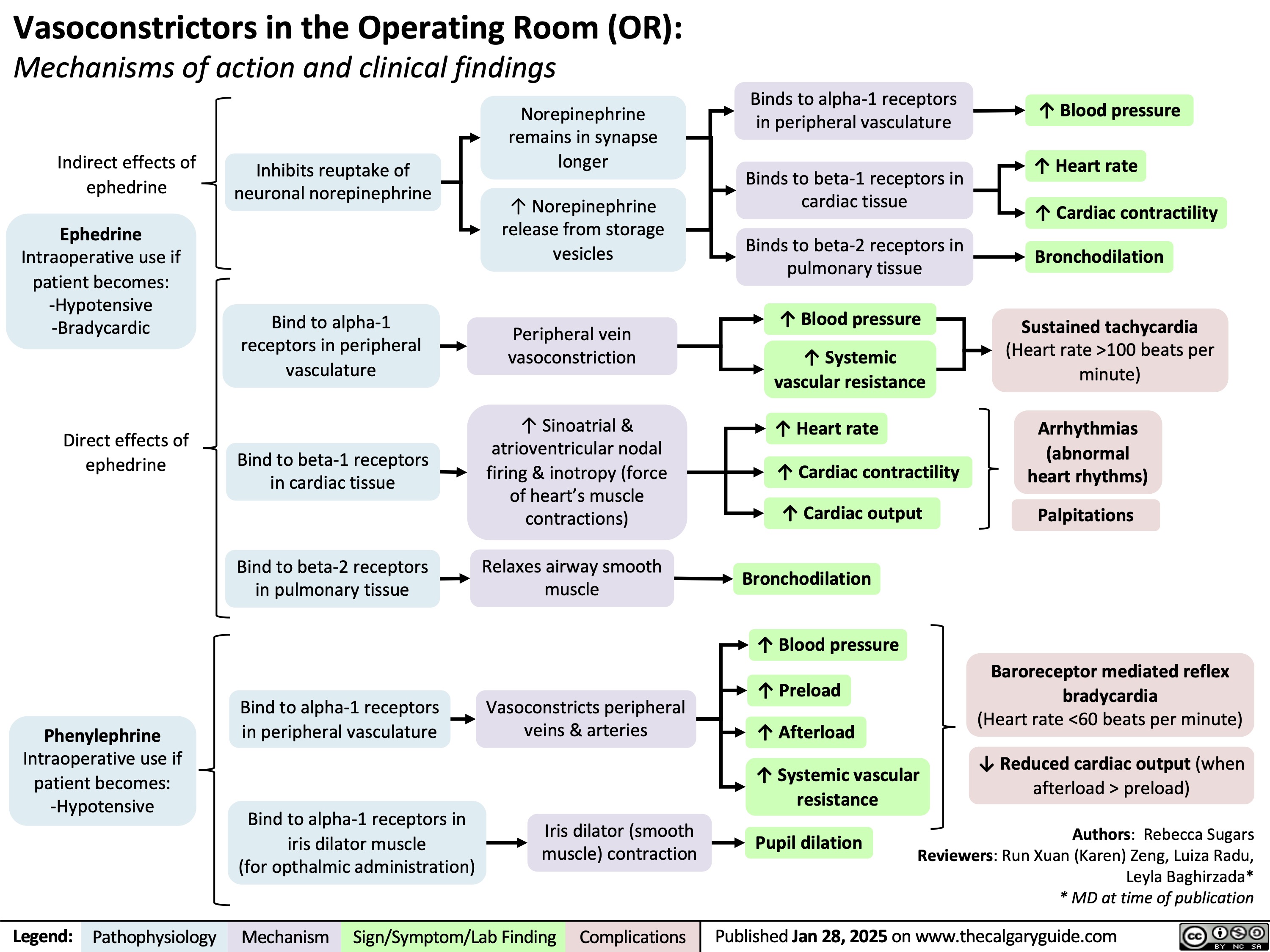
Vasoconstrictors in the Operating Room (OR):
Mechanisms of action and clinical findings
       Indirect effects of ephedrine
Ephedrine
Intraoperative use if patient becomes: -Hypotensive -Bradycardic
Inhibits reuptake of neuronal norepinephrine
Bind to alpha-1 receptors in peripheral vasculature
Bind to beta-1 receptors in cardiac tissue
Bind to beta-2 receptors in pulmonary tissue
Bind to alpha-1 receptors in peripheral vasculature
Bind to alpha-1 receptors in iris dilator muscle
(for opthalmic administration)
Norepinephrine remains in synapse longer
↑ Norepinephrine release from storage vesicles
Peripheral vein vasoconstriction
↑ Sinoatrial & atrioventricular nodal firing & inotropy (force of heart’s muscle contractions)
Relaxes airway smooth muscle
Vasoconstricts peripheral veins & arteries
Iris dilator (smooth muscle) contraction
Binds to alpha-1 receptors in peripheral vasculature
Binds to beta-1 receptors in cardiac tissue
Binds to beta-2 receptors in pulmonary tissue
↑ Blood pressure
↑ Systemic vascular resistance
↑ Heart rate
↑ Cardiac contractility
↑ Cardiac output Bronchodilation
↑ Blood pressure
↑ Preload
↑ Afterload
↑ Systemic vascular
↑ Blood pressure
↑ Heart rate
↑ Cardiac contractility Bronchodilation
Sustained tachycardia
(Heart rate >100 beats per minute)
Arrhythmias (abnormal heart rhythms)
Palpitations
Baroreceptor mediated reflex bradycardia
(Heart rate <60 beats per minute)
↓ Reduced cardiac output (when afterload > preload)
                     Direct effects ephedrine
of
                Phenylephrine
Intraoperative use patient becomes:
-Hypotensive
if
  resistance Pupil dilation
Authors: Rebecca Sugars Reviewers: Run Xuan (Karen) Zeng, Luiza Radu, Leyla Baghirzada* * MD at time of publication
    Legend:
 Pathophysiology
Mechanism
Sign/Symptom/Lab Finding
 Complications
 Published Jan 28, 2025 on www.thecalgaryguide.com