SEARCH RESULTS FOR: Systemic-Juvenile-Idiopathic-Arthritis

Systemic Juvenile Idiopathic Arthritis
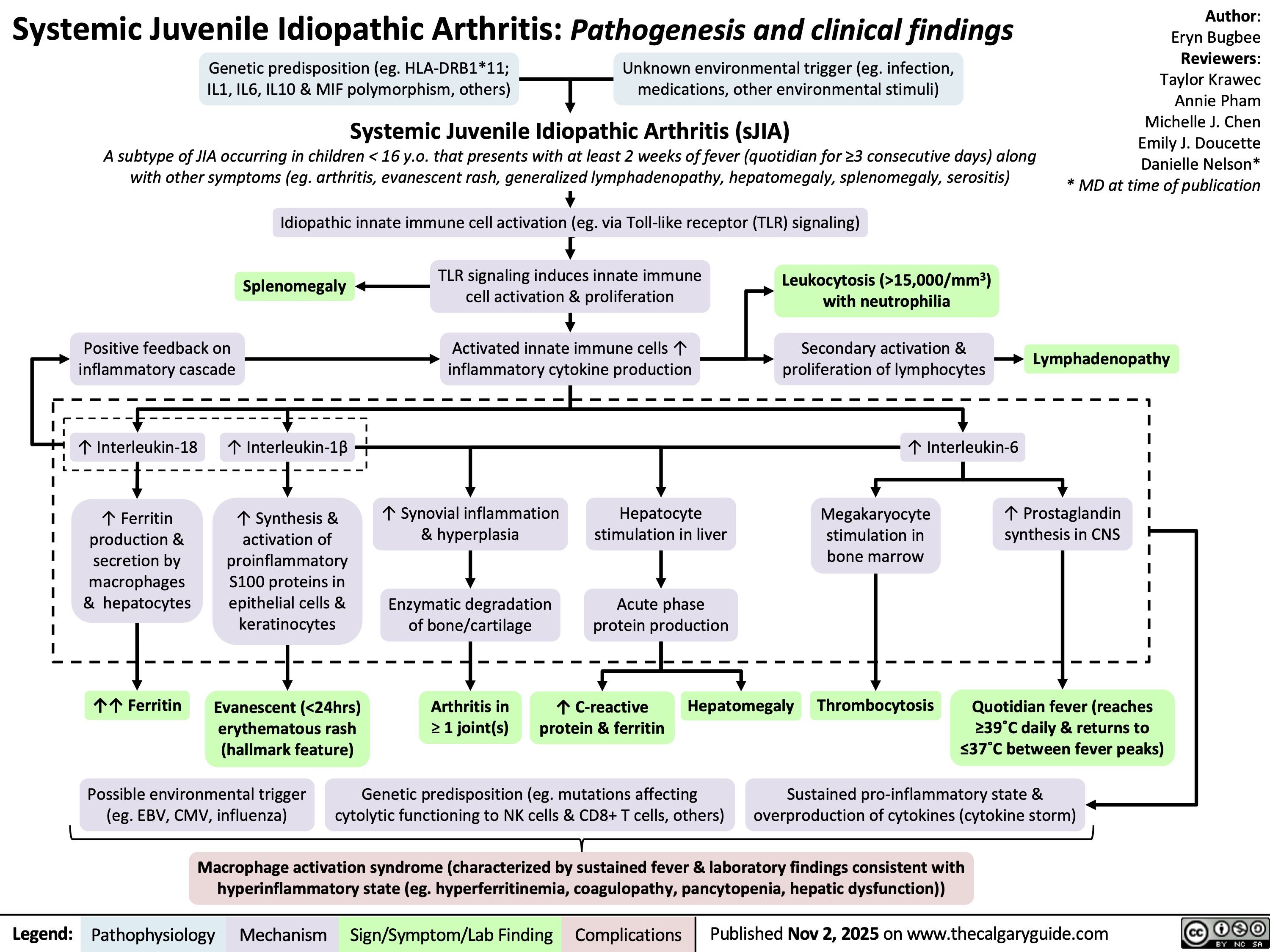
Systemic Juvenile Idiopathic Arthritis: Pathogenesis and clinical findings
Genetic predisposition (eg. HLA-DRB1*11;
IL1, IL6, IL10 & MIF polymorphism, others)
Unknown environmental trigger (eg. infection,
medications, other environmental stimuli)
Systemic Juvenile Idiopathic Arthritis (sJIA)
A subtype of JIA occurring in children < 16 y.o. that presents with at least 2 weeks of fever (quotidian for ≥3 consecutive days) along
with other symptoms (eg. arthritis, evanescent rash, generalized lymphadenopathy, hepatomegaly, splenomegaly, serositis)
Author:
Eryn Bugbee
Reviewers:
Taylor Krawec
Annie Pham
Michelle J. Chen
Emily J. Doucette
Danielle Nelson*
* MD at time of publication
Idiopathic innate immune cell activation (eg. via Toll-like receptor (TLR) signaling)
Splenomegaly
TLR signaling induces innate immune
cell activation & proliferation
Leukocytosis (>15,000/mm3)
with neutrophilia
Positive feedback on
inflammatory cascade
Activated innate immune cells ↑
inflammatory cytokine production
Secondary activation &
proliferation of lymphocytes
Lymphadenopathy
↑ Interleukin-18
↑ Interleukin-1β
↑ Interleukin-6
↑ Ferritin
production &
secretion by
macrophages
& hepatocytes
↑ Synthesis &
activation of
proinflammatory
S100 proteins in
epithelial cells &
keratinocytes
↑ Synovial inflammation
& hyperplasia
Megakaryocyte
stimulation in
bone marrow
↑ Prostaglandin
synthesis in CNS
Enzymatic degradation
of bone/cartilage
↑↑ Ferritin
Evanescent (<24hrs)
erythematous rash
(hallmark feature)
Arthritis in
≥ 1 joint(s)
↑ C-reactive
protein & ferritin
Thrombocytosis
Quotidian fever (reaches
≥39˚C daily & returns to
≤37˚C between fever peaks)
Possible environmental trigger
(eg. EBV, CMV, influenza)
Genetic predisposition (eg. mutations affecting
cytolytic functioning to NK cells & CD8+ T cells, others)
Sustained pro-inflammatory state &
overproduction of cytokines (cytokine storm)
Macrophage activation syndrome (characterized by sustained fever & laboratory findings consistent with
hyperinflammatory state (eg. hyperferritinemia, coagulopathy, pancytopenia, hepatic dysfunction))
Mechanism
Sign/Symptom/Lab Finding Complications
Published Nov 2, 2025 on www.thecalgaryguide.com
Hepatocyte
stimulation in liver
Acute phase
protein production
Hepatomegaly
Legend: Pathophysiology