SEARCH RESULTS FOR: 2024

Aspiration Pneumonia
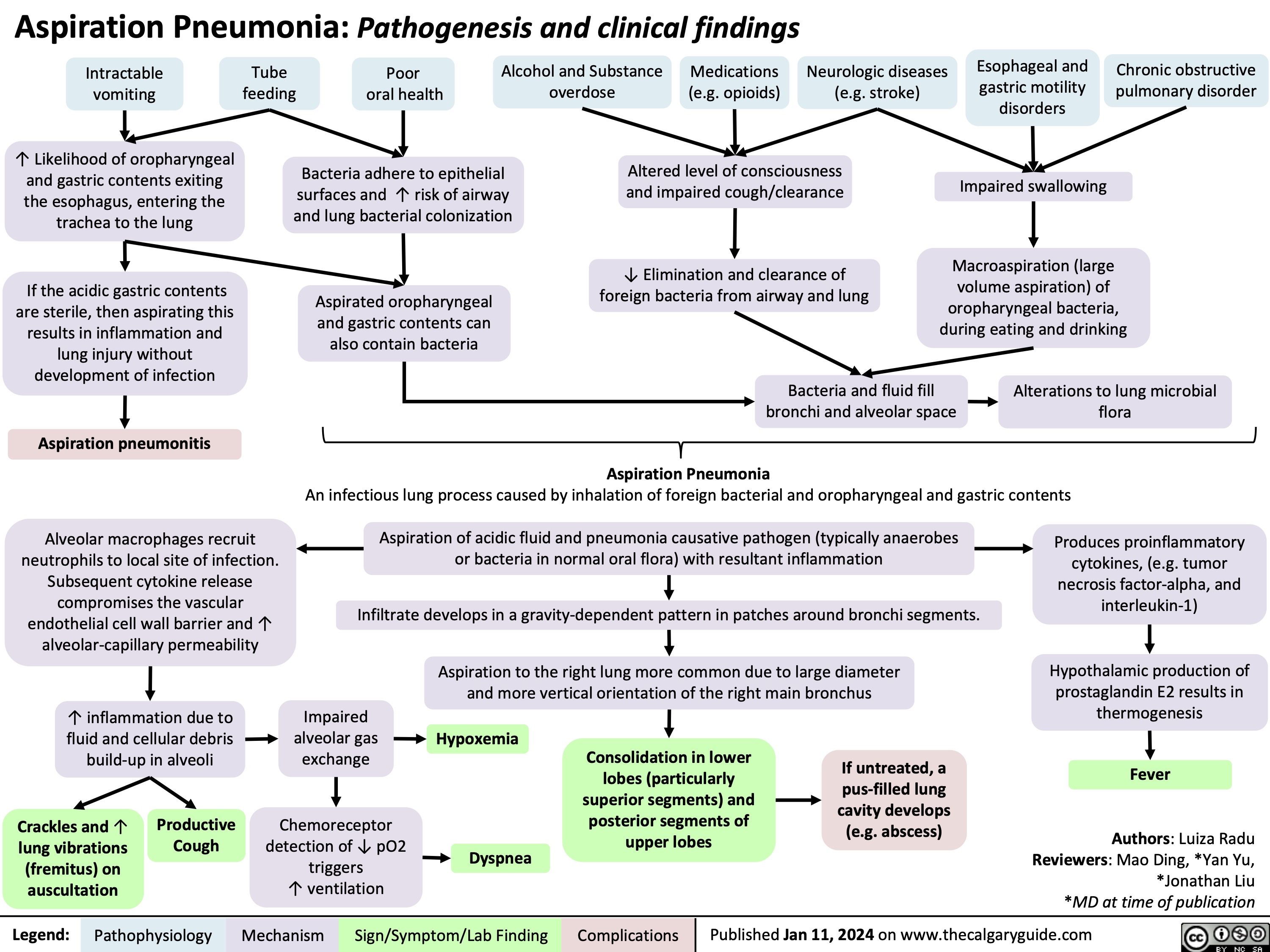
Aspiration Pneumonia: Pathogenesis and clinical findings
        Intractable vomiting
↑ Likelihood of oropharyngeal and gastric contents exiting the esophagus, entering the trachea to the lung
If the acidic gastric contents are sterile, then aspirating this results in inflammation and lung injury without development of infection
Aspiration pneumonitis
Alveolar macrophages recruit neutrophils to local site of infection. Subsequent cytokine release compromises the vascular endothelial cell wall barrier and ↑ alveolar-capillary permeability
↑ inflammation due to fluid and cellular debris build-up in alveoli
overdose
(e.g. opioids) (e.g. stroke)
Altered level of consciousness and impaired cough/clearance
Tube Poor Alcohol and Substance Medications Neurologic diseases
Esophageal and gastric motility disorders
Impaired swallowing
Chronic obstructive pulmonary disorder
feeding oral health
Bacteria adhere to epithelial surfaces and ↑ risk of airway and lung bacterial colonization
Aspirated oropharyngeal and gastric contents can also contain bacteria
↓ Elimination and clearance of foreign bacteria from airway and lung
Macroaspiration (large volume aspiration) of oropharyngeal bacteria, during eating and drinking
                    Bacteria and fluid fill bronchi and alveolar space
Aspiration Pneumonia
Alterations to lung microbial flora
  An infectious lung process caused by inhalation of foreign bacterial and oropharyngeal and gastric contents
   Aspiration of acidic fluid and pneumonia causative pathogen (typically anaerobes or bacteria in normal oral flora) with resultant inflammation
Infiltrate develops in a gravity-dependent pattern in patches around bronchi segments.
Produces proinflammatory cytokines, (e.g. tumor necrosis factor-alpha, and interleukin-1)
Hypothalamic production of prostaglandin E2 results in thermogenesis
Fever
Authors: Luiza Radu
Reviewers: Mao Ding, *Yan Yu, *Jonathan Liu *MD at time of publication
    Aspiration to the right lung more common due to large diameter and more vertical orientation of the right main bronchus
          Crackles and ↑ lung vibrations (fremitus) on auscultation
Productive Cough
Impaired alveolar gas exchange
Chemoreceptor detection of ↓ pO2 triggers
↑ ventilation
Hypoxemia
Dyspnea
Consolidation in lower lobes (particularly superior segments) and posterior segments of upper lobes
If untreated, a
pus-filled lung cavity develops (e.g. abscess)
  Legend:
 Pathophysiology
Mechanism
Sign/Symptom/Lab Finding
 Complications
 Published Jan 11, 2024 on www.thecalgaryguide.com

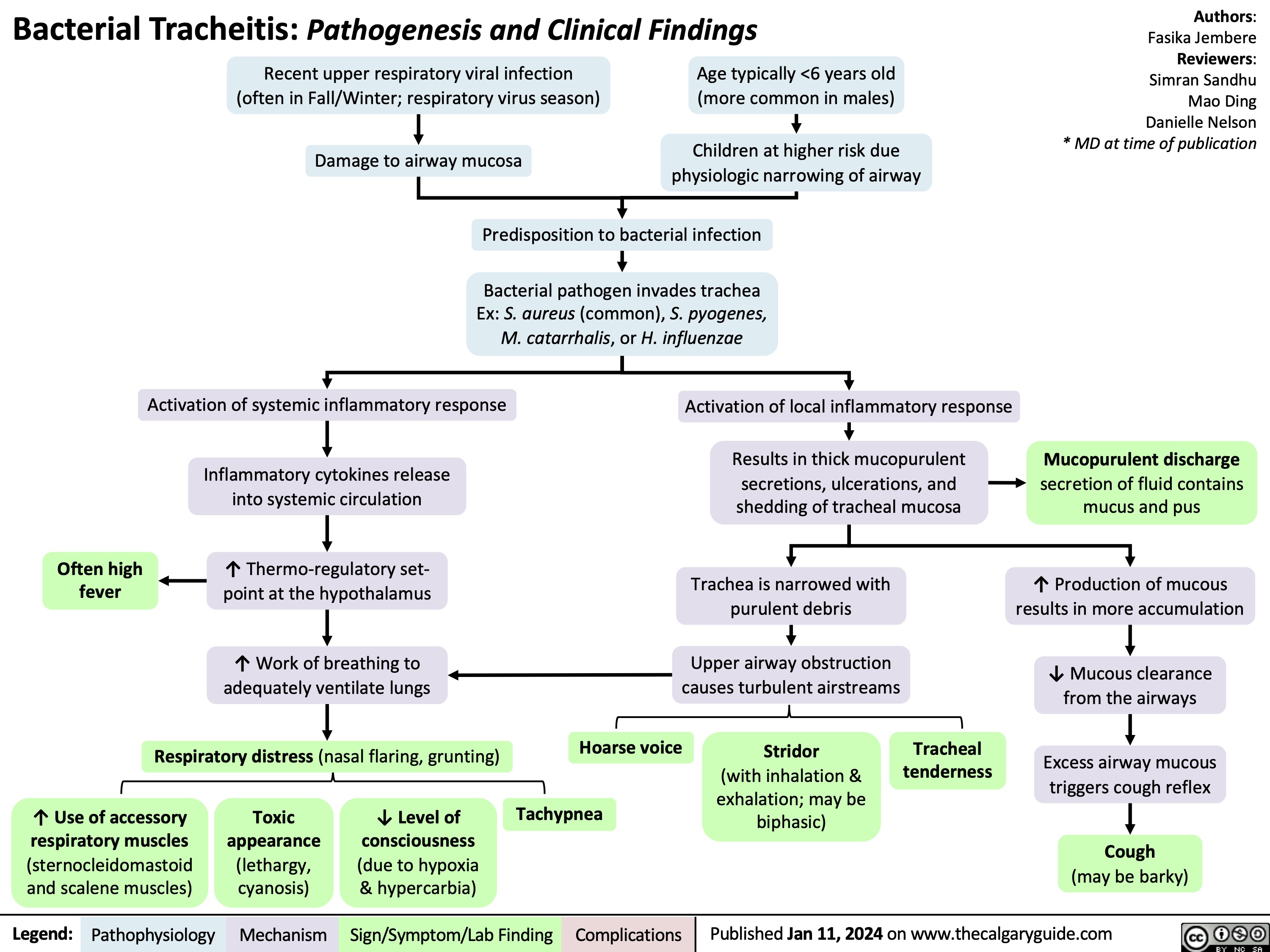
Bacterial Tracheitis

Bacterial Tracheitis: Pathogenesis and Clinical Findings
Authors: Fasika Jembere Reviewers: Simran Sandhu Mao Ding Danielle Nelson * MD at time of publication
  Recent upper respiratory viral infection
Age typically <6 years old (more common in males)
Children at higher risk due physiologic narrowing of airway
 Recent upper respiratory viral infection
(often in Fall/Winter; respiratory virus season) Damage to airway mucosa
    Activation of systemic inflammatory response
Inflammatory cytokines release into systemic circulation
↑ Thermo-regulatory set- point at the hypothalamus
↑ Work of breathing to adequately ventilate lungs
Respiratory distress (nasal flaring, grunting)
Activation of local inflammatory response
Results in thick mucopurulent secretions, ulcerations, and shedding of tracheal mucosa
Mucopurulent discharge
secretion of fluid contains mucus and pus
↑ Production of mucous results in more accumulation
Predisposition to bacterial infection
Bacterial pathogen invades trachea Ex: S. aureus (common), S. pyogenes, M. catarrhalis, or H. influenzae
          Often high fever
Trachea is narrowed with purulent debris
Upper airway obstruction causes turbulent airstreams
          Hoarse voice Tachypnea
Stridor
(with inhalation & exhalation; may be biphasic)
Tracheal tenderness
↓ Mucous clearance from the airways
Excess airway mucous triggers cough reflex
Cough
(may be barky)
      ↑ Use of accessory
respiratory muscles
(sternocleidomastoid and scalene muscles)
Toxic appearance (lethargy, cyanosis)
↓ Level of consciousness (due to hypoxia & hypercarbia)
  Legend:
 Pathophysiology
Mechanism
Sign/Symptom/Lab Finding
 Complications
Published Jan 11, 2024 on www.thecalgaryguide.com

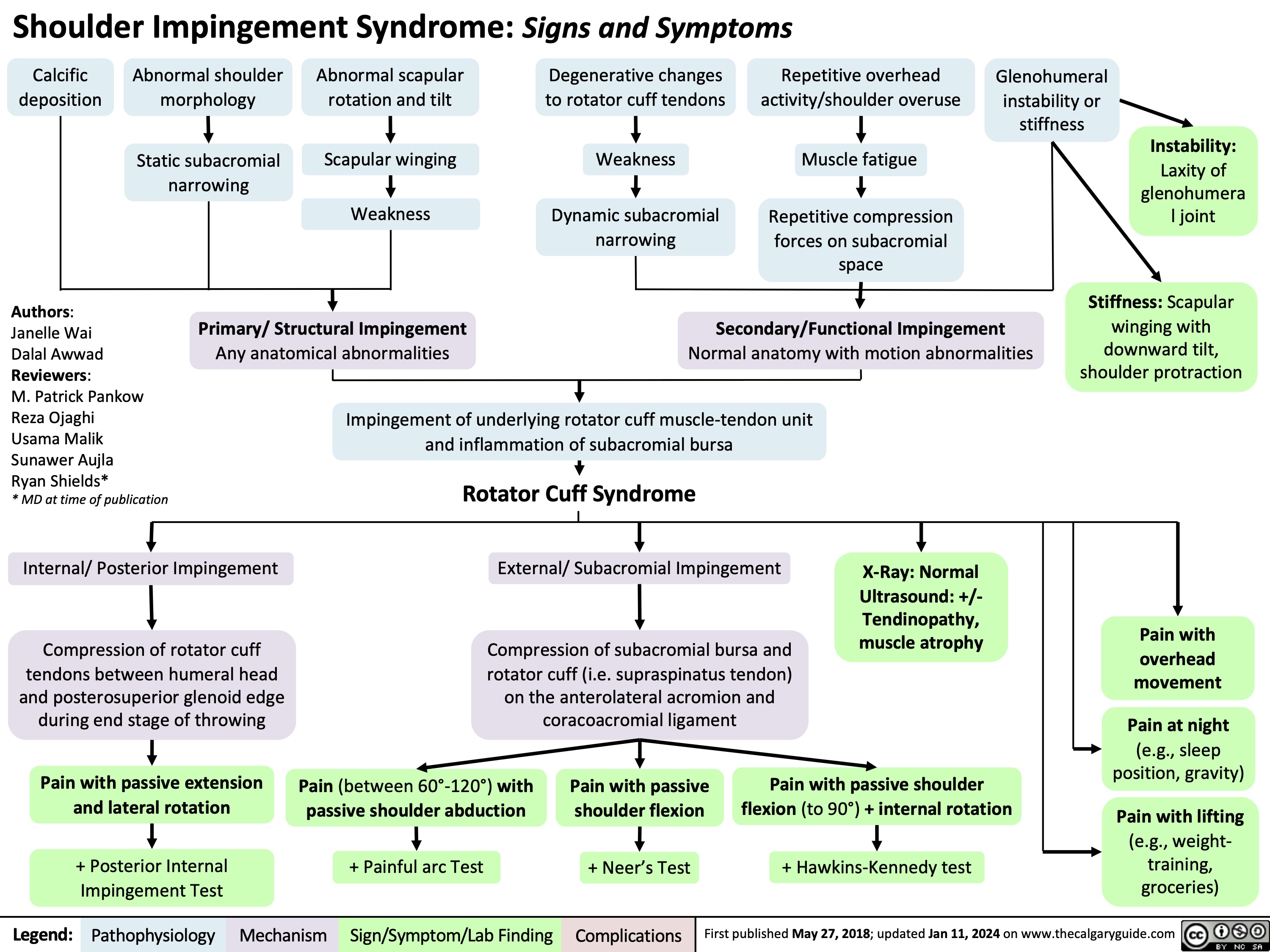
Shoulder Impingement Syndrome

Shoulder Impingement Syndrome: Signs and Symptoms
      Calcific deposition
Abnormal shoulder morphology
Static subacromial narrowing
Abnormal scapular rotation and tilt
Scapular winging Weakness
Degenerative changes to rotator cuff tendons
Weakness
Dynamic subacromial narrowing
Repetitive overhead activity/shoulder overuse
Muscle fatigue
Repetitive compression forces on subacromial space
Glenohumeral instability or stiffness
                Authors:
Janelle Wai
Dalal Awwad Reviewers:
M. Patrick Pankow Reza Ojaghi Usama Malik Sunawer Aujla Ryan Shields*
* MD at time of publication
Internal/ Posterior Impingement
Compression of rotator cuff tendons between humeral head and posterosuperior glenoid edge during end stage of throwing
Pain with passive extension and lateral rotation
+ Posterior Internal Impingement Test
Instability:
Laxity of glenohumera l joint
Stiffness: Scapular winging with downward tilt, shoulder protraction
  Primary/ Structural Impingement
Any anatomical abnormalities
Secondary/Functional Impingement
Normal anatomy with motion abnormalities
  Impingement of underlying rotator cuff muscle-tendon unit and inflammation of subacromial bursa
Rotator Cuff Syndrome
External/ Subacromial Impingement
Compression of subacromial bursa and rotator cuff (i.e. supraspinatus tendon) on the anterolateral acromion and coracoacromial ligament
X-Ray: Normal Ultrasound: +/- Tendinopathy, muscle atrophy
Pain with
overhead movement
Pain at night
(e.g., sleep position, gravity)
Pain with lifting
(e.g., weight- training, groceries)
                Pain (between 60°-120°) with passive shoulder abduction
+ Painful arc Test
Pain with passive shoulder flexion
+ Neer’s Test
Pain with passive shoulder flexion (to 90°) + internal rotation
+ Hawkins-Kennedy test
      Legend:
 Pathophysiology
Mechanism
 Sign/Symptom/Lab Finding
 Complications
 First published May 27, 2018; updated Jan 11, 2024 on www.thecalgaryguide.com

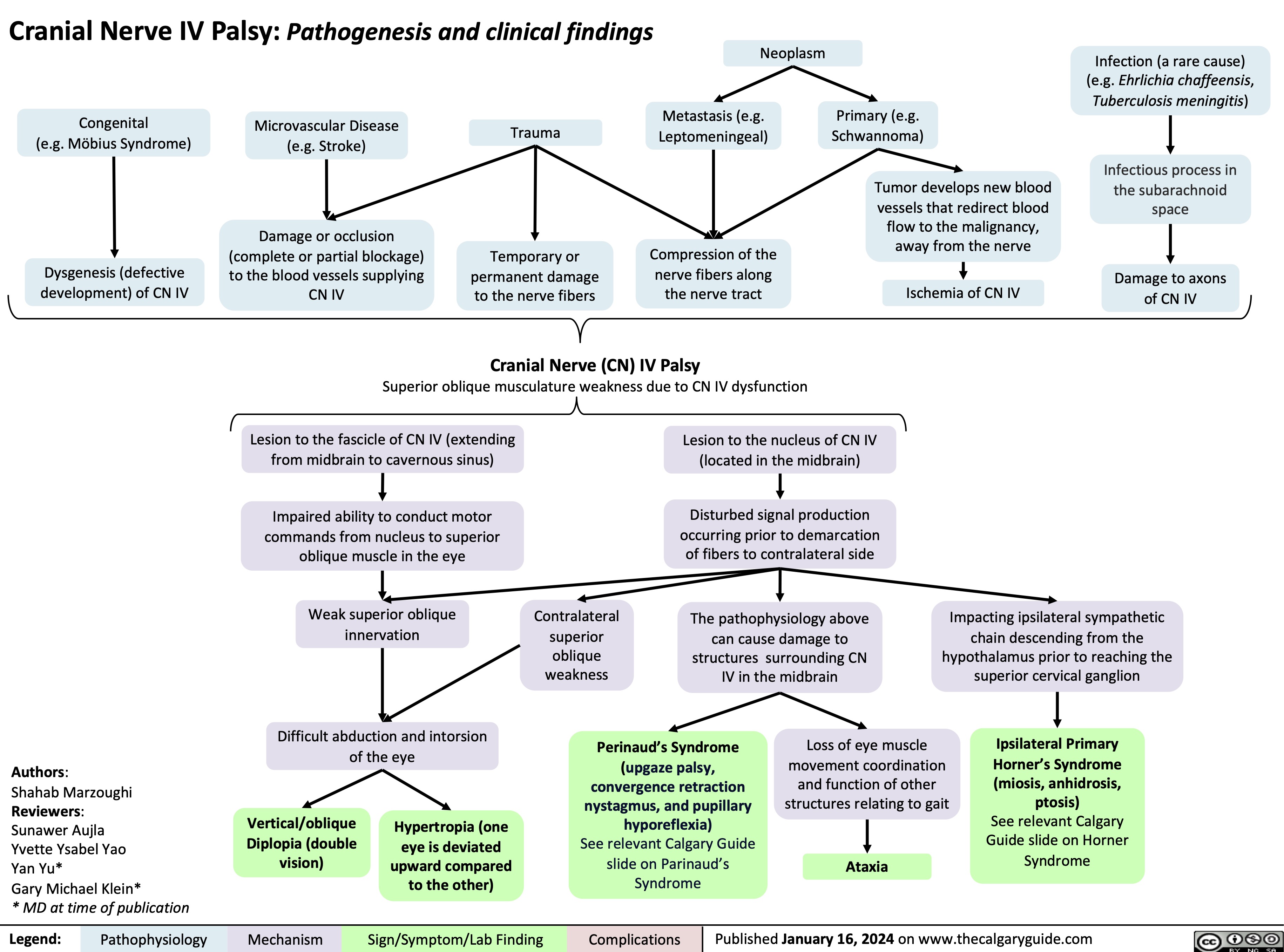
Cranial Nerve IV Palsy

Cranial Nerve IV Palsy: Pathogenesis and clinical findings
        Congenital
(e.g. Möbius Syndrome)
Dysgenesis (defective development) of CN IV
Microvascular Disease (e.g. Stroke)
Damage or occlusion (complete or partial blockage) to the blood vessels supplying CN IV
Trauma
Temporary or permanent damage to the nerve fibers
Neoplasm
Metastasis (e.g. Leptomeningeal)
Compression of the nerve fibers along the nerve tract
Primary (e.g. Schwannoma)
Tumor develops new blood vessels that redirect blood flow to the malignancy, away from the nerve
Ischemia of CN IV
Infection (a rare cause) (e.g. Ehrlichia chaffeensis, Tuberculosis meningitis)
Infectious process in the subarachnoid space
Damage to axons of CN IV
                 Cranial Nerve (CN) IV Palsy
Superior oblique musculature weakness due to CN IV dysfunction
   Lesion to the fascicle of CN IV (extending from midbrain to cavernous sinus)
Impaired ability to conduct motor commands from nucleus to superior oblique muscle in the eye
Weak superior oblique innervation
Difficult abduction and intorsion of the eye
Contralateral superior
oblique weakness
Lesion to the nucleus of CN IV (located in the midbrain)
Disturbed signal production occurring prior to demarcation of fibers to contralateral side
The pathophysiology above can cause damage to structures surrounding CN IV in the midbrain
Impacting ipsilateral sympathetic chain descending from the
hypothalamus prior to reaching the superior cervical ganglion
               Authors:
Shahab Marzoughi Reviewers:
Sunawer Aujla
Yvette Ysabel Yao
Yan Yu*
Gary Michael Klein*
* MD at time of publication
Vertical/oblique Diplopia (double vision)
Hypertropia (one eye is deviated upward compared to the other)
Perinaud’s Syndrome (upgaze palsy, convergence retraction nystagmus, and pupillary hyporeflexia)
See relevant Calgary Guide slide on Parinaud’s Syndrome
Loss of eye muscle movement coordination and function of other structures relating to gait
Ataxia
Ipsilateral Primary Horner’s Syndrome (miosis, anhidrosis, ptosis)
See relevant Calgary Guide slide on Horner Syndrome
      Legend:
 Pathophysiology
Mechanism
Sign/Symptom/Lab Finding
 Complications
Published January 16, 2024 on www.thecalgaryguide.com

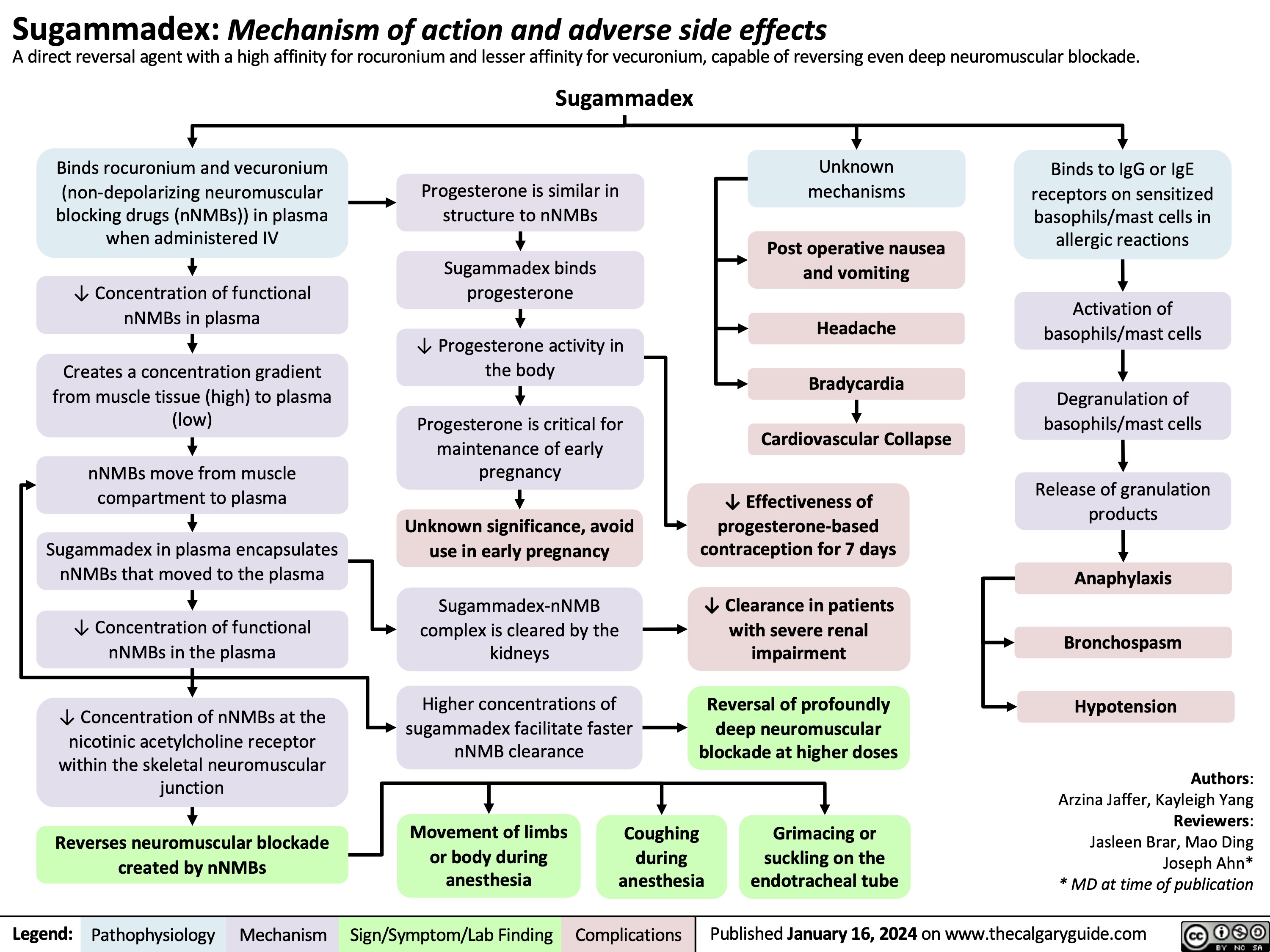
Sugammadex

Sugammadex: Mechanism of action and adverse side effects
A direct reversal agent with a high affinity for rocuronium and lesser affinity for vecuronium, capable of reversing even deep neuromuscular blockade.
      Binds rocuronium and vecuronium (non-depolarizing neuromuscular blocking drugs (nNMBs)) in plasma when administered IV
↓ Concentration of functional nNMBs in plasma
Creates a concentration gradient from muscle tissue (high) to plasma (low)
nNMBs move from muscle compartment to plasma
Sugammadex in plasma encapsulates nNMBs that moved to the plasma
↓ Concentration of functional nNMBs in the plasma
↓ Concentration of nNMBs at the nicotinic acetylcholine receptor within the skeletal neuromuscular junction
Reverses neuromuscular blockade created by nNMBs
Sugammadex
Progesterone is similar in structure to nNMBs
Sugammadex binds progesterone
↓ Progesterone activity in the body
Progesterone is critical for maintenance of early pregnancy
Unknown significance, avoid use in early pregnancy
Sugammadex-nNMB complex is cleared by the kidneys
Higher concentrations of sugammadex facilitate faster nNMB clearance
Unknown mechanisms
Post operative nausea and vomiting
Headache Bradycardia Cardiovascular Collapse
↓ Effectiveness of progesterone-based contraception for 7 days
↓ Clearance in patients with severe renal impairment
Reversal of profoundly deep neuromuscular blockade at higher doses
Binds to IgG or IgE receptors on sensitized basophils/mast cells in allergic reactions
Activation of basophils/mast cells
Degranulation of basophils/mast cells
Release of granulation products
Anaphylaxis Bronchospasm Hypotension
Authors: Arzina Jaffer, Kayleigh Yang Reviewers: Jasleen Brar, Mao Ding Joseph Ahn* * MD at time of publication
                                    Movement of limbs or body during anesthesia
Coughing during anesthesia
Grimacing or suckling on the endotracheal tube
  Legend:
 Pathophysiology
 Mechanism
Sign/Symptom/Lab Finding
 Complications
 Published January 16, 2024 on www.thecalgaryguide.com

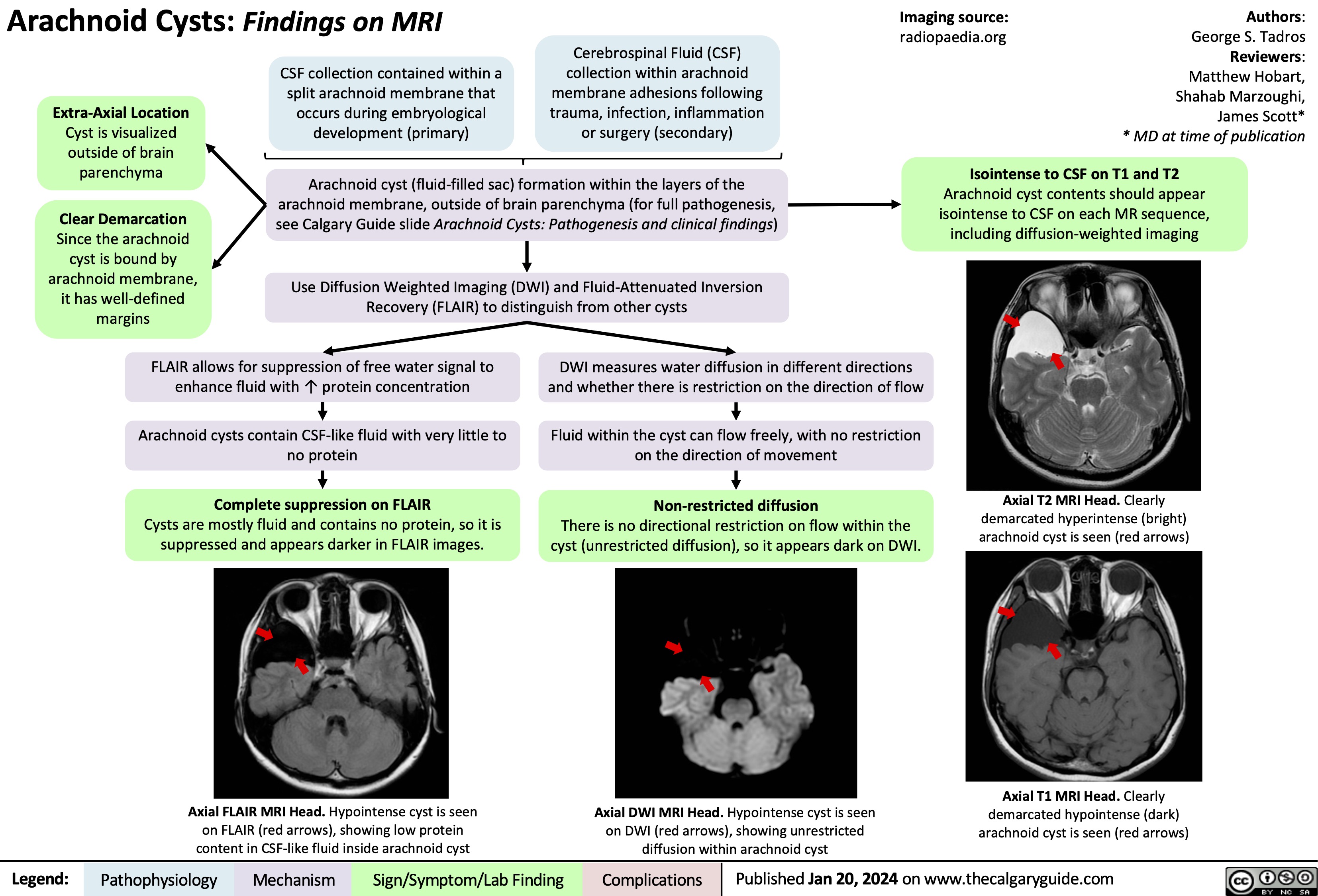
Arachnoid Cysts MRI Findings

Arachnoid Cysts: Findings on MRI
Imaging source:
radiopaedia.org
Authors: George S. Tadros Reviewers: Matthew Hobart, Shahab Marzoughi, James Scott* * MD at time of publication
   Extra-Axial Location
Cyst is visualized outside of brain parenchyma
Clear Demarcation
Since the arachnoid cyst is bound by arachnoid membrane, it has well-defined margins
CSF collection contained within a split arachnoid membrane that occurs during embryological development (primary)
Cerebrospinal Fluid (CSF) collection within arachnoid membrane adhesions following trauma, infection, inflammation or surgery (secondary)
    Arachnoid cyst (fluid-filled sac) formation within the layers of the arachnoid membrane, outside of brain parenchyma (for full pathogenesis, see Calgary Guide slide Arachnoid Cysts: Pathogenesis and clinical findings)
Use Diffusion Weighted Imaging (DWI) and Fluid-Attenuated Inversion Recovery (FLAIR) to distinguish from other cysts
Isointense to CSF on T1 and T2
Arachnoid cyst contents should appear isointense to CSF on each MR sequence, including diffusion-weighted imaging
Axial T2 MRI Head. Clearly demarcated hyperintense (bright) arachnoid cyst is seen (red arrows)
Axial T1 MRI Head. Clearly demarcated hypointense (dark) arachnoid cyst is seen (red arrows)
        FLAIR allows for suppression of free water signal to enhance fluid with ↑ protein concentration
Arachnoid cysts contain CSF-like fluid with very little to no protein
Complete suppression on FLAIR
Cysts are mostly fluid and contains no protein, so it is suppressed and appears darker in FLAIR images.
Axial FLAIR MRI Head. Hypointense cyst is seen on FLAIR (red arrows), showing low protein content in CSF-like fluid inside arachnoid cyst
DWI measures water diffusion in different directions and whether there is restriction on the direction of flow
Fluid within the cyst can flow freely, with no restriction on the direction of movement
Non-restricted diffusion
There is no directional restriction on flow within the cyst (unrestricted diffusion), so it appears dark on DWI.
Axial DWI MRI Head. Hypointense cyst is seen on DWI (red arrows), showing unrestricted diffusion within arachnoid cyst
        Legend:
 Pathophysiology
Mechanism
Sign/Symptom/Lab Finding
 Complications
 Published Jan 20, 2024 on www.thecalgaryguide.com

Arachnoid Cysts Pathogenesis and clinical findings
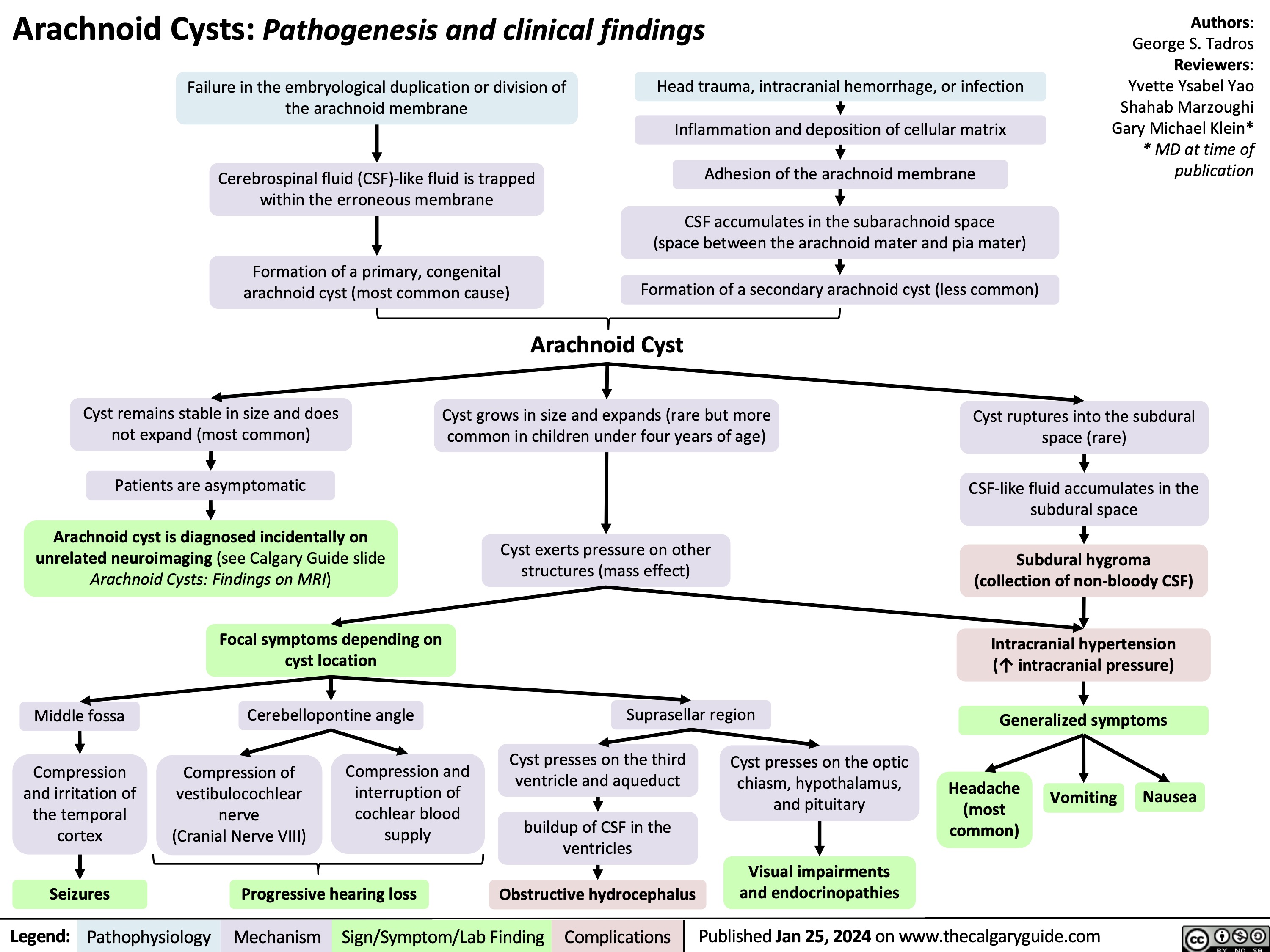
Arachnoid Cysts: Pathogenesis and clinical findings
Authors: George S. Tadros Reviewers: Yvette Ysabel Yao Shahab Marzoughi Gary Michael Klein* * MD at time of publication
  Failure in the embryological duplication or division of the arachnoid membrane
Cerebrospinal fluid (CSF)-like fluid is trapped within the erroneous membrane
Formation of a primary, congenital arachnoid cyst (most common cause)
Head trauma, intracranial hemorrhage, or infection
Inflammation and deposition of cellular matrix Adhesion of the arachnoid membrane
CSF accumulates in the subarachnoid space (space between the arachnoid mater and pia mater)
Formation of a secondary arachnoid cyst (less common)
            Cyst remains stable in size and does not expand (most common)
Patients are asymptomatic
Arachnoid cyst is diagnosed incidentally on unrelated neuroimaging (see Calgary Guide slide Arachnoid Cysts: Findings on MRI)
Arachnoid Cyst
Cyst grows in size and expands (rare but more common in children under four years of age)
Cyst exerts pressure on other structures (mass effect)
Suprasellar region
Cyst ruptures into the subdural space (rare)
CSF-like fluid accumulates in the subdural space
Subdural hygroma (collection of non-bloody CSF)
Intracranial hypertension (↑ intracranial pressure)
Generalized symptoms
               Middle fossa
Compression and irritation of the temporal cortex
Seizures
Focal symptoms depending on cyst location
Cerebellopontine angle
          Compression of vestibulocochlear nerve (Cranial Nerve VIII)
Compression and interruption of cochlear blood supply
Cyst presses on the third ventricle and aqueduct
buildup of CSF in the ventricles
Obstructive hydrocephalus
Cyst presses on the optic chiasm, hypothalamus, and pituitary
Visual impairments and endocrinopathies
Headache (most common)
Vomiting
Nausea
         Progressive hearing loss
 Legend:
 Pathophysiology
Mechanism
Sign/Symptom/Lab Finding
 Complications
Published Jan 25, 2024 on www.thecalgaryguide.com

Avascular Necrosis AVN of the Femoral Head Findings on MRI
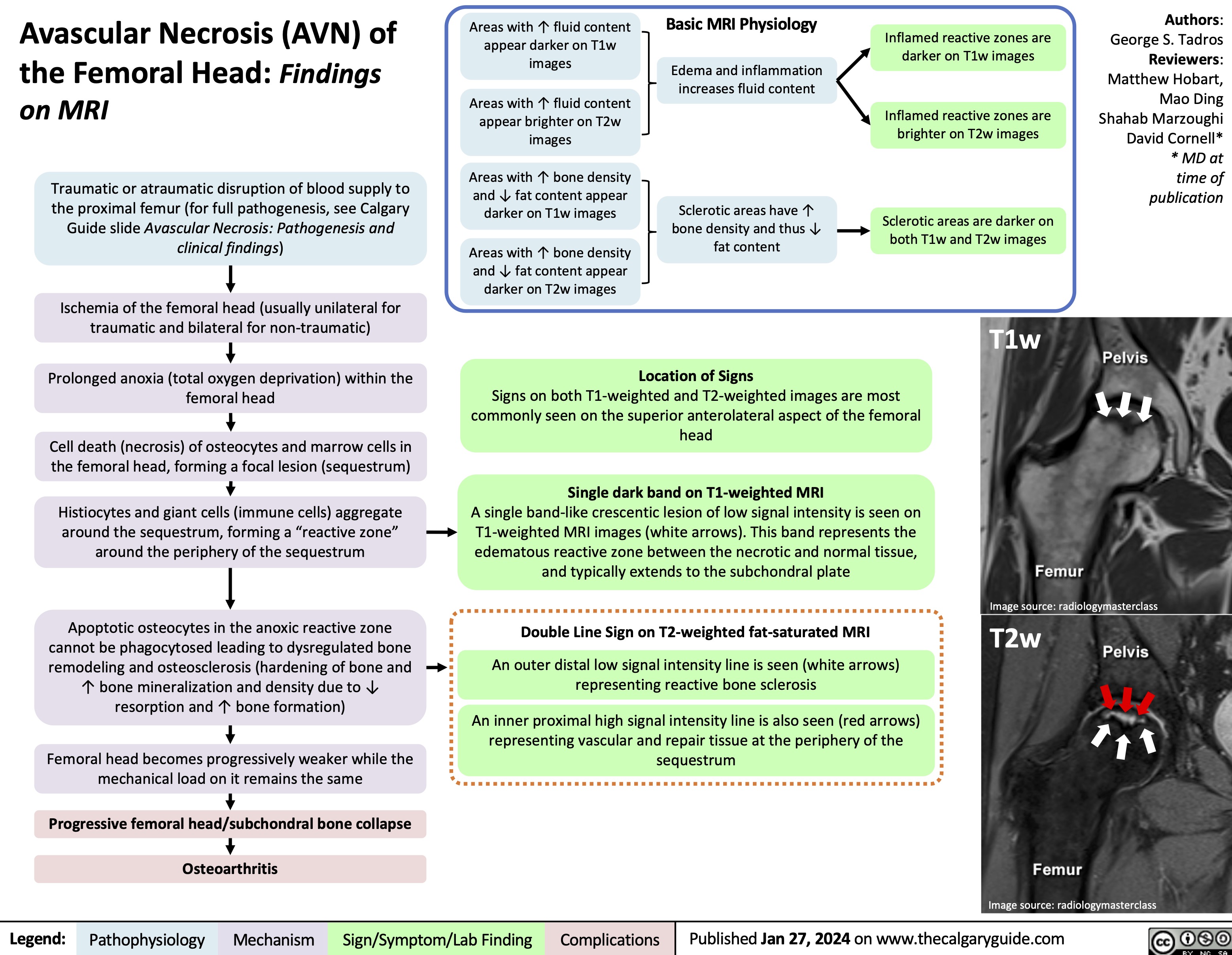
 Avascular Necrosis (AVN) of the Femoral Head: Findings on MRI
Traumatic or atraumatic disruption of blood supply to the proximal femur (for full pathogenesis, see Calgary Guide slide Avascular Necrosis: Pathogenesis and clinical findings)
Ischemia of the femoral head (usually unilateral for traumatic and bilateral for non-traumatic)
Prolonged anoxia (total oxygen deprivation) within the femoral head
Cell death (necrosis) of osteocytes and marrow cells in the femoral head, forming a focal lesion (sequestrum)
Histiocytes and giant cells (immune cells) aggregate around the sequestrum, forming a “reactive zone” around the periphery of the sequestrum
Apoptotic osteocytes in the anoxic reactive zone cannot be phagocytosed leading to dysregulated bone remodeling and osteosclerosis (hardening of bone and ↑ bone mineralization and density due to ↓ resorption and ↑ bone formation)
Femoral head becomes progressively weaker while the mechanical load on it remains the same
Progressive femoral head/subchondral bone collapse Osteoarthritis
Areas with ↑ fluid content appear darker on T1w images
Areas with ↑ fluid content appear brighter on T2w images
Areas with ↑ bone density and ↓ fat content appear darker on T1w images
Areas with ↑ bone density and ↓ fat content appear darker on T2w images
Basic MRI Physiology
Edema and inflammation increases fluid content
Sclerotic areas have ↑ bone density and thus ↓ fat content
Location of Signs
Inflamed reactive zones are darker on T1w images
Inflamed reactive zones are brighter on T2w images
Sclerotic areas are darker on both T1w and T2w images
Authors: George S. Tadros Reviewers: Matthew Hobart, Mao Ding Shahab Marzoughi David Cornell* * MD at time of publication
              T1w
  Signs on both T1-weighted and T2-weighted images are most commonly seen on the superior anterolateral aspect of the femoral head
Single dark band on T1-weighted MRI
A single band-like crescentic lesion of low signal intensity is seen on T1-weighted MRI images (white arrows). This band represents the edematous reactive zone between the necrotic and normal tissue, and typically extends to the subchondral plate
      Double Line Sign on T2-weighted fat-saturated MRI
An outer distal low signal intensity line is seen (white arrows) representing reactive bone sclerosis
Image source: radiologymasterclass
T2w
  An inner proximal high signal intensity line is also seen (red arrows) representing vascular and repair tissue at the periphery of the sequestrum
   Image source: radiologymasterclass
 Legend:
 Pathophysiology
Mechanism
Sign/Symptom/Lab Finding
 Complications
Published Jan 27, 2024 on www.thecalgaryguide.com

Bacterial Infections from Transfusion
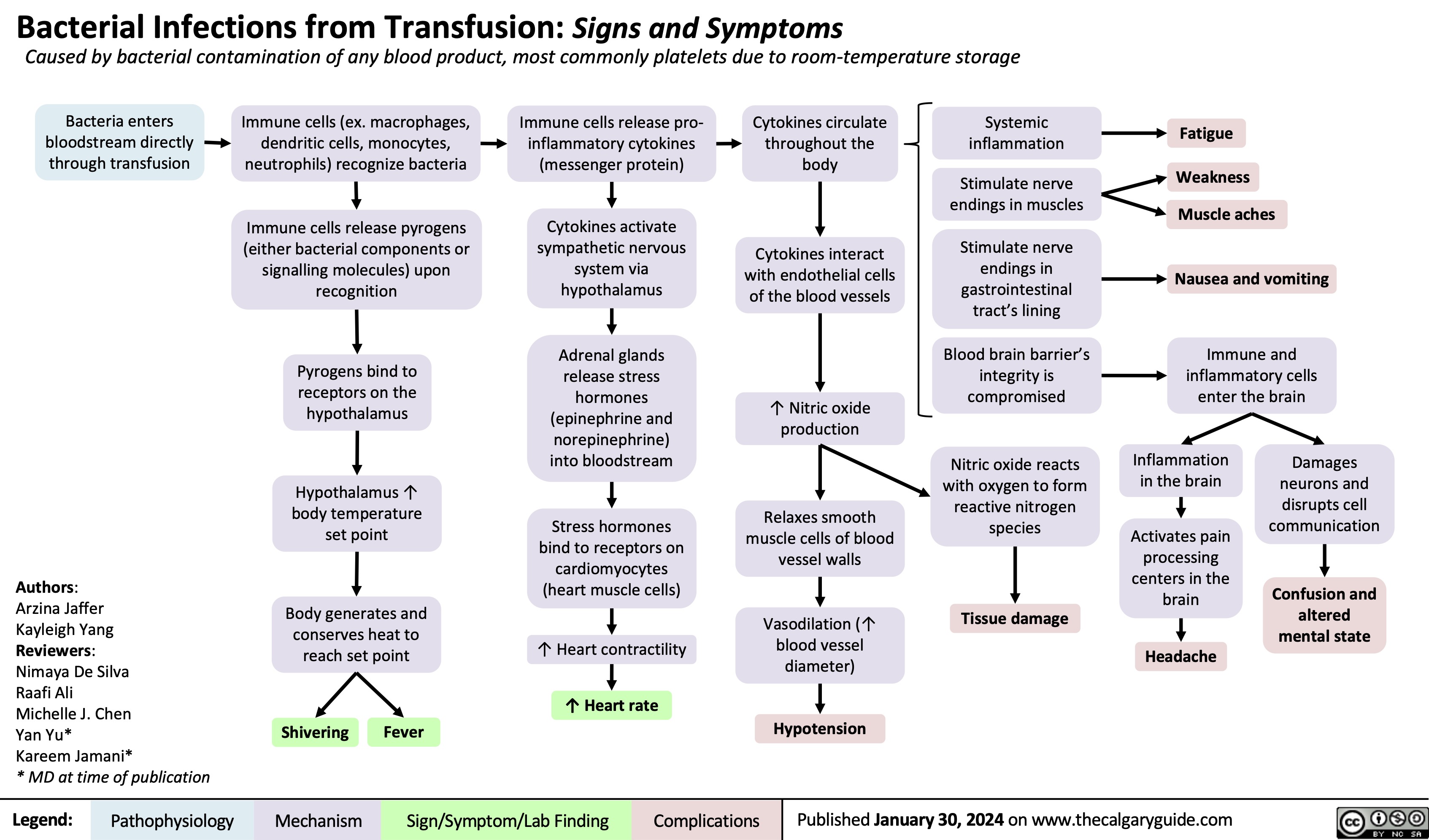
Bacterial Infections from Transfusion: Signs and Symptoms
Caused by bacterial contamination of any blood product, most commonly platelets due to room-temperature storage
      Bacteria enters bloodstream directly through transfusion
Immune cells (ex. macrophages, dendritic cells, monocytes, neutrophils) recognize bacteria
Immune cells release pyrogens (either bacterial components or signalling molecules) upon recognition
Pyrogens bind to receptors on the hypothalamus
Hypothalamus ↑ body temperature set point
Body generates and conserves heat to reach set point
Immune cells release pro- inflammatory cytokines (messenger protein)
Cytokines activate sympathetic nervous system via hypothalamus
Adrenal glands release stress hormones (epinephrine and norepinephrine) into bloodstream
Stress hormones bind to receptors on cardiomyocytes (heart muscle cells)
↑ Heart contractility
↑ Heart rate
Cytokines circulate throughout the body
Cytokines interact with endothelial cells of the blood vessels
↑ Nitric oxide production
Relaxes smooth muscle cells of blood vessel walls
Vasodilation (↑ blood vessel diameter)
Hypotension
Systemic inflammation
Stimulate nerve endings in muscles
Stimulate nerve endings in gastrointestinal tract’s lining
Blood brain barrier’s integrity is compromised
Nitric oxide reacts with oxygen to form reactive nitrogen species
Tissue damage
Fatigue
Weakness Muscle aches
Nausea and vomiting
Immune and inflammatory cells enter the brain
                             Authors:
Arzina Jaffer
Kayleigh Yang
Reviewers:
Nimaya De Silva
Raafi Ali
Michelle J. Chen
Yan Yu*
Kareem Jamani*
* MD at time of publication
Inflammation in the brain
Activates pain processing centers in the brain
Headache
Damages neurons and disrupts cell communication
Confusion and altered mental state
           Shivering
Fever
 Legend:
 Pathophysiology
 Mechanism
 Sign/Symptom/Lab Finding
 Complications
 Published January 30, 2024 on www.thecalgaryguide.com

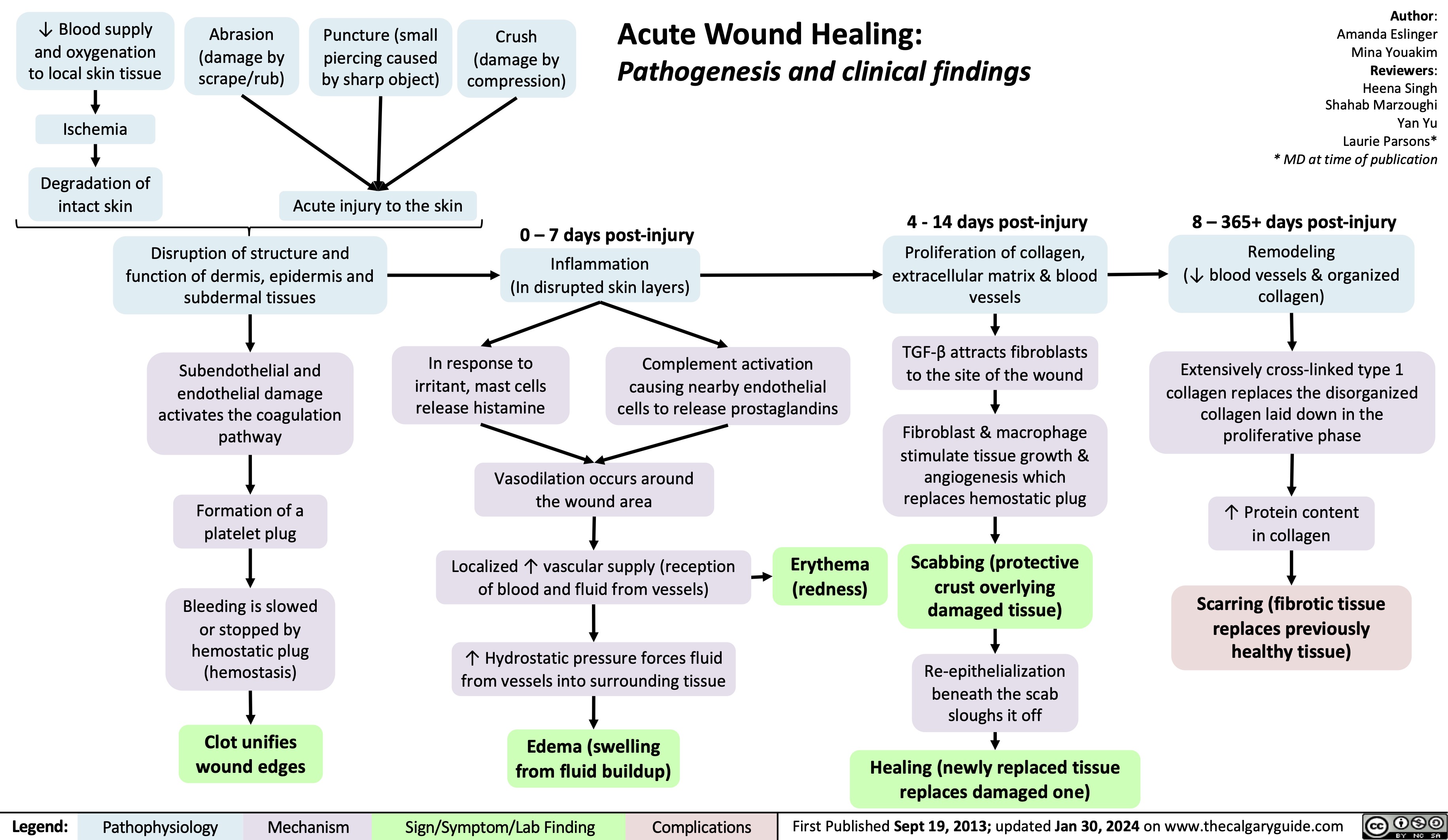
Acute Wound Healing

  ↓ Blood supply and oxygenation to local skin tissue
Ischemia
Degradation of intact skin
Abrasion (damage by scrape/rub)
Puncture (small piercing caused by sharp object)
Acute injury to the skin
Crush (damage by compression)
Acute Wound Healing:
Pathogenesis and clinical findings
Author: Amanda Eslinger Mina Youakim Reviewers: Heena Singh Shahab Marzoughi Yan Yu Laurie Parsons* * MD at time of publication
8 – 365+ days post-injury
Remodeling
(↓ blood vessels & organized collagen)
Extensively cross-linked type 1 collagen replaces the disorganized
collagen laid down in the proliferative phase
↑ Protein content in collagen
Scarring (fibrotic tissue replaces previously healthy tissue)
            Disruption of structure and function of dermis, epidermis and subdermal tissues
Subendothelial and endothelial damage activates the coagulation pathway
Formation of a platelet plug
Bleeding is slowed or stopped by
hemostatic plug (hemostasis)
Clot unifies wound edges
0 – 7 days post-injury
Inflammation
(In disrupted skin layers)
4 - 14 days post-injury
Proliferation of collagen, extracellular matrix & blood vessels
TGF-β attracts fibroblasts to the site of the wound
Fibroblast & macrophage stimulate tissue growth &
angiogenesis which replaces hemostatic plug
Scabbing (protective crust overlying damaged tissue)
Re-epithelialization beneath the scab sloughs it off
Healing (newly replaced tissue replaces damaged one)
        In response to irritant, mast cells release histamine
Complement activation causing nearby endothelial cells to release prostaglandins
      Vasodilation occurs around the wound area
Localized ↑ vascular supply (reception of blood and fluid from vessels)
↑ Hydrostatic pressure forces fluid from vessels into surrounding tissue
Edema (swelling from fluid buildup)
Erythema (redness)
             Legend:
 Pathophysiology
Mechanism
Sign/Symptom/Lab Finding
 Complications
 First Published Sept 19, 2013; updated Jan 30, 2024 on www.thecalgaryguide.com

Carbonic Anhydrase Inhibitor Diuretics
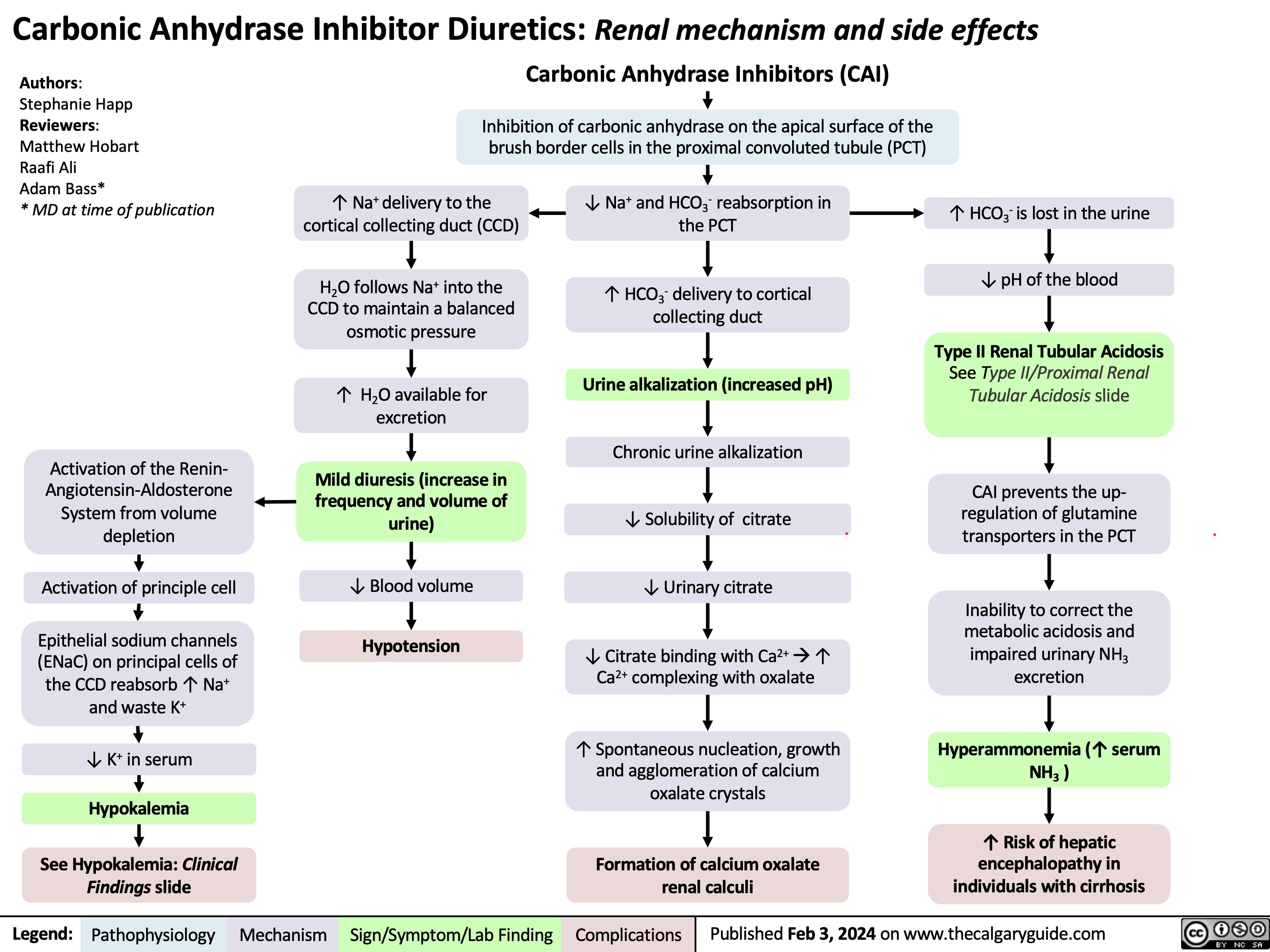
Carbonic Anhydrase Inhibitor Diuretics: Renal mechanism and side effects
Authors:
Stephanie Happ Reviewers:
Matthew Hobart
Raafi Ali
Adam Bass*
* MD at time of publication
Carbonic Anhydrase Inhibitors (CAI)
Inhibition of carbonic anhydrase on the apical surface of the brush border cells in the proximal convoluted tubule (PCT)
             Activation of the Renin- Angiotensin-Aldosterone Systemfromvolume depletion
Activation of principle cell
Epithelial sodium channels (ENaC) on principal cells of the CCD reabsorb ↑ Na+ and waste K+
↓ K+ in serum
Hypokalemia
See Hypokalemia: Clinical
Findings slide
↑ Na+ delivery to the cortical collecting duct (CCD)
H2O follows Na+ into the CCD to maintain a balanced osmotic pressure
↑ H2O available for excretion
Mild diuresis (increase in frequencyandvolumeof urine)
↓ Blood volume
Hypotension
↓ Na+ and HCO3- reabsorption in the PCT
↑ HCO3- delivery to cortical collecting duct
Urine alkalization (increased pH)
Chronic urine alkalization
↓Solubilityof citrate
↓ Urinary citrate
↓ Citrate binding with Ca2+à↑ Ca2+ complexing with oxalate
↑ Spontaneous nucleation, growth and agglomeration of calcium oxalate crystals
Formation of calcium oxalate renal calculi
↑ HCO3- is lost in the urine ↓ pH of the blood
Type II Renal Tubular Acidosis
See Type II/Proximal Renal Tubular Acidosis slide
CAI prevents the up- regulationofglutamine transporters in the PCT
Inability to correct the metabolic acidosis and impaired urinary NH3 excretion
Hyperammonemia (↑ serum NH3 )
↑ Risk of hepatic encephalopathy in individuals with cirrhosis
                  Legend:
 Pathophysiology
 Mechanism
Sign/Symptom/Lab Finding
 Complications
 Published Feb 3, 2024 on www.thecalgaryguide.com
  
Carbonic Anhydrase Inhibitor Diuretics: Renal Mechanism and Side Effects Carbonic Anhydrase Inhibitors (CAI)
Inhibition of carbonic anhydrase on the apical surface of the brush border cells of the proximal convoluted tubule (PCT)
Authors: Stephanie Happ Reviewers: Matt Hobart Name Name* * MD at time of publication
     ↓ Na+ and HCO3- reabsorption in the PCT
↑ Na+ delivery to the cortical collecting duct (CCD)
H2O follows Na+ into the CCD to maintain a balanced osmotic pressure
↑ H O available for 2
excretion
Mild diuresis
↓ Blood volume Hypotension
↑ HCO3- delivery to cortical collecting duct
Epithelial sodium channels (ENaC) on principal cells of the CCD reabsorb ↑ Na+
↑ Intracellular Na+ drives Na+/K+ ATPase activity on the principal cells (moving 2 K+ into cell and 3 Na+ out into the peritubular capillary)
↑ Intracellular K+ drives H+/K+ ATPase activity on the intercalated cells (moving 1 H+ into cell and 1 K+ out into the tubular filtrate)
↓ K+ in serum
Hypokalemia
See Hypokalemia: Clinical Findings slide
Urine alkalization
↑ HCO3- is lost in the urine, leading to ↓ pH of the blood
Renal Tubular Acidosis Type II
See Type II/Proximal Renal Tubular Acidosis slide
CAI inhibit the up-regulation of glutamine transporters in the PCT
Inability to correct the metabolic acidosis and
impaired urinary NH3 excretion
Hyperammonemia
↑ Risk of hepatic encephalopathy in individuals with cirrhosis
Chronic urine alkalization leads to marked ↓ in urinary citrate
↓ Ability of citrate to bind to Ca2+ and calcium oxalate stones
↓ Inhibition of spontaneous nucleation
↓ Prevention of growth and agglomeration of crystals
Formation of calcium oxalate renal calculi
                          Legend:
 Pathophysiology
 Mechanism
Sign/Symptom/Lab Finding
 Complications
Published MONTH, DAY, YEAR on www.thecalgaryguide.com

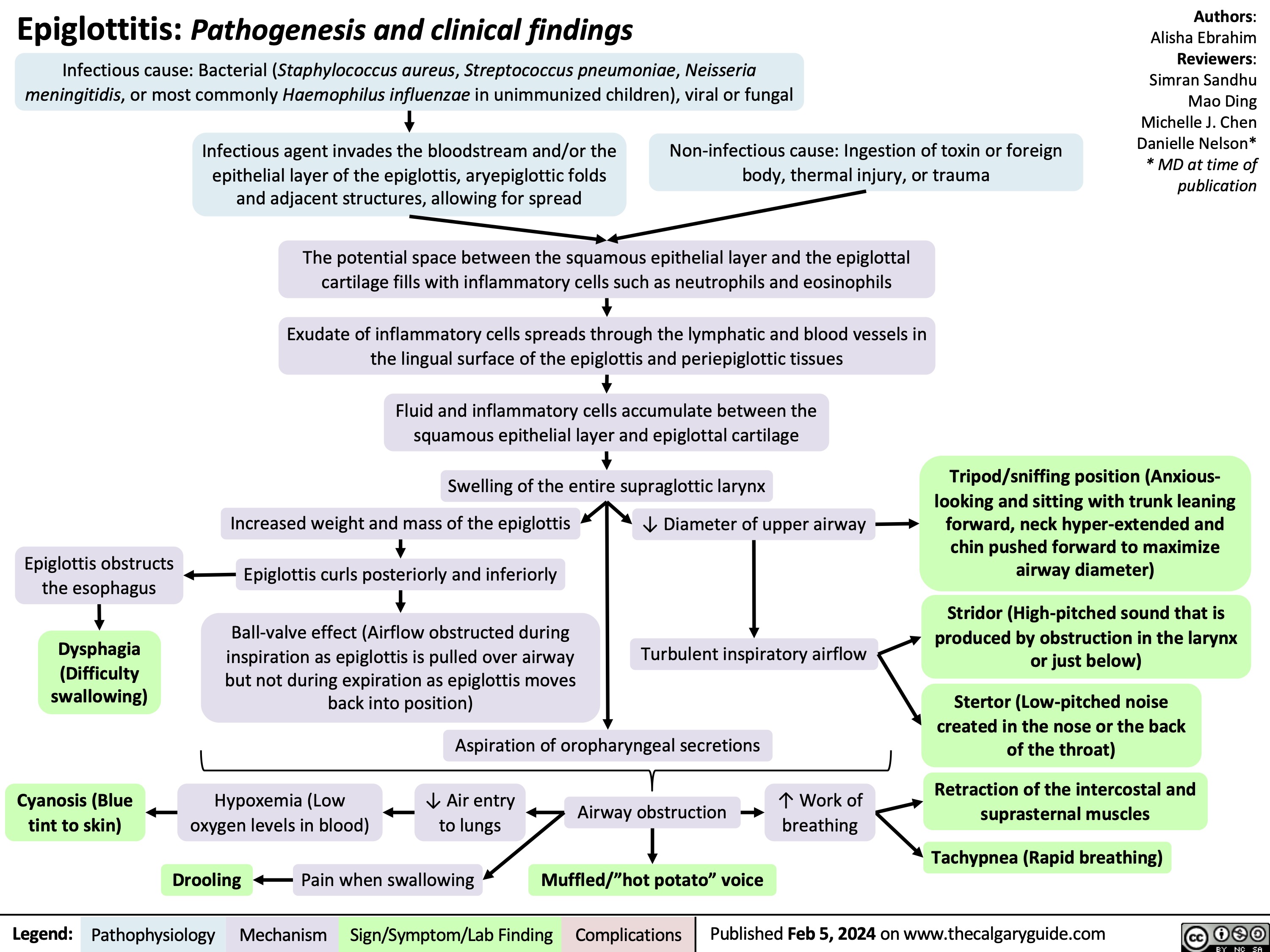
Epiglottitis

Epiglottitis: Pathogenesis and clinical findings
Infectious cause: Bacterial (Staphylococcus aureus, Streptococcus pneumoniae, Neisseria
meningitidis, or most commonly Haemophilus influenzae in unimmunized children), viral or fungal
Authors: Alisha Ebrahim Reviewers: Simran Sandhu Mao Ding Michelle J. Chen Danielle Nelson* * MD at time of publication
   Infectious agent invades the bloodstream and/or the epithelial layer of the epiglottis, aryepiglottic folds and adjacent structures, allowing for spread
Non-infectious cause: Ingestion of toxin or foreign body, thermal injury, or trauma
   The potential space between the squamous epithelial layer and the epiglottal cartilage fills with inflammatory cells such as neutrophils and eosinophils
Exudate of inflammatory cells spreads through the lymphatic and blood vessels in the lingual surface of the epiglottis and periepiglottic tissues
Fluid and inflammatory cells accumulate between the squamous epithelial layer and epiglottal cartilage
Swelling of the entire supraglottic larynx
Tripod/sniffing position (Anxious- looking and sitting with trunk leaning
forward, neck hyper-extended and chin pushed forward to maximize airway diameter)
Stridor (High-pitched sound that is produced by obstruction in the larynx or just below)
Stertor (Low-pitched noise created in the nose or the back of the throat)
Retraction of the intercostal and suprasternal muscles
Tachypnea (Rapid breathing)
       Increased weight and mass of the epiglottis Epiglottis curls posteriorly and inferiorly
Ball-valve effect (Airflow obstructed during inspiration as epiglottis is pulled over airway but not during expiration as epiglottis moves back into position)
↓ Diameter of upper airway
  Epiglottis obstructs the esophagus
Dysphagia (Difficulty swallowing)
Cyanosis (Blue tint to skin)
Turbulent inspiratory airflow Aspiration of oropharyngeal secretions
              Hypoxemia (Low oxygen levels in blood)
↓ Air entry to lungs
Airway obstruction
↑ Work of breathing
      Drooling Pain when swallowing
Muffled/”hot potato” voice
 Legend:
 Pathophysiology
 Mechanism
Sign/Symptom/Lab Finding
 Complications
Published Feb 5, 2024 on www.thecalgaryguide.com

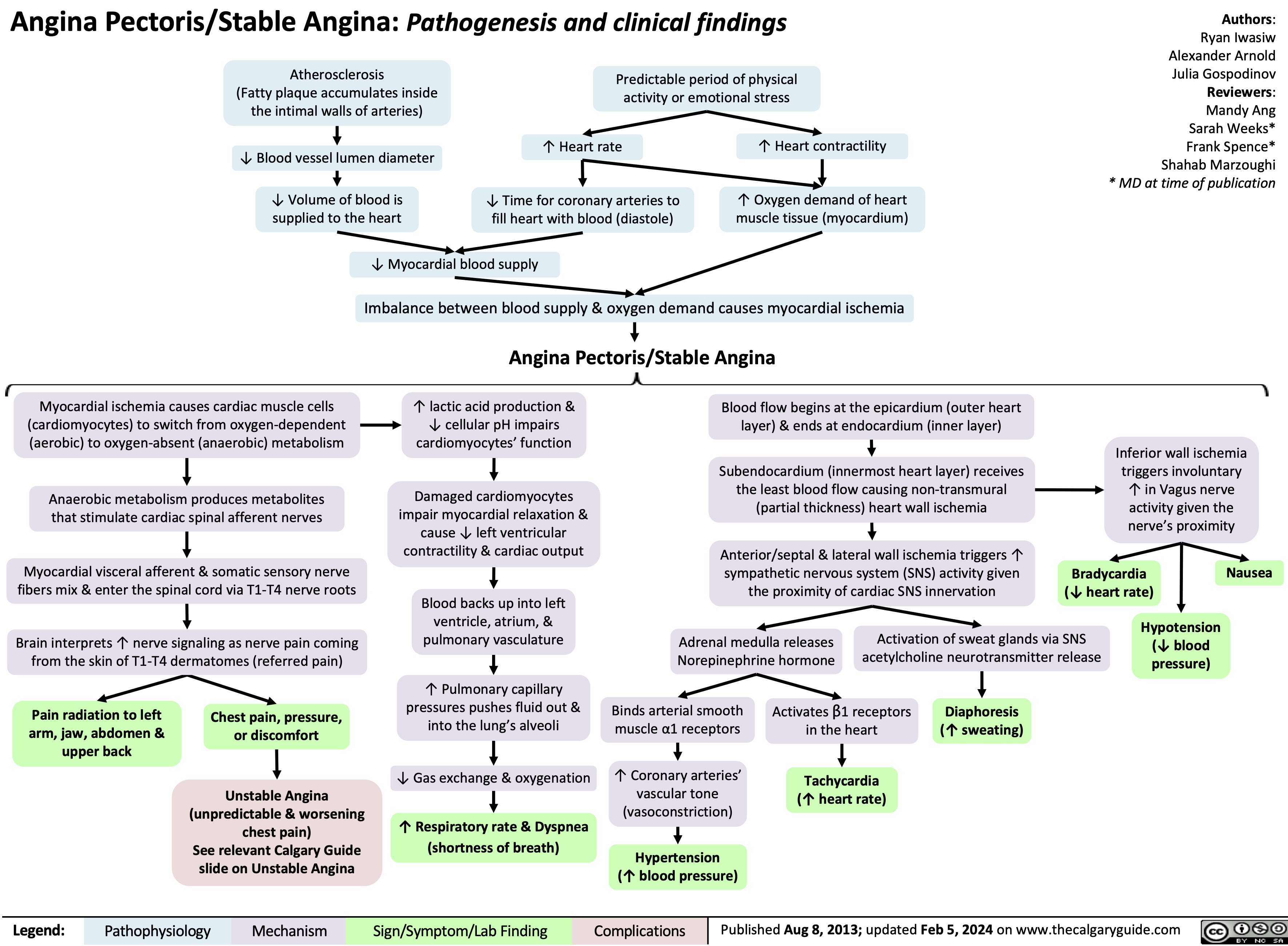
Stable Angina

Angina Pectoris/Stable Angina: Pathogenesis and clinical findings
Authors: Ryan Iwasiw Alexander Arnold Julia Gospodinov Reviewers: Mandy Ang Sarah Weeks* Frank Spence* Shahab Marzoughi * MD at time of publication
 Atherosclerosis
(Fatty plaque accumulates inside the intimal walls of arteries)
↓ Blood vessel lumen diameter
↓ Volume of blood is supplied to the heart
Predictable period of physical activity or emotional stress
    ↑ Heart rate
↓ Time for coronary arteries to fill heart with blood (diastole)
↑ Heart contractility
↑ Oxygen demand of heart muscle tissue (myocardium)
         ↓ Myocardial blood supply
Imbalance between blood supply & oxygen demand causes myocardial ischemia
Angina Pectoris/Stable Angina
      Myocardial ischemia causes cardiac muscle cells (cardiomyocytes) to switch from oxygen-dependent (aerobic) to oxygen-absent (anaerobic) metabolism
Anaerobic metabolism produces metabolites that stimulate cardiac spinal afferent nerves
Myocardial visceral afferent & somatic sensory nerve fibers mix & enter the spinal cord via T1-T4 nerve roots
Brain interprets ↑ nerve signaling as nerve pain coming from the skin of T1-T4 dermatomes (referred pain)
↑ lactic acid production & ↓ cellular pH impairs cardiomyocytes’ function
Damaged cardiomyocytes impair myocardial relaxation & cause ↓ left ventricular contractility & cardiac output
Blood backs up into left ventricle, atrium, & pulmonary vasculature
↑ Pulmonary capillary pressures pushes fluid out & into the lung’s alveoli
↓ Gas exchange & oxygenation
↑ Respiratory rate & Dyspnea (shortness of breath)
Blood flow begins at the epicardium (outer heart layer) & ends at endocardium (inner layer)
Subendocardium (innermost heart layer) receives the least blood flow causing non-transmural (partial thickness) heart wall ischemia
Anterior/septal & lateral wall ischemia triggers ↑ sympathetic nervous system (SNS) activity given the proximity of cardiac SNS innervation
Inferior wall ischemia triggers involuntary ↑ in Vagus nerve activity given the nerve’s proximity
          Bradycardia (↓ heart rate)
Nausea
      Adrenal medulla releases Norepinephrine hormone
Activation of sweat glands via SNS acetylcholine neurotransmitter release
Hypotension (↓ blood pressure)
        Pain radiation to left arm, jaw, abdomen & upper back
Chest pain, pressure, or discomfort
Unstable Angina (unpredictable & worsening chest pain)
See relevant Calgary Guide slide on Unstable Angina
Binds arterial smooth muscle α1 receptors
↑ Coronary arteries’ vascular tone (vasoconstriction)
Hypertension (↑ blood pressure)
Activates β1 receptors in the heart
Tachycardia (↑ heart rate)
Diaphoresis (↑ sweating)
       Legend:
 Pathophysiology
 Mechanism
 Sign/Symptom/Lab Finding
 Complications
 Published Aug 8, 2013; updated Feb 5, 2024 on www.thecalgaryguide.com

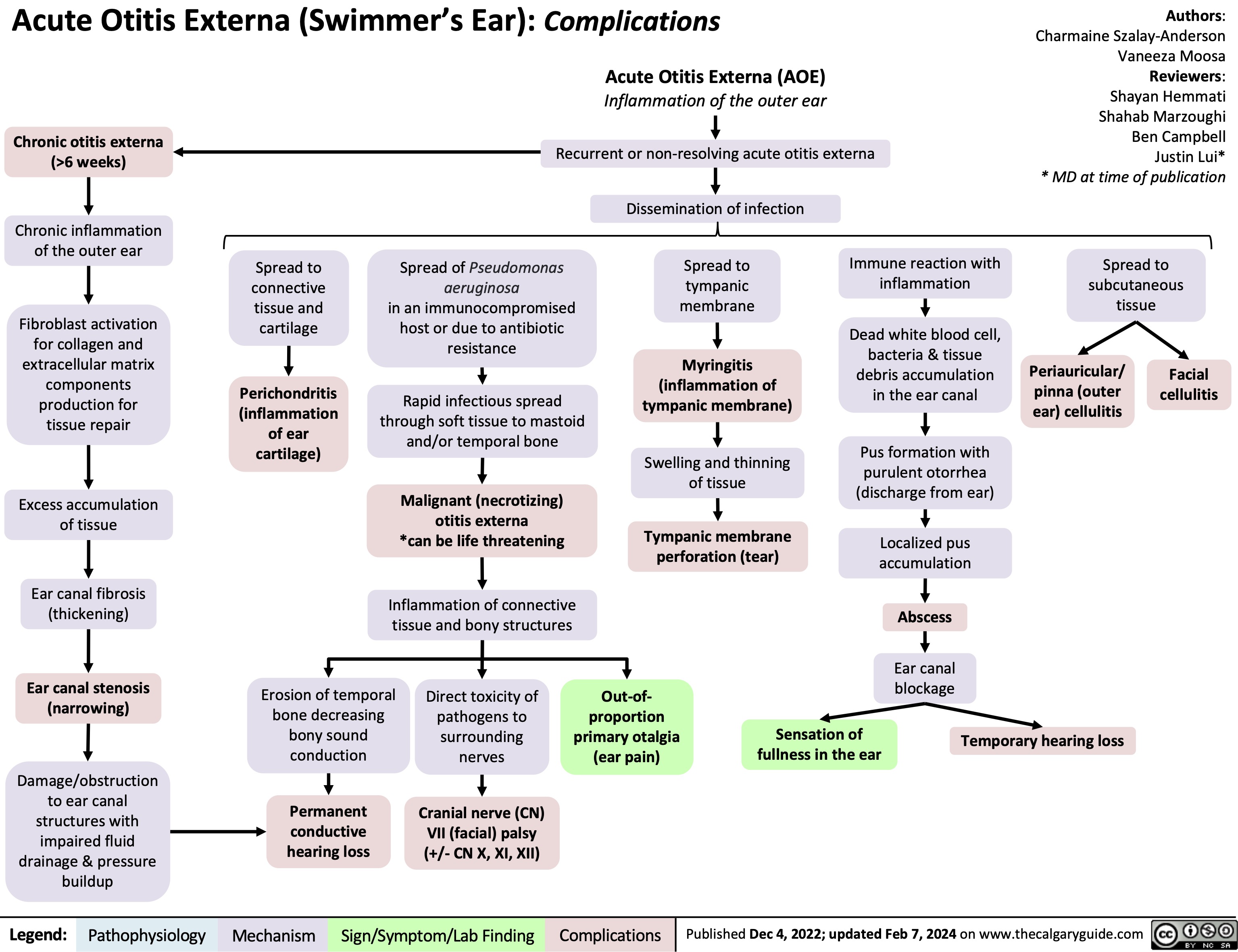
Acute Otitis Externa Complications

Acute Otitis Externa (Swimmer’s Ear): Complications
Acute Otitis Externa (AOE)
Authors: Charmaine Szalay-Anderson Vaneeza Moosa Reviewers: Shayan Hemmati Shahab Marzoughi Ben Campbell Justin Lui* * MD at time of publication
Spread to subcutaneous tissue
 Chronic otitis externa (>6 weeks)
Chronic inflammation of the outer ear
Fibroblast activation for collagen and extracellular matrix components production for tissue repair
Excess accumulation of tissue
Ear canal fibrosis (thickening)
Ear canal stenosis (narrowing)
Damage/obstruction to ear canal structures with impaired fluid drainage & pressure buildup
Inflammation of the outer ear
Recurrent or non-resolving acute otitis externa Dissemination of infection
          Spread to connective tissue and cartilage
Perichondritis (inflammation of ear cartilage)
Spread of Pseudomonas aeruginosa
in an immunocompromised host or due to antibiotic resistance
Rapid infectious spread through soft tissue to mastoid and/or temporal bone
Malignant (necrotizing) otitis externa *can be life threatening
Inflammation of connective tissue and bony structures
Spread to
tympanic membrane
Myringitis (inflammation of tympanic membrane)
Swelling and thinning of tissue
Tympanic membrane perforation (tear)
Immune reaction with inflammation
Dead white blood cell, bacteria & tissue debris accumulation in the ear canal
Pus formation with purulent otorrhea (discharge from ear)
Localized pus accumulation
Abscess
Ear canal blockage
Periauricular/ pinna (outer ear) cellulitis
Facial cellulitis
                       Erosion of temporal bone decreasing bony sound conduction
Permanent conductive hearing loss
Direct toxicity of pathogens to surrounding nerves
Cranial nerve (CN) VII (facial) palsy (+/- CN X, XI, XII)
Out-of- proportion primary otalgia (ear pain)
Sensation of fullness in the ear
Temporary hearing loss
        Legend:
 Pathophysiology
 Mechanism
 Sign/Symptom/Lab Finding
 Complications
 Published Dec 4, 2022; updated Feb 7, 2024 on www.thecalgaryguide.com

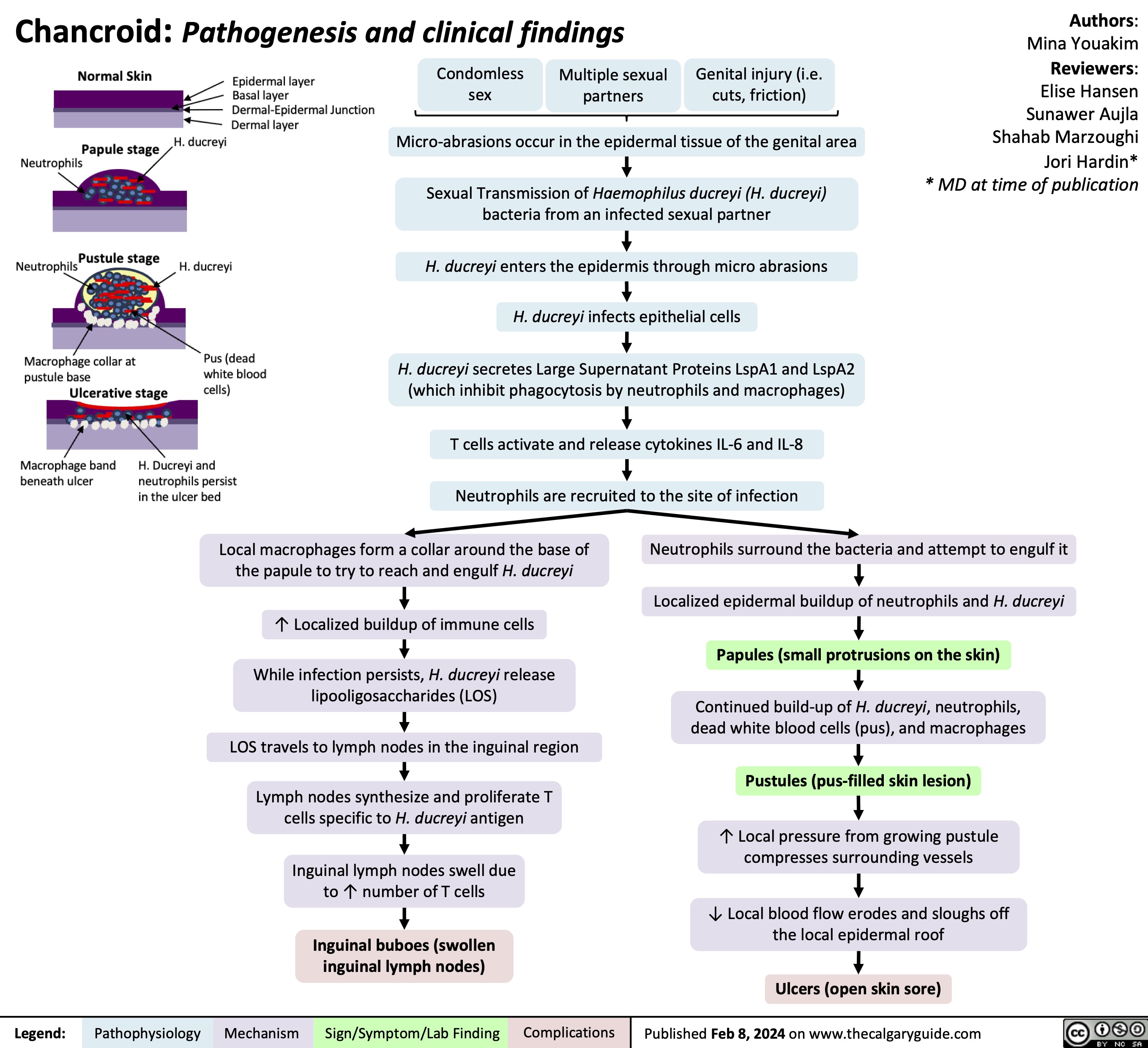
Chancroid

Chancroid: Pathogenesis and clinical findings
Authors: Mina Youakim Reviewers: Elise Hansen Sunawer Aujla Shahab Marzoughi Jori Hardin* * MD at time of publication
    Condomless sex
Multiple sexual partners
Genital injury (i.e. cuts, friction)
  Micro-abrasions occur in the epidermal tissue of the genital area
Sexual Transmission of Haemophilus ducreyi (H. ducreyi) bacteria from an infected sexual partner
H. ducreyi enters the epidermis through micro abrasions H. ducreyi infects epithelial cells
H. ducreyi secretes Large Supernatant Proteins LspA1 and LspA2 (which inhibit phagocytosis by neutrophils and macrophages)
T cells activate and release cytokines IL-6 and IL-8 Neutrophils are recruited to the site of infection
         Local macrophages form a collar around the base of the papule to try to reach and engulf H. ducreyi
↑ Localized buildup of immune cells
While infection persists, H. ducreyi release lipooligosaccharides (LOS)
LOS travels to lymph nodes in the inguinal region Lymph nodes synthesize and proliferate T
cells specific to H. ducreyi antigen Inguinal lymph nodes swell due
to ↑ number of T cells
Inguinal buboes (swollen inguinal lymph nodes)
Neutrophils surround the bacteria and attempt to engulf it
Localized epidermal buildup of neutrophils and H. ducreyi
Papules (small protrusions on the skin)
Continued build-up of H. ducreyi, neutrophils, dead white blood cells (pus), and macrophages
Pustules (pus-filled skin lesion)
↑ Local pressure from growing pustule compresses surrounding vessels
↓ Local blood flow erodes and sloughs off the local epidermal roof
             Ulcers (open skin sore)
 Legend:
 Pathophysiology
Mechanism
Sign/Symptom/Lab Finding
 Complications
 Published Feb 8, 2024 on www.thecalgaryguide.com

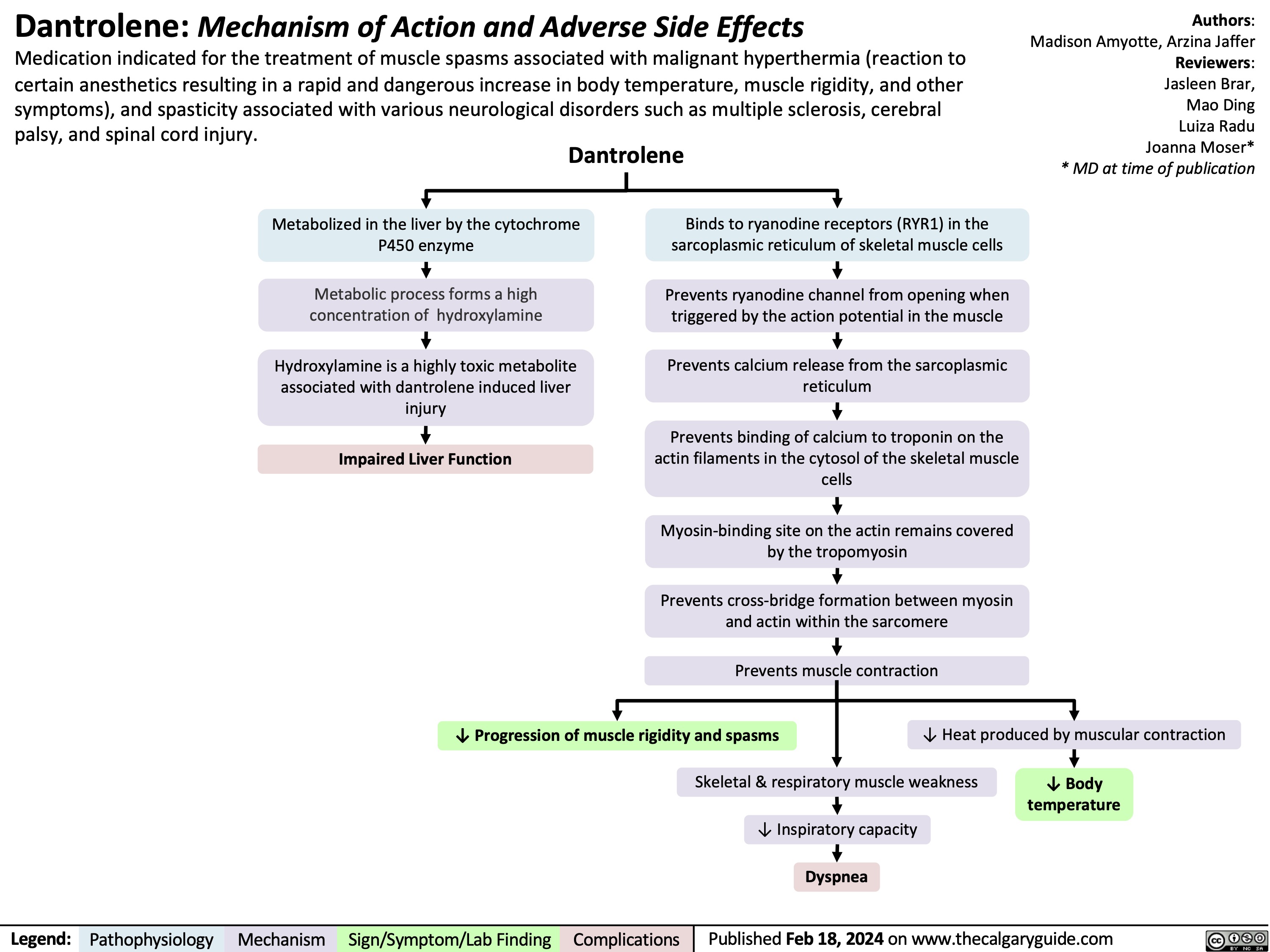
Dantrolene

Dantrolene: Mechanism of Action and Adverse Side Effects
Medication indicated for the treatment of muscle spasms associated with malignant hyperthermia (reaction to certain anesthetics resulting in a rapid and dangerous increase in body temperature, muscle rigidity, and other symptoms), and spasticity associated with various neurological disorders such as multiple sclerosis, cerebral palsy, and spinal cord injury.
Dantrolene
Authors: Madison Amyotte, Arzina Jaffer Reviewers: Jasleen Brar, Mao Ding Luiza Radu Joanna Moser* * MD at time of publication
   Metabolized in the liver by the cytochrome P450 enzyme
Metabolic process forms a high concentration of hydroxylamine
Hydroxylamine is a highly toxic metabolite associated with dantrolene induced liver injury
Impaired Liver Function
Binds to ryanodine receptors (RYR1) in the sarcoplasmic reticulum of skeletal muscle cells
Prevents ryanodine channel from opening when triggered by the action potential in the muscle
Prevents calcium release from the sarcoplasmic reticulum
Prevents binding of calcium to troponin on the actin filaments in the cytosol of the skeletal muscle cells
Myosin-binding site on the actin remains covered by the tropomyosin
Prevents cross-bridge formation between myosin and actin within the sarcomere
         Prevents muscle contraction
↓ Progression of muscle rigidity and spasms ↓ Heat produced by muscular contraction
Skeletal & respiratory muscle weakness ↓ Body temperature
↓ Inspiratory capacity
       Dyspnea
 Legend:
 Pathophysiology
Mechanism
Sign/Symptom/Lab Finding
 Complications
Published Feb 18, 2024 on www.thecalgaryguide.com

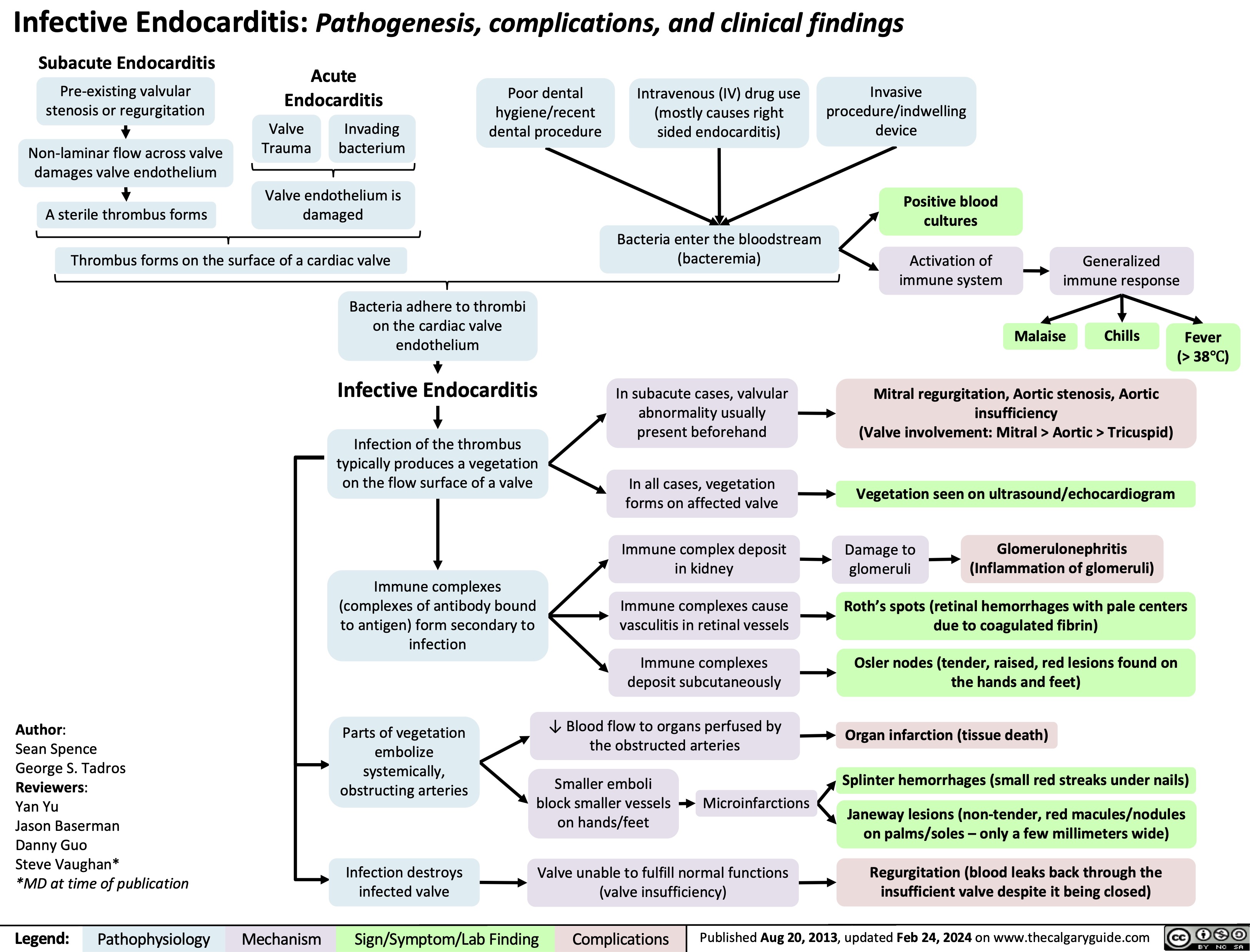
Infective endocarditis

Infective Endocarditis: Pathogenesis, complications, and clinical findings
Subacute Endocarditis
Pre-existing valvular stenosis or regurgitation
Non-laminar flow across valve damages valve endothelium
A sterile thrombus forms
Thrombus forms on the surface of a cardiac valve
Acute Endocarditis
Poor dental hygiene/recent dental procedure
Invasive procedure/indwelling device
Positive blood cultures
Activation of immune system
      Valve Trauma
Invading bacterium
Intravenous (IV) drug use (mostly causes right sided endocarditis)
Bacteria enter the bloodstream (bacteremia)
In subacute cases, valvular abnormality usually present beforehand
In all cases, vegetation forms on affected valve
Immune complex deposit in kidney
Immune complexes cause vasculitis in retinal vessels
Immune complexes deposit subcutaneously
↓ Blood flow to organs perfused by the obstructed arteries
     Valve endothelium is damaged
           Bacteria adhere to thrombi on the cardiac valve endothelium
Infective Endocarditis
Infection of the thrombus typically produces a vegetation on the flow surface of a valve
Immune complexes (complexes of antibody bound to antigen) form secondary to infection
Generalized immune response
Malaise Chills Fever (> 38°C)
                      Author:
Sean Spence
George S. Tadros Reviewers:
Yan Yu
Jason Baserman
Danny Guo
Steve Vaughan*
*MD at time of publication
Parts of vegetation embolize systemically, obstructing arteries
Infection destroys infected valve
Smaller emboli block smaller vessels on hands/feet
Microinfarctions
Mitral regurgitation, Aortic stenosis, Aortic insufficiency
(Valve involvement: Mitral > Aortic > Tricuspid)
Vegetation seen on ultrasound/echocardiogram Damage to Glomerulonephritis
glomeruli (Inflammation of glomeruli) Roth’s spots (retinal hemorrhages with pale centers
due to coagulated fibrin)
Osler nodes (tender, raised, red lesions found on the hands and feet)
Organ infarction (tissue death)
Splinter hemorrhages (small red streaks under nails)
Janeway lesions (non-tender, red macules/nodules on palms/soles – only a few millimeters wide)
Regurgitation (blood leaks back through the insufficient valve despite it being closed)
        Valve unable to fulfill normal functions (valve insufficiency)
 Legend:
 Pathophysiology
 Mechanism
 Sign/Symptom/Lab Finding
 Complications
 Published Aug 20, 2013, updated Feb 24, 2024 on www.thecalgaryguide.com

Gestational Diabetes Risk factors and pathogenesis
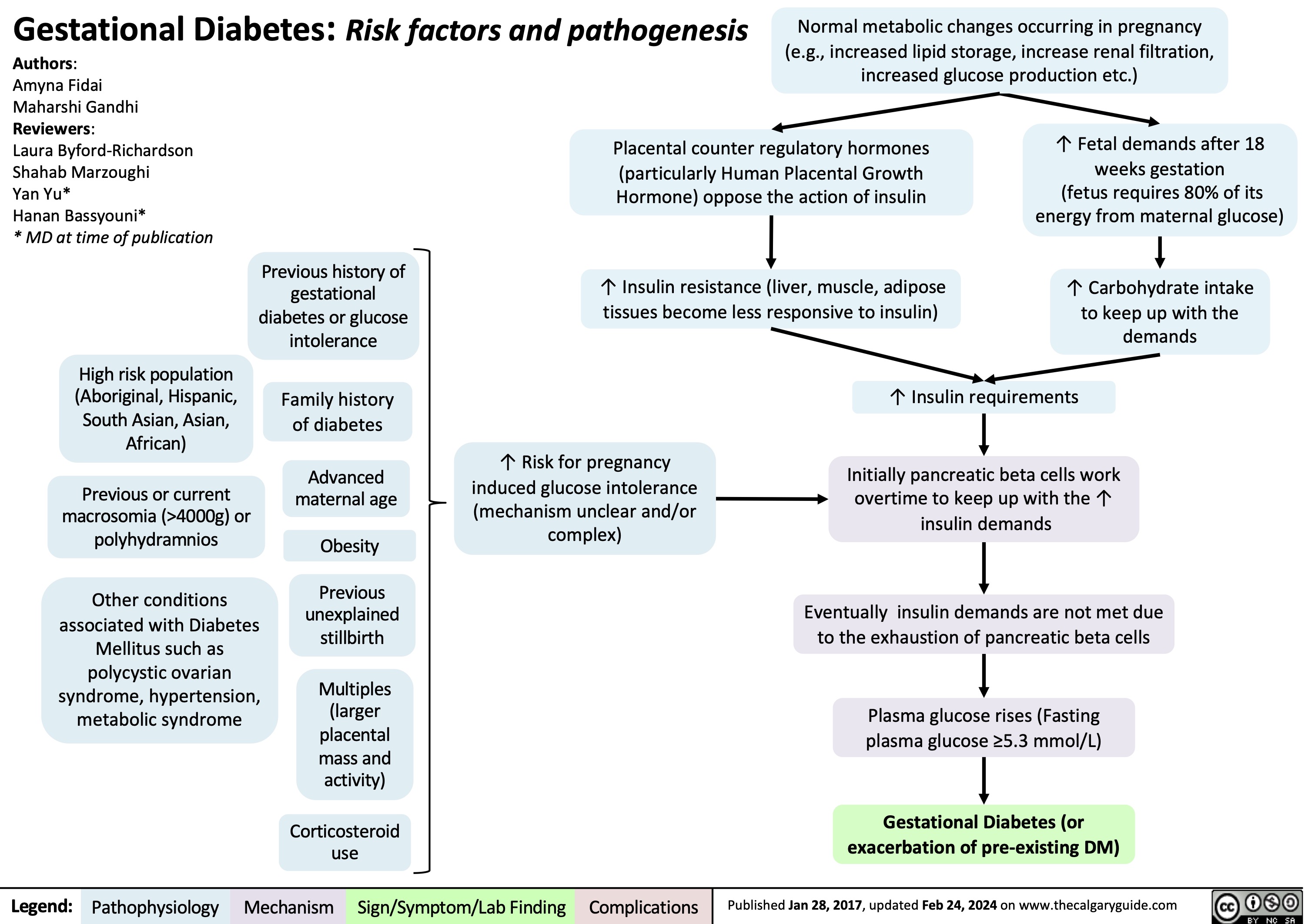
Gestational Diabetes: Risk factors and pathogenesis
Normal metabolic changes occurring in pregnancy (e.g., increased lipid storage, increase renal filtration, increased glucose production etc.)
 Authors:
Amyna Fidai
Maharshi Gandhi Reviewers:
Laura Byford-Richardson Shahab Marzoughi
Yan Yu*
Hanan Bassyouni*
* MD at time of publication
High risk population (Aboriginal, Hispanic, South Asian, Asian, African)
Previous or current macrosomia (>4000g) or polyhydramnios
Other conditions associated with Diabetes Mellitus such as polycystic ovarian syndrome, hypertension, metabolic syndrome
Placental counter regulatory hormones (particularly Human Placental Growth Hormone) oppose the action of insulin
↑ Insulin resistance (liver, muscle, adipose tissues become less responsive to insulin)
↑ Fetal demands after 18 weeks gestation
(fetus requires 80% of its energy from maternal glucose)
↑ Carbohydrate intake to keep up with the demands
       Previous history of gestational diabetes or glucose intolerance
Family history of diabetes
Advanced maternal age
Obesity
Previous unexplained stillbirth
Multiples (larger placental mass and activity)
Corticosteroid use
↑ Risk for pregnancy induced glucose intolerance (mechanism unclear and/or complex)
↑ Insulin requirements Initially pancreatic beta cells work
overtime to keep up with the ↑ insulin demands
Eventually insulin demands are not met due to the exhaustion of pancreatic beta cells
Plasma glucose rises (Fasting plasma glucose ≥5.3 mmol/L)
Gestational Diabetes (or exacerbation of pre-existing DM)
                      Legend:
 Pathophysiology
Mechanism
Sign/Symptom/Lab Finding
 Complications
 Published Jan 28, 2017, updated Feb 24, 2024 on www.thecalgaryguide.com

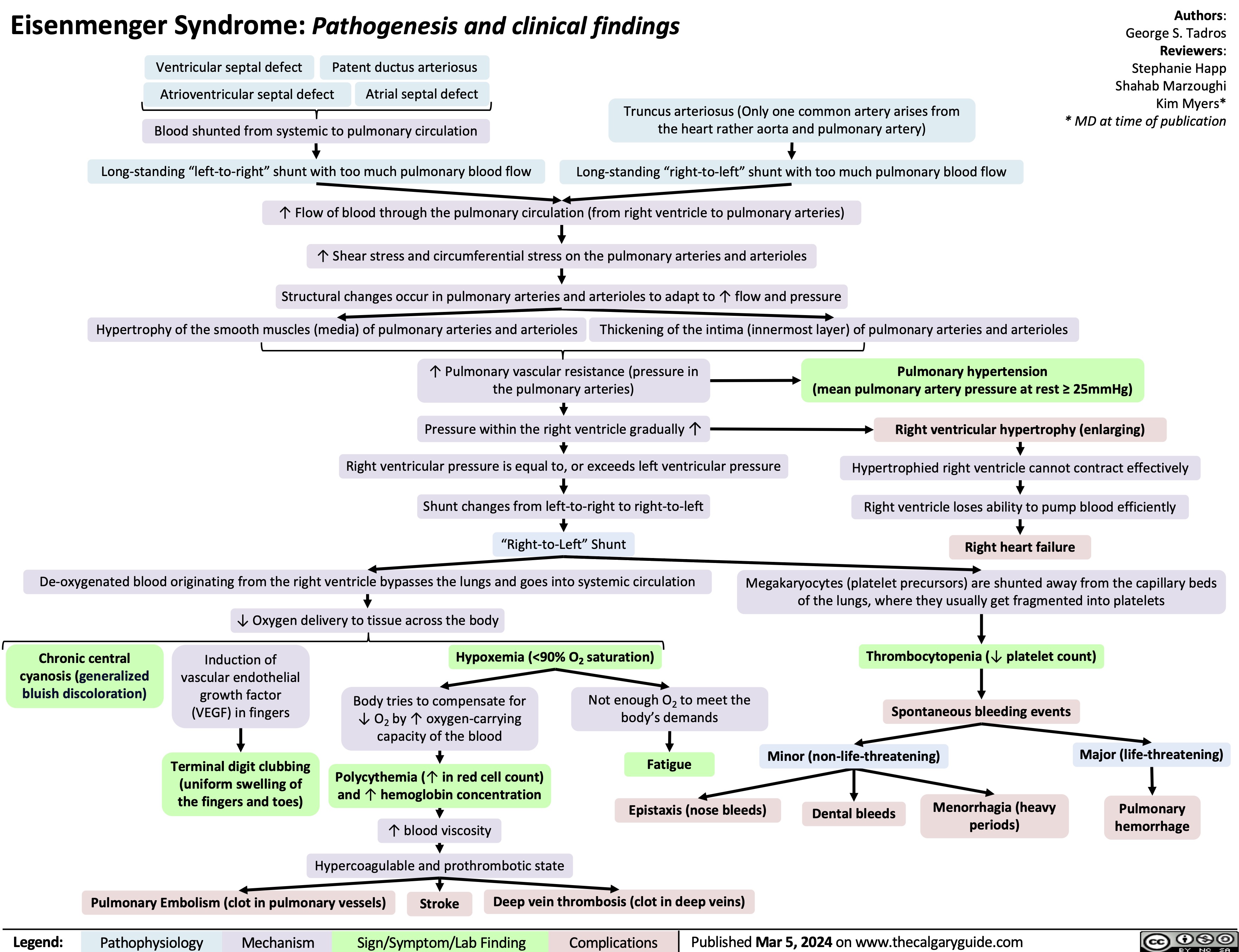
Eisenmenger Syndrome

Eisenmenger Syndrome: Pathogenesis and clinical findings Ventricular septal defect Patent ductus arteriosus
Authors: George S. Tadros Reviewers: Stephanie Happ Shahab Marzoughi Kim Myers* * MD at time of publication
    Atrial septal defect Blood shunted from systemic to pulmonary circulation
Long-standing “left-to-right” shunt with too much pulmonary blood flow
↑ Flow of blood through the pulmonary circulation (from right ventricle to pulmonary arteries)
↑ Shear stress and circumferential stress on the pulmonary arteries and arterioles
Atrioventricular septal defect
Truncus arteriosus (Only one common artery arises from the heart rather aorta and pulmonary artery)
    Long-standing “right-to-left” shunt with too much pulmonary blood flow
     Structural changes occur in pulmonary arteries and arterioles to adapt to ↑ flow and pressure
Hypertrophy of the smooth muscles (media) of pulmonary arteries and arterioles Thickening of the intima (innermost layer) of pulmonary arteries and arterioles
       ↑ Pulmonary vascular resistance (pressure in the pulmonary arteries)
Pressure within the right ventricle gradually ↑
Right ventricular pressure is equal to, or exceeds left ventricular pressure
Shunt changes from left-to-right to right-to-left “Right-to-Left” Shunt
De-oxygenated blood originating from the right ventricle bypasses the lungs and goes into systemic circulation ↓ Oxygen delivery to tissue across the body
Pulmonary hypertension
(mean pulmonary artery pressure at rest ≥ 25mmHg)
Right ventricular hypertrophy (enlarging)
Hypertrophied right ventricle cannot contract effectively
Right ventricle loses ability to pump blood efficiently
Right heart failure
Megakaryocytes (platelet precursors) are shunted away from the capillary beds of the lungs, where they usually get fragmented into platelets
                   Chronic central cyanosis (generalized bluish discoloration)
Induction of vascular endothelial growth factor (VEGF) in fingers
Terminal digit clubbing (uniform swelling of the fingers and toes)
Hypoxemia (<90% O2 saturation)
Thrombocytopenia (↓ platelet count) Spontaneous bleeding events
   Body tries to compensate for ↓ O2 by ↑ oxygen-carrying capacity of the blood
Polycythemia (↑ in red cell count) and ↑ hemoglobin concentration
↑ blood viscosity Hypercoagulable and prothrombotic state
Not enough O2 to meet the body’s demands
Fatigue
Epistaxis (nose bleeds)
Minor (non-life-threatening)
Major (life-threatening)
Pulmonary hemorrhage
            Dental bleeds
Menorrhagia (heavy periods)
       Pulmonary Embolism (clot in pulmonary vessels) Stroke Deep vein thrombosis (clot in deep veins)
 Legend:
 Pathophysiology
Mechanism
Sign/Symptom/Lab Finding
 Complications
 Published Mar 5, 2024 on www.thecalgaryguide.com

Pagets Disease pathogenesis and clinical findings
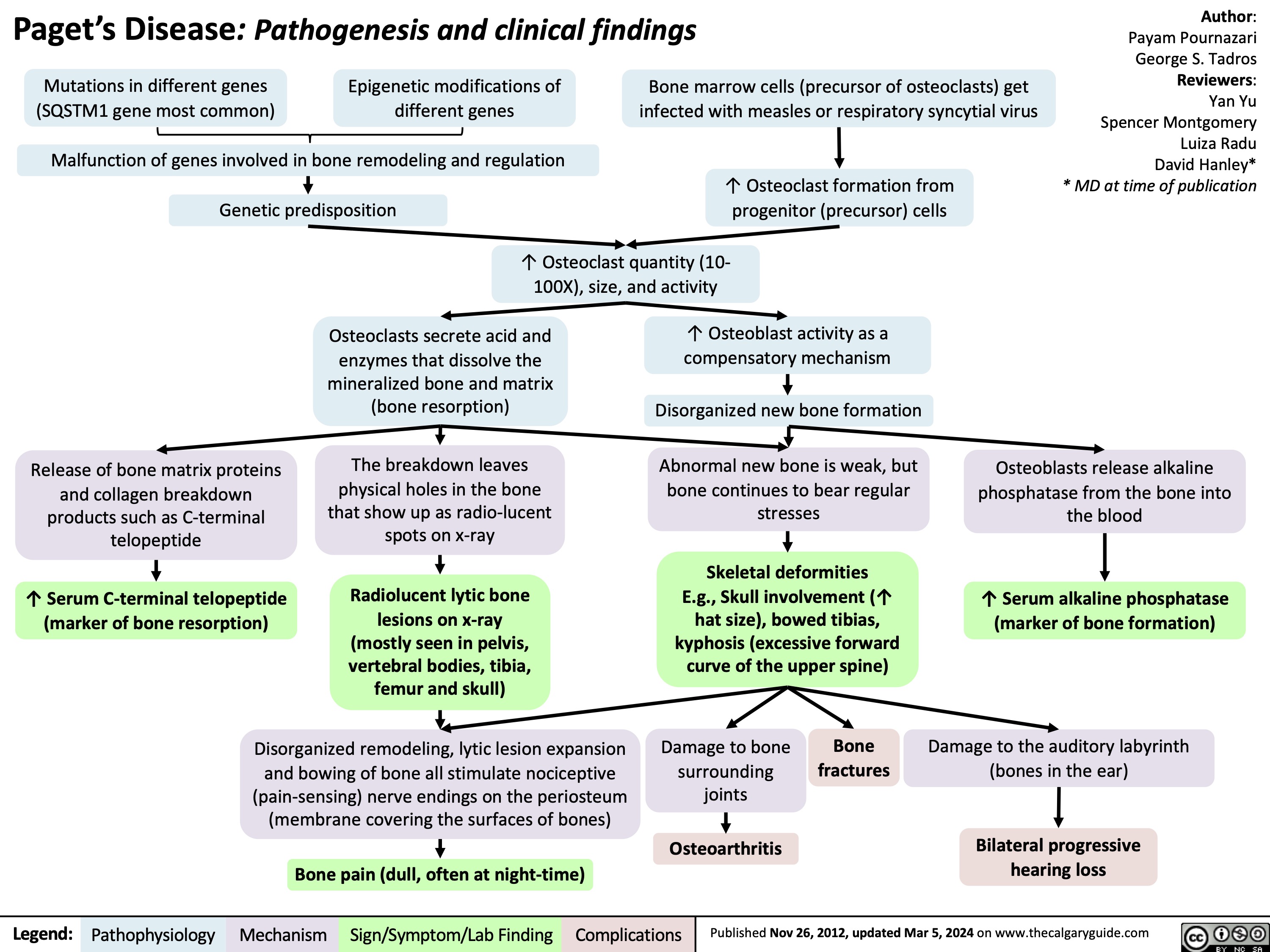
Paget’s Disease: Pathogenesis and clinical findings
Author: Payam Pournazari George S. Tadros Reviewers: Yan Yu Spencer Montgomery Luiza Radu David Hanley* * MD at time of publication
   Mutations in different genes (SQSTM1 gene most common)
Epigenetic modifications of different genes
Bone marrow cells (precursor of osteoclasts) get infected with measles or respiratory syncytial virus
↑ Osteoclast formation from progenitor (precursor) cells
  Malfunction of genes involved in bone remodeling and regulation
Genetic predisposition
     ↑ Osteoclast quantity (10- 100X), size, and activity
            Release of bone matrix proteins and collagen breakdown products such as C-terminal telopeptide
↑ Serum C-terminal telopeptide (marker of bone resorption)
Osteoclasts secrete acid and enzymes that dissolve the mineralized bone and matrix (bone resorption)
The breakdown leaves physical holes in the bone that show up as radio-lucent spots on x-ray
Radiolucent lytic bone lesions on x-ray (mostly seen in pelvis, vertebral bodies, tibia, femur and skull)
↑ Osteoblast activity as a compensatory mechanism
Disorganized new bone formation
Abnormal new bone is weak, but bone continues to bear regular stresses
Skeletal deformities E.g., Skull involvement (↑ hat size), bowed tibias, kyphosis (excessive forward curve of the upper spine)
Osteoblasts release alkaline phosphatase from the bone into the blood
↑ Serum alkaline phosphatase (marker of bone formation)
Damage to the auditory labyrinth (bones in the ear)
Bilateral progressive hearing loss
            Disorganized remodeling, lytic lesion expansion and bowing of bone all stimulate nociceptive (pain-sensing) nerve endings on the periosteum (membrane covering the surfaces of bones)
Bone pain (dull, often at night-time)
Damage to bone surrounding joints
Osteoarthritis
Bone fractures
    Legend:
 Pathophysiology
 Mechanism
Sign/Symptom/Lab Finding
 Complications
 Published Nov 26, 2012, updated Mar 5, 2024 on www.thecalgaryguide.com
  
Paget’s Disease: Pathogenesis and clinical findings
Author: Payam Pournazari George S. Tadros Reviewers: Yan Yu Spencer Montgomery David Hanley* * MD at time of publication
  Mutations in different genes (SQSTM1 gene most common, but also TNFRSF11A, ZNF687 and PFN1)
Epigenetic modifications of different genes (including RANKL, OPG, HDAC2, DNMT1, and SQSTM1)
   Malfunction of genes involved in bone remodeling and regulation
Possible viral exposure (measles or respiratory syncytial virus)
 Genetic predisposition
   ↑ Osteoclast quantity (10- 100X), size, and activity
            Release of bone matrix proteins and collagen breakdown products such as C-terminal telopeptide (CTx)
↑ Serum C-terminal telopeptide
marker of bone resorption
Osteoclasts secrete acid and enzymes that dissolve the mineralized bone and matrix (bone resorption)
The breakdown leaves physical holes in the bone
that show up as radio-lucent spots on x-ray
Radiolucent Lytic bone lesions on x-ray (mostly seen in pelvis, vertebral bodies, tibia, femur and skull)
↑ Osteoblast activity as a compensatory mechanism
Disorganized new bone formation
Abnormal new bone is weak, but bone continues to bear regular stresses
Skeletal deformities
E.g., Skull involvement (↑ hat size), Bowed tibias, kyphosis (excessive forward curve of the upper spine)
Osteoblasts release Alkaline Phosphatase (ALP) from the bone into the blood
↑ Serum Alkaline Phosphatase
marker of bone formation
Damage to the auditory labyrinth (bones in the ear)
Bilateral progressive hearing loss
            Disorganized remodeling, lytic lesion expansion and bowing of bone all stimulate nociceptive (pain-sensing) nerve endings on the periosteum (membrane covering the surfaces of bones)
Bone pain (dull, often at night-time)
Damage to bone surrounding joints
Osteoarthritis
Bone fractures
      Legend:
 Pathophysiology
 Mechanism
Sign/Symptom/Lab Finding
 Complications
Published November 26, 2012 on www.thecalgaryguide.com
   
Paget’s disease: Pathogenesis, Clinical Findings
Author: Payam Pournazari Reviewers: Yan Yu Spencer Montgomery David Hanley* * MD at time of publication
  Genetic predisposition (possibly in RANK encoding gene)
Possible viral exposure (measles and respiratory syncytial virus)
   ↑ in number (10-100X), size, and activity of osteoclasts
Osteoclasts cause excessive bone resorption, which also stimulates osteoblasts
           Release of bone matrix proteins and collagen breakdown products such as C-terminal telopeptide of pyridinoline crosslinks (CTx)
↑ serum CTx
marker of bone resorption
Osteoclasts secrete acid and enzymes that dissolve the mineralized bone and matrix
Leaves physical holes in the bone that show up as radio- lucent spots on x-ray
Lytic bone lesions
(mostly seen in pelvis, vertebral bodies, tibia, femur and skull)
Marked ↑ osteoblastic activity results in disorganized new bone formation
Abnormal new bone bone is weak, but bone continues to bear regular stresses
Skeletal deformities: e.g. Skull involvement (↑ hat size), Bowed tibias, kyphosis and fractures
Osteoblasts release Alkaline Phosphatase
(ALP) from the bone into the blood
↑ serum ALP
marker of bone formation
            Disorganized bone remodelling, lytic lesion expansion, fracture and bowing of bone all stimulate nociceptive nerve endings on the periosteum
Bone pain
 (dull, often night-time)
 Legend:
 Pathophysiology
 Mechanism
Sign/Symptom/Lab Finding
 Complications
Published November 26, 2012 on www.thecalgaryguide.com

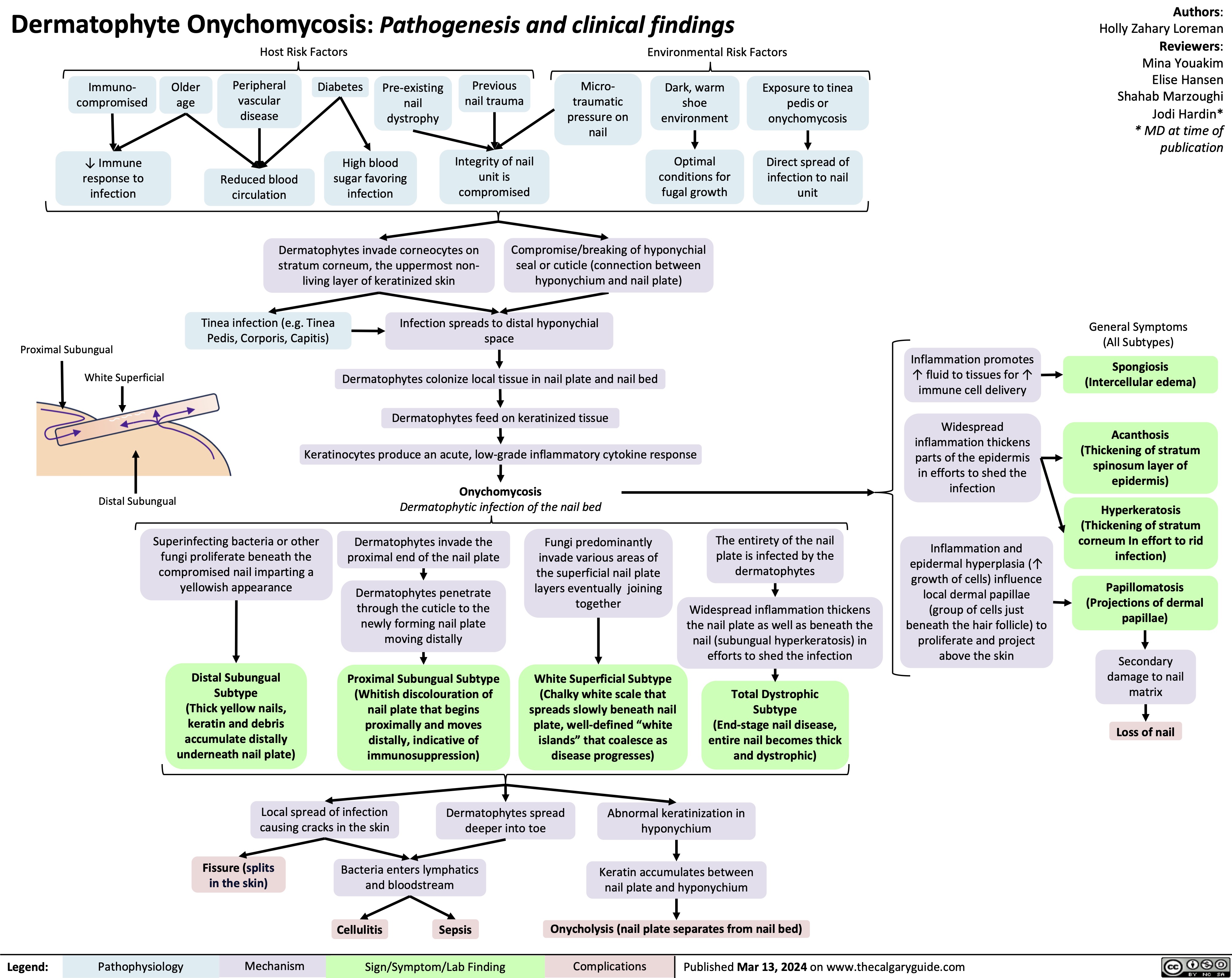
Onychomycosis

Dermatophyte Onychomycosis: Pathogenesis and clinical findings
Authors: Holly Zahary Loreman Reviewers: Mina Youakim Elise Hansen Shahab Marzoughi Jodi Hardin* * MD at time of publication
Host Risk Factors
Environmental Risk Factors
         Immuno- compromised
↓ Immune response to infection
Older age
Peripheral vascular disease
Reduced blood circulation
Diabetes
Pre-existing nail dystrophy
Previous nail trauma
Integrity of nail unit is compromised
Micro- traumatic pressure on nail
Dark, warm shoe environment
Optimal conditions for fugal growth
Exposure to tinea pedis or onychomycosis
Direct spread of infection to nail unit
          High blood sugar favoring infection
      Dermatophytes invade corneocytes on stratum corneum, the uppermost non- living layer of keratinized skin
Compromise/breaking of hyponychial seal or cuticle (connection between hyponychium and nail plate)
      Proximal Subungual
White Superficial
Tinea infection (e.g. Tinea Pedis, Corporis, Capitis)
Infection spreads to distal hyponychial space
Dermatophytes colonize local tissue in nail plate and nail bed
Dermatophytes feed on keratinized tissue
General Symptoms (All Subtypes)
Spongiosis (Intercellular edema)
Acanthosis (Thickening of stratum spinosum layer of epidermis)
Hyperkeratosis (Thickening of stratum corneum In effort to rid infection)
Papillomatosis (Projections of dermal papillae)
Secondary damage to nail matrix
Loss of nail
        Keratinocytes produce an acute, low-grade inflammatory cytokine response
Onychomycosis
Dermatophytic infection of the nail bed
Inflammation promotes ↑ fluid to tissues for ↑ immune cell delivery
Widespread inflammation thickens parts of the epidermis in efforts to shed the infection
Inflammation and epidermal hyperplasia (↑ growth of cells) influence local dermal papillae (group of cells just beneath the hair follicle) to proliferate and project above the skin
 Distal Subungual
Superinfecting bacteria or other fungi proliferate beneath the compromised nail imparting a yellowish appearance
Distal Subungual Subtype
(Thick yellow nails, keratin and debris accumulate distally underneath nail plate)
Dermatophytes invade the proximal end of the nail plate
Dermatophytes penetrate through the cuticle to the newly forming nail plate moving distally
Proximal Subungual Subtype (Whitish discolouration of nail plate that begins proximally and moves distally, indicative of immunosuppression)
Fungi predominantly invade various areas of the superficial nail plate layers eventually joining together
White Superficial Subtype (Chalky white scale that spreads slowly beneath nail plate, well-defined “white islands” that coalesce as disease progresses)
The entirety of the nail plate is infected by the dermatophytes
Widespread inflammation thickens the nail plate as well as beneath the nail (subungual hyperkeratosis) in efforts to shed the infection
Total Dystrophic Subtype (End-stage nail disease, entire nail becomes thick and dystrophic)
                       Local spread of infection Dermatophytes spread causing cracks in the skin deeper into toe
Abnormal keratinization in hyponychium
Keratin accumulates between nail plate and hyponychium
     Fissure (splits in the skin)
Bacteria enters lymphatics and bloodstream
  Cellulitis Sepsis
Onycholysis (nail plate separates from nail bed)
 Legend:
 Pathophysiology
 Mechanism
 Sign/Symptom/Lab Finding
 Complications
 Published Mar 13, 2024 on www.thecalgaryguide.com
 
Dermatophyte Onychomycosis: Pathogenesis and clinical findings
Authors: Holly Zahary Loreman Reviewers: Mina Youakim Elise Hansen Shahab Marzoughi Jodi Hardin* * MD at time of publication
Host Risk Factors
Environmental Risk Factors
         Immuno- compromised
↓ Immune response to infection
Older age
Peripheral vascular disease
Reduced blood circulation
Diabetes
Pre-existing nail dystrophy
Previous nail trauma
Integrity of nail unit is compromised
Micro- traumatic pressure on nail
Dark, warm shoe environment
Optimal conditions for fugal growth
Exposure to tinea pedis or onychomycosis
Direct spread of infection to nail unit
           High blood sugar favoring infection
      Dermatophytes invade corneocytes on stratum corneum, the uppermost non-living layer of keratinized skin
Compromise/breaking of hyponychial seal or cuticle (connection between hyponychium and nail plate)
       Proximal Subungual
White Superficial
Distal Subungual
Superinfecting bacteria or other fungi proliferate beneath the compromised nail imparting a yellowish appearance
Distal Subungual Subtype
(Thick yellow nails, keratin and debris accumulate distally underneath nail plate)
Infection spreads to distal hyponychial space
Dermatophytes colonize local tissue in nail plate and nail bed
Dermatophytes feed on keratinized tissue
Keratinocytes produce an acute, low-grade inflammatory cytokine response
Onychomycosis
Dermatophytic infection of the nail bed
Inflammation promotes ↑ fluid to tissues for ↑ immune cell delivery
Widespread inflammation thickens parts of the epidermis in efforts to shed the infection
Inflammation and epidermal hyperplasia (↑ growth of cells) influence local dermal papillae (group of cells just beneath the hair follicle) to proliferate and project above the skin
General Symptoms (All Subtypes)
Spongiosis (Intercellular edema)
Acanthosis (Thickening of stratum spinosum layer of epidermis)
Hyperkeratosis (Thickening of stratum corneum In effort to rid infection)
Papillomatosis (Projections of dermal papillae)
Secondary damage to nail matrix
Loss of nail
Tinea infection (e.g. Tinea Pedis, Corporis, Capitis)
             Dermatophytes invade the proximal end of the nail plate
Dermatophytes penetrate through the cuticle to the newly forming nail plate moving distally
Proximal Subungual Subtype (Whitish discolouration of nail plate that begins proximally and moves distally, indicative of immunosuppression)
Fungi predominantly invade various areas of the superficial nail plate layers eventually joining together
White Superficial Subtype (Chalky white scale that spreads slowly beneath nail plate, well-defined “white islands” that coalesce as disease progresses)
The entirety of the nail plate is infected by the dermatophytes
Widespread inflammation thickens the nail plate as well as beneath the nail (subungual hyperkeratosis) in efforts to shed the infection
Total Dystrophic Subtype (End-stage nail disease, entire nail becomes thick and dystrophic)
               Dermatophytes spread deeper into toe
Bacteria enters lymphatics and bloodstream
Abnormal keratinization in hyponychium
Keratin accumulates between nail plate and hyponychium
 Local spread of infection causing cracks in the skin
     Fissure (splits in the skin)
 Cellulitis Sepsis
Onycholysis (nail plate separates from nail bed)
  Legend:
 Pathophysiology
 Mechanism
 Sign/Symptom/Lab Finding
 Complications
 Published MONTH, DAY, YEAR on www.thecalgaryguide.com
 
 Dermatophyte Onychomycosis: Pathogenesis and clinical findings
Authors: Holly Zahary Loreman Reviewers: Mina Youakim Elise Hansen Shahab Marzoughi Jodi Hardin* * MD at time of publication
Host Risk Factors
Environmental Risk Factors
         Immuno- Older compromised age
↓ Immune response to infection
Peripheral vascular disease
Reduced blood circulation
Diabetes
Pre-existing nail dystrophy
Previous nail trauma
Integrity of nail unit is compromised
Micro- traumatic pressure on nail
Dark, warm shoe environment
Optimal conditions for fugal growth
Exposure to tinea pedis or onychomycosis
Direct spread of infection to nail unit
           High blood sugar favoring infection
      Dermatophytes invade corneocytes on stratum corneum, the uppermost non-living layer of keratinized skin
Compromise/breaking of hyponychial seal or cuticle (connection between hyponychium and nail plate)
     Tinea infection (e.g. Tinea Pedis, Corporis, Capitis)
Infection spreads to distal hyponychial space
Dermatophytes colonize local tissue in nail plate and nail bed
Dermatophytes feed on keratinized tissue
Keratinocytes produce an acute, low-grade inflammatory cytokine response
Onychomycosis
Dermatophytic infection of the nail bed
General Symptoms (All Subtypes)
Spongiosis (Intercellular edema)
Acanthosis (Thickening of stratum spinosum layer of epidermis)
Papillomatosis
(Projections of dermal papillae)
Hyperkeratosis (Thickening of stratum corneum In effort to rid infection)
Secondary damage to nail matrix
Loss of nail
 Proximal Subungual
White Superficial
    Distal Subungual
Distal Subungual Subtype
(Thick yellow nails, keratin and debris accumulate distally underneath nail plate)
Proximal Subungual Subtype (Whitish discolouration of nail plate that begins proximally and moves distally, indicative of immunosuppression)
White Superficial Subtype (Chalky white scale that spreads slowly beneath nail plate, well-defined “white islands” that coalesce as disease progresses)
Total Dystrophic Subtype (End-stage nail disease, entire nail becomes thick and dystrophic)
             Local spread of infection causing cracks in the skin
Dermatophytes spread deeper into toe
Abnormal keratinization in hyponychium
Keratin accumulates between nail plate and hyponychium
Onycholysis (nail plate separates from nail bed)
      Fissure (splits in the skin)
Bacteria enters lymphatics and bloodstream
Cellulitis Sepsis
    Pathophysiology
 Mechanism
 Sign/Symptom/Lab Finding
 Complications
 Legend:
Published MONTH, DAY, YEAR on www.thecalgaryguide.com

 Dermatophyte Onychomycosis: Pathogenesis and clinical findings
Authors: Holly Zahary Loreman Reviewers: Mina Youakim Elise Hansen Shahab Marzoughi Jodi Hardin* * MD at time of publication
Host Risk Factors
Environmental Risk Factors
         Immuno- Older compromised age
↓ Immune response to infection
Peripheral vascular disease
Reduced blood circulation
Diabetes
Pre-existing nail dystrophy
Previous nail trauma
Integrity of nail unit is compromised
Micro- traumatic pressure on nail
Dark, warm shoe environment
Optimal conditions for fugal growth
Exposure to tinea pedis or onychomycosis
Direct spread of infection to nail unit
           High blood sugar favoring infection
      Dermatophytes invade corneocytes on stratum corneum, the uppermost non-living layer of keratinized skin
Compromise/breaking of hyponychial seal or cuticle (connection between hyponychium and nail plate)
     Tinea infection (e.g. Tinea Pedis, Corporis, Capitis)
Infection spreads to distal hyponychial space
Dermatophytes colonize local tissue in nail plate and nail bed
Dermatophytes feed on keratinized tissue
Keratinocytes produce an acute, low-grade inflammatory cytokine response
Onychomycosis
Dermatophytic infection of the nail bed
 Proximal Subungual
White Superficial
General Symptoms (All Subtypes)
Spongiosis (Intercellular edema)
Acanthosis (Thickening of stratum spinosum layer of epidermis)
Papillomatosis
(Projections of dermal papillae)
Hyperkeratosis (Thickening of stratum corneum In effort to rid infection)
Secondary damage to nail matrix
Loss of nail
    Distal Subungual
Distal Subungual Subtype
(Thick yellow nails, keratin and debris accumulate distally underneath nail plate)
Proximal Subungual Subtype (Whitish discolouration of nail plate that begins proximally and moves distally, indicative of immunosuppression)
White Superficial Subtype (Chalky white scale that spreads slowly beneath nail plate, well- defined “white islands” that coalesce as disease progresses)
Total Dystrophic Subtype (End-stage nail disease, entire nail becomes thick and dystrophic)
                 Local spread of infection causing cracks in the skin
Dermatophytes spread deeper into toe
Abnormal keratinization in hyponychium
Keratin accumulates between nail plate and hyponychium
Onycholysis (nail plate separates from nail bed)
      Bacteria enters lymphatics and bloodstream
 Fissure (splits in the skin)
Cellulitis
Sepsis
    Pathophysiology
 Mechanism
 Sign/Symptom/Lab Finding
 Complications
 Legend:
Published MONTH, DAY, YEAR on www.thecalgaryguide.com

 Dermatophyte Onychomycosis (Tinea Unguium): Pathogenesis, clinical findings,
Authors: Holly Zahary Loreman Reviewers: Elise Hansen Name Name* * MD at time of publication
and complications
Host Risk Factors
Environmental Risk Factors
         Immuno- compromised
↓ immune response to infection
Older age
Peripheral vascular disease
Diabetes
Pre-existing nail dystrophy
Previous Nail Trauma
Integrity of nail unit is compromised
Micro-traumatic pressure on nail
Dark, warm shoe environment
Optimal conditions for fugal growth
Exposure to tinea pedis or onychomycosis
Direct spread of infection to nail unit
          Reduced blood circulation
High blood sugar, favoring infection
    Tinea pedis infection (see ‘Tinea Capitis, Tinea Corporis, and Tinea Pedis’)
Infection spreads to distal hyponychial space Dermatophytes colonize local tissue in nail plate and nail bed Dermatophytes feed on keratinized tissue
Proximal Subungual
White Superficial
Dermatophytes invade corneocytes on stratum corneum, the uppermost non-living layer of keratinized skin
Compromise/breaking of hyponychial seal or cuticle (connection between hyponychium and nail plate)
         Keratinocytes produce an acute, low-grade inflammatory cytokine response
Onychomycosis (Tinea Unguium)
(dermatophytic infection of the nail bed)
Distal Subungual
General Symptoms (All Subtypes)
Spongiosis
Intercellular edema
Acanthosis
Thickening of stratum spinosum layer of epidermis
Papillomatosis
Projections of dermal papillae
Hyperkeratosis
Thickening of stratum corneum In effort to rid infection
Secondary damage to nail matrix
Loss of nail
         Distal Subungual Subtype
Thick yellow nails, keratin and debris accumulate distally underneath nail plate
Proximal Subungual Subtype
Whitish discolouration of nail plate that begins proximally and moves distally, indicative of immunosuppression
White Superficial Subtype
Chalky white scale that spreads slowly beneath nail plate, well-defined “white islands” that coalesce as disease progresses
Total Dystrophic Subtype End-stage nail disease, entire nail becomes thick and dystrophic
      Local spread of infection causing cracks in the skin
Dermatophytes spread deeper into toe
Abnormal keratinization in hyponychium
Keratin accumulates between nail plate and hyponychium
Onycholysis (nail plate separates from nail bed)
         Tissue Damage
Cellulitis
Sepsis
Bacteria enters lymphatics and bloodstream
     Pathophysiology
 Mechanism
 Sign/Symptom/Lab Finding
 Complications
 Legend:
Published MONTH, DAY, YEAR on www.thecalgaryguide.com

MI Complication Ventricular Wall Rupture
Atrial Septal Defect Pathogenesis and Clinical Findings
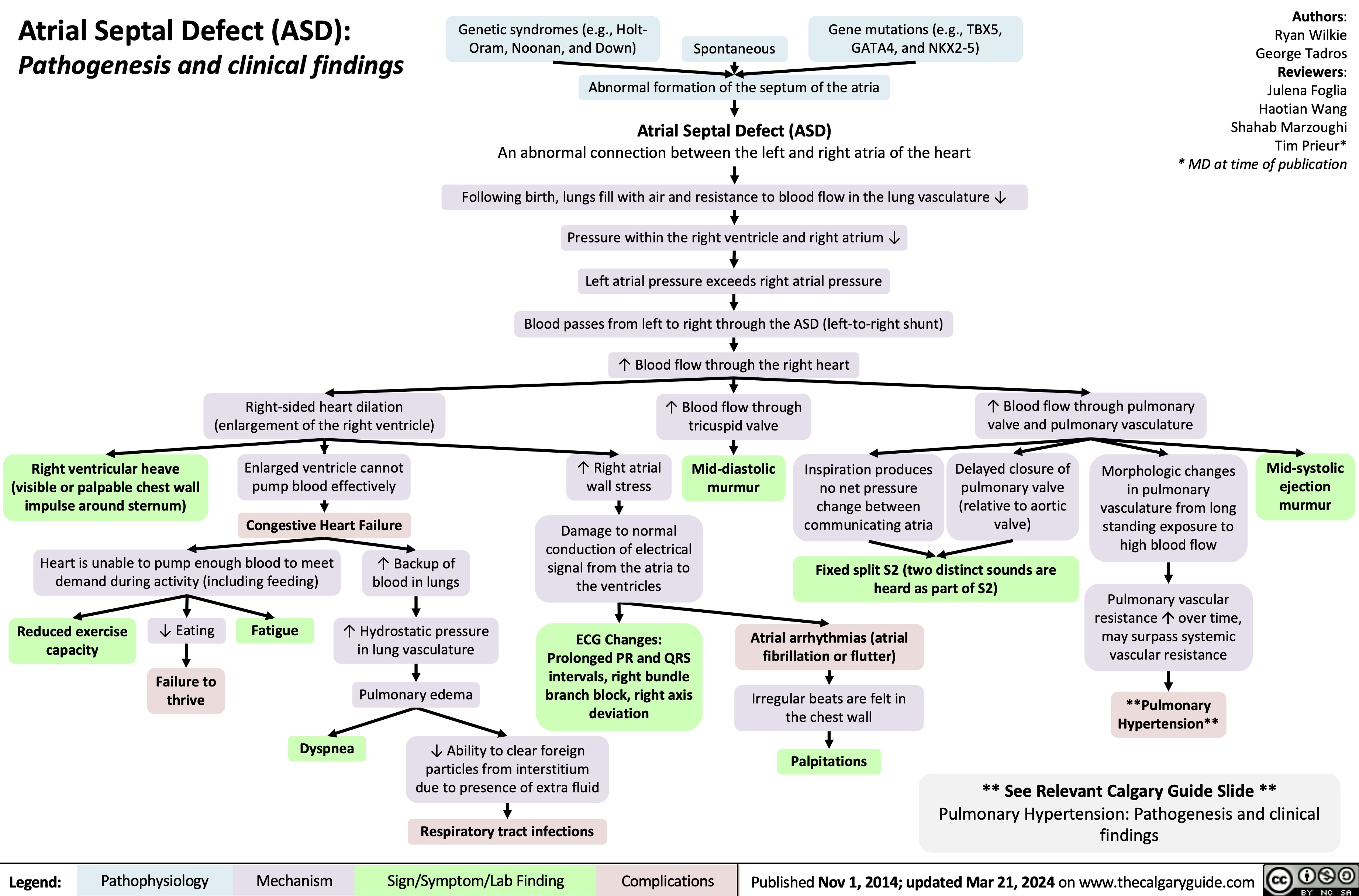
Atrial Septal Defect (ASD):
Pathogenesis and clinical findings
Genetic syndromes (e.g., Holt- Oram, Noonan, and Down)
Gene mutations (e.g., TBX5, GATA4, and NKX2-5)
Authors: Ryan Wilkie George Tadros Reviewers: Julena Foglia Haotian Wang Shahab Marzoughi Tim Prieur* * MD at time of publication
   Spontaneous
Abnormal formation of the septum of the atria
   Atrial Septal Defect (ASD)
An abnormal connection between the left and right atria of the heart
Following birth, lungs fill with air and resistance to blood flow in the lung vasculature ↓ Pressure within the right ventricle and right atrium ↓
Left atrial pressure exceeds right atrial pressure
Blood passes from left to right through the ASD (left-to-right shunt)
↑ Blood flow through the right heart
↑ Blood flow through
tricuspid valve
Mid-diastolic murmur
          Right-sided heart dilation (enlargement of the right ventricle)
Enlarged ventricle cannot pump blood effectively
Congestive Heart Failure
↑ Blood flow through pulmonary valve and pulmonary vasculature
               Right ventricular heave (visible or palpable chest wall impulse around sternum)
↑ Right atrial wall stress
Inspiration produces no net pressure change between communicating atria
Delayed closure of pulmonary valve (relative to aortic valve)
Morphologic changes in pulmonary vasculature from long standing exposure to high blood flow
Pulmonary vascular resistanceáover time, may surpass systemic vascular resistance
**Pulmonary Hypertension**
Mid-systolic ejection murmur
      Heart is unable to pump enough blood to meet demand during activity (including feeding)
↑ Backup of blood in lungs
↑ Hydrostatic pressure in lung vasculature
Pulmonary edema
Damage to normal conduction of electrical signal from the atria to the ventricles
ECG Changes: Prolonged PR and QRS intervals, right bundle branch block, right axis deviation
Fixed split S2 (two distinct sounds are heard as part of S2)
         Reduced exercise capacity
↓ Eating
Failure to thrive
Fatigue
Atrial arrhythmias (atrial fibrillation or flutter)
Irregular beats are felt in the chest wall
Palpitations
          Dyspnea
↓ Ability to clear foreign particles from interstitium due to presence of extra fluid
Respiratory tract infections
  ** See Relevant Calgary Guide Slide **
Pulmonary Hypertension: Pathogenesis and clinical findings
  Legend:
 Pathophysiology
Mechanism
 Sign/Symptom/Lab Finding
 Complications
 Published Nov 1, 2014; updated Mar 21, 2024 on www.thecalgaryguide.com

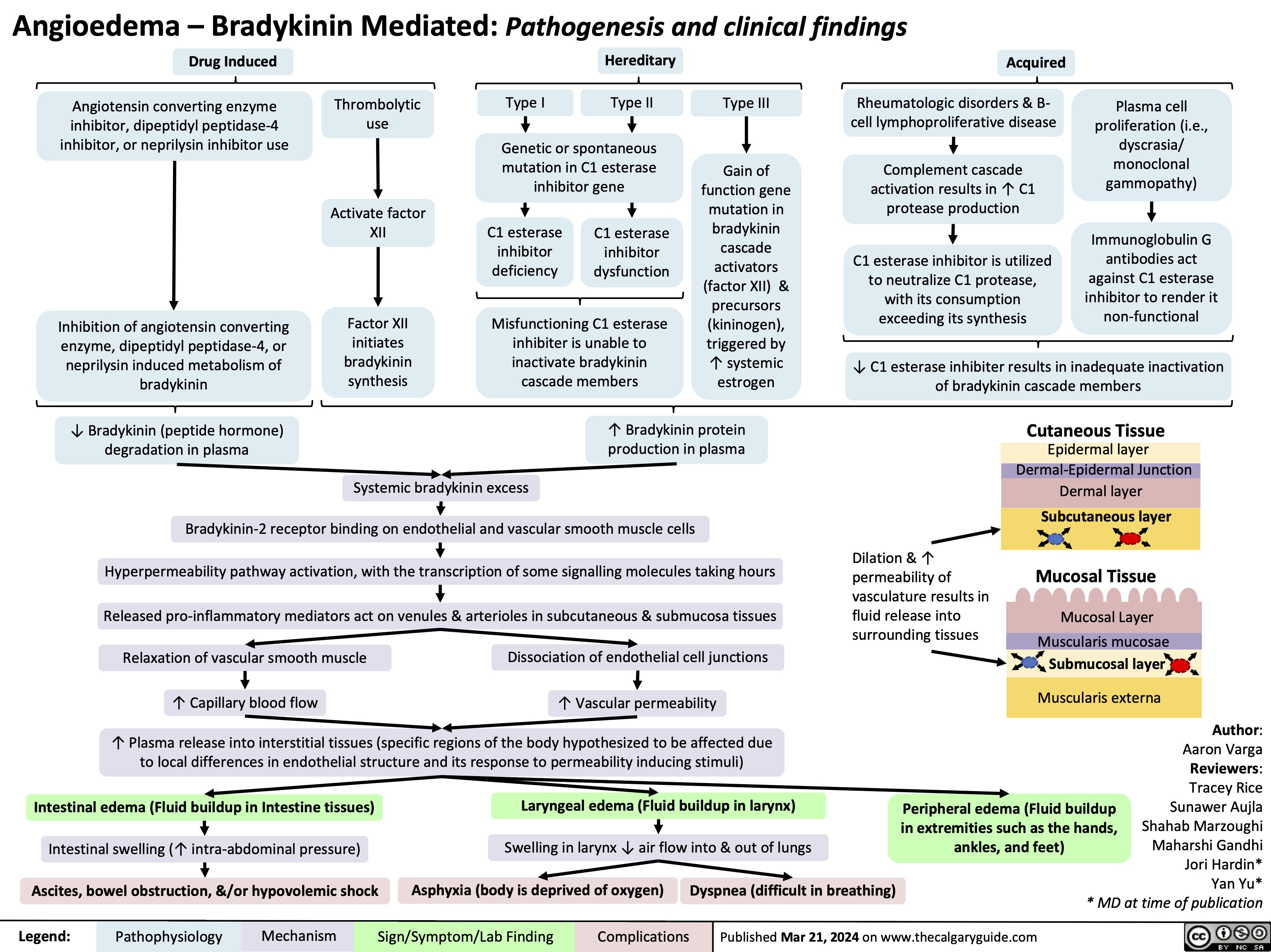
Angioedema Bradykinin Mediated

Angioedema – Bradykinin Mediated: Pathogenesis and clinical findings
   Drug Induced
Angiotensin converting enzyme inhibitor, dipeptidyl peptidase-4 inhibitor, or neprilysin inhibitor use
Hereditary
Type II
Acquired
          Thrombolytic use
Activate factor XII
Factor XII initiates bradykinin synthesis
Type I
Type III
Gain of function gene mutation in bradykinin cascade activators (factor XII) & precursors (kininogen), triggered by ↑ systemic estrogen
Rheumatologic disorders & B- cell lymphoproliferative disease
Complement cascade activation results in ↑ C1 protease production
C1 esterase inhibitor is utilized to neutralize C1 protease, with its consumption exceeding its synthesis
Plasma cell proliferation (i.e., dyscrasia/ monoclonal gammopathy)
Immunoglobulin G antibodies act against C1 esterase inhibitor to render it non-functional
 Genetic or spontaneous mutation in C1 esterase inhibitor gene
       C1 esterase inhibitor deficiency
C1 esterase inhibitor dysfunction
       Inhibition of angiotensin converting enzyme, dipeptidyl peptidase-4, or neprilysin induced metabolism of bradykinin
↓ Bradykinin (peptide hormone) degradation in plasma
Misfunctioning C1 esterase inhibiter is unable to inactivate bradykinin cascade members
↓ C1 esterase inhibiter results in inadequate inactivation of bradykinin cascade members
      ↑ Bradykinin protein production in plasma
Cutaneous Tissue
Mucosal Tissue
Epidermal layer
 Dermal-Epidermal Junction
  Dermal layer
Subcutaneous layer
    Systemic bradykinin excess
Bradykinin-2 receptor binding on endothelial and vascular smooth muscle cells Hyperpermeability pathway activation, with the transcription of some signalling molecules taking hours Released pro-inflammatory mediators act on venules & arterioles in subcutaneous & submucosa tissues
Relaxation of vascular smooth muscle Dissociation of endothelial cell junctions
↑ Capillary blood flow ↑ Vascular permeability
↑ Plasma release into interstitial tissues (specific regions of the body hypothesized to be affected due to local differences in endothelial structure and its response to permeability inducing stimuli)
Dilation & ↑ permeability of vasculature results in fluid release into surrounding tissues
    Mucosal Layer
Muscularis mucosae
  Submucosal layer
 Muscularis externa
                Intestinal edema (Fluid buildup in Intestine tissues)
Intestinal swelling (↑ intra-abdominal pressure)
Laryngeal edema (Fluid buildup in larynx)
Swelling in larynx ↓ air flow into & out of lungs
Asphyxia (body is deprived of oxygen) Dyspnea (difficult in breathing)
Author: Aaron Varga Reviewers: Tracey Rice Sunawer Aujla Shahab Marzoughi Maharshi Gandhi Jori Hardin* Yan Yu* * MD at time of publication
Peripheral edema (Fluid buildup in extremities such as the hands, ankles, and feet)
       Ascites, bowel obstruction, &/or hypovolemic shock
 Legend:
 Pathophysiology
 Mechanism
Sign/Symptom/Lab Finding
 Complications
 Published Mar 21, 2024 on www.thecalgaryguide.com

Macrosomia Pathogenesis and Complications
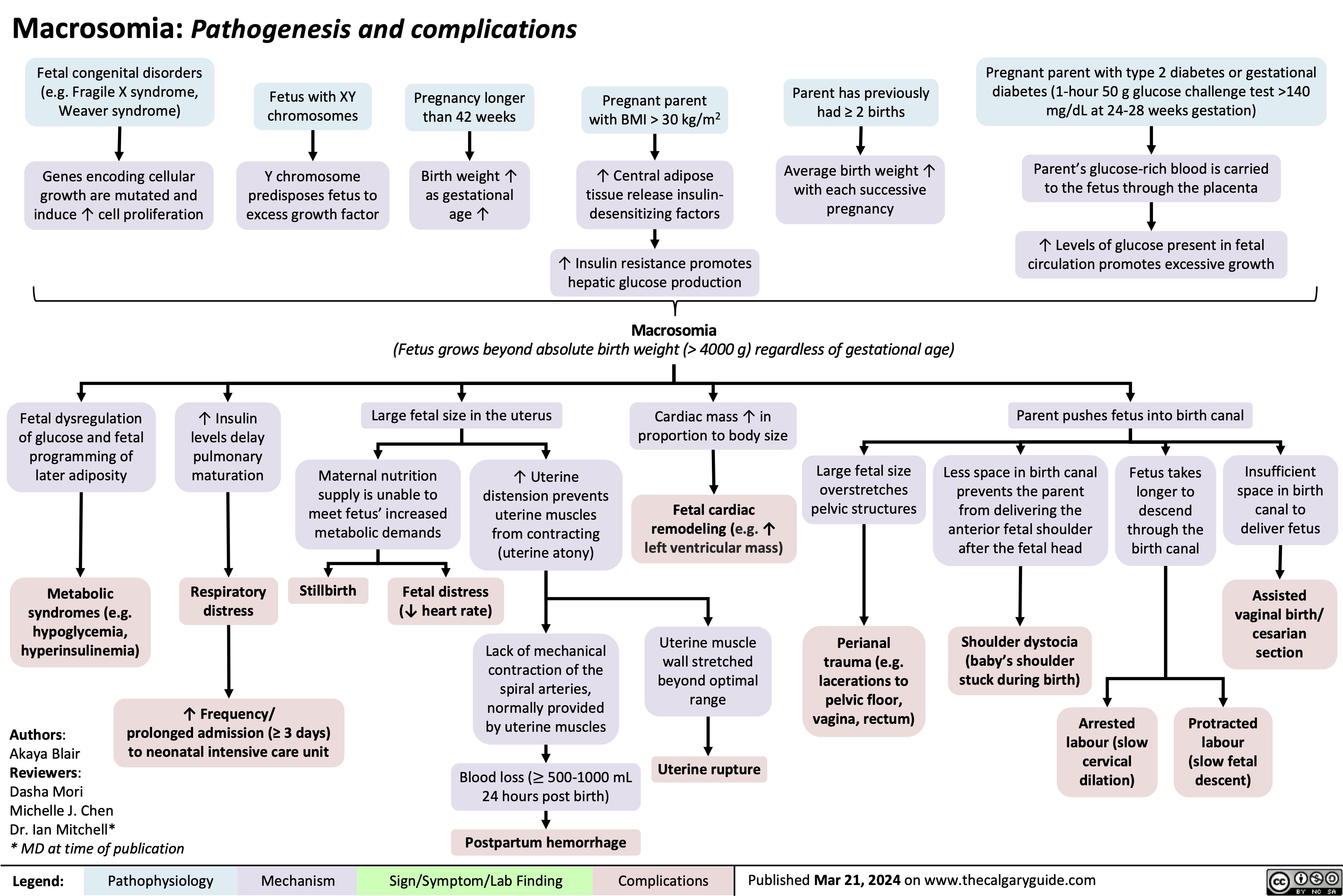
Macrosomia: Pathogenesis and complications
  Fetal congenital disorders (e.g. Fragile X syndrome, Weaver syndrome)
Genes encoding cellular growth are mutated and induce ↑ cell proliferation
Fetus with XY chromosomes
Y chromosome predisposes fetus to excess growth factor
Pregnancy longer than 42 weeks
Birth weight ↑ as gestational age ↑
Pregnant parent with BMI > 30 kg/m2
↑ Central adipose tissue release insulin- desensitizing factors
↑ Insulin resistance promotes hepatic glucose production
Macrosomia
Parent has previously had ≥ 2 births
Average birth weight ↑ with each successive pregnancy
Pregnant parent with type 2 diabetes or gestational diabetes (1-hour 50 g glucose challenge test >140 mg/dL at 24-28 weeks gestation)
Parent’s glucose-rich blood is carried to the fetus through the placenta
↑ Levels of glucose present in fetal circulation promotes excessive growth
             (Fetus grows beyond absolute birth weight (> 4000 g) regardless of gestational age)
        Fetal dysregulation of glucose and fetal programming of later adiposity
Metabolic syndromes (e.g. hypoglycemia, hyperinsulinemia)
↑ Insulin levels delay pulmonary maturation
Respiratory distress
Large fetal size in the uterus
Cardiac mass ↑ in proportion to body size
Fetal cardiac remodeling (e.g. ↑ left ventricular mass)
Uterine muscle wall stretched beyond optimal range
Uterine rupture
Parent pushes fetus into birth canal
         Maternal nutrition
supply is unable to meet fetus’ increased metabolic demands
↑ Uterine distension prevents uterine muscles from contracting (uterine atony)
Fetus takes longer to descend through the birth canal
Large fetal size overstretches pelvic structures
Perianal trauma (e.g. lacerations to pelvic floor, vagina, rectum)
Less space in birth canal prevents the parent from delivering the anterior fetal shoulder after the fetal head
Shoulder dystocia (baby’s shoulder stuck during birth)
Arrested labour (slow cervical dilation)
Insufficient space in birth canal to deliver fetus
Assisted vaginal birth/ cesarian section
Protracted labour (slow fetal descent)
              Stillbirth
Fetal distress (↓ heart rate)
Lack of mechanical contraction of the spiral arteries, normally provided by uterine muscles
Blood loss (≥ 500-1000 mL 24 hours post birth)
Postpartum hemorrhage
      Authors:
Akaya Blair
Reviewers:
Dasha Mori
Michelle J. Chen
Dr. Ian Mitchell*
* MD at time of publication
↑ Frequency/ prolonged admission (≥ 3 days) to neonatal intensive care unit
      Legend:
 Pathophysiology
 Mechanism
 Sign/Symptom/Lab Finding
 Complications
 Published Mar 21, 2024 on www.thecalgaryguide.com

Apnea of Prematurity

Apnea of Prematurity: Pathogenesis, Signs & Symptoms, and Complications Physiologic immaturity from birth at < 37 weeks gestation
Authors: Akaya Blair Reviewers:
Dasha Mori Michelle J. Chen Danielle Nelson* * MD at time of publication
     ↓ Synaptic connection & poor myelination
Fetal brain areas responsible for breathing are poorly developed Immature neurologic respiratory function
Immature mechanical respiratory function
      Poor hypopharyngeal muscle tone (soft upper airway helps with size and compliance of airway)
Nasal obstruction (e.g. anatomic and/or iatrogenic [suctioning, NG tubes])
Neonate is reliant on nose breathing
Airway is unable to remain open (patent)
Laryngeal/tracheal abnormalities (e.g. tracheomalacia, laryngeal edema, tracheal stenosis)
Anatomical narrowing leading to ↑ airway resistance
↑ Risk of mechanical airway obstruction
         Disruption of central respiratory drive
↓ Sensitivity to increased CO2 in the ventral medulla oblongata
Disruption of peripheral respiratory reflex pathways
↓ Sensitivity to CO2 levels in peripheral carotid bodies and aortic bodies
Large head size forces neck into flexion when laying supine
Immature airway sensitive to collapse when in flexion
↑ Hypotonia (decreased muscle tone) in REM sleep
         ↓ Signaling to brainstem
Brainstem unable to mount appropriate ventilatory response to insufficient oxygen
Upper airway collapse
Apnea of prematurity
       Respiratory pauses >20 sec or pauses <20 sec with bradycardia (<100 beats per minute), central cyanosis, and/or oxygen saturation <85% in neonates born at <37 weeks gestation and with no underlying disorders causing apnea. Most apneas in apnea of prematurity are central or mixed.
↓ Breathing rate
     Bradycardia (<100 bpm)
↓ Oxygen to brain
Poor neurodevelopmental outcomes (e.g. cognitive function, brain adaptive potential and plasticity)
Hypoxemia (↓blood oxygen levels where SpO2 <85%)
         ↓ Oxygen and hemoglobin to mucous membranes (e.g. lips) & fingers and toes (periphery)
Central & peripheral cyanosis (bluish discoloration)
↓ Oxygen to retina
Abnormal growth of blood vessels in eyes
Retinopathy of prematurity (changes in visual acuity and possible blindness)
Death/impairment in cell function from lack of oxygen
↑ Risk of infant mortality
Imbalanced oxygen intake and CO2 output in lungs
Body transiently ↑ HR to unsuccessfully try to compensate for ↓ tissue oxygenation
Respiratory failure
Respiratory rate >60 ↓ Heart rate
↓ Blood pressure
Head bobbing Abdominal breathing
                 Skin mottling
 Legend:
 Pathophysiology
 Mechanism
Sign/Symptom/Lab Finding
 Complications
 Published Mar 21, 2024 on www.thecalgaryguide.com

Neonatal Necrotising Enterocolitis in Premature Neonates
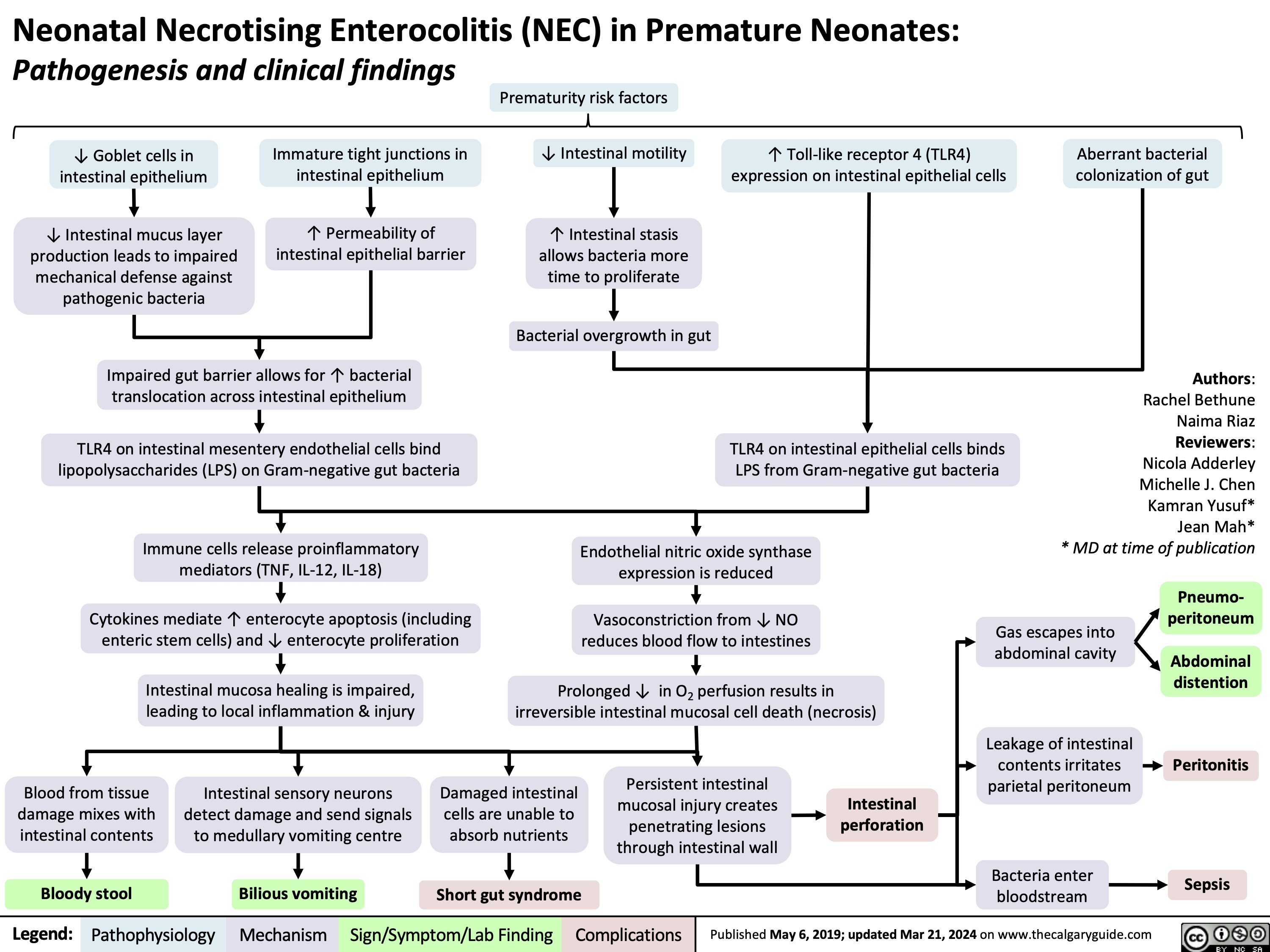
Neonatal Necrotising Enterocolitis (NEC) in Premature Neonates:
Pathogenesis and clinical findings
Prematurity risk factors ↓ Intestinal motility
↑ Intestinal stasis allows bacteria more time to proliferate
Bacterial overgrowth in gut
       ↓ Goblet cells in intestinal epithelium
↓ Intestinal mucus layer production leads to impaired mechanical defense against pathogenic bacteria
Immature tight junctions in intestinal epithelium
↑ Permeability of intestinal epithelial barrier
↑ Toll-like receptor 4 (TLR4) expression on intestinal epithelial cells
Aberrant bacterial colonization of gut
          Impaired gut barrier allows for ↑ bacterial translocation across intestinal epithelium
TLR4 on intestinal mesentery endothelial cells bind lipopolysaccharides (LPS) on Gram-negative gut bacteria
Immune cells release proinflammatory mediators (TNF, IL-12, IL-18)
Cytokines mediate ↑ enterocyte apoptosis (including enteric stem cells) and ↓ enterocyte proliferation
Intestinal mucosa healing is impaired, leading to local inflammation & injury
TLR4 on intestinal epithelial cells binds LPS from Gram-negative gut bacteria
Authors: Rachel Bethune Naima Riaz Reviewers: Nicola Adderley Michelle J. Chen Kamran Yusuf* Jean Mah* * MD at time of publication
      Endothelial nitric oxide synthase expression is reduced
Vasoconstriction from ↓ NO reduces blood flow to intestines
Prolonged ↓ in O2 perfusion results in irreversible intestinal mucosal cell death (necrosis)
Gas escapes into abdominal cavity
Leakage of intestinal contents irritates parietal peritoneum
Bacteria enter bloodstream
Pneumo- peritoneum
Abdominal distention
Peritonitis
Sepsis
                 Blood from tissue damage mixes with intestinal contents
Bloody stool
Intestinal sensory neurons detect damage and send signals to medullary vomiting centre
Bilious vomiting
Damaged intestinal cells are unable to absorb nutrients
Short gut syndrome
Persistent intestinal mucosal injury creates penetrating lesions through intestinal wall
Intestinal perforation
         Legend:
 Pathophysiology
 Mechanism
Sign/Symptom/Lab Finding
 Complications
 Published May 6, 2019; updated Mar 21, 2024 on www.thecalgaryguide.com

Lichen Sclerosus

Lichen Sclerosus (genital manifestation): Pathogenesis and clinical findings
Authors: Mina Youakim Reviewers: Elise Hansen Sunawer Aujla Shahab Marzoughi Jori Hardin* * MD at time of publication
Histamine receptor binding stimulates sensory nerve endings
Pruritus (itching)
    Unknown triggers
Genetic predisposition (HLA-DQ7 and HLA-DR12)
Chronic inflammation (i.e. chronic infection, chronic toxin exposure) and trauma
Medications (e.g. carbamazepine, pembrolizumab, nivolumab, ipilimumab)
  ↑ Activation of CD4+ and CD8+ T cells released from macrophages (white blood cell) in the perineum and genital skin tissue infiltrate into the dermal-epidermal junction
T-cells proliferate in a horizontal linear formation Pro-inflammatory response activation
       Fibroblasts (contributes to the formation of connective tissue) proliferate and persist producing altered collagen under the epidermis
Collagen deposits and hyalinizes (transforms into acellular translucent material) beneath the epidermal layer
Sclerotic plaques (localized areas of thickened skin)
T cells release of pro-inflammatory cytokines (interleukins and transforming growth factor β)
↑ Oxidative stress and cell damage
Progressive basal layer degeneration thins the overall skin thickness
Mast cells respond to increased need for immune cell flow to area
Nitric oxide is released when histamine binds to vascular receptors
Localized area appears red
Erythema (reddening of the skin)
Erosion/ulceration
Skin fissures (linear cleavage of skin)
 Localized histamine release
Nitric oxide induces localized vasodilation (↑ blood flow)
            Normal Skin
Lichen Sclerosus
Epidermal layer
Basal layer
Dermal-Epidermal Junction Dermal layer
Hypopigmented patches (localized, pale areas of skin)
Epidermal atrophy (crinkling paper-type skin appearance)
Thinned skin is weakened and prone to physical stress or trauma
↑ fluid in the extracellular space due to capillary leakage from ↑ blood flow
Superficial dermal edema (swelling)
Fibrotic tissue deposition following healing of damaged tissue
            Atrophic Epidermal layer
Hyalinized collagen deposits
Basal layer degeneration Band of T-cell infiltrate
Dermal layer
Scarring
          Legend:
 Pathophysiology
Mechanism
Sign/Symptom/Lab Finding
 Complications
 Published Mar 25, 2024 on www.thecalgaryguide.com
   
Lichen Sclerosus (genital manifestation): Pathogenesis and clinical findings
Authors: Mina Youakim Reviewers: Elise Hansen Sunawer Aujla Shahab Marzoughi Jori Hardin* * MD at time of publication
Histamine receptor binding stimulates sensory nerve endings
Pruritus (itching)
    Unknown triggers
Genetic predisposition (HLA-DQ7 and HLA-DR12)
Chronic inflammation (i.e. chronic infection, chronic toxin exposure) and trauma
Medications (e.g. carbamazepine, pembrolizumab, nivolumab, ipilimumab)
  ↑ Activation of CD4+ and CD8+ T cells released from macrophages (white blood cell) in the perineum and genital skin tissue infiltrate into the dermal-epidermal junction
T-cells proliferate in a horizontal linear formation Pro-inflammatory response activation
       Fibroblasts (contributes to the formation of connective tissue) proliferate and persist producing altered collagen under the epidermis
Collagen deposits and hyalinizes (transforms into acellular translucent material) beneath the epidermal layer
Sclerotic plaques (localized areas of thickened skin)
T cells release of pro-inflammatory cytokines (interleukins and transforming growth factor β)
↑ Oxidative stress and cell damage
Mast cells respond to increased need for immune cell flow to area
Nitric oxide is released when histamine binds to vascular receptors
↑ fluid in the extracellular space due to capillary leakage from ↑ blood flow
Superficial dermal edema (swelling)
Epidermal atrophy (crinkling paper- type skin appearance)
Thinned skin is weakened and prone to physical stress or trauma
Localized histamine release
Nitric oxide induces localized vasodilation (↑ blood flow)
Localized area appears red
Erythema (reddening of the skin)
Erosion/ulceration
Skin fissures (linear cleavage of skin)
           Normal Skin
Lichen Sclerosus
Epidermal layer
Basal layer
Dermal-Epidermal Junction Dermal layer
Atrophic Epidermal layer
Hyalinized collagen deposits
Basal layer degeneration Band of T-cell infiltrate
Dermal layer
Progressive basal layer degeneration thins the overall skin thickness
Hypopigmented patches (localized, pale areas of skin)
Fibrotic tissue deposition following healing of damaged tissue
                        Scarring
 Legend:
 Pathophysiology
Mechanism
Sign/Symptom/Lab Finding
 Complications
 Published MONTH, DAY, YEAR on www.thecalgaryguide.com
   
Chronic inflammation (i.e. chronic
Reviewers:
    Dermal layer
     Unknown triggers
Genetic predisposition (HLA-DQ7 and HLA-DR12)
infection, chronic toxin exposure) and trauma
Medications (e.g. carbamazepine, pembrolizumab, nivolumab, ipilimumab)
Elise Hansen Sunawer Aujla Shahab Marzoughi Jori Hardin* * MD at time of publication
  ↑ Activation of CD4+ and CD8+ T cells released from macrophages (white blood cell) in the perineum and genital skin tissue infiltrate into the dermal-epidermal junction
T-cells proliferate in a horizontal linear formation
Pro-inflammatory response activation
↑ Expression of MicroRNA-155 (enhances pro-inflammatory response and ↓ expression of tumor suppression genes)
     Fibroblasts (contributes to the formation of connective tissue) proliferate and persist producing altered collagen
Collagen deposits and hyalinizes (transforms into acellular translucent material) beneath the epidermal layer
Sclerotic plaques (localized areas of thickened skin)
T cells release of pro-inflammatory cytokines (interleukins and transforming growth factor β)
↑ Oxidative stress and cell damage
Mast cells respond to increased need for immune cell flow to area
Nitric oxide is released when histamine binds to vascular receptors
↑ fluid in the extracellular space due to capillary leakage from ↑ blood flow
Superficial dermal edema (swelling)
Epidermal atrophy (crinkling paper- type skin appearance)
Thinned skin is weakened and prone to physical stress or trauma
Lichen Sclerosus
Localized histamine release
Nitric oxide induces localized vasodilation (↑ blood flow)
Localized area appears red
Erythema (reddening of the skin)
Erosion/ulceration
Skin fissures (linear cleavage of skin)
Atrophic Epidermal layer
Hyalinized collagen deposits
Basal layer degeneration Band of T-cell infiltrate
Histamine receptor binding stimulates sensory nerve endings
Pruritus (itching)
                           Normal Skin
Progressive basal layer degeneration thins the overall skin thickness
Hypopigmented patches (localized, pale areas of skin)
Epidermal layer
Basal layer
Dermal-Epidermal Junction
Fibrotic tissue deposition following healing of damaged tissue
Scarring
         
Chronic inflammation (i.e. chronic
Reviewers:
    Dermal layer
     Unknown triggers
Genetic predisposition (HLA-DQ7 and HLA-DR12)
infection, chronic toxin exposure) and trauma
Medications (e.g. carbamazepine, pembrolizumab, nivolumab, ipilimumab)
Elise Hansen Sunawer Aujla Shahab Marzoughi Jori Hardin* * MD at time of publication
  ↑ Activation of CD4+ and CD8+ T cells released from macrophages in the perineum and genital skin tissue infiltrate into the dermal-epidermal junction
T-cells proliferate in a horizontal linear formation Pro-inflammatory response activation
↑ Expression of MicroRNA-155 (short segment of RNA which enhances pro- inflammatory response and ↓ expression of tumor suppression genes)
        Fibroblasts proliferate and persist producing altered collagen
Collagen deposits and hyalinizes (transforms into acellular translucent material) beneath the epidermal layer
Sclerotic plaques (localized areas of thickened skin)
T cells release of pro-inflammatory cytokines (interleukins and transforming growth factor β)
↑ Oxidative stress and cell damage
Progressive basal layer degeneration thins the overall skin thickness
Hypopigmented patches (localized, pale areas of skin)
Epidermal layer
Basal layer
Dermal-Epidermal Junction
Mast cells respond to increased need for immune cell flow to area
Nitric oxide is released when histamine binds to vascular receptors
Superficial dermal edema (swelling)
Epidermal atrophy (crinkling paper- type skin appearance)
Localized histamine release
Nitric oxide induces localized vasodilation (↑ blood flow)
Localized area appears red
Erythema (reddening of the skin)
Histamine receptor binding stimulates sensory nerve endings
Pruritus (itching)
                  Normal Skin
Lichen Sclerosus
Skin fissures (linear cleavage of skin)
Erosion/ulceration
   Fibrotic tissue deposition following healing of damaged tissue
Scarring
Atrophic Epidermal layer
Hyalinized collagen deposits
Basal layer degeneration Band of T-cell infiltrate
         
Reviewers:
    Dermal layer
     Unknown triggers
Genetic predisposition (HLA-DQ7 and HLA-DR12)
Chronic inflammation (i.e. chronic infection, chronic toxin exposure) and trauma
Medications (e.g. carbamazepine, pembrolizumab, nivolumab, ipilimumab)
Elise Hansen Sunawer Aujla Shahab Marzoughi Jori Hardin* * MD at time of publication
  ↑ Activation and infiltration of CD4+ and CD8+ T cells into the dermal-epidermal junction
T-cells proliferate in a band (horizontal linear) formation Pro-inflammatory response activation
   ↑ Expression of MicroRNA-155 (short segment of RNA which enhances pro-inflammatory response and ↓ expression of tumor suppression genes)
     Fibroblasts proliferate and persist producing altered collagen
Collagen deposits and hyalinizes (transforms into acellular translucent material) beneath the epidermal layer
Sclerotic plaques (localized areas of thickened skin)
T cells release of pro-inflammatory cytokines (interleukins and transforming growth factor β)
↑ Oxidative stress and cell damage
Progressive basal layer degeneration thins the epidermis
Hypopigmented patches (localized, pale areas of skin)
Epidermal layer
Basal layer
Dermal-Epidermal Junction
Mast cells respond to increased need for immune cell flow to area
Nitric oxide is released when histamine binds to vascular receptors
Superficial dermal edema (swelling)
Epidermal atrophy (crinkling paper- type skin appearance)
Localized histamine release
Histamine receptor binding stimulates sensory nerve endings
Pruritus (itching)
                    Skin fissures (linear cleavage of skin)
Nitric oxide induces localized vasodilation (↑ blood flow)
Localized area appears red
Erythema (reddening of the skin)
Scarring
Atrophic Epidermal layer
Hyalinized collagen deposits
Basal layer degeneration Band of T-cell infiltrate
 Erosion/ulceration
   Fibrotic tissue deposition following healing of damaged tissue
 Normal Skin
Lichen Sclerosus
        
Chronic inflammation (i.e. chronic
Elise Hansen
      Unknown triggers
Genetic predisposition infection, chronic toxin exposure) Medications (e.g. carbamazepine, (HLA-DQ7 and HLA-DR12) and trauma pembrolizumab, nivolumab, ipilimumab)
↑ Activation and infiltration of CD4+ and CD8+ T cells into the dermal-epidermal junction
Sunawer Aujla Shahab Marzoughi Name Name* * MD at time of publication
   T-cells proliferate in a band (horizontal linear) formation
Pro-inflammatory response activation (increase in pro-inflammatory cytokines such as Interleukins 1-alpha and 1-beta)
↑ Expression of MicroRNA-155 (short segment of RNA which enhances pro-inflammatory response and ↓ expression of tumor suppression genes)
      Fibroblasts proliferate and persist producing altered collagen
T cells release of pro-inflammatory cytokines (interleukins and transforming growth factor β)
↑ Oxidative stress and cell damage
Progressive basal layer degeneration thins the epidermis
Hypopigmented patches (localized, pale areas of skin)
Histamine receptor binding stimulates sensory nerve endings
Localized area appears red
 Localized histamine release
Localized vasodilation (↑ blood flow)
Superficial dermal edema (swelling)
Pruritus
Erythema
          Collagen deposits and hyalinizes (transforms into acellular translucent material) beneath the epidermal layer
Normal Skin
Sclerotic plaques (localized areas of thickened skin)
Epidermal layer
Basal layer
Dermal-Epidermal
Junction Dermal layer
Skin fissures (linear cleavage of skin)
Bleeding
Erosion/Ulceration
Epidermal atrophy (crinkling paper- type skin appearance)
           Lichen Sclerosus
Atrophic Epidermal layer
Hyalinized collagen deposits
Basal layer degeneration
Band of T-cell infiltrate
Dermal layer
Fibrotic tissue deposition following healing of damaged tissue
Scarring
             
 Lichen Sclerosus (genital manifestation): Pathogenesis and clinical findings
Authors: Mina Youakim Reviewers: Elise Hansen Sunawer Aujla Shahab Marzoughi Name Name* * MD at time of publication
Pruritus
Histamine receptor binding stimulates sensory nerve endings
Localized area appears red
Erythema
    Unknown triggers
Genetic predisposition (HLA-DQ7 and HLA-DR12)
Chronic inflammation and trauma
Medications (e.g. carbamazepine, pembrolizumab, nivolumab, ipilimumab)
  ↑ Activation and infiltration of CD4+ and CD8+ T cells into the dermal-epidermal junction
T-cells proliferate in a band formation Pro-inflammatory response activation
   ↑ Expression of MicroRNA-155 (short segment of RNA which enhances pro-inflammatory response and ↓ expression of tumor suppression genes)
     Fibroblasts proliferate and persist producing altered collagen
T cells release of pro-inflammatory cytokines (interleukins and transforming growth factor β)
Localized histamine release
Localized vasodilation (↑ blood flow)
   Superficial dermal edema (swelling)
     Collagen deposits and hyalinizes beneath the atrophic epidermal layer
Hypopigmented patches (localized, pale areas of skin)
↑ Oxidative stress and cell damage
Progressive basal layer degeneration thins the epidermis
Skin fissures
Lichen Sclerosus
Epidermal atrophy (crinkling paper- type skin appearance)
          Sclerotic plaques (localized areas of thickened skin)
Bleeding Scarring
Erosion/Ulceration
  Normal Skin
Epidermal layer
Basal layer
Dermal-Epidermal
Junction Dermal layer
Atrophic Epidermal layer
Hyalinized collagen deposits
Basal layer degeneration
Band of T-cell infiltrate
Dermal layer
            Legend:
Published MONTH, DAY, YEAR on www.thecalgaryguide.com
 Pathophysiology
Mechanism
Sign/Symptom/Lab Finding
Complications

Infectious Small Bowel Diarrhea

Infectious small bowel diarrhea:
Pathogenesis and Signs/Symptoms
Undercooked poultry, beef, pork, other foods
Food, or travel to underdeveloped countries
E. coli (ETEC)
May produce Shiga toxins (a specific family of toxins that can lead to complications)
Authors: Noriyah Al Awadhi Yan Yu Sara Cho Reviewers: Paul Ratti Jason Baserman Shahab Marzoughi Kerri Novak* * Indicates MD at time of publication
      Y. enterocolitica
(also milk, cheese)
Shellfish, undercooked seafood
V. parahaemolyticus V. cholerae
Enterohemorrhagic E. coli (EHEC)
      Daycare centers/nurseries
Drinking/swimming in bad water — mountains/wells
S. aureus
B. cereus
            Noroviruses
Rotavirus
G. lamblia
C. parvum
May produce emetic toxins (toxins that cause vomiting)
  Adequate amount of organism and/or toxin is ingested
Organism adheres to the intestinal liningàorganism colonizes the small intestine Organism releases enterotoxin (a toxin that affects the intestines)
      Binds to and disrupts intestinal transporters used in secretion and absorption of water and electrolytes
Toxin enters systemic vasculature
Shiga toxins inhibit ADAMTS13 (cleaving enzyme)
Failure to cleave von Willebrand Factor (vWF) multimers
Accumulation of vWF multimers
Platelets and thrombi accumulate in microvasculature
Hemolytic uremic syndrome (hemolytic anemia, thrombocytopenia, and acute renal damage)
         ↑ Water and electrolyte secretion
↓ Fluid absorption
Chemoreceptor trigger zone in medulla detects circulating emetic toxins
Nausea & vomiting
Triggers release of inflammatory mediators and cytokines that travel to the central nervous system
Prostaglandin is synthesized and released
Neurotransmitter cyclic AMP (cAMP) is released
cAMP ↑ hypothalamic thermoregulation set point
Fever
   Large volume profuse diarrhea
Loss of water
     Distention (swelling) of intestines stimulates visceral sensory pain fibers
Visceral pain fibers crosstalk with somatic nerves from the same spinal cord level
Occasional referred pain/cramping (typically diffuse pain around the abdomen)
Loss of bicarbonate, sodium, potassium, magnesium, and chloride
     Dehydration
Electrolyte deficiency
Metabolic acidosis (pH < 7.4 & serum bicarbonate < 24)
          Legend:
 Pathophysiology
 Mechanism
 Sign/Symptom/Lab Finding
 Complications
 Published Aug 7, 2012; updated Mar 25, 2024 on www.thecalgaryguide.com

Post-Renal Acute Kidney Injury AKI

Post-Renal Acute Kidney Injury (AKI): Pathogenesis and clinical findings
          Blood clot or cellular debris
Foreign body
Neurogenic bladder
Obstruction intrinsic to urine excretion system
Nephrolithiasis (kidney stones)
Anatomical defect(s)
Intra- abdominal adhesions
Retroperitoneal fibrosis (scar-like tissue)
Benign or malignant masses
Prostate cancer
Benign prostatic hyperplasia
      ↓ Urine flow across point of obstruction Obstruction extrinsic to urine excretion system
         Urine buildup distends urine collecting system (hydronephrosis)
Compression of renal vasculature due to mass effect
↑ Volume/pressure proximal to obstruction
↑ Intratubular pressure
↓ Pressure gradient between glomerular afferent arteriole and Bowman’s space
Casts occlude tubules
↓ Filtration of plasma into nephrons
↓ Glomerular Filtration Rate (GFR)
Obstruction is relieved ↓ Intratubular pressure Rapid GFR ↑
Rapid diuresis of fluid and electrolytes
  Dilated pelvicalyceal system on ultrasound
↓ Urine output
          ↓ Venous drainage
and arterial supply
Local ischemia and inflammation of kidney
Impaired resorption, excretion, and fine tuning by tubules
Acute Tubular Necrosis (ATN) with granular casts
     ↓ Urine output
↓ Clearance of free water and solutes
↑ Intravascular volume
↑ Serum creatinine
↓ Medullary solute concentration, ischemia, ↓ response of collecting ducts to antidiuretic hormone
Lasts > 24hrs
Post-obstructive diuresis causes hypovolemia and electrolyte derangements
Authors: David Campbell, Matthew Hobart Reviewers: Raafi Ali, Luiza Radu Huneza Nadeem, Marissa Zhang, Julian Midgley* * MD at time of publication
Resolves < 24hrs in euvolemia
Physiologic post- obstructive diuresis
            ↑ Na+ and Cl- delivery to distal convoluted tubule is sensed by macula densa
Secretion of adenosine by macula densa
Adenosine constricts afferent arterioles
↓ GFR
↓ Renal clearance of drugs and waste products
       ↑ Venous hydrostatic pressure
↑ Volume in arterial system overwhelms pressure regulation mechanisms
Hypertension
   Fluid extravasation from veins and capillaries
   Generalized Edema
 Legend:
 Pathophysiology
Mechanism
Sign/Symptom/Lab Finding
 Complications
 Published Mar 25, 2024 on www.thecalgaryguide.com

Irritant Contact Dermatitis Pathogenesis and Clinical Findings
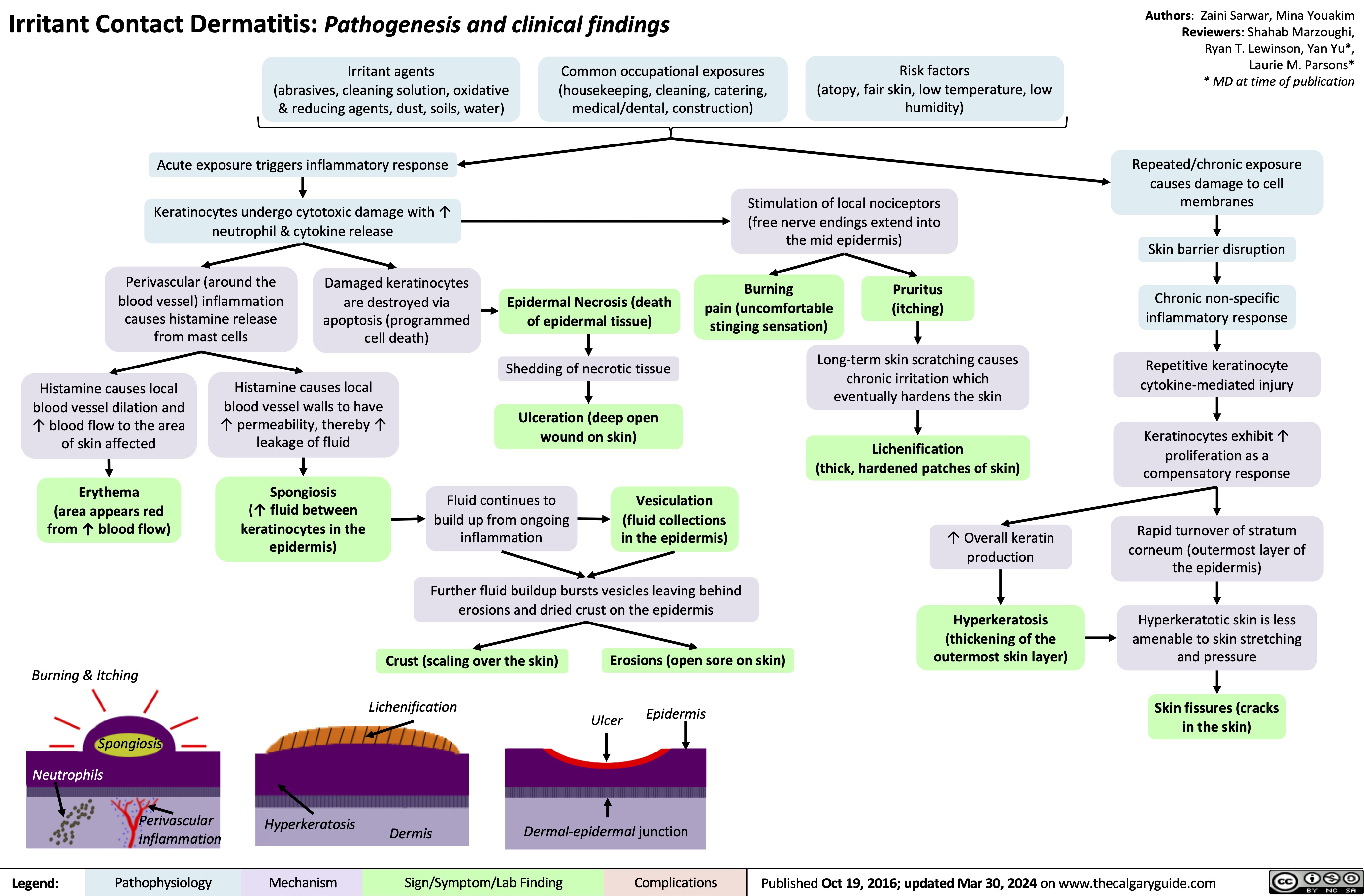
Irritant Contact Dermatitis: Pathogenesis and clinical findings
Authors: Zaini Sarwar, Mina Youakim Reviewers: Shahab Marzoughi, Ryan T. Lewinson, Yan Yu*, Laurie M. Parsons* * MD at time of publication
Repeated/chronic exposure causes damage to cell membranes
Skin barrier disruption
Chronic non-specific inflammatory response
Repetitive keratinocyte cytokine-mediated injury
Keratinocytes exhibit ↑ proliferation as a compensatory response
Rapid turnover of stratum corneum (outermost layer of the epidermis)
Hyperkeratotic skin is less amenable to skin stretching and pressure
Skin fissures (cracks in the skin)
   Irritant agents
(abrasives, cleaning solution, oxidative & reducing agents, dust, soils, water)
Acute exposure triggers inflammatory response
Keratinocytes undergo cytotoxic damage with ↑ neutrophil & cytokine release
Common occupational exposures (housekeeping, cleaning, catering, medical/dental, construction)
Risk factors
(atopy, fair skin, low temperature, low humidity)
     Stimulation of local nociceptors (free nerve endings extend into the mid epidermis)
         Perivascular (around the blood vessel) inflammation causes histamine release from mast cells
Damaged keratinocytes are destroyed via
apoptosis (programmed cell death)
Epidermal Necrosis (death of epidermal tissue)
Shedding of necrotic tissue
Ulceration (deep open wound on skin)
Burning
pain (uncomfortable stinging sensation)
Pruritus (itching)
           Histamine causes local blood vessel dilation and ↑ blood flow to the area of skin affected
Erythema (area appears red from ↑ blood flow)
Burning & Itching Spongiosis
Neutrophils Neutrophils
Histamine causes local blood vessel walls to have
↑ permeability, thereby ↑ leakage of fluid
Spongiosis
(↑ fluid between keratinocytes in the epidermis)
Fluid continues to build up from ongoing inflammation
Vesiculation (fluid collections in the epidermis)
Long-term skin scratching causes chronic irritation which eventually hardens the skin
Lichenification
(thick, hardened patches of skin)
↑ Overall keratin production
Hyperkeratosis (thickening of the outermost skin layer)
             Further fluid buildup bursts vesicles leaving behind erosions and dried crust on the epidermis
     Crust (scaling over the skin)
Lichenification
Erosions (open sore on skin)
  Ulcer
Epidermis
  Perivascular Inflammation
Hyperkeratosis
Dermis
Dermal-epidermal junction
 Legend:
 Pathophysiology
Mechanism
 Sign/Symptom/Lab Finding
 Complications
 Published Oct 19, 2016; updated Mar 30, 2024 on www.thecalgaryguide.com

Febrile Neutropenia Pathogenesis and clinical findings
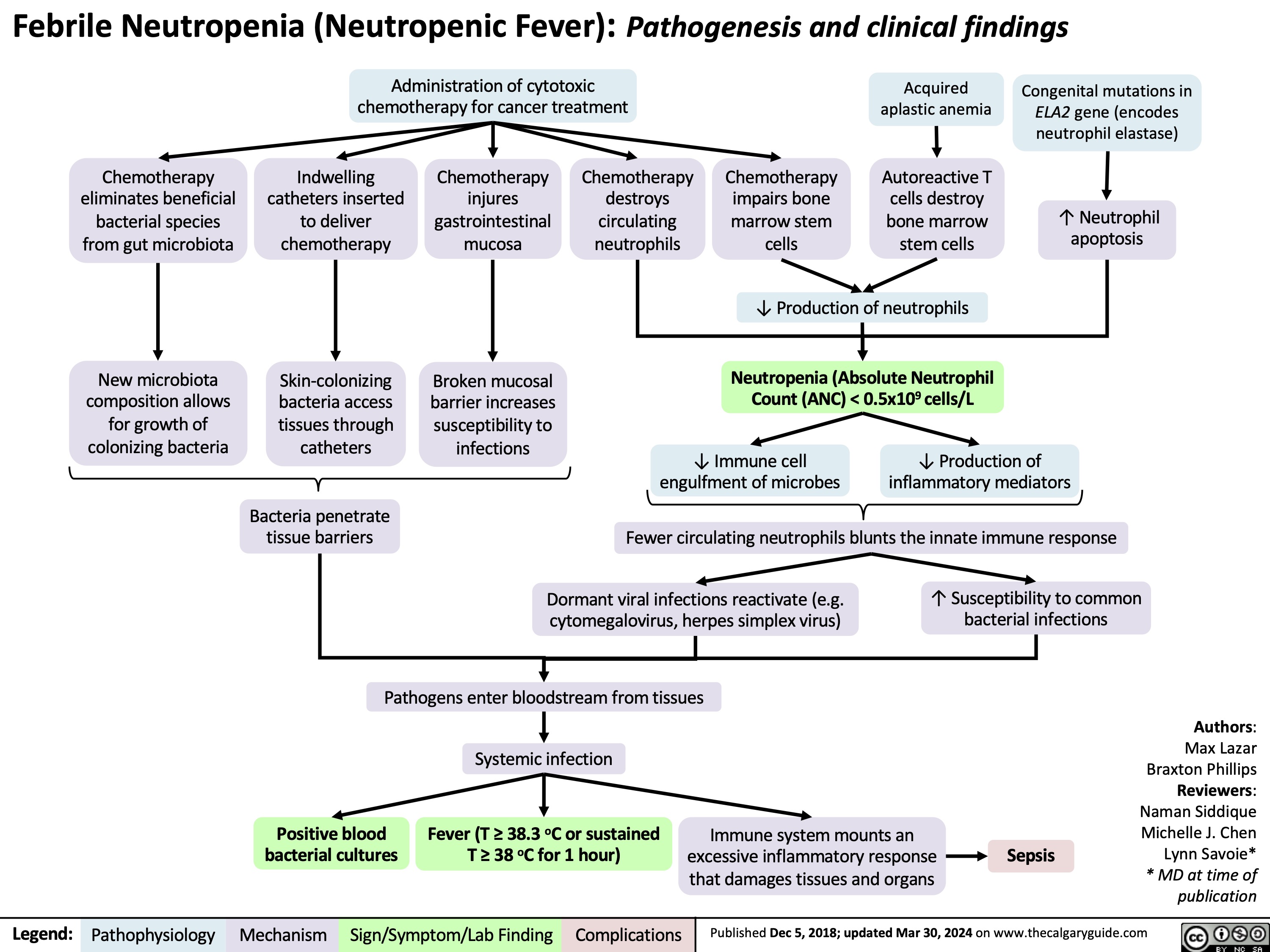
Febrile Neutropenia (Neutropenic Fever): Pathogenesis and clinical findings
  Administration of cytotoxic chemotherapy for cancer treatment
Acquired aplastic anemia
Autoreactive T cells destroy bone marrow stem cells
Congenital mutations in ELA2 gene (encodes neutrophil elastase)
↑ Neutrophil apoptosis
         Chemotherapy eliminates beneficial bacterial species from gut microbiota
New microbiota composition allows for growth of colonizing bacteria
Indwelling catheters inserted to deliver chemotherapy
Skin-colonizing bacteria access tissues through catheters
Bacteria penetrate tissue barriers
Chemotherapy injures gastrointestinal mucosa
Broken mucosal barrier increases susceptibility to infections
Chemotherapy destroys circulating neutrophils
Chemotherapy impairs bone marrow stem cells
        ↓ Production of neutrophils
Neutropenia (Absolute Neutrophil Count (ANC) < 0.5x10⁹ cells/L
       ↓ Immune cell ↓ Production of engulfment of microbes inflammatory mediators
Fewer circulating neutrophils blunts the innate immune response
        Pathogens enter bloodstream from tissues Systemic infection
Authors: Max Lazar Braxton Phillips Reviewers: Naman Siddique Michelle J. Chen Lynn Savoie* * MD at time of publication
Dormant viral infections reactivate (e.g. cytomegalovirus, herpes simplex virus)
↑ Susceptibility to common bacterial infections
        Positive blood bacterial cultures
Fever (T ≥ 38.3 oC or sustained T ≥ 38 oC for 1 hour)
Immune system mounts an excessive inflammatory response that damages tissues and organs
Sepsis
  Legend:
 Pathophysiology
 Mechanism
Sign/Symptom/Lab Finding
 Complications
 Published Dec 5, 2018; updated Mar 30, 2024 on www.thecalgaryguide.com

Overview of Ischemic Heart Disease

Ischemic Heart Disease (IHD): Pathogenesis of the various types of IHD
Authors:
Sean Spence Vaneeza Moosa Reviewers: Tristan Jones Jason Baserman Yan Yu
Michelle J. Chen Frank Spence* * MD at time of publication
↑ Serum low-density lipoprotein (LDL)
↑ Availability of lipids that deposit in arterial wall
↓ Serum high-density lipoprotein (HDL)
↓ LDL removal from coronary artery walls (transport of LDL to liver is impaired)
Atherosclerosis
Conditions predisposing to vessel wall endothelial cell dysfunction (e.g. metabolic syndrome, smoking, hypertension, physical inactivity)
Vessel wall vulnerable to infiltration by LDL and immune cells
         Arterial wall degeneration, characterized by fat deposition (atheromatous plaque) in and fibrosis of the inner layer of arteries
    Stable atheromatous plaque in coronary arteries
Fibromuscular cap (formed by smooth muscle cells) overlying fatty plaque contents remains intact & plaque contents are not released into vessel lumen
Plaque serves as a fixed lumenal obstruction to blood flow
If vessel stenosis (narrowing) is significant (≥70%) myocardial oxygen demand starts to exceed supply (especially with exertion)
Heart experiences a predictable & transient reduction in blood flow (myocardial ischemia)
Unstable atheromatous plaque in coronary arteries
The fibromuscular cap overlying fatty plaque ruptures
Thrombogenic plaque contents (especially tissue factor) are exposed to the coagulation factors in the vessel lumen
Activation of platelets & the clotting cascade at the site of rupture
Thrombus forms over already partially occlusive plaque and further partially or completely occludes lumen
↓ Perfusion (blood flow) of myocardium
           Cardiomyocytes experience a transient decrease in blood flow (transient ischemia)
Unstable Angina
Cardiomyocytes experience death (infarction)
Myocardial Infarction (MI)
     Stable Angina
Acute Coronary Syndromes (ACS)
  Legend:
 Pathophysiology
 Mechanism
Sign/Symptom/Lab Finding
 Complications
 Published Jan 8, 2013; updated Mar 30, 2024 on www.thecalgaryguide.com

Bullous Pemphigoid

Bullous Pemphigoid: Pathogenesis and clinical findings
     Certain medications (e.g. antibiotics, diuretics, biologics)
Author:
Danny Guo
Mina Youakim
Reviewers:
Yan Yu
Shahab Marzoughi
Jason Baserman
Laurie Parsons*
Régine Mydlarski*
* MD at time of publication
Preceding disease triggers Infections (e.g. Human Herpes Physical/Environmental triggers (e.g. (e.g. Psoriasis, Lichen Planus) virus, Epstein-Barr virus) Phototherapy, radiotherapy, burns)
Development of autoantibodies against the basement membrane antigens (i.e. BPAG1 and BPAG2) (can occur anywhere on the body)
Autoimmune destruction of the basement membrane
Antibodies activate the complement system and recruit inflammatory cells Further weakened adhesion between epidermis and dermis
Accumulation of extracellular serous fluids in a pseudo- pocket between the epidermis and the dermis
Unknown etiologies
    Circulating Immunoglobulin G & E antibodies trigger either a prodrome or concurrent itch response (exact mechanism unknown)
       Pruritis (itch)
Epidermal layer Serous fluid pocket
Urticaria (hives)
 Widespread Bullae (serum-filled lesions)
  Epidermal layer
Dermal-Epidermal
Junction Dermal layer
Antibody against keratinocytes and
Disrupted Dermal-Epidermal Junction
    Y
   hemidesmosomes
Normal Skin
Bullous Pemphigoid
 Legend:
 Pathophysiology
 Mechanism
Sign/Symptom/Lab Finding
 Complications
 Published Nov 1, 2012; updated Apr 20, 2024 on www.thecalgaryguide.com
 Y Y
Y

Deep Partial Thickness Burns Pathogenesis and Clinical Findings
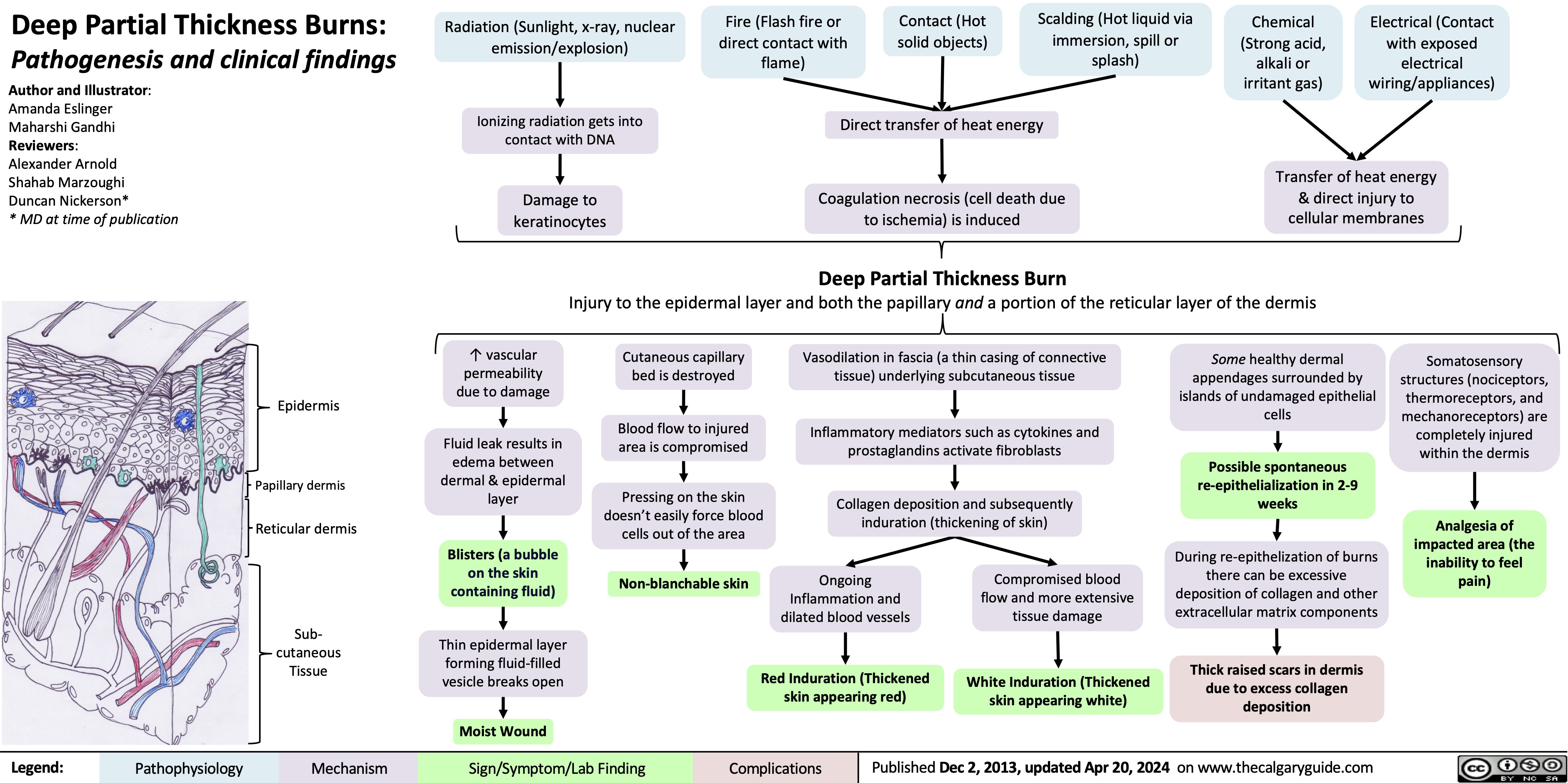
   Deep Partial Thickness Burns:
Pathogenesis and clinical findings
Radiation (Sunlight, x-ray, nuclear emission/explosion)
Ionizing radiation gets into contact with DNA
Damage to keratinocytes
Fire (Flash fire or direct contact with flame)
Contact (Hot solid objects)
Scalding (Hot liquid via immersion, spill or splash)
Chemical (Strong acid, alkali or irritant gas)
Electrical (Contact with exposed electrical wiring/appliances)
     Author and Illustrator: Amanda Eslinger Maharshi Gandhi Reviewers:
Alexander Arnold
Shahab Marzoughi
Duncan Nickerson*
* MD at time of publication
Direct transfer of heat energy
Coagulation necrosis (cell death due to ischemia) is induced
Deep Partial Thickness Burn
Injury to the epidermal layer and both the papillary and a portion of the reticular layer of the dermis
     Transfer of heat energy & direct injury to cellular membranes
           Epidermis
Papillary dermis Reticular dermis
Sub- cutaneous Tissue
↑ vascular permeability due to damage
Fluid leak results in edema between dermal & epidermal layer
Blisters (a bubble on the skin containing fluid)
Thin epidermal layer forming fluid-filled vesicle breaks open
Cutaneous capillary bed is destroyed
Blood flow to injured area is compromised
Pressing on the skin doesn’t easily force blood cells out of the area
Non-blanchable skin
Vasodilation in fascia (a thin casing of connective tissue) underlying subcutaneous tissue
Inflammatory mediators such as cytokines and prostaglandins activate fibroblasts
Collagen deposition and subsequently induration (thickening of skin)
Some healthy dermal appendages surrounded by islands of undamaged epithelial cells
Possible spontaneous re-epithelialization in 2-9 weeks
During re-epithelization of burns there can be excessive deposition of collagen and other extracellular matrix components
Thick raised scars in dermis due to excess collagen deposition
Somatosensory structures (nociceptors, thermoreceptors, and mechanoreceptors) are completely injured within the dermis
Analgesia of impacted area (the inability to feel pain)
               Ongoing Inflammation and dilated blood vessels
Red Induration (Thickened skin appearing red)
Compromised blood flow and more extensive tissue damage
White Induration (Thickened skin appearing white)
      Moist Wound
 Legend:
 Pathophysiology
Mechanism
Sign/Symptom/Lab Finding
 Complications
 Published Dec 2, 2013, updated Apr 20, 2024 on www.thecalgaryguide.com

Fetal Complications of Labour and Vaginal Delivery
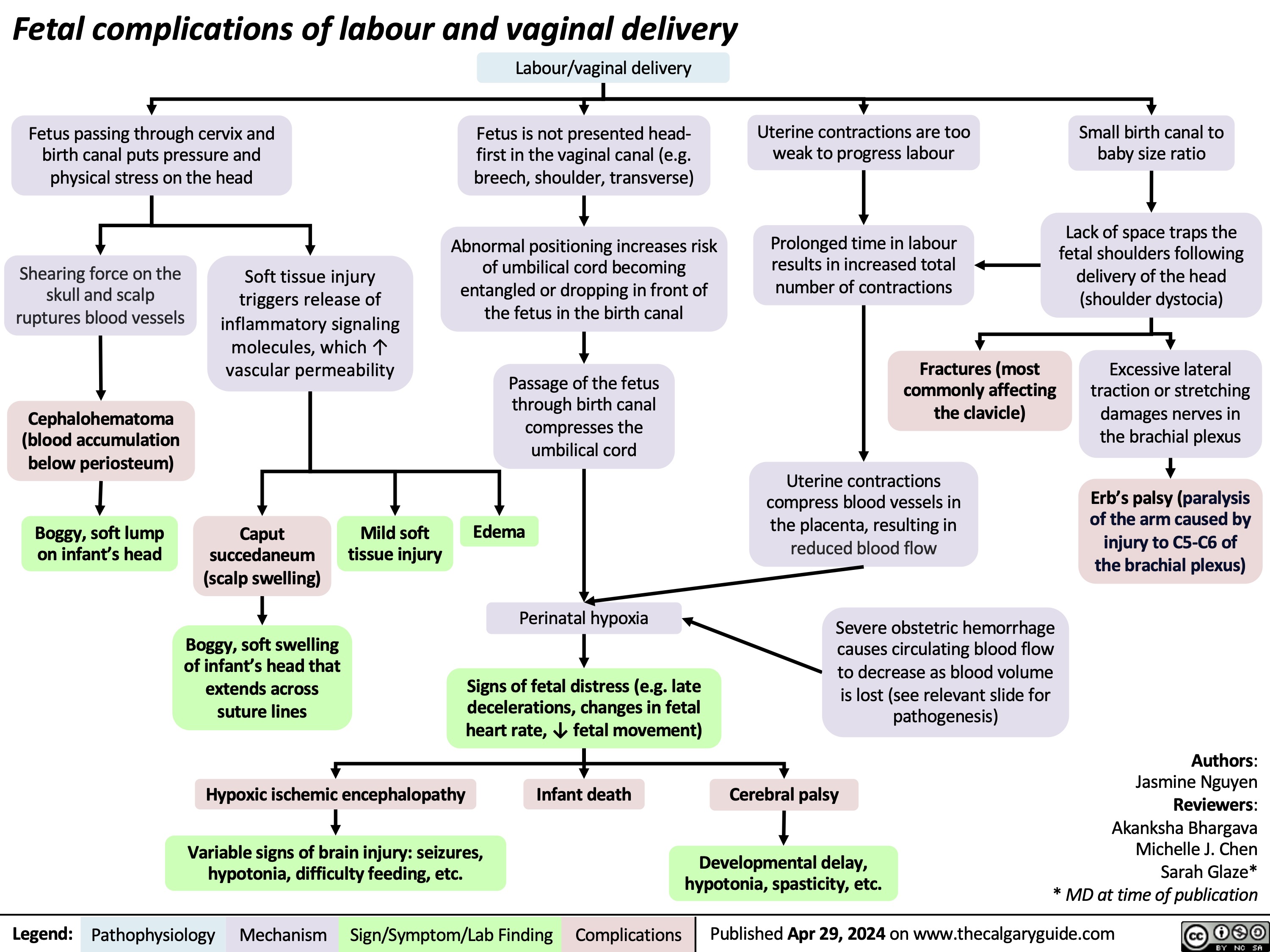
Fetal complications of labour and vaginal delivery
       Fetus passing through cervix and birth canal puts pressure and physical stress on the head
Labour/vaginal delivery
Fetus is not presented head- first in the vaginal canal (e.g. breech, shoulder, transverse)
Abnormal positioning increases risk of umbilical cord becoming entangled or dropping in front of the fetus in the birth canal
Passage of the fetus through birth canal compresses the umbilical cord
Edema
Perinatal hypoxia
Signs of fetal distress (e.g. late decelerations, changes in fetal heart rate, ↓ fetal movement)
Infant death
Uterine contractions are too weak to progress labour
Prolonged time in labour results in increased total number of contractions
Fractures (most commonly affecting the clavicle)
Uterine contractions compress blood vessels in the placenta, resulting in reduced blood flow
Severe obstetric hemorrhage causes circulating blood flow to decrease as blood volume is lost (see relevant slide for pathogenesis)
Small birth canal to baby size ratio
Lack of space traps the fetal shoulders following delivery of the head (shoulder dystocia)
Excessive lateral traction or stretching damages nerves in the brachial plexus
Erb’s palsy (paralysis of the arm caused by injury to C5-C6 of the brachial plexus)
        Shearing force on the skull and scalp ruptures blood vessels
Cephalohematoma (blood accumulation below periosteum)
Boggy, soft lump on infant’s head
Soft tissue injury triggers release of inflammatory signaling molecules, which ↑ vascular permeability
               Caput succedaneum (scalp swelling)
Boggy, soft swelling of infant’s head that extends across suture lines
Mild soft tissue injury
         Hypoxic ischemic encephalopathy
Variable signs of brain injury: seizures, hypotonia, difficulty feeding, etc.
Cerebral palsy
Developmental delay, hypotonia, spasticity, etc.
Authors: Jasmine Nguyen Reviewers: Akanksha Bhargava Michelle J. Chen Sarah Glaze* * MD at time of publication
   Legend:
 Pathophysiology
 Mechanism
Sign/Symptom/Lab Finding
 Complications
 Published Apr 29, 2024 on www.thecalgaryguide.com

Costochondritis

Costochondritis: Pathogenesis and clinical findings
Systemic infection originating in upper respiratory tract (commonly Staphylococcus aureus and Streptococcus bacterial infections)
Infection spreads through blood to ribcage and chest wall
    Age-related degeneration of cartilage within ribcage joints
Immune cells present in joints secrete proinflammatory cytokines
Cytokines sensitize nociceptors (pain receptors) in joints
Repetitive trauma or strain to chest wall muscles (e.g. chronic cough, chest wall injury, overexertion of chest wall muscles)
Excessive stretch and tearing of ribcage cartilage and ligaments
Autoimmune disease (e.g. rheumatoid arthritis)
Antigen presenting cells display self-antigens to CD4+ T cells
           Mechanical stimuli (e.g. Damaged cells release cytokines Pathogens activate immune cells at site of stretch) activate nociceptors that recruit immune cells inflammation
Costochondritis
 Benign inflammation of the ribcage (costal) cartilage, particularly at the costosternal junctions (connection between sternum and cartilage) and the costochondral junctions (connection between the cartilage and rib)
Authors:
Michelle J. Chen Reviewers:
Raafi Ali
Yan Yu*
Gerhard Kiefer*
* MD at time of publication
Cartilage, ligament, or muscle injury
Presence of foreign pathogen in costal cartilage
     Injury or pathogen activates inflammatory cascade in the ribcage cartilage
      Immune cells proliferate so that they exceed the available space in the cartilage matrix of the ribcage
Cartilage swelling compresses intercostal nerves
Compression acts as a mechanical stimulus to activate nociceptors
Sharp, localized pain reproducible upon palpation over ribcage
Immune cells secrete cytokines
Cytokines activate nociceptors so that they become more sensitive to mechanical stimuli
Muscle or ligament stretch from normal use activates sensitized nociceptors
Pain increases with inspiration or cough
Natural resolution of inflammation over time
     Macrophages phagocytose apoptotic cells (immune and cartilage cells) and cellular debris
Immune cells release factors that degrade proinflammatory cytokines
Fewer cytokines reduce immune cell recruitment into costal cartilage
Pain usually self-resolves
Immune cells release lipid molecules that bind to the same cells (autocrine signaling) to inhibit further production of inflammatory cytokines and chemokines
         Legend:
 Pathophysiology
Mechanism
Sign/Symptom/Lab Finding
 Complications
 Published Apr 29, 2024 on www.thecalgaryguide.com

Acute Otitis Media Complications

Acute Otitis Media: Complications Prolonged mucus buildup or swelling in
Eustachian tube due to colds/allergies obstructs the Eustachian tube
Fluid unable to drain through tube and accumulates in middle ear
Acute Otitis Media
Infection and inflammation of the middle ear
Mastoid air cells are in physical contact with distal middle ear
Pathogens move into mastoid air spaces
Inflammation & infection in air spaces
Mastoiditis
Bacterial and immune cell debris (pus) accumulates in mastoid air spaces
Untreated middle ear infection allows further bacterial proliferation
           Persistent effusion
causes ion channel changes in inner ear
Composition of endolymph and perilymph in inner ear changes
Vestibular/Labyrinth dysfunction
Feelings of Vertigo imbalance
Purulent discharge from middle ear through perforation
Otorrhea (ear discharge)
↑ Pressure in middle ear
Pressure stretches tympanic membrane
Cytokines reach hypothalamus through the bloodstream
Hypothalamus responds to stimulation and ↑ thermoregulatory set-point
High-grade fever
Infection spreads into bloodstream
Sepsis
Cytokines alter metabolism pathways of neurotransmitters in the brain
Cerebral cortex dysfunction
Infection spreads to cranium
Intracranial complications (e.g., meningitis, brain abscess, thrombus)
Author: Jody Platt Stephanie de Waal Reviewers: Yan Yu Elizabeth De Klerk William Kim Annie Pham Michelle J. Chen Danielle Nelson* * MD at time of publication
Helper T cells and macrophages release inflammatory cytokines into the bloodstream
                    Perforation of tympanic membrane
↓ Conduction of sound waves
Conductive hearing loss
              Pressure in middle ear diffuses out of perforation
↓ Tympanic membrane stretching
Otalgia (ear pain) fades
Accumulated debris compresses cranial nerve VII
Facial nerve palsy
Mastoid abscess
    Febrile seizures
    Legend:
 Pathophysiology
Mechanism
Sign/Symptom/Lab Finding
 Complications
 Published Feb 28, 2013, updated Apr 29, 2024 on www.thecalgaryguide.com

Circle of Willis Anatomy and Physiology
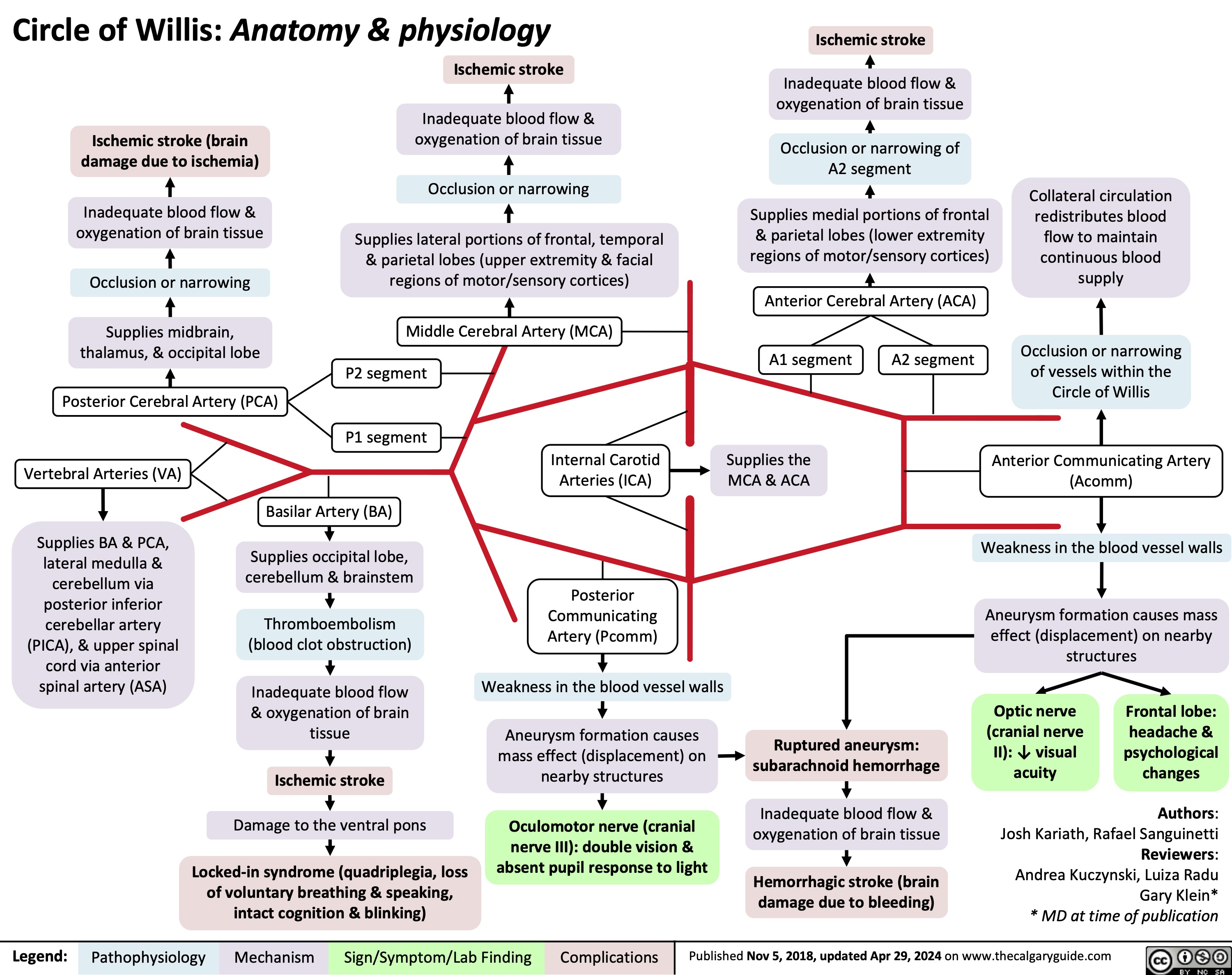
 Circle of Willis: Anatomy & physiology Ischemic stroke
Ischemic stroke
Inadequate blood flow & oxygenation of brain tissue
Occlusion or narrowing of A2 segment
Supplies medial portions of frontal & parietal lobes (lower extremity regions of motor/sensory cortices)
Anterior Cerebral Artery (ACA)
Ischemic stroke (brain damage due to ischemia)
Inadequate blood flow & oxygenation of brain tissue
Occlusion or narrowing
Supplies midbrain, thalamus, & occipital lobe
Posterior Cerebral Artery (PCA) Vertebral Arteries (VA)
Inadequate blood flow & oxygenation of brain tissue
Occlusion or narrowing
Supplies lateral portions of frontal, temporal & parietal lobes (upper extremity & facial regions of motor/sensory cortices)
Middle Cerebral Artery (MCA) P2 segment
A1 segment
Supplies the MCA & ACA
A2 segment
Collateral circulation redistributes blood flow to maintain continuous blood supply
Occlusion or narrowing of vessels within the Circle of Willis
Anterior Communicating Artery (Acomm)
Weakness in the blood vessel walls
Aneurysm formation causes mass effect (displacement) on nearby structures
Supplies BA & PCA, lateral medulla & cerebellum via posterior inferior cerebellar artery (PICA), & upper spinal cord via anterior spinal artery (ASA)
Basilar Artery (BA)
Supplies occipital lobe, cerebellum & brainstem
Thromboembolism (blood clot obstruction)
Inadequate blood flow & oxygenation of brain tissue
Ischemic stroke
Damage to the ventral pons
Locked-in syndrome (quadriplegia, loss of voluntary breathing & speaking, intact cognition & blinking)
Internal Carotid Arteries (ICA)
Posterior Communicating Artery (Pcomm)
Weakness in the blood vessel walls
Aneurysm formation causes mass effect (displacement) on nearby structures
Oculomotor nerve (cranial nerve III): double vision & absent pupil response to light
Legend:
Pathophysiology
Mechanism Sign/Symptom/Lab Finding Complications Published Nov 5, 2018, updated Apr 29, 2024 on www.thecalgaryguide.com
P1 segment
Ruptured aneurysm: subarachnoid hemorrhage
Inadequate blood flow & oxygenation of brain tissue
Hemorrhagic stroke (brain damage due to bleeding)
Optic nerve (cranial nerve II): ↓ visual acuity
Frontal lobe: headache & psychological changes
Authors: Josh Kariath, Rafael Sanguinetti Reviewers: Andrea Kuczynski, Luiza Radu Gary Klein* * MD at time of publication

Sickle Cell Disease Pathogenesis Clinical Findings and Complications
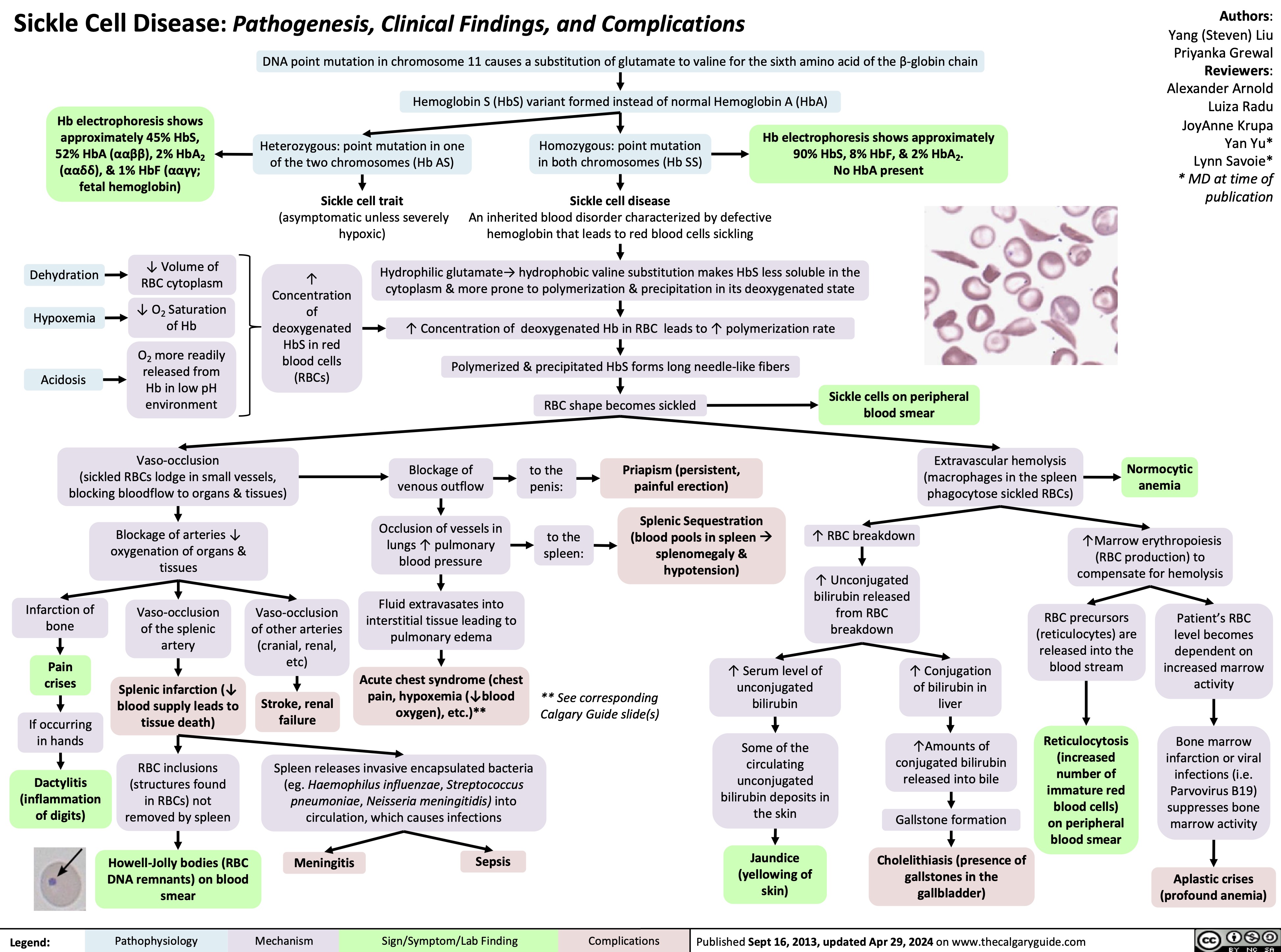
Sickle Cell Disease: Pathogenesis, Clinical Findings, and Complications
DNA point mutation in chromosome 11 causes a substitution of glutamate to valine for the sixth amino acid of the β-globin chain
Authors: Yang (Steven) Liu Priyanka Grewal Reviewers: Alexander Arnold Luiza Radu JoyAnne Krupa Yan Yu* Lynn Savoie* * MD at time of publication
  Hemoglobin S (HbS) variant formed instead of normal Hemoglobin A (HbA)
  Hb electrophoresis shows approximately 45% HbS, 52% HbA (ααββ), 2% HbA
Hb electrophoresis shows approximately 90% HbS, 8% HbF, & 2% HbA .
No HbA present
  (ααδδ), & 1% HbF (ααγγ;2 fetal hemoglobin)
Heterozygous: point mutation in one of the two chromosomes (Hb AS)
Sickle cell trait
(asymptomatic unless severely hypoxic)
Homozygous: point mutation in both chromosomes (Hb SS)
Sickle cell disease
An inherited blood disorder characterized by defective hemoglobin that leads to red blood cells sickling
2
      Dehydration Hypoxemia
Acidosis
↓ Volume of RBC cytoplasm
↓ O2 Saturation of Hb
O morereadily 2
released from Hb in low pH environment
↑ Concentration of deoxygenated HbSinred blood cells (RBCs)
Hydrophilic glutamate→ hydrophobic valine substitution makes HbS less soluble in the cytoplasm & more prone to polymerization & precipitation in its deoxygenated state
↑ Concentration of deoxygenated Hb in RBC leads to ↑ polymerization rate Polymerized & precipitated HbS forms long needle-like fibers
        RBC shape becomes sickled
Sickle cells on peripheral blood smear
     Vaso-occlusion
(sickled RBCs lodge in small vessels, blocking bloodflow to organs & tissues)
Blockage of venous outflow
Occlusion of vessels in lungs ↑ pulmonary blood pressure
Fluid extravasates into interstitial tissue leading to pulmonary edema
Acute chest syndrome (chest pain, hypoxemia (↓blood oxygen), etc.)**
to the penis:
to the spleen:
Priapism (persistent, painful erection)
Splenic Sequestration (blood pools in spleenà splenomegaly & hypotension)
Extravascular hemolysis (macrophages in the spleen phagocytose sickled RBCs)
Normocytic anemia
↑Marrow erythropoiesis (RBC production) to compensate for hemolysis
                  Infarction of bone
Pain crises
If occurring in hands
Dactylitis (inflammation of digits)
Blockage of arteries ↓ oxygenation of organs & tissues
Vaso-occlusion of the splenic artery
Splenic infarction (↓ blood supply leads to tissue death)
RBC inclusions (structures found in RBCs) not removed by spleen
Howell-Jolly bodies (RBC DNA remnants) on blood smear
Vaso-occlusion of other arteries (cranial, renal, etc)
Stroke, renal failure
↑ RBC breakdown
↑ Unconjugated bilirubin released from RBC breakdown
RBC precursors (reticulocytes) are released into the blood stream
Reticulocytosis (increased number of immature red blood cells) on peripheral blood smear
Patient’s RBC level becomes dependent on increased marrow activity
Bone marrow infarction or viral infections (i.e. Parvovirus B19) suppresses bone marrow activity
Aplastic crises (profound anemia)
       ** See corresponding Calgary Guide slide(s)
↑ Serum level of unconjugated bilirubin
Some of the circulating unconjugated bilirubin deposits in the skin
Jaundice (yellowing of skin)
↑ Conjugation of bilirubin in liver
↑Amounts of conjugated bilirubin released into bile
Gallstone formation
Cholelithiasis (presence of gallstones in the gallbladder)
         Spleen releases invasive encapsulated bacteria (eg. Haemophilus influenzae, Streptococcus pneumoniae, Neisseria meningitidis) into circulation, which causes infections
         Meningitis
Sepsis
  Legend:
 Pathophysiology
Mechanism
Sign/Symptom/Lab Finding
 Complications
 Published Sept 16, 2013, updated Apr 29, 2024 on www.thecalgaryguide.com

Wiskott-Aldrich Syndrome

Wiskott-Aldrich Syndrome (WAS): Pathogenesis and clinical findings X-linked recessive inheritance (mostly males impacted) Spontaneous DNA mutation
Genetic mutations in Wiskott-Aldrich Syndrome Protein (WASP) impair actin cytoskeleton remodeling in hematopoietic cells (immature blood cells)
Authors: Mina Mina Reviewers: Hana Osman Mao Ding Maharshi Gandhi Shahab Marzoughi Louis-Philippe Girard* * MD at time of publication
          Megakaryocytes (platelet precursor cells) depend on the cytoskeleton changing shape to form pseudopodia (arm-like projections) which bud off forming cellular fragments (platelets)
Abnormal cytoskeleton reorganization leads to ineffective thrombocytopoiesis (production of platelets)
Microthrombocytopenia (↓ platelet size and quantity)
Issues with formation of a platelet plug due to abnormal platelets (dysfunction of primary hemostasis)
Reduced ability for platelet adhesion, activation, and/or aggregation
Natural killer cells depend on the cytoskeleton reorganization to form immunological synapses (communication) with body cells in order to have effective surveillance
T cells depend on the cytoskeleton remodeling to form pseudopods which allow them to synapse with other cells when a pathogen is encountered
    Defective immune synapse formation
↓ Cancer immunosurveillance
↑ Risk of malignancy
Helper T cells cannot activate B cells which generate antibodies (immunoglobulins) to destroy pathogens
Regulatory T cells can not sufficiently downregulate effector cells which typically limit the immune response and prevent autoimmune conditions
↑ Risk of autoimmune diseases
Recurrent opportunistic infections
       Immune dysregulation
Impaired immune response
        ↓ Number and function of T cells
Immune responses contribute to Type 2 immune responses
Atopic dermatitis (AD; chronic inflammation that causes itchy skin)
↑ Immunoglobulin (Ig) A
      Epistaxis (nosebleed)
Red blood cells leak from capillaries
Menorrhagia (heavy menstrual bleeding)
  Petechiae (small, flat, red spots that appear on the skin)
Inflammation in AD triggers release of interleukins (modulatory proteins during inflammatory and immune responses) leading to Immunoglobulin (Ig) class switching
 ↑ IgE levels
 Legend:
 Pathophysiology
Mechanism
Sign/Symptom/Lab Finding
 Complications
 Published Apr 20, 2024 on www.thecalgaryguide.com

Scabies pathogenesis and clinical findings
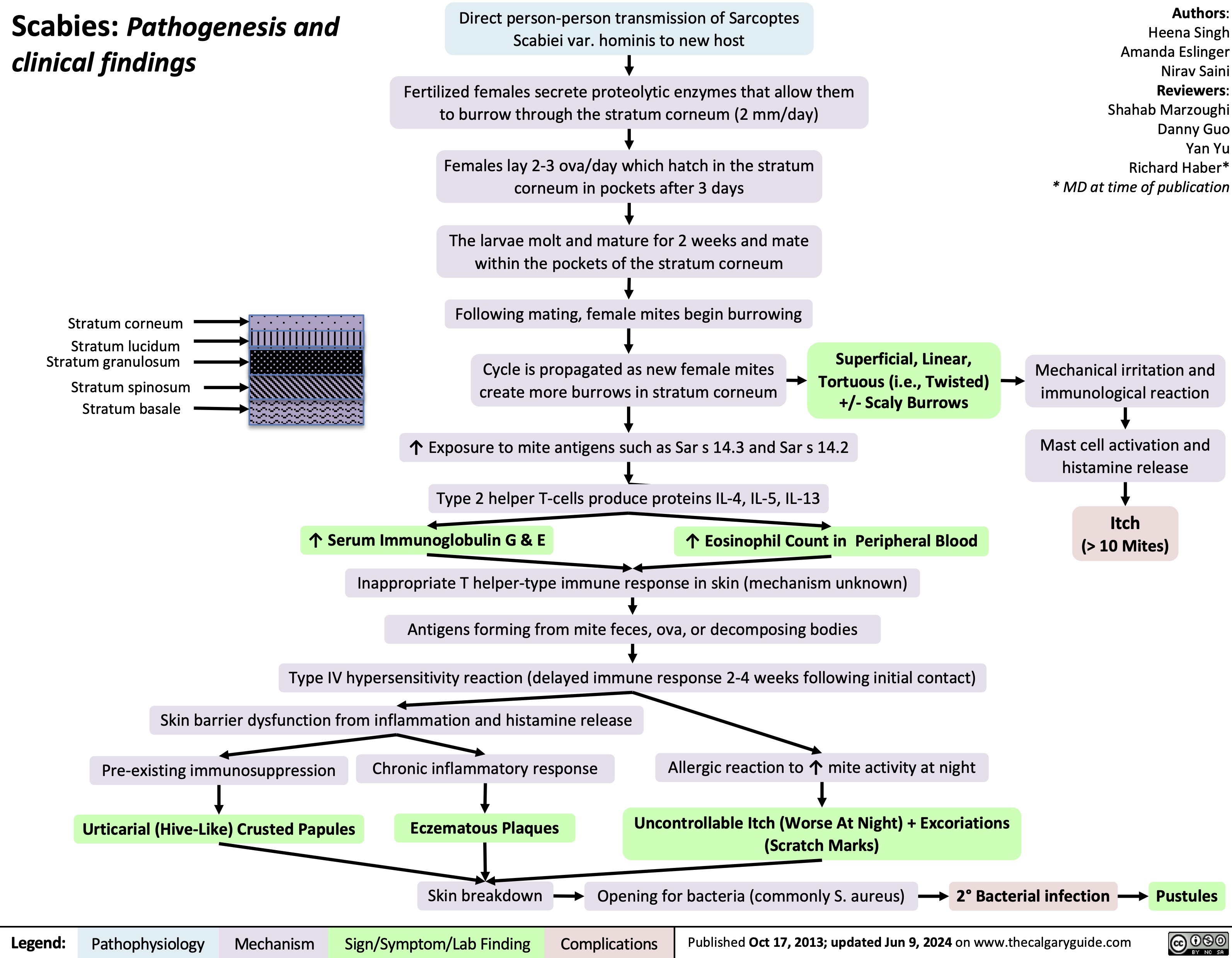
 Scabies: Pathogenesis and clinical findings
Direct person-person transmission of Sarcoptes Scabiei var. hominis to new host
Fertilized females secrete proteolytic enzymes that allow them to burrow through the stratum corneum (2 mm/day)
Authors: Heena Singh Amanda Eslinger Nirav Saini Reviewers: Shahab Marzoughi Danny Guo Yan Yu Richard Haber* * MD at time of publication
Mechanical irritation and immunological reaction
Mast cell activation and histamine release
Itch
(> 10 Mites)
     Stratum corneum
Stratum lucidum Stratum granulosum
Stratum spinosum Stratum basale
Females lay 2-3 ova/day which hatch in the stratum corneum in pockets after 3 days
The larvae molt and mature for 2 weeks and mate within the pockets of the stratum corneum
Following mating, female mites begin burrowing
Cycle is propagated as new female mites create more burrows in stratum corneum
Superficial, Linear, Tortuous (i.e., Twisted) +/- Scaly Burrows
         ↑ Exposure to mite antigens such as Sar s 14.3 and Sar s 14.2
Type 2 helper T-cells produce proteins IL-4, IL-5, IL-13
↑ Serum Immunoglobulin G & E ↑ Eosinophil Count in Peripheral Blood Inappropriate T helper-type immune response in skin (mechanism unknown)
Antigens forming from mite feces, ova, or decomposing bodies
Type IV hypersensitivity reaction (delayed immune response 2-4 weeks following initial contact)
            Skin barrier dysfunction from inflammation and histamine release
Pre-existing immunosuppression Chronic inflammatory response Allergic reaction to ↑ mite activity at night
     Uncontrollable Itch (Worse At Night) + Excoriations (Scratch Marks)
  Urticarial (Hive-Like) Crusted Papules Eczematous Plaques
Skin breakdown Opening for bacteria (commonly S. aureus) 2° Bacterial infection Pustules
       Legend:
 Pathophysiology
Mechanism
Sign/Symptom/Lab Finding
 Complications
 Published Oct 17, 2013; updated Jun 9, 2024 on www.thecalgaryguide.com

Gynecomastia

Gynecomastia: Pathogenesis
Authors:
Sara Cho Reviewers: Michelle J. Chen Samuel Fineblit* *MD at time of publication
        Physiologic causes
Puberty
Placenta transfers maternal estrogens to newborn male babies
Older age (>60 years)
Hyperthyroidism
Klinefelter Syndrome (males with > 1 X chromosome)
Liver cirrhosis
Certain tumors (e.g., germ cell, adrenal, Leydig cell, Sertoli cell)
Anabolic steroid usage (containing testosterone)
Finasteride (treatment for benign prostate hyperplasia and male pattern baldness)
Cimetidine - inhibits stomach acid production
Spironolactone (diuretic
used to treat high blood pressure and heart failure)
Ketoconazole (antifungal)
Cytotoxic agents (e.g. alkylating agents, vincristine, methotrexate)
Imbalance between estrogens and androgens
Estrogen stimulates breast tissue growth in newborn
Changes in metabolic rate ↑ fat production
Unclear mechanism
↑ Proinflammatory mediators and cytokines (e.g. prostaglandin E2, TNF⍺, IL-1, IL-6, cyclooxygenase-2)
Prostaglandin E2 and IL- 6 upregulate aromatase enzyme expression
Available estrogen is higher than available testosterone
↑ Aromatase enzyme activity, converting androgens to estrogen
↓ Testosterone release from the testes
        ↓ Testosterone
↑ Serum sex hormone binding globulin (SHBG)
SHBG binds estrogen with less affinity to testosterone
     Thyroid hormone stimulates liver to express more sex hormone binding globulin
Thyroid hormone stimulates aromatase activity
Overexpression of aromatase enzyme
Seminiferous tubules in the testes hyalinize and fibrose
Suppression of the hypothalamic pituitary thyroid axis through an unclear mechanism
Tumor may produce estradiol
Tumor produces β- human chorionic gonadotropin (β-HCG)
↑ serum testosterone
Inhibits 5-α reductase
Blocks binding of 5-DHT to androgen receptors
↓ 2-hydroxylation of estradiol
Mimics structures of testosterone
Inhibits 17,20 desmolase and 17α-hydroxylase
Damage to Leydig cells in testes
↑ Estrogen to androgen ratio
                    Pathological causes
Impaired spermatogenesis and testosterone production
↓ GnRH secretion from hypothalamus
↓ Testosterone
↓ Luteinizing hormone (LH) release from anterior pituitary
↓ 5-DHT and/or testosterone binding to androgen receptors in chest tissue
↓ inhibition of breast development
Normal or increased estrogen acts on estrogen receptor on chest tissue
Estrogen receptors stimulate breast development
          Estradiol negatively feedbacks on luteinizing hormone
β-HCG stimulates LH receptors on Leydig cells in the testes
Aromatase enzyme converts excess testosterone into estrogen and estradiol
↓ conversion of testosterone to 5- dihydrotestosterone (5-DHT), a more potent form of testosterone
Glandular proliferation in male breasts
Gynecomastia
(development of breast tissue in males)
                      Drug side- effects
↓ Metabolism of estradiol
Competitively binds to androgen receptors
↑ Serum estradiol levels
Exhibits physical attributes that do not align with gender identity
Psychological distress
In some cases, hormones stabilize
Involution and atrophy of ducts
Gynecomastia resolves
             ↓ Steroid synthesis
↓ Androstenedione produced (testosterone precursors)
↓ Serum testosterone levels
       ↓ Testosterone production
 Legend:
 Pathophysiology
 Mechanism
 Sign/Symptom/Lab Finding
 Complications
 Published Jun 9, 2024 on www.thecalgaryguide.com

Posterior Cruciate Ligament PCL Injury Pathogenesis and Clinical Findings
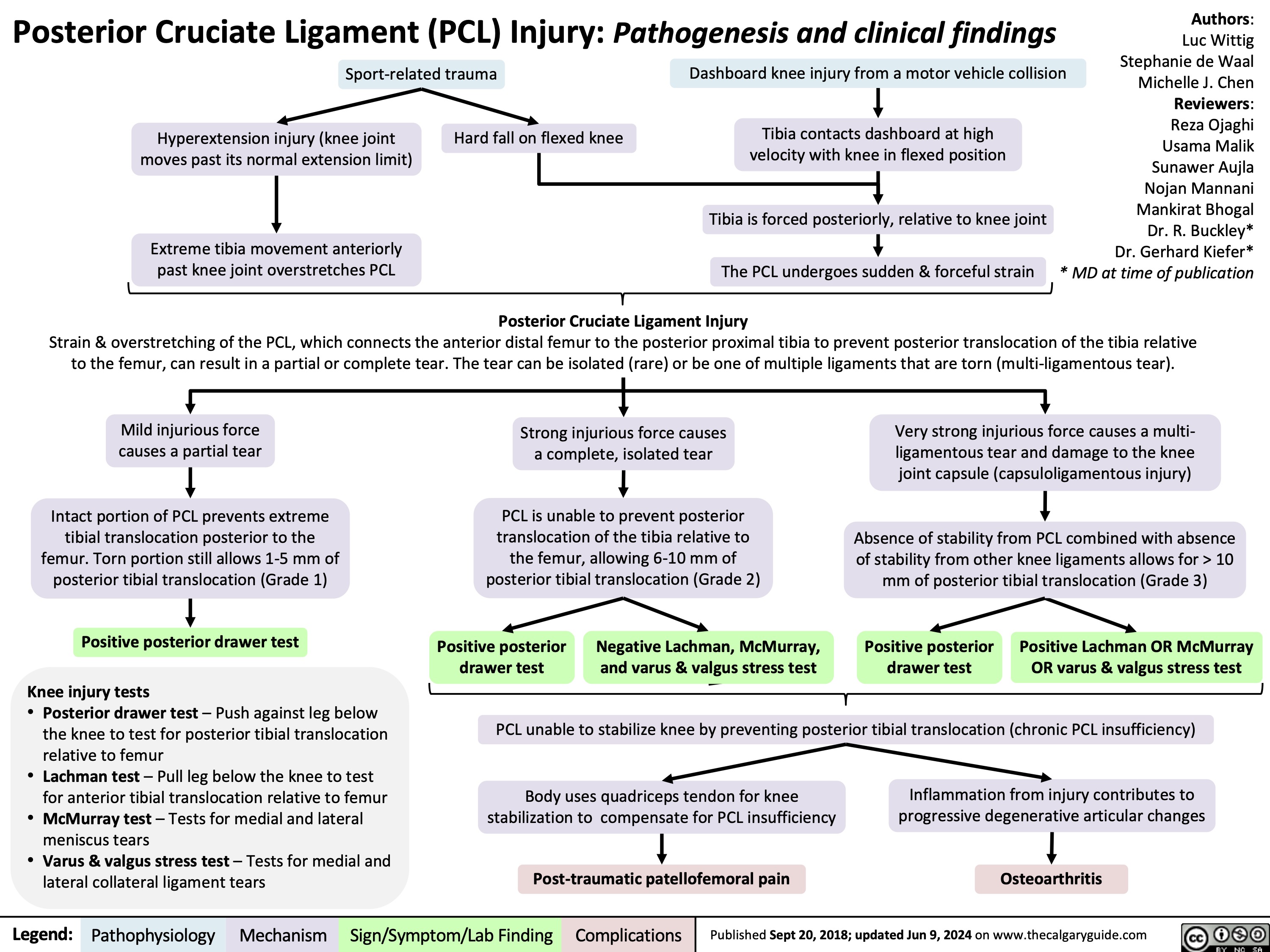
Posterior Cruciate Ligament (PCL) Injury: Pathogenesis and clinical findings
Authors: Luc Wittig Stephanie de Waal Michelle J. Chen Reviewers: Reza Ojaghi Usama Malik Sunawer Aujla Nojan Mannani Mankirat Bhogal Dr. R. Buckley* Dr. Gerhard Kiefer* * MD at time of publication
  Sport-related trauma
Dashboard knee injury from a motor vehicle collision
Tibia contacts dashboard at high velocity with knee in flexed position
Tibia is forced posteriorly, relative to knee joint The PCL undergoes sudden & forceful strain
     Hyperextension injury (knee joint moves past its normal extension limit)
Extreme tibia movement anteriorly past knee joint overstretches PCL
Hard fall on flexed knee
      Posterior Cruciate Ligament Injury
Strain & overstretching of the PCL, which connects the anterior distal femur to the posterior proximal tibia to prevent posterior translocation of the tibia relative to the femur, can result in a partial or complete tear. The tear can be isolated (rare) or be one of multiple ligaments that are torn (multi-ligamentous tear).
     Mild injurious force causes a partial tear
Intact portion of PCL prevents extreme tibial translocation posterior to the femur. Torn portion still allows 1-5 mm of posterior tibial translocation (Grade 1)
Positive posterior drawer test
Knee injury tests
• Posterior drawer test – Push against leg below
the knee to test for posterior tibial translocation
relative to femur
• Lachman test – Pull leg below the knee to test
for anterior tibial translocation relative to femur • McMurray test – Tests for medial and lateral
meniscus tears
• Varus & valgus stress test – Tests for medial and
Strong injurious force causes a complete, isolated tear
PCL is unable to prevent posterior translocation of the tibia relative to the femur, allowing 6-10 mm of posterior tibial translocation (Grade 2)
Positive posterior Negative Lachman, McMurray, drawer test and varus & valgus stress test
Very strong injurious force causes a multi- ligamentous tear and damage to the knee joint capsule (capsuloligamentous injury)
Absence of stability from PCL combined with absence of stability from other knee ligaments allows for > 10 mm of posterior tibial translocation (Grade 3)
Positive posterior Positive Lachman OR McMurray drawer test OR varus & valgus stress test
                PCL unable to stabilize knee by preventing posterior tibial translocation (chronic PCL insufficiency)
    Body uses quadriceps tendon for knee stabilization to compensate for PCL insufficiency
Inflammation from injury contributes to progressive degenerative articular changes
  lateral collateral ligament tears
Post-traumatic patellofemoral pain
Osteoarthritis
 Legend:
 Pathophysiology
Mechanism
Sign/Symptom/Lab Finding
 Complications
 Published Sept 20, 2018; updated Jun 9, 2024 on www.thecalgaryguide.com

Metastatic Bone Lesions

Metastatic Bone Cancer: Pathogenesis & Clinical Findings Primary solid tumours from breast, prostate, or lung
commonly migrate into bones
Bone Metastases
Migration of primary solid tumours (commonly from the breast, prostate, or lungs) into bones. Once tumours metastasize to bone, they are generally incurable and contribute to significant morbidity prior to a patient’s death
Authors: Curtis Ostertag Reviewers: Mankirat Bhogal Nojan Mannani Michelle J. Chen Dr. Gerhard Kiefer* * MD at time of publication
      Cell-to-cell communication between tumour cells & bone cells (osteoclasts & osteoblasts)
Tumours release TNF-⍺, RANK-L, and PTHRP which ↑ osteoclast activity & ↓ osteoblast activity
Change in relative activity of bone cells results in osteolysis (breakdown of bone)
Calcium is released into the bloodstream
Hypercalcemia
Osteoblastic metastasis (common in prostate cancer)
Tumor growth
     Secondary bone formation in response to bone destruction
TGF-β, PDGF, & IGF are released from the degraded bone matrix, which can stimulate tumors & osteoblasts
Weakened bone increases risk of fracture
Pathologic fracture
↑ Mortality
Bone tissue expands into surrounding space
      Nerve compression
        Disruption of cortical bone or surrounding soft tissues
Diffuse & achy rest/night pain
Long bone masses compress peripheral nerves
Neuropathy
Vertebral masses compress spinal nerves/cord
Radiculopathy /Myelopathy
           ↓ Quality of life
 Legend:
 Pathophysiology
Mechanism
Sign/Symptom/Lab Finding
 Complications
Published Jun 9, 2024 on www.thecalgaryguide.com

Migraines and auras pathogenesis and clinical findings
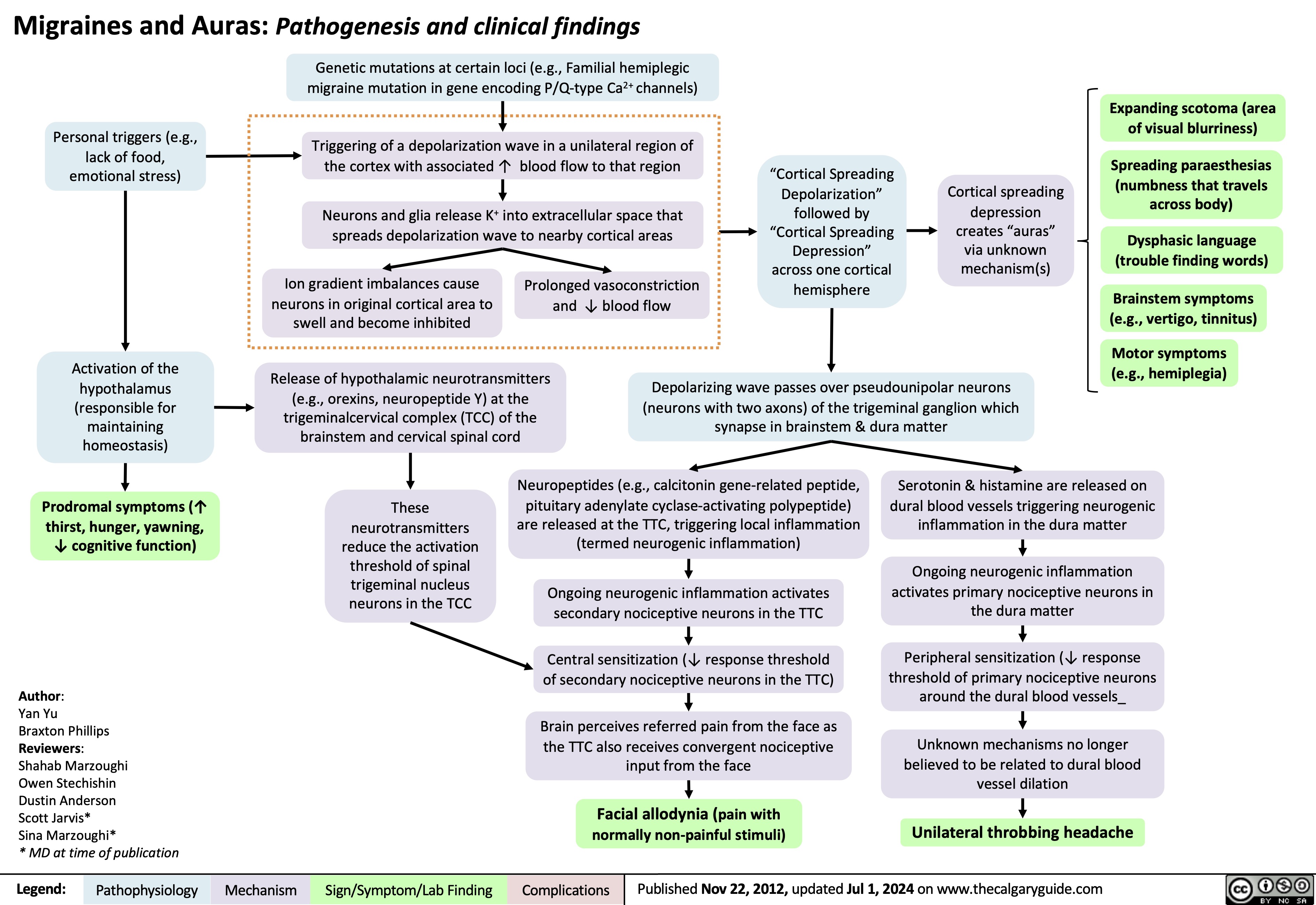
Migraines and Auras: Pathogenesis and clinical findings Genetic mutations at certain loci (e.g., Familial hemiplegic
 migraine mutation in gene encoding P/Q-type Ca2+ channels)
    Personal triggers (e.g., lack of food, emotional stress)
“Cortical Spreading Depolarization” followed by “Cortical Spreading Depression” across one cortical hemisphere
Cortical spreading depression
creates “auras” via unknown mechanism(s)
Expanding scotoma (area of visual blurriness)
Spreading paraesthesias (numbness that travels across body)
Dysphasic language (trouble finding words)
Brainstem symptoms (e.g., vertigo, tinnitus)
Motor symptoms (e.g., hemiplegia)
 Triggering of a depolarization wave in a unilateral region of the cortex with associated ↑ blood flow to that region
Neurons and glia release K+ into extracellular space that spreads depolarization wave to nearby cortical areas
Ion gradient imbalances cause Prolonged vasoconstriction neurons in original cortical area to and ↓ blood flow
swell and become inhibited
              Activation of the hypothalamus (responsible for maintaining homeostasis)
Prodromal symptoms (↑ thirst, hunger, yawning, ↓ cognitive function)
Author:
Yan Yu
Braxton Phillips
Reviewers:
Shahab Marzoughi
Owen Stechishin
Dustin Anderson
Scott Jarvis*
Sina Marzoughi*
* MD at time of publication
Release of hypothalamic neurotransmitters (e.g., orexins, neuropeptide Y) at the trigeminalcervical complex (TCC) of the brainstem and cervical spinal cord
Depolarizing wave passes over pseudounipolar neurons (neurons with two axons) of the trigeminal ganglion which synapse in brainstem & dura matter
       These neurotransmitters reduce the activation threshold of spinal trigeminal nucleus neurons in the TCC
Neuropeptides (e.g., calcitonin gene-related peptide, pituitary adenylate cyclase-activating polypeptide)
are released at the TTC, triggering local inflammation (termed neurogenic inflammation)
Ongoing neurogenic inflammation activates secondary nociceptive neurons in the TTC
Central sensitization (↓ response threshold of secondary nociceptive neurons in the TTC)
Brain perceives referred pain from the face as the TTC also receives convergent nociceptive input from the face
Facial allodynia (pain with normally non-painful stimuli)
Serotonin & histamine are released on dural blood vessels triggering neurogenic inflammation in the dura matter
Ongoing neurogenic inflammation activates primary nociceptive neurons in the dura matter
Peripheral sensitization (↓ response threshold of primary nociceptive neurons around the dural blood vessels_
Unknown mechanisms no longer believed to be related to dural blood vessel dilation
Unilateral throbbing headache
          Legend:
 Pathophysiology
 Mechanism
 Sign/Symptom/Lab Finding
 Complications
 Published Nov 22, 2012, updated Jul 1, 2024 on www.thecalgaryguide.com

Anesthetic Considerations in Pregnancy
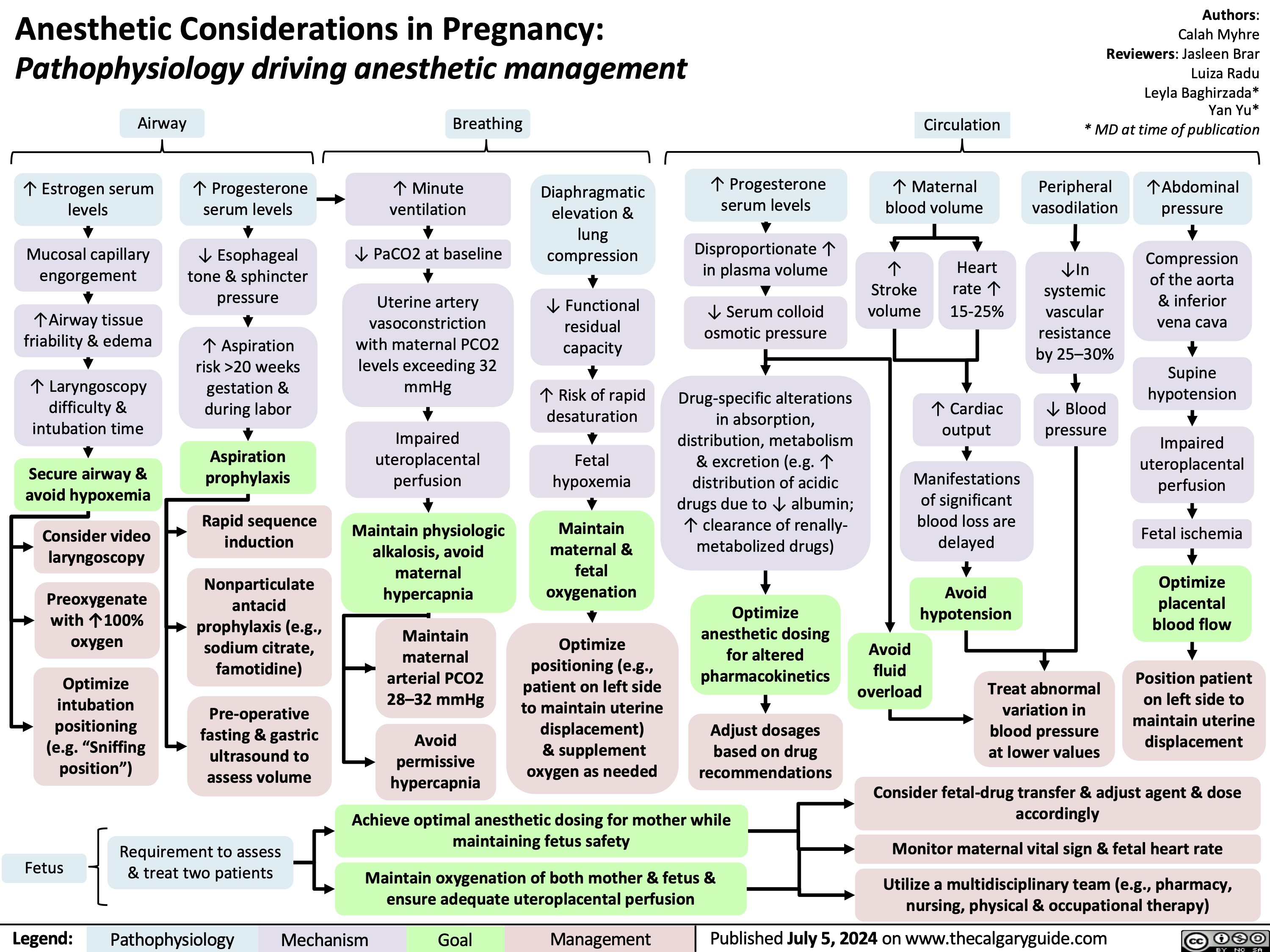
Anesthetic Considerations in Pregnancy:
Pathophysiology driving anesthetic management
Authors: Calah Myhre Reviewers: Jasleen Brar Luiza Radu Leyla Baghirzada* Yan Yu* * MD at time of publication
  Airway
↑ Estrogen serum levels
Mucosal capillary engorgement
↑Airway tissue friability & edema
↑ Laryngoscopy difficulty & intubation time
Secure airway & avoid hypoxemia
Consider video laryngoscopy
Preoxygenate with ↑100% oxygen
Optimize intubation positioning (e.g. “Sniffing position”)
↑ Progesterone serum levels
↓ Esophageal tone & sphincter pressure
↑ Aspiration risk >20 weeks gestation & during labor
Aspiration prophylaxis
Rapid sequence induction
Nonparticulate antacid prophylaxis (e.g., sodium citrate, famotidine)
Pre-operative fasting & gastric ultrasound to assess volume
Breathing
↑ Minute ventilation
↓ PaCO2 at baseline
Uterine artery vasoconstriction with maternal PCO2 levels exceeding 32 mmHg
Impaired uteroplacental perfusion
Maintain physiologic alkalosis, avoid maternal hypercapnia
Maintain
maternal arterial PCO2 28–32 mmHg
Avoid permissive hypercapnia
↑ Progesterone serum levels
Disproportionate ↑ in plasma volume
↓ Serum colloid osmotic pressure
Drug-specific alterations in absorption, distribution, metabolism & excretion (e.g. ↑ distribution of acidic drugs due to ↓ albumin; ↑ clearance of renally- metabolized drugs)
Optimize anesthetic dosing for altered pharmacokinetics
Adjust dosages based on drug recommendations
Circulation
↑ Maternal blood volume
Peripheral vasodilation
↓In systemic vascular resistance by 25–30%
↓ Blood pressure
↑Abdominal pressure
Compression of the aorta & inferior vena cava
Supine hypotension
Impaired uteroplacental perfusion
Fetal ischemia
Optimize
placental blood flow
Position patient on left side to maintain uterine displacement
            Diaphragmatic elevation & lung compression
↓ Functional residual capacity
↑ Risk of rapid desaturation
Fetal hypoxemia
Maintain maternal & fetal oxygenation
Optimize positioning (e.g., patient on left side to maintain uterine displacement)
& supplement oxygen as needed
Heart rate ↑ 15-25%
↑ Cardiac output
Manifestations of significant blood loss are delayed
Avoid hypotension
        ↑ Stroke volume
                                      Avoid fluid overload
Treat abnormal variation in blood pressure at lower values
              Fetus
Requirement to assess & treat two patients
Achieve optimal anesthetic dosing for mother while maintaining fetus safety
Maintain oxygenation of both mother & fetus & ensure adequate uteroplacental perfusion
Consider fetal-drug transfer & adjust agent & dose accordingly
Monitor maternal vital sign & fetal heart rate
Utilize a multidisciplinary team (e.g., pharmacy, nursing, physical & occupational therapy)
   Legend:
 Pathophysiology
Mechanism
 Goal
 Management
Published July 5, 2024 on www.thecalgaryguide.com

Diabetes Mellitus Pathophysiology Behind Lab Findings
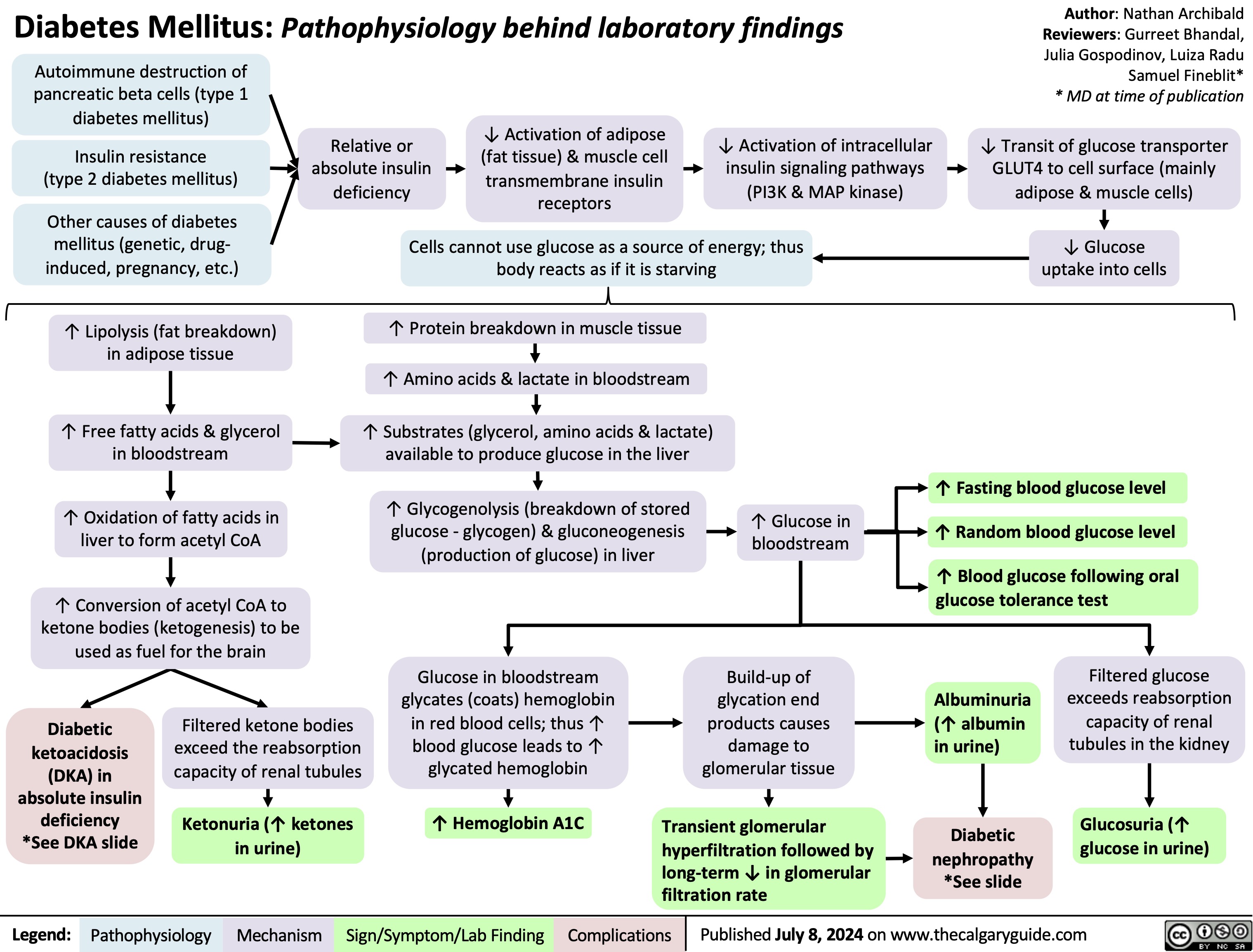
Diabetes Mellitus: Pathophysiology behind laboratory findings
Author: Nathan Archibald Reviewers: Gurreet Bhandal, Julia Gospodinov, Luiza Radu
Samuel Fineblit*
* MD at time of publication
↓ Transit of glucose transporter GLUT4 to cell surface (mainly adipose & muscle cells)
↓ Glucose uptake into cells
 Autoimmune destruction of pancreatic beta cells (type 1 diabetes mellitus)
Insulin resistance (type 2 diabetes mellitus)
Other causes of diabetes mellitus (genetic, drug- induced, pregnancy, etc.)
↑ Lipolysis (fat breakdown) in adipose tissue
↑ Free fatty acids & glycerol in bloodstream
↑ Oxidation of fatty acids in liver to form acetyl CoA
↑ Conversion of acetyl CoA to ketone bodies (ketogenesis) to be used as fuel for the brain
Relative or absolute insulin deficiency
↓ Activation of adipose (fat tissue) & muscle cell transmembrane insulin receptors
↓ Activation of intracellular insulin signaling pathways (PI3K & MAP kinase)
          Cells cannot use glucose as a source of energy; thus body reacts as if it is starving
    ↑ Protein breakdown in muscle tissue ↑ Amino acids & lactate in bloodstream
↑ Substrates (glycerol, amino acids & lactate) available to produce glucose in the liver
↑ Glycogenolysis (breakdown of stored glucose - glycogen) & gluconeogenesis (production of glucose) in liver
Glucose in bloodstream glycates (coats) hemoglobin in red blood cells; thus ↑ blood glucose leads to ↑ glycated hemoglobin
↑ Hemoglobin A1C
↑ Fasting blood glucose level ↑ Random blood glucose level
↑ Blood glucose following oral glucose tolerance test
                    Diabetic ketoacidosis (DKA) in absolute insulin deficiency *See DKA slide
Filtered ketone bodies exceed the reabsorption capacity of renal tubules
Ketonuria (↑ ketones in urine)
↑ Glucose in bloodstream
Build-up of glycation end products causes damage to glomerular tissue
Transient glomerular hyperfiltration followed by long-term ↓ in glomerular filtration rate
Albuminuria (↑ albumin in urine)
Diabetic nephropathy *See slide
Filtered glucose exceeds reabsorption capacity of renal tubules in the kidney
Glucosuria (↑ glucose in urine)
        Legend:
 Pathophysiology
Mechanism
Sign/Symptom/Lab Finding
 Complications
 Published July 8, 2024 on www.thecalgaryguide.com

Neonatal Hypoglycemia Pathogenesis

Neonatal Hypoglycemia: Pathogenesis
Normal physiology
Placenta supplies fetal circulation with glucose
Clamping of the umbilical cord stops the source of glucose
Blood glucose level declines rapidly in the first 2-3 hours of life
Low glucose causes an ↓ in insulin and an ↑ in epinephrine, cortisol and glucagon
Glucagon and epinephrine act on
receptors in the liver and skeletal muscle to promote gluconeogenesis (glucose production from non- carbohydrate sources), glycogenolysis (breakdown of glycogen into glucose), and fatty acid oxidation (conversation of fatty acids to ATP)
Low glucose levels stimulate the neonate’s appetite, allowing them to adapt to intermittent feeds
Infant feeding regularly on a diet with sufficient carbohydrates creates a consistent plasma glucose concentration
Pregnant Parent Causes
Impaired Glucose Production
Inadequate Glucose Supply
           Pregnant parent using β-blockers
β-blockers prevent epinephrine from binding to adrenergic receptors in skeletal muscle and liver
Blocked sympathetic signaling in these organs prevents glycogenolysis
↓ Breakdown of glycogen into glucose
Infant of a parent with diabetes
Parent has a high level of glucose in their blood
The fetus receives a glucose-rich blood supply
Fetal pancreatic β cells ↑ insulin production
Post-birth, glucose levels in the infant’s circulation ↓ but insulin levels
remain high
Excessive glucose uptake into cells
Fetus born with a metabolism disorder (e.g. organic amino acid disorder, disorder of glycogen metabolism, disorder of gluconeogenesis)
Genes that make proteins or hormones responsible for production, breakdown and regulation of glycogen are mutated
Fetus born with an endocrine disorder (e.g. congenital adrenal hyperplasia, hypopituitarism, Turner Syndrome)
Pituitary and/or adrenal gland dysfunction ↓ release of hormones that regulate glucose balance
Fetal growth is restricted, fetus is small for gestational age, or is premature (<37 weeks gestation)
Glycogen is deposited during the 3rd trimester of pregnancy. Infants born early have fewer stores; smaller infants born at term have ↓ stores, ↑ insulin sensitivity, & poorly coordinated counter- regulatory hormones
↑ Glucose demand for the transition to life out of the womb
Glycogen stores used up quickly
Perinatal stress (e.g. sepsis, asphyxia)
    Stress stimulates fetal adrenal glands to ↑ epinephrine secretion
Fetal pancreatic ⍺- cells ↑ glucagon secretion
↑ Breakdown of muscles and fat for glucose- building blocks
Glycogen stores used up quickly
↑ Glucose usage as fetal metabolic demands ↑ to manage stress
Fetal β-cells secrete inappropriately high levels of insulin despite hypoglycemic state; this hyperinsulinism state can last for months & resolve spontaneously
                                ↓ Serum glucose Neonatal hypoglycemia
Authors: Dasha Mori Reviewers: Michelle J. Chen *Dr. Danielle Nelson *MD at time of publication
 Blood glucose < 2.6 mmol/L in term & preterm infants within 72 hours of birth or < 3.3 mmol/L after 72 hours of birth
 Legend:
 Pathophysiology
Mechanism
Sign/Symptom/Lab Finding
 Complications
 Published July 19, 2024 on www.thecalgaryguide.com

Legg Calve Perthes Disease

Legg-Calvé-Perthes Disease: Signs and Symptoms
    Idiopathic abnormalities in the
common pathway of the blood clotting cascade ↑ blood thickness
Initial stage (6 months)
Early interruption of blood supply to femoral head
↓ Venous outflow from intraosseous vasculature ↑ pressure within bone
Fragmentation stage (8 months)
Body replaces resorbed necrotic bone with structurally weaker bone
Backup of blood within bone vasculature impedes arterial inflow
Temporary interruption of blood supply to proximal femoral epiphysis primarily during childhood
Residual stage
Differential growth of proximal femoral epiphysis
Overgrowth of greater trochanter
        Healing stage (4 years)
Body gradually replaces necrotic bone with stronger, more dense bone
                      Lack of O2 & nutrients disrupts normal bone growth
Bone tissue begins dying from loss of O2 & nutrients (osteonecrosis)
Osteonecrosis is associated with inflammation of synovial tissue (synovitis) at the femoral head
Metaphyseal cyst (area of bone resorption) grows on proximal femoral neck metaphysis
Growth plate abnormalities
Femoral bone head deformity
Limited hip internal rotation & abduction
Antalgic gait
Femoral epiphysis collapses laterally and extrudes from acetabulum
Femoral head now composed of dense and less dense bone
Scattered radiolucency & radiodensity on plain radiographs
Femoral head deformity becomes set in place and limits hip range of motion
Femoral bone head deformity
Limb length discrepancy
Normal bone density on plain radiographs
Abnormal articulo- trochanteric distance (vertical distance between highest point of greater trochanter & highest point of femoral head)
         Remodeling of femoral head & acetabulum seen on plain radiographs
          Growth plate irregularity
↓ Range of motion
Widened medial joint space
Antalgic gait
Femoral head is displaced laterally
Fragmented epiphysis on plain radiographs
Groin pain & referred pain to anteromedial thigh or knee region
Authors: Janelle Wai Michelle J. Chen Reviewers: Patrick Pankow Nojan Mannani Kirat Bhogal Dr. Gerhard Kiefer* * MD at time of publication
  Findings on magnetic resonance imaging (MRI) & plain radiographs
  Legend:
 Pathophysiology
Mechanism
 Sign/Symptom/Lab Finding
 Complications
 Published July 19, 2024 on www.thecalgaryguide.com

Generalized Anxiety Disorder GAD

Generalized Anxiety Disorder (GAD): Pathogenesis and clinical findings
Authors: Keira Britto Reviewers: Sara Cho, Luiza Radu, *Margaret Oakander *MD at time of publication
Altered cognition
Scan environment for perceived threats
   Genetic predisposition & family history: polygenic, >30% heritability
Adverse childhood & life experiences: e.g., abuse, neglect, divorce, bereavement
Morbidity & stressors from chronic medical conditions
      Hypersensitivity & reactivity to stimuli
áHPA axis activity
Neurobiological differences
Trait neuroticism (emotional instability & nervousness)
Reacts to unfamiliarity with withdrawal & fear
áLevel of uninhibited excitatory signaling
Psychomotor agitation
       Frequent sympathetic nervous system (fight or flight) activation to perceived threats
Cycles of epinephrine surges
Inadequate recovery
State of hyperarousal
Disturbed sleep
Ongoing sleep deprivation
Easily fatigable
áACTH released from hypothalamus
áCortisol released from adrenal glands
áSerotonin uptake
âSerotonin Impaired
neuroplasticity &âcomplexity of synaptic connections in amygdala & hippocampus
âAbility to deal with emotional stressors
Impaired engagement of prefrontal cortex
âRegulation of emotional reactions
áAnticipatory emotional responses
âInhibition from GABA
áAmygdala volume & activity
áFear & anxiety circuits
Attentional focus directed towards worries & perceived threats
                             Divert blood to muscles
Skeletal muscle activation
Muscle tension
Psychomotor agitation (excessive motor activity associated with a feeling of inner tension)
áEmotional intensity
Chronic state of high physiological stress
âHippocampal BDNF (brain derived neurotrophic factor)
Hippocampal atrophy &â hippocampal neurogenesis
â Inhibitory control of the hippocampus over the HPA axis
áAlertness & wakefulness
Disturbed sleep
Strengthening of memories rooted in fear, to prevent encounters with future threats
Behavioural & cognitive changes to facilitate coping with threats
Irritability
**Excessive, persistent
Bottom up, stimulus driven attention
áDistractibility
Difficulty concentrating
                       anxiety & worry that is distressing &/or impairs functioning
         Irritability
 Generalized Anxiety Disorder:
**occurring more days than not for ≥ 6 months; **difficult to control; presence of ≥ 3 remaining symptoms
 Legend:
 Pathophysiology
 Mechanism
 Sign/Symptom/Lab Finding
 Complications
Published July 21, 2024 on www.thecalgaryguide.com

Underfill Edema Pathogenesis

Underfill Edema: Pathogenesis
Acute respiratory Sepsis, burns, distress syndrome,
trauma anaphylaxis ↑ Inflammatory mediators
Gaps form between epithelial cells lining blood vessels
↑ Capillary permeability
Fluid extravasation into interstitial space
Blood backing up in vena cava ↑ capillary hydrostatic pressure in venous system
Pressure creates net fluid
movement from vascular space into interstitial space
Authors: Matthew Hobart Richard Chan Nojan Mannani Michelle J. Chen Reviewers: Raafi Ali Varun Suresh Saif Zahir Andrew Wade* Adam Bass* * MD at time of publication
      Nephrotic syndrome
↑ Renal albumin loss
Scarring of liver tissue (cirrhosis)
Vasodilatory medications
Various mechanisms
Right-sided heart failure
Compromised right heart function ↓ forward flow
          ↓ Hepatic albumin synthesis
Blood is unable to pass through hepatic vessels disrupted by cirrhosis and backs up in portal vein
↑ Blood pressure in portal vein (portal hypertension)
Less blood volume in hepatic veins and vena cava (underfilling)
Pregnancy
↑ Estrogen, progesterone and relaxin
Vasodilation
Gravity causes fluid accumulation in peripheral veins
↑ Capillary hydrostatic pressure
↑ Net fluid movement into interstitial space
     ↓ Serum albumin
↓ Capillary oncotic pressure
Fluid extravasation into interstitial space
More blood in portal vein ↑ capillary hydrostatic pressure in venous system
Pressure creates net fluid
movement from vascular space into interstitial space
Less blood volume in arteries (underfilling)
                   ↓ Effective arterial blood volume (EABV)
↓ Renal blood flow activates the renin-angiotensin-aldosterone system (RAAS)
Angiotensin and aldosterone ↑ Anti-diuretic hormone released by tubular Na+ and H2O resorption posterior pituitary ↑ H2O resorption
↑ Fluid in circulation, worsening existing venous congestion
↑ Hydrostatic capillary pressure and fluid extravasation into interstitial space Underfill edema (edema worsened by activation of RAAS)
           Legend:
 Pathophysiology
 Mechanism
 Sign/Symptom/Lab Finding
 Complications
 Published Aug 19, 2015; updated Aug 5, 2024 on www.thecalgaryguide.com

Anterior Shoulder Dislocation Pathogenesis and clinical findings
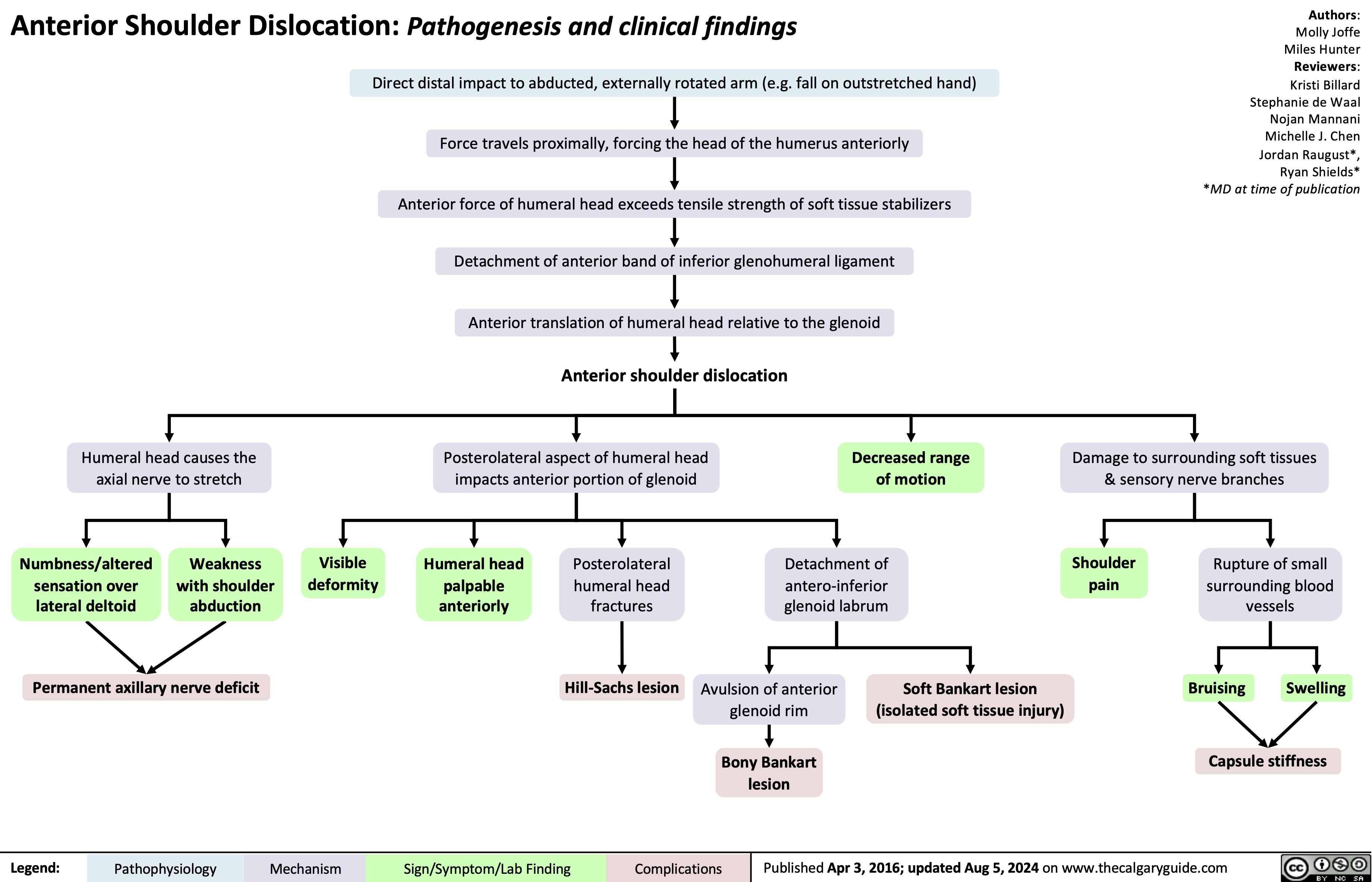
Anterior Shoulder Dislocation: Pathogenesis and clinical findings
Direct distal impact to abducted, externally rotated arm (e.g. fall on outstretched hand)
Authors: Molly Joffe Miles Hunter Reviewers: Kristi Billard Stephanie de Waal Nojan Mannani Michelle J. Chen Jordan Raugust*, Ryan Shields* *MD at time of publication
  Force travels proximally, forcing the head of the humerus anteriorly
Anterior force of humeral head exceeds tensile strength of soft tissue stabilizers Detachment of anterior band of inferior glenohumeral ligament
Anterior translation of humeral head relative to the glenoid
           Humeral head causes the axial nerve to stretch
Anterior shoulder dislocation
Posterolateral aspect of humeral head impacts anterior portion of glenoid
Damage to surrounding soft tissues & sensory nerve branches
           Numbness/altered sensation over lateral deltoid
Weakness with shoulder abduction
Visible deformity
Humeral head palpable anteriorly
Posterolateral humeral head fractures
Hill-Sachs lesion
Decreased range of motion
Detachment of antero-inferior glenoid labrum
Shoulder pain
Rupture of small surrounding blood vessels
Bruising Swelling Capsule stiffness
          Permanent axillary nerve deficit
Avulsion of anterior glenoid rim
Bony Bankart lesion
Soft Bankart lesion (isolated soft tissue injury)
     Legend:
 Pathophysiology
Mechanism
Sign/Symptom/Lab Finding
 Complications
 Published Apr 3, 2016; updated Aug 5, 2024 on www.thecalgaryguide.com

Acute Otitis Media Pathogenesis and Clinical Findings in Children
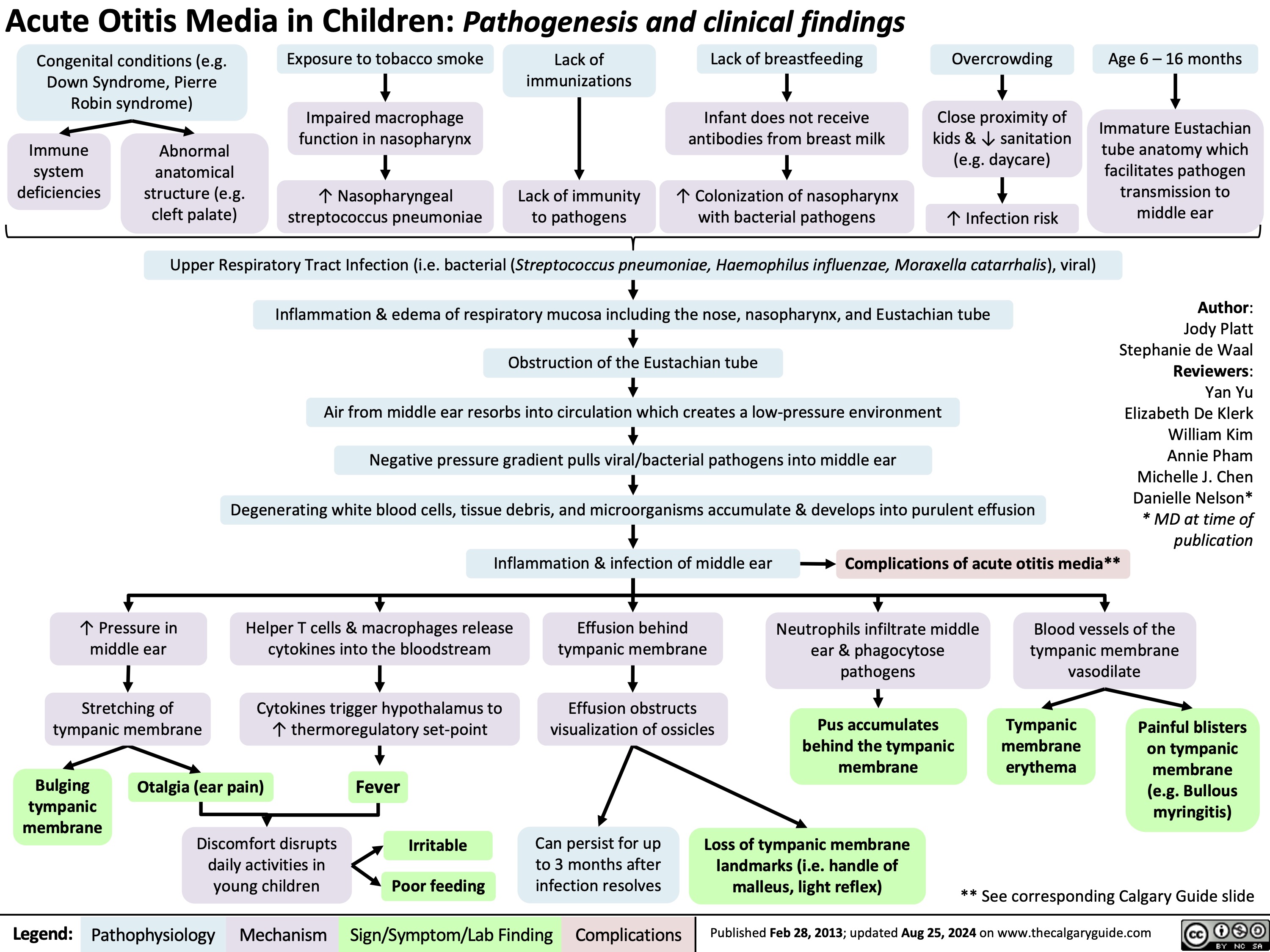
Acute Otitis Media in Children: Pathogenesis and clinical findings
      Congenital conditions (e.g. Down Syndrome, Pierre Robin syndrome)
Exposure to tobacco smoke
Impaired macrophage function in nasopharynx
Lack of immunizations
Lack of breastfeeding
Infant does not receive antibodies from breast milk
Overcrowding
Age 6 – 16 months
        Immune system deficiencies
Close proximity of kids & ↓ sanitation (e.g. daycare)
↑ Infection risk Upper Respiratory Tract Infection (i.e. bacterial (Streptococcus pneumoniae, Haemophilus influenzae, Moraxella catarrhalis), viral)
Immature Eustachian tube anatomy which facilitates pathogen transmission to middle ear
Author: Jody Platt Stephanie de Waal Reviewers: Yan Yu Elizabeth De Klerk William Kim Annie Pham Michelle J. Chen Danielle Nelson* * MD at time of publication
Abnormal anatomical structure (e.g. cleft palate)
↑ Nasopharyngeal streptococcus pneumoniae
Lack of immunity to pathogens
↑ Colonization of nasopharynx with bacterial pathogens
       Inflammation & edema of respiratory mucosa including the nose, nasopharynx, and Eustachian tube
Obstruction of the Eustachian tube
Air from middle ear resorbs into circulation which creates a low-pressure environment
Negative pressure gradient pulls viral/bacterial pathogens into middle ear
Degenerating white blood cells, tissue debris, and microorganisms accumulate & develops into purulent effusion
      Inflammation & infection of middle ear
Complications of acute otitis media**
       ↑ Pressure in middle ear
Stretching of tympanic membrane
Helper T cells & macrophages release cytokines into the bloodstream
Cytokines trigger hypothalamus to ↑ thermoregulatory set-point
Effusion behind tympanic membrane
Effusion obstructs visualization of ossicles
Neutrophils infiltrate middle ear & phagocytose pathogens
Pus accumulates behind the tympanic membrane
Blood vessels of the tympanic membrane vasodilate
             Bulging tympanic membrane
Otalgia (ear pain)
Discomfort disrupts daily activities in young children
Fever
Irritable Poor feeding
Tympanic membrane erythema
Painful blisters on tympanic membrane (e.g. Bullous myringitis)
     Can persist for up to 3 months after infection resolves
Loss of tympanic membrane landmarks (i.e. handle of malleus, light reflex)
** See corresponding Calgary Guide slide
  Legend:
 Pathophysiology
 Mechanism
Sign/Symptom/Lab Finding
 Complications
 Published Feb 28, 2013; updated Aug 25, 2024 on www.thecalgaryguide.com

Pediatric Pneumonia Pathogenesis and Clinical Findings
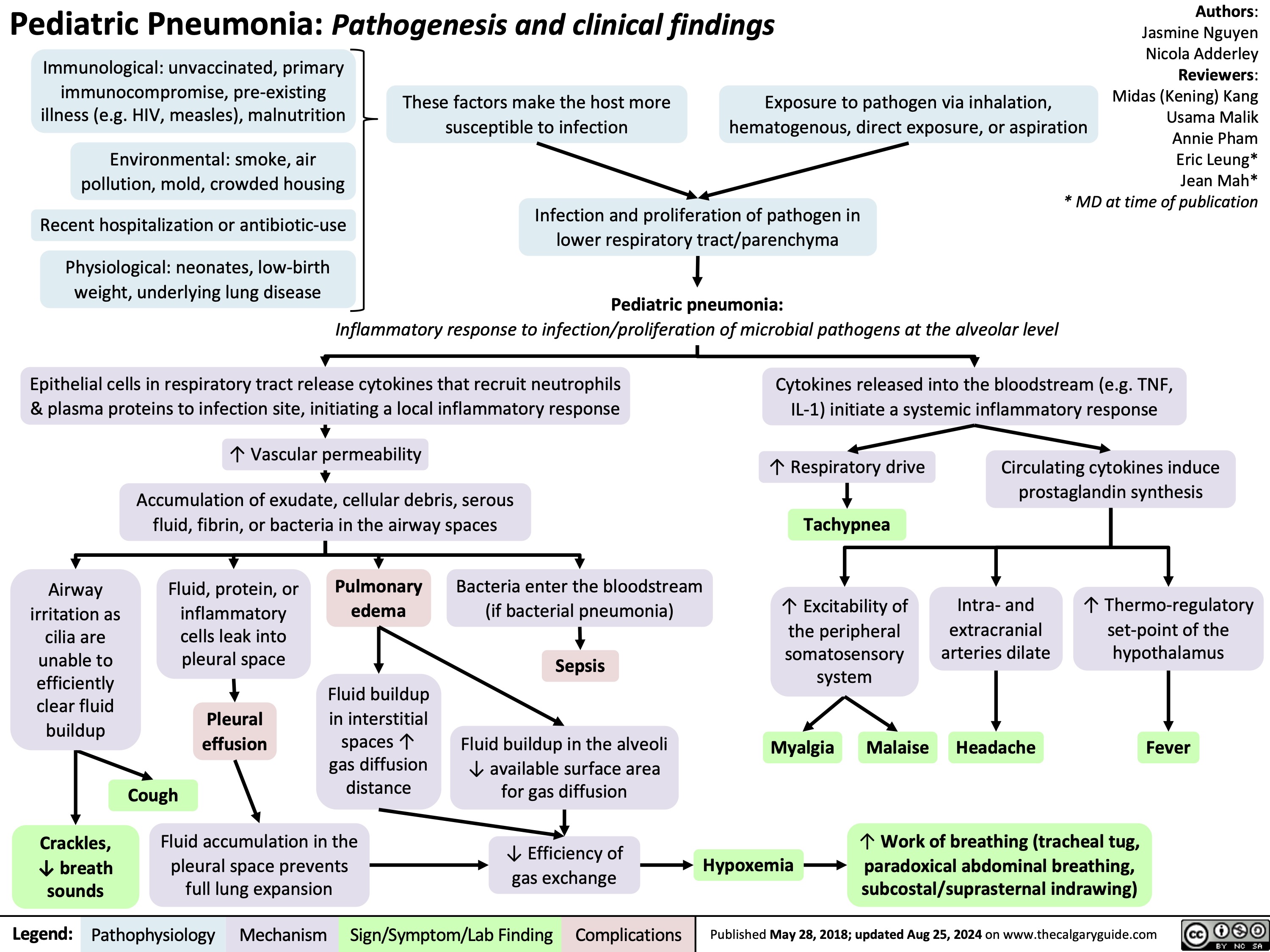
Pediatric Pneumonia: Pathogenesis and clinical findings
Authors: Jasmine Nguyen Nicola Adderley Reviewers: Midas (Kening) Kang Usama Malik Annie Pham Eric Leung* Jean Mah* * MD at time of publication
  Immunological: unvaccinated, primary immunocompromise, pre-existing illness (e.g. HIV, measles), malnutrition
Environmental: smoke, air pollution, mold, crowded housing
Recent hospitalization or antibiotic-use
Physiological: neonates, low-birth weight, underlying lung disease
  These factors make the host more susceptible to infection
Infection and proliferation of pathogen in lower respiratory tract/parenchyma
Pediatric pneumonia:
Inflammatory response to infection/proliferation of microbial pathogens at the alveolar level
Exposure to pathogen via inhalation, hematogenous, direct exposure, or aspiration
           Epithelial cells in respiratory tract release cytokines that recruit neutrophils & plasma proteins to infection site, initiating a local inflammatory response
Cytokines released into the bloodstream (e.g. TNF, IL-1) initiate a systemic inflammatory response
   ↑ Vascular permeability
Accumulation of exudate, cellular debris, serous fluid, fibrin, or bacteria in the airway spaces
↑ Respiratory drive
Tachypnea
↑ Excitability of the peripheral somatosensory system
Circulating cytokines induce prostaglandin synthesis
          Airway irritation as cilia are unable to efficiently clear fluid buildup
Crackles, ↓ breath sounds
Fluid, protein, or inflammatory cells leak into pleural space
Pleural effusion
Pulmonary edema
Fluid buildup in interstitial spaces ↑ gas diffusion distance
Bacteria enter the bloodstream (if bacterial pneumonia)
Sepsis
Fluid buildup in the alveoli ↓ available surface area for gas diffusion
↓ Efficiency of gas exchange
Intra- and extracranial arteries dilate
Headache
↑ Thermo-regulatory set-point of the hypothalamus
Fever
             Myalgia
Hypoxemia
Malaise
    Cough
    Fluid accumulation in the pleural space prevents full lung expansion
↑ Work of breathing (tracheal tug, paradoxical abdominal breathing, subcostal/suprasternal indrawing)
    Legend:
 Pathophysiology
 Mechanism
Sign/Symptom/Lab Finding
 Complications
 Published May 28, 2018; updated Aug 25, 2024 on www.thecalgaryguide.com
  
Pediatric Pneumonia: Pathogenesis and clinical findings
Authors: Jasmine Nguyen Nicola Adderley Reviewers: Midas (Kening) Kang Usama Malik Annie Pham Eric Leung* * MD at time of publication
   Immunological: unvaccinated, primary immunocompromise, pre-existing illness (e.g. HIV, measles), malnutrition
Environmental: smoke, air pollution, mold, crowded housing
Recent Hospitalization: length of stay, recent antibiotics, mechanical ventilation
Physiological: neonates, low-birth weight, underlying lung disease (ciliary dysfunction, asthma, cystic fibrosis, bronchiectasis)
Host is more susceptible to infection
Exposure to pathogen:
inhalation, hematogenous, direct, aspiration
       Infection and proliferation of pathogen in lower respiratory tract/parenchyma
Pediatric pneumonia:
Inflammatory response to infection/proliferation of microbial pathogens at the alveolar level
Notes:
• Additional findings in pediatric pneumonia may include increased
irritability, nausea/vomiting, diarrhea,
otitis, and headache
• Viral pathogens most common in
children <2yrs; bacterial pathogens most common in children >2yrs
      Local inflammatory response: epithelial cells release cytokines in response to infection, which recruit neutrophils and plasma proteins to site of infection
↑ Vascular permeability causes accumulation of plasma exudate, cellular debris, serous fluid, fibrin, or bacteria in the airway spaces
Systemic inflammatory response:
Cytokine release (eg. TNF, IL-1)
↑ respiratory drive
          Airway irritation as cilia are unable to efficiently clear fluid buildup
Crackles, ↓ breath sounds
Fluid, protein, or inflammatory
cells leak into pleural space
Pleural effusion
Pulmonary edema
Fluid buildup in interstitial spaces increases gas diffusion distance
Fluid buildup in the alveoli decreases
available surface area for gas diffusion
↓ efficiency of gas exchange
Bacteria invade into the bloodstream (if bacterial pneumonia)
Sepsis
Hypoxemia
Circulating cytokines induce prostaglandin synthesis, which raise the thermoregulatory set-point of the hypothalamus
paradoxical abdominal breathing, subcostal/suprasternal indrawing)
            Fever
    Cough
Fluid accumulation in the pleural space prevents full
lung expansion, resulting in ↓ lung volumes
Tachypnea
↑ Work of breathing (tracheal tug,
      Legend:
 Pathophysiology
 Mechanism
Sign/Symptom/Lab Finding
 Complications
Published Month Day, Year on www.thecalgaryguide.com
   
Pediatric Pneumonia: Pathogenesis and clinical findings
Immunological: immunization status, immune compromise
Environmental: second-hand smoke, air pollution
Hospitalization: length of stay, recent antibiotics, mechanical ventilation
Neonates, immunocompromise, underlying lung disease (ciliary dysfunction, Cystic Fibrosis, bronchiectasis)
Authors: Nicola Adderley Reviewers: Midas (Kening) Kang Usama Malik Eric Leung* * MD at time of publication
Additional findings in pediatric pneumonia may include nausea, otitis, headache
Viral pathogens most common in children <2yrs; bacterial pathogens most common in children >2yrs
Interstitial pattern: suspect Mycoplasma pneumoniae, Influenza A + B, Parainfluenza Lobar pattern: suspect S. pneumonia, H. influenzae, Moraxella, S. aureus
Systemic inflammatory response:
Cytokine release (eg. TNF, IL-1)
  Exposure to pathogen: inhalation, hematogenous, direct, aspiration
Susceptible host and/or virulent pathogen
Infection and proliferation of pathogen in lower respiratory tract/parenchyma
Pediatric pneumonia:
Inflammatory response to proliferation of microbial pathogens at the alveolar level
Notes:
     • •
• •
        Local inflammatory response: neutrophils recruited to site of infection (LOBAR or INTERSTITIAL PATTERN, depending on pathogen) by epithelial cytokine release
      Irritation of contiguous structures and/or referred pain (mechanism unclear)
Acute abdominal pain
Cough
Accumulation of plasma exudate (from capillary leakage at sites of inflammation), cell-debris, serous fluid, bacteria, fibrin
↑ respiratory drive
Disruption of hypothalamic thermoregulation
Fever/chills
         Irritation of airways and failure of ciliary clearance to keep up with fluid buildup
Crackles, ↓ breath sounds
Fluid buildup in spaces between
alveoli (INTERSTITIAL PATTERN)
Interstitial opacity on CXR
Fluid buildup in alveoli (LOBAR PATTERN)
↓ efficiency of gas exchange (↑ diffusion distance in INTERSTITIAL, ↓ surface area in LOBAR)
Hypoxemia
       Tachypnea
          Lobar consolidation on CXR
Respiratory accessory muscle use (chest indrawing, paradoxical breathing, muscle retractions)
     Legend:
 Pathophysiology
 Mechanism
Sign/Symptom/Lab Finding
 Complications
Published May 28, 2018 on www.thecalgaryguide.com
   gin

Pityriasis Tinea Versicolor

Pityriasis (Tinea) Versicolor: Pathogenesis and clinical findings
Authors: Kerry Yang Reviewers: Mina Youakim Shahab Marzoughi Jori Hardin* * MD at time of publication
↑ Loosening of the stratum corneum
Scaling of skin
      Hyperhidrosis (↑ sweating)
Poor ↑ Sebaceous nutrition gland secretions
Development of a lipid- rich environment
Use of oils on skin
↑ Environmental heat & humidity
Immunosuppression
   Lipophilic Malassezia (normal constituent of skin flora) yeast cells transform into the pathogenic, mycelial (fungal thread) form, commonly occurring on the trunk, neck, and proximal extremities
    Malassezia infect the stratum corneum (the outer layer) of the skin
↑ Malassezia – associated ligand – activated transcription factors
Rate of different gene transcriptions modified
↑ Melanin production by melanocytes
↑ In melanin more than the ↓ in melanin
Hyperpigmented macules, patches, and plaques
↑ Production of the enzyme keratinase
↑ Activation of Langerhans cells (macrophages in the skin)
Alteration in the expression of cytokines and chemokines in keratinocytes (epidermal skin cells)
↑ Inflammatory response
Activation of cutaneous nerve fibers
Itch signal transduction
Mild pruritis (itchiness)
Ligand-activated transcription factors produced by Malassezia
↑ Degradation of keratin in the skin
    ↑ Production of dicarboxylic acids by certain Malassezia species
Competitively inhibits the rate- limiting enzyme in melanin production tyrosinase
↓ Production of melanin
↓ In melanin more than the ↑ in melanin
Hypopigmented macules, patches, and plaques
↑ Production of inflammatory mediators
                 Dyspigmentation
Malassezia, particularly M. globosa, M. furfur, and M. sympodialis
Loosened Epidermal layer
Dermal-Epidermal Junction
Dermal layer
           Legend:
Pathophysiology
Mechanism
Sign/Symptom/Lab Finding
Complications
Published Aug 25, 2024 on www.thecalgaryguide.com

Anti-Emetics Mechanism of Action

Anti-emetics: Mechanism of action Migraine, chemotherapy, post-operative, gastroenteritis nausea
Chemotherapy, post-operative, gastroenteritis nausea
Vestibular nausea
Chemotherapy nausea
 
D2 receptor antagonists (e.g. metoclopramide)
  Migraineurs are hypersensitive to dopamine
D2 receptor antagonists bind to D2 (dopamine) receptors in brain
↓ Binding of endogenous dopamine to dopamine receptors
Emetogenic stimuli (e.g. chemotherapy) in blood and cerebrospinal fluid
Chemoreceptor trigger zone in area postrema of 4th ventricle that lies outside blood-brain barrier
Emetogenic stimuli in the bloodstream stimulate dopamine receptors in area postrema
D2 receptor antagonists bind to D2 (dopamine) receptors in chemoreceptor trigger zone
↓ Binding of dopamine in area postrema
      
5HT-3 receptor antagonists (e.g. ondansetron)
  Emetogenic stimuli (e.g. chemotherapy) in blood and cerebrospinal fluid
Area postrema has no blood- brain barrier
Emetogenic stimuli in the bloodstream stimulate serotonin receptors in area postrema
5HT-3 receptor antagonists bind to 5HT-3 (serotonin) receptors in chemoreceptor trigger zone in area postrema of 4th ventricle
↓ Binding of serotonin in area postrema
Emetogenic stimuli (e.g. toxins, chemotherapy) and pathologies in gastrointestinal (GI) tract
↑ Local release of serotonin from enterochromaffin cells of GI tract
5HT-3 (serotonin) receptor antagonists bind to 5HT-3 receptors on vagal afferent (sensory) fibres in GI tract
↓ Binding of endogenous serotonin to vagal afferent fibres
↓ Innervation of medulla via vagal afferent fibres
        
H1 receptor antagonists (e.g. dimenhydrinate)
Brain receives conflicting information about body’s movement from visual, vestibular, proprioceptive senses
Motion sickness (nausea triggered by slow lateral or vertical movement)
↑ Activation of histaminergic neuronal system in hypothalamus
Antihistamine H1 receptor antagonists bind to H1 (histamine) receptors in chemoreceptors trigger zone in area postrema
↓ Binding of endogenous histamine in area postrema
Muscarinic antagonists (e.g. scopolamine)
Motion sickness activates vestibular afferent fibres
Vestibular afferents release acetylcholine
Muscarinic receptor antagonists bind to muscarinic receptors in posterior cerebellum
↓ Binding of endogenous acetylcholine to posterior cerebellum
↓ Diffusion of acetylcholine into 4th ventricle
↓ Binding of acetylcholine to area postrema
           Cannabinoids* (e.g. synthetic tetrahydrocannabinol)
Emetogenic stimuli (e.g. chemotherapy) in blood and CSF
Area postrema has no blood- brain barrier
Emetogenic stimuli stimulate serotonin receptors in area postrema
Cannabinoids bind to 5HT-3 (serotonin) receptors in area postrema
↓ Binding of dopamine to area postrema
*Still under research
       ↓ Stimulation of vomiting center in medulla by emetogenic stimuli
Coordination of respiratory, gastrointestinal, abdominal muscle contraction
↓ Vomiting
Authors: Catherine Jung Reviewers: Claire Song Shahab Marzoughi Sylvain Coderre* * MD at time of publication
  
Legend:
Pathophysiology
Mechanism
Sign/Symptom/Lab Finding
Complications
 Published Aug 25, 2024 on www.thecalgaryguide.com

Massive Transfusion Protocol

Massive Transfusion Protocol: Considerations and rationale
Massive transfusion protocol (MTP) is a tool used by clinicians when there is a need to rapidly administer a large amount of blood products, including packed red blood cells (pRBCs), fresh frozen plasma (FFP), and platelets. Complications of MTP are commonly referred to as “The Lethal Triad” referring to hypothermia, acidosis and coagulopathy.
Authors: Kayleigh Yang Arzina Jaffer
Reviewers: Jasleen Brar,
Luiza Radu, Karl Darcus*
* MD at time of publication
Intervention
Indications Initial Response Pathophysiology Transfusion Targets
    ≥ 3 pRBCs unit transfusion requirement in 1 hour
Shock index (heart rate/systolic blood pressure) > 1
Blood volume loss >50% in ≤3 hours
ABC Score ≥ 3 of: 1. Penetrating mechanism of injury 2. Systolic blood pressure < 90 mmHg 3. Heart rate > 120 beats per minute 4. Evidence of hemoperitoneum or hemopericardium on ultrasound (positive FAST U/S exam)
RABT Score ≥ 2 of: 1. Penetrating mechanism of injury 2. Shock index > 1 3. Positive FAST U/S 4. Known or suspected pelvic fracture
Call for help
Activate institution's MTP protocol
Send for STAT type and screen
Establish large-bore intravenous access
Fluid resuscitation
Collect and send STAT bloodwork including hemoglobin, platelet, INR, fibrinogen, electrolytes, creatinine and arterial blood gas (ABG).
             Citrate present in blood products to avoid clotting during storage
Stored pRBCs break down and release potassium due to time mediated degeneration
Temporary accumulation of citrate in patient's blood with rapid use of blood products
Citrate chelates calcium
Less negative cell membrane resting potential
Anaerobic metabolism
Promotes hypocalcaemia
Changes in membrane excitability
Lactic acid buildup
Coagulopathy
(see coagulation cascade slide)
Cardiac dysrhythmias (peaked T-waves, atrial block, “sine wave”, asystolic EKG changes)
Metabolic acidosis
End organ damage
Continued blood loss
Volume overload
Avoid hypocalcemia
Avoid hyperkalemia
pH 7.35-7.45
Bleeding source control
Hemoglobin >70-90
Platelets >50 INR <1.5 Fibrinogen >1.5
Avoid dilutional coagulopathy (clotting factor dilution)
Mean Arterial Pressure (MAP) >60mmHg
Temperature >35.0°C
Slow (over 5-10 minutes) IV calcium administration
Inhaled beta agonists
Insulin/Dextrose
EKG monitoring
Sodium bicarbonate
Increase minute ventilation
Fastest control method to prevent further blood loss (i.e., packing wounds)
Early tranexamic acid administration
Administer pRBCs, FFP, and platelets in a 1:1:1 ratio (fibrinogen replacement indicated if <1.5 despite FFP)
Minimize crystalloid use
Administer crystalloids in a 3:1 ratio to estimated blood loss until blood products available
Administer vasopressors to meet target, do not overshoot
Temperature monitoring Fluid warming
            ↑ [Potassium] in pRBCs solution
Administration of pRBCs ↑ potassium in patient's blood
              Blood loss
↓ Hemoglobin
Tissue hypoperfusion
Tissue hypoxia
               ↑ Diluent volume
↓ Concentration of clotting factors
Tissue death
↓ Coagulation ability
↑ Transfusion requirements
      Early fluid resuscitation
Rapid transfusion of cooled or room-temperature blood products/fluids
↑ Blood pressure
Development of hypothermia
↑ Bleeding and clot dislodgement potential
           ↓ Enzyme activity in the coagulation cascade
↓ Coagulation ability
     Legend:
 Pathophysiology
 Mechanism
Targets
 Intervention
Published Sept 5, 2024 on www.thecalgaryguide.com

IgA Nephropathy

IgA Nephropathy: Pathogenesis & clinical findings
Authors: David Campbell Matthew Hobart Reviewers: Huneza Nadeem Raafi Ali Ran Zhang Luiza Radu Julian Midgley* * MD at time of publication
    Galactose-deficient IgA1 (GD- IgA1) created by mucosa- bound IgA1 plasma cells is secreted into plasma instead of onto mucosal surface
IgA1 plasma cells hyper- responsive to triggers (eg. URTIs, gastroenteritis) ↑ synthesis of GD-IgA1 → spill-over into plasma
Immunoglobulin A1 (IgA1) plasma cells destined to reside in mucosa (eg. gut or respiratory tract) travel to and
reside in inappropriate site(s) (eg. bone marrow) releasing GD-IgA1 into plasma
GD-IgA1 is not cleared from plasma as quickly as IgA1 → ↑ plasma GD-IgA1 levels
Hit 3:
GD-IgA1-IgG complexes deposit in mesangium
C3 predominant complement activation amplifies inflammatory response
Renal biopsy:
IgA deposits in mesangium (100% sensitive)
Renal biopsy: Complement in mesangium (C3 predominant) (90-95% sensitive)
        A cascade of multiple immunologic hits is initiated
Hit 1: ↑ Serum levels of GD-IgA1 multiple immunologic hits
GD-IgA1 hinge region is structurally distinct from IgA1 that would normally circulate in plasma (lack of galactosyl groups)
GD-IgA1 hinge region may mimic pathogens (ex. bacteria and viruses) or other antigens
Cross reactivity of IgG against GD-IgA1, or synthesis of anti-GD-IgA1 IgG antibodies
Immunoglobulin G (IgG) binds GD-IgA1 hinge region Hit 2: GD-IgA1-IgG immune complex formation
Circulating GD-IgA1-IgG complexes have high affinity for glomerular endothelial cells where they damage the glycocalyx → ↑ permeability of immunoglobulins into the mesangium
↑ Production of chemokines, cytokines and complement → ↑ mesangial cell proliferation and matrix expansion
Leukocyte recruitment and activation damages glomerulus and mesangium
Hit 4:
Inflammatory response to GD-IgA1 complexes in mesangium induce glomerular structure disruption (endothelium, basement membrane, podocytes, mesangium)
and impaired glomerular function
Loss of barrier functions of glomerulus allows for extravasation of blood & proteins into Bowman’s space and subsequently through tubules
Renal biopsy: Glomerulosclerosis, tubulointerstitial fibrosis, glomerular vasculitis, podocyte damage
Eventual end-Stage Renal Disease (ESRD)
Progressive ↓ of filtration surface area within glomeruli and ↓ number of functional glomeruli
                Proteinuria
Synpharyngitic hematuria (hematuria with dysmorphic red cells co-occurring with pharyngitis)
↓ Glomerular Filtration Rate (GFR)
        Nephrotic Syndrome
↑ Serum creatinine
Chronic kidney disease and eventually ESRD
  IgAN is an autoimmune disease where IgA deposition in the glomerulus leads to an inflammatory cascade, endothelial dysfunction and mesangial expansion that damages glomeruli causing kidneys to leak blood and protein into urine and decreased kidney function. IgA nephropathy is a multifactorial disease requiring multiple immunologic hits
IgA Nephropathy (IgAN)
 Legend:
 Pathophysiology
Mechanism
Sign/Symptom/Lab Finding
 Complications
 Published Sept 5, 2024 on www.thecalgaryguide.com

Cystocele

 Cystocele: Pathogenesis & Clinical Findings
Authors: Emily Cox Reviewers: Riya Prajapati Michelle J. Chen Dr. Rebecca Manion* * MD at time of publication
  Obesity
Pregnancy
Chronic constipation
Chronic cough
Vaginal childbirth
Vacuum-assisted or forceps-assisted vaginal birth
Pelvic surgeries (e.g. hysterectomy)
Connective tissue disorders (e.g. Marfans, Ehlers- Danlos Syndrome)
Genetic susceptibility (e.g. Type III collagen gene abnormality
Menopause
Visceral fat places pressure on pelvic floor structures
Growing fetus places pressure on pelvic floor structures
Straining and bearing down on pelvic floor
Muscle tearing and damage
Disruption of nerves, loss of bladder structural support, and disruption of fascia and muscles
Collagen impairment
Depletion of ovarian follicles leading to ↓ in estrogen production
↑ Intra-abdominal pressure
Transfer of intra- abdominal pressure to pelvic floor
Pelvic floor muscles and pelvic floor fascia become weakened
Pelvic tissue and muscular atrophy
Loss of tissue function and structure support that collagen provided
↓ Stimulation of collagen production
↓ Estrogen levels
Pelvic Organ Prolapse Quantification (POP-Q) System: Grade 1: Bladder descends 1 cm above the hymen Grade 2: Bladder descends to ≤ 1 cm above or below hymen
Grade 3: Bladder descends past the hymen but 2 cm less than total vaginal length
Grade 4: Complete vaginal prolapse
                             Mechanical obstruction of bladder and urethra
Urinary retention
Descended bladder creates pressure in vagina
Pressure/bulging sensation
Symptoms of voiding dysfunction (e.g. incomplete emptying/frequency/ urgency/nocturia)
Vaginal intercourse puts pressure on descended bladder
Activates pain receptors
Dyspareunia (painful sex) for some patients
Cystocele
Descent of bladder through anterior vaginal wall
                    Hydronephrosis/ hydroureter
Recurrent UTI
       Legend:
Pathophysiology
Mechanism
Sign/Symptom/Lab Finding
Complications
Published Sept 5, 2024 on www.thecalgaryguide.com

Cauda Equina Syndrome

Cauda Equina Syndrome: Signs and Symptoms
Author: Yan Yu Stephanie de Waal Reviewers: Sunawer Aujla Spencer Montgomery Owen Stechishin Michelle J Chen W. Bradley Jacobs* * MD at time of publication
     Large lumbar degenerative disc herniation
Severe lumbar spondylosis
Neoplasm in lumbar spine
Trauma or epidural hematoma
Infection (e.g. abscess) in lumbar spine
  Mechanical compression of sacral and lumbar nerve roots between L2 and S1
Cauda Equina Syndrome
    Damage to motor neurons within the compressed nerve roots
Acute ↓ stimulation/control of lower limb and pelvic floor muscles
Damage to fragile, smaller sacral nerves
Saddle anesthesia
Loss of sensation in perineum, perianal
area, and medial aspect of thighs
Patient unable to sense when bladder/ bowels are full
Damage to sensory neurons within the compressed nerve roots
Mechanically damaged nociceptive sensory neurons send ectopic impulses to the brain
Neuropathic pain in low back, radiating to one or both legs
Dermatomal pattern specific to the affected nerve root
            Decreased rectal tone
Fecal incontinence
Flaccid paralysis in one or both legs
Permanent paralysis
Areflexia (absence of deep tendon reflexes)
       Absent Achilles tendon reflex from compression of S1 nerve
Urinary detrusor muscle areflexia
Cannot overcome the residual tone of the internal urethral sphincters
Urinary retention
Compression of L2 nerve root
Sensory disturbance
along anterior and medial thigh
Compression of L3 nerve root
Sensory disturbance along anterior thigh, medial knee, and medial leg
Compression of L4 nerve root
Sensory disturbance along lateral knee, anterior leg, and dorsal aspect of foot
Compression of S1 nerve root
Sensory disturbance along posterior thigh, posterolateral aspect of leg, and lateral foot
             Sexual dysfunction
  Overflow incontinence
Legend:
Pathophysiology
Mechanism
Sign/Symptom/Lab Finding
Complications
 Published Nov 1, 2012; updated Sept 6, 2024 on www.thecalgaryguide.com

Diffuse Axonal Injury

Diffuse Axonal Injury: Pathogenesis and Clinical Findings
Authors: Stephanie de Waal Reviewers: Braxton Phillips Shahab Marzoughi Gary Michael Klein* * MD at time of publication
Shear injury to small intracranial vessels
   Fall from height
High-speed motor vehicle accident
Blunt trauma
   Unrestricted head movement with impact
Rotational acceleration and/or deceleration forces applied to brain
    Shearing forces applied to white matter tracts of brain
Sphenoid bone causes shear injury to pituitary stalk
        Primary Axotomy
Shear force disconnects neurons at white-grey matter junctions
Secondary Axotomy
     Stretch injury to axons create mechanical damage to axon sodium channels
Uncontrolled sodium influx into neurons Reversal of sodium-
Shear injury to hypothalamo- neurohypophysial portal system
Intra-parenchymal Hemorrhage
  Panhypopituitarism (decreased production and secretion of pituitary hormones)
     Increased intracellular sodium creates increased osmotic pressure between extracellular and intracellular space
Water moves passively along osmotic gradient into intracellular space
Neuron swelling
Hemorrhagic lesion on MRI
calcium exchangers
Activation of voltage gated calcium channels
   Calcium enters the damaged neuron
Proteolytic activity increases with elevated intracellular calcium
Activated proteases cause delayed cytoskeleton damage Damage to neuron cytoskeleton impairs transport of axonal proteins Protein accumulates within axon creating bulb structure at the terminal Disconnection of axon terminal from adjacent dendrites and cell bodies
Diffuse Axonal Injury
Axonal bulbs on pathology
           Damage to cortical, subcortical, and brainstem white matter tracts leads to a constellation of symptoms
Post-traumatic seizures Damage to temporal lobe Damage to primary motor cortex Lesions in ascending reticular activating system impact consciousness
       Memory deficits Motor deficits
Coma & brain death
  Legend:
 Pathophysiology
Mechanism
 Sign/Symptom/Lab Finding
 Complications
 Published Sep 18, 2024 on www.thecalgaryguide.com

S3 Pathogenesis

S3: Pathogenesis & Clinical Findings Pathological
Physiological Pregnancy
High-output state (↑ volume flow in heart)
Author: Yvette Ysabel Yao Reviewers: Stephanie Happ George Tadros Shahab Marzoughi Jonathaan Howlett* * MD at time of publication
Athletes
Prolonged training causes ↑ left ventricle size and ↑ blood volume in ventricle
            Tricuspid +/- mitral regurgitation (leaky tricuspid/ mitral valve)
Heart Failure (See Left Heart Failure slide)
Dilated cardiomyopathy (See Dilated cardiomyopathy slide)
Pulmonary +/- aortic regurgitation (leaky pulmonary / aortic valve)
Children and young adults
Compliant ventricle rapidly expands in early diastole
          Diastole
S1
Systole
Diastole
↑ Blood volume flowing into ventricle from atrium after semilunar valves close (S2 heart sound)
Diastolic overload (↑ filling of ventricles)
Sudden intrinsic limitation of longitudinal expansion of the ventricular wall
Large volume of blood striking a very compliant ventricular wall
S3 (Low pitched, heard in early diastole, best heard apex in left lateral decubitus position with bell of stethoscope)
  S2 S3
   Left ventricle is located more posteriorly and is relatively unaffected by changes in intrathoracic pressure
Left ventricle S3 (unchanged or sometimes increased with expiration)
Anterior right ventricle more sensitive to negative intrathoracic pressure
↑ Venous return to right ventricle during inspiration
Right ventricle S3 (best heard along the lower left sternal border, intensity increases with inspiration)
    Legend:
 Pathophysiology
 Mechanism
 Sign/Symptom/Lab Finding
 Complications
 Published Sep 18, 2024 on www.thecalgaryguide.com

Malignant Hyperthermia

Malignant Hyperthermia: Pathogenesis & clinical findings
Authors: Haotian Wang, Jen Guo Reviewers: Julena Foglia, Priyanka Grewal, Luiza Radu Kevin Gregg* * MD at time of publication
  Depolarizing muscle relaxant (e.g., succinylcholine) & volatile anesthetic (e.g., sevoflurane, desflurane, isoflurane, halothane, NOT nitrous oxide)
Autosomal dominant mutation in ryanodine receptor (RyR1; RyR1 transports calcium out of the sarcoplasmic reticulum during muscle depolarization)
LowerthresholdforactivationofRyR1 state
Prolonged opening of RyR1
↑ Ca2+ in myocyte cytoplasm
Capacity of the reuptake protein to carry Ca2+ is overwhelmed
Sustained muscle contraction à hypermetabolic state
Malignant Hyperthermia
Vigorous exercise & heat (rare)
         Rare life-threatening clinical syndrome that occurs in genetically susceptible patients upon exposure to a triggering agent
            Skeletal muscle rigidity (i.e., masseter muscle spasm)
Sustained muscle contraction
Myocytes (muscle cells) deplete available ATP
Hypermetabolic state
↑ O2 consumption
↑ Heart rate to meet O2 demand
↑ CO2 production
Unexplained ↑ end tidal CO2 (early sign)
↑ Temperature
Hyperthermia (late sign)
↓ O2 supply
↑ Anaerobic metabolism
↑ Lactic acid production
Metabolic acidosis
     Cell death
Leakage of muscle contents into circulation
        ↑ Serum creatinine kinase
Development of rhabdomyolysis (rapid breakdown of muscle tissue)
Myoglobinuria (presence of excess myoglobin in urine)
Acute kidney injury**
Hyperkalemia
Electrolyte imbalances (i.e., hyperkalemia)
Abnormal myocyte contraction
Cardiac dysfunction Dysrhythmias Cardiovascular collapse
Release of thromboplastin (converts prothrombinàthrombin) & other prothrombotic substances (promotes clot formation)
Imbalance between thrombotic & antithrombotic pathway
↑ Clot formation from activation of the extrinsic & common pathways
Disseminated intravascular coagulation**
Tachypnea (in absence of prominent mechanical ventilation)
Tachycardia (early sign)
Cardiovascular collapse
           Vital organ failure Coma
      **See corresponding Calgary Guide slide(s)
 Legend:
 Pathophysiology
 Mechanism
 Sign/Symptom/Lab Finding
 Complications
 Published Oct 25, 2015; updated Oct 2, 2024 on www.thecalgaryguide.com

Obesity Pathogenesis

Obesity: Pathogenesis
Authors: Angela Mak, Run Xuan (Karen) Zeng Reviewers: Gurreet Bhandal, Raafi Ali, Mizuki Lopez
 Energy homeostasis dysregulation (Peptide hormones regulating hunger/satiety that influence the hypothalamic control of eating behaviours)
Luiza Radu, Dr. Sam Fineblit*
* MD at time of publication
Endocrine dysregulation
     Neurological (↓ caloric reserve activates the neurological system)
Adiposity-related
          Hypothalamus (hemostatic area)
↑ Production of ghrelin (peptide hormone)
↑ Activation of agouti-related protein (A Neuropeptide Y (NPY) neuron clusters in the hypothalamus via vagus nerve
↑ Appetite
Mesolimbic area (hedonic area)
Reward Driven Eating (meso-limbic region of brain)
↑ Food consumption
↑ Dopamine & endogenous opioid signals
↑ Pleasure & desire to consume more food
Prefrontal cortex (executive functioning)
↓ Glucagon-like peptide-1 (GLP-1) & pancreatic peptide YY (PYY) secretion post- meal
↓ Stimulation of Proopiomelanocortin (POMC) neuron clusters in hypothalamus
↓ Beta-melanocyte stimulating hormone (MSH) (endogenous peptide) production
Defect in leptin receptor gene
↓ Circulating
soluble leptin receptors (SLR)
↑ Serum leptin levels
Leptin resistance
Inactive leptin gene
↓ Adipocyte leptin production & secretion
↓ Leptin
transport across blood brain barrier
↓ Hypothalamus suppression of hunger
↓ Satiety sensation
↑ Caloric intake & weight gain
↑ Dietary carbohydrate intake
↑ Insulin production & secretion
↓ Cellular response to insulin
↑ Insulin resistance
↑ Insulin production & secretion to compensate for insulin resistance
Impaired glycemic control
Metabolic syndrome, type 2 diabetes mellitus and cardiovascular disease **
Metabolic adaptation to reduced-caloric intake efforts
↑ Body energy conservation
↓ Baseline energy expenditure
↓ Resting metabolic rate (the amount of energy body requires to function while at rest)
↓ Ability to lose weight & fat mass
                                  ↑ Hunger
↑ Caloric intake & weight gain
   Obesity (A combination of metrics including ↑ BMI, ↑ weight circumference, ↑ waist-to-hip ratio, skinfold thickness, and other standardized measures varied by equipment available at various institutions resulting in a negative impact on the health of the individual)
**See slide on Pathogenesis of Type II Diabetes Mellitus
 Legend:
 Pathophysiology
Mechanism
Sign/Symptom/Lab Finding
 Complications
 Published Aug 13, 2024 on www.thecalgaryguide.com

Hyperthyroidism in Pregnancy

Hyperthyroidism in Pregnancy: Pathogenesis and clinical findings
Authors: Delaney Duchek Reviewers: GurreetBhandal,JuliaGospodinov Luiza Radu , Samuel Fineblit* * MD at time of publication
↑ Human chorionic gonadotropin (hCG) hormone stimulates TSH receptors which ↑T3/T4 & ↓ physiologic TSH production in 1st trimester & normalizes in 2nd trimester
Transient hyperthyroxinemia in pregnancy (often benign)
 Autoantibodies ↑ stimulation of thyroid stimulating hormone (TSH) receptors
Transplacental passage of TSH- receptor antibodies (can occur with normal thyroid function)
Graves’ disease
Transient ↓TSH & ↑T3/T4
Persistent ↓TSH & ↑T3/T4
Low birth weight Maternal congestive heart failure Pre-eclampsia (high blood pressure in
pregnancy)
Thyroid storm (excessive release of T3/T4 leading to a life-threatening hypermetabolic state)
↑ Triiodothyronine (T3) & thyroxine (T4) production independent of TSH
Abnormal differentiation of trophoblast embryonic cells ↑ hCG levels (cells that provide nutrition to the embryo)
Gestational trophoblastic disease
         Toxic multinodular goiter
Toxic adenoma
Viral infection
Subacute thyroiditis (thyroid inflammation)
Hyperthyroidism in Pregnancy
        Anterior pituitary gland releases stored TSH
↑Sympathetic nervous system stimulation
↑Thermogenesis
(heat production, regulated by thyroid & variousbraincentres)
↑Hyaluronic acid in dermis & subcutis tissue of the skin (Graves’ disease specific)
Transplacental passage of ↑T3/T4 to fetus
Gut hypermobility
Central nervous system overstimulation
↑Weight loss ↑Appetite
Heat intolerance
Diarrhea & ↑ bowel movements
Nervousness & anxiety
Hyperkinesia (excessive activity of a body part)
Hyperreflexia (overactive muscle reflex response)
Tremor
Poor attention span
                            ↑ Heart rate
Palpitations (noticeable abnormal heartbeats)
Bruit (turbulent blood flow) heard over thyroid
↓ Exercise tolerance
↑ Cardiac output
De novo synthesis of TSH (synthesis of TSH independent of normal regulatory signals & processes as seen in toxic adenoma & toxic multinodular goiter)
Pregnancy Complications (abnormallyhighfreeT4&thyroid stimulating antibodies in the blood impacts fetal thyroid function)
↑ Renin angiotensin aldosterone system (RAAS) activation (important regulator of electrolytes, blood volume, & systemic vascular resistance)
↑ Erythropoietin (EPO, hormone made by kidneys that
stimulates red blood cell production)
Pretibial myxedema (condition causing skin lesions from deposition of hyaluronic acid)
Spontaneous abortion (pregnancy loss naturally ≤20 weeks gestation)
Premature labour (labour ≤37 weeks gestation)
Stillbirth (fetal death >20 weeks gestation)
               Legend:
 Pathophysiology
 Mechanism
 Sign/Symptom/Lab Finding
 Complications
Published September 29, 2024 on www.thecalgaryguide.com

Secondary hypoglycemia Insulin Mediated
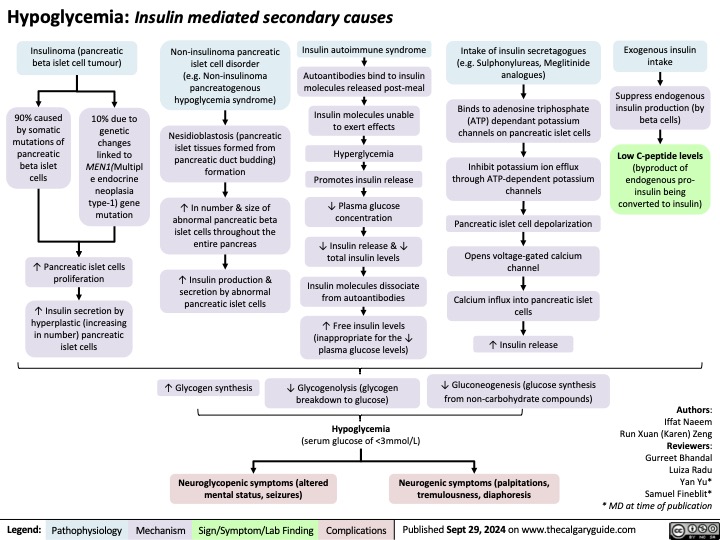
Hypoglycemia: Insulin mediated secondary causes
     Insulinoma (pancreatic beta islet cell tumour)
Non-insulinoma pancreatic islet cell disorder
(e.g. Non-insulinoma pancreatogenous hypoglycemia syndrome)
Nesidioblastosis (pancreatic islet tissues formed from pancreatic duct budding) formation
↑ In number & size of abnormal pancreatic beta islet cells throughout the entire pancreas
↑ Insulin production & secretion by abnormal pancreatic islet cells
↑ Glycogen synthesis
Insulin autoimmune syndrome
Autoantibodies bind to insulin molecules released post-meal
Insulin molecules unable to exert effects
Hyperglycemia Promotes insulin release
↓ Plasma glucose concentration
↓ Insulin release & ↓ total insulin levels
Insulin molecules dissociate from autoantibodies
↑ Free insulin levels (inappropriate for the ↓ plasma glucose levels)
↓ Glycogenolysis (glycogen breakdown to glucose)
Hypoglycemia
(serum glucose of <3mmol/L)
Intake of insulin secretagogues (e.g. Sulphonylureas, Meglitinide analogues)
Binds to adenosine triphosphate (ATP) dependant potassium channels on pancreatic islet cells
Inhibit potassium ion efflux through ATP-dependent potassium channels
Pancreatic islet cell depolarization
Opens voltage-gated calcium channel
Calcium influx into pancreatic islet cells
↑ Insulin release
↓ Gluconeogenesis (glucose synthesis from non-carbohydrate compounds)
Exogenous insulin intake
Suppress endogenous insulin production (by beta cells)
Low C-peptide levels
(byproduct of endogenous pro- insulin being converted to insulin)
       90% caused by somatic mutations of pancreatic beta islet cells
10% due to genetic changes linked to MEN1(Multipl e endocrine neoplasia type-1) gene mutation
            ↑ Pancreatic islet cells proliferation
↑ Insulin secretion by hyperplastic (increasing in number) pancreatic islet cells
              Neuroglycopenic symptoms (altered mental status, seizures)
Neurogenic symptoms (palpitations, tremulousness, diaphoresis
Authors: Iffat Naeem Run Xuan (Karen) Zeng Reviewers: Gurreet Bhandal Luiza Radu Yan Yu* Samuel Fineblit* * MD at time of publication
 Legend:
 Pathophysiology
Mechanism
 Sign/Symptom/Lab Finding
 Complications
 Published Sept 29, 2024 on www.thecalgaryguide.com

Major Depressive Disorder 2024

Major Depressive Disorder (MDD): Pathogenesis and clinical findings
     Self blaming tendency
Major stressor(s)
↑ Emotional reactivity Monoamine deficiency
Regional brain area alterations
↓ Behavioral activation
(engagement in meaningful activities to improve mood)
Hunger interoception (perception & awareness of hunger) changes
Attributes the occurrence of negative events to internal/personal factors
Expectation that future events are uncontrollable & internally caused
Feelings of worthlessness or excessive guilt
Recurrent thoughts of death or suicide
Insomnia (melancholic MDD)
   Dysregulation of negative feedback control on the hypothalamus–pituitary– adrenal (HPA) axis
↓ Serotonin & norepinephrine signaling
↑ HPA axis sensitivity
Heightened responses to stressors
Major Depressive
Disorder
≥5 symptoms/complications during the same 2-week period; at least 1 of **symptoms; causing clinically significant distress or impairment in social, occupational, or other important areas of functioning
        ↑ Amygdala activity Changes to neuronal activity
Altered prefrontal cortex & limbic functioning
Depressed mood**
Mechanism unknown; can
precede MDD or be a symptom
Psychomotor agitation (restlessness)
                     ↓ Dopaminergic transmission in ventral striatum
Overactivation of the insula (brain region involved in integrating activity in reward & interoception circuitry)
Under activation of the insula
Mechanism unknown
↓ Activation of mesolimbic system (reward system)
↓ Motivation & anticipation for rewards
↑ Activation of mesolimbic system
Psychomotor
retardation (slowing)     Poor concentration
                 ↑ Motivation & anticipation for rewards
Anhedonia (loss of interest/pleasure)**
Anergia (lack of energy)
↑ Eating (particularly high- sugar foods)
Hypersomnia (atypical MDD)
↓ or ↑ Appetite &/or weight
Authors: Keira Britto Sara Cho JoAnna Fay Reviewers: Luiza Radu Sara Meunier Jojo Jiang Alexander Arnold Brienne McLane* Phillip Stokes* *MD at time of publication
    Legend:
 Pathophysiology
 Mechanism
 Sign/Symptom/Lab Finding
 Complications
 First published Mar 10, 2014, updated Sept 29, 2024 on www.thecalgaryguide.com

Hypomagnesemia

Hypomagnesemia: Physiology
         Hyperglycemia
An increased amount of glucose enters renal tubules as glomerulus performs blood filtration
↑ [Solute] in renal tubules from ↑ glucose content exerts osmotic force that pulls water & electrolytes, including Mg2+, into renal tubules
↑ Urinary Mg2+ excretion
Lack of insulin
Lack of insulin receptor signaling in distal convoluted tubule (DCT) ↓ glucose uptake from renal tubules
Hypercalcemia
Ca2+ binds to Ca2+ sensing receptors on thick ascending limb (TAL) of loop of Henle, where resorption of Ca2+ & Mg2+ occurs
Receptor activation ↓ Na-K- 2Cl (NKCC) transporter activity which maintains electro- chemical gradient in TAL
Passive paracellular resorption of Ca2+ and Mg2+, dependent on electrochemical gradient, ↓
↑ Extra- cellular fluid
↓ Resorption of Na+ & H2O from renal tubules
Genetic disorders (e.g. Bartter syndrome, familial hypomagnesemia)
Medications (e.g. loop & thiazide diuretics, certain antibiotics, calcineurin inhibitors)
Some metabolic byproducts of these drugs are nephrotoxic
Inability to absorb free fatty acids (FFAs)
Mg2+, which associates with FFAs, is not absorbed through the gut
Steatorrhea (fat in the stool)
Mal- absorption (often due to inflammation or infection) & diarrhea
Acute pancreatitis
↓ Lipase secretion from pancreas ↑ levels of undigested fats in small intestine
                     ↓ Passive Mg resorption from
tubules
Mg saponification in necrotic fat
2+
Varying mechanisms causing defective Mg2+ re-absorption (e.g. impacts to PCT, TAL, DCT disrupting transporters and ion shifting; ↓ gut resorption of Mg2+)
Nutrients & 2+
 electrolytes are lost in stool
undergoes
        Renal loss of magnesium
Gastrointestinal loss of magnesium
 Hypomagnesemia
Serum [Mg2+] < 0.7 mmol/L
   Impairs production and release of parathyroid hormone responsible for ↑ blood Ca2+ Hypocalcemia
Muscle cells are unable to activate Mg2+ dependent ATP hydrolysis
Impairs muscle relaxation and reduces the ability to stop muscular contraction
      Lack of Ca2+ disrupts neurotransmitter release and neuronal signaling
Impairs rapid depolarization and repolarization during muscle contraction
Neuromuscular excitability (large, rapid change in membrane voltage due to small stimulus)
          Delirium
Apathy
QRS widening and peaking of T waves on ECG
Torsade de Pointes
Constant muscle contraction compresses blood vessels
Reduced blood supply to hands, wrists, feet, and ankles
Trousseau sign (carpopedal spasm with inflation of BP cuff)
Authors: Caroline Kokorudz Reviewers: Shyla Bharadia Allesha Eman Michelle J. Chen Dr. Adam Bass* * MD at time of publication
         Chvostek sign (facial muscle twitch with cheek touch)
Seizures
Tetany
Weakness
 Legend:
 Pathophysiology
 Mechanism
 Sign/Symptom/Lab Finding
 Complications
Published Oct 4, 2024 on www.thecalgaryguide.com

Transient Tachypnea of the Newborn

Transient Tachypnea of the Newborn: Pathogenesis and clinical findings Cesarean delivery without labour
Author: Tanis Orsetti Reviewers: Annie Pham Michelle J. Chen Dr. Jean Mah* * MD at time of publication
   Smoking during pregnancy
Uncontrolled maternal asthma Uncontrolled maternal diabetes
Dilution of surfactant
↑ Surface tension in alveoli
↓ Expansion/contraction of lungs (↓ pulmonary compliance)
↑ Work of breathing
Maternal factors leading to impaired fetal lung development
Lack of labour-induced hormone changes (i.e. cortisol, catecholamines)
     ↓ Alveolar fluid reabsorption through epithelial aquaporin channels
 ↑ Alveolar fluid in lungs Disruption of laminar flow in airways
↑ Resistance to airflow
↑ Lung expansion to compensate
Limited surface area for gas exchange in the alveoli
↓ Ventilation
Fluid buildup in the major bronchi in the perihilar region
Prominent perihilar streaking on chest x-ray
                     ↑ Intrathoracic pressure pushes the diaphragm down
Blunting of costophrenic angle on chest x-ray
Hyperinflation of lungs
Expanded lung fields on chest x-ray
↑ Deoxygenated hemoglobin in the bloodstream
Blue/purple discoloration of the skin particularly around the lips & fingers (cyanosis)
↓ Oxygenated hemoglobin in the bloodstream
   ↑ Nasal passage size allows for more air to enter the lungs with each breath
Nasal flaring
Scalene/intercostal/ sternocleidomastoid /abdominal muscle activation to assist with breathing
Accessory muscle use
↓Oxygen saturation (SpO2)
Neonate takes more breaths to compensate for limited oxygenation
Respiratory rate > 60 breaths/minute (tachypnea)
           Transient Tachypnea of the Newborn
Temporary respiratory condition in newborns characterized by impaired lung function and rapid breathing
 Legend:
 Pathophysiology
Mechanism
 Sign/Symptom/Lab Finding
 Complications
Published Oct 4, 2024 on www.thecalgaryguide.com

Neonatal Hypoglycemia Clinical Presentation
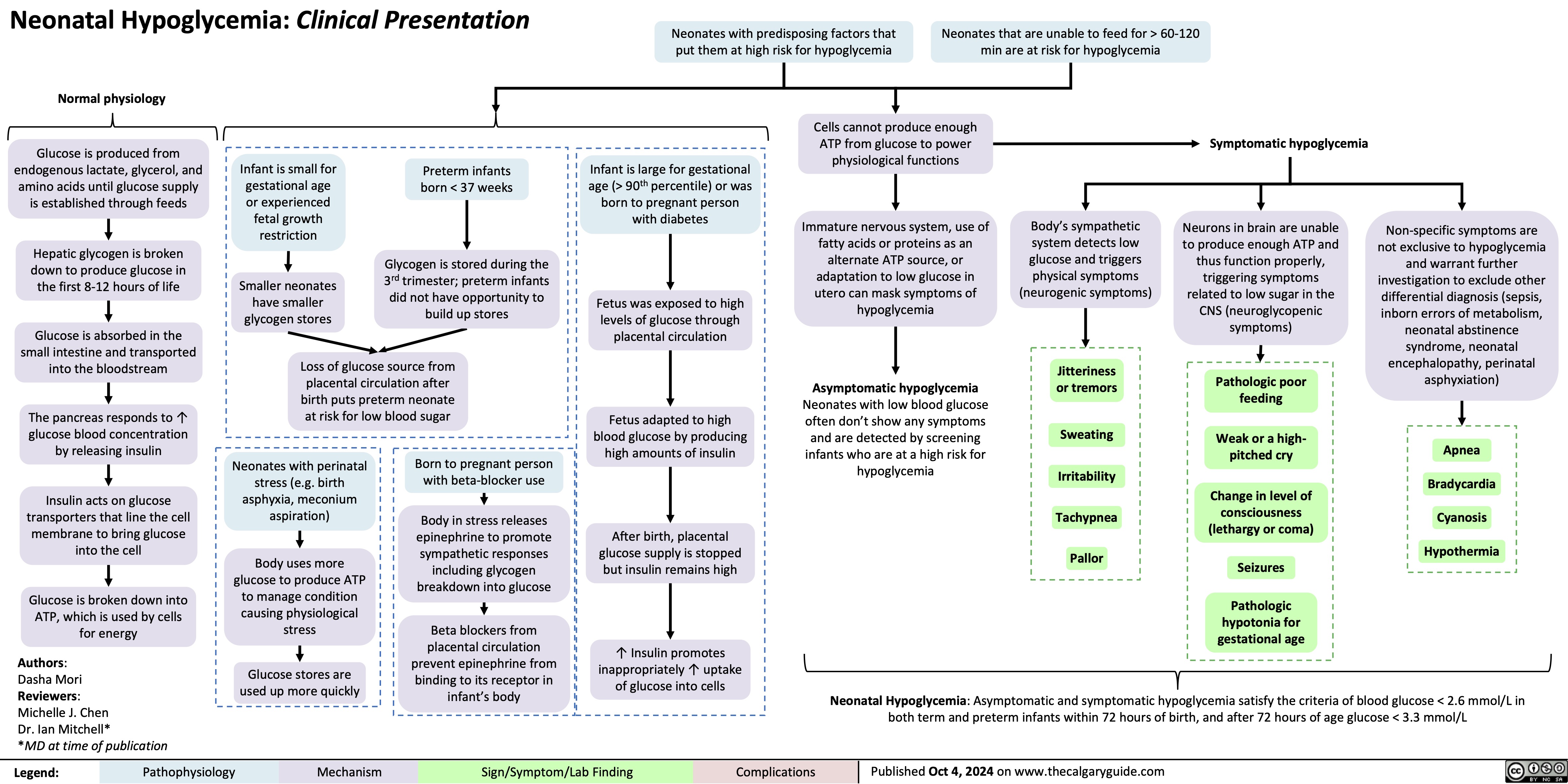
Neonatal Hypoglycemia: Clinical Presentation Normal physiology
Glucose is produced from endogenous lactate, glycerol, and amino acids until glucose supply is established through feeds
Hepatic glycogen is broken down to produce glucose in the first 8-12 hours of life
Glucose is absorbed in the small intestine and transported into the bloodstream
The pancreas responds to ↑ glucose blood concentration by releasing insulin
Insulin acts on glucose transporters that line the cell membrane to bring glucose into the cell
Glucose is broken down into ATP, which is used by cells for energy
Authors:
Dasha Mori
Reviewers:
Michelle J. Chen
Dr. Ian Mitchell*
*MD at time of publication
Neonates with predisposing factors that Neonates that are unable to feed for > 60-120
  Infant is large for gestational age (> 90th percentile) or was born to pregnant person with diabetes
Fetus was exposed to high levels of glucose through placental circulation
Fetus adapted to high blood glucose by producing high amounts of insulin
After birth, placental glucose supply is stopped but insulin remains high
↑ Insulin promotes inappropriately ↑ uptake of glucose into cells
put them at high risk for hypoglycemia
Cells cannot produce enough ATP from glucose to power physiological functions
Immature nervous system, use of fatty acids or proteins as an alternate ATP source, or adaptation to low glucose in utero can mask symptoms of hypoglycemia
Asymptomatic hypoglycemia
Neonates with low blood glucose often don’t show any symptoms and are detected by screening infants who are at a high risk for hypoglycemia
min are at risk for hypoglycemia
          Infant is small for gestational age or experienced fetal growth restriction
Smaller neonates have smaller glycogen stores
Preterm infants born < 37 weeks
Glycogen is stored during the 3rd trimester; preterm infants did not have opportunity to build up stores
      Loss of glucose source from placental circulation after birth puts preterm neonate at risk for low blood sugar
       Body’s sympathetic system detects low glucose and triggers physical symptoms (neurogenic symptoms)
Symptomatic hypoglycemia
Neurons in brain are unable to produce enough ATP and thus function properly, triggering symptoms related to low sugar in the CNS (neuroglycopenic symptoms)
Non-specific symptoms are not exclusive to hypoglycemia and warrant further investigation to exclude other differential diagnosis (sepsis, inborn errors of metabolism, neonatal abstinence syndrome, neonatal encephalopathy, perinatal asphyxiation)
          Jitteriness or tremors
Sweating Irritability Tachypnea Pallor
 Pathologic poor feeding
Weak or a high- pitched cry
Change in level of consciousness (lethargy or coma)
Seizures
Pathologic hypotonia for gestational age
    Apnea Bradycardia Cyanosis Hypothermia
    Neonates with perinatal stress (e.g. birth asphyxia, meconium aspiration)
Body uses more glucose to produce ATP to manage condition causing physiological stress
Glucose stores are used up more quickly
Born to pregnant person with beta-blocker use
Body in stress releases epinephrine to promote sympathetic responses including glycogen breakdown into glucose
Beta blockers from placental circulation prevent epinephrine from binding to its receptor in infant’s body
              Neonatal Hypoglycemia: Asymptomatic and symptomatic hypoglycemia satisfy the criteria of blood glucose < 2.6 mmol/L in both term and preterm infants within 72 hours of birth, and after 72 hours of age glucose < 3.3 mmol/L
 Legend:
 Pathophysiology
Mechanism
 Sign/Symptom/Lab Finding
 Complications
 Published Oct 4, 2024 on www.thecalgaryguide.com

Spontaneous Rupture of Membranes

Pre-Labour Rupture of Membranes: Pathogenesis and clinical findings Gestational age approaching term (>37 weeks)
Authors: Wendy Xu Reviewers: Riya Prajapati Michelle J. Chen Dr. Jadine Paw* * MD at time of publication
      Intrauterine inflammation
Fetal maturation
Fetal growth
Uterine contractions
    ↑ Pro-inflammatory cytokine & chemokine release in fetal membranes & amniotic fluid
↑ Stretch forces on fetal membranes
↑ Pro-apoptotic factors induces cellular apoptosis of fetal membranes
    Changes in collagen and protein composition drive extracellular matrix remodeling in fetal membranes
↓ Tensile strength
Structural weakening of fetal membranes
   Occurs primarily in the focal area of fetal membranes overlying the cervix
↑ Matrix metalloproteinases triggers extracellular matrix degradation in fetal membranes
    Amnion and choriodecidua separation
    Amniotic fluid flows from vagina
Amniotic fluid pools in posterior fornix on speculum exam
Pre-labour rupture of membranes
Membranes rupture before onset of uterine contractions
Chorioamnionitis (infection of the fetal membranes and amniotic fluid)
Neonatal infection
Endometritis (infection of the endometrium)
     Amniotic fluid leaks through the cervix
Prolonged rupture of membranes (>18hrs) before delivery
Microbes ascend through vaginal canal
  Low amniotic fluid volume on ultrasound
Amniotic fluid (pH 7.0-7.5) mixes with normal vaginal fluid (pH 4.5-6.0) which increases vaginal fluid pH to > 6.5
Positive nitrazine (pH indicator) test
Ion- and estrogen-containing amniotic fluid enters vaginal canal
Ferning (branching pattern) of vaginal fluid under microscope
Accompanies uterine contractions, cervical effacement & cervical dilation
Delivery/birth
        Legend:
 Pathophysiology
 Mechanism
Sign/Symptom/Lab Finding
 Complications
 Published Oct 4, 2024 on www.thecalgaryguide.com

Precocious Puberty

Precocious Puberty: Pathogenesis and clinical findings Secondary sex characteristics appearing at age < 8 years in girls and < 9 years in boys.
Early growth acceleration
Bone age (skeletal maturity determined on x-ray) > chronological age
   Gonadotropin releasing hormone (GnRH)-dependent causes involve activation of the hypothalamic-pituitary-gonadal (HPG) axis. Also known as central precocious puberty
GnRH-independent causes of precocious puberty are related to increased amounts of hormone in the body. Also known as peripheral precocious puberty
Neurogenic (previous CNS insult) and CNS tumors (e.g. hypothalamic hamartoma, germinoma, astrocytoma)
     Idiopathic
Tumours causing ↑ hormone levels
Exogenous hormones causing ↑ hormone levels
Genetics causing ↑ hormone levels
21-hydroxylase enzyme deficiency
Growth of ovarian cysts/tumors (ex. germinoma, teratoma, choriocarcinoma)
Growth of β-HCG-secreting tumours (e.g. germinomas, dysgerminomas, hepatomas
Growth of benign or malignant adrenal tumours (e.g. adenoma, carcinoma)
↑ Estrogen and/or progesterone
↑ Beta-HCG stimulates ↑ testosterone production
↑ Cortisol, androgens, and/or aldosterone
           Exposure to exogenous sex steroids (e.g. anabolic steroids, topical testosterone, oral contraceptives)
Steroid dependent features (e.g. exposure to estrogen creams in males may lead to breast development)
 Missense mutation in LH receptor gene (male limited)
↑ Activation of LH receptors
↑ Testosterone production
Café au lait lesions Polycystic fibrous dysplasia
Puberty onset ages 1-4
         ↑ Activation and mutation of GNAS1 gene (McCune Albright Syndrome)
Various endocrinopathies
Growth acceleration
       Congenital adrenal hyperplasia
↓ Cortisol, ↑ ACTH
Bone age > chronological age Absence of testicular enlargement
Female ambiguous genitalia
Authors: MacKenzie Horn Reviewers: Dasha Mori Michelle J. Chen Dr. Jean Mah* * MD at time of publication
           Normal variations in hormone production
↑ Sensitivity to estrogen
Early adrenal androgen secretion
Idiopathic premature thelarche
Idiopathic premature adrenarche
Unilateral or bilateral breast development No other secondary sex characteristics Bone age = chronological age Development of pubic hair ± axillary hair No other secondary sex characteristics Bone age = chronological age
       Legend:
 Pathophysiology
Mechanism
Sign/Symptom/Lab Finding
 Complications
 Published Oct 4, 2024 on www.thecalgaryguide.com

Acute Diverticulitis

Acute Diverticulitis: Pathogenesis and clinical findings Low fiber diet
Authors: Candace Chan Yan Yu Wayne Rosen* Reviewers: Laura Craig Noriyah AlAwadhi Danny Guo Erica Reed Maitreyi Raman* Claire Song Shahab Marzoughi * MD at time of publication
  ↓ Colonic motility
↑ Stool transit time Formation of small dry stool
Stool build-up and ↑ strain with bowel movements
↑ Pressure in the colonic lumen
Constipation (difficulty passing stool)
Obstipation (inability to pass any feces)
Inherent weakness in the muscle layers of the colonic wall associated with immature collagen fibers and diminished wall elasticity
          Mucosal and submucosal layers of the colon wall push through a weak spot of the circular muscle layer
Formation of diverticulum (sac-like protrusion of the colonic wall)
     Continued stress on diverticula causes micro- perforations of the diverticulum
Inflammation of diverticula
Mesentery and pericolic fat (fat surrounding the colon) attempt to wall off inflammation or perforations
Stool bacteria escapes the colon
Formation of abscess (accumulation of pus in response to the bacteria )
Pro-inflammatory cytokine release from nearby adipose tissue
Hypothalamic thermoregulatory center increases core temperature set point
Fever
     Irritation of parietal peritoneum
Inflamed vessels are more permeable and fluid leaks from colonic vessels into the abdominal cavity
Chronic low-grade inflammation triggers activation of pro-fibrotic factors and fibroblasts
Excess production of extracellular matrix proteins
Stimulation of somatic nerves sends pain signals to the brain
Lower left quadrant abdominal pain
Peritoneal signs (abdominal guarding, rigidity, rebound tenderness)
     ↓ Total circulating blood volume
      ↑ heart rate
↓ Jugular venous pressure
Orthostatic hypotension (low blood pressure when standing after sitting/lying down)
Gastrointestinal strictures and/or colonic obstruction
   Accumulation of micro- perforations further weakens intestinal wall
Complete bowel perforation (medical emergency)
Development of an abnormal connection (fistula) through the bladder, vagina, skin, or gut
Abscesses
Accumulation of fibrotic tissue narrows the intestinal lumen
Fibrosis of colon
           Legend:
 Pathophysiology
 Mechanism
 Sign/Symptom/Lab Finding
 Complications
 Re-Published Oct 4, 2024 on thecalgaryguide.com

Tuberous Sclerosis Complex Dermatologic Manifestations
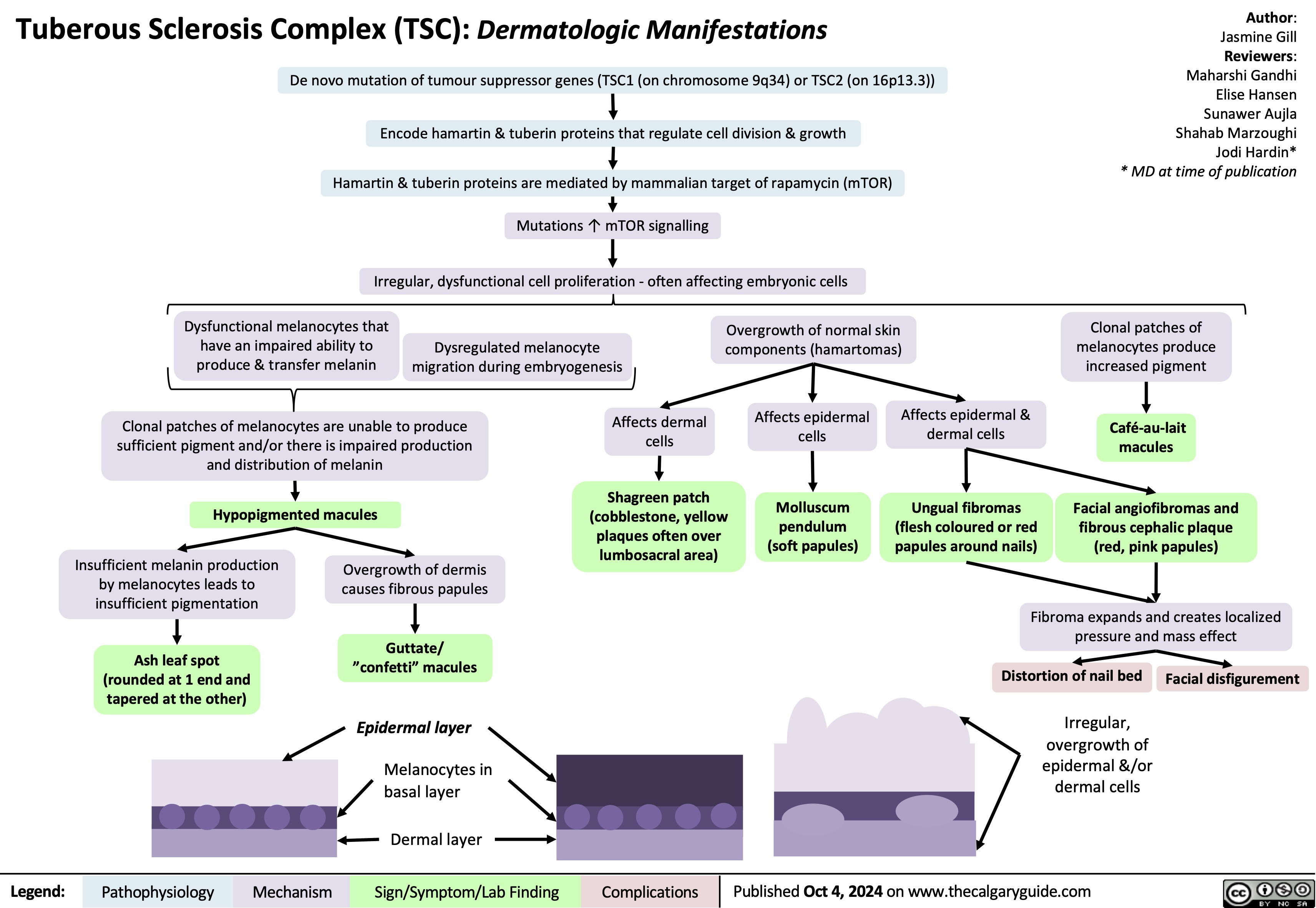
Tuberous Sclerosis Complex (TSC): Dermatologic Manifestations
De novo mutation of tumour suppressor genes (TSC1 (on chromosome 9q34) or TSC2 (on 16p13.3))
Encode hamartin & tuberin proteins that regulate cell division & growth
Hamartin & tuberin proteins are mediated by mammalian target of rapamycin (mTOR) Mutations ↑ mTOR signalling
Irregular, dysfunctional cell proliferation - often affecting embryonic cells
Author: Jasmine Gill Reviewers: Maharshi Gandhi Elise Hansen Sunawer Aujla Shahab Marzoughi Jodi Hardin* * MD at time of publication
         Dysfunctional melanocytes that have an impaired ability to produce & transfer melanin
Dysregulated melanocyte migration during embryogenesis
Overgrowth of normal skin components (hamartomas)
Clonal patches of melanocytes produce increased pigment
Café-au-lait macules
Facial angiofibromas and fibrous cephalic plaque (red, pink papules)
         Clonal patches of melanocytes are unable to produce sufficient pigment and/or there is impaired production and distribution of melanin
Hypopigmented macules
Affects dermal cells
Shagreen patch (cobblestone, yellow plaques often over lumbosacral area)
Affects epidermal cells
Molluscum pendulum (soft papules)
Affects epidermal & dermal cells
Ungual fibromas (flesh coloured or red papules around nails)
        Insufficient melanin production by melanocytes leads to insufficient pigmentation
Ash leaf spot (rounded at 1 end and tapered at the other)
Overgrowth of dermis causes fibrous papules
Guttate/ ”confetti” macules
Epidermal layer
Melanocytes in basal layer
Fibroma expands and creates localized pressure and mass effect
       Distortion of nail bed
Irregular, overgrowth of epidermal &/or dermal cells
Facial disfigurement
            Dermal layer
  Legend:
 Pathophysiology
 Mechanism
Sign/Symptom/Lab Finding
 Complications
 Published Oct 4, 2024 on www.thecalgaryguide.com

Chronic Subdural Hematoma

Chronic Subdural Hematoma (SDH): Pathogenesis and Clinical Features Atraumatic SDH risk factors
Authors: Cora Laidlaw Reviewers: Braxton Phillips Shahab Marzoughi Gary Michael Klein* * MD at time of publication
 For more information on acute subdural hematoma, see Calgary Guide slide - Acute Subdural Hematoma (SDH):
Traumatic SDH mechanisms
Intoxication leading to decreased balance and coordination
          Neurodegenerative disease causes cerebral atrophy (such as ALS, MS, and dementia)
General cerebral atrophy with increased age
Chronic alcohol use dilates blood vessels, thinning the walls
Thinner, developing vessels in infants
Age related risks: decreased vision, decreased mobility, decreased balance
Low Impact trauma such as minor falls
Child abuse
      Increased tension on bridging veins as ↓ brain volume ↑ distance they must span
Bridging veins are more delicate
Abusive head trauma
       Cytokines increase the leaky nature of vessels
Blood degradation over time releases proinflammatory cytokines
Atraumatic risk factors combined with traumatic mechanisms results in the breaking of bridging veins
Low pressure venous blood slowly accumulates between the dura and arachnoid meningeal layers (increased with anticoagulation, hypertension, or other bleeding risk factors)
Damaged tissue release inflammatory factors that promote angiogenesis through secondary intention (the use of granular tissue to fill in the non-approximated edges of the blood vessels)
As the vessels are not approximated (connected to be rejoined), the granular tissue does not create a solid blood vessel wall
Vessels are partially repaired and leaky in nature
Recurrent bleeding due to small traumas and fluid accumulation due to leaky vessels results in expansion
Chronic Subdural Hematoma
(Bleeding within potential space between dura and arachnoid meningeal layers present >14 days)
Dural attachments limits fluid expansion
Local increased pressure and a mass effect on underlying brain tissue
Cerebral atrophy (specific areas and therefore symptoms will depend on lesion location)
Mesial temporal lobe
Impaired memory (including verbal)
Acute blood is present in small volumes with larger volume chronic hematoma
         Damaged tissues release proinflammatory cytokines from immune cells (astrocytes, peripheral immune cells, neurons, and microglial cells)
Acute blood appears hyperintense on T2 MRI
Chronic blood appears hypointense on T2 MRI
     Cytokines inflame nociceptive neurons (such as the trigeminal neuron)
Recurrent headaches
Altered mental status (confusion) Personality changes
Damage to neuronal tissue
Mass compression of underlying vasculature Hypoperfusion of brain tissue
T2 MRI Brain shows lesions with hyperintensive cores surrounded by hypointensive
        Pressure placed indirectly onto cerebellum with inferior displacement of brain mass
Gait ataxia
Frontal lobe atrophy (specifically in orbitofrontal area) Orbitofrontal area Prefrontal cortex
Impaired working memory (short term memory used for rapid executive, phonological visuospatial thought processes)
Atrophy of focal brain structure
Contralateral homonymous hemianopsia (loss of the half visual fields in both eyes)
             Somatic motor cortex
Contralateral hemiplegia (inability to move the body opposite to the side of lesion)
Primary visual cortex Pontine micturition centre
Urinary incontinence (uncontrolled leakage of urine)
       Legend:
 Pathophysiology
Mechanism
 Sign/Symptom/Lab Finding
 Complications
 Published Oct 4, 2024 on www.thecalgaryguide.com

Epilepsy in Older Adults

Epilepsy in Older Adults: Pathogenesis and clinical findings
     Cerebrovascular disease (1⁄3 of cases), primarily ischemic stroke, intracerebral hemorrhage, subarachnoid hemorrhage
Ischemic and hemorrhagic injuries cause inflammation and nerve cell degeneration
Glial cells (astrocytes and oligodendrocytes) proliferate around the lesion area to repair the damaged tissue
Glial scar formation impedes neuronal reconnection and growth
Alzheimer’s or Vascular Dementia
Central nervous system disease (e.g. traumatic brain injury, prior meningitis, mass)
Medications associated with hyponatremia (e.g. diuretics, antidepressants, antipsychotics, etc.)
Cerebral edema
Increased intracranial pressure
Compression on structures and blood vessels
Sleep deprivation
      Tau or amyloid deposition (abnormal protein aggregates in brain)
Small vessel disease
Increased delta wave activity
Heightened neural excitability
Decreased seizure threshold
Elevated stress hormones (e.g. cortisol)
Increased neuronal excitability and decreased inhibition
        Areas of tissue death, white matter changes & cortical irritability
       Structural and electrical brain changes
  Epilepsy: Neurological disorder characterized by increased susceptibility to recurrent unprovoked seizures
Excessive, hypersynchronous & oscillatory network function Imbalance between excitatory and inhibitory activity
     Resultant seizure activity
        Atypical Seizure pattern; e.g. seem confused, stare into space, wander, make unusual movements, inability to answer questions
Often atypical location in brain (limbic or neocortical)
Focal seizures are more common than generalized
Postictal paresis can last for days & disorientation, hyperactivity, wandering and incontinence may persist for 1 week
Neurotransmitter dysregulation, neural network disruption, genetic factors, psychosocial factors
Psychiatric comorbidities
    Authors: Anna Crone
Reviewers: Anika Zaman,
Rachel Carson, Raafi Ali, Luiza Radu, Gary Michael K Klein*
* MD at time of publication
Widespread structural changes and hippocampal atrophy
Dementia
Sub-optimal treatment results in ongoing and more frequent epileptic seizures
Status epilepticus (higher mortality among older adults)
    Legend:
 Pathophysiology
Mechanism
 Sign/Symptom/Lab Finding
 Complications
Published Oct 4, 2024 on www.thecalgaryguide.com

Cholesteatoma of middle ear

Cholesteatoma (of middle ear): Pathogenesis and clinical findings
Authors: Emma Holmes Angela Mak Reviewers: Stephanie Cote Vaneeza Moosa Shahab Marzoughi William Kim Sunawer Aujla Kristine Anne Smith* * MD at time of publication
    Tympanic membrane perforation (e.g., acute otitis media, trauma)
Squamous epithelium invasion & migration into middle ear
Eustachian tube dysfunction (e.g., craniofacial abnormalities)
Negative pressure
Invagination of tympanic membrane
Retraction pocket with keratin trapping & ingrowth
Inflammation (e.g., upper respiratory tract infection, rhinitis)
Mucosal lining of middle ear become hyperproliferative
Squamous metaplasia
Basal cell hyperplasia
Invagination & epithelial ingrowth in basement membrane of the middle ear
Theory of implantation due to trauma (e.g., during surgery)
Implantation of skin into the
middle ear through a defect in the eardrum
             Traps moisture
Bacterial infection
Erosion of external auditory canal
Conductive hearing loss
Labyrinthine fistula (abnormal communication between the inner ear and the surrounding structures)
Leakage of perilymph
Cholesteatoma
Destructive growth of keratinizing squamous epithelium in the middle ear
Bone erosion allows for secondary infection from outside the middle ear
Chronic otitis media
Migration of bacteria from middle to inner ear
Intracranial infection (e.g., meningitis, parenchymal abscess)
Acute otitis media
 Accumulation of keratinous debris
       Release of inflammatory molecules
Release of osteoclasts
Secretion of acid and proteinases
Erosion of temporal bone
Pressure change in the middle ear
Aural polyp (growth in external or middle ear canal)
              Vertigo
Coalescent mastoiditis (bone is remodeled and resorbed from pressure necrosis, inflammation, and increased osteoclastic activity)
  Legend:
 Pathophysiology
 Mechanism
 Sign/Symptom/Lab Finding
 Complications
 Published Oct 4, 2024 on www.thecalgaryguide.com

Acute Subdural Hematoma

Acute Subdural Hematoma (SDH): Clinical Presentation Subdural Hematoma
Authors: Cora Laidlaw
Reviewers: Braxton Phillips Shahab Marzoughi Sina Marzoughi* * MD at time of publication
Ischemia of cranial nerve tissue in brainstem
Cranial nerve palsies
↓ Level of consciousness
Generalized or focal seizures
Uncal herniation
Compression of oculomotor nerve (CN III) – responsible for eye movement (adduction, elevation, and depression) and parasympathetic tone
Eyes fixed outwards and down with pupillary dilation
↑ Pressure compresses intracranial tissue
Compression of brain structures
Compression of arterial vasculature in brain
↓ Global perfusion to intracranial tissue
Uncus (mediobasal aspect of temporal lobe) herniates into the infratentorial via the tentorial notch
Cerebellar tonsils (part of posterior lobe of cerebellum) herniates through foramen magnum (opening in base of skull)
Cerebellar tonsil herniation
Tonsils compress brainstem
Brainstem loses ability to control vital functions of life (such as respiration, heart rate, blood pressure)
Coma or death
Blood accumulation results in ↑ intracranial pressure
(Bleeding within potential space between dura and arachnoid meningeal layers )
                       Compression of nociceptors in meninges and meningeal vasculature
Headache
Compression of medulla (contains emetic center)
Stimulation of emetic centers
Loss of function of primary sensory cortex (posterior to central sulcus)
Contralateral hemisensory loss (including proprioception, fine touch, and two point discrimination)
Loss of function of primary motor cortex (anterior to central sulcus)
Contralateral hemiparesis (upper motor neuron)
Ischemia and necrosis of brain parenchyma
Cerebral disturbances altering neuronal networks
              Vomiting
Nausea
See Calgary Guide slide - Chronic Subdural Hematoma (SDH): Clinical Presentation
  Legend:
Pathophysiology
 Mechanism
Sign/Symptom/Lab Finding
Complications
  Published Oct 4, 2024 on www.thecalgaryguide.com

Primary Combined Hyperlipidemia

PrimaryCombinedHyperlipidemia:Pathophysiology&clinicalfindings Authors:GurreetBhandal,KarenZeng Rupali Manek
Primary combined hyperlipidemia
(genetic abnormalities)
Reviewers: Raafi Ali, Luiza Radu *Samuel Fineblit *MD at time of review
Familial dysbetalipoproteinemia or “Remnant Removal Disease” (autosomal recessive inheritance)
Apolipoprotein E (ApoE) mutation
(ApoE is found on triglyceride-rich lipoproteins, such as chylomicron & very low-density lipoprotein (VLDL))
Impaired triglyceride-rich lipoprotein particle binding to lipoprotein receptors
↓ Chylomicron & VLDL remnant clearance
   Familial combined hyperlipidemia
Common, occurs in 1/50 to 1/100
(Polygenic, involving multiple genes, with variable expression & penetrance. Not all individuals will experience all clinical signs or complications)
       Adipose tissue dysfunction
Impaired lipolysis (triglyceride breakdown in adipose tissue)
↓ Triglyceride storage in adipocytes
↑ Lipid levels
↓ Low-density lipoprotein (LDL) receptor function
Impaired LDL particle endocytosis into cells
↓ LDL clearance
↑ Plasma LDL levels
Hepatic fat accumulation
↑ Apolipoprotein B production
↑ Very low- density lipoprotein (VLDL) production
↑ Plasma VLDL levels
Lipoprotein lipase dysfunction
↓ Triglyceride breakdown
Delayed clearance of very low-density lipoprotein (VLDL), intermediate- density lipoproteins (IDL) & low-density lipoprotein (LDL) particles
↑ Plasma VLDL, IDL & LDL levels
↑ Triglycerides & cholesterol
↑ VLDL in serum
Xanthomas (build up of cholesterol deposits on skin, eyelids, palms or tendons of ankles, elbows & knees)
↓ Conversion of VLDL to low-density lipoproteins (LDL)
↓ LDL in serum
                     Atherosclerosis progression & ↑ risk of metabolic syndrome (↑Blood pressure, ↑ triglycerides, ↑ blood glucose, ↑ body mass index)
 Coronary artery disease & peripheral vascular disease
 Legend:
 Pathophysiology
Mechanism
Sign/Symptom/Lab Finding
 Complications
 Published Oct 4, 2024 on www.thecalgaryguide.com

Bone Remodeling Physiology

Bone Remodeling: Physiology
       Glucocorticoids
↓ Osteoblast (bone building cells) activity, ↑ osteoclast (bone cells that break down bone) activity
Hyperparathyroidism ↓ Blood Ca2+
↑ Parathyroid hormone (serum Ca2+ concentration increasing hormone)
Trauma
Osteoblasts detect breach in matrix integrity
Hyperthyroidism
↑ Triiodothyronine (T3)
↑ Bone turnover
Puberty
↑ Growth hormone
↑ Blood calcium (Ca2+)
↑ Calcitonin
(reduces serum Ca2+ by ↓ renal Ca2+ reabsorption & ↑ osteoclast activity)
              Net bone resorption process (bone tissue released from bones)
Surveillance osteoblasts produce receptor activator of nuclear activator kappa beta (RANKL; osteoclast stimulating protein)
Monocytes fuse into osteoclasts (cells for bone breakdown)
Osteoclast actions
Secrete HCl to dissolve hydroxyapatite (bone matrix forming inorganic mineral)
Serum markers of bone resorption: C-Telopeptide (CTX) P-Telopeptide (PTX)
Net bone formation process
Hormones activate osteoblast
Osteoblast actions
        Secrete osteoprotegerin that binds RANKL
Secrete osteoid seam (a new layer of unmineralized organic bone matrix)
Osteoblasts deposit hydroxyapatite on seam
      Phagocytose osteocytes within bone matrix
Authors: Andrew Wu, Jason Kreutz Reviewers:Mizuki Lopez,
Gurreet Bhandal, Luiza Radu *Samuel Fineblit
* MD at time of publication
Secrete collagenase enzyme to help digest collagen
↓ Osteoclast activity
Osteoblasts become osteocytes (mature cells) within bone
       Serum markers of bone formation:
↑ Alkaline phosphatase (ALP)
↑ Bone-specific alkaline phosphatase (BSAP; an enzyme produced by osteoblasts during mineralization of bone)
 Legend:
 Pathophysiology
Mechanism
Sign/Symptom/Lab Finding
 Complications
 Published Oct 4, 2024 on www.thecalgaryguide.com

Persistent Truncus Arteriosus

Persistent Truncus Arteriosus: Pathogenesis and clinical findings
 Genetic Factors (e.g., 22a11 mutation resulting in DiGeorge syndrome)
Spontaneous
Authors: Inioluwa Adeboye Reviewers: Juliette Hall George S. Tadros Shahab Marzoughi Kim Myers* * MD at time of publication
  Persistent Truncus Arteriosus
Congenital heart defect
Cardiac neural crest (cells that form the outflow tract in fetal development) ablation defect
     Dysplasia (abnormal cell growth) of the truncal valve
Common ventricular outflow tract (merged aorta and pulmonary trunk)
     Valvular deformity: a single truncal valve
1-4 thick deformed leaflets
During normal fetal development and first week of life, pulmonary vascular resistance (PVR) is high to bypass undeveloped lungs
Peripheral vascular resistance (PVR) ↓ post-birth
Blood preferentially enters pulmonary circulation (left-to-right shunt)
Mixed oxygenated and deoxygenated blood is pumped to the pulmonary, systemic, and coronary circuits
Mild cyanosis and oxygen saturation <95%
           Difficulty opening and
closing abnormally enlarged, stiff and/or rubbery valves
Ejection click (high-pitched early systolic sound)
Truncal valve regurgitation
(inadequate valve closure)
Turbulent backflow through valve into the ventricles
Diastolic murmur
Truncal valve stenosis
(inadequate valve opening)
↑ Ejection time
Systolic murmur
Runoff from aorta to pulmonary vasculature during diastole and systole
↓ Diastolic pressure in aorta
↑ Pulse pressure (difference between diastolic and systolic aortic pressure)
Bounding peripheral pulse
Pulmonary blood flow (PBF) ↑ while systemic and coronary blood flow ↓
     ↑ Blood return to left atrium
Volume overload of the left heart
Eccentric hypertrophy
↑ PBF causes vascular remodeling of the pulmonary vasculature
↑ PVR
↑ Pressure in the right ventricle and irreversible pulmonary hypertension
Right-to-left shunt development (Eisenmenger syndrome)
Congestive heart failure
↓ Cardiac output causing backup of blood into venous
system and ↑ heart rate and respiratory rate to attempt to compensate
↑ Heart rate, ↑ respiratory rate, and peripheral edema
                 Deoxygenated blood bypasses the lungs and is pumped systemically causing lower oxygen concentration in arterial circulation
 Severe cyanosis
 Legend:
 Pathophysiology
Mechanism
 Sign/Symptom/Lab Finding
 Complications
Published Oct 4, 2024 on www.thecalgaryguide.com

Thyroid Eye Disease

Thyroid Eye Disease: Pathogenesis and Clinical Findings
Author: Liam Connors Reviewers: Lucy Yang, Mao Ding Julia Gospodinov Luiza Radu Samuel Fineblit* * MD at time of publication
  Environmental factors
(smoking & stress, etc. mechanism unknown)
Thyroid eye disease
Genetic factors (mechanism unknown)
  An autoimmune condition wherein antibodies that target the thyroid & the periorbital tissues induce tissue swelling around the eye
Auto-antibody production
  Type 1 insulin-like growth factor receptor (IGF-1, regulates cell growth) & thyroid stimulating hormone (TSH) receptor activation in CD34+ fibrocytes & orbital fibroblasts (cells part of the formation of connective tissue)
 Chemokine production (cells part of the inflammatory response) ↑ Immune response in the tissue around the eye (orbit) Fibrosis (overgrowth/scarring) & swelling of orbital tissues
        Eyelid retraction & lid lag on downward gaze
↑ Ocular surface exposure
Corneal trauma, dryness, & microbe exposure
Exposure keratopathy (corneal damage from ↑ exposure to air)
Mechanical force causes eye misalignment
Restrictive strabismus (both eyes do not line up in the same direction)
Double vision
Burning/foreign body sensation & epiphora (excess tears)
Exophthalmos (bulging of one or both eyes)
Mechanical strain on optic nerve
     Compressive optic neuropathy (damage to the optic nerve)
Vision loss
Afferent pupillary defect (altered pupil dilation)
         Legend:
 Pathophysiology
Mechanism
Sign/Symptom/Lab Finding
 Complications
 Published Oct 5, 2024 on www.thecalgaryguide.com

Subtrochanteric Femur Fracture

Subtrochanteric Femur Fracture: Pathogenesis and clinical findings
High energy mechanism of fracture
High energy trauma typically seen in younger patients (e.g. motor vehicle collision, fall from height)
Strong lateral or axial force directed through femur
Low energy mechanism of fracture
Low energy trauma typically seen in elderly or patients with osteoporotic (e.g. falls)
Atypical fractures
  Chronic bisphosphonate use (drug that inhibits osteoclasts from resorbing bone)
Chronic suppression of bone resorption prevents natural bone building and breakdown (remodeling)
Microscopic damage accumulates, weakening bone Pathologic fracture
Primary or metastatic bone tumor
Cancer cells in bone disrupt physiological bone remodeling
             Subtrochanteric Femur Fracture
Fracture in the region of the femur that is 5 cm distal to lesser trochanter
   Muscle forces on proximal femur
Muscle forces on distal femur
Gracilis & adductor muscles exert shortening & adduction forces
     Gluteus medius & gluteus minimus muscles exert abduction force
Iliopsoas muscles exert flexion forces
Short external rotator muscles exert external rotation forces
Bleeding from tissue & vascular damage
Swelling & ecchymosis at fracture site
Injury stimulates nerve fibres
   Displaced proximal femur
      Inability to weight bear
Authors:
Nojan Mannani
Jack Fu
Reviewers:
Annalise Abbott
Reza Ojaghi
Usama Malik
Michelle J. Chen
Dr. Richard Buckley*
Dr. Meredith Stadnyk*
* MD at time of publication
Shortened leg
Hip & thigh pain
Pain on motion
  Surgery is required to fix fracture. Complications may arise after operation.
    Femoral head & neck have limited blood supply which is required for fracture healing (union). Delay in surgery may ↑ time without supply
Non-union of fracture
Bone is unable to be aligned, leaving a space between broken bones
Malunion of fracture (limb length discrepancy, rotation of limb)
Surgical procedures ↑ risk of exposing incision to bacteria on contaminated instruments, skin, or in air
Infection (acute or chronic) often associated with malunion
    Legend:
 Pathophysiology
 Mechanism
Sign/Symptom/Lab Finding
 Complications
 Published Sept 24, 2017; updated Oct 14, 2024 on www.thecalgaryguide.com

Complex Regional Pain Syndrome

Complex Regional Pain Syndrome (CRPS): Pathogenesis and clinical findings
   Type 1 origin: CRPS arises spontaneously or from trauma without confirmed damage to nerves (e.g. surgery, nerve compression, fracture, tissue trauma, ischemia, sprain)
Type 2 origin: CRPS arises from trauma with confirmed evidence of nerve damage
Intense psychological stress is associated with ↑ severity of CRPS
Peripheral nerve endings release ↑ levels of neuropeptides (e.g. substance P, bradykinin, calcitonin gene-related peptide)
Vasodilation & protein extravasation in tissues
↑ Perfusion to motor cortex
↓ Grey matter volume in cortical pain regions
↓ Cortical grey matter volume & ↓ perfusion of cortex in limbic & sensorimotor areas
Dysregulation of sympathetic nerve fibres Autonomic dysfunction
       Central nerve fibres ↑ release of proinflammatory cytokines while ↓ release of anti- inflammatory cytokines
Central sensitization (threshold at which a central nerve transmits a signal is lowered so that it more readily transmits signals)
Mechanical hyperalgesia (hallmark of central sensitization)
Authors:
Jessica Hammal
Calvin Howard
Reviewers:
Sina Marzoughi
Michelle J. Chen
Scott Jarvis*
* MD at time of publication
Nociceptors (nerve endings detecting pain) on skin become activated
↑ Cytokine & nerve growth factor release
Primary afferent (sensory) neurons release ↑ levels of inflammatory neuropeptides
       Peripheral sensitization (threshold at which a nerve transmits a signal is lowered so that it more readily transmits signals)
Widespread neurogenic inflammation (inflammation due to activation of peripheral nerve fibres)
Sustained and dysregulated pro-inflammatory state
        Hyperalgesia (↑ sensitivity to feeling pain)
Sweat gland related changes: Edema, sweating changes, asymmetric sweating
Allodynia (pain from a stimulus that doesn’t normally cause pain)
Trophic changes (wasting of skin, muscle, tissues; thinning of bones; thickening/thinning of nails)
Motor dysfunction
↓ Range of motion
Immobile due to severity of pain
Impaired vasodilation & vasoconstriction
             Temperature asymmetry
Altered skin color (red, blue, pale)
 Legend:
 Pathophysiology
Mechanism
Sign/Symptom/Lab Finding
 Complications
 Published Oct 28, 2024 on www.thecalgaryguide.com

Newborn Disorders of Sexual Development
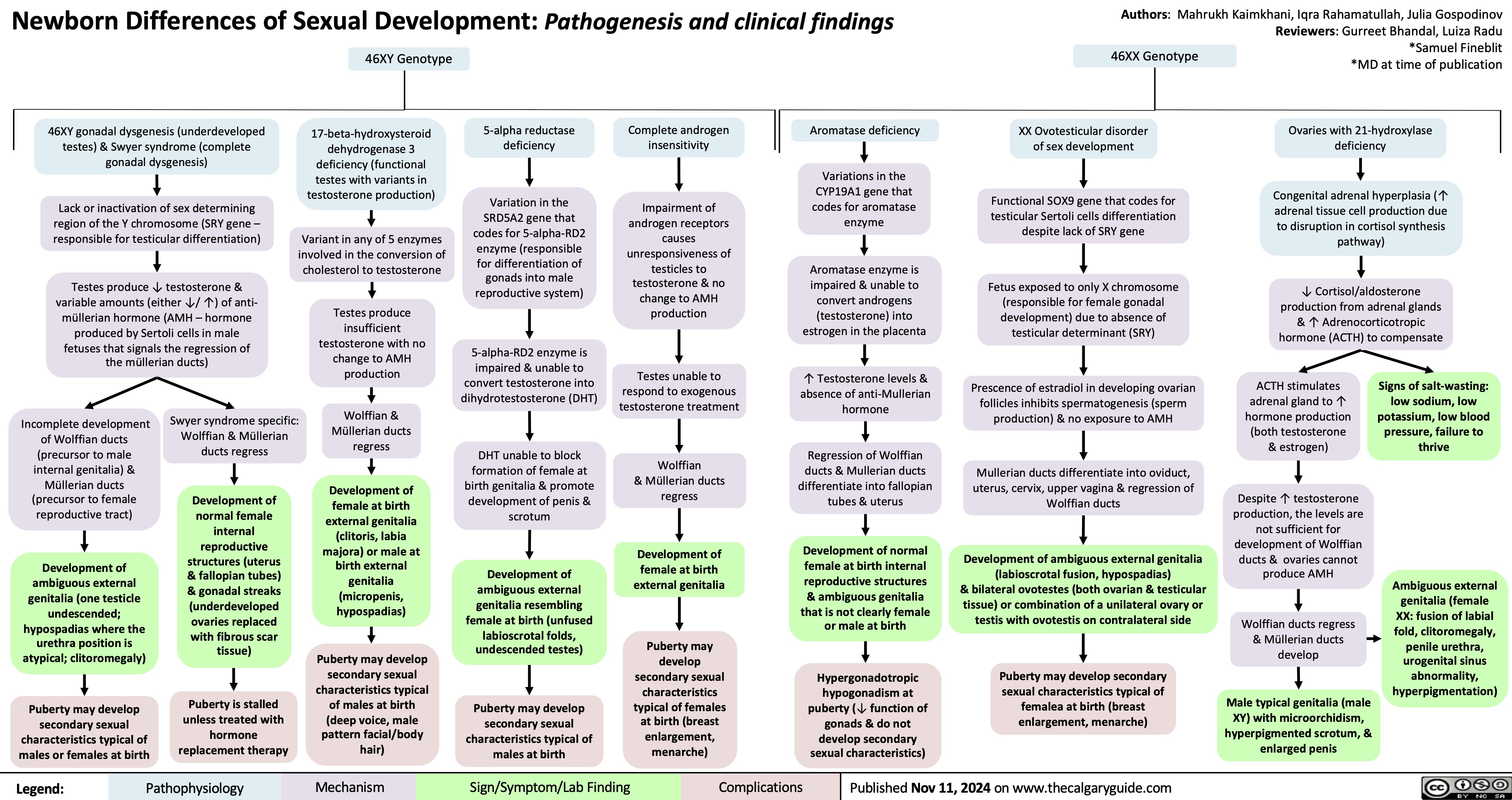
Newborn Differences of Sexual Development: Pathogenesis and clinical findings 46XY Genotype
Authors: Mahrukh Kaimkhani, Iqra Rahamatullah, Julia Gospodinov Reviewers: Gurreet Bhandal, Luiza Radu
           46XY gonadal dysgenesis (underdeveloped testes) & Swyer syndrome (complete gonadal dysgenesis)
Lack or inactivation of sex determining region of the Y chromosome (SRY gene – responsible for testicular differentiation)
Testes produce ↓ testosterone & variable amounts (either ↓/ ↑) of anti- müllerian hormone (AMH – hormone produced by Sertoli cells in male fetuses that signals the regression of the müllerian ducts)
17-beta-hydroxysteroid dehydrogenase 3 deficiency (functional testes with variants in testosterone production)
Variant in any of 5 enzymes involved in the conversion of cholesterol to testosterone
Testes produce insufficient testosterone with no change to AMH production
Wolffian & Müllerian ducts regress
Development of female at birth external genitalia (clitoris, labia majora) or male at birth external genitalia (micropenis, hypospadias)
Puberty may develop secondary sexual characteristics typical of males at birth (deep voice, male pattern facial/body hair)
5-alpha reductase deficiency
Variation in the SRD5A2 gene that codes for 5-alpha-RD2 enzyme (responsible for differentiation of gonads into male reproductive system)
5-alpha-RD2 enzyme is impaired & unable to convert testosterone into dihydrotestosterone (DHT)
DHT unable to block formation of female at birth genitalia & promote development of penis & scrotum
Development of ambiguous external genitalia resembling female at birth (unfused labioscrotal folds, undescended testes)
Puberty may develop secondary sexual characteristics typical of males at birth
Complete androgen insensitivity
Impairment of androgen receptors causes unresponsiveness of testicles to testosterone & no change to AMH production
Testes unable to respond to exogenous testosterone treatment
Wolffian
& Müllerian ducts regress
Development of female at birth external genitalia
Puberty may develop secondary sexual characteristics typical of females at birth (breast enlargement, menarche)
Aromatase deficiency
Variations in the CYP19A1 gene that codes for aromatase enzyme
Aromatase enzyme is impaired & unable to convert androgens (testosterone) into estrogen in the placenta
↑ Testosterone levels & absence of anti-Mullerian hormone
Regression of Wolffian ducts & Mullerian ducts differentiate into fallopian tubes & uterus
Development of normal female at birth internal reproductive structures & ambiguous genitalia that is not clearly female or male at birth
Hypergonadotropic hypogonadism at puberty (↓ function of gonads & do not develop secondary sexual characteristics)
46XX Genotype
XX Ovotesticular disorder of sex development
Functional SOX9 gene that codes for testicular Sertoli cells differentiation despite lack of SRY gene
Fetus exposed to only X chromosome (responsible for female gonadal development) due to absence of testicular determinant (SRY)
Prescence of estradiol in developing ovarian follicles inhibits spermatogenesis (sperm production) & no exposure to AMH
Mullerian ducts differentiate into oviduct, uterus, cervix, upper vagina & regression of Wolffian ducts
Development of ambiguous external genitalia (labioscrotal fusion, hypospadias)
& bilateral ovotestes (both ovarian & testicular tissue) or combination of a unilateral ovary or testis with ovotestis on contralateral side
Puberty may develop secondary sexual characteristics typical of femalea at birth (breast enlargement, menarche)
*Samuel Fineblit *MD at time of publication
Ovaries with 21-hydroxylase deficiency
Congenital adrenal hyperplasia (↑ adrenal tissue cell production due to disruption in cortisol synthesis pathway)
↓ Cortisol/aldosterone production from adrenal glands & ↑ Adrenocorticotropic hormone (ACTH) to compensate
                      Incomplete development of Wolffian ducts (precursor to male internal genitalia) & Müllerian ducts (precursor to female reproductive tract)
Development of ambiguous external genitalia (one testicle undescended; hypospadias where the urethra position is atypical; clitoromegaly)
Puberty may develop secondary sexual characteristics typical of males or females at birth
Swyer syndrome specific: Wolffian & Müllerian ducts regress
Development of normal female internal reproductive structures (uterus & fallopian tubes) & gonadal streaks (underdeveloped ovaries replaced with fibrous scar tissue)
Puberty is stalled unless treated with hormone replacement therapy
ACTH stimulates adrenal gland to ↑ hormone production (both testosterone & estrogen)
Despite ↑ testosterone production, the levels are not sufficient for development of Wolffian ducts & ovaries cannot produce AMH
Wolffian ducts regress & Müllerian ducts develop
Male typical genitalia (male XY) with microorchidism, hyperpigmented scrotum, & enlarged penis
Signs of salt-wasting: low sodium, low potassium, low blood pressure, failure to thrive
             Ambiguous external genitalia (female XX: fusion of labial fold, clitoromegaly, penile urethra, urogenital sinus abnormality, hyperpigmentation)
          Legend:
 Pathophysiology
Mechanism
Sign/Symptom/Lab Finding
 Complications
 Published Nov 11, 2024 on www.thecalgaryguide.com

Primary Hypercholesterolemia

Primary Hypercholesterolemia: Pathophysiology & clinical findings Familial hypercholesterolemia (FH)
Authors: Gurreet Bhandal Run Xuan (Karen) Zeng Rupali Manek Reviewers: Raafi Ali Luiza Radu Samuel Fineblit* *MD at time of publication
  Autosomal co-dominant disease (disease will manifest with one mutated allele, but those with two mutated alleles have a more severe phenotype) impacting only one gene
  Polygenic hypercholesterolemia (hypercholesterolemia involving multiple genetic abnormalities)
Multiple gene mutations
Accumulation of small effects on cholesterol synthesis, metabolism and clearance
↑ Low-density lipoprotein cholesterol (LDL-C) levels
Development of atherosclerosis** (plaque build up around coronary artery or peripheral blood vessels in the rest of the body)
Heterozygous familial hypercholesterolemia (one pathogenic variant allele; common, especially in French Canadians)
Homozygous familial hypercholesterolemia (both alleles are pathogenic variants; rare & presents in childhood)
         Proprotein convertase subtilisin/ kexin type 9 (PCSK9, an enzyme holding low-density lipoprotein receptor complex together) gain- of-function mutation
↑ Breakdown of low-density lipoprotein (LDL) receptor in the liver
Low-density lipoprotein- receptor related protein- associated protein 1 (LDLRAP1;protein coding gene) mutation
↓ Internalization of LDL receptor from cell surface
↓ LDL clearance
Apolipoprotein B (ApoB; protein on LDL) mutation
↓ ApoB/LDL binding to LDL receptor
LDL receptor gene mutation (>90% of cases)
↓ LDL receptor production
           ↑ Hypercholesterolemia (↑ LDL-C in blood)
        Development of aortic valve sclerosis (calcification & thickening of trileaflet aortic valve)
Cholesterol deposit accumulation in tendons & ligaments
Tendon xanthomas (nodules along tendons, typically at Achilles tendon & knuckles)
Cholesterol deposit accumulation on skin at pressured areas
Tuberous xanthomas (shiny red/orange nodules around knees, elbows & heels; less common)
Cholesterol deposit accumulation in the edges of cornea
Corneal arcus (white rings around iris)
Cholesterol deposit buildup under skin near corner of eyelids
Xanthelasmas (yellow plaques on or by the corners of eyelids)
      ↑ Risk of coronary artery disease
**See Calgary Guide slide on Atherosclerosis: Complications
 Legend:
 Pathophysiology
Mechanism
Sign/Symptom/Lab Finding
 Complications
 Published Nov 11, 2024 on www.thecalgaryguide.com

Suboxone & Methadone

Suboxone & Methadone: Mechanism of action and side effects
Authors: Mahrukh Kaimkhani Iqra Rahamatullah Reviewers: Sara Cho, Keira Britto, Luiza Radu Kate Colizza* *MD at time of publication
 Suboxone (Buprenorphine + Naloxone)
   Methadone (a long-acting, full agonist) acts at mu-opioid receptors
Buprenorphine (a long-acting, partial agonist with high affinity properties) displaces full-agonists at mu-opioid receptors (e.g., fentanyl).
Naloxone (a mu-opioid receptor antagonist) displaces buprenorphine at mu-opioid receptors
↓ Effects of buprenorphine in intramuscular and intranasal forms
↓ Potential for abuse of buprenorphine
         Repeated intake of increasing doses of methadone
Accumulation of methadone
↑ Potency compared to partial agonist (e.g., buprenorphine)
↓ Inhibitory GABAergic neuronal activity
Disinhibition of dopamine at nucleus accumbens
↑ Dopamine levels at the nucleus accumbens and reward pathways
Euphoria
↑ Adherence
↑ Adherence especially in those with severe opioid dependence
Maintained stimulation of opioid receptors
↑ Buprenorphine required to occupy receptors to produce the same level of effect compared to full-agonists
Saturation of mu- opioid receptors (ceiling effect)
Further intake of buprenorphine does not ↑ stimulation of mu-opioid receptors at the locus coeruleus in the brainstem
Locus coeruleus maintains sensitivity to carbon dioxide concentrations
Ventilation is maintained
↓ Risk of overdose and respiratory depression
↓ Stimulation of mu-opioid receptors
↓ Analgesia
↑ Withdrawal
       Potassium channels open
Post-synaptic hyperpolarization of cells
 Presynaptic inhibition of neurotransmitter (glutamate and substance P) release
Inhibition of locus coeruleus which is in a hyperexcitable state from chronic opioid use
↓ Noradrenaline release from locus coeruleus
↓ Autonomic excitability throughout brain, spinal cord, peripheral nerves and GI tract.
↓ Withdrawal symptoms (restlessness, anxiety, lacrimation, nausea, vomiting, diarrhea)
↓ Euphoria
              Methadone blocks channels involved in repolarization of myocytes
Prolonged repolarization of myocytes
Prolonged QTc interval & cardiac arrythmias
Inhibition of locus coeruleus’ ability to sense carbon dioxide and maintain ventilation
↑ Risk of overdose & respiratory depression
↓ Pain signal transmission
Analgesia
Opioid agonist therapy
Further intake of buprenorphine does not ↓ inhibitory GABAergic neuronal activity
GABAergic neurons maintain inhibitory effect on dopamine at the nucleus accumbens
No ↑ in euphoric effects
↓ Adherence to therapy especially in those with severe opioid dependence
                        (↓ cravings and withdrawal symptoms thereby reducing risk of relapse)
 Legend:
 Pathophysiology
Mechanism
Sign/Symptom/Lab Finding
 Complications
 Published Nov 11, 2024 on www.thecalgaryguide.com

Cannabis Use Disorder

Cannabis Use Disorder: Clinical findings and Complications
Authors: Iqra Rahamatullah Mahrukh Kaimkhani Reviewers: Keira Britto Sara Cho Luiza Radu Alex Kennedy* *MD at time of publication
  Tetrahydrocannabinol (THC) in cannabis binds human cannabinoid receptor 1 (CB1) receptors in ventral tegmental area
Biological factors: earlier age of cannabis use onset, male gender, genetic predisposition
Psychosocial factors:
stress, aggression, depression, anxiety, parent/peer cannabis or other substance use, ↓ SES, family dysfunction, bullying, occupational difficulties
   Disinhibits dopaminergic signaling and reward response
↑ Motivation to continue cannabis use
Cannabis Use Disorder
Cannabis use that may lead to significant distress or impairment in psychological, physical, or social functioning
           Cannabis (CB1 receptor agonist), especially with ↑ THC, acutely causes burst firing of ventral tegmental area
↑ Dopamine in striatal and prefrontal areas
↑ Dopaminergic transmission in the mesolimbic pathway (neuronal network involved in mediation of psychosis)
Delusions, hallucinations, & paranoia occurring with acute or chronic use
Cannabis induced psychotic disorder
↑ THC activates CB1 receptors on GABAergic terminals & ↓ THC activates CB1 receptors on glutaminergic terminals
GABA & glutamate dysregulation and imbalance (can occur with acute or chronic use)
Repeated exposures to ↑THC results in serotonin (5- HT) receptor upregulation
↑ Neuro-
endocrine responses of stress hormones, which may ↑ serotonin reuptake
Sedative action of low dose THC on CB1 receptors causes ↓ sleep latency and ↑ slow wave sleep with acute cannabis use
Tolerance with chronic usage causes reversal of acute effects
↑ Sleep latency & ↓ slow wave sleep
↓ Sleep time & quality; ↓ cerebral restoration & recovery
Cannabis induced sleep disorder
Chronic cannabinoid receptor overstimulation
Receptor dysregulation, desensitization, and downregulation
Hypothalamic pituitary adrenal (HPA) axis dysregulation
Inhibited gastrointestinal motility and digestion
Nausea & vomiting & abdominal pain after cannabis use
Cannabinoid hyperemesis syndrome (cyclic vomiting with cannabis use)
Down regulation of CB1 receptors due to long term cannabis usage, paired with sudden discontinuation of cannabis use
↓ Cannabinoid in ↑CB1 receptors disrupts emotional processing, sleep and appetite homeostasis within the endocannabinoid system
Anxiety, irritability, anger, depression, sleep disruption, appetite loss.
Cannabinoid withdrawal
                    Mood changes, anxiety and/or panic attacks
Cannabis induced mood and anxiety disorders
      Legend:
 Pathophysiology
Mechanism
Sign/Symptom/Lab Finding
 Complications
Published Nov 11, 2024 on www.thecalgaryguide.com
  Sympathetic nervous system dysregulation

Renal manifestations of SLE

Systemic Lupus Erythematosus (SLE): Renal Manifestations
Authors: Madison Turk Reviewers: Modhawi Alqanaie Mao Ding Luiza Radu Glen Hazlewood* * MD at time of publication
    Genetic susceptibility and potential environmental triggers (smoking, silica, Epstein-Barr Virus, hormones, ect)
↓Clearance of dead cell debris in the body
(exact mechanisms unknown; See slide on pathogenesis of SLE)
Extracellular exposure of nuclear proteins (which bind DNA and regulate gene expression)
Immune cells respond to nuclear proteins as if they are non-self, as they usually don’t ‘see’ them
 Systemic Lupus Erythematosus
An autoimmune disease characterized by anti-nuclear-antibody production resulting in widespread inflammation and tissue damage in varying affected organs, including one, or a combination of, joints, skin, brain, lungs, kidneys, and blood vessels
    Production of auto-antibodies against self nuclear proteins
IC deposition in renal vessels
Activation of inflammatory cells against IC’s causing vascular injury/inflammation
↑Clot formation in vessels leading to ↓vessel lumen diameter and ↓blood flow
↑Reninàcleavage of angiotensinogen to angiotensin Ià cleavage by angiotensin converting enzyme into angiotensin II
Vessel constriction to ↑blood pressure (to ↑ renal blood flow)
IC deposition in tubule basement membrane of the kidney
Formation of immune complexes (IC) (collections of antigen(s), antibodies, and/or complement proteins bound together)
Tubulointerstitial nephritis: (Inflammation of the renal tubules and interstitium, sparing the glomeruli)
                Renal ischemia
IC deposition in the glomerulus
Activation of complement, initiating an inflammatory response
Recruitment of myeloid cells (monocytes/ neutrophils)
Production of reactive oxygen species, cytokines and release of cytotoxic granules
Tubular inflammation and damage resulting in ↓sodium reabsorption
Renal release of reninà ↑ angiotensin I/II and resulting ↑ aldosterone
↑Sodium reabsorption, and potassium excretion in the collecting duct
↓Potassium secretion from the Distal Convoluted Tubule
Hyperkalemia Hypokalemia
⍺-intercalated cell damage
↓Acid excretion
Metabolic acidosis
End stage kidney disease
(all manifestations can result in this)
           Hypertension
Tissue damage from the inflammatory response
Glomerular nephritis (inflammation/damage of the filtering part of the kidneys)
    Fibrosis (thickening or scarring of tissue)
Mesangial and parietal cell proliferation
Podocyte injury
↑blood and protein excretion due to damage to the glomerular filtration membrane
↓protein in blood Edema
Proteinuria Hematuria
       ↓Functional renal tissue to filter creatinine from blood
↓ Glomerular filtration rate ↑ Plasma creatinine
    Legend:
 Pathophysiology
Mechanism
Sign/Symptom/Lab Finding
 Complications
 Published Nov 11, 2024 on www.thecalgaryguide.com

Learning Disability

Learning Disability: Pathogenesis and clinical findings
Authors: Erin Brintnell Reviewers: Annie Pham Michelle Chen Dr. Jean Mah* * MD at time of publication
  Genetics (largest impact)
E.g. Changes to neuronal migration genes (DCDC2 & ROBO1) in dyslexia
Co-morbid neurodevelopmental disorder, especially ADHD
Difficulty concentrating impedes learning
Home environment
↓ Reading at home, ↓ parental education, socio-economic status
Acquired (brain injury)
      Learning Disability
Persistent impairment in reading (dyslexia), writing (dysgraphia) and/or arithmetic (dyscalculia) beyond what is expected for age
Differences in brain activation during learning
Dyslexia Dysgraphia Dyscalculia
           ↓ Activation of left temporal parietal cortex (sounding words out)
↓ White matter connections between brain regions important for reading
↓ Activation of visual-word form area (representing sounds as symbols)
↑ Activation of Broca’s area (spoken word)
↓ Letter & sound recall
Difficulty sounding out words
Poor spelling
Difficulty naming objects
Difficulty identifying words
↑ Sounding-out in later reading
Cerebellar activation differences
Cortical & subcortical damage to functional language regions
Anterior thalamic radiation differences (executive functioning)
Cingulum differences (cognitive control)
Illegible & very slow writing
Poor spelling & writing fatigue
↓ White matter in inferior longitudinal fasciculus (object recognition)
↓ Gray matter in inferior parietal lobe (understanding numbers & quantities)
↓ Gray matter in bilateral supramarginal gyri (retrieving arithmetic facts)
↓ White matter in fronto- occipital fasciculus & anterior thalamic radiation (goal-oriented behavior & executive functioning)
Difficulty recognizing patterns & numbers
Difficulty with basic arithmetic
Difficulty with mathematic operations
Difficulty with number processing
                                   Work-avoidance ↓ Self-esteem Difficulty forming relationships Depression Impulsivity Opposition to authority
 Legend:
 Pathophysiology
Mechanism
Sign/Symptom/Lab Finding
 Complications
 Published Nov 11, 2024 on www.thecalgaryguide.com

Anticholingeric Syndrome in Older Adults
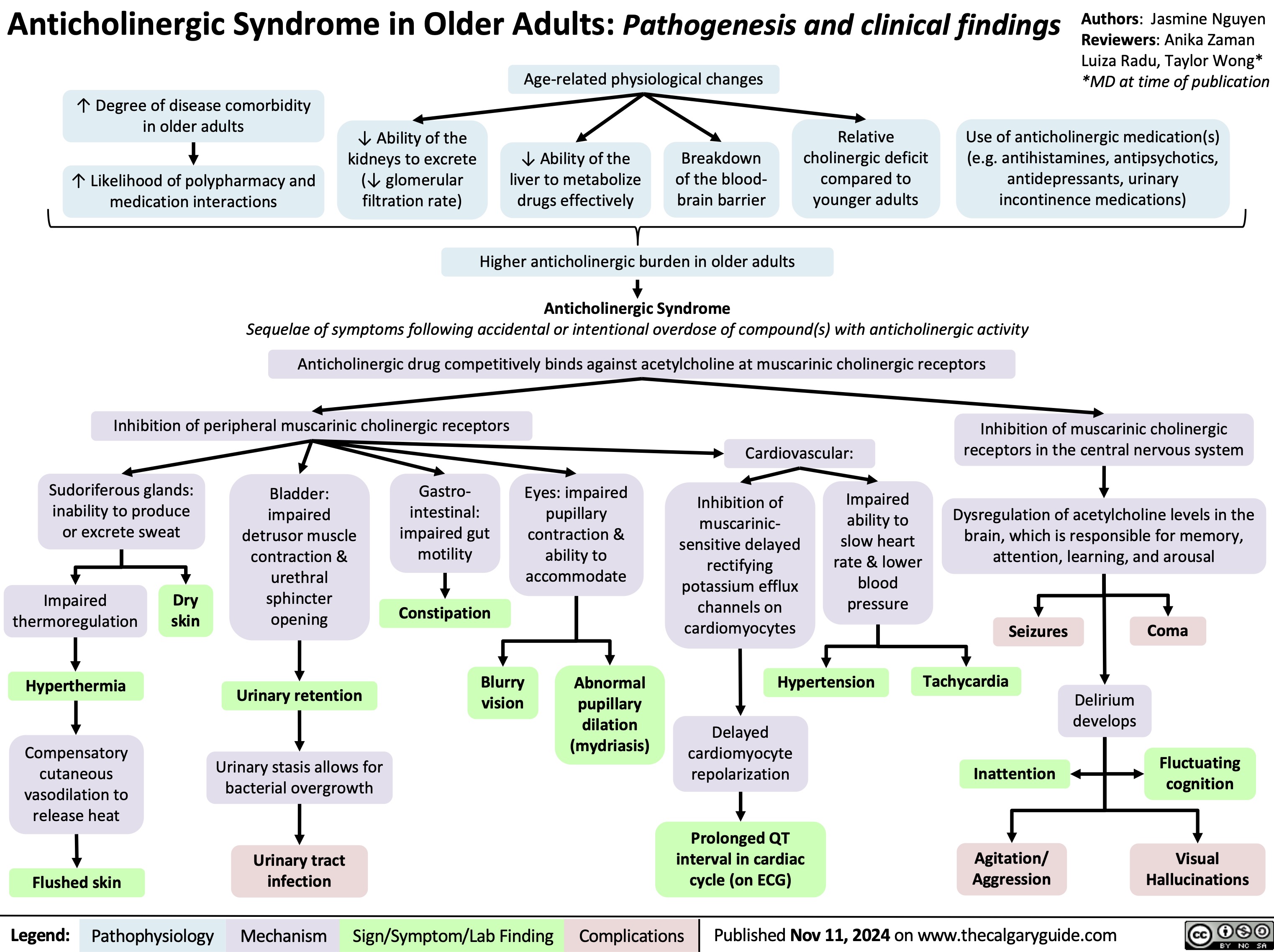
Anticholinergic Syndrome in Older Adults: Pathogenesis and clinical findings Age-related physiological changes
Authors: Jasmine Nguyen Reviewers: Anika Zaman Luiza Radu, Taylor Wong* *MD at time of publication
   ↑ Degree of disease comorbidity in older adults
↑ Likelihood of polypharmacy and medication interactions
↓ Ability of the kidneys to excrete (↓ glomerular filtration rate)
↓ Ability of the liver to metabolize drugs effectively
Breakdown of the blood- brain barrier
Relative cholinergic deficit compared to younger adults
Use of anticholinergic medication(s) (e.g. antihistamines, antipsychotics, antidepressants, urinary incontinence medications)
        Higher anticholinergic burden in older adults
Anticholinergic Syndrome
Sequelae of symptoms following accidental or intentional overdose of compound(s) with anticholinergic activity
Anticholinergic drug competitively binds against acetylcholine at muscarinic cholinergic receptors
     Inhibition of peripheral muscarinic cholinergic receptors
Inhibition of muscarinic cholinergic receptors in the central nervous system
Dysregulation of acetylcholine levels in the brain, which is responsible for memory, attention, learning, and arousal
   Cardiovascular:
     Sudoriferous glands: inability to produce or excrete sweat
Gastro- intestinal: impaired gut motility
Constipation
Blurry vision
  Bladder: impaired detrusor muscle contraction & urethral
Eyes: impaired pupillary contraction & ability to accommodate
Inhibition of muscarinic- sensitive delayed rectifying potassium efflux channels on cardiomyocytes
Impaired
ability to slow heart rate & lower blood pressure
      Impaired thermoregulation
Hyperthermia
Compensatory cutaneous vasodilation to release heat
Flushed skin
Dry sphincter skin opening
Urinary retention
Urinary stasis allows for bacterial overgrowth
Urinary tract infection
Abnormal pupillary dilation (mydriasis)
Hypertension
Delayed cardiomyocyte repolarization
Prolonged QT interval in cardiac cycle (on ECG)
Seizures Tachycardia
Inattention
Agitation/ Aggression
Delirium develops
Coma
Fluctuating cognition
Visual Hallucinations
                          Legend:
 Pathophysiology
Mechanism
Sign/Symptom/Lab Finding
 Complications
 Published Nov 11, 2024 on www.thecalgaryguide.com

Benzodiazepine mechanism of action

Benzodiazepines: Mechanism of action
Sedative-hypnotic, anxiolytic & anti-convulsive agents composed of a fused benzene and diazepine ring that is administered orally or intravenously to produce desired effect (ie., lorazepam, midazolam, diazepam)
Authors: Tracey Rice Usama Malik Amy Fowler Victoria Silva Reviewers: Sara Cho Keira Britto Luiza Radu Brienne McLane* Aaron Mackie* * MD at time of publication
 Benzodiazepine binds to gamma-aminobutyric acid (GABAA) receptors in vascular smooth muscle & the central nervous system (CNS)
↑ Opening of chloride channels
Influx of chloride ions into the neuron Hyperpolarization of nerve membrane causing it to be more negative The cell membrane falls below the normal resting potential
          Medulla oblongata inhibition
↓ Respiratory drive; ↓ depth & rate of respirations
Temporary cessation of breathing leads to reduced oxygen supply to the brain
↓ Level of consciousness
Pharyngeal muscle relaxation leading to obstruction
Hypoventilation and/or apnea
General CNS inhibition
↓ Neuronal activity
↓ Electrical brain activity
↓ Seizure activity & hypnotic effect
Thalamic & hypothalamic inhibition
Disruption of short & long- term memory consolidation
Limbic system inhibition
↓ Fear emotions (panic & phobia)
Anxiolytic effect (↓ Anxiety)
Smooth muscle inhibition
Smooth muscles become relaxed &/or less spastic
Vasodilation
↓ Preload Hypotension
↓ Cerebral blood flow
Pre-syncope or syncope
             Anterograde amnesia
      ↓ Visuospatial ability, speed of processing & verbal learning
Confusion
↓ Deep stage of non-REM sleep & delayed REM sleep
Rapid sleep
     Legend:
 Pathophysiology
Mechanism
Sign/Symptom/Lab Finding
 Complications
 Published July 21, 2024 on www.thecalgaryguide.com

Diabetic Polyneuropathy

Diabetic Polyneuropathy: Pathogenesis and clinical findings
Authors: Gurreet Bhandal Amanda Eslinger Reviewers: Raafi Ali Mark Elliott Jaye Platnich Alexander Arnold Haotian Wang Hanan Bassyouni* * MD at time of publication
    Hypoinsulinemia
(↓ Intracellular insulin levels)
↓ Insulin induces expression of neurotrophic factors (i.e. nerve growth factor, brain-derived neurotrophic factor, neurotrophin-3, insulin-like growth factor (IGF), & vascular endothelial growth factor (VEGF))
↓ Stimulus for peripheral nerve maintenance & repair
Impaired peripheral nerve repair
Hyperglycemia
(↑ Intracellular glucose levels)
↑ Glycolysis (breakdown of glucose)
↑ Intermediates & products of glycolysis (i.e. Protein Kinase C, AGE, polyols (sorbitol & fructose), NADH)
      Protein Kinase C Pathway activated & ↑ inflammation in endothelium, vascular smooth muscle, fibroblasts of blood vessels
Prothrombotic state with ↑ vascular fibrosis, ↑ smooth muscle proliferation, ↑ chance of blood clots, ↑ impaired endothelial- mediated vasodilation
Arterial stiffening & ischemia
Advanced Glycation End Products (AGEs): end products of glycolysis that have carbohydrates attached
AGEs bind AGE receptors on endothelium & white blood cells
↑ Inflammation, vascular permeability, procoagulant activity & monocyte influx
Immune cells generate toxic reactive oxygen species as part of their defense system
Polyol pathway activated in kidney, retina, nerves
Excess glucose converted to sorbitol & fructose
Metabolism of sorbitol & fructose produces intermediates that undergo auto-oxidation
↑ Reactive oxygen species
↑ NADH (reducing agent) overloads the electron transport chain
↑ Leakage of electrons in the electron transport chain
        ↑ Free radical formation (type of reactive oxygen species that is toxic to cells & tissues when in excess)
       ↑ Oxidative stress
Diabetic Polyneuropathy (damage to & loss of peripheral nerve function due to nerve hypoxia & impaired repair mechanisms)
   Sensory axonal loss
Damage to small myelinated fibers
Impaired pain, light touch & temperature sensation
Pain, paresthesia (pins & needles feeling), dysthesia (burning, tingling, itching)
X-ray: destruction of weight-bearing foot joints
Damage to large myelinated fibers
Loss of vibratory sensation in glove & stocking pattern distribution; altered proprioception
Claw toe deformity
Charcot Foot: weakening of bones, joints, soft tissues causes pain insensitivity
Distal motor axonal loss
↓ Ability of axons to transmit signals to central nervous system to foot muscles
↓ Foot muscle strength,
↓ Coordination & imbalance between toe extensors & flexors
Weight shift creates pressure points
Fissures in skin of weight-bearing areas
Infection & chronic ulceration
Damage to nerves that control contractions of stomach muscles
Gastroparesis: stomach muscles weakened, ↓ motility & delayed transit of contents
Autonomic neuropathy
Damage to nerves that control heart blood flow, contractions & contractility
Damage to nerves that control blood flow and arousal responses for sexual function
Erectile dysfunction
Orthostatic or postural hypotension
                           Exercise intolerance
Resting tachycardia
 Legend:
 Pathophysiology
Mechanism
Sign/Symptom/Lab Finding
 Complications
 Published Apr 28, 2014; updated Nov 16, 2024 on www.thecalgaryguide.com
     
Diabetic Polyneuropathy: Pathogenesis and clinical findings
Authors: Gurreet Bhandal Amanda Eslinger Reviewers: Raafi Ali Mark Elliott Jaye Platnich Alexander Arnold Haotian Wang Hanan Bassyouni* * MD at time of publication
    Hypoinsulinemia
(↓ Intracellular insulin levels)
↓ Insulin induces expression of neurotrophic factors (i.e. nerve growth factor, brain-derived neurotrophic factor, neurotrophin-3, insulin-like growth factor (IGF), & vascular endothelial growth factor (VEGF))
↓ Stimulus for peripheral nerve maintenance & repair
Impaired peripheral nerve repair
Hyperglycemia
(↑ Intracellular glucose levels)
Protein Kinase C Pathway in endothelium, vascular smooth muscle, fibroblasts of blood vessels
↑ Inflammation
Prothrombotic state with ↑ chance of blood clots, ↑ vasoconstriction & ↑ arterial stiffening
Ischemia
↑ Glycolysis (breakdown of glucose)
Advanced Glycation End Products (AGEs): end products of glycolysis that have carbohydrates attached
AGEs bind cellular receptors
Inflammation, vascular permeability, procoagulant activity & monocyte influx
Immune cells generate toxic reactive oxygen species as part of their defense system
↑ Intermediates & products of glycolysis (i.e. Protein Kinase C, AGE, sorbitol & fructose, NADH)
      Polyol Pathway in kidney, retina, nerves
Excess glucose converted to sorbitol & fructose
Metabolism of sorbitol & fructose produces intermediates that undergo auto-oxidation
↑ Reactive oxygen species
↑ Leakage of electrons when NADH (reducing agent) overloads the electron transport chain
↑ Free radical formation (type of reactive oxygen species that is toxic to cells & tissues when in excess)
                   ↑ Oxidative stress
Diabetic Polyneuropathy (damage to & loss of peripheral nerve function due to nerve hypoxia & impaired repair mechanisms)
   Sensory axonal loss
Damage to small myelinated fibers
Impaired pain, light touch & temperature sensation
Pain, paresthesia (pins & needles feeling), dysthesia (burning, tingling, itching)
X-ray: destruction of weight-bearing foot joints
Damage to large myelinated fibers
Loss of vibratory sensation in glove & stocking pattern distribution; altered proprioception
Claw toe deformity
Charcot Foot: weakening of bones, joints, soft tissues causes pain insensitivity
Distal motor axonal loss
↓ Ability of axons to transmit signals to central nervous system to foot muscles
↓ Foot muscle strength,
↓ Coordination & imbalance between toe extensors & flexors
Weight shift creates pressure points
Fissures in skin of weight-bearing areas
Infection & chronic ulceration
Damage to nerves that control contractions of stomach muscles
Gastroparesis: stomach muscles weakened, ↓ motility & delayed transit of contents
Autonomic neuropathy
Damage to nerves that control heart blood flow, contractions & contractility
Damage to nerves that control blood flow and arousal responses for sexual function
Erectile dysfunction
Orthostatic or postural hypotension
                           Exercise intolerance
Resting tachycardia
 Legend:
 Pathophysiology
Mechanism
 Sign/Symptom/Lab Finding
 Complications
Published April 28th, 2014 on www.thecalgaryguide.com
     
Diabetic Polyneuropathy: Pathogenesis and clinical findings
Authors: Gurreet Bhandal Amanda Eslinger Reviewers: Mark Elliott Jaye Platnich Alexander Arnold Haotian Wang Hanan Bassyouni* * MD at time of publication
 Hypoinsulinemia
↓ intracellular insulin levels
↓ Neurotrophic factors (i.e. nerve growth factor, brain-derived neurotrophic factor, neurotrophin-3, IGF, & VEGF)
↓ stimulus for peripheral nerve maintenance and repair
Impaired peripheral nerve repair
Sensory axonal loss Small myelinated fibers
Impaired pain, light touch & temperature sensation
Pain, paresthesias or tingling and numbness, dysthesias where sense of touch is distorted
Hyperglycemia
↑ Intracellular glucose levels
This produces an excess of glycolysis intermediates & products of glycolysis (i.e. sorbitol & fructose; AGE; Protein Kinase C)
     PKC Pathway in endothelium, vascular
smooth muscle, fibroblasts of blood vessels
↑ inflammation
Prothrombotic state with ↑ chance of blood clots; vasoconstriction & arterial stiffening
Ischemia
Advanced Glycation End Products: The body “glycates” end products of glycolysis, which means that some end products have a carbohydrate added to them
Polyol Pathway
in kidney, retina, nerves
Excess glucose is converted to sorbitol and fructose, which accumulates in cells
↑ Oxidative stress
↑ Free Radical Formation
          AGE’s bind cellular receptors inducing inflammation, vascular
permeability, procoagulant activity & monocyte influx
Abbreviations:
AGE – Advanced Glycation End Products
IGF - Insulin-like Growth Factor
VEGF - Vascular Endothelial Growth Factor PKC – Protein Kinase C
Autonomic neuropathy
        Nerve hypoxia & impaired repair mechanisms leading to dysfunction & loss of peripheral nerves Distal motor axonal loss
             Large myelinated fibers
Atrophy of intrinsic foot muscles
Fissures in skin of weight-bearing areas
Imbalance between toe extensors & flexors
Weight shift results in pressure points
Infection & chronic ulceration
Gastroparesis: stomach muscles weakened with ↓ motility
Claw toe deformity
Erectile dysfunction
          Altered proprioception
X-ray: destruction of weight-bearing foot joints
Loss of vibratory sensation in glove & stocking pattern distribution
     Charcot Foot: weakening of bones, joints, soft tissues causes pain insensitivity
Cardiac: Resting tachycardia, exercise intolerance, orthostatic or postural hypotension
         Legend:
 Pathophysiology
Mechanism
Sign/Symptom/Lab Finding
 Complications
 Published April 28th, 2014 on www.thecalgaryguide.com
   
Diabetic Polyneuropathy: Pathogenesis and clinical findings
Authors: Amanda Eslinger Reviewers: Mark Elliott Jaye Platnich Alexander Arnold Haotian Wang Hanan Bassyouni* * MD at time of publication
   Hypoinsulinemia
↓ Neurotrophic factors (i.e. nerve growth factor, brain-derived neurotrophic factor, neurotrophin-3, IGF, & VEGF)
↓ stimulus for peripheral nerve maintenance and repair
Impaired peripheral nerve repair
Sensory axonal loss
Small myelinated fibers
Impaired pain, light touch & temperature sensation
Pain, paresthesias, dysthesias
Hyperglycemia
↑ Intracellular glucose levels
This produces of glycolysis
an excess of glycolysis intermediates & products (i.e. sorbitol & fructose; AGE; Protein Kinase C)
      PKC Pathway
PKC pathway activation results in ↑ inflammation
Prothrombotic state; vasoconstriction & arterial stiffening
Ischemia
Advanced Glycation End Products: The body “glycates” end products of glycolysis, which means that some end products have a carbohydrate added to them
AGE’s bind cellular receptors inducing inflammation, vascular
permeability, procoagulant activity & monocyte influx
Polyol Pathway
(i.e. sorbitol & fructose)
Excess glucose is converted to sorbitol, which accumulates in cells
↑ Oxidative stress
↑ Free Radical Formation
              Nerve hypoxia & impaired repair mechanisms leading to dysfunction & loss of peripheral nerves Distal motor axonal loss
Abbreviations:
AGE – Advanced Glycation End Products
IGF - Insulin-like Growth Factor
VEGF - Vascular Endothelial Growth Factor PKC – Protein Kinase C
Autonomic neuropathy
            Large myelinated fibers Altered
proprioception
Atrophy of intrinsic foot muscles
Fissures in skin of weight-bearing areas
Infection & chronic ulceration
Imbalance between toe extensors & flexors
Weight shift results in pressure points
Gastroparesis
Claw toe deformity
Erectile dysfunction
                   X-ray: destruction of weight-bearing foot joints
Loss of vibratory sensation in glove & stocking pattern distribution
Charcot Foot
Cardiac: Resting tachycardia, exercise intolerance, orthostatic hypotension
   Legend:
 Pathophysiology
Mechanism
Sign/Symptom/Lab Finding
 Complications
 Published April 28th, 2014 on www.thecalgaryguide.com

Rapid sequence induction and intubation
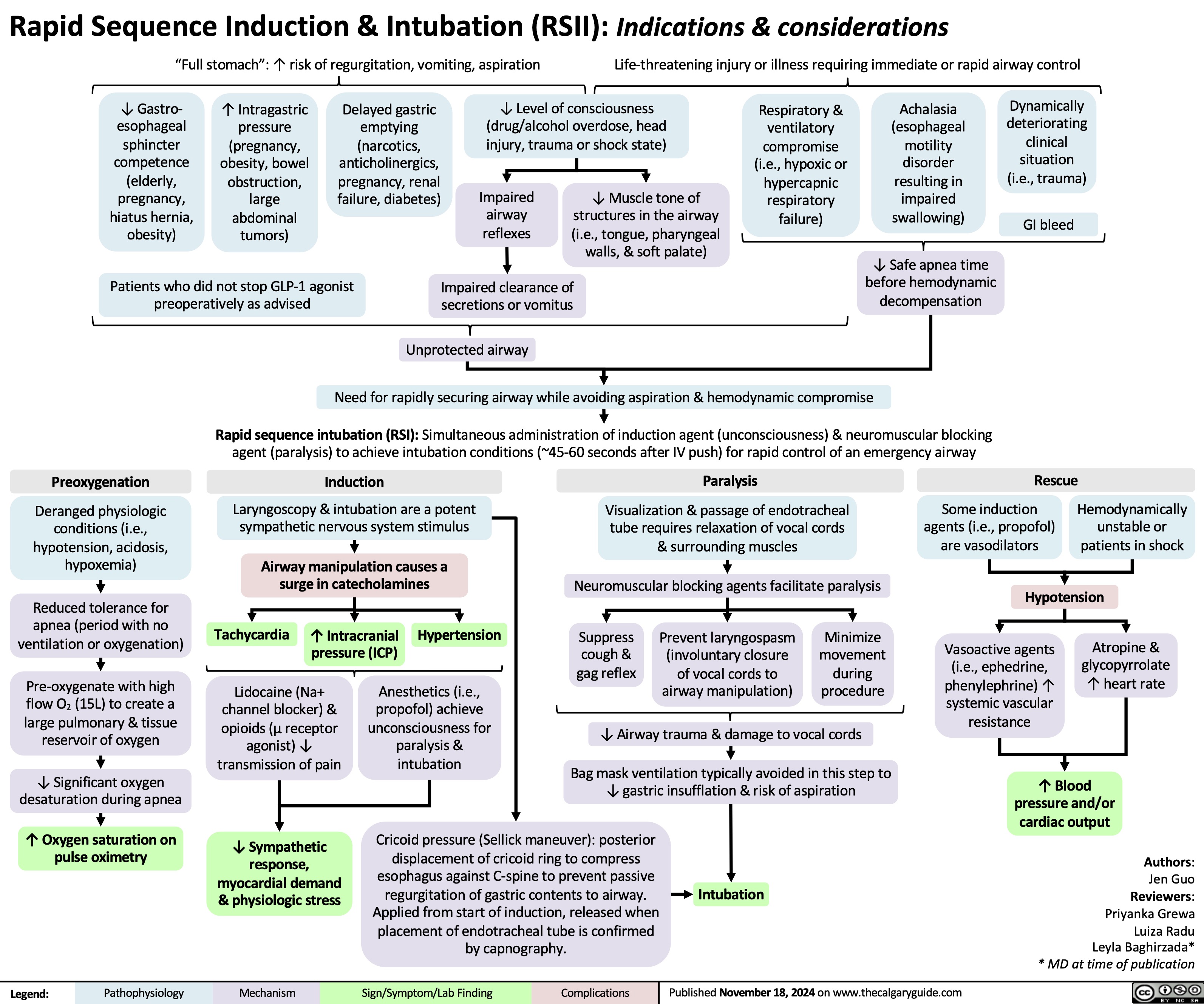
Rapid Sequence Induction & Intubation (RSII): Indications & considerations
“Full stomach”: ↑ risk of regurgitation, vomiting, aspiration Life-threatening injury or illness requiring immediate or rapid airway control
         ↓ Gastro- esophageal sphincter competence (elderly, pregnancy, hiatus hernia, obesity)
↑ Intragastric pressure (pregnancy, obesity, bowel obstruction, large abdominal tumors)
Delayed gastric emptying (narcotics, anticholinergics, pregnancy, renal failure, diabetes)
↓ Level of consciousness (drug/alcohol overdose, head injury, trauma or shock state)
Respiratory & ventilatory compromise (i.e., hypoxic or hypercapnic respiratory failure)
Achalasia (esophageal motility disorder resulting in impaired swallowing)
Dynamically deteriorating clinical situation (i.e., trauma)
GI bleed
   Impaired airway reflexes
↓ Muscle tone of structures in the airway (i.e., tongue, pharyngeal walls, & soft palate)
     Patients who did not stop GLP-1 agonist preoperatively as advised
Impaired clearance of secretions or vomitus
↓ Safe apnea time before hemodynamic decompensation
   Unprotected airway
Need for rapidly securing airway while avoiding aspiration & hemodynamic compromise
Rapid sequence intubation (RSI): Simultaneous administration of induction agent (unconsciousness) & neuromuscular blocking agent (paralysis) to achieve intubation conditions (~45-60 seconds after IV push) for rapid control of an emergency airway
     Preoxygenation
Deranged physiologic conditions (i.e., hypotension, acidosis, hypoxemia)
Reduced tolerance for
apnea (period with no ventilation or oxygenation)
Pre-oxygenate with high flow O2 (15L) to create a large pulmonary & tissue reservoir of oxygen
↓ Significant oxygen desaturation during apnea
↑ Oxygen saturation on pulse oximetry
Induction
Laryngoscopy & intubation are a potent sympathetic nervous system stimulus
Airway manipulation causes a surge in catecholamines
Paralysis
Visualization & passage of endotracheal tube requires relaxation of vocal cords & surrounding muscles
Neuromuscular blocking agents facilitate paralysis
Rescue
     Some induction agents (i.e., propofol) are vasodilators
Hemodynamically unstable or patients in shock
     Hypotension
          Tachycardia
↑ Intracranial pressure (ICP)
Hypertension
Suppress cough & gag reflex
Prevent laryngospasm (involuntary closure of vocal cords to airway manipulation)
Minimize movement during procedure
Vasoactive agents (i.e., ephedrine, phenylephrine) ↑ systemic vascular resistance
Atropine & glycopyrrolate ↑ heart rate
      Lidocaine (Na+ channel blocker) & opioids (μ receptor agonist) ↓ transmission of pain
↓ Sympathetic response, myocardial demand & physiologic stress
Anesthetics (i.e., propofol) achieve unconsciousness for paralysis & intubation
↓ Airway trauma & damage to vocal cords
Bag mask ventilation typically avoided in this step to ↓ gastric insufflation & risk of aspiration
           Cricoid pressure (Sellick maneuver): posterior displacement of cricoid ring to compress esophagus against C-spine to prevent passive regurgitation of gastric contents to airway. Applied from start of induction, released when placement of endotracheal tube is confirmed by capnography.
Intubation
↑ Blood pressure and/or cardiac output
Authors: Jen Guo Reviewers: Priyanka Grewa Luiza Radu Leyla Baghirzada* * MD at time of publication
   Legend:
 Pathophysiology
Mechanism
Sign/Symptom/Lab Finding
 Complications
 Published November 18, 2024 on www.thecalgaryguide.com

Open Fractures

Open Fractures: Mechanisms, clinical features and complications
  Direct, high-energy force (e.g. vehicle collisions, gunshot) or low-energy force on diseased bone
Force applied to bone exceeds strength of bone resulting in periosteal stripping and subsequent soft tissue and neurovascular destruction
Open Fractures
 Also known as “compound fractures” and classified with the Gustilo-Anderson classification system (Types I, II, III), these are fractures in which the skin is penetrated and bone is exposed to the external environment. Comminuted fractures have ≥ 2 breaks in the bone.
  Inside-out (bone) or outside-in (external) penetration of skin to create a wound
Skin tearing creates vacuum-like effect pulling debris into wound
       Minimal comminution
Bone penetrates skin to create a wound < 1 cm in diameter (Type I)
Smaller wound creates minimal opportunities for pathogen entry and contamination
Moderate comminution
Bone penetrates skin to create a wound 1-10 cm in diameter (Type II)
Moderate wound creates some opportunity for pathogen entry and contamination
Extensive comminution
Bone penetrates skin to create a wound > 10 cm in diameter (Type III)
Large wound creates ample opportunity for pathogen entry and extensive contamination
Type IIIA (adequate soft tissue for bone coverage)
Type IIIB
(soft tissue damage with periosteal stripping)
Type IIIC (vascular injuries, potential amputation)
Displacement/shortening/ angulation/rotation of fracture fragment
Improper bone healing
Bone deformity
Authors: Meaghan MacKenzie Holly Zahary Loreman Nojan Mannani Reviewers: Annalise Abbott Usama Malik Michelle J. Chen Dr. Prism Schneider* Dr. Jared Topham* * MD at time of publication
                  Pain & lack of mechanical load bearing axis
Inability to weight bear
Decreased mobility promotes stasis of venous blood flow & intravascular vessel wall damage
Deep vein thrombosis
Potential progression to pulmonary embolism
Bleeding or inflammation within fascia
Muscle atrophy
Compartment syndrome (↑ pressure in muscle) **
Open wound exposes bone
Infiltration of debris & contaminants
Infection of soft tissues or bone (osteomyelitis)
Initial injury damages blood vessels
Initial injury damages nerves
↓ Sensation distal to injury
↓ Limb function & proprioception
↓ Pulses distal to injury
Amputation
       ↓ Blood flow to bone
Avascular necrosis (bone tissue death)
Limb ischemia
↓ Blood flow & oxygen delivery to tissues
Compartment syndrome**
                       Delayed union (bone healing) on serial radiographs
Non-union (bone fails to heal) on serial radiographs
 **See corresponding Calgary Guide slide on Acute Compartment Syndrome
 Legend:
 Pathophysiology
Mechanism
Sign/Symptom/Lab Finding
 Complications
 Published Nov 16, 2017; updated Nov 21, 2024 on www.thecalgaryguide.com

Calcium Channel Blockers

Calcium Channel Blockers: Mechanisms & side effects
Authors:
Caroline Kokorudz Reviewers:
Rafael Sanguinetti Andrew Wu
Luiza Radu
Timothy Pollak*
* MD at time of publication
Calcium channel blocker medications
inhibit Ca2+ channels in smooth muscle
Reduction of Ca2+ influx into smooth muscle cells
Inhibits calcium-dependent aldosterone synthesis reducing Na+ & H2O resorption in renal distal tubules
Negative feedback to pituitary gland causing ↑ ACTH (adrenocorticotropic hormone)
↑ Androgens (testosterone)
Testosterone acts on gingival cells (multiple cell types that support teeth) & connective tissue matrix
Gingival hyperplasia (gum overgrowth)
Non-dihydropyridines:
(Phenylalkylamines [verapamil], Benzothiazepines [diltiazem]) less potent vasodilators & selective for heart muscle
       Prevents smooth muscle contraction
    Dihydropyridines:
(amlodipine, felodipine, nifedipine) vasodilate vascular smooth muscle
      ↓ Arterial resistance and blood pressure in coronary & peripheral arteries
Coronary artery vasodilation
↓ Pressure in coronary arteries
↑ Blood flow through coronary arteries
Reduced
ischemia relieves angina
Inhibits L-type Ca2+ channels, preventing rapid nodal depolarization
Reduces excitation of sinoatrial (SA) & atrioventricular (AV) nodal tissues
↓ Conduction speed of electrical impulses
↓ Contractile strength of cardiomyocytes (heart muscle cell)
       ↓ Systemic vascular resistance & cardiac
afterload (heart pumping resistance)
↑ Blood volume flowing into significantly smaller vessels
↑ Capillary blood pressure
↑ Circulation to face
Flushes (red & warm)
↓ Cardiac output
↓ Tissue perfusion & attempt to ↑ cardiac output
Worsens heart failure
↓ Oxygen demand of heart muscle
More favorable oxygen supply to demand ratio
Relieves angina
         ↓ Blood pressure
↓ Cerebral perfusion
Syncope (fainting)
Relieves angina
         Capillary fluid leak increased to interstitial space
Peripheral edema
↑ Intracranial pressure Compresses nerve endings Headache
↓ Heart rate Bradycardia
Suppresses dysrhythmias (abnormal heart rhythm)
           Legend:
 Pathophysiology
Mechanism
Sign/Symptom/Lab Finding
 Complications
Published Nov 21, 2024 on www.thecalgaryguide.com

Dexmedetomidine

Dexmedetomidine: Mechanism of Action and Adverse Side Effects
Central Nervous System Dexmedetomidine is a highly-selective, direct α2-adrenoceptor agonist
Peripheral Vascular System
      Binds to the pre and post junctional α2 receptors in the dorsal horn of the spinal cord
Binds to transmembrane
α2 receptors at the locus ceruleus in the brain stem
Stimulation of arterial transmembrane α2 receptors
      Inhibits adenylate cyclase intracellularly
↓ Cell membrane protein phosphorylation
Altered ion channel activity
Hyperpolarization of neuronal cell membranes
Termination of nociceptor (pain) signal propagation
Analgesia
↑ Sedation Anxiety suppression
↓ Formation of cyclic AMP (cAMP)
↓ cAMP-dependent kinase activity
           Neuronal firing suppression, mimicking endogenous sleep
↓Cerebral blood flow
↓ Sympathetic tone
Heart block and asystole
Maintenance of seizure foci on EEG in seizure surgeries
↑ Smooth muscle contraction
↑ Vasoconstriction
Transient hypertension and reflexive bradycardia on bolus administration
↓ Heart rate and systemic vascular resistance
Bradycardia & hypotension Authors: Kayleigh Yang, Arzina Jaffer
Reviewers: Priyanka Grewal, Luiza Radu Leyla Baghirzada * MD at time of publication
           Legend:
 Pathophysiology
Mechanism
Sign/Symptom/Lab Finding
 Complications
Published Nov 21, 2024 on www.thecalgaryguide.com

Pre-Eclampsia Pathogenesis

Pre-Eclampsia: Pathogenesis
Pregnant person risk factors
Fetal risk factors
            Imbalance of Th17/Treg cells and other inflammatory or immune factors
Aberrant activation of innate immune cells creates a cytotoxic environment in utero (exact mechanism unclear)
Primigravida (1st pregnancy)
Advanced maternal age
Genetic factors (e.g. sFLT1)
Collagen vascular disease
Previous preeclamptic pregnancies
Multiple gestation
Other unclear causes
   Dysregulated immune and non-immune decidual cells (specialized endometrial cells) promote abnormal placental trophoblast invasion and uterine spiral artery formation (exact mechanism unclear)
Multiple unclear, complicated mechanisms
Abnormal association of placental vasculature with uterine vasculature early in pregnancy (utero-placental mismatch) disrupts adequate blood perfusion from placenta to fetus (< 20 weeks gestation or early-onset)
Fetus experiences under- perfusion, hypoxia, ischemia, and oxidative stress
Placental cells release molecules toxic to vascular endothelium into the maternal circulation
Damaged maternal blood vessels are less able to perfuse the placenta
Systemic dysfunction of maternal blood vessel endothelium (endothelial cell activation) (>20 weeks gestation or late-onset)
Inflammatory cells retain memory postpartum which increases risk for developing preeclampsia in subsequent pregnancies
Hypoxia leads to placental cell death, which results in release of fetal antigens
        Authors:
Yan Yu
Jasmine Nguyen Reviewers:
Kayla Nelson
Radhmila Parmar
Sean Spence
Monica Kidd*
Katrina Krakowski* Maryam Nasr-Esfahani* Riya Prajapati
Michelle J. Chen
Jadine Paw*
* MD at time of publication
Placental ischemia & injury
Pre-existing maternal diseases damage endothelial cells (e.g. vasculitis, diabetes, renal diseases, chronic hypertension)
Placenta is unable to supply sufficient O2 and nutrients to meet demands of growing fetus
Maternal Clinical Findings and Complications**
Fetal Clinical
Findings and Complications**
        **See corresponding Calgary Guide slides
 Legend:
 Pathophysiology
 Mechanism
Sign/Symptom/Lab Finding
 Complications
 Published Feb 10, 2017; updated Nov 22, 2024 on www.thecalgaryguide.com

Loop diuretics

Loop Diuretics: Mechanism & side effects
Inhibit Na+/K+/2Cl- (NKCC) symporter at thick ascending limb of Loop of Henle (aLOH)
Authors: Andrew Wu, Rafael Sanguinetti Reviewers: Luiza Radu, Adam Bass* * MD at time of publication
Over-inhibition of ion symporter in ear at high concentrations
Damage to tight junctions in the blood vessel epithelium in the ear
Disruption of the blood- cochlear barrier
Hearing loss
Opening of ATP-sensitive K+ channels on pancreatic β- cells causes efflux of K+
↓ Intracellular K+ causes a negative intracellular charge
↓ Ability for pancreatic β- cells to depolarize & release insulin
Hyperglycemia (rare)
     Stimulation of prostaglandin E2 (PGE2) synthesis in the cortical & medullary aLOH
Stimulation of endothelial nitric
oxide synthase releases nitric oxide
Systemic venodilation (dilation of veins)
↓ Systemic vascular resistance
↓ Blood pressure
↓ Na+ in renal interstitium
↓ Water reabsorption (water follows Na+)
Interstitial washout (↑ NaCl & water wasting in interstitium)
↓ Sodium (Na+) reabsorption
↑ Positive luminal charge at thick aLOH
↓ Electrochemical gradient reduces cellular transport of cations
↓ Ca2+ & Mg2+ reabsorption in the aLOH
Hypocalcaemia & hypomagnesemia
↑ Na+ delivery to the distal convoluted tubule (DCT)
↑ Intracellular Na+ at collecting duct
↑ K+ efflux via renal outer medullary potassium channel (ROMK)
                        ↓ Fluid status
↓ Serum Na+
↓Serum Cl-
↑ Luminal K+ at alpha intercalated cell
Chemical gradient ↑ K+/H+ antiporter activity
↑ K+ excretion
Hypokalemia
Chemical gradient shifts K+ into cells creating a charge gradient to shift H+ out
       Hyponatremia Hypovolemia Hypochloremia
          ↓ Volume status activates angiotensin II, which plays a role in sodium and volume retention
↑ Na+/H+ antiporter 3 (NHE3) activity in the proximal tubule
Kidneys excrete & conserve ions to preserve intracellular charge gradient
↑ H+ loss in the urine ↓ Serum H+
           ↑ Proximal Na+ reabsorption causes ↑ urate reabsorption via urate-hydroxyl exchangers
Hyperuricemia
Contraction alkalosis (loss of Na+-rich, HCO3- low fluid) & hypokalemia
↑ Serum HCO3-
     Metabolic alkalosis (systemic pH > 7.45 due to metabolic process)
   Legend:
 Pathophysiology
 Mechanism
 Sign/Symptom/Lab Finding
 Complications
 Published Nov 18, 2024 on www.thecalgaryguide.com

Statins Mechanisms and Side Effects

Statins: Mechanisms & side effects Activation of inducible nitric oxide
synthase, in endothelial cells, systemically
↑ Nitric oxide ↑ Vasodilation
Competitive inhibition of HMG-CoA reductase activity (rate controlling enzyme of cholesterol production)
↓ Mevalonate acid (cholesterol precursor) production in the mevalonate pathway (metabolic processes that produce cholesterol)
↓ Cholesterol ubiquinone (CoQ10) production
↓ Ubiquinone (protective of cellular oxidative effects)
Impaired mitochondrial function
↓ Cyclooxygenase-2 (COX2) expression (enzyme involved in the production of prostaglandins)
↓ Availability of
arachidonic acid (derivative of LDL cholesterol breakdown)
↓ Thromboxane A2 (lipid with prothrombotic properties)
↓ Platelet adhesion
↓ Thrombogenicity (tendency to generate blood clots)
              Improved endothelial function
Improved myocardial blood flow
↓ Intrinsic cholesterol biosynthesis in the liver
     Compensatory mechanisms
↓ Isoprenoid production (electron & proton carriers)
↓ Isoprenoid intermediates
↓Inflammatory signaling proteins
↓Proliferation of macrophages
↓ Inflammation
        Upregulation of hepatic LDL receptors
↑ Hepatic LDL uptake
↓ Serum low-density lipoprotein (LDL)
↑ Apolipoprotein A1 (component of HDL) production
↑ High-density lipoprotein (HDL) Carries serum
cholesterol back to liver
↓ Serum apolipoprotein B levels (acts as a tag for LDL, facilitating uptake by LDL receptors)
↑ Oxidative Stress Hepatocyte damage & inflammation ↑ Serum liver enzymes Hepatotoxicity
↓ ATP
                      ↓ Serum cholesterol
↓ Muscle membrane stability
Rhabdomyolysis (muscle breakdown)
Author: Rupali Manek, Andrew Wu, Rafael Sanguinetti, Luiza Radu Reviewers: Joshua Dian, Laura Byford-Richardson, Alexander Ah-Chi Leung* * MD at time of publication
   Stabilization of plaques
↓ Atherosclerosis (plaque build-up in arteries)
  ↓ Coronary events & mortality
 Legend:
 Pathophysiology
Mechanism
Sign/Symptom/Lab Finding
 Physiological outcome
 Published Jan 9, 2017; updated Nov 22, 2024 on www.thecalgaryguide.com

Fibromylagia

Fibromyalgia: Pathogenesis and clinical findings
Authors: Modhawi Alqanaie Reviewers: Mao Ding Kevin Zhan Luiza Radu Gary Morris* *MD at time of publication
     ↑ Substance P (a potent pain mediator neuropeptide) in cerebrospinal fluid
↑ Glutamate (pro- nociceptive excitatory neurotransmitter)
↑ Nerve growth factor
↑ Propagation of pain signals
↓ Norepinephrine
↓ Serotonin
      Hyperactive nociceptors (nerve cell endings for pain sensation)
↓ Polarization of afferent sensory neurons
↓ Suppression of pain transmission at the nociceptive spinal cord Underactive inhibitory pathway
    Central sensitization
(amplifying neural signal to perceive pain from a non-painful stimuli)
Fibromyalgia Syndrome
     Hypersensitivity to pressure (tender points)
Muscle spasm (involuntary contraction of a muscle)
Allodynia
(pain to a non-painful stimulus) Nocturnal awakening Sleep disturbance Chronic stress and tension Depression Prolonged cortisol elevation
Diffuse hyperalgesia (increased pain to pressure)
Persistent activation of peripheral pain receptors
Ongoing tissue injury
Chronic pain
Possible metabolic changes
      Mitochondrial dysfunction
Oxidative stress (imbalance between free radicals and antioxidants)
Muscle fiber dysfunction
Reduced muscle oxidative capacity
Muscle fatigue Low energy
Systemic production of eotaxin chemokines and IL-10 cytokines
Disturbances in neural networks
                 ↓ Attentional capacity
Mood fluctuations
↑ Irritability Social
isolation
Dysesthesia
(abnormal feelings of itching, stinging, tingling, or general tightening)
Muscle and joint stiffness
Changes in frontal cortex
Deficits in cognitive functions
Memory issues
           Hippocampal atrophy       Brain fog
 Legend:
 Pathophysiology
 Mechanism
 Sign/Symptom/Lab Finding
 Complications
Published Nov 22, 2024 on www.thecalgaryguide.com

Hypocalcemia Pathogenesis

Hypocalcemia: Pathogenesis
    Malnutrition ↓ Oral intake
         Acquired (e.g. neck surgery)
Autoimmune (e.g., autoimmune polyglandular syndrome)
Infiltrative (e.g., hemochro matosis, Wilson’s disease)
Congenital (e.g., DiGeorge)
Hypomagnesemia
Magnesium is needed to produce PTH
Malabsorption
↓ Small bowel surface area
↓ Absorption of 25-OH Vitamin D (calcidiol)
↓ Conversion of calcidiol to 1-25 (OH)2 Vitamin D (calcitriol) by 1-α- hydroxylase
↓ Calcitriol
(impacts GI absorption of calcium)
Chronic Renal Failure
↓ Renal parenchymal mass (site of 1-α- hydroxylase production)
Vitamin D Dependent Type 1 Rickets
Mutation in the gene that encodes 1-α- hydroxylase
   ↓ Sun exposure
↓ 1-α-hydroxylase Pancreatitis
        Destruction or atrophy of parathyroid gland
↓ Parathyroid hormone (PTH)
Calcitriol resistance (e.g., Vitamin D Type 2 rickets)
Inflammation of pancreas
↑ Release of lipase enzyme into serum
↑ Breakdown of fat by lipase
↑ Free fatty acids in serum
↑ Ca2+ binding to negatively charged tail of free fatty acids
↑ Parathyroid hormone (PTH)
               PTH resistance
Genetic mutation causes body to not respond to PTH
↓ Renal calcium reabsorption
↑ Calcium excretion
↓ Osteoclast activity
↓ Calcium release from bone
↓ Action of PTH on intestinal cells
↓ Absorption of calcium in the small intestine
↑ Serum phosphate (PO4) (e.g. tumor lysis, rhabdomyolysis)
↑ Ca2+
binding to
negatively charged PO4
↑ Serum pH
↓ H+ in serum binding to proteins
↑ Ca2+ binding to proteins
Calcium sequestration
              ↓ Absorption of calcium in the small intestine
      Hypocalcemia
Author: Breanna Fang Reviewers: Gurreet Bhandal, Raafi Ali, Luiza Radu Samuel Fineblit* * MD at time of publication
Serum calcium levels below 2.10mmol/L
 Legend:
 Pathophysiology
Mechanism
Sign/Symptom/Lab Finding
 Complications
 Published Nov 22, 2024 on www.thecalgaryguide.com

Acute Compartment Syndrome

Acute Compartment Syndrome: Pathogenesis and clinical findings Fracture (especially
Authors: Nojan Mannani, Chris Sveen Reviewers: Michelle J. Chen, Spencer Montgomery, Yan Yu, Dr. Andrew Reed*, Dr. Gerhard Kiefer* * MD at time of publication
  of long bones) Penetrating injuries
Crush injuries
High volume IV transfusion or punctured vein
Reperfusion syndrome
Venomous animal bites
Severe burns
Burn eschar (rigid dead tissue)
Prolonged limb compression
Injury resulting in swelling
Bleeding into muscle compartment
↑ Pressure compresses veins (thin walls make them easily compressible), preventing venous outflow from muscle compartment
Buildup of venous blood in capillaries & venules further ↑ pressure in compartment
Arterioles collapse as they are unable to withstand higher pressure
↑ Pressure in capillaries prevents/slows blood flow from arterioles to capillaries, reducing tissue perfusion
↓ Oxygen delivery to muscles
Muscle & nerve necrosis
Ability for somatic sensory fibres to transmit information to the brain is impaired
            Fluids intended for IV space leak into surrounding tissues
Tissue damage triggers release of inflammatory mediators increasing vascular permeability
Accumulation of fluids ↑ pressure within a muscle compartment
Stimulation of nociceptors in muscle
Pain out of proportion to injury
             Edema in muscle compartment
Muscle feels hard on palpation Swelling
Reduced arterial pulses (late finding)
Pallor
Muscle feels cold on palpation
Muscle weakness
Paresthesia Sensory deficits
              Rigid eschar prevents compartment expansion
Ischemic muscle releases inflammatory mediators
Constrictive bandage/cast applied before swelling subsides
External compression prevents muscle compartment from expanding to accommodate intra-compartment swelling
          Legend:
 Pathophysiology
Mechanism
Sign/Symptom/Lab Finding
 Complications
 Published Feb 4, 2014, Updated Nov 19, 2024 on www.thecalgaryguide.com

Pelvic Ring Fractures

Pelvic Ring Fractures: Classification, Mechanisms, Clinical Features and Complications
   Anteroposterior force on pelvic ring (e.g. motorcycle accident)
Diastasis (separation) of pubic symphysis
Anterior Posterior Compression (APC)
Axial shear force (e.g. fall)
Superior or inferior displacement of hemipelvis
Vertical Shear (VS)
Grade 3: APC 2 with additional disruption of posterior sacroiliac ligaments
Lateral compression force
(e.g. automobile collides with pedestrian)
Internal rotation of hemipelvis
Lateral Compression (LC)
Authors: Meaghan Mackenzie Stephanie de Waal Nojan Mannani Reviewers: Annalise Abbott Usama Malik Sunawer Aujla Mankirat Bhogal Michelle J. Chen Dr. Prism Schneider* Dr. Alyssa Federico* * MD at time of publication
           Grade 1: pubic symphysis diastasis < 2.5 cm
Grade 2: pubic symphysis diastasis >2.5 cm, anterior sacroiliac diastasis, disruption of sacrospinous and sacrotuberous ligaments
Grade 1: pubic rami fracture with ipsilateral sacral compression fracture
Grade 2: pubic rami fracture with ipsilateral sacral and ilium fractures
Grade 3: ipsilateral LC 1 or 2 injury and contralateral APC injury (windswept pelvis)
    Young-Burgess Classification of Pelvic Ring Fractures
(Combination of any of the three classes can also occur)
       Blood vessels surrounding the fracture site rupture during injury
Pelvic has capacity of hold large volume of blood
Supporting ligaments are stretched or ruptured
Damage to adjacent urogenital structures
Gross hematuria
Posterior urethral tear or bladder rupture
Scrotal, labial or perineal hematoma
Displacement of hemipelvis
Limb-length discrepancy
Damage to adjacent neurological structures
               Flank hematoma
Potential hemorrhagic shock
Loss of rectal tone or perirectal sensation
L5 or S1 dermatomal paresthesia
Chronic instability
 Legend:
 Pathophysiology
Mechanism
Sign/Symptom/Lab Finding
 Complications
 Published Nov 16, 2017; updated Nov 22, 2024 on www.thecalgaryguide.com

Vaccine-Mediated Immunity General Physiology
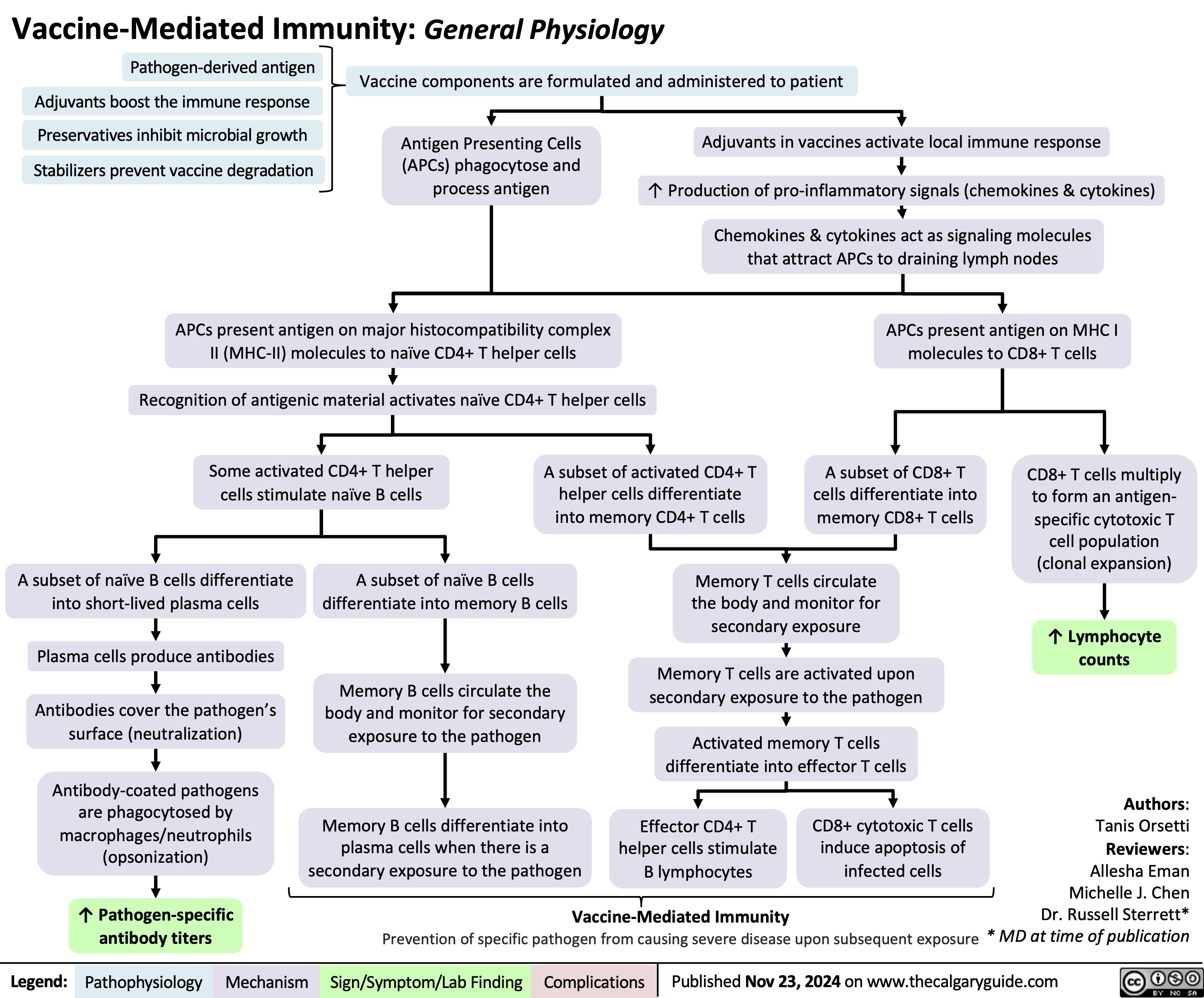
Vaccine-Mediated Immunity: General Physiology
  Pathogen-derived antigen Adjuvants boost the immune response Preservatives inhibit microbial growth
Stabilizers prevent vaccine degradation
Vaccine components are formulated and administered to patient
      Antigen Presenting Cells (APCs) phagocytose and process antigen
Adjuvants in vaccines activate local immune response
↑ Production of pro-inflammatory signals (chemokines & cytokines)
Chemokines & cytokines act as signaling molecules that attract APCs to draining lymph nodes
APCs present antigen on MHC I molecules to CD8+ T cells
        APCs present antigen on major histocompatibility complex II (MHC-II) molecules to naïve CD4+ T helper cells
Recognition of antigenic material activates naïve CD4+ T helper cells
             A subset of naïve B cells differentiate into short-lived plasma cells
Plasma cells produce antibodies
Antibodies cover the pathogen’s surface (neutralization)
Antibody-coated pathogens are phagocytosed by macrophages/neutrophils (opsonization)
↑ Pathogen-specific antibody titers
CD8+ T cells multiply to form an antigen- specific cytotoxic T cell population (clonal expansion)
↑ Lymphocyte counts
Authors: Tanis Orsetti Reviewers: Allesha Eman Michelle J. Chen Dr. Russell Sterrett* Prevention of specific pathogen from causing severe disease upon subsequent exposure * MD at time of publication
Some activated CD4+ T helper cells stimulate naïve B cells
A subset of activated CD4+ T helper cells differentiate into memory CD4+ T cells
A subset of CD8+ T cells differentiate into memory CD8+ T cells
A subset of naïve B cells differentiate into memory B cells
Memory B cells circulate the body and monitor for secondary exposure to the pathogen
Memory T cells circulate the body and monitor for secondary exposure
Memory T cells are activated upon secondary exposure to the pathogen
Activated memory T cells differentiate into effector T cells
             Memory B cells differentiate into plasma cells when there is a secondary exposure to the pathogen
Effector CD4+ T helper cells stimulate B lymphocytes
CD8+ cytotoxic T cells induce apoptosis of infected cells
  Vaccine-Mediated Immunity
 Legend:
 Pathophysiology
Mechanism
Sign/Symptom/Lab Finding
 Complications
 Published Nov 23, 2024 on www.thecalgaryguide.com

Anesthetic Considerations Laparoscopic Abdominal Surgery
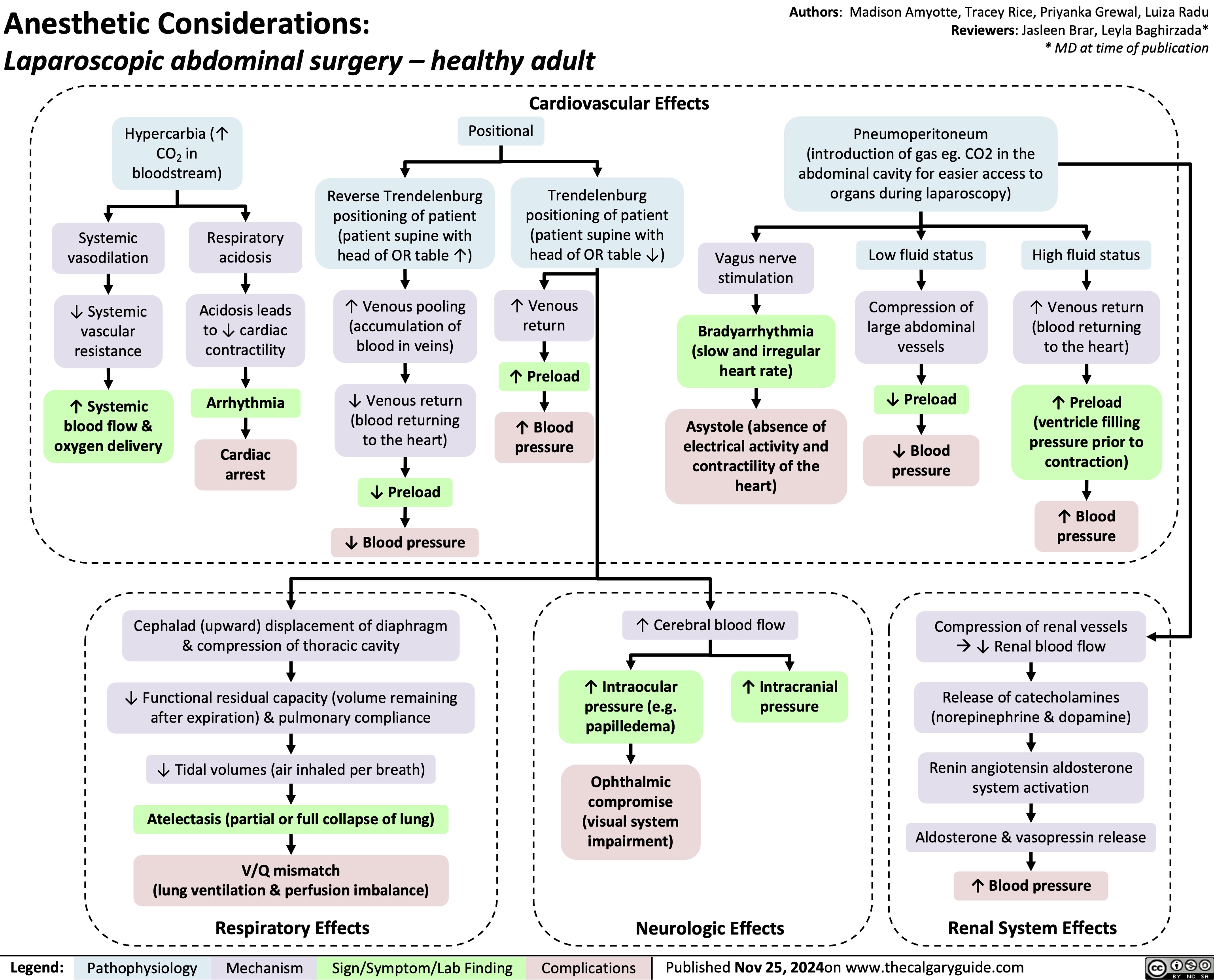
Anesthetic Considerations:
Laparoscopic abdominal surgery – healthy adult
Authors: Madison Amyotte, Tracey Rice, Priyanka Grewal, Luiza Radu Reviewers: Jasleen Brar, Leyla Baghirzada* * MD at time of publication
    Hypercarbia (↑ CO2 in bloodstream)
Cardiovascular Effects
Positional
Pneumoperitoneum (introduction of gas eg. CO2 in the abdominal cavity for easier access to organs during laparoscopy)
          Systemic vasodilation
↓ Systemic vascular resistance
↑ Systemic blood flow & oxygen delivery
Respiratory acidosis
Acidosis leads to ↓ cardiac contractility
Arrhythmia
Cardiac arrest
Reverse Trendelenburg positioning of patient (patient supine with head of OR table ↑)
↑ Venous pooling (accumulation of blood in veins)
↓ Venous return (blood returning to the heart)
↓ Preload
↓ Blood pressure
Trendelenburg positioning of patient (patient supine with head of OR table ↓)
Low fluid status
Compression of large abdominal vessels
↓ Preload
↓ Blood pressure
High fluid status
↑ Venous return (blood returning to the heart)
↑ Preload (ventricle filling pressure prior to contraction)
↑ Blood pressure
          ↑ Venous return
↑ Preload
↑ Blood pressure
Vagus nerve stimulation
Bradyarrhythmia (slow and irregular heart rate)
Asystole (absence of electrical activity and contractility of the heart)
↑ Cerebral blood flow
                    Cephalad (upward) displacement of diaphragm & compression of thoracic cavity
↓ Functional residual capacity (volume remaining after expiration) & pulmonary compliance
↓ Tidal volumes (air inhaled per breath)
Atelectasis (partial or full collapse of lung)
V/Q mismatch
(lung ventilation & perfusion imbalance)
Respiratory Effects
↑ Intraocular pressure (e.g. papilledema)
Ophthalmic compromise (visual system impairment)
↑ Intracranial pressure
Compression of renal vessels à↓ Renal blood flow
Release of catecholamines (norepinephrine & dopamine)
Renin angiotensin aldosterone system activation
Aldosterone & vasopressin release
↑ Blood pressure Renal System Effects
            Neurologic Effects
 Legend:
 Pathophysiology
Mechanism
 Sign/Symptom/Lab Finding
 Complications
Published Nov 25, 2024on www.thecalgaryguide.com

Chronic Inflammatory Demyelinating Polyneuropathy
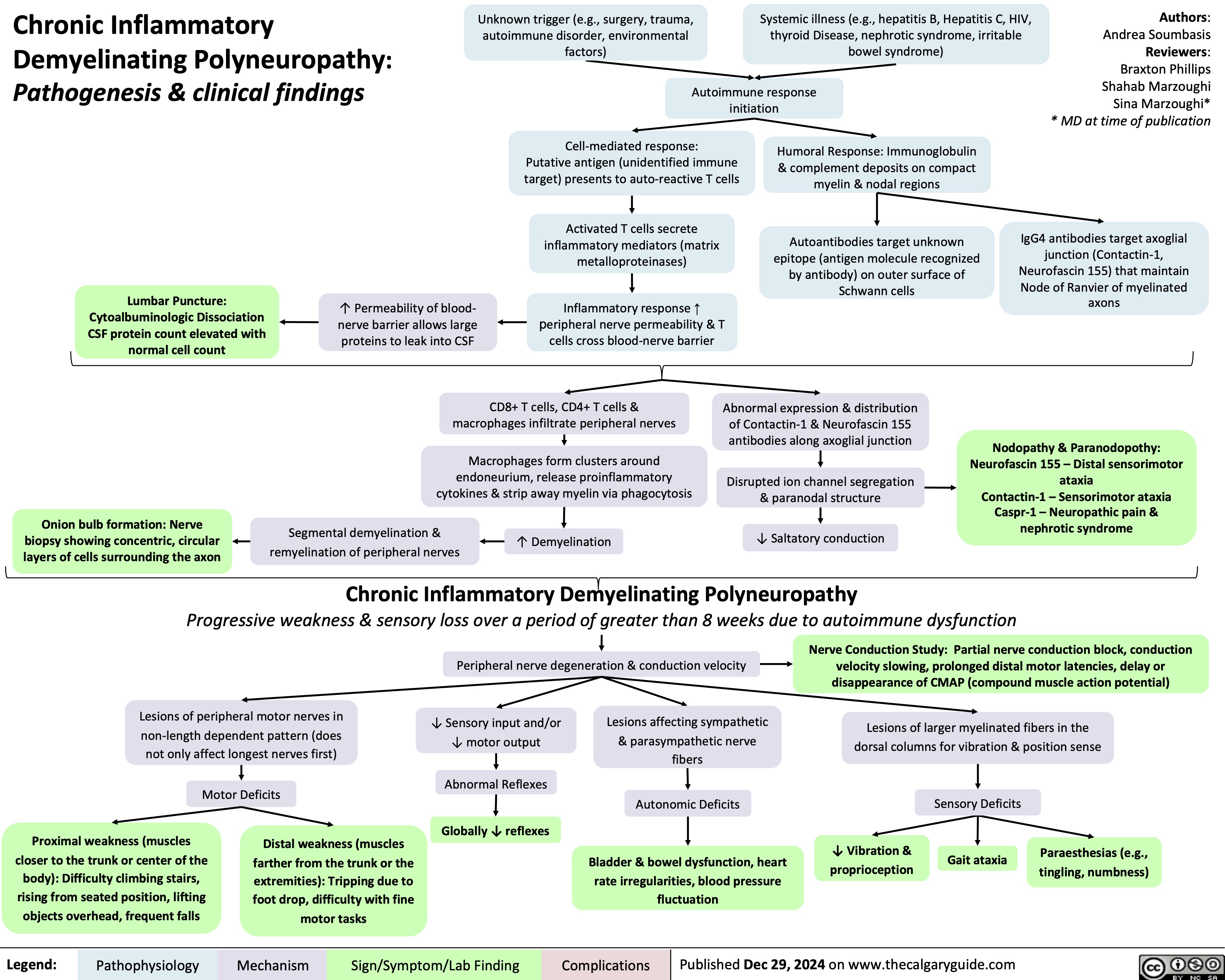
  Chronic Inflammatory Demyelinating Polyneuropathy: Pathogenesis & clinical findings
Unknown trigger (e.g., surgery, trauma, autoimmune disorder, environmental factors)
Systemic illness (e.g., hepatitis B, Hepatitis C, HIV, thyroid Disease, nephrotic syndrome, irritable bowel syndrome)
Authors: Andrea Soumbasis Reviewers: Braxton Phillips Shahab Marzoughi Sina Marzoughi* * MD at time of publication
   Autoimmune response initiation
         Lumbar Puncture: Cytoalbuminologic Dissociation CSF protein count elevated with normal cell count
Cell-mediated response: Putative antigen (unidentified immune target) presents to auto-reactive T cells
Activated T cells secrete inflammatory mediators (matrix metalloproteinases)
Inflammatory response ↑ peripheral nerve permeability & T cells cross blood-nerve barrier
Humoral Response: Immunoglobulin & complement deposits on compact myelin & nodal regions
Autoantibodies target unknown epitope (antigen molecule recognized by antibody) on outer surface of Schwann cells
IgG4 antibodies target axoglial junction (Contactin-1, Neurofascin 155) that maintain Node of Ranvier of myelinated axons
  ↑ Permeability of blood- nerve barrier allows large proteins to leak into CSF
    CD8+ T cells, CD4+ T cells & macrophages infiltrate peripheral nerves
Macrophages form clusters around endoneurium, release proinflammatory cytokines & strip away myelin via phagocytosis
Abnormal expression & distribution of Contactin-1 & Neurofascin 155 antibodies along axoglial junction
Disrupted ion channel segregation & paranodal structure
↓ Saltatory conduction
Nodopathy & Paranodopothy: Neurofascin 155 – Distal sensorimotor ataxia
Contactin-1 – Sensorimotor ataxia Caspr-1 – Neuropathic pain & nephrotic syndrome
    Onion bulb formation: Nerve biopsy showing concentric, circular layers of cells surrounding the axon
Segmental demyelination & remyelination of peripheral nerves
↑ Demyelination
    Chronic Inflammatory Demyelinating Polyneuropathy
Progressive weakness & sensory loss over a period of greater than 8 weeks due to autoimmune dysfunction
  Peripheral nerve degeneration & conduction velocity
Nerve Conduction Study: Partial nerve conduction block, conduction velocity slowing, prolonged distal motor latencies, delay or disappearance of CMAP (compound muscle action potential)
Lesions of larger myelinated fibers in the dorsal columns for vibration & position sense
      Lesions of peripheral motor nerves in non-length dependent pattern (does not only affect longest nerves first)
Motor Deficits
↓ Sensory input and/or ↓ motor output
Abnormal Reflexes
Globally ↓ reflexes
Lesions affecting sympathetic & parasympathetic nerve fibers
Autonomic Deficits
Bladder & bowel dysfunction, heart rate irregularities, blood pressure fluctuation
Sensory Deficits
Gait ataxia
             Proximal weakness (muscles closer to the trunk or center of the body): Difficulty climbing stairs, rising from seated position, lifting objects overhead, frequent falls
Distal weakness (muscles farther from the trunk or the extremities): Tripping due to foot drop, difficulty with fine motor tasks
↓ Vibration & proprioception
Paraesthesias (e.g., tingling, numbness)
     Legend:
 Pathophysiology
Mechanism
Sign/Symptom/Lab Finding
 Complications
Published Dec 29, 2024 on www.thecalgaryguide.com

Acquired Inguinal Hernias

Acquired Inguinal
Hernias: Indirect &
Direct
Abdominal fluid or mass Constipation Pregnancy
Chronic cough
↑ intraabdominal pressure
Stretching of musculoaponeurotic structures & weakening of the abdominal fibromuscular tissue
Direct Inguinal Hernia
Authors: Adam Bubelenyi Jeffery Lindgren Peter Bishay Reviewers: Sophia Khan Shahab Marzoughi Brandon Hisey Vadim Iablokov Usama Malik Dr. Sylvain Coderre* * MD at time of publication
             Developmental
Ehlers-Danlos & Marfan syndrome (genetic disorders characterized by impaired connective tissue development)
Collagen deficiency
↑ Protease activity Smoking Aging
Malnutrition Collagen breakdown
Long-term glucocorticoid use
Fibroblast (cells which produce collagen) suppression causing ↓ collagen production
Thinning of skin & soft tissues
     Incomplete obliteration of the processus vaginalis (peritoneal tunnel through which the testes migrate toward the scrotum during embryological development)
Failed closure leaves an opening for organs to herniate through
Intestinal loops entrapped within herniation
Weakening of connective tissues
Indirect Inguinal Hernia
Protrusion of abdominal and/or pelvic contents through deep inguinal ring
Protrusion of abdominal and/or pelvic contents through the Hesselbach triangle (anatomic area defined by the rectus abdominis medially, inferior epigastric vessels laterally, and the inguinal ligament inferiorly)
               Herniated contents become entrapped
Inguinal mass +/- pain that is worse with straining
Abdominal distension & tenderness
Rhythmic contractions of the intestine attempting to push contents past the blockage site
Colicky pain
Incarceration (Surgical Emergency)
Reduced vascular supply to entrapped contents
Strangulation (Surgical Emergency)
Constriction & ischemia of hernial contents
Gangrenous skin changes (swelling, blue/purple colour, ↑ temperature, ulceration, ↓ sensation)
Inflammation of the herniated contents to larger than the hernial opening
Irreducible hernia (a hernia which cannot be manually reduced)
     Bowel Obstruction (Surgical Emergency)
Obstruction of intestinal lumen impairs passage of intestinal contents
Stimulation of stretch receptors in the bowel wall
Nausea +/- vomiting
Herniated tissue undergoes necrosis (irreversible cell death), perforating the gastrointestinal wall
          Obstipation (complete inability to pass stool or gas)
Bowel perforation (surgical emergency)
Leakage of gastrointestinal contents allows bacteria to infect the abdominal cavity
     Sudden ↑ pain
Abscess (localized collection of pus)
Peritonitis (inflammation of the peritoneum)
     Legend:
 Pathophysiology
 Mechanism
 Sign/Symptom/Lab Finding
 Complications
 Published Jun 3, 2018; updated dec 29, 2024 on www.thecalgaryguide.com

Polycystic Ovarian Syndrome

Polycystic Ovarian Syndrome (PCOS): Pathogenesis and clinical findings
  Genetic Susceptibility:
↑ Expression of LH receptors in granulosa cells, and anterior pituitary ↑ production of luteinizing hormone (LH)
↑ Serum LH compared to FSHà higher levels of LH increasingly activate thecal cells
Excess nutrients (from overeating and sedentary behavior) is stored as visceral fat
↑ Central adiposity (accumulation of fat around abdominal area)
Adipose tissue ↑ secretion of estrogen, inflammatory mediators, adipokines, free fatty acids
 ̄ Hepatic synthesis of sex hormone-binding globulin
Acne
Hair loss on scalp, and less commonly eyebrows and eyelashes (alopecia)
Excessive hair growth around mouth, chin, chest, abdomen, upper arms, thighs, and upper & lower back (hirsutism)
Metabolic syndrome develops, including ↑ insulin resistance, obesity, dyslipidemia, liver disease, & cardiovascular disease
           Theca cells in ovaries ↑ androgen secretion
↑ Serum androgens
State of hyperandrogenism
Androgen and estrogen levels are elevated too early in menstrual cycle (estrogen has negative feedback inhibition on anterior pituitary hormone production)
Early suppression of FSH Limited proliferation of follicles
Relative reduction in secretion of progesterone Imbalance between progesterone and estrogen
Unpredictable ovulation
↑ Circulating insulin- like growth factor
Growth factor promote keratinocyte and dermal fibroblast proliferation
Velvety, darkening of the skin fold areas such as back of neck, armpit area, groin (acanthosis nigricans)
↑ Risk of type 2 diabetes mellitus
  Since granulosa cells normally convert testosterone to estrogen,  ̄ granulosa cell function means more testosterone exists
Since follicle stimulating hormone (FSH) activates granulosa cells,  ̄ FSH means  ̄ granulosa cell function.
               Follicles arrested in development accumulate fluid, becoming cysts
Polycystic ovaries visible on ultrasound
Infertility
Unpredictable uterine bleeding
↑ Risk of endometrial hyperplasia & endometrial cancer
Irregular menstruation (amenorrhea/oligomenorrhea)
Authors: Lauren Standerwick Claire Song Reviewers: Mackenzie Grisdale Amy Fowler Christina Schweitzer Michelle J. Chen Dr. Yan Yu* Dr. Bernard Corenblum* Dr. Sylvie Bowden* * MD at time of publication
          Legend:
 Pathophysiology
Mechanism
Sign/Symptom/Lab Finding
 Complications
 Published Nov 20, 2017; updated Dec 15, 2024 on www.thecalgaryguide.com

Barretts Esophagus

Barrett’s Esophagus: Pathogenesis, clinical findings and complications Gastroesophageal Reflux Disease (GERD)
Authors: Sophia Khan Reviewers: Claire Song Shahab Marzoughi Sylvain Coderre* * MD at time of publication
  Reflux of stomach acid, bile salts + digestive enzymes
through lower esophageal sphincter (located at junction between esophagus and stomach)
Chronic reflux exposure to squamous epithelium (cells lining distal esophagus)
Squamous epithelial cells release inflammatory cytokines: interleukin-8 and interleukin-1beta
Inflammation of squamous epithelium
Adaptive changes of squamous epithelium to prevent damage by acidic reflux
Migration of stem cells in gastric cardia (proximal region of the stomach) into distal esophagus
Replacement of esophageal squamous epithelium by gastric columnar epithelium
Conversion (metaplasia) of normal esophageal squamous epithelium into abnormal gastric columnar epithelium with interspersed goblet cells
Z line (the squamocolumnar junction between the esophagus and stomach) is irregular and displaced proximally on esophagus on endoscopy
       Heartburn (retrosternal burning sensation from stomach reflux)
Regurgitation (involuntary expulsion
of stomach content back into esophagus)
Development of goblet cells (intestinal mucus-producing cells) within esophageal epithelium
Abnormal presence of goblet cells on histology of distal esophagus
     Abnormal presence of columnar epithelial cells on histology of distal esophagus
     ↑ Atypical proliferation &
↓ apoptosis of Barrett’s epithelial cells
Dysplasia (disordered growth of cells with the
potential to develop into cancer) of Barrett’s epithelium
Esophageal adenocarcinoma
Improper division of nuclear chromatin (packaged DNA)
Cellular nuclei increase in size due to retained chromatin from improper division
Excess chromatin absorbs more stain during histology
Double- stranded DNA breaks
Nuclear enlargement on histology
Continued acidic reflux causes oxidative DNA damage
       Hyperchromatic (darkly stained) nuclei on histology
  Legend:
 Pathophysiology
Mechanism
Sign/Symptom/Lab Finding
 Complications
 Published Dec 15, 2024 on www.thecalgaryguide.com

Ptosis

Ptosis: Pathogenesis and Clinical Findings Neurogenic causes of low
Mechanical causes of low eyelid position
Mass lesion of the upper eyelid (Chalazion, hemangioma, malignancy, etc.)
Gravitational effect from excess eyelid weight
Traumatic causes of low eyelid position
Direct injury limits function of LPS or conduction of generated force to the tarsal plate
Laceration of the LPS limiting its function or transection of the levator aponeurosis
Congenital causes of eyelid drooping
Fibrofatty replacement of the LPS muscle at birth
Reduced levator function
    eyelid position
     Insult to the oculomotor nerve (CNIII) (e.g., compressive, microvascular, demyelinating)
CNIII innervates levator palpebrae superioris, the main muscle responsible for upper eyelid elevation
Insult to the sympathetic innervation (e.g., Horner’s syndrome)
Ocular sympathetic innervate the Muller muscle, which provides approximately 2mm of the upper eyelid’s height
Neuromuscular or myogenic causes of low eyelid position (e.g., myasthenia gravis)
LPS muscle myopathy or defect at its neuromuscular junction that limits the elevation of the eyelid
Aponeurotic causes of low eyelid position
Involutional change (disinsertion) of the levator aponeurosis which connects the LPS to the tarsal plate
           Ptosis (also called blepharoptosis)
Abnormally low position of the upper eyelid
   ↓ distance between the central corneal light reflex (as produced by an examiner’s penlight) and the level of the center of the upper-eyelid margin
↓ Margin-Reflex Distance (Normal: 4-6mm)
Obstruction of the pupil/visual axis
Decreased or occluded superior visual field
↓ distance between the upper eyelid margin and the lower eyelid margin
↓ Palpebral Fissure Height (Normal: 10-12mm)
Flattening of the peripheral cornea by eyelid pressure
Induced with-the-rule astigmatism
Authors: Mina Mina Reviewers: Aicha Djaoutkhanova Shahab Marzoughi Lucy Yang Mao Ding William Trask* * MD at time of publication
         Legend:
 Pathophysiology
Mechanism
Sign/Symptom/Lab Finding
 Complications
 Published December 29, 2024 on www.thecalgaryguide.com

Malignant Esophagitis

Malignant Esophagitis: Pathogenesis and Clinical Features
Authors: Hamza Kamran Reviewers: Claire Song Shahab Marzoughi Sylvain Coderre* * MD at time of publication
    Barrett’s Esophagus (pre-malignant condition)
Chronic gastric reflux (acidic partially- digested stomach contents)
Conversion of normal esophageal squamous epithelium to metaplastic columnar epithelium
Gastroesophageal Reflux Disease
Recurrent regurgitation of gastric content
Chronic Irritation & damage to the esophageal mucosa
Lesions and plaques develop in distal esophagus
Malignancy develops in the mucus-producing glandular cells in the lower esophagus
Smoking
Carcinogenic tobacco condensate is swallowed
Irritation of the the esophageal lining
Heavy alcohol consumption
Mutation in alcohol- dehydrogenase, which breaks down ethanol
↓ Alcohol breakdown
Irritation of the esophageal mucosa & lining
↑ Inflammation of the squamous epithelium located in the upper & middle esophagus
Achalasia (Esophageal smooth muscle motility disorder)
Food stasis in the esophagus ↑ Bacteria production
Lactic acid production & fermentation damages esophageal mucosa
Chronic inflammation in the esophageal epithelium
                            Malignant cells invade the aorta & tracheobronchial region
↑ Spread & growth of cancer in other organ systems
Metastatic invasion into the aorta, lungs, liver, bones, & kidneys through the lymph nodes
↑ Spread & growth of cancer in other organ systems
↑ Metabolic demand
Unintentional weight loss
Generalized chest pain
Hoarseness Cough
Esophageal adenocarcinoma (malignancy of the glandular cells of the esophagus)
 Esophageal squamous cell carcinoma (malignancy of the squamous epithelium of the esophagus)
              ↑ Metabolic demand
↑ Weight loss
Chronic GI bleeding
Iron-deficiency anemia
↑ Ulceration
Exposure to stomach acid
↑ Tumor- induced inflammation
↑ Fibrosis
Irregular stricture of the upper & middle esophagus
Dysphagia
       Esophageal wall narrowing
Abnormal reflexes of GI tract
  Dysphagia
Indigestion
  Legend:
 Pathophysiology
 Mechanism
 Sign/Symptom/Lab Finding
 Complications
 Published Dec 15, 2024 on www.thecalgaryguide.com

Pulsus Paradoxus

Pulsus Paradoxus: Pathogenesis and Clinical Findings Inspiration: Diaphragm and intercostal muscles contract
Author: Yan Yu, Victória Silva, Layla Al-Yasiri Reviewers: Sean Spence, Laura Craig, Juliette Hall, Raafi Ali, George Tadros. Shahab Marzoughi Nanette Alvarez* * MD at time of publication
Vascular pathology (rare)
  Thoracic cavity expands
Lungs expand and intrathoracic pressure ↓
     Physiologic:
↑ Venous return to right (R) heart
↑ R heart preload (volume of blood inside the ventricle right before it contracts)
↑ Blood pools in the right side of the heart
Obstructive lung diseases (e.g., COPD**, asthma**)
Hyperinflated lungs
↑ Stretching of pulmonary vessels at rest
On inspiration, ↑↑ stretching of pulmonary vessels
↑↑ Blood pools within pulmonary vasculature
↓↓ Flow to L heart
Pathologic: Constrictive pathologies (e.g., cardiac
tamponade**, constrictive pericarditis**) Decreased pericardial compliance
Constriction of ventricles
On inspiration, ↑ venous return to R heart (normal)
R ventricle unable to fully expand due to ↓ compliance
Septum bows into L ventricle
L ventricle unable to fully expand ↓↓ Filling of L heart
↓↓ L ventricular end diastolic volume
↓↓ L heart stroke volume ↓↓ Cardiac output Pulsus Paradoxus
Exaggerated ↓in systolic BP on inspiration (>10mmHg)
       Air flows into the lungs
Pulmonary vessels are physically stretched/pulled
↑ Blood pools in pulmonary vessels
↓ Return of blood to left (L) heart
↓ L heart preload
↓ L heart stroke volume
↓ Cardiac output
Obstruction of superior or inferior vena cava (e.g., clot)
↓↓ Venous return to R heart at rest
↓↓ Right heart filling
↓↓ Blood flow to pulmonary arteries
Pulmonary embolism**
Clot occludes pulmonary arteries/ arterioles
                          ↓↓ Flow to pulmonary veins
At rest, ↓↓ flow to L heart
On inspiration, ↓↓↓ flow to L heart
            ↓ Systolic blood pressure (BP) of < 10mmHg on inspiration
BP = cardiac output x systemic vascular resistance
  **See corresponding Calgary Guide slides
 Legend:
 Pathophysiology
Mechanism
Sign/Symptom/Lab Finding
 Complications
 Published Jan 21, 2013; updated Dec 3, 2024 on www.thecalgaryguide.com

Constipation in Children

Constipation in Children: Pathogenesis and clinical findings Neonate / Infant (≤1 years old)
Older Child (>1 years old)
              Dietary (e.g., lack of fluids / fiber)
Mechanical (e.g.,. intestinal Atresia, anal atresia)
Congenital malformation (narrowing, absence, or malrotation) of structure of intestine / anus
Interrupted flow of bowel contents
Genetic (e.g., cystic Fibrosis)
Mucous blocks pancreatic duct
Inability of pancreatic enzymes to reach small intestine
↓ Digestion after a meal
Large, thickened stool
Neurologic (e.g., Hirschsprung's disease)
Congenital disruption of the migration of neural crest cells to the distal colon
Affected segment of the colon fails to relax
Progressive secondary dilation of the healthy proximal colon
Systemic (e.g., hypothyroidism)
Thyroid hormone deficiency
Reduction in the stimulation of gut tone & contractility by thyroid hormones
↓ Peristalsis (intestinal contractions) of the bowel
Dietary
(e.g., lack of fluids/ fiber)
Mucosal (e.g., celiac disease)
Inappropriate immune response against gluten
Intestinal mucosal injury
Malabsorpti on of water and other nutrients
Functional (e.g., pain)
Prolonged stool retention in bowel
↑ Time in bowel causing over- absorption of water from stool into the large intestine
Mechanical (e.g., bowel obstruction)
Mechanical obstruction in the intestines
Interrupted flow of bowel contents
Intestinal obstruction
Neurologic (e.g., neglect, physical abuse)
Disturbance in brain-intestine axis
Mechanisms not fully understood
Visceral hyper- sensitivity
(increased pain sensation)
Withholding behaviour
             Lack of soluble fiber
↓ Attractive forces between water & stool
Prevention of secretion of water into stool
Lack of insoluble fiber
↓ Stool bulk and laxation
↓ Secretion of water &
mucous into stool
Lack of soluble fiber
↓ Attractive forces between water & stool
Prevention of secretion of water into stool
Lack of insoluble fiber
↓ Stool bulk and laxation
↓ Secretion of water & mucous into stool
Formation of dry & hard stool
                                     Formation of dry & hard stool
Difficulty passing stool
Authors: Jennifer Wytsma Reviewers: Sophia Khan, Shahab Marzoughi, Sylvain Coderre* * MD at time of publication
    Intestinal obstruction
  Legend:
 Pathophysiology
 Mechanism
 Sign/Symptom/Lab Finding
 Complications
 Published Dec 15, 2024 on www.thecalgaryguide.com

Avascular Necrosis of the Scaphoid

Osteonecrosis of the Scaphoid (Avascular Necrosis): Pathogenesis and clinical findings
   The radial artery provides the primary blood supply to the scaphoid bone
Blood flows to the distal
end of the scaphoid and travels “retrograde” back along the bone towards the proximal end
Poor blood supply may lead to incomplete healing of the fracture
High risk of progressing to a non-union (non- healing) fracture
Further ↑ risk of developing osteonecrosis (previously known as avascular necrosis)
Trauma or injury to the wrist or hand
Scaphoid fracture, most commonly at the thin middle third of the bone, known as the waist
Retrograde blood supply to the proximal part of the scaphoid becomes disrupted
Poor blood supply to the proximal scaphoid
The body breaks down and absorbs necrotic bone tissue, commonly at the proximal part of the scaphoid with poor blood supply
Structural integrity of the scaphoid bone weakens
The scaphoid becomes more prone to collapse during normal wrist movement and the natural alignment of the carpal bones may become disrupted
Prolonged disruption in blood and oxygen supply
Ischemia of bone tissue Bone tissue necrosis
Osteonecrosis (AVN) of the Scaphoid
Disease resulting in death of bone tissue due to insufficient blood supply**
Authors: Sydney Guderyan Reviewers: Mankirat Bhogal Michelle J. Chen Dr. Gerhard Kiefer * MD at time of publication
Abnormal stress on the radiocarpal and intercarpal joints
Progressive degenerative changes
Proximal row collapse (proximal row of carpal bones destabilize)
                             Imaging shows bone collapse, sclerosis, or cystic changes
Tenderness at the anatomical snuffbox
Pain & swelling on the radial side of the wrist
↓ Range of motion at the wrist
↓ Grip strength & wrist function
Stiffness
   ** See corresponding Calgary Guide slide “Avascular Necrosis: Pathogenesis and Clinical Findings”
End-stage osteoarthritis
 Legend:
 Pathophysiology
Mechanism
 Sign/Symptom/Lab Finding
 Complications
 Published Dec 30, 2024 on www.thecalgaryguide.com

Ankle Fracture

Ankle fracture: Pathogenesis and clinical findings High mechanical force to ankle
Risk factors
Age Post-menopause ↓ Osteoblast activity
      Twisting force (e.g. sports injury)
Crushing force (e.g. limb Loading force entrapment beneath heavy object) (e.g. fall)
Force exceeds mechanical strength of bone
Ankle eversion or inversion
Osteoporosis
      Compromised bone scaffolding & repair impairs the structural integrity of bone. Force required for fracture is lowered
  Ankle Fracture
(Fracture of the talus and/or the distal 6 cm of the tibia and/or fibula)
          Fractured bone is displaced through the dermal layers
Open Fracture
Compromised dermal layers create an opportunity for pathogens to enter the wound site
Infection
Multiple malleoli are fractured within the ring of the ankle
Lack of ligamentous & bone support makes ankle joint unstable
Displacement of bone from fracture site
Misalignment of bone segments prevents regeneration & union
Malunion of unreduced fracture
Ligamentous injury occurs concurrently from excessive tensile force
Fractured bone disrupts surrounding vasculature
Hyaline cartilage of the articulating surface is damaged
Trauma induces synovitis, chondrocyte apoptosis, & necrosis
Fractured bone disrupts surrounding peripheral nerves
Numbness Localized Pain
Pain is induced when the patient attempts to weight bear
Inability to weight bear
Authors: Ethan Smith Reviewers: Nojan Mannani Michelle J. Chen Dr. Gerhard Kiefer* * MD at time of publication
         Platelets are exposed to the extravascular environment, thereby releasing platelet derived factors & complement factors
         Plasma coagulation cascade is activated
Chondrocyte dysfunction in proliferation
Reduced synovial functioning
       ↑Vascular permeability from inflammatory cytokines
Protective hematoma forms in the joint space
Hyaline cartilage loss
Lost cartilage over time degrades proper articulation & causes joint narrowing, osteophytes, subchondral sclerosis
Post traumatic osteoarthritis
           Edema
Fluid in the joint space changes position of bony articulations
Bruising
  Restricted range of movement
 Legend:
 Pathophysiology
Mechanism
 Sign/Symptom/Lab Finding
 Complications
 Published Dec 30, 2024 on www.thecalgaryguide.com

Ewing Sarcoma

Ewing Sarcoma: Pathogenesis and clinical findings Demographic risk factors
85% of cases have de novo translocation mutation of EWSR1 gene on chromosome 22 to FLI1 gene on chromosome 11
        Age < 30
White ethnicity
Male to female 1.5-3:1 predominance
EWSR1-FLI1 fusion product functions as an oncogene Tumorigenesis
Ewing Sarcoma
Translocation t(11;22)(q24;q12) detectable with a genetic molecular study called FISH
Authors: Curtis Ostertag Nojan Mannani Reviewers: Mankirat Bhogal Michelle J. Chen Dr. Michael Monument* * MD at time of publication
Well-defined histopathology
Biopsy: sheets of monotonous small round blue cells with increased nuclear to cytoplasmic ratio
Immunohistochemistry staining positive for CD99 (80% of cases)
Diagnostic confirmation by histopathology
    Diagnostic confirmation by molecular genetics
  X-Ray findings: moth-eaten
lesions, Codman triangle of elevated periosteum, or onion- skin periosteal reaction
MRI findings: solid mass in bone, low T1 intensity, high T2, gadolinium enhancement, surrounding edema & soft tissue mass
Malignant small round cell tumor; the second most common malignant bone tumor in adolescents and young adults. Most common in the axial skeleton (pelvis, shoulder girdle, and ribs) and diaphysis of long bones.
          Rapid cell turnover
Tumor expansion in bone, disrupting normal tissue
Possible metastasis to surrounding soft tissue
Possible metastasis to lung/pleura
Nodule/malignant pleural effusion
Absent breath sounds, pleural signs, crackles/rales
Possible metastasis to bone marrow
Replacement of normal hematopoietic tissue, including megakaryocytes (source of platelets)
Thrombocytopenia
Petechiae/purpura
Peritumoral edema
Swelling Stiffness
Invasion of cancer cells to distant tissues via bloodstream
           Tumor expands toward skin surface
Palpable lump
Tumor secretes ↑ vascular endothelial growth factor (VEGF)
↑ Generation of immature blood vessels which have ↑ permeability
↑ Expression of inflammatory cytokines (i.e. IL-6)
Massive metabolic demand from cancer cells
Energy starved state
Systemic constitutional symptoms including fevers, chills, weight loss, night sweats, fatigue
          ↓ Distractions at night brings ↑ attention to pain
Adrenal glands naturally release ↓ cortisol throughout the day with the lowest levels at night. Lack of anti- inflammatory properties from cortisol ↑ pain
Potential gravity- related ↑ in tumor- related pressure & ↑ in active bone remodeling
Tumour growth stretches periosteum (connective tissue around bone) causing osteolysis, inflammation, nerve infiltration, edema, structural weakening (microfractures)
              Pain that worsens at night
Limp
 Legend:
 Pathophysiology
Mechanism
Sign/Symptom/Lab Finding
 Complications
 Published Dec 30, 2024 on www.thecalgaryguide.com