SEARCH RESULTS FOR: Malignant-Hyperthermia

Malignant Hyperthermia

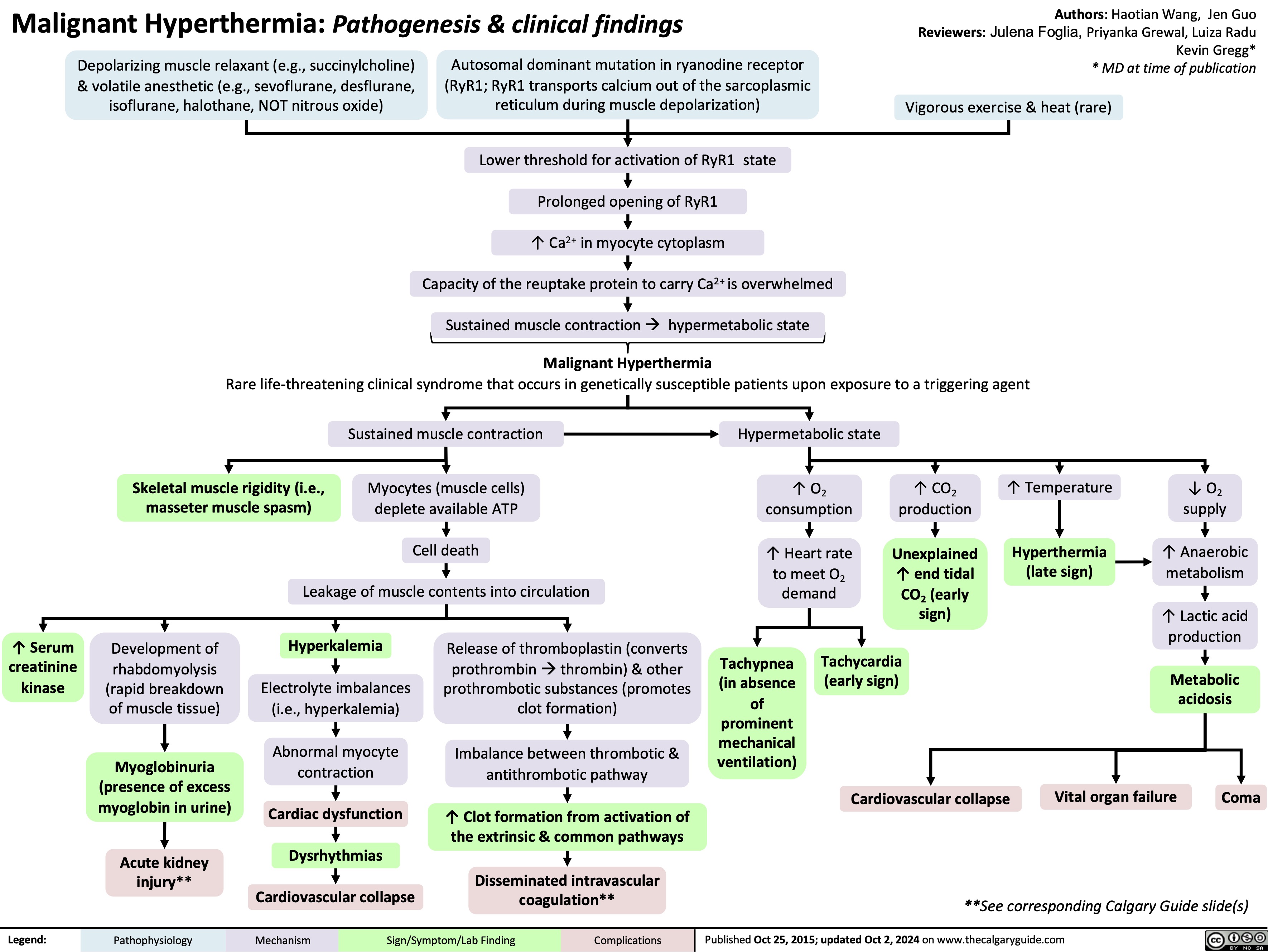
Malignant Hyperthermia: Pathogenesis & clinical findings
Authors: Haotian Wang, Jen Guo Reviewers: Julena Foglia, Priyanka Grewal, Luiza Radu Kevin Gregg* * MD at time of publication
  Depolarizing muscle relaxant (e.g., succinylcholine) & volatile anesthetic (e.g., sevoflurane, desflurane, isoflurane, halothane, NOT nitrous oxide)
Autosomal dominant mutation in ryanodine receptor (RyR1; RyR1 transports calcium out of the sarcoplasmic reticulum during muscle depolarization)
LowerthresholdforactivationofRyR1 state
Prolonged opening of RyR1
↑ Ca2+ in myocyte cytoplasm
Capacity of the reuptake protein to carry Ca2+ is overwhelmed
Sustained muscle contraction à hypermetabolic state
Malignant Hyperthermia
Vigorous exercise & heat (rare)
         Rare life-threatening clinical syndrome that occurs in genetically susceptible patients upon exposure to a triggering agent
            Skeletal muscle rigidity (i.e., masseter muscle spasm)
Sustained muscle contraction
Myocytes (muscle cells) deplete available ATP
Hypermetabolic state
↑ O2 consumption
↑ Heart rate to meet O2 demand
↑ CO2 production
Unexplained ↑ end tidal CO2 (early sign)
↑ Temperature
Hyperthermia (late sign)
↓ O2 supply
↑ Anaerobic metabolism
↑ Lactic acid production
Metabolic acidosis
     Cell death
Leakage of muscle contents into circulation
        ↑ Serum creatinine kinase
Development of rhabdomyolysis (rapid breakdown of muscle tissue)
Myoglobinuria (presence of excess myoglobin in urine)
Acute kidney injury**
Hyperkalemia
Electrolyte imbalances (i.e., hyperkalemia)
Abnormal myocyte contraction
Cardiac dysfunction Dysrhythmias Cardiovascular collapse
Release of thromboplastin (converts prothrombinàthrombin) & other prothrombotic substances (promotes clot formation)
Imbalance between thrombotic & antithrombotic pathway
↑ Clot formation from activation of the extrinsic & common pathways
Disseminated intravascular coagulation**
Tachypnea (in absence of prominent mechanical ventilation)
Tachycardia (early sign)
Cardiovascular collapse
           Vital organ failure Coma
      **See corresponding Calgary Guide slide(s)
 Legend:
 Pathophysiology
 Mechanism
 Sign/Symptom/Lab Finding
 Complications
 Published Oct 25, 2015; updated Oct 2, 2024 on www.thecalgaryguide.com

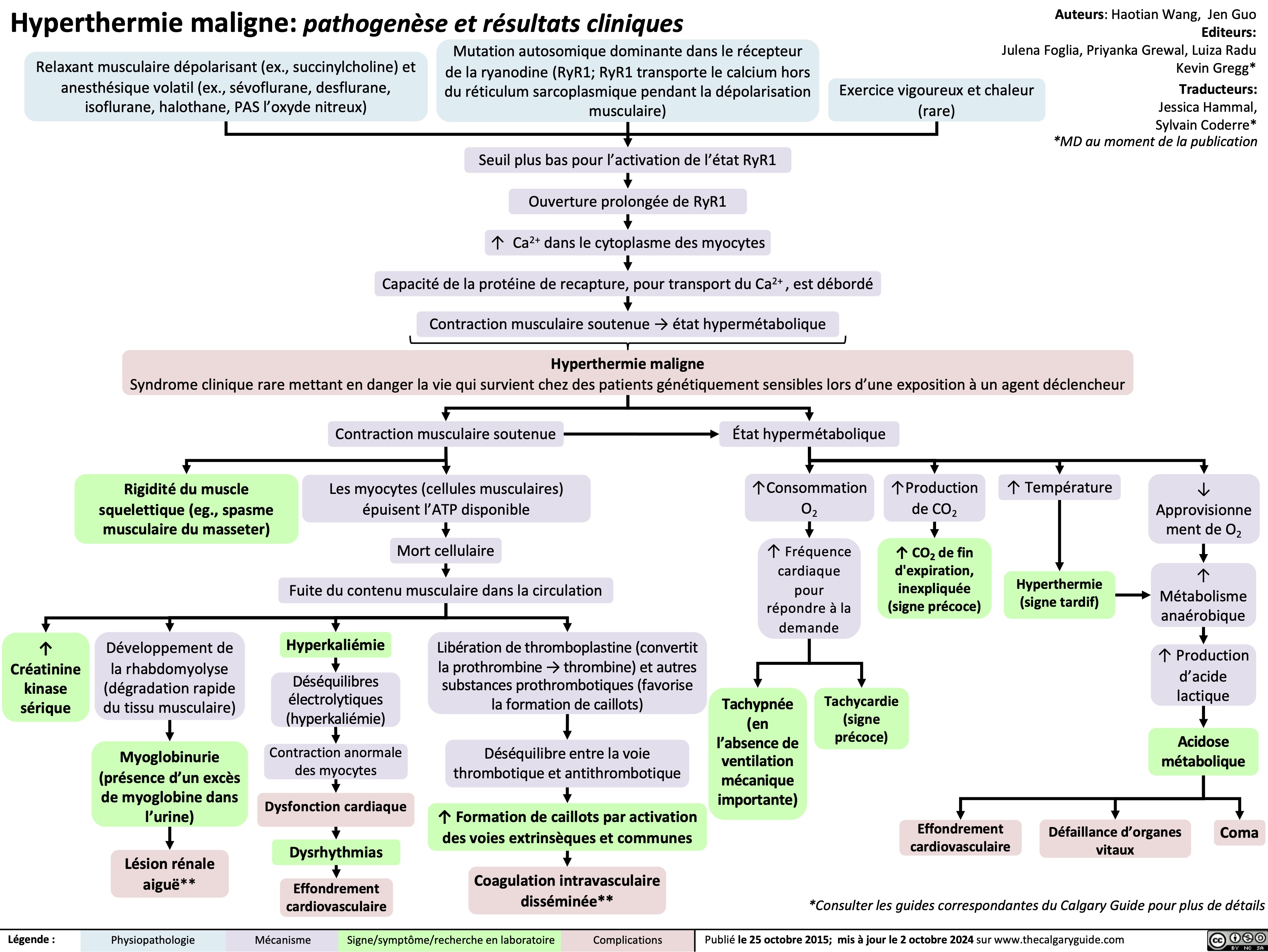
Hyperthermie maligne

Hyperthermie maligne: pathogenèse et résultats cliniques