SEARCH RESULTS FOR: Anti-Emetics-Mechanism-of-Action

Anti-Emetics Mechanism of Action
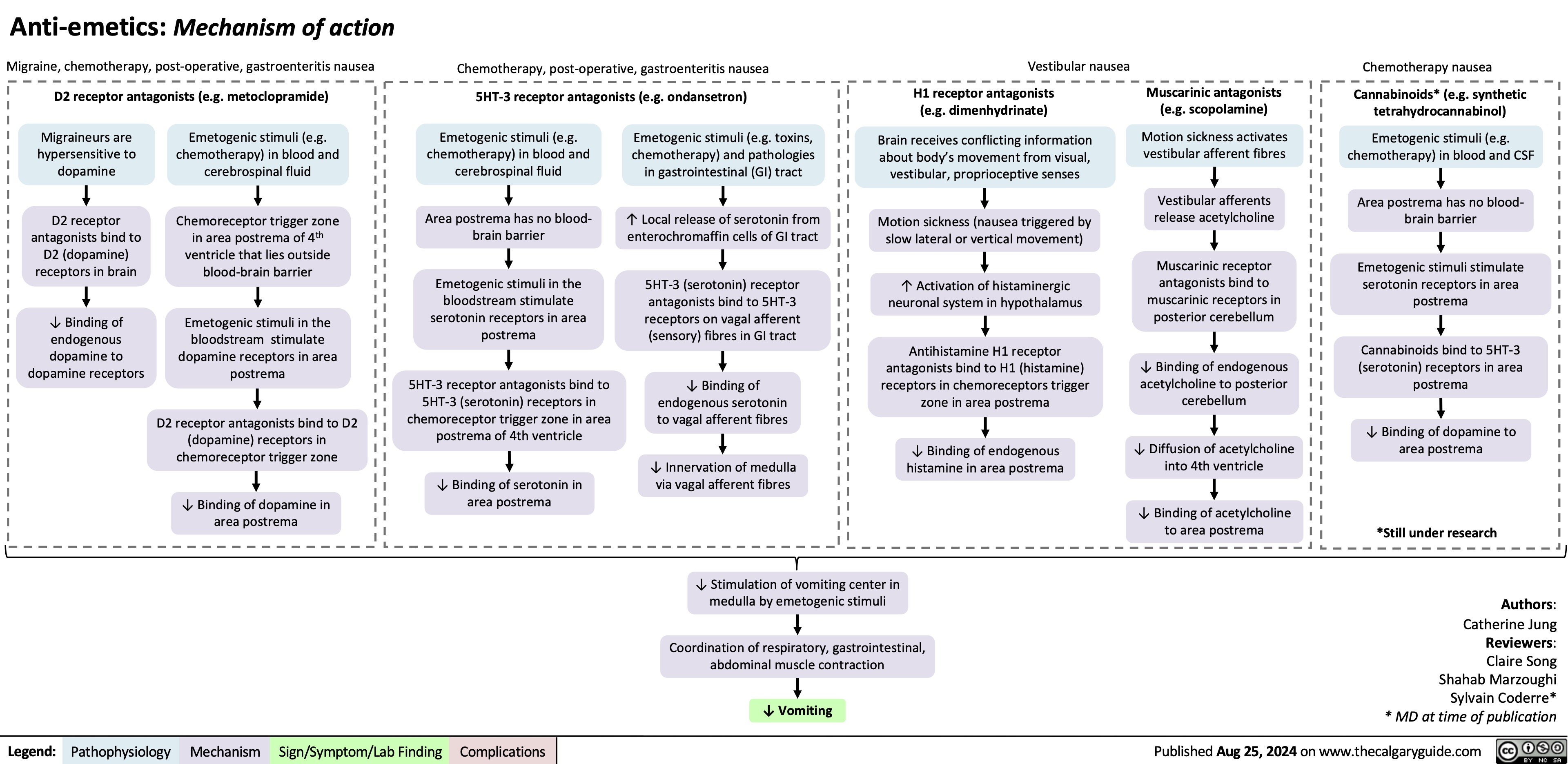
Anti-emetics: Mechanism of action Migraine, chemotherapy, post-operative, gastroenteritis nausea
Chemotherapy, post-operative, gastroenteritis nausea
Vestibular nausea
Chemotherapy nausea
 
D2 receptor antagonists (e.g. metoclopramide)
  Migraineurs are hypersensitive to dopamine
D2 receptor antagonists bind to D2 (dopamine) receptors in brain
↓ Binding of endogenous dopamine to dopamine receptors
Emetogenic stimuli (e.g. chemotherapy) in blood and cerebrospinal fluid
Chemoreceptor trigger zone in area postrema of 4th ventricle that lies outside blood-brain barrier
Emetogenic stimuli in the bloodstream stimulate dopamine receptors in area postrema
D2 receptor antagonists bind to D2 (dopamine) receptors in chemoreceptor trigger zone
↓ Binding of dopamine in area postrema
      
5HT-3 receptor antagonists (e.g. ondansetron)
  Emetogenic stimuli (e.g. chemotherapy) in blood and cerebrospinal fluid
Area postrema has no blood- brain barrier
Emetogenic stimuli in the bloodstream stimulate serotonin receptors in area postrema
5HT-3 receptor antagonists bind to 5HT-3 (serotonin) receptors in chemoreceptor trigger zone in area postrema of 4th ventricle
↓ Binding of serotonin in area postrema
Emetogenic stimuli (e.g. toxins, chemotherapy) and pathologies in gastrointestinal (GI) tract
↑ Local release of serotonin from enterochromaffin cells of GI tract
5HT-3 (serotonin) receptor antagonists bind to 5HT-3 receptors on vagal afferent (sensory) fibres in GI tract
↓ Binding of endogenous serotonin to vagal afferent fibres
↓ Innervation of medulla via vagal afferent fibres
        
H1 receptor antagonists (e.g. dimenhydrinate)
Brain receives conflicting information about body’s movement from visual, vestibular, proprioceptive senses
Motion sickness (nausea triggered by slow lateral or vertical movement)
↑ Activation of histaminergic neuronal system in hypothalamus
Antihistamine H1 receptor antagonists bind to H1 (histamine) receptors in chemoreceptors trigger zone in area postrema
↓ Binding of endogenous histamine in area postrema
Muscarinic antagonists (e.g. scopolamine)
Motion sickness activates vestibular afferent fibres
Vestibular afferents release acetylcholine
Muscarinic receptor antagonists bind to muscarinic receptors in posterior cerebellum
↓ Binding of endogenous acetylcholine to posterior cerebellum
↓ Diffusion of acetylcholine into 4th ventricle
↓ Binding of acetylcholine to area postrema
           Cannabinoids* (e.g. synthetic tetrahydrocannabinol)
Emetogenic stimuli (e.g. chemotherapy) in blood and CSF
Area postrema has no blood- brain barrier
Emetogenic stimuli stimulate serotonin receptors in area postrema
Cannabinoids bind to 5HT-3 (serotonin) receptors in area postrema
↓ Binding of dopamine to area postrema
*Still under research
       ↓ Stimulation of vomiting center in medulla by emetogenic stimuli
Coordination of respiratory, gastrointestinal, abdominal muscle contraction
↓ Vomiting
Authors: Catherine Jung Reviewers: Claire Song Shahab Marzoughi Sylvain Coderre* * MD at time of publication
  
Legend:
Pathophysiology
Mechanism
Sign/Symptom/Lab Finding
Complications
 Published Aug 25, 2024 on www.thecalgaryguide.com