SEARCH RESULTS FOR: Fetal-Complications-of-Labour-and-Vaginal-Delivery

Fetal Complications of Labour and Vaginal Delivery
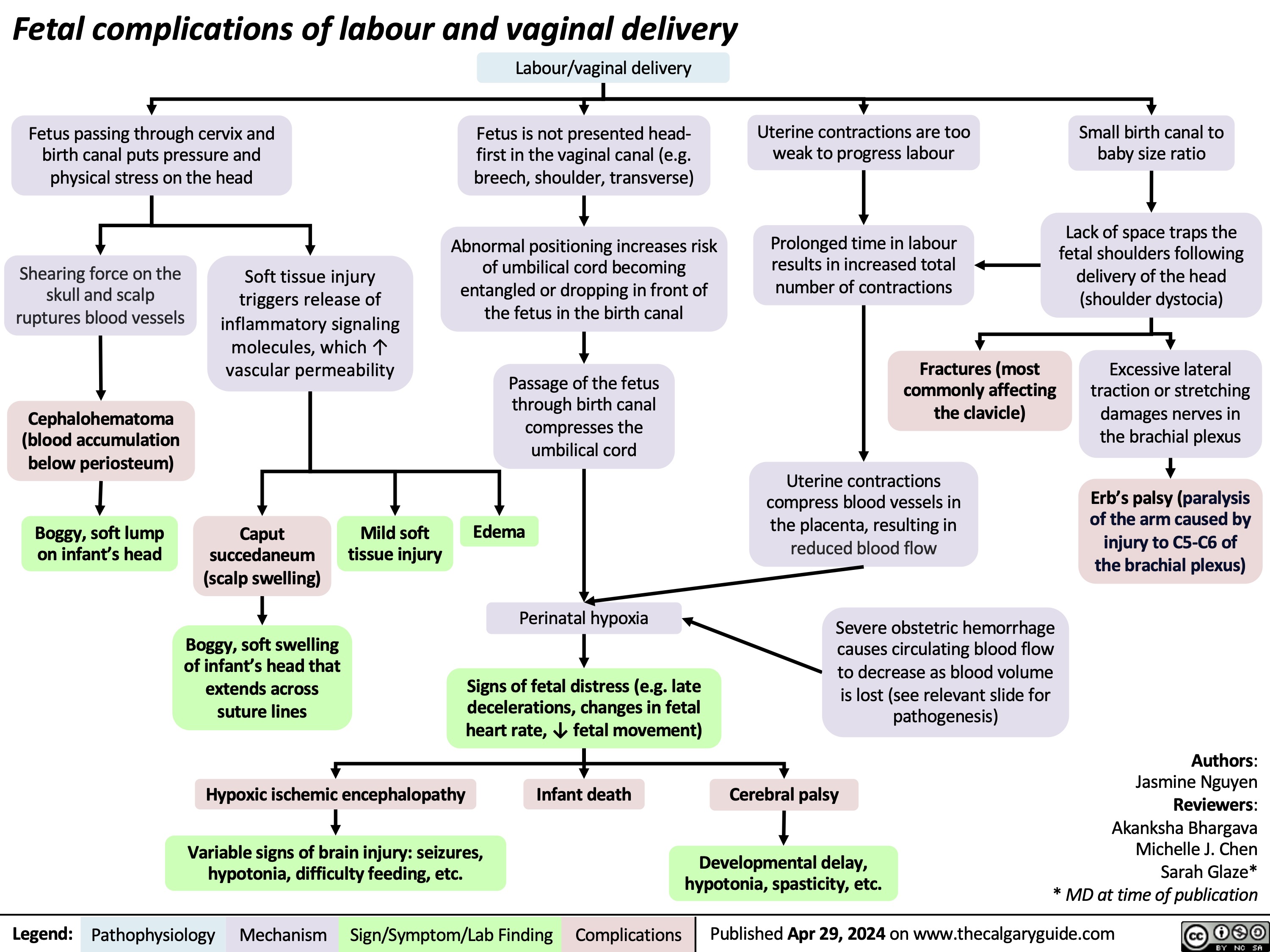
Fetal complications of labour and vaginal delivery
       Fetus passing through cervix and birth canal puts pressure and physical stress on the head
Labour/vaginal delivery
Fetus is not presented head- first in the vaginal canal (e.g. breech, shoulder, transverse)
Abnormal positioning increases risk of umbilical cord becoming entangled or dropping in front of the fetus in the birth canal
Passage of the fetus through birth canal compresses the umbilical cord
Edema
Perinatal hypoxia
Signs of fetal distress (e.g. late decelerations, changes in fetal heart rate, ↓ fetal movement)
Infant death
Uterine contractions are too weak to progress labour
Prolonged time in labour results in increased total number of contractions
Fractures (most commonly affecting the clavicle)
Uterine contractions compress blood vessels in the placenta, resulting in reduced blood flow
Severe obstetric hemorrhage causes circulating blood flow to decrease as blood volume is lost (see relevant slide for pathogenesis)
Small birth canal to baby size ratio
Lack of space traps the fetal shoulders following delivery of the head (shoulder dystocia)
Excessive lateral traction or stretching damages nerves in the brachial plexus
Erb’s palsy (paralysis of the arm caused by injury to C5-C6 of the brachial plexus)
        Shearing force on the skull and scalp ruptures blood vessels
Cephalohematoma (blood accumulation below periosteum)
Boggy, soft lump on infant’s head
Soft tissue injury triggers release of inflammatory signaling molecules, which ↑ vascular permeability
               Caput succedaneum (scalp swelling)
Boggy, soft swelling of infant’s head that extends across suture lines
Mild soft tissue injury
         Hypoxic ischemic encephalopathy
Variable signs of brain injury: seizures, hypotonia, difficulty feeding, etc.
Cerebral palsy
Developmental delay, hypotonia, spasticity, etc.
Authors: Jasmine Nguyen Reviewers: Akanksha Bhargava Michelle J. Chen Sarah Glaze* * MD at time of publication
   Legend:
 Pathophysiology
 Mechanism
Sign/Symptom/Lab Finding
 Complications
 Published Apr 29, 2024 on www.thecalgaryguide.com