SEARCH RESULTS FOR: Tuberous-Sclerosis-Complex-Dermatologic-Manifestations

Tuberous Sclerosis Complex Dermatologic Manifestations
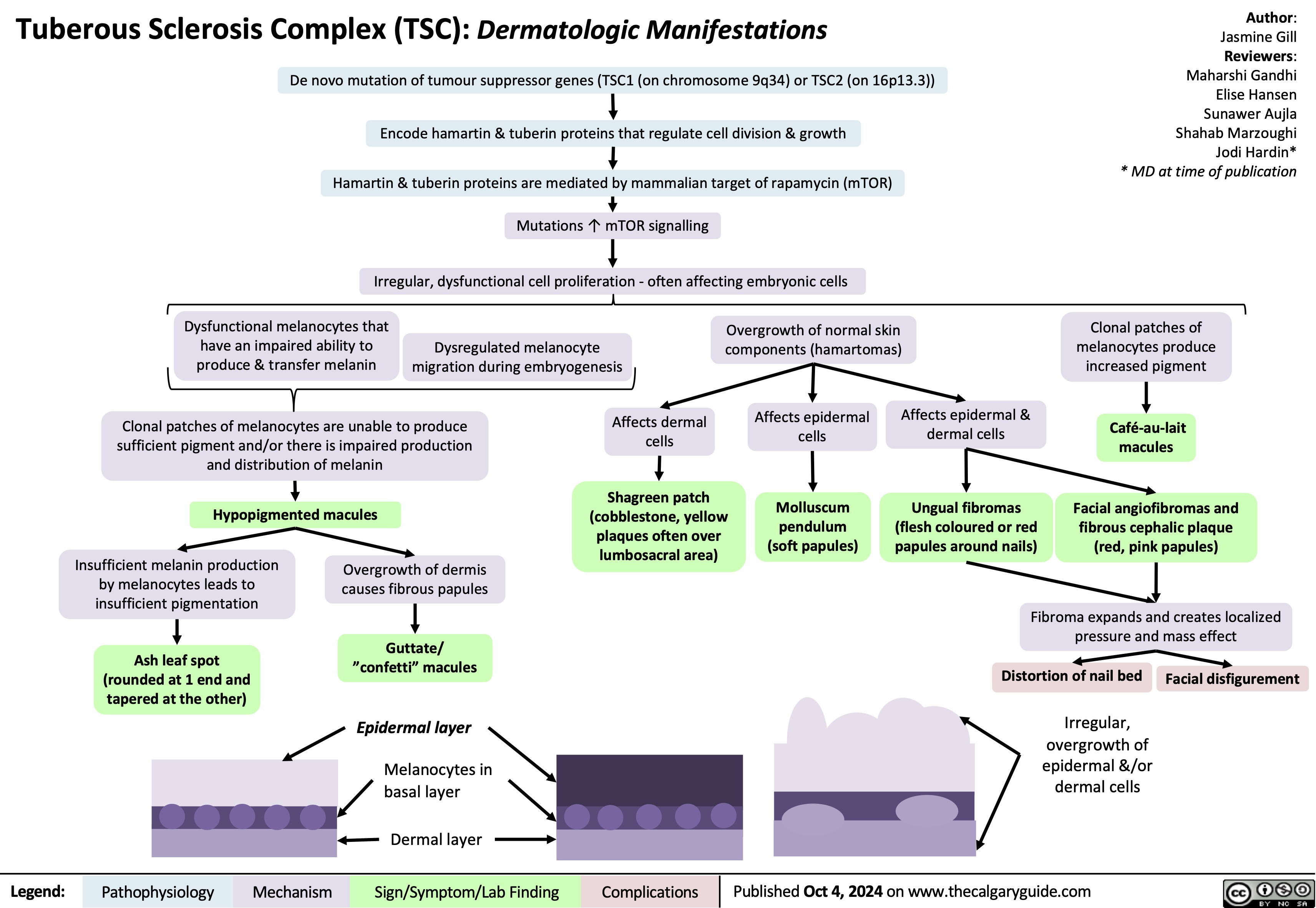
Tuberous Sclerosis Complex (TSC): Dermatologic Manifestations
De novo mutation of tumour suppressor genes (TSC1 (on chromosome 9q34) or TSC2 (on 16p13.3))
Encode hamartin & tuberin proteins that regulate cell division & growth
Hamartin & tuberin proteins are mediated by mammalian target of rapamycin (mTOR) Mutations ↑ mTOR signalling
Irregular, dysfunctional cell proliferation - often affecting embryonic cells
Author: Jasmine Gill Reviewers: Maharshi Gandhi Elise Hansen Sunawer Aujla Shahab Marzoughi Jodi Hardin* * MD at time of publication
         Dysfunctional melanocytes that have an impaired ability to produce & transfer melanin
Dysregulated melanocyte migration during embryogenesis
Overgrowth of normal skin components (hamartomas)
Clonal patches of melanocytes produce increased pigment
Café-au-lait macules
Facial angiofibromas and fibrous cephalic plaque (red, pink papules)
         Clonal patches of melanocytes are unable to produce sufficient pigment and/or there is impaired production and distribution of melanin
Hypopigmented macules
Affects dermal cells
Shagreen patch (cobblestone, yellow plaques often over lumbosacral area)
Affects epidermal cells
Molluscum pendulum (soft papules)
Affects epidermal & dermal cells
Ungual fibromas (flesh coloured or red papules around nails)
        Insufficient melanin production by melanocytes leads to insufficient pigmentation
Ash leaf spot (rounded at 1 end and tapered at the other)
Overgrowth of dermis causes fibrous papules
Guttate/ ”confetti” macules
Epidermal layer
Melanocytes in basal layer
Fibroma expands and creates localized pressure and mass effect
       Distortion of nail bed
Irregular, overgrowth of epidermal &/or dermal cells
Facial disfigurement
            Dermal layer
  Legend:
 Pathophysiology
 Mechanism
Sign/Symptom/Lab Finding
 Complications
 Published Oct 4, 2024 on www.thecalgaryguide.com