• Content
  • Collaboration
  • About Us
  • Contact Us

SEARCH RESULTS FOR: Benzodiazepine-mechanism-of-action

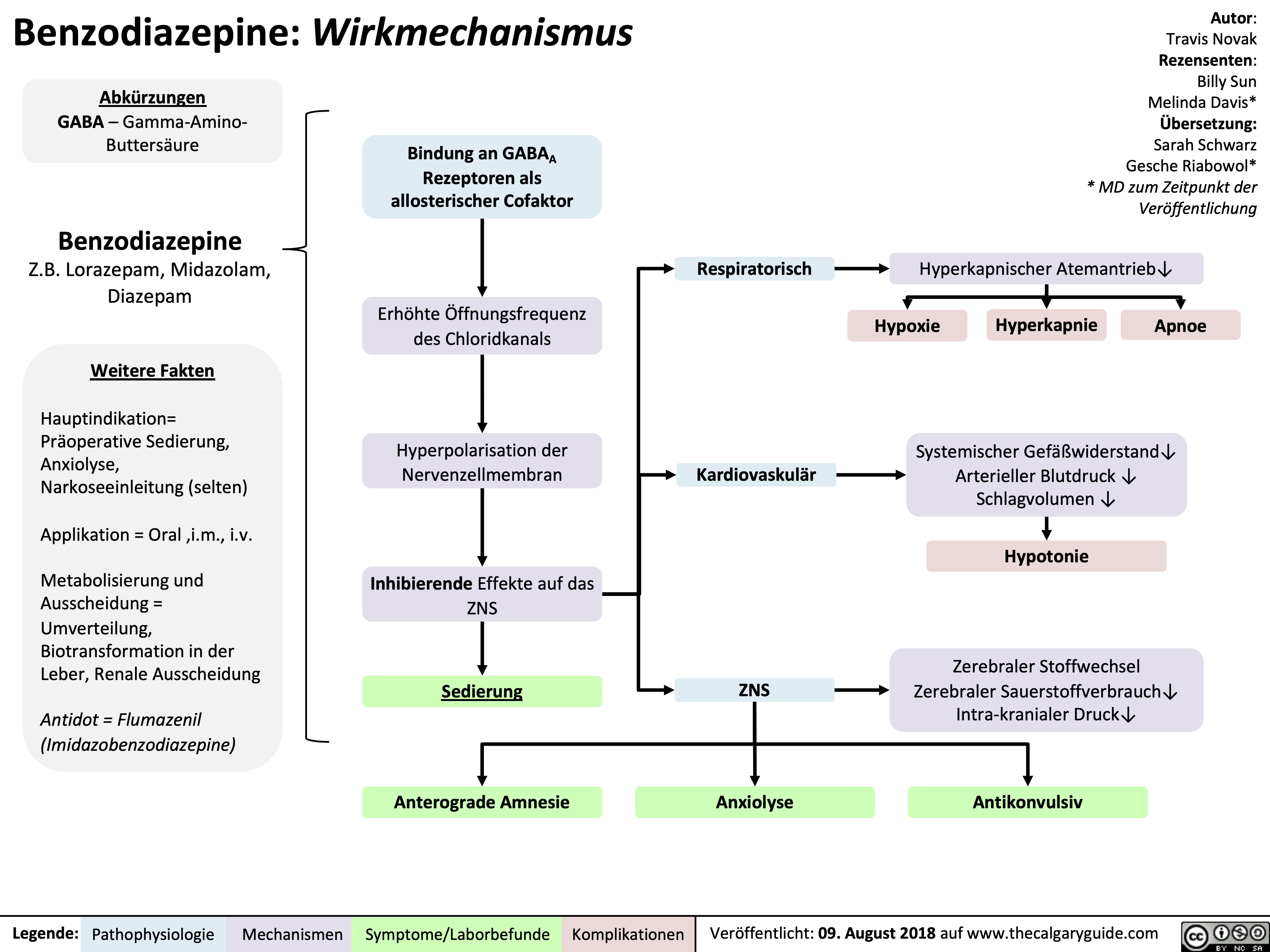
benzodiazepine-wirkmechanismus

Benzodiazepine: Wirkmechanismus

Benzodiazepine Mechanism of Action

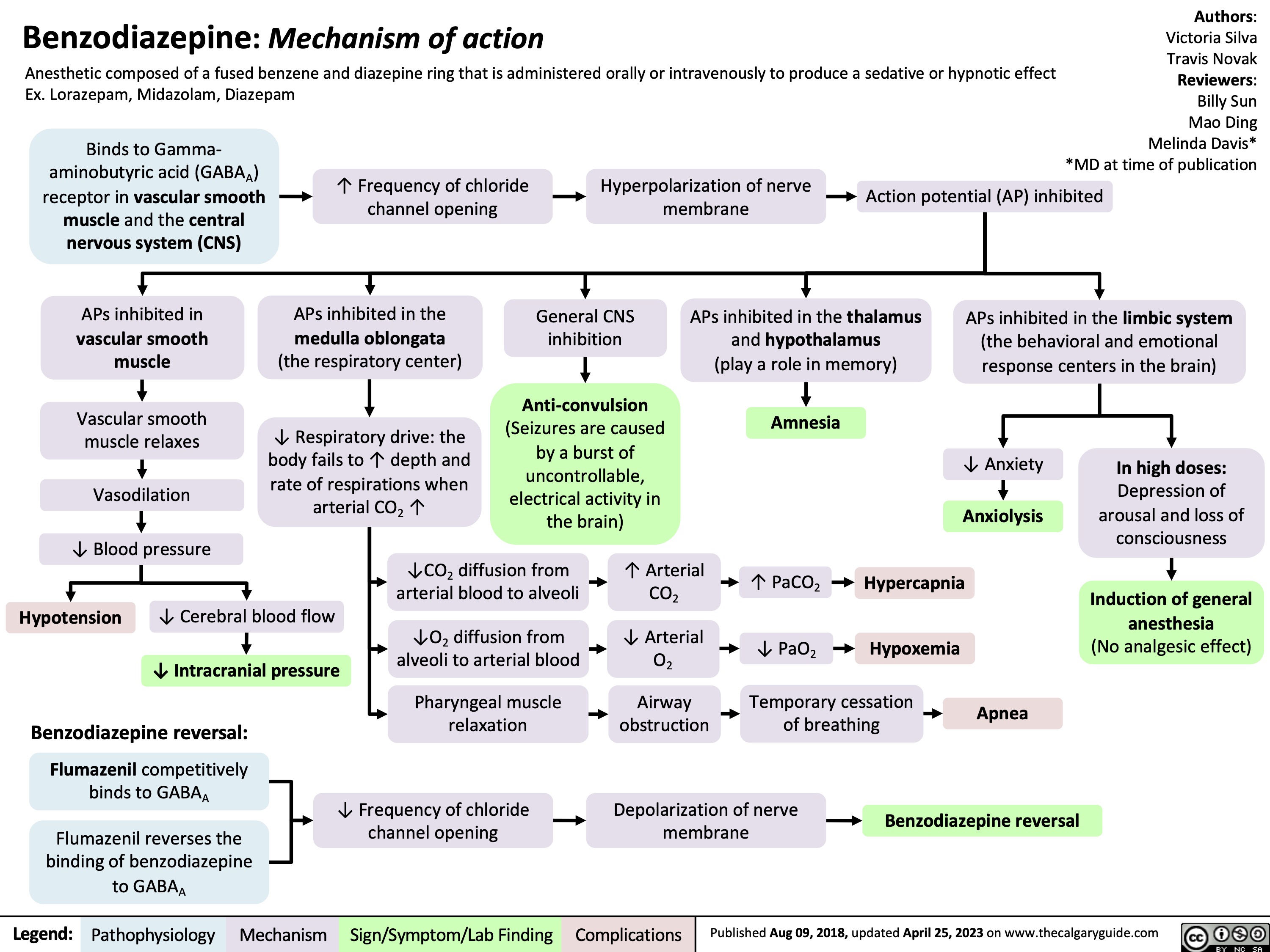
Benzodiazepine: Mechanism of action
Anesthetic composed of a fused benzene and diazepine ring that is administered orally or intravenously to produce a sedative or hypnotic effect
Ex. Lorazepam, Midazolam, Diazepam
Binds to Gamma- aminobutyric acid (GABAA) receptor in vascular smooth muscle and the central nervous system (CNS)
APs inhibited in
vascular smooth muscle
Vascular smooth muscle relaxes
Vasodilation ↓ Blood pressure
Authors: Victoria Silva Travis Novak Reviewers: Billy Sun Mao Ding Melinda Davis* *MD at time of publication
   ↑ Frequency of chloride channel opening
Hyperpolarization of nerve membrane
Action potential (AP) inhibited
          APs inhibited in the
medulla oblongata
(the respiratory center)
↓ Respiratory drive: the body fails to ↑ depth and rate of respirations when arterial CO2 ↑
General CNS inhibition
Anti-convulsion
(Seizures are caused by a burst of uncontrollable, electrical activity in the brain)
APs inhibited in the thalamus and hypothalamus (play a role in memory)
APs inhibited in the limbic system (the behavioral and emotional response centers in the brain)
                   Hypotension
↓ Cerebral blood flow
↓CO2 diffusion from arterial blood to alveoli
↓O2 diffusion from alveoli to arterial blood
Pharyngeal muscle relaxation
↑ Arterial CO2
↓ Arterial O2
Airway obstruction
Amnesia
↑ PaCO2
↓ PaO2
↓ Anxiety
Anxiolysis Hypercapnia
Hypoxemia
In high doses:
Depression of arousal and loss of consciousness
Induction of general anesthesia
(No analgesic effect)
     ↓ Intracranial pressure Benzodiazepine reversal:
Temporary cessation of breathing
Apnea
     Flumazenil competitively binds to GABAA
Flumazenil reverses the binding of benzodiazepine to GABAA
↓ Frequency of chloride channel opening
Depolarization of nerve membrane
Benzodiazepine reversal
      Legend:
 Pathophysiology
 Mechanism
Sign/Symptom/Lab Finding
 Complications
 Published Aug 09, 2018, updated April 25, 2023 on www.thecalgaryguide.com

Benzodiazepine mechanism of action

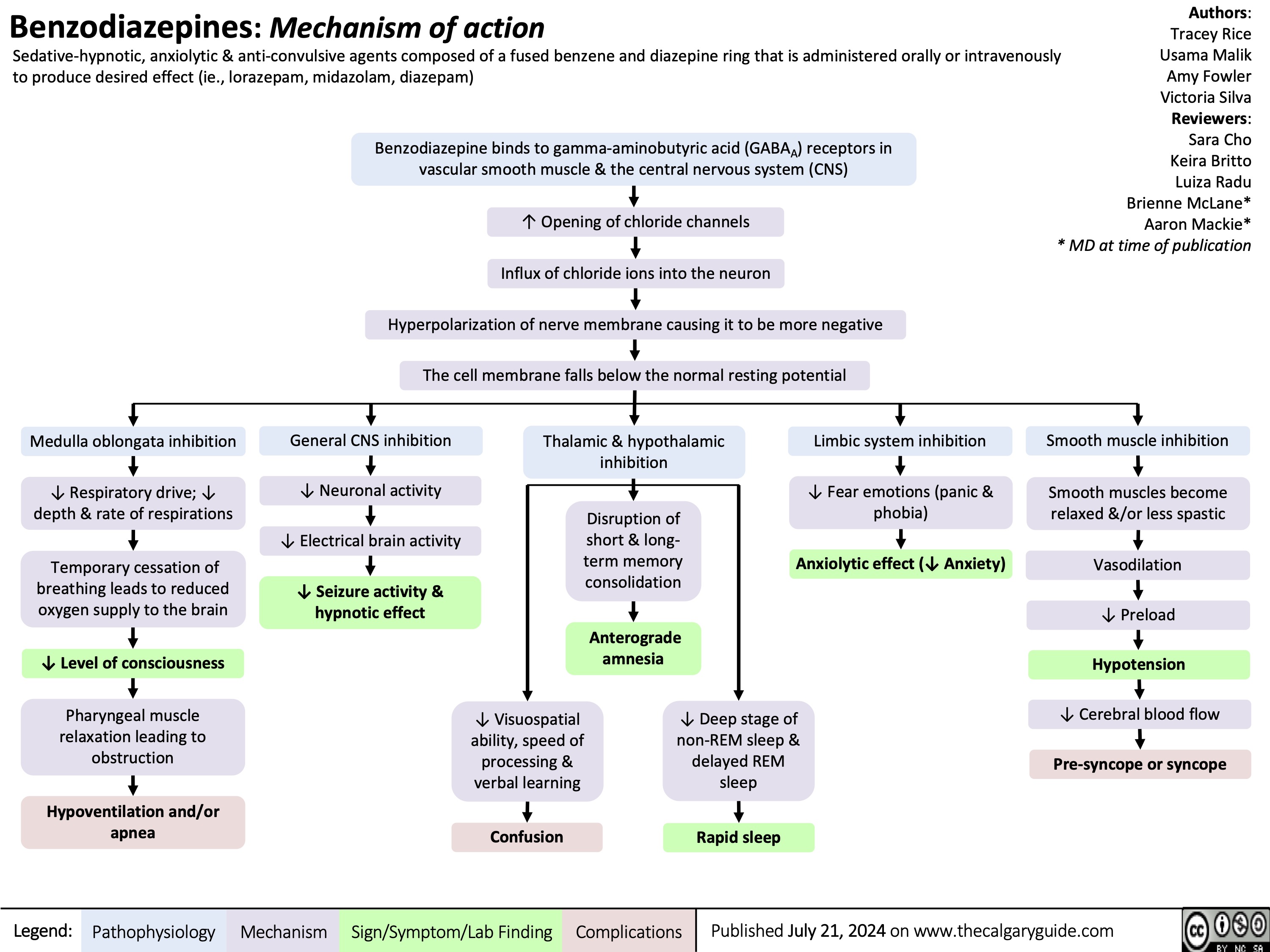
Benzodiazepines: Mechanism of action
Sedative-hypnotic, anxiolytic & anti-convulsive agents composed of a fused benzene and diazepine ring that is administered orally or intravenously to produce desired effect (ie., lorazepam, midazolam, diazepam)
Authors: Tracey Rice Usama Malik Amy Fowler Victoria Silva Reviewers: Sara Cho Keira Britto Luiza Radu Brienne McLane* Aaron Mackie* * MD at time of publication
 Benzodiazepine binds to gamma-aminobutyric acid (GABAA) receptors in vascular smooth muscle & the central nervous system (CNS)
↑ Opening of chloride channels
Influx of chloride ions into the neuron Hyperpolarization of nerve membrane causing it to be more negative The cell membrane falls below the normal resting potential
          Medulla oblongata inhibition
↓ Respiratory drive; ↓ depth & rate of respirations
Temporary cessation of breathing leads to reduced oxygen supply to the brain
↓ Level of consciousness
Pharyngeal muscle relaxation leading to obstruction
Hypoventilation and/or apnea
General CNS inhibition
↓ Neuronal activity
↓ Electrical brain activity
↓ Seizure activity & hypnotic effect
Thalamic & hypothalamic inhibition
Disruption of short & long- term memory consolidation
Limbic system inhibition
↓ Fear emotions (panic & phobia)
Anxiolytic effect (↓ Anxiety)
Smooth muscle inhibition
Smooth muscles become relaxed &/or less spastic
Vasodilation
↓ Preload Hypotension
↓ Cerebral blood flow
Pre-syncope or syncope
             Anterograde amnesia
      ↓ Visuospatial ability, speed of processing & verbal learning
Confusion
↓ Deep stage of non-REM sleep & delayed REM sleep
Rapid sleep
     Legend:
 Pathophysiology
Mechanism
Sign/Symptom/Lab Finding
 Complications
 Published July 21, 2024 on www.thecalgaryguide.com

Benzodiazepine

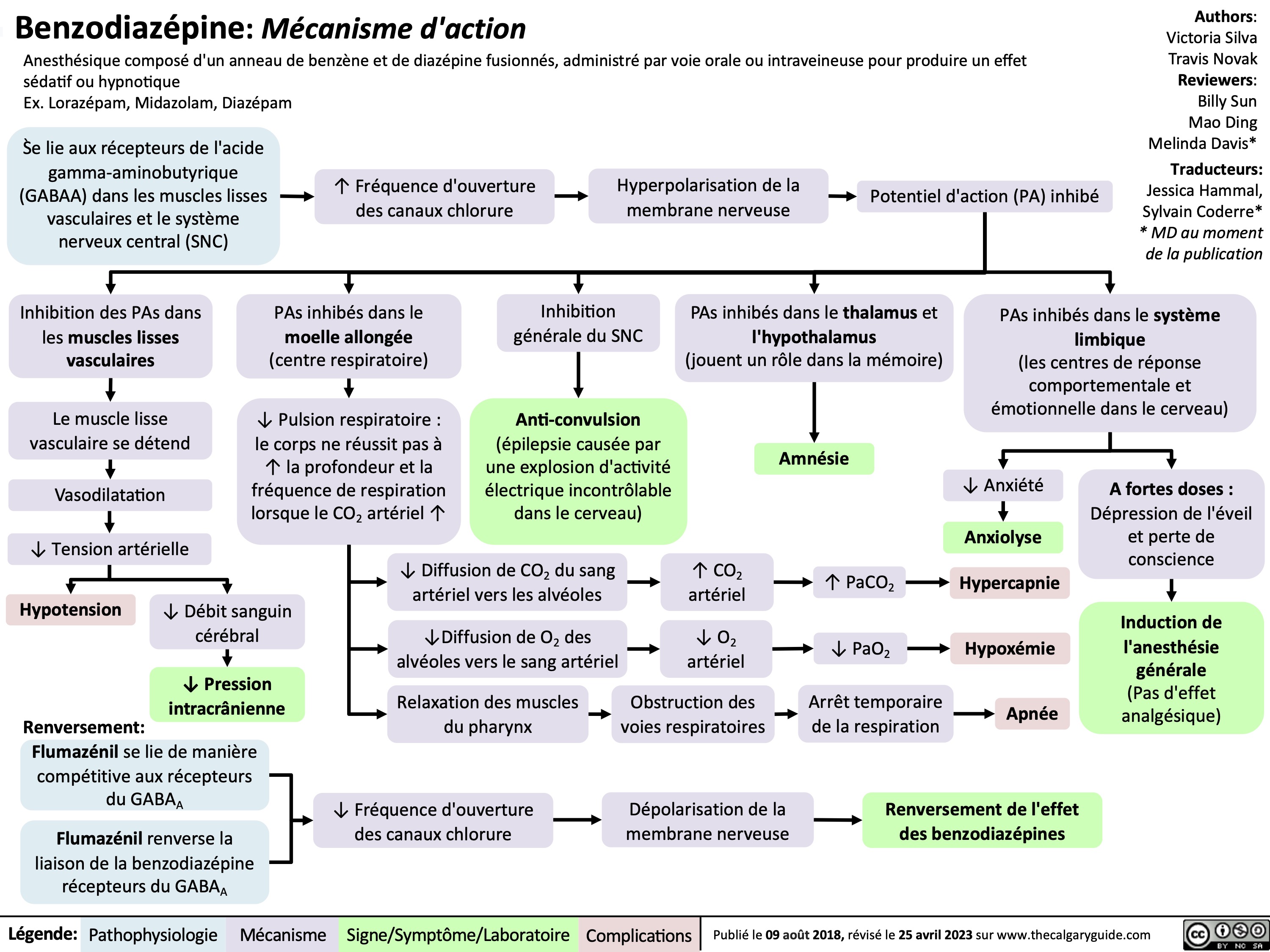
Benzodiazépine: Mécanisme d'action

© 2025 - The Calgary Guide to Understanding Disease

Disclaimer