SEARCH RESULTS FOR: Anticholingeric-Syndrome-in-Older-Adults

Anticholingeric Syndrome in Older Adults
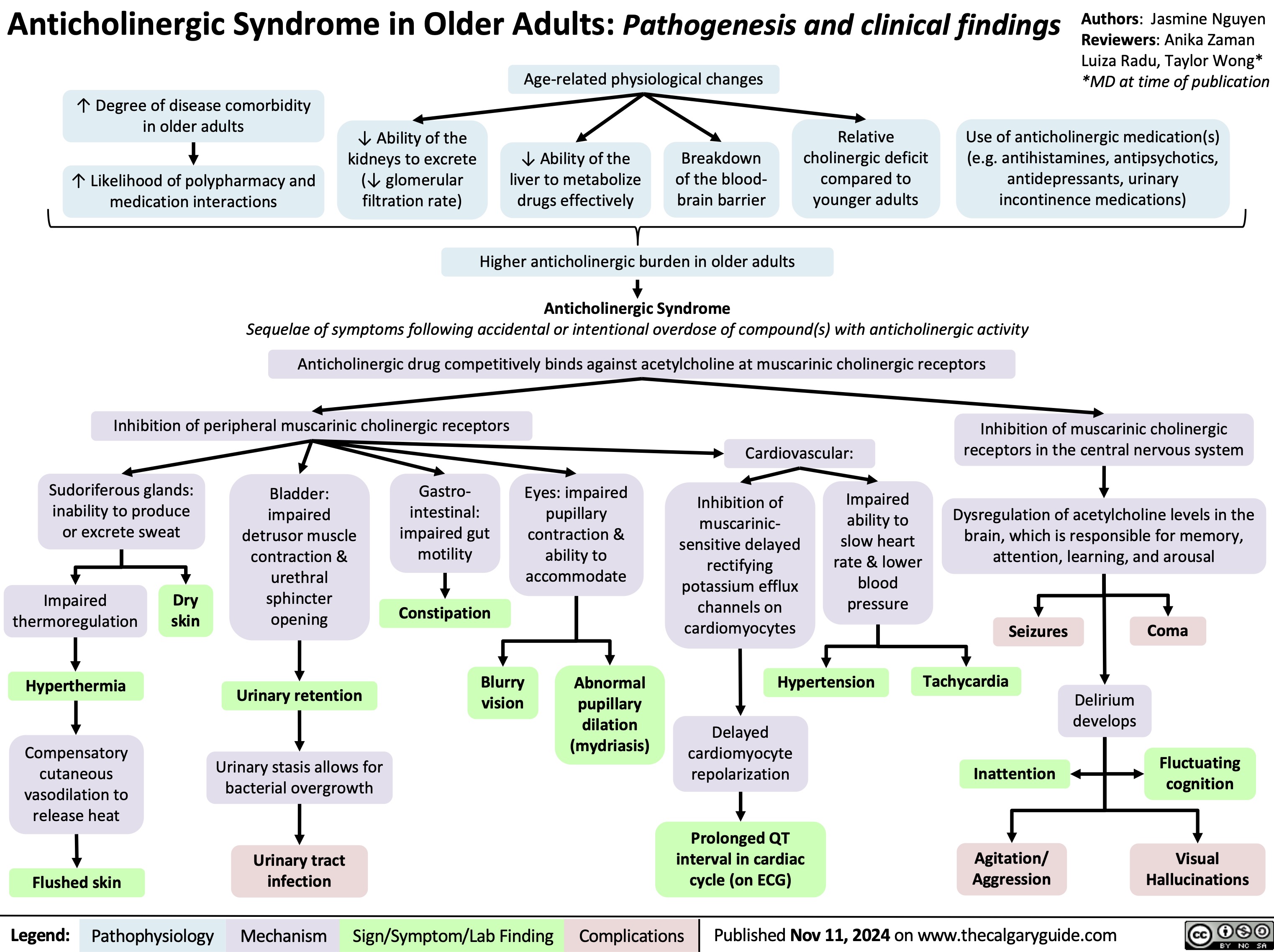
Anticholinergic Syndrome in Older Adults: Pathogenesis and clinical findings Age-related physiological changes
Authors: Jasmine Nguyen Reviewers: Anika Zaman Luiza Radu, Taylor Wong* *MD at time of publication
   ↑ Degree of disease comorbidity in older adults
↑ Likelihood of polypharmacy and medication interactions
↓ Ability of the kidneys to excrete (↓ glomerular filtration rate)
↓ Ability of the liver to metabolize drugs effectively
Breakdown of the blood- brain barrier
Relative cholinergic deficit compared to younger adults
Use of anticholinergic medication(s) (e.g. antihistamines, antipsychotics, antidepressants, urinary incontinence medications)
        Higher anticholinergic burden in older adults
Anticholinergic Syndrome
Sequelae of symptoms following accidental or intentional overdose of compound(s) with anticholinergic activity
Anticholinergic drug competitively binds against acetylcholine at muscarinic cholinergic receptors
     Inhibition of peripheral muscarinic cholinergic receptors
Inhibition of muscarinic cholinergic receptors in the central nervous system
Dysregulation of acetylcholine levels in the brain, which is responsible for memory, attention, learning, and arousal
   Cardiovascular:
     Sudoriferous glands: inability to produce or excrete sweat
Gastro- intestinal: impaired gut motility
Constipation
Blurry vision
  Bladder: impaired detrusor muscle contraction & urethral
Eyes: impaired pupillary contraction & ability to accommodate
Inhibition of muscarinic- sensitive delayed rectifying potassium efflux channels on cardiomyocytes
Impaired
ability to slow heart rate & lower blood pressure
      Impaired thermoregulation
Hyperthermia
Compensatory cutaneous vasodilation to release heat
Flushed skin
Dry sphincter skin opening
Urinary retention
Urinary stasis allows for bacterial overgrowth
Urinary tract infection
Abnormal pupillary dilation (mydriasis)
Hypertension
Delayed cardiomyocyte repolarization
Prolonged QT interval in cardiac cycle (on ECG)
Seizures Tachycardia
Inattention
Agitation/ Aggression
Delirium develops
Coma
Fluctuating cognition
Visual Hallucinations
                          Legend:
 Pathophysiology
Mechanism
Sign/Symptom/Lab Finding
 Complications
 Published Nov 11, 2024 on www.thecalgaryguide.com