SEARCH RESULTS FOR: Ankle-Fracture

Ankle Fracture
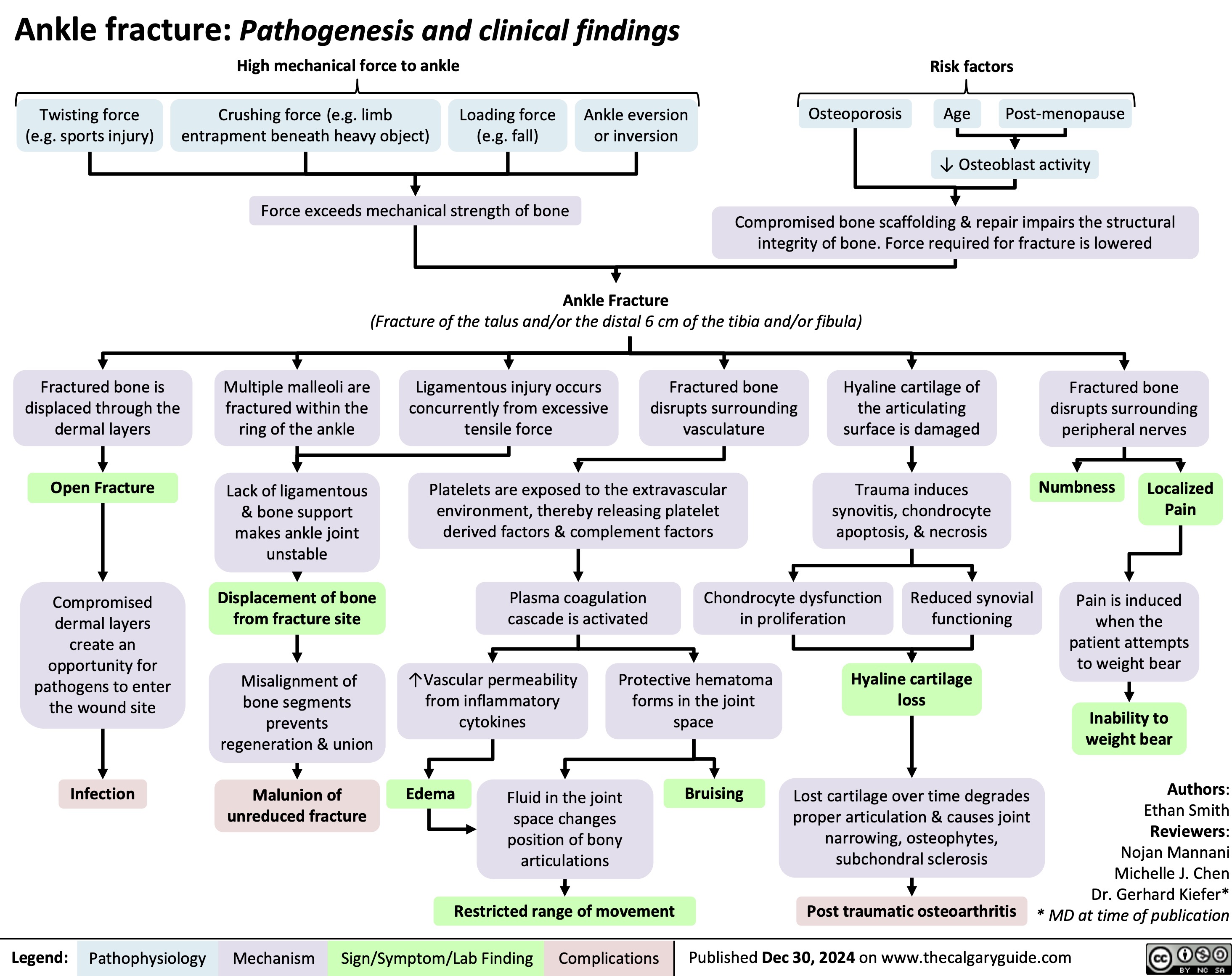
Ankle fracture: Pathogenesis and clinical findings High mechanical force to ankle
Risk factors
Age Post-menopause ↓ Osteoblast activity
      Twisting force (e.g. sports injury)
Crushing force (e.g. limb Loading force entrapment beneath heavy object) (e.g. fall)
Force exceeds mechanical strength of bone
Ankle eversion or inversion
Osteoporosis
      Compromised bone scaffolding & repair impairs the structural integrity of bone. Force required for fracture is lowered
  Ankle Fracture
(Fracture of the talus and/or the distal 6 cm of the tibia and/or fibula)
          Fractured bone is displaced through the dermal layers
Open Fracture
Compromised dermal layers create an opportunity for pathogens to enter the wound site
Infection
Multiple malleoli are fractured within the ring of the ankle
Lack of ligamentous & bone support makes ankle joint unstable
Displacement of bone from fracture site
Misalignment of bone segments prevents regeneration & union
Malunion of unreduced fracture
Ligamentous injury occurs concurrently from excessive tensile force
Fractured bone disrupts surrounding vasculature
Hyaline cartilage of the articulating surface is damaged
Trauma induces synovitis, chondrocyte apoptosis, & necrosis
Fractured bone disrupts surrounding peripheral nerves
Numbness Localized Pain
Pain is induced when the patient attempts to weight bear
Inability to weight bear
Authors: Ethan Smith Reviewers: Nojan Mannani Michelle J. Chen Dr. Gerhard Kiefer* * MD at time of publication
         Platelets are exposed to the extravascular environment, thereby releasing platelet derived factors & complement factors
         Plasma coagulation cascade is activated
Chondrocyte dysfunction in proliferation
Reduced synovial functioning
       ↑Vascular permeability from inflammatory cytokines
Protective hematoma forms in the joint space
Hyaline cartilage loss
Lost cartilage over time degrades proper articulation & causes joint narrowing, osteophytes, subchondral sclerosis
Post traumatic osteoarthritis
           Edema
Fluid in the joint space changes position of bony articulations
Bruising
  Restricted range of movement
 Legend:
 Pathophysiology
Mechanism
 Sign/Symptom/Lab Finding
 Complications
 Published Dec 30, 2024 on www.thecalgaryguide.com