SEARCH RESULTS FOR: Ptosis

Left Heart Failure: Pathophysiology (Neurohormonal Activation)
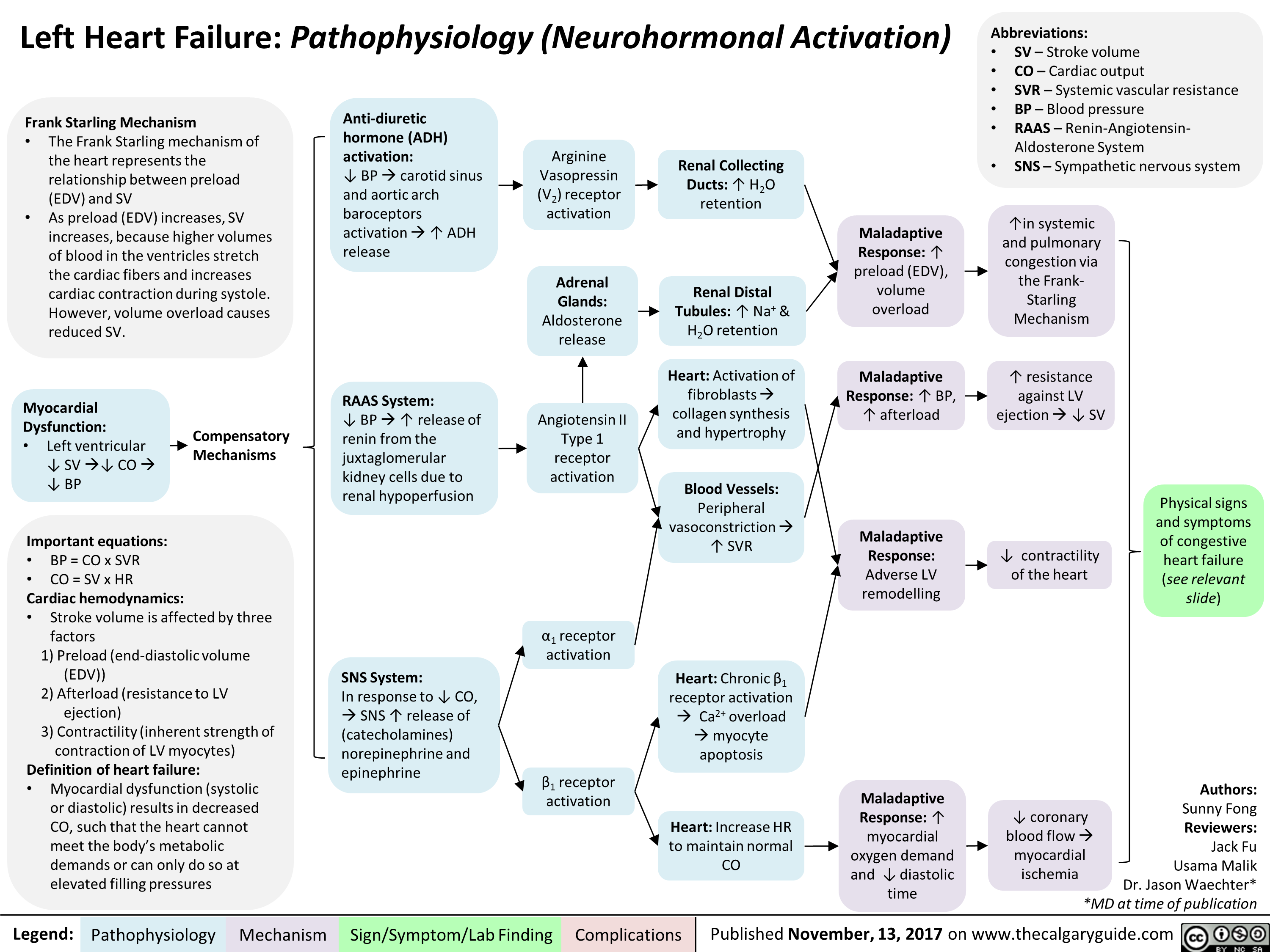
Left Heart Failure: Pathophysiology (Neurohormonal Activation) 
Frank Starling Mechanism • The Frank Starling mechanism of the heart represents the relationship between preload (EDV) and SV • As preload (EDV) increases, SV increases, because higher volumes of blood in the ventricles stretch the cardiac fibers and increases cardiac contraction during systole. However, volume overload causes reduced SV. 
Myocardial Dysfunction: • Left ventricular Compensatory 4, SV 4A, CO 4 Mechanisms 
4, BP 
Important equations: • BP = CO x SVR • CO = SV x HR Cardiac hemodynamics: • Stroke volume is affected by three factors 1) Preload (end-diastolic volume (EDV)) 2) Afterload (resistance to LV ejection) 3) Contractility (inherent strength of contraction of LV myocytes) Definition of heart failure: • Myocardial dysfunction (systolic or diastolic) results in decreased CO, such that the heart cannot meet the body's metabolic demands or can only do so at elevated filling pressures 
Anti-diuretic hormone (ADH) activation: Arginine 4, BP 4 carotid sinus Vasopressin --• and aortic arch (V2) receptor baroceptors activation activation 4 I` ADH release 
RAAS System: 4, BP 4 t release of renin from the juxtaglomerular kidney cells due to renal hypoperfusion 
SNS System: In response to CO, 4 SNS t release of (catecholamines) norepinephrine and epinephrine 
Adrenal Glands: Aldosterone release 
Angiotensin II Type 1 receptor activation 
al receptor activation 
13, receptor activation 
—• 
Renal Collecting Ducts: t H2O retention 
Renal Distal —• Tubules: t Na+ & H2O retention 
Heart: Activation of fibroblasts 4 collagen synthesis and hypertrophy 
Blood Vessels: Peripheral vasoconstriction 4 SVR 
Heart: Chronic p, receptor activation 4 Ca2+ overload myocyte apoptosis 
Heart: Increase HR to maintain normal CO 
Maladaptive Response: t preload (EDV), —• volume overload 
Abbreviations: • SV — Stroke volume • CO — Cardiac output • SVR — Systemic vascular resistance • BP — Blood pressure • RAAS — Renin-Angiotensin-Aldosterone System • SNS — Sympathetic nervous system 
tin systemic and pulmonary congestion via the Frank-Starling Mechanism 
Maladaptive 1` resistance Response: t BP, —• against LV afterload ejection 4 4, SV 
Maladaptive Response: Adverse LV remodelling 
Maladaptive Response: t myocardial oxygen demand and 4, diastolic time 
4, contractility —• of the heart 
4, coronary blood flow 4 myocardial ischemia 
Physical signs and symptoms of congestive heart failure (see relevant slide) 
Authors: Sunny Fong Reviewers: —• I Jack Fu Usama Malik Dr. Jason Waechter* *MD at time of publication

Bronchogenic Carcinoma - Pancoast Tumors Pathogenesis and clinical findings
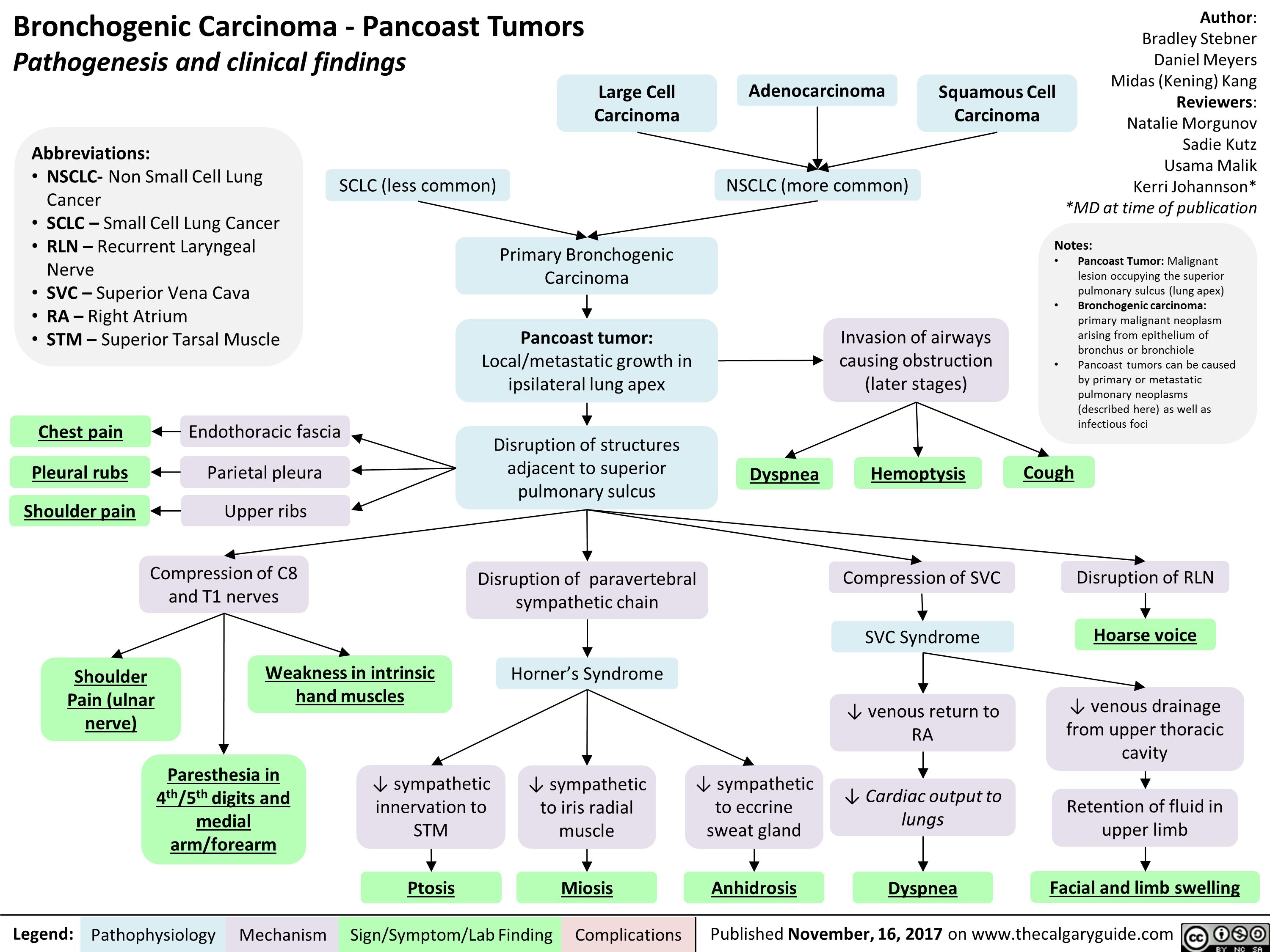
Bronchogenic Carcinoma - Pancoast Tumors 
Pathogenesis and clinical findings 
Abbreviations: 
• NSCLC- Non Small Cell Lung 
Cancer 
• SCLC — Small Cell Lung Cancer 
• RLN — Recurrent Laryngeal 
Nerve 
• SVC — Superior Vena Cava 
• RA — Right Atrium 
• STM — Superior Tarsal Muscle 
Chest pain 
Pleural rubs 
Shoulder pain 
SCLC (less common) 
Endothoracic fascia 
1— Parietal pleura •  
1— 
Upper ribs 
Large Cell 
Carcinoma 
Adenocarcinoma 
Squamous Cell 
Carcinoma 
Primary Bronchogenic 
Carcinoma 
Pancoast tumor: 
Local/metastatic growth in 
ipsilateral lung apex 
Disruption of structures 
adjacent to superior 
pulmonary sulcus 
NSCLC (more common) 
Invasion of airways 
► causing obstruction 
(later stages) 
Author: 
Bradley Stebner 
Daniel Meyers 
Midas (Kening) Kang 
Reviewers: 
Natalie Morgunov 
Sadie Kutz 
Usama Malik 
Kerri Johannson* 
*MD at time of publication 
Notes: 
• Pancoast Tumor: Malignant 
lesion occupying the superior 
pulmonary sulcus (lung apex) 
Bronchogenic carcinoma: 
primary malignant neoplasm 
arising from epithelium of 
bronchus or bronchiole 
Pancoast tumors can be caused 
by primary or metastatic 
pulmonary neoplasms 
(described here) as well as 
infectious foci 
Hemoptysis 
Compression of C8 
and T1 nerves 
• 
Disruption of paravertebral 
sympathetic chain 
Shoulder • Weakness in intrinsic Horner's • 4, sympathetic to to iris muscle Syndrome 4, sympathetic radial to eccrine sweat gland 
Pain (ulnar hand muscles 
nerve) 4, sympathetic innervation STM 
Paresthesia in 
4th /5th digits and 
arm/forearm medial 
Ptosis Mi o sis Anhidrosis  Legend: Pathophysiology Mechanism 
Sign/Symptom/Lab Finding 
Compression of SVC 
SVC Syndrome 
• 
4, venous return to 
RA 
4, Cardiac output to 
lungs 
Dyspnea 
Disruption of RLN 
1 
Hoarse voice 
4, venous drainage 
from upper thoracic 
cavity 
Retention of fluid in 
upper limb 
•)r 
Facial and limb swelling

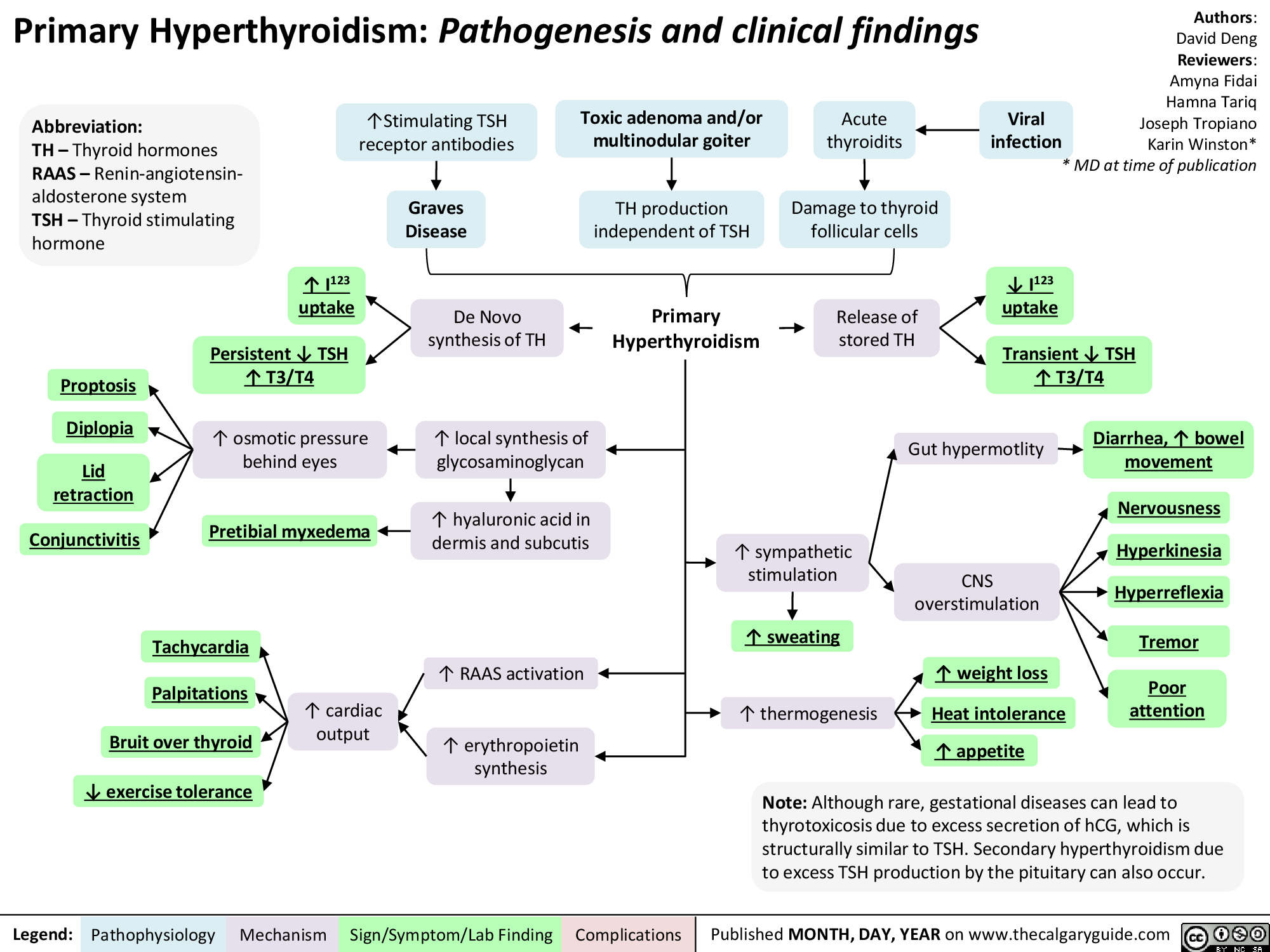
Hyperthyroidism

Primary Hyperthyroidism: Pathogenesis and clinical findings 
Abbreviation: TH — Thyroid hormones RAAS— Renin-angiotensin-aldosterone system TSH — Thyroid stimulating hormone 
'`Stimulating TSH receptor antibodies 
Graves Disease 
Toxic adenoma and/or multinodular goiter 
1123 De Novo 4— synthesis of TH uptake Persistent 4, TSH  Proptosis  T3/T4 
Lid retraction  
Conjunctivitis 
t osmotic pressure behind eyes 
Pretibial myxedema  
Tachycardia  Palpitations  Bruit over thyroid  4, exercise tolerance  
t cardiac output 
Legend: Pathophysiology Mechanism 
t local synthesis of glycosaminoglycan 
hyaluronic acid in dermis and subcutis 
TH production independent of TSH 
Acute thyroidits 
Damage to thyroid follicular cells 
Y Primary Hyperthyroidism 
4  
RAAS activation •  
erythropoietin synthesis 
Sign/Symptom/Lab Finding 
Release of stored TH 
t sympathetic stimulation 
T sweating 
thermogenesis 

Viral infection 
Authors: David Deng Reviewers: Amyna Fidai Hamna Tariq Joseph Tropiano Karin Winston* * MD at time of publication 
4, 1123 uptake 
Transient 4, TSH  T3/T4  
Gut hypermotlity --* 
CNS overstimulation 

Diarrhea, t bowel movement  
t weight loss  Heat intolerance t appetite  
Nervousness 
Hyperkinesia 
Hyperreflexia 
Tremor 
Poor  attention 
Note: Although rare, gestational diseases can lead to thyrotoxicosis due to excess secretion of hCG, which is structurally similar to TSH. Secondary hyperthyroidism due to excess TSH production by the pituitary can also occur. 
Complications I Published MONTH, DAY, YEAR on www.thecalgaryguide.com 0 GS' I 4;

Orbital Cellulitis: Pathogenesis and clinical findings
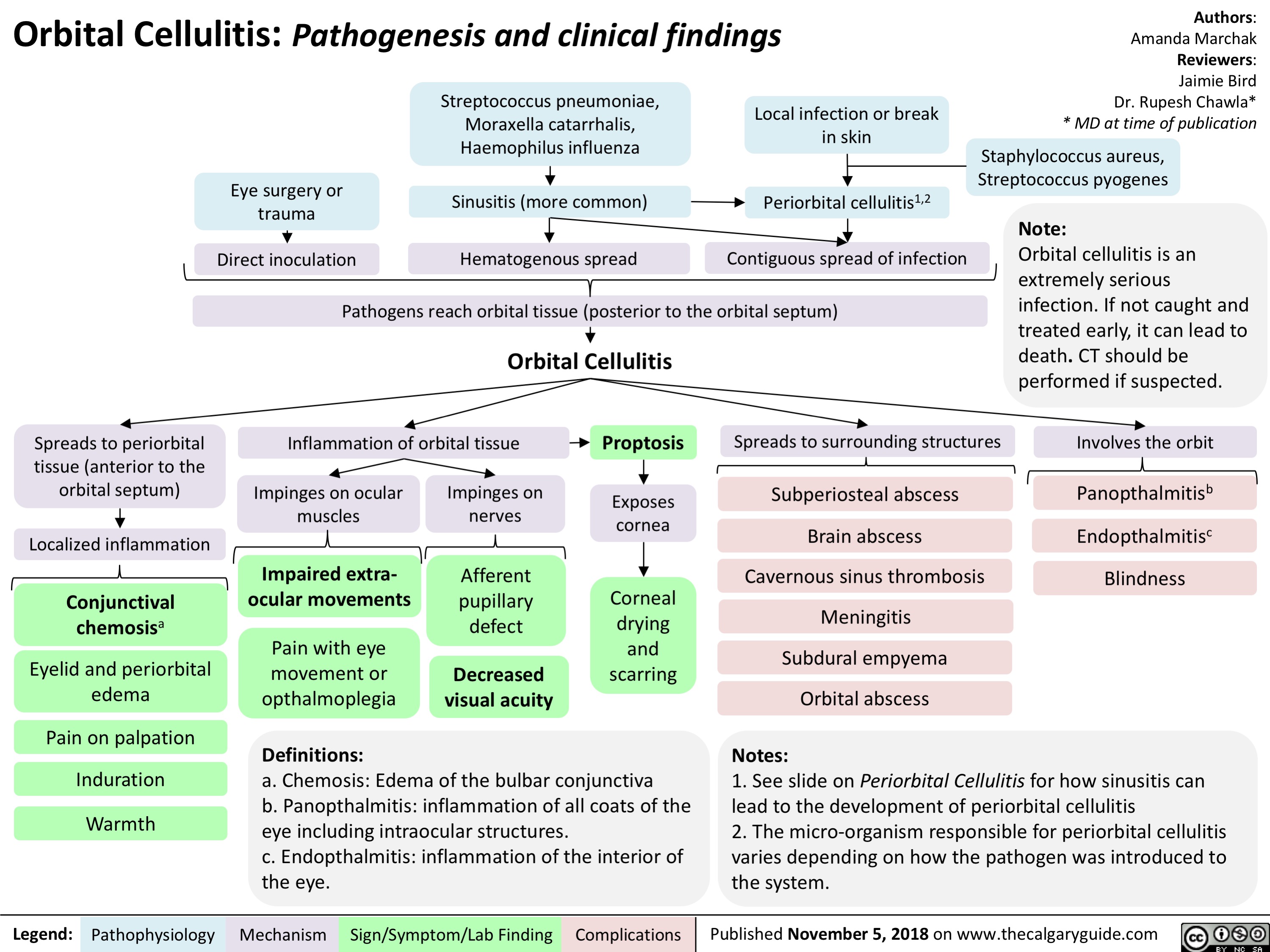
Orbital Cellulitis: Pathogenesis and clinical findings
Authors: Amanda Marchak Reviewers: Jaimie Bird Dr. Rupesh Chawla* * MD at time of publication
Staphylococcus aureus, Streptococcus pyogenes
Note:
Orbital cellulitis is an extremely serious infection. If not caught and treated early, it can lead to death. CT should be performed if suspected.
Involves the orbit
Panopthalmitisb Endopthalmitisc Blindness
 Streptococcus pneumoniae, Moraxella catarrhalis, Haemophilus influenza
Local infection or break in skin
      Eye surgery or trauma
Direct inoculation
Sinusitis (more common)       Periorbital cellulitis1,2
       Hematogenous spread
Contiguous spread of infection
  Pathogens reach orbital tissue (posterior to the orbital septum)
        Spreads to periorbital tissue (anterior to the orbital septum)
Localized inflammation
Conjunctival chemosisa
Eyelid and periorbital edema
Pain on palpation
Induration
Warmth
Orbital Cellulitis Inflammation of orbital tissue       Proptosis
Spreads to surrounding structures
Subperiosteal abscess Brain abscess Cavernous sinus thrombosis Meningitis Subdural empyema Orbital abscess
Notes:
        Impinges on ocular muscles
Impaired extra- ocular movements
Pain with eye
movement or opthalmoplegia
Definitions:
Impinges on nerves
Afferent pupillary defect
Decreased visual acuity
Exposes cornea
Corneal drying and scarring
                         a. Chemosis: Edema of the bulbar conjunctiva
b. Panopthalmitis: inflammation of all coats of the eye including intraocular structures.
c. Endopthalmitis: inflammation of the interior of the eye.
1. See slide on Periorbital Cellulitis for how sinusitis can lead to the development of periorbital cellulitis
2. The micro-organism responsible for periorbital cellulitis varies depending on how the pathogen was introduced to the system.
  Legend:
 Pathophysiology
 Mechanism
Sign/Symptom/Lab Finding
  Complications
Published November 5, 2018 on www.thecalgaryguide.com

Primary Myelofibrosis pathogenesis and clinical findings
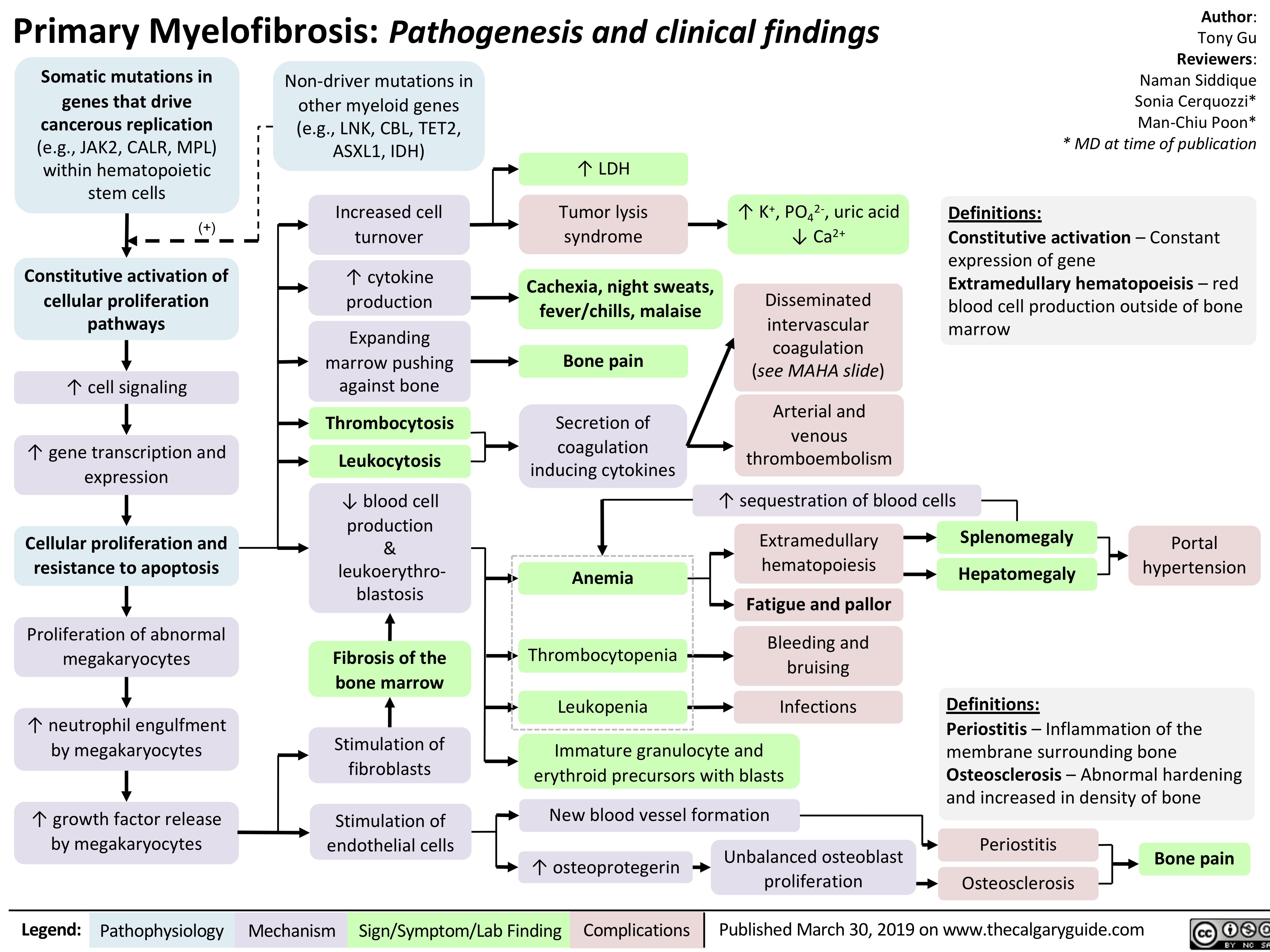
Primary Myelofibrosis: Pathogenesis and clinical findings
Legend: Published March 30, 2019 on www.Pathophysiology Mechanism Sign/Symptom/Lab Finding Complications thecalgaryguide.com
Author:
Tony Gu
Reviewers:
Naman Siddique
Sonia Cerquozzi*
Man-Chiu Poon*
* MD at time of publication
Definitions:
Constitutive activation – Constant
expression of gene
Extramedullary hematopoeisis – red
blood cell production outside of bone
marrow
Somatic mutations in
genes that drive
cancerous replication
(e.g., JAK2, CALR, MPL)
within hematopoietic
stem cells
Non-driver mutations in
other myeloid genes
(e.g., LNK, CBL, TET2,
ASXL1, IDH)
Constitutive activation of
cellular proliferation
pathways
↑ cell signaling
↑ gene transcription and
expression
Cellular proliferation and
resistance to apoptosis
Proliferation of abnormal
megakaryocytes
↑ neutrophil engulfment
by megakaryocytes
↑ growth factor release
by megakaryocytes
Stimulation of
fibroblasts
Stimulation of
endothelial cells
New blood vessel formation
↑ osteoprotegerin Unbalanced osteoblast
proliferation Osteosclerosis
Fibrosis of the
bone marrow
Anemia
Bleeding and
bruising
Infections
Fatigue and pallor
Bone pain
Increased cell
turnover
Tumor lysis
syndrome
Cachexia, night sweats,
fever/chills, malaise
Expanding
marrow pushing
against bone
Extramedullary
hematopoiesis Hepatomegaly
Portal
hypertension
Splenomegaly
↑ LDH
Thrombocytosis
Leukocytosis
Secretion of
coagulation
inducing cytokines
Arterial and
venous
thromboembolism
↓ blood cell
production
&
leukoerythroblastosis
Thrombocytopenia
Leukopenia
↑ K+, PO4
2-, uric acid
↓ Ca2+
Bone pain
Periostitis
Immature granulocyte and
erythroid precursors with blasts
↑ cytokine
production
(+)
↑ sequestration of blood cells
Disseminated
intervascular
coagulation
(see MAHA slide)
Definitions:
Periostitis – Inflammation of the
membrane surrounding bone
Osteosclerosis – Abnormal hardening
and increased in density of bone

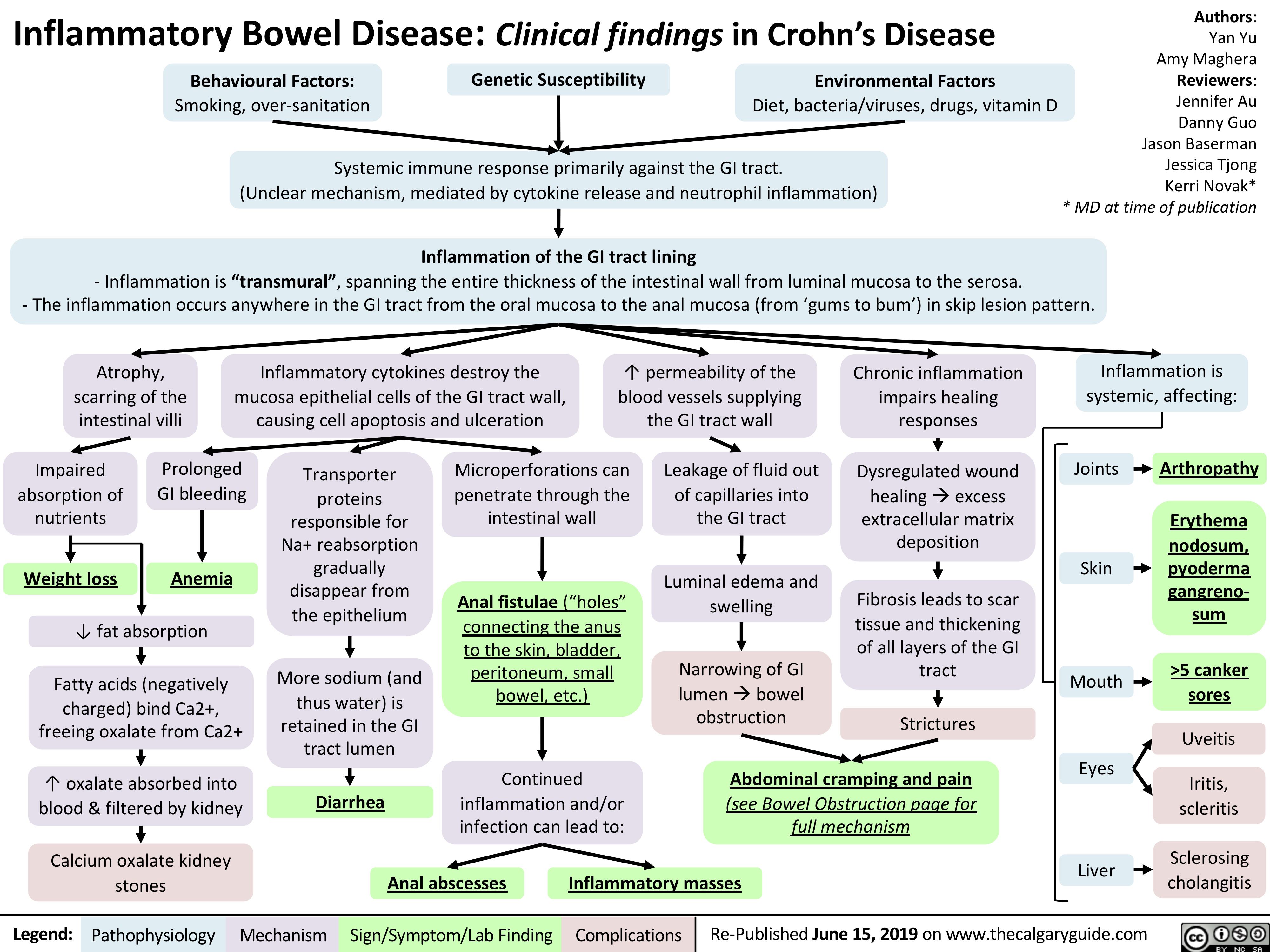
Crohn's Disease

Inflammatory Bowel Disease: Clinical findings in Crohn’s Disease
Authors: Yan Yu Amy Maghera Reviewers: Jennifer Au Danny Guo Jason Baserman Jessica Tjong Kerri Novak* * MD at time of publication
   Behavioural Factors:
Smoking, over-sanitation
Genetic Susceptibility
Environmental Factors
Diet, bacteria/viruses, drugs, vitamin D
    Systemic immune response primarily against the GI tract.
(Unclear mechanism, mediated by cytokine release and neutrophil inflammation)
  Inflammation of the GI tract lining
- Inflammation is “transmural”, spanning the entire thickness of the intestinal wall from luminal mucosa to the serosa.
- The inflammation occurs anywhere in the GI tract from the oral mucosa to the anal mucosa (from ‘gums to bum’) in skip lesion pattern.
       Atrophy, scarring of the intestinal villi
Inflammatory cytokines destroy the mucosa epithelial cells of the GI tract wall, causing cell apoptosis and ulceration
↑ permeability of the blood vessels supplying the GI tract wall
Chronic inflammation impairs healing responses
Dysregulated wound healingàexcess
extracellular matrix deposition
Fibrosis leads to scar tissue and thickening of all layers of the GI tract
Strictures
Inflammation is systemic, affecting:
Joints         Arthropathy Erythema
            Impaired absorption of nutrients
Weight loss
Prolonged GI bleeding
Anemia
Transporter proteins responsible for Na+ reabsorption gradually disappear from the epithelium
More sodium (and thus water) is
retained in the GI tract lumen
Microperforations can penetrate through the intestinal wall
Anal fistulae (“holes” connecting the anus to the skin, bladder, peritoneum, small bowel, etc.)
Continued inflammation and/or infection can lead to:
Leakage of fluid out of capillaries into the GI tract
Luminal edema and swelling
Narrowing of GI lumenàbowel obstruction
Skin
Mouth Eyes
Liver
nodosum, pyoderma gangreno- sum
>5 canker sores
Uveitis
Iritis, scleritis
Sclerosing cholangitis
                       ↓ fat absorption
Fatty acids (negatively charged) bind Ca2+, freeing oxalate from Ca2+
↑ oxalate absorbed into blood & filtered by kidney
Calcium oxalate kidney stones
Diarrhea
Abdominal cramping and pain
(see Bowel Obstruction page for full mechanism
                                         Anal abscesses Inflammatory masses
   Legend:
 Pathophysiology
 Mechanism
Sign/Symptom/Lab Finding
  Complications
Re-Published June 15, 2019 on www.thecalgaryguide.com

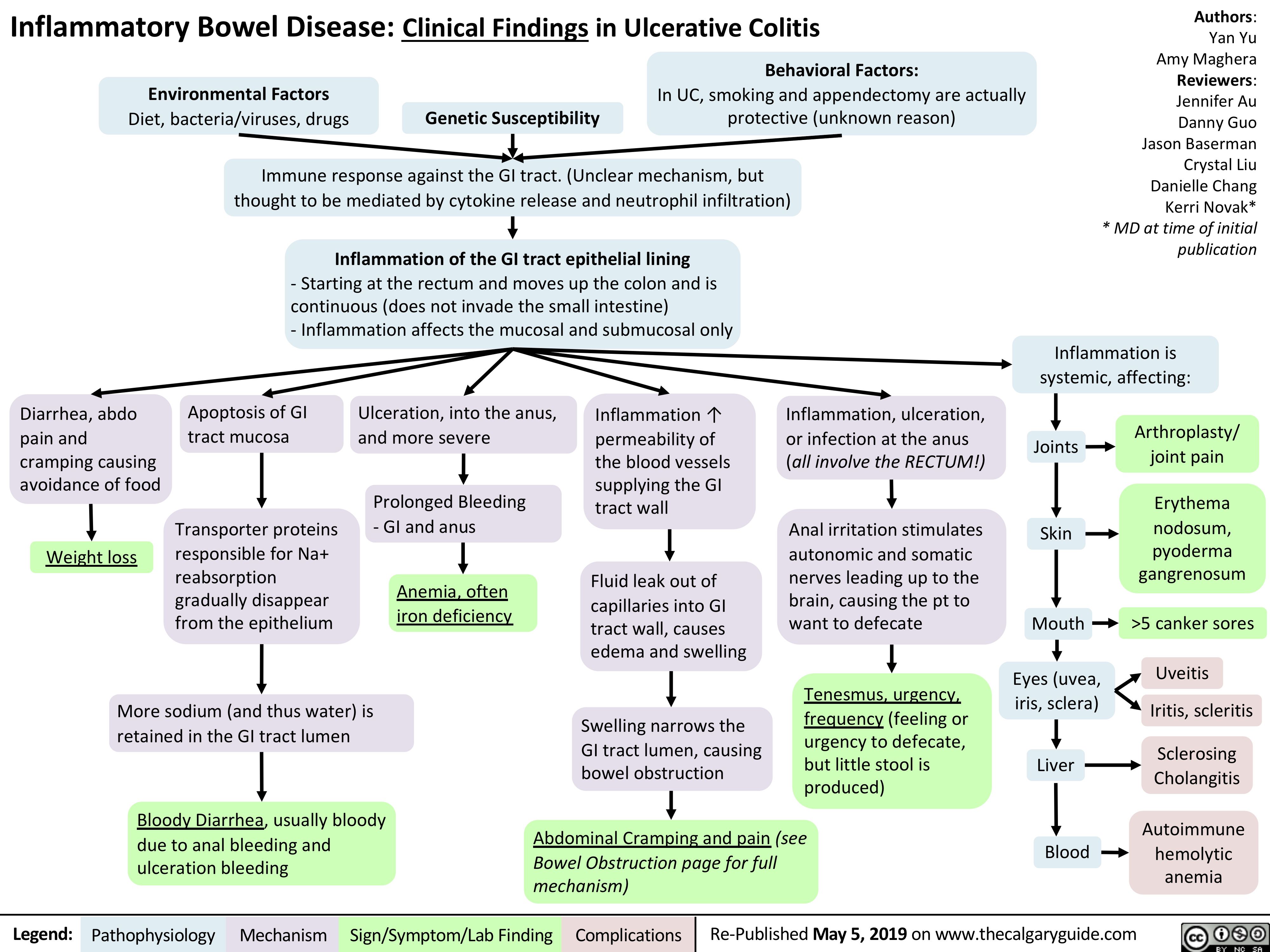
Ulcerative Colitis

Inflammatory Bowel Disease: Clinical Findings in Ulcerative Colitis
Authors: Yan Yu Amy Maghera Reviewers: Jennifer Au Danny Guo Jason Baserman Crystal Liu Danielle Chang Kerri Novak* * MD at time of initial publication
Inflammation is systemic, affecting:
   Environmental Factors
Diet, bacteria/viruses, drugs
Genetic Susceptibility
Behavioral Factors:
In UC, smoking and appendectomy are actually protective (unknown reason)
     Immune response against the GI tract. (Unclear mechanism, but thought to be mediated by cytokine release and neutrophil infiltration)
  Inflammation of the GI tract epithelial lining
- Starting at the rectum and moves up the colon and is continuous (does not invade the small intestine)
- Inflammation affects the mucosal and submucosal only
        Diarrhea, abdo pain and cramping causing avoidance of food
Weight loss
Apoptosis of GI tract mucosa
Transporter proteins responsible for Na+ reabsorption gradually disappear from the epithelium
Ulceration, into the anus, and more severe
Prolonged Bleeding - GI and anus
Anemia, often iron deficiency
Inflammation ↑ permeability of the blood vessels supplying the GI tract wall
Fluid leak out of capillaries into GI tract wall, causes edema and swelling
Swelling narrows the GI tract lumen, causing bowel obstruction
Inflammation, ulceration, or infection at the anus (all involve the RECTUM!)
Anal irritation stimulates autonomic and somatic nerves leading up to the brain, causing the pt to want to defecate
Tenesmus, urgency, frequency (feeling or urgency to defecate, but little stool is produced)
Joints Skin
Arthroplasty/ joint pain
Erythema nodosum, pyoderma gangrenosum
                     Mouth       >5 canker sores
          More sodium (and thus water) is retained in the GI tract lumen
Bloody Diarrhea, usually bloody due to anal bleeding and ulceration bleeding
Abdominal Cramping and pain (see Bowel Obstruction page for full mechanism)
Eyes (uvea, iris, sclera)
Liver Blood
Uveitis
Iritis, scleritis
Sclerosing Cholangitis
Autoimmune hemolytic anemia
                Legend:
 Pathophysiology
 Mechanism
Sign/Symptom/Lab Finding
  Complications
Re-Published May 5, 2019 on www.thecalgaryguide.com

Ataxia Telangiectasia Pathogenesis and Clinical Findings
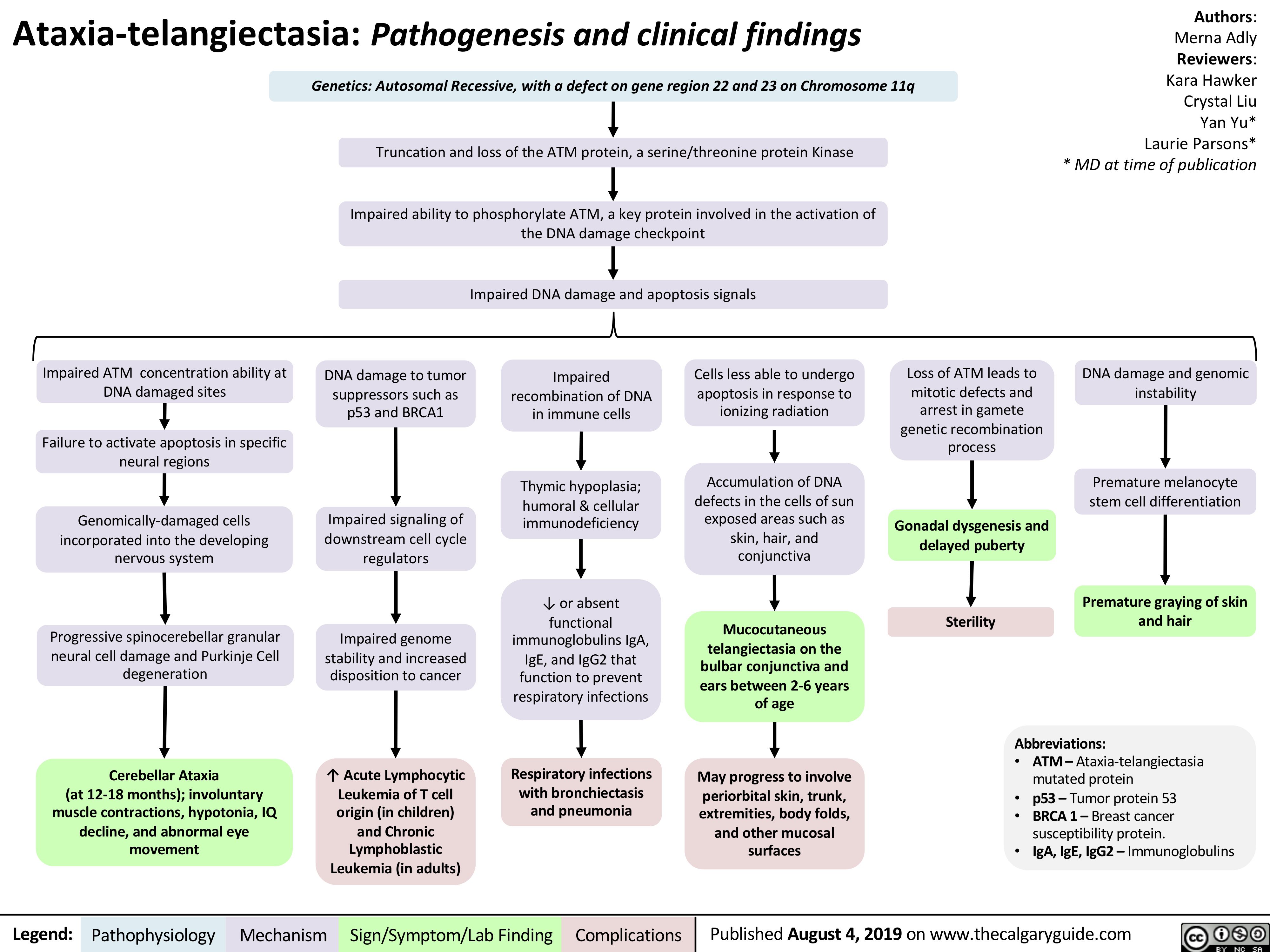
Ataxia-telangiectasia: Pathogenesis and clinical findings Genetics: Autosomal Recessive, with a defect on gene region 22 and 23 on Chromosome 11q
Authors: Merna Adly Reviewers: Kara Hawker Crystal Liu Yan Yu* Laurie Parsons* * MD at time of publication
   Truncation and loss of the ATM protein, a serine/threonine protein Kinase
Impaired ability to phosphorylate ATM, a key protein involved in the activation of the DNA damage checkpoint
    Impaired DNA damage and apoptosis signals
       Impaired ATM concentration ability at DNA damaged sites
Failure to activate apoptosis in specific neural regions
Genomically-damaged cells incorporated into the developing nervous system
Progressive spinocerebellar granular neural cell damage and Purkinje Cell degeneration
Cerebellar Ataxia
(at 12-18 months); involuntary muscle contractions, hypotonia, IQ decline, and abnormal eye movement
Loss of ATM leads to mitotic defects and arrest in gamete genetic recombination process
Gonadal dysgenesis and delayed puberty
DNA damage to tumor suppressors such as p53 and BRCA1
Impaired signaling of downstream cell cycle regulators
Impaired genome stability and increased disposition to cancer
↑ Acute Lymphocytic Leukemia of T cell origin (in children) and Chronic Lymphoblastic Leukemia (in adults)
Impaired recombination of DNA in immune cells
Thymic hypoplasia; humoral & cellular immunodeficiency
↓ or absent functional immunoglobulins IgA, IgE, and IgG2 that function to prevent respiratory infections
Respiratory infections with bronchiectasis and pneumonia
Cells less able to undergo apoptosis in response to ionizing radiation
Accumulation of DNA defects in the cells of sun exposed areas such as skin, hair, and conjunctiva
Mucocutaneous telangiectasia on the bulbar conjunctiva and ears between 2-6 years of age
May progress to involve periorbital skin, trunk, extremities, body folds, and other mucosal surfaces
Sterility
DNA damage and genomic instability
Premature melanocyte stem cell differentiation
Premature graying of skin and hair
Abbreviations:
• ATM – Ataxia-telangiectasia
mutated protein
• p53 – Tumor protein 53
• BRCA 1 – Breast cancer
susceptibility protein.
• IgA, IgE, IgG2 – Immunoglobulins
                                    Legend:
 Pathophysiology
 Mechanism
Sign/Symptom/Lab Finding
  Complications
Published August 4, 2019 on www.thecalgaryguide.com

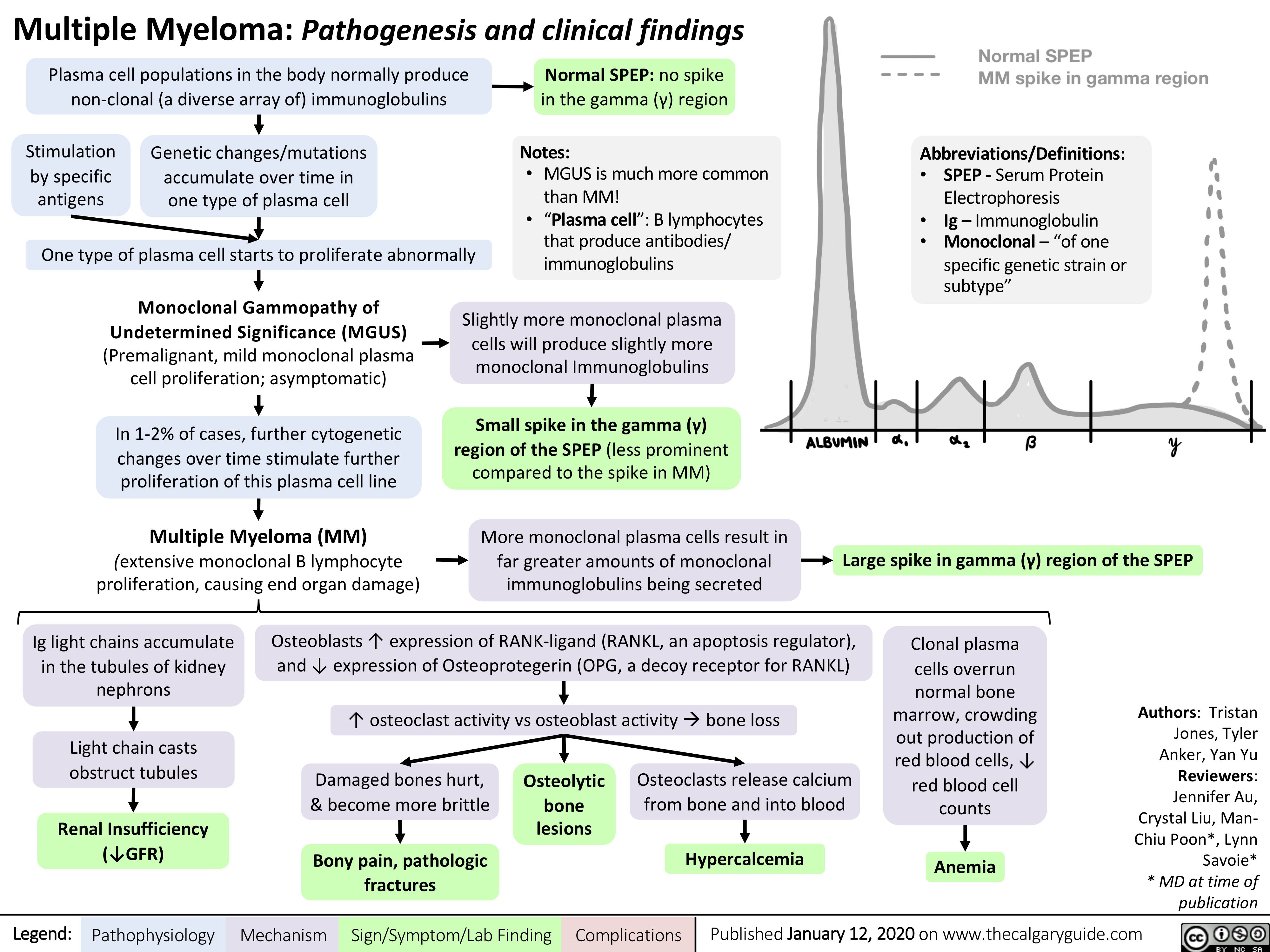
Multiple-Myeloma

 Multiple Myeloma: Pathogenesis and clinical findings
  Plasma cell populations in the body normally produce non-clonal (a diverse array of) immunoglobulins
Normal SPEP: no spike in the gamma (γ) region
Notes:
• MGUSismuchmorecommon than MM!
• “Plasmacell”:Blymphocytes that produce antibodies/ immunoglobulins
      Stimulation by specific antigens
Genetic changes/mutations accumulate over time in one type of plasma cell
Abbreviations/Definitions: • SPEP - Serum Protein
Electrophoresis
• Ig – Immunoglobulin • Monoclonal – “of one
specific genetic strain or subtype”
  One type of plasma cell starts to proliferate abnormally
 Monoclonal Gammopathy of Undetermined Significance (MGUS) (Premalignant, mild monoclonal plasma cell proliferation; asymptomatic)
In 1-2% of cases, further cytogenetic changes over time stimulate further proliferation of this plasma cell line
Multiple Myeloma (MM)
(extensive monoclonal B lymphocyte proliferation, causing end organ damage)
Slightly more monoclonal plasma cells will produce slightly more monoclonal Immunoglobulins
Small spike in the gamma (γ) region of the SPEP (less prominent compared to the spike in MM)
More monoclonal plasma cells result in far greater amounts of monoclonal immunoglobulins being secreted
Large spike in gamma (γ) region of the SPEP
               Ig light chains accumulate in the tubules of kidney nephrons
Light chain casts obstruct tubules
Renal Insufficiency (↓GFR)
Osteoblasts ↑ expression of RANK-ligand (RANKL, an apoptosis regulator), and ↓ expression of Osteoprotegerin (OPG, a decoy receptor for RANKL)
↑ osteoclast activity vs osteoblast activityàbone loss
Clonal plasma cells overrun normal bone marrow, crowding out production of red blood cells, ↓ red blood cell counts
Anemia
Authors: Tristan Jones, Tyler Anker, Yan Yu Reviewers: Jennifer Au, Crystal Liu, Man- Chiu Poon*, Lynn Savoie* * MD at time of publication
         Damaged bones hurt, & become more brittle
Bony pain, pathologic fractures
Osteolytic bone lesions
Osteoclasts release calcium from bone and into blood
Hypercalcemia
         Legend:
 Pathophysiology
 Mechanism
Sign/Symptom/Lab Finding
  Complications
Published January 12, 2020 on www.thecalgaryguide.com

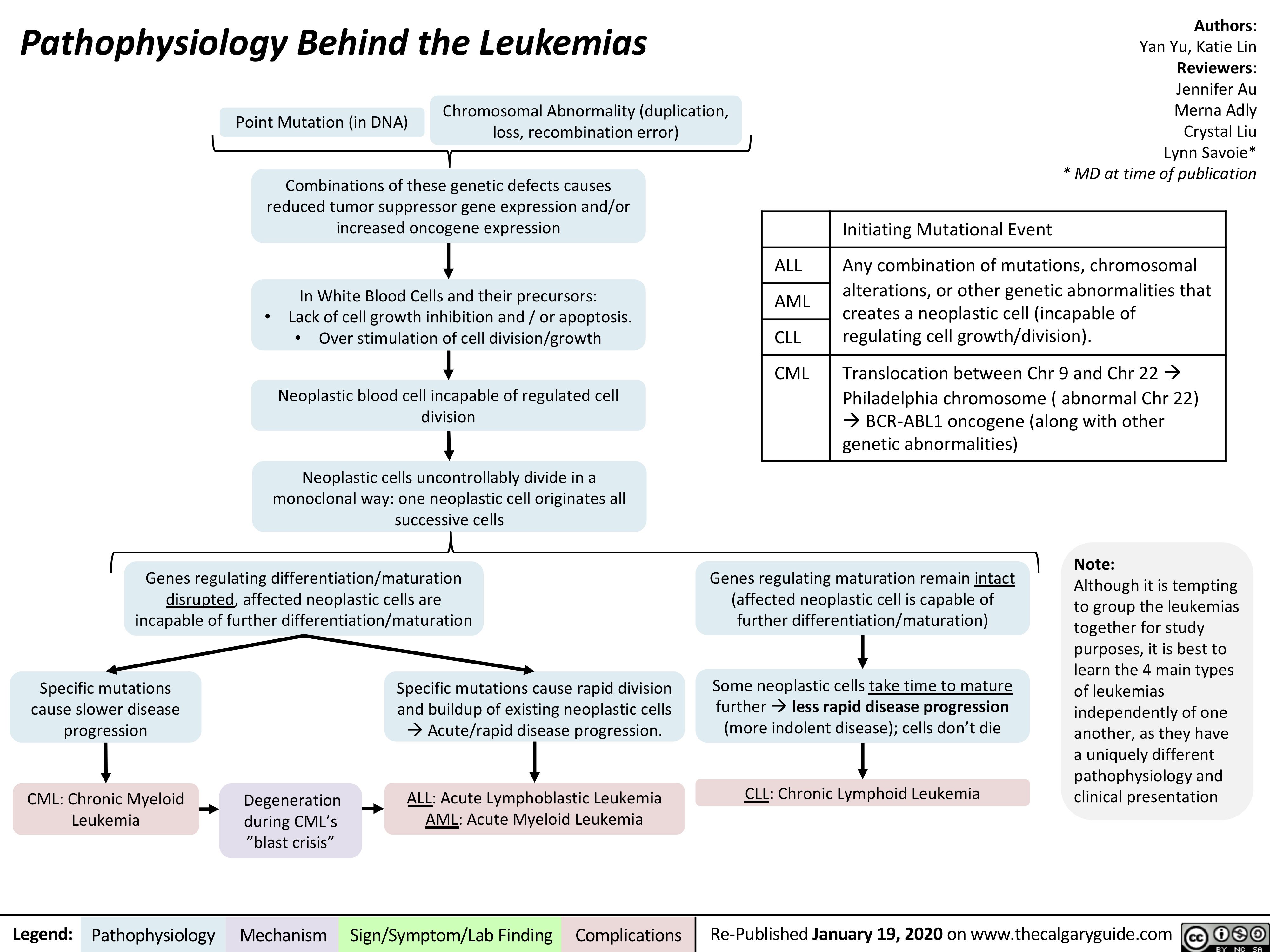
Pathophysiology-Behind-the-Leukemias

Pathophysiology Behind the Leukemias
Authors: Yan Yu, Katie Lin Reviewers: Jennifer Au Merna Adly Crystal Liu Lynn Savoie* * MD at time of publication
  Point Mutation (in DNA)
Chromosomal Abnormality (duplication, loss, recombination error)
  Combinations of these genetic defects causes reduced tumor suppressor gene expression and/or increased oncogene expression
    Initiating Mutational Event
ALL
Any combination of mutations, chromosomal
alterations, or other genetic abnormalities that creates a neoplastic cell (incapable of regulating cell growth/division).
 AML
 CLL
CML
Translocation between Chr 9 and Chr 22à Philadelphia chromosome ( abnormal Chr 22)
àBCR-ABL1 oncogene (along with other genetic abnormalities)
   •
In White Blood Cells and their precursors: Lack of cell growth inhibition and / or apoptosis.
• Over stimulation of cell division/growth Neoplastic blood cell incapable of regulated cell
division
Neoplastic cells uncontrollably divide in a monoclonal way: one neoplastic cell originates all successive cells
          Genes regulating differentiation/maturation disrupted, affected neoplastic cells are incapable of further differentiation/maturation
Genes regulating maturation remain intact (affected neoplastic cell is capable of further differentiation/maturation)
Some neoplastic cells take time to mature furtheràless rapid disease progression (more indolent disease); cells don’t die
CLL: Chronic Lymphoid Leukemia
Note:
Although it is tempting to group the leukemias together for study purposes, it is best to learn the 4 main types of leukemias independently of one another, as they have a uniquely different pathophysiology and clinical presentation
        Specific mutations cause slower disease progression
CML: Chronic Myeloid Leukemia
Degeneration during CML’s ”blast crisis”
Specific mutations cause rapid division and buildup of existing neoplastic cells àAcute/rapid disease progression.
ALL: Acute Lymphoblastic Leukemia AML: Acute Myeloid Leukemia
              Legend:
 Pathophysiology
Mechanism
Sign/Symptom/Lab Finding
  Complications
Re-Published January 19, 2020 on www.thecalgaryguide.com

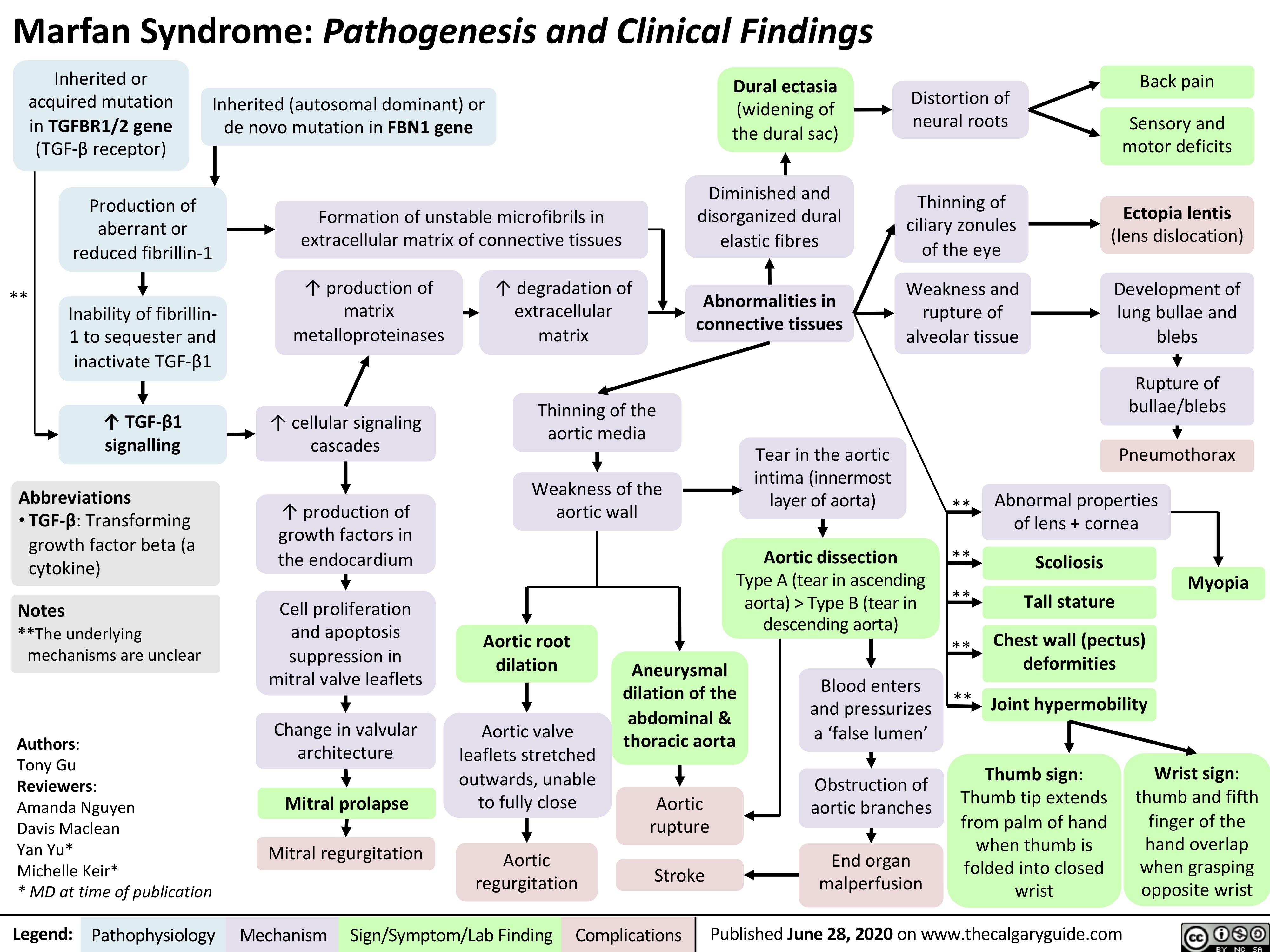
Marfan-Syndrome

Marfan Syndrome: Pathogenesis and Clinical Findings
  Inherited or acquired mutation in TGFBR1/2 gene (TGF-β receptor)
Dural ectasia
(widening of the dural sac)
Diminished and disorganized dural elastic fibres
Abnormalities in connective tissues
Tear in the aortic intima (innermost layer of aorta)
Aortic dissection
Type A (tear in ascending aorta) > Type B (tear in descending aorta)
Back pain
Sensory and motor deficits
Ectopia lentis
(lens dislocation)
Development of lung bullae and blebs
Rupture of bullae/blebs
Pneumothorax
** Abnormal properties of lens + cornea
** Scoliosis
** Myopia
Tall stature Chest wall (pectus)
    Inherited (autosomal dominant) or de novo mutation in FBN1 gene
Distortion of neural roots
Thinning of ciliary zonules of the eye
Weakness and rupture of alveolar tissue
        Production of aberrant or reduced fibrillin-1
Formation of unstable microfibrils in extracellular matrix of connective tissues
             **
inactivate TGF-β1
↑ production of matrix metalloproteinases
↑ cellular signaling cascades
↑ production of growth factors in the endocardium
Cell proliferation and apoptosis suppression in mitral valve leaflets
Change in valvular architecture
Mitral prolapse
Mitral regurgitation
↑ degradation of extracellular matrix
Thinning of the aortic media
Weakness of the aortic wall
 Inability of fibrillin- 1 to sequester and
             ↑ TGF-β1 signalling
Abbreviations
• TGF-β: Transforming
growth factor beta (a cytokine)
Notes
**The underlying
mechanisms are unclear
Authors:
Tony Gu Reviewers: Amanda Nguyen Davis Maclean Yan Yu* Michelle Keir*
* MD at time of publication
Aortic root dilation
Aortic valve leaflets stretched outwards, unable to fully close
Aortic regurgitation
Aneurysmal dilation of the abdominal & thoracic aorta
Aortic rupture
Stroke
Blood enters and pressurizes a ‘false lumen’
Obstruction of aortic branches
End organ malperfusion
** deformities
** Joint hypermobility
                                             Thumb sign: Thumb tip extends from palm of hand when thumb is folded into closed wrist
Wrist sign: thumb and fifth finger of the hand overlap when grasping opposite wrist
               Legend:
 Pathophysiology
Mechanism
Sign/Symptom/Lab Finding
  Complications
Published June 28, 2020 on www.thecalgaryguide.com

Avascular-necrosis-of-the-femoral-head
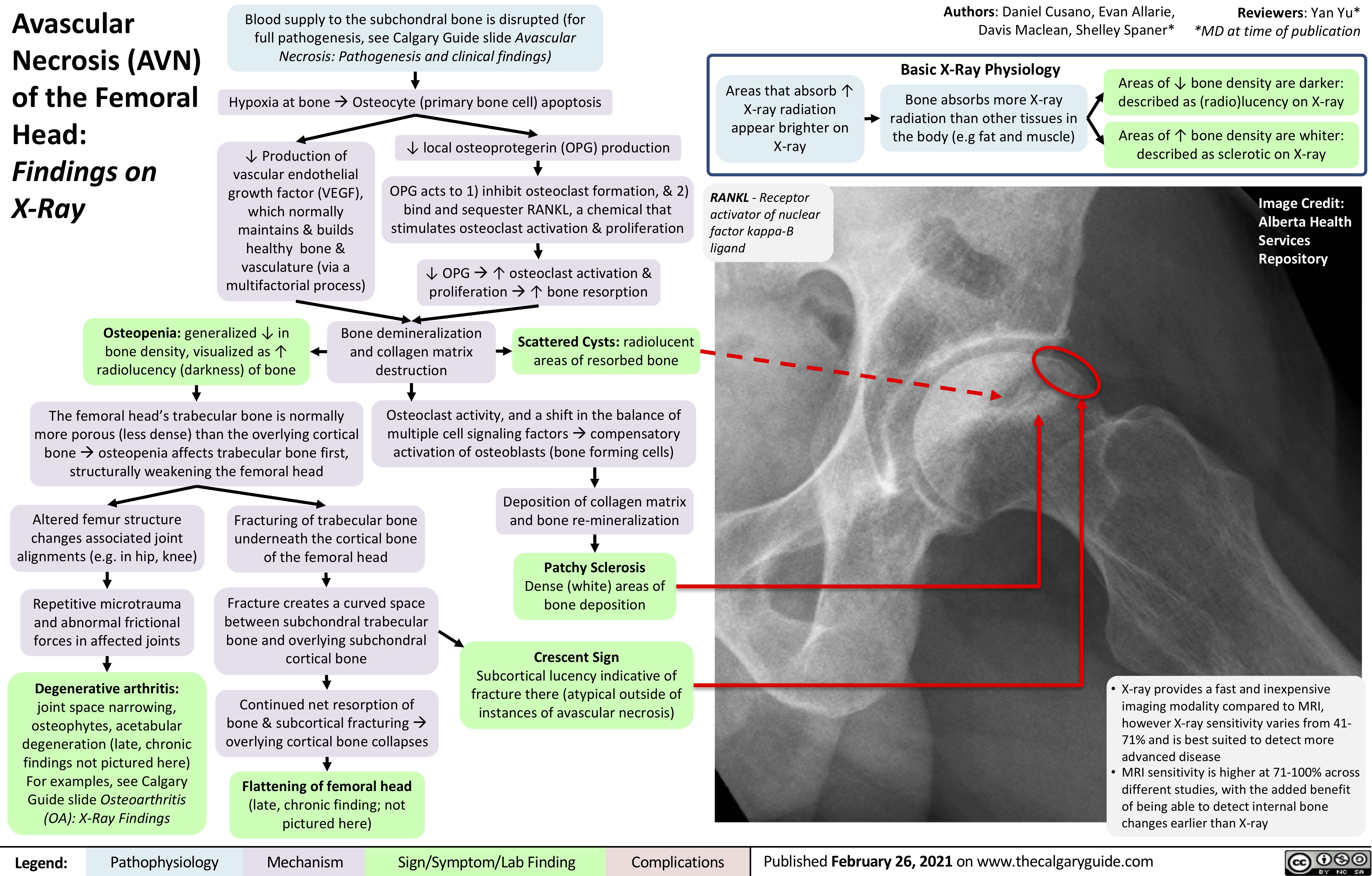
Avascular Necrosis (AVN) of the Femoral Head:
Findings on X-Ray
Blood supply to the subchondral bone is disrupted (for full pathogenesis, see Calgary Guide slide Avascular Necrosis: Pathogenesis and clinical findings)
Hypoxia at boneàOsteocyte (primary bone cell) apoptosis
Authors: Daniel Cusano, Evan Allarie, Reviewers: Yan Yu* Davis Maclean, Shelley Spaner* *MD at time of publication
          ↓ local osteoprotegerin (OPG) production
OPG acts to 1) inhibit osteoclast formation, & 2) bind and sequester RANKL, a chemical that stimulates osteoclast activation & proliferation
↓ OPGà↑ osteoclast activation & proliferationà↑ bone resorption
Areas that absorb ↑ X-ray radiation appear brighter on X-ray
RANKL - Receptor activator of nuclear factor kappa-Β ligand
Basic X-Ray Physiology
Bone absorbs more X-ray radiation than other tissues in the body (e.g fat and muscle)
Areas of ↓ bone density are darker: described as (radio)lucency on X-ray
Areas of ↑ bone density are whiter: described as sclerotic on X-ray
Image Credit: Alberta Health Services Repository
 ↓ Production of vascular endothelial growth factor (VEGF), which normally maintains & builds healthy bone & vasculature (via a multifactorial process)
          Osteopenia: generalized ↓ in bone density, visualized as ↑ radiolucency (darkness) of bone
Bone demineralization and collagen matrix destruction
Scattered Cysts: radiolucent areas of resorbed bone
          The femoral head’s trabecular bone is normally more porous (less dense) than the overlying cortical boneàosteopenia affects trabecular bone first, structurally weakening the femoral head
Osteoclast activity, and a shift in the balance of multiple cell signaling factorsàcompensatory activation of osteoblasts (bone forming cells)
      Altered femur structure changes associated joint alignments (e.g. in hip, knee)
Repetitive microtrauma and abnormal frictional forces in affected joints
Degenerative arthritis:
joint space narrowing, osteophytes, acetabular degeneration (late, chronic findings not pictured here) For examples, see Calgary Guide slide Osteoarthritis (OA): X-Ray Findings
Fracturing of trabecular bone underneath the cortical bone of the femoral head
Fracture creates a curved space between subchondral trabecular bone and overlying subchondral cortical bone
Continued net resorption of bone & subcortical fracturingà overlying cortical bone collapses
Flattening of femoral head
(late, chronic finding; not pictured here)
Deposition of collagen matrix and bone re-mineralization
Patchy Sclerosis
Dense (white) areas of bone deposition
Crescent Sign
Subcortical lucency indicative of fracture there (atypical outside of instances of avascular necrosis)
• X-ray provides a fast and inexpensive imaging modality compared to MRI, however X-ray sensitivity varies from 41- 71% and is best suited to detect more advanced disease
• MRI sensitivity is higher at 71-100% across different studies, with the added benefit of being able to detect internal bone changes earlier than X-ray
                Legend:
 Pathophysiology
Mechanism
Sign/Symptom/Lab Finding
  Complications
 Published February 26, 2021 on www.thecalgaryguide.com

Lambert-Eaton-Myasthenic-Syndrome-Pathogenesis-and-Clinical-Findings
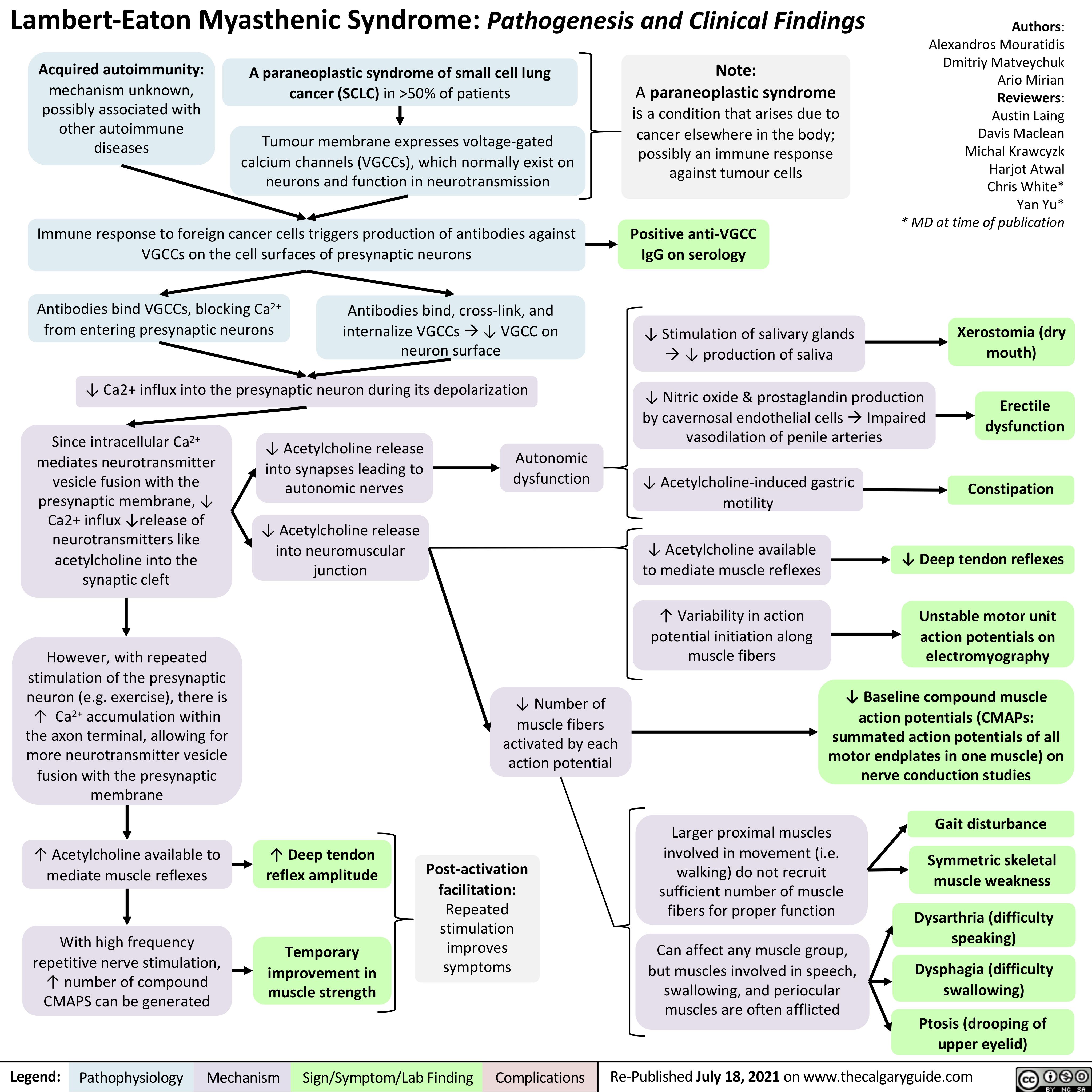
Lambert-Eaton Myasthenic Syndrome: Pathogenesis and Clinical Findings
Authors: Alexandros Mouratidis Dmitriy Matveychuk Ario Mirian Reviewers: Austin Laing Davis Maclean Michal Krawcyzk Harjot Atwal Chris White* Yan Yu* * MD at time of publication
    Acquired autoimmunity:
mechanism unknown, possibly associated with other autoimmune diseases
A paraneoplastic syndrome of small cell lung cancer (SCLC) in >50% of patients
Tumour membrane expresses voltage-gated calcium channels (VGCCs), which normally exist on neurons and function in neurotransmission
Note:
A paraneoplastic syndrome is a condition that arises due to cancer elsewhere in the body; possibly an immune response against tumour cells
Positive anti-VGCC IgG on serology
↓ Stimulation of salivary glands à↓ production of saliva
↓ Nitric oxide & prostaglandin production by cavernosal endothelial cellsàImpaired vasodilation of penile arteries
↓ Acetylcholine-induced gastric motility
↓ Acetylcholine available to mediate muscle reflexes
↑ Variability in action potential initiation along muscle fibers
       Immune response to foreign cancer cells triggers production of antibodies against VGCCs on the cell surfaces of presynaptic neurons
Antibodies bind VGCCs, blocking Ca2+ Antibodies bind, cross-link, and
       from entering presynaptic neurons
↓ Ca2+ influx into the presynaptic neuron during its depolarization
internalize VGCCsà↓ VGCC on neuron surface
Xerostomia (dry mouth)
Erectile dysfunction
Constipation
↓ Deep tendon reflexes
Unstable motor unit action potentials on electromyography
↓ Baseline compound muscle action potentials (CMAPs:
summated action potentials of all motor endplates in one muscle) on nerve conduction studies
         Since intracellular Ca2+ mediates neurotransmitter vesicle fusion with the presynaptic membrane, ↓ Ca2+ influx ↓release of neurotransmitters like acetylcholine into the synaptic cleft
However, with repeated stimulation of the presynaptic neuron (e.g. exercise), there is ↑ Ca2+ accumulation within the axon terminal, allowing for more neurotransmitter vesicle fusion with the presynaptic membrane
↑ Acetylcholine available to mediate muscle reflexes
With high frequency repetitive nerve stimulation, ↑ number of compound CMAPS can be generated
↓ Acetylcholine release into synapses leading to autonomic nerves
↓ Acetylcholine release into neuromuscular junction
Autonomic dysfunction
                                ↑ Deep tendon reflex amplitude
Temporary improvement in muscle strength
↓ Number of
muscle fibers activated by each action potential
Post-activation facilitation: Repeated stimulation improves symptoms
Larger proximal muscles involved in movement (i.e. walking) do not recruit sufficient number of muscle fibers for proper function
Can affect any muscle group, but muscles involved in speech, swallowing, and periocular muscles are often afflicted
Gait disturbance
Symmetric skeletal muscle weakness
Dysarthria (difficulty speaking)
Dysphagia (difficulty swallowing)
Ptosis (drooping of upper eyelid)
             Legend:
 Pathophysiology
 Mechanism
Sign/Symptom/Lab Finding
  Complications
Re-Published July 18, 2021 on www.thecalgaryguide.com

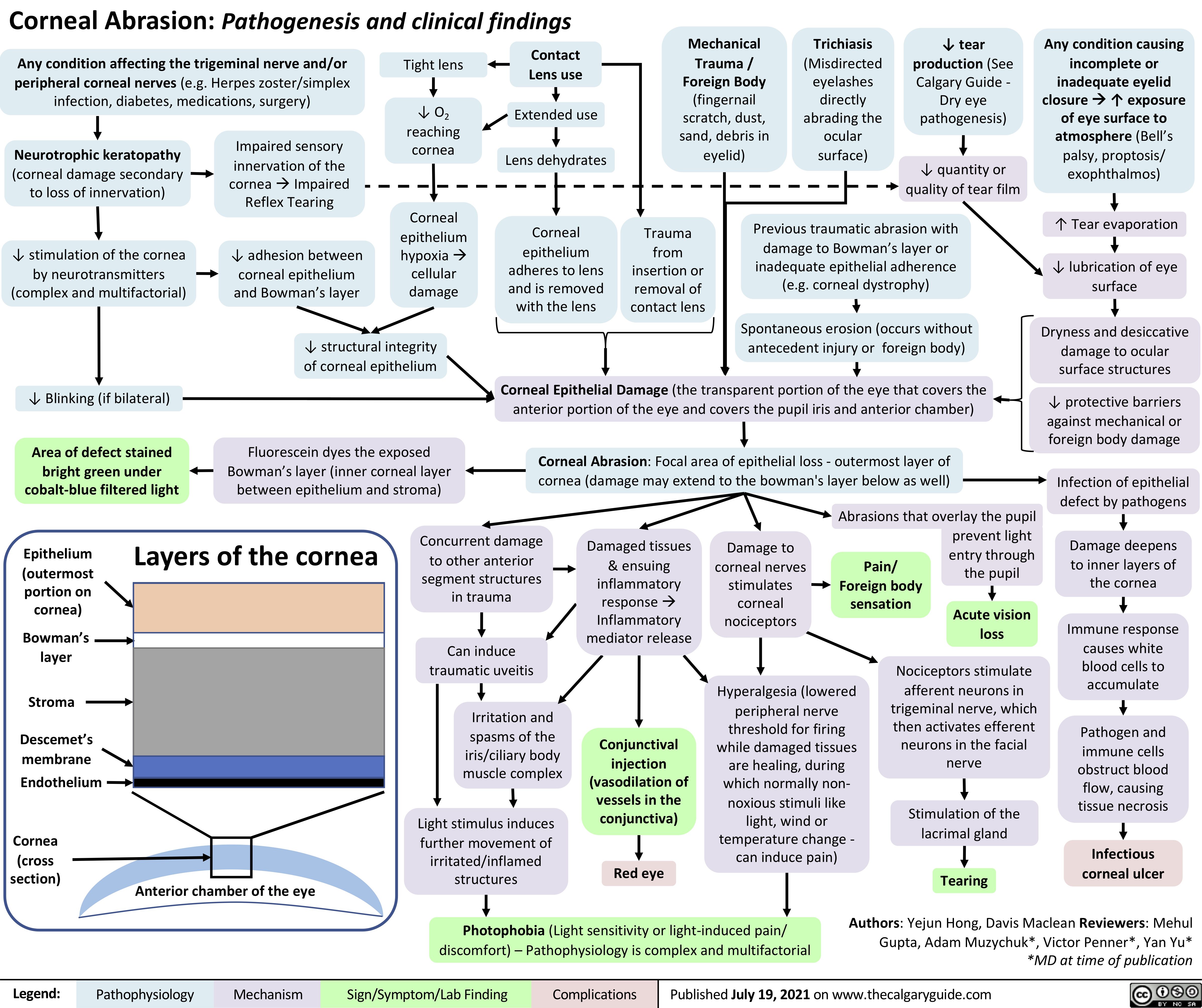
Corneal-Abrasion

Corneal Abrasion: Pathogenesis and clinical findings
Mechanical Trauma / Foreign Body (fingernail scratch, dust, sand, debris in eyelid)
Trichiasis
(Misdirected eyelashes directly abrading the ocular surface)
↓ tear production (See Calgary Guide - Dry eye pathogenesis)
↓ quantity or quality of tear film
Any condition causing incomplete or inadequate eyelid closureà↑ exposure of eye surface to atmosphere (Bell’s palsy, proptosis/ exophthalmos)
↑ Tear evaporation
↓ lubrication of eye surface
Dryness and desiccative damage to ocular surface structures
↓ protective barriers against mechanical or foreign body damage
Infection of epithelial defect by pathogens
Damage deepens to inner layers of the cornea
Immune response causes white blood cells to accumulate
Pathogen and immune cells obstruct blood flow, causing tissue necrosis
Infectious corneal ulcer
        Any condition affecting the trigeminal nerve and/or peripheral corneal nerves (e.g. Herpes zoster/simplex infection, diabetes, medications, surgery)
Tight lens
↓ O2 reaching cornea
Corneal epithelium hypoxiaà cellular damage
Contact Lens use
Extended use Lens dehydrates
Corneal epithelium adheres to lens and is removed with the lens
            Neurotrophic keratopathy
(corneal damage secondary to loss of innervation)
↓ stimulation of the cornea by neurotransmitters (complex and multifactorial)
↓ Blinking (if bilateral)
Area of defect stained bright green under cobalt-blue filtered light
Impaired sensory innervation of the
corneaàImpaired Reflex Tearing
↓ adhesion between corneal epithelium and Bowman’s layer
Trauma from insertion or removal of contact lens
Previous traumatic abrasion with damage to Bowman’s layer or inadequate epithelial adherence (e.g. corneal dystrophy)
Spontaneous erosion (occurs without antecedent injury or foreign body)
                          ↓ structural integrity of corneal epithelium
Fluorescein dyes the exposed Bowman’s layer (inner corneal layer between epithelium and stroma)
Corneal Epithelial Damage (the transparent portion of the eye that covers the anterior portion of the eye and covers the pupil iris and anterior chamber)
Corneal Abrasion: Focal area of epithelial loss - outermost layer of cornea (damage may extend to the bowman's layer below as well)
Abrasions that overlay the pupil
                          Epithelium (outermost portion on cornea)
Bowman’s layer
Stroma
Descemet’s membrane
Endothelium
Cornea (cross section)
Layers of the cornea
Concurrent damage to other anterior
segment structures in trauma
Can induce traumatic uveitis
Irritation and spasms of the iris/ciliary body muscle complex
Light stimulus induces further movement of
irritated/inflamed structures
Damaged tissues & ensuing inflammatory responseà Inflammatory mediator release
Conjunctival injection (vasodilation of vessels in the conjunctiva)
Red eye
Damage to corneal nerves stimulates corneal nociceptors
Pain/ Foreign body sensation
prevent light entry through the pupil
Acute vision loss
                      Hyperalgesia (lowered peripheral nerve
threshold for firing while damaged tissues are healing, during which normally non- noxious stimuli like light, wind or temperature change - can induce pain)
Nociceptors stimulate afferent neurons in trigeminal nerve, which then activates efferent neurons in the facial nerve
Stimulation of the lacrimal gland
Tearing
                     Anterior chamber of the eye
  Photophobia (Light sensitivity or light-induced pain/ discomfort) – Pathophysiology is complex and multifactorial
Authors: Yejun Hong, Davis Maclean Reviewers: Mehul Gupta, Adam Muzychuk*, Victor Penner*, Yan Yu* *MD at time of publication
 Legend:
 Pathophysiology
 Mechanism
 Sign/Symptom/Lab Finding
  Complications
 Published July 19, 2021 on www.thecalgaryguide.com

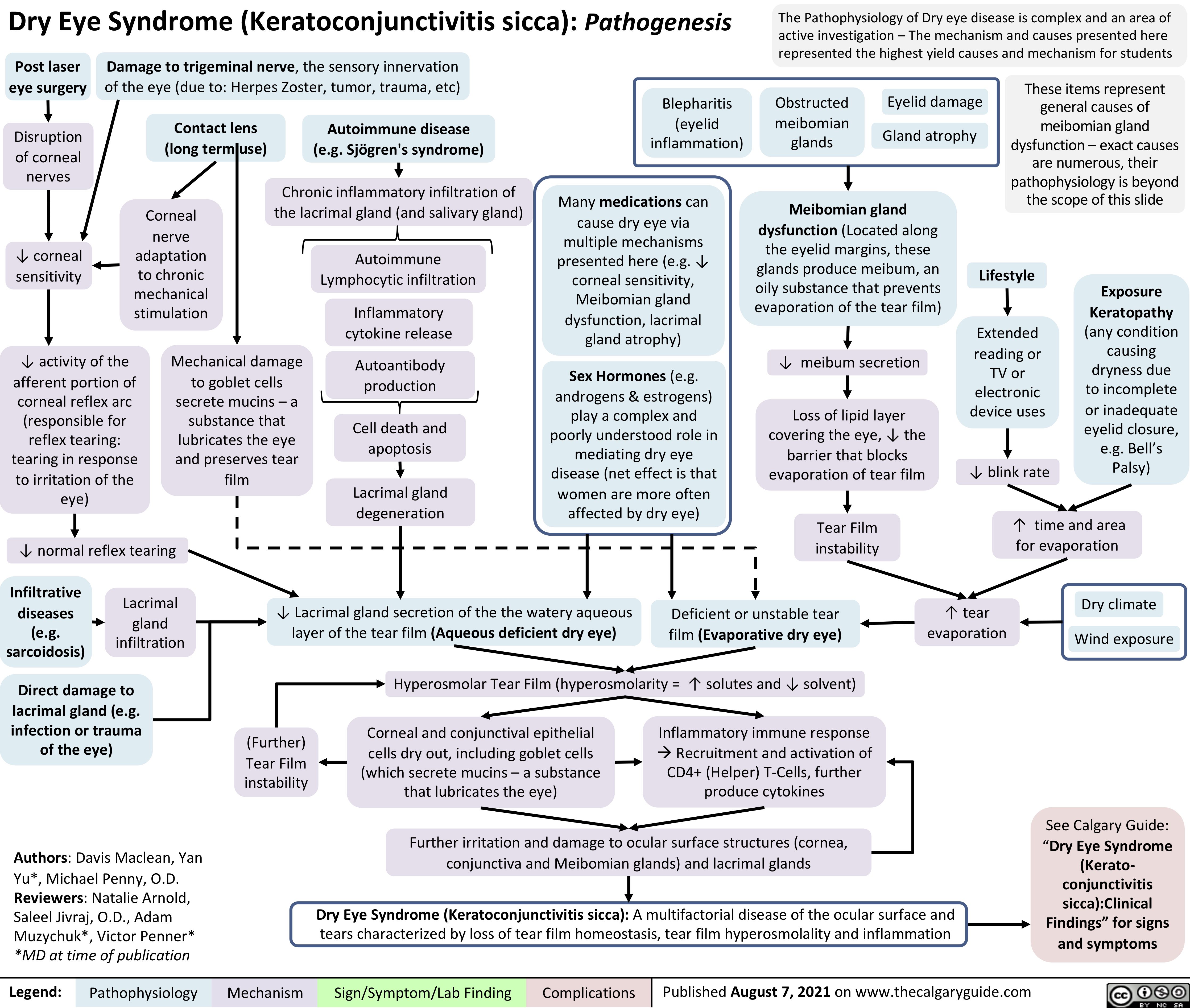
Dry-Eye-Syndrome-Pathogenesis

Dry Eye Syndrome (Keratoconjunctivitis sicca): Pathogenesis
The Pathophysiology of Dry eye disease is complex and an area of active investigation – The mechanism and causes presented here represented the highest yield causes and mechanism for students
   Post laser eye surgery
Disruption of corneal nerves
↓ corneal sensitivity
Damage to trigeminal nerve, the sensory innervation of the eye (due to: Herpes Zoster, tumor, trauma, etc)
Blepharitis (eyelid inflammation)
Many medications can cause dry eye via
multiple mechanisms presented here (e.g. ↓ corneal sensitivity, Meibomian gland dysfunction, lacrimal gland atrophy)
Sex Hormones (e.g. androgens & estrogens) play a complex and poorly understood role in mediating dry eye disease (net effect is that women are more often affected by dry eye)
Obstructed meibomian glands
Eyelid damage Gland atrophy
These items represent general causes of meibomian gland dysfunction – exact causes are numerous, their pathophysiology is beyond the scope of this slide
         Contact lens (long term use)
Corneal nerve adaptation to chronic mechanical stimulation
Autoimmune disease (e.g. Sjögren's syndrome)
Chronic inflammatory infiltration of the lacrimal gland (and salivary gland)
Autoimmune Lymphocytic infiltration
Inflammatory cytokine release
Autoantibody production
Cell death and apoptosis
Lacrimal gland degeneration
Meibomian gland dysfunction (Located along the eyelid margins, these glands produce meibum, an oily substance that prevents evaporation of the tear film)
↓ meibum secretion Loss of lipid layer
covering the eye, ↓ the barrier that blocks evaporation of tear film
Tear Film instability
Lifestyle
Extended reading or
TV or electronic device uses
Exposure Keratopathy (any condition causing dryness due to incomplete or inadequate eyelid closure, e.g. Bell’s Palsy)
                         ↓ activity of the afferent portion of
corneal reflex arc (responsible for reflex tearing: tearing in response to irritation of the eye)
Mechanical damage to goblet cells
secrete mucins – a substance that lubricates the eye and preserves tear film
↓ blink rate
↑ time and area
                  ↓ normal reflex tearing
for evaporation
Dry climate Wind exposure
   Infiltrative diseases
(e.g. sarcoidosis)
Lacrimal gland infiltration
↓ Lacrimal gland secretion of the the watery aqueous layer of the tear film (Aqueous deficient dry eye)
Deficient or unstable tear film (Evaporative dry eye)
↑ tear evaporation
               Direct damage to lacrimal gland (e.g. infection or trauma of the eye)
Authors: Davis Maclean, Yan Yu*, Michael Penny, O.D.
Reviewers: Natalie Arnold, Saleel Jivraj, O.D., Adam Muzychuk*, Victor Penner* *MD at time of publication
Hyperosmolar Tear Film (hyperosmolarity = ↑ solutes and ↓ solvent)
     (Further) Tear Film instability
Corneal and conjunctival epithelial
cells dry out, including goblet cells (which secrete mucins – a substance that lubricates the eye)
Inflammatory immune response àRecruitment and activation of CD4+ (Helper) T-Cells, further produce cytokines
       Further irritation and damage to ocular surface structures (cornea, conjunctiva and Meibomian glands) and lacrimal glands
See Calgary Guide: “Dry Eye Syndrome
(Kerato- conjunctivitis sicca):Clinical Findings” for signs and symptoms
 Dry Eye Syndrome (Keratoconjunctivitis sicca): A multifactorial disease of the ocular surface and tears characterized by loss of tear film homeostasis, tear film hyperosmolality and inflammation
  Legend:
 Pathophysiology
 Mechanism
 Sign/Symptom/Lab Finding
  Complications
Published August 7, 2021 on www.thecalgaryguide.com

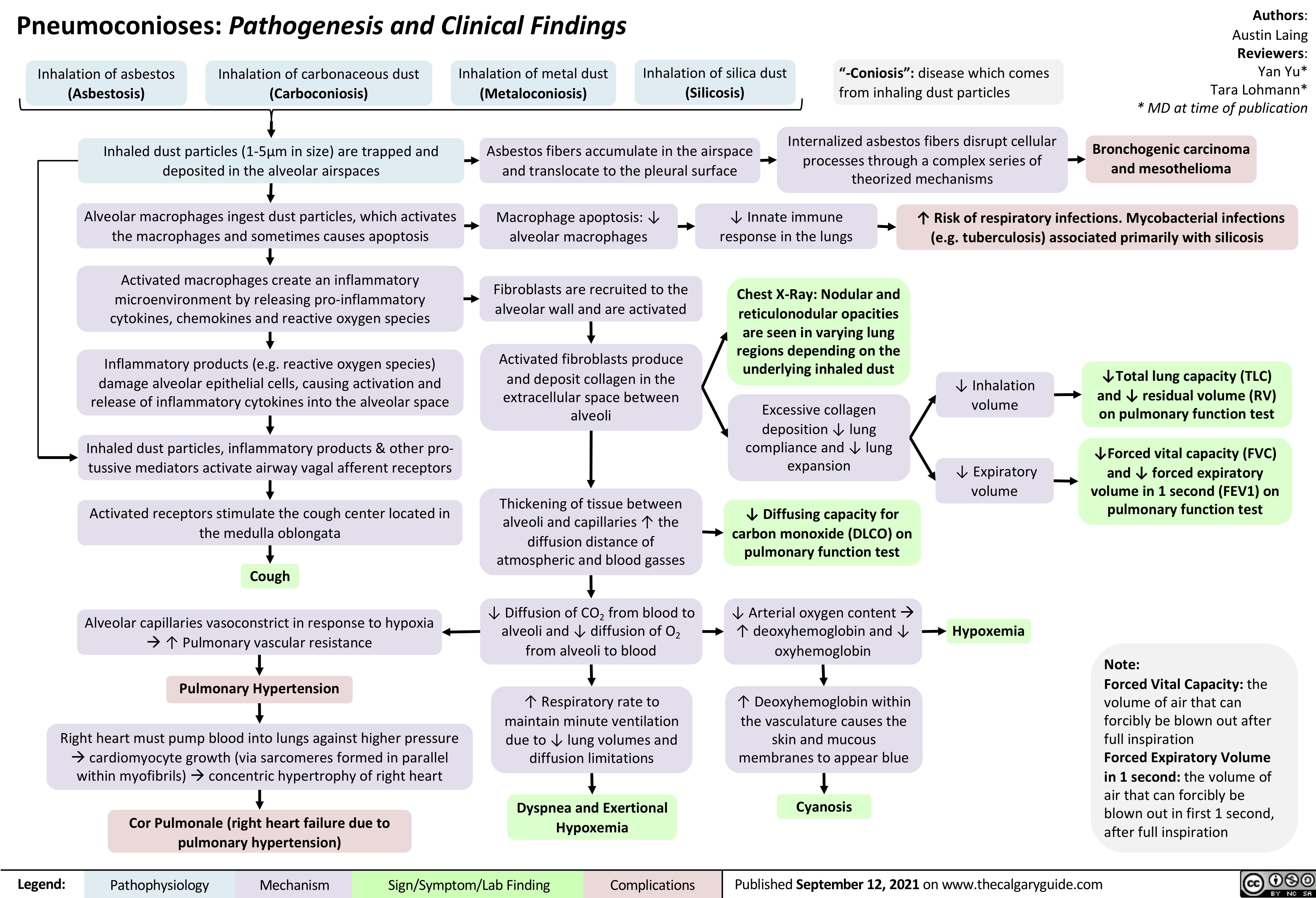
Pneumoconioses

Pneumoconioses: Pathogenesis and Clinical Findings
Authors: Austin Laing
Reviewers: Yan Yu* Tara Lohmann* * MD at time of publication
Bronchogenic carcinoma and mesothelioma
     Inhalation of asbestos
(Asbestosis)
Inhalation of carbonaceous dust
(Carboconiosis)
Inhalation of metal dust
(Metaloconiosis)
Inhalation of silica dust
(Silicosis)
“-Coniosis”: disease which comes from inhaling dust particles
Internalized asbestos fibers disrupt cellular processes through a complex series of theorized mechanisms
      Inhaled dust particles (1-5μm in size) are trapped and deposited in the alveolar airspaces
Alveolar macrophages ingest dust particles, which activates the macrophages and sometimes causes apoptosis
Activated macrophages create an inflammatory microenvironment by releasing pro-inflammatory cytokines, chemokines and reactive oxygen species
Inflammatory products (e.g. reactive oxygen species) damage alveolar epithelial cells, causing activation and release of inflammatory cytokines into the alveolar space
Inhaled dust particles, inflammatory products & other pro- tussive mediators activate airway vagal afferent receptors
Activated receptors stimulate the cough center located in the medulla oblongata
Cough
Alveolar capillaries vasoconstrict in response to hypoxia à↑ Pulmonary vascular resistance
Pulmonary Hypertension
Right heart must pump blood into lungs against higher pressure àcardiomyocyte growth (via sarcomeres formed in parallel within myofibrils)àconcentric hypertrophy of right heart
Cor Pulmonale (right heart failure due to pulmonary hypertension)
Asbestos fibers accumulate in the airspace and translocate to the pleural surface
         Macrophage apoptosis: ↓ alveolar macrophages
Fibroblasts are recruited to the alveolar wall and are activated
Activated fibroblasts produce and deposit collagen in the
extracellular space between alveoli
Thickening of tissue between alveoli and capillaries ↑ the diffusion distance of atmospheric and blood gasses
↓ Diffusion of CO2 from blood to alveoli and ↓ diffusion of O2 from alveoli to blood
↑ Respiratory rate to maintain minute ventilation due to ↓ lung volumes and diffusion limitations
Dyspnea and Exertional Hypoxemia
↓ Innate immune response in the lungs
Chest X-Ray: Nodular and reticulonodular opacities are seen in varying lung regions depending on the underlying inhaled dust
Excessive collagen
deposition ↓ lung compliance and ↓ lung expansion
↓ Diffusing capacity for carbon monoxide (DLCO) on pulmonary function test
↓ Arterial oxygen contentà ↑ deoxyhemoglobin and ↓ oxyhemoglobin
↑ Deoxyhemoglobin within the vasculature causes the skin and mucous membranes to appear blue
Cyanosis
↑ Risk of respiratory infections. Mycobacterial infections (e.g. tuberculosis) associated primarily with silicosis
               ↓ Inhalation volume
↓ Expiratory volume
Hypoxemia
↓Total lung capacity (TLC) and ↓ residual volume (RV) on pulmonary function test
↓Forced vital capacity (FVC) and ↓ forced expiratory volume in 1 second (FEV1) on pulmonary function test
                          Note:
Forced Vital Capacity: the volume of air that can forcibly be blown out after full inspiration
Forced Expiratory Volume in 1 second: the volume of air that can forcibly be blown out in first 1 second, after full inspiration
               Legend:
 Pathophysiology
Mechanism
Sign/Symptom/Lab Finding
  Complications
 Published September 12, 2021 on www.thecalgaryguide.com

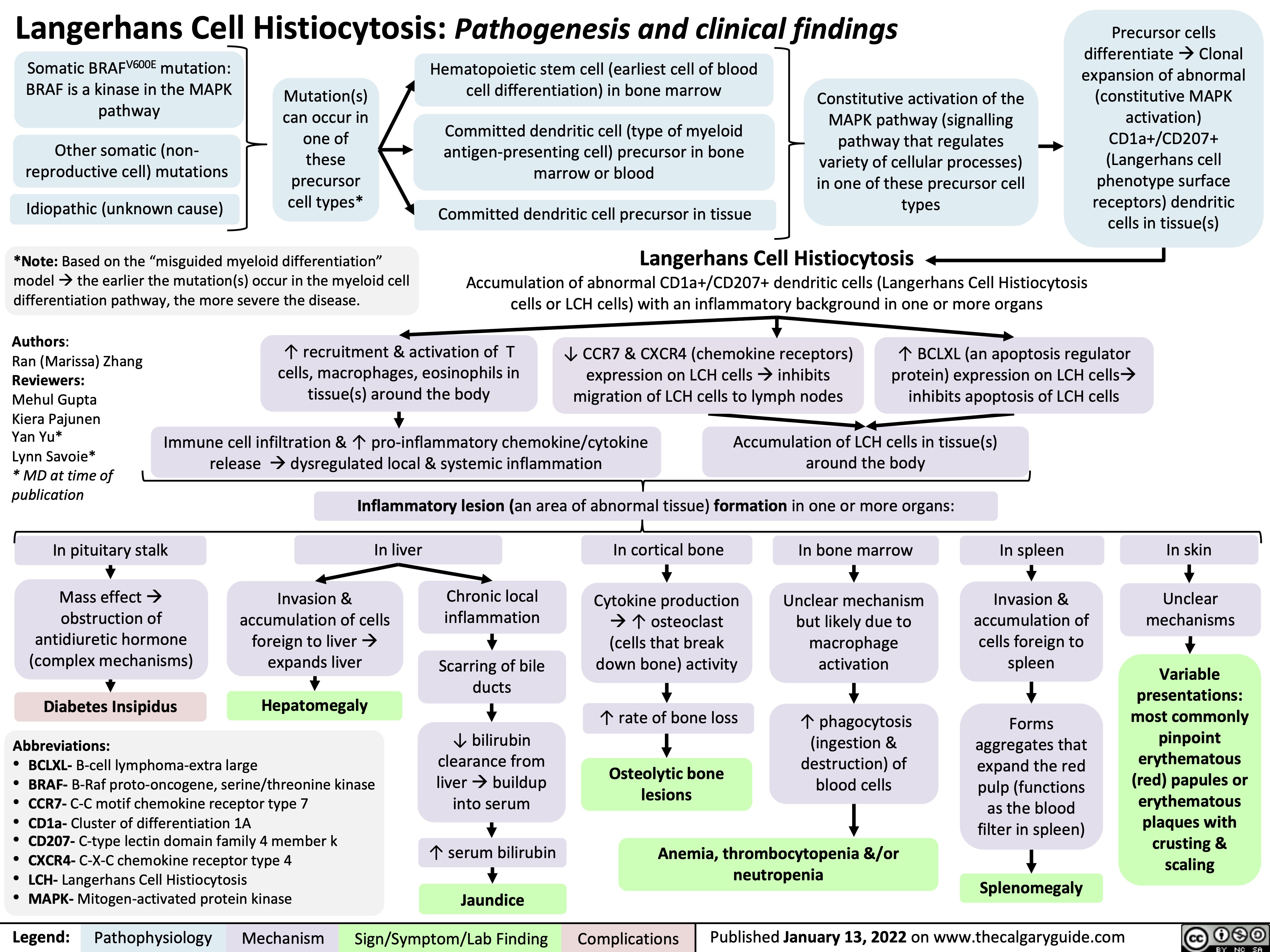
Langerhans Cell Histiocytosis

Langerhans Cell Histiocytosis: Pathogenesis and clinical findings
Precursor cells differentiateàClonal expansion of abnormal (constitutive MAPK activation) CD1a+/CD207+ (Langerhans cell phenotype surface receptors) dendritic cells in tissue(s)
     Somatic BRAFV600E mutation: BRAF is a kinase in the MAPK pathway
Other somatic (non- reproductive cell) mutations
Idiopathic (unknown cause)
Mutation(s) can occur in one of these precursor cell types*
Hematopoietic stem cell (earliest cell of blood cell differentiation) in bone marrow
Committed dendritic cell (type of myeloid antigen-presenting cell) precursor in bone marrow or blood
Committed dendritic cell precursor in tissue
Constitutive activation of the MAPK pathway (signalling pathway that regulates variety of cellular processes) in one of these precursor cell types
          *Note: Based on the “misguided myeloid differentiation” modelàthe earlier the mutation(s) occur in the myeloid cell differentiation pathway, the more severe the disease.
Langerhans Cell Histiocytosis
Accumulation of abnormal CD1a+/CD207+ dendritic cells (Langerhans Cell Histiocytosis cells or LCH cells) with an inflammatory background in one or more organs
  Authors:
Ran (Marissa) Zhang Reviewers:
Mehul Gupta
Kiera Pajunen
Yan Yu*
Lynn Savoie*
* MD at time of publication
↑ recruitment & activation of T cells, macrophages, eosinophils in tissue(s) around the body
↓ CCR7 & CXCR4 (chemokine receptors) expression on LCH cellsàinhibits migration of LCH cells to lymph nodes
↑ BCLXL (an apoptosis regulator protein) expression on LCH cellsà inhibits apoptosis of LCH cells
       Immune cell infiltration & ↑ pro-inflammatory chemokine/cytokine release à dysregulated local & systemic inflammation
Accumulation of LCH cells in tissue(s) around the body
  Inflammatory lesion (an area of abnormal tissue) formation in one or more organs:
       In pituitary stalk
Mass effectà
obstruction of antidiuretic hormone (complex mechanisms)
In liver
Invasion & accumulation of cells foreign to liverà expands liver
Chronic local inflammation
Scarring of bile ducts
↓ bilirubin clearance from liveràbuildup into serum
↑ serum bilirubin
Jaundice
In cortical bone Cytokine production
à↑ osteoclast
(cells that break down bone) activity
↑ rate of bone loss
Osteolytic bone lesions
In bone marrow
Unclear mechanism but likely due to macrophage activation
↑ phagocytosis (ingestion & destruction) of blood cells
In spleen
Invasion & accumulation of cells foreign to spleen
Forms aggregates that expand the red pulp (functions as the blood filter in spleen)
Splenomegaly
In skin
Unclear mechanisms
Variable presentations: most commonly pinpoint erythematous (red) papules or erythematous plaques with crusting & scaling
            Hepatomegaly • BRAF- B-Raf proto-oncogene, serine/threonine kinase
• CCR7- C-C motif chemokine receptor type 7
• CD1a- Cluster of differentiation 1A
• CD207- C-type lectin domain family 4 member k • CXCR4- C-X-C chemokine receptor type 4
• LCH- Langerhans Cell Histiocytosis
• MAPK- Mitogen-activated protein kinase
Diabetes Insipidus
     Abbreviations:
• BCLXL- B-cell lymphoma-extra large
   Anemia, thrombocytopenia &/or neutropenia
   Legend:
 Pathophysiology
Mechanism
Sign/Symptom/Lab Finding
 Complications
 Published January 13, 2022 on www.thecalgaryguide.com

Vitiligo Pathogenesis and Clinical Findings
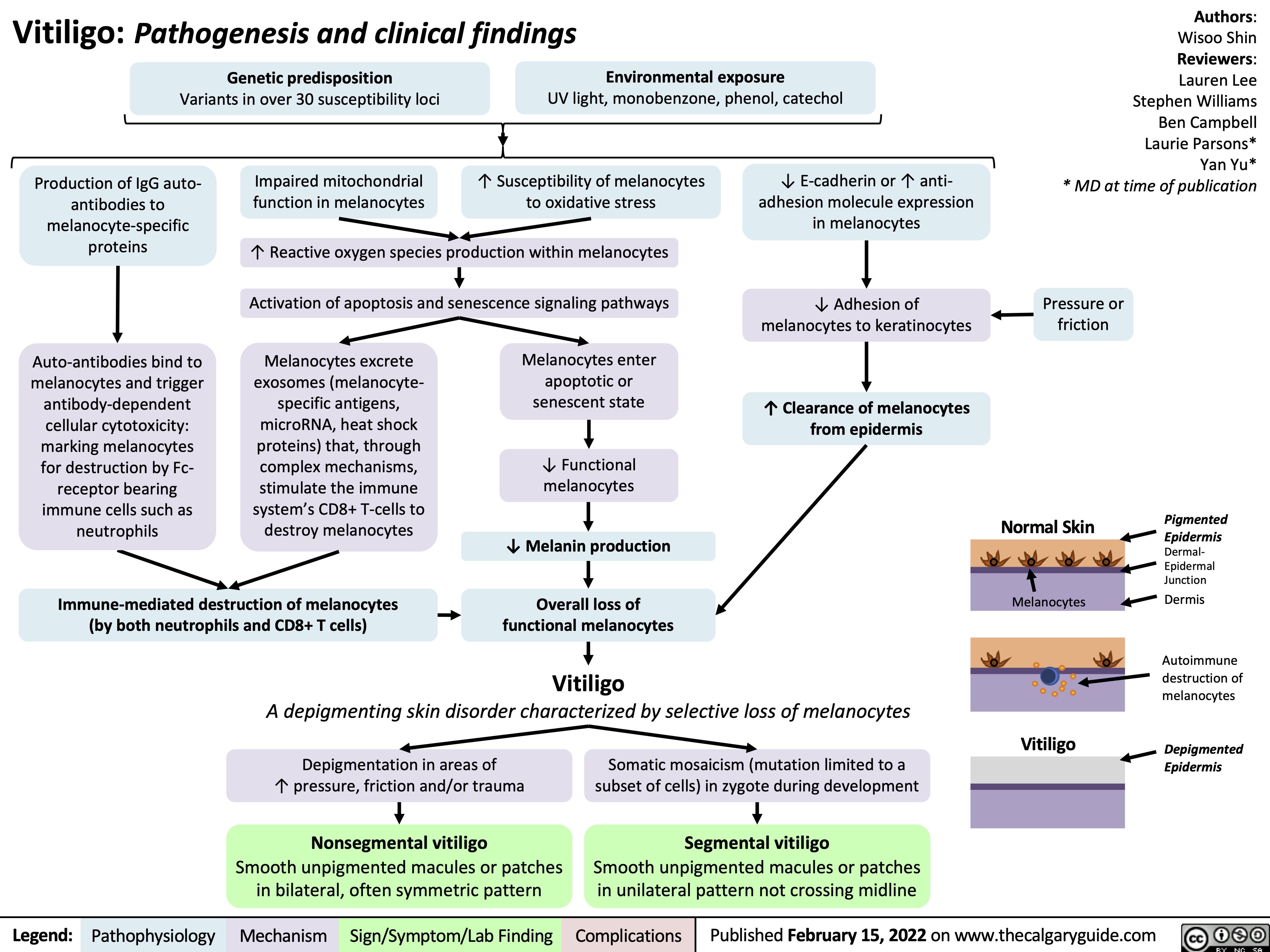
Vitiligo: Pathogenesis and clinical findings
Authors: Wisoo Shin Reviewers: Lauren Lee
Stephen Williams Ben Campbell Laurie Parsons* Yan Yu* * MD at time of publication
  Genetic predisposition
Variants in over 30 susceptibility loci
Environmental exposure
UV light, monobenzone, phenol, catechol
      Production of IgG auto- antibodies to melanocyte-specific proteins
Auto-antibodies bind to melanocytes and trigger antibody-dependent cellular cytotoxicity: marking melanocytes for destruction by Fc- receptor bearing immune cells such as neutrophils
Impaired mitochondrial function in melanocytes
↑ Susceptibility of melanocytes to oxidative stress
↓ E-cadherin or ↑ anti- adhesion molecule expression in melanocytes
↓ Adhesion of melanocytes to keratinocytes
↑ Clearance of melanocytes from epidermis
    ↑ Reactive oxygen species production within melanocytes Activation of apoptosis and senescence signaling pathways
Pressure or friction
          Melanocytes excrete exosomes (melanocyte- specific antigens, microRNA, heat shock proteins) that, through complex mechanisms, stimulate the immune system’s CD8+ T-cells to destroy melanocytes
Melanocytes enter apoptotic or senescent state
↓ Functional melanocytes
↓ Melanin production
Overall loss of functional melanocytes
Vitiligo
Normal Skin
Pigmented Epidermis Dermal- Epidermal Junction
Dermis
Autoimmune destruction of melanocytes
Depigmented Epidermis
      Melanocytes
   Immune-mediated destruction of melanocytes (by both neutrophils and CD8+ T cells)
   A depigmenting skin disorder characterized by selective loss of melanocytes
    Depigmentation in areas of
↑ pressure, friction and/or trauma
Nonsegmental vitiligo
Smooth unpigmented macules or patches in bilateral, often symmetric pattern
Somatic mosaicism (mutation limited to a subset of cells) in zygote during development
Segmental vitiligo
Smooth unpigmented macules or patches in unilateral pattern not crossing midline
Vitiligo
     Legend:
 Pathophysiology
Mechanism
Sign/Symptom/Lab Finding
 Complications
Published February 15, 2022 on www.thecalgaryguide.com

isotretinoin-systemic-retinoid-mechanisms-and-side-effects
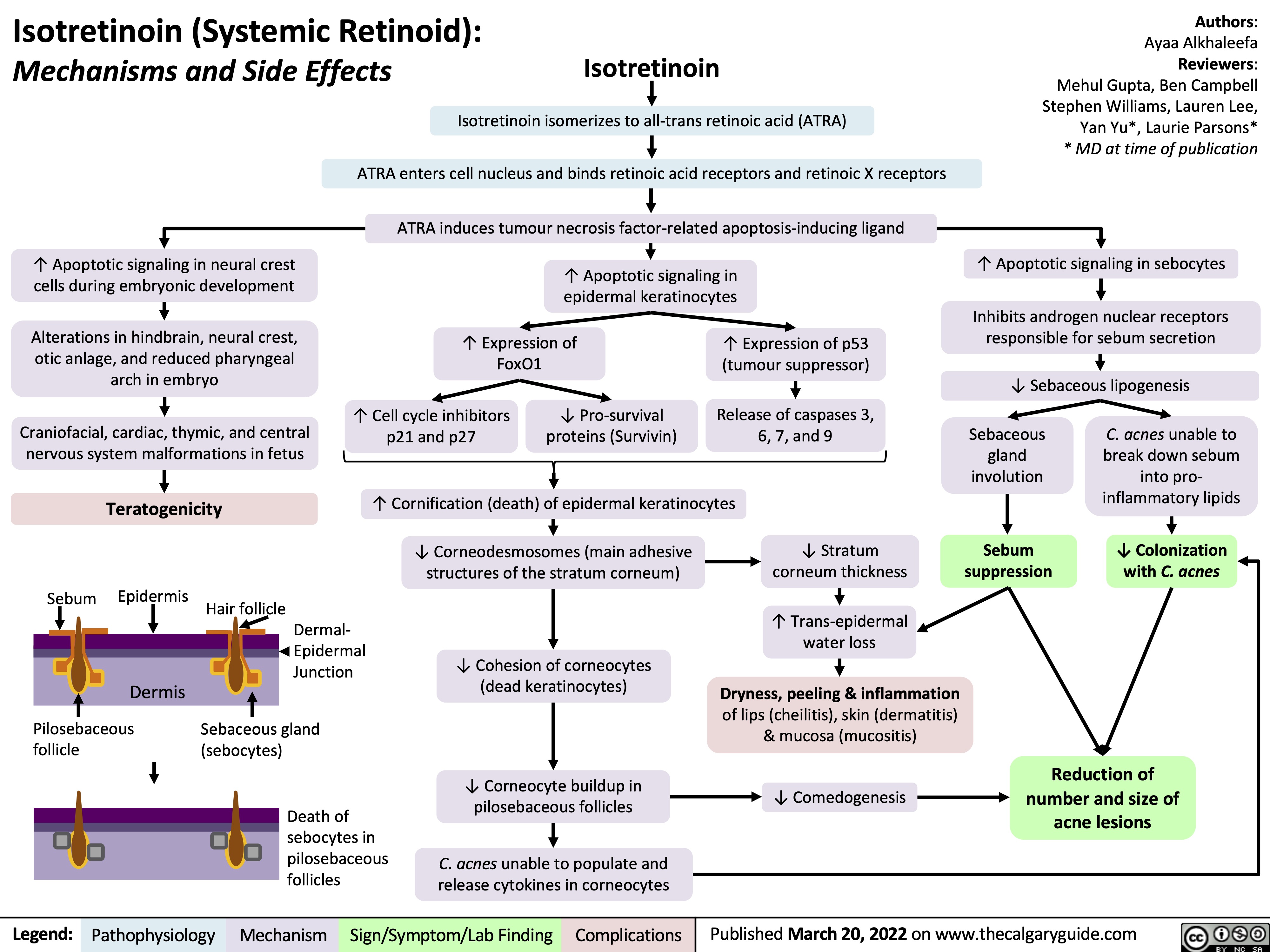
Isotretinoin (Systemic Retinoid):
Mechanisms and Side Effects
Isotretinoin
Authors: Ayaa Alkhaleefa Reviewers: Mehul Gupta, Ben Campbell Stephen Williams, Lauren Lee, Yan Yu*, Laurie Parsons* * MD at time of publication
↑ Apoptotic signaling in sebocytes
Inhibits androgen nuclear receptors responsible for sebum secretion
↓ Sebaceous lipogenesis
       ↑ Apoptotic signaling in neural crest cells during embryonic development
Alterations in hindbrain, neural crest, otic anlage, and reduced pharyngeal arch in embryo
Craniofacial, cardiac, thymic, and central nervous system malformations in fetus
Isotretinoin isomerizes to all-trans retinoic acid (ATRA)
ATRA enters cell nucleus and binds retinoic acid receptors and retinoic X receptors
ATRA induces tumour necrosis factor-related apoptosis-inducing ligand
↑ Apoptotic signaling in epidermal keratinocytes
      ↑ Expression of FoxO1
↑ Expression of p53 (tumour suppressor)
Release of caspases 3, 6, 7, and 9
        ↑ Cell cycle inhibitors p21 and p27
↓ Pro-survival proteins (Survivin)
Sebaceous gland involution
Sebum suppression
C. acnes unable to break down sebum into pro- inflammatory lipids
↓ Colonization with C. acnes
      Teratogenicity
↑ Cornification (death) of epidermal keratinocytes
↓ Corneodesmosomes (main adhesive structures of the stratum corneum)
↓ Cohesion of corneocytes (dead keratinocytes)
↓ Corneocyte buildup in pilosebaceous follicles
C. acnes unable to populate and release cytokines in corneocytes
     Epidermis
Dermis
Pilosebaceous follicle
↓ Stratum corneum thickness
↑ Trans-epidermal water loss
Dryness, peeling & inflammation
of lips (cheilitis), skin (dermatitis) & mucosa (mucositis)
↓ Comedogenesis
  Sebum
Hair follicle Dermal-
Epidermal Junction
Sebaceous gland (sebocytes)
Death of sebocytes in pilosebaceous follicles
        Reduction of number and size of acne lesions
        Legend:
 Pathophysiology
Mechanism
Sign/Symptom/Lab Finding
 Complications
Published March 20, 2022 on www.thecalgaryguide.com

presentation-of-sah

Subarachnoid Hemorrhage: Clinical Findings
Sudden bleeding into space surrounding the brain (for pathogenesis, see Subarachnoid Hemorrhage: Pathogenesis)
Authors: Jason An, M. Patrick Pankow Reviewers: Owen Stechishin, Dave Nicholl, Haotian Wang, Hannah Mathew, Ran (Marissa) Zhang, Yan Yu*, Cory Toth* * MD at time of publication
Bleed into subarachnoid space
Subarachnoid Hemorrhage (SAH)
   Posterior hypothalamus ischemia (↓ Blood flow and oxygen)
Red blood cell lysis from energy depletion or complement activation
Release of spasmogens (spasm inducing agents)
Cerebral vasospasm (narrowing of arteries from persistent contraction) ↓ blood flow
Cerebral ischemia
         Release catecholamines (hormones from the adrenal gland; e.g., epinephrine, norepinephrine)
↑ Intracellular calcium
Release of antidiuretic hormone
Antidiuretic hormone acts on the distal convoluted tubule and collecting duct in kidney to reabsorb water
Dilution of serum sodium
Hyponatremia (low blood sodium levels)
Release of epileptogenic (potential seizure causing agents) into cerebral circulation
Seizure
Products from blood breakdown in cerebral spinal fluid
Irritation of meninges (membranes surrounding the brain)
Aseptic meningitis (non-infectious inflammation)
Meningismus
(neck pain + rigidity)
Cerebral infarction (death of tissue)
Obstructs cerebral spinal fluid flow and absorption at subarachnoid granulations
Hydrocephalus (fluid build up in ventricles)
↓ Level of consciousness
Reduced cerebral blood flow
Dilation of cranial vessels to ↑ blood flow
Rapid ↑ internal carotid artery intracranial pressure
Refer to Increased Intracranial Pressure: Clinical Findings slide
Internal carotid artery
Pituitary ischemia
Hypopituitarism
[underactive pituitary gland, failing to produce 1+ pituitary hormone(s)]
Refer to hypopituitarism slides
                Myocardial disruption
Left ventricle dysfunction
↑ Pressure in left heart
Blood forced backwards into pulmonary veins
↑ Pulmonary blood pressure
Fluid from blood vessels leaks into lungs
Dysrhythmias (disturbance in rate/rhythm of heart) causing ↓ cardiac output
Syncope
(loss of consciousness due to ↓ blood flow to the brain)
Pulmonary edema
(excess accumulation of fluid in lung)
Cerebral hypoperfusion
Sudden ↑in blood volume
Vessels and meninges suddenly stretch
Thunderclap Headache (worst headache of patient's life)
                                  Shortness of breath
Reactive cerebral hyperemia (excess blood in vessels supplying the brain)
Artery specific findings:
Rapid ↑ internal carotid artery intracranial pressure
Middle cerebral artery
          Posterior communicating artery
Compression of outer CN3 Compression of inner CN3
Anterior communicating artery
                    Nonreactive pupil
Gaze palsy
(eye deviates down and out)
Diplopia
(double vision)
Ptosis
(drooping of upper eyelid)
Frontal lobe ischemia
Avolition
(complete lack of motivation)
Ischemia of motor strip pertaining to the legs
Bilateral leg weakness
Motor strip ischemia
Hemiparesis
(weakness/ inability to move one side of the body)
Ischemia of parietal association areas (brain regions integral for motor control of the eyes, the extremities and spatial cognition)
Aphasia
(impaired ability to speak and/or understand language)/ neglect
      Legend:
 Pathophysiology
Mechanism
 Sign/Symptom/Lab Finding
 Complications
Published July 1, 2014, updated August 10, 2022 on www.thecalgaryguide.com

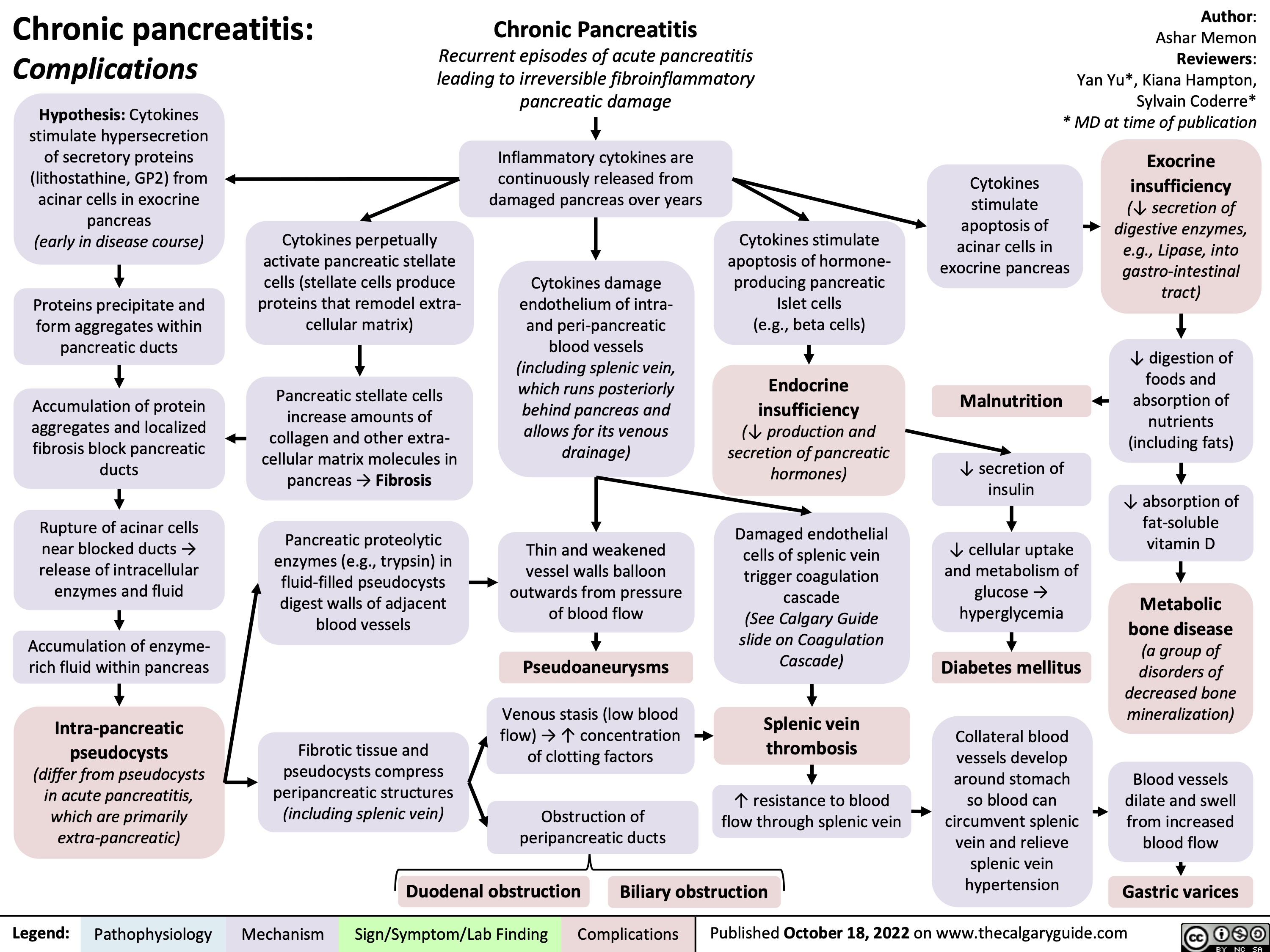
chronic-pancreatitis-complications

Chronic pancreatitis:
Complications
Hypothesis: Cytokines stimulate hypersecretion of secretory proteins (lithostathine, GP2) from acinar cells in exocrine pancreas
(early in disease course)
Proteins precipitate and form aggregates within pancreatic ducts
Accumulation of protein aggregates and localized fibrosis block pancreatic ducts
Rupture of acinar cells near blocked ducts → release of intracellular enzymes and fluid
Accumulation of enzyme- rich fluid within pancreas
Intra-pancreatic pseudocysts (differ from pseudocysts in acute pancreatitis, which are primarily extra-pancreatic)
Chronic Pancreatitis
Recurrent episodes of acute pancreatitis leading to irreversible fibroinflammatory pancreatic damage
Inflammatory cytokines are
continuously released from damaged pancreas over years
Cytokines damage endothelium of intra- and peri-pancreatic blood vessels (including splenic vein, which runs posteriorly behind pancreas and allows for its venous drainage)
Thin and weakened
vessel walls balloon outwards from pressure of blood flow
Pseudoaneurysms
Venous stasis (low blood flow) → ↑ concentration of clotting factors
Obstruction of peripancreatic ducts
Author: Ashar Memon Reviewers: Yan Yu*, Kiana Hampton, Sylvain Coderre* * MD at time of publication
Exocrine insufficiency
(↓ secretion of digestive enzymes, e.g., Lipase, into gastro-intestinal tract)
↓ digestion of foods and absorption of nutrients (including fats)
↓ absorption of fat-soluble vitamin D
Metabolic bone disease
(a group of disorders of decreased bone mineralization)
Blood vessels dilate and swell from increased blood flow
Gastric varices
          Cytokines perpetually activate pancreatic stellate cells (stellate cells produce proteins that remodel extra- cellular matrix)
Pancreatic stellate cells increase amounts of collagen and other extra- cellular matrix molecules in pancreas → Fibrosis
Pancreatic proteolytic enzymes (e.g., trypsin) in fluid-filled pseudocysts digest walls of adjacent blood vessels
Fibrotic tissue and pseudocysts compress peripancreatic structures (including splenic vein)
Cytokines stimulate apoptosis of hormone- producing pancreatic Islet cells
(e.g., beta cells)
Endocrine insufficiency
(↓ production and secretion of pancreatic hormones)
Damaged endothelial cells of splenic vein trigger coagulation cascade
(See Calgary Guide slide on Coagulation Cascade)
Splenic vein thrombosis
↑ resistance to blood flow through splenic vein
Cytokines
stimulate apoptosis of acinar cells in exocrine pancreas
Malnutrition
↓ secretion of insulin
↓ cellular uptake and metabolism of glucose → hyperglycemia
Diabetes mellitus
Collateral blood vessels develop around stomach so blood can circumvent splenic vein and relieve splenic vein hypertension
                                  Duodenal obstruction Biliary obstruction
 Legend:
 Pathophysiology
Mechanism
Sign/Symptom/Lab Finding
 Complications
Published October 18, 2022 on www.thecalgaryguide.com

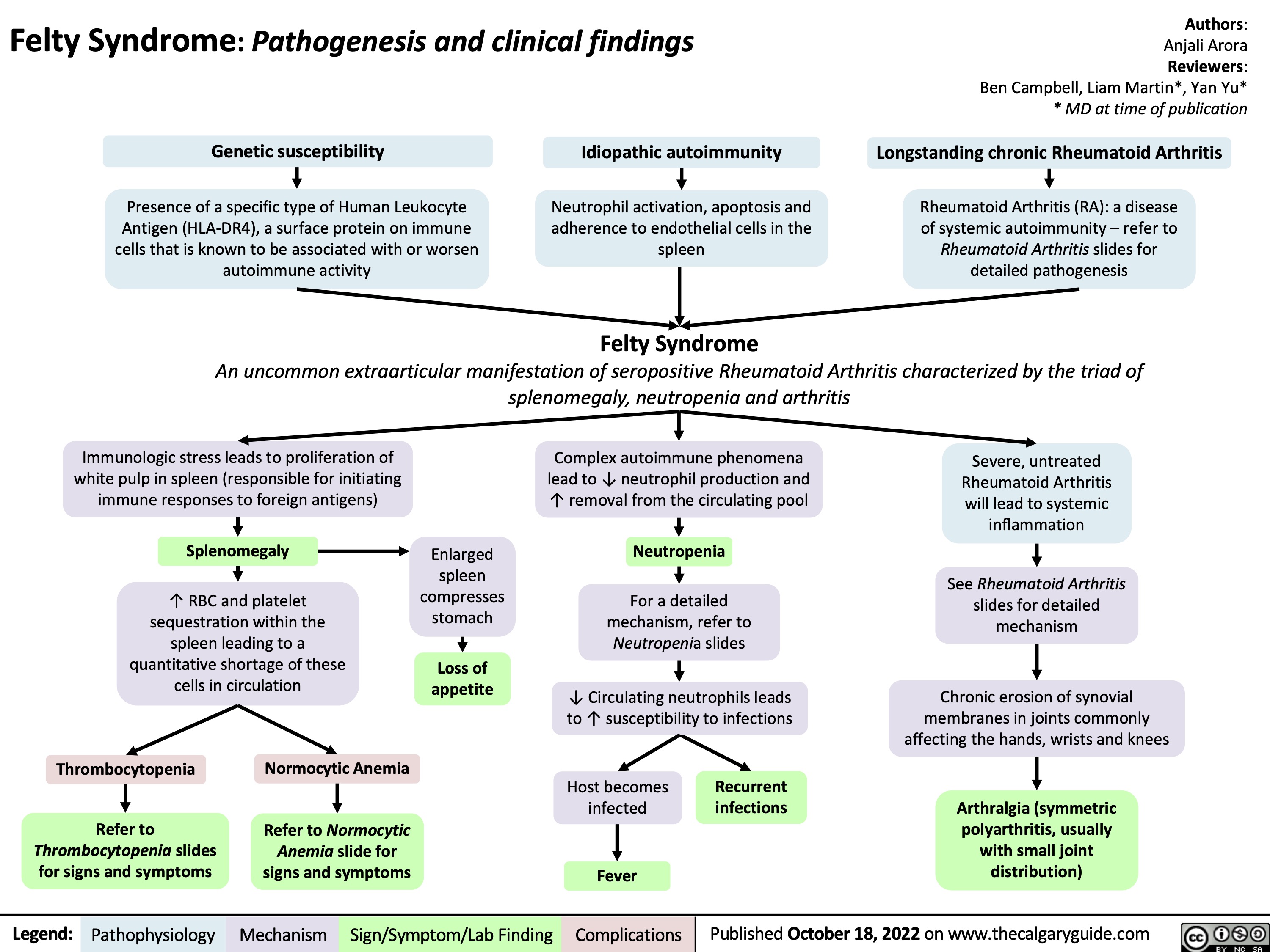
felty-syndrome

Felty Syndrome: Pathogenesis and clinical findings
Authors: Anjali Arora Reviewers: Ben Campbell, Liam Martin*, Yan Yu* * MD at time of publication
Longstanding chronic Rheumatoid Arthritis
Rheumatoid Arthritis (RA): a disease of systemic autoimmunity – refer to Rheumatoid Arthritis slides for detailed pathogenesis
   Genetic susceptibility
Presence of a specific type of Human Leukocyte Antigen (HLA-DR4), a surface protein on immune cells that is known to be associated with or worsen autoimmune activity
Idiopathic autoimmunity
Neutrophil activation, apoptosis and adherence to endothelial cells in the spleen
Felty Syndrome
     An uncommon extraarticular manifestation of seropositive Rheumatoid Arthritis characterized by the triad of splenomegaly, neutropenia and arthritis
     Immunologic stress leads to proliferation of white pulp in spleen (responsible for initiating immune responses to foreign antigens)
Splenomegaly
↑ RBC and platelet sequestration within the spleen leading to a quantitative shortage of these cells in circulation
Enlarged spleen compresses stomach
Loss of appetite
Complex autoimmune phenomena lead to ↓ neutrophil production and ↑ removal from the circulating pool
Neutropenia
For a detailed mechanism, refer to Neutropenia slides
↓ Circulating neutrophils leads to ↑ susceptibility to infections
Severe, untreated Rheumatoid Arthritis will lead to systemic inflammation
See Rheumatoid Arthritis slides for detailed mechanism
Chronic erosion of synovial membranes in joints commonly affecting the hands, wrists and knees
Arthralgia (symmetric polyarthritis, usually with small joint distribution)
               Thrombocytopenia
Refer to Thrombocytopenia slides for signs and symptoms
Normocytic Anemia Refer to Normocytic
Anemia slide for signs and symptoms
Host becomes infected
Fever
Recurrent infections
       Legend:
 Pathophysiology
 Mechanism
Sign/Symptom/Lab Finding
 Complications
Published October 18, 2022 on www.thecalgaryguide.com

Erythema multiforme (EM): Pathophysiology and clinical findings
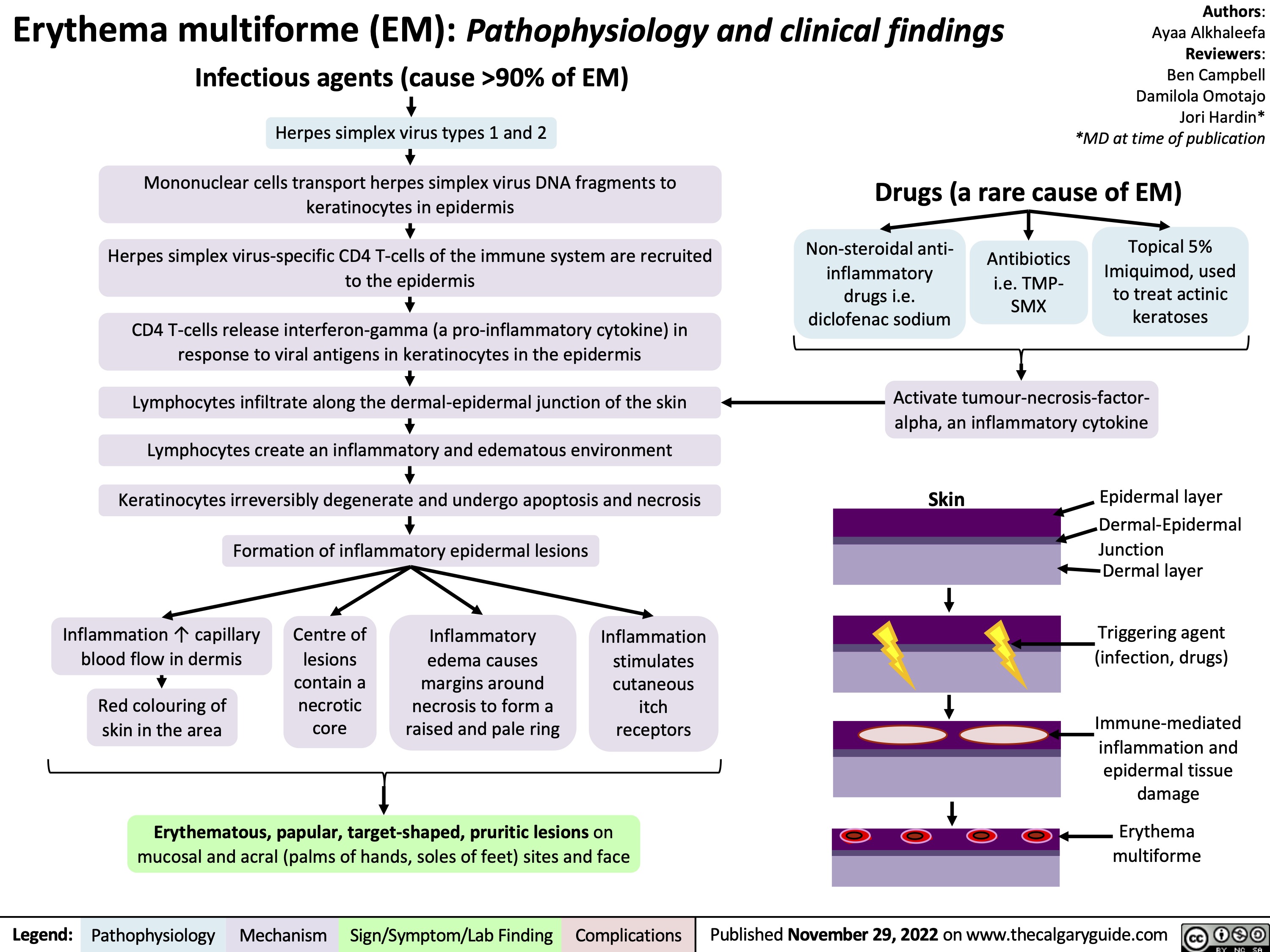
Erythema multiforme (EM): Pathophysiology and clinical findings Infectious agents (cause >90% of EM)
Herpes simplex virus types 1 and 2
Mononuclear cells transport herpes simplex virus DNA fragments to keratinocytes in epidermis
Herpes simplex virus-specific CD4 T-cells of the immune system are recruited to the epidermis
CD4 T-cells release interferon-gamma (a pro-inflammatory cytokine) in response to viral antigens in keratinocytes in the epidermis
Lymphocytes infiltrate along the dermal-epidermal junction of the skin Lymphocytes create an inflammatory and edematous environment Keratinocytes irreversibly degenerate and undergo apoptosis and necrosis Formation of inflammatory epidermal lesions
Authors: Ayaa Alkhaleefa Reviewers: Ben Campbell Damilola Omotajo Jori Hardin* *MD at time of publication
  Drugs (a rare cause of EM)
    Non-steroidal anti- inflammatory drugs i.e. diclofenac sodium
Antibiotics i.e. TMP- SMX
Topical 5% Imiquimod, used to treat actinic keratoses
     Activate tumour-necrosis-factor- alpha, an inflammatory cytokine
    Skin
Epidermal layer
Dermal-Epidermal
Junction Dermal layer
Triggering agent (infection, drugs)
Immune-mediated inflammation and epidermal tissue damage
Erythema multiforme
           Inflammation ↑ capillary blood flow in dermis
Red colouring of skin in the area
Centre of lesions
contain a necrotic core
Inflammatory edema causes margins around necrosis to form a raised and pale ring
Inflammation stimulates cutaneous itch receptors
       Erythematous, papular, target-shaped, pruritic lesions on mucosal and acral (palms of hands, soles of feet) sites and face
   Legend:
 Pathophysiology
Mechanism
Sign/Symptom/Lab Finding
 Complications
Published November 29, 2022 on www.thecalgaryguide.com

rheumatoid-pneumoconiosis-caplans-syndrome-pathogenesis-and-clinical-findings
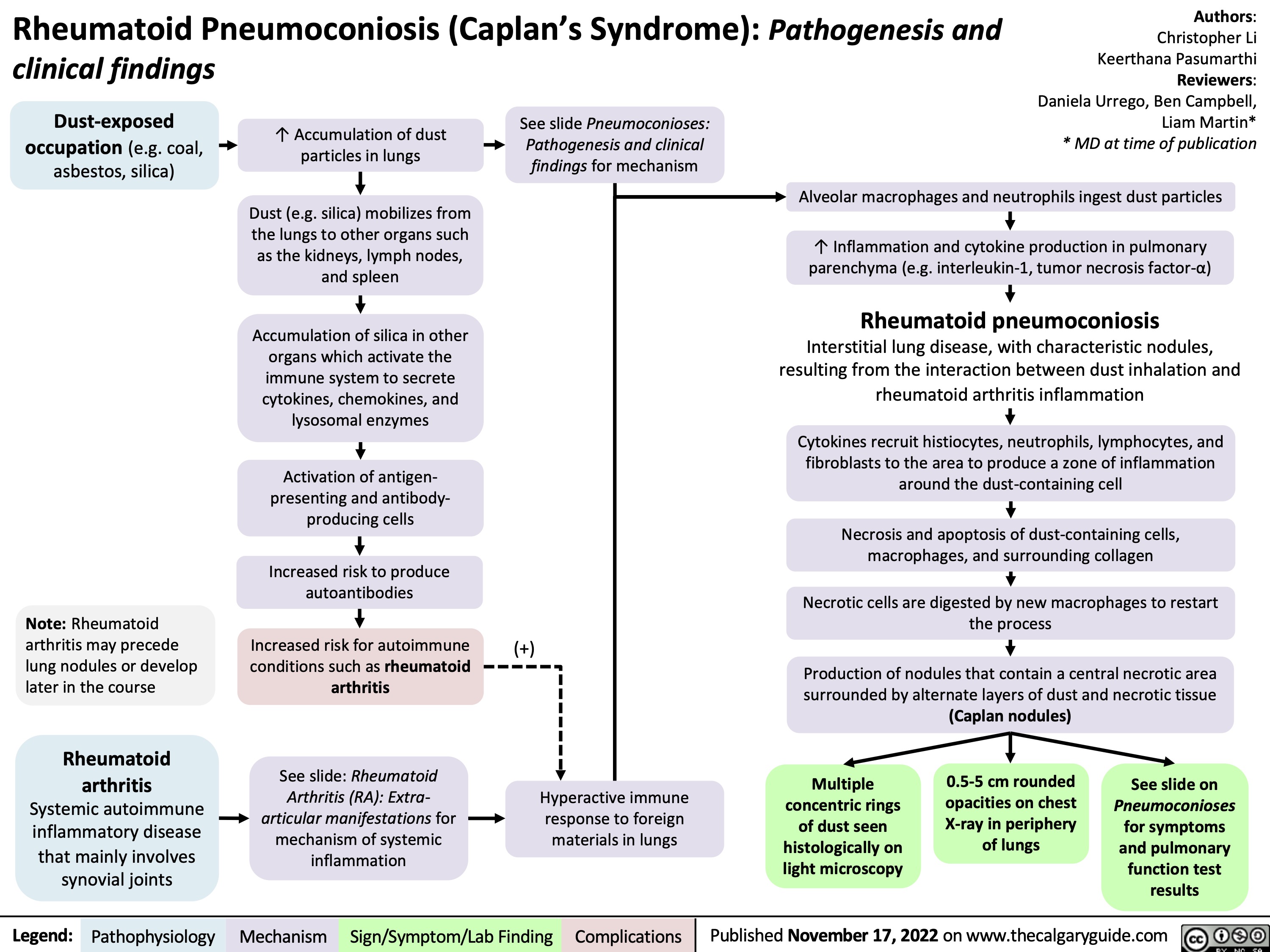
Rheumatoid Pneumoconiosis (Caplan’s Syndrome): Pathogenesis and clinical findings
Authors: Christopher Li Keerthana Pasumarthi Reviewers: Daniela Urrego, Ben Campbell, Liam Martin* * MD at time of publication
  Dust-exposed occupation (e.g. coal, asbestos, silica)
↑ Accumulation of dust particles in lungs
Dust (e.g. silica) mobilizes from the lungs to other organs such as the kidneys, lymph nodes, and spleen
Accumulation of silica in other organs which activate the immune system to secrete cytokines, chemokines, and lysosomal enzymes
Activation of antigen- presenting and antibody- producing cells
Increased risk to produce autoantibodies
Increased risk for autoimmune conditions such as rheumatoid arthritis
See slide: Rheumatoid Arthritis (RA): Extra- articular manifestations for mechanism of systemic inflammation
See slide Pneumoconioses: Pathogenesis and clinical findings for mechanism
            Note: Rheumatoid arthritis may precede lung nodules or develop later in the course
Rheumatoid arthritis
Systemic autoimmune inflammatory disease that mainly involves synovial joints
(+)
Alveolar macrophages and neutrophils ingest dust particles
↑ Inflammation and cytokine production in pulmonary parenchyma (e.g. interleukin-1, tumor necrosis factor-α)
Rheumatoid pneumoconiosis
Interstitial lung disease, with characteristic nodules, resulting from the interaction between dust inhalation and rheumatoid arthritis inflammation
Cytokines recruit histiocytes, neutrophils, lymphocytes, and fibroblasts to the area to produce a zone of inflammation around the dust-containing cell
Necrosis and apoptosis of dust-containing cells, macrophages, and surrounding collagen
Necrotic cells are digested by new macrophages to restart the process
Production of nodules that contain a central necrotic area surrounded by alternate layers of dust and necrotic tissue (Caplan nodules)
          Hyperactive immune response to foreign materials in lungs
Multiple concentric rings of dust seen histologically on light microscopy
0.5-5 cm rounded opacities on chest X-ray in periphery of lungs
See slide on
Pneumoconioses
for symptoms and pulmonary function test results
 Legend:
 Pathophysiology
Mechanism
Sign/Symptom/Lab Finding
 Complications
Published November 17, 2022 on www.thecalgaryguide.com

Acute Liver Failure: Pathogenesis and clinical findings
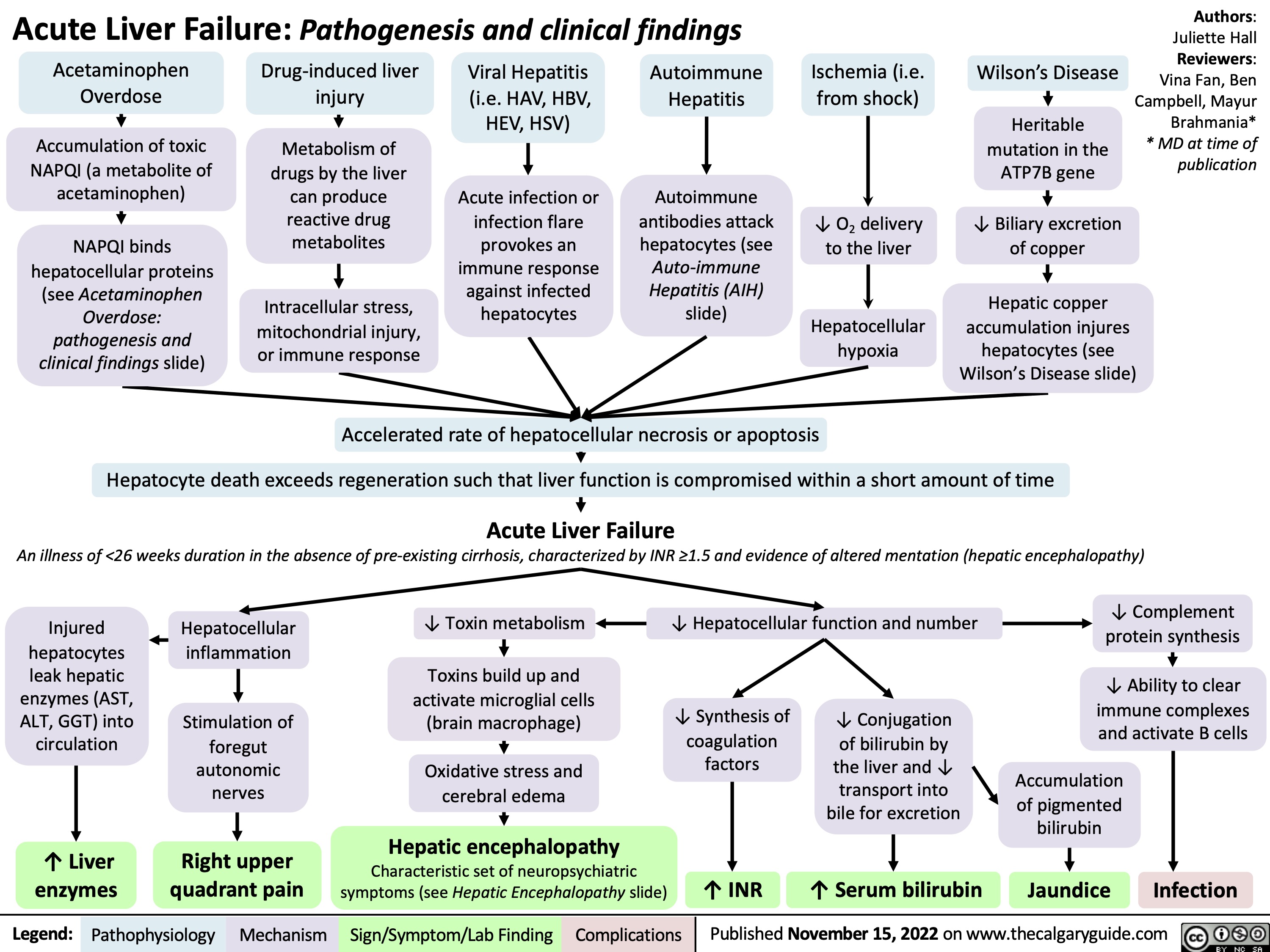
Acute Liver Failure: Pathogenesis and clinical findings
Authors: Juliette Hall Reviewers: Vina Fan, Ben Campbell, Mayur Brahmania* * MD at time of publication
      Acetaminophen Overdose
Accumulation of toxic NAPQI (a metabolite of acetaminophen)
NAPQI binds hepatocellular proteins
(see Acetaminophen Overdose: pathogenesis and clinical findings slide)
Drug-induced liver injury
Metabolism of drugs by the liver can produce reactive drug metabolites
Intracellular stress, mitochondrial injury, or immune response
Viral Hepatitis (i.e. HAV, HBV, HEV, HSV)
Acute infection or infection flare provokes an immune response against infected hepatocytes
Autoimmune Hepatitis
Autoimmune antibodies attack hepatocytes (see Auto-immune Hepatitis (AIH) slide)
Ischemia (i.e. from shock)
↓ O2 delivery to the liver
Hepatocellular hypoxia
Wilson’s Disease
Heritable mutation in the ATP7B gene
↓ Biliary excretion of copper
            Hepatic copper accumulation injures hepatocytes (see Wilson’s Disease slide)
       Accelerated rate of hepatocellular necrosis or apoptosis
 Hepatocyte death exceeds regeneration such that liver function is compromised within a short amount of time
Acute Liver Failure
An illness of <26 weeks duration in the absence of pre-existing cirrhosis, characterized by INR ≥1.5 and evidence of altered mentation (hepatic encephalopathy)
       Injured hepatocytes leak hepatic enzymes (AST, ALT, GGT) into circulation
↑ Liver enzymes
Hepatocellular inflammation
Stimulation of foregut
autonomic nerves
Right upper quadrant pain
↓ Toxin metabolism
Toxins build up and activate microglial cells (brain macrophage)
Oxidative stress and cerebral edema
Hepatic encephalopathy
Characteristic set of neuropsychiatric symptoms (see Hepatic Encephalopathy slide)
↓ Hepatocellular function and number
↓ Complement protein synthesis
↓ Ability to clear immune complexes and activate B cells
Accumulation of pigmented bilirubin
        ↓ Synthesis of coagulation factors
↑ INR
↓ Conjugation of bilirubin by the liver and ↓ transport into bile for excretion
            ↑ Serum bilirubin
Jaundice
Infection
 Legend:
 Pathophysiology
 Mechanism
Sign/Symptom/Lab Finding
 Complications
Published November 15, 2022 on www.thecalgaryguide.com

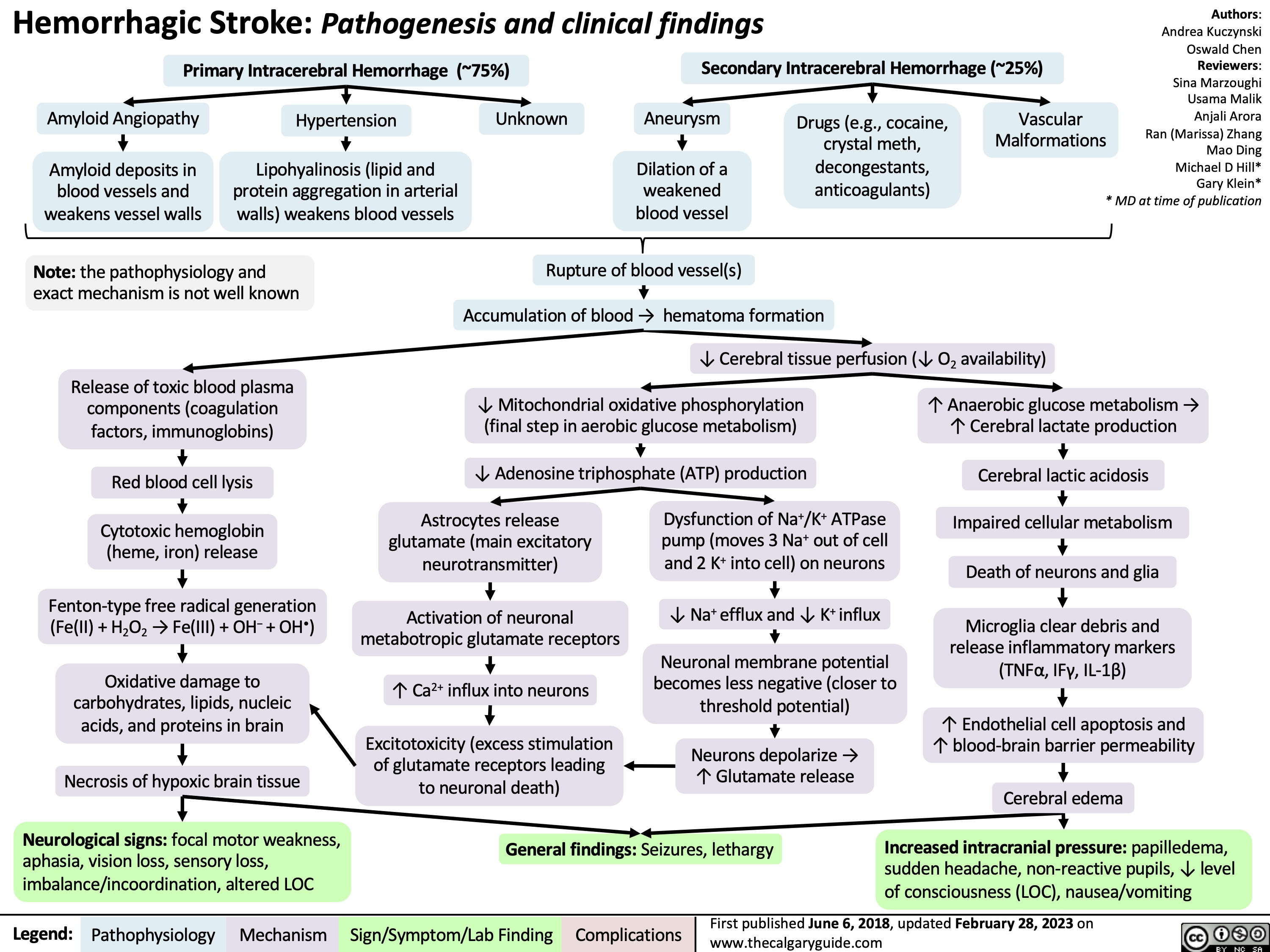
Hemorrhagic Stroke

Hemorrhagic Stroke: Pathogenesis and clinical findings
Authors: Andrea Kuczynski Oswald Chen Reviewers: Sina Marzoughi Usama Malik Anjali Arora Ran (Marissa) Zhang Mao Ding Michael D Hill* Gary Klein* * MD at time of publication
  Primary Intracerebral Hemorrhage (~75%)
Secondary Intracerebral Hemorrhage (~25%)
        Amyloid Angiopathy
Amyloid deposits in blood vessels and weakens vessel walls
Hypertension
Lipohyalinosis (lipid and protein aggregation in arterial walls) weakens blood vessels
Unknown
Aneurysm
Dilation of a weakened blood vessel
Drugs (e.g., cocaine, crystal meth, decongestants, anticoagulants)
Vascular Malformations
      Note: the pathophysiology and exact mechanism is not well known
Release of toxic blood plasma components (coagulation factors, immunoglobins)
Red blood cell lysis
Cytotoxic hemoglobin (heme, iron) release
Fenton-type free radical generation (Fe(II) + H2O2 → Fe(III) + OH− + OH•)
Oxidative damage to carbohydrates, lipids, nucleic acids, and proteins in brain
Necrosis of hypoxic brain tissue
Neurological signs: focal motor weakness, aphasia, vision loss, sensory loss, imbalance/incoordination, altered LOC
Rupture of blood vessel(s) Accumulation of blood → hematoma formation
    ↓ Cerebral tissue perfusion (↓ O2 availability)
     ↓ Mitochondrial oxidative phosphorylation (final step in aerobic glucose metabolism)
↓ Adenosine triphosphate (ATP) production
↑ Anaerobic glucose metabolism → ↑ Cerebral lactate production
Cerebral lactic acidosis Impaired cellular metabolism Death of neurons and glia
Microglia clear debris and release inflammatory markers (TNFα, IFγ, IL-1β)
↑ Endothelial cell apoptosis and ↑ blood-brain barrier permeability
Cerebral edema
Increased intracranial pressure: papilledema, sudden headache, non-reactive pupils, ↓ level of consciousness (LOC), nausea/vomiting
        Astrocytes release glutamate (main excitatory neurotransmitter)
Activation of neuronal metabotropic glutamate receptors
↑ Ca2+ influx into neurons
Excitotoxicity (excess stimulation of glutamate receptors leading to neuronal death)
Dysfunction of Na+/K+ ATPase pump (moves 3 Na+ out of cell and 2 K+ into cell) on neurons
↓ Na+ efflux and ↓ K+ influx
Neuronal membrane potential becomes less negative (closer to threshold potential)
Neurons depolarize → ↑ Glutamate release
                    General findings: Seizures, lethargy
 Legend:
 Pathophysiology
 Mechanism
Sign/Symptom/Lab Finding
 Complications
First published June 6, 2018, updated February 28, 2023 on www.thecalgaryguide.com

Myelodysplastic Syndrome Pathogenesis and clinical findings
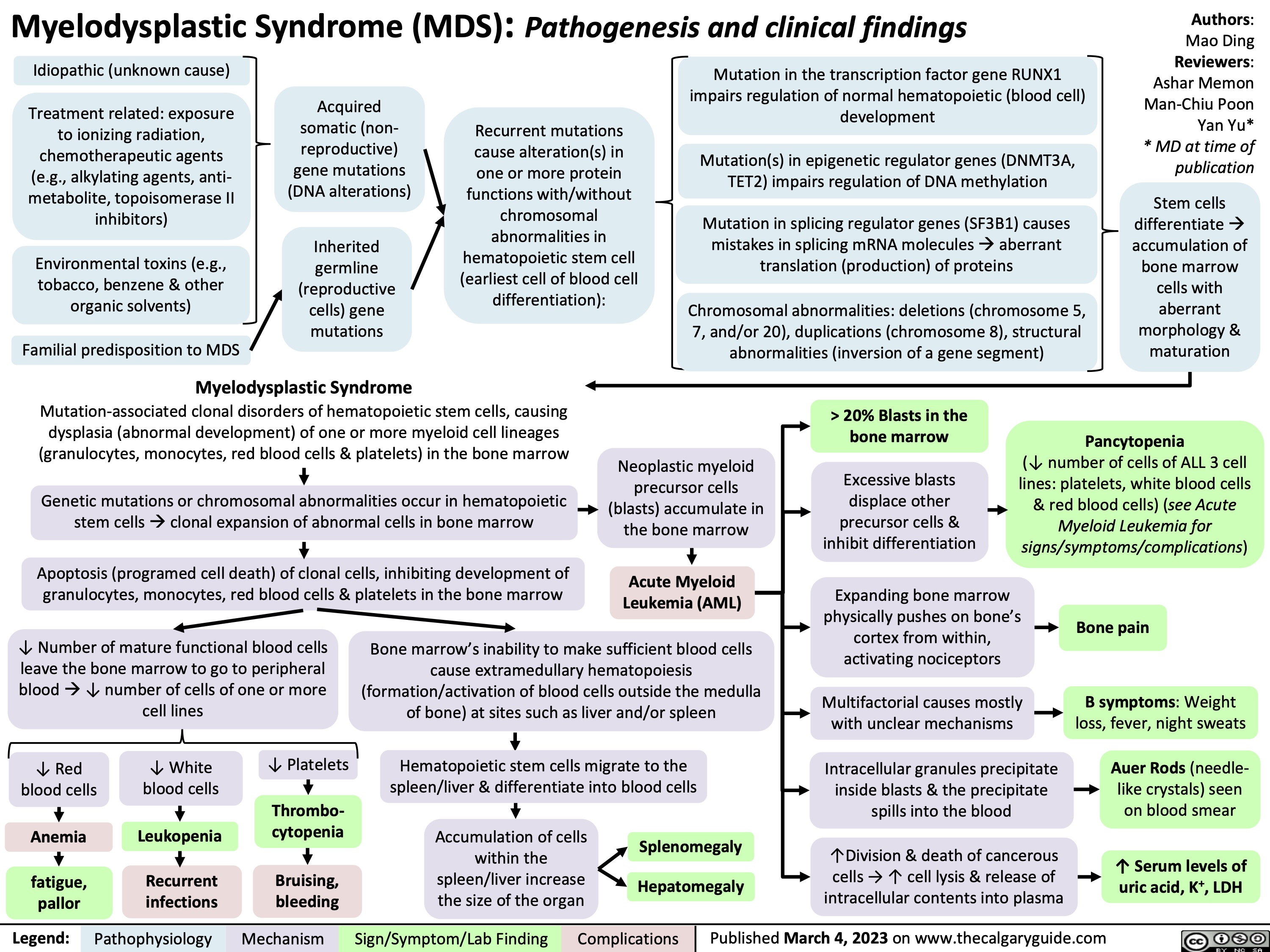
Myelodysplastic Syndrome (MDS): Pathogenesis and clinical findings
Authors: Mao Ding Reviewers: Ashar Memon Man-Chiu Poon Yan Yu* * MD at time of publication
Stem cells differentiateà accumulation of bone marrow cells with aberrant morphology & maturation
     Idiopathic (unknown cause)
Treatment related: exposure to ionizing radiation, chemotherapeutic agents (e.g., alkylating agents, anti- metabolite, topoisomerase II inhibitors)
Environmental toxins (e.g., tobacco, benzene & other organic solvents)
Familial predisposition to MDS
Acquired somatic (non- reproductive) gene mutations (DNA alterations)
Inherited
germline (reproductive cells) gene mutations
Recurrent mutations cause alteration(s) in one or more protein functions with/without chromosomal abnormalities in hematopoietic stem cell (earliest cell of blood cell differentiation):
Mutation in the transcription factor gene RUNX1 impairs regulation of normal hematopoietic (blood cell) development
Mutation(s) in epigenetic regulator genes (DNMT3A, TET2) impairs regulation of DNA methylation
Mutation in splicing regulator genes (SF3B1) causes mistakes in splicing mRNA moleculesàaberrant translation (production) of proteins
Chromosomal abnormalities: deletions (chromosome 5, 7, and/or 20), duplications (chromosome 8), structural abnormalities (inversion of a gene segment)
            Myelodysplastic Syndrome
Mutation-associated clonal disorders of hematopoietic stem cells, causing dysplasia (abnormal development) of one or more myeloid cell lineages (granulocytes, monocytes, red blood cells & platelets) in the bone marrow
Genetic mutations or chromosomal abnormalities occur in hematopoietic stem cellsàclonal expansion of abnormal cells in bone marrow
Apoptosis (programed cell death) of clonal cells, inhibiting development of granulocytes, monocytes, red blood cells & platelets in the bone marrow
Neoplastic myeloid precursor cells (blasts) accumulate in the bone marrow
Acute Myeloid Leukemia (AML)
> 20% Blasts in the bone marrow
Excessive blasts displace other precursor cells & inhibit differentiation
Pancytopenia
(↓ number of cells of ALL 3 cell lines: platelets, white blood cells & red blood cells) (see Acute Myeloid Leukemia for signs/symptoms/complications)
              ↓ Number of mature functional blood cells leave the bone marrow to go to peripheral bloodà↓ number of cells of one or more cell lines
Bone marrow’s inability to make sufficient blood cells cause extramedullary hematopoiesis (formation/activation of blood cells outside the medulla of bone) at sites such as liver and/or spleen
Hematopoietic stem cells migrate to the spleen/liver & differentiate into blood cells
Expanding bone marrow physically pushes on bone’s cortex from within, activating nociceptors
Multifactorial causes mostly with unclear mechanisms
Intracellular granules precipitate inside blasts & the precipitate spills into the blood
↑Division & death of cancerous cells → ↑ cell lysis & release of intracellular contents into plasma
Bone pain
B symptoms: Weight
loss, fever, night sweats
Auer Rods (needle- like crystals) seen on blood smear
↑ Serum levels of uric acid, K+, LDH
         ↓ Red blood cells
Anemia
fatigue, pallor
↓ White blood cells
Leukopenia
Recurrent infections
↓ Platelets
Thrombo- cytopenia
Bruising, bleeding
Accumulation of cells within the spleen/liver increase the size of the organ
Splenomegaly Hepatomegaly
            Legend:
 Pathophysiology
Mechanism
Sign/Symptom/Lab Finding
 Complications
Published March 4, 2023 on www.thecalgaryguide.com

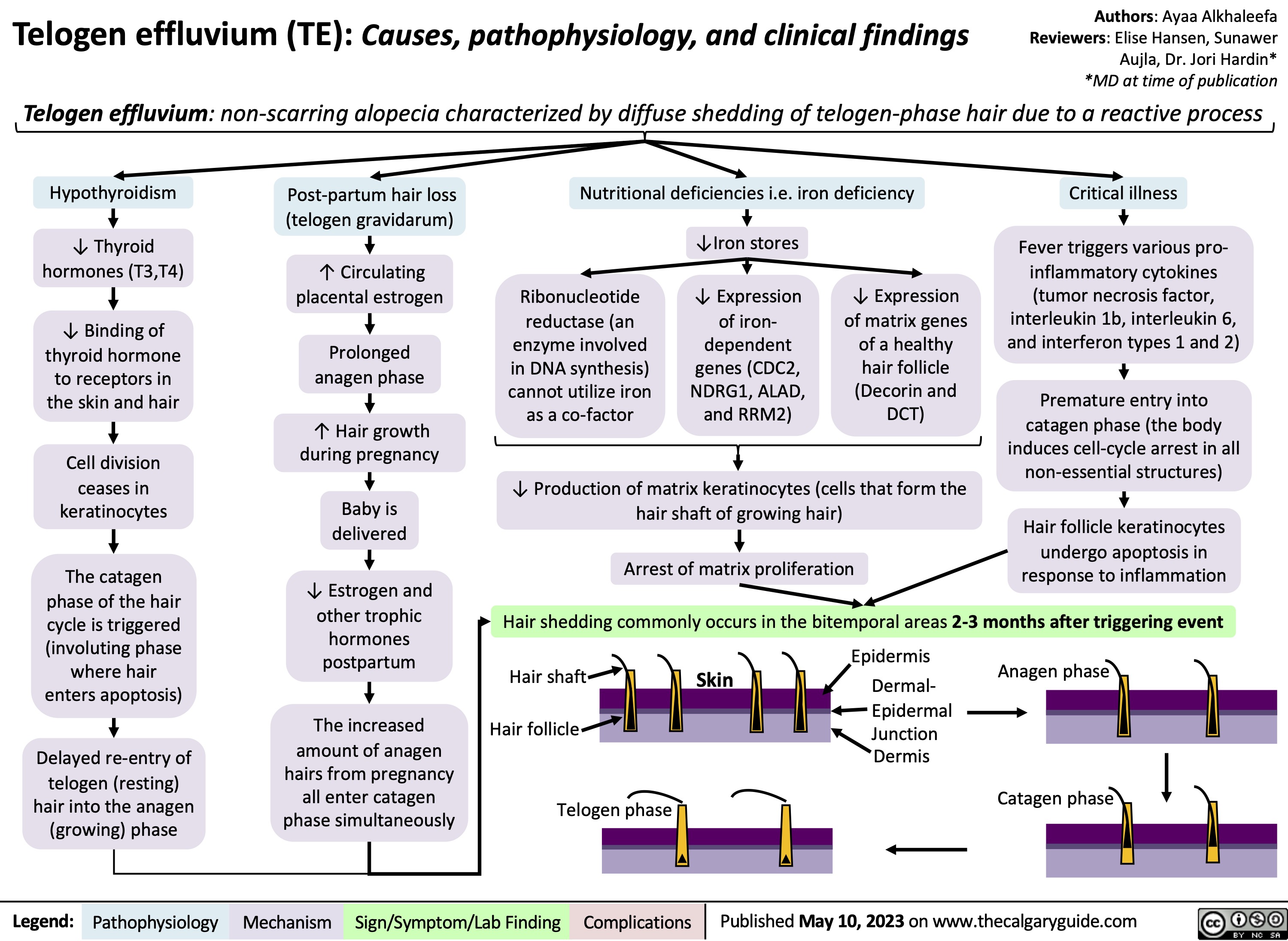
Telogen Effluvium

Authors: Ayaa Alkhaleefa Telogen effluvium (TE): Causes, pathophysiology, and clinical findings Reviewers: Elise Hansen, Sunawer Aujla, Dr. Jori Hardin* *MD at time of publication
Telogen effluvium: non-scarring alopecia characterized by diffuse shedding of telogen-phase hair due to a reactive process
        Hypothyroidism
↓ Thyroid hormones (T3,T4)
↓ Binding of thyroid hormone to receptors in the skin and hair
Cell division ceases in keratinocytes
The catagen phase of the hair cycle is triggered (involuting phase where hair enters apoptosis)
Delayed re-entry of telogen (resting)
hair into the anagen (growing) phase
Post-partum hair loss (telogen gravidarum)
↑ Circulating placental estrogen
Prolonged anagen phase
↑ Hair growth during pregnancy
Baby is delivered
↓ Estrogen and other trophic
hormones postpartum
The increased amount of anagen
hairs from pregnancy all enter catagen phase simultaneously
Nutritional deficiencies i.e. iron deficiency
Critical illness
Fever triggers various pro- inflammatory cytokines (tumor necrosis factor, interleukin 1b, interleukin 6, and interferon types 1 and 2)
Premature entry into catagen phase (the body induces cell-cycle arrest in all non-essential structures)
Hair follicle keratinocytes undergo apoptosis in response to inflammation
         Ribonucleotide reductase (an enzyme involved in DNA synthesis) cannot utilize iron as a co-factor
↓Iron stores
↓ Expression of iron-
dependent genes (CDC2, NDRG1, ALAD, and RRM2)
↓ Expression of matrix genes of a healthy hair follicle (Decorin and DCT)
       ↓ Production of matrix keratinocytes (cells that form the hair shaft of growing hair)
     Arrest of matrix proliferation
Hair shedding commonly occurs in the bitemporal areas 2-3 months after triggering event
          Hair shaft Hair follicle
Telogen phase
Skin
Epidermis
Dermal- Anagen phase
  Epidermal Junction Dermis
      Catagen phase
         Legend:
 Pathophysiology
 Mechanism
 Sign/Symptom/Lab Finding
 Complications
 Published May 10, 2023 on www.thecalgaryguide.com

Menopause

Menopause: Pathogenesis and Clinical Findings
Perimenopause/Menopausal Transition: Phase preceding last menstrual period in which the first symptoms may occur. Many clinical findings of menopause can occur in perimenopause.
         1-2 million primordial follicles
first appear in fetal ovaries in the end of the first trimester of the mother’s pregnancy
Typically beginning in adolescence, puberty triggers physiological and anatomical changes
Menarche (commencement of menstrual cycles) See relevant slide: Menstrual Cycle Physiology: Ovarian Cycle – Brief Overview
Each cycle involves ovulation, during which an oocyte is released from the ovary’s dominant follicle into the Fallopian tube
Some non-dominant follicles degenerate in a process known as atresia
Menstrual cycle stops
Menopause marks 1 year since last menstrual cycle
↓ Fluid transudatio
n from blood vessels of vaginal wall
↓ Vaginal lubrication
Vaginal tissue becomes thinner and more easily irritated
Over time, fewer
follicles remain in the ovary
Some cycles become anovulatory (no oocyte is released from ovary)
↓ Ovulation causes prevents thickening of the endometrial lining
↓ regularity and frequency of periods
     Ovaries eventually stop releasing oocytes
↑ Oxidative stress- induced apoptosis of dermal fibroblasts
Remaining non-dominant follicles become less sensitive to LH and FSH
Since follicular cells are responsible for estrogen production, less follicles result in reduced estrogen production
        ↓ Expression of serotonin receptors in the CNS
↓ LDL receptor expression and ↑HMG- CoA reductase activity
↓ Regulation of the production and clearance of LDL
↑ LDL Cholesterol levels
Author: Sunawer Aujla Reviewers: Ashar Memon Yan Yu* * MD at time of publication
      ↓ Serotonin activity
↓ Density of
↓ Healthy vaginal flora
↑ pH of vaginal fluid
↑ Spread of bacteria otherwise unable to survive in low pH environment
Recurrent urinary tract infections
↓ Calcitonin
↑ Sensitivity of bone mass to Parathyroid Hormone
↑ Activation of osteoclasts
     Mechanism is likely
multifactorial and the subjective symptoms of menopause may contribute
Depression
5HT receptors in
thermoregulatory region of hypothalamus
↑ Inhibition of sexual responses initiated in prefrontal cortex
↓ Libido
     2A
↓ Collagen, elastin, and hyaluronic acid
↓ Proliferation of smooth muscle fibers
    ↓ Inhibition of osteoclasts
          Narrower thermoregulatory zone
Injury to epithelial tissue in multiple areas of the body
Atrophy of bladder and urethra epithelium
Urinary incontinence
More bone resorption than formation
Osteoporosis
See relevant slide: Osteoporosis: Pathogenesis and risk factors
     Sometimes, for unknown reasons, core body temperature increases above upper threshold of narrowed thermoregulatory zone
Hot Flashes
Sudden, temporary onset of body warmth, flushing, and sweating
Sometimes, for unknown reasons, core body temperature decreases below lower threshold of narrowed thermoregulatory zone
Chills
Sudden, temporary onset of shivering, tingling, cold feeling
Atrophy of vaginal epithelium
Dyspareunia
Pain during sexual intercourse
↓ Integrity of of blood vessels
Atherosclerosis
↑ Risk for cardiovascular disease
              Genitourinary Syndrome of Menopause
 Legend:
 Pathophysiology
Mechanism
Sign/Symptom/Lab Finding
 Complications
 Published June 7, 2023 on www.thecalgaryguide.com

Rotator Cuff Disease

Rotator Cuff Disease: Pathogenesis and clinical findings
Authors: Jared Topham Reviewers: Raafi Ali, Yan Yu*, Kelley DeSouza* * MD at time of publication
       Aging
Collagen fiber disorientation and myxoid degeneration
Tendons, ligaments, and connective tissue are replaced by gelatinous and/or mucoid substance
Obesity
↑ Loading on shoulder structures
↓ Static stability (from glenoid labrum and ligamentous components) of glenohumeral joint
Tensile forces
Repeated eccentric tension from overhead activities
Trauma, sports, and occupation
↑ Torque, compression, and translational stresses
Metabolic syndromes
Reactive oxygen species
interact with ↑ glucose forming advanced glycation end-products (AGEs) which accumulate in soft tissues
Smoking
Impingement syndromes
Vessel damage, ischemia, tenocyte apoptosis
                     Macro-trauma causing an acute, complete tear in the rotator cuff muscle(s)
↓Dynamic stability (from rotator cuff and periscapular muscles) and range of motion of the shoulder at the glenohumeral joint
↑ Bone on bone contact of proximal humeral head and boney structures of the scapula
Subacromial bursa degeneration
↓ Protection of underlying supraspinatus muscle from attrition between humeral head and acromion
Rotator Cuff Syndrome
(Inflammation, impingement, or tearing of one or more of the four muscles/tendons of the rotator cuff: supraspinatus, subscapularis, infraspinatus, teres minor)
Repetitive loading and micro-tearing of tendon/muscle fibers
↑ Oxidative stressors and inflammatory cascades
↓ Vascularity of rotator cuff structures
Radiographic changes: See Rotator Cuff Disease: X-ray and ultrasound features slide, in addition to: calcific tendonitis, calcification of in the coracohumeral ligament, and hooked acromion (calcification from tendon pulling)
     In some cases, soft tissues enclose/surround shoulder joint capsule thicken (fibrose) and tighten
        Degenerative joint disease and rotator cuff arthropathy
Proximal humeral head migration and ↓ subacromial space
Inflammation and insufficient healing of rotator cuff structures, which may lead to:
Supraspinatus (shoulder abduction) degeneration
Pain, shoulder stiffness, ↓ active AND passive range of motion
Adhesive Capsulitis (frozen shoulder)
Infraspinatus and teres minor (external rotation) degeneration
  Rotator cuff tendons become inflamed and irritated as they rub against acromion
Subacromial impingement
Subscapularis (internal rotation) degeneration
+Lift-off test: Inability to hold dorsum of the hand off lumbar spine while internally rotating shoulder
↓ Shoulder strength and muscular atrophy
                 Pain with passive shoulder flexion beyond 90°
Winging of the scapula during arm adduction
+Empty-can test: Weakness and/or arm depression with resisted abduction with arm internally rotated in 90°
+Drop-arm test: Inability to maintain shoulder in abducted position at 90° and/or adduct the arm in a controlled manner (resulting in ”dropping”)
Weakness to resisted external rotation with elbow in 90° flexion, inability to keep arm externally rotated (infraspinatus)
+Hornblower’s sign: decreased external rotation strength in arm abduction (suggests additional teres minor tear)
 Legend:
 Pathophysiology
Mechanism
Sign/Symptom/Lab Finding
 Complications
 Published July 30, 2023 on www.thecalgaryguide.com

Turner Syndrome Pathogenesis and Clinical Findings
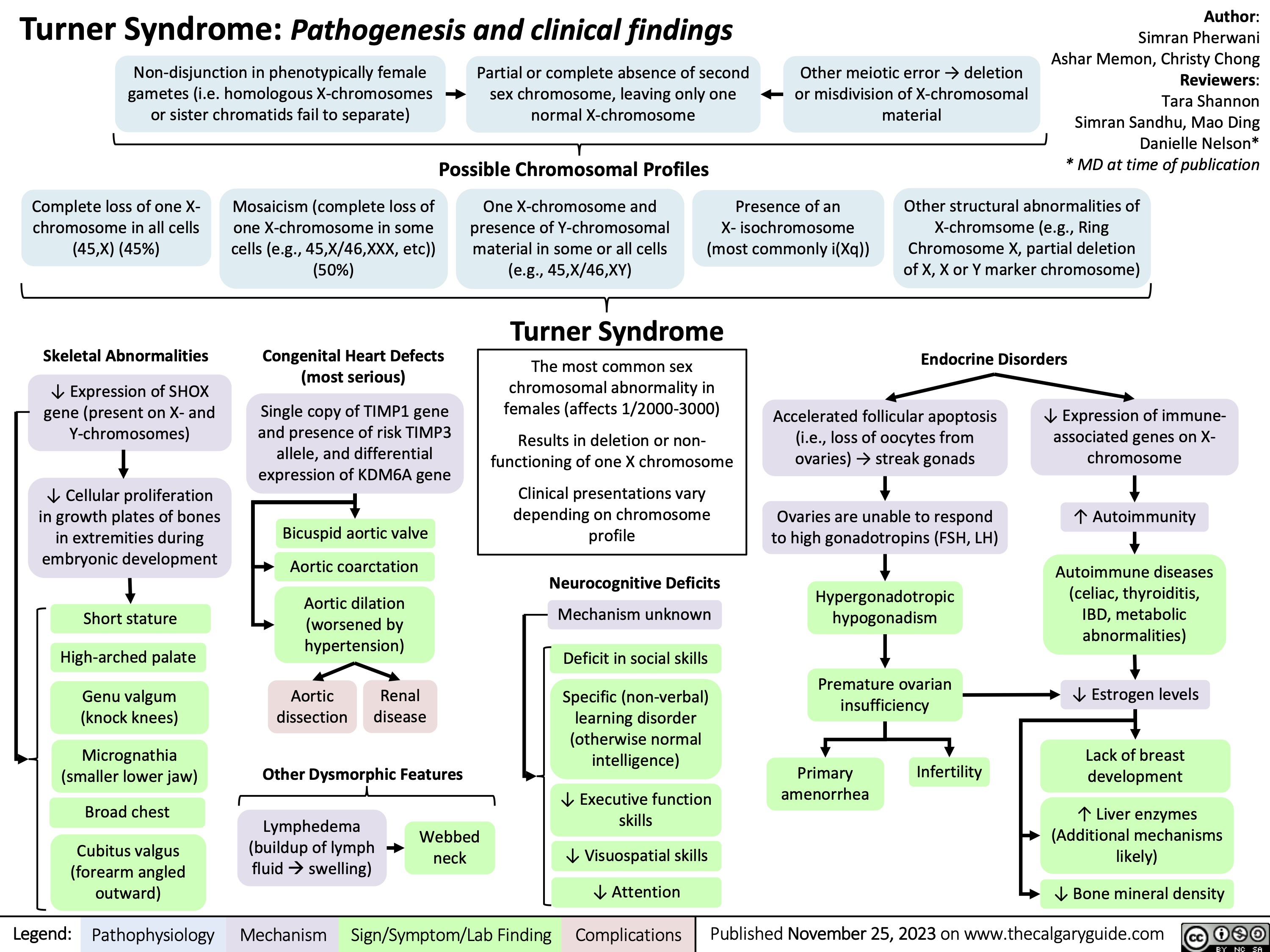
Turner Syndrome: Pathogenesis and clinical findings
Author: Simran Pherwani Ashar Memon, Christy Chong Reviewers: Tara Shannon Simran Sandhu, Mao Ding Danielle Nelson* * MD at time of publication
   Non-disjunction in phenotypically female gametes (i.e. homologous X-chromosomes or sister chromatids fail to separate)
Partial or complete absence of second sex chromosome, leaving only one normal X-chromosome
Possible Chromosomal Profiles
Other meiotic error → deletion or misdivision of X-chromosomal material
      Complete loss of one X- chromosome in all cells (45,X) (45%)
Skeletal Abnormalities
↓ Expression of SHOX gene (present on X- and Y-chromosomes)
↓ Cellular proliferation in growth plates of bones in extremities during embryonic development
Short stature
High-arched palate
Genu valgum (knock knees)
Micrognathia (smaller lower jaw)
Broad chest
Cubitus valgus (forearm angled outward)
Mosaicism (complete loss of one X-chromosome in some cells (e.g., 45,X/46,XXX, etc)) (50%)
Congenital Heart Defects (most serious)
Single copy of TIMP1 gene and presence of risk TIMP3 allele, and differential expression of KDM6A gene
Bicuspid aortic valve
Aortic coarctation
Aortic dilation (worsened by hypertension)
One X-chromosome and presence of Y-chromosomal material in some or all cells (e.g., 45,X/46,XY)
Presence of an
X- isochromosome (most commonly i(Xq))
Other structural abnormalities of X-chromsome (e.g., Ring Chromosome X, partial deletion of X, X or Y marker chromosome)
Endocrine Disorders
 Turner Syndrome
 The most common sex chromosomal abnormality in females (affects 1/2000-3000)
Results in deletion or non- functioning of one X chromosome
Clinical presentations vary depending on chromosome profile
                            Aortic dissection
Renal disease
Neurocognitive Deficits
Mechanism unknown
Deficit in social skills
Specific (non-verbal) learning disorder (otherwise normal intelligence)
↓ Executive function skills
↓ Visuospatial skills ↓ Attention
Accelerated follicular apoptosis (i.e., loss of oocytes from ovaries) → streak gonads
Ovaries are unable to respond to high gonadotropins (FSH, LH)
Hypergonadotropic hypogonadism
Premature ovarian insufficiency
↓ Expression of immune- associated genes on X- chromosome
↑ Autoimmunity
Autoimmune diseases (celiac, thyroiditis, IBD, metabolic abnormalities)
↓ Estrogen levels
Lack of breast development
↑ Liver enzymes (Additional mechanisms likely)
↓ Bone mineral density
       Other Dysmorphic Features
Lymphedema Webbed (buildup of lymph neck
fluidàswelling)
Primary amenorrhea
Infertility
           Legend:
 Pathophysiology
 Mechanism
Sign/Symptom/Lab Finding
 Complications
Published November 25, 2023 on www.thecalgaryguide.com

Non-Alcoholic Fatty Liver Disease

Non-Alcoholic Fatty Liver Disease: Pathogenesis and clinical findings Diagnosis of Metabolic Syndrome when ≥ 3 out of the 5 preceding risk factors are present
Authors: Stephanie Happ Reviewers: Obesity Hypertension Diabetes Hypertriglyceridemia Hypercholesterolemia Iffat Naeem Sunawer Aujla Edwin Cheng* * MD at time of publication
        Insulin resistance develops in adipose tissue and hepatocytes
   ↓ Ability of insulin to suppress lipolysis of adipose tissue
↑ Delivery of free fatty acids from adipocytes to the liver
↑ De-novo lipogenesis in the liver
        Hepatic Steatosis: accumulation of fat in the liver (in the absence of alcohol consumption, termed Non-Alcoholic Fatty Liver (NAFL))
Steatohepatitis: chronic inflammatory and apoptotic climate in the hepatocytes (in the absence of alcohol consumption, termed Non-Alcoholic Steatohepatitis (NASH))
Fibrosis of the Liver: excessive scarring of liver tissue resulting from chronic inflammation, although liver architecture is largely intact
Fat droplets form and grow in the hepatocytes
Hepatic mitochondria increase their workload in attempt to break down the excess free fatty acids through beta-oxidation
↑ in cellular workload creates more reactive oxygen speciesà Inflammation and apoptosis of hepatocytes
    On-going inflammation damages hepatic stellate cells (the primary extracellular matrix–producing cells of the liver) causing the release of fibrinogenic cytokines
Cirrhosis of the liver: normal lobular structure distorts and is replaced by regenerating nodules and bridging septa, disrupting normal liver blood flow
Deposition of fibrotic
material and collagen within the perisinusoidal spaces of the liver
Decompensated Cirrhosis Hepatocellular carcinoma
       Legend:
 Pathophysiology
Mechanism
Sign/Symptom/Lab Finding
 Complications
Published November 25, 2023 on www.thecalgaryguide.com

Cranial Nerve IV Palsy

Cranial Nerve IV Palsy: Pathogenesis and clinical findings
        Congenital
(e.g. Möbius Syndrome)
Dysgenesis (defective development) of CN IV
Microvascular Disease (e.g. Stroke)
Damage or occlusion (complete or partial blockage) to the blood vessels supplying CN IV
Trauma
Temporary or permanent damage to the nerve fibers
Neoplasm
Metastasis (e.g. Leptomeningeal)
Compression of the nerve fibers along the nerve tract
Primary (e.g. Schwannoma)
Tumor develops new blood vessels that redirect blood flow to the malignancy, away from the nerve
Ischemia of CN IV
Infection (a rare cause) (e.g. Ehrlichia chaffeensis, Tuberculosis meningitis)
Infectious process in the subarachnoid space
Damage to axons of CN IV
                 Cranial Nerve (CN) IV Palsy
Superior oblique musculature weakness due to CN IV dysfunction
   Lesion to the fascicle of CN IV (extending from midbrain to cavernous sinus)
Impaired ability to conduct motor commands from nucleus to superior oblique muscle in the eye
Weak superior oblique innervation
Difficult abduction and intorsion of the eye
Contralateral superior
oblique weakness
Lesion to the nucleus of CN IV (located in the midbrain)
Disturbed signal production occurring prior to demarcation of fibers to contralateral side
The pathophysiology above can cause damage to structures surrounding CN IV in the midbrain
Impacting ipsilateral sympathetic chain descending from the
hypothalamus prior to reaching the superior cervical ganglion
               Authors:
Shahab Marzoughi Reviewers:
Sunawer Aujla
Yvette Ysabel Yao
Yan Yu*
Gary Michael Klein*
* MD at time of publication
Vertical/oblique Diplopia (double vision)
Hypertropia (one eye is deviated upward compared to the other)
Perinaud’s Syndrome (upgaze palsy, convergence retraction nystagmus, and pupillary hyporeflexia)
See relevant Calgary Guide slide on Parinaud’s Syndrome
Loss of eye muscle movement coordination and function of other structures relating to gait
Ataxia
Ipsilateral Primary Horner’s Syndrome (miosis, anhidrosis, ptosis)
See relevant Calgary Guide slide on Horner Syndrome
      Legend:
 Pathophysiology
Mechanism
Sign/Symptom/Lab Finding
 Complications
Published January 16, 2024 on www.thecalgaryguide.com

Neonatal Necrotising Enterocolitis in Premature Neonates
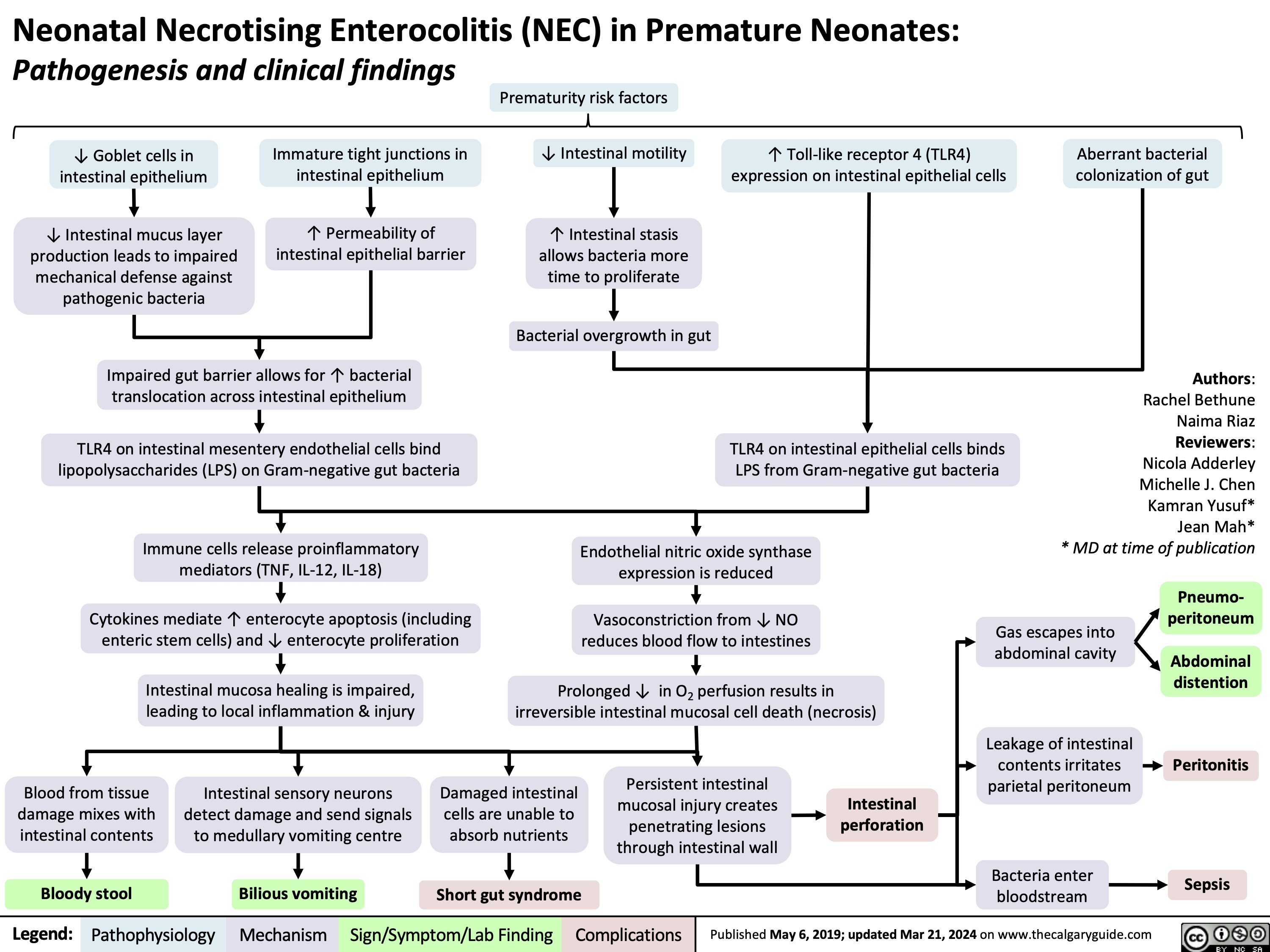
Neonatal Necrotising Enterocolitis (NEC) in Premature Neonates:
Pathogenesis and clinical findings
Prematurity risk factors ↓ Intestinal motility
↑ Intestinal stasis allows bacteria more time to proliferate
Bacterial overgrowth in gut
       ↓ Goblet cells in intestinal epithelium
↓ Intestinal mucus layer production leads to impaired mechanical defense against pathogenic bacteria
Immature tight junctions in intestinal epithelium
↑ Permeability of intestinal epithelial barrier
↑ Toll-like receptor 4 (TLR4) expression on intestinal epithelial cells
Aberrant bacterial colonization of gut
          Impaired gut barrier allows for ↑ bacterial translocation across intestinal epithelium
TLR4 on intestinal mesentery endothelial cells bind lipopolysaccharides (LPS) on Gram-negative gut bacteria
Immune cells release proinflammatory mediators (TNF, IL-12, IL-18)
Cytokines mediate ↑ enterocyte apoptosis (including enteric stem cells) and ↓ enterocyte proliferation
Intestinal mucosa healing is impaired, leading to local inflammation & injury
TLR4 on intestinal epithelial cells binds LPS from Gram-negative gut bacteria
Authors: Rachel Bethune Naima Riaz Reviewers: Nicola Adderley Michelle J. Chen Kamran Yusuf* Jean Mah* * MD at time of publication
      Endothelial nitric oxide synthase expression is reduced
Vasoconstriction from ↓ NO reduces blood flow to intestines
Prolonged ↓ in O2 perfusion results in irreversible intestinal mucosal cell death (necrosis)
Gas escapes into abdominal cavity
Leakage of intestinal contents irritates parietal peritoneum
Bacteria enter bloodstream
Pneumo- peritoneum
Abdominal distention
Peritonitis
Sepsis
                 Blood from tissue damage mixes with intestinal contents
Bloody stool
Intestinal sensory neurons detect damage and send signals to medullary vomiting centre
Bilious vomiting
Damaged intestinal cells are unable to absorb nutrients
Short gut syndrome
Persistent intestinal mucosal injury creates penetrating lesions through intestinal wall
Intestinal perforation
         Legend:
 Pathophysiology
 Mechanism
Sign/Symptom/Lab Finding
 Complications
 Published May 6, 2019; updated Mar 21, 2024 on www.thecalgaryguide.com

Irritant Contact Dermatitis Pathogenesis and Clinical Findings
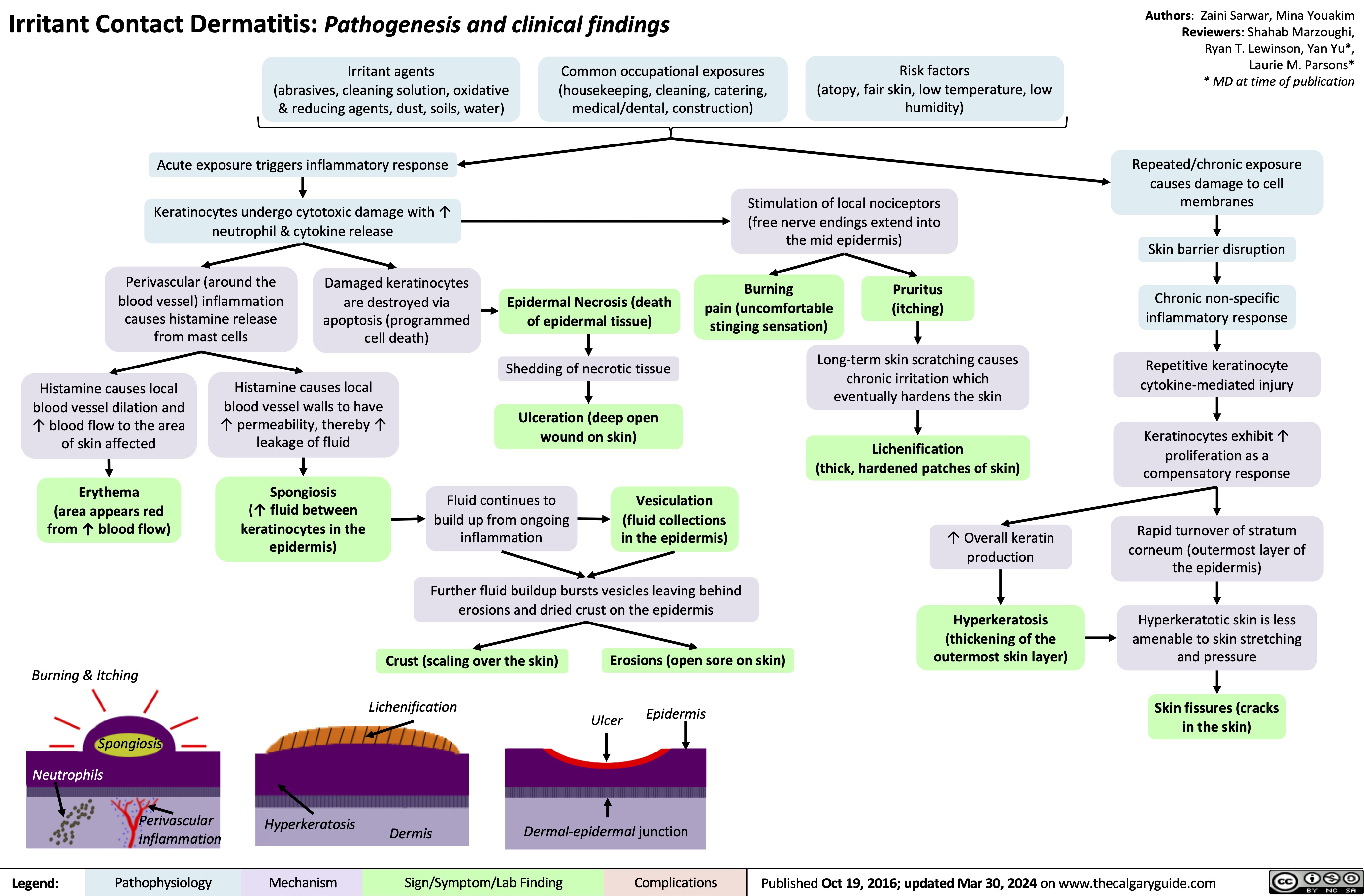
Irritant Contact Dermatitis: Pathogenesis and clinical findings
Authors: Zaini Sarwar, Mina Youakim Reviewers: Shahab Marzoughi, Ryan T. Lewinson, Yan Yu*, Laurie M. Parsons* * MD at time of publication
Repeated/chronic exposure causes damage to cell membranes
Skin barrier disruption
Chronic non-specific inflammatory response
Repetitive keratinocyte cytokine-mediated injury
Keratinocytes exhibit ↑ proliferation as a compensatory response
Rapid turnover of stratum corneum (outermost layer of the epidermis)
Hyperkeratotic skin is less amenable to skin stretching and pressure
Skin fissures (cracks in the skin)
   Irritant agents
(abrasives, cleaning solution, oxidative & reducing agents, dust, soils, water)
Acute exposure triggers inflammatory response
Keratinocytes undergo cytotoxic damage with ↑ neutrophil & cytokine release
Common occupational exposures (housekeeping, cleaning, catering, medical/dental, construction)
Risk factors
(atopy, fair skin, low temperature, low humidity)
     Stimulation of local nociceptors (free nerve endings extend into the mid epidermis)
         Perivascular (around the blood vessel) inflammation causes histamine release from mast cells
Damaged keratinocytes are destroyed via
apoptosis (programmed cell death)
Epidermal Necrosis (death of epidermal tissue)
Shedding of necrotic tissue
Ulceration (deep open wound on skin)
Burning
pain (uncomfortable stinging sensation)
Pruritus (itching)
           Histamine causes local blood vessel dilation and ↑ blood flow to the area of skin affected
Erythema (area appears red from ↑ blood flow)
Burning & Itching Spongiosis
Neutrophils Neutrophils
Histamine causes local blood vessel walls to have
↑ permeability, thereby ↑ leakage of fluid
Spongiosis
(↑ fluid between keratinocytes in the epidermis)
Fluid continues to build up from ongoing inflammation
Vesiculation (fluid collections in the epidermis)
Long-term skin scratching causes chronic irritation which eventually hardens the skin
Lichenification
(thick, hardened patches of skin)
↑ Overall keratin production
Hyperkeratosis (thickening of the outermost skin layer)
             Further fluid buildup bursts vesicles leaving behind erosions and dried crust on the epidermis
     Crust (scaling over the skin)
Lichenification
Erosions (open sore on skin)
  Ulcer
Epidermis
  Perivascular Inflammation
Hyperkeratosis
Dermis
Dermal-epidermal junction
 Legend:
 Pathophysiology
Mechanism
 Sign/Symptom/Lab Finding
 Complications
 Published Oct 19, 2016; updated Mar 30, 2024 on www.thecalgaryguide.com

Febrile Neutropenia Pathogenesis and clinical findings
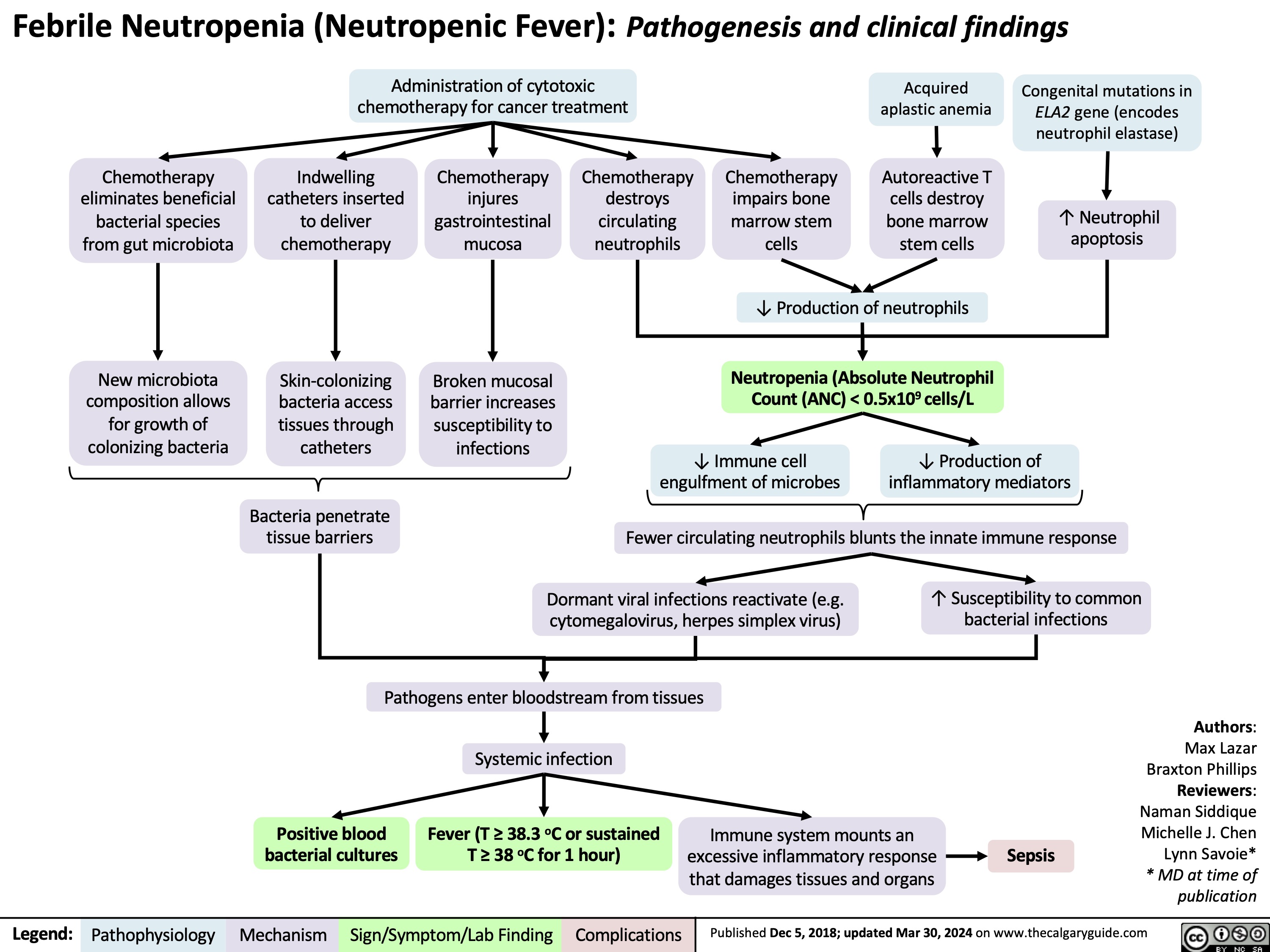
Febrile Neutropenia (Neutropenic Fever): Pathogenesis and clinical findings
  Administration of cytotoxic chemotherapy for cancer treatment
Acquired aplastic anemia
Autoreactive T cells destroy bone marrow stem cells
Congenital mutations in ELA2 gene (encodes neutrophil elastase)
↑ Neutrophil apoptosis
         Chemotherapy eliminates beneficial bacterial species from gut microbiota
New microbiota composition allows for growth of colonizing bacteria
Indwelling catheters inserted to deliver chemotherapy
Skin-colonizing bacteria access tissues through catheters
Bacteria penetrate tissue barriers
Chemotherapy injures gastrointestinal mucosa
Broken mucosal barrier increases susceptibility to infections
Chemotherapy destroys circulating neutrophils
Chemotherapy impairs bone marrow stem cells
        ↓ Production of neutrophils
Neutropenia (Absolute Neutrophil Count (ANC) < 0.5x10⁹ cells/L
       ↓ Immune cell ↓ Production of engulfment of microbes inflammatory mediators
Fewer circulating neutrophils blunts the innate immune response
        Pathogens enter bloodstream from tissues Systemic infection
Authors: Max Lazar Braxton Phillips Reviewers: Naman Siddique Michelle J. Chen Lynn Savoie* * MD at time of publication
Dormant viral infections reactivate (e.g. cytomegalovirus, herpes simplex virus)
↑ Susceptibility to common bacterial infections
        Positive blood bacterial cultures
Fever (T ≥ 38.3 oC or sustained T ≥ 38 oC for 1 hour)
Immune system mounts an excessive inflammatory response that damages tissues and organs
Sepsis
  Legend:
 Pathophysiology
 Mechanism
Sign/Symptom/Lab Finding
 Complications
 Published Dec 5, 2018; updated Mar 30, 2024 on www.thecalgaryguide.com

Spontaneous Rupture of Membranes

Pre-Labour Rupture of Membranes: Pathogenesis and clinical findings Gestational age approaching term (>37 weeks)
Authors: Wendy Xu Reviewers: Riya Prajapati Michelle J. Chen Dr. Jadine Paw* * MD at time of publication
      Intrauterine inflammation
Fetal maturation
Fetal growth
Uterine contractions
    ↑ Pro-inflammatory cytokine & chemokine release in fetal membranes & amniotic fluid
↑ Stretch forces on fetal membranes
↑ Pro-apoptotic factors induces cellular apoptosis of fetal membranes
    Changes in collagen and protein composition drive extracellular matrix remodeling in fetal membranes
↓ Tensile strength
Structural weakening of fetal membranes
   Occurs primarily in the focal area of fetal membranes overlying the cervix
↑ Matrix metalloproteinases triggers extracellular matrix degradation in fetal membranes
    Amnion and choriodecidua separation
    Amniotic fluid flows from vagina
Amniotic fluid pools in posterior fornix on speculum exam
Pre-labour rupture of membranes
Membranes rupture before onset of uterine contractions
Chorioamnionitis (infection of the fetal membranes and amniotic fluid)
Neonatal infection
Endometritis (infection of the endometrium)
     Amniotic fluid leaks through the cervix
Prolonged rupture of membranes (>18hrs) before delivery
Microbes ascend through vaginal canal
  Low amniotic fluid volume on ultrasound
Amniotic fluid (pH 7.0-7.5) mixes with normal vaginal fluid (pH 4.5-6.0) which increases vaginal fluid pH to > 6.5
Positive nitrazine (pH indicator) test
Ion- and estrogen-containing amniotic fluid enters vaginal canal
Ferning (branching pattern) of vaginal fluid under microscope
Accompanies uterine contractions, cervical effacement & cervical dilation
Delivery/birth
        Legend:
 Pathophysiology
 Mechanism
Sign/Symptom/Lab Finding
 Complications
 Published Oct 4, 2024 on www.thecalgaryguide.com

Vaccine-Mediated Immunity General Physiology
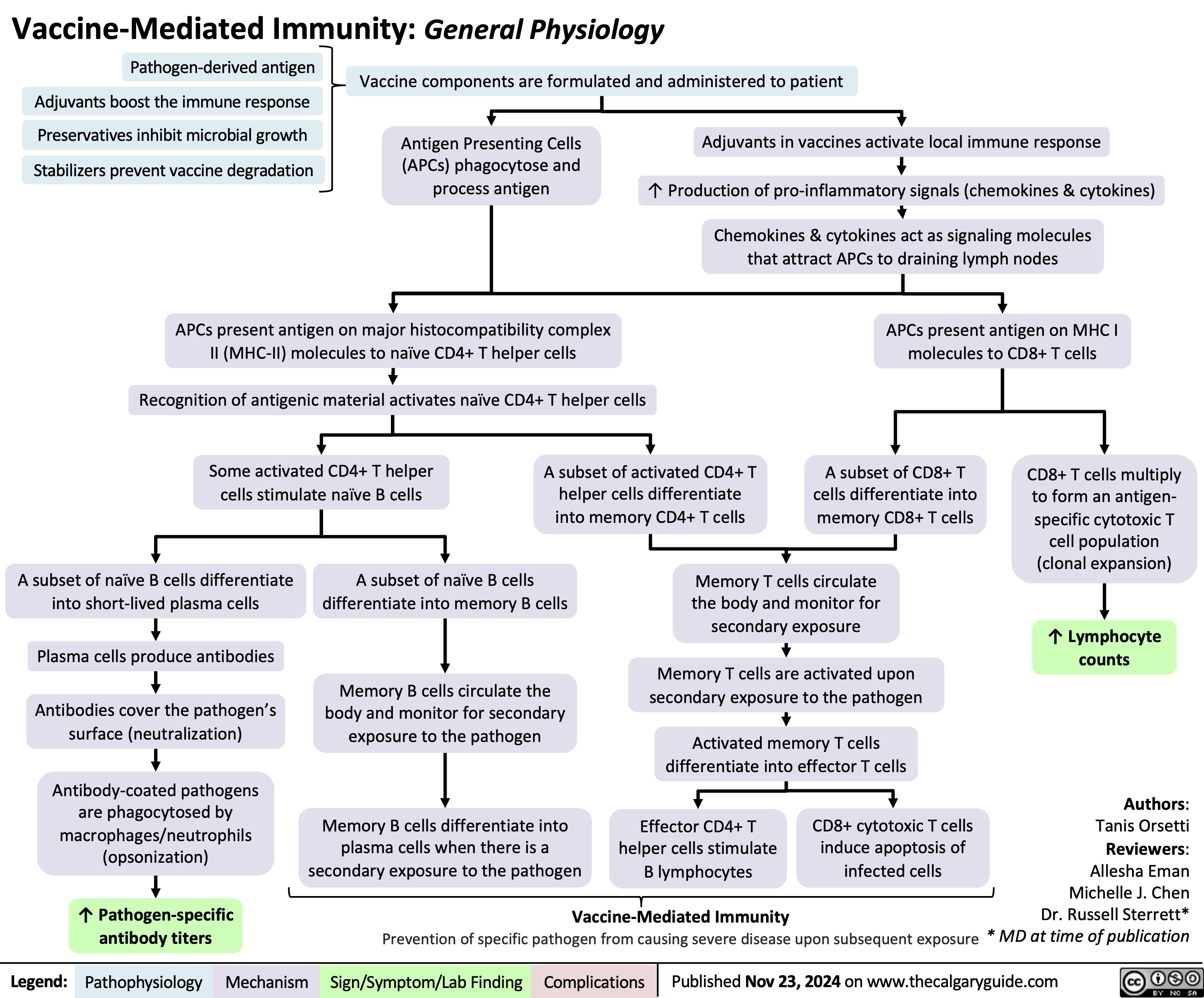
Vaccine-Mediated Immunity: General Physiology
  Pathogen-derived antigen Adjuvants boost the immune response Preservatives inhibit microbial growth
Stabilizers prevent vaccine degradation
Vaccine components are formulated and administered to patient
      Antigen Presenting Cells (APCs) phagocytose and process antigen
Adjuvants in vaccines activate local immune response
↑ Production of pro-inflammatory signals (chemokines & cytokines)
Chemokines & cytokines act as signaling molecules that attract APCs to draining lymph nodes
APCs present antigen on MHC I molecules to CD8+ T cells
        APCs present antigen on major histocompatibility complex II (MHC-II) molecules to naïve CD4+ T helper cells
Recognition of antigenic material activates naïve CD4+ T helper cells
             A subset of naïve B cells differentiate into short-lived plasma cells
Plasma cells produce antibodies
Antibodies cover the pathogen’s surface (neutralization)
Antibody-coated pathogens are phagocytosed by macrophages/neutrophils (opsonization)
↑ Pathogen-specific antibody titers
CD8+ T cells multiply to form an antigen- specific cytotoxic T cell population (clonal expansion)
↑ Lymphocyte counts
Authors: Tanis Orsetti Reviewers: Allesha Eman Michelle J. Chen Dr. Russell Sterrett* Prevention of specific pathogen from causing severe disease upon subsequent exposure * MD at time of publication
Some activated CD4+ T helper cells stimulate naïve B cells
A subset of activated CD4+ T helper cells differentiate into memory CD4+ T cells
A subset of CD8+ T cells differentiate into memory CD8+ T cells
A subset of naïve B cells differentiate into memory B cells
Memory B cells circulate the body and monitor for secondary exposure to the pathogen
Memory T cells circulate the body and monitor for secondary exposure
Memory T cells are activated upon secondary exposure to the pathogen
Activated memory T cells differentiate into effector T cells
             Memory B cells differentiate into plasma cells when there is a secondary exposure to the pathogen
Effector CD4+ T helper cells stimulate B lymphocytes
CD8+ cytotoxic T cells induce apoptosis of infected cells
  Vaccine-Mediated Immunity
 Legend:
 Pathophysiology
Mechanism
Sign/Symptom/Lab Finding
 Complications
 Published Nov 23, 2024 on www.thecalgaryguide.com

Barretts Esophagus

Barrett’s Esophagus: Pathogenesis, clinical findings and complications Gastroesophageal Reflux Disease (GERD)
Authors: Sophia Khan Reviewers: Claire Song Shahab Marzoughi Sylvain Coderre* * MD at time of publication
  Reflux of stomach acid, bile salts + digestive enzymes
through lower esophageal sphincter (located at junction between esophagus and stomach)
Chronic reflux exposure to squamous epithelium (cells lining distal esophagus)
Squamous epithelial cells release inflammatory cytokines: interleukin-8 and interleukin-1beta
Inflammation of squamous epithelium
Adaptive changes of squamous epithelium to prevent damage by acidic reflux
Migration of stem cells in gastric cardia (proximal region of the stomach) into distal esophagus
Replacement of esophageal squamous epithelium by gastric columnar epithelium
Conversion (metaplasia) of normal esophageal squamous epithelium into abnormal gastric columnar epithelium with interspersed goblet cells
Z line (the squamocolumnar junction between the esophagus and stomach) is irregular and displaced proximally on esophagus on endoscopy
       Heartburn (retrosternal burning sensation from stomach reflux)
Regurgitation (involuntary expulsion
of stomach content back into esophagus)
Development of goblet cells (intestinal mucus-producing cells) within esophageal epithelium
Abnormal presence of goblet cells on histology of distal esophagus
     Abnormal presence of columnar epithelial cells on histology of distal esophagus
     ↑ Atypical proliferation &
↓ apoptosis of Barrett’s epithelial cells
Dysplasia (disordered growth of cells with the
potential to develop into cancer) of Barrett’s epithelium
Esophageal adenocarcinoma
Improper division of nuclear chromatin (packaged DNA)
Cellular nuclei increase in size due to retained chromatin from improper division
Excess chromatin absorbs more stain during histology
Double- stranded DNA breaks
Nuclear enlargement on histology
Continued acidic reflux causes oxidative DNA damage
       Hyperchromatic (darkly stained) nuclei on histology
  Legend:
 Pathophysiology
Mechanism
Sign/Symptom/Lab Finding
 Complications
 Published Dec 15, 2024 on www.thecalgaryguide.com

Ptosis

Ptosis: Pathogenesis and Clinical Findings Neurogenic causes of low
Mechanical causes of low eyelid position
Mass lesion of the upper eyelid (Chalazion, hemangioma, malignancy, etc.)
Gravitational effect from excess eyelid weight
Traumatic causes of low eyelid position
Direct injury limits function of LPS or conduction of generated force to the tarsal plate
Laceration of the LPS limiting its function or transection of the levator aponeurosis
Congenital causes of eyelid drooping
Fibrofatty replacement of the LPS muscle at birth
Reduced levator function
    eyelid position
     Insult to the oculomotor nerve (CNIII) (e.g., compressive, microvascular, demyelinating)
CNIII innervates levator palpebrae superioris, the main muscle responsible for upper eyelid elevation
Insult to the sympathetic innervation (e.g., Horner’s syndrome)
Ocular sympathetic innervate the Muller muscle, which provides approximately 2mm of the upper eyelid’s height
Neuromuscular or myogenic causes of low eyelid position (e.g., myasthenia gravis)
LPS muscle myopathy or defect at its neuromuscular junction that limits the elevation of the eyelid
Aponeurotic causes of low eyelid position
Involutional change (disinsertion) of the levator aponeurosis which connects the LPS to the tarsal plate
           Ptosis (also called blepharoptosis)
Abnormally low position of the upper eyelid
   ↓ distance between the central corneal light reflex (as produced by an examiner’s penlight) and the level of the center of the upper-eyelid margin
↓ Margin-Reflex Distance (Normal: 4-6mm)
Obstruction of the pupil/visual axis
Decreased or occluded superior visual field
↓ distance between the upper eyelid margin and the lower eyelid margin
↓ Palpebral Fissure Height (Normal: 10-12mm)
Flattening of the peripheral cornea by eyelid pressure
Induced with-the-rule astigmatism
Authors: Mina Mina Reviewers: Aicha Djaoutkhanova Shahab Marzoughi Lucy Yang Mao Ding William Trask* * MD at time of publication
         Legend:
 Pathophysiology
Mechanism
Sign/Symptom/Lab Finding
 Complications
 Published December 29, 2024 on www.thecalgaryguide.com

Ankle Fracture

Ankle fracture: Pathogenesis and clinical findings High mechanical force to ankle
Risk factors
Age Post-menopause ↓ Osteoblast activity
      Twisting force (e.g. sports injury)
Crushing force (e.g. limb Loading force entrapment beneath heavy object) (e.g. fall)
Force exceeds mechanical strength of bone
Ankle eversion or inversion
Osteoporosis
      Compromised bone scaffolding & repair impairs the structural integrity of bone. Force required for fracture is lowered
  Ankle Fracture
(Fracture of the talus and/or the distal 6 cm of the tibia and/or fibula)
          Fractured bone is displaced through the dermal layers
Open Fracture
Compromised dermal layers create an opportunity for pathogens to enter the wound site
Infection
Multiple malleoli are fractured within the ring of the ankle
Lack of ligamentous & bone support makes ankle joint unstable
Displacement of bone from fracture site
Misalignment of bone segments prevents regeneration & union
Malunion of unreduced fracture
Ligamentous injury occurs concurrently from excessive tensile force
Fractured bone disrupts surrounding vasculature
Hyaline cartilage of the articulating surface is damaged
Trauma induces synovitis, chondrocyte apoptosis, & necrosis
Fractured bone disrupts surrounding peripheral nerves
Numbness Localized Pain
Pain is induced when the patient attempts to weight bear
Inability to weight bear
Authors: Ethan Smith Reviewers: Nojan Mannani Michelle J. Chen Dr. Gerhard Kiefer* * MD at time of publication
         Platelets are exposed to the extravascular environment, thereby releasing platelet derived factors & complement factors
         Plasma coagulation cascade is activated
Chondrocyte dysfunction in proliferation
Reduced synovial functioning
       ↑Vascular permeability from inflammatory cytokines
Protective hematoma forms in the joint space
Hyaline cartilage loss
Lost cartilage over time degrades proper articulation & causes joint narrowing, osteophytes, subchondral sclerosis
Post traumatic osteoarthritis
           Edema
Fluid in the joint space changes position of bony articulations
Bruising
  Restricted range of movement
 Legend:
 Pathophysiology
Mechanism
 Sign/Symptom/Lab Finding
 Complications
 Published Dec 30, 2024 on www.thecalgaryguide.com

Pituitary Tumour Classification and Clinical Outcomes
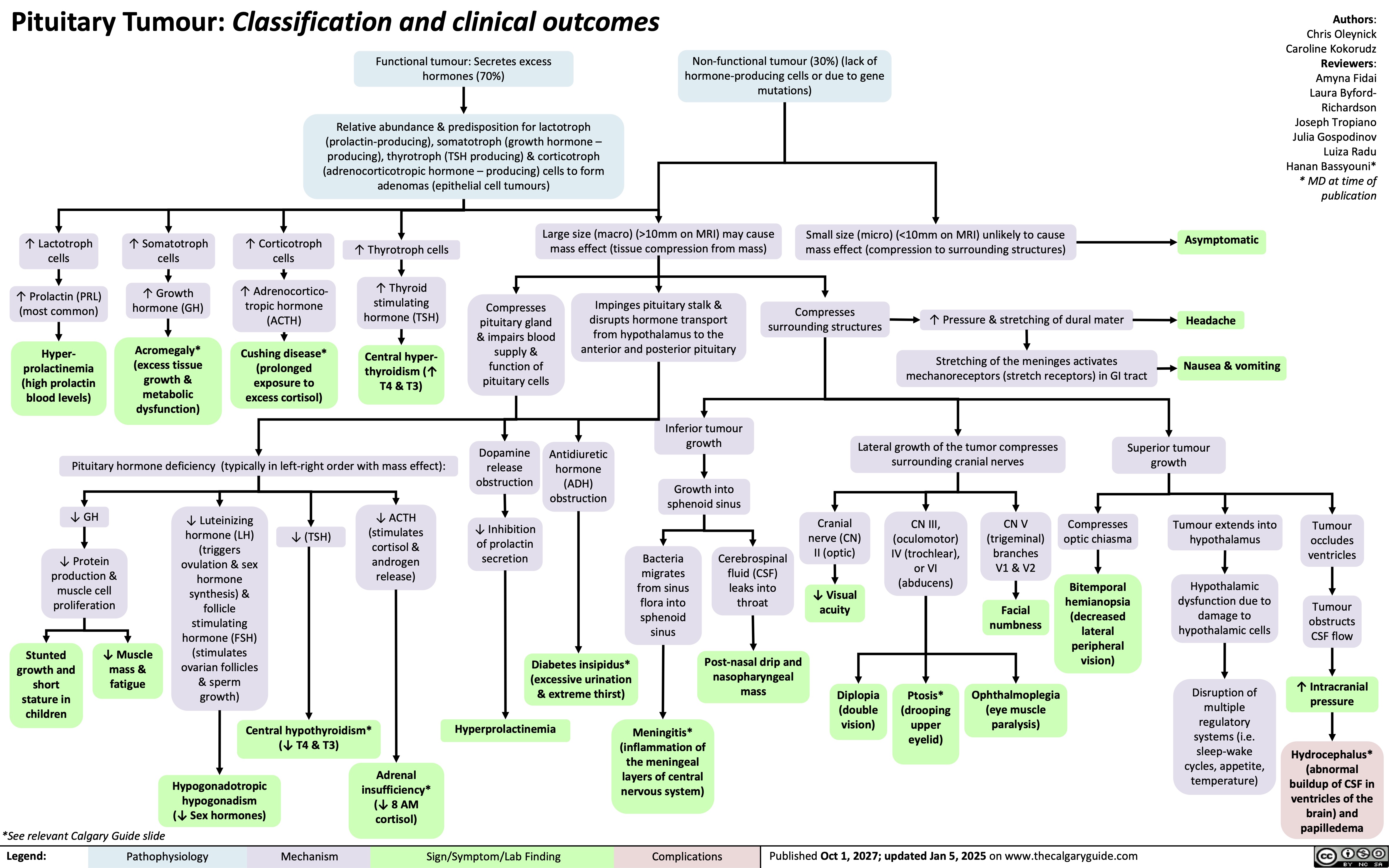
Pituitary Tumour: Classification and clinical outcomes Functional tumour: Secretes excess
Non-functional tumour (30%) (lack of hormone-producing cells or due to gene mutations)
Authors: Chris Oleynick Caroline Kokorudz Reviewers: Amyna Fidai Laura Byford- Richardson Joseph Tropiano Julia Gospodinov Luiza Radu Hanan Bassyouni* * MD at time of publication
  hormones (70%)
Relative abundance & predisposition for lactotroph (prolactin-producing), somatotroph (growth hormone – producing), thyrotroph (TSH producing) & corticotroph (adrenocorticotropic hormone – producing) cells to form adenomas (epithelial cell tumours)
            ↑ Lactotroph cells
↑ Prolactin (PRL) (most common)
Hyper- prolactinemia (high prolactin blood levels)
↑ Somatotroph cells
↑ Growth hormone (GH)
Acromegaly* (excess tissue growth & metabolic dysfunction)
↑ Corticotroph cells
↑ Adrenocortico- tropic hormone (ACTH)
Cushing disease* (prolonged exposure to excess cortisol)
↑ Thyrotroph cells
↑ Thyroid stimulating hormone (TSH)
Central hyper- thyroidism (↑ T4 & T3)
Large size (macro) (>10mm on MRI) may cause mass effect (tissue compression from mass)
Small size (micro) (<10mm on MRI) unlikely to cause mass effect (compression to surrounding structures)
Asymptomatic
Headache
Nausea & vomiting
          Compresses pituitary gland & impairs blood supply & function of pituitary cells
Impinges pituitary stalk & disrupts hormone transport from hypothalamus to the anterior and posterior pituitary
Compresses surrounding structures
↑ Pressure & stretching of dural mater
Stretching of the meninges activates mechanoreceptors (stretch receptors) in GI tract
                Pituitary hormone deficiency (typically in left-right order with mass effect):
Dopamine release obstruction
↓ Inhibition of prolactin secretion
Antidiuretic hormone (ADH) obstruction
Inferior tumour growth
Growth into sphenoid sinus
Lateral growth of the tumor compresses surrounding cranial nerves
Superior tumour growth
        ↓ GH
↓ Protein production & muscle cell proliferation
↓ Luteinizing hormone (LH) (triggers ovulation & sex hormone synthesis) & follicle stimulating hormone (FSH) (stimulates ovarian follicles & sperm growth)
↓ (TSH)
↓ ACTH (stimulates cortisol & androgen release)
Cranial nerve (CN) II (optic)
↓ Visual acuity
Diplopia (double vision)
CN III, (oculomotor) IV (trochlear), or VI (abducens)
Ptosis* (drooping upper eyelid)
CN V (trigeminal) branches V1 & V2
Facial numbness
Ophthalmoplegia (eye muscle paralysis)
Compresses optic chiasma
Bitemporal hemianopsia (decreased lateral peripheral vision)
Tumour extends into hypothalamus
Hypothalamic dysfunction due to damage to hypothalamic cells
Disruption of multiple regulatory systems (i.e. sleep-wake cycles, appetite, temperature)
Tumour occludes ventricles
Tumour obstructs CSF flow
↑ Intracranial pressure
Hydrocephalus* (abnormal buildup of CSF in ventricles of the brain) and papilledema
           Bacteria migrates from sinus flora into sphenoid sinus
Cerebrospinal fluid (CSF) leaks into throat
Post-nasal drip and nasopharyngeal mass
          Stunted growth and short stature in children
↓ Muscle mass & fatigue
Diabetes insipidus* (excessive urination & extreme thirst)
           Central hypothyroidism* (↓ T4 & T3)
Hyperprolactinemia
Meningitis* (inflammation of the meningeal layers of central nervous system)
   *See relevant Calgary Guide slide
Hypogonadotropic hypogonadism (↓ Sex hormones)
Adrenal insufficiency* (↓ 8 AM cortisol)
 Legend:
 Pathophysiology
 Mechanism
 Sign/Symptom/Lab Finding
 Complications
 Published Oct 1, 2027; updated Jan 5, 2025 on www.thecalgaryguide.com

Varicella Zoster Virus

Varicella Zoster Virus (VZV) - Chicken Pox: Pathogenesis and clinical findings Exposure to
individual with
VZV infection
VZV enters
respiratory tract
& conjunctiva
VZV enters
dendritic
cells (DC)
DCs travel to
regional
lymph nodes
Primary viremia
Authors:
Morgan Garland,
Sean Spence
VZV replicates
VZV proteins ↑ major
↓ MHCI
Reviewers:
in nasopharynx
histocompatibility
expression
Yan Yu, Danny Guo,
& CD4+ T cells
complex class I
on CD4+ T
Emily J. Doucette,
(MHCI) degradation
cell surface
Laurie Parsons*,
James D. Kellner*
*MD at time of publication
Acute phase
VZV evades the immune system
VZV travels through the blood in CD4+ T cells
Immune cells release
cytokines to fight the
virus (stronger in adults)
Fluid & cellular debris
accumulate between
epidermal layers
Generalized pruritic (itchy) vesicular
rash at different stages of development
(macule, papule, vesicle)
Immune system activates
& releases inflammatory
compounds
VZV replicates in liver,
spleen & lymph nodes
Erythema
(redness) & pain
Scratching lesions
introduces bacteria
Fibroblasts lay down
collagen to heal skin lesions
Resets thermostat
in hypothalamus
Systemic
response
Tissue damage
in oropharynx
Direct
inflammation in
neural tissues
Cerebellar ataxia
(more common
in children)
Bacterial superinfection from S.
aureus & Streptococcus pyogenes
(more common in children)
Scarring
Fever
(prodromal)
Malaise
(prodromal)
Sore throat
(prodromal)
Encephalitis (more
common in adults)
Abscess
Cellulitis
Toxic shock syndrome (TSS)
Secondary viremia
Immune cells release cytokines to
fight infection (stronger in adults)
Inflammation & fluid
build up in lungs
VZV travels through the blood in CD4+ T
cells expressing skin homing receptors
Fluid & cellular
debris accumulate
in damaged alveoli Lungs more susceptible to
secondary bacterial infection
Pneumonia** (more
common in adults)
VZV colonizes
keratinocytes
over several days
VZV colonizes
neurons & glial
cells in the brain
VZV colonizes
alveolar
epithelial cells
Resolution & latency
VZV tracks along
neurons from sites of
infection to dorsal root
ganglia & cranial nerves
↓ MHCI expression
in sensory ganglia
Adaptive
immune system
controls viremia
↓ Viral gene expression
Resolution of VZV
infection &
development of
lifelong immunity
Direct viral toxicity (DNA damage, mitochondrial
dysfunction, & protein misfolds in infected cells)
Apoptosis & dysfunction of infected cells
Latent
infection
Stress or immune suppression may
precipitate reactivation of VZV later in life Shingles**
**See corresponding Calgary Guide slide
Pathophysiology Mechanism
Published Nov 12, 2012; updated Jun 22, 2025 on www.thecalgaryguide.com
Legend: Sign/Symptom/Lab Finding Complications

Apert Syndrome

Apert Syndrome:
Pathogenesis and clinical findings
Gain of function mutation in fibroblast growth factor 2 receptor (FGFR2) on chromosome 10q
Mutated FGFR2 protein has ↑ ligand binding & signalling activity
Osteoblasts undergo early differentiation & maturation in response to ↑ FGFR2
↑ Bone deposition & ossification
Osteoblast progenitors proliferate at ↑ rate
Abnormal mesenchymal differentiation
in response to ↑ FGFR2
Authors:
Merry Faye Graff,
Taylor Krawec
Reviewers:
Emily J. Doucette,
Ryan Frank*
* Indicates MD at time
of publication
Apert Syndrome (Acrocephalosyndactyly Type I)
A rare genetic disorder characterized by multisuture craniosynostosis, midface retrusion, & syndactyly of the hands & feet
Craniofacial Abnormalities
Premature differentiation of neural crest-derived mesenchyme in face
Underdevelopment of
midfacial bones (e.g.
maxilla, zygoma)
Orbit growth is
rotated outward
Extraocular muscles
insert anomalously
↓ Control of
eye movement
Mesenchymal
cells at palatal
shelf undergo
abnormal
differentiation
Palatal midline
epithelial
seam fails to
undergo
apoptosis
Premature osteoblast
maturation in suture
mesenchyme
Midface hypoplasia
Hypertelorism (widely
separated orbits)
V-pattern exotropia (“V”
shaped eye movement)
↓ Palatal shelf outgrowth
& misalignment
Bicoronal synostosis
(premature fusion of
coronal sutures)
Shallow orbits displace
globes forward
Depressed
nasal bridge
↓ Length of
hard palate
Abnormal eustachian
tube development
↓ Anteroposterior
growth of nasal cavity
Cleft palate**
Fusion of coronal sutures restricts
anteroposterior skull growth
Exorbitism
(protruding eyes)
Beaked nose
↓ Drainage of
middle ear
Choanal stenosis
(narrowed nasal passages)
Skull grows vertically
as brain develops
Cerebral spinal fluid
accumulates in ventricles
Incomplete eyelid
closure ↑ corneal
exposure & damage
Class III
malocclusion
(underbite)
V shaped
dental
arch
High
arched
palate
Recurrent
ear effusions
↑ Nasal canal
obstruction
Breathing
difficulty
Turribrachycephaly
(tower shaped skull)
Ventriculomegaly
(↑ ventricular size)
Corneal scarring
Exposure keratopathy
Impaired ossicle
function
Conductive
hearing loss
Brain growth
is restricted
Developmental
delay
Limb & Skeletal Abnormalities
Phalanges of fingers
&/or toes undergo
premature ossification
↑ Proliferation in apical
ectodermal ridge at distal limb bud
during embryonic development
↓ Regression of interdigital
mesenchyme allow persistence
of interdigital soft tissue bridges
Other Abnormalities
FGFR2 mutation leads to
sebaceous gland hyperplasia
& follicular keratinization
Excess sebum production
& follicular blockage
Osseus syndactyly
Legend: ↑ FGFR2 alters BMP &
SHH signaling balance
Pathophysiology Mechanism
Sign/Symptom/Lab Finding Cutaneous syndactyly
(may include nailbed)
Severe acne
Published Sept 16, 2025 on www.thecalgaryguide.com
Complications

GLP-1 Receptor Agonists

Glucagon-like Peptide-1 (GLP-1) Receptor Agonists: Mechanism of action and side effects
Management of Type
2 Diabetes Mellitus**
Weight
management
Authors: Saania Tariq, Trevor Low
Reviewers: Rafael Sanguinetti
Luiza Radu, Emily J. Doucette
Activated GLP-1 receptors in
Activated GLP-1
Hanan Bassyouni*
* MD at time of publication
the myenteric plexus inhibit
receptors stimulate
gastric motor neurons
pancreatic islet cells
GLP-1 Receptor Agonists
Synthetic analogs (e.g., Semaglutide) of GLP-1 peptide hormone endogenously
produced by intestinal enteroendocrine L cells directly activate GLP-1 receptors
to modulate food intake & glucose metabolism
↓ Gastric
motility
↑ Pyloric sphincter
tone via disinhibition
↓ Glucagon release
from α-cells
↑ Regeneration,
↑ growth &
↓ apoptosis of β-cells
Slowed gastric emptying
Subcutaneous injection or oral ingestion
prolongs GLP-1 receptor activation
↑ β-cell function & glucose-
dependent insulin production
GLP-1 receptor activation on neurons in
the arcuate nucleus of the hypothalamus
modulates appetite & satiety
Activation of GLP-1 receptors
in the gastrointestinal system
regulates metabolism
Prolonged gastric
distension & stasis
activates
chemoreceptors &
mechanoreceptors
Delayed digestion of
gastric contents ↓
glucose spikes after
meals
↑ Glycogen synthesis &
glucose uptake in liver &
skeletal muscles
Neuropeptide Y &
agouti-related protein
expressing neurons are
hyperpolarized
Pro-opiomelanocortin
expressing neurons
become ↑ excitable
Activated GLP-1 receptors
signal to hypothalamus
via vagus nerve afferents
↑ Vagal afferent
signaling to area
postrema
(vomiting centre)
Nausea &
vomiting
↓ Release of
neuropeptide Y &
agouti-related protein
↑ Anorexigenic
signalling
↑ Parasympathetic
output via dorsal motor
nucleus of vagus nerve
GLP-1 agonists directly
activate receptors in
area postrema
↑ Satiety (feeling
of fullness)
↓ Adiposity
(weight loss)
↓ Orexigenic drive
↓ Inflammatory stress in
pancreatic β-cells
↑ β-cell function
improves insulin
secretion
↓ Appetite
↓ Caloric intake
↓ Inflammatory
cytokines & lipotoxicity
↓ Systemic
inflammation
↑ Insulin sensitivity in
skeletal muscle & liver
**See corresponding Calgary Guide slide
Legend: Sign/Symptom/Lab Finding Pathophysiology Mechanism
Complications
↓ Hepatic glucose
production
(glycogenolysis)
↓ Fasting & postprandial
blood glucose
↓ Red blood cell (RBC)
glycation (glucose
irreversibly binds to
hemoglobin in RBCs)
↓ Production
of glycated
proteins and
lipids
↓ % of glycated
RBCs over time
↓ Vascular
endothelial
damage and
atherosclerosis
↓ Endothelial
damage to
glomeruli
↓ Hemoglobin
A1c
↓ Risk of
cardiovascular
complications
↓ Risk of renal
complications
Published Jun 22, 2025 on www.thecalgaryguide.com

Lithium

Lithium: Mechanism of action and side effects
Bipolar (I & II)
Treatment-resistant
depression
Accumulated Li
inhibits adenylyl
cyclase
Suicidality
Schizoaffective Disorder
Li passively enters
cells in kidney,
thyroid, & area
postrema via
sodium channels
Li’s small
size
prevents
active
transport
out of cells
↓ cAMP
↓ PKA phosphorylation
Lithium (Li)
Magnesium (Mg²⁺) analog which inhibits
Mg²⁺-dependent enzymes such as
glycogen synthase kinase-3β (GSK-3β)
& inositol monophosphatase (IMPase).
This activity modulates neuroplasticity,
inflammation, & mood regulation.
↓ T3/T4 synthesis &
release from thyroid
Authors:
Rida Mahmood,
Hadi Hassan
Reviewers:
Taryn Stokowski,
Emily J. Doucette,
Rohit Ghate*
* MD at time of publication
↓ T3/T4
↑ TSH
↓ Aquaporin insertion in
principal cells of collecting
ducts of kidneys
↓ Water
reabsorption
Nephrogenic
diabetes insipidus**
Li carbonate (an
inorganic salt) irritates
gastric mucosa
Li stimulates chemoreceptor trigger zone
Subclinical
or overt
hypothyroidism
Li competes with Mg2+ at cofactor
site of IMPase & GSK-3β
Enterochromaffin cells
↑ serotonin release
↑ Gut motility & vagal
afferent nerve activation
Activation of vomiting center
in area postrema
Nausea &
vomiting**
↓ GSK-3β activity throughout brain
IMPase & inositol
polyphosphate phosphatase
(IPP) inhibition prevents
hydrolysis of inositol
monophosphate to free
inositol within neurons
Inhibited IRS &
↓ Phosphorylation of transcription factors,
PI3K/Akt signaling
signaling proteins, & metabolic enzymes
↓ GLUT4 translocation
& ↓ glucose uptake in
muscle & adipose tissue
↓ Systemic
insulin
sensitivity
Weight
gain
↓ Downstream dopamine release in mesolimbic,
mesocortical, & nigrostriatal pathways
↓ Conversion of inositol
into phosphatidylinositol
4,5-bisphosphate (PIP2)
↓ Pro-apoptotic
signaling
(Bax, p53, &
caspases) ↓
neural apoptosis
↑ Neurotrophic
signaling (Akt &
MAPK/ERK)
↓ D2 receptor stimulation in nucleus
accumbens, prefrontal cortex, & striatum
Sustained cAMP
Response Element-
Binding Protein
activity promotes
gene transcription
↑ Circadian clock
proteins &
transcription
factor (CLOCK,
BMAL1, CRY1, &
PER2) stabilization
in suprachiasmatic
nucleus
↓ PIP2 available for cleavage
into second messengers
inositol triphosphate (IP3) &
diacylglycerol (DAG) during G
Protein activation
↓ Dopaminergic
inhibition of
GABAergic
interneurons
↓ Availability of IP3 & DAG
↓ Reward
drive in
nucleus
accumbens ↓ Drive &
arousal in
prefrontal
cortex
Dopamine & acetylcholine
imbalance in striatum
↑ Circadian rhythm
stabilization
Thalamocortical
motor circuit
instability
↑ Brain-Derived
Neurotrophic Factor
expression in hippocampus
& prefrontal cortex
Improved sleep
timing & stability
↓ Impulsivity
Glutamatergic signalling
stabilizes (↓ release,
↑ reuptake, ↓ NMDA activity)
↓ Aggression
↑ Involuntary
rhythmic
muscle activity
↑ Neuronal survival,
synaptogenesis, &
dendritic growth
↓ Tau hyper-
phosphorylation
↑ GABAergic
inhibition
Excitatory–inhibitory
balance in cortical &
limbic regions normalizes
↓ Psychomotor
agitation
Upper
extremity
postural
tremor
↑ Gray matter volume &
prefrontal cortex–
hippocampus connectivity
Neuroprotection
& ↓ dementia risk
Prefrontal cortex exerts
better top-down control
↓ Amygdala hyper-responsivity ↑ Hippocampal regulation
of thought loops
Improved
↓ Irritability
↓ Mood lability
decision-making ↑ Working memory
↓ Distractibility
↓ Racing thoughts
Mood stabilization (↓ frequency & severity of manic & depressive episodes)
** See Corresponding Calgary Guide slides
Legend: Pathophysiology Mechanism
Pharmacologic Effect Side Effects
Published Nov 2, 2025 on www.thecalgaryguide.com

Acute Tubular Necrosis

Acute Tubular Necrosis: Pathogenesis & clinical findings
Severe systemic volume depletion
(e.g., vomiting, diarrhea)
Septic shock** Cardiogenic shock**
Cholesterol embolization
syndrome (rare)
Severe hypotension
↓ Mean arterial pressure
reduces renal perfusion pressure
which ↓ renal blood flow
Renal vascular autoregulation
fails to maintain renal perfusion
Tubular cell hypoxia & depletion
of adenosine triphosphate (ATP)
(primary energy carrier in cells)
Cell ion pump failure, cell swelling,
& cell membrane disruption
Ischemic tubular necrosis (renal tubular
cell injury secondary to ↓ blood flow)
Myoglobinuria
Hemoglobinuria
Aminoglycosides
Ethylene glycol
Amphotericin
Cisplatin
↓ Efficiency of kidney reabsorption & excretion
Kidney removes ↓
potassium (K+) from
the blood volume
Hyperkalemia** (high K+
concentration in the blood)
↑ Serum K+ levels
induce abnormal
cardiac electrical
conduction patterns &
excessive cardiac
excitability
Fatal cardiac
dysrhythmia (irregular
heartbeat pattern)
Kidney removes
↓ urea from the
blood volume
Kidney removes ↓
creatinine from the
blood volume
Azotemia (↑ serum
urea & creatinine)
Uremic toxins
systemically
impair
neutrophil
function
Uremic toxins (indoxyl
sulfate or paracresyl
sulfate) induce oxidative
stress in the brain through
accumulation of reactive
oxygen species (ROS)
↑ Risk of infection
ROS damage neuronal membranes & ion channels &
induce dysfunctional mitochondria in the brain
Authors:
Adam Bubelenyi
Reviewers:
Britney Wong
Luiza Radu
Jessica Revington
Veronica Hammer*
Braden Manns*
* MD at time of publication
**See corresponding Calgary Guide slide
Dysfunctional brain mitochondria cannot
properly metabolize purines & urea
Brain cannot use any metabolic or cellular pathways requiring ATP
↓ Cerebral neuronal signaling
Legend: Pathophysiology Mechanism
Sign/Symptom/Lab Finding Intravenous (IV)
administration of
iodinated
contrast medium
Tumor lysis syndrome
Cancer cell apoptosis (cell death)
releases ↑ uric acid & phosphate
Heme-containing
pigments
Medications
Uric acid & calcium phosphate
crystals precipitate in renal tubules
Nephrotoxic substances damage renal tubular cells through unique mechanisms
Lipid peroxidation
(oxidative degradation) of
lipid bilayer weakens renal
tubular cell membranes
Damage to mitochondria in tubular
cells causes depletion of ATP
Formation of oxygen free
radicals in renal tubular cells
Impairment of ATP-
dependent processes
Activation of pro-inflammatory
cytokines & enzymes in the kidney ↑ Renal tubular cell
permeability
Disruption of protein synthesis &
enzyme function in renal tubular cells
Degradation of tubular cell
membrane lipids & proteins
Free radicals
oxidize tubular
cell proteins &
impair structure
& function
Toxic tubular necrosis (renal tubular injury due to nephrotoxic substances)
Acute Tubular Necrosis
Acute kidney injury via renal tubular cell damage & cell death
Denudation (removal of surface tissue layers) &
erosion of the tubular basement membrane
Kidney removes ↓
sodium (Na+) & water
from the blood volume
↓ Bicarbonate
reabsorption from
the proximal tubule
of the kidney
Necrotic tubular cells fall into tubular lumen
Ongoing tubule damage
↓ ability to concentrate
urine solutes
↓ Bicarbonate
neutralization of
acids in the blood
Necrotic
tubular cells
release
intracellular
contents
Obstruction of
tubular lumen
impedes
glomerular
filtration
↓ Urine osmolality
(low urine solute
concentration)
↑ Water in blood
volume dilutes
Na+ serum
concentration
Metabolic acidosis
(blood pH <7.35)
Muddy brown
granular casts
↓ Glomerular
filtration rate (GFR)
Hyponatremia** (low Na+
concentration in the blood)
↑ Na+ retention in
the circulatory blood
volume & ↓ Na+
excretion in the urine
↓ Urine output
Accumulation of ROS activates microglia
& releases pro-inflammatory cytokines
↑ Fluid retention in
the circulatory system
Aggressive IV fluid
rehydration in septic
shock or cardiogenic
shock patients
Cerebral inflammation ↑ oxidative
damage to neurons & glial cells
Fluid overload
Uremic encephalopathy
Pulmonary edema (excess
fluid accumulation in lung
alveoli & interstitium)
Published November 15, 2025 on www.thecalgaryguide.com
Complications
Disruption of
DNA & RNA
synthesis
within renal
tubular cells
Tubular epithelial
cells in urine
Epithelial cell
casts in urine
(cast composed
of epithelial
cells embedded
in a matrix)
↓ Ability to clear
bacteria in urine
↑ Risk of urinary
tract infection

Infectious Large Bowel Diarrhea

Infectious large bowel diarrhea: Pathogenesis and clinical findings
Bodily fluids,
organ
transplantation
(active in
immuno-
compromised
hosts)
Contaminated
food, water,
poor
sanitation
Eggs,
contaminated
Undercooked
poultry
Undercooked
pork
Contaminated
food, water
produce,
undercooked
poultry
Unpasteurized
milk
Undercooked
beef,
contaminated
vegetables
Antibiotic use,
healthcare
associated
infection
Cytomegalovirus
S. enteritidis, S.
Enteroinvasive
Enterohemorrhagic
typhimurium
E. histolytica Y. enterocolitica
E. coli (EIEC)
Shigella
E. coli (EHEC)
C. jejuni C. difficile
Individual ingests an adequate
amount of organism
Bacteria employ protective
mechanisms to survive gastric acid
Organism adheres to colonic wall &
colonizes the large bowel
Organism releases a toxin that
disrupts the colon (enterotoxin)
Invading organisms activate local immune surveillance
Toxins A & B (from C. diff) disrupt
tight junctions between colonocytes
Toxin enters bloodstream
Release of pro-inflammatory cytokines triggers colonic inflammation
Cytokines
Inflammation
&/or toxins
stimulates
act on
nerve endings
hypothalamus
in rectal wall
to trigger
temperature
change
(pyrogens)
Inflammation
dysregulates
enteric nervous
system
Inflammation
spreads to
visceral
peritoneum
Inflammation &
invading bacteria
breaks down
colonic mucosa
Triggers
apoptosis of
colonocytes
Massive
neutrophilic
infiltration
Toxin reaches the
chemoreceptor
trigger zone in
medulla
Shiga toxins
(from Shigella or
EHEC) bind to
Gb3 receptors
on endothelial
cells
Pseudomembranous colitis on endoscopy
Abnormal
peristalsis &
spasms
Diffuse abdominal
pain & cramping Nausea & vomiting
Toxin enters cells
via endocytosis
Fever
Colonic epithelium loses
Na⁺ resorptive channels
Colonic epithelial cells
secrete ↑ Cl⁻ into lumen
↑ Sense of urgency & incomplete
evacuation (Tenesmus)
Inflammation &
organisms disrupts
blood vessels & mucosa
develops ulcers
Intestine absorbs ↓
fluid from lumen
Intestine secretes ↑
fluid into lumen
Shiga toxin
activates
platelets
(mechanism
unclear)
Toxin inhibits
protein
synthesis &
induces
apoptosis
Authors: Merry Faye Graff, Noriyah Al
Awadhi, Yan Yu
Reviewers: Paul Ratti, Jason Baserman,
Sergio F. Sharif Kerri Novak*, Sylvain
Coderre*
*Indicates MD at time of publication
**See corresponding Calgary Guide slide
Small volume diarrhea
Ulcers bleed
into colonic
lumen
Volume depletion
Platelet activation & endothelial cell
damage promote microthrombi
formation within systemic vasculature
Dehydration
Hypotension
Bloody stool (can be
nocturnal)
Hemolytic uremic syndrome**
Legend: Pathophysiology Mechanism
Sign/Symptom/Lab Finding Complications
Published Aug 7, 2012; updated Nov 23, 2025 on www.thecalgaryguide.com