SEARCH RESULTS FOR: Fibromylagia

Fibromylagia
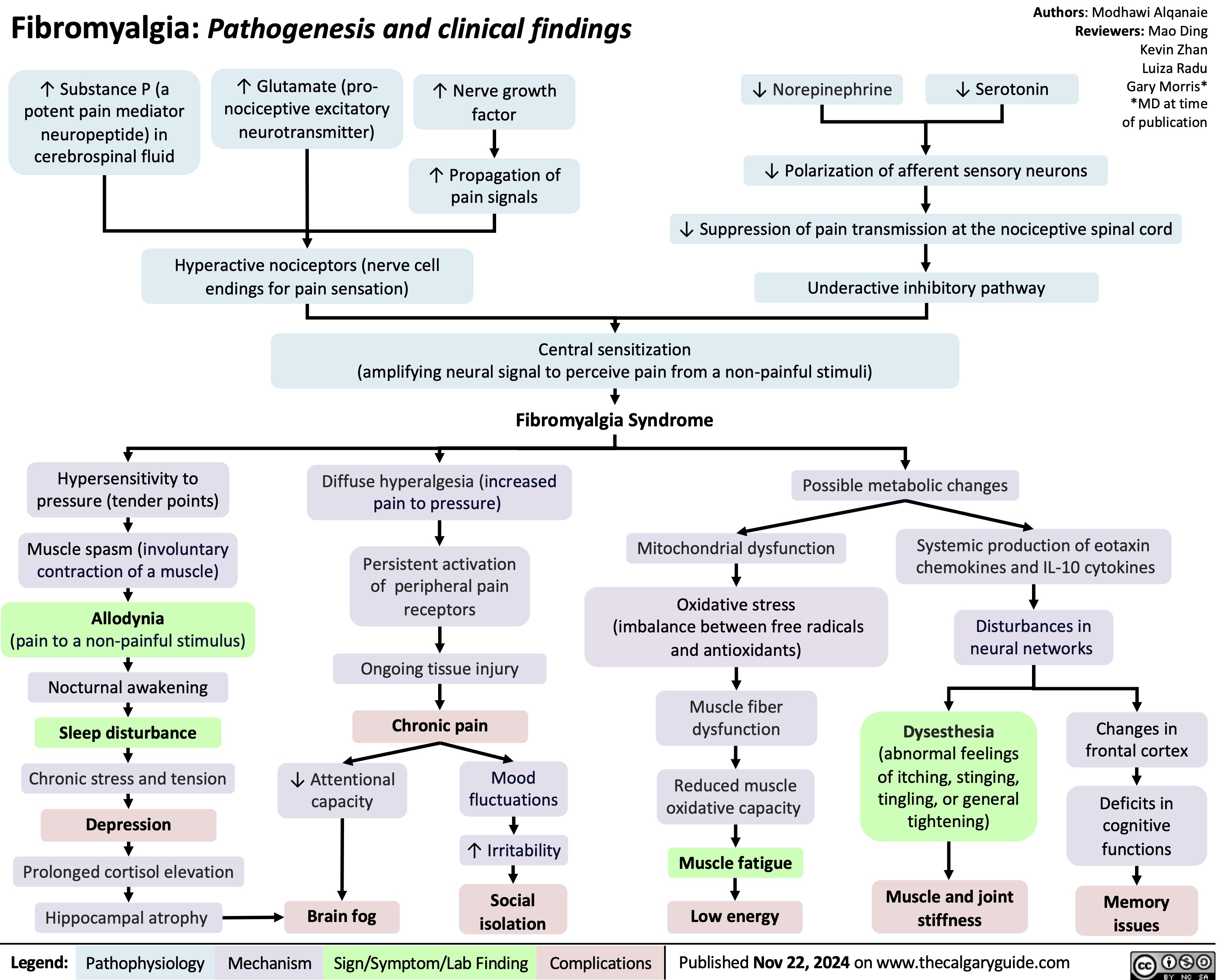
Fibromyalgia: Pathogenesis and clinical findings
Authors: Modhawi Alqanaie Reviewers: Mao Ding Kevin Zhan Luiza Radu Gary Morris* *MD at time of publication
     ↑ Substance P (a potent pain mediator neuropeptide) in cerebrospinal fluid
↑ Glutamate (pro- nociceptive excitatory neurotransmitter)
↑ Nerve growth factor
↑ Propagation of pain signals
↓ Norepinephrine
↓ Serotonin
      Hyperactive nociceptors (nerve cell endings for pain sensation)
↓ Polarization of afferent sensory neurons
↓ Suppression of pain transmission at the nociceptive spinal cord Underactive inhibitory pathway
    Central sensitization
(amplifying neural signal to perceive pain from a non-painful stimuli)
Fibromyalgia Syndrome
     Hypersensitivity to pressure (tender points)
Muscle spasm (involuntary contraction of a muscle)
Allodynia
(pain to a non-painful stimulus) Nocturnal awakening Sleep disturbance Chronic stress and tension Depression Prolonged cortisol elevation
Diffuse hyperalgesia (increased pain to pressure)
Persistent activation of peripheral pain receptors
Ongoing tissue injury
Chronic pain
Possible metabolic changes
      Mitochondrial dysfunction
Oxidative stress (imbalance between free radicals and antioxidants)
Muscle fiber dysfunction
Reduced muscle oxidative capacity
Muscle fatigue Low energy
Systemic production of eotaxin chemokines and IL-10 cytokines
Disturbances in neural networks
                 ↓ Attentional capacity
Mood fluctuations
↑ Irritability Social
isolation
Dysesthesia
(abnormal feelings of itching, stinging, tingling, or general tightening)
Muscle and joint stiffness
Changes in frontal cortex
Deficits in cognitive functions
Memory issues
           Hippocampal atrophy       Brain fog
 Legend:
 Pathophysiology
 Mechanism
 Sign/Symptom/Lab Finding
 Complications
Published Nov 22, 2024 on www.thecalgaryguide.com