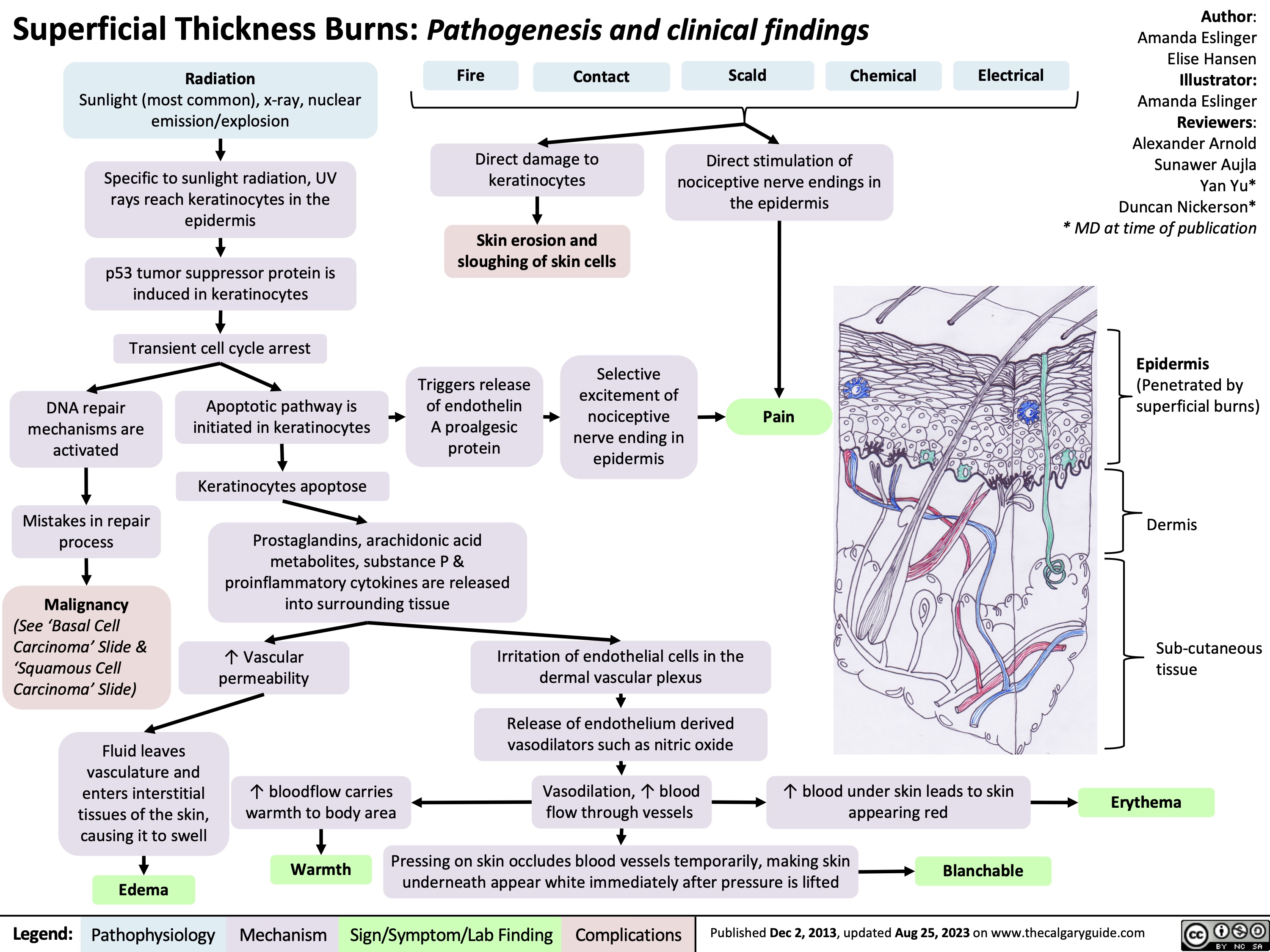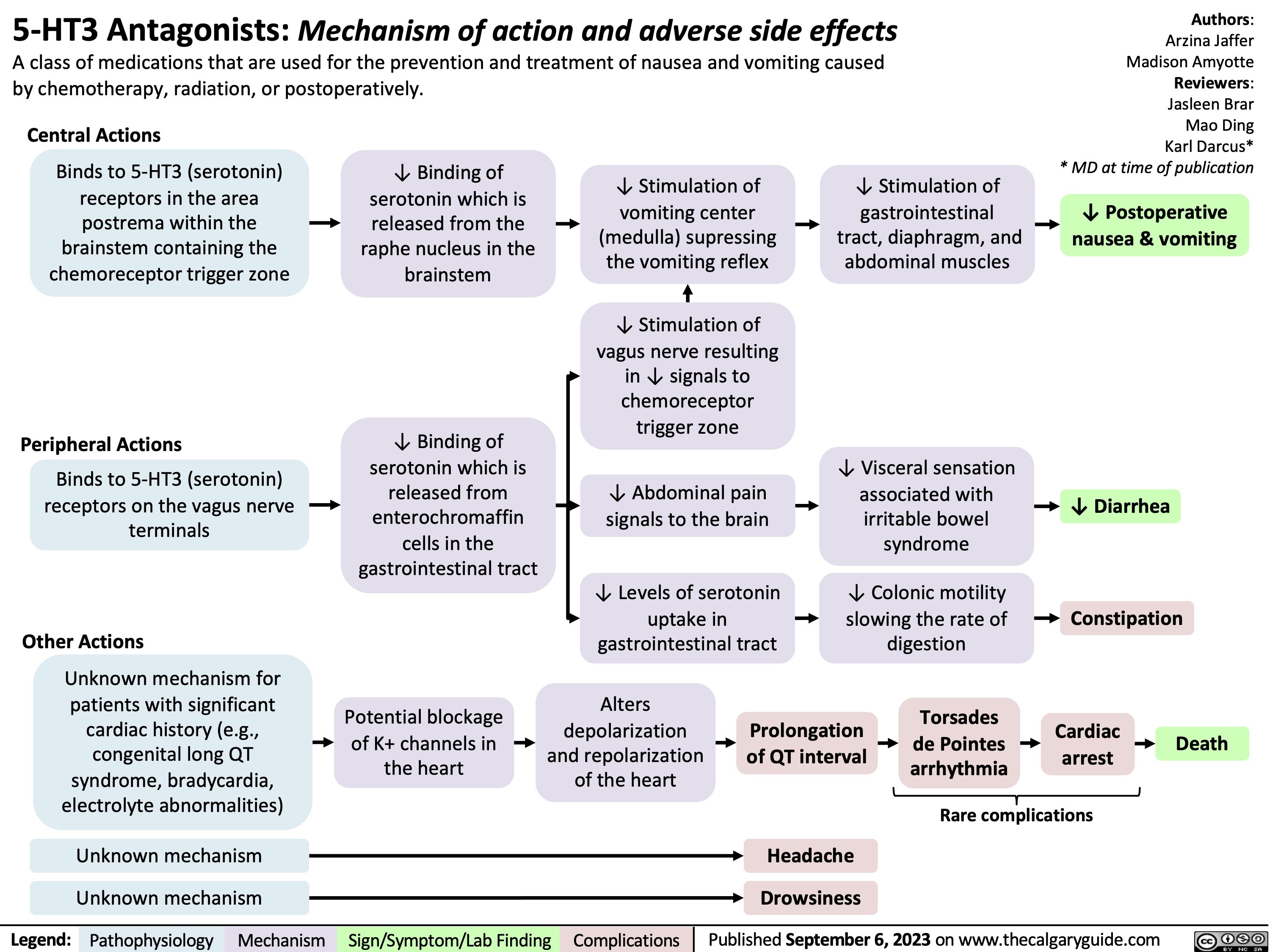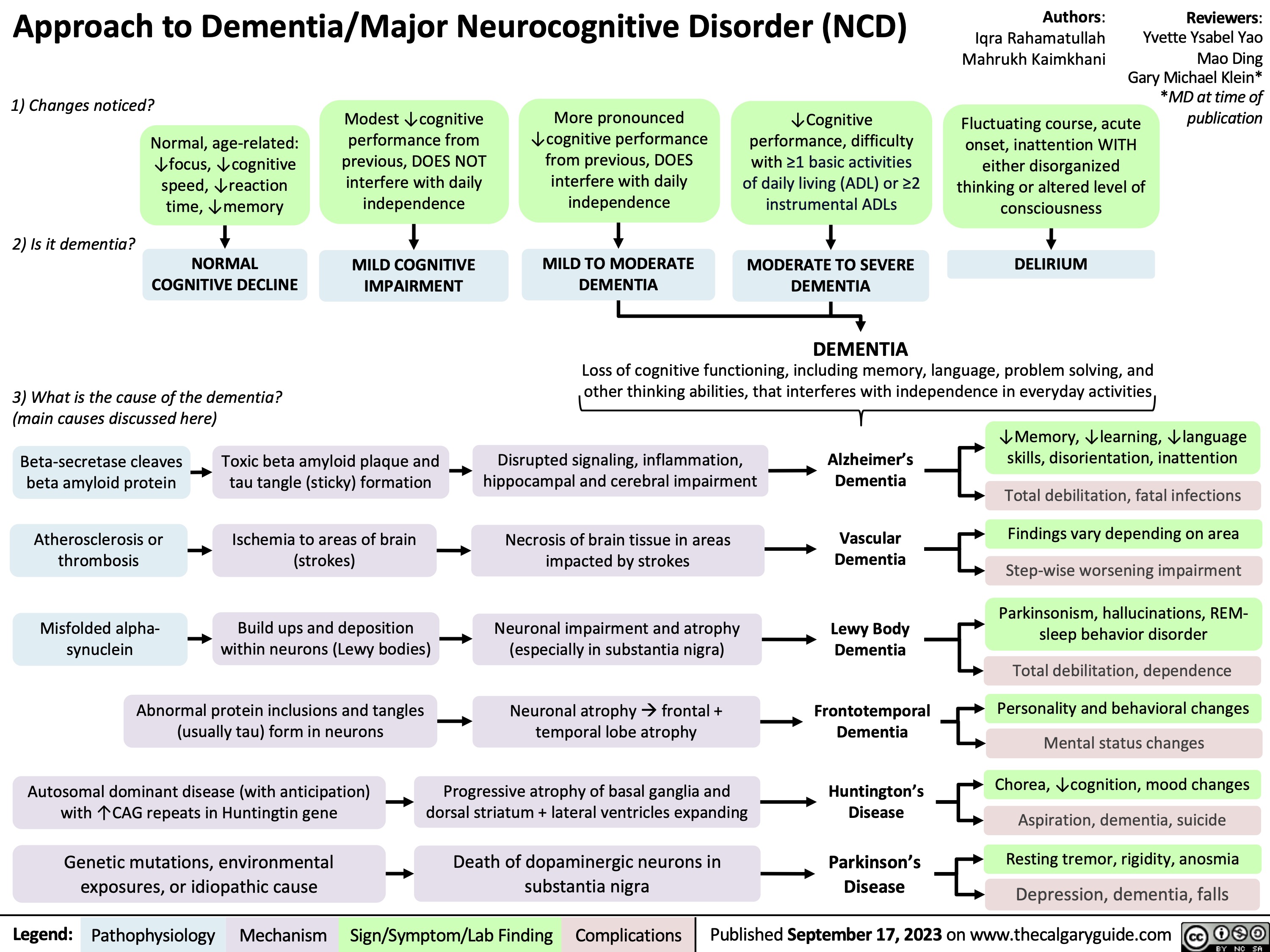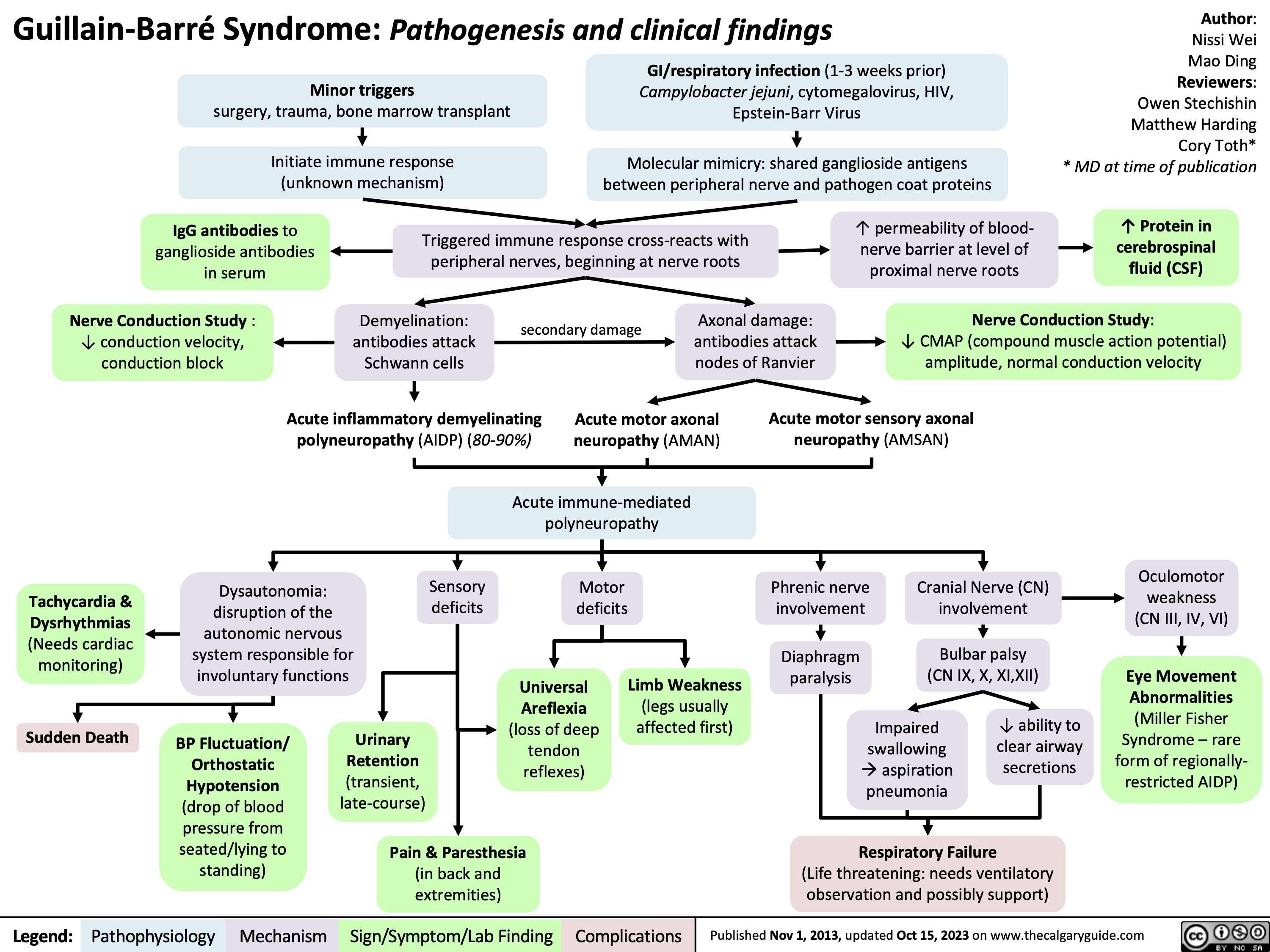
SEARCH RESULTS FOR: 2023

Approach to Arterial Blood Gases ABGs
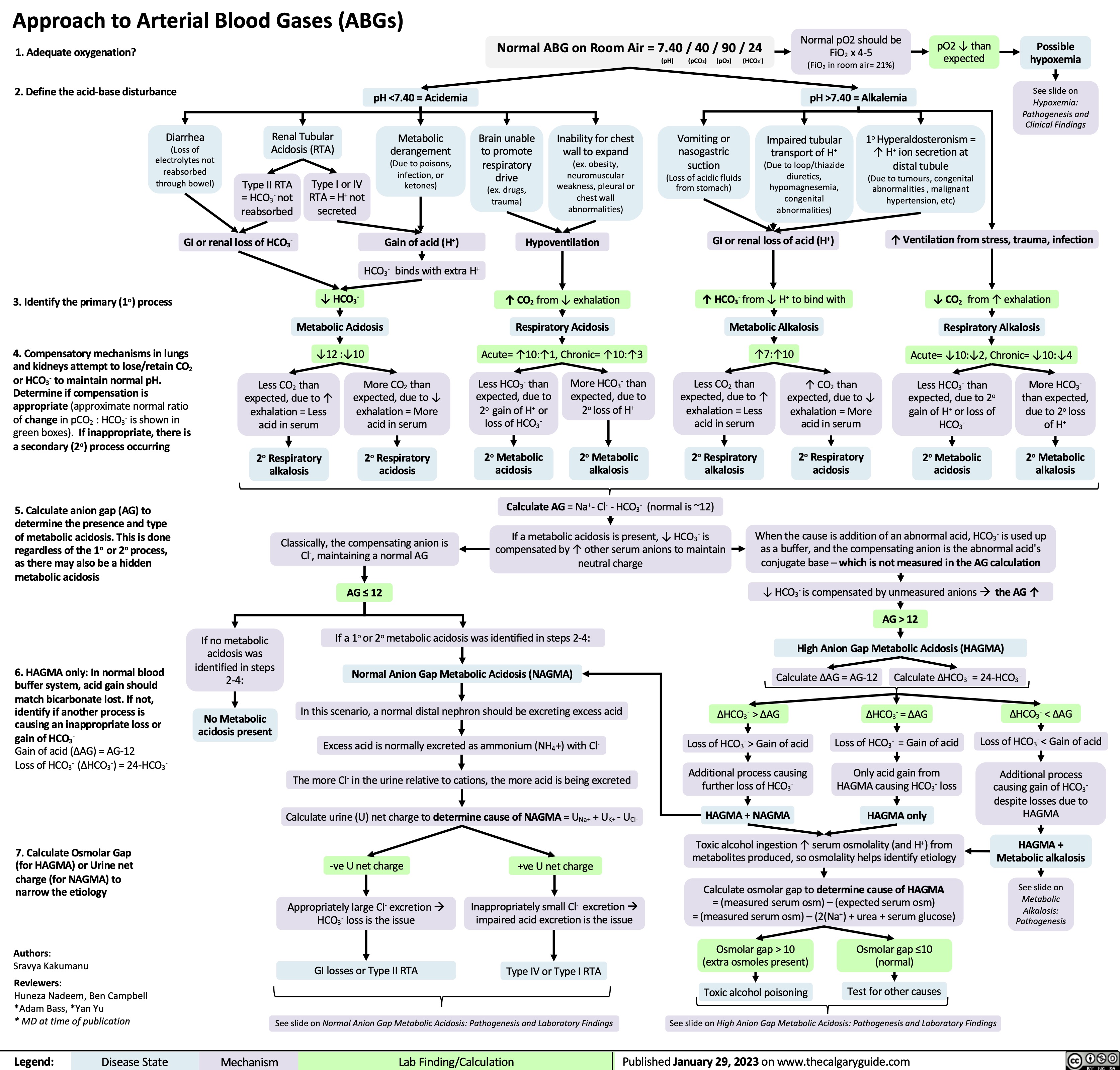
Approach to Arterial Blood Gases (ABGs)
Normal pO2 should be FiO2 x 4-5
(FiO2 in room air= 21%)
pH >7.40 = Alkalemia
    1. Adequate oxygenation?
2. Define the acid-base disturbance
Diarrhea (Loss of electrolytes not reabsorbed through bowel)
Normal ABG on Room Air = 7.40 / 40 / 90 / 24
pO2 ↓ than expected
Possible hypoxemia
See slide on
Hypoxemia: Pathogenesis and Clinical Findings
(pH)
(Loss of acidic fluids from stomach)
(HCO3-)
(pCO2)
(pO2)
              Renal Tubular Acidosis (RTA)
pH <7.40 = Acidemia
Metabolic derangement (Due to poisons, infection, or ketones)
Gain of acid (H+)
Brain unable to promote respiratory drive
(ex. drugs, trauma)
Inability for chest wall to expand (ex. obesity, neuromuscular weakness, pleural or chest wall abnormalities)
Vomiting or
nasogastric
suction
Impaired tubular transport of H+
(Due to loop/thiazide diuretics, hypomagnesemia, congenital abnormalities)
1o Hyperaldosteronism =
↑ H+ ion secretion at
distal tubule
(Due to tumours, congenital abnormalities , malignant hypertension, etc)
  Type II RTA = HCO3- not reabsorbed
Type I or IV RTA = H+ not secreted
        GI or renal loss of HCO3-
Hypoventilation
↑ CO2 from ↓ exhalation Respiratory Acidosis Acute= ↑10:↑1, Chronic= ↑10:↑3
GI or renal loss of acid (H+)
↑ HCO3- from ↓ H+ to bind with Metabolic Alkalosis ↑7:↑10
↑ Ventilation from stress, trauma, infection
↓ CO2 from ↑ exhalation Respiratory Alkalosis Acute= ↓10:↓2, Chronic= ↓10:↓4
      3. Identify the primary (1o) process
4. Compensatory mechanisms in lungs and kidneys attempt to lose/retain CO2 or HCO3- to maintain normal pH. Determine if compensation is appropriate (approximate normal ratio of change in pCO2 : HCO3- is shown in green boxes). If inappropriate, there is a secondary (2o) process occurring
HCO3- binds with extra H+
↓ HCO3- Metabolic Acidosis ↓12 :↓10
                  Less CO2 than expected, due to ↑ exhalation = Less acid in serum
2o Respiratory alkalosis
More CO2 than expected, due to ↓ exhalation = More acid in serum
2o Respiratory acidosis
Less HCO3- than expected, due to 2o gain of H+ or loss of HCO3-
2o Metabolic acidosis
More HCO3- than expected, due to 2o loss of H+
2o Metabolic alkalosis
Less CO2 than expected, due to ↑ exhalation = Less acid in serum
2o Respiratory alkalosis
↑ CO2 than expected, due to ↓ exhalation = More acid in serum
2o Respiratory acidosis
Less HCO3- than expected, due to 2o gain of H+ or loss of HCO3-
2o Metabolic acidosis
More HCO3- than expected, due to 2o loss of H+
2o Metabolic alkalosis
          5. Calculate anion gap (AG) to determine the presence and type of metabolic acidosis. This is done regardlessofthe1o or2oprocess, as there may also be a hidden metabolic acidosis
6. HAGMA only: In normal blood buffer system, acid gain should match bicarbonate lost. If not, identify if another process is causing an inappropriate loss or gain of HCO3-
Gain of acid (∆AG) = AG-12 LossofHCO3- (∆HCO3-)=24-HCO3-
7. Calculate Osmolar Gap (for HAGMA) or Urine net charge (for NAGMA) to narrow the etiology
Authors:
Sravya Kakumanu
Reviewers:
Huneza Nadeem, Ben Campbell *Adam Bass, *Yan Yu
* MD at time of publication
(normal is ~12)
Calculate AG = Na+- Cl- - HCO3-
If a metabolic acidosis is present, ↓ HCO3- is
compensatedby↑otherserumanionstomaintain neutral charge
        If no metabolic acidosis was identified in steps 2-4:
No Metabolic acidosis present
Classically, the compensating anion is Cl-,maintaininganormalAG
AG ≤ 12
If a 1o or 2o metabolic acidosis was identified in steps 2-4:
Normal Anion Gap Metabolic Acidosis (NAGMA)
In this scenario, a normal distal nephron should be excreting excess acid
Excess acid is normally excreted as ammonium (NH +) with Cl- 4
The more Cl- in the urine relative to cations, the more acid is being excreted Calculate urine (U) net charge to determine cause of NAGMA = UNa+ + UK+ - UCl-
When the cause is addition of an abnormal acid, HCO3- is used up asabuffer,andthecompensatinganionistheabnormalacid's conjugate base – which is not measured in the AG calculation
↓ HCO3- is compensated by unmeasured anionsà the AG ↑ AG>12
High Anion Gap Metabolic Acidosis (HAGMA)
     Calculate ∆AG = AG-12
Calculate ∆HCO3- = 24-HCO3-
      ∆HCO3- > ∆AG
Loss of HCO3- > Gain of acid
Additional process causing further loss of HCO3-
HAGMA + NAGMA
∆HCO3- = ∆AG
Loss of HCO3- = Gain of acid
Only acid gain from HAGMA causing HCO3- loss
HAGMA only
∆HCO3- < ∆AG
Loss of HCO3- < Gain of acid
Additional process causing gain of HCO3- despite losses due to HAGMA
HAGMA + Metabolic alkalosis
See slide on
Metabolic Alkalosis: Pathogenesis
                   -ve U net charge Appropriately large Cl- excretionà
Toxic alcohol ingestion ↑ serum osmolality (and H+) from metabolites produced, so osmolality helps identify etiology
Calculate osmolar gap to determine cause of HAGMA
= (measured serum osm) – (expected serum osm)
= (measured serum osm) – (2(Na+) + urea + serum glucose)
+ve U net charge
Inappropriately small Cl- excretionà impaired acid excretion is the issue
Type IV or Type I RTA See slide on Normal Anion Gap Metabolic Acidosis: Pathogenesis and Laboratory Findings
    HCO3
GI losses or Type II RTA
-
loss is the issue
   Osmolar gap > 10 (extra osmoles present)
Toxic alcohol poisoning
Osmolar gap ≤10 (normal)
Test for other causes
        See slide on High Anion Gap Metabolic Acidosis: Pathogenesis and Laboratory Findings
 Legend:
 Disease State
Mechanism
 Lab Finding/Calculation
 Published January 29, 2023 on www.thecalgaryguide.com

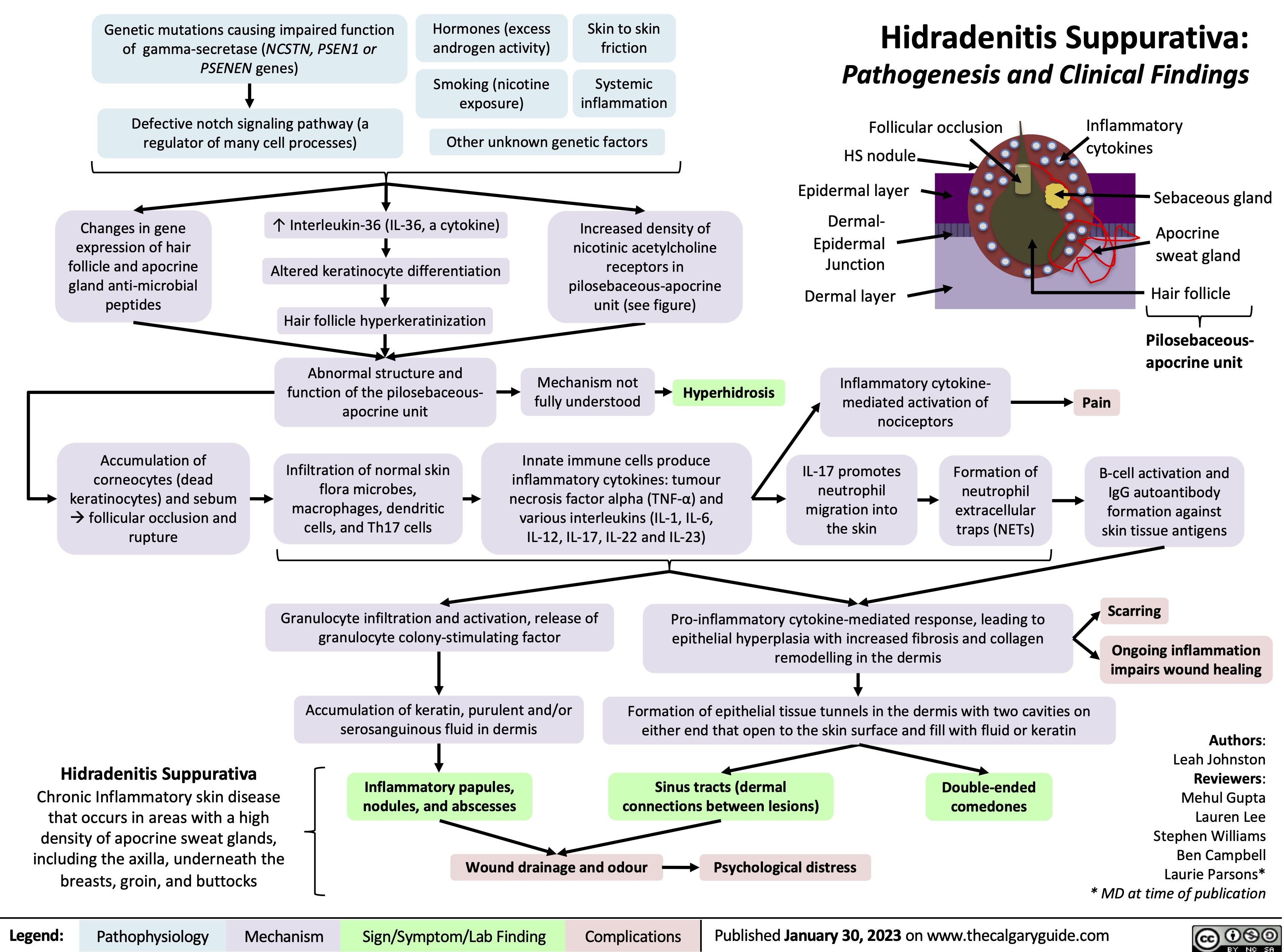
Hidradenitis Suppurativa

   Genetic mutations causing impaired function of gamma-secretase (NCSTN, PSEN1 or PSENEN genes)
Defective notch signaling pathway (a regulator of many cell processes)
Hormones (excess androgen activity)
Smoking (nicotine exposure)
Skin to skin friction
Systemic inflammation
Hidradenitis Suppurativa:
Pathogenesis and Clinical Findings
     Other unknown genetic factors
Follicular occlusion
HS nodule
Epidermal layer
Dermal- Epidermal Junction
Dermal layer
Inflammatory cytokine- mediated activation of nociceptors
Inflammatory cytokines
Sebaceous gland
Apocrine sweat gland
Hair follicle
Pilosebaceous- apocrine unit
                             Changes in gene expression of hair follicle and apocrine gland anti-microbial peptides
Accumulation of corneocytes (dead keratinocytes) and sebum àfollicular occlusion and rupture
↑ Interleukin-36 (IL-36, a cytokine) Altered keratinocyte differentiation
Hair follicle hyperkeratinization
Abnormal structure and function of the pilosebaceous- apocrine unit
Infiltration of normal skin flora microbes, macrophages, dendritic cells, and Th17 cells
Increased density of nicotinic acetylcholine receptors in pilosebaceous-apocrine unit (see figure)
                   Mechanism not fully understood
Hyperhidrosis
Pain
     Innate immune cells produce inflammatory cytokines: tumour necrosis factor alpha (TNF-α) and various interleukins (IL-1, IL-6, IL-12, IL-17, IL-22 and IL-23)
IL-17 promotes neutrophil migration into the skin
Formation of neutrophil extracellular traps (NETs)
B-cell activation and IgG autoantibody formation against skin tissue antigens
Scarring
Ongoing inflammation impairs wound healing
           Granulocyte infiltration and activation, release of granulocyte colony-stimulating factor
Accumulation of keratin, purulent and/or serosanguinous fluid in dermis
Inflammatory papules, nodules, and abscesses
Pro-inflammatory cytokine-mediated response, leading to epithelial hyperplasia with increased fibrosis and collagen remodelling in the dermis
Formation of epithelial tissue tunnels in the dermis with two cavities on either end that open to the skin surface and fill with fluid or keratin
     Hidradenitis Suppurativa
Chronic Inflammatory skin disease that occurs in areas with a high density of apocrine sweat glands, including the axilla, underneath the breasts, groin, and buttocks
Sinus tracts (dermal connections between lesions)
Double-ended comedones
Authors: Leah Johnston Reviewers: Mehul Gupta Lauren Lee Stephen Williams Ben Campbell Laurie Parsons* * MD at time of publication
        Wound drainage and odour
Psychological distress
 Legend:
 Pathophysiology
 Mechanism
 Sign/Symptom/Lab Finding
 Complications
Published January 30, 2023 on www.thecalgaryguide.com

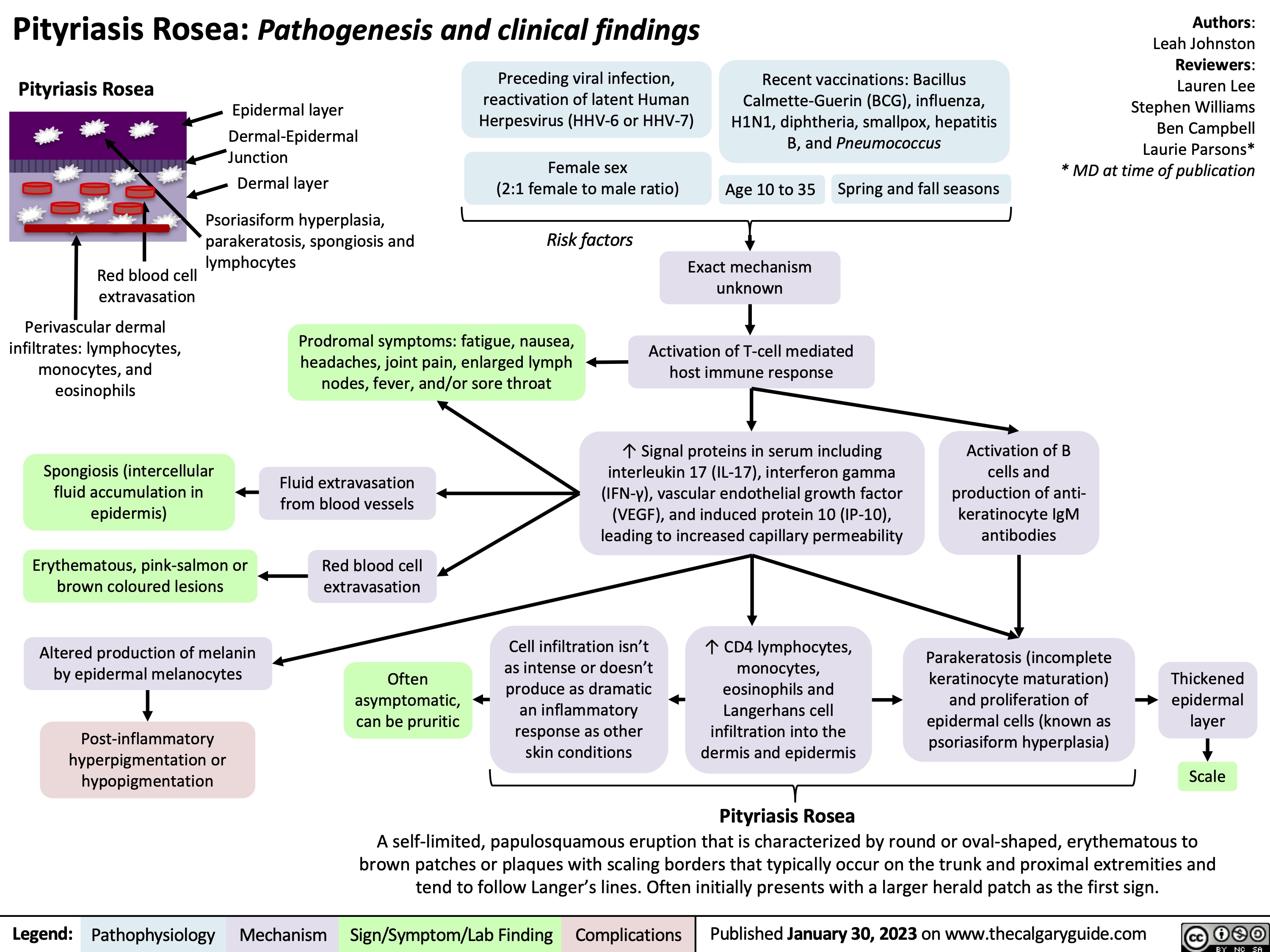
Pityriasis Rosea

Pityriasis Rosea: Pathogenesis and clinical findings
Authors: Leah Johnston Reviewers: Lauren Lee Stephen Williams Ben Campbell Laurie Parsons* * MD at time of publication
  Pityriasis Rosea
Epidermal layer
Dermal-Epidermal Junction
Dermal layer
Psoriasiform hyperplasia, parakeratosis, spongiosis and
Preceding viral infection, reactivation of latent Human Herpesvirus (HHV-6 or HHV-7)
Female sex
(2:1 female to male ratio)
Risk factors
Recent vaccinations: Bacillus Calmette-Guerin (BCG), influenza, H1N1, diphtheria, smallpox, hepatitis B, and Pneumococcus
                           Red blood cell lymphocytes extravasation
Perivascular dermal infiltrates: lymphocytes, monocytes, and eosinophils
Spongiosis (intercellular fluid accumulation in epidermis)
Erythematous, pink-salmon or brown coloured lesions
Altered production of melanin by epidermal melanocytes
Post-inflammatory hyperpigmentation or hypopigmentation
Prodromal symptoms: fatigue, nausea, headaches, joint pain, enlarged lymph nodes, fever, and/or sore throat
Age 10 to 35
Exact mechanism unknown
Activation of T-cell mediated host immune response
↑ Signal proteins in serum including interleukin 17 (IL-17), interferon gamma (IFN-γ), vascular endothelial growth factor (VEGF), and induced protein 10 (IP-10), leading to increased capillary permeability
Spring and fall seasons
         Fluid extravasation from blood vessels
Red blood cell extravasation
Often asymptomatic, can be pruritic
Cell infiltration isn’t as intense or doesn’t produce as dramatic an inflammatory response as other skin conditions
↑ CD4 lymphocytes, monocytes, eosinophils and Langerhans cell infiltration into the dermis and epidermis
Pityriasis Rosea
Activation of B cells and production of anti- keratinocyte IgM antibodies
Parakeratosis (incomplete keratinocyte maturation) and proliferation of epidermal cells (known as psoriasiform hyperplasia)
Thickened epidermal layer
Scale
                A self-limited, papulosquamous eruption that is characterized by round or oval-shaped, erythematous to brown patches or plaques with scaling borders that typically occur on the trunk and proximal extremities and tend to follow Langer’s lines. Often initially presents with a larger herald patch as the first sign.
 Legend:
 Pathophysiology
 Mechanism
Sign/Symptom/Lab Finding
 Complications
Published January 30, 2023 on www.thecalgaryguide.com

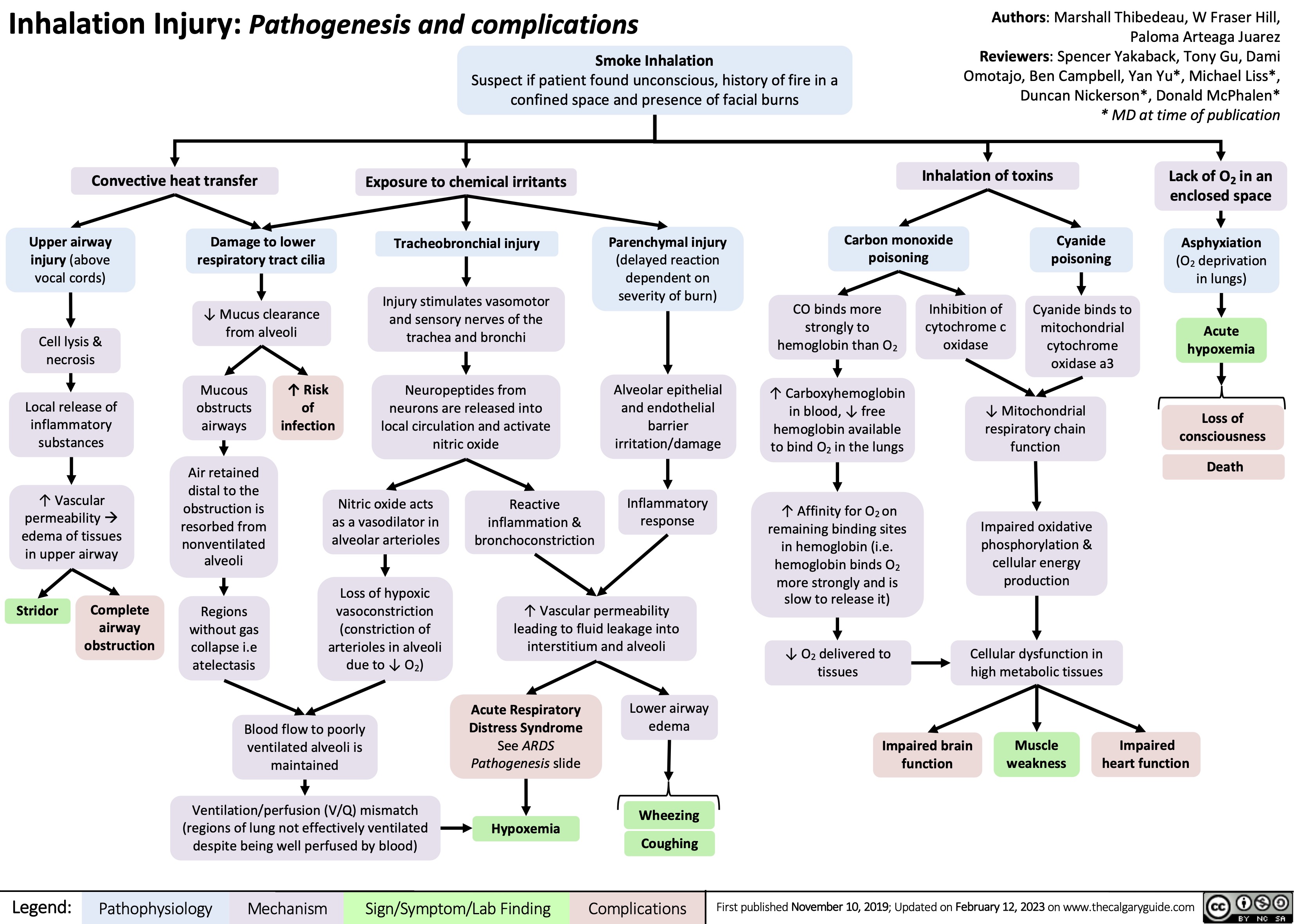
Inhalational Injury

Inhalation Injury: Pathogenesis and complications
Authors: Marshall Thibedeau, W Fraser Hill, Paloma Arteaga Juarez Reviewers: Spencer Yakaback, Tony Gu, Dami Omotajo, Ben Campbell, Yan Yu*, Michael Liss*, Duncan Nickerson*, Donald McPhalen* * MD at time of publication
 Smoke Inhalation
Suspect if patient found unconscious, history of fire in a confined space and presence of facial burns
       Convective heat transfer
Exposure to chemical irritants
Tracheobronchial injury
Injury stimulates vasomotor and sensory nerves of the trachea and bronchi
Neuropeptides from neurons are released into local circulation and activate nitric oxide
Inhalation of toxins
Lack of O2 in an enclosed space
Asphyxiation
(O2 deprivation in lungs)
Acute hypoxemia
Loss of consciousness
Death
             Upper airway injury (above vocal cords)
Cell lysis & necrosis
Local release of inflammatory substances
↑ Vascular permeability à edema of tissues in upper airway
Damage to lower respiratory tract cilia
↓ Mucus clearance from alveoli
Parenchymal injury
(delayed reaction dependent on severity of burn)
Alveolar epithelial and endothelial barrier irritation/damage
Inflammatory response
Carbon monoxide poisoning
Cyanide poisoning
Cyanide binds to mitochondrial cytochrome oxidase a3
     CO binds more strongly to hemoglobin than O2
↑ Carboxyhemoglobin in blood, ↓ free hemoglobin available to bind O2 in the lungs
↑ Affinity for O2 on remaining binding sites in hemoglobin (i.e. hemoglobin binds O2 more strongly and is slow to release it)
↓ O2 delivered to tissues
Inhibition of cytochrome c oxidase
          Mucous obstructs airways
Air retained
distal to the obstruction is resorbed from nonventilated alveoli
Regions without gas collapse i.e atelectasis
↑ Risk of infection
↓ Mitochondrial respiratory chain function
Impaired oxidative phosphorylation & cellular energy production
Cellular dysfunction in high metabolic tissues
             Nitric oxide acts as a vasodilator in alveolar arterioles
Loss of hypoxic vasoconstriction (constriction of arterioles in alveoli due to ↓ O2)
Reactive inflammation & bronchoconstriction
       Stridor
Complete airway obstruction
↑ Vascular permeability leading to fluid leakage into interstitium and alveoli
           Blood flow to poorly ventilated alveoli is maintained
Ventilation/perfusion (V/Q) mismatch (regions of lung not effectively ventilated despite being well perfused by blood)
Acute Respiratory Distress Syndrome See ARDS Pathogenesis slide
Hypoxemia
Lower airway edema
Wheezing Coughing
Impaired brain function
Muscle weakness
Impaired heart function
         Legend:
 Pathophysiology
Mechanism
Sign/Symptom/Lab Finding
 Complications
 First published November 10, 2019; Updated on February 12, 2023 on www.thecalgaryguide.com

Large Bowel Obstruction: Findings on Abdominal X-ray
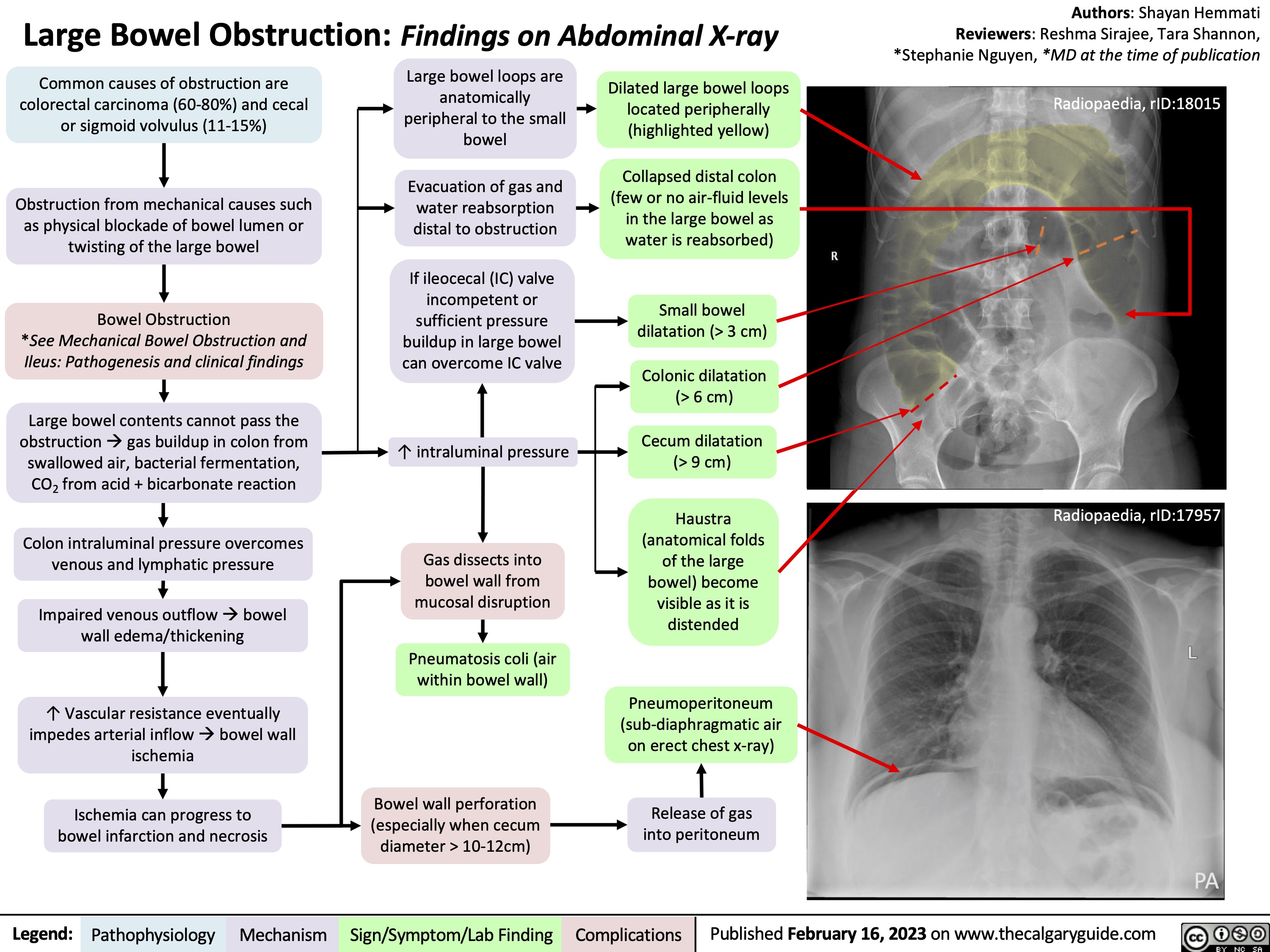
Large Bowel Obstruction: Findings on Abdominal X-ray
Authors: Shayan Hemmati Reviewers: Reshma Sirajee, Tara Shannon, *Stephanie Nguyen, *MD at the time of publication
Radiopaedia, rID:18015
   Common causes of obstruction are colorectal carcinoma (60-80%) and cecal or sigmoid volvulus (11-15%)
Obstruction from mechanical causes such as physical blockade of bowel lumen or twisting of the large bowel
Bowel Obstruction
*See Mechanical Bowel Obstruction and Ileus: Pathogenesis and clinical findings
Large bowel contents cannot pass the obstructionàgas buildup in colon from swallowed air, bacterial fermentation, CO2 from acid + bicarbonate reaction
Colon intraluminal pressure overcomes venous and lymphatic pressure
Impaired venous outflowàbowel wall edema/thickening
↑ Vascular resistance eventually impedes arterial inflowàbowel wall ischemia
Ischemia can progress to bowel infarction and necrosis
Large bowel loops are anatomically peripheral to the small bowel
Evacuation of gas and water reabsorption distal to obstruction
If ileocecal (IC) valve incompetent or sufficient pressure buildup in large bowel can overcome IC valve
↑ intraluminal pressure
Gas dissects into
bowel wall from mucosal disruption
Pneumatosis coli (air within bowel wall)
Bowel wall perforation (especially when cecum diameter > 10-12cm)
Dilated large bowel loops located peripherally (highlighted yellow)
Collapsed distal colon (few or no air-fluid levels in the large bowel as water is reabsorbed)
Small bowel dilatation (> 3 cm)
Colonic dilatation (> 6 cm)
Cecum dilatation (> 9 cm)
Haustra (anatomical folds of the large bowel) become visible as it is distended
Pneumoperitoneum (sub-diaphragmatic air on erect chest x-ray)
Release of gas into peritoneum
PA
Radiopaedia, rID:17957
                                    PA
 Legend:
 Pathophysiology
Mechanism
Sign/Symptom/Lab Finding
 Complications
Published February 16, 2023 on www.thecalgaryguide.com

Ischemic Stroke Impairment by Localization
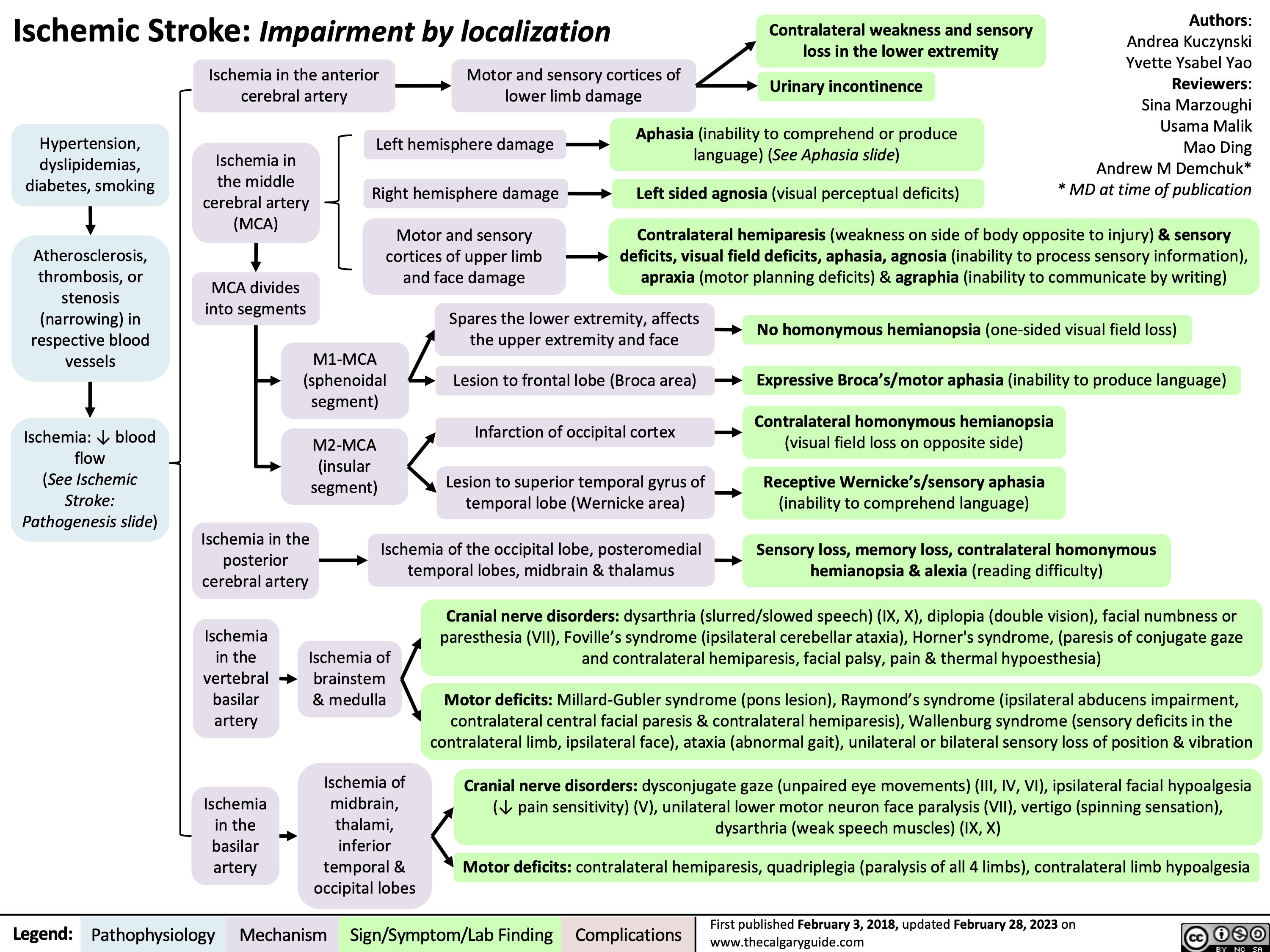
Ischemic Stroke: Impairment by localization
Contralateral weakness and sensory loss in the lower extremity
Authors: Andrea Kuczynski Yvette Ysabel Yao Reviewers: Sina Marzoughi Usama Malik Mao Ding Andrew M Demchuk* * MD at time of publication
   Ischemia in the anterior cerebral artery
Motor and sensory cortices of lower limb damage
     Hypertension,
dyslipidemias, diabetes, smoking
Atherosclerosis, thrombosis, or stenosis (narrowing) in respective blood vessels
Ischemia: ↓ blood flow
(See Ischemic Stroke: Pathogenesis slide)
Left hemisphere damage
Right hemisphere damage
Motor and sensory cortices of upper limb and face damage
Urinary incontinence Aphasia (inability to comprehend or produce
  Ischemia in
the middle cerebral artery (MCA)
MCA divides into segments
language) (See Aphasia slide)
Left sided agnosia (visual perceptual deficits)
    Contralateral hemiparesis (weakness on side of body opposite to injury) & sensory deficits, visual field deficits, aphasia, agnosia (inability to process sensory information), apraxia (motor planning deficits) & agraphia (inability to communicate by writing)
       M1-MCA (sphenoidal segment)
M2-MCA (insular segment)
Ischemia in the posterior cerebral artery
Spares the lower extremity, affects the upper extremity and face
Lesion to frontal lobe (Broca area) Infarction of occipital cortex
Lesion to superior temporal gyrus of temporal lobe (Wernicke area)
No homonymous hemianopsia (one-sided visual field loss) Expressive Broca’s/motor aphasia (inability to produce language)
Contralateral homonymous hemianopsia
(visual field loss on opposite side)
Receptive Wernicke’s/sensory aphasia
(inability to comprehend language)
Sensory loss, memory loss, contralateral homonymous hemianopsia & alexia (reading difficulty)
           Ischemia of the occipital lobe, posteromedial temporal lobes, midbrain & thalamus
  Ischemia in the vertebral basilar artery
Ischemia in the basilar artery
Ischemia of brainstem & medulla
Ischemia of midbrain, thalami, inferior temporal & occipital lobes
Cranial nerve disorders: dysarthria (slurred/slowed speech) (IX, X), diplopia (double vision), facial numbness or paresthesia (VII), Foville’s syndrome (ipsilateral cerebellar ataxia), Horner's syndrome, (paresis of conjugate gaze and contralateral hemiparesis, facial palsy, pain & thermal hypoesthesia)
Motor deficits: Millard-Gubler syndrome (pons lesion), Raymond’s syndrome (ipsilateral abducens impairment, contralateral central facial paresis & contralateral hemiparesis), Wallenburg syndrome (sensory deficits in the contralateral limb, ipsilateral face), ataxia (abnormal gait), unilateral or bilateral sensory loss of position & vibration
Cranial nerve disorders: dysconjugate gaze (unpaired eye movements) (III, IV, VI), ipsilateral facial hypoalgesia (↓ pain sensitivity) (V), unilateral lower motor neuron face paralysis (VII), vertigo (spinning sensation), dysarthria (weak speech muscles) (IX, X)
Motor deficits: contralateral hemiparesis, quadriplegia (paralysis of all 4 limbs), contralateral limb hypoalgesia
       Legend:
 Pathophysiology
 Mechanism
Sign/Symptom/Lab Finding
 Complications
First published February 3, 2018, updated February 28, 2023 on www.thecalgaryguide.com

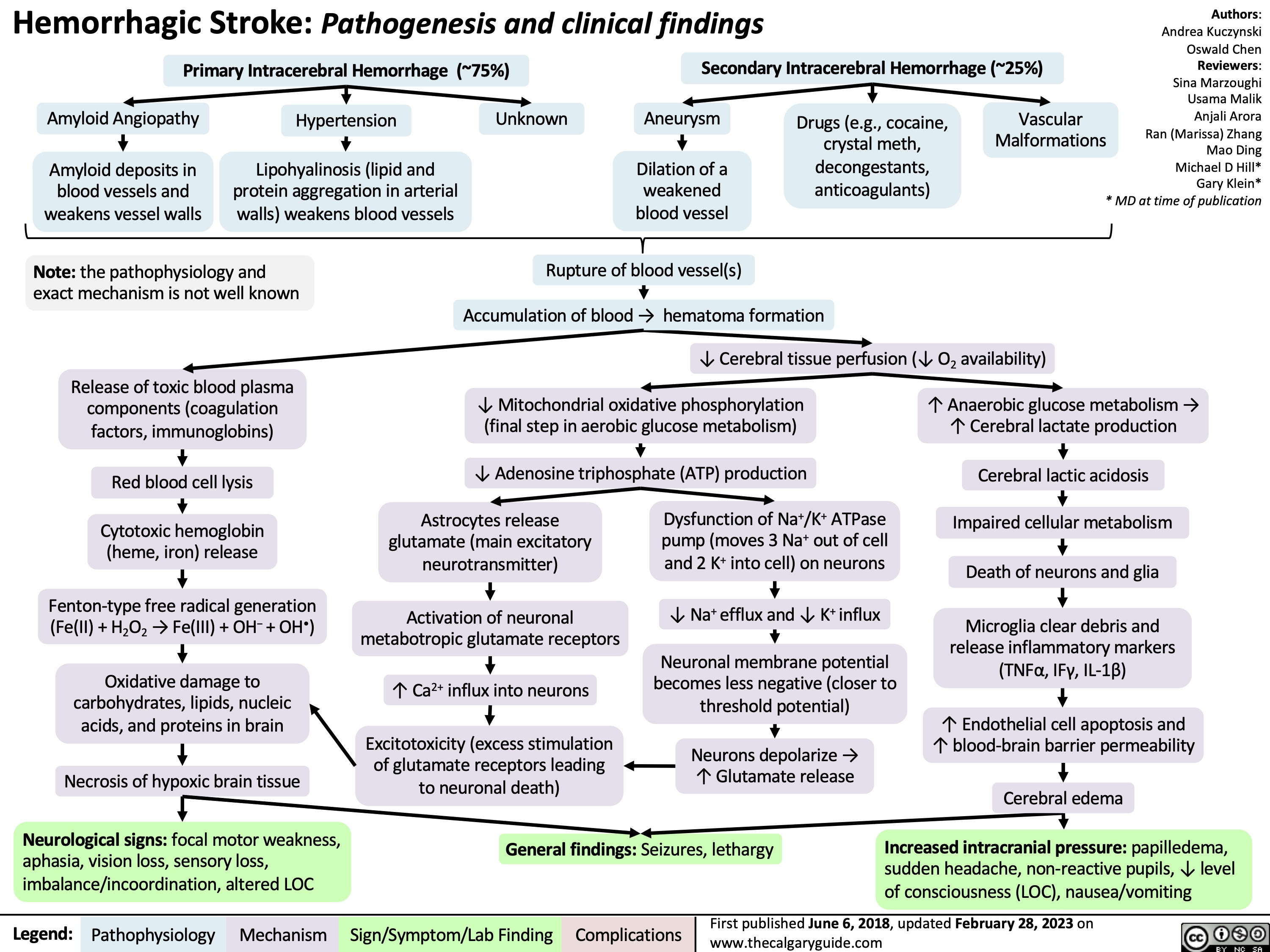
Hemorrhagic Stroke

Hemorrhagic Stroke: Pathogenesis and clinical findings
Authors: Andrea Kuczynski Oswald Chen Reviewers: Sina Marzoughi Usama Malik Anjali Arora Ran (Marissa) Zhang Mao Ding Michael D Hill* Gary Klein* * MD at time of publication
  Primary Intracerebral Hemorrhage (~75%)
Secondary Intracerebral Hemorrhage (~25%)
        Amyloid Angiopathy
Amyloid deposits in blood vessels and weakens vessel walls
Hypertension
Lipohyalinosis (lipid and protein aggregation in arterial walls) weakens blood vessels
Unknown
Aneurysm
Dilation of a weakened blood vessel
Drugs (e.g., cocaine, crystal meth, decongestants, anticoagulants)
Vascular Malformations
      Note: the pathophysiology and exact mechanism is not well known
Release of toxic blood plasma components (coagulation factors, immunoglobins)
Red blood cell lysis
Cytotoxic hemoglobin (heme, iron) release
Fenton-type free radical generation (Fe(II) + H2O2 → Fe(III) + OH− + OH•)
Oxidative damage to carbohydrates, lipids, nucleic acids, and proteins in brain
Necrosis of hypoxic brain tissue
Neurological signs: focal motor weakness, aphasia, vision loss, sensory loss, imbalance/incoordination, altered LOC
Rupture of blood vessel(s) Accumulation of blood → hematoma formation
    ↓ Cerebral tissue perfusion (↓ O2 availability)
     ↓ Mitochondrial oxidative phosphorylation (final step in aerobic glucose metabolism)
↓ Adenosine triphosphate (ATP) production
↑ Anaerobic glucose metabolism → ↑ Cerebral lactate production
Cerebral lactic acidosis Impaired cellular metabolism Death of neurons and glia
Microglia clear debris and release inflammatory markers (TNFα, IFγ, IL-1β)
↑ Endothelial cell apoptosis and ↑ blood-brain barrier permeability
Cerebral edema
Increased intracranial pressure: papilledema, sudden headache, non-reactive pupils, ↓ level of consciousness (LOC), nausea/vomiting
        Astrocytes release glutamate (main excitatory neurotransmitter)
Activation of neuronal metabotropic glutamate receptors
↑ Ca2+ influx into neurons
Excitotoxicity (excess stimulation of glutamate receptors leading to neuronal death)
Dysfunction of Na+/K+ ATPase pump (moves 3 Na+ out of cell and 2 K+ into cell) on neurons
↓ Na+ efflux and ↓ K+ influx
Neuronal membrane potential becomes less negative (closer to threshold potential)
Neurons depolarize → ↑ Glutamate release
                    General findings: Seizures, lethargy
 Legend:
 Pathophysiology
 Mechanism
Sign/Symptom/Lab Finding
 Complications
First published June 6, 2018, updated February 28, 2023 on www.thecalgaryguide.com

Myelodysplastic Syndrome Pathogenesis and clinical findings
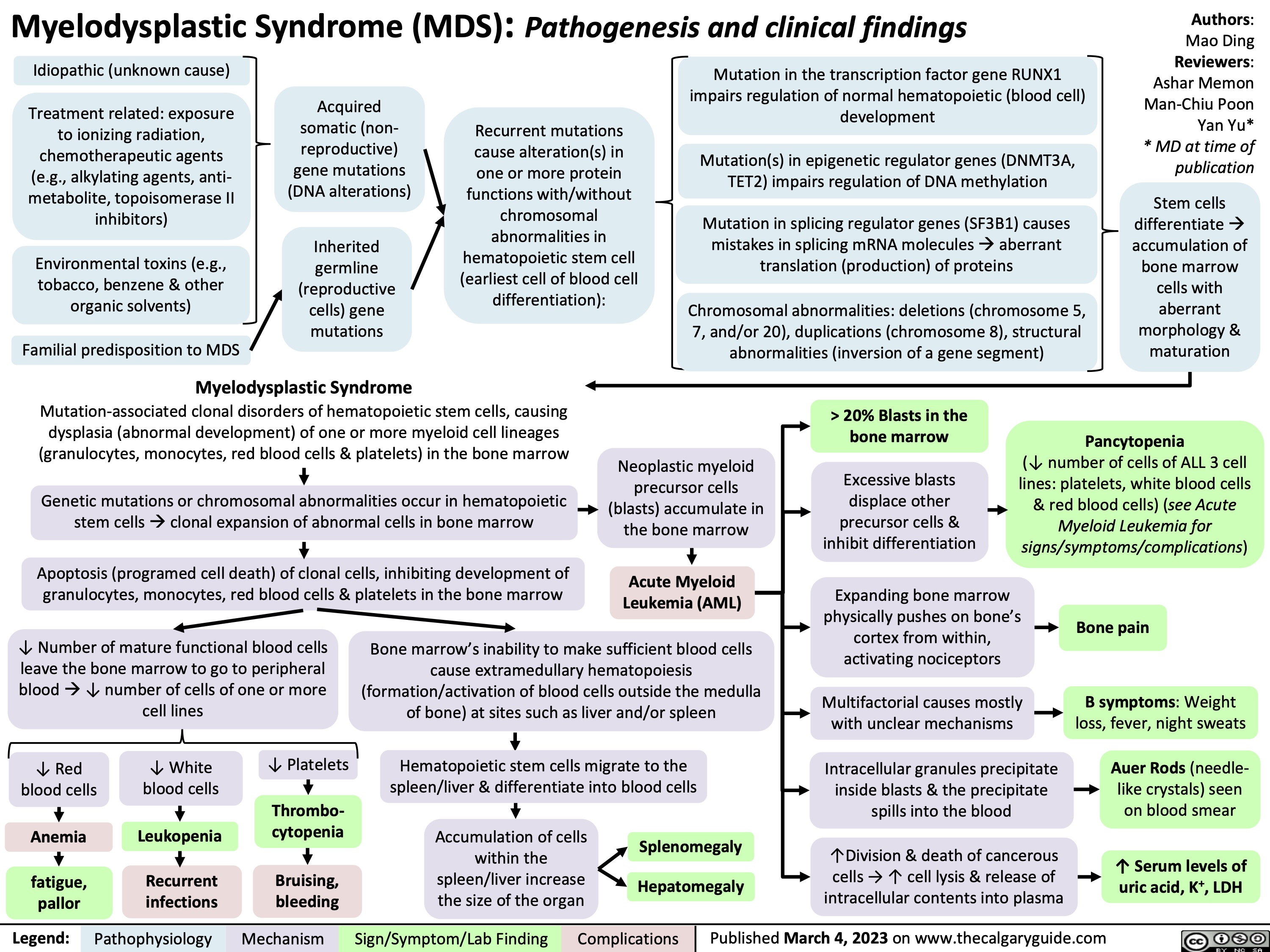
Myelodysplastic Syndrome (MDS): Pathogenesis and clinical findings
Authors: Mao Ding Reviewers: Ashar Memon Man-Chiu Poon Yan Yu* * MD at time of publication
Stem cells differentiateà accumulation of bone marrow cells with aberrant morphology & maturation
     Idiopathic (unknown cause)
Treatment related: exposure to ionizing radiation, chemotherapeutic agents (e.g., alkylating agents, anti- metabolite, topoisomerase II inhibitors)
Environmental toxins (e.g., tobacco, benzene & other organic solvents)
Familial predisposition to MDS
Acquired somatic (non- reproductive) gene mutations (DNA alterations)
Inherited
germline (reproductive cells) gene mutations
Recurrent mutations cause alteration(s) in one or more protein functions with/without chromosomal abnormalities in hematopoietic stem cell (earliest cell of blood cell differentiation):
Mutation in the transcription factor gene RUNX1 impairs regulation of normal hematopoietic (blood cell) development
Mutation(s) in epigenetic regulator genes (DNMT3A, TET2) impairs regulation of DNA methylation
Mutation in splicing regulator genes (SF3B1) causes mistakes in splicing mRNA moleculesàaberrant translation (production) of proteins
Chromosomal abnormalities: deletions (chromosome 5, 7, and/or 20), duplications (chromosome 8), structural abnormalities (inversion of a gene segment)
            Myelodysplastic Syndrome
Mutation-associated clonal disorders of hematopoietic stem cells, causing dysplasia (abnormal development) of one or more myeloid cell lineages (granulocytes, monocytes, red blood cells & platelets) in the bone marrow
Genetic mutations or chromosomal abnormalities occur in hematopoietic stem cellsàclonal expansion of abnormal cells in bone marrow
Apoptosis (programed cell death) of clonal cells, inhibiting development of granulocytes, monocytes, red blood cells & platelets in the bone marrow
Neoplastic myeloid precursor cells (blasts) accumulate in the bone marrow
Acute Myeloid Leukemia (AML)
> 20% Blasts in the bone marrow
Excessive blasts displace other precursor cells & inhibit differentiation
Pancytopenia
(↓ number of cells of ALL 3 cell lines: platelets, white blood cells & red blood cells) (see Acute Myeloid Leukemia for signs/symptoms/complications)
              ↓ Number of mature functional blood cells leave the bone marrow to go to peripheral bloodà↓ number of cells of one or more cell lines
Bone marrow’s inability to make sufficient blood cells cause extramedullary hematopoiesis (formation/activation of blood cells outside the medulla of bone) at sites such as liver and/or spleen
Hematopoietic stem cells migrate to the spleen/liver & differentiate into blood cells
Expanding bone marrow physically pushes on bone’s cortex from within, activating nociceptors
Multifactorial causes mostly with unclear mechanisms
Intracellular granules precipitate inside blasts & the precipitate spills into the blood
↑Division & death of cancerous cells → ↑ cell lysis & release of intracellular contents into plasma
Bone pain
B symptoms: Weight
loss, fever, night sweats
Auer Rods (needle- like crystals) seen on blood smear
↑ Serum levels of uric acid, K+, LDH
         ↓ Red blood cells
Anemia
fatigue, pallor
↓ White blood cells
Leukopenia
Recurrent infections
↓ Platelets
Thrombo- cytopenia
Bruising, bleeding
Accumulation of cells within the spleen/liver increase the size of the organ
Splenomegaly Hepatomegaly
            Legend:
 Pathophysiology
Mechanism
Sign/Symptom/Lab Finding
 Complications
Published March 4, 2023 on www.thecalgaryguide.com

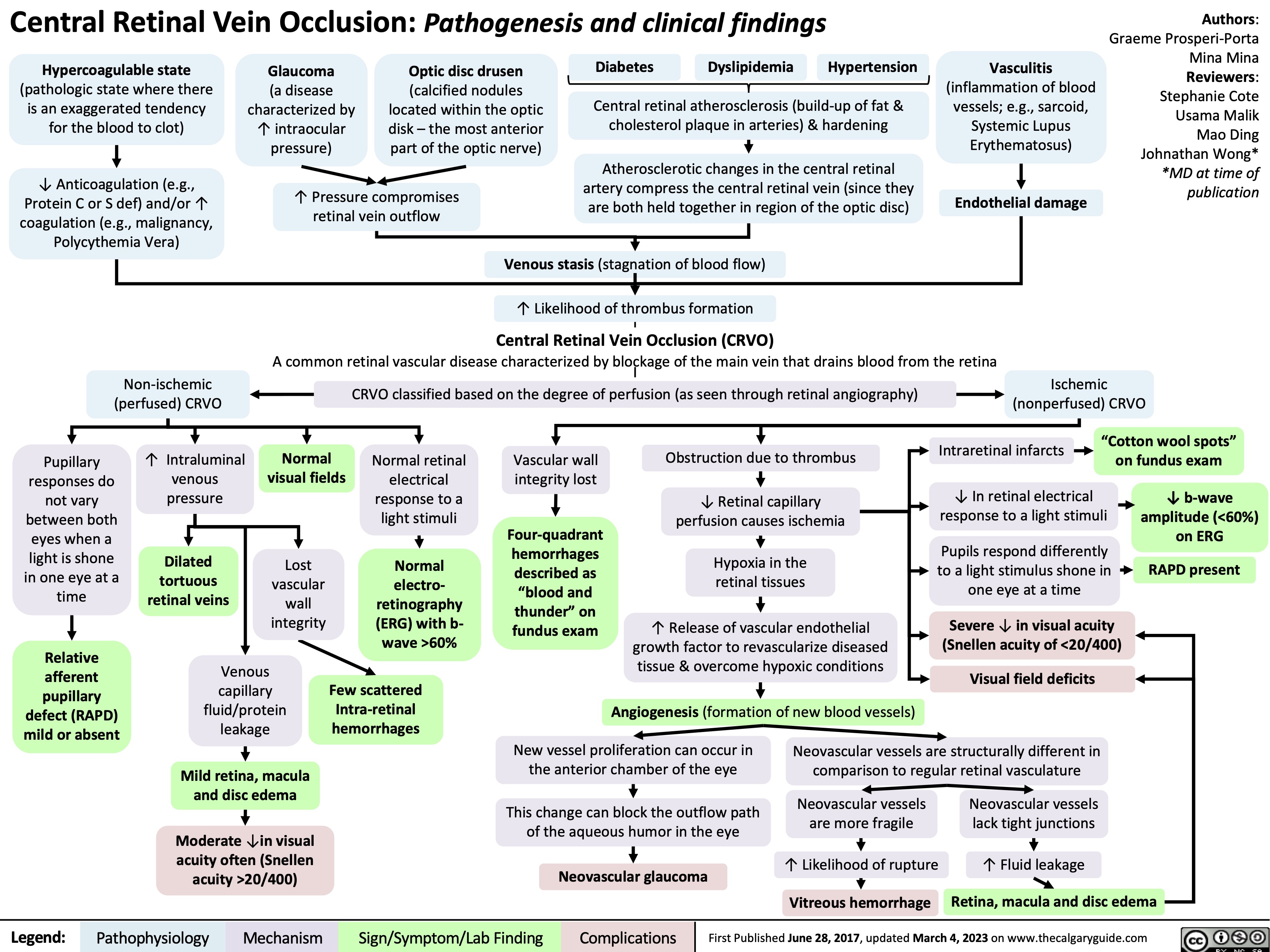
Central Retinal Vein Occlusion

Central Retinal Vein Occlusion: Pathogenesis and clinical findings
Authors: Graeme Prosperi-Porta Mina Mina Reviewers: Stephanie Cote Usama Malik Mao Ding Johnathan Wong* *MD at time of publication
       Hypercoagulable state
(pathologic state where there is an exaggerated tendency for the blood to clot)
↓ Anticoagulation (e.g., Protein C or S def) and/or ↑ coagulation (e.g., malignancy, Polycythemia Vera)
Non-ischemic (perfused) CRVO
Glaucoma
(a disease characterized by ↑ intraocular pressure)
Optic disc drusen
(calcified nodules located within the optic disk – the most anterior part of the optic nerve)
Diabetes
Dyslipidemia
Hypertension
Vasculitis
(inflammation of blood vessels; e.g., sarcoid, Systemic Lupus Erythematosus)
Endothelial damage
       Pupillary responses do not vary between both eyes when a light is shone in one eye at a time
Relative afferent pupillary defect (RAPD) mild or absent
Lost vascular wall integrity
Normal retinal electrical response to a light stimuli
Normal
electro- retinography (ERG) with b- wave >60%
Few scattered Intra-retinal hemorrhages
↓ In retinal electrical response to a light stimuli
Pupils respond differently to a light stimulus shone in one eye at a time
Severe ↓ in visual acuity (Snellen acuity of <20/400)
Visual field deficits
↓ b-wave amplitude (<60%) on ERG
RAPD present
↑ Pressure compromises retinal vein outflow
Central retinal atherosclerosis (build-up of fat & cholesterol plaque in arteries) & hardening
Atherosclerotic changes in the central retinal artery compress the central retinal vein (since they are both held together in region of the optic disc)
Venous stasis (stagnation of blood flow) ↑ Likelihood of thrombus formation
Central Retinal Vein Occlusion (CRVO)
      A common retinal vascular disease characterized by blockage of the main vein that drains blood from the retina
CRVO classified based on the degree of perfusion (as seen through retinal angiography)
Ischemic (nonperfused) CRVO
              ↑ Intraluminal venous pressure
Dilated tortuous retinal veins
Normal visual fields
Vascular wall integrity lost
Four-quadrant hemorrhages described as “blood and thunder” on fundus exam
Obstruction due to thrombus
↓ Retinal capillary perfusion causes ischemia
Hypoxia in the retinal tissues
↑ Release of vascular endothelial growth factor to revascularize diseased tissue & overcome hypoxic conditions
Angiogenesis (formation of new blood vessels)
Intraretinal infarcts
“Cotton wool spots” on fundus exam
                 Venous capillary fluid/protein leakage
Mild retina, macula and disc edema
Moderate ↓in visual acuity often (Snellen acuity >20/400)
New vessel proliferation can occur in the anterior chamber of the eye
This change can block the outflow path of the aqueous humor in the eye
Neovascular glaucoma
Neovascular vessels are structurally different in comparison to regular retinal vasculature
          Neovascular vessels are more fragile
↑ Likelihood of rupture Vitreous hemorrhage
Neovascular vessels lack tight junctions
    ↑ Fluid leakage
Retina, macula and disc edema
    Legend:
 Pathophysiology
Mechanism
Sign/Symptom/Lab Finding
 Complications
 First Published June 28, 2017, updated March 4, 2023 on www.thecalgaryguide.com

Skin Grafts Transplant physiology and clinical findings
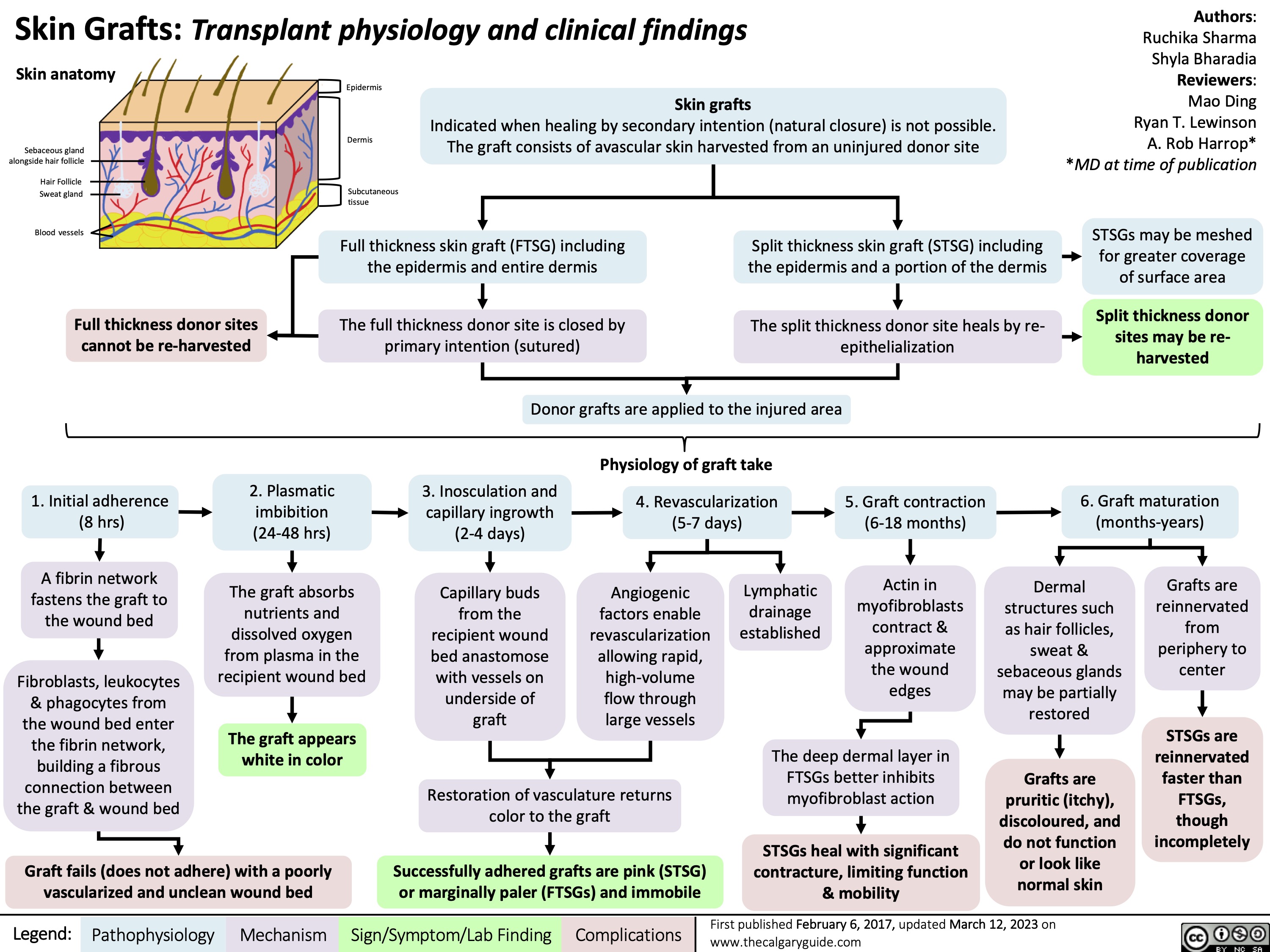
Skin Grafts: Transplant physiology and clinical findings
Authors: Ruchika Sharma Shyla Bharadia Reviewers: Mao Ding Ryan T. Lewinson A. Rob Harrop* *MD at time of publication
STSGs may be meshed for greater coverage of surface area
Split thickness donor sites may be re- harvested
6. Graft maturation (months-years)
 Skin anatomy
Sebaceous gland alongside hair follicle
Hair Follicle Sweat gland
Blood vessels
Full thickness donor sites cannot be re-harvested
Epidermis
Dermis
Subcutaneous tissue
Full thickness skin graft (FTSG) including the epidermis and entire dermis
The full thickness donor site is closed by primary intention (sutured)
 Skin grafts
Indicated when healing by secondary intention (natural closure) is not possible. The graft consists of avascular skin harvested from an uninjured donor site
     Split thickness skin graft (STSG) including the epidermis and a portion of the dermis
The split thickness donor site heals by re- epithelialization
       Donor grafts are applied to the injured area
       1. Initial adherence (8 hrs)
A fibrin network fastens the graft to the wound bed
Fibroblasts, leukocytes & phagocytes from the wound bed enter the fibrin network, building a fibrous connection between the graft & wound bed
2. Plasmatic imbibition (24-48 hrs)
The graft absorbs nutrients and dissolved oxygen from plasma in the recipient wound bed
The graft appears white in color
3. Inosculation and capillary ingrowth (2-4 days)
Capillary buds from the recipient wound bed anastomose with vessels on underside of graft
Physiology of graft take
4. Revascularization (5-7 days)
5. Graft contraction (6-18 months)
Actin in myofibroblasts contract & approximate the wound edges
           Angiogenic factors enable revascularization allowing rapid, high-volume flow through large vessels
Lymphatic drainage established
Dermal structures such as hair follicles, sweat & sebaceous glands may be partially restored
Grafts are pruritic (itchy), discoloured, and do not function or look like normal skin
Grafts are reinnervated from periphery to center
STSGs are reinnervated faster than FTSGs, though incompletely
            Graft fails (does not adhere) with a poorly vascularized and unclean wound bed
Restoration of vasculature returns color to the graft
Successfully adhered grafts are pink (STSG) or marginally paler (FTSGs) and immobile
The deep dermal layer in FTSGs better inhibits myofibroblast action
STSGs heal with significant contracture, limiting function & mobility
 Legend:
 Pathophysiology
 Mechanism
Sign/Symptom/Lab Finding
 Complications
First published February 6, 2017, updated March 12, 2023 on www.thecalgaryguide.com

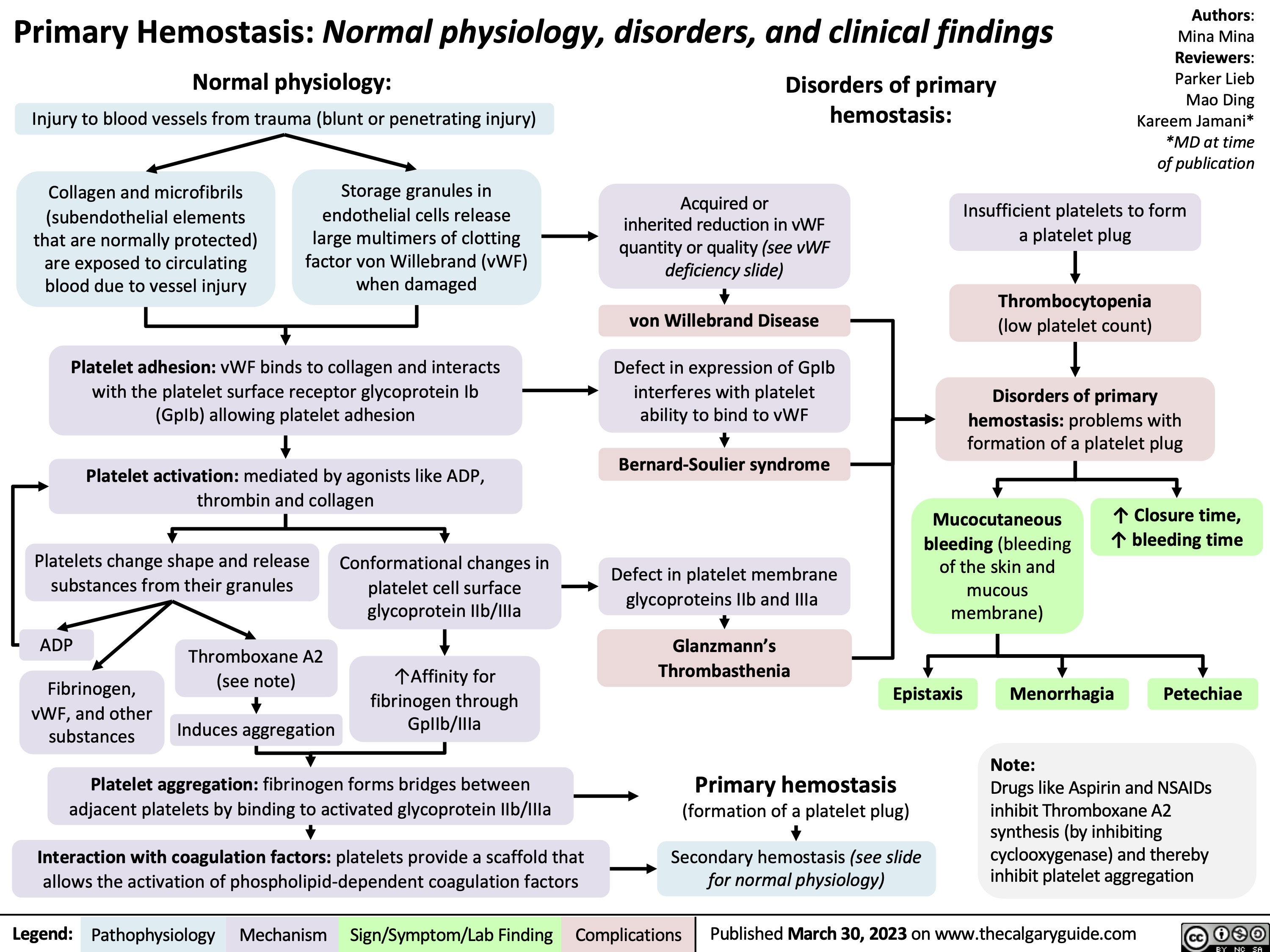
Primary Hemostasis

Primary Hemostasis: Normal physiology, disorders, and clinical findings
Authors: Mina Mina Reviewers: Parker Lieb Mao Ding Kareem Jamani* *MD at time of publication
Normal physiology:
Injury to blood vessels from trauma (blunt or penetrating injury)
Disorders of primary hemostasis:
     Collagen and microfibrils (subendothelial elements
that are normally protected) are exposed to circulating blood due to vessel injury
Storage granules in endothelial cells release large multimers of clotting factor von Willebrand (vWF) when damaged
Acquired or inherited reduction in vWF quantity or quality (see vWF deficiency slide)
von Willebrand Disease
Defect in expression of GpIb interferes with platelet ability to bind to vWF
Bernard-Soulier syndrome
Defect in platelet membrane glycoproteins IIb and IIIa
Glanzmann’s Thrombasthenia
Insufficient platelets to form a platelet plug
Thrombocytopenia
(low platelet count)
Disorders of primary hemostasis: problems with formation of a platelet plug
        Platelet adhesion: vWF binds to collagen and interacts with the platelet surface receptor glycoprotein Ib (GpIb) allowing platelet adhesion
Platelet activation: mediated by agonists like ADP, thrombin and collagen
Mucocutaneous bleeding (bleeding of the skin and mucous membrane)
↑ Closure time, ↑ bleeding time
          Platelets change shape and release substances from their granules
Conformational changes in platelet cell surface glycoprotein IIb/IIIa
↑Affinity for fibrinogen through GpIIb/IIIa
      ADP
Fibrinogen, vWF, and other substances
Thromboxane A2 (see note)
Induces aggregation
Epistaxis
Menorrhagia Note:
Petechiae
         Platelet aggregation: fibrinogen forms bridges between adjacent platelets by binding to activated glycoprotein IIb/IIIa
Interaction with coagulation factors: platelets provide a scaffold that allows the activation of phospholipid-dependent coagulation factors
Primary hemostasis
(formation of a platelet plug)
Secondary hemostasis (see slide for normal physiology)
Drugs like Aspirin and NSAIDs inhibit Thromboxane A2 synthesis (by inhibiting cyclooxygenase) and thereby inhibit platelet aggregation
    Legend:
 Pathophysiology
 Mechanism
Sign/Symptom/Lab Finding
 Complications
Published March 30, 2023 on www.thecalgaryguide.com

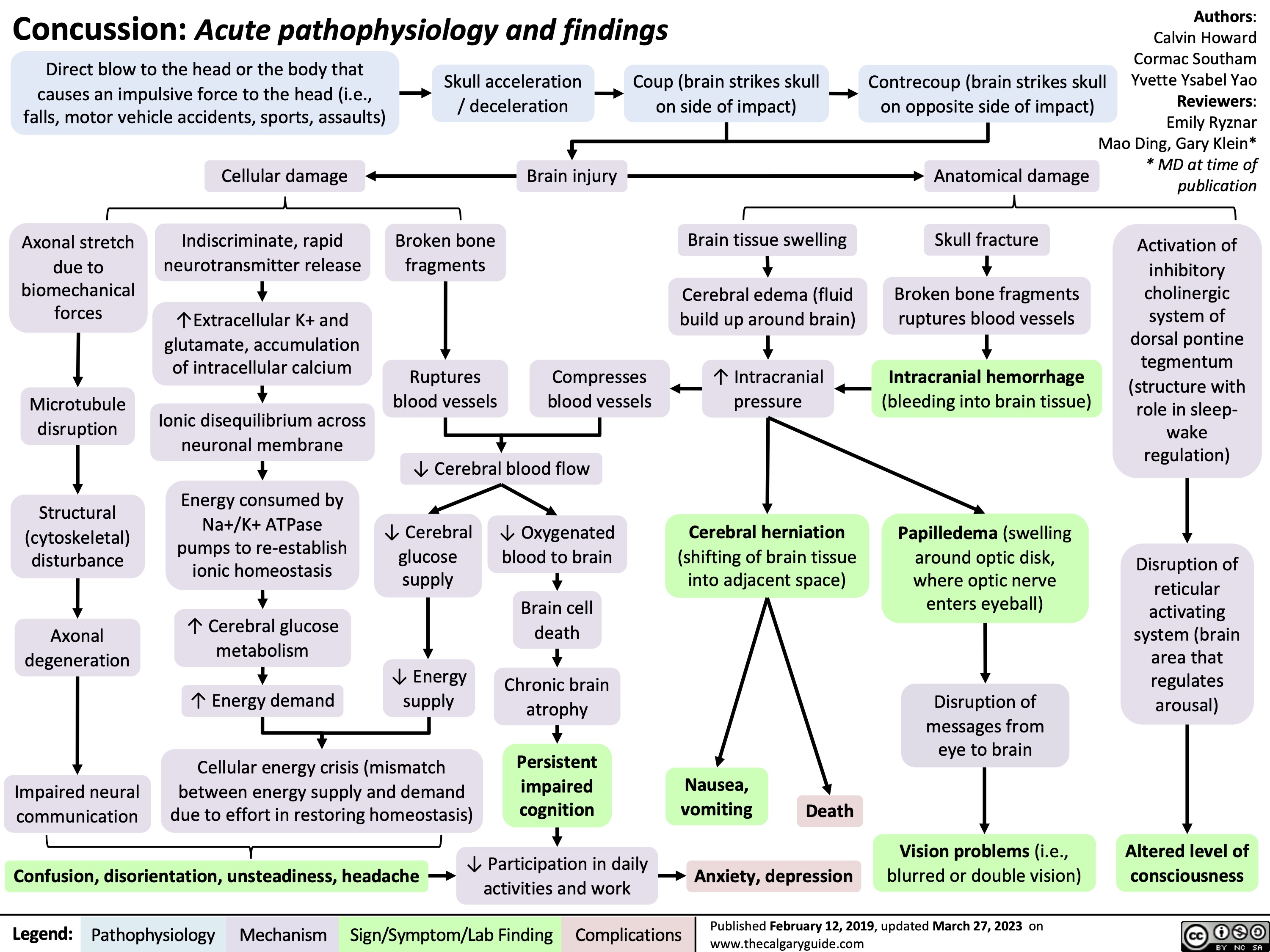
Concussion

Concussion: Acute pathophysiology and findings
Authors: Calvin Howard Cormac Southam Yvette Ysabel Yao Reviewers: Emily Ryznar Mao Ding, Gary Klein* * MD at time of publication
Activation of inhibitory
cholinergic system of dorsal pontine tegmentum (structure with role in sleep- wake regulation)
Disruption of reticular activating system (brain area that regulates arousal)
Altered level of consciousness
 Direct blow to the head or the body that causes an impulsive force to the head (i.e., falls, motor vehicle accidents, sports, assaults)
Skull acceleration / deceleration
Coup (brain strikes skull on side of impact)
Brain tissue swelling
Cerebral edema (fluid build up around brain)
↑ Intracranial pressure
Cerebral herniation
(shifting of brain tissue into adjacent space)
Contrecoup (brain strikes skull on opposite side of impact)
Anatomical damage
Skull fracture
Broken bone fragments ruptures blood vessels
Intracranial hemorrhage
(bleeding into brain tissue)
Papilledema (swelling around optic disk, where optic nerve enters eyeball)
Disruption of messages from eye to brain
Vision problems (i.e., blurred or double vision)
        Cellular damage
Indiscriminate, rapid neurotransmitter release
↑Extracellular K+ and glutamate, accumulation of intracellular calcium
Ionic disequilibrium across neuronal membrane
Energy consumed by Na+/K+ ATPase pumps to re-establish ionic homeostasis
↑ Cerebral glucose metabolism
↑ Energy demand
Brain injury
          Axonal stretch due to
biomechanical forces
Microtubule disruption
Structural (cytoskeletal) disturbance
Axonal degeneration
Impaired neural communication
Broken bone fragments
Ruptures blood vessels
Compresses blood vessels
               ↓ Cerebral blood flow
        ↓ Cerebral glucose supply
↓ Energy supply
↓ Oxygenated blood to brain
Brain cell death
Chronic brain atrophy
Persistent impaired cognition
                 Cellular energy crisis (mismatch between energy supply and demand due to effort in restoring homeostasis)
Nausea, vomiting
        ↓ Participation in daily Confusion, disorientation, unsteadiness, headache activities and work
Death Anxiety, depression
   Legend:
 Pathophysiology
 Mechanism
Sign/Symptom/Lab Finding
 Complications
Published February 12, 2019, updated March 27, 2023 on www.thecalgaryguide.com

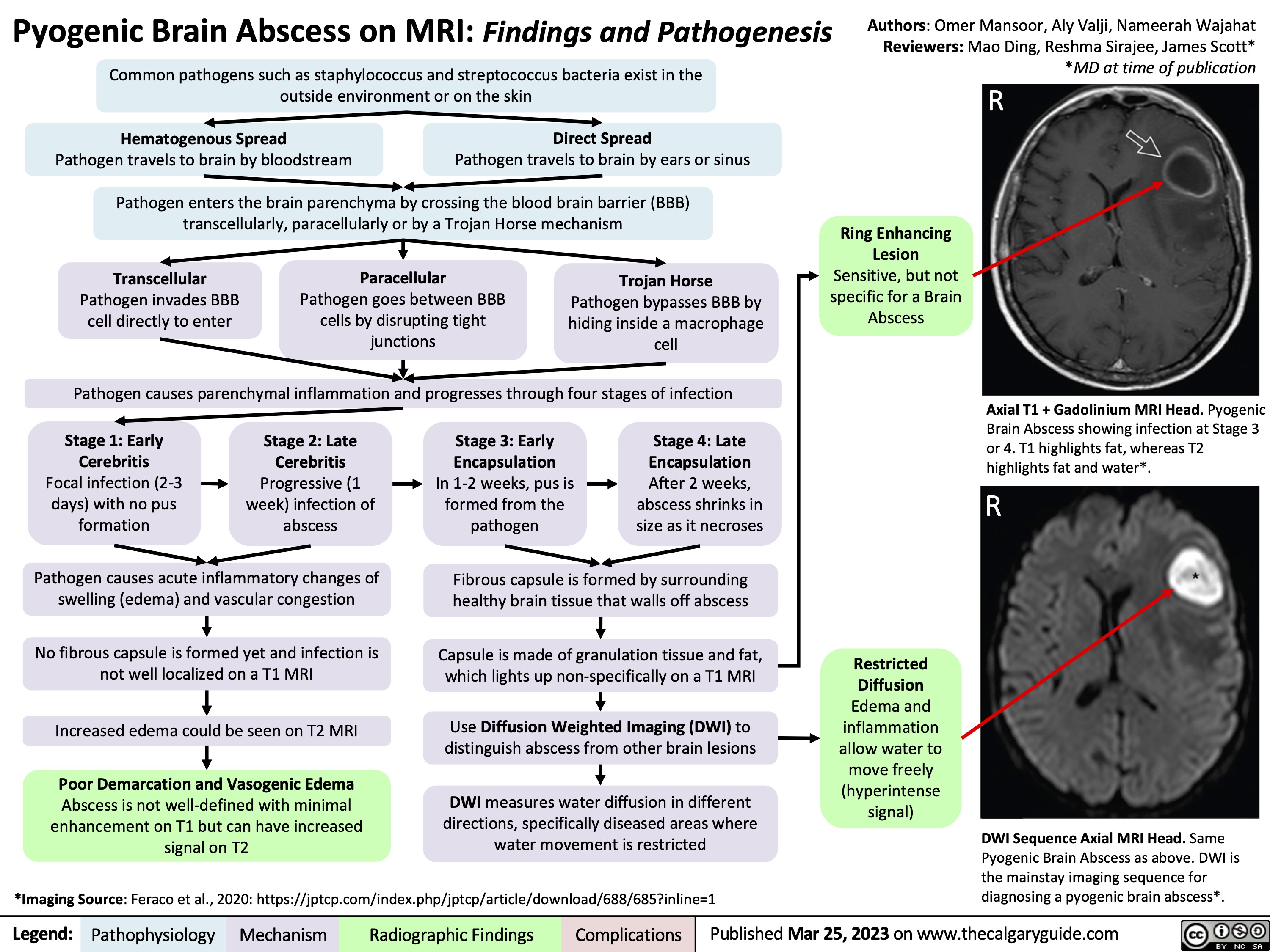
Pyogenic Brain Abscess on MRI

Pyogenic Brain Abscess on MRI: Findings and Pathogenesis Common pathogens such as staphylococcus and streptococcus bacteria exist in the
outside environment or on the skin
Hematogenous Spread Direct Spread
Pathogen travels to brain by bloodstream Pathogen travels to brain by ears or sinus
Pathogen enters the brain parenchyma by crossing the blood brain barrier (BBB) transcellularly, paracellularly or by a Trojan Horse mechanism
Authors: Omer Mansoor, Aly Valji, Nameerah Wajahat Reviewers: Mao Ding, Reshma Sirajee, James Scott* *MD at time of publication
R
              Transcellular
Pathogen invades BBB cell directly to enter
Paracellular
Pathogen goes between BBB cells by disrupting tight junctions
Trojan Horse
Pathogen bypasses BBB by hiding inside a macrophage cell
Ring Enhancing Lesion Sensitive, but not specific for a Brain Abscess
     Pathogen causes parenchymal inflammation and progresses through four stages of infection
Axial T1 + Gadolinium MRI Head. Pyogenic Brain Abscess showing infection at Stage 3 or 4. T1 highlights fat, whereas T2 highlights fat and water*.
R
     Stage 1: Early Cerebritis Focal infection (2-3 days) with no pus formation
Stage 2: Late Cerebritis Progressive (1 week) infection of abscess
Stage 3: Early Encapsulation
In 1-2 weeks, pus is formed from the pathogen
Stage 4: Late Encapsulation After 2 weeks, abscess shrinks in size as it necroses
      Pathogen causes acute inflammatory changes of swelling (edema) and vascular congestion
No fibrous capsule is formed yet and infection is not well localized on a T1 MRI
Increased edema could be seen on T2 MRI
Poor Demarcation and Vasogenic Edema
Abscess is not well-defined with minimal enhancement on T1 but can have increased signal on T2
Fibrous capsule is formed by surrounding healthy brain tissue that walls off abscess
Capsule is made of granulation tissue and fat, which lights up non-specifically on a T1 MRI
Use Diffusion Weighted Imaging (DWI) to distinguish abscess from other brain lesions
DWI measures water diffusion in different directions, specifically diseased areas where water movement is restricted
Restricted Diffusion Edema and inflammation allow water to move freely (hyperintense signal)
         *Imaging Source: Feraco et al., 2020: https://jptcp.com/index.php/jptcp/article/download/688/685?inline=1
DWI Sequence Axial MRI Head. Same Pyogenic Brain Abscess as above. DWI is the mainstay imaging sequence for diagnosing a pyogenic brain abscess*.
 Legend:
 Pathophysiology
Mechanism
Radiographic Findings
 Complications
 Published Mar 25, 2023 on www.thecalgaryguide.com

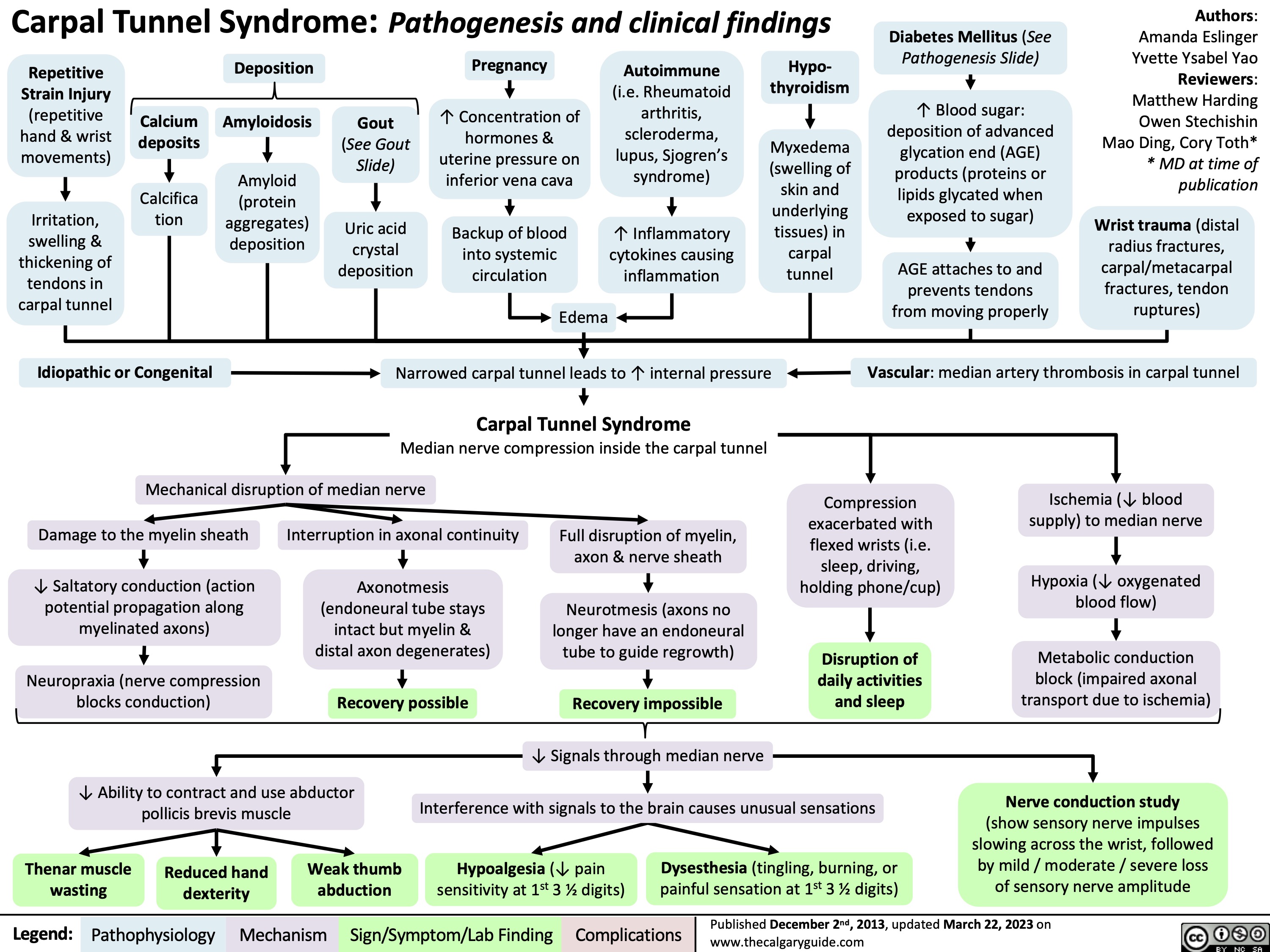
Carpal Tunnel Syndrome

Carpal Tunnel Syndrome: Pathogenesis and clinical findings
Diabetes Mellitus (See Pathogenesis Slide)
↑ Blood sugar: deposition of advanced glycation end (AGE) products (proteins or lipids glycated when exposed to sugar)
AGE attaches to and prevents tendons from moving properly
Authors: Amanda Eslinger Yvette Ysabel Yao Reviewers: Matthew Harding Owen Stechishin Mao Ding, Cory Toth* * MD at time of publication
Wrist trauma (distal radius fractures, carpal/metacarpal fractures, tendon ruptures)
      Repetitive Strain Injury (repetitive hand & wrist movements)
Irritation, swelling & thickening of tendons in carpal tunnel
Calcium deposits
Calcifica tion
Deposition Amyloidosis
Amyloid
(protein aggregates) deposition
Gout
(See Gout Slide)
Uric acid crystal deposition
Pregnancy
↑ Concentration of hormones & uterine pressure on inferior vena cava
Backup of blood into systemic circulation
Autoimmune
(i.e. Rheumatoid arthritis, scleroderma, lupus, Sjogren’s syndrome)
↑ Inflammatory cytokines causing inflammation
Hypo- thyroidism
Myxedema (swelling of skin and underlying tissues) in carpal tunnel
                      Idiopathic or Congenital
Edema
Narrowed carpal tunnel leads to ↑ internal pressure
Carpal Tunnel Syndrome
Vascular: median artery thrombosis in carpal tunnel
    Median nerve compression inside the carpal tunnel Mechanical disruption of median nerve
Compression exacerbated with flexed wrists (i.e. sleep, driving, holding phone/cup)
Disruption of daily activities and sleep
Ischemia (↓ blood supply) to median nerve
Hypoxia (↓ oxygenated blood flow)
Metabolic conduction block (impaired axonal transport due to ischemia)
Nerve conduction study
(show sensory nerve impulses slowing across the wrist, followed by mild / moderate / severe loss of sensory nerve amplitude
       Damage to the myelin sheath
↓ Saltatory conduction (action potential propagation along myelinated axons)
Neuropraxia (nerve compression blocks conduction)
Interruption in axonal continuity
Axonotmesis (endoneural tube stays intact but myelin & distal axon degenerates)
Recovery possible
Full disruption of myelin, axon & nerve sheath
Neurotmesis (axons no longer have an endoneural tube to guide regrowth)
Recovery impossible
               ↓ Ability to contract and use abductor pollicis brevis muscle
↓ Signals through median nerve
Interference with signals to the brain causes unusual sensations
Hypoalgesia (↓ pain Dysesthesia (tingling, burning, or sensitivity at 1st 3 1⁄2 digits) painful sensation at 1st 3 1⁄2 digits)
           Thenar muscle wasting
Reduced hand dexterity
Weak thumb abduction
 Legend:
 Pathophysiology
 Mechanism
Sign/Symptom/Lab Finding
 Complications
Published December 2nd, 2013, updated March 22, 2023 on www.thecalgaryguide.com

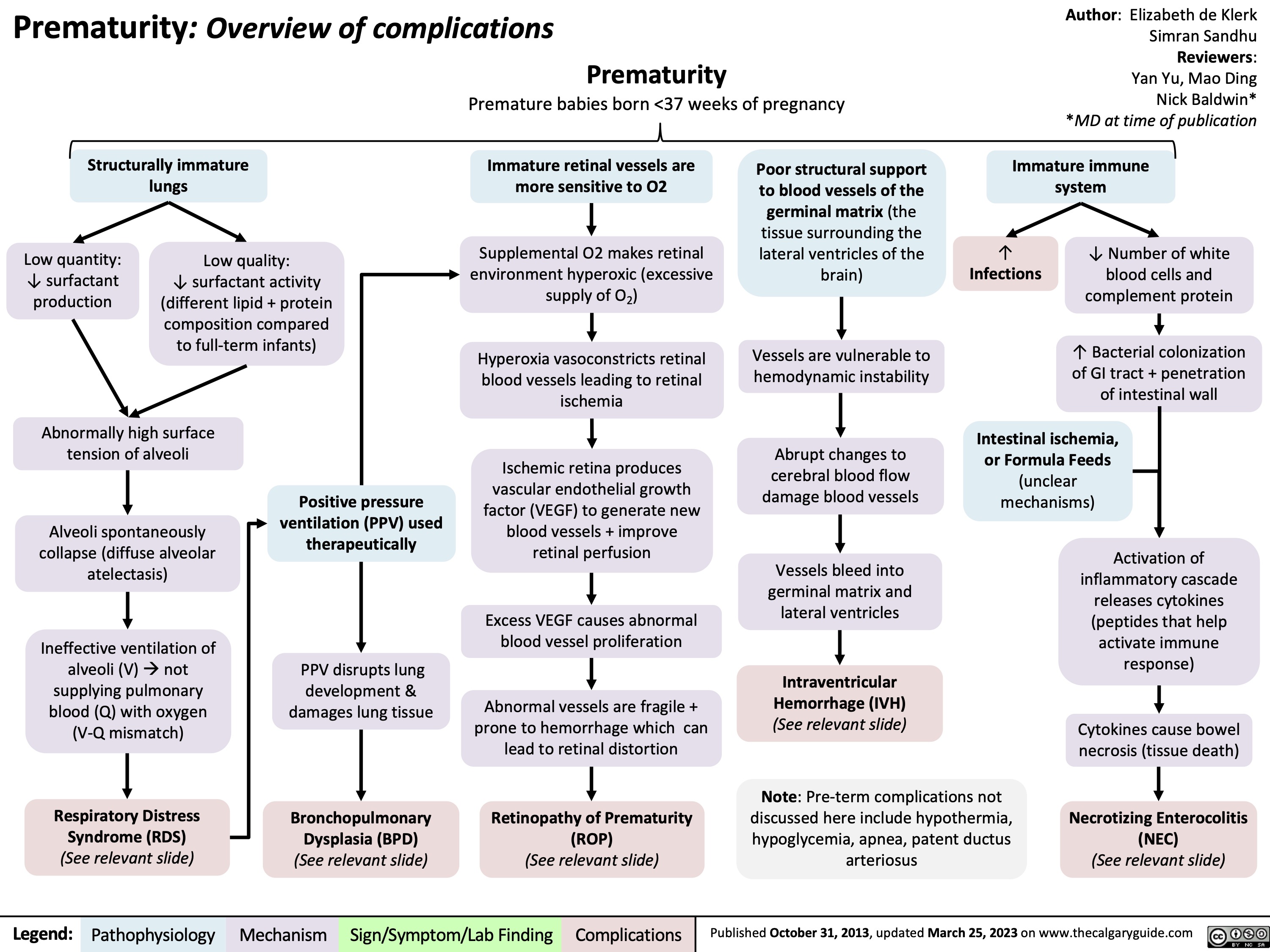
Complications of Prematurity

Prematurity: Overview of complications
Premature babies born <37 weeks of pregnancy
Author: Elizabeth de Klerk Simran Sandhu Reviewers: Yan Yu, Mao Ding Nick Baldwin* *MD at time of publication
Immature immune system
Prematurity
     Structurally immature lungs
Immature retinal vessels are more sensitive to O2
Supplemental O2 makes retinal environment hyperoxic (excessive supply of O2)
Hyperoxia vasoconstricts retinal blood vessels leading to retinal ischemia
Ischemic retina produces vascular endothelial growth factor (VEGF) to generate new blood vessels + improve retinal perfusion
Excess VEGF causes abnormal blood vessel proliferation
Abnormal vessels are fragile + prone to hemorrhage which can lead to retinal distortion
Retinopathy of Prematurity (ROP)
(See relevant slide)
Poor structural support to blood vessels of the germinal matrix (the tissue surrounding the lateral ventricles of the brain)
Vessels are vulnerable to hemodynamic instability
Abrupt changes to cerebral blood flow damage blood vessels
Vessels bleed into germinal matrix and lateral ventricles
Intraventricular Hemorrhage (IVH) (See relevant slide)
Note: Pre-term complications not discussed here include hypothermia, hypoglycemia, apnea, patent ductus arteriosus
         Low quantity: ↓ surfactant production
Low quality:
↓ surfactant activity (different lipid + protein composition compared to full-term infants)
↑
Infections
↓ Number of white blood cells and complement protein
↑ Bacterial colonization of GI tract + penetration of intestinal wall
         Abnormally high surface tension of alveoli
Alveoli spontaneously collapse (diffuse alveolar atelectasis)
Ineffective ventilation of alveoli (V)ànot supplying pulmonary blood (Q) with oxygen (V-Q mismatch)
Respiratory Distress Syndrome (RDS) (See relevant slide)
Positive pressure ventilation (PPV) used therapeutically
PPV disrupts lung development & damages lung tissue
Bronchopulmonary Dysplasia (BPD) (See relevant slide)
Intestinal ischemia, or Formula Feeds (unclear mechanisms)
       Activation of inflammatory cascade releases cytokines (peptides that help activate immune response)
Cytokines cause bowel necrosis (tissue death)
Necrotizing Enterocolitis (NEC)
(See relevant slide)
               Legend:
 Pathophysiology
 Mechanism
Sign/Symptom/Lab Finding
 Complications
Published October 31, 2013, updated March 25, 2023 on www.thecalgaryguide.com

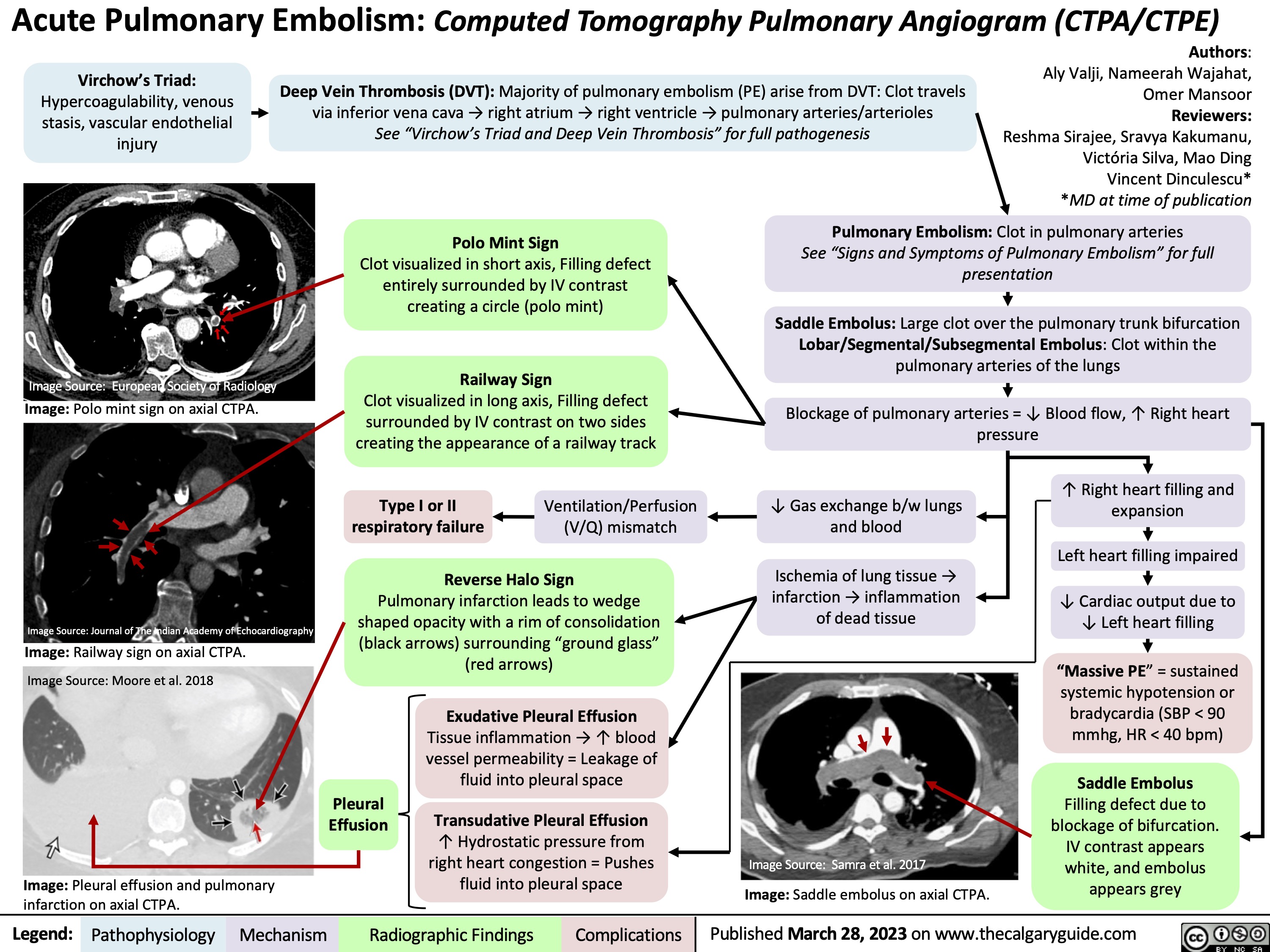
Acute Pulmonary Embolism on CTPA

Acute Pulmonary Embolism: Computed Tomography Pulmonary Angiogram (CTPA/CTPE)
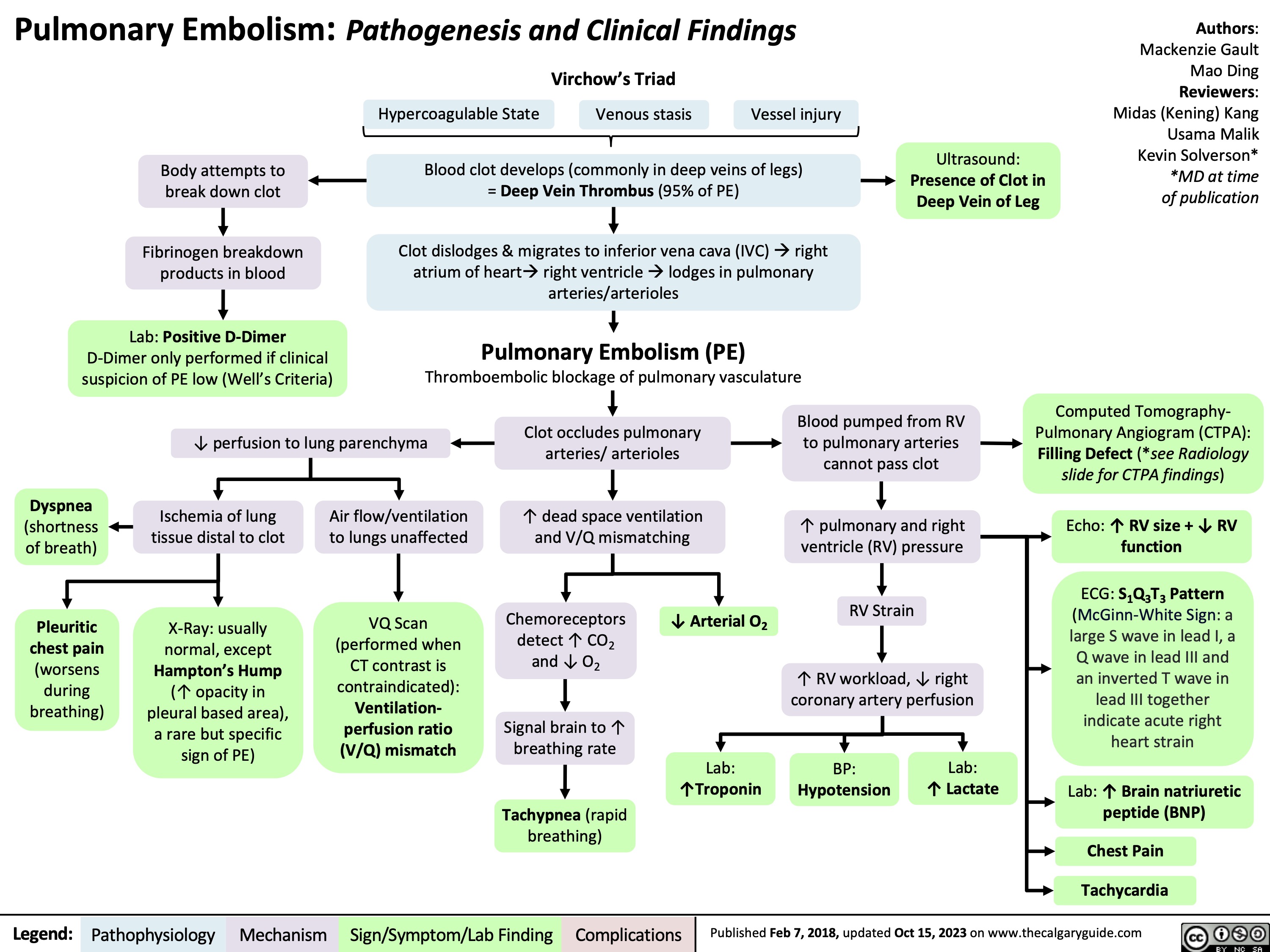
 Virchow’s Triad:
Hypercoagulability, venous stasis, vascular endothelial injury
Image Source: European Society of Radiology
Image: Polo mint sign on axial CTPA.
Image Source: Journal of The Indian Academy of Echocardiography
Image: Railway sign on axial CTPA. Image Source: Moore et al. 2018
Image: Pleural effusion and pulmonary infarction on axial CTPA.
Authors: Aly Valji, Nameerah Wajahat, Omer Mansoor Reviewers: Reshma Sirajee, Sravya Kakumanu, Victória Silva, Mao Ding Vincent Dinculescu* *MD at time of publication
 Deep Vein Thrombosis (DVT): Majority of pulmonary embolism (PE) arise from DVT: Clot travels via inferior vena cava → right atrium → right ventricle → pulmonary arteries/arterioles
See “Virchow’s Triad and Deep Vein Thrombosis” for full pathogenesis
    Polo Mint Sign
Clot visualized in short axis, Filling defect entirely surrounded by IV contrast creating a circle (polo mint)
Railway Sign
Clot visualized in long axis, Filling defect surrounded by IV contrast on two sides creating the appearance of a railway track
Type I or II Ventilation/Perfusion respiratory failure (V/Q) mismatch
Reverse Halo Sign
Pulmonary infarction leads to wedge shaped opacity with a rim of consolidation (black arrows) surrounding “ground glass” (red arrows)
Pulmonary Embolism: Clot in pulmonary arteries
See “Signs and Symptoms of Pulmonary Embolism” for full presentation
Saddle Embolus: Large clot over the pulmonary trunk bifurcation Lobar/Segmental/Subsegmental Embolus: Clot within the pulmonary arteries of the lungs
Blockage of pulmonary arteries = ↓ Blood flow, ↑ Right heart pressure
              ↓ Gas exchange b/w lungs and blood
Ischemia of lung tissue → infarction → inflammation of dead tissue
↑ Right heart filling and expansion
Left heart filling impaired
↓ Cardiac output due to ↓ Left heart filling
“Massive PE” = sustained systemic hypotension or bradycardia (SBP < 90 mmhg, HR < 40 bpm)
Saddle Embolus
Filling defect due to blockage of bifurcation. IV contrast appears white, and embolus appears grey
               Pleural Effusion
Exudative Pleural Effusion
Tissue inflammation → ↑ blood vessel permeability = Leakage of fluid into pleural space
Transudative Pleural Effusion
↑ Hydrostatic pressure from right heart congestion = Pushes fluid into pleural space
  Image Source: Samra et al. 2017
Image: Saddle embolus on axial CTPA.
 Legend:
 Pathophysiology
Mechanism
Radiographic Findings
 Complications
Published March 28, 2023 on www.thecalgaryguide.com

Sarcoidosis pathogenesis and CXR findings
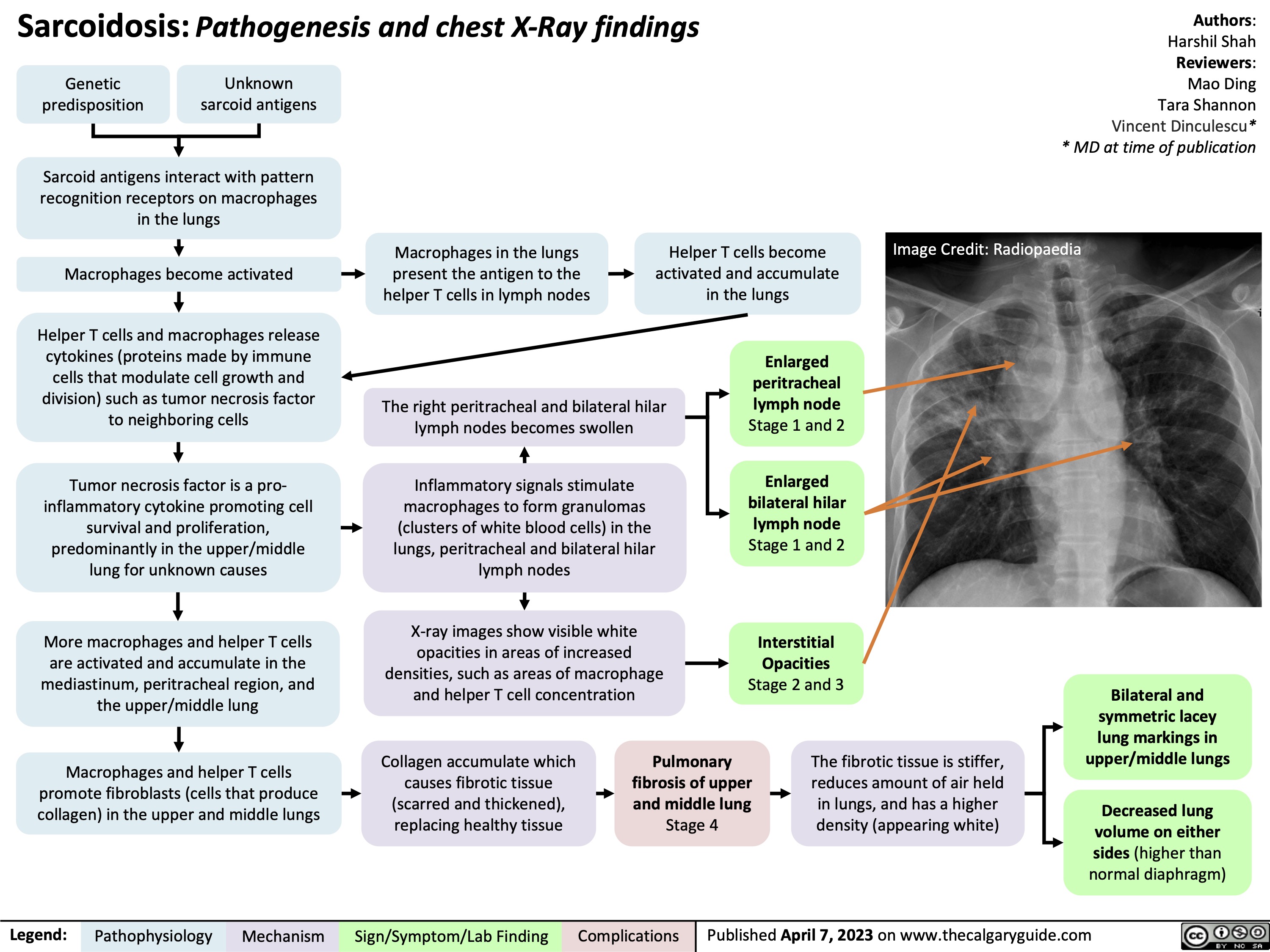
Sarcoidosis: Pathogenesis and chest X-Ray findings
Authors: Harshil Shah Reviewers: Mao Ding Tara Shannon Vincent Dinculescu* * MD at time of publication
  Genetic predisposition
Unknown sarcoid antigens
  Sarcoid antigens interact with pattern recognition receptors on macrophages in the lungs
Macrophages become activated
Helper T cells and macrophages release cytokines (proteins made by immune cells that modulate cell growth and division) such as tumor necrosis factor to neighboring cells
Tumor necrosis factor is a pro- inflammatory cytokine promoting cell survival and proliferation, predominantly in the upper/middle lung for unknown causes
More macrophages and helper T cells are activated and accumulate in the mediastinum, peritracheal region, and the upper/middle lung
Macrophages and helper T cells promote fibroblasts (cells that produce collagen) in the upper and middle lungs
Macrophages in the lungs present the antigen to the helper T cells in lymph nodes
Helper T cells become activated and accumulate in the lungs
Image Credit: Radiopaedia
         The right peritracheal and bilateral hilar lymph nodes becomes swollen
Inflammatory signals stimulate macrophages to form granulomas (clusters of white blood cells) in the lungs, peritracheal and bilateral hilar lymph nodes
X-ray images show visible white opacities in areas of increased densities, such as areas of macrophage and helper T cell concentration
Enlarged peritracheal lymph node Stage 1 and 2
Enlarged bilateral hilar lymph node Stage 1 and 2
Interstitial Opacities Stage 2 and 3
Bilateral and symmetric lacey lung markings in upper/middle lungs
Decreased lung volume on either sides (higher than normal diaphragm)
              Collagen accumulate which causes fibrotic tissue (scarred and thickened), replacing healthy tissue
Pulmonary fibrosis of upper and middle lung Stage 4
The fibrotic tissue is stiffer, reduces amount of air held in lungs, and has a higher density (appearing white)
   Legend:
 Pathophysiology
 Mechanism
 Sign/Symptom/Lab Finding
 Complications
 Published April 7, 2023 on www.thecalgaryguide.com

Coronary Artery Bypass Graft CABG Indications
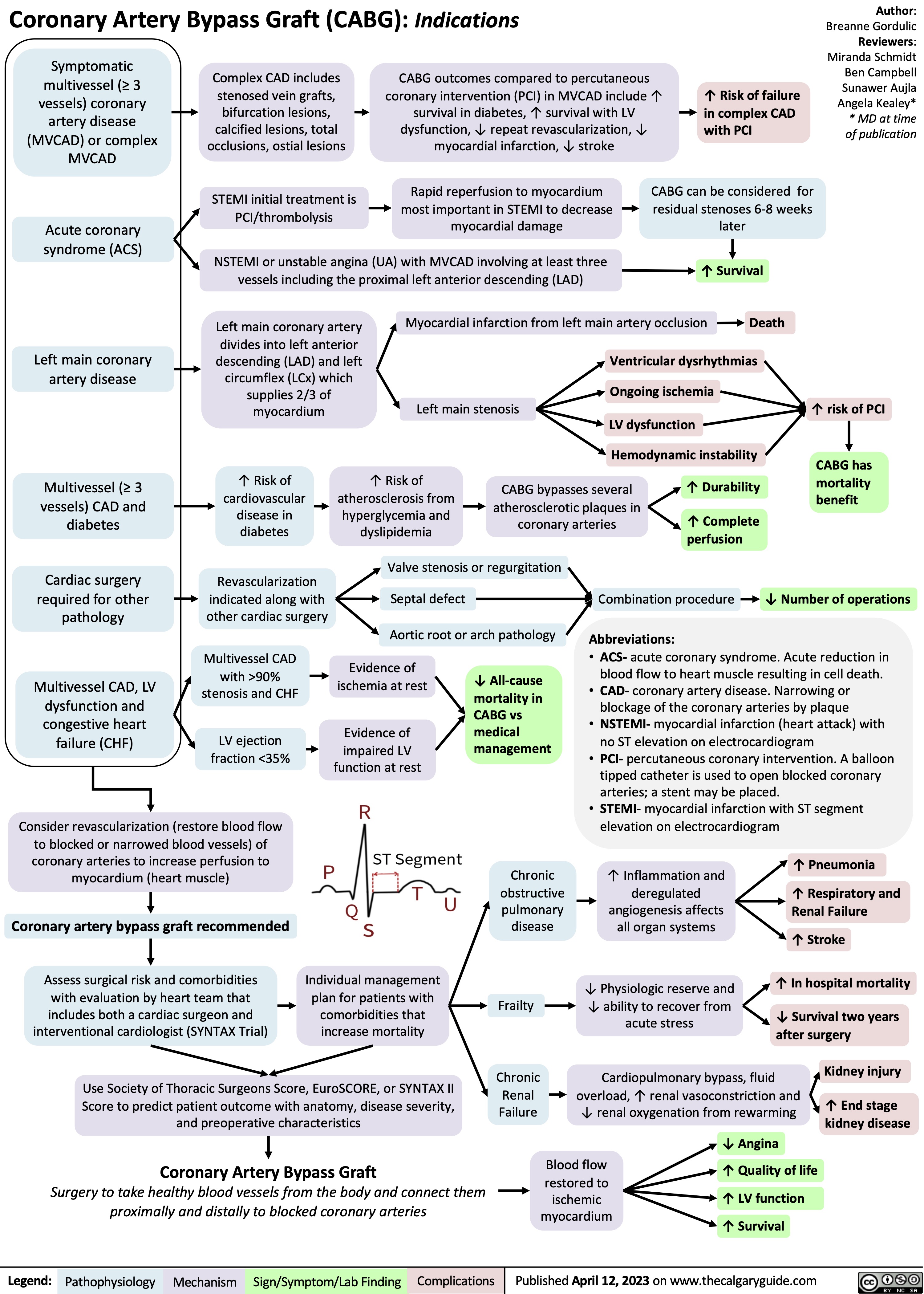
Coronary Artery Bypass Graft (CABG): Indications
Author: Breanne Gordulic Reviewers: Miranda Schmidt Ben Campbell Sunawer Aujla Angela Kealey* * MD at time of publication
  Symptomatic multivessel (≥ 3 vessels) coronary artery disease (MVCAD) or complex MVCAD
Acute coronary syndrome (ACS)
Left main coronary artery disease
Multivessel (≥ 3 vessels) CAD and diabetes
Cardiac surgery required for other pathology
Multivessel CAD, LV dysfunction and congestive heart failure (CHF)
Complex CAD includes stenosed vein grafts, bifurcation lesions, calcified lesions, total occlusions, ostial lesions
STEMI initial treatment is PCI/thrombolysis
CABG outcomes compared to percutaneous coronary intervention (PCI) in MVCAD include ↑ survival in diabetes, ↑ survival with LV dysfunction, ↓ repeat revascularization, ↓ myocardial infarction, ↓ stroke
↑ Risk of failure in complex CAD with PCI
     Rapid reperfusion to myocardium most important in STEMI to decrease myocardial damage
CABG can be considered for residual stenoses 6-8 weeks later
   NSTEMI or unstable angina (UA) with MVCAD involving at least three vessels including the proximal left anterior descending (LAD)
     Left main coronary artery divides into left anterior descending (LAD) and left circumflex (LCx) which supplies 2/3 of myocardium
↑ Survival Myocardial infarction from left main artery occlusion Death
        Left main stenosis
Ventricular dysrhythmias
Ongoing ischemia
LV dysfunction Hemodynamic instability
↑ risk of PCI
CABG has mortality benefit
↓ Number of operations
       ↑ Risk of cardiovascular disease in diabetes
Revascularization indicated along with other cardiac surgery
Multivessel CAD with >90% stenosis and CHF
LV ejection fraction <35%
↑ Risk of atherosclerosis from hyperglycemia and dyslipidemia
CABG bypasses several atherosclerotic plaques in coronary arteries
↑ Durability
↑ Complete perfusion
     Valve stenosis or regurgitation Septal defect
Aortic root or arch pathology
Combination procedure
          Evidence of ischemia at rest
Evidence of
impaired LV function at rest
↓ All-cause mortality in CABG vs medical management
Chronic obstructive pulmonary disease
Abbreviations:
• ACS- acute coronary syndrome. Acute reduction in
blood flow to heart muscle resulting in cell death. • CAD- coronary artery disease. Narrowing or blockage of the coronary arteries by plaque
• NSTEMI- myocardial infarction (heart attack) with no ST elevation on electrocardiogram
• PCI- percutaneous coronary intervention. A balloon tipped catheter is used to open blocked coronary arteries; a stent may be placed.
• STEMI- myocardial infarction with ST segment elevation on electrocardiogram
       Consider revascularization (restore blood flow to blocked or narrowed blood vessels) of coronary arteries to increase perfusion to myocardium (heart muscle)
Coronary artery bypass graft recommended
Assess surgical risk and comorbidities with evaluation by heart team that includes both a cardiac surgeon and interventional cardiologist (SYNTAX Trial)
Individual management plan for patients with comorbidities that increase mortality
Frailty
Chronic Renal Failure
↑ Inflammation and deregulated angiogenesis affects all organ systems
↓ Physiologic reserve and ↓ ability to recover from acute stress
↑ Pneumonia
↑ Respiratory and Renal Failure
↑ Stroke
↑ In hospital mortality
↓ Survival two years after surgery
                      Use Society of Thoracic Surgeons Score, EuroSCORE, or SYNTAX II Score to predict patient outcome with anatomy, disease severity, and preoperative characteristics
Coronary Artery Bypass Graft
Surgery to take healthy blood vessels from the body and connect them proximally and distally to blocked coronary arteries
Cardiopulmonary bypass, fluid overload, ↑ renal vasoconstriction and ↓ renal oxygenation from rewarming
Kidney injury
↑ End stage kidney disease
    Blood flow restored to
ischemic myocardium
↓ Angina
↑ Quality of life ↑ LV function ↑ Survival
      Legend:
 Pathophysiology
Mechanism
 Sign/Symptom/Lab Finding
 Complications
Published April 12, 2023 on www.thecalgaryguide.com

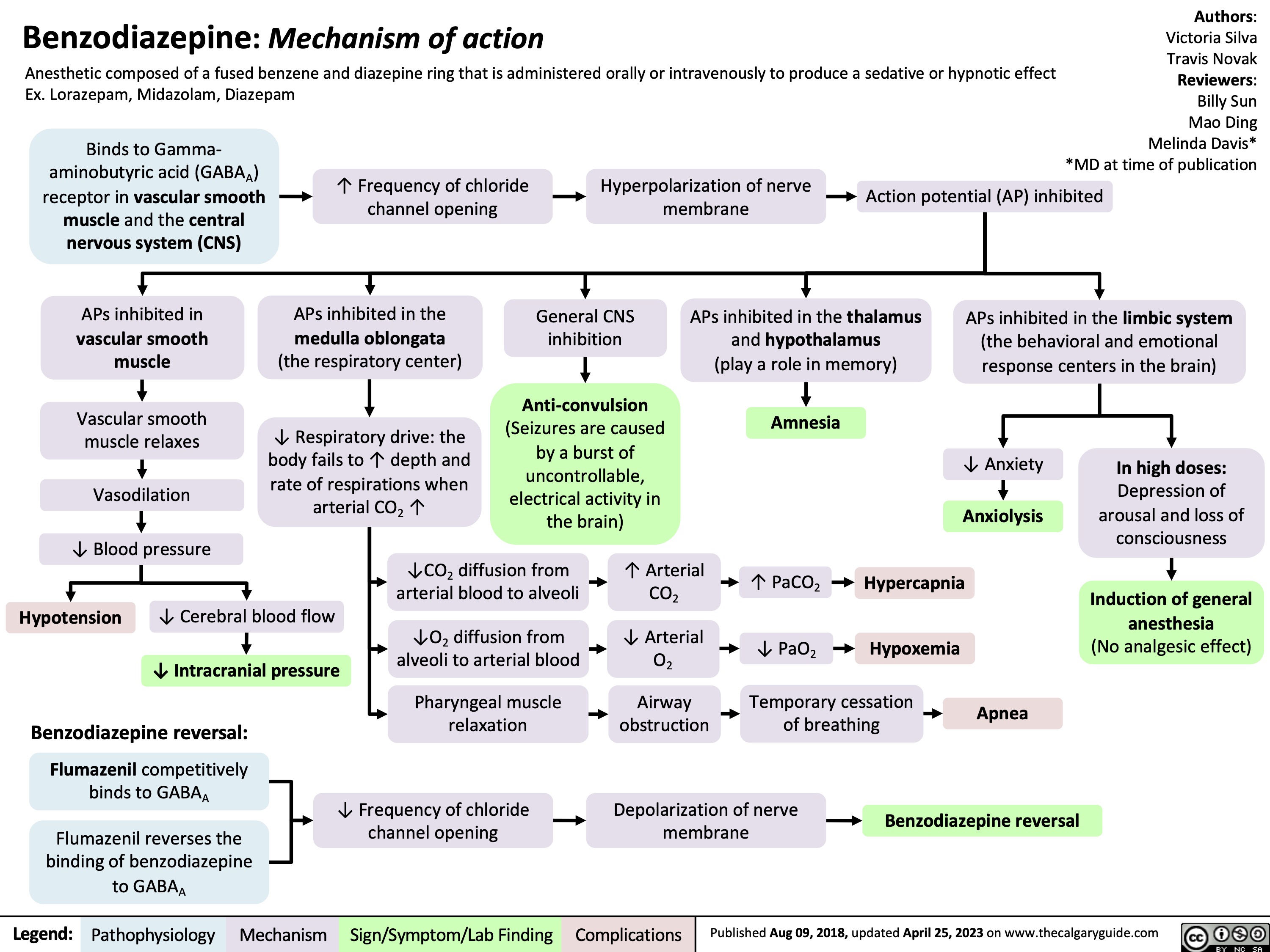
Benzodiazepine Mechanism of Action

Benzodiazepine: Mechanism of action
Anesthetic composed of a fused benzene and diazepine ring that is administered orally or intravenously to produce a sedative or hypnotic effect
Ex. Lorazepam, Midazolam, Diazepam
Binds to Gamma- aminobutyric acid (GABAA) receptor in vascular smooth muscle and the central nervous system (CNS)
APs inhibited in
vascular smooth muscle
Vascular smooth muscle relaxes
Vasodilation ↓ Blood pressure
Authors: Victoria Silva Travis Novak Reviewers: Billy Sun Mao Ding Melinda Davis* *MD at time of publication
   ↑ Frequency of chloride channel opening
Hyperpolarization of nerve membrane
Action potential (AP) inhibited
          APs inhibited in the
medulla oblongata
(the respiratory center)
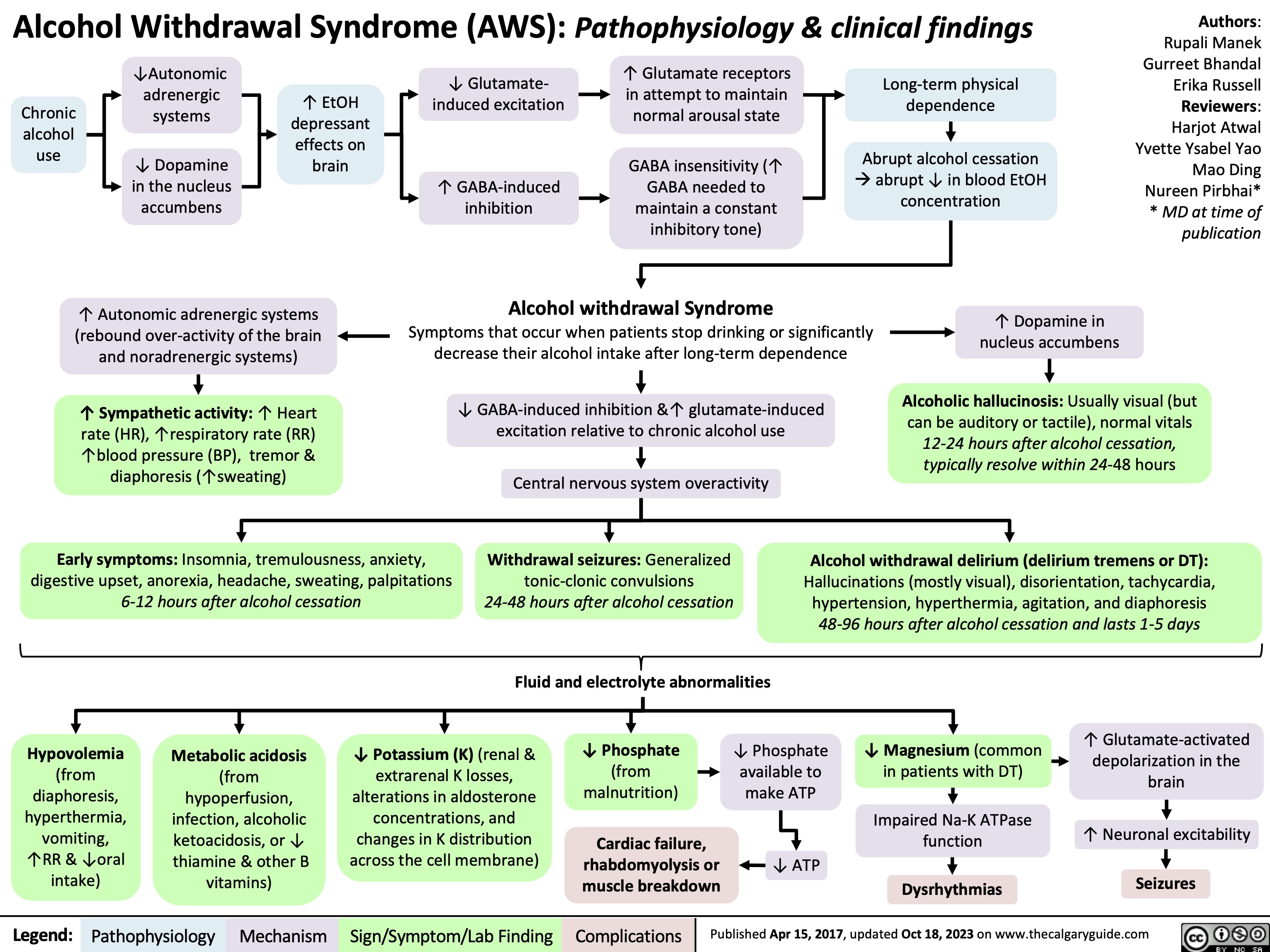
↓ Respiratory drive: the body fails to ↑ depth and rate of respirations when arterial CO2 ↑
General CNS inhibition
Anti-convulsion
(Seizures are caused by a burst of uncontrollable, electrical activity in the brain)
APs inhibited in the thalamus and hypothalamus (play a role in memory)
APs inhibited in the limbic system (the behavioral and emotional response centers in the brain)
                   Hypotension
↓ Cerebral blood flow
↓CO2 diffusion from arterial blood to alveoli
↓O2 diffusion from alveoli to arterial blood
Pharyngeal muscle relaxation
↑ Arterial CO2
↓ Arterial O2
Airway obstruction
Amnesia
↑ PaCO2
↓ PaO2
↓ Anxiety
Anxiolysis Hypercapnia
Hypoxemia
In high doses:
Depression of arousal and loss of consciousness
Induction of general anesthesia
(No analgesic effect)
     ↓ Intracranial pressure Benzodiazepine reversal:
Temporary cessation of breathing
Apnea
     Flumazenil competitively binds to GABAA
Flumazenil reverses the binding of benzodiazepine to GABAA
↓ Frequency of chloride channel opening
Depolarization of nerve membrane
Benzodiazepine reversal
      Legend:
 Pathophysiology
 Mechanism
Sign/Symptom/Lab Finding
 Complications
 Published Aug 09, 2018, updated April 25, 2023 on www.thecalgaryguide.com

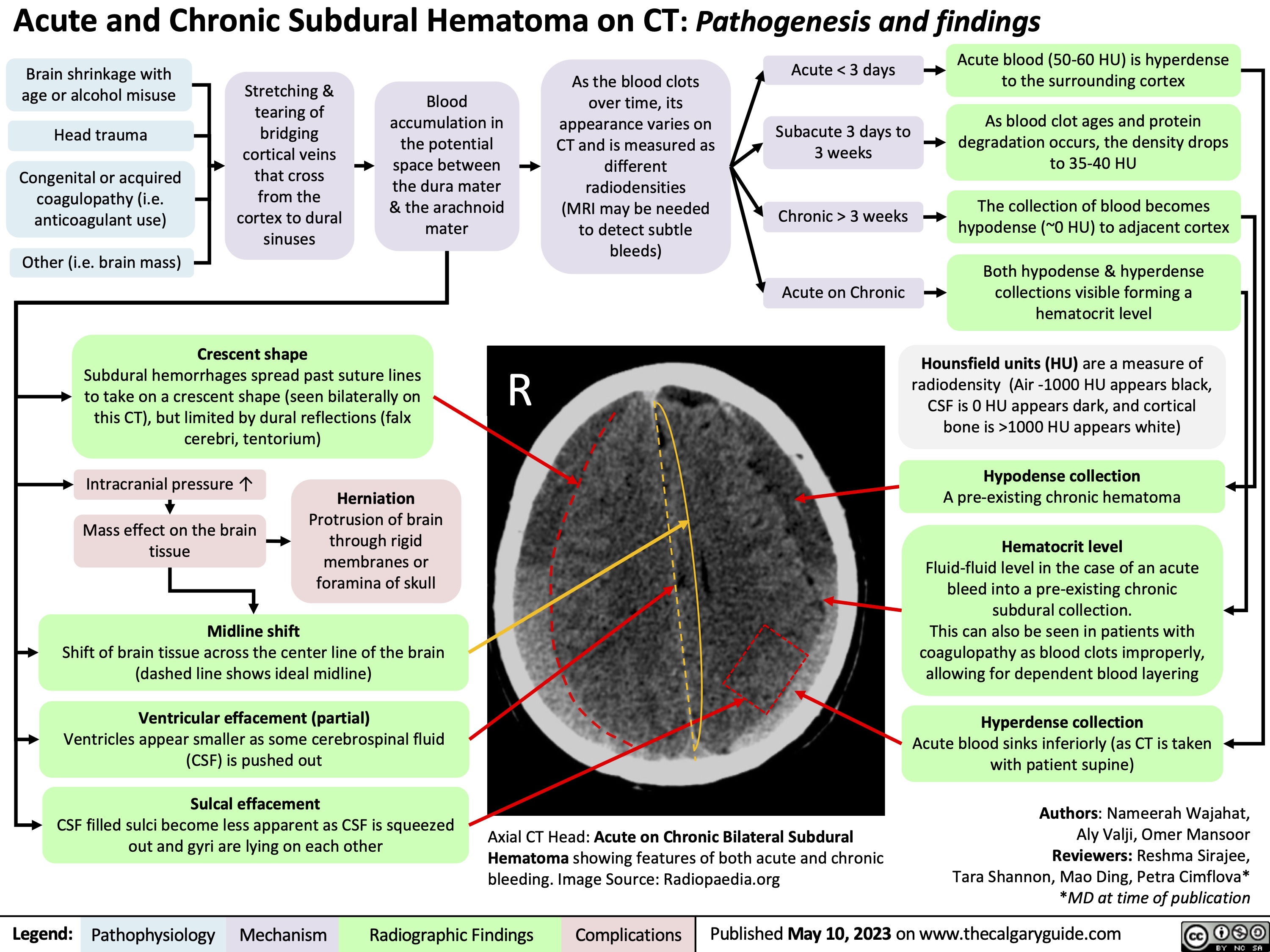
Subdural Hematoma on CT

Acute and Chronic Subdural Hematoma on CT: Pathogenesis and findings
    Brain shrinkage with age or alcohol misuse
Head trauma
Congenital or acquired coagulopathy (i.e. anticoagulant use)
Other (i.e. brain mass)
Stretching & tearing of bridging cortical veins that cross from the cortex to dural sinuses
Crescent shape
Blood accumulation in the potential space between the dura mater & the arachnoid mater
As the blood clots over time, its appearance varies on CT and is measured as different radiodensities (MRI may be needed to detect subtle bleeds)
Acute < 3 days
Subacute 3 days to 3 weeks
Chronic > 3 weeks Acute on Chronic
Acute blood (50-60 HU) is hyperdense to the surrounding cortex
As blood clot ages and protein degradation occurs, the density drops to 35-40 HU
The collection of blood becomes hypodense (~0 HU) to adjacent cortex
Both hypodense & hyperdense collections visible forming a hematocrit level
Hounsfield units (HU) are a measure of radiodensity (Air -1000 HU appears black, CSF is 0 HU appears dark, and cortical bone is >1000 HU appears white)
Hypodense collection
A pre-existing chronic hematoma
Hematocrit level
Fluid-fluid level in the case of an acute bleed into a pre-existing chronic subdural collection.
This can also be seen in patients with coagulopathy as blood clots improperly, allowing for dependent blood layering
Hyperdense collection
Acute blood sinks inferiorly (as CT is taken with patient supine)
Authors: Nameerah Wajahat, Aly Valji, Omer Mansoor Reviewers: Reshma Sirajee, Tara Shannon, Mao Ding, Petra Cimflova* *MD at time of publication
                      Subdural hemorrhages spread past suture lines to take on a crescent shape (seen bilaterally on this CT), but limited by dural reflections (falx cerebri, tentorium)
R
    Intracranial pressure ↑
Mass effect on the brain tissue
Midline shift
Shift of brain tissue across the center line of the brain (dashed line shows ideal midline)
Ventricular effacement (partial)
Ventricles appear smaller as some cerebrospinal fluid (CSF) is pushed out
Sulcal effacement
CSF filled sulci become less apparent as CSF is squeezed out and gyri are lying on each other
  Herniation
Protrusion of brain through rigid membranes or foramina of skull
            Axial CT Head: Acute on Chronic Bilateral Subdural Hematoma showing features of both acute and chronic bleeding. Image Source: Radiopaedia.org
 Legend:
 Pathophysiology
Mechanism
Radiographic Findings
 Complications
 Published May 10, 2023 on www.thecalgaryguide.com

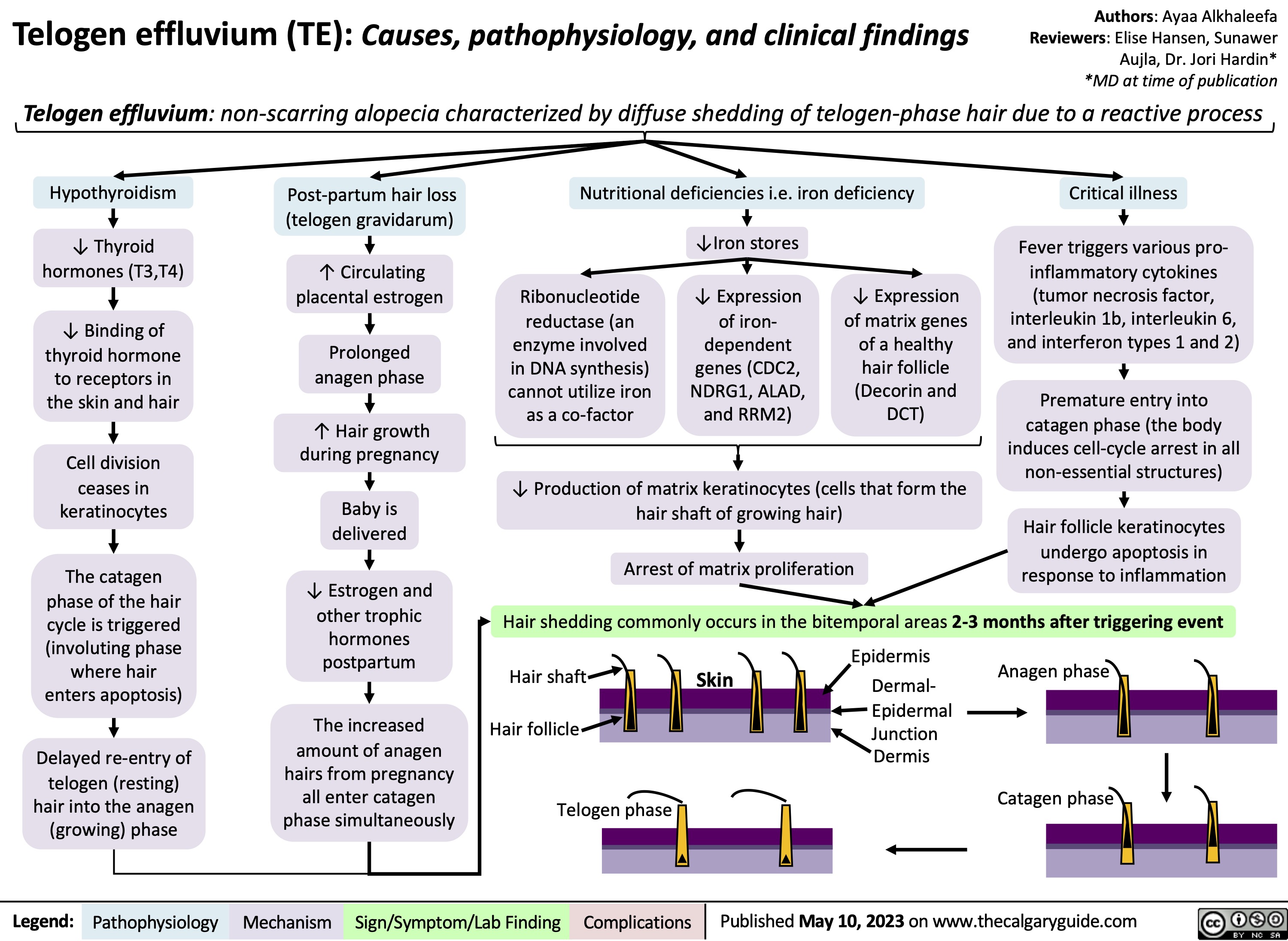
Telogen Effluvium

Authors: Ayaa Alkhaleefa Telogen effluvium (TE): Causes, pathophysiology, and clinical findings Reviewers: Elise Hansen, Sunawer Aujla, Dr. Jori Hardin* *MD at time of publication
Telogen effluvium: non-scarring alopecia characterized by diffuse shedding of telogen-phase hair due to a reactive process
        Hypothyroidism
↓ Thyroid hormones (T3,T4)
↓ Binding of thyroid hormone to receptors in the skin and hair
Cell division ceases in keratinocytes
The catagen phase of the hair cycle is triggered (involuting phase where hair enters apoptosis)
Delayed re-entry of telogen (resting)
hair into the anagen (growing) phase
Post-partum hair loss (telogen gravidarum)
↑ Circulating placental estrogen
Prolonged anagen phase
↑ Hair growth during pregnancy
Baby is delivered
↓ Estrogen and other trophic
hormones postpartum
The increased amount of anagen
hairs from pregnancy all enter catagen phase simultaneously
Nutritional deficiencies i.e. iron deficiency
Critical illness
Fever triggers various pro- inflammatory cytokines (tumor necrosis factor, interleukin 1b, interleukin 6, and interferon types 1 and 2)
Premature entry into catagen phase (the body induces cell-cycle arrest in all non-essential structures)
Hair follicle keratinocytes undergo apoptosis in response to inflammation
         Ribonucleotide reductase (an enzyme involved in DNA synthesis) cannot utilize iron as a co-factor
↓Iron stores
↓ Expression of iron-
dependent genes (CDC2, NDRG1, ALAD, and RRM2)
↓ Expression of matrix genes of a healthy hair follicle (Decorin and DCT)
       ↓ Production of matrix keratinocytes (cells that form the hair shaft of growing hair)
     Arrest of matrix proliferation
Hair shedding commonly occurs in the bitemporal areas 2-3 months after triggering event
          Hair shaft Hair follicle
Telogen phase
Skin
Epidermis
Dermal- Anagen phase
  Epidermal Junction Dermis
      Catagen phase
         Legend:
 Pathophysiology
 Mechanism
 Sign/Symptom/Lab Finding
 Complications
 Published May 10, 2023 on www.thecalgaryguide.com

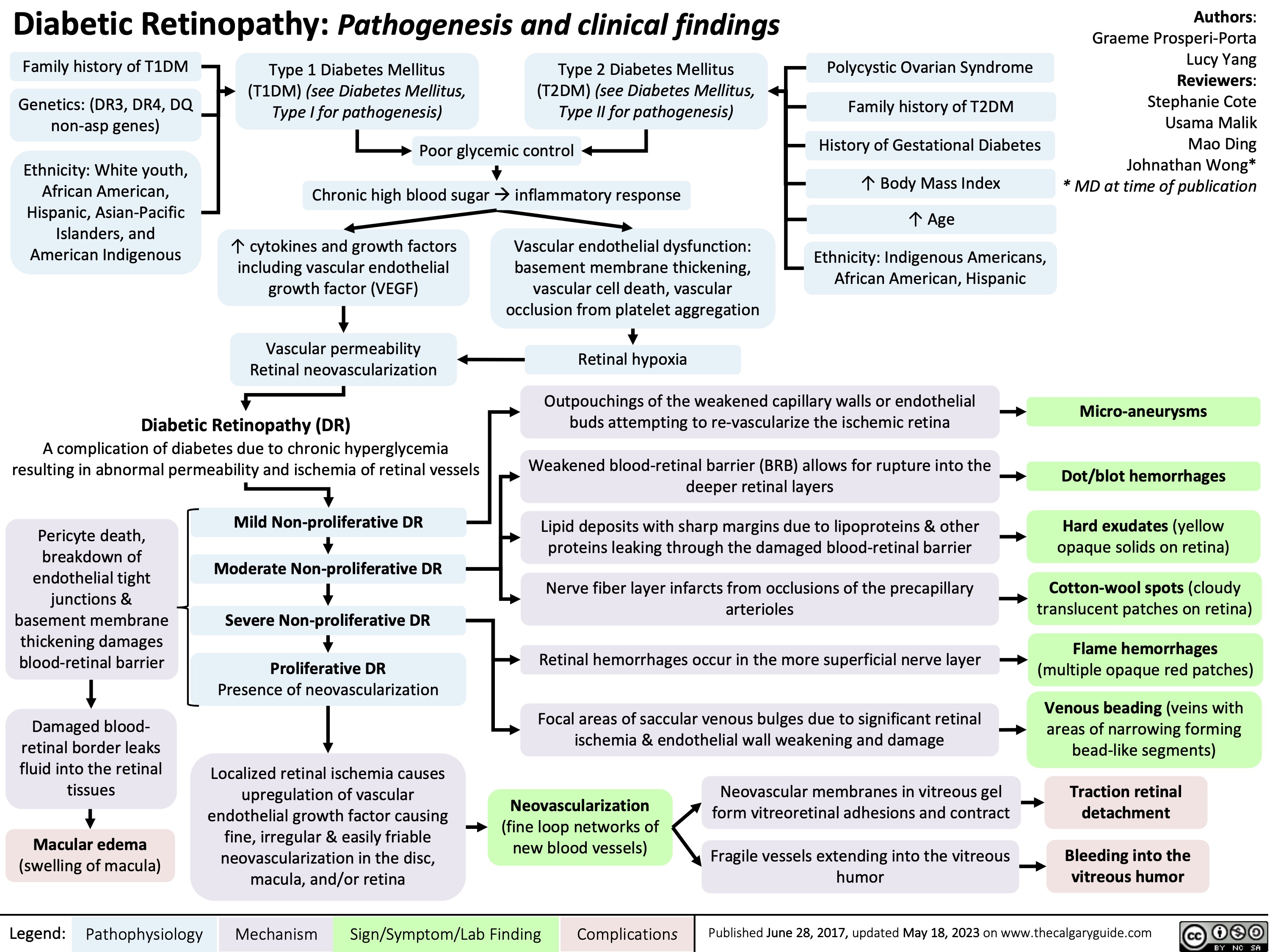
Diabetic Retinopathy

Diabetic Retinopathy: Pathogenesis and clinical findings
Authors: Graeme Prosperi-Porta Lucy Yang Reviewers: Stephanie Cote Usama Malik Mao Ding Johnathan Wong* * MD at time of publication
    Family history of T1DM
Genetics: (DR3, DR4, DQ non-asp genes)
Ethnicity: White youth, African American, Hispanic, Asian-Pacific Islanders, and American Indigenous
Type 1 Diabetes Mellitus (T1DM) (see Diabetes Mellitus, Type I for pathogenesis)
Type 2 Diabetes Mellitus (T2DM) (see Diabetes Mellitus, Type II for pathogenesis)
Polycystic Ovarian Syndrome
Family history of T2DM
History of Gestational Diabetes
↑ Body Mass Index
↑ Age
Ethnicity: Indigenous Americans, African American, Hispanic
       Poor glycemic control
Chronic high blood sugaràinflammatory response
        ↑ cytokines and growth factors including vascular endothelial growth factor (VEGF)
Vascular permeability Retinal neovascularization
Vascular endothelial dysfunction: basement membrane thickening, vascular cell death, vascular occlusion from platelet aggregation
Retinal hypoxia
Outpouchings of the weakened capillary walls or endothelial buds attempting to re-vascularize the ischemic retina
Weakened blood-retinal barrier (BRB) allows for rupture into the deeper retinal layers
Lipid deposits with sharp margins due to lipoproteins & other proteins leaking through the damaged blood-retinal barrier
Nerve fiber layer infarcts from occlusions of the precapillary arterioles
Retinal hemorrhages occur in the more superficial nerve layer
Focal areas of saccular venous bulges due to significant retinal ischemia & endothelial wall weakening and damage
        Diabetic Retinopathy (DR)
A complication of diabetes due to chronic hyperglycemia resulting in abnormal permeability and ischemia of retinal vessels
Micro-aneurysms
Dot/blot hemorrhages Hard exudates (yellow
opaque solids on retina)
Cotton-wool spots (cloudy translucent patches on retina)
Flame hemorrhages
(multiple opaque red patches)
Venous beading (veins with areas of narrowing forming bead-like segments)
Traction retinal detachment
Bleeding into the vitreous humor
         Pericyte death, breakdown of endothelial tight junctions & basement membrane thickening damages blood-retinal barrier
Damaged blood- retinal border leaks fluid into the retinal tissues
Macular edema
(swelling of macula)
Mild Non-proliferative DR
Moderate Non-proliferative DR
Severe Non-proliferative DR
Proliferative DR
Presence of neovascularization
Localized retinal ischemia causes upregulation of vascular endothelial growth factor causing fine, irregular & easily friable neovascularization in the disc, macula, and/or retina
Neovascularization
(fine loop networks of new blood vessels)
Neovascular membranes in vitreous gel form vitreoretinal adhesions and contract
Fragile vessels extending into the vitreous humor
                   Legend:
 Pathophysiology
 Mechanism
 Sign/Symptom/Lab Finding
 Complications
 Published June 28, 2017, updated May 18, 2023 on www.thecalgaryguide.com

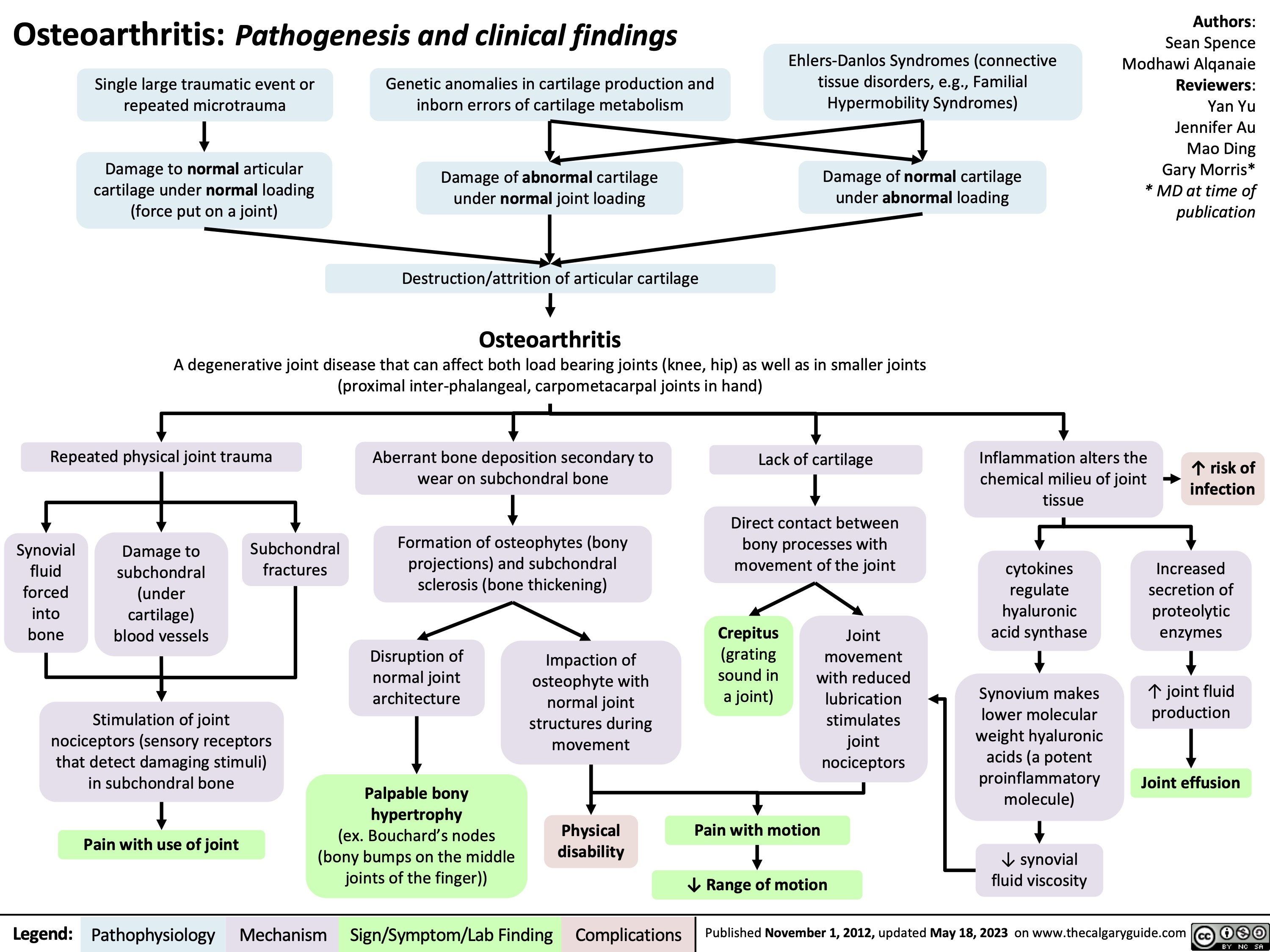
OA Clinical findings

Osteoarthritis: Pathogenesis and clinical findings
Ehlers-Danlos Syndromes (connective tissue disorders, e.g., Familial Hypermobility Syndromes)
Damage of normal cartilage under abnormal loading
Authors: Sean Spence Modhawi Alqanaie Reviewers: Yan Yu Jennifer Au Mao Ding Gary Morris* * MD at time of publication
   Single large traumatic event or repeated microtrauma
Damage to normal articular cartilage under normal loading (force put on a joint)
Genetic anomalies in cartilage production and inborn errors of cartilage metabolism
Damage of abnormal cartilage under normal joint loading
Destruction/attrition of articular cartilage
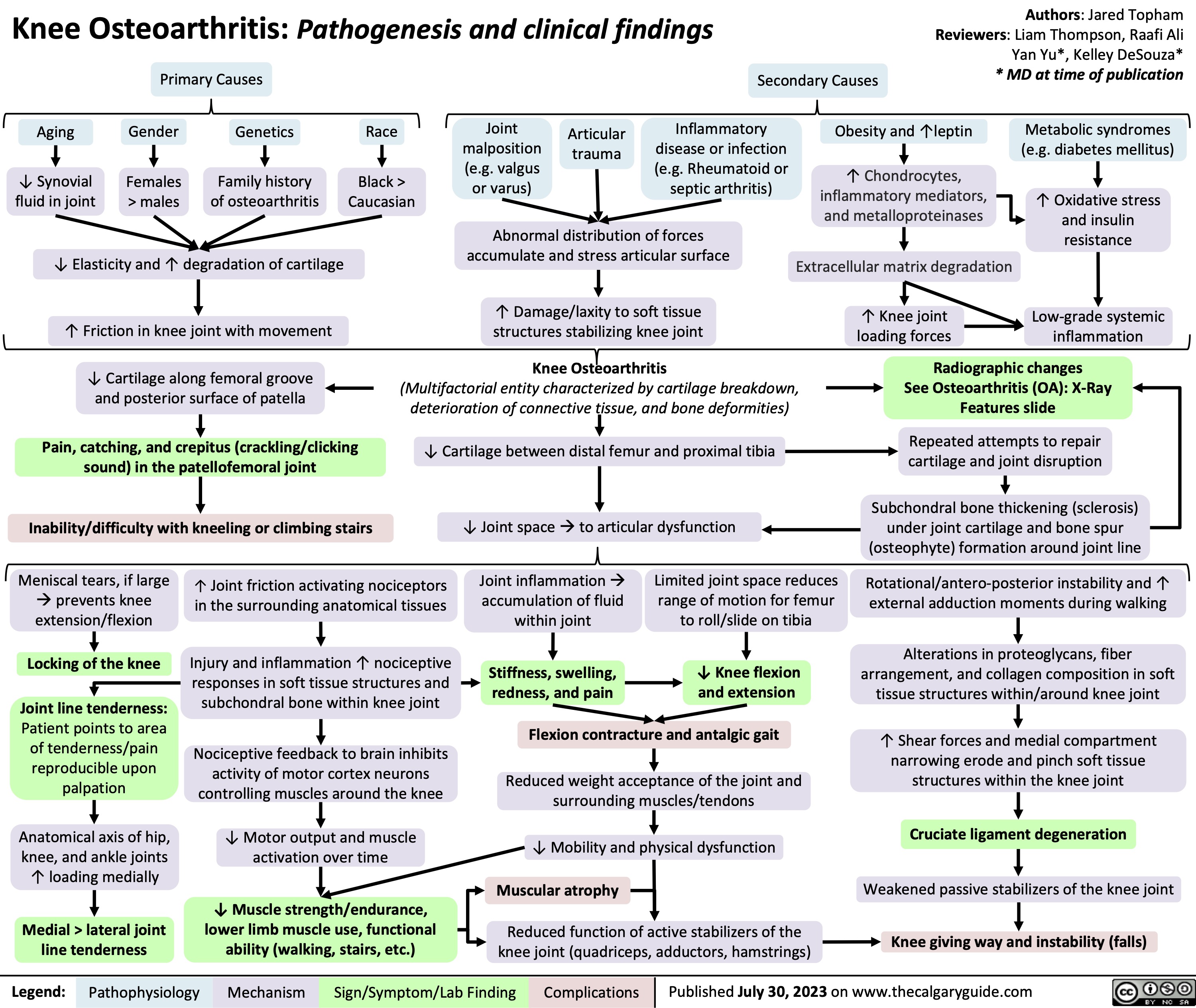
Osteoarthritis
       A degenerative joint disease that can affect both load bearing joints (knee, hip) as well as in smaller joints (proximal inter-phalangeal, carpometacarpal joints in hand)
       Repeated physical joint trauma
Aberrant bone deposition secondary to wear on subchondral bone
Formation of osteophytes (bony projections) and subchondral sclerosis (bone thickening)
Lack of cartilage
Direct contact between bony processes with movement of the joint
Inflammation alters the chemical milieu of joint tissue
        Synovial fluid forced into bone
Damage to subchondral (under cartilage) blood vessels
Subchondral fractures
cytokines regulate hyaluronic acid synthase
Synovium makes lower molecular weight hyaluronic acids (a potent proinflammatory molecule)
↓ synovial fluid viscosity
↑ risk of infection
Increased secretion of proteolytic enzymes
↑ joint fluid production
Joint effusion
          Disruption of normal joint architecture
Palpable bony hypertrophy
(ex. Bouchard’s nodes (bony bumps on the middle joints of the finger))
Impaction of osteophyte with normal joint structures during movement
Physical disability
Crepitus
(grating sound in a joint)
Joint movement with reduced lubrication stimulates joint nociceptors
    Stimulation of joint nociceptors (sensory receptors that detect damaging stimuli) in subchondral bone
Pain with use of joint
Pain with motion
↓ Range of motion
           Legend:
 Pathophysiology
 Mechanism
Sign/Symptom/Lab Finding
 Complications
 Published November 1, 2012, updated May 18, 2023 on www.thecalgaryguide.com

Digestion and Absorption of Macromolecules
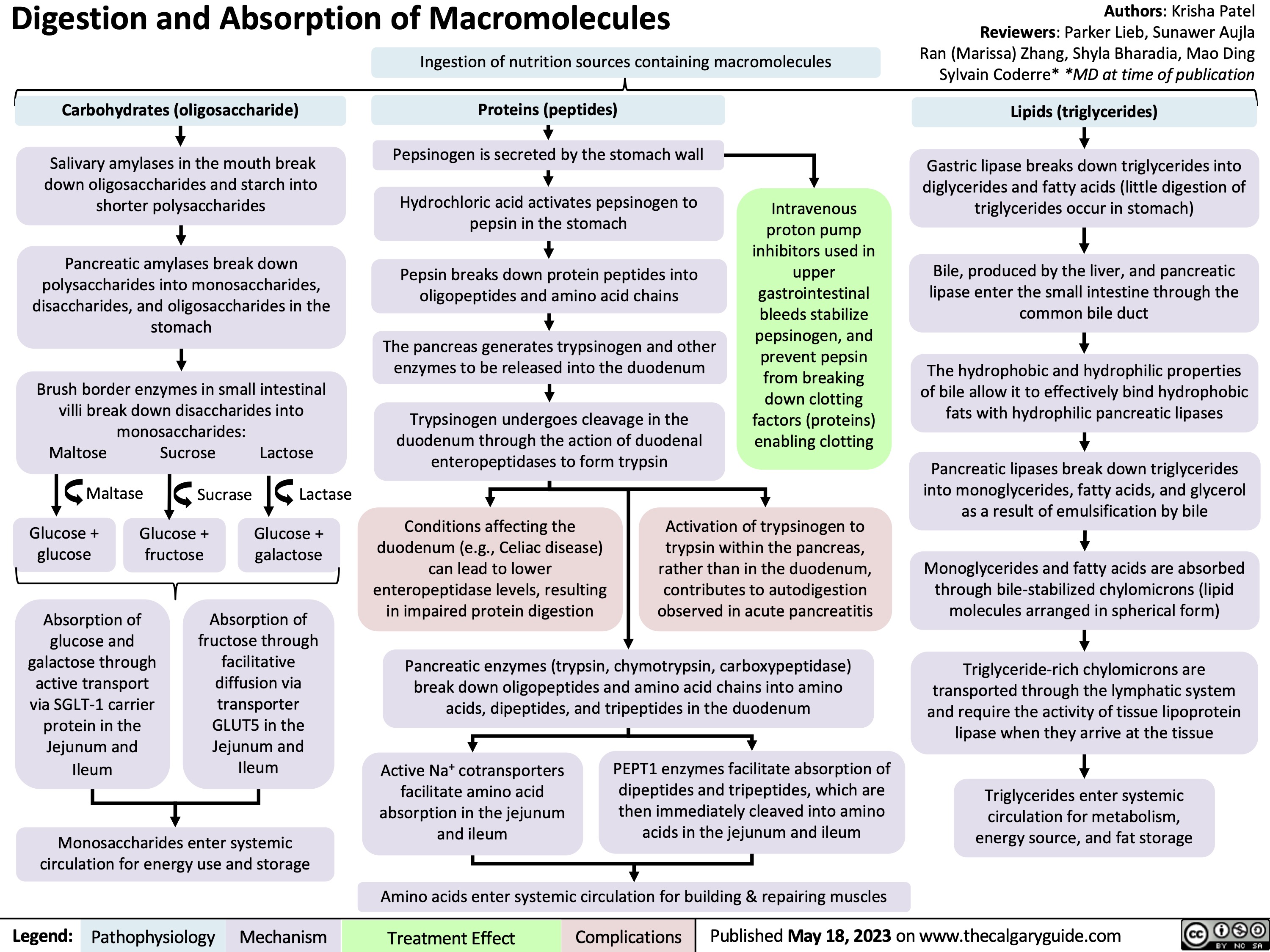
Digestion and Absorption of Macromolecules
Authors: Krisha Patel Reviewers: Parker Lieb, Sunawer Aujla Ran (Marissa) Zhang, Shyla Bharadia, Mao Ding Sylvain Coderre* *MD at time of publication
Lipids (triglycerides)
Gastric lipase breaks down triglycerides into diglycerides and fatty acids (little digestion of triglycerides occur in stomach)
Bile, produced by the liver, and pancreatic lipase enter the small intestine through the common bile duct
The hydrophobic and hydrophilic properties of bile allow it to effectively bind hydrophobic fats with hydrophilic pancreatic lipases
Pancreatic lipases break down triglycerides into monoglycerides, fatty acids, and glycerol as a result of emulsification by bile
Monoglycerides and fatty acids are absorbed through bile-stabilized chylomicrons (lipid molecules arranged in spherical form)
Triglyceride-rich chylomicrons are transported through the lymphatic system and require the activity of tissue lipoprotein lipase when they arrive at the tissue
Triglycerides enter systemic circulation for metabolism, energy source, and fat storage
 Ingestion of nutrition sources containing macromolecules
    Carbohydrates (oligosaccharide)
Salivary amylases in the mouth break down oligosaccharides and starch into shorter polysaccharides
Pancreatic amylases break down polysaccharides into monosaccharides, disaccharides, and oligosaccharides in the stomach
Brush border enzymes in small intestinal villi break down disaccharides into
Proteins (peptides)
Pepsinogen is secreted by the stomach wall
Hydrochloric acid activates pepsinogen to pepsin in the stomach
Pepsin breaks down protein peptides into oligopeptides and amino acid chains
The pancreas generates trypsinogen and other enzymes to be released into the duodenum
Trypsinogen undergoes cleavage in the duodenum through the action of duodenal enteropeptidases to form trypsin
Intravenous proton pump inhibitors used in upper gastrointestinal bleeds stabilize pepsinogen, and prevent pepsin from breaking down clotting factors (proteins) enabling clotting
             Maltose Maltase
monosaccharides: Sucrose
Sucrase
Glucose + fructose
Lactose Lactase
Glucose + galactose
          Glucose + glucose
Conditions affecting the duodenum (e.g., Celiac disease) can lead to lower enteropeptidase levels, resulting in impaired protein digestion
Activation of trypsinogen to
trypsin within the pancreas, rather than in the duodenum, contributes to autodigestion observed in acute pancreatitis
  Absorption of glucose and galactose through active transport via SGLT-1 carrier protein in the Jejunum and Ileum
Absorption of fructose through facilitative diffusion via transporter GLUT5 in the Jejunum and Ileum
Pancreatic enzymes (trypsin, chymotrypsin, carboxypeptidase) break down oligopeptides and amino acid chains into amino acids, dipeptides, and tripeptides in the duodenum
        Monosaccharides enter systemic circulation for energy use and storage
Active Na+ cotransporters facilitate amino acid absorption in the jejunum and ileum
PEPT1 enzymes facilitate absorption of dipeptides and tripeptides, which are then immediately cleaved into amino acids in the jejunum and ileum
  Amino acids enter systemic circulation for building & repairing muscles
 Legend:
 Pathophysiology
 Mechanism
 Treatment Effect
 Complications
 Published May 18, 2023 on www.thecalgaryguide.com

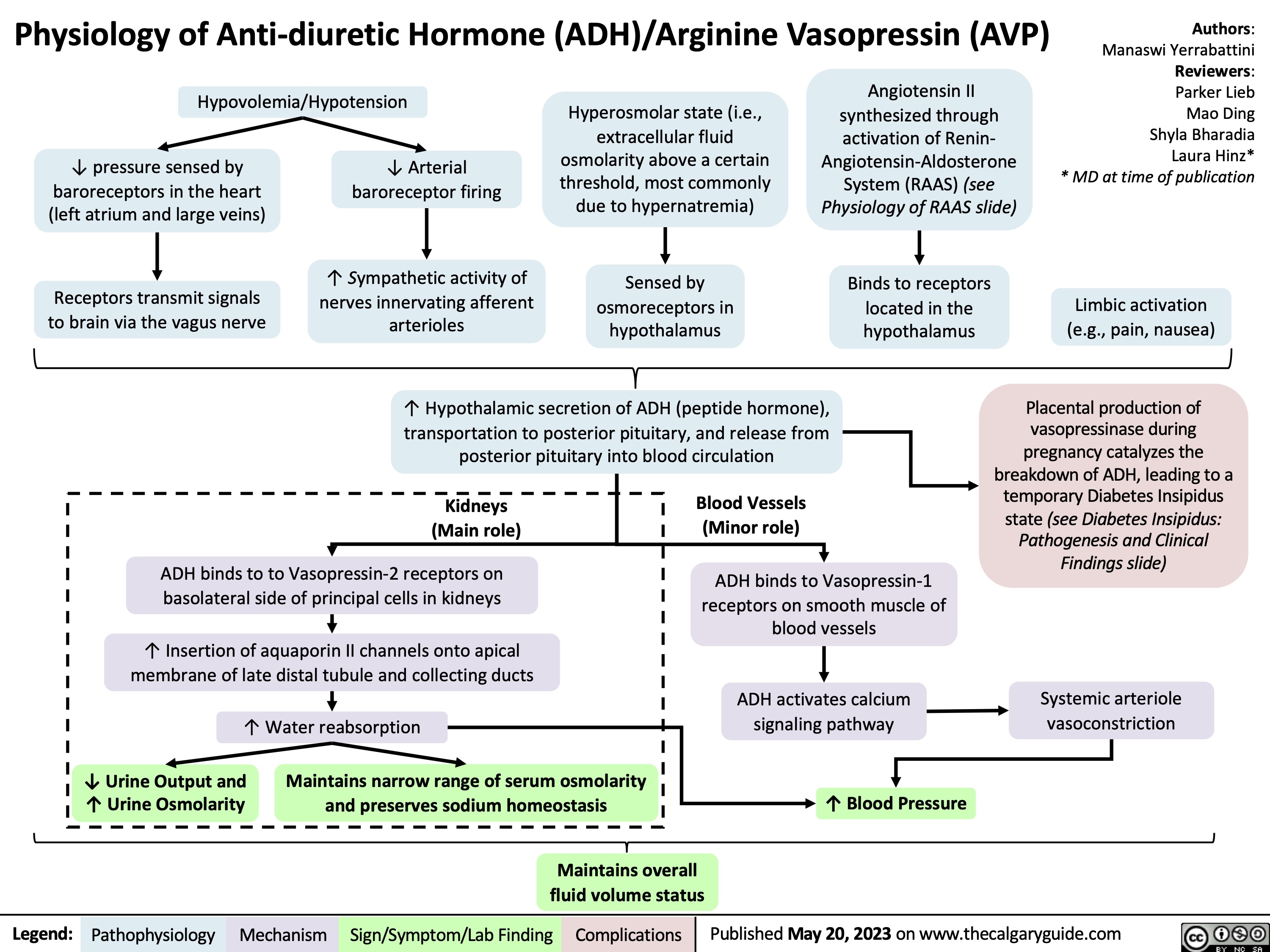
Physiology of Anti-diuretic hormone

Physiology of Anti-diuretic Hormone (ADH)/Arginine Vasopressin (AVP)
Authors: Manaswi Yerrabattini Reviewers: Parker Lieb Mao Ding Shyla Bharadia Laura Hinz* * MD at time of publication
Limbic activation (e.g., pain, nausea)
Placental production of vasopressinase during pregnancy catalyzes the breakdown of ADH, leading to a temporary Diabetes Insipidus state (see Diabetes Insipidus: Pathogenesis and Clinical Findings slide)
Systemic arteriole vasoconstriction
  Hypovolemia/Hypotension
Hyperosmolar state (i.e., extracellular fluid osmolarity above a certain threshold, most commonly due to hypernatremia)
Sensed by osmoreceptors in hypothalamus
Angiotensin II synthesized through activation of Renin- Angiotensin-Aldosterone System (RAAS) (see Physiology of RAAS slide)
Binds to receptors located in the hypothalamus
    ↓ pressure sensed by baroreceptors in the heart (left atrium and large veins)
Receptors transmit signals to brain via the vagus nerve
↓ Arterial baroreceptor firing
↑ Sympathetic activity of nerves innervating afferent arterioles
          ↑ Hypothalamic secretion of ADH (peptide hormone), transportation to posterior pituitary, and release from posterior pituitary into blood circulation
Blood Vessels (Minor role)
    Kidneys (Main role)
ADH binds to to Vasopressin-2 receptors on basolateral side of principal cells in kidneys
↑ Insertion of aquaporin II channels onto apical membrane of late distal tubule and collecting ducts
↑ Water reabsorption
↓ Urine Output and Maintains narrow range of serum osmolarity ↑ Urine Osmolarity and preserves sodium homeostasis
  ADH binds to Vasopressin-1 receptors on smooth muscle of blood vessels
   ADH activates calcium signaling pathway
↑ Blood Pressure
           Maintains overall fluid volume status
 Legend:
 Pathophysiology
 Mechanism
Sign/Symptom/Lab Finding
 Complications
Published May 20, 2023 on www.thecalgaryguide.com

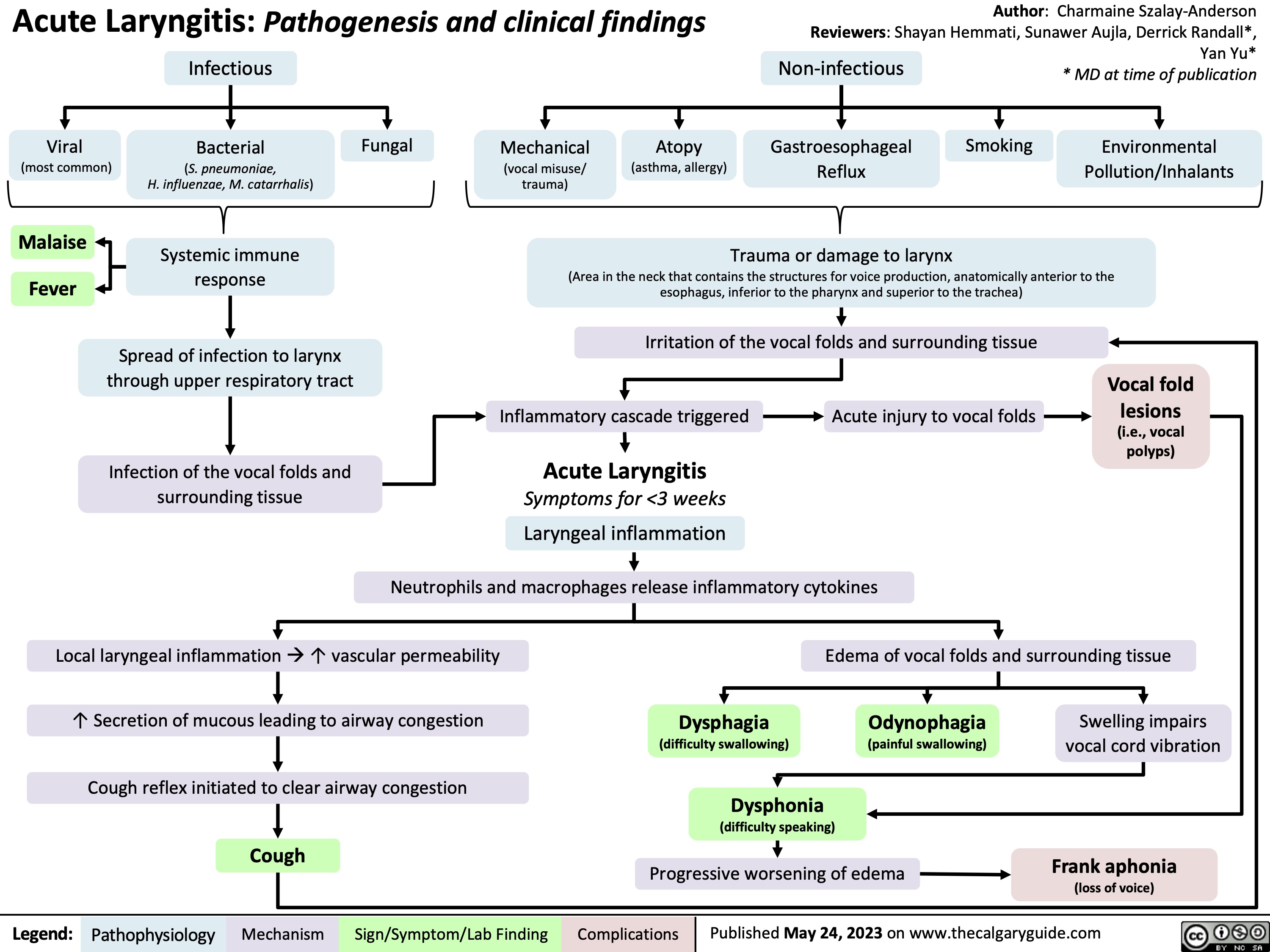
Acute Laryngitis

Acute Laryngitis: Pathogenesis and clinical findings Infectious
Author: Charmaine Szalay-Anderson Reviewers: Shayan Hemmati, Sunawer Aujla, Derrick Randall*,
             Viral (most common)
Malaise Fever
Fungal
Atopy (asthma, allergy)
Non-infectious
Gastroesophageal Reflux
Trauma or damage to larynx
Smoking
Yan Yu*
* MD at time of publication
Environmental Pollution/Inhalants
Bacterial (S. pneumoniae,
H. influenzae, M. catarrhalis)
Systemic immune response
Spread of infection to larynx through upper respiratory tract
Infection of the vocal folds and surrounding tissue
Mechanical
(vocal misuse/ trauma)
     (Area in the neck that contains the structures for voice production, anatomically anterior to the esophagus, inferior to the pharynx and superior to the trachea)
  Irritation of the vocal folds and surrounding tissue
       Inflammatory cascade triggered
Acute Laryngitis
Symptoms for <3 weeks
Acute injury to vocal folds
Vocal fold
lesions (i.e., vocal polyps)
    Laryngeal inflammation
Neutrophils and macrophages release inflammatory cytokines
     Local laryngeal inflammationà↑ vascular permeability ↑ Secretion of mucous leading to airway congestion Cough reflex initiated to clear airway congestion Cough
Edema of vocal folds and surrounding tissue
      Dysphagia (difficulty swallowing)
Dysphonia (difficulty speaking)
Odynophagia (painful swallowing)
Swelling impairs vocal cord vibration
Frank aphonia (loss of voice)
      Progressive worsening of edema
  Legend:
 Pathophysiology
Mechanism
Sign/Symptom/Lab Finding
 Complications
 Published May 24, 2023 on www.thecalgaryguide.com

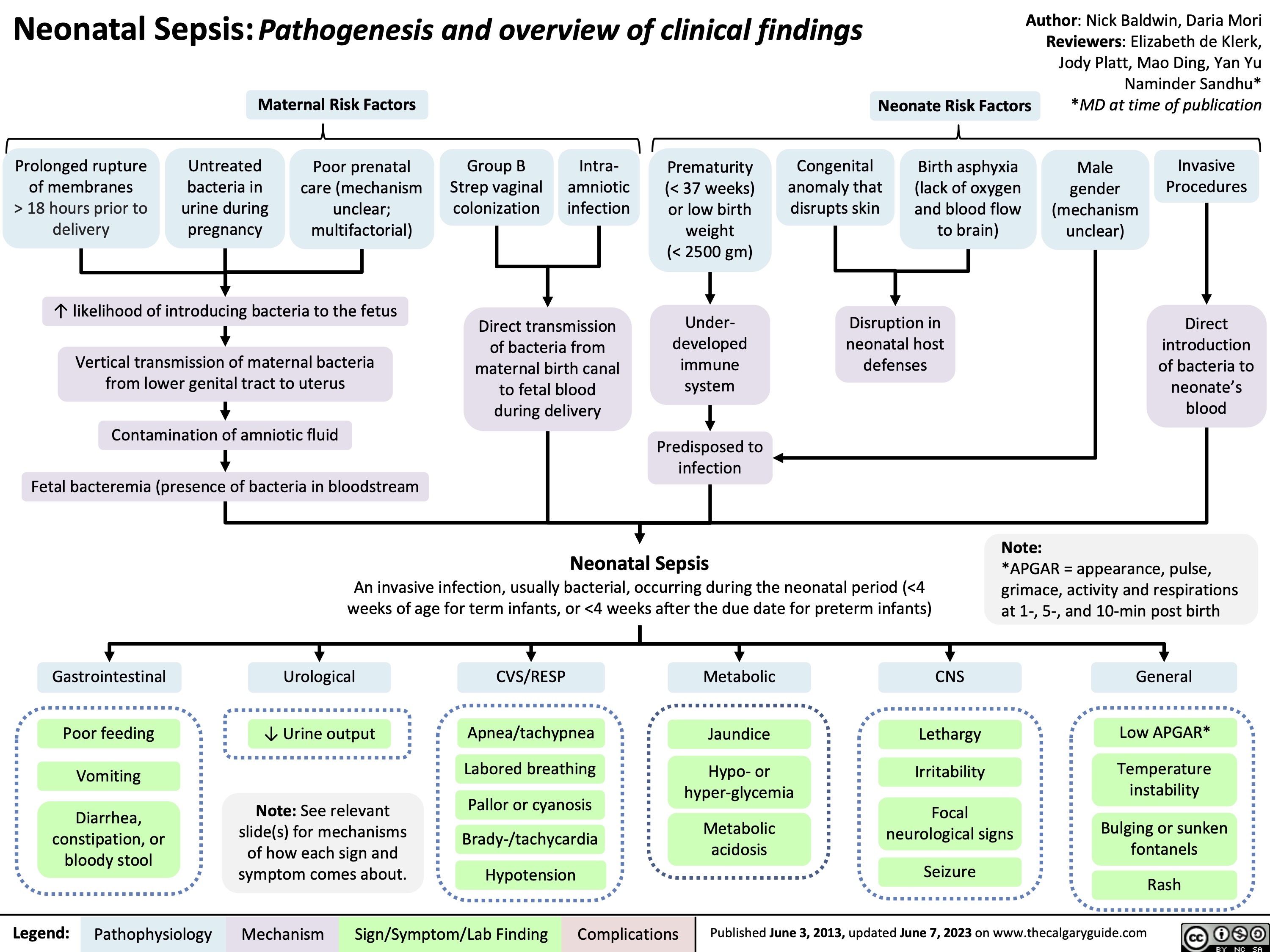
Neonatal Sepsis

Neonatal Sepsis: Pathogenesis and overview of clinical findings Maternal Risk Factors
Author: Nick Baldwin, Daria Mori Reviewers: Elizabeth de Klerk, Jody Platt, Mao Ding, Yan Yu Naminder Sandhu* *MD at time of publication
  Neonate Risk Factors
            Prolonged rupture of membranes
> 18 hours prior to delivery
Untreated
bacteria in urine during pregnancy
Poor prenatal care (mechanism unclear; multifactorial)
Group B Strep vaginal colonization
Intra- amniotic infection
Prematurity (< 37 weeks) or low birth weight
(< 2500 gm)
Under- developed immune system
Predisposed to infection
Congenital anomaly that disrupts skin
Birth asphyxia (lack of oxygen and blood flow to brain)
Male gender (mechanism unclear)
Invasive Procedures
Direct introduction of bacteria to neonate’s blood
      ↑ likelihood of introducing bacteria to the fetus
Vertical transmission of maternal bacteria from lower genital tract to uterus
Contamination of amniotic fluid
Fetal bacteremia (presence of bacteria in bloodstream
Direct transmission of bacteria from maternal birth canal to fetal blood during delivery
Disruption in neonatal host defenses
              Neonatal Sepsis
An invasive infection, usually bacterial, occurring during the neonatal period (<4 weeks of age for term infants, or <4 weeks after the due date for preterm infants)
Note:
*APGAR = appearance, pulse, grimace, activity and respirations at 1-, 5-, and 10-min post birth
         Gastrointestinal
Poor feeding
Vomiting
Diarrhea, constipation, or bloody stool
Urological ↓ Urine output
Note: See relevant slide(s) for mechanisms of how each sign and symptom comes about.
CVS/RESP
Apnea/tachypnea Labored breathing Pallor or cyanosis Brady-/tachycardia Hypotension
Metabolic
Jaundice
Hypo- or hyper-glycemia
Metabolic acidosis
CNS
Lethargy Irritability
Focal neurological signs
Seizure
General
Low APGAR*
Temperature instability
Bulging or sunken fontanels
                Rash
 Legend:
 Pathophysiology
 Mechanism
Sign/Symptom/Lab Finding
 Complications
 Published June 3, 2013, updated June 7, 2023 on www.thecalgaryguide.com

Menopause

Menopause: Pathogenesis and Clinical Findings
Perimenopause/Menopausal Transition: Phase preceding last menstrual period in which the first symptoms may occur. Many clinical findings of menopause can occur in perimenopause.
         1-2 million primordial follicles
first appear in fetal ovaries in the end of the first trimester of the mother’s pregnancy
Typically beginning in adolescence, puberty triggers physiological and anatomical changes
Menarche (commencement of menstrual cycles) See relevant slide: Menstrual Cycle Physiology: Ovarian Cycle – Brief Overview
Each cycle involves ovulation, during which an oocyte is released from the ovary’s dominant follicle into the Fallopian tube
Some non-dominant follicles degenerate in a process known as atresia
Menstrual cycle stops
Menopause marks 1 year since last menstrual cycle
↓ Fluid transudatio
n from blood vessels of vaginal wall
↓ Vaginal lubrication
Vaginal tissue becomes thinner and more easily irritated
Over time, fewer
follicles remain in the ovary
Some cycles become anovulatory (no oocyte is released from ovary)
↓ Ovulation causes prevents thickening of the endometrial lining
↓ regularity and frequency of periods
     Ovaries eventually stop releasing oocytes
↑ Oxidative stress- induced apoptosis of dermal fibroblasts
Remaining non-dominant follicles become less sensitive to LH and FSH
Since follicular cells are responsible for estrogen production, less follicles result in reduced estrogen production
        ↓ Expression of serotonin receptors in the CNS
↓ LDL receptor expression and ↑HMG- CoA reductase activity
↓ Regulation of the production and clearance of LDL
↑ LDL Cholesterol levels
Author: Sunawer Aujla Reviewers: Ashar Memon Yan Yu* * MD at time of publication
      ↓ Serotonin activity
↓ Density of
↓ Healthy vaginal flora
↑ pH of vaginal fluid
↑ Spread of bacteria otherwise unable to survive in low pH environment
Recurrent urinary tract infections
↓ Calcitonin
↑ Sensitivity of bone mass to Parathyroid Hormone
↑ Activation of osteoclasts
     Mechanism is likely
multifactorial and the subjective symptoms of menopause may contribute
Depression
5HT receptors in
thermoregulatory region of hypothalamus
↑ Inhibition of sexual responses initiated in prefrontal cortex
↓ Libido
     2A
↓ Collagen, elastin, and hyaluronic acid
↓ Proliferation of smooth muscle fibers
    ↓ Inhibition of osteoclasts
          Narrower thermoregulatory zone
Injury to epithelial tissue in multiple areas of the body
Atrophy of bladder and urethra epithelium
Urinary incontinence
More bone resorption than formation
Osteoporosis
See relevant slide: Osteoporosis: Pathogenesis and risk factors
     Sometimes, for unknown reasons, core body temperature increases above upper threshold of narrowed thermoregulatory zone
Hot Flashes
Sudden, temporary onset of body warmth, flushing, and sweating
Sometimes, for unknown reasons, core body temperature decreases below lower threshold of narrowed thermoregulatory zone
Chills
Sudden, temporary onset of shivering, tingling, cold feeling
Atrophy of vaginal epithelium
Dyspareunia
Pain during sexual intercourse
↓ Integrity of of blood vessels
Atherosclerosis
↑ Risk for cardiovascular disease
              Genitourinary Syndrome of Menopause
 Legend:
 Pathophysiology
Mechanism
Sign/Symptom/Lab Finding
 Complications
 Published June 7, 2023 on www.thecalgaryguide.com

Burns - Full Thickness - Pathogenesis and Clinical Findings 2023
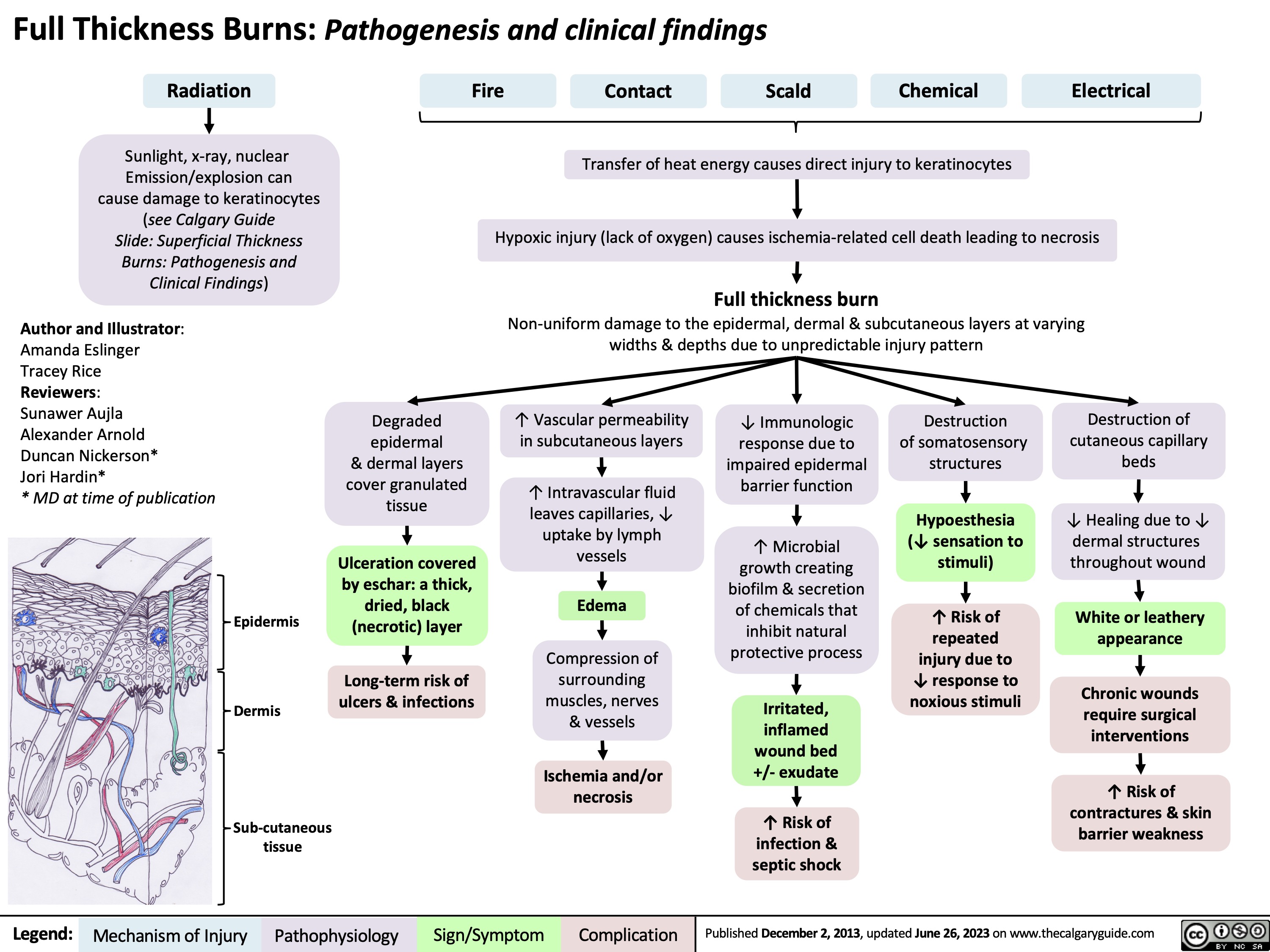
Full Thickness Burns: Pathogenesis and clinical findings
      Radiation
Sunlight, x-ray, nuclear
Emission/explosion can cause damage to keratinocytes (see Calgary Guide
Slide: Superficial Thickness Burns: Pathogenesis and Clinical Findings)
Author and Illustrator: Amanda Eslinger Tracey Rice Reviewers:
Sunawer Aujla Alexander Arnold Duncan Nickerson* Jori Hardin*
* MD at time of publication
Epidermis
Dermis
Sub-cutaneous tissue
Fire
Contact Scald Chemical Electrical
   Transfer of heat energy causes direct injury to keratinocytes
Hypoxic injury (lack of oxygen) causes ischemia-related cell death leading to necrosis
Full thickness burn
Non-uniform damage to the epidermal, dermal & subcutaneous layers at varying widths & depths due to unpredictable injury pattern
        Degraded
epidermal
& dermal layers cover granulated tissue
Ulceration covered by eschar: a thick, dried, black (necrotic) layer
Long-term risk of ulcers & infections
↑ Vascular permeability in subcutaneous layers
↑ Intravascular fluid leaves capillaries, ↓ uptake by lymph vessels
Edema
Compression of surrounding muscles, nerves & vessels
Ischemia and/or necrosis
↓ Immunologic
response due to impaired epidermal barrier function
↑ Microbial growth creating biofilm & secretion of chemicals that inhibit natural protective process
Irritated,
inflamed wound bed +/- exudate
↑ Risk of infection & septic shock
Destruction
of somatosensory structures
Hypoesthesia (↓ sensation to stimuli)
↑ Risk of
repeated injury due to ↓ response to noxious stimuli
Destruction of cutaneous capillary beds
↓ Healing due to ↓ dermal structures throughout wound
White or leathery appearance
Chronic wounds require surgical interventions
↑ Risk of contractures & skin barrier weakness
                    Legend:
 Mechanism of Injury
Pathophysiology
 Sign/Symptom
 Complication
 Published December 2, 2013, updated June 26, 2023 on www.thecalgaryguide.com

Burns - Full Thickness - Pathogenesis and Clinical Findings
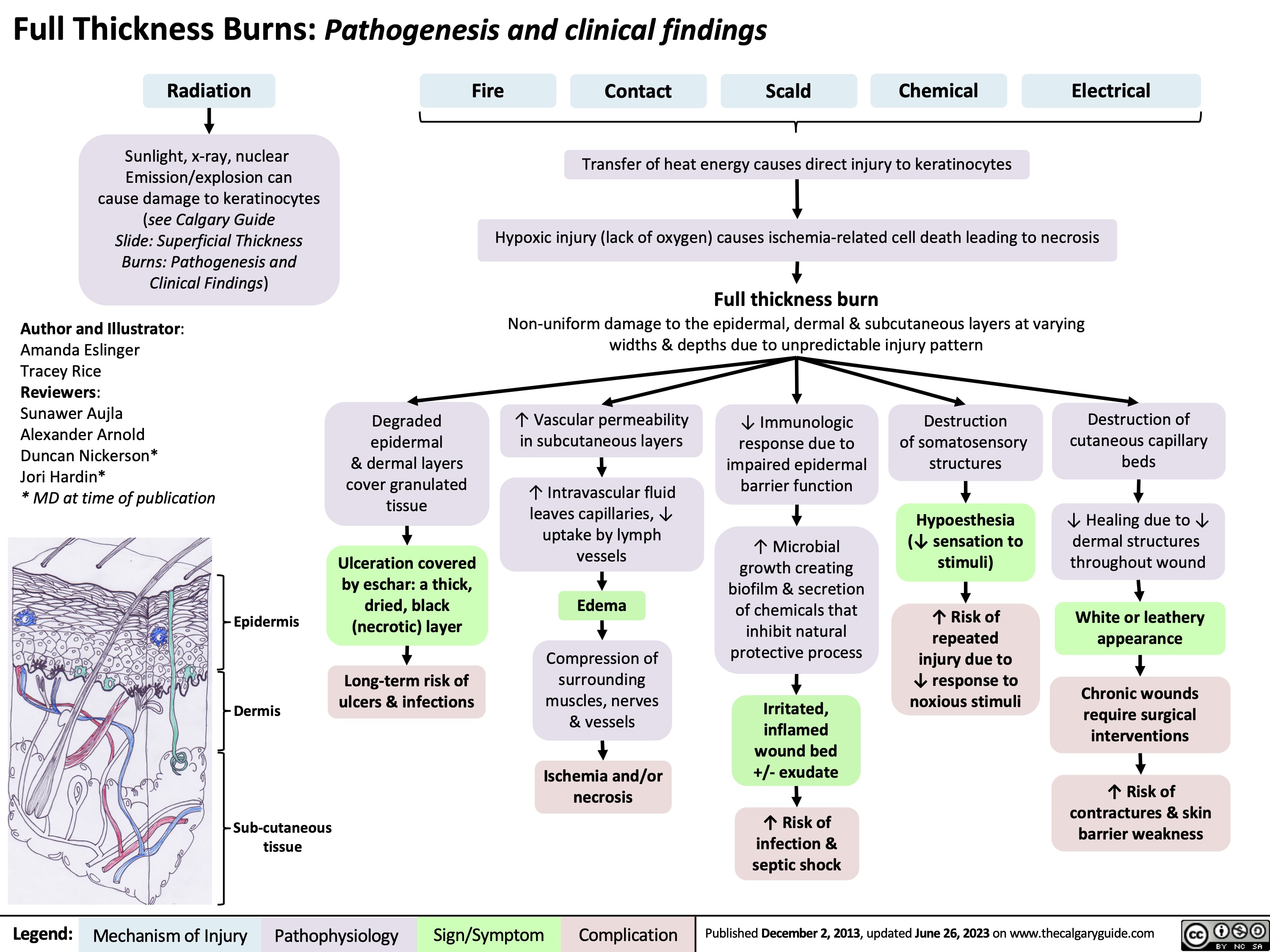
Full Thickness Burns: Pathogenesis and clinical findings
      Radiation
Sunlight, x-ray, nuclear
Emission/explosion can cause damage to keratinocytes (see Calgary Guide
Slide: Superficial Thickness Burns: Pathogenesis and Clinical Findings)
Author and Illustrator: Amanda Eslinger Tracey Rice Reviewers:
Sunawer Aujla Alexander Arnold Duncan Nickerson* Jori Hardin*
* MD at time of publication
Epidermis
Dermis
Sub-cutaneous tissue
Fire
Contact Scald Chemical Electrical
   Transfer of heat energy causes direct injury to keratinocytes
Hypoxic injury (lack of oxygen) causes ischemia-related cell death leading to necrosis
Full thickness burn
Non-uniform damage to the epidermal, dermal & subcutaneous layers at varying widths & depths due to unpredictable injury pattern
        Degraded
epidermal
& dermal layers cover granulated tissue
Ulceration covered by eschar: a thick, dried, black (necrotic) layer
Long-term risk of ulcers & infections
↑ Vascular permeability in subcutaneous layers
↑ Intravascular fluid leaves capillaries, ↓ uptake by lymph vessels
Edema
Compression of surrounding muscles, nerves & vessels
Ischemia and/or necrosis
↓ Immunologic
response due to impaired epidermal barrier function
↑ Microbial growth creating biofilm & secretion of chemicals that inhibit natural protective process
Irritated,
inflamed wound bed +/- exudate
↑ Risk of infection & septic shock
Destruction
of somatosensory structures
Hypoesthesia (↓ sensation to stimuli)
↑ Risk of
repeated injury due to ↓ response to noxious stimuli
Destruction of cutaneous capillary beds
↓ Healing due to ↓ dermal structures throughout wound
White or leathery appearance
Chronic wounds require surgical interventions
↑ Risk of contractures & skin barrier weakness
                    Legend:
 Mechanism of Injury
Pathophysiology
 Sign/Symptom
 Complication
 Published December 2, 2013, updated June 26, 2023 on www.thecalgaryguide.com

diverticulosis-vs-diverticulitis-distinguishing-features
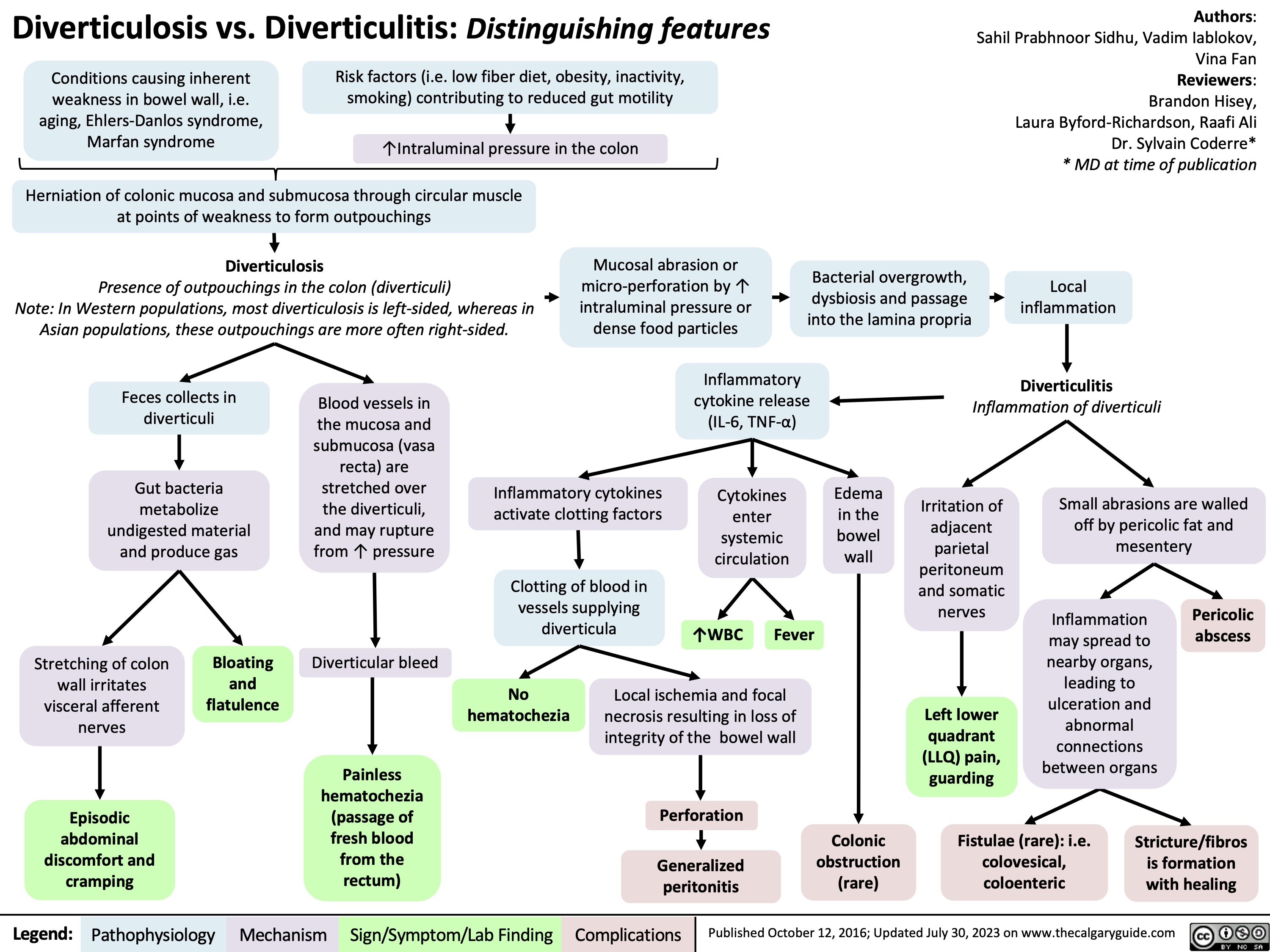
Diverticulosis vs. Diverticulitis: Distinguishing features
Authors: Sahil Prabhnoor Sidhu, Vadim Iablokov, Vina Fan Reviewers: Brandon Hisey, Laura Byford-Richardson, Raafi Ali Dr. Sylvain Coderre* * MD at time of publication
Local inflammation
Diverticulitis
Inflammation of diverticuli
  Conditions causing inherent
weakness in bowel wall, i.e. aging, Ehlers-Danlos syndrome, Marfan syndrome
Risk factors (i.e. low fiber diet, obesity, inactivity, smoking) contributing to reduced gut motility
↑Intraluminal pressure in the colon
   Herniation of colonic mucosa and submucosa through circular muscle at points of weakness to form outpouchings
Diverticulosis
Presence of outpouchings in the colon (diverticuli)
Note: In Western populations, most diverticulosis is left-sided, whereas in Asian populations, these outpouchings are more often right-sided.
Mucosal abrasion or micro-perforation by ↑ intraluminal pressure or dense food particles
Bacterial overgrowth,
dysbiosis and passage into the lamina propria
         Feces collects in diverticuli
Gut bacteria metabolize undigested material and produce gas
Stretching of colon Bloating wall irritates and
visceral afferent flatulence nerves
Episodic abdominal discomfort and cramping
Blood vessels in
the mucosa and submucosa (vasa recta) are stretched over the diverticuli, and may rupture from ↑ pressure
Diverticular bleed
Painless hematochezia (passage of fresh blood from the rectum)
Inflammatory cytokines activate clotting factors
Clotting of blood in vessels supplying diverticula
Inflammatory cytokine release (IL-6, TNF-α)
Cytokines enter systemic circulation
Edema in the bowel wall
Irritation of adjacent parietal peritoneum and somatic nerves
Left lower quadrant (LLQ) pain, guarding
Small abrasions are walled off by pericolic fat and mesentery
                    ↑WBC
Fever
Inflammation may spread to nearby organs, leading to ulceration and abnormal connections between organs
Pericolic abscess
        No hematochezia
Local ischemia and focal necrosis resulting in loss of integrity of the bowel wall
Perforation
Generalized peritonitis
         Colonic obstruction (rare)
Fistulae (rare): i.e. colovesical, coloenteric
Stricture/fibros is formation with healing
  Legend:
 Pathophysiology
Mechanism
Sign/Symptom/Lab Finding
 Complications
 Published October 12, 2016; Updated July 30, 2023 on www.thecalgaryguide.com

Knee Osteoarthritis

Authors: Jared Topham Knee Osteoarthritis: Pathogenesis and clinical findings Reviewers: Liam Thompson, Raafi Ali Yan Yu*, Kelley DeSouza* * MD at time of publication
  Primary Causes
Secondary Causes
          Aging
↓ Synovial fluid in joint
Gender
Females > males
Genetics
Family history of osteoarthritis
Race
Black > Caucasian
Joint malposition (e.g. valgus or varus)
Articular trauma
Inflammatory disease or infection (e.g. Rheumatoid or septic arthritis)
Obesity and ↑leptin ↑ Chondrocytes,
inflammatory mediators, and metalloproteinases
Extracellular matrix degradation
↑ Knee joint loading forces
Metabolic syndromes (e.g. diabetes mellitus)
↑ Oxidative stress and insulin resistance
Low-grade systemic inflammation
              ↓ Elasticity and ↑ degradation of cartilage
↑ Friction in knee joint with movement
↓ Cartilage along femoral groove and posterior surface of patella
Pain, catching, and crepitus (crackling/clicking sound) in the patellofemoral joint
Inability/difficulty with kneeling or climbing stairs
Abnormal distribution of forces accumulate and stress articular surface
↑ Damage/laxity to soft tissue structures stabilizing knee joint
Knee Osteoarthritis
(Multifactorial entity characterized by cartilage breakdown, deterioration of connective tissue, and bone deformities)
↓ Cartilage between distal femur and proximal tibia ↓ Joint spaceàto articular dysfunction
Radiographic changes
See Osteoarthritis (OA): X-Ray Features slide
Repeated attempts to repair cartilage and joint disruption
Subchondral bone thickening (sclerosis) under joint cartilage and bone spur (osteophyte) formation around joint line
Rotational/antero-posterior instability and ↑ external adduction moments during walking
Alterations in proteoglycans, fiber arrangement, and collagen composition in soft tissue structures within/around knee joint
↑ Shear forces and medial compartment narrowing erode and pinch soft tissue structures within the knee joint
Cruciate ligament degeneration
Weakened passive stabilizers of the knee joint
Knee giving way and instability (falls)
                        Meniscal tears, if large àprevents knee extension/flexion
Locking of the knee
Joint line tenderness:
Patient points to area of tenderness/pain reproducible upon palpation
Anatomical axis of hip, knee, and ankle joints ↑ loading medially
Medial > lateral joint line tenderness
↑ Joint friction activating nociceptors in the surrounding anatomical tissues
Injury and inflammation ↑ nociceptive responses in soft tissue structures and subchondral bone within knee joint
Nociceptive feedback to brain inhibits activity of motor cortex neurons controlling muscles around the knee
↓ Motor output and muscle activation over time
↓ Muscle strength/endurance, lower limb muscle use, functional ability (walking, stairs, etc.)
Joint inflammationà accumulation of fluid within joint
Stiffness, swelling, redness, and pain
Limited joint space reduces range of motion for femur to roll/slide on tibia
↓ Knee flexion and extension
          Flexion contracture and antalgic gait
Reduced weight acceptance of the joint and surrounding muscles/tendons
↓ Mobility and physical dysfunction
Muscular atrophy
Reduced function of active stabilizers of the knee joint (quadriceps, adductors, hamstrings)
                Legend:
 Pathophysiology
Mechanism
Sign/Symptom/Lab Finding
 Complications
 Published July 30, 2023 on www.thecalgaryguide.com

Rotator Cuff Disease

Rotator Cuff Disease: Pathogenesis and clinical findings
Authors: Jared Topham Reviewers: Raafi Ali, Yan Yu*, Kelley DeSouza* * MD at time of publication
       Aging
Collagen fiber disorientation and myxoid degeneration
Tendons, ligaments, and connective tissue are replaced by gelatinous and/or mucoid substance
Obesity
↑ Loading on shoulder structures
↓ Static stability (from glenoid labrum and ligamentous components) of glenohumeral joint
Tensile forces
Repeated eccentric tension from overhead activities
Trauma, sports, and occupation
↑ Torque, compression, and translational stresses
Metabolic syndromes
Reactive oxygen species
interact with ↑ glucose forming advanced glycation end-products (AGEs) which accumulate in soft tissues
Smoking
Impingement syndromes
Vessel damage, ischemia, tenocyte apoptosis
                     Macro-trauma causing an acute, complete tear in the rotator cuff muscle(s)
↓Dynamic stability (from rotator cuff and periscapular muscles) and range of motion of the shoulder at the glenohumeral joint
↑ Bone on bone contact of proximal humeral head and boney structures of the scapula
Subacromial bursa degeneration
↓ Protection of underlying supraspinatus muscle from attrition between humeral head and acromion
Rotator Cuff Syndrome
(Inflammation, impingement, or tearing of one or more of the four muscles/tendons of the rotator cuff: supraspinatus, subscapularis, infraspinatus, teres minor)
Repetitive loading and micro-tearing of tendon/muscle fibers
↑ Oxidative stressors and inflammatory cascades
↓ Vascularity of rotator cuff structures
Radiographic changes: See Rotator Cuff Disease: X-ray and ultrasound features slide, in addition to: calcific tendonitis, calcification of in the coracohumeral ligament, and hooked acromion (calcification from tendon pulling)
     In some cases, soft tissues enclose/surround shoulder joint capsule thicken (fibrose) and tighten
        Degenerative joint disease and rotator cuff arthropathy
Proximal humeral head migration and ↓ subacromial space
Inflammation and insufficient healing of rotator cuff structures, which may lead to:
Supraspinatus (shoulder abduction) degeneration
Pain, shoulder stiffness, ↓ active AND passive range of motion
Adhesive Capsulitis (frozen shoulder)
Infraspinatus and teres minor (external rotation) degeneration
  Rotator cuff tendons become inflamed and irritated as they rub against acromion
Subacromial impingement
Subscapularis (internal rotation) degeneration
+Lift-off test: Inability to hold dorsum of the hand off lumbar spine while internally rotating shoulder
↓ Shoulder strength and muscular atrophy
                 Pain with passive shoulder flexion beyond 90°
Winging of the scapula during arm adduction
+Empty-can test: Weakness and/or arm depression with resisted abduction with arm internally rotated in 90°
+Drop-arm test: Inability to maintain shoulder in abducted position at 90° and/or adduct the arm in a controlled manner (resulting in ”dropping”)
Weakness to resisted external rotation with elbow in 90° flexion, inability to keep arm externally rotated (infraspinatus)
+Hornblower’s sign: decreased external rotation strength in arm abduction (suggests additional teres minor tear)
 Legend:
 Pathophysiology
Mechanism
Sign/Symptom/Lab Finding
 Complications
 Published July 30, 2023 on www.thecalgaryguide.com

Keratosis pilaris

Keratosis Pilaris (KP): Risk factors, pathophysiology, and clinical findings
Authors:
Ayaa Alkhaleefa Reviewers: Tracey Rice Sunawer Aujla Jori Hardin* MD at time of publication*
Loss-of-function mutation in filaggrin (a multifunctional structural protein expressed in the epidermis)
Inhibits the release of specific amino acids that maintain
    Keratin (a protein critical to the integrity of the skin barrier) cannot aggregate to align intermediate filaments within corneocytes (cells that comprise the stratum corneum)
the natural moisture of the skin ↑ Skin pH (normal pH is 5.5)
Distention of the follicular opening
↑ Surface area for hair to sprout
Growth of multiple hairs from the distended follicle
Development of thick, coiled hairs
Rupture of follicular epithelium by the circular hair shaft
    Skin
Epidermal layer
Dermal-Epidermal Junction
Dermal layer
Mutation in filaggrin
Keratin accumulation in corneocytes with hair
Grouped keratotic follicular papules
Excessive keratin accumulates in the follicular spaces
↑ Keratinization of the follicular epithelium forms a keratinous plug in the infundibulum (funnel-shaped epithelial segment of the hair follicle)
Irritation of the hair follicle
Excess irritation triggers release of inflammatory cytokines
         FLG FLG
           Inflammatory cascade creates edematous environment
Symmetrical keratotic papules are commonly grouped along extensor surfaces of the upper arms, thighs, and buttocks
Perifollicular edema
     Legend:
 Pathophysiology
Mechanism
 Sign/Symptom/Lab Finding
 Published 27, JUNE, 2023 on www.thecalgaryguide.com

Dermatitis herpetiformis

Dermatitis Herpetiformis: Pathogenesis and clinical findings
Genetic predisposition, HLA-DQ2 and HLA-DQ8 Long term exposure to gliadin, a component of gluten, via dietary gluten ingestion
     Tissue transglutaminase (TTG) in gut lumen is cross linked to gliadin
HLA-DQ2 on antigen presenting cells recognizes gliadin antigen
Gliadin antigen is presented to sensitized T helper cells and epitope spreading occurs
Authors: Elise Hansen Reviewers: Sunawer Aujla Jori Hardin* * MD at time of publication
       Type 1 T helper cells and plasma cells produce IgA
antibody with gliadin antigen
Type 1 T helper cells and plasma cells produce IgA
antibody with gliadin crosslinked to TTG
Type 1 T helper cells and plasma cells produce IgA antibody with gliadin crosslinked to epidermal transglutaminase 3 (TG3)
   IgA anti-TTG and IgA anti-TG3 circulate in bloodstream
IgA anti-TG3 antibodies reach dermis
TG3-IgA complex forms and deposits in papillary dermis TG3-IgA complex and Interleukin 8 stimulate neutrophil chemotaxis Neutrophils infiltrate papillary dermis
Neutrophils produce proteases
Proteases destroy the basement membrane of the dermis Epidermis no longer adheres to dermis
 Epidermal transglutaminase 3 (TG3) is released from superficial keratinocytes
   Vesicles filled with IgA deposits and neutrophils
Epidermal layer
Destruction of dermal papillae/ basement membrane
Dermal layer
         Y
      Grouped vesicles on extensor surfaces
Pruritus
TG3-IgA complex
Grouped excoriations on extensor surfaces
  Legend:
 Pathophysiology
 Mechanism
Sign/Symptom/Lab Finding
 Complications
Published August 25, 2023 on www.thecalgaryguide.com

Superficial thickness burns

Superficial Thickness Burns: Pathogenesis and clinical findings
Author: Amanda Eslinger Elise Hansen Illustrator: Amanda Eslinger Reviewers: Alexander Arnold Sunawer Aujla Yan Yu* Duncan Nickerson* * MD at time of publication
Epidermis
(Penetrated by superficial burns)
Dermis
Sub-cutaneous tissue
Erythema
      Radiation
Sunlight (most common), x-ray, nuclear emission/explosion
Specific to sunlight radiation, UV rays reach keratinocytes in the epidermis
p53 tumor suppressor protein is induced in keratinocytes
Transient cell cycle arrest Apoptotic pathway is
Fire
Contact
Scald
Chemical
Electrical
    Direct damage to keratinocytes
Skin erosion and sloughing of skin cells
Direct stimulation of nociceptive nerve endings in the epidermis
            DNA repair mechanisms are activated
Mistakes in repair process
Malignancy
(See ‘Basal Cell Carcinoma’ Slide & ‘Squamous Cell Carcinoma’ Slide)
Fluid leaves vasculature and enters interstitial tissues of the skin, causing it to swell
Edema
Triggers release of endothelin A proalgesic protein
Selective excitement of nociceptive nerve ending in epidermis
Pain
 initiated in keratinocytes
Keratinocytes apoptose
     Prostaglandins, arachidonic acid metabolites, substance P & proinflammatory cytokines are released into surrounding tissue
      ↑ Vascular permeability
↑ bloodflow carries warmth to body area
Irritation of endothelial cells in the dermal vascular plexus
Release of endothelium derived vasodilators such as nitric oxide
Vasodilation, ↑ blood flow through vessels
↑ blood under skin leads to skin appearing red
         Warmth Pressing on skin occludes blood vessels temporarily, making skin Blanchable underneath appear white immediately after pressure is lifted
    Legend:
 Pathophysiology
 Mechanism
Sign/Symptom/Lab Finding
 Complications
 Published Dec 2, 2013, updated Aug 25, 2023 on www.thecalgaryguide.com

Rotator Cuff Disease Xray and Ultrasound Features
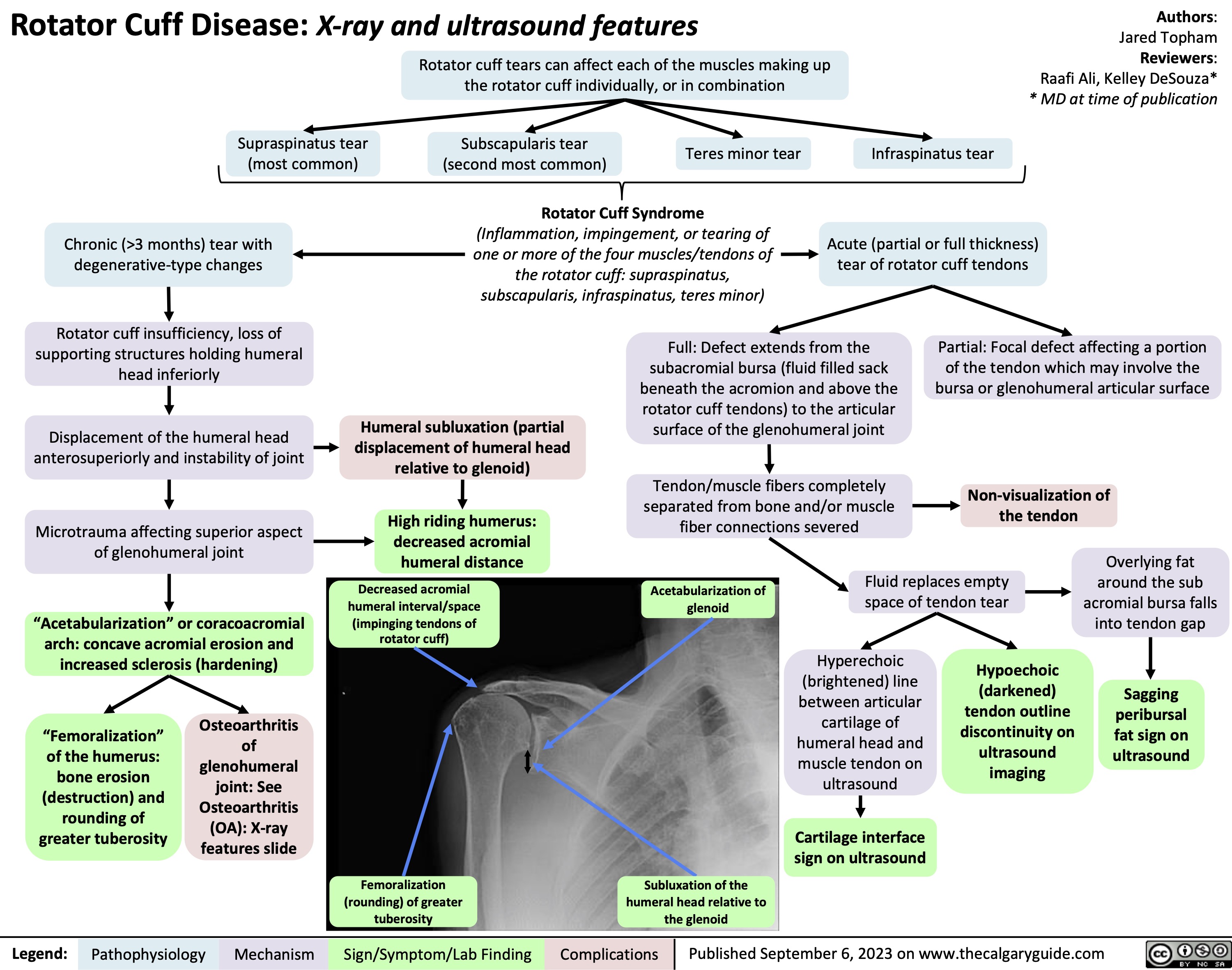
Rotator Cuff Disease: X-ray and ultrasound features
Rotator cuff tears can affect each of the muscles making up
the rotator cuff individually, or in combination
Authors: Jared Topham Reviewers: Raafi Ali, Kelley DeSouza* * MD at time of publication
    Supraspinatus tear (most common)
Chronic (>3 months) tear with degenerative-type changes
Rotator cuff insufficiency, loss of supporting structures holding humeral head inferiorly
Displacement of the humeral head anterosuperiorly and instability of joint
Microtrauma affecting superior aspect of glenohumeral joint
“Acetabularization” or coracoacromial arch: concave acromial erosion and increased sclerosis (hardening)
Subscapularis tear (second most common)
Teres minor tear
Infraspinatus tear
   Rotator Cuff Syndrome
(Inflammation, impingement, or tearing of one or more of the four muscles/tendons of the rotator cuff: supraspinatus, subscapularis, infraspinatus, teres minor)
Acute (partial or full thickness) tear of rotator cuff tendons
          Humeral subluxation (partial displacement of humeral head relative to glenoid)
High riding humerus: decreased acromial humeral distance
Decreased acromial humeral interval/space
(impinging tendons of rotator cuff)
Full: Defect extends from the subacromial bursa (fluid filled sack beneath the acromion and above the rotator cuff tendons) to the articular surface of the glenohumeral joint
Tendon/muscle fibers completely separated from bone and/or muscle fiber connections severed
Partial: Focal defect affecting a portion of the tendon which may involve the bursa or glenohumeral articular surface
Non-visualization of the tendon
          Acetabularization of glenoid
Fluid replaces empty space of tendon tear
Overlying fat around the sub acromial bursa falls into tendon gap
Sagging peribursal fat sign on ultrasound
            “Femoralization” of the humerus: bone erosion (destruction) and rounding of greater tuberosity
Osteoarthritis of glenohumeral joint: See Osteoarthritis (OA): X-ray features slide
Hyperechoic (brightened) line between articular cartilage of humeral head and muscle tendon on ultrasound
Cartilage interface sign on ultrasound
Hypoechoic (darkened) tendon outline discontinuity on ultrasound imaging
  Femoralization (rounding) of greater tuberosity
Subluxation of the humeral head relative to the glenoid
  Legend:
 Pathophysiology
Mechanism
Sign/Symptom/Lab Finding
 Complications
 Published September 6, 2023 on www.thecalgaryguide.com

5HT3 Antagonists

5-HT3 Antagonists: Mechanism of action and adverse side effects A class of medications that are used for the prevention and treatment of nausea and vomiting caused by chemotherapy, radiation, or postoperatively.
Authors: Arzina Jaffer Madison Amyotte Reviewers: Jasleen Brar Mao Ding Karl Darcus* * MD at time of publication
↓ Postoperative nausea & vomiting
Central Actions
Binds to 5-HT3 (serotonin) receptors in the area postrema within the brainstem containing the chemoreceptor trigger zone
↓ Binding of serotonin which is released from the raphe nucleus in the brainstem
↓ Stimulation of vomiting center
(medulla) supressing the vomiting reflex
↓ Stimulation of vagus nerve resulting in ↓ signals to chemoreceptor trigger zone
↓ Abdominal pain signals to the brain
↓ Levels of serotonin uptake in gastrointestinal tract
↓ Stimulation of gastrointestinal
tract, diaphragm, and abdominal muscles
        Peripheral Actions
Binds to 5-HT3 (serotonin) receptors on the vagus nerve terminals
Other Actions
Unknown mechanism for patients with significant cardiac history (e.g., congenital long QT syndrome, bradycardia, electrolyte abnormalities)
Unknown mechanism Unknown mechanism
↓ Binding of serotonin which is released from enterochromaffin cells in the gastrointestinal tract
Potential blockage of K+ channels in the heart
↓ Visceral sensation associated with irritable bowel syndrome
↓ Colonic motility slowing the rate of digestion
↓ Diarrhea
Constipation
          Alters depolarization
and repolarization of the heart
Prolongation of QT interval
Headache Drowsiness
Torsades de Pointes arrhythmia
Cardiac arrest
Death
      Rare complications
      Legend:
 Pathophysiology
Mechanism
Sign/Symptom/Lab Finding
 Complications
Published September 6, 2023 on www.thecalgaryguide.com

Strabismus

Strabismus: Pathogenesis and clinical findings
Microvascular dysfunction, trauma, or compression of oculomotor nerve
Oculomotor
nerve palsy: Dysfunction of the nerve innervating the superior rectus (elevation), inferior rectus (depression), medial rectus (adduction), and inferior oblique muscles (excyclotorsion)
Thyroid eye disease (see Thyroid Eye Disease slide for pathogenesis)
Inflammatory processes
Thickening & fibrosis of extraocular muscles, most commonly the inferior rectus muscle (functions to rotate the eye and depress the gaze)
Brown syndrome (congenital)
Anomalous
interaction between the trochlea and superior oblique muscle tendon
Restriction of normal movement of the superior oblique tendon through the trochlea
Trochlear palsy (Dysfunction of the trochlear nerve (CN IV))
Weakness of the superior oblique muscle innervated by CN IV (responsible for depression of the gaze and incyclotorsion & rotation of the eye)
        Near reflex: convergence (eyes adduct), accommodati on (thickening of the lens) & miosis (constriction of the pupil)
Excessive accommodation in hyperopic (farsighted) eyes
Over-activation of near reflex
Accommodative esotropia
Aneurysm, infection, iatrogenic injury to cranial nerve (CN) VI
Abducens palsy: ocular motor paralysis
Failure of CN VI to develop normally in utero
Duane syndrome: congenital malformation of CN VI
Congenital fibrosis of the extraocular muscles (CFEOM)
Restrictive global paralysis of the extraocular muscles that control the movements of the eye
           Phenotype CFEOM2
Phenotype CFEOM1 & 3
        Dysfunction of the abducens
nerve (CN VI: innervates the ipsilateral lateral rectus muscle which abducts the eye [turns it laterally])
Orbital fracture (fracture of the orbital floor)
Intraorbital contents (inferior rectus muscle and/or surrounding tissue) herniate through the fractured site & are entrapped
      Idiopathic infantile esotropia
Intermittent exotropia
Unclear process
Exotropia: affected eye is rotated laterally
        Esotropia: affected eye is rotated medially
Hypotropia: affected eye is rotated downward compared to non-affected eye
Hypertropia: affected eye is rotated upward compared to non-affected eye
    Horizontal Strabismus
Two different images are received by the eye that cannot be fused together Visual cortex suppresses the input from one eye in order to avoid having diplopia
Amblyopia/lazy eye: visual cortex diminishes neural inputs from the corresponding cortical areas of affected eye
↓ Spatial awareness
Vertical Strabismus
         Binocular diplopia: double vision when both eyes are open, and absent when either eye is closed
Atypical alignment of the eye
Psychosocial consequences: negative impact to mental health due to social bias or abuse, social anxiety, and difficulties with self-image
Authors: Mina Mina Lucy Yang Reviewers: Mao Ding William Stell* * MD at time of publication
     ↓ Visual acuity
↓ Oculomotor control
 Legend:
 Pathophysiology
 Mechanism
Sign/Symptom/Lab Finding
 Complications
Published September 6, 2023 on www.thecalgaryguide.com

normal neonatal changes pathogenesis and clinical findings
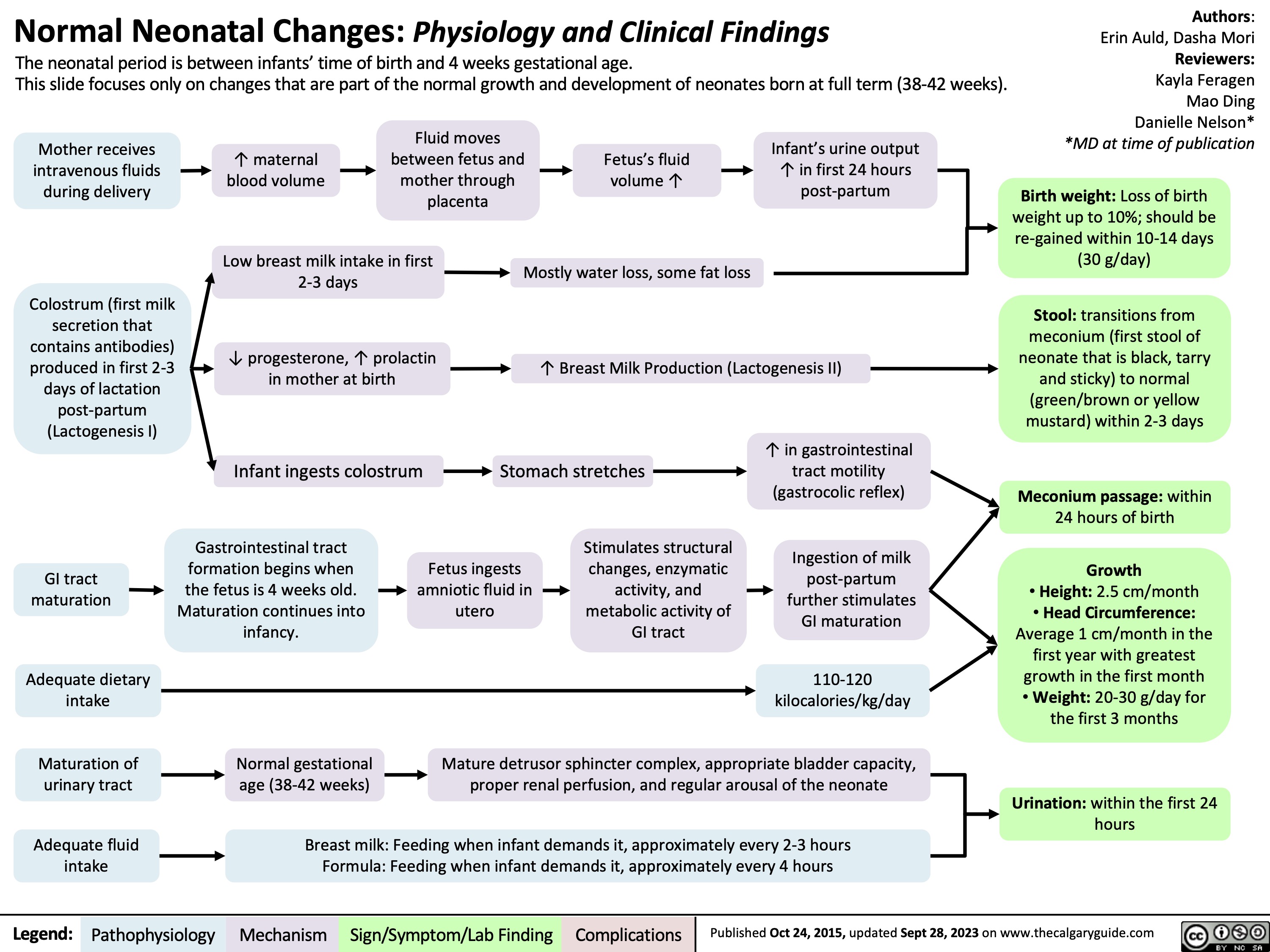
Normal Neonatal Changes: Physiology and Clinical Findings The neonatal period is between infants’ time of birth and 4 weeks gestational age.
This slide focuses only on changes that are part of the normal growth and development of neonates born at full term (38-42 weeks).
Authors: Erin Auld, Dasha Mori Reviewers: Kayla Feragen Mao Ding Danielle Nelson* *MD at time of publication
Birth weight: Loss of birth weight up to 10%; should be re-gained within 10-14 days (30 g/day)
Stool: transitions from meconium (first stool of neonate that is black, tarry and sticky) to normal (green/brown or yellow mustard) within 2-3 days
Meconium passage: within 24 hours of birth
Growth
• Height: 2.5 cm/month
• Head Circumference: Average 1 cm/month in the first year with greatest growth in the first month • Weight: 20-30 g/day for the first 3 months
Urination: within the first 24 hours
   Mother receives intravenous fluids during delivery
Colostrum (first milk secretion that contains antibodies) produced in first 2-3 days of lactation post-partum (Lactogenesis I)
GI tract maturation
Adequate dietary intake
Maturation of urinary tract
Adequate fluid intake
↑ maternal blood volume
Fluid moves between fetus and mother through placenta
Fetus’s fluid volume ↑
Infant’s urine output ↑ in first 24 hours post-partum
     Low breast milk intake in first 2-3 days
↓ progesterone, ↑ prolactin in mother at birth
Infant ingests colostrum
Mostly water loss, some fat loss
       ↑ Breast Milk Production (Lactogenesis II)
     Stomach stretches
↑ in gastrointestinal tract motility (gastrocolic reflex)
Ingestion of milk post-partum further stimulates GI maturation
110-120 kilocalories/kg/day
      Gastrointestinal tract formation begins when the fetus is 4 weeks old. Maturation continues into infancy.
Normal gestational age (38-42 weeks)
Fetus ingests amniotic fluid in utero
Stimulates structural changes, enzymatic activity, and metabolic activity of GI tract
           Mature detrusor sphincter complex, appropriate bladder capacity, proper renal perfusion, and regular arousal of the neonate
      Breast milk: Feeding when infant demands it, approximately every 2-3 hours Formula: Feeding when infant demands it, approximately every 4 hours
  Legend:
 Pathophysiology
 Mechanism
Sign/Symptom/Lab Finding
 Complications
 Published Oct 24, 2015, updated Sept 28, 2023 on www.thecalgaryguide.com

Obstructive Hydrocephalus on CT MRI Pathogenesis and findings
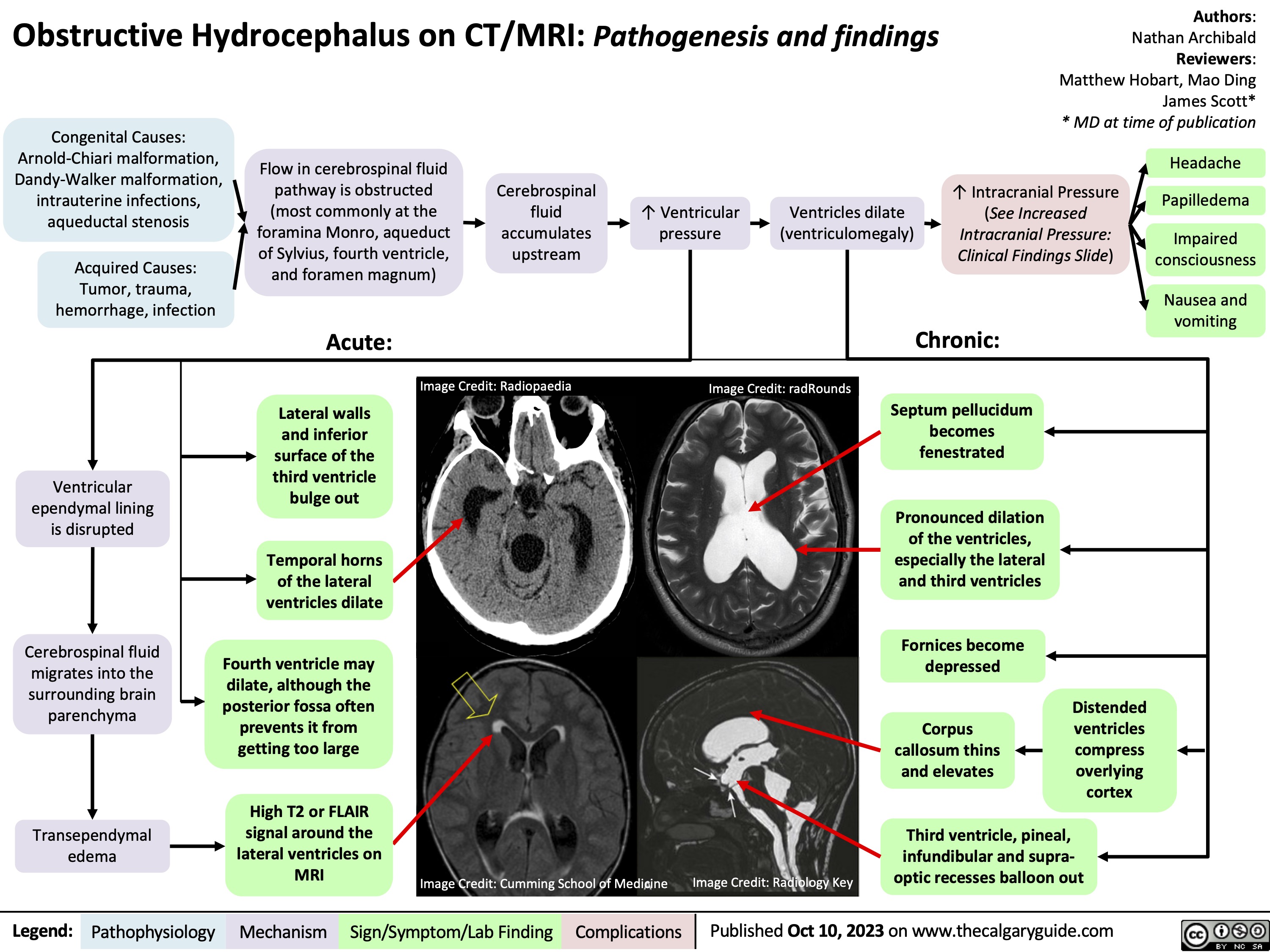
Obstructive Hydrocephalus on CT/MRI: Pathogenesis and findings
Authors: Nathan Archibald Reviewers: Matthew Hobart, Mao Ding James Scott* * MD at time of publication
 Congenital Causes: Arnold-Chiari malformation, Dandy-Walker malformation, intrauterine infections, aqueductal stenosis
Acquired Causes: Tumor, trauma, hemorrhage, infection
Flow in cerebrospinal fluid pathway is obstructed (most commonly at the foramina Monro, aqueduct of Sylvius, fourth ventricle, and foramen magnum)
Acute:
Lateral walls and inferior surface of the third ventricle bulge out
Temporal horns Temporal horns
of the lateral of the lateral
ventricles dilate ventricles dilate
Cerebrospinal fluid accumulates upstream
↑ Ventricular pressure
Ventricles dilate (ventriculomegaly)
↑ Intracranial Pressure (See Increased Intracranial Pressure: Clinical Findings Slide)
Headache Papilledema
Impaired consciousness
Nausea and vomiting
               Image Credit: Radiopaedia
Image Credit: radRounds
        Ventricular ependymal lining is disrupted
Cerebrospinal fluid migrates into the surrounding brain parenchyma
Transependymal edema
Fourth ventricle may Fourth ventricle may
Chronic:
Septum pellucidum becomes fenestrated
Pronounced dilation of the ventricles, especially the lateral and third ventricles
Fornices become depressed
Corpus callosum thins and elevates
               dilate, although the dilate, although the
 posterior fossa often posterior fossa often
Distended ventricles compress overlying cortex
 prevents it from prevents it from
 getting too large getting too large
     High T2 or FLAIR High T2 or FLAIR
signal around the signal around the
lateral ventricles on lateral ventricles on
MRI MRI
Image Credit: Cumming School of Medicine
Image Credit: Radiology Key
Third ventricle, pineal, infundibular and supra- optic recesses balloon out
   Legend:
 Pathophysiology
Mechanism
Sign/Symptom/Lab Finding
 Complications
Published Oct 10, 2023 on www.thecalgaryguide.com

Acute Respiratory Distress Syndrome

Acute Respiratory Distress Syndrome: Pathogenesis and clinical findings Acute respiratory distress syndrome (ARDS) is a clinical syndrome involving acute lung injury. It results in severe hypoxemia and bilateral
Authors: David Olmstead Mao Ding Reviewers: Midas (Kening) Kang Usama Malik Kevin Solverson* * MD at time of publication
↓ PaO2 (Partial pressure of oxygen in arterial blood ↓SpO2 (Peripheral oxygen saturation)
Tachypnea (↑ RR) Tachycardia (↑ HR)
Dyspnea
Bilateral Opacity on chest radiograph
↓ PaO2, ↓SpO2
↑ PaCO 2
↑ PaO2, ↓PaCO2 Eupnea (normal
breathing)
↓ O2 Requirements Depression, Anxiety, PTSD Neuromuscular Weakness
Chronic Respiratory Dysfunction
airspace disease in the absence of elevated left-heart pressures.
Direct Lung Injury
Causes include pneumonia and pulmonary sepsis (community- acquired, hospital-acquired, aspiration, viral), drowning, and chemical pneumonitis from aspiration or direct inhalational injury
Indirect Lung Injury
Causes include sepsis with a non-pulmonary source, trauma, severe burns, transfusion- related acute lung injury (TRALI) and pancreatitis
        Lung Tissue Inflammation
Exudative: Neutrophils migrate into the alveoli in response to inflammatory stimulus
Note: While the three phases of ARDS take place in sequence, all areas of the lung may not be in the same phase at the same time. For this reason, the processes can be thought of as overlapping.
Proliferative: Body attempts to heal damage. If it is not successful, the tissue transitions to the fibrotic phase
Neutrophil-containing pulmonary exudate interferes with surfactant function
Neutrophil infiltration and proinflammatory cytokines lead to tissue edema, dysfunction and subsequent destruction of pulmonary epithelium
Residual debris in alveoli are cleared by phagocytic cells
Restoration of alveolar epithelial cells.
Alveoli collapse in absence of working surfactant
Damaged epithelium impairs gas exchange
Pulmonary capillaries do not adequately absorb fluid
The body’s attempts to heal lung tissue result in deposition of hyaline membranes in the alveoli
Ventilation- Perfusion Mismatch
Pulmonary Edema
Impaired Gas Diffusion
                              Functional epithelium is able to absorb fluid back into circulation
↑ useful surface area for gas exchange
Clearing of CXR
       Impaired Function After Prolonged Illness
Pulmonary Hypertension
      Fibrotic: Inadequate healing results in long-term pulmonary damage (rare)
Fibroblast activity leads to deposition of collagen in alveoli and alveolar capillaries
Fatigue Pulmonary Fibrosis
Nail Clubbing (nails appear wider & swollen) Cough/Dyspnea
     Legend:
 Pathophysiology
 Mechanism
Sign/Symptom/Lab Finding
 Complications
 Published Feb 6, 2018, updated Oct 10, 2023 on www.thecalgaryguide.com
  
Acute Respiratory Distress Syndrome: Note: Acute respiratory distress syndrome is a clinical
Authors: David Olmstead Reviewers: Midas (Kening) Kang Usama Malik Kevin Solverson* * MD at time of publication
 Pathogenesis and clinical findings
Direct Lung Injury
Causes include pneumonia and pulmonary sepsis (community-acquired, hospital-acquired, aspiration, viral), drowning, and chemical pneumonitis from aspiration or direct inhalational injury
Indirect Lung Injury
syndrome involving acute lung injury. It results in severe hypoxemia and bilateral airspace disease in the absence of elevated left-heart pressures.
  Causes include sepsis with a non-pulmonary source, trauma, severe burns, transfusion-related acute lung injury (TRALI) and pancreatitis
        Lung Tissue Inflammation
Exudative: Neutrophils migrate into the alveoli in response to inflammatory stimulus
Note: While the three phases of ARDS take place in sequence, all areas of the lung may not be in the same phase at the same time. For this reason, the processes can be thought of as overlapping.
Proliferative: Body attempts to heal damage. If it is not successful, the tissue transitions to the fibrotic phase
Neutrophil-containing pulmonary exudate interferes with surfactant function
Neutrophil infiltration and proinflammatory cytokines lead to tissue edema, dysfunction and subsequent destruction of pulmonary epithelium
Abbreviations:
PaO2: Partial pressure of oxygen in arterial blood
SpO2: Peripheral oxygen saturation.
CXR: Chest radiograph.
Residual debris in alveoli are cleared by phagocytic cells
Restoration of alveolar epithelial cells.
Alveoli collapse in absence of working surfactant
Damaged epithelium impairs gas exchange
Pulmonary capillaries do not adequately absorb fluid
The body’s attempts to heal lung tissue result in
deposition of hyaline membranes in the alveoli
Ventilation- Perfusion Mismatch
Pulmonary Edema
Impaired Gas Diffusion
↓ PaO2, ↓SpO2 Tachypnea
Tachycardia
Dyspnea
Bilateral Opacity on CXR
↓ PaO , ↓SpO 2 2
↑ PaCO2
↑ PaO2, ↓PaCO2 Eupnea
↓ O2 Requirements
Clearing of CXR
Depression, Anxiety, PTSD
Neuromuscular Weakness
Chronic Respiratory Dysfunction
                                 ↑ useful surface area for gas exchange
Functional epithelium is able to absorb fluid back into circulation
            Impaired Function After Prolonged Illness
      Fibrotic: Inadequate healing results in long-term pulmonary damage (rare)
Fibroblast activity leads to deposition of collagen in alveoli and alveolar capillaries
Pulmonary Fibrosis
Pulmonary Hypertension
Cough/Dyspnea Nail Clubbing Fatigue
        Legend:
 Pathophysiology
 Mechanism
Sign/Symptom/Lab Finding
 Complications
Published February 06, 2018 on www.thecalgaryguide.com

Approach To Dementia

Approach to Dementia/Major Neurocognitive Disorder (NCD)
Authors: Iqra Rahamatullah Mahrukh Kaimkhani
Reviewers: Yvette Ysabel Yao Mao Ding Gary Michael Klein* *MD at time of publication
1) Changes noticed?
Modest ↓cognitive performance from previous, DOES NOT interfere with daily independence
MILD COGNITIVE IMPAIRMENT
More pronounced ↓cognitive performance from previous, DOES interfere with daily independence
MILD TO MODERATE DEMENTIA
↓Cognitive performance, difficulty with ≥1 basic activities of daily living (ADL) or ≥2 instrumental ADLs
MODERATE TO SEVERE DEMENTIA
DEMENTIA
Fluctuating course, acute onset, inattention WITH either disorganized thinking or altered level of consciousness
DELIRIUM
     2) Is it dementia?
Normal, age-related: ↓focus, ↓cognitive speed, ↓reaction time, ↓memory
NORMAL COGNITIVE DECLINE
      3) What is the cause of the dementia? (main causes discussed here)
Loss of cognitive functioning, including memory, language, problem solving, and other thinking abilities, that interferes with independence in everyday activities
      Beta-secretase cleaves beta amyloid protein
Atherosclerosis or thrombosis
Misfolded alpha- synuclein
Toxic beta amyloid plaque and tau tangle (sticky) formation
Ischemia to areas of brain (strokes)
Build ups and deposition within neurons (Lewy bodies)
Disrupted signaling, inflammation, hippocampal and cerebral impairment
Necrosis of brain tissue in areas impacted by strokes
Neuronal impairment and atrophy (especially in substantia nigra)
Neuronal atrophyàfrontal + temporal lobe atrophy
Progressive atrophy of basal ganglia and dorsal striatum + lateral ventricles expanding
Death of dopaminergic neurons in substantia nigra
Alzheimer’s Dementia
Vascular Dementia
Lewy Body Dementia
Frontotemporal Dementia
Huntington’s Disease
Parkinson’s Disease
↓Memory, ↓learning, ↓language skills, disorientation, inattention
Total debilitation, fatal infections
Findings vary depending on area
Step-wise worsening impairment
Parkinsonism, hallucinations, REM- sleep behavior disorder
Total debilitation, dependence
Personality and behavioral changes
Mental status changes
Chorea, ↓cognition, mood changes
Aspiration, dementia, suicide
Resting tremor, rigidity, anosmia
Depression, dementia, falls
              Abnormal protein inclusions and tangles (usually tau) form in neurons
Autosomal dominant disease (with anticipation) with ↑CAG repeats in Huntingtin gene
Genetic mutations, environmental exposures, or idiopathic cause
          Legend:
 Pathophysiology
Mechanism
Sign/Symptom/Lab Finding
 Complications
 Published September 17, 2023 on www.thecalgaryguide.com
   
Approach to Dementia/Major Neurocognitive Disorder (NCD)
Authors: Iqra Rahamatullah Mahrukh Kaimkhani Reviewers: Yvette Ysabel Yao
Fluctuating course, acute onset, inattention WITH either disorganized thinking or altered level of consciousness (LOC)?
DELIRIUM
    1) Changes noticed?
2) Is it dementia?
Normal, age-related: ↓focus, ↓cognitive speed, ↓reaction time, ↓memory
NORMAL COGNITIVE DECLINE
Modest ↓cognitive performance from previous, DOES NOT interfere with daily independence
MILD COGNITIVE IMPAIRMENT
More pronounced ↓cognitive performance from previous, DOES interfere with daily independence
MILD TO MODERATE DEMENTIA
↓Cognitive performance, difficulty with ≥1 basic activities of daily living (ADL) or ≥2 instrumental ADLs
MODERATE TO SEVERE DEMENTIA
        3) What is the cause of the dementia? (main causes discussed here)
Beta-secretase cleaves beta amyloid protein
Atherosclerosis or thrombosis
Misfolded alpha-synuclein
Toxic beta amyloid plaque and tau tangle (sticky) formation
Ischemia to areas of brain (strokes)
Build ups and deposition within neurons (Lewy bodies)
Disrupted signaling, inflammation, hippocampal and cerebral impairment
Necrosis of brain tissue in areas impacted by strokes
Neuronal impairment and atrophy (especially in substantia nigra)
Neuronal atrophyàfrontal + temporal lobe atrophy
Progressive atrophy of basal ganglia and dorsal striatum + lateral ventricles expanding
Death of dopaminergic neurons in substantia nigra
Alzheimer’s Dementia
Vascular Dementia
Lewy Body Dementia
Frontotemporal Dementia
Huntington’s Disease
Parkinson’s Disease
↓Memory, ↓learning, ↓language skills, disorientation, inattention
Total debilitation, fatal infections
Findings vary depending on area
Step-wise worsening impairment
Parkinsonism, hallucinations, REM- sleep behavior disorder
Total debilitation, dependence
Personality and behavioral changes
Mental status changes
Chorea, ↓cognition, mood changes
Aspiration, dementia, suicide
Resting tremor, rigidity, anosmia
Depression, dementia, falls
DEMENTIA
Loss of cognitive functioning, including memory, language, problem solving, and other thinking abilities, that interferes with independence in everyday activities
                    Abnormal protein inclusions and tangles (usually tau) form in neurons
Autosomal dominant disease (with anticipation) with ↑CAG repeats in Huntingtin gene
Genetic mutations, environmental exposures, or idiopathic cause
          Legend:
 Pathophysiology
Mechanism
Sign/Symptom/Lab Finding
 Complications
 Published September 17, 2023 on www.thecalgaryguide.com

Guillain-Barre Syndrome

Guillain-Barré Syndrome: Pathogenesis and clinical findings
Author: Nissi Wei Mao Ding Reviewers: Owen Stechishin Matthew Harding Cory Toth* * MD at time of publication
↑ Protein in cerebrospinal fluid (CSF)
  Minor triggers
surgery, trauma, bone marrow transplant
Initiate immune response (unknown mechanism)
GI/respiratory infection (1-3 weeks prior) Campylobacter jejuni, cytomegalovirus, HIV, Epstein-Barr Virus
Molecular mimicry: shared ganglioside antigens between peripheral nerve and pathogen coat proteins
       IgG antibodies to ganglioside antibodies in serum
Nerve Conduction Study : ↓ conduction velocity, conduction block
Triggered immune response cross-reacts with peripheral nerves, beginning at nerve roots
↑ permeability of blood- nerve barrier at level of proximal nerve roots
      Demyelination: antibodies attack Schwann cells
secondary damage
Axonal damage: antibodies attack nodes of Ranvier
Nerve Conduction Study:
↓ CMAP (compound muscle action potential) amplitude, normal conduction velocity
  Acute inflammatory demyelinating polyneuropathy (AIDP) (80-90%)
Acute motor axonal neuropathy (AMAN)
Acute motor sensory axonal neuropathy (AMSAN)
  Acute immune-mediated polyneuropathy
          Tachycardia & Dysrhythmias (Needs cardiac monitoring)
Sudden Death
Dysautonomia: disruption of the autonomic nervous system responsible for involuntary functions
Sensory deficits
Motor deficits
Universal Areflexia (loss of deep tendon reflexes)
Phrenic nerve involvement
Diaphragm paralysis
Cranial Nerve (CN) involvement
Bulbar palsy (CN IX, X, XI,XII)
Oculomotor weakness (CN III, IV, VI)
Eye Movement Abnormalities (Miller Fisher Syndrome – rare form of regionally- restricted AIDP)
               BP Fluctuation/ Orthostatic Hypotension (drop of blood pressure from seated/lying to standing)
Urinary Retention (transient, late-course)
Limb Weakness
(legs usually affected first)
Impaired swallowing àaspiration pneumonia
↓ ability to clear airway secretions
  Pain & Paresthesia
(in back and extremities)
Respiratory Failure
(Life threatening: needs ventilatory observation and possibly support)
 Legend:
 Pathophysiology
Mechanism
Sign/Symptom/Lab Finding
 Complications
 Published Nov 1, 2013, updated Oct 15, 2023 on www.thecalgaryguide.com
   
Guillain-Barré Syndrome
Minor triggers (surgery, trauma,
GI/respiratory infection
Campylobacter jejuni, CMV, HIV , EBV
(1-3 weeks prior)
Molecular mimicry: shared ganglioside antigens between peripheral nerve and pathogen coat proteins
Author: Nissi Wei Reviewers: Owen Stechishin Matthew Harding Cory Toth* * MD at time of publication
↑ Protein in CSF
  bone marrow transplant)
Initiate immune response (unknown mechanism)
       IgG antibodies to ganglioside antibodies in serum
NCS: ↓ conduction velocity, conduction block
Triggered immune response cross-reacts with peripheral nerves, beginning at nerve roots
↑ permeability of blood- nerve barrier at level of proximal nerve roots
NCS: ↓ CMAP amplitude, normal conduction velocity
         Demyelination: antibodies attack Schwann cells
secondary damage
Axonal damage:
antibodies attack nodes of Ranvier
     Acute inflammatory demyelinating polyneuropathy (AIDP) (80-90%)
Acute motor axonal neuropathy (AMAN)
Cranial nerve involvement
Dysautonomia
Acute motor sensory axonal neuropathy (AMSAN)
Eye Movement Abnormalities
(Miller Fisher Syndrome – rare form of regionally-restricted AIDP)
          Acute immune-mediated polyneuropathy
Oculomotor weakness (CN III, IV, VI)
Bulbar palsy (CN IX, X, XI,XII)
Phrenic nerve involvement
↓ ability to clear airway secretions
Impaired swallowingà aspiration pneumonia
Diaphragm paralysis
Respiratory Failure
(Life threatening: needs ventilatory observation and possibly support)
          Motor deficits
Sensory deficits
Pain & Paresthesias in back and extremities
               Limb Weakness
(legs usually affected first)
Universal Areflexia
Urinary Retention
(transient, late-course)
Sudden Death
BP Fluctuation, Orthostatic Hypotension
Tachycardia, Dysrhythmias (Needs cardiac monitoring)
Abbreviations:
• NCS - nerve conduction
study
• CMAP - compound muscle
action potential
• EBV - Epstein-Barr Virus
• CMV - cytomegalovirus
• CN - cranial nerve
    Note: Aα, Aβ peripheral nerve fibres (large, fast-conducting, heavily myelinated axons for muscle stretch, light touch & proprioception) are more affected than Aδ and C fibres (small, less myelinated, slowly-conducting fibres for pain and temperature)
   Legend:
 Pathophysiology
 Mechanism
 Sign/Symptom/Lab Finding
 Complications
 Published November 1, 2013 on www.thecalgaryguide.com

Pulmonary Embolism Pathogenesis and Clinical Findings

Pulmonary Embolism: Pathogenesis and Clinical Findings Virchow’s Triad
Body attempts to break down clot
Fibrinogen breakdown products in blood
Lab: Positive D-Dimer D-Dimer only performed if clinical suspicion of PE low (Well’s Criteria)
Authors: Mackenzie Gault Mao Ding Reviewers: Midas (Kening) Kang Usama Malik Kevin Solverson* *MD at time of publication
   Hypercoagulable State
Blood clot develops (commonly in deep veins of legs)
Venous stasis
= Deep Vein Thrombus (95% of PE)
Vessel injury
  Ultrasound:
Presence of Clot in Deep Vein of Leg
    Clot dislodges & migrates to inferior vena cava (IVC)àright atrium of heartàright ventricleàlodges in pulmonary arteries/arterioles
Pulmonary Embolism (PE)
Thromboembolic blockage of pulmonary vasculature
     ↓ perfusion to lung parenchyma
Clot occludes pulmonary arteries/ arterioles
↑ dead space ventilation and V/Q mismatching
Blood pumped from RV to pulmonary arteries cannot pass clot
↑ pulmonary and right ventricle (RV) pressure
RV Strain
↑ RV workload, ↓ right coronary artery perfusion
Computed Tomography- Pulmonary Angiogram (CTPA): Filling Defect (*see Radiology slide for CTPA findings)
Echo: ↑ RV size + ↓ RV function
ECG: S1Q3T3 Pattern (McGinn-White Sign: a large S wave in lead I, a Q wave in lead III and an inverted T wave in lead III together indicate acute right heart strain
Lab: ↑ Brain natriuretic peptide (BNP)
Chest Pain Tachycardia
  Dyspnea
(shortness of breath)
Pleuritic chest pain (worsens during breathing)
Ischemia of lung tissue distal to clot
X-Ray: usually normal, except Hampton’s Hump (↑ opacity in pleural based area), a rare but specific sign of PE)
Air flow/ventilation to lungs unaffected
VQ Scan (performed when CT contrast is contraindicated): Ventilation- perfusion ratio (V/Q) mismatch
Chemoreceptors detect ↑ CO2 and ↓ O2
Signal brain to ↑ breathing rate
Tachypnea (rapid breathing)
↓ Arterial O2
Lab:
↑Troponin
                      BP:
Hypotension
Lab:
↑ Lactate
     Legend:
 Pathophysiology
 Mechanism
Sign/Symptom/Lab Finding
 Complications
 Published Feb 7, 2018, updated Oct 15, 2023 on www.thecalgaryguide.com
  
Pulmonary Embolism: Pathogenesis and Laboratory Findings Virchow’s Triad
Authors: Mackenzie Gault Reviewers: Midas (Kening) Kang Usama Malik Kevin Solverson * * MD at time of publication
     Body attempts to break down clot
Fibrinogen breakdown products in blood
Positive D-Dimer
↓ perfusion to lung parenchyma
Vessel injury = Deep Vein Thrombus (95% of PE)
Ultrasound:
Presence of Clot in Deep Vein of Leg
Notes:
Hypercoagulable State Venous stasis
Blood clot develops (commonly in deep veins of legs)
         Clot dislodges, migrates to IVCàright atrium of heartà right ventricleàlodges in pulmonary artery
Pulmonary Embolism (PE):
Thromboembolic blockage of pulmonary vasculature
Clot occludes pulmonary artery/ arterioles
• D-Dimer is only performed if clinical suspicion of PE low (Well’s Criteria)
• CT-PA is the current diagnostic test for PE
• V/Q Scan is performed when CT contrast is contraindicated
• X-Ray is usually normal in PE (Except Hampton’s Hump, a rare but specific sign of PE)
          Ischemia of lung tissue distal to clot
X-Ray:
Hampton’s Hump pleural based area of ↑ opacity
Air flow/ ventilation to lungs unaffected
Pleuritic Chest Pain + Dyspnea
VQ Scan: V/Q Mismatch
↑ dead space ventilation and V/Q mismatching
Chemoreceptors detect ↑ CO2 and ↓ O2
Signal brain to ↑ breathing rate
Tachypnea
↓ Arterial O2
Blood pumped from RV to pulmonary arteries cannot pass clot
↑ pulmonary and RV pressure
RV Strain
CT-PA: Filling Defect
Echo: ↑ RV size + ↓ RV Function
ECG: S1Q3T3 Pattern
Lab:↑ BNP Chest Pain Tachycardia
                 ↑ RV work load, ↓ right coronary artery perfusion
           Abbreviations:
• BNP – Brain Natriuretic Peptide
• CT-PA – Computed Tomography-Pulmonary Angiogram
• ECG – Electrocardiogram
• IVC – Inferior Vena Cava
• RV – Right Ventricle
• V/Q – Ventilation-Perfusion ratio
↑ Troponin
Hypotension
↑ Lactate
          Legend:
 Pathophysiology
 Mechanism
Sign/Symptom/Lab Finding
 Complications
Published February 07, 2018 on www.thecalgaryguide.com

Mitral Regurgitation Pathogenesis and clinical findings

Mitral Regurgitation: Pathogenesis and clinical findings Coronary Artery Disease
Authors: Juliette Hall, Victoria Nkunu
Reviewers: Raafi Ali, Jack Fu, Usama Malik, Sina Marzoughi, Jason Waechter* * MD at time of publication
 (Ischemic Heart Disease & Myocardial Infarction)
Myocarditis
         Left ventricular dilation displaces papillary muscles
Dilation of the Tethering of mitral valve annulus chordae tendineae
↑ Volume and pressure in left atrium
↑ Volume pushed back into left ventricle
Dilated left ventricle
Apical impulse on palpation and auscultation
↓ Forward flow of blood out of heart
Blood backs up into pulmonary circulation
↑ Intravascular hydrostatic pressure in pulmonary vessels
Fluid extravasates out of vessels and into the lungs
Papillary muscle rupture
Mitral valve leaflets flail
Mitral valve prolapse
Structurally abnormal valve
Connective tissue disorders
Weak valve leaflets
Rheumatic heart disease
Dilatation of the mitral valve annulus, inflammation of leaflets
Infective endocarditis
Vegetations form on valve leaflets
             Mitral Regurgitation
Blood consistently flows backward throughout systole
Holosystolic murmur, radiates to axilla, ↑ with afterload (e.g. making a fist)
  Backflow of blood from left ventricle to left atrium due to impaired mitral valve closure
     S3 heart sound
Myocardial remodeling
↓ Muscle efficiency
↓ Left ventricle systolic function
↓ O2 saturation, tachypnea, wheeze, ↑ work of breathing, crackles, frothy sputum (if severe)
Congestive heart failure
↓ Stroke volume ejected into aorta
      ↓ Cardiac output
↓ Organ perfusion       ↓ O2 to kidney
       Activation of renin-angiotensin- aldosterone system
↑ Reabsorption of water by kidneys
↑ Intravascular hydrostatic pressure systemically
Peripheral edema
Injury to kidney parenchyma
↓ ability for kidney to clear creatinine
↑ Serum creatinine
            Legend:
 Pathophysiology
Mechanism
Sign/Symptom/Lab Finding
 Complications
 Published Feb 3, 2018, updated Oct 15, 2023 on www.thecalgaryguide.com

Alcohol Withdrawal Syndrome

Alcohol Withdrawal Syndrome (AWS): Pathophysiology & clinical findings
Authors: Rupali Manek Gurreet Bhandal Erika Russell Reviewers: Harjot Atwal Yvette Ysabel Yao Mao Ding Nureen Pirbhai* * MD at time of publication
       Chronic alcohol use
↓Autonomic adrenergic systems
↓ Dopamine in the nucleus accumbens
↑ EtOH depressant effects on brain
↓ Glutamate- induced excitation
↑ GABA-induced inhibition
↑ Glutamate receptors in attempt to maintain normal arousal state
GABA insensitivity (↑ GABA needed to maintain a constant inhibitory tone)
Long-term physical dependence
Abrupt alcohol cessation àabrupt ↓ in blood EtOH concentration
        Alcohol withdrawal Syndrome
Symptoms that occur when patients stop drinking or significantly decrease their alcohol intake after long-term dependence
↓ GABA-induced inhibition &↑ glutamate-induced excitation relative to chronic alcohol use
Central nervous system overactivity
Withdrawal seizures: Generalized tonic-clonic convulsions 24-48 hours after alcohol cessation
Fluid and electrolyte abnormalities
 ↑ Autonomic adrenergic systems (rebound over-activity of the brain and noradrenergic systems)
↑ Sympathetic activity: ↑ Heart rate (HR), ↑respiratory rate (RR) ↑blood pressure (BP), tremor & diaphoresis (↑sweating)
Early symptoms: Insomnia, tremulousness, anxiety, digestive upset, anorexia, headache, sweating, palpitations 6-12 hours after alcohol cessation
↑ Dopamine in nucleus accumbens
   Alcoholic hallucinosis: Usually visual (but can be auditory or tactile), normal vitals 12-24 hours after alcohol cessation, typically resolve within 24-48 hours
        Alcohol withdrawal delirium (delirium tremens or DT):
Hallucinations (mostly visual), disorientation, tachycardia, hypertension, hyperthermia, agitation, and diaphoresis 48-96 hours after alcohol cessation and lasts 1-5 days
          Hypovolemia
(from diaphoresis, hyperthermia, vomiting, ↑RR & ↓oral intake)
Metabolic acidosis
(from hypoperfusion, infection, alcoholic ketoacidosis, or ↓
thiamine & other B vitamins)
↓ Potassium (K) (renal & extrarenal K losses, alterations in aldosterone concentrations, and changes in K distribution across the cell membrane)
↓ Phosphate
(from malnutrition)
Cardiac failure, rhabdomyolysis or muscle breakdown
↓ Phosphate available to make ATP
↓ ATP
↓ Magnesium (common in patients with DT)
Impaired Na-K ATPase function
Dysrhythmias
↑ Glutamate-activated depolarization in the brain
↑ Neuronal excitability
Seizures
      Legend:
 Pathophysiology
Mechanism
Sign/Symptom/Lab Finding
 Complications
 Published Apr 15, 2017, updated Oct 18, 2023 on www.thecalgaryguide.com
   
Alcohol Withdrawal Syndrome (AWS): Pathophysiology & clinical findings
Authors: Rupali Manek Gurreet Bhandal Erika Russell Reviewers: Harjot Atwal Yvette Ysabel Yao Mao Ding Nureen Pirbhai* * MD at time of publication
       Chronic alcohol use
↓Autonomic adrenergic systems
↓ Dopamine in the nucleus accumbens
↑ EtOH depressant effects on brain
↓ Glutamate- induced excitation
↑ GABA-induced inhibition
↑ Glutamate receptors in attempt to maintain normal arousal state
GABA insensitivity (↑ GABA needed to maintain a constant inhibitory tone)
Long-term physical dependence
Abrupt alcohol cessation àabrupt ↓ in blood EtOH concentration
        Alcohol withdrawal Syndrome
Symptoms that occur when patients stop drinking or significantly decrease their alcohol intake after long-term dependence
↓ GABA-induced inhibition &↑ glutamate-induced excitation relative to chronic alcohol use
Central nervous system overactivity
Withdrawal seizures: Generalized tonic-clonic convulsions 24-48 hours after alcohol cessation
Fluid and electrolyte abnormalities
 ↑ Autonomic adrenergic systems (rebound over-activity of the brain and noradrenergic systems)
↑ Sympathetic activity: ↑ Heart rate (HR), ↑respiratory rate (RR) ↑blood pressure (BP), tremor & diaphoresis (↑sweating)
Early symptoms: Insomnia, tremulousness, anxiety, digestive upset, anorexia, headache, sweating, palpitations 6-12 hours after alcohol cessation
↑ Dopamine in nucleus accumbens
   Alcoholic hallucinosis: Usually visual (but can be auditory or tactile), normal vitals 12-24 hours after alcohol cessation, typically resolve within 24-48 hours
        Alcohol withdrawal delirium (delirium tremens or DT):
Hallucinations (mostly visual), disorientation, tachycardia, hypertension, hyperthermia, agitation, and diaphoresis 48-96 hours after alcohol cessation and lasts 1-5 days
         Hypovolemia
(from diaphoresis, hyperthermia, vomiting, ↑RR & ↓oral intake)
Metabolic acidosis
(from hypoperfusion, infection, alcoholic ketoacidosis, or ↓ thiamine & other B vitamins)
↓ Potassium (K) (renal & extrarenal K losses, alterations in aldosterone concentrations, and changes in K distribution across the cell membrane)
↓ Magnesium (common in patients with DT)
Dysrhythmias, seizures
↓ Phosphate
(from malnutrition)
↓ Phosphate available to make ATP
↓ ATP
   Cardiac failure, rhabdomyolysis or muscle breakdown
  Legend:
 Pathophysiology
Mechanism
Sign/Symptom/Lab Finding
 Complications
 Published April 28th, 2014 on www.thecalgaryguide.com
   
Alcohol Withdrawal: Pathophysiology & clinical findings
Authors: Erika Russell Rupali Manek Gurreet Bhandal Reviewers: Yvette Ysabel Yao Harjot Atwal Nureen Pirbhai* * MD at time of publication
   ↓Autonomic adrenergic systems
↓ Glutamate-induced excitation
Chronic alcohol use
↑ EtOH depressant effects on brain
↓ Dopamine in the nucleus accumbens
↑ GABA-induced inhibition
           ↑ Glutamate receptors in attempt to maintain normal arousal state GABA insensitivity (↑ GABA needed to maintain a constant inhibitory tone)
      ↑ Autonomic adrenergic systems (rebound over- activity of the brain and noradrenergic systems)
↑ Sympathetic activity: ↑ Heart rate (HR), ↑respiratory rate (RR) ↑blood pressure (BP), tremor & diaphoresis (↑sweating)
Physical dependence due to chronic alcohol use
Abrupt alcohol cessation
Abrupt ↓ in blood EtOH concentration
Alcohol withdrawal
↓ GABA-induced inhibition &↑ glutamate-induced excitation relative to chronic alcohol use
Central nervous system overactivity
Withdrawal seizures: Generalized tonic-clonic convulsions 24-48 hours after alcohol cessation
Fluid and electrolyte abnormalities
↑ Dopamine in nucleus accumbens
Alcoholic hallucinosis: Usually visual (but can be auditory or tactile), normal vitals
12-24 hours after alcohol cessation, typically resolve within 24-48 hours
            Early symptoms: Insomnia, tremulousness, anxiety, digestive upset, anorexia, headache, sweating, palpitations 6-12 hours after alcohol cessation
Alcohol withdrawal delirium (delirium tremens or DT):
Hallucinations (mostly visual), disorientation, tachycardia, hypertension, hyperthermia, agitation, and diaphoresis 48-96 hours after alcohol cessation and lasts 1-5 days
          Hypovolemia (from diaphoresis, hyperthermia, vomiting,
↑RR & ↓oral intake)
Metabolic acidosis (from
hypoperfusion, infection, alcoholic ketoacidosis, or ↓ thiamine & other B vitamins)
↓ Potassium (K) (renal & extrarenal K losses, alterations in aldosterone concentrations, and changes in K distribution across the cell membrane)
↓ Magnesium (common in patients with DT)
Dysrhythmias, seizures
↓ Phosphate (from malnutrition)
↓ Phosphate available to make ATP
↓ ATP
Cardiac failure, rhabdomyolysis or muscle breakdown
   Legend:
 Pathophysiology
Mechanism
Sign/Symptom/Lab Finding
 Complications
 Published April 28th, 2014 on www.thecalgaryguide.com
   
Authors: Erika Russell Rupali Manek Gurreet Bhandal Reviewers: ↓Autonomic adrenergic systems ↓ Dopamine in the nucleus accumbens Yvette Ysabel Yao Harjot Atwal Nureen Pirbhai* * MD at time of publication
Alcohol Withdrawal: Pathophysiology & clinical findings Chronic alcohol use
       ↑ EtOH depressant effects on brain
    ↓ Glutamate-induced excitation ↑ GABA-induced inhibition
↑ Glutamate receptors in attempt to maintain normal arousal state GABA insensitivity (↑ GABA needed to maintain a constant inhibitory tone)
        ↑ Autonomic adrenergic systems (rebound over- activity of the brain and noradrenergic systems)
↑ Sympathetic activity: ↑ Heart rate (HR), ↑respiratory rate (RR) ↑blood pressure (BP), tremor & diaphoresis (↑sweating)
Physical dependence due to chronic alcohol use
Abrupt alcohol cessation
Abrupt ↓ in blood EtOH concentration Alcohol withdrawal
↓ GABA-induced inhibition &↑ Glutamate-induced excitation relative to chronic alcohol use
Central nervous system overactivity
Withdrawal seizures: Generalized tonic-clonic convulsions 24-48 hours after alcohol cessation
Fluid and electrolyte abnormalities
↓ Potassium (K) (renal & extrarenal K losses, alterations in aldosterone concentrations, and changes in K distribution across the cell membrane)
↑ Dopamine in nucleus accumbens
Alcoholic hallucinosis: Usually visual (but can be auditory or tactile), normal vitals
12-24 hours after alcohol cessation, typically resolve within 24-48 hours
Alcohol withdrawal delirium (delirium tremens or DT):
Hallucinations (mostly visual), disorientation, tachycardia, hypertension, hyperthermia, agitation, and diaphoresis 48-96 hours after alcohol cessation and lasts 1-5 days
            Early symptoms: Insomnia, tremulousness, anxiety, digestive upset, anorexia, headache, sweating, palpitations 6-12 hours after alcohol cessation
         Hypovolemia (from diaphoresis, hyperthermia, vomiting, ↑RR & ↓oral intake)
Metabolic acidosis (from
hypoperfusion, infection, alcoholic ketoacidosis, or ↓ thiamine & other B vitamins)
↓ Magnesium (common in patients with DT)
Dysrhythmias, seizures
↓ Phosphate (from malnutrition) Cardiac failure, rhabdomyolysis
  or muscle breakdown
 Legend:
 Pathophysiology
Mechanism
Sign/Symptom/Lab Finding
 Complications
 Published April 28th, 2014 on www.thecalgaryguide.com
   
Alcohol Withdrawal: Pathophysiology & clinical findings Chronic alcohol use
↓ Dopamine in the nucleus accumbens ↓Autonomic adrenergic systems
Authors: Erika Russell Rupali Manek Gurreet Bhandal Reviewers: Yvette Ysabel Yao Harjot Atwal ↑ GABA-induced inhibition Nureen Pirbhai* * MD at time of publication
     ↑ EtOH depressant effects on brain
    ↓ Glutamate-induced excitation
↑ Glutamate receptors in attempt to maintain normal arousal state
GABA insensitivity (↑ GABA needed to maintain a constant inhibitory tone)
        ↑ Autonomic adrenergic systems (rebound over- activity of the brain and noradrenergic systems)
↑ Sympathetic activity: ↑Heart rate (HR), ↑respiratory rate (RR) ↑blood pressure (BP), tremor & diaphoresis (↑sweating)
Physical dependence due to chronic alcohol use
Abrupt alcohol cessation
Abrupt ↓ in blood EtOH concentration Alcohol withdrawal
↓ GABA-induced inhibition &↑ Glutamate-induced excitation relative to chronic alcohol use
Central nervous system overactivity
Withdrawal seizures: Generalized tonic-clonic convulsions 24-48 hours after alcohol cessation
Fluid and electrolyte abnormalities
↑ Dopamine in nucleus accumbens
Alcoholic hallucinosis: Usually visual (but can be auditory or tactile), normal vitals
12-24 hours after alcohol cessation, typically resolve within 24-48 hours
Alcohol withdrawal delirium (delirium tremens or DT):
Hallucinations (mostly visual), disorientation, tachycardia, hypertension, hyperthermia, agitation, and diaphoresis 48-96 hours after alcohol cessation and lasts 1-5 days
            Early symptoms: Insomnia, tremulousness, anxiety, digestive upset, anorexia, headache, sweating, palpitations 6-12 hours after alcohol cessation
          Hypovolemia (from diaphoresis, hyperthermia, vomiting, ↑RR & ↓oral intake)
Metabolic acidosis (from
hypoperfusion, infection, alcoholic ketoacidosis, or ↓ thiamine & other B vitamins)
↓ Potassium (K) (renal & extrarenal K losses, alterations in aldosterone concentrations, and changes in K distribution across the cell membrane)
↓ Magnesium
(common in patients with DT)
Dysrhythmias, seizures
↓ Phosphate (from malnutrition)
Cardiac failure, rhabdomyolysis or muscle breakdown
  Legend:
 Pathophysiology
Mechanism
Sign/Symptom/Lab Finding
 Complications
 Published April 28th, 2014 on www.thecalgaryguide.com
   
Alcohol Withdrawal: Pathophysiology & clinical findings
Authors: Erika Russell Rupali Manek Gurreet Bhandal Reviewers: Yvette Ysabel Yao Harjot Atwal Nureen Pirbhai* * MD at time of publication
 ↑ EtOH depressant effects on brain
↓ Glutamate-induced excitation
↑ Glutamate receptors in attempt to maintain normal arousal state
Chronic alcohol use
↑ GABA-induced inhibition
GABA insensitivity (↑ GABA needed to maintain a constant inhibitory tone)
↓ Dopamine in the nucleus accumbens ↓Autonomic adrenergic systems
Abrupt alcohol cessation
              Physical dependence due to chronic alcohol use
 Alcohol withdrawal
↓ GABA-induced inhibition &↑ Glutamate-induced excitation relative to chronic alcohol use
Central nervous system overactivity
Withdrawal seizures: Generalized tonic-clonic convulsions 24-48 hours after alcohol cessation
   ↑ Autonomic adrenergic systems (rebound over-activity of the brain and noradrenergic systems)
↑ Sympathetic activity: ↑HR, ↑RR ↑BP, tremor & diaphoresis (↑sweating)
Early symptoms: Insomnia, tremulousness, anxiety, digestive upset, anorexia, headache, sweating, palpitations
6-12 hours after alcohol cessation
↑ Dopamine in nucleus accumbens
Alcoholic hallucinosis: Usually visual (but can be auditory or tactile), normal vitals
12-24 hours after alcohol cessation, typically resolve within 24-48 hours
Alcohol withdrawal delirium (delirium tremens or DT):
Hallucinations (predominately visual), disorientation, tachycardia, hypertension, hyperthermia, agitation, and diaphoresis 48-96 hours after alcohol cessation and lasts 1-5 days
           Fluid and electrolyte abnormalities
        Hypovolemia (from diaphoresis, hyperthermia, vomiting, ↑ RR & ↓
oral intake)
Metabolic acidosis (from
hypoperfusion, infection, alcoholic ketoacidosis, or ↓ thiamine & other B vitamins)
↓ Potassium (K) (renal & extrarenal K losses, alterations in aldosterone concentrations, and changes in K distribution across the cell membrane)
↓ Magnesium
(common in patients with DT)
Dysrhythmias, seizures
↓ Phosphate (from malnutrition)
Cardiac failure, rhabdomyolysis or muscle breakdown
   Legend:
 Pathophysiology
Mechanism
Sign/Symptom/Lab Finding
 Complications
 Published April 28th, 2014 on www.thecalgaryguide.com
   
Alcohol Withdrawal: Pathophysiology & clinical findings
Authors: Erika Russell Rupali Manek Gurreet Bhandal Reviewers: Yvette Ysabel Yao Harjot Atwal Nureen Pirbhai* * MD at time of publication
↓ GABA-induced inhibition &↑ Glutamate-induced excitation relative to chronic alcohol use
CNS overactivity
Alcohol withdrawal delirium (delirium tremens or DT): Hallucinations (predominately visual), disorientation, tachycardia, hypertension, hyperthermia, agitation, and diaphoresis
48-96 hours after alcohol cessation and lasts 1-5 days
 Alcohol cessation ↓ Dopamine
Alcohol withdrawal
   Chronic alcohol use
↑ EtOH depressant effects on brain
in the NAc
↓Autonomic adrenergic systems
↑ Dopamine in nucleus accumbens
(NAc) relative to chronic alcohol use
Alcoholic hallucinosis: Usually visual (but can be auditory or tactile), normal vitals 12-24 hours after alcohol cessation, typically resolve within 24-48 hours
↑ Autonomic adrenergic systems relative to chronic alcohol use
↑ Sympathetic activity: ↑HR, ↑RR ↑BP, tremor & diaphoresis (↑sweating)
               ↓ Glutamate- induced excitation
↑ Glutamate receptors in attempt to maintain normal arousal state
↑ GABA-induced inhibition
GABA insensitivity (↑ GABA needed to maintain a constant inhibitory tone)
Early symptoms: Insomnia, tremulousness, anxiety, digestive upset, anorexia, headache, sweating, palpitations
6-12 hours after alcohol cessation
Withdrawal seizures: Generalized tonic- clonic convulsions 24-48 hours after alcohol cessation
        Fluid and electrolyte abnormalities
    Abbreviations:
CNS – Central nervous system K – Potassium
DT – Delirium tremens
Mg – Magnesium
NAc – Nucleus accumbens NMDA – N-methyl-D-aspartate EtOH – Alcohol
NT – Neurotransmitter
Hypovolemia (from diaphoresis, hyperthermia, vomiting, ↑ RR & ↓
oral intake)
Metabolic acidosis (from hypoperfusion, infection, alcoholic ketoacidosis, or ↓
thiamine & other B vitamins)
↓ K (renal & extrarenal K losses, alterations in aldosterone concentrations, and changes in K distribution across the cell membrane)
↓ Mg (common in patients with DT)
Dysrhythmias, seizures
↓ Phosphate (from malnutrition)
Cardiac failure, rhabdomyolysis or muscle breakdown
        Legend:
 Pathophysiology
Mechanism
Sign/Symptom/Lab Finding
 Complications
 Published April 28th, 2014 on www.thecalgaryguide.com
   
 Alcohol Withdrawal: Clinical Findings and Complications
Authors: Erika Russell Reviewers: Harjot Atwal Nureen Pirbhai* * MD at time of publication
Note: *The onset of alcohol withdrawal generally begins 6-24 hours after the last drink with symptoms peaking between 24-36 hours after and gradually lessening.
Symptoms typically progress from early symptoms and increased sympathetic activityà hallucinationsàseizures àpotentially Delirium Tremens.
Alcohol withdrawal is mild-moderate in severity for 90% of patients. Those who progressively worsen however can enter Delirium Tremens (DT) which has a mortality rate of up to 20%. More likely to have DT if had DT before, age >30 years, concurrent illness, >2 days after EtOH cessation before seeking help, and history of sustained drinking.
  Long term, heavy alcohol use that leads to physical dependence
Abrupt ↓ in blood EtOH concentration
   Negative physiological reactions to ↓ alcohol intake
Adaptive suppression of GABA activity from chronic alcohol enhancement
Alcohol Withdrawal*
Withdrawal symptoms alleviated by ingesting alcohol
Alcohol taken to relieve withdrawal AND/OR
Social and internal relapse cues trigger urge to use alcohol
Blood EtOH levels >600 mg% can lead to lethal respiratory depression by suppressing the respiratory centers in the brainstem
          Upregulated autonomic adrenergic systems from chronic alcohol inhibition
Discontinuation of alcohol leads to rebound over-
activity of the brain and noradrenergic systems
Increased Sympathetic Activity Tachycardia, hypertension, tremor and diaphoresis
Generalized Tonic-Clonic Seizures
Usually begin within 8-24 hours of alcohol cessation and peak after 24 hours. Risk of having seizures ↑ with repeated withdrawals. 1/3 of people can progress to DT if seizures left untreated.
        Discontinuation of alcohol causes a sudden relative
deficiency in inhibitory GABA activity
Reduction in dopamine in the nucleus accumbens
(NAc) from chronic alcohol exposure
Discontinuation of alcohol causes a increase in dopamine levels in NAc
Hallucinations
Commonly visual (but can be auditory or tactile), develop 12-24 hours after alcohol cessation.
     Early Symptoms
Anxiety, insomnia, vivid dreams, anorexia, nausea, headache and psychomotor agitation
Delirium Tremens (DT)
Life-threatening state of greatly exaggerated withdrawal symptoms (severe tachycardia, diaphoresis etc.) with confusion/disorientation and hallucinations that generally appears 72-96 hours after the last drink and lasts 2-3 days.
     Legend:
Published MONTH, DAY, YEAR on www.thecalgaryguide.com
 Pathophysiology
Mechanism
Sign/Symptom/Lab Finding
Complications

Sustained Monomorphic Ventricular Tachycardia Pathogenesis

Sustained Monomorphic Ventricular Tachycardia: Pathogenesis
  Structural Heart Disease: (90% of cases) A ventricular scar forms (in the setting of coronary artery disease or cardiomyopathy) that cannot conduct electrical activity
The scar is surrounded by a circular conduction pathway consisting of an ⍺- limb (slow conduction with a fast refractory period) and a β-limb (fast conduction but a slow refractory period)
A correctly timed depolarization impulse arrives during the refractory period of the β-limb so it can only propagate through the ⍺-limb
The β-limb’s refractory period ends just before the impulse leaves the ⍺-limb of the circular pathway
Retrograde depolarization occurs into the ⍺ -limb, creating a self-sustaining closed- loop circuit within the ventricle
“Re-entry” cause of tachyarrhythmia
Idiopathic Causes: (10% of cases) Structurally normal heart on imaging
Trigger(s) such as catecholamines ↑ cyclic adenosine monophosphate
Intracellular calcium overload occurs in some ventricular myocytes
↑ Intracellular calcium activates sodium- calcium exchangers
Sodium influx into the myocytes
During normal myocyte repolarization, the net calcium-mediated depolarization reaches the myocyte threshold for an action potential
A triggered action potential (termed a “delayed afterdepolarization”) repeatedly occurs within the ventricle
“Triggered activity” cause of tachyarrhythmia
                 Authors:
Rahim Kanji
Reviewers:
Stephanie Happ, Raafi Ali, Derek Chew*
* MD at time of publication
Sustained Monomorphic Ventricular Tachycardia
A wide QRS complex tachycardia originating from the ventricles lasting > 30 seconds. Common
mechanisms include re-entry (e.g., scar-mediated) or a ventricular ectopic focus with increased automaticity. Refer to Sustained Monomorphic Ventricular Tachycardia: Clinical findings for details
  Legend:
 Pathophysiology
Mechanism
Sign/Symptom/Lab Finding
 Complications
 Published October 22, 2023 on www.thecalgaryguide.com

Sustained Monomorphic Ventricular Tachycardia Clinical findings

Sustained Monomorphic Ventricular Tachycardia: Clinical findings
Sustained Monomorphic Ventricular Tachycardia
A wide QRS complex tachycardia originating from the ventricles lasting > 30 seconds. Common mechanisms include re-entry (e.g., scar-mediated) or a ventricular ectopic focus with increased automaticity. Refer to Sustained Monomorphic Ventricular Tachycardia: Pathogenesis slide for more details.
Authors: Rahim Kanji Reviewers: Stephanie Happ, Raafi Ali, Derek Chew* * MD at time of publication
     The sinoatrial node continues to depolarize the atria while the ventricles depolarize independently and more rapidly
Heart rate > 100 beats per minute
The re-entrant circuit/ectopic focus uniformly and consistently depolarizes ventricular myocytes
           Occasionally, a sinoatrial impulse conducts to the ventricles
Loss of coordination between the contractions of the atria and ventricles
ECG Finding: AV Dissociation
The impulse conducts normally through the His-Purkinje pathway and coincides with abnormal ventricular depolarization
ECG Finding: Fusion beat
Patient feels a forceful and rapid heart rate
Palpitations
Right atrium periodically contracts against a closed tricuspid valve
Cannon A waves (intermittent irregular jugular venous pulsations with large amplitudes)
↓ Ventricular filling time
↓ Preload
↓ Stroke volume cardiac output
Inadequate perfusion to organs
ECG Finding: Uniform morphology of QRS complexes
Direct myocyte-to- myocyte spread of the electrical impulse proceeds slower than an impulse conducted via the His-Purkinje pathway
ECG Finding: Wide QRS complexes (≥ 120 milliseconds)
             The impulse conducts normally through the His-Purkinje pathway in between abnormal ventricular depolarizations
ECG Finding: Capture beat
Muscles and other organs
General malaise
Heart
Chest pain
Brain
Presyncope/ syncope
Inability to adequately respond to increased cardiac demand
Shortness of breath
Hemodynamic collapse
Sudden cardiac arrest
Death
Hypotension
                         Legend:
 Pathophysiology
Mechanism
Sign/Symptom/Lab Finding
 Complications
 Published October 22, 2023 on www.thecalgaryguide.com

Statins Mechanisms and Side Effects

Statins: Mechanisms of action & side effects
Authors: Rupali Manek, Julia Iftimie Reviewers: Gurreet Bhandal, Raafi Ali, Joshua Dian, Laura Byford-Richardson Samuel Fineblit*, Alexander Ah-Chi Leung* * MD at time of publication
         Competitive inhibitors of HMG-CoA reductase (rate-limiting enzyme in cholesterol synthesis)
↓ Coenzyme Q10 (ubiquinone)
↑ Mitochondrial superoxide
↓ Hepatic membrane stability
↓ Conversion of HMG-CoA to mevalonic acid
↑ Hepatic VLDL uptake
↓ Hepatic apolipoprotein B-100 secretion
↓ Oxidative phosphorylation
Impaired mitochondrial function
↑ Liver enzyme leakage
↓ Mitochondrial ATP production
↑ Aminotransferases enzymes in liver
↑ Clearance of
LDL cholesterol from bloodstream
Myopathy/ myalgias (muscle aches)
Hepatotoxicity
↓ Circulating LDL cholesterol
↓ LDL, ↑ HDL, ↓ TG
           ↓ Hepatic cholesterol synthesis
↓ VLDL synthesis
↑ Cell surface LDL receptor expression
     Statins
First line therapy for treating hypercholesterolemia (↑ LDL cholesterol in blood) Common examples: rosuvastatin, atorvastatin, simvastatin, pravastatin, etc.
↑ Apolipoprotein AI production & ↑ hepatic HDL neogenesis
↓ TG
↑ HDL
↑ Vasodilation
↓ C-reactive protein
↓ Impacts of coagulation cascade
↓ Atherosclerosis (plaque along walls of blood vessels)
↓ Cardiovascular disease & mortality
                   Pleotropic effects (i.e. non lipid related effects)
Abbreviations:
HMG-CoA – Hydroxymethylglutaryl-CoA LDL – Low-density lipoprotein
VLDL – Very low density lipoprotein HDL – High density lipoprotein
TG – Triglycerides
Inhibition of synthesis of isoprenoid intermediates in the mevalonate pathway
↑ Nitric oxide activity ↓ Inflammation
↓ Tissue factor expression
↓ Macrophage proliferation
↓ Tissue factor (promotes macrophage mediated thrombus formation)
↑ Blood flow & endothelial function
↓ Thrombin generation
       ↓ Metalloproteinases expression
↑ Inhibition of metalloproteinase-1
↓ Thrombogenicity (production of blood clot/thrombus)
Plaque stabilization (↓ risk of atherosclerotic plaque rupture, myocardial infarction, and stroke)
       Legend:
 Pathophysiology
Mechanism
 Sign/Symptom/Lab Finding
 Physiological Outcome
 Published July 9, 2017, updated Nov 6, 2023 on www.thecalgaryguide.com

Pharmacotherapy for Dyslipidemia Overview

Pharmacotherapy for Dyslipidemia: General overview Dyslipidemia
Authors: Rupali Manek Reviewers: Gurreet Bhandal, Raafi Ali, Yan Yu*, Samuel Fineblit* *MD at time of publication
Hypolipidemia (↓ HDL or ↓ apoB containing lipoproteins like LDL)
Bile-acid sequestrants
Bind bile acids in intestinal lumen to prevent reabsorption by enterohepatic (gut-liver) circulation
↑ Excretion of bile acids and cholesterol in stool
↓ LDL in blood
Side effects: GI disturbances, commonly interact with other drugs by interfering with absorption
See Calgary guide slide on “Bile-acid sequestrants: Mechanisms of action & side effects” for complete description of mechanism and side effects
(clinical imbalance of lipids)
     Hypertriglyceridemia (if VLDL mediated & in need of treatment for pancreatitis prevention)
Hypercholesteremia
(↑ LDL in blood)
Ezetimibe
Inhibits cholesterol absorption via NPC1L1 transporter
↑ Hepatic (liver) LDL receptor expression
↑ LDL clearance from blood
↓ LDL in blood
Avoid in pregnancy
See Calgary guide slide on “Ezetimibe: Mechanisms of action & side effects” for complete description of mechanism and side effects
Combined hyperlipidemia (↑ Triglycerides and ↑ cholesterol)
Statins (ex. rosuvastatin, atorvastatin, simvastatin, pravastatin)
Competitive inhibitors of HMG-CoA reductase (rate-limiting enzyme in cholesterol synthesis)
  Fibrates (ex. fenofibrate, gemfibrozil)
Activate PPAR! (nuclear receptor)
↑ Lipolysis (breakdown of lipids) and free fatty acid oxidation
↓ Triglycerides in blood
Side effects: GI discomfort, rash, pruritis
Contraindicated in pregnancy, renal failure, liver & gallbladder disease
See Calgary guide slide on “Fibrates: Mechanisms of action & side effects” for complete description of mechanism and side effects
PCSK9 inhibitors (ex. evolocumab and alirocumab which are monoclonal antibodies)
Inhibit PCSK9 (holds the LDL:LDL receptor complex together as it is internalized into the cell for destruction of LDL)
LDL receptor returns to surface without being destroyed
↑ LDL receptor expression
↑ LDL clearance from blood
↓ LDL in blood
See Calgary guide slide on “PCSK9 Inhibitors: Mechanisms of action & side effects” for complete description of mechanism and side effects
↓ Cholesterol synthesis in liver
↑ LDL receptor expression in liver
LDL receptor recognizes apoB100 (structural protein on LDL) and apoE (structural protein found on chylomicron, VLDL, IDL)
↑ Clearance of LDL cholesterol from bloodstream
↓ LDL cholesterol in blood ↑ HDL in blood
↓ Triglycerides in blood
↓ Atherosclerosis (plaque along walls of blood vessels)
                                  Abbreviations: HDL – High density lipoprotein; HMG-CoA – Hydroxymethylglutaryl- CoA; LDL – Low-density lipoprotein; PCSK9 – Proprotein convertase subtilisin/kexin type 9; PPAR! – Peroxisome proliferator-activated receptor alpha; NPC1L1 – Niemann-Pick C1-Like 1; VLDL – Very low-density lipoprotein
Side effects: Myalgias (muscular aches), rhabdomyolysis (muscle breakdown), transaminitis (liver inflammation), liver failure, ↑ risk of diabetes mellitus
Contraindicated in pregnancy
See Calgary guide slide on “Statins: Mechanisms of action & side effects” for complete description of mechanism and side effects
  Legend:
 Pathophysiology
 Mechanism
 Sign/Symptom/Lab Finding
 Complications
 Published Nov 6, 2023 on www.thecalgaryguide.com

Anesthetic Considerations for Obese Patients

Anesthetic Considerations In Patients With Obesity
Pathophysiology Driving Anesthetic Management Goal Anesthetic Intervention
      Excess body fat in mouth and pharynx
↑ Total body fat & fat-free mass
↑ Mallampati score
↑ Neck circumference
Loss of muscle tone in pharynx & tongue following
neuromuscular blocking drugs
Airway access
difficulty & ↑ Intubation time
↑ Respiratory rate
↓ Time to desaturation
Hypoventilation while supine
↓ Functional residual capacity
↑ Gastric aspiration risk
↑ Dosage requirements of lipophilic drugs
↑ Drug metabolism & clearance
             ↑ Energy cost of weight-bearing activity
↑ Basal metabolic rate
↓ Total respiratory compliance
Excess weight compresses lungs
Airway obstruction
↑ Oxygen required
↓ Functional residual capacity
↑ Work of breathing
Secure a patent airway & avoid hypoxemia
Optimize positioning
Maintain oxygenation & lung protection
Aspiration prophylaxis
Achieve optimal anesthetic dosing for altered distribution
Optimize anesthetic dosing for altered metabolism & clearance
Intubate via endotracheal tube, avoid supraglottic airway device
Consider video laryngoscopy
Use head-elevated laryngoscopy positioning (“sniffing” position)
Pre-oxygenate to ↑ oxygen reserve during intubation
Avoid supine positioning, in place of alternate positioning (i.e., reverse trendelenburg)
Lung-protective ventilation (↓ tidal volume, optimize oxygen levels, positive end
expiratory pressure & recruitment maneuvers)
Pre-operative fasting, gastric ultrasound to assess volume
Rapid sequence induction to reduce aspiration risk
Adjust drug dosages based on individual recommendations to account for altered distribution, metabolism & clearance
      Excess body fat on chest wall
Excess intra- abdominal fat
↑ Gastric volume
Excess body fat
↑ Circulating blood volume
Obesity- related restrictive lung disease
 ↑ Load compressing chest wall
      BMI
≥30
kg/m2
Note: effects vary with the severity of obesity
↑ Pressure on diaphragm and lungs
↓ Outward chest wall force
            ↑ Abdominal pressure
↑ Fat acts as a reservoir for lipophilic drugs
↑ Fat storage in hepatocytes
↑ Cardiac output
↑ Pressure on gastric contents
↑ Distribution half-life of lipophilic drugs
↑ Volume of distribution for lipophilic drugs
↑ Hepatic cytochrome transcription
↑ Glomerular filtration rate and hepatic blood flow
Authors: Brianna Rosgen
Reviewers: Kayleigh Yang
Ran Marissa Zhang
Karl Darcus*
                   * MD at time of publication
 Legend:
 Pathophysiology
Mechanism
 Goal
 Anesthetic Intervention
Published Nov 8, 2023 on www.thecalgaryguide.com

Overview of burns

Overview of Burns: Pathogenesis and Types
Authors: Haley Shade, Amanda Eslinger* Reviewers: Christy Chong, Parker Lieb, Sunawer Aujla, Alexander Arnold*, Yan Yu*,Duncan Nickerson*, Donald McPhalen* Illustrator: Devjyoti Dutta* * MD at time of publication
Contact Electrical Chemical Radiation (excluding sunburn) Less common Burns from any source can result in 3 damage zones
      Common
Fire Scald
      Zone of coagulation:
innermost zone; maximum damage through necrosis and irreversible tissue loss
Zone of stasis: middle zone; decreased tissue perfusion, potentially salvageable
Zone of hyperemia:
outermost zone; tissue perfusion is increased, damage is reversible
Epidermis, dermis, and subcutaneous tissue
Full Thickness (3rd degree burn)
  Normal Skin
Epidermis only
Superficial Thickness (1st degree burn)
Epidermis and superficial (papillary) dermis
Superficial Partial Thickness (2nd degree burn)
Epidermis and deep (reticular) dermis
Deep Partial Thickness (2nd degree burn)
Skin and deep tissues, muscle, fascia, nerves, blood vessels, bone
Composite tissue injury
(4th degree burn)
Compartment syndrome
       Epidermal layer Dermal-Epidermal Junction
Superficial (Papillary) Dermis
Deep (Reticular) Dermis
                    Note: The total burn surface area (TBSA) can be estimated using the rule of nines (1st degree burns are not included): Head and Neck: 9% total, Chest and Upper Back: 9% each, Arm: 9% each, Leg: 18% each (front and back),
Abdomen and Lower Back: 9% each, Genital Area: 1%
Refer to Complications of Burns
Burn Shock
  Refer to Burn Shock: Pathogenesis, Complications, and Clinical Findings
 Legend:
 Pathophysiology
 Mechanism
 Sign/Symptom/Lab Finding
 Complications
 Published November 8, 2023 on www.thecalgaryguide.com

Death Cardiovascular Respiratory and Neurologic Mechanisms

Death: Cardiovascular, Respiratory and Neurologic Mechanisms
Mitochondria in tissues unable to utilize O2
Reduced hemoglobin in blood to carry O2
Low oxygen content in blood (CaO2)
Hypoxemia (Type I Respiratory Failure): low dissolved oxygen in blood (PaO2)
Lungs can’t oxygenate blood fast enough
Lungs can’t rid blood of CO2 fast enough
Hypercapnia / hypercarbia (Type II Respiratory Failure): elevated dissolved CO2 in blood (PaCO2)
Cerebral vasodilation
Toxins: e.g. cyanide, pesticides, arsenic Severe anemia
        Distributive problems:
Systemic inflammation (sepsis, anaphylaxis, pancreatitis), adrenal insufficiency, vasodilatory drugs
Obstructive problems: Cardiac tamponade*, tension pneumothorax* or massive pulmonary embolism*
Hypovolemic* problems (low blood volume): Hemorrhage, dehydration, widespread skin disruption or burns
Cardiac valve dysfunction
Myocardial infarction* or cardiomyopathy
Cardiac arrhythmia or heart block
Disturbed electrical activity in cardiomyocytes
Peripheral metabolic disturbances
Hypokalemia*, Hyperkalemia* Acidosis* (including renal failure) Hypothermia*
Toxins* (e.g. cocaine, beta blockers, tricyclics) Severe thyroid derangement
Inappropriate systemic vasodilation
Adjacent forces impair heart filling
Low cardiac preload
Low stroke volume (SV; depends on valves, contractility, preload)
Decreased systemic vascular resistance (SVR)
Low blood pressure (BP = CO x SVR)
Decreased cardiac output (CO = SV x HR)
Disseminated intravascular coagulationàwidespread thrombi that occlude blood flow (also causes hemorrhage, see relevant box at left)
Methemoglobinemia: some hemoglobin gets stuck in a state that can’t carry O2
Hemoglobin has reduced capacity to carry or release O2
Drugs: e.g. dapsone, nitrates
Carbon monoxide poisoning
            Circulatory collapse / shock: inadequate perfusion of tissue with blood
Respiratory collapse: blood has insufficient useable O2 content
                                Ventricular fibrillation (VF) or pulseless ventricular tachycardia (VT)
Hypoxia*: inadequate O2 delivery or utilization in tissues
Hypoxia creates metabolic disturbances that impair cardiac cells. Alternatively, any of the preceding conditions marked with (*) can directly trigger cardiac arrest first
Pulseless Electrical Activity (PEA): organized activity on ECG with no cardiac output (can be preceded or mimicked by pseudo-PEA, in which there is still some output on ultrasound)
Low atmospheric pressure or oxygen content Severe lung disease
Asthma, COPD, interstitial lung disease, congestive heart failure, pulmonary hypertension, pulmonary embolism, lung collapse / atelectasis
Acute respiratory distress syndrome
Pneumonia, aspiration pneumonitis, inhalational injury, systemic inflammation, drowning
Severe hypoventilation
Respiratory fatigue, advanced COPD, chest wall disorders, neuromuscular disorders, upper airway obstruction, toxins (e.g. opioids, botulism)
       Can degenerate at any time
   Asystole: no cardiac electrical activity or output
Death
Respiratory arrest: cessation of breathing
Inability to protect airway
Decreased level of consciousness
          Note
This is a broad overview of the many scenarios that can result in death. For detailed explanations of the various disease mechanisms, refer to the corresponding slides.
* = reversible causes of cardiac arrest (Hs and Ts)
Author:
Ben Campbell
Reviewers:
Yan Yu*
Huma Ali*
* MD at time of publication
Bradycardia
(low heart rate, HR)
Unopposed parasympathetic stimulation of heart (can also cause vasodilation, see Distributive problems)
Disruption of spinal cord sympathetic control
Injury to cervical or upper thoracic spinal cord
Irreversible cessation of cardiac, respiratory, and brain function
      Prolonged seizure initially causes increased cardiovascular activity, until the system fatigues
Disruption of respiratory control center in medulla
Expanding skull contents squeeze brainstem (herniation)
Increased intracranial pressure
Edema from intracranial hemorrhage, trauma, brain mass
Edema, inflammation, hypoxia and/or metabolic derangements cause diffuse neuron dysfunction
Central nervous system infection
Dementia, particularly with delirium
Massive ischemic stroke
    Seizure
activity prevents or alters breathing
Metabolic disturbances that affect the central nervous system Hypoglycemia Hypocalcemia, hypercalcemia Hyponatremia, hypernatremia Uremia
Acute liver failure (hyperNH4) Many drugs / toxins Withdrawal (e.g. EtOH)
          Status epilepticus
Brainstem lesion (e.g. stroke, neoplasm, inflammatory)
 Nervous System Insult
 Legend:
 Pathophysiology
 Mechanism
 Sign/Symptom/Lab Finding
 Complications
 Published November 11, 2023 on www.thecalgaryguide.com
 Respiratory System Insult
Cardiovascular System Insult Cardiogenic problems

Turner Syndrome Pathogenesis and Clinical Findings

Turner Syndrome: Pathogenesis and clinical findings
Author: Simran Pherwani Ashar Memon, Christy Chong Reviewers: Tara Shannon Simran Sandhu, Mao Ding Danielle Nelson* * MD at time of publication
   Non-disjunction in phenotypically female gametes (i.e. homologous X-chromosomes or sister chromatids fail to separate)
Partial or complete absence of second sex chromosome, leaving only one normal X-chromosome
Possible Chromosomal Profiles
Other meiotic error → deletion or misdivision of X-chromosomal material
      Complete loss of one X- chromosome in all cells (45,X) (45%)
Skeletal Abnormalities
↓ Expression of SHOX gene (present on X- and Y-chromosomes)
↓ Cellular proliferation in growth plates of bones in extremities during embryonic development
Short stature
High-arched palate
Genu valgum (knock knees)
Micrognathia (smaller lower jaw)
Broad chest
Cubitus valgus (forearm angled outward)
Mosaicism (complete loss of one X-chromosome in some cells (e.g., 45,X/46,XXX, etc)) (50%)
Congenital Heart Defects (most serious)
Single copy of TIMP1 gene and presence of risk TIMP3 allele, and differential expression of KDM6A gene
Bicuspid aortic valve
Aortic coarctation
Aortic dilation (worsened by hypertension)
One X-chromosome and presence of Y-chromosomal material in some or all cells (e.g., 45,X/46,XY)
Presence of an
X- isochromosome (most commonly i(Xq))
Other structural abnormalities of X-chromsome (e.g., Ring Chromosome X, partial deletion of X, X or Y marker chromosome)
Endocrine Disorders
 Turner Syndrome
 The most common sex chromosomal abnormality in females (affects 1/2000-3000)
Results in deletion or non- functioning of one X chromosome
Clinical presentations vary depending on chromosome profile
                            Aortic dissection
Renal disease
Neurocognitive Deficits
Mechanism unknown
Deficit in social skills
Specific (non-verbal) learning disorder (otherwise normal intelligence)
↓ Executive function skills
↓ Visuospatial skills ↓ Attention
Accelerated follicular apoptosis (i.e., loss of oocytes from ovaries) → streak gonads
Ovaries are unable to respond to high gonadotropins (FSH, LH)
Hypergonadotropic hypogonadism
Premature ovarian insufficiency
↓ Expression of immune- associated genes on X- chromosome
↑ Autoimmunity
Autoimmune diseases (celiac, thyroiditis, IBD, metabolic abnormalities)
↓ Estrogen levels
Lack of breast development
↑ Liver enzymes (Additional mechanisms likely)
↓ Bone mineral density
       Other Dysmorphic Features
Lymphedema Webbed (buildup of lymph neck
fluidàswelling)
Primary amenorrhea
Infertility
           Legend:
 Pathophysiology
 Mechanism
Sign/Symptom/Lab Finding
 Complications
Published November 25, 2023 on www.thecalgaryguide.com

Non-Alcoholic Fatty Liver Disease

Non-Alcoholic Fatty Liver Disease: Pathogenesis and clinical findings Diagnosis of Metabolic Syndrome when ≥ 3 out of the 5 preceding risk factors are present
Authors: Stephanie Happ Reviewers: Obesity Hypertension Diabetes Hypertriglyceridemia Hypercholesterolemia Iffat Naeem Sunawer Aujla Edwin Cheng* * MD at time of publication
        Insulin resistance develops in adipose tissue and hepatocytes
   ↓ Ability of insulin to suppress lipolysis of adipose tissue
↑ Delivery of free fatty acids from adipocytes to the liver
↑ De-novo lipogenesis in the liver
        Hepatic Steatosis: accumulation of fat in the liver (in the absence of alcohol consumption, termed Non-Alcoholic Fatty Liver (NAFL))
Steatohepatitis: chronic inflammatory and apoptotic climate in the hepatocytes (in the absence of alcohol consumption, termed Non-Alcoholic Steatohepatitis (NASH))
Fibrosis of the Liver: excessive scarring of liver tissue resulting from chronic inflammation, although liver architecture is largely intact
Fat droplets form and grow in the hepatocytes
Hepatic mitochondria increase their workload in attempt to break down the excess free fatty acids through beta-oxidation
↑ in cellular workload creates more reactive oxygen speciesà Inflammation and apoptosis of hepatocytes
    On-going inflammation damages hepatic stellate cells (the primary extracellular matrix–producing cells of the liver) causing the release of fibrinogenic cytokines
Cirrhosis of the liver: normal lobular structure distorts and is replaced by regenerating nodules and bridging septa, disrupting normal liver blood flow
Deposition of fibrotic
material and collagen within the perisinusoidal spaces of the liver
Decompensated Cirrhosis Hepatocellular carcinoma
       Legend:
 Pathophysiology
Mechanism
Sign/Symptom/Lab Finding
 Complications
Published November 25, 2023 on www.thecalgaryguide.com

Complication of MI - Acute Mitral Regurgitation

Complication of MI: Acute mitral regurgitation
Authors: Victória Silva Reviewers: Juliette Hall, Raafi Ali *Angela Kealey * MD at time of publication
S3
Indicates rapid overfilling of ventricle
S1 S2 S3
  Calcified plaque formation (atherosclerosis**) commonly in the posterior descending artery
Plaque ruptures
Exposed plaque contentsàPlatelet adhesion and aggregation
Artery becomes partially or completely occluded
Mitral Regurgitation**
(Back flow of blood from left ventricle to left atrium during systole)
↑ Left atrial pressure
Blood from left atrium backs up into pulmonary venous system
↑ Pulmonary venous pressure
↑ Hydrostatic pressure in alveolar capillaries
↑ Fluid leak from alveolar capillaries to interstitium (pulmonary edema**)
↓ Gas exchange
Attempt at
physiologic compensation à ↑ Respiratory rate
Tachypnea
Holosystolic murmur
Heard loudest over the mitral valve (5th intercostal space, mid-clavicular line), with radiation to the axilla
↑ Volume of blood to left ventricle during diastole
                    ↓ Blood supply to the portion of the ventricle that supports the papillary muscle à↓ Muscle movement
Left ventricle dysfunction
↓ Blood supply to the posterior medial papillary muscle
Cell death (myocardial infarction)
Papillary muscle ischemia (muscle is intact but cannot contract)
↑ Blood in right atriumà↑ Blood in superior vena cava
↑ Blood in internal jugular vein
↑ Jugular venous pressure (JVP)
Redistribution of interstitial fluid when lying flat (reduced effect of gravity)
↓ Forward blood flow from left ventricle to aorta
↓ Stroke volume (SV)
↓ Cardiac output (CO) CO = SV x HR (heart rate)
Sympathetic nervous system attempts to physiologically compensate
↑ Heart rate
Tachycardia
↓ Blood pressure (BP) because BP = CO X SVR (systemic vascular resistance)
Cardiogenic shock**
               Papillary muscle rupture
         Papillary muscle unable to provide adequate tension on mitral valve
Mitral valve unable to stay closed during systole
Orthopnea
Difficulty breathing
Dyspnea
Paroxysmal nocturnal dyspnea
    **See corresponding Calgary Guide slides for more details
   Legend:
 Pathophysiology
Mechanism
 Sign/Symptom/Lab Finding
 Complications
 Published November 25, 2023 on www.thecalgaryguide.com

RICE mechanism of action

Rest, Ice, Compression, Elevation (RICE): Mechanism of action
Healing of an injury requires pain and inflammatory control to encourage activity. The goal of Rest, Ice, Compression, Elevation (RICE) is to
decrease inflammation. Though activity itself will contribute to pain and inflammation, it is integral to the rehabilitation process.
Authors: Matthew Roberts Emma Windfeld Reviewers: Alexander Arnold Amanda Eslinger Shyla Bharadia Mao Ding Bradley Jacobs* * MD at time of publication
    Rest: (weight bearing or stressful motion discontinued)
Further damage to affected tissues from mechanical stress is prevented
Ice: (applied to injury)
Compression:
(wrap applied to injured area)
Mechanical force applied to tissue
Excess fluid is pushed back into capillaries and lymph network
Elevation:
(limb raised above heart)
          Blood flow to tissue is constricted
Mechanism not well understood
      ↓ delivery of inflammatory mediators such as polymorphonuclear neutrophils and macrophages to injured site
↓ production of inflammatory cytokines (pro-inflammatory substances) such as Tumor Necrosis Factor-α, Platelet Derived Growth Factor, Epidermal Growth Factor, and Transforming Growth Factor-β
↓ Inflammation
Gravity ↑ venous blood return to systemic circulation
     ↓ edema (accumulation of fluid in interstitium)
Early initiation of injury-specific rehabilitative exercises improves range of motion, strength, and proprioception
Stress to targeted area induces inflammation that, when tightly regulated, is integral to repair
Injured muscle, tendon, bone, or ligament is strengthened
      ↓ Pain
↑Range of motion and therefore function
   Early recovery from injury
 Legend:
 Pathophysiology
Mechanism
Sign/Symptom/Lab Finding
 Complications
 Published Dec 9, 2013, updated Oct 15, 2023 on www.thecalgaryguide.com
   
Rest, Ice, Compression, Elevation (RICE): Mechanism of action
Healing of an injury requires pain and inflammatory control to encourage activity. The goal of Rest, Ice, Compression, Elevation (RICE) is to decrease
inflammation. Though activity itself will contribute to pain and inflammation, it is integral to the rehabilitation process.
Authors: Matthew Roberts Emma Windfeld Reviewers: Alexander Arnold Amanda Eslinger Shyla Bharadia Bradley Jacobs* * MD at time of publication
     Rest: (weight bearing or stressful motion discontinued)
Further damage to affected tissues from mechanical stress is prevented
Ice: (applied to injury)
Compression: (wrap applied to injured area)
Mechanical force applied to tissue
Excess fluid is pushed back into capillaries and lymph network
Elevation: (limb raised above heart)
Gravity ↑ venous blood return to systemic circulation
      Blood flow to tissue is constricted
↓ delivery of inflammatory mediators such as polymorphonuclear neutrophils and macrophages to injured site
Mechanism not well understood
              ↓ production of inflammatory cytokines (pro- inflammatory substances) such as Tumor Necorsis Factor-α, Platelet Derived Growth Factor, Epidermal Growth Factor, and Transforming Growth Factor-β
↓ Inflammation
↓ Pain
↓ edema (accumulation of fluid in interstitium)
↑Range of motion and therefore function
Early initiation of injury- specific rehabilitative exercises improves range of motion, strength, and proprioception
Stress to targeted area induces inflammation that, when tightly regulated, is integral to repair
Injured muscle, tendon, bone, or ligament is strengthened
Early recovery from injury
              Legend: Published MONTH, DAY, YEAR on www.thecalgaryguide.com
Pathophysiology
Mechanism
Sign/Symptom/Lab Finding
Complications
  
RICE: Mechanism of action
Authors: Matthew Roberts Emma Windfeld Reviewers: Alexander Arnold Amanda Eslinger Shyla Bharadia Bradley Jacobs* * MD at time of publication
 Rest
(weight bearing or stressful motion discontinued)
Ice
(applied to injury)
Compression
(wrap applied to injured area)
Elevation
(limb raised above heart)
Constricts blood flow to tissue
Mechanism not well understood
Mechanical force applied to tissue
↓ Delivery of polymorphonuclear neutrophils and macrophages to injured site
Excess fluid pushed back into capillaries and lymph network
Gravity ↑ venous blood return to systemic circulation
Prevents further damage to affected tissues from mechanical stress
↓ Production of inflammatory cytokines
↓ Edema (accumulation of fluid in interstitium)
↓ Inflammation
↓ Pain
                 ↑Range of motion and therefore function
   Early initiation of injury-specific rehabilitative exercises to improve range of motion, strength, and proprioception
Stress to targeted area induces inflammation that, when tightly regulated, is integral to repair
Injured muscle, tendon, bone, or ligament is strengthened
Early recovery from injury
            Legend: Published MONTH, DAY, YEAR on www.thecalgaryguide.com
Pathophysiology
Mechanism
Sign/Symptom/Lab Finding
Complications

Mechanical Ventilation mechanisms of action and complications

Mechanical Ventilation: Mechanisms of Action and Complications
Authors: Madison Amyotte
Reviewers:
Victória Silva, Mao Ding Eric Leung*
* MD at time of publication
Mechanical ventilation is a form of life support that helps a patient breathe (ventilate) when they cannot breathe on their own.
Invasive: Delivery of positive pressure to the lungs via endotracheal or tracheostomy tube
Mechanical ventilation
Pressure support ventilation (PSV): Set inspiratory pressure & flow. Patient initiates all breaths unassisted
Non-invasive: Delivery of oxygen into the lungs via positive pressure through the mouth
No endotracheal or tracheostomy tube
          Assist/control ventilation (AC): Set respiratory rate & tidal volume (amount of air delivered to the lungs with each breath). Patient can trigger additional assisted breaths
Synchronized intermittent mandatory ventilation (SIMV): Set tidal volume & respiratory rate. Patient can trigger additional unassisted breaths
02 mask delivery
Continuous positive airway pressure (CPAP)
Provides continuous positive ventilatory pressure
Bilevel positive airway pressure (BIPAP)
Provides positive pressure with two different pressure levels for inhalation and exhalation
↑ Swallow non- inspiratory flow
Aspiration
Acute rise in airway pressure
Barotrauma
              Patient- triggered breath
Ventilator senses negative pressure from inflation of the lungs
Time-triggered breath
Respiratory rate set at x breaths per min
Patient-triggered breath
Ventilator senses negative pressure from inflation of the lungs
Tidal volume determined by patient’s strength & lung compliance
Time-triggered breath
Respiratory rate set at x breaths per min
Delivery of set tidal volume, inspiratory flow rate & pattern
Complete patient- triggered breaths
Ventilator senses negative pressure from inflation of the lungs
Breathes assisted by set inspiratory pressure
Inspiratory flow drops below set inhalational negative pressure threshold
Pressure support terminates as exhalation cycle begins
Combined with SIMV
Inspiratory pressure added to patient triggered breaths
Patient can overcome resistance of the endotracheal tube or ↑ volume of spontaneous breathes
              Delivery of set tidal volume, inspiratory flow rate & pattern
Airways remain open & clear of obstruction
Forced air into nasal passages
Nose bleeds (epistaxis)
       Maximum tidal volume reached
Exhale valve opens
Patient exhales actively or passively until set end expiratory pressure in the lungs is reached (PEEP) to prevent alveolar collapse
Patient exhales until PEEP reached
Patient achieves optimal ventilation throughout respiratory cycles
Mouth breathing
Dry mouth
(xerostomia)
Increased work of breathing & muscle fatigue
Prolonged weaning & extubation
                 Breath stacking
↑ Volume and pressure in lungs Lung tissue injury (barotrauma)
Microorganisms colonize artificial airway
Ventilator associated pneumonia if ventilation >48 hrs
Tachypnea
↓ CO2in circulation Respiratory alkalosis
        Legend:
 Pathophysiology
 Mechanism
 Sign/symptom/lab finding
 Complications
 Published Nov 25, 2023 on www.thecalgaryguide.com

Acute Respiratory Distress Syndrome ARDS CXR findings

Acute Respiratory Distress Syndrome (ARDS): Chest X-Ray Findings
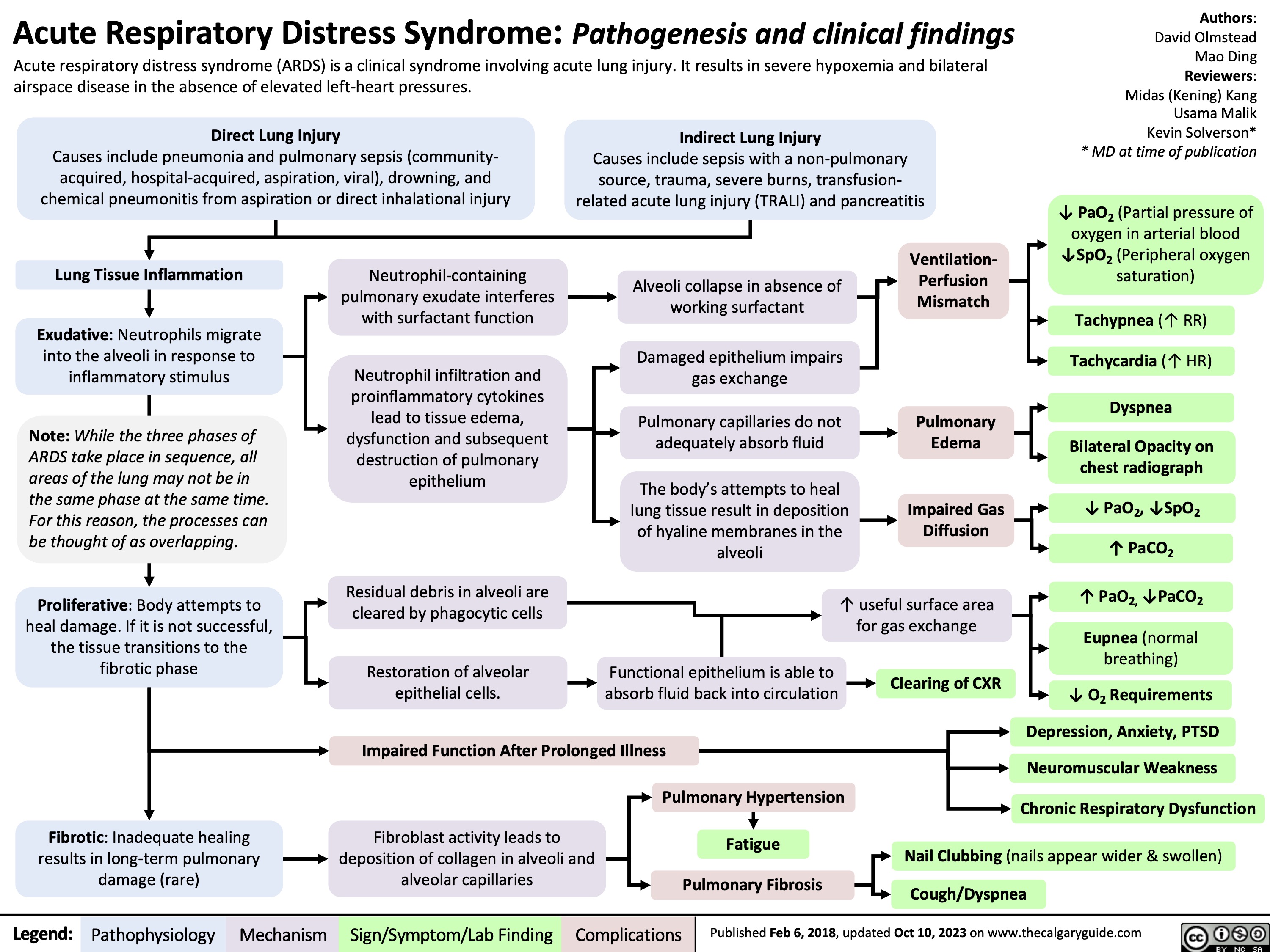
Author: Iffat Naeem
  Direct or indirect lung injury causing acute respiratory distress syndrome
(see Acute Respiratory Distress Syndrome slide for pathogenesis and clinical findings)
Activation of dysregulated inflammatory cascade
Absent pleural effusion
Normal heart size
Absent Kerly B lines
No perihilar infiltrate pattern
Bilateral infiltrate that can present in all regions of lung
Air bronchograms
Silhouette sign
Reviewers: Victória Silva, Mao Ding Tara Lohmann* *MD at the time of publication
   Edema not due to a cardiogenic cause
            Damage to alveolar epithelium
Necrosis of epithelial cells
Erosion of alveolar basement membrane
↑ Alveolar epithelium permeability
Damage to lung capillary endothelium
          Release of inflammatory cytokines
Neutrophils migrate into alveoli
Fluid-filled alveoli show as white/grey opacities
Air-filled bronchi appear dark when surrounded by grey/white opacification of fluid-filled alveoli
Increased opacification from fluid-filled alveoli results in lack of differentiation of heart borders
Diffuse and
widespread damage to alveoli and interstitium that show as white/grey opacities
        ↑ Capillary endothelium permeability
Alveolar edema
     Degradation of alveolar- capillary barrier
     Proliferative phase
Alveolar epithelium attempts to recover
Chronic phase
Can either resolve or progress to fibrotic thickening and scaring of alveoli
↑ Leakage of fluid from capillaries into alveoli and lung interstitium
    Pulmonary fibrosis (scarring)
‘White lung’ appearance
  Image credit: Radiopaedia
 Legend:
 Pathophysiology
 Mechanism
Sign/Symptom/Lab Finding
 Complications
Published November 25, 2023 on www.thecalgaryguide.com
   
Acute Respiratory Distress Syndrome (ARDS): Chest X-Ray Findings Direct or indirect lung injury causing acute
Author: Iffat Naeem Reviewers: Victória Silva
 respiratory distress syndrome*
Activation of dysregulated inflammatory cascade
Bilateral infiltrate that show as white/grey   can present in
            Damage to alveolar epithelium
Necrosis of epithelial cells
Erosion of alveolar basement membrane
↑ Alveolar epithelium permeability
Damage to lung capillary endothelium
Fluid-filled alveoli opacities
Air-filled bronchi appear dark when surrounded by grey/white opacification of fluid-filled alveoli
Increased opacification from fluid-filled alveoli results in lack of differentiation of heart borders
Diffuse and
all regions of lung
      Release of inflammatory cytokines
Neutrophils migrate into alveoli
Alveolar edema
Air bronchograms
              ↑ Capillary endothelium permeability
    Degradation of alveolar-capillary barrier
       Proliferative phase
Alveolar epithelium attempts to recover
Chronic phase
Can either resolve or progress to fibrotic thickening and scaring of alveoli
↑ Leakage of fluid from capillaries into alveoli and lung interstitium
Silhouette Sign
     widespread Pulmonary   damage to alveoli
‘White lung’ appearance
    fibrosis (scarring)
and interstitium that show as white/grey opacities
 *See corresponding Calgary Guide slides for more details
Image credit: Radiopaedia
 Legend:
 Pathophysiology
 Mechanism
Sign/Symptom/Lab Finding
 Complications
Published X, 2023 on www.thecalgaryguide.com
   
Acute Respiratory Distress Syndrome (ARDS): Chest X-Ray Findings Direct or indirect lung injury causing acute respiratory
Author: Iffat Naeem Reviewers: Victória Silva
 distress syndrome*
Activation of dysregulated inflammatory cascade
Bilateral infiltrate that show as white/grey   can present in
              Damage to alveolar epithelium
Necrosis of epithelial cells
Denudation of alveolar basement membrane
↑ epithelium permeability
Degradation of alveolar-capillary barrier
Alveolar epithelium
attempts to recover through (proliferative phase)
Damage to lung capillary endothelium
Fluid-filled alveoli opacities
Air-filled bronchi appear dark when surrounded by grey/white opacification of fluid-filled alveoli
Increased opacification from fluid-filled alveoli results in lack of differentiation of heart borders
Diffuse and
all regions of lung
Air bronchograms
            Release of proinflamm atory cytokines
Neutrophil migration into airspace
Alveolar Edema
              ↑ capillary endothelium permeability
↑ leakage of fluid from vasculature into airspace and lung interstitium
Can either resolve or progress to fibrotic
Silhouette Sign
           widespread Pulmonary   damage to alveoli
‘White lung’ appearance
      thickening and scaring of   Fibrosis alveoli (chronic phase)
and interstitium that show as white/grey opacities
 Image credit: Radiopaedia
*See corresponding Calgary Guide slides for more details
 Legend:
 Pathophysiology
 Mechanism
Sign/Symptom/Lab Finding
 Complications
Published X, 2023 on www.thecalgaryguide.com
   
 Acute Respiratory Distress Syndrome (ARDS): Chest X-Ray Findings
Absent pleural effusion
Normal heart size
Absent Kerly B lines
No perihilar infiltrate pattern
Author: Iffat Naeem Reviewers: Victória Silva
   Acute Lung Injury (see ‘ARDS: Pathogenesis and Clinical findings’ slide) causing impaired oxygenation
Lung injury not due to cardiogenic cause
         (see ‘ARDS: Pathogenesis and Clinical findings’ slide)
Alveolar endothelium damage promotes inflammatory marker release
Exudative phase (1-6 days): neutrophils adhere to damaged endothelium and release pro- inflammatory mediators
Accumulation of intra-alveolar fluid that is rich in neutrophils, macrophages, and red blood cells
Proliferative phase (7-14 days): proliferation of alveolar epithelial
Fibroblasts deposit collagen tissue in alveolar walls and spaces
Can either resolve or progress to fibrotic thickening and scaring
Alveolar Edema
Fluid-filled alveoli show as white/grey opacities
Air-filled bronchi appear dark when surrounded by grey/white opacification of fluid-filled alveoli
Increased opacification from fluid-filled alveoli
Bilateral infiltrate present in all regions
Air bronchograms
                            results in lack of         Silhouette Sign differentiation of
  heart borders
  Diffuse alveolar damage
‘White lung’ appearance
Image credit: Radiopaedia
    *See corresponding Calgary Guide slides for more details
 Legend:
(chronic phase) Pathophysiology
  Mechanism
Sign/Symptom/Lab Finding
 Complications
Published X, 2023 on www.thecalgaryguide.com
    
    Lung injury not due to a cardiogenic cause
Absent pleural effusion
Normal heart size
Absent Kerly B lines
No perihilar infiltrate pattern
       Acute Respiratory Distress Syndrome (ARDS): Chest X-Ray Findings

Anesthetic Considerations One Lung Ventilation

Anesthetic Considerations: One-lung ventilation Mechanical separation of the lungs to allow for individualized ventilation of only one lung
Positioning: Lateral decubitus position (patient on their side) with dependent lung ventilated
Shunt: Non- dependent lung unventilated
Perfusion but no ventilation to collapsed lung
Hypoxic vasoconstriction decreases but does not stop perfusion to non- dependent lung
Right to left intrapulmonary shunt with some perfusion to non- dependent lung
V/Q mismatch causes ↑ hypoxemia
Increase FiO2 to 1 to maintain SpO2 ≥ 90%
Increased FiO2 can allow for toleration of shunt
Optimize cardiac output and shunt fraction to maximize PaO2
  Author:
Aly Valji
Reviewers:
Jasleen Brar
Ryden Armstrong*
* MD at time of publication
Relative indications
Surgical exposure for pulmonary resection, mediastinal, esophageal, vascular, thoracic spine, or cardiac valve surgery
Double lumen tube (gold standard)
Endotracheal tube (ETT) with two lumens (bronchial and tracheal)
Insert longer side to a mainstem bronchus, shorter side ends in distal trachea
Absolute Indications
Isolation of healthy from contaminated lung (unilateral infection, hemorrhage)
Control unilateral disruption of ventilation (bronchopleural fistula, unilateral bullae)
Video assisted thoracoscopic surgery
Unilateral lung lavage
Airway Technique
Anesthetic Technique
General anesthetic with neuromuscular blockade
↓ Inspiratory muscle tone
Intraabdominal contents push up on diaphragm
↓ Functional residual capacity (FRC)
↑ Atelectasis if closing capacity > FRC
↑ Hypoxemia Optimize
Altered gravitational forces on thorax
               ↓ Compliance of dependent lung
↑ Airway pressure required
↑ Risk of lung barotrauma due to ↑ pressure
↑ Perfusion to dependent lung. ↑ Ventilation to nondependent lung (prior to lung isolation)
Collapse of nondependent lung using lung isolation causes ↓ ventilation to this lung
Optimize tidal volume (6-8 mL/kg), respiratory rate (maintain PaCO2 35-40 mmHg), PEEP (5-10 cm H2O) based on clinical picture
                       Univent tube
Single lumen ETT with movable endobronchial blocker in wall
Blocker steered after intubation into a mainstem bronchus with fiberoptic bronchoscope
Endotracheal tube in mainstem bronchus
Single lumen ETT pushed into a mainstem bronchus
Bronchial blocker
Shaft with an inflatable balloon on distal end
Inserted through single lumen ETT into a mainstem bronchus, after intubation
positive end- expiratory pressure (PEEP) of 5-10 cm H2O
Recruitment of dependent, atelectatic lung with positive pressure
Optimize FiO2
↓ Absorptive atelectasis (from ↑ partial pressure O2 and ↓ N2)
                    Cuff inflated in a mainstem bronchus to isolate respective lung. Placement should be verified using fiberoptic bronchoscope if possible after positioning
↓ Atelectasis and ↑ FRC
↓ Hypoxemia
  Legend:
 Pathophysiology
 Mechanism
 Sign/Symptom/Lab Finding
 Management
 Published December 5, 2023 on www.thecalgaryguide.com
 
Anesthetic Considerations: One-lung ventilation Mechanical separation of the lungs to allow for individualized ventilation of only one lung
Positioning: Lateral decubitus position (patient on their side) with dependent lung ventilated
Shunt: Non- dependent lung unventilated
Perfusion but no ventilation to collapsed lung
Hypoxic vasoconstriction decreases but does not stop perfusion to non- dependent lung
Right to left intrapulmonary shunt with some perfusion to non- dependent lung
V/Q mismatch from shunt causes ↑ hypoxemia
Increase FiO2 to 1 to maintain SpO2 ≥ 90%
Vasodilation of dependent lung vasculature to compensate for shunt to non- dependent lung
↓ V/Q mismatch
  Author:
Aly Valji
Reviewers:
Jasleen Brar
Dr. Armstrong*
* MD at time of publication
Relative indications
Surgical exposure for pulmonary resection, mediastinal, esophageal, vascular, thoracic spine, or cardiac valve surgery
Double lumen tube (DLT)
Two endotracheal tubes (ETT) bonded together
Insert longer side to a mainstem bronchus, shorter side ends in distal trachea
Absolute Indications
Isolation of healthy from contaminated lung (unilateral infection, hemorrhage)
Control unilateral disruption of ventilation (bronchopleural fistula, unilateral bullae)
Video assisted thoracoscopic surgery
Unilateral lung lavage
Airway Technique
Anesthetic Technique
General anesthetic with neuromuscular blockade
↓ Inspiratory muscle tone
Intraabdominal contents push up on diaphragm
↓ Functional residual capacity (FRC)
↑ Atelectasis if closing capacity > FRC
↑ Hypoxemia Optimize
Altered gravitational forces on thorax
               ↑ Elastance of dependent lung
↑ Airway pressure required
↑ Risk of lung barotrauma due to ↑ pressure
↑ Perfusion to dependent, ventilated lung
↓ Ventilation- perfusion (V/Q) mismatch
↓ Hypoxemia
Optimize tidal volume (6-8 mL/kg), respiratory rate (maintain PaCO2 35-40 mmHg), PEEP (5-10 cm H2O) based on clinical picture
                       Univent tube
Single lumen ETT with movable endobronchial blocker in wall
Blocker steered after intubation into a mainstem bronchus with fiberoptic bronchoscope
Endotracheal tube in mainstem bronchus
Single lumen ETT pushed into a mainstem bronchus
Bronchial blocker
Shaft with an inflatable balloon on distal end
Inserted through single lumen ETT into a mainstem bronchus, after intubation
positive end- expiratory pressure (PEEP) of 5-10 cm H2O
Recruitment of dependent, atelectatic lung with positive pressure
Optimize
FiO
     2
   ↓ Absorptive atelectasis (from ↑ partial pressure O2 and ↓ N2)
           Cuff inflated in a mainstem bronchus to isolate respective lung. Placement should be verified using fiberoptic bronchoscope if possible after positioning
↓ Atelectasis and ↑ FRC
  ↓ Hypoxemia
  Legend:
 Pathophysiology
 Mechanism
 Sign/Symptom/Lab Finding
 Management
 Published MONTH, DAY, YEAR on www.thecalgaryguide.com
 
Anesthetic Considerations: One-lung ventilation Mechanical separation of the lungs to allow for individualized ventilation of only one lung
Author:
Aly Valji Reviewers: Jasleen Brar Name* * MD at time of publication
Non-dependent lung unventilated
Hypoxic vasoconstriction decreases but does not stop perfusion to non- dependent lung
Right to left intrapulmonary shunt with some perfusion to non- dependent lung
V/Q mismatch from shunt causes ↑ hypoxemia
Increase FiO2 to maintain SpO2 ≥ 90%
Vasodilation of dependent lung vasculature to compensate for shunt to non- dependent lung
 Positioning: Lateral decubitus position (patient on their side) with dependent lung ventilated
   Indications
Anesthetic
General anesthetic with neuromuscular blockade
↓ Inspiratory muscle tone
    Relative indications
Surgical exposure for pulmonary resection, mediastinal, esophageal, vascular, thoracic spine surgery
Absolute Indications
Isolation of healthy from contaminated lung (Unilateral infection or hemorrhage)
Control unilateral disruption of ventilation (Bronchopleural fistula, unilateral bullae)
Video assisted thoracoscopic surgery
Unilateral lung lavage
Intraabdominal contents push up on diaphragm
↓ FRC
↑ Atelectasis if closing capacity > FRC
↑ Hypoxemia
Altered gravitational forces on thorax
                              Shaft with an inflatable balloon on distal end. Inserted through a single lumen ETT after intubation into a mainstem bronchi
Single lumen ETT pushed into a mainstem bronchus
Optimize positive end-expiratory pressure (PEEP))
Recruitment of dependent, atelectatic lung with positive pressure
↑ Elastance of dependent lung
↑ Airway pressure required
↑ Risk of lung barotrauma due to ↑ pressure
↑ Perfusion to dependent, ventilated lung
↓ Ventilation- perfusion (V/Q) mismatch
↓ Hypoxemia
Optimize tidal volume, respiratory rate, PEEP based on clinical picture
    Bronchial blocker
Endotracheal tube in mainstem bronchus
Technique
Univent tube
Double lumen tube (DLT)
Optimize FiO2
↓ Absorptive atelectasis (from ↑ partial pressure O2 and ↓ N2)
             Single lumen ETT with movable endobronchial blocker housed in wall of ETT. Blocker maneuvered after intubation into a mainstem bronchus
Two endotracheal tubes (ETT) bonded together. Longer side goes into a mainstem bronchus, shorter side ends in distal trachea
↓ Atelectasis and ↑ FRC
       ↓ V/Q mismatch
 Legend:
 Pathophysiology
 Mechanism
 Sign/Symptom/Lab Finding
 Complication/Intervention
 Published MONTH, DAY, YEAR on www.thecalgaryguide.com
 
Anesthetic Considerations: One-lung ventilation Mechanical separation of the lungs to allow for individualized ventilation of only one lung
Author:
Aly Valji Reviewers: Jasleen Brar Name* * MD at time of publication
Non-dependent lung unventilated
Hypoxic vasoconstriction decreases but does not stop perfusion to non- dependent lung
Right to left intrapulmonary shunt with some perfusion to non- dependent lung
V/Q mismatch from shunt causes ↑ hypoxemia
Increase FiO to 2
maintain SpO2 ≥ 90%
Vasodilation of dependent lung vasculature to compensate for shunt to non- dependent lung
↓ V/Q mismatch
 Positioning: Lateral decubitus position (patient on their side) with dependent lung ventilated
   Indications
Anesthetic
General anesthetic with neuromuscular blockade
↓ Inspiratory muscle tone
Comorbidity: Likely underlying pulmonary disease
Pre-operative evaluation
Pulmonary function testing
Overall clinical picture, forced expiratory volume (FEV1), and diffusion capacity (DLCO)
Multidisciplinary determination of fitness for surgery
    Pulmonary hemorrhage Whole lung lavage Unilateral infection Bronchopleural fistula
Isolation of affected lung from unaffected lung
Pulmonary resection
Mediastinal, esophageal, vascular, thoracic spine, or cardiac valve surgery
Operative lung deflated to expose surgical site
Intraabdominal contents push up on diaphragm
↓ FRC
↑ Atelectasis if closing capacity > FRC
↑ Hypoxemia Optimize positive
Altered gravitational forces on thorax
                            Contraindications
↑ Elastance of dependent lung
↑ Airway pressure required
↑ Risk of lung barotrauma due to ↑ pressure
↑ Perfusion to dependent, ventilated lung
↓ Ventilation- perfusion (V/Q) mismatch
↓ Hypoxemia
Optimize tidal volume, respiratory rate, PEEP based on clinical picture
    Bilateral lung ventilation dependency
Hemodynamic instability
Severe hypoxia Severe COPD
Severe pulmonary hypertension
Potentially unable to tolerate one lung ventilation
Intraluminal airway obstruction/mass
Known difficult airway
Risk of dislodging mass and inability to secure airway
Pursue more advanced airway techniques
end-expiratory pressure (PEEP)
Recruitment of dependent, atelectatic lung with positive pressure
Optimize FiO2
↓ Absorptive atelectasis (from ↑ partial pressure O and ↓ N )
                         2
2
    ↓ Atelectasis and ↑ FRC
     Post-operative pain management
Thoracotomy or VATS procedure causing ↑ pain along thoracic dermatomes
Epidural
Paravertebral block
Anesthetic injected into epidural space
Anesthetic injected into paravertebral spaces
Bilateral spinal nerve blockade below desired spinal level
Ipsilateral spinal nerve and sympathetic chain blockade in thoracic dermatomes
     Legend:
 Pathophysiology
 Mechanism
 Sign/Symptom/Lab Finding
 Complication/Intervention
 Published MONTH, DAY, YEAR on www.thecalgaryguide.com
 
Anesthetic Considerations: One-lung ventilation Mechanical separation of the lungs to allow for individualized ventilation of only one lung
Author:
Aly Valji Reviewers: Jasleen Brar Name* * MD at time of publication
Non-dependent lung unventilated
Hypoxic vasoconstriction decreases but does not stop perfusion to non- dependent lung
Right to left intrapulmonary shunt with some perfusion to non- dependent lung
V/Q mismatch from shunt causes ↑ hypoxemia
Increase FiO2 to maintain SpO2 ≥ 90%
Vasodilation of dependent lung vasculature to compensate for shunt to non- dependent lung
↓ V/Q mismatch
Indications
Anesthetic
General anesthetic with neuromuscular blockade
↓ Inspiratory muscle tone
Comorbidity: Likely underlying pulmonary disease
Pre-operative evaluation
Pulmonary function testing
Overall clinical picture, forced expiratory volume (FEV1), and diffusion capacity (DLCO)
Multidisciplinary determination of fitness for surgery
Anesthetic injected into epidural space
Anesthetic injected into paravertebral spaces
Positioning: Lateral decubitus position (patient on their side) with dependent lung ventilated
     Pulmonary hemorrhage Whole lung lavage Unilateral infection Bronchopleural fistula
Isolation of affected lung and unaffected lung
Pulmonary resection
Mediastinal, esophageal, vascular, thoracic spine, or cardiac valve surgery
Operative lung deflated to expose surgical site
Intraabdominal contents push up on diaphragm
↓ FRC
↑ Atelectasis ↑ Hypoxemia
Optimize
positive end- expiratory pressure (PEEP)
Recruitment of dependent, atelectatic lung with positive pressure
↓ Atelectasis and ↑ FRC
Altered gravitational forces on thorax
                          Contraindications
↑ Elastance of dependent lung
↑ Airway pressure required
↑ Risk of lung barotrauma due to ↑ pressure
Optimize tidal volume, respiratory rate, PEEP based on clinical picture
↑ Perfusion to dependent, ventilated lung
↓ Ventilation- perfusion (V/Q) mismatch
↓ Hypoxemia
     Bilateral lung ventilation dependency
Hemodynamically unstable
Severe hypoxia Severe COPD
Severe pulmonary hypertension
Unable to tolerate one lung ventilation
Intraluminal airway obstruction/mass
Known difficult airway
Risk of dislodging mass and inability to secure airway
Pursue more advanced airway techniques
                           Post-operative pain management
Thoracotomy or VATS procedure causing ↑ pain along thoracic dermatomes
Epidural
Paravertebral block
Bilateral spinal nerve blockade below desired spinal level
   Ipsilateral spinal nerve and sympathetic chain blockade in thoracic dermatomes
  Legend:
 Pathophysiology
 Mechanism
 Sign/Symptom/Lab Finding
 Complication/Intervention
 Published MONTH, DAY, YEAR on www.thecalgaryguide.com
 
Anesthetic Considerations: One-lung ventilation Mechanical separation of the lungs to allow for individualized ventilation of only one lung
Author:
Aly Valji Reviewers: Name* * MD at time of publication
  Indication
Contraindications
Comorbidity: Likely underlying pulmonary disease
Positioning: Lateral decubitus position (patient on their side) with dependent lung ventilated
General anesthetic with neuromuscular blockade
Post-operative pain management
Pulmonary resection, mediastinal, esophageal, vascular, thoracic spine, or cardiac valve surgery
Pulmonary hemorrhage, whole lung lavage, bronchopleural fistula, or unilateral infection
Operative lung deflated to expose surgical site
Isolation of affected lung and unaffected lung
   Dependency on bilateral lung ventilation, hemodynamically unstable, severe hypoxia, severe COPD, or severe pulmonary hypertension
Unable to tolerate one lung ventilation
    Intraluminal airway obstruction/mass or known difficult Pursue more advanced
Risk of dislodging mass and inability to secure airway
Multidisciplinary determination of fitness for surgery
airway
Pulmonary function testing
Hypoxic vasoconstriction decreases but does not stop perfusion to non- dependent lung
airway techniques
Overall clinical picture, forced expiratory volume (FEV1), and diffusion capacity (DLCO)
    Pre-operative evaluation
Non- dependent lung not ventilated
Altered gravitational forces on thorax
Intraabdominal contents push up on diaphragm
↓ Inspiratory muscle tone
Likely procedure is thoracotomy or VATS causing ↑ pain along thoracic dermatomes
Right to left intrapulmonary shunt with some perfusion to non- dependent lung still present
V/Q mismatch from shunt causes ↑ hypoxemia
Increase FiO2 to maintain SpO2 ≥ 90%
Vasodilation of dependent lung vasculature to compensate for shunt to non- dependent lung
↓ V/Q mismatch
↓ Hypoxemia
Intervention:
Optimize tidal volume, respiratory rate, PEEP based on clinical picture
↓ Atelectasis and ↑ FRC
             ↑ Perfusion to dependent, ventilated lung
↑ Elastance of dependent lung
↓ FRC
↓ Functional residual capacity (FRC)
↓ Ventilation-perfusion (V/Q) mismatch
       ↑ Airway pressure required
↑ Atelectasis ↑ Hypoxemia
↑ Risk of lung barotrauma due to ↑ pressure
         Intervention:
Optimize positive end-expiratory pressure (PEEP)
Recruitment of dependent, atelectatic lung with positive pressure
         Epidural
Paravertebral block
Anesthetic injected into epidural space
Bilateral spinal nerve blockade below desired spinal level
   Anesthetic injected into Ipsilateral spinal nerve and sympathetic chain blockade in thoracic paravertebral spaces dermatomes
 Legend:
 Pathophysiology
 Mechanism
 Sign/Symptom/Lab Finding
 Complication/Intervention
 Published MONTH, DAY, YEAR on www.thecalgaryguide.com
 
Anesthetic Considerations: One-lung ventilation
Author:
Aly Valji Reviewers: Name* * MD at time of publication
    One lung ventilation: mechanical separation of the lungs to allow for individualized ventilation of only one lung
     Indication
Pulmonary resection, mediastinal, esophageal, vascular, thoracic spine, or cardiac valve surgery
Pulmonary hemorrhage, whole lung lavage, bronchopleural fistula, or unilateral infection
Exposure of surgical site by deflation of operative lung
Isolation of affected lung and unaffected lung
    Dependency on bilateral lung ventilation, Contraindications hemodynamically unstable, severe hypoxia, severe
COPD, or severe pulmonary hypertension
Intraluminal airway obstruction/mass or known difficult airway
Pursue more advanced airway techniques
Unable to tolerate one lung ventilation
Risk of dislodging mass and inability to secure airway
            Likely underlying Pre-operative Pulmonary pulmonary disease evaluation function testing
Overall clinical picture, forced expiratory Determination of volume (FEV1), and diffusion capacity (DLCO) fitness for surgery
      Right to left intrapulmonary shunt as some perfusion to non- dependent lung is still present
↑ Perfusion to dependent, ventilated lung
↑ Elastance of dependent lung
↓ FRC
   Non- dependent lung not ventilated
Hypoxic vasoconstriction decreases but does not stop perfusion to non- dependent lung
V/Q mismatch from shunt increases hypoxemia
Intervention:
Increase FiO2 to maintain SpO2 ≥ 90%
Vasodilation of dependent lung vasculature to compensate for non-dependent lung
↓ V/Q mismatch
↓ Hypoxemia
Intervention:
Optimize tidal volume, respiratory rate, PEEP
↓ Atelectasis and ↑ FRC
    Positioning: Lateral position with dependent lung ventilated
Altered gravitational forces on thorax
↓ Ventilation-perfusion (V/Q) mismatch
                  General anesthetic with neuromuscular blockade
Intraabdominal contents push up on diaphragm
↑ Airway pressure required
↑ Atelectasis ↑ Hypoxemia
↑ Risk of lung barotrauma
Intervention: Optimize positive end-expiratory pressure (PEEP)
Recruitment of dependent, atelectatic lung from PEEP
   ↓ Inspiratory muscle tone
↓ Functional residual capacity (FRC)
          Post- operative pain management
Thoracotomy or VATS causes pain along thoracic dermatomes
Epidural
Paravertebral block
Bilateral spinal nerve blockade below desired Anesthetic injected into epidural space spinal level
Anesthetic injected into Ipsilateral spinal nerve and sympathetic chain blockade in paravertebral spaces thoracic dermatomes
    Legend:
 Pathophysiology
 Mechanism
 Sign/Symptom/Lab Finding
 Complication/Intervention
 Published MONTH, DAY, YEAR on www.thecalgaryguide.com
      
Anesthetic considerations: one-lung ventilation
Author:
Aly Valji Reviewers: Name* * MD at time of publication
    One lung ventilation: mechanical separation of the lungs to allow for individualized ventilation of only one lung
     Indication
Pulmonary resection, mediastinal, esophageal, vascular, thoracic spine, or cardiac valve surgery
Pulmonary hemorrhage, whole lung lavage, bronchopleural fistula, or unilateral infection
Exposure of surgical site by deflation of one lung
Isolation of one lung from other
    Dependency on bilateral lung ventilation, Contraindications hemodynamically unstable, severe hypoxia, severe
COPD, or severe pulmonary hypertension
Intraluminal airway obstruction/mass or known difficult airway
Pursue more advanced airway techniques
Unable to tolerate one lung ventilation
Risk of dislodging mass and inability to secure airway
        Pre-operative evaluation given likely Pulmonary Forced expiratory volume (FEV1) Determination of underlying pulmonary disease function testing Diffusion capacity (DLCO) fitness for surgery
            Non- dependent lung not ventilated
Hypoxic vasoconstriction decreases but does not stop perfusion of non- dependent lung
Vasodilation of dependent lung pulmonary vasculature
Right to left intrapulmonary shunt causes V/Q mismatch
↑ Perfusion to dependent, ventilated lung
↑ Elastance of dependent lung
↓ FRC
↑ Hypoxemia
Intervention:
Increase FiO2 to maintain SpO2 ≥ 90%
↓ V/Q mismatch
↓ Hypoxemia
Intervention:
Optimize tidal volume, respiratory rate, PEEP
↓ Atelectasis and ↑ FRC
      Positioning: Lateral decubitus with dependent lung ventilated
Altered gravitational forces on thorax
↓ Ventilation-perfusion (V/Q) mismatch
                General anesthetic with neuromuscular blockade
Intraabdominal contents push up on diaphragm
↑ Airway pressure required
↑ Atelectasis ↑ Hypoxemia
↑ Risk of lung barotrauma
Intervention: Optimize positive end-expiratory pressure (PEEP)
Recruitment of dependent lung
  ↓ Inspiratory muscle tone
↓ Functional residual capacity (FRC)
           Post- operative pain management
Thoracotomy or VATS causes pain along thoracic dermatomes
Epidural
Paravertebral block
Bilateral spinal nerve blockade below desired Anesthetic injected into epidural space spinal level
Anesthetic injected into Ipsilateral spinal nerve and sympathetic chain blockade in paravertebral spaces thoracic dermatomes
    Legend:
 Pathophysiology
 Mechanism
 Sign/Symptom/Lab Finding
 Complication/Intervention
 Published MONTH, DAY, YEAR on www.thecalgaryguide.com

Zenkers Diverticulum Pathogenesis and Clinical Findings

Zenker’s Diverticulum: Pathogenesis and Clinical Findings
Author:
Juliette Hall
Reviewers:
Sunawer Aujla *Dr. Derrick Randall Illustrator: Erica Lindquist * MD at time of publication
     Functional pharyngo- esophageal motility disorders.
Increased upper esophageal sphincter (UES) resting pressure
Inadequate relaxation of the cricopharyngeal muscle of the UES during swallowing
Lack of synchronization between UES and hypopharynx during swallowing
Outflow obstruction in the esophagus
Increased intrabolus pressure with swallowing
Increase in hypopharyngeal pressure
     Note: the pathogenesis of Zenker’s Diverticulum is multifactorial, but this mechanism is thought to be a significant contributor
Herniation of the esophagus at a weak point
between the inferior pharyngeal constrictor muscle and the cricopharyngeal muscle (Killian’s triangle)
Zenker’s Diverticulum
Acquired mucosal herniation between the horizontal and oblique fibers of the cricopharyngeus muscle
             Inability of the the upper esophageal sphincter to completely open
Dysphagia
Extrinsic compression of the cervical esophagus by the diverticulum
Esophageal Obstruction
Diverticulum compresses recurrent laryngeal nerve
Impaired
innervation to
the intrinsic
muscles of
the larynx
and other
contributing
factors
False diverticulum retains food and saliva
Feeling of needing to clear throat
Palpable lump in the neck
Halitosis (bad smelling breath)
Secretions and food spontaneously empty into the bronchial tree
Splashing of the fluid that has accumulated in large diverticula
Cricoid Cartilage
Cricopharyngeal muscle of the UES
Thyroid Gland
Boyce’s sign (gurgling sound heard as air passes through the diverticulum)
Zenker’s Diverticulum
                       Weight loss and malnutrition
Aspiration
Cough reflex
Chronic cough
 Regurgitation Hoarseness
   Legend:
 Pathophysiology
Mechanism
 Sign/Symptom/Lab Finding
 Complications
Published November 25, 2023 on www.thecalgaryguide.com

vWF Deficiency

von Willebrand Factor (vWF) Deficiency:
Authors: Tristan Jones, Nimaya De Silva Reviewers: Sean Spence, Yan Yu, Paige Shelemey, Tony Gu, Raafi Ali, Man-Chiu Poon*, Lynn Savoie* * MD at time of publication
Pathogenesis and clinical findings
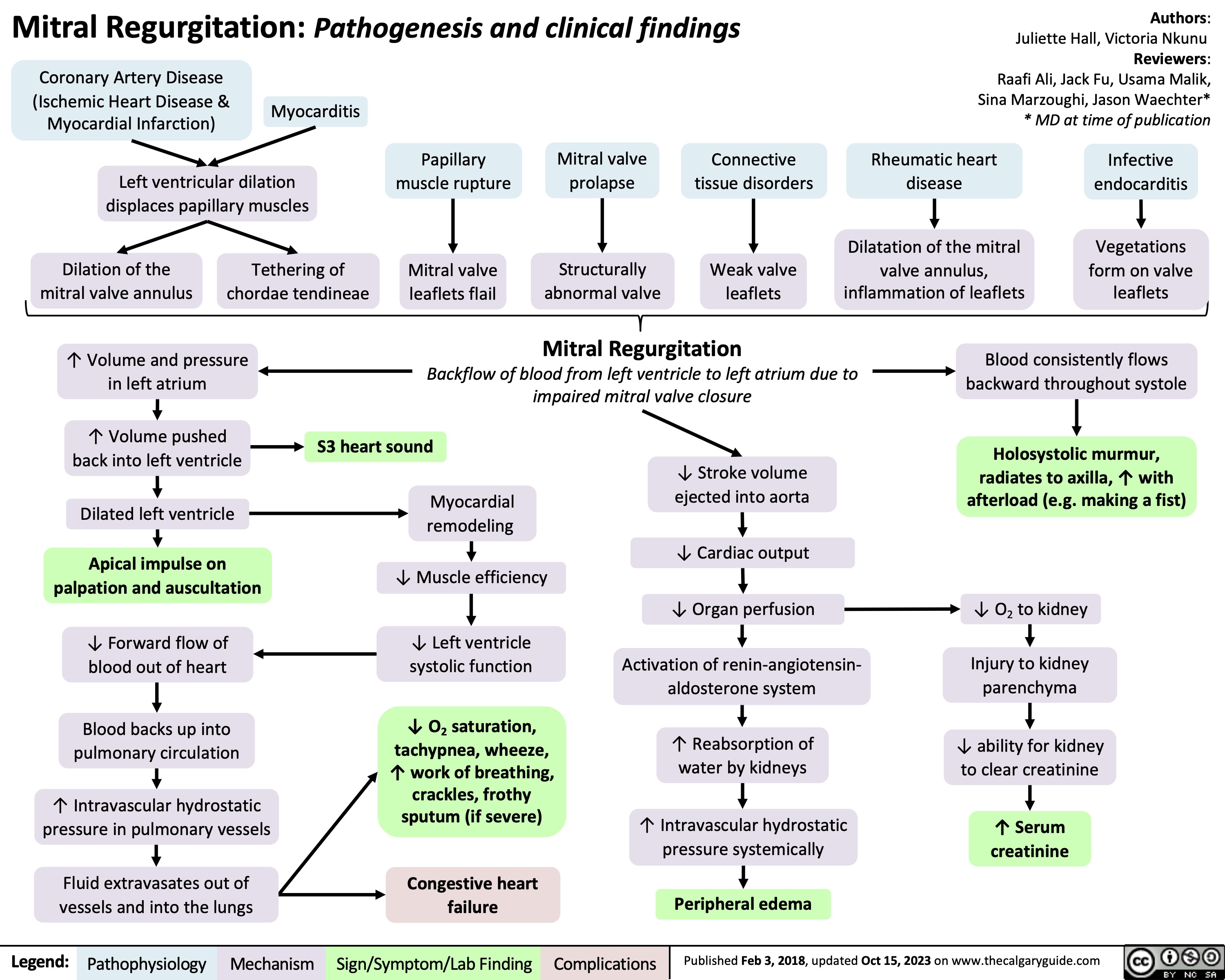
  Inherited
Acquired
      Autosomal dominant inheritance
Recessive inheritance
Type III: Complete quantitative vWF deficiency
Presence of antibodies to vWF (a blood clotting protein
involved with platelet adhesion), often in setting of autoimmune disease
Antibodies bind and inactivate existing vWF
Clonal lympho-proliferative disease (uncontrolled production of lymphocytes, a type of immune cell)
Adsorption of vWF multimers on to tumor cells
↑ Plasma clearance of vWF
↓ vWF to stabilize/carry plasma Factor VIII (blood clotting protein)
↓ Plasma Factor VIII
Impaired intrinsic pathway of coagulation cascade (see Calgary Guide slide on coagulation cascade)
      Type I: Partial quantitative vWF deficiency
Type II: Impaired vWF function (qualitative deficiency)
     ↓ Binding to vWF-specific antibody on immunoassay
↓ vWF antigen assay (diagnostic test for quantitative vWF deficiency)
↑ Bleeding/closure time (bleeding time measures the length of time required to form a platelet plug)
Spontaneous hematomas (large collection of blood outside the blood vessels)
Menorrhagia (heavy menstrual bleeds)
vWF Deficiency
↓ vWF quantity and/or function
↓ vWF available to bind to damaged blood vessel collagen to anchor platelets
Impaired platelet plug formation
Bleeding from mucosal surfaces
Easy bruising
Gum bleeding
↑ Time for blood clot to form
Risk of severe hemorrhage
↑ Partial Thromboplastin Time (PTT) (measures the integrity of the intrinsic pathway)
                         Epistaxis (nose bleed)
 Legend:
 Pathophysiology
Mechanism
Sign/Symptom/Lab Finding
 Complications
Re-published December 5, 2023 on www.thecalgaryguide.com

Operative Vaginal Delivery Indications
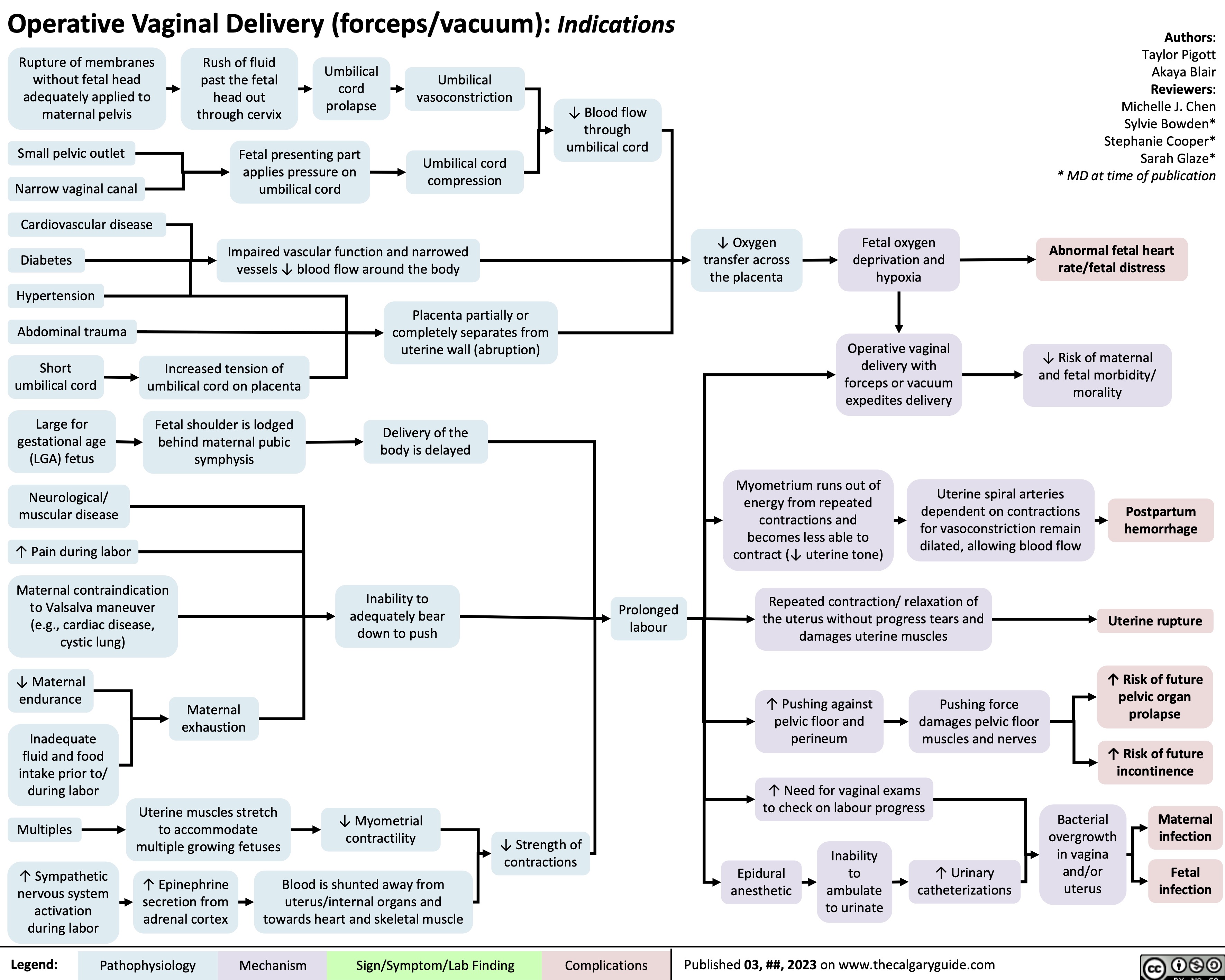
Operative Vaginal Delivery (forceps/vacuum): Indications
Authors: Taylor Pigott Akaya Blair Reviewers: Michelle J. Chen Sylvie Bowden* Stephanie Cooper* Sarah Glaze* * MD at time of publication
Abnormal fetal heart rate/fetal distress
↓ Risk of maternal and fetal morbidity/ morality
  Rupture of membranes without fetal head adequately applied to maternal pelvis
Small pelvic outlet Narrow vaginal canal
Cardiovascular disease
Diabetes Hypertension Abdominal trauma
Short umbilical cord
Large for gestational age (LGA) fetus
Neurological/ muscular disease
↑ Pain during labor
Maternal contraindication to Valsalva maneuver (e.g., cardiac disease, cystic lung)
Rush of fluid past the fetal head out through cervix
Umbilical cord prolapse
Umbilical vasoconstriction
Umbilical cord compression
↓ Blood flow through umbilical cord
      Fetal presenting part applies pressure on umbilical cord
        Impaired vascular function and narrowed vessels ↓ blood flow around the body
↓ Oxygen transfer across the placenta
Fetal oxygen deprivation and hypoxia
Operative vaginal delivery with forceps or vacuum expedites delivery
       Placenta partially or completely separates from uterine wall (abruption)
      Increased tension of umbilical cord on placenta
Fetal shoulder is lodged behind maternal pubic symphysis
Delivery of the body is delayed
Inability to adequately bear down to push
      Myometrium runs out of energy from repeated contractions and becomes less able to contract (↓ uterine tone)
Uterine spiral arteries dependent on contractions for vasoconstriction remain dilated, allowing blood flow
Postpartum hemorrhage
Uterine rupture
↑ Risk of future pelvic organ prolapse
↑ Risk of future incontinence
         Prolonged labour
Repeated contraction/ relaxation of the uterus without progress tears and damages uterine muscles
      ↓ Maternal endurance
Inadequate fluid and food intake prior to/ during labor
Multiples
↑ Sympathetic nervous system activation during labor
Maternal exhaustion
Uterine muscles stretch to accommodate multiple growing fetuses
↑ Pushing against pelvic floor and perineum
Pushing force damages pelvic floor muscles and nerves
           ↓ Myometrial contractility
↑ Need for vaginal exams to check on labour progress
Bacterial overgrowth in vagina and/or uterus
Maternal infection
Fetal infection
  ↓ Strength of contractions
Epidural anesthetic
Inability to ambulate to urinate
↑ Urinary catheterizations
       ↑ Epinephrine secretion from adrenal cortex
Blood is shunted away from uterus/internal organs and towards heart and skeletal muscle
 Legend:
 Pathophysiology
Mechanism
Sign/Symptom/Lab Finding
 Complications
 Published 03, ##, 2023 on www.thecalgaryguide.com

Low Ankle Sprain

Low Ankle Sprain: Pathomechanics and Clinical Findings
Authors: Parker Lieb, Joseph Kendal Illustrator: Erica Lindquist Reviewers: Liam Thompson, Tara Shannon, Sunawer Aujla, Stephanie de Waal, Amanda Eslinger, Dave Nicholl, Maninder Longowal Gerhard Kiefer* *MD at time of publication
   Ankle eversion beyond normal range (less common)
Excessive stress to medial ankle deltoid ligament
Ankle plantar flexion and inversion beyond normal range (most common)
Excessive stress to lateral ankle ligament(s)
      Associated fracture of malleolus or subtalar joint
Bone pain, inability to weight bear
Recruitment of inflammatory cells to damaged area
↑ Local pro- inflammatory cytokines
↑ Capillary permeability & vasodilation to damaged area
Collagen fibers in ligament(s) rupture
Low Ankle Sprain
(medial or lateral)
Local blood vessels tear
Blood leaks into surrounding tissue
Grade I
Mild injury
Grade II
Moderate injury
Grade III
Severe injury
Minimal ligament disruption
Incomplete ligament tear
Complete ligament tear
No joint laxity
Joint laxity
Gross joint laxity
Mechanical and functional instability
Decreased ankle joint space
Ankle Impingement
(compression of soft and/or bony structures in joint)
Chronic ankle instability
Talus subluxation with anterior force on heel
+ Anterior drawer test
Recurrent sprains
Synovial inflammation & hypertrophy
Remodeling of collagen and bone
Degenerative changes
(e.g., osteophytes, subchondral sclerosis)
                        Damage to mechanoreceptors in muscles surrounding ankle joint
       Bruising
Swelling
Focal tenderness over torn ligament(s)
Pain on injury and with weight bearing
 Impaired proprioception & neuromuscular control
          Nociceptors activated by trauma and inflammatory factors
Falls Antalgic gait
  Legend:
 Pathophysiology
 Mechanism
Sign/Symptom/Lab Finding
 Complications
 Published Nov 9, 2014; updated Aug 15, 2023 on www.thecalgaryguide.com