Febrile Seizures: Pathogenesis and clinical findings
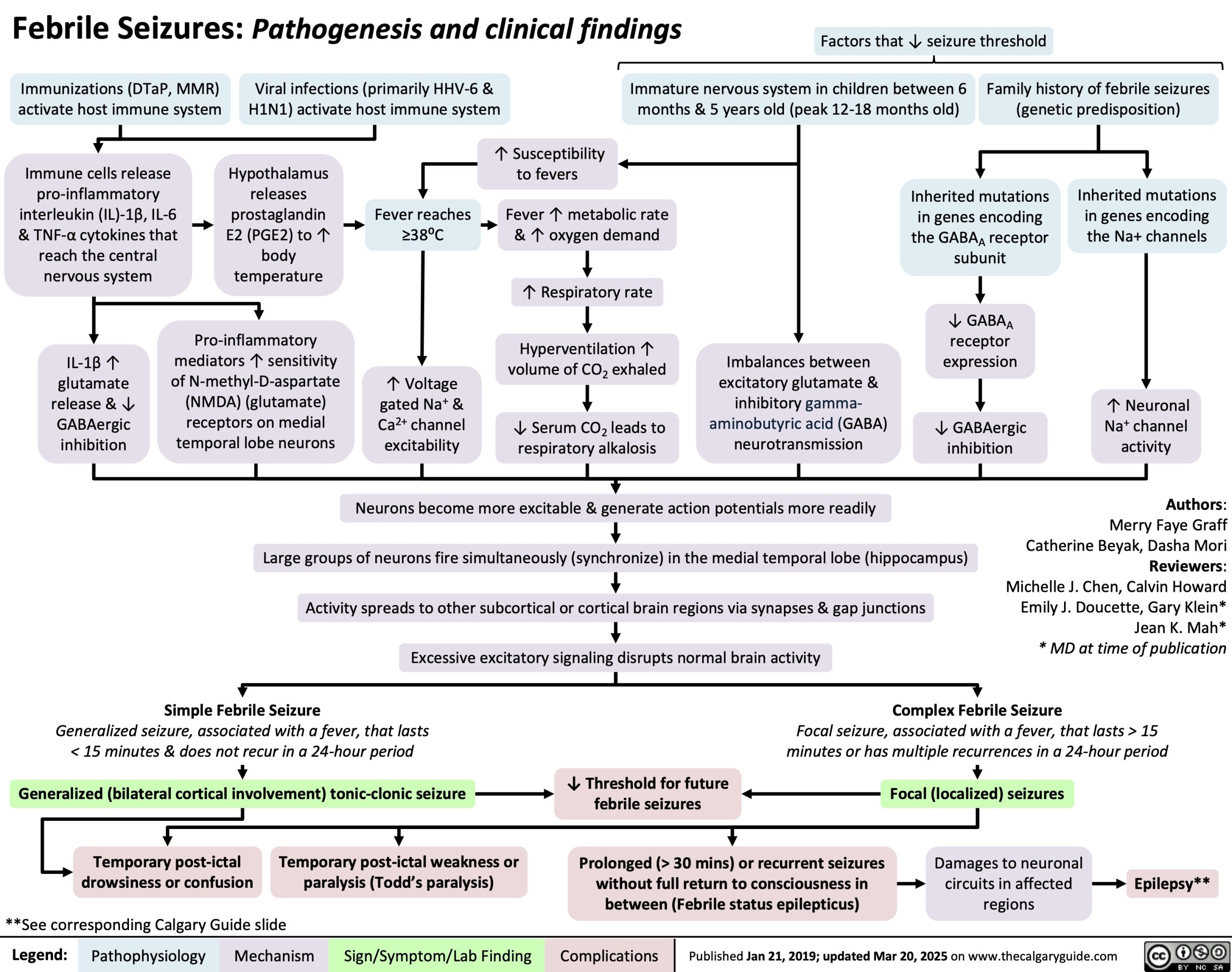
Factors that ↓ seizure threshold
Immunizations (DTaP, MMR) activate host immune system
Immune cells release pro-inflammatory interleukin (IL)-1β, IL-6 & TNF-α cytokines that reach the central nervous system
Viral infections (primarily HHV-6 & H1N1) activate host immune system
Immature nervous system in children between 6 Family history of febrile seizures months & 5 years old (peak 12-18 months old) (genetic predisposition)
Hypothalamus releases prostaglandin E2 (PGE2) to ↑ body temperature
Fever reaches ≥380C
↑ Voltage gated Na+ & Ca2+ channel excitability
↑ Susceptibility to fevers
Fever ↑ metabolic rate & ↑ oxygen demand
↑ Respiratory rate
Hyperventilation ↑ volume of CO2 exhaled
↓ Serum CO2 leads to respiratory alkalosis
Inherited mutations in genes encoding the GABAA receptor subunit
↓ GABAA receptor expression
↓ GABAergic inhibition
Inherited mutations in genes encoding the Na+ channels
IL-1β ↑ glutamate release & ↓ GABAergic inhibition
Pro-inflammatory mediators ↑ sensitivity of N-methyl-D-aspartate (NMDA) (glutamate) receptors on medial temporal lobe neurons
Imbalances between excitatory glutamate & inhibitory gamma- aminobutyric acid (GABA) neurotransmission
↑ Neuronal Na+ channel activity
Neurons become more excitable & generate action potentials more readily
Large groups of neurons fire simultaneously (synchronize) in the medial temporal lobe (hippocampus) Activity spreads to other subcortical or cortical brain regions via synapses & gap junctions Excessive excitatory signaling disrupts normal brain activity
Authors: Merry Faye Graff Catherine Beyak, Dasha Mori Reviewers: Michelle J. Chen, Calvin Howard Emily J. Doucette, Gary Klein* Jean K. Mah* * MD at time of publication
Simple Febrile Seizure
Complex Febrile Seizure
Focal seizure, associated with a fever, that lasts > 15 minutes or has multiple recurrences in a 24-hour period
Generalized seizure, associated with a fever, that lasts < 15 minutes & does not recur in a 24-hour period
Generalized (bilateral cortical involvement) tonic-clonic seizure
Temporary post-ictal Temporary post-ictal weakness or
↓ Threshold for future febrile seizures
Prolonged (> 30 mins) or recurrent seizures without full return to consciousness in between (Febrile status epilepticus)
Focal (localized) seizures
Damages to neuronal circuits in affected regions
drowsiness or confusion
**See corresponding Calgary Guide slide
paralysis (Todd’s paralysis)
Epilepsy**
Legend:
Pathophysiology
Mechanism
Sign/Symptom/Lab Finding
Complications
Published Jan 21, 2019; updated Mar 20, 2025 on www.thecalgaryguide.com