SEARCH RESULTS FOR: Septic-Abortion

Septic Abortion
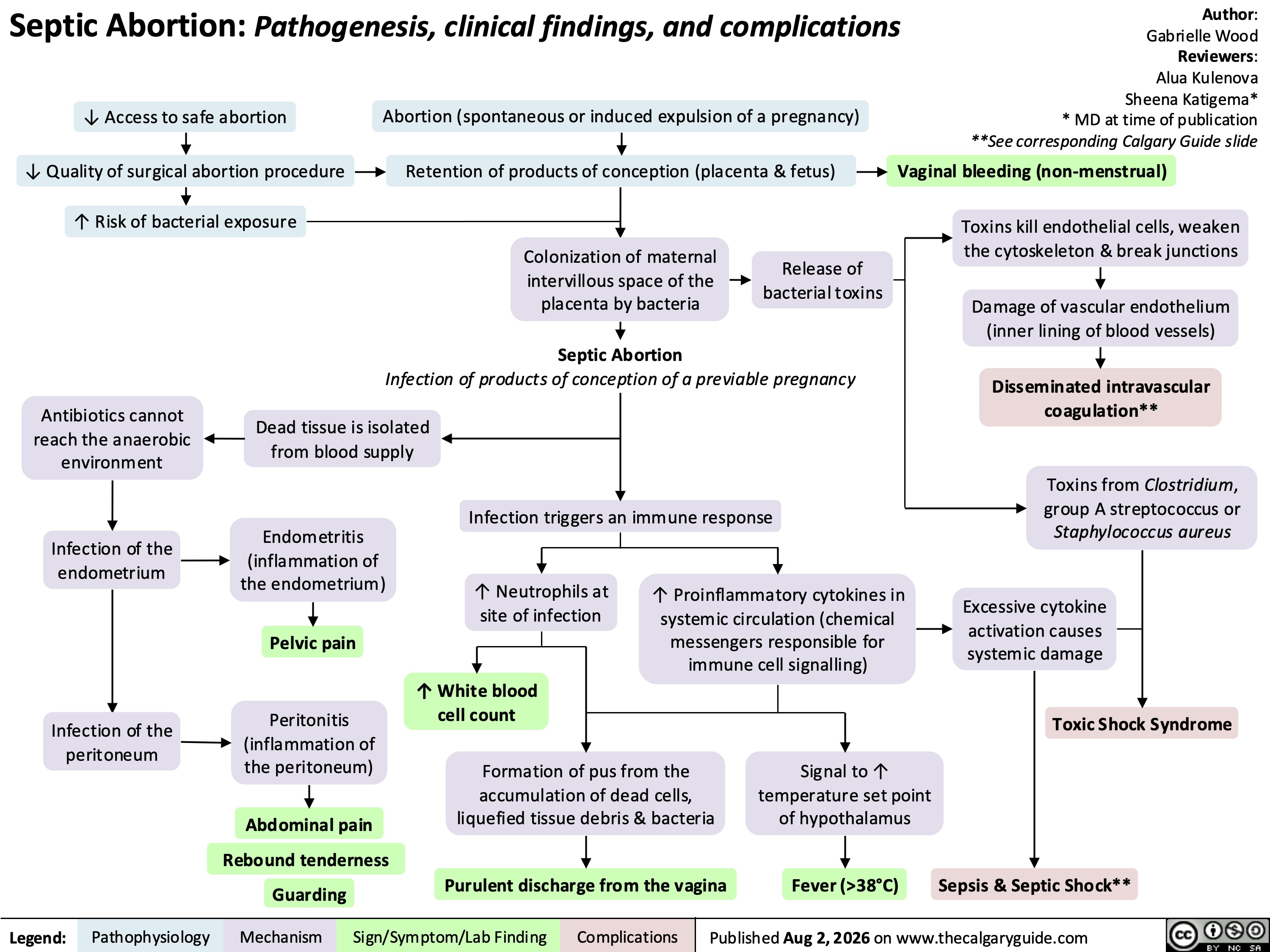
Septic Abortion: Pathogenesis, clinical findings, and complications
↓ Access to safe abortion
↓ Quality of surgical abortion procedure
↑ Risk of bacterial exposure
Abortion (spontaneous or induced expulsion of a pregnancy)
Retention of products of conception (placenta & fetus)
Colonization of maternal
intervillous space of the
placenta by bacteria
Release of
bacterial toxins
Septic Abortion
Infection of products of conception of a previable pregnancy
Antibiotics cannot
reach the anaerobic
environment
Infection of the
endometrium
Infection of the
peritoneum
Dead tissue is isolated
from blood supply
Endometritis
(inflammation of
the endometrium)
Pelvic pain
Peritonitis
(inflammation of
the peritoneum)
Abdominal pain
Rebound tenderness
Guarding
Infection triggers an immune response
↑ Neutrophils at
site of infection
↑ Proinflammatory cytokines in
systemic circulation (chemical
messengers responsible for
immune cell signalling)
Author:
Gabrielle Wood
Reviewers:
Alua Kulenova
Sheena Katigema*
* MD at time of publication
**See corresponding Calgary Guide slide
Vaginal bleeding (non-menstrual)
Toxins kill endothelial cells, weaken
the cytoskeleton & break junctions
Damage of vascular endothelium
(inner lining of blood vessels)
Disseminated intravascular
coagulation**
Toxins from Clostridium,
group A streptococcus or
Staphylococcus aureus
Excessive cytokine
activation causes
systemic damage
↑ White blood
cell count
Formation of pus from the
accumulation of dead cells,
liquefied tissue debris & bacteria
Purulent discharge from the vagina
Toxic Shock Syndrome
Signal to ↑
temperature set point
of hypothalamus
Fever (>38°C)
Sepsis & Septic Shock**
Legend:
Pathophysiology Mechanism
Sign/Symptom/Lab Finding Complications
Published Aug 2, 2026 on www.thecalgaryguide.com
Creative Commons
License