SEARCH RESULTS FOR: Oligomenorrhea

Polycystic Ovarian Syndrome

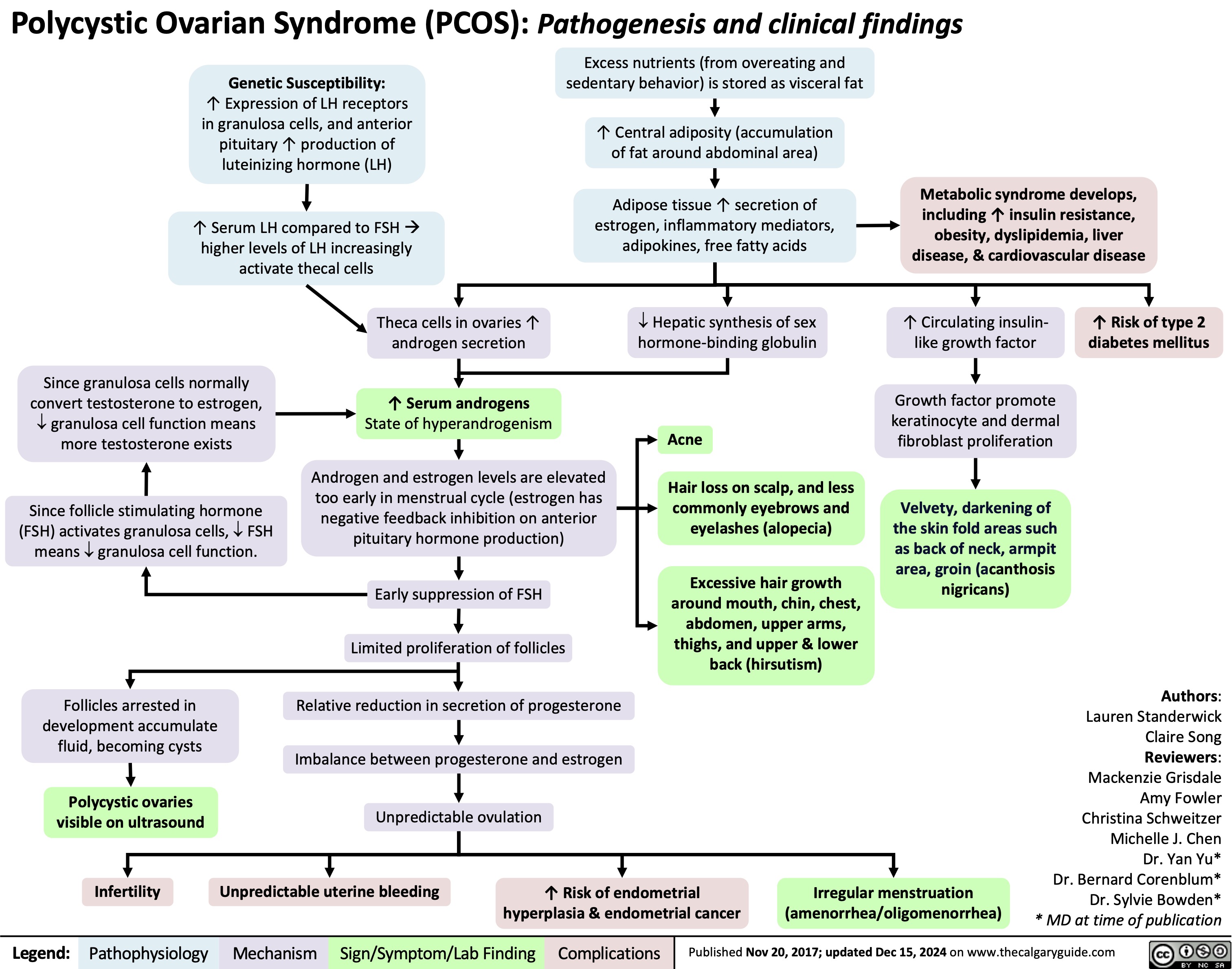
Polycystic Ovarian Syndrome (PCOS): Pathogenesis and clinical findings
  Genetic Susceptibility:
↑ Expression of LH receptors in granulosa cells, and anterior pituitary ↑ production of luteinizing hormone (LH)
↑ Serum LH compared to FSHà higher levels of LH increasingly activate thecal cells
Excess nutrients (from overeating and sedentary behavior) is stored as visceral fat
↑ Central adiposity (accumulation of fat around abdominal area)
Adipose tissue ↑ secretion of estrogen, inflammatory mediators, adipokines, free fatty acids
 ̄ Hepatic synthesis of sex hormone-binding globulin
Acne
Hair loss on scalp, and less commonly eyebrows and eyelashes (alopecia)
Excessive hair growth around mouth, chin, chest, abdomen, upper arms, thighs, and upper & lower back (hirsutism)
Metabolic syndrome develops, including ↑ insulin resistance, obesity, dyslipidemia, liver disease, & cardiovascular disease
           Theca cells in ovaries ↑ androgen secretion
↑ Serum androgens
State of hyperandrogenism
Androgen and estrogen levels are elevated too early in menstrual cycle (estrogen has negative feedback inhibition on anterior pituitary hormone production)
Early suppression of FSH Limited proliferation of follicles
Relative reduction in secretion of progesterone Imbalance between progesterone and estrogen
Unpredictable ovulation
↑ Circulating insulin- like growth factor
Growth factor promote keratinocyte and dermal fibroblast proliferation
Velvety, darkening of the skin fold areas such as back of neck, armpit area, groin (acanthosis nigricans)
↑ Risk of type 2 diabetes mellitus
  Since granulosa cells normally convert testosterone to estrogen,  ̄ granulosa cell function means more testosterone exists
Since follicle stimulating hormone (FSH) activates granulosa cells,  ̄ FSH means  ̄ granulosa cell function.
               Follicles arrested in development accumulate fluid, becoming cysts
Polycystic ovaries visible on ultrasound
Infertility
Unpredictable uterine bleeding
↑ Risk of endometrial hyperplasia & endometrial cancer
Irregular menstruation (amenorrhea/oligomenorrhea)
Authors: Lauren Standerwick Claire Song Reviewers: Mackenzie Grisdale Amy Fowler Christina Schweitzer Michelle J. Chen Dr. Yan Yu* Dr. Bernard Corenblum* Dr. Sylvie Bowden* * MD at time of publication
          Legend:
 Pathophysiology
Mechanism
Sign/Symptom/Lab Finding
 Complications
 Published Nov 20, 2017; updated Dec 15, 2024 on www.thecalgaryguide.com

Oligomenorrhea

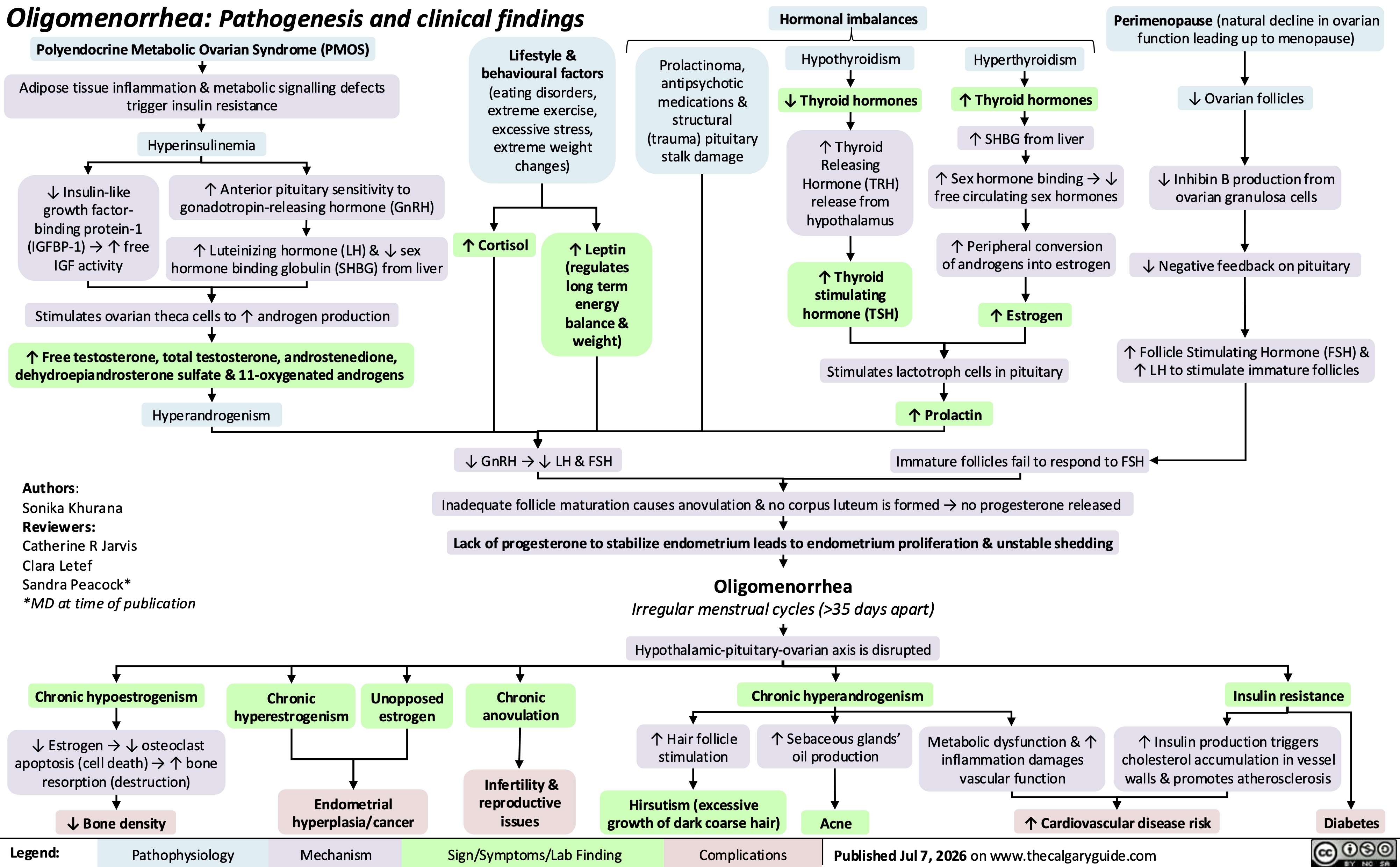
Oligomenorrhea: Pathogenesis and clinical findings
Polyendocrine Metabolic Ovarian Syndrome (PMOS)
Adipose tissue inflammation & metabolic signalling defects
trigger insulin resistance Hyperinsulinemia
↓ Insulin-like
growth factor-
binding protein-1
(IGFBP-1) → ↑ free
IGF activity
↑ Anterior pituitary sensitivity to
gonadotropin-releasing hormone (GnRH)
↑ Luteinizing hormone (LH) & ↓ sex
hormone binding globulin (SHBG) from liver
Stimulates ovarian theca cells to ↑ androgen production
↑ Free testosterone, total testosterone, androstenedione,
dehydroepiandrosterone sulfate & 11-oxygenated androgens
Hyperandrogenism
Lifestyle &
behavioural factors
(eating disorders,
extreme exercise,
excessive stress,
extreme weight
changes)
↑ Cortisol
↑ Leptin
(regulates
long term
energy
balance &
weight)
Authors:
Sonika Khurana
Reviewers:
Catherine R Jarvis
Clara Letef
Sandra Peacock*
*MD at time of publication
Chronic hypoestrogenism
↓ Estrogen → ↓ osteoclast
apoptosis (cell death) → ↑ bone
resorption (destruction)
↓ Bone density
Chronic
hyperestrogenism
Unopposed
estrogen
Endometrial
hyperplasia/cancer
Hormonal imbalances
Perimenopause (natural decline in ovarian
function leading up to menopause)
Prolactinoma,
antipsychotic
medications &
structural
(trauma) pituitary
stalk damage
Hypothyroidism
Hyperthyroidism
↓ Thyroid hormones
↑ Thyroid hormones
↓ Ovarian follicles
↑ SHBG from liver
↑ Thyroid
Releasing
Hormone (TRH)
release from
hypothalamus
↑ Sex hormone binding → ↓
free circulating sex hormones
↓ Inhibin B production from
ovarian granulosa cells
↑ Peripheral conversion
of androgens into estrogen ↓ Negative feedback on pituitary
↑ Thyroid
stimulating
hormone (TSH)
↑ Estrogen
Stimulates lactotroph cells in pituitary
↑ Follicle Stimulating Hormone (FSH) &
↑ LH to stimulate immature follicles
↑ Prolactin
↓ GnRH → ↓ LH & FSH
Immature follicles fail to respond to FSH
Inadequate follicle maturation causes anovulation & no corpus luteum is formed → no progesterone released
Lack of progesterone to stabilize endometrium leads to endometrium proliferation & unstable shedding
Oligomenorrhea
Irregular menstrual cycles (>35 days apart)
Hypothalamic-pituitary-ovarian axis is disrupted
Chronic
anovulation
Chronic hyperandrogenism
Insulin resistance
↑ Hair follicle
stimulation
↑ Sebaceous glands’
oil production
Metabolic dysfunction & ↑
inflammation damages
vascular function
↑ Insulin production triggers
cholesterol accumulation in vessel
walls & promotes atherosclerosis
Infertility &
reproductive
issues
Hirsutism (excessive
growth of dark coarse hair) Acne
↑ Cardiovascular disease risk
Diabetes
Legend: Pathophysiology Mechanism
Sign/Symptoms/Lab Finding Complications
Published Jul 7, 2026 on www.thecalgaryguide.com
Creative Commons
License