SEARCH RESULTS FOR: Neuroleptic-Malignant-Syndrome

Neuroleptic Malignant Syndrome
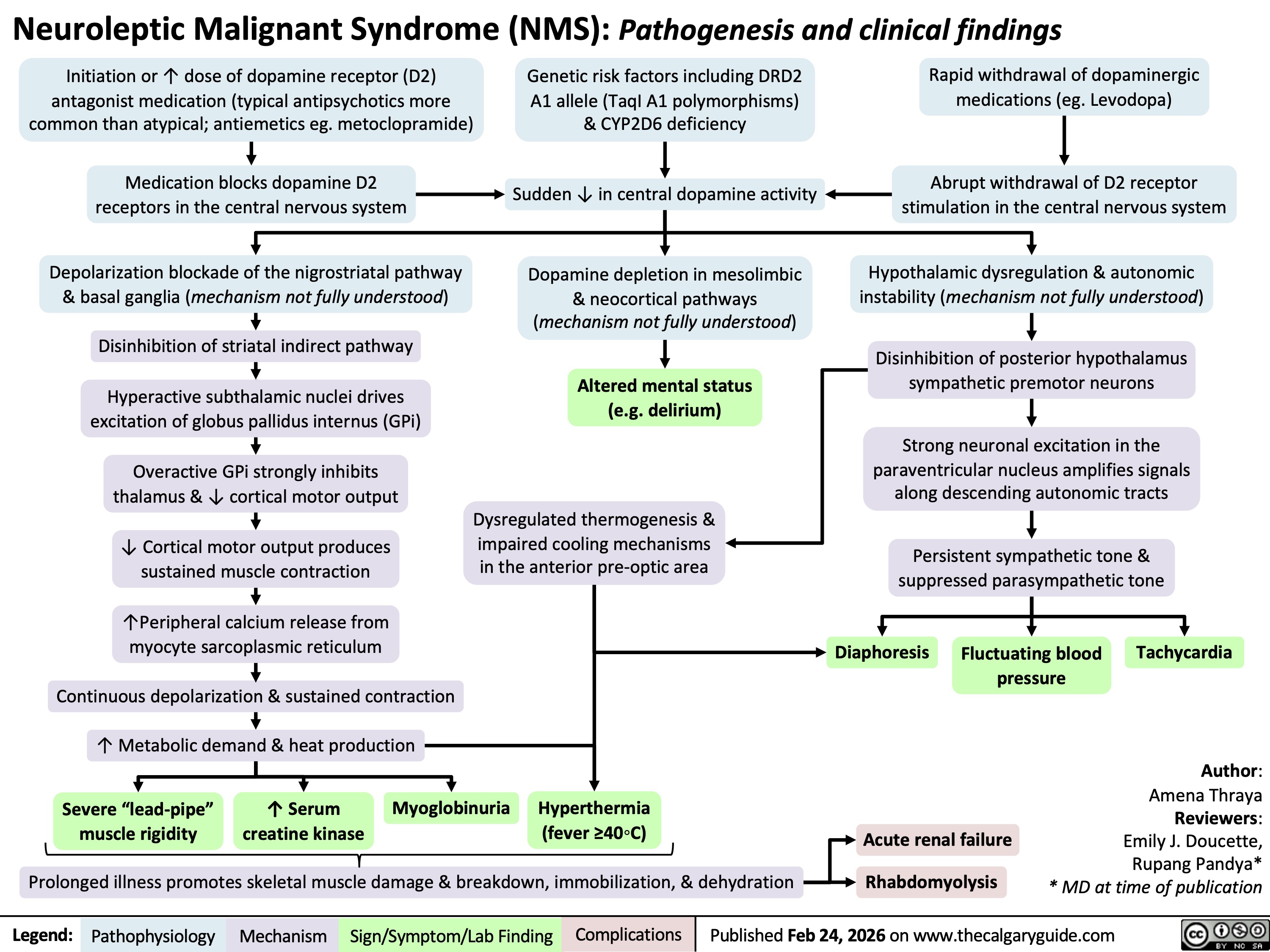
Neuroleptic Malignant Syndrome (NMS): Pathogenesis and clinical findings
Initiation or ↑ dose of dopamine receptor (D2)
antagonist medication (typical antipsychotics more
common than atypical; antiemetics eg. metoclopramide)
Medication blocks dopamine D2
receptors in the central nervous system
Genetic risk factors including DRD2
A1 allele (TaqI A1 polymorphisms)
& CYP2D6 deficiency
Sudden ↓ in central dopamine activity
Rapid withdrawal of dopaminergic
medications (eg. Levodopa)
Abrupt withdrawal of D2 receptor
stimulation in the central nervous system
Depolarization blockade of the nigrostriatal pathway
& basal ganglia (mechanism not fully understood)
Disinhibition of striatal indirect pathway Hyperactive subthalamic nuclei drives
excitation of globus pallidus internus (GPi)
Overactive GPi strongly inhibits
thalamus & ↓ cortical motor output
↓ Cortical motor output produces
sustained muscle contraction
↑Peripheral calcium release from
myocyte sarcoplasmic reticulum
Continuous depolarization & sustained contraction
↑ Metabolic demand & heat production
Dopamine depletion in mesolimbic
& neocortical pathways
(mechanism not fully understood)
Altered mental status
(e.g. delirium)
Hypothalamic dysregulation & autonomic
instability (mechanism not fully understood)
Disinhibition of posterior hypothalamus
sympathetic premotor neurons
Dysregulated thermogenesis &
impaired cooling mechanisms
in the anterior pre-optic area
Strong neuronal excitation in the
paraventricular nucleus amplifies signals
along descending autonomic tracts
Persistent sympathetic tone &
suppressed parasympathetic tone
Diaphoresis Tachycardia
Fluctuating blood
pressure
Severe “lead-pipe”
muscle rigidity
↑ Serum
creatine kinase
Myoglobinuria
Hyperthermia
(fever ≥40◦C)
Acute renal failure
Prolonged illness promotes skeletal muscle damage & breakdown, immobilization, & dehydration
Rhabdomyolysis
Author:
Amena Thraya
Reviewers:
Emily J. Doucette,
Rupang Pandya*
* MD at time of publication
Legend: Pathophysiology Mechanism
Published Feb 24, 2026 on www.thecalgaryguide.com
Sign/Symptom/Lab Finding Complications